-

-

-
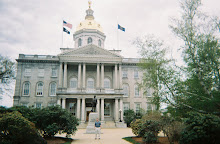
A lack of activity on legislation left the House chamber empty yesterday. (Globe Staff Photo / John Tlumacki)
-
"No air of urgency at State House"
By Matt Viser, Boston Globe Staff, February 26, 2009
When a young mother from Brockton named Uloma Ikeagwuonwu roamed the hallways of the State House yesterday looking for someone, anyone, to discuss school programs, it took her 90 minutes before she finally found two legislators.
"Nothing seems to be happening," she said. "It's so quiet. The people I expect to see, I'm not seeing them."
Seven weeks into the legislative session, facing an economic crisis of historic proportions and public confidence eroded by a series of scandals and ethics controversies, the Legislature remains at a virtual standstill.
Ethics law changes? No action scheduled for at least another month, perhaps not until April. Budgets, including emergency provisions sought by Governor Deval Patrick in response to the recession? Not even a hearing, despite Patrick's calls for quick action.
Since Jan. 7, the start of the legislative session, the House has met 19 times, for a total of 18 hours, 47 minutes, an average of less than 3 hours per week, according to a Globe analysis of minutes kept by the State House News Service. Of that, nearly 7 hours were for ceremonial events where no actual work took place, honoring Abraham Lincoln, listening to the governor's State of the State address, and being sworn into office.
The longest meeting was on Feb. 11, when representatives met for nearly six hours to debate rules. They still found time to adopt resolutions honoring Ronald Reagan and Red Sox legend Jim Rice. Last week, the House welcomed the mayor of Haifa, Israel.
About a dozen House lawmakers met on Monday, gaveled into session at 11:07 a.m. A prayer was said, the Pledge of Allegiance recited, and within 4 minutes they had adjourned.
Leading lawmakers say to stay tuned. House Speaker Robert A. DeLeo, who has already restored term limits for his job and mandated ethics training for House members, said yesterday that the pace will quicken in upcoming weeks.
"I can tell you that I have been busy and a lot of commissions and committees have been busy, as well," DeLeo said outside his office. "As we go along, hopefully you're going to be pleased with the progress, in terms of what we're doing."
But some lawmakers say the delays, while not unusual, need to end because of the extraordinary issues facing the state.
"I'm anxious to see things get going," said Representative David Flynn, a Bridgewater Democrat. "The pressure is on us, justifiably so with all that we're confronting. The next two weeks, we've really got to shape up. The public has a right to expect we will move."
The inactivity in the Legislature contrasts with other government activity around the country. State lawmakers in California were working long hours at the State House last week to solve a budget crisis, for example, and members of Congress met on weekends to cut a deal on a $787 billion stimulus package sought by President Obama.
Most Massachusetts lawmakers took last week off for school vacation week.
"Everything seems to be stagnant," said Senate minority leader Richard R. Tisei, a Wakefield Republican. "The building should be humming every day with legislative hearings taking place. That's not happening."
David Falcone, a spokesman for Senate President Therese Murray, said the Senate has drafted a 268-page transportation reform bill and created several commissions to oversee the state redistricting process and to monitor the state's spending of federal stimulus money. A committee also held a hearing yesterday on a proposal to reorganize several state agencies.
Yesterday House and Senate lawmakers announced a series of hearings beginning next week on transportation law changes, among them a controversial plan by the governor to increase the gas tax by 19 cents a gallon. Lawmakers have criticized Patrick for not filing the bill until this week, preventing them from moving forward on changes.
The Senate has met even less often than the House, meeting 16 times for a total of 10 hours, 48 minutes, or about an hour and a half a week. The base pay for Massachusetts lawmakers is $61,440, although many earn additional stipends for holding leadership positions.
Longtime observers of the State House say this year's session got off to an unusually slow start, but few are alarmed. The Legislature is designed to be slower and more deliberative than the executive branch, and it typically takes several weeks to get going at the start of a legislative session.
"I may be wrong, but I'm not sure we're at the point where the world is going to collapse if we take two more weeks to deal with some of these issues," said Pam Wilmot, executive director of Common Cause, a government watchdog group. "I don't want to be an apologist for the system, which has many flaws. But we also need to be realistic and let it work. You can't get blood out of stone."
Work at the State House was also stalled this year because of the shakeup in the House leadership just as the legislative session was getting started, with the resignation of former speaker Salvatore F. DiMasi Jan. 27. After DiMasi resigned, DeLeo took several weeks to make new committee assignments and decide which lawmakers to name as chairmen.
Patrick, who accused the Legislature last year of not acting swiftly enough on his proposals, declined a request for an interview and avoided criticizing top lawmakers.
"The governor recognizes the speed with which the new speaker has assembled his team and the substantive discussions the administration has already had with the new chairs in both the House and Senate," his spokesman, Kyle Sullivan, said in a statement.
"Is it slow? Yeah, but there are reasons for it," said Representative Daniel E. Bosley, a North Adams Democrat. "It's unfortunate because we ought to be talking about pension reform, transportation reform, and the budget."
-
Matt Viser can be reached at maviser@globe.com.
-
----------
-

-

-
----------
2/26/2009
Re: The Massachusetts Legislature is on a permanent taxpayer subsidized vacation!
The Boston Globe published a news article today explaining how the Massachusetts Legislature is getting NOTHING accomplished while they are asking the people to pay higher taxes, fees and tolls! To read this news article, please go to:
www.boston.com/news/local/massachusetts/articles/2009/02/26/no_air_of_urgency_at_state_house/
Highlights of this news article include:
1. "Seven weeks into the legislative session, facing an economic crisis of historic proportions and public confidence eroded by a series of scandals and ethics controversies, the Legislature remains at a virtual standstill."
2. "Since Jan. 7,(2009), the start of the legislative session, the House has met 19 times, for a total of 18 hours, 47 minutes, an average of less than 3 hours per week, according to a Globe analysis of minutes kept by the State House News Service. Of that, nearly 7 hours were for ceremonial events where no actual work took place...The longest meeting was on Feb. 11, when representatives met for nearly six hours to debate rules."
3. "The inactivity in the (Massachusetts) Legislature contrasts with other government activity around the country."
4.
DAN "Bureaucrat" BOSLEY states: "Is it slow? Yeah, but there are reasons for it," said the Representative from North Adams who is Democrat. "It's unfortunate because we ought to be talking about pension reform, transportation reform, and the budget."
5. "Ethics law changes? No action scheduled for at least another month, perhaps not until April. Budgets, including emergency provisions sought by Governor Deval Patrick in response to the recession? Not even a hearing, despite Patrick's calls for quick action."
Why do the people have to pay taxes, fees and tolls when those who raise the state government's revenue are all on a permanent taxpayer subsidized vacation?
- Jonathan Melle
Source: www.topix.net/forum/source/berkshire-eagle/TDHOJURFNJ9M35RO2
----------
"Work load to get busy for legislators"
By Jack Nicas, Berkshire Eagle Boston Bureau, Tuesday, March 03, 2009
BOSTON — After seven weeks of inactivity, legislative committees get rolling this week lifting what has been a malaise hanging over the Statehouse since Sal DiMasi's resignation.
The House and Senate Ways and Means Committees will hold joint hearings on a proposed budget for fiscal year 2010 today, more than a month after its submission.
The annual hearings come nearly three weeks later than last year when the hearing process wrapped up on Feb. 28 in 2008.
The House Ways and Means Committee, newly chaired by Rep. Charles Murphy, D-Burlington, must still deal with a supplemental 2009 budget, created to plug a $1.1 billion gap in spending and revenues. The committee met for the first time last Thursday, said Rep. Denis Guyer, D-Dalton, a committee member.
Fellow member, Rep. Christopher Speranzo, D-Pittsfield, said he wasn't sure when his committee would address the 2009 bill.
The supplemental budget must pass through both Ways and Means committees and the House and Senate before fiscal year 2009 ends on June 31.
Transportation hearings also begin this week when the Joint Transportation Committee takes public testimony on transportation reform, including the governor's proposed 19-cent gas tax. Hearings begin Wednesday in Springfield, which will be the committee's first meeting of the session.
Many legislators blame the Legislature's sluggish start on the resignation of House Speaker Salvatore DiMasi and subsequent election of his replacement, Robert DeLeo, D-Winthrop.
"I put a tremendous amount of blame on the previous speaker," said House Minority Leader Bradley Jones, R-North Reading. "(DeLeo) was denied three weeks he might of otherwise had." DeLeo was sworn in on Jan. 28 and made committee assignments Feb. 12. But most committees have yet to meet or adopt committee rules.
"(Committees) now exist in name, but they're not completely operational," said Don Siriani, chief of staff for Sen. Susan Fargo, D-Lincoln.
Sen. Susan Tucker, D-Andover, said none of her seven committees have met yet. "The Housing Committee, the one I'm responsible for, meets March 10 for our organizational meeting," she said. "I hope we have our bills." Thousands of bills have yet to be numbered or assigned to committees.
School vacation and new office assignments have further delayed activity.
Lawmakers acknowledged the series of moving days had slowed progress.
"I didn't expect a lot to happen last week, school vacation week, you know, moves, this and that. Everything takes longer," Jones said.
But some lawmakers insist the Legislature is making progress.
"We've been working very hard behind the scenes," Guyer said. "Not all the work of a legislator is in the chamber; I've been very busy on other fronts." Transportation Co-Chair Sen. Steve Baddour, D-Methuen, said transportation legislation is on track.
"In terms of transportation, we've done a lot. We've already held hearings. We put together a 268-page bill. We're moving along," Baddour said. "The legislative process by its nature-and at times rightfully so-is slow." But others are not happy with the session's pace.
"There are some things we should be spending time on and it's frustrating we haven't done at least some of them already," Jones said.
-
www.topix.net/forum/source/berkshire-eagle/TJRTOMS0ABSD6PVHH
-
-----
"Lawmakers get moving on bills", By Jack Nicas, The North Adams Transcript Boston Bureau, Tuesday, March 3, 2009
BOSTON -- After seven weeks of inactivity, legislative committees get rolling this week lifting what has been a malaise hanging over the Statehouse since Sal DiMasi's resignation.
The House and Senate Ways and Means Committees will hold joint hearings on a proposed budget for fiscal year 2010 today, more than a month after its submission.
The annual hearings come nearly three weeks later than last year when the hearing process wrapped up on Feb. 28.
The House Ways and Means Committee, newly chaired by Rep. Charles Murphy, D-Burlington, must still deal with a supplemental 2009 budget, created to plug a $1.1 billion gap in spending and revenues. The committee met for the first time last Thursday, said Rep. Denis Guyer, D-Dalton, a committee member.
Fellow member, Rep. Christopher Speranzo, D-Pittsfield, said he wasn't sure when his committee would address the 2009 bill.
The supplemental budget must pass through both Ways and Means committees and the House and Senate before fiscal year 2009 ends on June 31.
Transportation hearings also begin this week when the Joint Transportation Committee takes public testimony on transportation reform, including the governor's proposed 19-cent gas tax. Hearings begin Wednesday in Springfield, which will be the committee's first meeting of the session.
Many legislators blame the Legislature's sluggish start on the resignation of House Speaker Salvatore DiMasi and subsequent election of his replacement, Robert DeLeo, D-Winthrop.
"I put a tremendous amount of blame on the previous speaker," said House Minority Leader Bradley Jones, R-North Reading. "(DeLeo) was denied three weeks he might of otherwise had." DeLeo was sworn in on Jan. 28 and made committee assignments Feb. 12. But most committees have yet to meet or adopt committee rules.
Sen. Susan Tucker, D-Andover, said none of her seven committees have met yet. "The Housing Committee, the one I'm responsible for, meets March 10 for our organizational meeting," she said. "I hope we have our bills." Thousands of bills have yet to be numbered or assigned to committees.
School vacation and new office assignments have further delayed activity.
Lawmakers acknowledged the series of moving days had slowed progress.
"I didn't expect a lot to happen last week, school vacation week, you know, moves, this and that. Everything takes longer," Jones said.
But some lawmakers insist the Legislature is making progress.
"We've been working very hard behind the scenes," Guyer said. "Not all the work of a legislator is in the chamber; I've been very busy on other fronts."
Transportation Co-Chair Sen. Steve Baddour, D-Methuen, said transportation legislation is on track.
"In terms of transportation, we've done a lot. We've already held hearings. We put together a 268-page bill. We're moving along," Baddour said. "The legislative process by its nature -- and at times rightfully so -- is slow." But others are not happy with the session's pace.
"There are some things we should be spending time on, and it's frustrating we haven't done at least some of them already," Jones said.
"To me, we could easily do a bill on (pension) next week," he said. "But now all of a sudden you're into March and then you're into the second week of March, deep into budget hearings -- it's frustrating." State agency heads will testify at all but one of the budget hearings. The final hearing, March 20 at the Statehouse, will be for public testimony.
However, all transportation hearings are specifically for the public.
"The Boston elite has spoken; they want an exorbitant increase in the gas tax," Baddour said. "The purpose of these hearings is for working men and woman from around the commonwealth to be able to voice their concerns directly to the committee."
-
www.topix.net/forum/source/north-adams-transcript/TTN8864V4QO6OJ62L
-
----------
-

-
Photo by Nancy Lane
-
"Angry citizens open fire on pols"
By Edward Mason, February 25, 2009, www.bostonherald.com, Local Coverage
From the bullet that smashed through a Lawrence City Hall window to stinking fishes flung at the Gloucester mayor’s home, city and state leaders are feeling the heat on the street from taxpayers and public sector workers fuming over impending layoffs and service cuts.
Authorities believe a bullet that slammed into the Lawrence city planner’s desk last weekend may be related the recent layoffs of 11 city employees and the firing of two others.
“If someone is giving a message that you’d better watch out, that’s disconcerting,” Lawrence Mayor Michael J. Sullivan told the Herald yesterday.
Gloucester Mayor Carolyn Kirk, who receives plainclothes police protection on occasion, found a pile of fish on her front porch last month, and her secretary intercepts an almost daily stream of angry e-mails and letters, redirecting the most menacing to police.
“In this budget climate, we’re all faced with cutting jobs, people’s livelihoods,” Kirk said. “It makes a mayor a target.”
Meanwhile, at a gas station on Old Colony Avenue yesterday, State Rep. Brian Wallace (D-South Boston) got an earful from a man incensed about Gov. Deval Patrick’s proposed 19-cent gas tax hike.
“It’s gotten worse,” said Wallace, who also gets blistering e-mails from constituents. “It’s taken a different tone, an edge. People are stretched to the limit.”
Geoff Beckwith, executive director of the Massachusetts Municipal Association, fears that the anger could morph into violence as the economic crisis deepens.
“Unfortunately, the decisions local officials have to make are personal ones, and people get upset at them,” Beckwith said. “When emotions run high and difficult decisions are made, there’s the potential for violence.”
Lynn Mayor Edward “Chip” Clancy agreed. “Any time you tell someone no, people get very, very angry,” he explained.
Beckwith and other municipal officials are aware this latest onslaught comes little more than a year after a disturbed gunman opened fire on the Kirkwood, Mo., City Council, killing five people.
“We know we’re the people who feel the heat,” said Brockton Mayor James Harrington, who’s considering laying off at least 100 cops and firefighters. “That’s the job we chose, and it’s a big part of the job.”
In Melrose, Mayor Robert Dolan blamed tough times for a spike in dime-dropping by anonymous tipsters targeting police, fire and public works employees believed to be cavorting about on city time.
Lynn’s Clancy said he’s steering clear of bars and other places where he might run into angry taxpayers.
“When they have a few in them,” Clancy said, “they get a little - how do you say - demonstrative.”
-
Article URL: www.bostonherald.com/news/regional/view.bg?articleid=1154481
-
----------
"Beacon Hill out of touch with local communities"
The Boston Globe, Letters, March 1, 2009
IN WATCHING the economic events over the last several months and the reaction of our state government, one cannot help but conclude that our leaders are out of touch with the realities of the communities.
Small communities have been cutting costs and services for years because annual costs have exceeded revenues. In North Reading last year, children went to school for four and a half days a week because the town could not afford a full week, and classes numbered 30 students per teacher. This happened during relatively good economic times.
Now, Beacon Hill has cut local aid, pushing problems to cities and towns. With no means to raise revenues, we are forced to make impossible decisions, such as laying off teachers and public safety employees - services that should not fluctuate with economic times.
The foundation of our governmental model is broken, and needs to be fixed. Revenues are declining, costs are increasing, and basic services have already been cut to the bone. This is the crisis that will devastate Massachusetts. It appears that our state government is more concerned with hiring a "stimulus czar" and further bloating state programs than addressing real issues.
Melissa Driscoll
North Reading, Massachusetts
----------
"Gas tax hike will boost food costs"
The Berkshire Eagle, Letters, Saturday, March 07, 2009
While I am elated that the Berkshire delegation to the Statehouse opposes the governor's new gas tax, there are more reasons this plan should be looked at carefully by those of us in the Berkshires.
Not only will we be paying more for a gallon of gasoline, but we will pay more for food and other commodities through the increased cost of transporting them to this area. While the price of a barrel of oil has decreased in recent times, have you noticed that the price of groceries and other staples has remained high? Why? Because of the cost in getting them here! We do not live in a very accessible area and heavily rely on goods being shipped in. Now, not only will we be asked to pay a higher gas tax, but also incur the higher cost of shipping them here. When the price of a barrel of oil finally did drop, did food prices? No, and I am afraid that some companies will use this new tax to raise prices once again.
With only 1.5 cents a gallon coming back to the Berkshires for roads and bridges, deputy secretary for communications and policy head the comment by Colin Durrant— the same Colin Durrant who nets $115,000 per year as a press secretary — about paying for what you're going to get is revealing. In effect, that
the Berkshires can expect very little. Maybe he can defer some of his pay to help in reconstruction costs, seeing how it bothers him that much. Don't count on it, because I'm sure he drives a state issued vehicle for which the general population will pay the elevated gas tax on.
If these are the same people who are going to decide how the state's stimulus money is to be spent, the Berkshires can expect little or no change at all. Thank you Mr. Patrick.
JUDY TAYLOR
Adams, Massachusetts
-
www.topix.net/forum/source/berkshire-eagle/T3U5EF1R059HFFDG9
-
-----
"Gas-tax increase a tough sell"
By Trevor Jones, Berkshire Eagle Staff, Thursday, March 05, 2009
PITTSFIELD — Secretary of Transportation James A. Aloisi has said he believes members of the Berkshire delegation will support a proposed 19-cent increase to the state gas tax, but the legislators remain unsold, claiming it unfairly burdens residents in the western part of the state and doesn't return enough funds to the region.
"I understand that we have a statewide transportation system, but for those of us in the Berkshires who have never been through the Big Dig, have never rode on the T, to ask us to pay an inordinate amount of their expense, or their mismanagement, is wrong," said Rep. William "Smitty" Pignatelli, D-Lenox.
To offset what would be a $19 billion operational deficit for the Department of Transportation over then next 20 years, Gov. Deval L. Patrick's has called for an increase in revenue through the gas tax, and streamlining the budget by eliminating the Turnpike Authority, standardizing employee health care and eliminating the bond system that pays for employee salaries.
Patrick and Aloisi defended the proposal at a hearing in Springfield Wednesday, with Aloisi saying in a released statement afterward, "I believe that a good faith consensus can and will be reached on a bill that provides a comprehensive solution to our transportation needs."
Of the 19 cents in the gas tax increase, 1.5 cents would go to the state's five Regional Transit Authorities and 1.5 cents would go to targeted regional road projects.
"1.5 pennies coming back to the Berkshires for regional roads and bridges, that's not regional equity," said Pignatelli. "They've got to come up with a better plan to deal with regional equity so the lion's share stays with the people who pay them."
Colin Durrant, deputy secretary for communications and policy for the state, said the funds are guaranteed — as opposed to appropriated as they are now — and will be given to the regions in proportion to how much they accumulated.
"What you pay, basically, is what your going to get," said Durrant.
Rep. Daniel E. Bosley, D-North Adams, said the gas tax increase disproportionately impacts people in the western part of the state who rely heavily on automobiles and have little access to mass transit. He also said the proposal follows a two-decade trend of increasing percentages of revenue going to the eastern part of the state.
"I'm sick and tired of the money going to the east side of the state when it hurts this side of the state," said Bosley.
Rep. Christopher N. Speranzo, D-Pittsfield, said reforms should be the first priority.
"I think (Patrick) has the cart before the horse in putting revenue before reform," said Speranzo. "And once they get the revenue, what is the chance we are going to see reform follow."
"Reform absolutely has to come first," said Sen. Benjamin B. Downing, D-Pittsfield. "And discussion of revenue is ill-conceived at this point, it's based on a system that doesn't work."
But reform and revenue are inseparable, according to Durrant.
"Reform must come with revenue," said Durrant. "The reason we're facing this problem is that for too long we put off the problem. But we can't just look at the problems of today, our goal is to build a strong enough transportation system for the future that can fuel economic growth."
Several local representatives said the state should consider a smaller tax increase along with alternative forms of revenue.
Rep. Denis E. Guyer, D-Dalton, asked the administration to look into implementing tolls along I-93 coming from New Hampshire, where I-93 splits with I-95 and along the entrances from Rhode Island, but has received no response.
"An equitable solution is to tax the people that the majority of the tax is going to pay for," said Guyer. "It's not even been thought of as a solution, it's always been about the gas tax," said Guyer.
Several others said the state should consider reinstating tolls along the western portion of the Turnpike as an option.
-
The Associated Press contibuted to this report.
-
www.topix.net/forum/source/berkshire-eagle/TJP5R0EOTKMGIROP2
-
----------
"House discusses hiking income, sales taxes"
By Jim O'Sullivan, State House News Service, March 11, 2009
Sour budget predictions from leading local economists, including forecasts of a deficit as high as $4.3 billion next fiscal year, prompted House members to discuss raising the state's largest tax revenue generators, the personal income tax and the retail sales tax, dangerous political terrain as Beacon Hill desperately seeks a way out of its fiscal crisis.
During a two-hour caucus yesterday in which economists predicted the crisis could last until fiscal 2012, Representative Elizabeth A. Malia, Democrat of Jamaica Plain, suggested the income tax as a means to stave off deeper budget cuts, according to several lawmakers who attended. Lawmakers also discussed elevating the state's 5 percent sales tax.
Senate Ways and Means Chairman Steven Panagiotakos, Democrat of Lowell, rejected an income tax boost, telling the News Service, "As far as the income tax, I think the voters have preempted that issue. I personally would not be in favor of increasing it.
"If it is looked at instead of a gas tax and meals tax," he said of the sales tax, "then I think it is something that should be considered. Certainly, the question is at what level." Panagiotakos added, "People that have heard of the sales tax would much rather do a cent on the sales tax than 19 cents on the gas tax or the meals tax."
Asked about the income tax after the caucus, Speaker Robert A. DeLeo said the House is considering all options.
DeLeo said he was unsure whether the House would go along with the income tax hike, and said he would probably have a better sense "within a month or two" of House sentiment on budget decisions.
In a statement released later, he said: "In talking to members, I have found little or no support for an increase in the income tax. I myself have serious reservations about doing something that would put such a burden on the families of Massachusetts. Given the strain the state's families are under, I am committed to serious reform and profound cuts before considering any new revenue items."
A higher income tax would be a further repudiation of a 2000 voter mandate to roll the income tax rate from 5.75 percent to 5 percent.
Representative Ellen Story, Democrat of Amherst and one of DeLeo's four division chairs, said members showed broader support for bumping the 5 percent sales tax, which Governor Deval Patrick has already targeted by proposing to repeal exemptions on candy, sugared drinks, and alcohol.
Lawmakers heard from the former president of the Federal Reserve Bank of Boston, Cathy Minehan, and Michael Widmer, president of the Massachusetts Taxpayers Foundation. Several emerged from the meeting saying it had darkened their view of the state's fiscal condition.
----------
Beacon Hill Roll Call: "Changes to emergency housing programs in Massachusetts ok'd"
By Staff reports, wickedlocal.com/allston, Monday, March 9, 2009, 2:23 PM EDT
BOSTON -
THE HOUSE AND SENATE. Beacon Hill Roll Call records local representatives and senators’ votes on three roll calls from the week of March 2-6.
GOVERNOR PATRICK’S REORGANIZATION PLAN (S 15)
The House, 153-0, and Senate, 38-0, approved another one of Gov. Patrick’s government reorganization plans. The detailed proposal combines the Department of Transitional Assistance’s emergency shelter programs with housing programs currently run by the Department of Housing and Community Development. It also transfers four other programs to different departments.
In his written statement along with the proposal, the governor said, “This legislation restructures certain state agencies to make them more cost effective and responsive by consolidating programs and program staff within agencies whose mission and expertise will ensure the most coordinated, efficient operation of the programs.” (A Yes” vote is for the reorganization plan).
SEVEN-MEMBER INDEPENDENT REDISTRICTING COMMISSION
The House, 23-133, voted mostly along party lines and rejected a Republican-sponsored proposal requiring that the Legislature establish a seven-member independent redistricting commission to draw Massachusetts legislative and congressional districts every 10 years. The commission would then submit the plan to the Legislature for an up-or-down vote. Only seven Democrats joined the GOP and voted in favor of the GOP proposal that would replace a Democratic-sponsored plan under which the Legislature itself would draw the districts as it has done for many years.
The GOP proposal requires the independent commission to follow specific rules, including ensuring that districts are compact and contiguous and are not drawn for the purpose of diluting the voting strength of a racial minority, political party or any individual candidate. The commission would also be required to attempt to follow other guidelines, including preventing a city or town from being divided into more than one district.
Commission members would include a college dean or professor of law, political science or government appointed by the governor; a retired judge appointed by the attorney general and an expert in civil rights law appointed by the secretary of state. The other four members would be chosen by the original three members from a list of candidates nominated by the House Speaker, House Minority Leader, Senate President and Senate Minority Leader.
Supporters of the independent commission said that it has been endorsed by Gov. Deval Patrick, former governors Michael Dukakis and Mitt Romney, the League of Women Voters and Common Cause. They argued that the Legislature is not impartial and often gerrymanders districts to protect incumbents. They said that this antiquated, partisan system allows the majority party to control the process and permits “legislators to choose their voters.”
Some opponents of the independent commission said that it would be composed of unaccountable, unelected and unknown members who are not responsible to the voters. They argued that elected, accountable members of the Legislature should be responsible for this important and tricky job of redistricting. Others argued that they support the independent commission, but that it would take a constitutional amendment to establish it because the state constitution gives the redistricting power to the Legislature. Supporters of the independent commission countered that a constitutional amendment is not necessary. They argued that the Legislature would still have the final power to approve or reject a plan proposed by the commission.
(A “Yes” vote is for the seven-member independent redistricting commission. A “No” vote is against it).
28-MEMBER LEGISLATIVE REDISTRICTING COMMISSION
The House, 132-20, approved the Democratic-sponsored bill establishing a redistricting commission composed of 28 legislators that would include 23 Democrats and five Republicans. Only four Democrats joined the GOP and voted against the commission. The 28-member commission was generally opposed by representatives who had earlier supported the seven-member independent commission. The 28-member commission was generally supported by representatives who had earlier opposed the GOP’s proposal for a seven-member independent commission. (A “Yes” vote is for the 28-member commission comprised of only legislators).
STATE WILL GUARANTEE TURNPIKE DEBT (H 100)
The Senate, 33-5, approved a bill authorizing the state to continue to guarantee the debt of the Massachusetts Turnpike Authority. The current state guarantee expired in January and the bill would extend it to June 30. The proposal is designed to prevent the Turnpike from getting hit with a $363 million bill from investment company UBS if the turnpike’s struggling insurance agency’s credit rating is downgraded. The package also allows State Treasurer Timothy Cahill to be part of Gov. Patrick’s negotiations with UBS to renegotiate and avoid the $363 million payment. Supporters said that the bill is necessary because neither the Turnpike Authority nor the state have the $363 million if it comes due. Opponents said that the bill is a well-intentioned but misguided Band-Aid solution to an increasingly broader and more difficult transportation problem that is threatening the state. (A “Yes” vote is for the bill authorizing the state to continue to guarantee the debt of the Massachusetts Turnpike Authority. A “No” vote is against the bill).
LIMIT MASS TURNPIKE TOLL HIKES (H 100)
The Senate, 12-26, rejected an amendment prohibiting the Mass. Turnpike Authority from raising tolls beyond the amount needed to prevent the Turnpike from defaulting on its bonds. Amendment supporters said that the amendment would in effect put a stop to the toll increases scheduled to take effect on March 29, including a 25-cent hike in tolls at the Brighton and Weston toll booths (from $1.25 to $1.50) and a $2 raise at the Sumner and Ted Williams tunnels (from $3.50 to $5.50). They argued that the amendment would give the state and Turnpike more time to explore other solutions and reform instead of toll hikes. Some amendment opponents said that the amendment is well-intentioned, but argued that supporters are misleading members because the amendment would not actually eliminate the current toll hikes. Others said that the Legislature should be looking at big reforms in the state’s entire transportation system. (A “Yes” vote is for prohibiting the Mass Turnpike Authority from raising tolls except to prevent the Turnpike from defaulting on its bonds. A “No” vote is against the prohibition).
ALSO UP ON BEACON HILL
WASTE HOTLINE AND HARDSHIP TOUR — Sen. Michael Knapik, R-Westfield, and Rep. Vinny deMacedo, R-Plymouth, announced a tool with which citizens can report any waste of the state’s estimated $6 billion share of the federal economic stimulus package funds. Citizens are encouraged to e-mail any examples of waste to mass.stimwatch@gmail.com. The GOP also announced plans for its new “Hardship Listening Tour,” a series of hearings giving citizens “the opportunity to express the issues they are facing with their own household budgets, and the potential impacts on families and individuals of the more than $411 million in taxes and fees which are being contemplated to address state budget gaps.”
MORE LEGISLATION PROPOSED — House and Senate clerks continue to process the more than 6,000 bills that have been filed for consideration in the 2009-2010 session. Here is a look at some:
PROTECT JOURNALISTS FROM DISCLOSING SOURCES — This measure would establish a “shield law” providing protection to journalists who refuse to disclose confidential sources. Protection would not be provided if disclosure of the source would prevent imminent and actual harm to public security from acts of terrorism and the potential harm “clearly outweighs the public interest in protecting the free flow of information.”
PRISONERS DEFRAY COSTS OF JAIL — This legislation would require non-indigent prisoners to pay the state $2 per day to defray the costs of incarceration.
SUPER BOWL GAMBLING — This bill would legalize “betting squares” or pools on the NFL Super Bowl and the NCAA basketball tournament. It requires all revenue from bets to be used solely for prizes, and prevents the organizers from using any of the money to compensate themselves.
ADOPTED CHILDREN AND MATERNITY LEAVE — This proposal would mandate that a female employee on maternity leave for the adoption of a child be entitled to the same benefits offered by her employer to a female for the birth of a child.
WATER AT EVENTS — This legislation would require entertainment venues to sell clean water at a fair price if the venue prohibits outside food and beverages.
TAX ON PLASTIC GROCERY BAGS — This measure would tax consumers 5 cents per bag for each plastic grocery bag they use at the check out counter at a supermarket. The tax would apply only in supermarkets that grossed more than $1 million during the previous tax year.
-
Bob Katzen welcomes feedback at bob@beaconhillrollcall.com.
-
----------
"Facing reality on taxes"
The Berkshire Eagle, Editorial, Friday, March 13, 2009
This week, the House discussed raising the state income tax and sales tax, an indication that the sobering nature of Massachusetts' economic crisis may be hitting home. Compared to an increase in the income tax, a hike in the gas tax may look politically feasible. The reality is that the state is not only enduring tougher times then have been seen in decades, but there is no light at the end of the tunnel. Difficult calls will have to be made.
Beacon Hill is faced with an additional $1 billion budget gap on top of the one that recently led to substantial budget cuts. A projected budget deficit of $4.3 billion in fiscal 2010, a product of the national economic collapse, could result in unprecedented program cuts. Lawmakers are discussing eliminating earmarks from next year's budget, but earmarks, as is the case at the federal level, where they generate a disproportionate amount of fuss, constitute chump change when compared to the deficits in Boston and Washington.
An increase in the 5 percent state income tax would be the most equitable way of generating funds, but Beacon Hill doesn't appear willing to face the controversy. A hike in the 5 percent sales tax may meet resistance in a Legislature slow to take up the governor's proposal to repeal exemptions on candy and alcohol.
Governor Patrick's 19 cent-a-gallon gas tax hike would improve roads and address a debt hanging over the entire state at a cost, according to the administration, of a barely noticeable $8 a month. Yet it is stalled on Beacon Hill. Like it or not, lawmakers have unpopular decisions to make, and the sooner the better.
-
www.topix.net/forum/source/berkshire-eagle/TUGFDO5OAG6L16N26
-
----------
-

-
State Sen. Marian Walsh. (Photo by Herald file).
-
"State Sen. Marian Walsh in line to score nearly $200k: Pension could up pol’s take"
By Hillary Chabot, Saturday, March 14, 2009, www.bostonherald.com, Local Politics
State Sen. Marian Walsh, who was handed a $175,000 post by Gov. Deval Patrick on Thursday, could boost her earnings to nearly $200,000 if she begins collecting her pension.
The 54-year-old West Roxbury Democrat is eligible for the eye-popping paycheck, which comes as state residents face crippling cuts and tax hikes, because she’s worked for the state for 20 years.
“They just don’t get it,” said Christy Mihos, a former gubernatorial candidate who is eyeing another run.
Walsh’s new job at the Massachusetts Health and Educational Authority outraged Beacon Hill observers, who argue the position is unnecessary because it has remained unfilled for the past 12 years.
Jeffrey Gerson, a political professor with the University of Massachusetts at Lowell, said the hefty paycheck comes as a shock, even if it isn’t funded with taxpayer dollars.
“They shouldn’t be handing out these kinds of figures when so many people are struggling to get by,” Gerson said.
Salaries at HEFA are funded by the nonprofits that pay the agency to funnel capital financing their way, said spokesman Liam Sullivan.
Executive Director Benson Caswell earns $220,000 and is under contract at the agency until 2011. Sullivan would not provide the payroll for the other 14 employees at the company.
Walsh did not return a call seeking comment on the pension. Her husband, retired district judge Paul Buckley, is eligible for a $92,000-a-year pension after Patrick handed him a $113,000 post on the Division of Industrial Accidents.
One veteran lawmaker said Walsh was lucky she was hired for a quasi-governmental agency instead of the administration.
“The problem with lawmakers in the administration is that it seems to me they don’t get to make many decisions,” said state Rep. Daniel E. Bosley (D-North Adams), who accepted a job with Patrick in 2007, only to spurn the post weeks later. “You can’t control your own destiny.”
Several lawmakers appointed to the Patrick administration have since departed, including former state Rep. Mike Festa, who left his secretary of elder affairs position in January.
-
Article URL: www.bostonherald.com/news/politics/view.bg?articleid=1158469
-
-----
"The Walsh blunder"
By Boston Herald Editorial Staff, Saturday, March 14, 2009, www.bostonherald.com, Editorial
So how tone deaf is Gov. Deval Patrick?
The state faces a fiscal crisis unlike any other. The fourth quarter of this fiscal year may find state government another $1 billion in the hole. Taxes of every kind are on the table - sales, meals, gasoline.
The public is at once fearful and angry. The threat of tax hikes in a sour economy will do that to people. Cuts will have to be made in state agencies and that means sacrifices by the rest of us - longer lines at the Registry, a longer wait for a bus. But the governor assured us that “This is one commonwealth. We share in the sacrifices.”
Enter Sen. Marian Walsh - the new poster girl for all that is appalling about the way business is done on Beacon Hill.
Walsh is slated to get a $175,000 job at the Massachusetts Health and Educational Facilities Authority. The real problem is that the job - as assistant executive director - has been vacant for a dozen years. So in the midst of a fiscal crisis the governor has apparently decided now is the time to fill it. We rest our case on the “tone deaf” issue.
If the West Roxbury Democrat wants out of the Senate, voters in her district could easily have shown her the way - without having to pay an additional annual ransom of $100,000.
Filling the position is an insult to taxpayers. Filling it with Walsh is an abomination.
-
Article URL: www.bostonherald.com/news/opinion/editorials/view.bg?articleid=1158436
-
----------
"O'Sullivan: Jamaican some headlines"
By Jim O'Sullivan/State House News Service, GHS (GateHouse Media, Inc.), Posted: March 15, 2009, The Milford Daily News
In reality, it's the taxpayers who are out of touch. They have no idea what Beacon Hill is going through, the stresses it's under, the pressures. The taxpayers have never sat at Beacon Hill's kitchen table and had to make the tough decisions, between laying off mental health caseworkers and, say, filling a job state government has managed without since the Weld administration with a longtime political backer to the tune of $175,000 a year.
Silly taxpayers.
There were revelations of last-minute raises by former Speaker Salvatore DiMasi, first-minute raises by new Speaker Robert DeLeo, and Senate non-party-line votes against a hiring freeze on state workers and a 1-percent budget cut for the Executive Branch. There was additional discussion of the new $40,000 job as a senior assistant aide to the clerk enjoyed by former Rep. Anthony Verga. Unsurprisingly, talk radio stamped disapproval on Gov. Deval Patrick's vacation in Jamaica, chiefly because it cost the taxpayers to pay for the State Police detail. The trip also argued for round-the-clock Roundup coverage of the governor, not at its core a taxpayer issue.
There is maximum fodder for this weekend's St. Patrick's Day breakfast/roast. There was also plenty of ammo the other night at the somewhat more exclusive Mistletoe Dinner attended by several House barons, where comedian Lenny Clarke eviscerated the governor and his trip to the tropics, according to attendees.
Meantime, tax talk is alive and well on the Hill. This week it was a fresh penny on the 5-cent sales tax picking up steam, floated last week and lightly vetted during Tuesday's House caucus. An income tax boost, political hemlock, did not debut with as much popularity.
The House heard more bad news on the budget, a gap next fiscal year as high as $4.3 billion, exacerbated later in the week when Senate budget chief Steven Panagiotakos, thinking the administration was too optimistic with capital gains projections, said the new current-year deficit could hit $700 million by the end of April. If the figure reaches $1 billion by June's close, the fiscal 2009 shortfall would total $3.5 billion, meaning the original appropriations bill overspent by roughly 12 percent.
"If we still haven't hit the number in March or April, and we continue to free fall, all options are on the table," Panagiotakos said, referring to sweeping cuts and an even bigger draw on the so-called rainy day fund.
That's not the issue that most legislators have their eye on, though. It's the separate, 20-year, $20 billion transportation gap that has dominated the capitol this year and will continue to, for another two weeks anyway. There's the seemingly endless debate over whether reforms should come before revenues, and the coming-to-a-head fight over whether and how much to ask for in taxes or tolls. Senate President Therese Murray re-drew her line in the sand Thursday that reforms must come first. Transportation Secretary James Aloisi didn't back off the administration's stance that there's no time to do reforms, that the revenues are needed now, or at least by March 29, the date of a round of toll increases.
A politically charged tidal wave is making its way to the State House, and city and town halls, the confluence of years of budget shenanigans, overspending, delayed decisions, flat-out wrong decisions, and, now, the tattered global economy. It'll break on these shores in the form of up-down votes on taxes, and whether incumbent victims are caught in the undertow is unclear.
"You've got one bullet in that gun," Rep. Daniel Bosley said of a tax vote, "and if you shoot it on transportation, what do you do for the budget?"
Bosley, not the powerhouse under DeLeo he was under DiMasi: "How many times can you go to people for taxes, especially when we're in the worst economic situation we've been in for 70 years, 80 years?"
That's part of why the timing of Sen. Marian Walsh's appointment to the Mass. Housing and Education Facilities Authority was so hideous for the administration, because it lumps in with the Wilkerson-Marzilli-Vitale-toll-filching axis of misdeeds, alleged or otherwise, and as the fiscal crisis wreaks havoc among real people. Even Patrick's radio hosts, WTKK's Margery Eagan and Jim Braude, were slaughtering the governor on Thursday, Eagan charging the administration with "a political tin ear." The Walsh pick will be used as campaign rhetoric if anyone ever decides to run against Patrick, which Patrick advisers assert Treasurer Timothy Cahill now has.
Similar to the Aloisi appointment, the administration knew it was going to get drilled, but decided it was worth it, though perhaps they were not planning on the decapitative Boston Herald headline Friday: "IS THIS A JOKE, GOV?"
Big breakfast menu this weekend.
STORY OF THE WEEK: Disconnect.
QUOTE OF THE WEEK: "If the system exists, you have the right to take advantage of it. I was entitled to something and I took it." - Former Canton Town Moderator Michael Curran, explicating his $46,500 pension for 10 years in that position and 12 as town counsel, in a March 9 Boston Globe story on padded retirement payments. Mr. Curran, perhaps unintentionally, was recalling the words of the famed Tammany Hall product George Washington Plunkitt, who grew wealthy working the New York machine and rebuffed critics by pointing out, "I seen my opportunities and I took 'em."
ANECDOTE OF THE WEEK: During the 1988 presidential campaign, then-Speaker George Keverian, who lay in state in the Hall of Flags Wednesday after passing away last week, was asked by the national political press whether Michael Dukakis, then the Bay State's governor and a Democratic candidate for president, had a sense of humor. The Duke, Keverian replied, did indeed. The speaker was pressed for details. What, reporters asked, was the funniest thing Dukakis had ever done? Keverian's response: "He's doing it right now."
----------
"'Evacuation Day' holiday signals quiet Statehouse"
AP, March 17, 2009
BOSTON --On a day when most workers in Massachusetts are heading off to their jobs, the Statehouse is expected to be largely quiet.
Tuesday is Evacuation Day, a Suffolk County holiday that commemorates the evacuation of British troops from Boston during the Revolutionary War.
It's a day when little, if any, work gets done on Beacon Hill.
The House and Senate have no formal sessions planned. There are no public hearings scheduled at the Statehouse. And Gov. Deval Patrick is headed to Vermont to co-host a White House forum on health care reform.
There is one exception. Secretary of State Bill Galvin says his office is open to deal with corporate filings.
The holiday has long been fodder for critics. Occasional efforts to eliminate it have failed.
-----
"What's open, closed on Evacuation Day"
boston.com, March 17, 2009
Holiday observed: Today, in Suffolk County
Retail, liquor, or convenience stores, and taverns and bars: Open at owner's discretion.
Supermarkets: Open.
Stock market: Open.
Banks: Open.
Municipal, state offices: Closed.
Libraries: Closed.
Schools: Closed.
Mail: Post offices open.
MBTA: All services will run on the regular weekday schedule. Bikes are not allowed. For more information call (617) 222-3200.
Boston traffic rules: Meters not in effect. All other parking rules apply.
Trash/recycling collection: No delays in Boston.
----------
A BOSTON GLOBE EDITORIAL
"Incumbents' paradise"
April 4, 2009
WINNING PUBLIC office for the first time may be a slog in Massachusetts, but once elected, most officials who don't break the law can stay as long as they like. Thomas Menino hasn't announced for a fifth term as Boston's mayor but is the favorite anyway. As for the Legislature, CommonWealth magazine recently found that Massachusetts had the lowest proportion of contested races of any state - just 17 percent.
The lack of competition is unhealthy, especially in comparison with Minnesota. In that chilly, deep-blue state, the magazine noted, all legislative races are contested. That's every one. There are important cultural differences: "Minnesota nice" - the state's storied combination of optimism, politeness, and reluctance to give offense - has no clear analog in local politics here.
Yet the lack of competition has some more nuts-and-bolts causes. And at a forum hosted by CommonWealth last month, speakers zeroed in on some of them.
Campaign finance. The fund-raising advantage that incumbents enjoy is well-known. But it can be limited. Minnesota legislative candidates can't carry more than $15,000 from one election to the next. Boston mayoral challenger Sam Yoon, who spoke at the forum, has proposed a lower donation limit for companies with business before City Hall, and a ban on contributions by municipal employees.
Ideas like these at least deserve an airing. The campaign finance system is designed mainly to keep donors from exercising undue influence over candidates. It should also be built to keep an imbalance of money from preempting competition.
A dearth of opposition. Nothing guarantees contested elections like a two-party system. Republicans are barely hanging on in Massachusetts, not least because the national party's brand of conservatism does not sell well in New England.
But that's not the whole story. At the forum, Charles D. Baker, the CEO of Harvard Pilgrim Health Care and frequently mentioned as a GOP candidate for governor, said his fellow Republicans often don't try again if their first bid for office fails. Baker offered that critique in partisan wrapping; more Democrats, he said, see politics as a career. But clearly candidates who are determined are more likely to get elected.
Some states have resorted to term limits to inject more competition. But that creates its own problems: lame-duck terms, the loss of qualified officials. Besides, Massachusetts governors aren't term-limited, but there's been plenty of churn in that office in the last decade or so.
A more important step is simply getting people to run. In Minnesota, candidates jump into races even against formidable odds, because, well, that's just what one does. Ironically, the best way to generate more political races in Massachusetts might be to stir in some "Minnesota nice."
----------
"Massachusetts legislators looking askance at tax hike plans"
By Matt Viser, Boston Globe Staff, April 9, 2009
House and Senate leaders on Beacon Hill, in the throes of a budget crisis of historic proportions, are resisting Governor Deval Patrick's demand for new taxes and instead plan to impose deeper spending cuts, lawmakers said.
The state has yet to finish dealing with a total budget gap that could reach $3.5 billion this year. It faces the prospect of worse revenue shortfalls next year.
But when the House unveils its budget next week, it is unlikely to contain the bevy of new taxes Governor Deval Patrick is seeking, including sales taxes on alcohol and candy, and higher fees at the Registry of Motor Vehicles.
Instead, House budget writers will rely on cuts of massive proportions, according to State House officials who have been briefed on the deliberations. The cuts will go well beyond those included in the $28 billion budget Patrick proposed in January, sources said.
The Senate also is planning to craft a budget that does not account for any tax increases, according to Senator Steven Panagiotakos, chairman of the Senate Committee on Ways and Means.
"Not many relish taking a tax vote," he said. "Over here, we've been very serious about reform before revenue. I think we need to continue along that road."
House Speaker Robert A. DeLeo declined to comment yesterday, although he told the Greater Boston Chamber of Commerce last week that "the cuts that are required to balance this budget. . . will cut to the very core of government's purpose and mission." He told reporters afterward that "as of right now, I haven't sensed the support" for most of the governor's tax increase proposals.
Representative Charles A. Murphy, a Burlington Democrat and chairman of the House Committee on Ways and Means, declined to comment on his committee's budget proposal, which goes to be printed later this week and will be officially unveiled next week. Advocates for human services and other government programs are bracing for a major blow.
"There's a growing sense of impending doom, anticipating a budget filled with pain and loss," said Representative Jay Kaufman, a Lexington Democrat and House chairman of the Committee on Revenue.
He said there had been little discussion of any of the governor's tax-raising proposals, although lawmakers could change their minds as the economic situation deteriorates in the coming months and the fiscal year looms July 1.
"I certainly see no evidence of any consensus over any revenue package, or even that there should be one," Kaufman said.
In addition to the nearly $600 million in tax and fee increases and other revenue generators the governor included in his budget proposal, lawmakers are also skeptical of a plan to raise the state's gas tax. Patrick has proposed increasing the gas tax by 19 cents, a measure which would probably be considered separately, outside the budget, but top lawmakers have proposed delaying that debate.
The clearest signal from the Legislature: No one wants to discuss taxes right now.
"It's a talk for another day," Panagiotakos said.
Once the House approves its version of the budget, it will go to the Senate for debate. The two branches would have to reconcile their differences before sending it to the governor. The whole process will unfold over several months.
Leslie Kirwan, Patrick's secretary of administration and finance, declined to comment yesterday on the prospect that House and Senate lawmakers aren't following the tax increase plans. Kirwan has until next week to revise revenue estimates for the remainder of this fiscal year.
"This is gruesome," said Michael Widmer, president of the Massachusetts Taxpayers Foundation. "At this point, it's very much in the air what combination of tax increases, if any, there would be. They've had trouble getting consensus on the gas tax alone . . . all of that is very fluid."
While a House budget next week with heavy cuts would provoke an uproar from social-service advocates and others, the budget calendar gives lawmakers time to change their minds. And waiting could provide them with more accurate revenue estimates before they commit.
One problem with the governor's proposal, lawmakers said, is that it incrementally increases taxes in a wide variety of places.
"You're not going to get people to vote on four or five different taxes," said Representative Daniel Bosley, a Democrat from North Adams. "People can't feel like we're raising taxes on them every week. You need . . . to do this one time."
Whatever budget goes into effect on July 1 will be one of the starkest in recent memory and will continue a slide that began last fall when Massachusetts fell victim to the global recession.
The state is currently facing a gap of at least $245 million just to close the books on this year's budget, according to administration officials. And most analysts expect that number to grow - some have estimated it could reach $1 billion - if monthly revenue continues to fall short, as it did for February and March.
-
Matt Viser can be reached at maviser@globe.com.
-
----------
"Numbers show deteriorating Mass. budget situation"
Boston.com - April 14, 2009
BOSTON --A recap of the state's deteriorating financial situation and the steps taken to remedy it during the past year:
FY2009 BUDGET
July 1, 2008: $28.1 billion
FY2009 REVENUE ESTIMATE
July 1, 2008: $21.4 billion
REVISED REVENUE ESTIMATES
Oct. 15, 2008: $20.3 billion
Jan. 28, 2009: $19.45 billion
April 14, 2009: $19.3 billion
June 2009 (projected): $18.9 billion
BUDGET CUTS
Oct. 15, 2008: $1.4 billion
Jan. 28, 2009: $1.1 billion
April 14, 2009: $156 million
June 2009 (projected): $400 million
RAINY DAY FUND BALANCE
June 30, 2008: $2.1 billion
July 1, 2008: $1.7 billion ($400 million withdrawn to balance FY2009 budget)
Oct. 15, 2008: $1.5 billion ($200 million withdrawn to balance FY2009 budget)
Jan. 28, 2009: $1.2 billion ($327 million withdrawn to balance FY2009 budget)
April 1, 2009: $1.3 billion (including interest, FY2008 accounting)
-
SOURCE: Executive Office of Administration and Finance
-
----------
"Patrick works to close $156 million budget deficit"
By Glen Johnson, AP Political Writer, April 14, 2009
BOSTON --Gov. Deval Patrick says the state is facing another $156 million budget deficit that may grow by an additional $400 million before the end of the fiscal year in June.
During a Statehouse news conference Tuesday, the governor said he would close the current gap by using a combination of federal recovery funds, budget cuts and spending controls. He said he would order mandatory staff furloughs and cut more than 750 additional state jobs through layoffs, attrition and new hiring limits.
Sagging tax collections have now prompted three rounds of budget cuts.
In October, Patrick revised estimated collections downward and closed a $1.4 billion deficit. In January, he closed another $1.1 billion deficit.
----------
A BOSTON GLOBE EDITORIAL
"Plum jobs, veiled in obscurity"
April 14, 2009
IT'S HARD ENOUGH to keep track of the generous benefits paid to those who work directly for state government. Soon, a gubernatorial commission will examine the even more bewildering realm of compensation at the state's quasi-public authorities. These agencies, including Massport and the Turnpike Authority, perform the work of government with less accountability.
The historical justification for fat salaries at the quasi-public agencies is rooted in the nature of work deemed too complex - such as airport management - to entrust to patronage-minded politicians. But decades of experience has taught residents that quasi-public agencies are just as prone to abuse.
Patrick formed the commission, in part, to assuage the public's anger over his own thoughtless appointment of state Senator Marian Walsh to a $175,000 post at the quasi-public Health and Educational Facilities Authority, which provides tax-exempt financing to nonprofits. The do-nothing post had been vacant for 12 years.
It's unknown how many other sinecures are marbled throughout the quasi-public authorities, or how many executives collect heavy salaries for light duty. As many as 57 agencies could come under the commission's review, or as few as 27, depending on how the panel defines its scope. But HEFA is not an outlier in the realm of plum jobs. Patrick is wisely calling on the quasi-public boards to suspend pay raises until the commission completes its work. Refusal to do so should be treated as a sign of contempt for the public, which subsidizes many of the agencies through taxes or user fees.
Some Senate Republicans have taken issue with the choice of Stephen Crosby to head the commission, arguing that he lacks the necessary independence because of his $172,000-a-year state post as dean of the McCormack Graduate School of Policy Studies at UMass. But Crosby, who served as administration and finance secretary for former governor Jane Swift, has worked mainly in the private and nonprofit sectors. And he expresses the same concern as many taxpayers about the "fundamentally out-of-whack" salaries and pensions of public employees. "I will go where the facts tell me," says Crosby.
Patricia McGovern, who serves on the commission, was a strong critic of the lack of transparency at quasi-public authorities during her days as Senate Ways and Means Committee chairman. But two vacant seats still need to be filled by people with a deep understanding of executive pay and a deep appreciation of the public's frustration.
If the commission succeeds at untangling the salary structures, Patrick should consider expanding its mandate. Beyond the question of overpaid executives is a larger one: Are these agencies themselves worth the investment?
----------
"Massachusetts House budget cuts broadly, uses no savings"
By Steve LeBlanc, AP, The Boston Globe Online's
Boston.com - April 15, 2009
BOSTON --Massachusetts House leaders unveiled a budget Wednesday that would cut a broad swath through state government operations, slicing some aid to cities and towns by a third and leaving few other areas unscathed.
The budget plan relies on no new taxes or revenues and ignores Massachusetts' rapidly dwindling "rainy day" savings fund, which the state has relied on heavily during the current fiscal year.
House Ways and Means Committee Chairman Charles Murphy said he doesn't expect anyone will be happy with the level of cuts. But the Burlington Democrat said the economic meltdown was forcing the state's hand.
"Are we happy about it? No. Is anyone happy about it? No," Murphy told reporters after the committee voted to release the bill so it could be debated April 27.
"This budget reflects reality," he said. "It was a long process and a difficult process, but one that had to be taken in such a way that we balanced the budget."
The House-devised budget totals $27.44 billion, about half a billion less that the governor's version.
The budget retains state education aid to cities and towns, but cuts lottery aid and other assistance funds by about a third. The deep cuts will likely make it harder for communities to balance their municipal budgets.
Murphy said the House decided against cutting all state budget accounts by the same percentage, but instead tried to do the "least harm as we could" by looking at each item individually.
"Nothing was safe," he said.
Although the budget plan rejects new revenues, Murphy said he couldn't rule out efforts by other members of the House to add new taxes. Friday is the deadline for submitting proposed amendments to the House proposal.
"I expect to have a long and vigorous budget debate," Murphy said. "And if the will of the membership is such that they want to move forward with revenues, so be it."
Murphy was not alone in warning of an exceptionally tight budget for the fiscal year beginning July 1.
Senate President Therese Murray, speaking to a Greater Boston Chamber of Commerce audience Wednesday, described the House proposal as "lean," and said it may get leaner when the Senate offers its own plan later this spring.
Murray said tax collections continue to fall, resulting in a budget based on about $19 billion in revenues, below the current estimate of $19.53 billion.
That would likely mean major program cuts once the Legislature completes its work in June or July.
Murray said she has not ruled out increasing the state's 5 percent sales tax.
----------
"House Budget Proposal 'Devastating'"
By Tammy Daniels - iBerkshires Staff - iBerkshires Newsroom - April 15, 2009
NORTH ADAMS, Mass. — The House released a spending plan today that paints a "devastating" picture of the state's financial situation — and will likely whet the public's appetite to digest hated tax hikes.
The House's preliminary fiscal 2010 budget is more than a half-million below that of Gov. Deval Patrick's proposed spending plan and $700 million less than last year's budget and includes $1.8 billion in cuts. While Chapter 70 education funding is being held level, it cuts local aid to cities and towns by 25 percent and eliminates a rash of grants and programs.
"This is the most devastating budget I've seen in 23 years," said Rep. Daniel E. Bosley, D-North Adams. "There are 55 line items that were cut out completely."
The veteran lawmaker said he's been on the receiving end of calls from municipal leaders in his district who say "they absolutely cannot live with the budget we're proposing."
House leaders say the budget is a dose of reality that reflects a precipitous drop-off in revenue that is expected to continue into the next fiscal year.
"We were forced to take reductions in virtually all areas of state government," said Rep. Charles Murphy, D-Burlington, chairman of the House Ways and Means Committee, at a press conference Wednesday afternoon. "This will undoubtedly result in major disruptions for citizens in all areas of the commonwealth."
But, he said, the state is taking in far less revenue while state services are climbing: "This is an unsustainable equation."
"It's very draconian and very painful," said Rep. Denis E. Guyer, D-Dalton, a member of the Ways and Means Committee. As a former Dalton selectman, he said he understood the plight of local officials. But with a deficit that could balloon to $5 billion, "you're going to have to do something to get you out of the hole . ... This is the reality. I don't think this is a game that's being played."
Among the line items slashed are community policing grants, at-risk youth programs, the Agricultural Innovation Center, funding for the Quinn bill that provides education aid to police officers, small-business grants, the governor's Commonwealth Corps and other municipal and educational programs.
The $27.4 billion House budget doesn't dip into the state's stabilization fund and doesn't have any new broad-based taxes, although it does include hikes in motor-vehicle and nursing home fees.
Lottery aid and additional assistance funding, targeted for urban centers, will be combined in a general government fund. State workers will have to pony up more for their insurance premium split, up from 15 to 20 percent to 30 percent.
The governor's call for taxes on alcohol, candy, soft drinks, motel/hotels, etc., wouldn't cover enough of the deficit, said Bosley, and would disproportionately affect the state's poorest citizens. Raising the income tax rate to 5.9 percent could raise up to $1.5 billion, but another $2.1 billion would still have to be found just to level-fund it.
Some lawmakers still see gambling as a way out — Senate President Therese Murray gave a slot-machine "ka-ching" earlier Wednesday afternoon when it was announced gambling was back on the table. New House Speaker Robert A. DeLeo backs expanded gambling.
Bosley, a stalwart gambling opponent, put it down to "irrational exuberance." Casinos across the country have been hit hard with some facing bankruptcy, he said, and estimated revenues would be eaten up additional costs. Too, gambling opponents could put off the issue for years.
Instead, Bosley wants to see more investment in economic development to create jobs. "The [federal] stimulus money gives us an opportunity to plan long term, it's not going to happen overnight but as economy gets better we need to be ready."
Guyer said all options will be on the table when debate on the budget begins next week.
"My constituents say raise the sales tax," he said. "They understand that there's a revenue problem."
----------
"Local aid slashed"
By Matt Murphy, Berkshire Eagle Boston Bureau, Thursday, April 16, 2009
BOSTON — Hamstrung by plummeting tax revenue, House leaders unveiled a bare-bones budget on Wednesday that slashes local aid to cities and towns by 25 percent next year and eliminates funding for community policing and gang-violence prevention crucial to cities like Pittsfield and North Adams.
The stark budget proposal marks the biggest decline in year-to-year spending in recent memory, and could serve as a prelude to debate two weeks from now over whether to raise taxes like the gas tax or sales tax to fill the gap.
"It's not pretty," said House Ways and Means Chairman Charles Murphy, D-Burlington, about his first crack at the budget. He called the cuts to local aid and public safety "a string of regrettable choices" that reflect the reality of the state's financial health. A total of 55 lines in the budget were wiped out, including Gov. Deval L. Patrick's community service program, Commonwealth Corp.
The popular Shannon Grant program, which provides money to cities like Pittsfield to fight gang violence, has been eliminated along with other sacred cows like the state's share of the Quinn Bill, which pays police to further their education. Another $21 million in community policing grants have also be chopped.
North Adams Mayor John Barrett III blasted House leaders for using no reserve funds and having no plan to raise revenues.
"I think what they did was take the easy way out. This isn't leadership," said Barrett. "Why don't we have more management tools, a plan for health insurance so we can compete? Why don't we have the ability to raise hotel and motel taxes, and why isn't the state using their stabilization funds? Any fool can cut."
He added, "Cities and towns across the commonwealth have been forced to institute fees, increase fees and make cuts for better than eight years now. Not to touch reserves and not to even have a revenue package ready — this should have been dealt with. It's political courage, doing that type of thing, but there's a lack of it in the House right now."
Barrett said House leaders are making a big deal out of not having touched Chapter 70 education aid to communities but are forcing those very communities to make cuts in school programs and staffing.
"That's the only place left we have to go," he said. "I think mayors and municipal leaders across the state are angry because of the lack of leadership and because all they are doing is cutting. Anybody can cut. They've got to find solutions to these problems."
The mayor said he will attend a meeting of municipal leaders in Boston today to discuss the situation and to learn more about the potential impact on North Adams.
"I don't know the exact figures yet, but this budget would be just absolutely devastating for us," Barrett said. "Right now we're looking at another half million dollars, minimum, and it could be worse."
The House budget proposal includes no new revenue streams, and leaves the state's "rainy day" fund untouched in the hopes of squirreling that money away for 2012 when federal stimulus money disappears. The cuts do not take into account hundred of millions in stimulus funding that Patrick has pledged to communities, including $168 million for K-12 schools that will shrink the size of the local aid cuts.
House lawmakers are also expected to consider a municipal relief package in May that could include local option meal and hotel taxes, according to House leaders.
Overall, $1.8 billion in cuts were made to close a projected $3.6 billion budget gap in the House proposal. Federal stimulus dollars and other federal reimbursements make up the difference.
"I expect to have a long and vigorous budget debate," Murphy said when asked if new taxes would be on the table when debate begins a week from Monday. "If the will of the membership is such that they want to move forward with revenues, so be it."
Senate President Therese Murray also said Wednesday a bill to expand gambling and potentially license casinos or slot machines in Massachusetts will come up for debate in both branches this fall.
The Senate will propose its own budget next month.
Direct education aid for local school districts is level-funded at $3.95 billion, while lottery and additional assistance, also used by communities to fund schools, has been slashed by 25 percent in the House proposal. The total cuts to local aid average out to 6.6 percent less than cities and towns are now receiving from the state after the governor was forced to reduce local aid mid-year.
"This will have a real negative impact," said Barrett, pegging the lost aid in his city at close to $500,000. "There will be significant further cuts in the schools."
Higher education, including the University of Massachusetts system, has been level-funded from fiscal 2009 in this budget.
The budget also calls for all state employees to pay 30 percent of their health insurance, more than double what many pay now.
The $27.4 billion House budget is $532 million less than the budget proposed by Patrick three months ago and $700 million less than the budget approved by lawmakers last year.
"The decision to save whatever money we can is where we are. This is what you get with no new taxes. We've spent the amount of money we have," said state Rep. Daniel Bosley, D-North Adams. "Some of these cuts are horrendous, but I think there are things we can do."
Bosley said he is aware that families are hurting and worried about losing their jobs, but said he would be open to increasing the state's 5 percent sales tax by a penny or upping the state income tax.
"If you're going to do a tax, you have to do one of the bigger ones because it doesn't give you enough money and it isn't worth the effort," said Bosley, who is less interested in raising the gas tax, or sales tax on just candy, soda and alcohol.
He also said the state should not be shy about using federal stimulus dollars to help lay the groundwork for creating new jobs in Massachusetts long-term so that the state is better positioned to swing quickly out of this recession.
"You have to increase jobs. That's the only real answer," Bosley said.
Geoffrey Beckwith, executive director of the Massachusetts Municipal Association, said he hopes the House will consider new revenue streams like taxes to avoid steep cuts to local aid which are used to fund city services as well as school.
"It's impossible to cut your way to success," Beckwith said.
Not all lawmakers, however, agree that new revenue should be on the table.
State Rep. Jim Arciero, D-Westford, said he was pleased that the "rainy day" fund was untouched, and said he would not support new taxes.
"I don't think we can tax our way out of this mess. We need to change the way we do business. It's going to be difficult. It's going to be sobering, but this is the reality were in," Arciero said.
-
www.topix.net/forum/source/berkshire-eagle/TSPTAF97TS11RJCUS
-
----------
-

-
Yvette Barr and her daughter Nina Savignano live in an apartment in Marblehead with a subsidy from the state. (Suzanne Kreiter/Boston Globe Staff)
-
"Revenues off, vulnerable hit hardest by cuts"
By Eric Moskowitz, Boston Globe Staff, April 18, 2009
MARBLEHEAD - Two years ago, lymphoma survivor Nina Savignano was working at a credit union when the numbers on her computer screen started to blur. Thinking she needed a quick trip for new glasses, the 24-year-old discovered instead that she was about to begin a nightmarish medical journey.
The cancer had returned, spreading to Savignano's brain and nervous system and requiring aggressive treatments that left her temporarily unable to walk or speak. The six-month fight wiped out her family's finances, leaving Savignano confined to a MassHealth-supported nursing home and forcing her infant daughter and her mother toward homelessness.
But as they were on the brink, Savignano and her family were awarded a subsidy from the state to pay for a safe and airy Marblehead apartment, in a first-floor setting conducive to rehabilitation. "They saved my family," her mother, Yvette Barr, said of the state program.
Now that $33 million program could be slashed, potentially knocking Barr, Savignano, and thousands of others - many of them elderly, disabled, or families with young children - back toward homelessness.
With state revenues plummeting, House leaders proposed a budget Wednesday that would substantially cut the Massachusetts Rental Voucher Program, meaning that nearly half of the 5,171 households that receive these subsidies could lose them.
"We cut a lot of good programs," said Representative Charles A. Murphy, chairman of the House Ways and Means Committee. "Tough decisions had to be made."
The $27.4 billion House budget proposal calls for the steepest spending reductions in memory, including several to programs serving the state's most vulnerable residents. Top lawmakers said they had little choice, facing an estimated deficit of $3.6 billion. Much of the budget could not be cut, contractual obligations such as employee healthcare and retiree pensions, so that left decisions about which of the remaining lines to eliminate.
Among others, the House budget would delete a $3.5 million jobs program for at-risk teenagers and wipe out $13 million in grants to counter gang violence. It would reduce subsidies to the state's food banks from $12 million to $8 million, at a time when pantries and shelters have seen need grow 10 percent or more over the previous year.
The governor's budget, in contrast, contained more funding for these programs, as well as new revenues, proposing sales taxes on alcohol and candy and tax increases for meals and hotel rooms. Murphy and Speaker Robert A. DeLeo have avoided talk of tax hikes amid a recession.
"Every time there's a problem, you just can't tack on a tax," said Murphy, a Burlington Democrat.
As lawmakers debate the budget, advocates for lower-income residents hope they restore funding to a variety of programs before approving the final 2010 budget, which takes effect July 1.
"The impact is substantial," said Catherine D'Amato, president and chief executive of the Greater Boston Food Bank, which handles the current $12 million state contract to buy the nutrient-rich staples that supplement private donations at roughly 800 pantries, soup kitchens, and shelters across the state.
"We fully embrace that our state is in a financial crisis; this is true across America," D'Amato added. "We also hope that this state and the decision makers will embrace the fact that there's a safety line here."
For Barr, Savignano, and 4-year-old Aliviah Savignano, that safety line is the rental voucher that pays 90 percent of the $1,664 monthly rent on a three-bedroom, one-bath apartment they could not otherwise afford.
When Savignano's cancer came back in life-threatening fashion, Barr quit her job as a dispatcher for a security firm to care for her daughter. Barr had already lost her car and was on the brink of losing her two-bedroom Lynn apartment, while her daughter underwent slow rehabilitation at a nursing home, paid for by MassHealth, when the family landed a subsidy through the Massachusetts Rental Voucher Program in late 2007.
Governor Deval Patrick's fiscal 2010 budget proposed increasing the state program slightly, from its current $33 million to nearly $36 million. The House proposal instead slashed it to less than $18 million.
"People who have been depending on the subsidies to keep a roof over their head are now going to have that pulled out from under them," said Leslie Lawrence, associate director of the Massachusetts Coalition for the Homeless.
Affordable-housing advocates say the cut would cost taxpayers more in the long run, as evicted residents turn to the shelters of the state Department of Transitional Assistance. The rental subsidies provide an average of $560 a month to recipients; the state's emergency shelters cost about $3,000 per family per month to operate.
"Even if only half the families end up in a shelter . . . that's $41 million in [new] shelter costs," said Chris Norris, executive director of the Metropolitan Boston Housing Partnership.
It would also destabilize families and fly "in the face of the commitment to end homelessness," added Norris, whose nonprofit agency administers the vouchers in the Boston area and placed Barr's family in Marblehead.
In an interview at the apartment yesterday, an emotional Barr, now 47, said she wakes up every morning thanking God and thanking the housing partnership. "I call it a miracle," she said.
The voucher has provided otherwise unimaginable stability amid chaos, Barr said, holding her daughter's hand and sitting near photos of her granddaughter, who was off at preschool. One showed Aliviah dressed as Disney's Ariel, marking her third birthday in 2007 with a small party at her mother's nursing home, when the family's situation was more precarious.
"With this voucher, my daughter [now] lives in Marblehead, in a beautiful three-bedroom apartment, where she can walk, exercise, go to the ocean, peacefully rehabilitate," Barr said, letting out a small sigh. "My granddaughter goes to school a two-minute walk from the house. And I'm able to breathe again."
----------
Massachusetts pension abuse
Over the past year, the Boston Globe has uncovered a series of cases in which lawmakers have skewed and twisted the state and city pensions laws for hundreds of thousands of dollars in personal gain and patronage. The backlash prompted Governor Deval Patrick and state Legislators to push pension reform this year. Watch the story unfold below.
-
www.boston.com/news/specials/pension_abuse/
-
----------
"A gutless House"
The North Adams Transcript, Editorial, 4/20/2009
The Massachusetts House reminds us of the kid who takes his ball home when the others won’t let him play. The leadership this week displayed absolutely no leadership in simply taking the money away -- coming up with a budget that cuts everything in sight without offering any solutions to the state’s massive fiscal problems.
It seems our illustrious and highly paid legislators are poised to do what they always do in times of crisis: Close their eyes tightly to ever-burgeoning state spending -- including a pension system that is simply out of control -- and pass all costs on to local communities.
Local leaders were blunt in their assessments of the House budget this week, with North Adams Mayor John Barrett III calling the proposed cuts "devastating" and Clarksburg officials wondering what essential services would have to go next.
While the exact local impact isn’t known yet, we do know that if this budget is adopted, hundreds of teachers, firefighters, police officers and other municipal employees across the state would lose their jobs. We also know that 4,000 senior citizens would be tossed from home-care programs and the Mass. Rental Voucher Program would be cut by half, leaving thousands of low-income families without access to affordable housing.
We have to agree with Williamstown Town Manager Peter Fohlin, who as always, was blunt and to the point in his take on the situation:
"While perhaps no one could foresee the enormity of this recession, it has been obvious to us for years that the Legislature’s appetite for spending has been unsustainable while their approach to tax increases has been delusional and that eventually local communities would be the victim," Mr. Fohlin said. "In tough times, the state always turns to the cities and towns for a bailout."
State leaders seem to be waiting for the federal government to bail us out -- although we still haven’t seen the plan on how to spend roughly $7 billion in stimulus money, and that won’t help our operating budget.
The House won’t touch the state’s $1 billion rainy day fund, although if ever it was raining, it’s pouring now. It also seems reluctant to pass a 1 percent increase in the sales tax, which would yield an estimated $750 million in additional revenue while having a negligible effect on the buying public, despite screams of outrage from the usual quarters.
We don’t like higher taxes any more than the next person, but in this time of crisis there aren’t many options. Increased sales taxes, along with new taxes on gasoline, candy, alcohol and "junk food" seem logical and inevitable. During tough times, those who can’t afford to buy these things learn to do without.
But to move forward and weather this storm, our legislative leaders have to get some moxie and bring their ball back onto the playing field. Let’s hope that happens starting on April 27, 2009.
----------
"What's closed, open on Patriots Day"
boston.com - April 20, 2009
Holiday observed: Today.
Retail stores: Open at owner's discretion.
Liquor stores: Open.
Supermarkets: Open.
Convenience stores: Open.
Taverns, bars: Open at owner's discretion; most open.
Banks: Open at bank's discretion; most open.
Stock market: Open.
Municipal and state offices: Closed.
Federal offices: Open.
Libraries: Closed.
Schools: Closed.
Mail: Post offices open; regular delivery schedule.
MBTA: All subways, commuter rail, inner harbor ferries, and commuter boats will operate on a weekday schedule. Copley Station will be closed all day. All buses and trackless trolleys will operate on a Saturday schedule. The RIDE will operate on a modified weekday schedule. Some bus routes affected by the Boston Marathon will be rerouted. For more information, call 617-222-3200.
Boston traffic rules: Meters not in effect. All other parking rules apply.
Trash/recycling collection: One-day delay in Allston/Brighton, Dorchester, East Boston, Hyde Park, Mattapan, Roslindale, West Roxbury, and Jamaica Plain. Normal collection schedule for Back Bay, Beacon Hill, Charlestown, Chinatown, Fort Hill, the Financial District, the North End, Roxbury, South Boston, and the South End.
----
"Historian: NH should celebrate Patriots Day, too"
The Associated Press, April 20, 2009
NEWMARKET, N.H. --Just like Massachusetts, New Hampshire should celebrate Patriots Day, too, according to one historian.
Currently, New Hampshire doesn't celebrate Patriots Day even though it sent thousands of soldiers to fight in the Battle of Bunker Hill in 1775 and the Battle of Saratoga, two key American victories over the British in the Revolutionary War, notes Jack Resch, a history professor at the University of new Hampshire in Manchester. He delivered a lecture Sunday at Newmarket Town Hall.
Foster's Daily Democrat reports Resch said New Hampshire soldiers volunteered from several towns at the start of the war when volunteerism and enthusiasm was high, as well as during the low point of the war in 1780 and 1781.
----------
-

-
Governor Deval Patrick
-
"Gov. Patrick leery of raising sales tax"
By Matt Viser, Boston Globe Staff, April 22, 2009
Governor Deval Patrick said this afternoon that he is “very, very reluctant” to raise the state’s sales tax to help the state cope with deep budget cuts, a proposal that is being widely discussed among House lawmakers.
“That’s not where I am,” Patrick said at a State House press conference to launch a Green Communities program. “Our proposals are where I am. I am very, very reluctant in times like these to ask as much as we are asking, and certainly more than we are asking.”
Patrick, who has proposed a variety of other tax increases, refused to say whether or not he would veto a sales tax increase if it were approved by House and Senate lawmakers.
“I want to engage with them directly, rather than, with due respect, through the media,” Patrick said. “We have not talked about this in any depth. We’ve made some very particular proposals about particular ways of funding particular needs. They’re very targeted. We’ve asked a lot of the public with those proposals, and that’s where I want us to be.”
Patrick’s posture is almost identical to the one he took last fall on raising the gasoline tax, when he repeatedly said the focus should be on toll increases instead. He later began advocating for a 19-cent-per-gallon increase in the gas tax.
Senate President Therese Murray, echoing comments made Tuesday by House Speaker Robert A. DeLeo, said today that the sales tax was “one of the things on the table” and the only tax increase that had been ruled out was an increase in the income tax.
DeLeo said Tuesday that he is "open-minded" about raising the Massachusetts sales tax to help the state cope with a historic economic downturn, a sign that representatives will seriously entertain at least a one percent hike in the sales tax in an upcoming budget debate.
"I'm open-minded towards it, as I am with the others," DeLeo told reporters Tuesday, after being asked how he felt about increasing the sales tax.
DeLeo said the only tax increase he has ruled out is a boost in the state income tax, an idea he called "dead on arrival." On all other taxes, he said, "I'm willing to talk."
In January, Patrick released a budget that included a host of tax increases, on everything from candy and soft drinks to alcohol and hotel rooms. Lawmakers have resisted his approach, saying that increasing a variety of taxes by small increments could cause a greater political backlash than if one broad-based tax were raised.
“You don’t want people to think you’re raising a tax a week,” Representative Daniel Bosley, a North Adams Democrat, said today in an interview. “If there is any coalescing around here, it’s for a sales tax.”
-
Matt Viser can be reached at maviser@globe.com.
-
www.boston.com/news/local/breaking_news/2009/04/gov_patrick_lee.html
-
Daniel E "Bureaucrat" Bosley is for raising the state's sales tax! Daniel "Bureaucrat" Bosley is quoted in the following news article, above.
DAN "BUREAUCRAT" BOSLEY STATES:
“You don’t want people to think you’re raising a tax a week,” Representative Daniel Bosley, a North Adams Democrat, said today in an interview.“If there is any coalescing around here, it’s for a sales tax.”
NOT surprisingly, Daniel "Bureaucrat" Bosley's support of the sales tax is in line with the new House Speaker's support of the measure.
Governor Deval Patrick does not support the measure similar to his policy differences on casino gambling where he supported casinos, but the House killed it because they would not get as much is campaign contributions as they do from the lottery, which is a form of regressive taxation that redistributes tax dollars from the poor and working class to the rich and professional class. Dan "Bureaucrat" Bosley is only for what fills his campaign coffers with special interest dollars!
- Jonathan Melle
----------
"Sales tax hike to 7 percent 'on the table': Consensus builds for revenue booster"
By Matt Viser, Boston Globe Staff, April 24, 2009
House Speaker Robert A. DeLeo has begun to seriously consider a plan to increase the sales tax from 5 percent to 7 percent, which would give Massachusetts one of the highest sales taxes in the country, said a State House official who has been briefed on the speaker's deliberations.
"It's something that's on the table," the official said.
The official, speaking on condition of anonymity because he was not authorized to speak on the record, said DeLeo has not come to a final conclusion. But sentiment has built in the House for taking just one conclusive vote on a tax increase instead of subjecting representatives to multiple tax votes, so House leaders are narrowing in on one, broad-based tax hike that could produce enough revenue to avoid the need for more votes later.
Increasing the sales tax from 5 percent to 6 percent would raise about $750 million a year, according to some estimates. Raising it another percentage point, to 7 percent could bring in a total of $1.5 billion in new revenue per year, according to the estimates.
Several other states have a 7 per cent sales tax, including Rhode Island, New Jersey, and Mississippi. California, in response to its own budget crisis, has raised its sales tax a percentage point, to 8.25 percent.
Associated Industries of Massachusetts, which represents businesses across the state, released a statement yesterday urging lawmakers not to raise taxes. It called tax increases "exactly the wrong solution to budget challenges facing the Commonwealth."
It said higher taxes would discourage investment and job growth and exacerbate budget shortfalls for state government.
DeLeo is expected to present tax increase options to his leadership team and committee chiefs during separate meetings today. The meetings will help House members prepare over the weekend for a budget debate Monday.
"We're hoping that they come up with a package in this leadership meeting that they can support," said Representative Matt Patrick, a Falmouth Democrat who has advocated for several different tax increases. "It's good to know that they're open to new sources of revenue."
Rank-and-file lawmakers have filed a range of proposed amendments to the $27.4 billion House budget that would increase taxes. The proposals include raising the meals tax from 5 percent to 8 percent, raising the gas tax by 25 cents per gallon, and increasing the state's income tax from 5.3 percent to 6.3 percent.
Some business groups have said they are opposed to sales tax increases, saying families and small businesses cannot afford it. But until yesterday's statement from Associated Industries of Massachusetts, organized opposition by business leaders has been notably absent.
The House also is considering expanding the sales tax to cover gasoline, instead of adopting Governor Deval Patrick's call for increasing the the gas tax, which is currently 23.5 cents per gallon. Such a move would give lawmakers the political benefit of avoiding votes to raise two different taxes.
Eliminating the current sales-tax exemption on gasoline would raise up to $400 million under current gasoline prices, according to Representative Jay Kaufman, a Lexington Democrat and the House chairman of the Committee on Revenue. That money would have to be earmarked for transportation needs, Kaufman said. If the sales tax is extended to gasoline, then House leaders would be unlikely to seek the full 2-cent increase, the official briefed on DeLeo's deliberations said.
Lawmakers have been cool to Governor Deval Patrick's proposal to raise the gas tax by 19 cents, which would raise about $500 million.
While he continues to send signals that he is willing to raise taxes, DeLeo has not come out clearly in support.
DeLeo said earlier this week that he was "open-minded" about raising the sales tax, as he was with other ideas.
He and Senate President Therese Murray have said that the only tax increase that is off limits would be a hike in the state income tax.
"I don't really have a sense yet of where there might be a proposition that is going to get a majority vote," Kaufman said yesterday in an interview. "There are a lot of ideas out there.
"But that doesn't make for a package that will get a majority," he said.
-
Matt Viser can be reached at maviser@globe.com.
-
----------
"House OK's hike in Mass. sales tax: Tally enough to override Patrick's threatened veto"
By Matt Viser, Boston Globe Staff, April 28, 2009
House lawmakers approved a sales tax hike last night by a veto-proof margin, capping a dramatic showdown with Governor Deval Patrick after he threatened to veto the broad-based tax increase.
House Speaker Robert A. DeLeo won his first political victory with the 108-to-51 vote, persuading lawmakers to sign onto his plan to increase the sales tax from 5 percent to 6.25 percent. The vote also heightens the tension among top Beacon Hill Democrats, who have had sharp disagreements over how to solve the state's budget crisis.
"We've got 160 members . . . making their own adult decisions," Representative Charles A. Murphy, the House chairman of the Ways and Means Committee, told reporters after the vote. The governor, he added, "can do whatever he does. That's great."
Patrick opposes the plan and sent an ultimatum to all 200 members of the Legislature yesterday afternoon, promising to veto the increase unless lawmakers first enact transportation, ethics, and pension law changes he has sought.
The governor sent his threat in a letter as the House was preparing to debate DeLeo's plan, which could raise $900 million in new revenue to help avoid steep budget cuts.
Patrick said he did not believe that the public will support the House plan without bigger changes on Beacon Hill, including curbing pension abuses and tightening ethics codes.
"I don't believe that we can go to the pub lic and ask for any broad-based tax increase unless we get meaningful outcomes on the reform measures that are pending," Patrick told reporters yesterday afternoon.
It was a rare moment of open discord between party allies. It forced DeLeo and his leadership team to retreat behind closed doors through much of the day to muster 107 votes, the two-thirds required for an override.
Senate leaders, who also would need to sign onto the House's tax increase, were conspicuously silent on the subject. Senate President Therese Murray declined to comment. Her spokesman repeated Murray's previous comments that she has not ruled out any tax increase, except for a hike in the income tax.
Several lawmakers accused Patrick of posturing in advance of a 2010 reelection bid. "I think this is him kicking off his campaign," Representative David Flynn, a Bridgewater Democrat, said in an interview. "It's usually the thing to do, run against the Legislature."
Patrick's veto warning was part of an eventful day full of political intrigue, behind-the-scenes negotiations, and Democratic infighting. The chants of protax advocates thundered through the State House corridors, even as lobbyists, hoping to preserve funding for various causes, stood in the hallways hoping to catch a few minutes with lawmakers.
At one point Patrick tried to avoid reporters and slip into his office by an alternate, fourth-floor office, only to be tracked down.
The debate was the first major political test for DeLeo, who took over from Salvatore F. DiMasi in January. DeLeo's promise to hold a free and open debate on the House floor was jettisoned as, in private meetings, he sought to persuade Democratic lawmakers to buck the governor. Late in the afternoon, DeLeo still had not found enough votes, and the House recessed for several hours, according to Democratic House members who did not wish to be identified.
Debate on the issue began around 8 p.m. and lasted for about three hours.
DeLeo also did not emerge to make any public statements, even after the vote last night, temporarily ceding the public debate and the strategic advantage to Patrick.
"I've always been about reform before revenue," Patrick told reporters yesterday. "But it's more than that. It's change before revenue, and I want that change. And so, by the way, do the people of the Commonwealth."
DeLeo wants to dedicate about $275 million of the new revenues that would be raised by the sales tax increase to transportation. Under the speaker's plan, that would avoid the need for a gas tax increase of 19 cents per gallon proposed by Patrick. DeLeo's plan would result in just half the revenue, however, dismaying transportation advocates, who say it is not enough to solve chronic transportation funding problems.
In recent days, Patrick has grown increasingly impatient with the Legislature, chiding lawmakers for not adopting his transportation changes, separate pension and ethics changes, and for ignoring his proposal to tax candy and alcohol.
With his new tactics, Patrick predicted yesterday that "we will get to a good result."
The governor surprised many lawmakers by e-mailing them his letter at 12:31 p.m., just before they went to the House floor to debate the $27.4 billion budget.
The letter was later sent to his political supporters through his campaign committee.
"I ask that you forward this e-mail to all of your friends, family, and colleagues, so that they too can be informed of this very important issue facing our state," Patrick wrote in the e-mail.
Two of Patrick's possible gubernatorial rivals oppose the sales tax increase.
"While I recognize the need for revenue, raising taxes of any kind during a recession is a bad idea," Treasurer Timothy P. Cahill, who has not ruled out challenging Patrick, said in a statement.
Christy Mihos, who has declared he will run as a Republican, also opposes increasing the sales tax.
-
Matt Viser can be reached at maviser@globe.com.
-
----------
-

-
Representative Garrett Bradley voted last week for the 25 percent hike in the sales tax. (Photo)
-
"Before bingeing on sales tax, pols should purge hack kin"
-

-
By Howie Carr
-
Wednesday, May 6, 2009, www.bostonherald.com - Columnists
The hacks at the State House are desperate to raise taxes. They want it so bad they can taste it, and it tastes like beer - free beer, their favorite kind.
So I have a suggestion. For once the solons should lead by example. Before they raise taxes on people who actually work for a living, each legislator should offer up sacrifices, human sacrifices. Each rep should agree to remove not one, but two of their hack relatives from the state payroll.
Let’s start with Rep. Garrett Bradley of Hingham. You see, he voted last week for the outrageous 25 percent hike in the sales tax.
Bradley became a hero in the hackerama when he snatched Carol Aloisi off the payroll-patriot waiver wire. The do-nothing Carol, sister of the greed-crazed transportation secretary Jim Aloisi, now works in Bradley’s State House office.
First, Garrett Bradley could order his wife, Heather, off the public payroll. She works at the Plymouth County district attorney’s office for $47,502 a year. The DA is Tim Cruz, whose brother used to be a rep. Heather’s husband the rep made $65,737 last year, and now he’s in leadership, the first “division chair.” Plus last year he made more than 100 large in his private practice. So surely the Bradleys won’t miss Heather’s salary.
Next, Bradley can prevail upon his brother Michael to give up his $80,000 hack sinecure at the Division of Industrial Accidents. The DIA has become a popular hack holding pen, and its payroll includes the son of state Rep. Paul Kujawski, the husband of Sen. Marian Walsh, not to mention the ex-state Sen. Cheryl Jacques (rhymes with Fakes) whose brother Steve works at the Turnpike . . . But I digress.
Michael Bradley used to work at the Plymouth County House of Correction, until shortly after Democratic incumbent Joe McDonough was ousted in 2004. Among those he worked with was one Jack LaLond, who now has an $83,562 a year hack job at the Department of Conservation and Recreation. The DCR payroll is also the home of one Patty Vantine, who makes $105,000. Patty is the sister of Gov. Deval Patrick’s campaign manager, John Walsh, who, by an amazing coincidence, happens to have run the unsuccessful re-election campaign of one Joe McDonough back in 2004, when Sheriff McDonough employed Bradley and LaLond.
Rep. Bradley sent me an e-mail, saying he has two other brothers - a car salesman and “the other works for a private ambulance company.” So I guess we don’t have to get rid of them.
One rep down, 199 to go.
----------
"Default region for closings"
The Berkshire Eagle, Editorial, Tuesday, May 12, 2009
When Beacon Hill needs to cut budgets, it is tempting to look to the sparsely populated western hills for programs to cancel, services to shift and offices to close. The Berkshire County office of the state Department of Public Safety is just such a example and may be a leading indicator of things to come.
Former Governor Mitt Romney wasn't alone in his inability to tell Pittsfield from Springfield. For too many eastern-oriented officials, both are western outposts ending in "field." If a Pittsfield office is closed, residents can pop over to Springfield. In the case of Gordon Bailey, the only state building inspector in the Berkshires, the Department of Public Safety says he has a cell phone and a computer and his Pittsfield office is irrelevant.
Local building inspectors, who are on the front lines, feel differently. They use the office to access information on state building codes and practices and fear that closing the office will make it more difficult for them to get a quick response to requests. State Representative William "Smitty" Pignatelli points out that the office is in a state building in Pittsfield that will still be open, negating savings. The money to be saved by the move, about $13,000, is roughly one-third the salary of a turnpike toll-taker.
We expect the entire Berkshire delegation will fight this move. The Berkshires should not be the default region when it comes to shutting state offices.
-
www.topix.net/forum/source/berkshire-eagle/TIBRS6HGCONCRMERF
-
----------
The Boston Globe, Op-Ed
SCOT LEHIGH
"Reforms that lead to big savings"
By Scot Lehigh, May 15, 2009
OPEN YOUR Beacon Hill misfortune cookie, and here's the prophecy you'll find inside: Higher taxes are in your future.
Now, no one wants to dig deeper, particularly in tough times. But nor do I want to have elders lose their home care or developmentally disabled kids deprived of vital programs or teachers laid off.
So I would be willing to pay more, under the right circumstances.
However, citizens have every right to expect that state leaders have done everything they reasonably can to save public dollars first. And let's be clear: That condition has not yet been met.
What further should be done? Here are several obvious reforms that could lead to big savings.
First up, that lamentable Democratic gift to the public-employee unions known as the Pacheco law, which effectively ended the state's ability to contract with private firms for services they can deliver more efficiently than state workers. Although Senator Pacheco, the measure's proud papa, denies it, I have it on good authority that his signature "accomplishment" was thought up and written by lobbyists, then given to him to file. The Legislature passed it over a gubernatorial veto back in 1993, bringing the portcullis crashing down on Bill Weld's efforts to reap public savings by tapping the private sector.
Ever since, repealing Pacheco has been a reform that dare not speak its name. Not among Democrats, anyway.
But this year, Senate Republicans, who estimate the state could save $150 million to $300 million a year by aggressively contracting out, plan to try.
"If people are really serious about saving taxpayer dollars and making government more efficient, then we have to look at sacred cows like the Pacheco law," says Senate minority leader Richard Tisei.
Amen.
Here's a second sound idea Tisei is pushing: a fiscal year 2010 state hiring and salary freeze (including "step" increases), which he estimates would save about $140 million. Wage cuts have become commonplace in the private sector; that being so, surely the state can temporarily hold level public-sector wages.
"Most people would be shocked to know we haven't done that already," Tisei notes.
Next, it's time to do away with all so-called termination pensions, which let public employees of 20 years duration start collecting at least one-third of their salary upon losing their jobs, regardless of age. That counterproductive program should be low-hanging fruit.
The state also needs to grant cities and towns either the unrestricted authority to join the state's Group Insurance Commission or GIC-like ability to design their own health-insurance offerings. Currently, every change in local health-insurance plans has to be bargained with the local unions.
"There are a lot of communities that can't get the unions to agree even to increase a $5 co-payment for a doctor's visit," reports Geoff Beckwith, executive director of the Massachusetts Municipal Association.
The GIC, by contrast, sets co-pays and deductibles and other insurance plan features without having to bargain the changes. If the ability of municipalities to join the GIC weren't subject to a union veto or if they had similar plan-design power, the savings would be large.
Springfield saved $14 million to $18 million in just two years by joining the GIC, according to a new study by UMass-Boston's Collins Center for Public Management and Harvard's Rappaport Institute. A 2007 report by the Massachusetts Taxpayers Foundation and the Boston Municipal Research Bureau estimated that if all municipalities joined the GIC, after 10 years the total annual savings could be as much as $2.5 billion. This simple safeguard would protect employees: local health-insurance plans would have to be at least as generous as those the GIC offers.
Asked about the municipal health insurance issue on Wednesday, Senate Ways and Means Chairman Steven Panagiotakos said the Senate would consider it later. Queried about repealing the Pacheco law, he replied: "We haven't got there yet."
Make no mistake: If Beacon Hill policy makers don't get there on Pacheco and these important reforms during this fiscal crisis, they will never take place. And if not, lawmakers will be playing Pinocchio should they later claim they did everything possible to enact savings before finally turning to taxes.
-
Scot Lehigh can be reached at lehigh@globe.com.
-
----------
"District could face more cuts from state"
By Ryan Hutton, The North Adams Transcript, 5/16/2009
ADAMS -- Selectmen Chairman Donald Sommer was very concerned at Wednesday night’s meeting after he got the latest budget numbers from the state that predicted an additional $210,000 cut to the Adams-Cheshire Regional School District.
Superintendent Alfred Skrocki said the situation was not that dire -- yet.
"He’s probably looking at the current senate budget," Skrocki said. "What they did was cut the regional transportation reimbursement from 70 percent to 40 percent. The house reduced it to between 40 and 44 percent and then amended it to put it up to 65 percent. That reduction from 70 to 40 would have equated to a $200,000 reduction."
Skrocki said that once the state senate got a hold of the budget, they again slashed the regional transportation reimbursement to 40 percent but he added that there’s still a long way to go in the state’s budget process.
"Right now the senate has it at 40 percent, and if it stays at that level we stand to lose close to $200,000." he said.
The senate budget still needs to be finalized and then go before the governor and to a joint committee.
Skrocki said that if the district winds up needing to cut an additional $200,000, he’s not sure where it’s coming from.
"I have no idea. No idea," he said. "We’ve already cut $1.3 million from the budget, and I don’t know what else can go. At this point we need to see what happens in the senate."
District officials have spent the last few months trimming $1.3 million from the budget which has necessitated some drastic steps. Adams Memorial Middle School is slated to close after this school year, with its operations going to Hoosac Valley High School. This move is expected to save the district $241,000. The current school budget also proposes cutting 28 faculty and staff positions in the district at a savings of $893,588 to the schools. Adding to the district’s budget woes is the fact that district revenue is down $560,000 and the state’s charter school reimbursement is down to $19,000 from last year’s $250,000. On top of it all, the district relies on state Chapter 70 money for 61 percent of its funding and that has been level funded this year.
"Right now we’re focusing on getting the grant done for our last quarter payment of the chapter 70." Skrocki said.
Skrocki said that, right now, he was trying to focus on finishing the process of hiring a project manager for the proposed building project’s feasibility study that would mostly fund the transition of the middle school up to the high school. He said the state School Building Authority is expected to review the final candidate at it’s next meeting and return a decision. In the meantime, Skrocki said he’s not taking the state budget number lightly and has enlisted outside help for the district.
"When it was in the house version I contacted our local representation about it," he said. "I talked to Sen. [Benjamin] Downing’s office last week when the numbers came out. They’re going to try to do something. It happened in the house, primarily through Rep. [Dennis] Guyer and hopefully the same thing will happen in the senate."
----------
"Grand opening set for Mount Greylock"
By Ryan Hutton, New England Newspapers: The Berkshire Eagle & The North Adams Transcript, Thursday, May 21, 2009
ADAMS — The reopening of Mount Greylock will be celebrated this Friday as the state's highest peak will once again be opened to vehicle traffic after two years of being closed.
"We have quite a show planned," said state Department of Conservation and Recreation spokesperson Wendy Fox.
Starting at 2 p.m. at the Mount Greylock State Reservation Visitor's Center, Gov. Deval L. Patrick will cut the ribbon on the newly repaired roads with DCR Commissioner Rick Sullivan, state Sen. Benjamin B. Downing, and
Reps. Daniel E. Bosley and [Dennis] Guyer.
The mountain closed early 2007 for the overhaul of the 13.5 miles of Rockwell, Notch and Summit Roads. The contractor, J.H. Maxymillian Inc. of Pittsfield won the bid to do the work in late 2006 and requested all three roads be closed at once, so the work could be done faster. The $14 million worth of repairs included rebuilding of scenic overlooks, stone walls, installation of septic lines, and repair of the drainage system.
Friday's festivities will also include a caravan of antique cars heading to the top of the mountain courtesy of the local motor club, The Piston Poppers and a 21 gun salute from the American Legion Post #160 from Adams. The C.T. Plunkett Elementary School will sing the Star Spangled Banner and America the Beautiful along with the Berkshire Highlanders to provide bagpipe music.
Greylock's reopening coincides with DCR's decision to give the historic curatorship of Bascom Lodge to John Dudek, Peter Dudek and Brad Parsons. The lease on the 5,800-square-foot, 72-year-old lodge is expected to run 25 to 30 years.
The group's plans call for recreating the original 1930s look and feel of the lodge through period furniture and decorations and a revamp of the food service on site. The group will offer two dining options; a casual cafe to meet the needs of hikers, tourists and day visitors and an evening, weekend-only restaurant in the enclosed porch for fancier fair.
Renovations on the lodge will take place mostly in the off season so that it does not hinder visitors from using the lodge. They hope to open it for business some time in June, after the state has finished putting in a new heating system.
----------
JOAN VENNOCHI
"The power struggle on Beacon Hill"
By Joan Vennochi, Boston Globe Columnist, May 24, 2009
CAN'T THEY all get along? No, they can't.
The executive and legislative branches of state government are at war. Massachusetts lawmakers ignored Governor Deval Patrick's call to increase the gas tax, opting instead to increase the sales tax. Senate President Therese Murray recently referred to Patrick as "irrelevant" and suggested the governor needs to be more "conciliatory."
House Speaker Robert DeLeo is less confrontational, but he is also unhappy over Patrick's method of dealing with the Legislature.
Things started falling apart shortly after Patrick asked Murray and DeLeo to meet with him one Sunday afternoon.
On April 26, the three leaders gathered in Patrick's State House office. They discussed pending reform proposals relating to ethics, pensions, and transportation. DeLeo told Patrick he planned to go forward with a bill to hike the state sales tax. The governor let DeLeo know he wasn't happy about his plan, but there were no fireworks. The meeting was mostly collegial.
What Patrick did the next day was seen as a betrayal of that surface cordiality.
The next morning, the governor ran into the speaker under the State House arches and reiterated his unhappiness over the sales tax hike. Later, Patrick cranked up his outrage. While DeLeo was caucusing with members, the governor's office hand-delivered a letter to the speaker's office, and to the Senate president's office. In the missive - distributed to all House and Senate members - the governor wrote, "Without final and satisfactory action on the several reform proposals before you, I cannot support a sales tax increase and will veto it if it comes to my desk."
With the House set to vote on the sales tax hike, DeLeo saw this as a surprise attack at the moment of his first major proposal as speaker. Murray also viewed it as an unwelcome challenge to her authority, and didn't like Patrick's appropriation of her earlier call for "reform before revenue."
In response, the House passed the sales tax hike by a veto-proof margin. Last week, the Senate followed suit. Patrick said he will veto it without meaningful reform bills on ethics, pensions, and transportation. He insists the fight is about principle and the best way to raise new revenue and bring about needed reform.
"The governor has decided he doesn't like us," said Murray, when asked about the breakdown.
Lawmakers say Patrick is in campaign mode, running against Beacon Hill as a way to improve his own standing with voters.
Their pique with Patrick is a small window into a Beacon Hill mentality that hardened during 16 years of Republican governors.
With a Legislature dominated by Democrats, House and Senate leaders turned themselves into virtual co-governors. For the most part, they dictated the agenda. Lawmakers went along with some of what Republican Governor Bill Weld wanted, because of the serious economic crisis that grew out of recession and the liberal fiscal policies of the 1980s. But the Democrats essentially had their way with three Republican governors who followed.
House and Senate leaders are not about to cede power to Patrick, a fellow Democrat who ran as an outsider who would change Beacon Hill. Patrick's first year in office was marked by conflict with the Legislature and he weakened his position with now well-documented symbolic missteps involving curtains and a Cadillac. His second year was easier, because then-House Speaker Salvatore F. DiMasi cooperated with the governor in an effort to deflect attention from assorted ethics problems. Last January, DiMasi resigned and DeLeo took over as speaker.
The current recession is hitting Massachusetts hard, causing a large dip in state revenue and a severe budget gap. The public is disgusted by general waste, cronyism, and pension abuse.
In the midst of all that, lawmakers seem driven by contempt for Patrick, rather than commitment to reforming a system that rewards each other and their friends. Patrick has political problems of his own, from controversial patronage appointments to the MBTA's systemwide power outage.
No one looks good. It's all about power, not the people, and it's a turnoff.
-
Joan Vennochi can be reached at vennochi@globe.com.
-
----------
COLUMN: "Patrick still hasn’t figured out how to deal with the Legislature"
By Rick Holmes, wickedlocal.com/easton - Columnists, Friday, May 29, 2009
Easton - Deval Patrick’s 2006 campaign for governor was the template for the presidential race run by his friend Barack Obama two years later. Both were young, black, Harvard-educated lawyers. Both campaigns were managed by David Axelrod, with the same key ingredients: an inspirational call for vaguely-defined change and a Web-based grassroots organization.
But running is different from governing, and Obama had better hope his presidency doesn’t follow the lead of Patrick’s governorship.
There have been false starts and political fumbles since the day Patrick was sworn in, along with some modest successes, like preserving same-sex marriage and aggressively courting life sciences businesses.
A big question on that sunny January day two years ago was how a Democrat-dominated Legislature that had spent the previous 16 years ignoring Republican governors would respond to having a Democrat in the corner office. Would they follow their new leader, who had never worked a day in the State House and had campaigned against the “Big Dig culture” of Beacon Hill? Would Patrick, the House speaker and Senate president become the “gang of three” Republicans had long warned against?
The answer is in the sharp barbs being thrown Patrick’s way as Democrats push through a budget that bears little of his imprint and goes out of the way to snub him. Last Wednesday, the Senate unanimously inserted into the budget a dig at the salaries Patrick pays his staff. Thursday, Senate President Therese Murray called her fellow Democrat “irrelevant.”
More than halfway through Patrick’s term, a new slogan comes to mind: Together we can’t.
Patrick came to office with a mandate for change, a limited agenda, and a grassroots organization ready to storm Beacon Hill. But the change never got defined beyond a vague commitment to civic engagement. His most concrete campaign promises — putting more police on the beat, controlling property tax hikes — were mostly ignored by the Legislature. And Patrick never seemed to mobilize his grassroots organization to do anything, including winning the state Democratic primary for Obama.
Patrick tried working with the leadership, but House Speaker Sal DiMasi wouldn’t even let some of the governor’s priority bills come up for a vote — notably his package of revenue-raisers for local government, which cities and towns could sure use now that state aid is shrinking by the day.
When he finally decided to challenge the leadership, Patrick picked the wrong issue. He put his money on resort casinos, an issue with little support among liberals in the Legislature or in his grassroots network. Patrick didn’t bring much passion to his proposal either, and he compounded the damage to his image by flying to New York to sign a book deal the day his casino bill went down in flames in Boston.
The governor never developed a “Patrick caucus” in either the House or the Senate. Plenty of lawmakers like him personally and share his politics, but they take their orders from the House speaker and Senate president. Privately, they complain about not being consulted on matters affecting their districts, about not being invited to share the credit when some state or federal grant lands in their hometowns. Patrick’s top aides, they say, don’t know how to play the game.
A year ago, when the House was obsessed with who would be the next speaker, Bob DeLeo or John Rogers, I asked several members which candidate Patrick would prefer. They acted like no one had ever thought of the question. Patrick says it would have been wrong to interfere, but if he was serious about being the state’s most powerful politician, wouldn’t he at least want people wondering about his preference?
At this point, Patrick is almost as much of a bystander as his Republican predecessors. His budget is long forgotten. The revenue package he supports — a gas tax increase, new taxes on alcohol and candy — was barely mentioned in the House and Senate budget debates.
And when he dared raise an objection last month, threatening to veto a sales tax increase if legislators didn’t finish their work on three reform bills still in conference, lawmakers went ballistic. Politicians who are compared unfavorably to vermin on talk radio and newspaper opinion pages daily, heard Patrick’s polite criticism of their slow pace and spewed righteous indignation.
Senate President Murray chose retaliation, pushing through an ethics bill prohibiting one of Patrick’s favored campaign fund-raising gimmicks and a budget that zeroed out the Commonwealth Corps, the most visible product of Patrick’s civic engagement initiative.
Patrick acknowledges the rift. “I’ve always said that the dynamic that matters is not Republican and Democrat, it’s insider and outsider,” he told me last week before hosting a community forum in Franklin. “And I’m still the outsider.”
Patrick never wanted to be like Mitt Romney, always jumping in front of a camera to denounce the status quo, knowing the Democrats who run the Legislature wouldn’t listen anyway. But the insider thing isn’t working either, and the polls show his popularity slipping with the economy. A Fox 25/Rasmussen poll put his approval rating at 34 percent and reported that more voters like Romney’s performance than Patrick’s.
A better model for Patrick is California Gov. Arnold Schwarzenegger, who demands structural reforms and, when the Legislature rejects them, takes the question directly to the voters. Sometimes it has worked — last year, he bucked both Republicans and Democrats in Sacramento to take the politics out of legislative redistricting — and sometimes it hasn’t. Voters rejected Schwarzenegger’s budget reforms last week, leaving California in a budget hole that makes Massachusetts’ shortfall look like a walk in the park.
Patrick has lately wrapped himself in the reform banner on ethics, transportation and state pensions, but he shows more deference than outrage when discussing the Legislative leadership. When redistricting reform came up for a hearing earlier this year, Patrick didn’t even testify.
Patrick has launched a new series of community forums across the state, and those who see him face-to-face almost invariably come away impressed. He’s an excellent campaigner, and it’s hard to see any of the current crop of possible challengers — Democrat Tim Cahill or Republican Charlie Baker included — beating him in 2012.
Patrick insists he’ll run for another term, denying any interest in an appointment to Obama’s cabinet, or even the Supreme Court. But he doesn’t seem comfortable on Beacon Hill, in a job that a long string of governors — Dukakis, Weld, Cellucci, Romney — have left for greener pastures.
To succeed as governor, as opposed to just getting re-elected, Patrick will have to become either a more effective insider or a more aggressive outsider. The verdict on his governorship hangs on whether he defines himself as an alternative to the status quo or finds a productive role within it.
-
Rick Holmes, opinion editor of the MetroWest Daily News, blogs at Holmes & Co. (http://blogs.townonline.com/holmesandco). He can be reached at rholmes@cnc.com.
-
----------
-

-
JIG IS UP: Even amid scandals and allegations of corruption, such as the Tuesday indictment of ex- Speaker Salvatore F. DiMasi, Beacon Hill politicians still won’t let go of their grip on the ‘hack holidays.’ (Photo by Herald file).
-
"Pols in daze over hack holidays"
-
By Howie Carr
-

-
Friday, June 5, 2009, www.bostonherald.com - Columnists
-
The Suffolk County-only hack holidays must go.
Yes, folks, I plead guilty. I am the one, at least as far as I can recall, who coined the term “hack holidays” to describe Evacuation Day - aka St. Patrick’s Day - and Bunker Hill Day. Sometimes I call them the “high hack holidays,” to distinguish them from more mundane hack holidays, such as Patriots [team stats] Day, which everyone in the hackerama, and not just Suffolk County, gets off, with pay.
I know the hacks are reeling this week. Their coach, Sal DiMasi, has been indicted. Club 418, their favorite strip joint in Springfield, has been padlocked on the eve of the Democratic convention. And now, Bunker Hill Day is on the chopping block. The Suffolk solons went straight crazy.
Rep. Gene O’Flaherty of Chelsea, who is best known for hiring the niece of Felon Finneran, claimed, “Bunker Hill Day is not a day off.” Then why do his hack constituents care?
Rep. Angelo Scaccia of Readville, who has spent much of his career battling the State Ethics Commission, brought up George Washington and linked him to the two hack holidays.
“That man,” Scaccia said, “has to be turning over in his grave.”
George Washington was a hack? Who knew?
Rep. Brian Wallace of Southie came in off his sickbed. He had to - the hack holidays are a big deal in Southie because Southie is lousy with hacks.
“I keep hearing ‘hack holiday,’ ” Wallace told a Republican. “Can you enlighten me where that term came from?”
The Republican wasn’t biting, so Wallace answered his own question. “It came from the Boston Herald. It came from a certain reporter who some people in this chamber are carrying water for. I’m for the people of South Boston and I’m tired of people bowing to the pressures of the Globe and the Herald. This is my life.”
Protecting a couple of phony-baloney paid fake holidays for ungrateful, unemployable louts is your life, Brian? Yikes. And you can quote me on that. I’m a “certain reporter.”
“This is a big deal to my community. So I do take it personal. You’re taking away something that shouldn’t be taken away.”
Brian, your hacks in Southie need to go out and get real jobs. As Dapper O’Neil said back in 1967: “We work. Why don’t they?”
Then it was the turn of Rep. Jim Fagan of Taunton. His constituents don’t get the days off. But to paraphrase Merle Haggard, when you’re running down the hackerama, Hoss, you’re walking on the fightin’ side of Fagan.”
“I’m going to vote against this because I’m proud to be an American.”
Give Fagan Bunker Hill Day off or give him death! “We’re willing to let that (holiday) go because the Boston Herald thinks it’s a good idea? I’m sick and tired of genuflecting to those people.”
For the record, Jim Fagan has never genuflected to me.
In the end, the hacks prevailed on a tie vote, 78-78. Angelo Scaccia and Gene O’Flaherty hugged each other on the House floor.
Long live the hackerama!
To quote Dapper one more time, It’s enough to make ya wanna throw up on TV.
----------
"In Boston, Threatening of 2 Holidays Hits Nerves"
By ABBY GOODNOUGH, The NY Times, June 7, 2009
BOSTON — Quick, why is June 17 a government holiday here and only here?
If you answer, “Because the Battle of Bunker Hill took place on that day in 1775,” you must be the scholarly sort. If you answer, “Because Boston deserves an extra holiday,” you must be a public employee here or exceptionally proud of the city’s history.
And if you say, “Because lawmakers from Boston refuse to give up a pointless day off,” you agree with many in the state legislature, who are building a case for axing the holiday amid the financial crisis.
State Senator Richard R. Tisei, a Republican from Wakefield, in Middlesex County north of Boston, filed legislation on Friday to eliminate Bunker Hill Day and Evacuation Day, another Revolutionary War milestone that is celebrated on March 17, as holidays.
They have been paid days off for state and local government employees and schoolchildren in Boston and the rest of Suffolk County since 1935 and 1941. (Schools in Somerville also close on both holidays, as do schools in Cambridge on Evacuation Day.)
Both houses of the legislature recently rejected proposals to end the two holidays, with a 22-to-17 vote in the Senate and a 78-to-78 vote in the House.
Those proposals came as amendments to budget bills, and Mr. Tisei, the Senate minority leader, is hoping that a stand-alone bill will draw more support. Gov. Deval Patrick has said he would sign a bill if it passed.
“At a time when we are making some real difficult cuts to vital human services,” said Kyle Sullivan, Mr. Patrick’s spokesman, “it is tough to make the argument to continue pay for these holidays.”
The savings would be small, about $6 million a year, according to the Massachusetts Taxpayers Foundation, a nonpartisan watchdog group, which estimates that 35,000 public employees get the days off. But Mr. Tisei said the gesture would soothe taxpayers, who have seen ethics scandals on Beacon Hill over the last year and may soon see a 25 percent increase in the sales tax.
“It may sound symbolic to some people,” Mr. Tisei said, “but the symbolism is important given the times we are in right now. When people are being laid off by the thousands and taking pay cuts in order to keep their jobs, they look at this as just an extravagance.”
Many Suffolk County lawmakers, who represent Chelsea, Revere, Winthrop and Boston, disagree. Senator Jack Hart, a Democrat from South Boston, warned last month of setting a precedent.
“If we eliminate these holidays today in Suffolk County, then what’s next?” Mr. Hart asked. “Do we eliminate maybe Presidents’ Day? Do we eliminate July 4th? Why don’t we get rid of Thanksgiving?”
Mr. Hart, who did not respond to an interview request, also hinted that the proposal was sour grapes on the part of lawmakers from outside Suffolk County.
“I would not go out to Hampden or Hampshire necessarily and tell your constituents to disregard what your history is,” he said, referring to counties in western Massachusetts.
Peter Drummey, librarian of the Massachusetts Historical Society, said the Battle of Bunker Hill and Evacuation Day were indeed seminal events in the nation’s history. The British won the Battle of Bunker Hill, he said, but they suffered significant casualties and realized that they had underestimated their opponent.
Evacuation Day — which, conveniently for this heavily Irish city, coincides with St. Patrick’s Day — commemorates the withdrawal of British forces from Boston, another turning point.
“I’d just hate for there to be confusion about the importance of these events — to have that lost in an argument about whether the holidays are good public policy,” Mr. Drummey said.
Mr. Tisei said that Massachusetts was too aware of its history to let that happen and that parades for Bunker Hill Day usually take place on Sundays anyway.
All of Massachusetts celebrates a third Revolutionary War-inspired holiday, Patriots’ Day, on the third Monday in April. Its elimination has not been proposed.
“It’s different,” Mr. Tisei said.
----------
"Scandals cast shadow on state Democrats: As gloom deepens, new vows on ethics"
By Matt Viser, Boston Globe Staff, June 7, 2009
There was a moment last week when Representative
Denis E. Guyer was stuck in bumper-to-bumper traffic on Interstate 93. He was in his red Toyota Matrix, sporting old campaign bumper stickers and a special House of Representatives license plate meant to be an honor bestowed on elected officials.
But after the indictment of former House speaker Salvatore F. DiMasi - the third Democrat to face criminal charges in 11 months - residents are in no mood to give much respect to those who work on Beacon Hill.
One motorist pointed his middle finger squarely at Guyer. Shortly after, another motorist did the same.
"A lot of us are in shock," said
Guyer, a Democrat from Dalton. "I'm in shock."
-

-
Denis E. Guyer (above)
-
Democrats have never had more power in Massachusetts, and it has been on their watch that
the political and ethical culture on Beacon Hill has reached its lowest point in decades. The House, Senate, and Patrick administration have all been battered in recent months, and are trying to regroup as they face reelection next year.
-

-
"Everything is spinning around chaotically," said Senator
Steven C. Panagiotakos, a Lowell Democrat and chairman of the Senate Committee on Ways and Means. "It's just negative. It's hard to find that glimmer of hope, that glimmer of optimism, and we're all trying to find it. But it's been pretty elusive thus far."
The House last week saw its former leader indicted for allegedly accepting $57,000 in payments from Canadian software company Cognos ULC while he pushed contracts for the company. One of the contracts was approved in 2007 by Governor Deval Patrick's administration, which missed numerous red flags that it was being rammed through at DiMasi's behest without sufficient scrutiny.
The Senate had two members resign last year, one of whom, Senator Dianne Wilkerson of Roxbury, was photographed by federal agents stuffing money into her bra - an alleged payoff for her help in passing legislation. The other, Senator J. James Marzilli Jr. of Arlington, was indicted on charges of accosting four women in downtown Lowell.
Lawmakers have reacted much like family members after a death or disgrace strikes close to home, unable to bring themselves to discuss specifics or, in some cases, even mentioning the names of their former colleagues.
House Speaker Robert A. DeLeo, when talking about his predecessor's indictment, resorts to generalities, referring to "the news of a couple of days ago." Panagiotakos calls all of the recent scandals "these other issues around," even as Republicans have seized on the opportunity, plastering DiMasi's name in bold letters atop press releases.
"I'm sure every elected Democrat in the state is trying to figure out what hit the party," State Treasurer Timothy P. Cahill said in an interview. "Because it's not just Sal."
At the state Democratic Convention in Springfield yesterday, Cahill's assessment seemed about right.
One local official attending, Mattapoisett School Committee member Charles Motta, said he was disturbed that it took a federal probe to bring the alleged wrongdoing to light. "I'm sure the people in [the State House] knew what was going on," said Motta, 65.
But others stressed that these are cases alleged corrupt acts by individuals, not by the party.
'The party has nothing to do with it," said Farooq Karim-Mirza, 60, a Framingham resident.
The ethical controversies and corruption scandals come on top of the discord among top Democrats at the State House, who are divided over whether to increase the state sales tax from 5 percent to 6.25 percent.
"These times are not matched by any time I've seen," said Representative David Flynn, a Bridgewater Democrat and dean of the House. "They're weighing more heavily on legislators than any time I've been involved. The pressure is quite severe from constituents. And it's only natural to try and blame someone."
By all accounts, DiMasi's indictment rocked the marble corridors of the State House. Almost every House Democrat voted in January to give him another term as speaker, a decision some privately expressed shame over last week.
But some lawmakers took a not-my-problem posture, determined to press on, despite the political equivalent of a 50-car pileup on the Turnpike.
"We're doing the important work that the people send us to Beacon Hill to do," said Representative David Linsky, a Democrat from Natick. "And we're not going to let the action of a few of our colleagues keep us from doing that type of work."
Despite months of pledges to embark on ethics, pension, and transportation reform, a final bill has yet to be produced. A six-member conference committee met for the first time Thursday afternoon to discuss ethics reform - and the first action taken was to close their meetings to the public. On Friday, the same decision was made by a committee reviewing the budget, new taxes, and which programs to cut.
The Senate last month unanimously approved an ethics bill that gutted the ethics commission, although this week senators plan to meet with Ethics Commission chairman Charles Swartwood, a former federal magistrate judge.
"There is a real mood of reform in this building. I really sense that," DeLeo said in an interview. "At the end of the day we can't let one incident wash away all the good that we have done."
Senate President Therese Murray said lawmakers were close to moving on several pieces of legislation but added that little could be done to prevent the type of corruption DiMasi and Wilkerson are accused of. "It has always been against the law to use your office to line your pockets," she said. "It's just like dealing drugs. Everyone knows it's against the law but they still deal drugs. Everyone knows it's against the law to take money, but we've got two members - one from the House and one from the Senate - accused of doing that."
Still, lawmakers are getting angry phone calls and e-mails as they attempt to defend voting for things like retaining special holidays for state employees in Suffolk County. And, in a sign that power and relationships are often more significant than appearances, lobbyist Richard McDonough, who was indicted Tuesday for conspiring with DiMasi, attended a State House rally just two days later against a proposal for new taxes on alcohol purchases. One of his clients is Anheuser-Busch.
"There does seem to be sort of a Groundhog Day approach to this," Cahill said. "You look up and the same thing seems to be repeating itself again. You just say to yourself, 'When are people going to learn?' . . . I think back to Dianne Wilkerson and how dirty things felt for about a week, and then it kind of passed."
Cahill, who is weighing a 2010 run for governor, has not been immune to controversy. There has been scrutiny over some of the state treasury contracts that have involved Cahill's friends and political supporters.
Democrats have dominated state politics in recent years, achieving a historic majority in the Legislature and recapturing the corner office in 2006 for the first time in 16 years.
But some of the recent controversies have given new hope to minority parties, which have been harping on a theme that one-party rule is bad for state government.
The state's Green-Rainbow Party last week called DiMasi's indictment "the tip of the iceberg."
"Urgently needed legislation gets sidetracked while legislative leadership puts their greatest efforts into doing favors for their friends," said party co-chair Eli Beckerman. "Catching one of them in an illegal act once in a while doesn't address the massive flow of money that goes from special interests into campaign accounts."
The Massachusetts Republican Party has called on Patrick to investigate what roles his aides played in the awarding of the Cognos contract.
"The public's trust will not be restored until there is a full explanation of the role played by all public officials and employees in this House-for-sale scandal, and all we are hearing is a lot of 'no comments,' " GOP executive director Nick Connors said in a statement. "Governor Patrick should immediately launch an investigation into the role his top advisers played in this sordid affair and release the findings."
-
Matt Viser can be reached at maviser@globe.com.
-
----------
"‘Hurtful’ voters bewilder reps: So why not do something?"
By Michael Graham

-
Tuesday, June 9, 2009, www.bostonherald.com - Op-Ed
Boo hoo hoo.
The Beacon Hill Boys are - to quote Rep.
Denis Guyer of Dalton in the Boston Globe-Democrat - “shocked” to discover that the public thinks they’re a bunch of incompetent crooks. According to
Guyer, passing motorists are flipping him the bird.
Other legislators are puzzled by a flood of angry e-mails and phone calls after their vote to save the “hack holidays” of Evacuation Day and Bunker Hill Day. They’re assailed in appearances with complaints about expected toll and tax hikes.
Voters are outraged, and our legislators don’t know why. They’re hurt, confused. As longtime Rep. David Flynn put it: “The pressure is quite severe from constituents. And it’s only natural to try and blame someone.”
Note that phrase “try and blame someone.” Not “hold us responsible,” but “try and blame.” This is the same Rep. Flynn who joined with fellow Democrats to overwhelmingly return Sal DiMoney to the speaker’s chair in January. The same Democrats who gave the sales tax hike a veto-proof majority. And now they complain that they’re being turned into scapegoats as we voters randomly assign blame?
Massachusetts Democrats remind me of the drunk who smoked two packs a day and spent his spare time in a brothel. One day he goes to the doctor and, after his exam, the doctor says “You’ve got lung cancer, cirrhosis, and the clap.”
The drunk looks toward heaven and cries, “Why did this happen to me?”
Why? We just watched the third House speaker in a row indicted by the feds; a shameless vote to save the $5 million worth of “hack holidays”; and a legislative committee reviewing the ethics bill promptly threw out the press and met in secret.
All in the same week. And you can’t fathom why we might be a tad annoyed?
This wouldn’t be so bad if our full-time, salaried legislators could sneak in some real work between ripoffs. But they don’t.
It’s no secret the state has a problem with elderly drivers. In fact, last week also saw a plague of seniors crashing their Town Cars into buildings, bike riders and even a somber gathering of war veterans.
But even as the bodies fly and store fronts shatter, our lawmakers refuse to discuss, much less pass, reasonable new testing requirements for seniors.
When it comes to protecting government workers and union perks, Beacon Hill will bear any burden and pay any price (with our money, of course).
If these low-rent government grifters had the decency to at least be embarrassed by their actions, it wouldn’t be so annoying. But they aren’t. They honestly think they’re doing a good job.
“We’re doing the important work that the people send us to Beacon Hill to do,” said Rep. David Linsky (D-Natick) in response to the Sal DiMoney indictment.
Work? What “work”? It’s still possible in Massachusetts to legally give a cash “gift” to a state senator. A 95-year-old can renew her driver’s license without a test. The country’s worst-run toll road is still threatening a toll hike. And the Legislature is trying to charge us a sales tax on the tax we’ve already paid when we buy beer and wine. Literally a “tax” tax.
And you guys on Beacon Hill are bothered when voters flip you the bird? You’re lucky they aren’t flipping over your cars.
----------
"Considering term limits"
The Berkshire Eagle, Editorial, Wednesday, June 10, 2009
The best argument against term limits for elected officials is that voters already have the power to end terms at the polls on Election Day. That argument, however, is negated if voters don't have a choice at the ballot box, which is the case in a majority of races for the Massachusetts Legislature every two years. This reality, combined with the periodic corruption charges brought against leadership and the opposition to meaningful ethics reform by the rank-and-file, are sufficient to put discussion of term limits on the table.
The House speaker and Senate president are limited to eight years in office, and we agree with Democratic Representative William "Smitty" Pignatelli of Lenox that members of the leadership team should also be subject to limits (Eagle, June 9, 2009). This would give back-benchers a chance to shine and prevent any member from accruing too much power.
Representative Karyn Polito, a Shrewsbury Republican, has proposed a constitutional amendment limiting legislators to 12 years in office. If this comes about, Massachusetts would join 15 other states with term limits on legislators. Institutional stagnation contributes to the creation of all-powerful leaders holding sway over members afraid to risk losing perks and influence by standing up to those leaders. With fewer perks and pension money at stake, term limits may free legislators to act more independently. Public financing of campaigns was supposed to address this situation but the Legislature's reluctance to provide financing and the ability of wealthy candidates to decline financing has sabotaged this remedy.
Term limits at the federal level remain a bad idea as there is competition for seats in Washington and the loss of an accomplished veteran like Senator Edward Kennedy would hurt the state and nation. Last year, however,
the entire Berkshire delegation went unopposed for election(: State Senator Ben Downing, State Representative Daniel E Bosley, State Representative William PIGnatelli, State Representative Denis E Guyer, State Representative Chris Speranzo), and the same may be the case next year. With voters deprived of an opportunity to execute term limits it may be necessary to implement them at the state level.
-
www.topix.net/forum/source/berkshire-eagle/T8K30HC16K0BK9EKT
-
----------
"Gov’s gloves come off in re-election bid"
By Hillary Chabot, Wednesday, June 24, 2009, www.bostonherald.com - Local Politics
Self-styled new politics reformer Gov. Deval Patrick is launching his re-election bid as a Beacon Hill brawler, targeting potential rivals with opposition research and openly sparring with fellow Democrats in the Legislature.
Patrick, who once expressed a disdain for political mudslinging, already has hired the state’s top opposition researcher, David Stone, to keep any gubernatorial hopefuls against the ropes.
“This is going to get nasty,” said Christy Mihos, a Republican candidate for the Corner Office. “He’s going after the Democrat Legislature each and every day, and these are folks that got him elected. He’s going to do whatever he has to do to keep his seat.”
Treasurer Timothy Cahill, who is strongly considering a run for governor, has suggested Patrick’s office is behind several negative stories questioning his ethical dealings with the state lottery and pension board.
The governor also appears to be taking a page from former Republican Gov. Mitt Romney’s campaign playbook, running against lawmakers - even though they are fellow Democrats.
Just last week, Patrick blasted lawmakers for passing the $24.7 billion budget before an ethics reform bill. “It’s probably a good strategy, but every time he invokes that it’s him against the Legislature, he continues to encourage cynicism about the building,” said
Rep. Daniel E. Bosley (D-North Adams).
The hardball tactics come as Patrick ramps up his re-election campaign, hosting an invite-only meeting with supporters in Somerville last night. Patrick’s campaign said the $7,800 recently spent on Stone’s company, 3 Street Inc., is a necessary part of campaigning.
“The governor has made it clear that he fully intends to run for re-election and that includes gearing up by hiring communications, fund-raising and research experts that are all aspects of a modern political campaign,” said campaign spokesman Steve Crawford.
Aides insist Patrick hasn’t spent any money on opposition research against Cahill, but Patrick’s chief of staff Doug Rubin did work as Cahill’s first deputy and would have extensive knowledge of the treasurer’s operation.
As an opposition researcher, Stone reportedly has dug up political dirt for U.S. Sen. John F. Kerry during his presidential campaign.
Patrick hired Stone for his first campaign, but campaign officials said in 2005 Stone worked only on policy. His current contract is to do research, Crawford said.
Administration officials insisted Patrick, who surprised House Speaker Robert A. DeLeo (D-Winthrop) and Senate President Therese Murray (D-Plymouth) with his veto threat last month, is not interested in scoring campaign points at their expense.
----------
-

-
The car belonging to state Rep. Benjamin Swan, of Springfield, is seen on State Street Monday afternoon bearing House motor vehicle plates on the front of his car. (Photo by Dave Roback / The Republican)
-
"Statehouse - Massachusetts lawmakers having 2nd thoughts about specialty license plates"
By Dan Ring, The Springfield Republican, masslive.com/news - September 21, 2009
BOSTON – In a time of cell phone cameras and angry taxpayers, many elected leaders on Beacon Hill are shunning the type of specialty license plate that gave away a state legislator who bought alcohol in tax-free New Hampshire.
Under an old state law, members of the state Legislature can pay extra to purchase specialty license plates with the state’s seal and a number that corresponds with their seat in their chamber on Beacon Hill. Government specialty plates are also available to members of the Governor’s Council and constitutional officers.
A specialty plate revealed the identity of Rep. Michael J. Rodrigues, D-Westport, whose “House 29” plate was on his car parked outside a New Hampshire state liquor store on Interstate 95 south. A resident of Massachusetts spotted the plate and snapped a photo that was provided to the media earlier this month. The incident sparked stories about Rodrigues voting to increase the sales tax in Massachusetts and then buying alcohol in a state with no sales tax.
Barbara C. Anderson, executive director of Citizens for Limited Taxation, said activists with the organization will be carrying cell-phone cameras and will be watching for legislators who might be buying products in New Hampshire.
Anderson said legislators love their specialty plates.
“It shows how special they are, or in rare cases, how stupid they are,” she said. “Why not advertise it?”
Governor’s Councilor Thomas T. Merrigan of Greenfield said the incident with Rodrigues is a good reason for officials to think again if they use one of the specialty plates.
“It’s probably a disadvantage as this guy with tell you,” Merrigan said.
Merrigan said he had a specialty license plate for a week, but then decided he didn’t like it and stopped using it.
“It was a little more demonstrative than I wanted,” he said.
Rodrigues said he is keeping his “House 29” plate despite the photo of his car outside the New Hampshire liquor store.
“I don’t want them to beat me,” Rodrigues said. “I did nothing wrong. I’m proud of being a state representative. I want to display that.”
Rodrigues said he will pay the state sales tax on three bottles of hard liquor when he files his tax returns next year. His wife also bought two bottles of wine.
Rep. Donald F. Humason, R-Westfield, said he is also retaining his “House 152” specialty plate.
Humason said a key is to obey traffic and other laws.
“When you have nothing to hide, you don’t worry,” Humason said.
Rep. Brian M. Ashe, who has House 38, agreed.
“I don’t plan on doing anything I would have to worry about,” Ashe said.
Sen. Stephen M. Brewer, D-Barre, said his wife uses a car that he owns with the special “Senate 6” license plate. Brewer uses a vanity plate – Barre 1 – on the car he drives.
“I don’t know,” Brewer said when asked why he decided to use the government plate. “It’s a great honor to be a senator.”
Many legislators don’t have special government license plates, according to the state Registry of Motor Vehicles.
House Speaker Robert A. DeLeo, D-Winthrop, does use a government specialty plate, for example, but Rep. Thomas M. Petrolati, D-Ludlow, the speaker pro tempore, uses a regular plate.
Legislators pay an additional fee of $40 for two years for the government specialty plate, said Ann C. Dufresne, a spokeswoman for the Registry.
Sen. Stephen J. Buoniconti, D-West Springfield, said the specialty plate was offered to him when he was first elected to the Legislature, but he declined.
“I have a lot of friends who do have the plate,” he said. “That’s their choice.”
“I’m just a regular working-class guy,” added Rep. Peter V. Kocot, D-Northampton, who also decided against buying one of the specialty plates. “I wouldn’t even know how to do it.”
Legislators in Western Massachusetts with the specialty plates include Springfield Democratic Reps. Angelo J. Puppolo, who has House 18; Benjamin Swan, with House 24; and Cheryl A. Coakley-Rivera, who has House 103.
Swan said he will keep his specialty plate. He’s had the plate since 1994 and said it is just like any other specialty plate.
Several legislators said the plate gives them no special considerations with police or other people.
Puppolo said he didn’t think his House 18 plate comes with any benefits.
“I haven’t received any special treatment, nor do I expect any,” Puppolo said.
Other local legislators with the plates include Reps. Michael F. Kane, D-Holyoke with House 67;
Daniel E. Bosley, D-North Adams, House 66; and John W. Scibak, D-South Hadley, House 32.
Reps. Stephen Kulik, D-Worthington, who has House 53, and Christopher J. Donelan, D-Orange, who has House 96, said the plate does carry at least one positive benefit: constituents see the plate and know their representative is in the district and working.
“People notice I’m around,” said Kulik, who has had his specialty plate since 1993.
Donelan said the Rodrigues incident does raise “a good question” about the government specialty plates.
“It doesn’t seem quite worth it,” he said.
----------
"Procrastinating pols"
By Boston Herald editorial staff, 9/30/2009, www.bostonherald.com - Editorials
Ever wonder if the 200 members of our full-time Legislature are capable of walking and chewing gum at the same time?
With word this week that they’re putting off action on a casino bill until next year, well, any doubt can now be put to rest.
They aren’t.
Yes, it seems Gov. Deval Patrick, Senate President Therese Murray and House Speaker Robert DeLeo have far too much of the people’s business to attend to get wrapped up in a gaming bill, which of course is the people’s business, but whatever.
On Monday the trio, all professed supporters of expanded gambling at various levels, acknowledged that they’re unlikely to get to a bill until calendar year 2010.
They don’t want to rush the process, they said.
Given that Murray’s famous “Ka-ching!” pronouncement came in mid-April, and the (self-imposed) deadline for formal sessions doesn’t come until Nov. 18, we have to wonder what this crowd considers a rush-job.
Actually, we needn’t wonder at all. It took barely four weeks for Beacon Hill to enact a bill allowing for an interim senator to serve Massachusetts in the U.S. Senate until a special election is held to fill Ted Kennedy’s seat.
Yes, when this crowd wants something to happen, they make it happen.
And the decision to put off a gambling bill is all the more curious given that state tax revenues are running way behind projections and another round of mid-year budget cuts is in the offing.
Not that revenue from casinos would or should solve the immediate crisis. But why would alleged supporters of expanded gaming pass up a prime opportunity to expand and diversify the commonwealth’s revenue sources in times like these?
The outcome of a casino bill is in doubt, so it’s possible the delay is simply needed to build support. And working out the nitty-gritty details of a casino bill won’t be easy. But it would have been nice if someone had thought to start this process sooner.
“Nobody wants to permit gaming to suck all the air out of the work that has to be done here in the Legislature on behalf of the people of the commonwealth,” Patrick said.
Right, because that never happens on Beacon Hill.
----------
-

-
(Illustration by Harry Campbell)
-
"Crooked and Crookeder: Yes, Massachusetts politics today is littered with bums and cheats. But the state was once more corrupt than it is now."
By Charles P. Pierce, Boston.com - September 27, 2009
It was the first session of the 186th General Court of the Commonwealth of Massachusetts -- God save it! -- but last January 7 was not the ordinary opening of an ordinary legislative year. A few moments earlier, the Democratic caucus in the House -- which is to say, virtually the entire House -- had voted to install once again Salvatore DiMasi as speaker. This despite the fact that DiMasi had been beset for six months by accusations that he had been at the center of ethically dubious, and possibly criminal, lobbying efforts by his friends and close political associates on behalf of everything from a computer company to ticket brokers.
On the dais, chuckling with the House chaplain, DiMasi was joined by former speakers of the House, including his immediate predecessor, Thomas Finneran, who’d been convicted of obstructing justice, and Finneran’s predecessor, Charles Flaherty, who’d been convicted of tax fraud. Within the month, DiMasi had resigned from the House. Within six months, on June 2, he had been indicted on federal charges of using his influence to steer two state contracts, worth $17.5 million, to Cognos, a Burlington-based software company. His friend and former campaign treasurer, Richard Vitale, had already been indicted on state charges regarding Vitale’s work as a lobbyist for the state’s ticket brokers. As strange as that tableau at the House podium had looked back in January, it looked even more surreal as the year went on.
DiMasi’s indictment punctuated a two-year stretch in which Massachusetts public officials of varying rank and station made the news in explosions of bizarre and unethical behavior. Both state Senator Dianne Wilkerson and Boston City Councilor Chuck Turner were arrested on charges of bribe-taking after being caught on videotape in FBI sting operations; most memorably, Wilkerson was shown stuffing cash into her brassiere. State Senator James Marzilli, on the other hand, was arrested and charged with accosting and propositioning women on the streets of Lowell. Elsewhere, there was well-publicized jiggery-pokery involving public pensions, Governor Deval Patrick’s attempt to install state Senator Marian Walsh in a $175,000 patronage job, and the revelation that state Treasurer Timothy Cahill awarded a $21 million contract to a company that also was paying one of his top fund-raisers. A cloud of public outrage surrounded everything that went on, and Patrick responded this year by proposing a massive overhaul of the state’s ethics and lobbying laws, including new and wide-ranging powers for investigators to tap phones and subpoena records. The Legislature passed some -- but not all -- of the proposals the governor had presented to it.
On the subject of corruption, Massachusetts always has been just a little off plumb. For one thing, we’ve taken a kind of mad pride in political chicanery. Much of that stems from the days in which the WASP establishment worked to circumscribe the rising political power of the various immigrant communities. “It’s always been a tricky argument,” explains Scott Harshbarger, a former state attorney general. “The Brahmins were losing power, so they were defining grass-roots politics and the ways guys were getting votes as being corrupt.” From this came the local myth of James Michael Curley, political Robin Hood. The face of the rising power of immigrant Boston, whether as a mayor or a congressman, Curley was forever inveighing so loudly against the old Yankee plutocrats who were keeping the Irish down that his constituents didn’t notice -- or chose not to notice -- that he and his cronies were making out very well. This kicked off a kind of generational alibi that did not begin to dissipate for decades and that lives on today because of the virtual one-party rule. “Politicians grow up here, and they say, ‘We’re Massachusetts Democrats, immune from challenge,’ ” says writer Jack Beatty. “ ‘When I grow up, I want to get my finger in the till.’ It’s almost a habit that’s passed on,” explains the author of The Rascal King, the definitive Curley biography.
Truth be told, however, this might be the same kind of vaulting provincial pride that we see in our passion for the Red Sox. Once, you needed to pay politicians directly to do business here, but even that period in Massachusetts history doesn’t compare to, say, the voluptuous historic corruption of Louisiana. In 1945, Curley was elected mayor of Boston while under a federal indictment that eventually landed him in the hoosegow, yet how does that compare with Maryland’s Spiro Agnew, who literally took envelopes of cash from local developers in his office while serving as vice president of the United States? All our current scandals together don’t add up to what broke loose in New Jersey in July, when, after a two-year investigation into official corruption, the FBI rounded up dozens of people -- including two mayors, two state assemblymen, and five rabbis -- on allegations that included money laundering and the sale of black-market body parts.
Remarkably, Massachusetts politics are much cleaner now than they’ve ever been. “Looking at [former US senator] Ed Brooke’s biography, in the 1960s and 1970s, when he came in as a reformer, all the stuff they had to clean up, it doesn’t happen anymore,” says Massachusetts Attorney General (and US Senate hopeful) Martha Coakley. And Harshbarger, upon reading about Wilkerson’s alleged secreting of ill-gotten booty in her lingerie, thought: “The thing was so retro. Cash in a brown paper bag, that’s not how it’s done anymore.”
Instead, what we have is a tightly knit fabric of power and influence, some of it legal and some of it not, some of it ethical and some of it not. “It is a lot more subtle,” says John Foley, a supervisory special agent with the Boston office of the FBI whose brief includes public corruption cases. “These are people who are very savvy as to the means and methods that we use, and who are involved in what we call ‘the soft extortion,’ where the contribution is handed over with a smile.” At least part of the reason for the spate of high-profile cases is that Foley and the FBI have treated corruption cases more like investigations into traditional organized crime families, including the use of stings like those in which Wilkerson and Turner were ensnared. This renewed vigor also has consequences outside the courtroom.
Corruption has become as hard to define as it has been to eradicate. Certainly, the crimes of which Wilkerson, Turner, and DiMasi are accused are obvious cases. But much of the rest of what is referred to as “corruption” can fairly be defined as “anything that makes me angry.” It is a stew of that which is manifestly illegal, that which is legal but ethically dubious, and that which is legal but guaranteed to raise public hackles, particularly in a time of economic downturn. The perception of “corruption” also feeds on the general political philosophy, ascendant since the rise of Ronald Reagan, that “government” is, at best, incompetent and, at worst, a haven for thieves. Which is partly why the current incidents of public corruption raise a level of public anger that condemns the whole of “politics,” while huge scandals in the private sector, which have every bit the same impact on the public, flare briefly and then die away.
For example, there seems to be an equal amount of anger aimed at the government employees who game the public pension system and at those who simply end up with a pension that the public reckons to be excessive at a time when the private sector has all but abandoned the concept of pensions. “A person can abuse the [public pension] system,” Harshbarger says. “We should have solved that problem by now. But corporate America can take right out of your pocket millions, if not billions, and we don’t see anything like the same degree of anger or focus.”
This all plays out in a culture of outrage, in which the pathetic story of James Marzilli ends up vaguely mixed into the larger scandals involving money and the public interest. It’s all “corruption,” which, the less clearly defined it is, the more virulent it seems to make people. However, it’s not a chain with interconnected links, but, rather, an ill-defined cloud. “The frontier has clearly moved,” Coakley says. “I’ve been a state prosecutor, a federal prosecutor, and I’ve done defense work. You know, people don’t change. The kind of things people do don’t change. Our job has always been to understand when temptations arise, and how do you minimize that?
“You can always do more rules and enforcement, but you’re not going to stop people from finding loopholes and ways around it, if they’re wont to do that,” Coakley says. “We’ve always had corruption around the edges, but I don’t think the basic thing is corrupt. A lot of what government used to be was basically corrupt relationships.”
It is not as it was. There are garish outbursts of personal venality. There are individuals who succumb to what Coakley describes, in her best Catholic catechism formulation, as “the occasions of sin.” There is money changing hands and cash in brassieres, all of it vivid on clandestine videotape. There is gropery and mopery on the park benches of Lowell. There is a fathomless reservoir of public outrage, so easily brought to a boil today that the fine distinctions between what is truly corrupt and what is simply personally aggravating to a sufficient number of taxpayers get lost in the froth. But, while they’re arguably inevitable in politics awash in money and shot through with a stubborn culture of discreet influence trading, these offenses are endemic but not systemic. Not the way they once were.
It is not as it was here, a little over three decades ago, when the state was utterly for sale, when pay-for-play was conducted in Massachusetts in so nakedly obvious a way that, in retrospect, it makes the modern depredations of former Illinois governor Rod (“This is [expletive] golden”) Blagojevich -- to say nothing of the alleged nickel-and-dime grifting of Dianne Wilkerson -- look like the work of kids selling substandard lemonade on the sidewalk. The era, which spanned decades and several governors and which was both bipartisan and multigenerational, was best defined by the testimony of one William Masiello, a prominent bagman of the 1970s. His clients got the contracts. The politicians got fat. And the Commonwealth got a whole lot of public buildings that fell apart as soon as they were put up. Asked by an investigative commission of the time how the system worked, Billy Masiello replied with what had become the de facto state motto of Massachusetts, at least in terms of how its politics operated.
“If a hand is open,” he told the commission, “someone will find a way to fill that hand for something in return.”
There once were three adjoining hotel rooms in downtown Boston. If you were a rising architect who wanted to do business here, you were ushered into the first of them, where you got to meet an aide to the governor, who talked vaguely of how tough it was for someone to run for office in Massachusetts and how much money it cost and wouldn’t you like to help, and how much would you like to help, specifically? You may have noticed the other people in the room, all of whom were busily making phone calls and talking to people on the other end about how much money it cost to run for office. If you were politically astute, you might even have noticed that one of the people on the phone, pitching hard for contributions, was the assistant state treasurer.
If your answers to the questions, especially your answer to the last one, were satisfactory, you were ushered into the second room, where you got to meet the governor himself. The aide would talk about your great desire to do work for the Commonwealth. The governor would smile, agree that you were a stout fellow who should do work for the Commonwealth, and then hand you off to the aide again, who would bring you into the third room, in which you were told quite plainly what was the price in campaign cash for doing business in the Commonwealth. If you said that you didn’t have the money at the moment, you were told that the gentleman over in the corner was the president of a bank. He was willing, right there on the spot, to loan you the money you needed to meet the price you just had been quoted. The banker would sign off the loan, discount it immediately, and the money would go zipping right into the campaign account. A little while later, you would get a contract to build, say, a jail in Worcester County, which would function splendidly except for the fact that the mechanism for automatically locking the cells failed to lock any cells. And maybe you noticed, one day in the papers, that the aide who had brokered the deal had become a judge. This was how it worked for decades in Massachusetts.
What finally broke the system was a deal struck with a New York-based construction management firm named McKee-Berger-Mansueto. In 1969, the firm -- known as MBM -- received a contract to manage the construction of the new UMass-Boston campus in Dorchester. Subsequent investigations over the next 11 years revealed that MBM had landed the deal in the customary way -- bribing its way into it through carefully laundered campaign contributions to nearly the entire Massachusetts political establishment. (One check went from the ubiquitous Masiello through then state senator James A. Kelly Jr. and eventually into then Boston mayor Kevin White’s gubernatorial campaign.) Eventually, two state senators -- Joseph DiCarlo and Ronald McKenzie, both of whom had received campaign contributions from MBM -- went to prison for their efforts to stifle a legislative inquiry into the UMass contract.
By 1978, there was a rising reform impulse in Massachusetts. Two legislators -- Phil Johnston, a Democrat, and Republican Andrew Card, who eventually would become chief of staff to President George W. Bush -- agitated for an independent commission to investigate the whole tangled mess of how public buildings in Massachusetts got built. Governor Michael Dukakis had to bludgeon the Legislature into agreement, and the chairmanship of the commission was handed to John William Ward, the president of Amherst College. Ward was an odd choice. Born in Dorchester, he was a career academic in history and American studies.
He and his commission worked for nearly three years. The testimony -- by Billy Masiello and scores of others -- was specific and damning. The media ate it up. There were moments that were undeniably comic; Masiello seemed to have stepped out of an Edwin O’Connor novel. But the general impression was utterly dismal. As far as the state’s public buildings were concerned, the best design firms around the country had written Massachusetts off as a total loss, leaving the bidding to hacks who were willing to pay the asking price. Besides the Worcester jail with the cells that didn’t lock, there was the auditorium at Boston State College in which the stage was invisible from a third of the seats and the library at Salem State College in which the walls were not sturdy enough to bear the weight of the books. At the UMass-Boston campus, ground zero of the scandal, school officials were forced to erect barricades to keep passersby from being brained by the bricks that kept falling off the side of the library. Unsurprisingly, a completely corrupt system had produced completely shoddy buildings that the taxpayers, already fleeced once, would have to pay to repair.
“It was not a matter of a few crooks, some bad apples which spoiled the lot,” Ward wrote in his introduction to the commission’s final report, which was released on December 31, 1980. “The pattern is too broad and pervasive for that easy excuse. . . . At those crucial points where money and power come together, the system has been rotten.”
The commission issued four major recommendations, three of which became law. In 1980, Massachusetts expanded its statutes on extortion, bribery, and the filing of false statements with public agencies. It radically revamped the process for design selection on public buildings, and it created the state Office of the Inspector General. The only recommendation that failed was the fourth; significantly, that was the commission’s recommendation for the public financing of state political campaigns. In other words, the framework of campaign donations, through which the previous system had metastasized, was left reasonably intact. Ward was extremely disappointed at what he felt was a dilution of the commission’s work. He spent the next five years drifting from job to job. His marriage broke up. On August 3, 1985, John William Ward took a room at the Harvard Club in New York, got into the bathtub, and opened the veins in his arms.
His work outlived him, however. The commission’s reforms broke up the systemic corruption in Massachusetts politics in a manner from which it never has recovered. “It’s a lot better,” says state Inspector General Gregory Sullivan, who holds the office created on the recommendation of the Ward Commission. “I’m not sure the public confidence in the system is better. The very debilitating effect of the actions of individuals still undermine that confidence.”
“It’s subtler now,” says the FBI’s Foley. “It’s difficult to break into, because for the people involved, they don’t have to speak a word. Some things are just understood.”
Tom Kiley is an old-time Boston law-yer who has seen the system both as a prosecutor and as a defense attorney. Over the next year, he’s going to work as hard as he can to keep Sal DiMasi out of the federal sneezer. He sounds almost rueful when he talks about what he sees as the historical pattern of corruption and the attempts to stamp it out. “What I know is that the reaction to every supposed scandal is a cry for reform, and I know reformers seldom pay attention to work done in that area before, and you get ever more Draconian provisions of the law applied in ever more situations, so that nobody can comply. . . . We are social beings. We don’t want to outlaw friendship.”
This, of course, is an alibi that goes back to Curley and beyond. After all, Kiley’s client is being charged with an influence-peddling scheme of a kind that John William Ward would have recognized instantly. There are not many of us who (allegedly) could steer a $17.5 million payday toward any of our friends. But Kiley’s larger point is well taken. For all the attempts -- ideological, or for the purpose of ginning up your Arbitron share -- to paint a culture of civic corruption in Massachusetts in the past two years, the corruption that has been revealed has been a kind of individual entrepreneurial venality -- which is to say, a demonstration of a distressing weakness for what Martha Coakley called the occasions of sin. If he is indeed guilty, Jim Marzilli didn’t grope women because he was a state senator. He did it for reasons buried far deeper in his psyche. If charges are proved true, Dianne Wilkerson and Chuck Turner acted out of individual greed. The way you know that is because they came so cheaply. Turner is accused of pocketing $1,000, boutonniere money for Billy Masiello, if he’d ever worn one.
What’s left are the myriad loopholes and exceptions and favors, most of them perfectly legal, that politicians will tell you function as the grease that keeps the wheels turning and that much of the public sees as part of what it generally calls “corruption,” often at the top of its lungs. The various institutional remedies for these things seem as distant as they ever were -- a permanently viable two-party system for one, a breaking up of the endless bickering among minor legislative satraps, and sensible campaign finance regulation. “The ethical problem,” Harshbarger explains, “is a range of choices within the bounds of legality . . . [in] that ambiguous area.”
“If men were angels,” James Madison wrote in Federalist 51, “no government would be necessary.” Politicians wouldn’t be necessary, either, but they are. We are stuck with them, in all their maddening human frailty. Some of the players are crooked, but the game is not rigged. Not the way it once was. Not the way it is elsewhere. That may be the best anyone can expect. At least the library walls are sturdy enough to handle the books. At least we can lock the cell doors now.
----------
"Lawmakers leave Patrick, bills waiting: Overhaul proposals stall as 2009 session ends"
By Matt Viser and Eric Moskowitz, Boston Globe Staff, November 19, 2009
Sweeping changes to the state’s education and criminal justice systems stalled in the Legislature early this morning, as House leaders traded barbs with Governor Deval Patrick and refused to give him power to make emergency budget cuts.
Lawmakers, who ended their formal session for the year just after midnight, also planned to rebuff some of the governor’s most controversial budget proposals, including cuts to the Probation Department, the near elimination of extra compensation for police officers who earn college degrees, and a deep cut in the Legislature’s own multimillion-dollar account, which critics call a slush fund.
Because of its rules, the Legislature will not reconvene until January.
“I have to respect their rules,’’ Patrick told reporters yesterday. “But I also know they can suspend their rules if there’s work to be done. And I think there is work to be done.’’
The House did approve a budget-balancing bill late last night by a vote of 132-21, but the measure moved to the Senate too late for action before the close of the session.
House Speaker Robert A. DeLeo said that the House would be doing a disservice to the people of the state if it rushed through legislation without appropriate deliberation, and he emphatically rejected the request to extend the session.
“Every year, on the very last day of session, there’s been someone else who said they had a cause for us to break that rule,’’ DeLeo said. “I think that that is a very dangerous precedent.’’
The debate yesterday capped a chaotic session on Beacon Hill, one that saw House Speaker Salvatore F. DiMasi resign and face federal indictment, the approval of an unpopular sales tax hike, and overhauls of the state’s ethics, pension, and transportation laws.
But while work for the 200 lawmakers is now complete until after New Year’s, the Legislature left Patrick with a series of budget decisions that remain uncertain and could include further cuts to disabled, homeless, and health and human service programs.
For a proposal he outlined last month, Patrick needed the Legislature to approve $215 million in budget changes as part of his plan to close a $600 million midyear budget gap.
Administration officials said yesterday that the Legislature’s rejection of many of Patrick’s proposed cuts will leave the governor with a $125 million budget gap. In addition, lawmakers did not approve changes in the state’s health care plan, MassHealth, potentially forcing the governor to make up another $100 million elsewhere. All told, it means Patrick may have to make $225 million in additional cuts in the areas that he can reduce without legislative approval, with the bulk probably coming from health and human services.
Lawmakers also did not go along with several other proposals Patrick put forward as part of his emergency budget bill, including allowing cities and towns to install cameras at stop lights to better catch and fine traffic violators, and the elimination of two controversial paid holidays for certain state workers.
“I have tremendous respect for the speaker and fondness for him, so I don’t want this to be heard as personal,’’ Patrick told reporters yesterday outside his State House office. “But I just think now is the time to stick to it and get this work done.’’
The governor was particularly concerned about the House’s inaction on his proposal to raise the number of charter schools allowed in the worst performing districts and pave the way for possible state takeovers if schools do not improve.
The state must adopt an aggressive agenda in these areas if it is to compete for up to $250 million in education grants in federal stimulus money, under the Obama administration’s so-called Race to the Top competition. Applications for the money are due in mid-January. The Legislature will convene in early January, which would give it time to approve the needed changes before the deadline.
Patrick, who first submitted his education proposal in July, started the day by calling on the Legislature to act quickly during a visit to a charter school in East Boston.
“I thought it was fascinating that the governor, with the number of charter schools that are throughout the Commonwealth of Massachusetts, that he happened to pick one that was about a half-mile from my community,’’ DeLeo told reporters.
DeLeo also sent a letter to House lawmakers, saying the legislative year would end without action on an education overhaul because there was not enough time for it to be considered.
“I believe it would be a disservice to the members of the House and, most importantly, to the students and families of the Commonwealth to attempt to consider this bill at today’s session,’’ he wrote in the letter.
Patrick also expressed concern about lack of action on the criminal justice bill, which would make it easier for former prisoners to get jobs by limiting employer access to their criminal history. Patrick has twice submitted bills that would overhaul the criminal record information system, but he has not aggressively lobbied for it.
The House was in a difficult position yesterday, because the Senate did not send several key measures to it until recently. The Senate approved the education bill Tuesday, and the criminal records bill was sent yesterday at around 6 p.m.
The education bill has long been targeted by teacher lobbyists, and yesterday they and lobbyists for a variety of other interests were roaming the hallways, trying to make sure their concerns were taken care of.
Meanwhile, Patrick’s attention will now have to turn to solving a budget gap without assistance from the Legislature, after state lawmakers did not go along with several of his proposals.
The Legislature, for example, refused to allow the governor to dip into a reserve fund that the Legislature maintains. Patrick had wanted to use $18 million from the fund to help close the budget gap.
DeLeo and Senate President Therese Murray released a statement last night saying they would voluntarily cut their total budget by $5.5 million.
Representative Charles Murphy, the House budget chief, called ridiculous any suggestion that the Legislature was putting off its decisions until later.
Patrick is “a smart guy, and he has a lot of smart people working for him,’’ Murphy said. “Guess what? We have a lot of smart people in this building, as well, and we have our own ideas. And we gave him a majority of what he’s looking for.’’
-
John R. Ellement, Andrea Estes, and Kay Lazar of the Globe staff contributed to this report. Material from the State House News Service was also used.
-
www.boston.com/news/local/massachusetts/articles/2009/11/19/lawmakers_leave_patrick_bills_waiting/?comments=all
-
----------
A BOSTON GLOBE EDITORIAL
"Fix schools and budget - Legislature’s recess can wait"
November 20, 2009
WHEN THE state House of Representatives formally adjourned for the year Wednesday night, it left important public business in limbo. The chamber failed to pass a landmark education reform initiative - one that is vital to competing for $250 million in federal education money. And while the House took steps toward balancing the state budget among plunging revenue projections, the cuts weren’t aggressive enough to close an expected $600 million shortfall.
Against the needs of students, and of the state in a time of economic crisis, the Legislature’s desire to adjourn for a six-week vacation hardly seems pressing. Speaker Robert DeLeo should call his chamber back into formal session, and his Senate counterpart, President Therese Murray, should follow suit.
To its credit, the Senate passed the education bill, which would raise a cap on the number of charter schools in Massachusetts and give superintendents more power to reorganize failing schools. But DeLeo rebuffed calls to push the measure through the House. The loss of momentum is discouraging. Opponents - specifically unions representing teachers and other public employees - have launched an all-out assault, complete with blatantly misleading ads stating that the reform bill will create larger class sizes. DeLeo and his leadership team should be steeling members for a tough vote on an important piece of legislation, not giving opponents more than a month to scare legislators into voting against it.
Still more pressing is the need for further action on the state budget. The House rejected or hacked away at many of Governor Patrick’s proposed cuts, protected a legislative slush fund, and rejected the governor’s request for authority to make emergency cuts to agencies outside the executive branch. Yes, legislators are entitled to defend their own prerogatives against what they see as encroachment by the governor. But this fight has grim consequences. Granting Patrick’s request would allow him to spread cuts across a broad variety of agencies and across the seven months left in the fiscal year. Denying the request only concentrates the pain - especially for human services agencies.
In an interview, House Ways and Means Committee chairman Charles Murphy said the governor’s estimate of the revenue shortfall is on the high end of a range of forecasts, and that lawmakers have time to revisit the issue in January. But no one is expecting dramatic improvement in the state’s finances. Indeed, Murphy predicted that fiscal 2011, which begins next summer, “is going to make this year look like a walk.’’ That’s all the more reason not to punt on tough decisions now.
Vacation can wait.
-
www.boston.com/bostonglobe/editorial_opinion/editorials/articles/2009/11/20/fix_schools_and_budget___legislatures_recess_can_wait/?comments=all
-
----------
"Return to session"
The Berkshire Eagle, Editorials, Saturday, November 21, 2009
Everyone wants to be home for Thanksgiving, but the state Legislature should not have left early this week for the Thanksgiving holiday with so much on its plate, most notably in terms of the budget shortfall. We urge lawmakers to heed the request of Governor Patrick and return to address issues that can't be left hanging.
On Friday, the day after Governor Patrick made his request, Administration and Finance Secretary Jay Gonzalez warned in a speech in Boston that Wall Street credit agencies would take a dim view of the Legislature's decision to adjourn until January without closing a projected budget deficit of at least $125 million, which could affect the state's bond rating. House Speaker Robert DeLeo on Thursday snidely replied to the governor's concerns by claiming he was operating under a "political calendar" in an apparent reference to next year's gubernatorial elections. However, the calendars of more immediate concern on Beacon Hill are the ones hanging on the walls on Wall Street and in the homes and offices of those affected by the budget cuts needed to address a deficit that won't just go away.
Governor Patrick had asked for expanded power to make cuts to the budgets of the Legislature and courts to assure that sacrifices were shared equally across the board. If the House and Senate don't want to give him this power they should explain why to constituents. If the governor is not granted it, he will have no choice but to make those cuts in areas where he is already allowed to constitutionally, which Mr. Gonzalez pointed out would be in programs and services. It's up to the Legislature to assure that cuts don't slam those agencies disproportionately.
The House also left hanging an education reform initiative that contains controversial elements, such as raising the cap on the number of charter schools in the state, that must be resolved. Failure to pass the initiative in some form could jeopardize desperately needed federal education grants. The Senate passed the education bill and a reform of the Criminal Offender Record Information system that will make it easier for those who have served sentences to find employment, but the House acted on neither. There is too much left undone for a holiday.
-
www.topix.net/forum/source/berkshire-eagle/T03QOPC2LC758GJGK
-
----------
November 21, 2009
Re: My synopsis of Beacon Hill politics
Corrupt House Speakers, bureaucratic House members, special interest lobbyists, a State Senate President who called the Governor "irrelevant", & a Governor who wants the people addicted to all forms of gambling! What does the B-Eagle expect?
- Jonathan Melle
----------
A BOSTON GLOBE EDITORIAL
"Beacon Hill spat: Snubbing the guv"
November 23, 2009
Massachusetts citizens have to be shaking their heads about the latest spat on Beacon Hill. On Thursday, House Speaker Robert DeLeo wouldn’t return a telephone call from Governor Patrick, who was pushing the Legislature to stay in formal session until more had been accomplished. The governor later visited State House reporters to express his hope that lawmakers would return to work.
That was not to be, however. Indeed, there soon came a verbal poke from Seth Gitell, DeLeo’s spokesman, who accused Patrick of political motivations - and made it clear the speaker felt no obligation to respond to the chief executive’s timetable.
In fact, Patrick’s request is an entirely reasonable one. The legislative departure date is hardly sacrosanct, particularly given the important education and budgetary matters left hanging.
What’s more, the umbrage legislators take at Patrick’s occasional prods toward greater productivity is petty and misplaced. This time it was DeLeo who was miffed. Earlier this year, Senate President Therese Murray was angry because Patrick pushed for much-needed ethics reform at a time when scandals had cast a cloud over the Senate.
The governor has every right to push the Legislature to act on important priorities. When he does, Patrick’s comments are never personal and always well within acceptable bounds for politicians. Yet legislative leaders react as though he has somehow insulted their personal honor whenever he says anything even mildly critical about the way the Legislature operates.
To call that reaction childish is to insult children. Legislators need to grow up - and to get back to work.
----------
-

-
Photo by Staff graphic
-
"Foes cry fowl on House over holiday break"
By Hillary Chabot, November 25, 2009, bostonherald.com - Local Politics
Slacker state lawmakers - already under fire for quitting work before they fully patched the budget deficit or passed education reform - have given themselves a four-day Thanksgiving weekend for the first time in nearly a decade.
Legislators won’t be required to come in Friday even though House leadership has historically kept a skeleton crew on hand.
“They’ve given themselves another day off? Isn’t Bunker Hill Day enough?” said Republican consultant Charlie Manning.
According to holiday schedules circulated this week, House Speaker Robert A. DeLeo and Senate President Therese Murray have allowed staffers to clock out today at 1 p.m. and give Friday a pass.
The new day off comes as Gov. Deval Patrick again blasted lawmakers yesterday for wrapping up their formal sessions without passing legislation to fix a $600 million budget deficit.
“We need your attention to these remaining issues now,” Patrick said yesterday in a surly letter to Beacon Hill pols. Patrick said he would have to make another $210 million in emergency cuts to make up for the lack of legislative action.
A Murray spokeswoman did not return calls for comment. DeLeo spokesman Seth Gitell, who didn’t address the new day off, listed several legislative accomplishments including transportation, pension, and ethics reforms in a statement.
“As for calling the House back into session, formal sessions for 2009 did conclude last week by joint rule. (House Ways and Means) Chairman (Charlie) Murphy has indicated that we don’t have to fill at this moment a $600 million hole,” Gitell said.
Under state law, legislators have formal sessions until the third Wednesday in November.
Senate Ways and Means Chairman Steven C. Panagiotakos (D-Lowell) said plenty of work is accomplished during the informal sessions that will continue until the end of the year.
“I was just meeting with the administration and Chairman Murphy on the budget gap and how we fill this,” Panagiotakos said. He plans to work on Friday, he added.
The holiday break reinforces negative public opinion about the state’s lazy Legislature, which ramped up this fall when few substantive laws were passed, said Minority Leader Bradley H. Jones (R-North Reading).
“We should have had a more productive fall and passed more legislation,” Jones said. Out of 72 bills signed into law since September, 66 focused on municipal issues such as liquor licenses and sick leave banks. Lawmakers spent the majority of September voting to allow Gov. Deval Patrick to appoint a temporary U.S. Senator.
“I wish we had done more the second half of the year,” said Rep. Daniel E.
Bosley (D-North Adams). “But most of us are in the State House working every day or in our district offices working every day.”
----------
"Patrick urges Legislature to return; DeLeo says no: Budget could cost disabled and poor"
By Andrea Estes, Boston Globe Staff, November 25, 2009
Governor Deval Patrick repeated his request yesterday that lawmakers return from their holiday recess to find a solution to the state’s budget crisis, saying that without emergency budget-cutting authority he will be forced to slash programs for the disabled, the elderly, and the poor.
But House Speaker Robert DeLeo did not budge, issuing a terse statement through his spokesman: “Formal sessions will resume in the first week of January, as scheduled.’’
Patrick, who addressed a conference of human service providers yesterday at the University of Massachusetts at Boston, said he has already made deep cuts in the budgets of agencies under his control and he needs legislative approval to cut $75 million from other departments such as the judiciary, constitutional offices, sheriff’s departments, and the Legislature. He also wants authority to transfer funds among state accounts.
“It’s enormously important the Legislature come in and finish their work,’’ Patrick said. “I continue to urge the legislators to come back in and do the job, finish their work, so we can manage the budget crisis together.’’
Patrick said he has instructed Administration and Finance Secretary Jay Gonzalez to come up with a list of $120 million in cuts, which will probably include reductions in programs for “the most vulnerable citizens.’’ Possible victims include programs for the sight-impaired and home health aides and day rehabilitation programs for people with disabilities, he said.
Last week, the Legislature made a last-ditch effort to close the state’s budget gap before leaving for a six-week holiday break.
The deficit reduction bill passed by lawmakers made few substantial cuts, and lowered costs by only $95 million. That bill, which Patrick signed yesterday, reduced the budget primarily by transferring funds from one account to another, authorizing a tax amnesty program, and dipping into surplus funds from last year.
The Legislature’s action, combined with reductions already made by the governor, will eliminate about $480 million of the state’s projected $600 million budget deficit for this year, lawmakers said.
Patrick called DeLeo last week to urge him to bring the Legislature back into session, but the speaker did not return his call.
On Monday night, the two State House leaders were inadvertently seated next to each other at a private dinner.
According to a legislative source who requested anonymity, DeLeo gave the governor a hug and said, “Isn’t it wonderful, you and I coming together in the spirit of Thanksgiving.’’
Patrick asked DeLeo whether lawmakers were going to come back, said the source, and DeLeo replied: “C’mon.’’
“I guess you answered the question,’’ the source quoted Patrick as saying.
-
Andrea Estes can be reached at estes@globe.com.
-
----------
"MASS. MARKET: Legislature leaves lots of work to finish in 2010."
By Jon Chesto, The Patriot Ledger, November 29, 2009
QUINCY — Lawmakers left plenty of unfinished business behind at the State House when they packed up their bags for their annual six-week vacation from formal sessions.
It would be like any other midterm holiday break for them. Except this time, the state remains stuck in a budget crisis more severe than anything most of these legislators have seen before.
The state’s seemingly never-ending tax revenue shortfall has loomed over just about every piece of legislation this year. Lawmakers made some effort to plug the gap before adjourning this month, but they were still chided by Gov. Deval Patrick for leaving without finishing the job.
This has been a particularly nerve-racking time for many industry groups that recognize that a fiscal crisis can make it tough for them to secure support on the Hill. Here’s a quick glance at the status of the big bills of interest to the business community as the two-year legislative session reaches its halfway point.
Transportation reform: Many cynics thought it could never be done: A consolidation of several bureaucracies – or fiefdoms, depending on your point of view – into one transportation super-agency. But the Legislature pulled it off, with a little prodding from the governor. Goodbye, Massachusetts Turnpike Authority. Hello, MassDOT. The merger should improve coordination and planning. However, the cost savings remain a bit unclear. John Regan, an executive vice president with Associated Industries of Massachusetts, says state leaders still haven’t figured out how to reconcile the different bargaining units and pay scales. Still, many observers would call this the biggest legislative accomplishment for the first half of the 2009-2010 session.
Education reform: While it’s nowhere near as far-reaching as the transportation changes, the education reform bill is still considered a big priority among some business advocacy groups. Among other things, the legislation would expand the number of charter schools and give the state more power to fix underperforming districts. This emerged late in the year, with little time for lawmakers to review the bill. The Senate has already voted for it, and a pending deadline to compete for extra federal education funds could prompt the House to pass it in January.
Sales tax increase: Lawmakers balked at raising the gas tax, scoffed at toll hikes and didn’t want to go near an income tax increase. Instead, they targeted the sales tax as a way to help balance the budget, increasing it from 5 to 6.25 percent over the summer. The Legislature also added the tax onto the sales of alcohol – which is already heavily taxed – and gave municipalities more leeway to raise meals and hotel taxes. To make matters worse for merchants, lawmakers ditched the annual sales tax holiday in August for the first time since its inception five years ago.
Expanded gambling: A floor debate on legalizing casinos has been delayed until next year, but lawmakers did get closer to the card table this year. Senate President Therese Murray signaled her support by memorably proclaiming “cha-ching” at a Greater Boston Chamber event, and House Speaker Robert DeLeo later conceded he would back casinos as well. One likely option: legislation for two resort casinos as well as slot machines at two racetracks. With greyhound racing banned as of January, lawmakers gave the dog tracks in Raynham and Revere a bit of a reprieve by allowing simulcasting at those sites through next summer without live racing.
Economic stimulus: As the state was emerging from the last recession in 2003, the Legislature passed an economic stimulus bill to help jump-start business activity. There was no bill of goodies this time around. But David Begelfer, the local chief executive for commercial real estate group NAIOP, says lawmakers may start to pull together a less-costly pro-business package when they reconvene in January.
Protecting the status quo: Some in the business community may whine about lawmakers not doing enough. But they shouldn’t complain too much: The legislative leadership beat back efforts to weaken tax breaks such as a corporate tax reduction that begins in January and lucrative production tax credits for the film industry. However, members of DeLeo’s team have been giving many of the state’s business tax breaks a closer look – so changes might be on the horizon.
Michael Widmer, president of the Massachusetts Taxpayer Foundation, says most of the important legislation was simply put off until 2010. When lawmakers resume formal sessions again in January, they’ll have only seven months before they adjourn again at the end of July. Much of that the time will be devoted to the annual budget debate. That said, it’s reasonable to expect more will be accomplished as the end date draws near. Few things focus lawmakers’ attention like that deadline that comes around every two years.
-
Jon Chesto is the business editor of The Patriot Ledger. He may be reached at jchesto@ledger.com or massmarketblog.com.
-
----------
"Coming to a Hill near you"
By State House News Service, bostonherald.com - Local Politics, January 3, 2010
The six-week recess ends next week on Beacon Hill and lawmakers start the twenty-tens looking at education, expanded gambling and keeping the state afloat after the evaporation of rainy day and federal stimulus funds.
The House, Senate and Gov. Deval Patrick have until the end of July 2010 to make dents in the troubled budget. House Speaker Robert DeLeo will soon release his plan to open up the Bay State to casinos and racetracks with slot machines. Also front and center are
the problems facing Sen. Anthony Galluccio and the effort to boost underperforming schools.
Education debate: House members say they’ll pass an education bill next week that will put Massachusetts on track to receive up to $250 million in new federal assistance. Fail to pass the legislation on time and members will be vilified for blowing the cash, sorely needed amid budget problems.
Education Secretary Paul Reville said lawmakers have until Jan. 14 to get the bill to Patrick with an eye on a Jan. 19 federal deadline for grant applications. That requires House passage, a lightning-fast conference committee to reconcile the House and Senate versions, followed by more votes to send the bill to Patrick.
One decent sign: American Federation of Teachers Massachusetts President Tom Gosnell said the latest version of the bill in the House includes “a number of things” the union likes.
Galluccio snafu: The senator returns to Cambridge District Court tomorrow morning to learn whether he will spend time in jail after he failed a Breathalyzer test last week. Galluccio said he flunked due to use of oral hygiene products that contained alcohol.
Tax collections: The release of Patrick’s fiscal 2011 budget is a month away. Beacon Hill overestimated tax receipts during the recession, prompting a series of reactionary budget fixes and major draws from the state’s savings account. The Department of Revenue projected that fiscal 2011 tax revenues would climb between 1.7 percent and 3.9 percent over this year’s intake, to between $18.531 billion and $19.342 billion.
----------
-

-
Why is Martha Coakley in political danger? (Answer: corrupted Pols like Dan Bosley).
-
BLUE STATE BLUES
"Blame Beacon Hill"
By Joan Vennochi, Boston Globe Columnist, January 17, 2010
ALL POLITICS is still local.
The epic battle between Republican Scott Brown and Democrat Martha Coakley is drawing national attention as a referendum on President Obama. But Brown is also tapping into that special brand of anger that helps Republicans beat Democrats in otherwise solidly blue Massachusetts.
When the party in power gets too arrogant - as often, it does - the people get mad. Over the past two decades, they sent their message by electing three successive Republican governors.
On Tuesday, they may signal their disgust with the status quo by sending Brown to Washington to succeed Edward M. Kennedy, the most iconic of Democrats.
It’s no coincidence that one of Brown’s political ads includes a shot of Coakley seated next to two highly unpopular Democrats: Governor Deval Patrick and ex-Speaker of the House Salvatore F. DiMasi.
Patrick, the Bay State’s first Democratic governor in 16 years, has a favorability rating of 39 percent, according to a recent Globe poll. Voter disappointment runs deep with his inability to deliver on assorted gauzy promises.
And DiMasi, who resigned the speakership last year, faces trial on federal corruption charges.
Linking them to Coakley is a reprise of the strategy used by Mitt Romney in the 2002 governor’s race. The Republican gubernatorial candidate ran against what he dubbed “the gang of three’’ - Democratic challenger Shannon O’Brien and the Democratic leaders of the House and Senate.
To Brown’s further advantage, Patrick’s disappointing performance and DiMasi’s legal problems are just the tip of Beacon Hill’s troubled Democratic iceberg.
The roll call of Democratic scandals is fresh and extensive. Former state Senator Dianne Wilkerson awaits federal trial on charges that she stuffed bribes collected from an FBI informant into her bra. Former state Senator James Marzilli awaits trial on charges that he accosted several women. Former state Senator Anthony Galluccio was jailed this month for violating the terms of his probation after he fled the scene of an automobile accident.
Just last week, Thomas M. Finneran, another ex-speaker of the House, was disbarred. Finneran was deemed unfit to practice law after pleading guilty to obstruction of justice charges three years ago.
Those political disgraces are playing out against the backdrop of a national recession. The state unemployment rate was 8.8 percent in November, down from a peak of 9.3 percent. But that’s not enough to improve the overall perception of where the Massachusetts economy stands right now. Federal stimulus money hasn’t helped either. In the Suffolk University survey that shows Brown ahead of Coakley by four points, 90 percent of the respondents said they believe the recession is not over.
As Bay Staters continue to feel their private economic pain, Beacon Hill has been adding to it. When state revenue fell, taxes were raised. Add to that drumbeat of news about pension abuse and other fiscal outrages, and you end up with voters angry enough to elect a Republican who preaches tax cuts - even if the taxes he wants to cut mainly help the rich.
The tears that flowed when Kennedy died last August dried up long ago. If there’s latent sentiment for his causes, Coakley did little to connect with them in a thematic way. Even endorsements from Vicki Kennedy, the late senator’s wife and Joe Kennedy, his nephew, provided little boost. Brown effectively neutralized the Kennedy blessing by laying claim to “the people’s seat.’’
Coakley launched her campaign with the slogan “A different kind of leader.’’ She’s ending it, with one of those classic “on your side’’ tours, surrounded by the Democratic establishment,
O’Brien did the same against Romney. It didn’t work then and in 2010, it’s exactly what Brown is running against.
It’s man against the machine, as he puts it.
The Bay State is a one-party state, but only as long as Massachusetts voters want it that way. If they’re tired of the machine they created, Coakley is in the wrong place at the wrong time.
-
Joan Vennochi can be reached at vennochi@globe.com.
-
www.boston.com/bostonglobe/editorial_opinion/oped/articles/2010/01/17/blame_beacon_hill/?comments=all#readerComm
-
----------
"After Bosley"
The Berkshire Eagle, Editorials, January 26, 2010
Berkshire County is losing an effective legislator in Democratic State Representative Daniel Bosley, who will run for Berkshire County sheriff this fall rather than seek another term in Boston. Influential and knowledgeable on a variety of state issues, Mr. Bosley, who has represented the 1st Berkshire District since 1987, acknowledged in The Eagle that he had been adversely affected politically by the departure of Speaker Salvatore DiMasi a year ago. It is unfortunate that talent and experience are less important than which speaker you are allied with in the House.
Mr. Bosley's assertion in Saturday's Eagle that
"I think we haven't been working as hard as I think we could" is admirably blunt. It is indeed difficult to understand why a full-time Legislature regularly leaves important bills hanging at the end of every session and must annually burn the midnight oil like a procrastinating student at exam time to get a budget done.
Few legislators are challenged at election time, which can breed that kind of complacency. Scott Brown's election to the U.S. Senate last week may jolt the state's Republican Party in advance of this November's elections, though that jump-start is predicted every time a Republican is elected governor, which has been quite often over the last 20 years. We hope, however, that with the 1st Berkshire District seat coming open, good candidates from both political parties will emerge to provide an enlightening, issue-oriented campaign. If similar vigorously contested campaigns emerge for state offices all across the commonwealth this year, Massachusetts will be the richer for it.
-
www.topix.net/forum/source/berkshire-eagle/THV89GNHRHV8P92B9
-
----------
"Top 10 pols racking up the highest per diem take"
By Herald Staff, February 1, 2010, bostonherald.com - Local Politics
The following is a list of the 10 State House politicians who collected the most per diem pay last year:
1. Rep. Timothy Madden
(D-Nantucket): $13,900
2. Rep. Dan Bosley
(D-North Adams): $13,590
3. Rep. Benjamin Downing
(D-Pittsfield): $10,530
4. Rep. William Pignatelli
(D-Lenox): $9,360
5. Rep. Stanley Rosenberg
(D-Amherst): $9,000
6. Rep. Denis Guyer
(D-Dalton): $8,938
7. Sen. Michael Knapik
(R-Westfield): $8,250
8. Rep. Ellen Story
(D-Amherst): $7,860
9. Rep. John Fresolo
(D-Worcester): $7,848
10. Rep. John Binienda
(D-Worcester): $7,740
----------
February 14, 2010
Re: The "Daniel Bosley" game
I have noticed that over the years, North Adams (Massachusetts) State Representative Daniel Bosley plays a game in politics. About a decade ago, Mr. Bosley talked about possibly running for Speaker of the State House of Representatives against then Speaker ("for life") Tom Finneran. Of course, he never did and remained in his current political office. In early-2007, Mr. Bosley accepted a cabinent level position in the new Deval Patrick administration as the economic development office. Of course, he never took the job and remaned in his current political office. Now, in early-2010, Mr. Bosley is talking about possibly running for Berkshire County Sheriff. I have my doubts about this current interest due to his past perfomance of playing the "Daniel Bosley" game. So, why does Mr. Bosley do this? The answer is that he likes the attention in the news media. After all, Mr. Bosley doesn't do much in the State House but collect a public pay-check and receive his taxpayer-financed state benefits. Mr. Bosley's name recognition goes up and he is able to keep his name in the newspaper. But what is the incentive for Mr. Bosley to run for Sheriff? After all, Mr. Bosley has absolutely no experience or background in criminal justice. The answer is that Mr. Bosley has 24 years of vested time in the state pension system. If Mr. Bosley was to serve one 6 year term as Sheriff, he would have 30 years of vested time in the state pension system AND Mr. Bosley would thereby double his state pension! So it is a win-win for Daniel Bosley! If he runs and wins, Mr. Bosley doubles his state pension. If he stays in his current political office (as before), Mr. Bosley just received a whole lot of name recognition in the news media! The "Daniel Bosley" game is politics at its very worst! The reason being is that instead of looking out for the people or public good, a hack, career, do-nothing Pol is just taking care of himself at the expense of the people!
- Jonathan Melle
----------
-

-
‘I’M NOT GOING TO SIT BACK IDLY’: Speaker Robert A. DeLeo had strong words yesterday for Gov. Deval Patrick, Timothy Cahill, and fellow candidates for governor Charles Baker and Christy Mihos. (Photo by Nancy Lane).
-
"Robert Deleo talks tough: Warns gubernatorial candidates: Lay off Legislature"
By Hillary Chabot and Jessica Van Sack - www.bostonherald.com - Local Politics, February 17, 2010
House Speaker Robert A. DeLeo is warning gubernatorial candidates to back off the much-maligned Legislature during the cutthroat election year, vowing to return fire if lawmakers become a convenient campaign target.
“I’m, as speaker, not going to sit back idly and not fight back in terms of what we’ve done,” DeLeo told the Herald yesterday. “I think everybody wants to run against the Legislature . . . (but) I’m proud of the progress we’ve made.”
DeLeo said lawmakers have taken on special interests, pension reform and successfully passed so-called “Race to the Top” education funding. “We can talk about a lot in terms of the Legislature,” he said in a wide-ranging interview with Herald reporters and editors.
Gov. Deval Patrick, independent candidate Timothy Cahill and Republican candidates Charles Baker and Christy Mihos have already begun the well-worn campaign tactic of taking shots at the largely Democratic Legislature.
The attacks come after lawmakers’ unpopular votes to
hike the sales tax and embarrassing
ethics scandals for prominent members - including former Speaker Salvatore DiMasi, now under federal indictment.
Running against the Legislature has worked for those seeking the Corner Office in the past, most notably former Gov. Mitt Romney.
“I suppose the temptation will be there,” DeLeo said. “but I’m not gonna sit back idly as they take on the Legislature.”
DeLeo appears to have his work cut out for him as the race for governor rolls toward a full boil.
“Charlie Baker is going to campaign like he’s going to govern - he’s going to call them like he sees them,” said Baker’s campaign manager Lenny Alcivar.
Cahill recently called former Lawrence State Rep. William Lantigua “piggish,” for collecting two salaries, while Patrick slammed the Legislature in December for ending their legislative session before passing criminal history reform.
Still, said the governor’s campaign spokesman Alex Goldstein, “(Patrick) and the Legislature have had two of the most productive sessions in decades.”
DeLeo handicapped the race yesterday, predicting Patrick will prevail but must first work on wooing back his alienated liberal base of supporters.
“I think he’s had a little problem with his base because of casinos and gaming, for instance,” said DeLeo, adding that Patrick has also frustrated many once-supportive unions “whether it’s with the flag men or some of the other unions because of difficult decisions he’s had to make. I think it’s a tough time to be governor.”
DeLeo added that Cahill, who left the Democratic Party to run as an independent, also faces a bumpy campaign.
“What I see so far as we’re getting closer to the election, I think he’s gonna have a tough time . . . staking his place in the race. He’s in a difficult position,” DeLeo said, adding, “After watching the Scott Brown race, maybe there’s something he can hold onto with that.”
----------
"Beacon Hill Report"
This is the Beacon Hill Roll Call, Volume 37 - Report No. 7, for the week ending with February 19, 2010.
THE HOUSE AND SENATE. Last week was a very slow one on Beacon Hill as the House and Senate met only in brief, informal sessions.
The Legislature for many years has not scheduled any formal important sessions during the February school vacation week.
The official list from the state treasurer's office of "per diems" collected by 160 state representatives in 2009 for "mileage, meals and lodging" expenses reveals that House lawmakers have collected a total of $474,383. Per diems are paid by the state to representatives "for each day for travel from his place of residence to the Statehouse and return therefrom, while in the performance of his official duties, upon certification to the state treasurer that he was present at the Statehouse."
These per diems are paid to representatives above and beyond their annual base salary that in January 2009 was raised 5.5 percent from $58,236 to $61,439 under the terms of a constitutional amendment approved by the voters in 1998. The amendment requires legislative salaries to be increased or decreased biennially at the same rate as the state's median household income.
The new $61,439 salary represents an increase of $15,029 or 32 percent over the $46,410 salary that legislators received following approval of the constitutional amendment in 1998.
In addition, 62 representatives or nearly 40 percent of the 160 House members also receive additional stipends ranging from $7,500 to $35,000 for serving as committee chairs or in other leadership positions. This group includes 53 Democrats and nine GOP members.
The 2009 statistics indicate that representatives received annual per diem payments ranging from $20 to $14,900. All 16 Republican representatives collected per diems. Of the chamber's 144 Democrats, 108 collected per diems while 36 Democrats have so far chosen not to apply for any money. State law does not establish a deadline that representatives must meet in order to collect the per diems.
The amount of the per diem varies and is based on the city or town in which a representative resides and its distance from the Statehouse. These payments are taxable and range from $10 per day for representatives who reside in the Greater Boston area to $90 for some Western Massachusetts lawmakers and $100 for those in Nantucket. Representatives who are from areas that are a long distance from Boston's Statehouse often are the ones who collect the highest total of annual per diems. The Legislature in 2000 approved the doubling of these per diems to the current amounts.
Supporters of per diems say that it is a reasonable practice. They note that per diems had not been raised for many years despite the rising costs of travel, food and lodging.
Opponents say that the very idea of paying legislators to drive to work is ridiculous — especially in light of the recession and the state's economy that have led to recent budget cuts of more than $1 billion and the loss of thousands of jobs. They note that other state workers and most private workers are not paid additional money for commuting to and from work.
The representative who received the most money in 2009 is Rep. Timothy Madden (D-Nantucket) with $14,900. The other top 13 recipients who top the $7,000 mark include Reps.
Daniel Bosley (D-North Adams)
$13,860; William "Smitty" Pignatelli (D-Lenox) $9,360; Denis Guyer (D-Dalton) $8,938; John Fresolo (D-Worcester) $8,712; Ellen Story (D-Amherst) $8,640; John Binienda (D-Worcester) $8,424; Joseph Wagner (D-Chicopee) $8,160; Christopher Donelan (D-Orange) $8,100; John Scibak (D-South Hadley) $7,860; Sarah Peake (D-Provincetown) $7,844; Todd Smola (R-Palmer) $7,500; Demetrius Atsalis (D-Barnstable) $7,300 and Robert Koczera D-New Bedford) $7,245.
----------
4 lawmakers hope they’ll be the new sheriff in town
It’s good to be the sheriff. Or so it would seem from the high interest in the job.
At least four of the state lawmakers who are not running for reelection this fall are leaving to run for sheriff - conveniently, in different counties.
They include state Representatives
Daniel E. Bosley, a North Adams Democrat running in Berkshire County; Christopher J. Donelan, an Orange Democrat running in Franklin County; John F. Quinn, a Dartmouth Democrat running in Bristol County; and Lewis G. Evangelidis, a Holden Republican running in Worcester County. (Another legislative alumnus, former state senator Guy Glodis, is leaving the Worcester sheriff’s post to run for state auditor.)
What’s so attractive about the sheriff’s seat? For starters, it typically pays $123,209 - roughly double the base salary for a state representative.
Sheriffs hold on to their jobs for six years, while state lawmakers have to campaign every two.
Serving as sheriff can also dramatically enhance a lawmaker’s pension - and qualify one for the higher rate paid to those with hazardous jobs, such as firefighter or jail guard.
-- Stephanie Ebbert
Source: "Political Circuit: Obama to return to Hub for fund-raiser" (The Boston Globe, February 28, 2010)
Link: www.boston.com/news/local/massachusetts/articles/2010/02/28/obama_to_return_to_hub_for_fund_raiser/
----------
Our Opinion: “Legislature runs out clock on worthy bills”
The Berkshire Eagle, 8/3/2016
Every two years the Legislature rushes to the end of its session like procrastinating high school students cramming for finals. Good bills get lost and voters are failed.
Two years should provide plenty of time for full-time legislators to conduct their business, but last weekend's rush meant bleary-eyed lawmakers acted hastily on some bills that needed more attention and never got to some worthy bills at all. The problem is largely the game of chicken Democratic House and Senate leaders play right to the brink to attempt to get their favored versions of legislation through.
House Speaker Robert DeLeo said Tuesday that he regretted not getting a bill on charter school caps through the Legislature, leaving the complex decision to the blunt force of a November referendum question (Eagle, August 3). The speaker-for-life should regret it, but that failure and the failure of other bills to come to votes is his doing more than that of Senate President Stanley Rosenberg. Referring to the House's dawdling in the Boston Globe, state Senator Benjamin Downing of Pittsfield said "A convenient and unnoticed byproduct of that [strategy] is that doing as little as possible happens to line up with the priorities of government and some of the special interests, business groups in particular."
A bill addressing the noncompete clauses that hamper technology entrepreneurs came tantalizing close to passage but stalled. So did a bill that would have freed small craft breweries from unfair and outdated laws favoring distributors. Raising the minimum legal sales age for tobacco sales from 18 to 21 should have passed easily but the clock ran out. Beacon Hill was certainly not without accomplishments (see editorial below) but gamesmanship and procrastination prevented lawmakers from doing so much more.
----------
“Legislative session ends with round of finger pointing”
Tug of war evident between Rosenberg and DeLeo
By Steve LeBlanc, The Associated Press
(via The Berkshire Eagle), 8/6/2016
BOSTON - When Republican Gov. Charlie Baker begins filing legislation in the new session next year, Senate President Stan Rosenberg wants half of the bills filed in the Senate and half filed in the House.
What sounds on the surface like a tweaking of Beacon Hill process is actually a signal of the frayed relations between the two Statehouse chambers.
That's not a surprise. There are always some power struggles between House and Senate leaders — tensions that can grow more intense in the final days of the formal session, which ended last weekend.
But instead of breaking out in the final weeks of the 19-month session, the tug-of-war between Rosenberg and House Speaker Robert DeLeo, both Democrats, began at the very start of the session back in January 2015.
Rosenberg, then stepping in as the newly minted Senate president, was looking to level what he saw as a power imbalance between the House and Senate that he said gives the House too much power to kill bills — including those that begin in the Senate.
Specifically, Rosenberg pointed to the Legislature's 25 joint committees charged with deciding which bills should be recommended for approval; which should be given an adverse report; and which should be sent along for further study.
Rosenberg said at the time that since representatives of the 160-member House have a numerical advantage on each joint committee over members of the 40-person Senate, the House controls the flow of bills.
As a fix, Rosenberg said Senate members of a joint committee should have the power to send bills that originated in the Senate back to that chamber to be debated and voted on. House members of joint committee would have the same authority over bills that originated in the House.
DeLeo called Rosenberg's proposal "ill-advised" and "disruptive," and it was never adopted.
The friction between the two leaders flared anew at the end of the session. That led Rosenberg to suggest that when the Republican governor starts filing bills at the start of the new session, he take turns filing in each chamber.
"The governor can file legislation in either the House or Senate," Rosenberg said on Twitter this week. "I invite him to file an equal number in the House and the Senate."
Baker did file a major energy bill in the Senate during the just-completed session.
Rosenberg also lamented the crush of bills that passed or died in the final hours of the session.
"We always have long hours, and I want to change that!" Rosenberg tweeted. "The big bills could have been negotiated earlier, one at a time."
One bill that failed to pass addressed the issue of "non-compete" clauses in employment contracts limiting the ability of workers to leave a company and immediately work for a competing firm or start their own.
The House wanted to limit non-compete clauses to 12 months, while the Senate was pushing for a three-month limit. The chambers failed to hammer out a compromise.
Rosenberg said lawmakers should take up the bill in the first six months of the new legislative session beginning in 2017.
----------
“Lawmakers in no rush to vote”
By Boston Herald editorial staff, November 15, 2019
Massachusetts lawmakers do the work of the people — and we are very lenient employers, apparently.
Who else would let workers put in light days and leave tasks unfinished?
The House has until next Wednesday to wrap up pending legislation before it breaks for winter recess, but you wouldn’t know an important deadline was looming if you sat in at yesterday’s session. According to a State House News Service session summary, the House convened at 11:05 a.m., and members, staff and guests recited the Pledge of Allegiance.
Good start.
Next they adopted several congratulatory resolutions. Well, even the greatest singers need to warm up.
Then they rolled up their sleeves and got to work: concurring with a Senate referral from June to the Committee on Public Health of a petition relative to HIPAA standards; referring a petition relative to motorized shopping carts in food stores and shopping clubs to the Committee on Consumer Protection and Professional Licensure, and a petition naming two bridges in Woburn to the Committee on Transportation.
Dennis is closer to getting a Department of Municipal Finance, ditto the tweaking of sewer regulations in Auburn, and the Canvas n’ Cup in Milford is getting an additional license for wines and malt beverages to be drunk on the premises.
And they were done for the day, in less time than it takes to cook a frozen pizza.
There are three bills circling for a landing in conference committee — on funding for education, children’s health and a ban on driving with a handheld cellphone.
But surely they took steps to advance legislation on funding for transportation infrastructure? House Speaker Robert DeLeo himself earmarked fall as debate time for new transportation revenue.
Not so fast. Actually, not fast at all. According to State House News, DeLeo said he is pushing the funding debate into the new year, after consulting with his budget chief, Rep. Aaron Michlewitz, and other key chairmen.
“After reviewing this with myself, the chairman (Michlewitz), Chairman (Mark) Cusack and Chairman (William) Straus, we decided that it’s better that we try to get this right than to try to comply with, I guess you could say, a somewhat arbitrary deadline,” DeLeo said.
That “arbitrary” deadline was signaled by DeLeo and other House leaders in the spring.
The Legislature is set to recess on Nov. 20, and resume formal sessions in January. And it’s possible that when it meets early next week it could pull all-nighters and hammer out significant legislation. You never know.
But with DeLeo’s brooming of the transportation funding debate into, essentially, a new decade, one can’t help but be struck by a certain lack of urgency.
The House and Senate will meet in informal sessions through December, but anything that requires a roll call vote has to wait.
Winter won’t wait. Neither will snow, and commuting on the T during storms, nor driving on Boston’s congested streets, narrowed further by freshly plowed drifts.
Legislation isn’t like wine — it isn’t supposed to age until its flavor develops. Doing the work of the people means delivering results in a timely manner.
----------


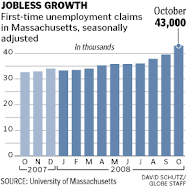







.png)