-

-
May 15, 2009
Pittsfield never cleaned up a great majority of its PCB toxic waste cancer causing pollutants. Instead of cleaning up the mess GE - America's most elite corporation - left behind, the former-Mayor, Gerry Doyle signed the Consent Decree in one of his many alcoholic stupors. The Consent Decree met the EPA's regulatory approval by capping -- NOT cleaning - much of the toxic waste that has caused cancer in thousands of local residents, including my mother. The caps only last from less than one day to a maximum of 25-years. Once one of the caps becomes defective due to a tear, leak, or age, the toxic waste continues to cause cancer in local residents by polluting the land and water around them. The biggest capped toxic waste site abuts an elementary school filled with thousands of local school children over a period of 25 years. Pittsfield - my native hometown - is a toxic waste site that needs Superfund status sooner rather than later. Mayor Jimmy Ruberto & co. took GE's $10 million bribe and gave it to their special interests instead of job creation. In fact, joblessness continues to be Pittsfield's reality, which will be followed by increasing numbers of cancer victims. Political Corruption - see Peter J "Lobbyist" Larkin - via special interests continues to be Pittsfield's hallmark signature!
- Jonathan Melle
-
www.topix.net/forum/source/berkshire-eagle/THJ9L29GQOMM2FGCH
-
-----------
"Transformer buildings next: PEDA still optimistic about redevelopment of property"
By Tony Dobrowolski, Berkshire Eagle Staff, Friday, May 15, 2009
PITTSFIELD — General Electric has begun the final phase of cleanup at the William Stanley Business Park of the Berkshires, a job that involves demolishing several massive buildings at the company's former transformer manufacturing plant.
The work, conducted by local contractor J.H. Maxymillian Inc. of Pittsfield, began this week. It is expected to take between 12 and 14 months to complete, said William M. Hines Sr., the interim executive director of the Pittsfield Economic Development Authority, which is charged with developing the 52-acre site.
Known as the "teens" area, it is a 15-acre parcel bordered by the CSX Railroad tracks to the south, Woodlawn Avenue to the west, and Tyler Street Extension to the north. It includes five buildings, some of them as large as 100,000 square feet, Hines said.
"The five buildings will be coming down," Hines said. "They will be chopped up and used for fill later on."
Once the buildings have been demolished, GE will perform any additional cleanup work before turning over the 15-acre parcel to the Pittsfield Economic Development Authority, or PEDA.
Under the terms of the 10-year-old consent decree with Pittsfield, GE is required to both demolish and remediate each section of the 52-acre site before the land transfers can occur.
GE has only transferred half of the site to PEDA. The remainder is located in the teens parcel and what is known as the "40s" area, which is located along Kellogg Street across from PEDA's executive offices. The 40s area has already been remediated, and Hines said the details of the transfer are being worked out.
"We're nearly at the point where they're ready to transfer it to us," Hines said. He said he expects PEDA to take control of the 40s area by the end of the summer.
General Electric Co. spokesman Peter O'Toole did not return a telephone call seeking comment.
Hines called the work on the teens complex a "huge step" in the overall development of the Stanley Business Park. The acreage that GE has already turned over to PEDA is hilly, Hines said, while the land that includes the teens and 40s complex is flatter, which makes it more suitable to accommodate larger structures.
"That's why it's a huge step in the right direction," he said.
Although the demolition and remediation of the 26-acre parcel bordering East Street has taken place, workers are still performing infrastructure improvements that include removing storm drains, sewers and gas lines, Hines said. Those improvements are expected to be completed by January 2010, according to Hines.
The goal is to make that parcel "shovel-ready" for potential clients, Hines said.
As part of the consent decree, GE is also required to clean nearby Silver Lake. Although that project does not involve PEDA, Hines said it is a two-year project that will probably begin next year.
-
To reach Tony Dobrowolski: tdobrowolski@berkshireeagle.com, or (413) 496-6224.
-
-----------
-

-
"Ellen Ruberto, mayor's wife, dies at age 62"
Berkshire Eagle Staff report, Wednesday, July 22, 2009
PITTSFIELD -- Ellen Reynolds Ruberto, the wife of Pittsfield Mayor James M. Ruberto, died peacefully at their home this morning after battling a rare form of cancer, the mayor's office has confirmed. She was 62.
Diagnosed in 2005, Mrs. Ruberto underwent treatment for the cancer, and later was given a clean bill of health. The cancer recurred in 2007.
In May, Mrs. Ruberto accompanied her husband to City Hall, hand in hand, as he took out nomination papers to seek a fourth two-year term in November. It was a moment that captured her endurance and displayed the strong bond that existed between them.
The Rubertos made it clear that they made decisions in running for mayor together, and considered her illness in choosing to run for election.
In 2007, when the couple took out mayoral nomination papers at City Hall, Mrs. Ruberto said they "take things as they come." The "best course of action was to move forward," the mayor said the night he was re-elected in 2007.
Married 40 years in August, the couple graduated from St. Joseph's High School in 1964. They have no children.
Details for services will be announced this week.
A statement from the mayor's office said "the family asks that the public respects their privacy during this time."
-
www.topix.net/forum/source/berkshire-eagle/TI70SBTM5PD136PR9
-
-----
July 22, 2009
My heart goes out to Ellen Reynolds Ruberto and her family. She was a very nice person. I always sent her my regards. My mom had cancer twice -- once in 1990 & again in 2006 -- and I am thankful my mother survived this horrible disease. Pittsfield has a terrible toxic waste problem left behind by Jack Welch's GE in the form of PCBs that causes cancer in local residents. I have read, heard and saw thousands of local residents contract cancer, including my mother twice over. Pittsfield needs to clean up its toxic waste sites! Mayor Jimmy Ruberto should NOT have put his wife under the stresses and rigors of politics. He should have taken care of her instead. While I am saddened by Ellen's passing, I am upset with Pittsfield's cancer cases caused by left behind toxic waste sites and the Mayor who put his political interests above the needs of his suffering wife.
- Jonathan Melle
-----------
-

-
Some community leaders believe signs of life should have emerged by now in the William Stanley Business Park. Half of the 52-acre site has been under the control of the Pittsfield Economic Development Authority (PEDA) for four years. (Holly Pelcyznski / Berkshire Eagle Staff)
-
"William Stanley Business Park: A blank space"
The Berkshire Eagle, By Tony Dobrowolski, Berkshire Eagle Staff, 7/26/2009
PITTSFIELD -- In drawings and diagrams, the William Stanley Business Park resembles a college campus, with attractive brick buildings laid out on landscaped sites that are bordered by green, leafy trees.
This is how the Pittsfield Economic Development Authority (PEDA) envisioned the business park when the General Electric Co. agreed to turn 52 acres of its former transformer facility over to the quasi-public agency formed by the state Legislature in 1998 to develop the parcel.
A decade later, that vision for the business park -- and the hundreds of new jobs that could have come with it -- are still just concepts. Discussions have taken place with prospective tenants, but nothing has panned out, leaving the park as vacant as it was 11 years ago.
Even though PEDA’s acting board chairman says that half of the park’s land is ready to be built on, there hasn’t been one nail hammered on new construction, and some community leaders believe the organization should have done more with the park by now. Potential tenants cite a host of problems -- from high costs to unbuildable soil to stringent building restrictions by PEDA -- that have kept them away.
This is just one more challenge amid the recession for the William Stanley Business Park, already saddled with the name "brownfield," a term that refers to former industrial complexes such as GE’s transformer facility, where redevelopment is hampered by environmental contamination, in this case PCBs.
PCBs, or polychlorinated biphenyls, are suspected of causing cancer in humans and have been linked to developmental problems in children.
On the site, 26 acres have been under PEDA’s control for four years. The remaining acres are controlled by GE, which is expected to turn over an additional 15-acre parcel to the agency in the fall. Those 41 acres have been cleaned of PCBs in accordance with state and federal levels regarding commercial and industrial development.
The demolition of buildings on the final 11 acres of the 52-acre Stanley site began in May and was expected to take 12 to 14 months.
Community leaders who are skeptical about PEDA’s role in the park cite the lack of tenants; goals and projections that fell short; and a lack of communication between the board and the public regarding the board’s activities at the former GE site, which runs approximately from East Street north to Tyler Street Extension.
"How many times have we heard that this is going to happen and that is going to happen, and it hasn’t happened," Ward 5 City Councilor Jonathan N. Lothrop said.
Ward 6 Councilor Daniel L. Bianchi, at a PEDA briefing at a City Council meeting in April, questioned whether PEDA’s six board members -- Mick Callahan, Ben Kaplan, Sharon Harrison, MCLAPresident Mary Grant, board chairman Gary S. Grunin, and Mayor James M. Ruberto -- have what it takes to develop the site.
"Maybe this task is too large for the current makeup of the board, and more than the board can handle," Bianchi, now a candidate for mayor, told The Eagle in June. "Do we have the right people? Do we have enough people? Do they have the right capabilities?"
Gerald S. Doyle Jr. -- Pittsfield’s mayor when PEDA was formed -- and former Pittsfield-based state Rep. Peter J. Larkin also said they thought redevelopment would be further along than it is now.
Ruberto and William M. Hines Sr. -- PEDA’s interim executive director -- say they understand the anxiety over the lack of development at the William Stanley Business Park.
"Nobody’s more frustrated than the two guys in this room," Ruberto said during a joint interview with Hines this summer. "Nobody’s more frustrated than me. But I truly believe that we are going to be creating the kinds of partnerships that are going to be necessary to make that site eminently successful."
"I think maybe we’ve done a poor job in overselling the time factor of getting all this transition done and turning this into a park," said Hines, who as PEDA’s leader earns $5,000 a month in funding supplied by GE. "And I think we’ve done a bad job in aligning expectations with reality."
Larkin said he believed that, within three to five years of PEDA’s inception, the William Stanley Business Park would have enough tenants to create 500 jobs.
"Certainly everyone is disappointed that there hasn’t been more development," said Larkin, now a consultant for the biotechnology industry. "That being said, people have been trying hard."
Under an agreement finalized between GE and the city of Pittsfield in 2000, redevelopment of the business park includes the cleanup of chemical contamination, the demolition of decrepit buildings, and landscaping improvements.
Since Hines -- the retired CEO of Pittsfield-based Interprint Inc. -- replaced Thomas E. Hickey Jr. as PEDA’s executive director on an interim basis in February 2009, Ruberto said the board has developed subcommittees designed to make it easier for information about the business park to reach the public. PEDA also has released a new marketing and communications plan, along with a new Web site, williamstanleybusinesspark.com, that are designed to make the business park more visible.
But unsuccessful attempts to lure new tenants -- including local companies Sinicon Plastics, Unistress Corp., Nuclea Biomarkers LLC, and Sabic Innovative Plastics -- have been the norm during the existence of PEDA, which is not overseen by any state agency but like other state redevelopment agencies is required to file yearly reports with the state auditor’s office regarding its actions and expenditures.
Glen Briere, a spokesman for the auditor’s office, said he isn’t aware of any problems with PEDA’s previously filed reports.
But a lack of problems with the state hasn’t translated into success with the business community.
Two years ago, Unistress agreed to build a multimillion-dollar metal fabrication facility at the business park, but backed out a month later when it was determined the soil wouldn’t support the building without a significant additional investment.
Last year, the House and Senate approved $6.5 million for an incubator building at the Stanley Business Park as part of a $1 billion life-sciences bill proposed by Gov. Deval L. Patrick.
Hines, however, said the funding is tied up in the Legislature because the state was unable to find investors to purchase bonds to finance any of the projects that were scheduled to be funded.
"With [the] economy now in the state, I think we would be hard-pressed to get that money released with or without a bond for this park," Hines said.
Regarding business-leader claims that PEDA has too many building restrictions, Hines said: "PEDA doesn’t require businesses to put up a specific kind of building, [but] we have [certain] expectations."
As for the future, Hines said a regional telecommunications company and a firm that manufactures pre-engineered homes have expressed an interest in relocating to the park. He said the telecommunications company is interested in building a 10,000-square-foot structure to accommodate its technical and customer support operations with 20 or 30 employees on a site bordered by East Street and Woodlawn Avenue.
"I hope later this year to have the foundation started for that first building," Hines said. "That’s a hope. A lot of things have to fall into place for that to happen. But if and when it happens, I expect it to happen this year."
Hines and Ruberto said PEDA also plans to renew its partnership with the Massachusetts Development Finance Agency, which provides financial tools and real estate expertise for former industrial sites through its Brownfields Redevelopment Fund.
Also, PEDA and the Berkshire Economic Development Corp. have started working together to recruit new tenants, and Patrick has included the William Stanley as one of the state’s "municipal growth districts," which means prospective tenants are eligible for incentives and a streamlined permitting process if they agree to relocate there.
BEDC President David M. Rooney said his organization has a variety of financial incentives -- including investment and tax-credit programs, along with workforce training and hiring grants -- that it could offer.
"This doesn’t have to be five more years before there’s a successful tenant on the site," Rooney said. "Now that you’ve got a site that’s got the infrastructure in place and is ready [to go], we can really aggressively market it."
When PEDA decided not to renew Hickey’s contract in January 2009, Hines said the agency needed an executive director who had more expertise in marketing, attracting businesses and accessing economic incentives, rather than in technical processes and engineering.
Hickey, who had been PEDA’s executive director since the agency’s inception, declined to comment on his departure from PEDA.
While the inability to meet goals and projections are viewed by some as a lack of progress, PEDA board members say they have spent the past decade navigating the 52-acre William Stanley site through the complex process required to prepare the land for development.
"Everybody wants to see something happen," said Callahan, the only original member of PEDA’s board. "But I think what ends up happening is you need to position the site to have conversations to that prospect."
Barbara Landau, the PEDA board’s environmental lawyer, said the cleanup of the former GE site is difficult because of the number of agencies involved.
Besides GE and PEDA, decisions have to be approved by the state Department of Environmental Protection and federal and state environmental agencies.
"In Massachusetts, it is one of the more complicated ones," she said, referring to brownfield sites in general. "Multiple parties are involved. There’s a lot of unknowns in the ground. There are different goals among each of the parties. ... It’s not like we’ve done this before."
-
To reach Tony Dobrowolski: tdobrowolski@berkshireeagle.com, or (413) 496-6224
-
www.topix.net/forum/source/berkshire-eagle/T0SQ9MO2V2ORN7EBP
-
-----------
'Infrastructure issues'
By Tony Dobrowolski, The Berkshire Eagle, Sunday, July 26, 2009
PITTSFIELD -- Patrick J. Muraca, the president of one of the four local companies that discussed relocating to the vacant William Stanley Business Park, said talks ended because his company would have been required to sign a 99-year lease and construct a building it could not afford.
The Pittsfield Economic Development Authority (PEDA), formed in 1998, is charged with developing the business park, located at the General Electric Co.'s former transformer plant, a site that runs roughly from East Street north to Tyler Street Extension.
A large part of PEDA's mission is to bring tenants to the park, which is undergoing the demolition of decrepit buildings, landscaping improvements, and a cleanup of chemical contamination.
Although PEDA has held discussions with companies from Berkshire County and beyond, no businesses have relocated to William Stanley since PEDA was formed.
"It looked as though there were a lot of infrastructure issues, and that it would cost $5 million to build a building," said Muraca, the leader of Nuclea Biomarkers LLC, which moved most of its operations from Pittsfield to Worcester late last year.
Muraca's company, now known as Nuclea Biotechnologies LLC, still maintains an office in Pittsfield.
"It was because of certain restrictions that PEDA was putting on you," Muraca said of the failed talks. "You had to have a certain look, you had to have a certain building. They didn't want to have it look like a hodgepodge of different buildings, but it added a significant cost to the work."
PEDA's interim executive director, William M. Hines Sr., said companies aren't required to sign a 99-year lease at the park, but can lease parts of their structures amid time limits that are open to interpretation.
Hines said PEDA doesn't require businesses to put up a specific kind of building, but added: "We have expectations. You just don't throw up an old building without enhancements."
He said negotiations involving a building for Nuclea with Muraca never took place because, "He had no business plan, and his investors in New York never came forward."
Hines said PEDA also held discussions with Sabic Innovative Plastics about six months ago when the company was considering moving its polymer processing facility to the William Stanley from Building 100 on the GE site, a distance of less than a mile.
According to Hines, Sabic decided not to move the facility because it was less expensive to keep it where it was.
Sabic officials could not be reached for comment about the decision.
In June 2007, Unistress Corp. announced plans to build a multimillion-dollar fabrication facility at William Stanley, but backed out a month later when tests revealed that the soil on Silver Lake Boulevard would not support the structure without an underground support system.
Company officials determined the construction project would take too long and cost an additional $200,000.
PEDA also held discussions with Sinicon Plastics Inc. of Pittsfield, which has outgrown its current 12,000-square-foot facility on West Housatonic Street. But that company decided to relocate to Dalton instead.
Sinicon President David K. Allen said the move to Dalton, which he expects will occur in August, is "a better setup for me" because he purchased a 35,000-square-foot building that will solve his company's future expansion needs.
"If I had built a 15,000- or 25,000-square-foot building and wanted to expand it, it would have been more expensive to do," Allen said of the possibility of relocating to William Stanley. "And I have eight acres of land.
"It wasn't like it didn't work out," Allen added. "Things were working in tandem, and I decided to take this one."
PEDA-board chairman Gary S. Grunin said building sizes at the William Stanley Business Park depend on the location of the building lot, the company's operation, and the number of jobs a firm would bring to the area.
While the construction of a 100,000-square-foot building at the park is possible, PEDA is mainly interested in buildings in the 20,000 to 25,000 range, Grunin said.
-
www.topix.net/forum/source/berkshire-eagle/TLGNCL7F5PD7GB9E5
-
-----
July 27, 2009
A lot of infrastructure issues at the PEDA site makes the costs exceed the benefits of doing business there. It is basic economics to say if costs exceed benefits then it is inefficient to do business. The PEDA officials have been talking about economic incentives to attract business investment, but has not resolved the high costs associated with the complex and many infrastructure issues at the PEDA site. They put the cart before the horse!
- Jonathan Melle
-----------
"PEDA's past and future"
The Berkshire Eagle, Editorials, Tuesday, July 28, 2009
To read the PEDA timeline in Sunday's Berkshire Eagle is to grasp the frustrating nature of the development of the much-hyped William Stanley Business Park on General Electric's former property in Pittsfield. Progress in clearing and developing the site has come with painstaking slowness, in large part because as a brownfield, an alphabet soup of agencies has input in what goes on there. The result, with the poor economy factored in, is that relatively little has taken place.
It is a painstaking process, but much of the 52 acre site has been cleared of PCBs, the contaminant that was long associated with Pittsfield. Most of the decaying buildings that gave that section of the city a firebombed-Dresden appearance are mercifully gone. But that is where the park is stalled more than a decade since the PCB consent decree made it a reality. The promise of new businesses and the jobs that go with them is still unrealized.
We agree with interim Executive Director William M. Hines Sr. in Sunday's Eagle that the board oversold the park's ability to draw new businesses given the realities of the slow process, creating expectations that could not be met. But the board of the Pittsfield Executive Development Authority waited a long time, until earlier this year, to seek someone with marketing expertise for the executive director's job long held by Thomas Hickey. The board should at least consider someone from outside the Berkshires for this position because while the PEDA hierarchy has consisted of accomplished people, it has been insular in nature as well. This official should be hired in large part on the basis of communication skills, as PEDA's actions and strategy have too long been a mystery to elected officials and residents of the city alike.
The board will need to lower its expectations as to the type of company it can attract, at least for now. The brutal economy has made it more difficult to attract businesses over the past couple of years, compounding problems Pittsfield faces, such as a poor road network and rail access that is lacking compared to potential rivals.
It is encouraging that PEDA is working with the Berkshire Economic Development Corporation in seeking new tenants. Governor Patrick's inclusion of the park as one of the state's municipal growth districts should help reduce the red tape that so frustrates communities and businesses.
And while the park hasn't gained much over the last decade, it hasn't lost anything, either. All the drawbacks to the facility aside in terms of soil difficulties in some areas and access to it, the decaying buildings symbolic of another era are largely gone and Pittsfield has a prime piece of industrial real estate in its center possessing considerable potential. If PEDA begins to reach that potential in the years ahead, its slow start will be forgotten.
-
www.topix.net/forum/source/berkshire-eagle/TQFP9EHO9SEHL46PM
-
-----------
-

-
CORRUPT LOBBYIST!
-

-
www.peterlarkin.com
-
Re: GE has paid Peter Larkin $192,521 in lobbyist fees over the past 3 years!
July 28, 2009
Money, money, money, MONEY! That is what Lobbyist Larkin has received from GE for creating a failed entity named PEDA!
PAYMENTS TO PETER J LARKIN FROM GE:
2006 - General Electric Co. - $14,500.00.
2007 - General Electric Co. - $58,000.00.
2008 - General Electric Co. - $119,521.00.
Over the past 3 years, GE gave Peter J Larkin a whopping $192,021.00.
www.topix.com/forum/source/berkshire-eagle/T80QIOT674UIE3HBV
1/15/2009
Peter J Larkin was the force behind the FLAWED consent decree that is now law. The problem with the consent decree is that the caps are a short-term solution to a long-term problem. The caps only last about a generation or 24-year lifespan. After the caps wear out, the toxic waste called PCB chemicals will continue to pollute the land, water and people of Pittsfield.
- Jonathan Melle

Jack Welch's financial legacy as the famed CEO for GE

Jack Welch has a DARK SIDE! His decisions were extremely economic and financial (or banal) without any morality and humanity to the people and communities he irreparably harmed. Pittsfield, Massachusetts, is a case in point. Jack Welch pulled a great majority of GE's business out of Pittsfield and killed its local economy in the process.
Moreover, Jack Welch signed a consent decree that was FRAUDULENT on so many terrible levels. GE left behind TOXIC WASTE in the form of cancer causing PCBs in Pittsfield and like areas. Pittsfield colluded with GE to cap -- NOT clean -- the numerous toxic waste sites. The crux of the problem with the consent decree is that the caps will last about a generation and then become as useless as a used condom. Around the years 2025 - 2030, Pittsfield residents will be exposed to lethal amounts of GE's left behind PCBs and even more local people will suffer and die from CANCER because of Pittsfield's deal with the Devil...excuse me, Jack Welch.
-
www.topix.net/forum/source/berkshire-eagle/TQFP9EHO9SEHL46PM
-
www.topix.net/forum/source/berkshire-eagle/T0SQ9MO2V2ORN7EBP
-
www.topix.net/forum/source/berkshire-eagle/TLGNCL7F5PD7GB9E5
-
www.topix.net/forum/source/berkshire-eagle/TQFP9EHO9SEHL46PM
-
-----------
"Grant leaves PEDA board"
By Tony Dobrowolski, The Berkshire Eagle, Wednesday, July 29, 2009
PITTSFIELD -- Citing the responsibilites that go with her job, Massachusetts College of Liberal Arts President Mary Grant recently stepped down from the Pittsfield Economic Development Authority's Board of Directors.
PEDA's interim Executive Director William M. Hines Sr. said Grant had told him in early July that she would be stepping down. The board hopes to have Grant's replacement in place within the next few months, Hines said.
Appointed to the board by former Pittsfield Mayor Sara Hathaway, Grant had attended only one PEDA board meeting between January 2008 and May 2009, according to the board's minutes. She attended the board's meeting last September via conference call.
In a recent interview, Grant said conficts with her schedule as MCLA's president had prevented her from spending more time with the PEDA board.
"Board work is demanding," Grant said. "If you can't put the energy into it, then it's time to step aside."
Grant said she also decided to step aside because her role in providing an educational training component to the PEDA board has yet to be realized.
"We really haven't gotten to that piece," Grant said.
A quasi-public agency, PEDA was formed 11 years ago to develop the William Stanley Business Park of the Berkshires. The 52-acre parcel currently has no tenants.
Hines said Grant's absences didn't affect the PEDA board's operations because there were always enough members in attendance for the meetings to legally take place. "It didn't effect the quorums," he said.
According to the organization's bylaws, appointments to the PEDA board are brought forward by the mayor and require approval by the City Council before they can take effect. Hines said he has yet to talk with Mayor James M. Ruberto about filling the vacancy.
"I would say that we will fill that role within the next couple of months," Hines said.
In April, the City Council approved Ruberto's appointment of Ben J. Kaplan to the PEDA board. Kaplan, who is a member of Pittsfield's Zoning Board of Appeals and works for a marketing firm, replaced Osmin Alvarez, the CEO of Boxcar Media of North Adams.
-
To reach Tony Dobrowolski: TDobrowolski@berkshireeagle.com - (413) 496-6224.
-
www.topix.net/forum/source/berkshire-eagle/TEV3BOF1LCB6597L3
-
-----------
"Mixed signals block funds"
By Tony Dobrowolski, Berkshire Eagle Staff, Saturday, August 1, 2009
PITTSFIELD -- The Pittsfield Economic Development Authority has yet to submit a detailed proposal to the Massachusetts Life Sciences Center for an incubator building at the William Stanley Business Park, according to Susan R. Windham-Bannister, MLSC'S president and CEO.
Gov. Deval L. Patrick's $1 billion life-sciences bill, approved last year, included a $6.5 million earmark for the incubator site, but PEDA has not received any funding.
PEDA was formed in 1998 to develop the 52-acre business park, but it has remained vacant.
On Friday, PEDA's interim executive director, William M. Hines Sr., said he was confused about Windham-Bannister's comment, because PEDA had submitted detailed architectural drawings of the incubator building to the state Legislature in order to obtain the earmark on the bill.
But Angus McQuilken, the MLSC's vice president of communications, said those who already have received earmarks are required to submit a second detailed proposal to the Life Sciences Center so it can determine which projects are considered "shovel-ready."
"First you need to submit the project to the Legislature," McQuilken said Friday. "The next step is to submit detailed information to the center so that we can vet it and evaluate it."
Hines could not be reached for additional comment Friday, July 31, 2009.
The Life Sciences Bill includes $500 million to fund a variety of capital projects over the next 10 years, McQuilken said. The bill already has $300 million in earmarks, including the $6.5 million slated for PEDA's incubator building. He said the MLSC needs to determine how each project fits into the funding for its capital campaign.
"We have not had a conversation with them [PEDA] yet, which says to me that they're not quite ready to go," Windham-Bannister said this week. "A lot of projects have not approached the center yet."
"I think PEDA needs to flesh out the proposal more before it can receive the funding from the Life Sciences Center," said state Sen. Benjamin B. Downing, D-Pittsfield.
Given the current recession, Downing said the state's borrowing capacity remains difficult. He said investors are more willing to purchase bonds to finance roads and schools, than to finance economic development projects.
"I think the Life Sciences Center is trying to be cautious and prudent with taxpayer dollars," Downing said.
The Massachusetts Life Sciences Center is a quasi-public agency created by the Legislature in June 2006 to promote the life sciences within the state. It is charged with investing in life-sciences research and economic development, which includes making financial investments in public and private institutions.
Windham-Bannister said the Life Sciences Center has invested $48.5 million in public funds in a variety of projects during fiscal 2009, which attracted $359 million in matching investment and created 950 jobs. In fiscal 2010, the center plans to award $25 million in tax incentives, but additional funding has yet to be determined.
Berkshire County's open spaces, natural resources and skilled workforce, along with the presence of a major medical facility in Berkshire Medical Center, make the area attractive to the biotechnology industry, Windham-Bannister said.
-
www.topix.net/forum/source/berkshire-eagle/TT08KFSRV1VGRQF9E
-
-----
"Restrictions cripple Stanley Park"
The Berkshire Eagle, Letters, August 1, 2009
After reading your July 26 article about the blank space in the Stanley Business Park, I would like to comment on another blank in the whole situation. Your article details the allowed types of development agreed upon with GE when this proposal was conceived. I was shocked to see that the site was not to be used for the purpose of heavy manufacturing or in the manufacture of large equipment. Only light assembly was to be considered. Who agreed to this, the board of directors of PEDA and Pittsfield's city fathers? What were they thinking?
In doing this they take away all possibility of good-paying skilled jobs for welders, machinists and assembly types of people who with the support of well-paid and educated design and engineering types make the core group of citizens that enable a community to thrive economically. The allowed uses offer limited opportunities for skilled labor. Frankly, they all appear to be some kind of fantasy world job.
The last thing we need to be is a center for financial services. We are in a recession which will last another four years. Data processing and software development are nice work if you can get it, but I don't think we will see someone hanging that kind of shingle out.
How about a product manufacturer and distributor? How about a world class recycled paper mill? I wonder what kind of deals were made behind closed doors years ago to insure that Pittsfield and the surrounding towns would never again be known as a center for world class heavy manufacturing.
MARK A HANFORD
Becket, Massachusetts
-
www.topix.net/forum/source/berkshire-eagle/TNU6S9GRI3UICFQEA
-
-----------
-

-
"Kennedy kept in touch"
By Tony Dobrowolski, The Berkshire Eagle, Thursday, August 27, 2009
Sen. Edward M. Kennedy had a well-deserved national political reputation due to his long tenure in the Senate. But his political influence was assuredly felt in Berkshire County.
"A lot of people go to Washington and want to be an international senator, and be senator of everything but their states," said North Adams Mayor John Barrett III. "He achieved that. But he never forgot about the cities and towns like North Adams."
Kennedy died on Tuesday night following a 15-month battle with brain cancer. On Wednesday, state and local politicians said the Bay State's senior senator was a major influence on several pieces of Berkshire legislation, including
the 1998 consent decree that required the General Electric Co. to clean up PCB contamination in Pittsfield. Kennedy also helped defeat a federal initiative in 1995 that would have replaced the $1 bill with a coin. Its passage would have cost Crane & Co. in Dalton, which manufactures the paper used in U.S. currency, some 200 jobs.
"We would have had to most likely close a mill," said Crane & Co. CEO Charles Kittredge. "About 40 percent of the currency paper that we make is that denomination."
‘Could always go to Ted'
State Rep. Daniel E. Bosley, the dean of the county's legislative delegation with 23 years at the Statehouse, said Kennedy was as adept at local issues as he was with national ones.
"I think he's always kept in touch with what was going on out here," the North Adams Democrat said. "Whenever we needed something, we could always go to Ted Kennedy."
In 2006, Kennedy helped the Pittsfield Public Schools receive a highly competitive $3 million federal grant intended to create safe learning environments that promote healthy childhood development and prevent drug use among youths. Pittsfield was the only city in the Northeast to receive the grant that year.
The Safe School/Healthy Students Initiative also provided a steady stream of funding for the Juvenile Resource Center, which is located in the old county jail on Second Street.
"We kept [the JRC] going prior to that with criminal justice funds, which are always very, very iffy," said Berkshire County Sheriff Carmen C. Massimiano Jr., who was chairman of the Pittsfield School Committee when the three-year federal grant was awarded.
"It's still in existence today," Massimiano said, "but without Ted Kennedy's intervention, the JRC would be closed."
Brought sides to the table
The negotiations that led to the crafting of
the consent decree were highly contentious partly because 11 different agencies were involved in the discussions. GE actually walked away from the negotiating table six months before an agreement was reached.
Former state
Rep. Peter J. Larkin, who sponsored the landmark brownfields legislation that made the consent decree possible, said Kennedy's intervention kept everyone at the bargaining table.
"It fell apart on a couple of occasions," said
Larkin, who is now a lobbyist for the biotechnology industry. "He had the ability to speak to both sides on a contentious issue and bring out the best in everyone."
Referring to Kennedy's part in the negotiations, Larkin told The Eagle in 1998 that "when we needed a lion, he was it."
On Wednesday, Larkin chuckled when reminded of that statement, saying there was a lot of truth in that remark. "He was it," Larkin said.
Kennedy also sponsored myriad legislation at the national level, particularly in health care and education, that filtered down to residents of the Berkshires.
"In so many ways, people never even knew about how it affected their lives," Barrett said.
State Rep. Denis E. Guyer, D-Dalton, who was employed at Crane & Co. during the coin/currency crisis 14 years ago, said Kennedy's efforts to raise the minimum wage, his support of elderly housing, his efforts to provide health coverage to people who have lost their jobs, and his backing of funding for veterans' programs such as Soldier On in Pittsfield, also affected county residents.
"I think the fights that Senator Kennedy fought on behalf of the people of Berkshire County are some of the things that are going to carry on," Guyer said.
State Rep. William "Smitty" Pignatelli, D-Lenox, referred to Kennedy as "a champion of the middle class," and that his passing means the Berkshires have lost a "very dear friend."
"Despite the fact that Senator Kennedy experienced some very public tragedies in his family, he stayed the course in public service," Pignatelli said. "You don't have to agree with his politics, but you have to respect his commitment to serve for so many years."
Alfred Shogry, the president of the Berkshire Central Labor Council, said Kennedy had the ability to champion union causes while simultaneously promoting business.
"All of our issues he carried them right through," said Shogry, who was president of a local labor union when Kennedy visited their union hall on Tyler Street in the 1980s. The union named the hall after Kennedy's brother, former President John F. Kennedy.
"When he said he was going to do something, he did," Shogry said "Anything with collective bargaining, he was right there for us. He proved his loyalty to the workers without hurting business. Those things stuck with me, you know."
A personal touch
State Sen. Benjamin B. Downing, D-Pittsfield, saw a personal side of Kennedy that few people see. He said Kennedy called from Washington to speak to his mother the night that his father, Berkshire County District Attorney Gerard D. Downing, died suddenly in December 2003, and later sent him a handwritten note "that I still keep to this day."
Downing was a staff assistant in U.S. Rep. John W. Olver's Washington office when his father passed away.
"To think that someone with that many demands and that much power and the ability to affect people's lives called my mother and wrote me a note when I was only a staff assistant," Downing said. "That stuck with me."
Barrett said Kennedy performed a similar service when his wife, Eileen, died of breast cancer in June 1990.
"The day I lost my wife, he called that evening and let me know that he was thinking of me," Barrett said. "I couldn't deliver 10 votes for him at the time. But he took the time."
"He's sent me 60 or 70 notes over the years," Barrett added. "He always signed it with, "be good, my old friend."
-----
8/27/2009
Re: The Berkshire Eagle Editors are misleading about The Consent Decree!
While I believe that U.S. Senator Ted Kennedy helped a lot of people, and contributed to the political needs of rural Berkshire County, The Berkshire Eagle is dishonest to state: "...the 1998 consent decree that required the General Electric Co. to clean up PCB contamination in Pittsfield, Massachusetts..." is totally misleading! A great majority of the toxic waste PCB pollution in Pittsfield was capped, not cleaned. The Consent Decree was a band aid to a major injury that left behind many tons of toxic waste PCB pollution in Pittsfield. The caps do not last long, while the pollution does. The caps can become ineffective at any time, from day one to year 25. The caps need constant, daily monitoring! The Consent Decree also did NOT cover all of the PCB pollution in Pittsfield. It also left huge swaths of land and water south of Pittsfield to the Long Island Sound in Connecticut exposed to PCBs. As much as I hate to say it, maybe it is karma that Ted Kennedy died of cancer. He, along with other local, state and federal politicians, and GE executives such as then GE CEO Jack Welch, did a bad, dangerous and fraudulent thing when they concocted the bogus Consent Decree!
- Jonathan Melle
-
www.topix.net/forum/source/berkshire-eagle/TFHFECC16QENDJ0SL
-
-----------
-

-
Work continues at the William Stanley Business Park in Pittsfield. Officials from the Troy, N.Y-based CornerStone Telephone Co. say they are willing to locate a $5 million office structure at the business park if the federal government agrees to provide financial support. (Darren Vanden Berge / Berkshire Eagle Staff)
-
"Park could see tenant"
By Scott Stafford, The Berkshire Eagle, 9/17/2009
PITTSFIELD -- The CornerStone Telephone Co. is willing to locate a $5 million, 13,000-square-foot data center and office structure in the William Stanley Business Park of the Berkshires if the federal government provides financial support.
Officials of the Troy, N.Y. firm told the Pittsfield Economic Development Authority’s Board of Directors on Wednesday that the company would be willing to construct the operation if the federal government approves a $3.7 million stimulus grant for the project. The data center and office would bring up to 30 jobs to the area within three years, CornerStone officials said.
If the project goes through, CornerStone would become the Stanley Business Park’s first tenant. PEDA, formed in 1998, is charged with developing the Stanley Business Park, which is located on part of the General Electric Co.’s former transformer facility.
Five shovel ready building sites are expected to be available at the Stanley Business Park by January, PEDA’s Interim Executive Director William M. Hines Sr. has said.
Rick Drake, CornerStone’s CFO, said the new building will allow the sale of a variety of services, including broadband interconnection, network traffic and router management, trouble dispatch and repair, billing and collecting services, data storage and disaster recovery services.
He said the Pittsfield location is perfect for attracting industry customers from New York City, Boston, Springfield, Albany, N.Y. and Hartford, Conn.
"We think this location is key, and we believe the project is needed," he said.
Drake referred to the project as the Western Massachusetts Broadband Operations Center.
Dan Yamin, founder and CEO of CornerStone, said this operation would allow them to bring their broadband management needs into their own building rather than paying another company for the service.
"This would be a new business for us -- with it we can bring our services in-house in addition to bringing in a sales staff to market our services," he said.
Much of the need for these services is driven by the Massachusetts Broadband Institute, which has applied for federal funding to install a fiber optic system throughout Western Massachusetts that would provide high speed Internet access to the entire four county region. This broadband infrastructure will generate more broadband activity and the need for commercial-level broadband management services, which CornerStone hopes to provide, Drake said.
Growth for the data center operation will happen quickly during the first three years, as different phases of the fiber ring comes online, Yamin added.
Jobs at the data center will include network engineers, a position that pays up to $100,000 per year, and network technicians, a job that pays up to $60,000 per year.
There will also be a need for customer service and help desk specialists and back office help, which pay up to $30,000.
The grant application for $3.7 million from the Broadband Technologies Opportunity Program was supported in writing by the City of Pittsfield, Berkshire Health Systems, the Berkshire Economic Development Corporation, the Richmond public schools, U.S. Sen. John F. Kerry, State Rep. Christopher N. Speranzo, State Rep. Denis E. Guyer, and State Sen. Benjamin B. Downing. The grant funding is part of the American Recovery and Reinvestment Act.
Even if the grant is approved, the company would still need to secure an additional $2 million in funding, Drake noted.
If all funding is secured, construction is expected to start during the second quarter of 2010. The building will be fully operational by early 2011.
CornerStone is the same company that established a local presence last March when it purchased Richmond Telephone and its subsidiary Richmond Networx.
During his presentation, Drake noted that CornerStone was founded in 2002 and had achieved positive cash flow by early 2003. The company had total revenues of $26.2 million in 2007, $30.5 million in 2008 and a projection of $38 million in 2009.
Berkshire Economic Development Corporation President David M. Rooney said CornerStone and PEDA have been working together on the idea of bringing a facility at the business park for about three months.
"We think this project makes a lot of sense -- it creates local jobs, regional business opportunities and activity at the William Stanley Business Park," he said.
-
To reach Scott Stafford: sstafford@berkshireeagle.com.
-
-----------
"Path toward a better PEDA"
By Rinaldo Del Gallo, The Berkshire Eagle, September 23, 2009
PITTSFIELD, Massachusetts
This column is intended to offer positive and upbeat suggestions for PEDA's future.
1. Restructuring of PEDA Board: We need to amend the Pittsfield ordinance that creates the PEDA board, and if necessary, seek modification of the state enabling act. The "independent agency" concept simply did not bring about the needed accountability and transparency. The executive director of PEDA should directly report to the mayor and City Council. PEDA is not a private business and giving it the trappings of a private business has proved fruitless. Board members should be removable at the discretion of the mayor and City Council.
2. A new board and executive director: It is now time for new direction. Ideally, the new board will have a business or general practice lawyer, an environmental lawyer, someone with environmental and civil engineering expertise, more than one person with experience in industrial real estate, someone with experience in finance and venture capital, someone with experience in marketing, and several people with experience in economic development. The executive director must have a background in industrial park development, ideally with industrial parks that were formally brown fields, and ideally would also have an economic development background.
3. Fort Devens Model and Massachusetts Development: One of the most successful industrial developments has been Fort Devens, Massachusetts, which is a former army base and a Superfund site. It is now teeming with quality employers. Massachusetts Development has made Fort Devens the success it is today. If Massachusetts Development is not working for us the way they did for Fort Devens, we need to find out why and rectify the problem, perhaps with the help of the governor and Berkshire delegation.
4. Get the facility ready: Unfortunately, we are selling something yet to be. Those fancy schematics need to become realities. The consent decree was signed a decade ago. According to a recent discussion with board member Gary Grunin, GE is responsible for demolition and removal of old buildings. There must be some contractual obligation the Consent Decree that bound GE, Pittsfield, and the EPA. If there was no express time table for demolition, courts will usually impute a reasonable period. An attorney needs to look into the matter.
If GE and the EPA are constantly fighting and preventing demolition and clean up, it is time for court intervention. We should drastically reducing spending money on executive directors and marketing efforts until we have a usable facility to prevent further dissipation of limited funds. Until we have an inventory of available, fully serviced sites, we might want to hold on to these precious PEDA funds.
5: Account for money spent: According to the mayor's office, of the $15.3 million set aside for PEDA (not to be confused with the $10 million of the GE Economic Development funds), only $6.5 million is left. This money should be reviewed by an independent auditor to make sure that it is not allocated for expenses that GE was to pickup. A breakdown of the expenditures needs to be more accessible. The loss of the type of line item review usually associated with government expenditures is one of the most disconcerting aspects of the entire project. PEDA is quickly becoming just another industrial park without significant incentives because the money is disappearing.
6: Foster greater transparency and awareness: Someone at PEDA must become a member of Pittsfield Community Television, get a camera, put it on a tripod, put a microphone on the table, and start taping the meetings. They could have PEDA meetings in the City Council chambers for a more professional appearance. There should also be quarterly reports to the Pittsfield City Council both orally and with short write-ups. Annual reports should be available online and at City Hall. There should be annual or biannual town meetings with a presentation and Q&A sessions to foster community awareness and support.
7. Web site and incentive packages: Why come to the William Stanley Business Park? The answer should be simple and clear and concise, with room for some flexibility based upon various criteria, and the information should be massively disseminated. A 25-year-old with a marketing degree should be able to make a sensible presentation to corporate prospects.
Why go to Fort Devens?: "Expedited permitting including a 90-day max on the permit process and one stop-shopping, open spaces, low real estate taxes, its own municipal utility services which offers highly competitive utility rates, and easy access to key labor pools." Why go to PEDA? I do not know, and that is a serious problem.
Instead, there has been such an emphasis on "flexibility" and "individual needs," we have no known coherent set of incentives for people to locate here. We need to implement and make known one-stop shopping for permits, a 90-day max on permits, as well as establish the criteria for tax rebates or forgiveness, financing, and other incentive packages. To PEDA's credit, there have been some improvements in the permitting department, but this has been abysmally advertised making one wonder if the program really is in place.
Our failure to create a coherent set of incentives based upon given criteria has hindered lead development. There is no reason to put us on any initial list of considered sites. Known incentives would give a reason for someone to stop by a booth at a tradeshow or respond to an advertisement. An approach of having known incentives based upon known criteria would allow present citizens and indigenous corporations to be ambassadors and salespeople with something to sell other than scenic beauty and cultural amenities.
Better still, we could offer some type of cash reward system, as some councilors are suggesting, for those companies or individuals that do introduce future tenants.
8. Federal and state cooperation: Finally, we will need to cultivate state and federal cooperation to provide additional tax incentives, funding, and support services.
-
A writer and attorney, Rinaldo Del Gallo is an occasional Eagle contributor.
-
-----------
-

-
Secretary of Housing and Urban Development Gregory Bialecki talks with PEDA officials and others Friday in Pittsfield. (Caroline Bonnivier Snyder / Berkshire Eagle Staff)
-
"School eyeing Stanley parcel"
By Tony Dobrowolski, The Berkshire Eagle, Saturday, October 31, 2009
PITTSFIELD -- The Pittsfield Economic Development Authority has signed a letter of intent to enter into discussions with a career-training organization that is interested in developing a new campus for a two-year private technical college at the William Stanley Business Park of the Berkshires.
Premier Education Group, a career training organization that serves more than 10,000 students at 25 campuses from Delaware to Maine, is interested in constructing a 20,000-square-foot building at the Stanley Business Park that would serve as a new campus for Salter College of West Boylston, which is one of the institutions that the organization runs.
PEDA is a quasi-public agency that is charged with developing the Stanley Business Park, which is located on 52-acres of General Electric's former power transformer facility. PEDA was formed 11 years ago. If the deal goes through, Salter College would be the park's first tenant.
The announcement came on the same day that Secretary of Housing and Economic Development Gregory Bialecki met with city and state representatives at the PEDA offices on Kellogg Street to discuss the progress of the park.
Bialecki said the ongoing infrastructure improvements at the Stanley Business Park are an important component of the overall development of the parcel in making the site more attractive to potential clients.
The letter of intent allows PEDA to begin negotiations with Premier Education Group on the construction of the facility. But PEDA's interim Executive Director William M. Hines Sr. said there's a good possibility that an agreement will be reached before the end of this year.
"There's a strong indication that it's going to go forward," Hines said.
Hines said Premier Education Group would like to have the facility constructed so the new campus can open next fall. Salter College would probably have 10 to 15 employees on staff in Pittsfield, who would be hired locally, Hines said. Student enrollment would be between 400 and 450 pupils, he added.
Mayoral candidate Daniel L. Bianchi, who has been highly critical about a lack of progress at the PEDA site, found the timing of the announcement "very interesting" considering it came four days before the mayoral election.
"I know that just a few weeks ago Bill Hines was quoted as saying that we had a couple of needle-in-the-haystack type projects which seemed like million-to-one shots to me," he said.
"Obviously, I'm happy to have any projects at that site," Bianchi said. "I guess I'll take a wait-and-see attitude and be hopeful."
Gary Campbell, the president and CEO of Premier Education Group, could not be reached for comment on Friday. But in a written statement, Campbell said that Berkshire County, Pittsfield, and the Stanley Business Park fit the organization's business model to continue to expand its education program throughout the Northeast.
"A new campus for Salter College makes sense for the Pittsfield area, and this site is a great location for development," Campbell said. "We are excited about this opportunity and looking forward to finalizing it."
According to Hines, GE is willing to waive a stipulation in its Definitive Economic Development Agreement with PEDA that prohibits educational institutions from being located at the Stanley Business Park.
Salter College provides technical training programs for a number of professions including accounting, office administration, medical assistance, massage therapy, the culinary arts, and HVAC technology.
Hines said the culinary, HVAC, and medical assistance programs are some of the initiatives that would be located in Pittsfield.
PEDA has two other projects in the works: The CornerStone Telephone Co. of Troy, N.Y., has expressed an interest in locating a $5 million, 13,000-square-foot data center and office structure at the Stanley Business Park, if the federal government approves $3.7 million stimulus grant for the project.
The Stanley Business Park is also one of eight sites that the Western Massachusetts Electric Co. has chosen as sites for large scale solar power facilities in its coverage area. Hines said the solar proposal is "moving along very quickly," while Community Development Director Deanna L. Ruffer said construction should begin next year.
Earlier this week, the Massachusetts Biotechnology Council certified the city of Pittsfield as a BioReady Community. Through cooperation with the Department of Community Development and PEDA, the city has met multiple criteria in order to receive the gold, or highest rating, from the Massachusetts Biotechnological Council.
-
To reach Tony Dobrowolski: tdobrowolski@berkshireeagle.com, or (413) 496-6224.
-
www.topix.net/forum/source/berkshire-eagle/TCRUOPB0OLQJGCQA7
-
-----------
"Optimistic after PEDA meeting"
The Berkshire Eagle, Letters to the Editor, December 18, 2009
With all the negative publicity and accusations of a lack of transparency surrounding PEDA during the mayoral elections in November, I checked it out for myself on Wednesday, Dec. 16.
What I expected was almost a "skull and bones society" meeting steeped in secrecy and hidden agendas. Why wouldn't I think that way? For after all, PEDA was a huge controversial campaign issue that often painted the PEDA board as an impotent waste of time full of Ruberto appointees who weren't getting the job done. What I discovered was an open, energetic and confident board in the throes of some serious accomplishments.
The $10 million WMECO solar power project will be generating electricity on site by next fall. That, combined with the waste water treatment solar project, means Pittsfield will be generating more solar power than anywhere else in New England. That will get us noticed regionally for sure.
Premiere Education Group is in substantive negotiations with Bill Hines to move to the William Stanley site. Serious inroads have been made for Cornerstone Telephone financing through state and federal broadband initiatives. The working relationship with G.E. is on solid ground -- one need only to drive by the site to see that. In addition, a total upgrade of the PEDA marketing approach is beginning to be implemented. All this happening while huge demolition and clean-up is taking place getting the site shovel ready.
This is good stuff Pittsfield. PEDA is in good hands and I encourage anyone and everyone to attend these meetings.
SHERMAN L. BALDWIN
Pittsfield, Massachusetts
The writer is host of "Talk Berkshires" on WBRK.
-
www.topix.net/forum/source/berkshire-eagle/TOR1UFBFQI8BMJ9GG
-
-----------
-

-
Workers demolish a part of the old GE campus in June to make way for the expansion of the William Stanley Business Park, which is being developed by the Pittsfield Economic Development Authority. PEDA hopes to land its first tenant for the business park this year. (Eagle file photos)
-
2010: A look ahead
"A year to rebuild: Myriad development projects could lift flagging economy"
By Tony Dobrowolski, Berkshire Eagle Staff, January 1, 2010
Like the rest of the country, Berkshire County is mired in the recession, but a variety of economic development projects could come to fruition in the county this year.
Eleven years after it was formed by the state Legislature to develop the William Stanley Business Park, the Pittsfield Economic Development Authority took possession of most of the 52-acre parcel in 2009 and might be close to landing its first tenant.
In October, PEDA signed a letter of intent to begin discussions with the Premier Education Group, a career training organization that is interested in constructing a 20,000-square-foot building at the business park to serve as a new campus for a technical college it runs.
Two other projects -- a data center for The CornerStone Telephone Co. of Troy, N.Y., and a large-scale solar power facility for the Western Massachusetts Electric Co. -- also are in the mix.
Deanna L. Ruffer, director of Pittsfield's Community Development Department, has said construction of the solar power facility should begin in 2010.
Other development this year could come from Interstate Biofuels of Roslyn Heights, N.Y., which is interested in refurbishing Schweitzer-Mauduit's former Niagara and Centennial mills in Lenox Dale as part of a proposed $30 million biodiesel production facility that would produce 15 million gallons of the renewable energy each year.
A developer from Braintree is interested in developing an eight-acre parcel behind the Berkshire Crossing Shopping Center in Pittsfield for a BJ's Wholesale Club store that would create 120 new jobs.
A local company purchased the Searles/Bryant complex in Great Barrington for $800,000 in 2009 and is expected to start turning it into a multiple-use development this year.
Here are other stories to keep an eye on in 2010: Education
The proposed Housatonic River Charter School in Great Barrington has created controversy already, and the debate probably will intensify before the state considers the proposal in February or March.
Proponents of the school claim it will provide alternative educational opportunities for South County youngsters. Opponents say it will siphon too much funding from the four school districts that will be most affected.
In Pittsfield, the debate over the future of the city's two public high schools will continue. The Massachusetts School Building Authority is backing a proposal for some type of high school building project. Taconic High was chosen for consideration because the SBA forced the School Building Needs Commission to select just one school.
The Adams-Cheshire Regional School District is in the process of hiring an architect to complete a feasibility study to determine possible future uses for Adams Middle School, which closed in June.
Almost every county school district was affected by Gov. Deval Patrick's decision to cut $128 million in state aid to local municipalities in order to plug a $1.1 billion budget shortfall last year.
Although state Chapter 70 school aid wasn't cut in 2009, school districts were forced to cut services during the fiscal 2011 budget process. More state cuts are expected this year.
Construction
The state Highway Department is expected to complete the renovation of South Street in Dalton by this summer, according to Dalton Town Manager Kenneth Walto. The construction of Dalton's $1.3 million, 5,000-square-foot senior center will go out to bid this winter. The project is likely to be completed in the fall.
The straightening of the Park Square rotary in Pittsfield is expected to be completed after the holidays.
The second phase of Pittsfield's Streetscape project -- refurbishing the section of North Street from Park Square to Columbus Avenue -- will go out to bid in late summer or early fall.
Census
The U.S. Census, held once every 10 years, will take place in 2010. Ten-question census forms will be mailed to Berkshire residents in March, and are required to be returned in April.
Population data obtained through the census determines the state's share of $400 billion in annual federal funding for a variety of projects, including transportation and education initiatives.
Shakespeare & Company
The Lenox theater company, which is more than $10 million in debt, enters the new year trying to restructure its financial obligations so that it can remain active for a 33rd season.
Shakespeare & Company needs to raise $2.3 million by March -- and millions more in long-term funds -- to avoid dissolution or bankruptcy, according to an independent report released last year.
Elections
Berkshire County's five state legislative seats will be contested in the fall. U.S. Rep. John W. Olver, D-Amherst, is expected to run for re-election for the seat in the 1st Congressional District. He has held that seat since 1991.
North Adams native and Williams College graduate Martha Coakley is the Democratic Party's nominee for the U.S. Senate seat that was held by the late Edward M. Kennedy. Coakley will face Republican Scott Brown in the general election Jan. 19.
Richard J. Alcombright begins his first term as mayor of North Adams. He succeeds John Barrett III, who served in the job for 26 years.
Environment
The state Executive Office of Energy and Environmental Affairs' zebra mussel task force is formulating a statewide policy on the invasive species. The policy is expected to be ready by April 1.
Zebra mussels were discovered in Laurel Lake in Lee last July, the first time they had been found in a Berkshire County waterway. They also have been discovered in the Housatonic River as far south as Stockbridge.
In July, the U.S. Environmental Protection Agency expects to receive a revised corrective-measures report from the General Electric Co. regarding the cleaning of PCBs from the Housatonic below Pittsfield. The EPA is required to respond to any proposals filed by GE, and it's possible the agency's response will be filed by the end of 2010.
The removal of PCBs that were discovered in the caulking of some buildings at Berkshire Community College last year is expected to take place in the spring.
Trials
Three murder trials could be brought forward in Berkshire Superior Court this year.
David W. Vincent III of Pittsfield is scheduled to go on trial for allegedly murdering his girlfriend, Rebecca Moulton, last June.
Rodney M. Ball of New Marlborough and Eugene Shade II of North Adams were charged with murder in 2008, but have yet to be tried.
-
To reach Tony Dobrowolski: tdobrowolski@berkshireeagle.com, or (413) 496-6224.
-
www.topix.net/forum/source/berkshire-eagle/T40ICTQ9PU0MUEAO3
-
-----------
"Challenges ahead for city and state"
The Berkshire Eagle, Editorials, January 1, 2010
In discussing the year ahead two months ago, candidates for city office in Pittsfield all agreed, without prompting, that the city's agenda would be dominated by the daunting financial challenges posed in 2010. That's not something anyone wants to hear after getting through 2009 with all of its difficulties, but economic realities will establish the playing field in Pittsfield this year. And in Massachusetts as well.
The two, of course, are inextricably linked. A drop in tax revenue caused by the poor economy has resulted in cuts to state programs that benefit the Berkshires. Elected officials fear
substantial reductions in local aid this year, and if this becomes a reality, those officials will confront having to
raise taxes, cut their budgets, or both. These are not good options.
In Pittsfield, Mayor James M. Ruberto returns to office after a close re-election battle and the City Council joining him in taking on the city's problems contains a collection of promising new faces. The mayor's challenge, as he explained it in the election campaign, will be to keep moving forward on a positive agenda for the city in the face of cruel economic realities, and that balancing act will be a formidable one. In North Adams, the city embarks on the post-John Barrett III era with Dick Alcombright at the city's helm following an impressive election victory. His challenges will be much like those facing Mayor Ruberto.
Democratic Governor Deval L. Patrick, whose ambitious agenda was curtailed to an extent by economic realities, faces an election challenge this November. Republicans Charles Baker and Christy Mihos will contend for the right to take him on, and former Democratic treasurer Tim Cahill is the wild card with his Independent campaign. Mr. Patrick will challenge his opponents to explain how they could do better under similar circumstances.
In less than three weeks, on January 19, either Democrat Martha Coakley or Republican Scott Brown will be elected to succeed the late Senator Edward Kennedy. Succeed but not replace, as Mr. Kennedy's legacy will enjoy a long life in the county, state and nation.
-----------
"'Clean-up' is swept under the rug"
The Berkshire Eagle, Letters, February 4, 2010
When you sweep dirt under your rug and call your room clean you are not fooling anybody but yourself. The EPA and GE have worked together to present to the public (and the Eagle is helping sell it) that the "clean-up" of the GE site is actually happening. What has really happened is a tragedy. ("GE site almost clean of PCBs," Eagle Jan. 29.)
Under the poor for Pittsfield compromise called the Consent Decree, a token clean-up has been performed. Yes, surface areas in many areas where potential exposure to humans is possible have had surface contaminated material removed and a "cap" with clean soil has been placed over those areas. The river was dredged only to a prescribed depth and what GE and the EPA call "armor," synthetic liner material and rocks, was placed in the bottom of the river.
All contamination was not removed. Vast amounts of contamination remain below these caps and armor, both in the river and in other excavated areas. The GE parking lot on Newell Street will receive no treatment. The thousands of barrels rumored to be buried under the power lines in the old oxbow between Newell Street and Lyman Street will not be excavated. Some material might be removed from Silver Lake with the remainder covered with a cap of sand. The ground water in the huge aquifers under the city remains contaminated and will be forever because groundwater was not addressed in the Consent Decree.
The real true tragedy is that we have allowed EPA and GE to stockpile contaminated excavated material in OPCA 71 and on Hill 78 in the heart of the city, next to a residential neighborhood, next to one of the best elementary schools. OPCA 71 is a depository of contaminated material with unlimited PCB content, only separated from the environment by a capping and liner material with a finite (30-50 years?) life. Under the Consent Decree, Hill 78, prior to the Consent Decree on the EPA National Priority List to be cleaned up, is a depository for low level PCB material. Historically Hill 78 was a ravine and the dumping ground for decades of transformer and capacitor manufacturing. The skeletons of that practice sit on no liner and possibly include drums, transformer and capacitor carcasses and one can only guess as to what else.
Maybe it is The Eagle's perception that the GE site is almost cleaned up. There are those of us that might argue that the dirt has merely been swept under the rug.
DAVE MARTINDALE
Dalton, Massachusetts
-
www.topix.net/forum/source/berkshire-eagle/T4VMT0MC1Q8LNV8D0
-
READERS' COMMENTS:
On February 4, 2010, "A Concerned Mom" (Pittsfield, Massachusetts) wrote:
This is a terrific letter. You are exactly right and yes, it is a true tragedy. It's a tragedy that the children who attend Allendale school and the children in the neighborhood are being forced to be continually exposed to the poisonous chemicals that have been dumped on Hill 78. They have no idea what kind of danger they are in. The adults that are supposed to be responsible for them should be fighting to have that Hill removed. They should be fighting with every ounce of energy that they have. The list of health risks that PCB's pose is too long to list. The data is there. The most powerful speaker that we've heard from, so far,
is the woman who traveled to Pittsfield, from the Love Canal area, to speak on the topic. She was extremely passionate about the subject. She and many, many people that lived in her neighborhood have lived through the same tragedy. They were told, over and over and over again, that the area was safe, that the PCB's were NOT harmful, that they were over reacting etc. etc. etc.
When their children started to be born (or tragically still born) with birth defects, learning disabilities, deformed limbs etc. etc, they started to panic. And rightly so, they had every reason to panic. They had all been exposed to the very chemicals that they had been told, over and over and over again, were safe and didn't pose a threat.
Maybe the Eagle could bring that woman back to town and she could once again share her story.
Again, thanks for this letter, it is terrific and should make everyone in this city take notice.
-&-
Excellent letter Mr. Martindale. Lets not also forget the 17 acre toxic dump under the Sabic Parking lot that is leaching into Unkamet Brook. The consent decree calls for only a top cap. The consent decree is a flawed document and city leaders should explore every legal avenue to have it re-opened and amended.
On February 4, 2010, "HellerCarbonCapN TradeLLC" (Mc Lean, VA) wrote:
Excellent letter, Mr. Martindale!
Are the citizens of Pittsfield allowed to file any sort of class action against GE and USEPA?
-&-
At this point how can anyone trust any of the current crop of so-called 'city leaders' to do anything right with regard to USEPA, GE, PCBs, parking for the Beacon Cinema, or just about anything else.
On February 4, 2010, "Amen to that" (Springfield, Massachusetts) wrote:
Pittsfield was sold at a very low price. Not only was a lot of contamination left in place, but the source contamination was not addressed so a lot of "clean" areas are being be re-contaminated.
There was a good article in the Dec. 2009 issue of Harper's magazine (probably still available in the Berkshire Athenaeum reading room) called, "The General Electric Superfraud: Why the Hudson River Will Never Run Clean," by David Gargill. The last part of the article is a tour of Pittsfield with Tim Gray.
The pile of mess next to Allendale School is a travesty. Thanks, Gerry Doyle! The schools are so focused on improving test scores - not because they prove a child is educated, but because people won't move to the City if they think the scores are bad. It's about property values. But we have a good elementary school where property values will fall to the cellar because no one will want their kids to have daily exposure to that pile o' contamination.
Another great resource: a book called "Our Stolen Future: Are We Threatening Our Fertility, Intelligence, and Survival?--A Scientific Detective Story," by Theo Colborn. It's been years since I read this, but I believe the authors even mention that there is a fear that smaller amounts of PCB may cause more harm to the human body than large amounts. It's almost as if the immune system doesn't react to the small amounts, and they end up infiltrating farther into the brain and/or endocrine system.
We should all be outraged at the effects of the consent decree.
On February 4, 2010, "HellerCarbonCapN TradeLLC" (Mc Lean, VA) wrote:
Here's another good article on the subject in The Saratogian:
www.saratogian.com/articles/2009/11/13/news/doc4afce45adbabe381733645.txt
On February 4, 2010, "Dave" (Saint Paul, MN) wrote:
It is sad that this "Clean-up" was allowed to happen. Technology exists to destroy this material.
-&-
It is amazing that the Eagle has somehow managed to throw this set of responses into the attachments to a different article.
["Take country back from Congress": "Michelle Malkin in her book, "Culture of Corruption," uses the term vampire-Congress, and Corruptcrats." Full Story: Berkshire Eagle (Online)]
On February 4, 2010, "PROTEUS" (Springfield, MA) wrote:
Pittsfield's own version of the Love Canal requires the same degree of protest that initiated the cleanup in New York.
GE saw the writing on the wall and moved its transformer division off shore -- now in China-- where they are allowed to continue polluting unchecked.
I challenge every single person who cast a vote for hope and change to demand with one voice that the chief executive order signer exert the necessary pressure on GE to effect a proper cleanup. But won't happen because he is owned.
-----------
"GE site isn't, won't be, clean of PCBs"
The Berkshire Eagle, Letters, February 7, 2010
I was shocked to read the headline in the Jan. 29 Eagle, "GE Site Almost Clean of PCBs." Nothing could be further from the truth! The General Electric Company (GE) has no intention of cleaning all the PCBs from the old GE site.
For one thing, the city of Pittsfield, the U.S. Environmental Protection Agency, and GE signed the Consent Decree that allows GE to leave contamination all over Pittsfield and just cover it up with "caps" -- geotextile material or sand. There is no plan to remove all the horribly polluted sediment that now sits at the bottom of Silver Lake. Instead, GE will be allowed to place about a foot of sand over this contamination to "cap" the lake.
Also on the GE site are two toxic waste dumps, called "Hill 78" and "Building 71" that look like hills looming next to Allendale School. Building 71, the lined-landfill containing high-level PCB contamination, has been capped for more than a year now and still produces 5,000 gallons of leachate (liquid) each month. Hill 78, the un-lined landfill, has just been capped. Hill 78 was a dump before GE signed the Consent Decree, and we will never know what was already in it, but more recently it has been used as the low-level PCB dump. All of Hill 78's leachate will flow into the groundwater threatening this resource that belongs not just to us here in Pittsfield, but to our neighbors as well.
Pittsfield's largest, high-yield aquifer under Brattlebrook Park is contaminated with PCBs. Did the city receive any compensation for GE contaminating a potential back-up water supply? This may be a bigger issue now that the state is considering underground aquifers as safer from terrorist threat than open air reservoirs.
If you were going to "clean-up" a river, wouldn't you start at the top -- the point farthest upstream where there is pollution? That is the part of their site that GE will be remediating last -- Unkamet Brook. Just a little downstream from that is Silver Lake. Both are still dumping PCBs into the Housatonic River above almost all of the remediation that was done so far, re-polluting that part of the river with PCBs and other toxins. Granted the contamination levels in the remediated section of the river are lower than what was there 15 years ago, but why wouldn't you start at the top so there would be no recontamination?
The Eagle article made it sound like all the pollution ends at Woods Pond. That is wrong as well. Not only have the PCBs contaminated the river down through Connecticut, but through the air and the food chain, our PCBs have made their way around the world.
There is no plan for GE's former site in Pittsfield to ever be cleaned of PCBs. There is no plan for Pittsfield's aquifer to ever be cleaned of PCBs. There is no plan to ever remove the toxic waste dumps next to Allendale School. The river is much cleaner than it was 15 years ago, and the wildlife in the river in Pittsfield is healthier, too. But GE's site will not be cleaned of PCBs in my lifetime. Not even GE itself would make the "almost clean" claim made by The Eagle.
JANE WINN
Pittsfield, Massachusetts
The writer is executive director of Berkshire Environmental Action Team (BEAT), a non-profit environmental action organization whose mission is to protect the environment in the Berkshires and beyond.
-
www.topix.net/forum/source/berkshire-eagle/TS00P15VLPGLLV7H3
-
-----------
-

-
This artist’s rendering shows the proposed 1.8-megawatt solar power facility, located on Silver Lake Boulevard. Once completed, it will be the largest such facility in New England, according to WMECO. (Western Massachusetts Electric Co. rendering).
-
"Solar power plant on the way"
By Tony Dobrowolski, Berkshire Eagle Staff, February 18, 2010
PITTSFIELD -- The Western Massachusetts Electric Co. has picked an eight-acre parcel in Pittsfield to develop what will be the largest solar power facility in New England, according to the company.
The 1.8-megawatt facility will be located on Silver Lake Boulevard on land that is jointly owned by WMECO and the Pittsfield Economic Development Authority. Six acres belong to WMECO and the two others to PEDA. WMECO also owns a substation that is situated in the middle of both parcels.
Local permitting for the project is under way, and construction is expected to begin by the spring, according to WMECO. Construction is expected to cost between $10 million and $12 million, said WMECO spokeswoman Sandra Ahearn. It is the first of several large-scale solar power facilities that WMECO intends to build.
According to WMECO, the solar facility is expected to contribute more than $200,000 in annual property tax revenue to the City of Pittsfield. The site will have the capacity to provide enough energy to heat a maximum of 1,800 homes, said WMECO spokeswoman Sandra Ahearn.
"We're excited about the Pittsfield site. It meets a lot of our requirements," Ahearn said. "It's considered to be a Gateway City (a state economic designation), and it's a brownfield site. One of the requirements was for the sites to be immediately available, and because we are part of it, we can move on it pretty quickly."
The Berkshire Economic Development Corp. worked closely with the City of Pittsfield, WMECO and PEDA to secure the project for Pittsfield, said BEDC President David Rooney.
The two parcels were among eight potential sites that WMECO listed with the state Department of Public Utilities in August when it became the first state utility company to receive permission to own and operate solar facilities within its service area, which includes the four counties of Western Massachusetts. WMECO is currently authorized to install six megawatts of solar.
The state is planning to install 250 megawatts of solar by 2017. Under the Green Communities Act, each Massachusetts utility company may own up to 50 megawatts of solar generation, subject to approval by the DPU.
"It's great to see a major component of the Green Communities Act start to move," said state Sen. Benjamin B. Downing, D-Pittsfield, who helped author the GCA. Downing said selecting Pittsfield is "a win across the board" because it brings development to the previously vacant PEDA property, puts more clean energy into the grid, and provides tax revenue for the city of Pittsfield, Downing said.
Besides providing a source of additional tax revenue to the city, Mayor James M. Ruberto said the construction of the WMECO facility shows that Pittsfield is open to projects that use renewable energy,
"It's an economic development halo," said Ruberto, adding that solar power is another tool the city can use "when we talk to people who are interested in Pittsfield."
The city has also received federal economic stimulus funds to develop a smaller solar power facility at its sewage treatment plant on Holmes Road. That project is currently in the design phase, with construction scheduled for this summer, said Public Works Commissioner Bruce I. Collingwood.
A third Pittsfield site, a former city landfill located between East Street and the Downing Industrial Park on Hubbard Avenue, was among the eight initial sites that WMECO submitted to the DPU. Ahearn said WMECO is currently evaluating 25 sites owned by municipalities and private developers that are located in its service area.
"The landfill is still in play," Ruberto said.
Ahearn said she did not know if the landfill is still under consideration, or whether any of the other 26 sites that WMECO is evaluating are located in Berkshire County.
WMECO large scale solar power facility is the first entity that will be located at the William Stanley Business Park of the Berkshires, said PEDA's interim Executive Director William M. Hines Sr. PEDA was formed 12 years ago to oversee the development of the 52-acre business park, which is located on the site of General Electric's former power transformer facility.
"We're excited about the project because it is an investment in green energy production," Hines said.
The location also allows PEDA to fill an out-of-the way building site.
"That property is kind of tucked out of the way, and doesn't offer the best exposure for a business site," he said.
The site will also be difficult to reach when GE begins to clear up
PCB contamination in and around nearby Silver Lake, a process that Hines said is expected to begin this summer and last for two years.
-
To reach Tony Dobrowolski: tdobrowolski@berkshireeagle.com, or (413) 496-6224.
-
www.topix.net/forum/source/berkshire-eagle/T4E4KF316HVE0S43J
-
-----------
"The key cleanup question"
The Berkshire Eagle, Editorial, October 22, 2010
Are PCBs so dangerous to the Housatonic River that they must be removed at all cost or is the destruction caused by a thorough cleanup a cure that is worth than the disease? That question isn't new, but the answer is elusive and it remains at the heart of the debate over the "rest of the river" phase of the river cleanup.
It was at least clear from Tuesday's public meeting to discuss General Electric's revised report to the EPA on the cleanup from the confluence of the east and west branches of the Housatonic south to Connecticut that landfills would be strongly resisted. The sentiment of some speakers that the river and its banks not be damaged and wildlife threatened in any cleanup could create a dynamic in which GE exploits the concerns of environmentalists to push for a modest, and less costly, cleanup. In a meeting at The Eagle before he attended the public hearing, Ian Bowles, secretary of the state Department of Energy and Environmental Affairs, acknowledged that possibility and said his office "will resist that dynamic."
With more than 90 percent of the PCBs in the river confined to a 10-mile stretch between Fred Garner Park in Pittsfield and Woods Pond in Lee, it is obvious where the brunt of the cleanup will come. While the aggressive cleanup of the river in Pittsfield is far from an exact model for the rest of the river, there is much that can be learned from it -- such as nature's ability to restore a river and its banks over time.
-----------
"PEDA's Hines to retire"
By Scott Stafford, Berkshire Eagle Staff, December 18, 2010
PITTSFIELD -- The board of directors of the Pittsfield Economic Development Authority is seeking a new executive director to take over for William M. Hines Sr., who has announced he will retire from the position on April 29, 2011.
Before then, Hines said two new tenants could be ready to build on the former GE site.
Hines retired as president and CEO of the Pittsfield Interprint manufacturing facility in 2007, and took over for Tom Hickey as executive director of PEDA in March 2009.
Gary Grunin, chairman of the PEDA board, said Hines had a knack for bringing different parties together in negotiations, which resulted in significant movement in the development of the William Stanley Business Park.
"Bill was extremely helpful in getting things rolling," Grunin said. "He's been working extremely hard with GE, the EPA and DEPA and now we have about $9 million worth of infrastructure in place. He wore many, many hats."
PEDA, formed 11 years ago, is a quasi-public agency that is charged with developing the 52-acre Stanley Business Park, the former site of the GE transformer manufacturing campus on East Street. PEDA took possession of the first parcel of former GE land in 2005.
Hines said the next land transfer is set for next month, with another transfer likely in mid-2011.
Hines announced his intentions during a board meeting last week. Grunin said the board will discuss options for finding the next executive director at its next meeting.
Hines said he tried to retire last May, but too many things would have been jeopardized, so he agreed to stay on. And he set the April date for his retirement to allow time to finish a few other chores before he heads out.
"I want to finish negotiations for the land transfer, and continue to make sure negotiations with other groups go forward," he said. "We should have one or two new buildings under construction by then."
One, a financial services firm, would bring 30 employees, and a service company could bring in another 20 jobs, Hines noted.
In addition, Hines is working on securing funding for PEDA to build a life sciences facility that it would lease to companies in that field. He said one firm has already shown interest, and that Berkshire Community College might also lease space to train students in using "clean room" technology in the manufacture of semiconductors -- skills needed for working at Global Foundries, the new manufacturing facility under construction just over the border in Malta, N.Y.
"He was all about getting all the parties together and moving things along," Grunin said of Hines. "When he came on, the place looked like downtown Beirut. After that the buildings came down quickly," Grunin said. "He was good for PEDA, good for the city, and especially good for the neighbors who had to look at those buildings."
Western Massachusetts Electric Co. turned out to be PEDA's first tenant -- the company recently completed and began operating a 1.8-megawatt solar panel installation, one of the largest in Massachusetts.
-
To reach Scott Stafford: sstafford@berkshireeagle.com or (413) 496-6241.
-
http://disqus.com/forums/theberkshireeagle/thread_8231/trackback/
-
-----------
"William Stanley Business Park to get first tenant"
By Tony Dobrowolski, Berkshire Eagle Staff, April 27, 2011
PITTSFIELD -- Thirteen years after its inception, the Pittsfield Economic Development Authority is on the verge of bringing the first business tenant to the William Stanley Business Park of the Berkshires.
MountainOne Financial Partners, which is based in North Adams, announced Tuesday that it plans to begin construction this summer of the 5,500- to 7,000-square-foot Mountain One Financial Center at the park off East Street. The building will be on a 1.3-acre, leased parcel overlooking Silver Lake in the 52-acre park.
MountainOne has 225 employees and assets of $800 million. The holding company's affiliates include Hoosac Bank; Williamstown Savings Bank; the Coakley, Pierpan, Dolan & Collins Insurance Agency; and True North Financial Services, each of which will have offices in the new building.
The MountainOne Financial Center represents a significant expansion for the company into Central Berkshire County. The company opened an office on North Street in Pittsfield last year, but will eventually move it to the Stanley Business Park. MountainOne Financial Partners will keep its headquarters in North Adams.
There was no word on how many jobs would be created at the new site, and the company's principals declined to divulge construction cost projections. "It's a substantial investment," Keagan said.
The facility is in the very early planning stages. Both Don Keagan, the president and CEO of Hoosac Bank, and PEDA Executive Director Corydon L. "Cory" Thurston said they expect the two parties to sign a definitive lease agreement within the next two weeks.
"We're looking for occupancy by the end of the year," Keagan said. "That means we're trying to get this going fairly soon."
MountainOne will also need to acquire the appropriate permits from the city of Pittsfield before construction can begin. But unlike some other sections of the park, all of the environmental restrictions where MountainOne plans to build are already in place. Thurston said he expects the groundbreaking to take place by early or mid-summer.
"We're moving this on the fast track," he said. "It's been a work in progress for probably about a year."
Other projects have been proposed at the Stanley Business Park, but fell apart prior to construction. But Keagan and Thurston said they are confident that this one will be completed.
"We're confident enough to issue a press release that says we're going forward with this," Keagan said.
According to Keagan, MountainOne began thinking about moving to the Stanley Business Park three years ago.
"We've been looking at the Pittsfield area for a large space to accommodate our needs," Keagan said. "It's been on our radar screen for a while.
"It's not the least expensive option, but we wanted to go down there and be a contributor to the city," he continued. "We thought we would be better off doing that there than in other locations."
A quasi-public agency, PEDA is charged with the development of the 52-acre Stanley Business Park.
The Stanley Business Park is a brownfield, once home to General Electric Co.'s former power transformer facility. The land has to be cleaned of PCB contamination before it can be turned over to PEDA. To date, Only 36 of the park's 52 acres have been treated and transferred to PEDA, which was founded in 1998.
Keagan said MountainOne plans to pursue having the structure certified under U.S. Green Building Council standards.
"I think an environmentally green building down there on a brownfield site is a good story," Keagan said. "There's a renewal type theme to it."
To reach Tony Dobrowolski: tdobrowolski@berkshireeagle.com (413) 496-6224
-----------
"Business park's first tenant passes first hurdle"
By Tony Dobrowolski, Berkshire Eagle Staff, May 19, 2011
PITTSFIELD -- The Pittsfield Economic Development Authority on Wednesday moved closer to obtaining a lease with its first business tenant.
By a 4-0 vote, the board approved a "memorandum of understanding" that will allow PEDA to begin negotiations on a ground lease with Pittsfield Stanley Works LLC, which plans to develop a financial center for MountainOne Financial Partners at the William Stanley Business Park of the Berkshires. Mayor James M. Ruberto was the only board member absent.
PEDA's Executive Director Corydon "Cory" Thurston said he hopes the board will be able to approve a definitive lease agreement with the financial center's developer at its next meeting on June 15.
"This is moving quickly," Thurston said. "They want to get into the ground in June."
He said MountainOne wants to occupy the building by the end of this year.
"It's a very aggressive schedule, but they're right on track," he said.
In April, MountainOne announced plans to construct a financial center on a 1.3-acre parcel at the Stanley Business Park that overlooks Silver Lake. The North Adams-based financial institution is the first business tenant that PEDA has brought to the 52-acre business park since the organization's inception 13 years ago.
A quasi-public agency, PEDA is charged with developing the Stanley Business Park on the site of General Electric's former power transformer facility, but it didn't receive control of the first parcel of land from the corporate giant until 2005. GE is expected to transfer the remaining 16 acres of the park that it still controls to PEDA by late this summer. The site is a former brownfield, and each parcel must be cleaned of PCB contamination before GE can turn it over to PEDA.
Thurston also told the board on Wednesday that the MountainOne proposal has been placed on the "fast track" through the city's permitting process. The first step takes place at 6 o'clock tonight, when the Conservation Commission considers a notice of intent that will allow construction to take place in a wetland area.
"We're close enough to Silver Lake that we need an order of conditions," said attorney Thomas Hamel of Pittsfield, who represents Pittsfield Stanley Works LLC.
The developer has also applied for a special permit for a drive-thru window for an ATM for the financial center that will be considered by the Community Development Board on June 7. The City Council is expected to refer the proposal to Community Development at its meeting on May 24.
The only special permit that MountainOne needs to obtain from the city for construction is for the ATM's drive-thru window, Thurston said.
According to plans filed with the city, MountainOne intends to construct a 6,850-square-foot, single-story structure that will be certified under U.S. Green Building Council standards. There will be room for potential expansion via the creation of second level space, the plans indicate.
To reach Tony Dobrowolski: tdobrowolski@berkshireeagle.com or (413) 496-6224.
-----------

Pittsfield Economic Development Authority Executive Director Cory Thurston, center, Liz Bissel and Myra Wilk (Ben Garver / Berkshire Eagle Staff)
"Ground-breaking step at business park"
By Dick Lindsay, Berkshire Eagle Staff, August 9, 2011
PITTSFIELD -- A North County-based financial group will become the first tenant to create jobs at the William Stanley Business Park, a project city officials view as a catalyst for further development at the former General Electric site.
MountainOne Financial Partners has begun construction on a 6,850-square-foot building on a nearly two-acre site at the corner of Silver Lake Boulevard and East Street.
Western Massachusetts Electric Co. was the first to use space at the William Stanley Business Park when it built its solar-panel project last year, but the MountainOne Financial Center will be the first building erected at the commercial complex 13 years after it was conceived.
MountainOne's $2 million project is scheduled to open in February with 25 employees working collectively for three MountainOne subsidiaries: True North Financial Services; Coakley, Pierpan, Dolan & Collins Insurance Agency; and Hoosac Bank.
MountainOne's headquarters will remain in North Adams. The expansion doesn't involve its other affiliates, Williamstown Savings Bank and South Coastal Bank near Boston.
The new facility will allow MountainOne to expand its Pittsfield operation by moving 12 employees from the North Street office it opened last year and hiring up to 13 more people, according to company officials.
"We've outgrown our space on North Street and that's exciting news for the city," said MountainOne President and CEO Stephen Crowe during Monday's groundbreaking.
Afterward, Hoosac Bank President and CEO Don Keagan called it "a natural progression" for MountainOne "to expand our footprint in Berkshire County."
MountainOne was formed in 2002 to provide a full array of banking, insurance and investment services for individuals and businesses. The company, with combined assets of nearly $850 million, has more than 225 people working at 14 locations in Massachusetts and Vermont.
In 1998, the Pittsfield Economic Development Authority was created to oversee the cleanup, marketing and development of the 52-acre business park, once home to GE's power transformer facility.
City officials expect the MountainOne project will help attract a variety of other businesses to the park.
"Today we celebrate an important milestone in rebuilding this site," said PEDA Executive Director Cory Thurston. "This will be a stimulus for continuous growth at the William Stanley Business Park."
"We are going to show industry you can build successfully on a remediated site," said Mayor James M. Ruberto.
Ruberto came under fire during his re-election campaign two years ago, critics saying that he and PEDA were slow landing tenants for the business park. City officials point out GE still controlled the entire property until 2005, when PEDA took ownership of the first 26 acres, which took another four years to prepare for occupancy. The transfer of a 10-acre parcel occured earlier this year with the final 16 acres expected to be under PEDA's control this fall.
"Hopefully, [the groundbreaking] will take away the negativity surrounding the William Stanley Business Park," said Gary Grunin, chairman of PEDA's board of directors.
Grunin indicated his agency will announce "in the near future" one or two other businesses moving into the commercial development.
"This is going to be a multiple-use business park," he said, "that could be a combination of industry, service and retail."
To reach Dick Lindsay: rlindsay@berkshireeagle.com, or (413) 496-6233.
-----------
"Digging in at Stanley Park"
The Berkshire Eagle, Editorial, August 10, 2011
The ground-breaking ceremony Monday for MountainOne Financial Partners’ $2 million project at William Stanley Business Park is of considerable value to Pittsfield, both economically and symbolically. It should reduce some of the discontent surrounding the former General Electric site but it shouldn’t be the source of unrealistic expectations.
The MountainOne Financial Center will be the first building erected at the site, which has been in various stages of clean-up, marketing and development since 1998. The North County-based company’s expansion of its Pittsfield operation will provide jobs as well as a tangible sign that the business park is indeed now open for business. One or two other tenants are apparently in negotiations to come to the park, which while oversold initially as an answer to the city’s economic problems will be a part of its economic future.
Of course, the ground-breaking came on a day that the stock market plunged as America dealt with an economic crisis born of continued stagnant growth and political failures. Myopic critics talk as if Pittsfield is the only city in the country that is not thriving economically when in fact the country as a whole is hurting. Until America begins manufacturing products again and gets its political act together -- two tall orders -- Pittsfield and every other U.S. city will struggle.
-----------

Corey Thurston, far left, the executive director of the Pittsfield Economic Development Authority, had never held a position that was specifically focused on economic development until taking the reins at PEDA last April. (Eagle file)
"PEDA exec developing a vision"
By Tony Dobrowolski, Berkshire Eagle Staff, August 29, 2011
PITTSFIELD -- There are papers stacked on Corey Thurston’s desk at the Pittsfield Economic Development Authority’s headquarters on Kellogg Street, but the piles are not overwhelming.
"I like to get things done," said Thurston, who, in April, became the first person from outside the organization to become PEDA’s executive director in the agency’s 13-year history.
"My desk has a few things piled here," he added, "But I’d like to think they’ll be gone and there will be a new pile next week."
All indications are that Thurston is living up to those words.
Since assuming the position full-time when interim executive director William M. Hines Sr. retired at the end of April, Thurston this month oversaw the groundbreaking for the William Stanley Business Park’s first real tenant, the MountainOne Financial Center. A quasi-public agency, PEDA is responsible for the development of the 52-acre park, which is located on the site of General Electric’s former power transformer facility.
Granted, most of the work with MountainOne occurred before Thurston arrived on the scene. But in the last three months, Thurston has helped PEDA secure a letter of interest from a possible new client and has been finalizing the transfer of the park’s final 19 acres from GE to PEDA, which is now expected to be completed by the end of the year.
He has also been in contact with state and local officials regarding the redevelopment of the Woodlawn Avenue railroad bridge and the building of an incubator building for small businesses on the site, while exploring a possible expansion of the business park’s territory.
Under the terms of the consent decree that requires GE to clean up PCB contamination in Pittsfield, the corporate giant is required to clean each piece of land of pollution before it can turn the parcels over to PEDA. The complexity of that process -- everything has to be approved by multiple agencies before the land transfers occur -- is one reason why the development of the Stanley Business Park has taken so long. Some of the issues Thurston is currently working on have been dealt with by PEDA for years. But those who work with him are impressed with how he has tried to tackle so much in so little time.
"He’s a go-getter," said Gary Grunin, PEDA’s current board chairman. "I’m really happy with him. He really hit the ground running."
Thurston, 58, who lives in Williamstown, is the son of the late Donald A. Thurston, who founded the Berkshire Broadcasting Co. before coming to PEDA Thurston had never held a position that was specifically focused on economic development. But he had previous experience in land acquisition, sales, marketing and communications, working for both his father’s company and as an acquisition specialist and project manager for Redstone Properties of Williamstown.
"It’s been a learning experience," Thurston said. "I purposely jumped in and tried to learn as much as I could about the last 12 years, really for the lessons that history can teach so that we don’t repeat the problems that have occurred.
"I’m not an environmental wizard, and I’m not a lawyer, and those are the two biggest pieces of the PEDA agreement (with GE) in terms of its conceptual parts," he said. "However, I do know my way around a bit, and I have a lot of experience, so it’s not totally foreign to me.
"I’ve really been pushing to get some of these pieces moving at a faster pace through the channels," he said.
Thurston said his biggest concern has been the redevelopment of the Woodlawn Avenue railroad bridge, which is owned by the CSX railroad and is located on a parcel of land that is still under GE’s control. The center span has to be replaced so CSX can run double-stack containers from its base in Selkirk, N.Y., through to Worcester. At Pittsfield’s two other CSX railroad bridges, on First and North streets, Thurston said the company plans to lower the track bed so that the higher cars can pass through safely. That option is unavailable for the Woodlawn Avenue span because it is located in an environmentally sensitive area, Thurston said. Replacement of the center span is expected to cost between $2 and $3 million.
"All we’re off is about 15 inches," he said.
According to Thurston, GE has granted CSX permission to replace the span, but the state can’t provide funding to the company for its removal because the bridge is owned by a private entity. The bridge has to come under PEDA’s jurisdiction before the transfer of funds can take place. He hopes the span can be replaced next winter.
"I have had meetings with state Department of Transportation officials and District 1 engineer Peter Niles," Thurston said. "They have promised me that as soon as it is in PEDA’s hands, I will get on the bid list for the replacement of the bridge or the reconstruction so I can put it back into service."
-----------
"Mayor steps down from PEDA board"
By Tony Dobrowolski, Berkshire Eagle Staff, September 22, 2011
PITTSFIELD -- Mayor James M. Ruberto's tenure on the Pittsfield Economic Development Authority's board of directors has ended three months before his fourth and final term as the city's chief executive expires.
Ruberto resigned Wednesday in a brief letter of resignation at the board's monthly meeting.
Ruberto appointed Michael K. Matthews, the CEO of Tower Acquisitions, to serve the remainder of his two-year term, which expires in April 2013. Tower Acquisitions is a Lee-based company that owns communication towers nationwide.
The mayor of Pittsfield appoints members to the PEDA board, the quasi-public agency in charge of developing the William Stanley Business Park of the Berkshires.
Ruberto had served on PEDA's board since 2004, the first year of his four two terms as mayor. When he was reappointed to his current term at PEDA six months ago, Ruberto said he intended to serve until his term as mayor expired at the end of the calendar year.
On Wednesday, Ruberto said he decided to submit his resignation now because "it was an appropriate time to have a completely reconstituted board."
If Ruberto had resigned without naming a replacement, his spot couldn't have been filled until the new administration takes over in January.
"We had an opportunity to nominate an outstanding young man who was in a position to serve," Ruberto said. "So it seemed appropriate to get him going and get him engaged as we move into the next phase of development."
Four of the board's seven current members have been appointed this year.
PEDA Executive Director Corydon L. Thurston said Ruberto's resignation was not expected.
"I only knew about it a little while ago," Thurston said. "I was surprised. I thought he'd hang out until the end."
Matthews, 48, who lives in Pittsfield, helped found Tower Acquisitions in 2006 when he and a group of investors purchased 104 communication towers across the country that had been made obsolete by the new fiber optic communications technology. Tower Acquisitions, which Matthews currently owns outright with one business partner, modernizes the towers it purchases then leases them to major corporations like AT&T.
He has also co-founded many companies that own and acquire unique real estate holdings, such as a 54-acre horse farm in Kentucky, and waterfront properties in southwest Florida. Before starting Tower Acquisitions, Matthews founded Berkshire Wireless in 1998.
"I thought it would be a great opportunity to contribute to the area," said Matthews, the son of Mark Matthews, the retired former principal of both Pittsfield and Taconic high schools. "I've been in the Berkshires for many years but just kept my head down and ran my own business."
-----------
"National retailer to anchor shopping complex at former GE site"
Berkshire Eagle Staff, December 21, 2011
PITTSFIELD -- Plans are in the works to build a 170,000-square-foot shopping complex, anchored by a national retailer, at the William Stanley Business Park.
The complex, to be located on a 16-acre parcel of the former General Electric Co. site, could bring 150 new jobs to the city and revitalize the Morningside commercial district, according to developers and city officials.
The developers declined to identify the retailer, citing a confidentiality agreement.
Needham-based Waterstone Retail Development is negotiating a lease with the Pittsfield Economic Development Authority to build on the Tyler Street Extension site that is commonly known as the "Teens Complex."
Waterstone would be the third potential tenant this year to announce plans to lease space from the business park.
The permitting process is expected to begin in 2012 in hopes of beginning construction in the spring of 2013.
-----------
"PEDA abandons important mission"
The Berkshire Eagle, Letter to the Editor, December 27, 2011
As an ex-Berkshirite who was somewhat involved in the machinations that resulted in the historic PCB settlement with General Electric that brought about PEDA and the William Stanley Business Park, I’d like to weigh in on the plan to turn the largest single parcel of that park into a big-box retail complex.
It appears that the wise minds at PEDA have decided to punt. They are getting rid of a big chunk of their property with a retail development that adds exactly zero to the Berkshire economy because it will simply cannibalize sales and jobs from other retailers, while simultaneously removing the land from the limited inventory of space available for business and industry.
Essentially, PEDA is saying that Pittsfield is never going to attract any significant new employer, so they might as well just lease this piece out to the first prospect and be done with it. In doing this, they are ignoring very real retail trends. Big-box and mall store chains like Borders, Circuit City, Linens ‘N Things and Pittsfield’s own KB Toys have gone belly-up, not just individual stores. Meanwhile, online retailing is growing rapidly and will continue to do so as more and more people get used to shopping on smartphones, tablets and computers. Building new retail space in a region with a declining population is latching on to the wrong end of the trend lines.
PEDA has far too easily abandoned its important mission ("to create a supportive and productive environment for new and expanding businesses, particularly in the emerging technology and light manufacturing sectors"), its vision ("We want to be the home in the Berkshires for the progressive and forward thinking companies of the future," in the words of former executive director William Hines), and the designated target for this particular parcel ("Ideal for large-scale or specialized manufacturing, biotech, R & D, distribution or warehousing" according to PEDA’s website). Most importantly, it has abandoned its responsibility to develop this land for the benefit of future generations.
The Eagle editorial board bought into PEDA’s rationalizations of this plan as a "pragmatic move" (Dec. 22). The pragmatic move here is throwing a well-crafted and still-viable strategic plan out the window. Why is it "unrealistic" to hold on to the best and largest piece of industrial land with railroad frontage in the county, for zero net gain? Pittsfield will regret this decision, especially when other stores (perhaps locally owned) lock their doors and lay off their employees as a result of whatever chain-owned stores move into this new complex.
Why not be patient while waiting for the right opportunity -- ideally one that’s locally funded, locally developed, locally owned -- instead of letting the land go for exactly the wrong opportunity? Why not challenge the newly formed 1Berkshire, which is focused on creating jobs by mobilizing local creativity and innovation, to come up with a plan for the site? What would the city lose by doing that?
MARTIN LANGEVELD
Vernon, VT
The writer is a former publisher of The Berkshire Eagle and the North Adams Transcript.
-----------

This area of the William Stanley Business Park in Pittsfield is at the center of a debate between supporters and critics of a proposed retail complex. (Ben Garver / Berkshire Eagle Staff)
"PEDA retail proposal under fire"
By Ned Oliver, Berkshire Eagle Staff, January 1, 2012
PITTSFIELD -- The Pittsfield Economic Development Authority’s decision to bring a big-box retail complex to the William Stanley Business Park is drawing criticism from city councilors and Mayor-elect Dan Bianchi, who say the space should be reserved for industrial tenants.
"This is not the kind of economic development Pittsfield needs right now," said Bianchi, who will be sworn in Monday. "I’m disappointed to see that such a large part of that park, which holds so much hope for the future of the city, would be tied up in a big-box retail operation."
Bianchi, who plans to appoint himself to the PEDA board, said he’d like the city to stop moving forward on the project until he’s had a chance to fully evaluate it. PEDA board members say that’s not going to happen.
PEDA and Needham-based Waterstone Retail Development announced on Dec. 22 that they were in negotiations to build a 170,000-square-foot shopping center on the business park’s largest parcel. PEDA, which was formed to manage the business park when in 1998 General Electric Co. agreed to transfer the land to the city, acknowledged the new prospect represents a shift from the park’s original goal of bringing new industry to Pittsfield.
But they said the economy has fundamentally changed since the park was formed and that it’s unrealistic to hold out hope that the site could still be used to draw manufacturing to Pittsfield.
Critics, however, say the board is giving up on its mission too soon. Bianchi and others, including City Councilors Melissa Mazzeo and Mike Ward, said they’d rather wait for the right tenant than fill the park as soon as possible.
"I think we’ve got to take a longer view," said Bianchi. "Economic numbers now are already looking much better than they were 12 months ago. It’s not unreasonable to see us coming out of this recessionary period."
Ward -- whose last day on City Council is Monday but said he plans to remain involved in the issue -- said it wouldn’t be unreasonable for PEDA to wait as long as 10 years for the right tenant to come along.
He and Bianchi pointed out that land zoned for industry in the city is finite, and industrial land under the city’s control is even more scarce.
"Just because we can’t fill it quickly, I really don’t think we should just give up," said Ward.
Critics also questioned estimates that the center will create 150 new jobs. Ward said there is a history of retail turnover in the city. He said it hasn’t been uncommon for one center to open and another shopping center to then go into decline.
Bianchi said that even if the new complex creates jobs, they won’t be very good. "Typically retail is at the lower end of the pay scale," he observed.
Members of the PEDA board, which has been criticized in the past for not filling the park fast enough, say they’re surprised that they’re now under fire for finding a tenant.
They say it would be foolish to turn down Waterstone, which they say is prepared to make a multi-million dollar investment in the city and is willing to pay for upgrades to the site itself.
"We’re certainly not going to take someone who wants to create jobs and just say, ‘Sorry, we don’t want you.’ It would be shameful -- there’s nobody else waiting at the door," said PEDA Executive Director Corydon "Cory" Thurston.
Thurston said PEDA hasn’t studied the issue, but doesn’t believe Waterstone would consider building in Pittsfield if they didn’t think there was a market for the as-of-yet unnamed national chain they plan to bring in. As for the idea that the jobs would be low paying, Thurston observed that "there’s pay scales: some at the high end, some at the low end and a whole bunch in the middle."
Gary Brunin, who has served on the PEDA board since 2000, said PEDA has been looking for industrial tenants for too long. He says it’s time to move on.
"We’ve been looking for that kind of business for over 10 years and it’s not there, and it hasn’t been, and I don’t think it’s going to be there in the foreseeable future," he said.
Brunin said that if a prospective industrial tenant does materialize, 40 percent of the park is still open and available. Thurston and Brunin said the board has no plans to halt negotiations in the face of criticism. But they noted that the public will have the opportunity to weigh in on the project when it comes before City Council later this year for permitting.
"I would hope that everybody would listen and learn about this and keep an open mind, not come up with this hard and fast opposition without taking a moment to understand what the possibilities are," said Thurston.
-----------
"Retail plan would get public review, PEDA board assures mayor"
By Tony Dobrowolski, Berkshire Eagle Staff, January 6, 2012
PITTSFIELD -- Prodded by Mayor Daniel L. Bianchi, the Pittsfield Economic Development Authority's board of directors said on Friday that the public will be provided with an opportunity to comment on a controversial proposal to place a 170,000-square-foot retail complex in the William Stanley Business Park of the Berkshires.
PEDA's executive director, Corydon "Cory" Thurston, said the discussion hasn't taken place yet because the project's developer, Waterstone Retail Development of Needham, has yet to submit plans to the city. The proposal is expected to bring 150 jobs to Pittsfield.
Bianchi, who attended Friday morning's meeting, pressed the board to ensure the public has a say on the proposal. Bianchi said afterward that he wants the project to get a thorough vetting.
Announced late last month, the project has come under scrutiny because PEDA's original intent was to attract manufacturing and industrial firms to the 52-acre business park located on the site of General Electric's former power transformer facility.
Once Waterstone submits its plans to the city, Thurston said the public would be able to comment on the project as it wends its way through the permitting process before the Community Development Board and ultimately the City Council.
Following the meeting, Thurston said PEDA expects to receive design plans from Waterstone by late spring or early summer.
PEDA, which is charged with developing the Stanley Business Park, has signed a letter of intent to negotiate a lease with Waterstone, but board chairman Gary Grunin said that document does not bind the quasi-public agency to the project.
PEDA can opt out of the project if it doesn't meet the agency's standards, a board member said.
General Electric is expected to transfer the 16-acre park parcel proposed as the site of the retail complex to PEDA by the week of Jan. 16, Thurston said. The exact date has not been set.
-----------
"GE transfers final tract of land for Pittsfield business park"
Berkshire Eagle Staff - February 7, 2012
PITTSFIELD -- For the first time since its inception 14 years ago, the Pittsfield Economic Development Authority has control of the entire 52-acre William Stanley Business Park of the Berkshires.
General Electric formally transferred ownership of the business park’s remaining 16.3-acre parcel to PEDA on Tuesday. PEDA is the quasi-public agency formed in 1998 to develop the Stanley Business Park on the site of GE’s former power transformer facility.
"It’s a done deal," said PEDA’s Executive Director Corydon L. Thurston. "The reality is that after however many years, all the intended land is now in PEDA’s hands."
GE was required to clean each parcel of chemical contamination and decrepit buildings before it turning it over to PEDA. The process has been long and arduous, and state and federal environmental agencies were also required to sign off on the work before each parcel could be transferred.
In 2005, GE had readied and turned over its first chunk of land to PEDA. PEDA obtained the final three lots from GE over the last 13 months. Those three lots combined contain 26 acres, half of the total park’s property.
-----------
"Pittsfield Economic Development Authority sees first revenue"
By Tony Dobrowolski, Berkshire Eagle, January 15, 2013
PITTSFIELD -- For the first time since its inception 15 years ago, the Pittsfield Economic Development Authority will be receiving revenue from tenants of the Williams Stanley Business Park this year.
The quasi-public agency charged with developing the 52-acre business park will receive a little more than $20,000 in revenue from MountainOne Financial Partners and Nuclea Biotechnologies, according to 2013 budget figures that PEDA approved this week.
Both companies established a presence at the Stanley Business Park last year. MountainOne built a financial center on park property, which it leases from building owner Eric Taylor, while Nuclea rents space in PEDA’s administration building on Kellogg Street. With the exception of WMECo’s solar power facility, MountainOne and Nuclea are the park’s first tenants.
PEDA is funded through the remainder of the $15 million that General Electric set aside for its creation in the 1998 consent decree that required GE to clean up PCB contamination in Pittsfield.
According to PEDA’s executive director, Cory Thurston, that pot still contains between $4.5 million and $5 million. But that funding will run out eventually and when it does Thurston said leasing property is one of the methods that PEDA plans to use to fund itself.
"We are now planning for that," he said. "We’re not waiting for the last minute to say what are we going to do now."
The board approved a $491,937 budget for 2013, which Thurston said is about a 35 percent reduction from last year’s spending plan.
"We had a lot of extraordinary expenses last year because there was a lot of activity on the legal side," Thurston said. "We had a lot of land come to us last year, and we had to spend quite a bit on that."
It also appears that PEDA will receive more than a new railroad bridge from the state Department of Transportation.
Thurston said the state DOT has changed the "scope" of its project to replace the CSX Railroad bridge on Woodlawn Avenue to include improvements to the intersection of Woodlawn Avenue and Kellogg Street. That intersection leads up to the bridge.
"They will go 500 feet in either direction," he said. "It will save the city money."
The DOT demolished the old CSX Railroad bridge on Woodlawn Avenue through the Stanley Business Park last summer. The old bridge was one of several CSX spans that are being replaced by the state so that the railroad company can run double stack freight cars between its base in Selkirk, N.Y. and Worcester.
"They’re living up to their previous promises," Thurston said, referring to the DOT’s plans to replace the bridge. "I’m very optimistic that they will break ground in late summer."
The project, which is being funded by the state, is expected to cost $4 million. Completion is expected sometime next year.
Another PEDA project, the construction of a pedestrian walkway around the north bank of Silver Lake, is also on track, and is expected to be dedicated by the spring of 2014, Thurston added.
-----------
"Pittsfield mayor seeks changes to GE property agreement"
By Jim Therrien, Berkshire Eagle, 9/14/2013
PITTSFIELD -- Mayor Daniel L. Bianchi is seeking authority from the City Council to amend the agreement that has transferred former GE property in the vicinity of Silver Lake to the Pittsfield Economic Development Authority.
The revised agreement is expected to help clear the way for development and maintenance of a walkway around the lake.
Bianchi said the city and PEDA want to amend the 15-year-old agreement that began to transfer 52 acres of former GE industrial land off East Street to the authority so that it could be marketed for new industrial, commercial or other uses. PEDA, a quasi-public entity created by a special act of the state Legislature, now oversees the William Stanley Business Park of the Berkshires on the former GE property.
Under the original agreement, GE was responsible for cleaning up hazardous chemicals and materials on the properties -- including GE's former Power Transformer facility site -- and for continued monitoring under the direction of federal and state environmental agencies.
"We are in the process of amending the DEDA (Definitive Economic Development Agreement)," said Corydon Thurston, the executive director of PEDA.
The parcels to be transferred to PEDA as part of the amendment, which include some GE property and some privately owned land, are around Silver Lake. One parcel extends in front of the MountainOne Financial Services parcel, which is within the business park.
The land around the lake was originally thought to be owned by the city, Thurston said, but title searches showed that was not the case.
He said a formal amendment of the original transfer agreement now is necessary to ensure the protections against liability for waste cleanup or monitoring covers the newly acquired land as well.
Bianchi also is seeking authorization to conclude easements to allow the city to maintain recreational development areas on land controlled by PEDA or by GE.
Thurston has said that GE has agreed to create a recreational trail for the city around the lake after remediating chemical contamination in the lake and along the shoreline.
Bianchi is submitting the proposed agreements to the council for its meeting Tuesday at 7:30 p.m. at City Hall.
-----------
"Councilors OK transfer of additional GE properties to Pittsfield Economic Development Authority"
By Jim Therrien, Berkshire Eagle Staff, 9/18/2013
PITTSFIELD -- City councilors have approved an agreement to transfer additional GE properties in the city to the Pittsfield Economic Development Authority -- a move that also will allow for the development of a recreational walkway around Silver Lake.
Before signing off on the deal, however, councilors sought assurances that the transfers would not expose the city to potential liability for hazardous materials cleanup costs.
Mayor Daniel L. Bianchi had requested approval on Tuesday of the transfer agreements of the parcels, which were part of the GE industrial complex off East Street near Silver Lake, adjacent to the 52 acres PEDA manages as the William Stanley Business Park of the Berkshires.
That property has been remediated by GE and transferred to PEDA over the past 15 years as part of an agreement involving federal and state environmental agencies overseeing a massive cleanup project on the GE sites. The parcels in question had not been included in the initial agreement covering the transfer of the former GE properties.
The deal approved Tuesday also allows the city an easement to maintain a planned recreational walkway around the north bank of Silver Lake, which is expected to be dedicated by the spring of 2014 -- once final remediation work at that site is completed.
Ward 5 Councilor Jonathan Lothrop and others pressed Assistant City Solicitor Darren Lee and PEDA Executive Director Corydon Thurston for assurances the agreements would not expose Pittsfield to future liability for environmental cleanup costs.
Saying former industrial properties thought to be clear of pollution are sometimes "found not to be remediated completely," Lothrop asked, "where is the city’s protection in the future?"
Lee noted that Pittsfield "is not taking title to the land, PEDA is," and therefore the city "can’t be held liable" for problems discovered at a later date.
Lothrop also questioned whether PEDA, a quasi-public entity created to manage the business park, "might not be around forever," and that the city could then face liability for future cleanup work.
"I hope PEDA will remain alive for years to come," Thurston said, adding it could continue to manage the site through income from park tenants.
He said that the mayor’s requests are in the form of amendments to the original agreement creating PEDA and relative to the GE lands, and that the pact protects against liability for other parties.
Under the original agreement, GE was responsible for remediating chemicals and other materials on the properties -- including GE’s former Power Transformer facility site -- and for continued monitoring under the direction of environmental agencies.
GE is funding the cleanup work and ongoing soil, water and air monitoring required under an overriding agreement with the federal Environmental Protection Agency and the state Department of Environmental Projection.
Both agencies also will sign off on cleanup work on the new parcels to be transferred before they are acquired by PEDA, Thurston said.
In answer to a question from Ward 2 Councilor Kevin Morandi, Lee said the city will acquire an easement to maintain the planned walkway but won’t own the property.
Thurston said the additional small parcels -- surrounding the lake -- were originally thought to be owned by the city or otherwise part of the original agreement creating PEDA, but title work found they remained owned by GE or private owners. That error will be addressed with the amendments and the land will come under the agreement.
A pedestrian walkway, funded by GE and extending around the north shore of the lake, is planned by PEDA in 2014.
-----------
September 17, 2013
Re: Truth about GE/Pittsfield's consent decree
Pittsfield politics is corrupt!
The GE Consent Decree is illegal because it is fraudulent.
GE capped most of the PCBs in Pittsfield. The caps expire after a number of years because the caps become ineffective as time wears on.
After the caps expire, the PCBs spread in Pittsfield's water, air, and land, to cause cancer in thousands of Pittsfield residents.
P.S. Don't tell GE lobbyist Peter Larkin I sent this email. (sarcasm)!
"Former state Rep. Peter J. Larkin sponsored the landmark brownfields legislation that made the consent decree possible." "Kennedy kept in touch" (by Tony Dobrowolski, The Berkshire Eagle, August 27, 2009).
-----------
Our Opinion: "City supports compensation effort"
The Berkshire Eagle, Editorial, 10/26/2013
The Pittsfield City Council's vote Tuesday to join five other Berkshire towns in negotiating compensation from General Electric for the pending cleanup of the Housatonic River came with more drama than was anticipated. The narrow 6-5 vote, however, should not be interpreted as a sign that Pittsfield isn't fully behind the compensation effort.
At large City Councilor Barry Clairmont and ward councilors Christine Yon, John Krol and Jonathan Lothrop expressed concern that there were questions left unanswered by the proposed contract, which involved a $10,000 appropriation by the city, and that more time was not provided in advance to ask questions of the administration of Mayor Daniel L. Bianchi. As the City Council is not a rubber-stamp board, Councilor Krol's unsuccessful motion to table the vote for three weeks to get more information was reasonable. The "Rest of River" cleanup process has dragged on for three years and nothing is going to change within the next three weeks. The Eagle endorsed a vote in favor Tuesday night, and was glad to see it happen, but a likely vote in favor in three weeks would not have changed the dynamic.
The questions raised by the councilors, such as the method of how any compensation would be divided among the member communities, should be answered in the months ahead, and we suspect would have been as the process continued regardless of Tuesday's vote. It seems likely that officials and residents in the other participating communities -- Lenox, Lee, Stockbridge, Great Barrington and Sheffield -- have the same questions.
The contract calls for the six towns to hire the Newton law firm of Pawa Law Group, environmental law specialists, as advisers, with the Berkshire Regional Planning Commission acting as agents for the communities. With Pittsfield aboard, this compact will carry more weight in what is sure to be a contentious process in the months ahead.
-----------
"PEDA plans $1M incentive to lure railroad car manufacturer to Stanley Business Park"
By Tony Dobrowolski, Berkshire Eagle, 12/10/2013
PITTSFIELD -- The Pittsfield Economic Development Authority wants to lure a railroad car manufacturer to the city -- and it is planning to sweeten the deal by offering a $1 million incentive.
The William Stanley Business Park of the Berkshires, which is managed by PEDA, is one of four proposed county sites currently being proposed as suitable for a manufacturer that would make new railway cars for the Massachusetts Bay Transportation Authority.
A manufacturer hasn’t been chosen yet, and the project isn’t expected to commence until 2015.
Two of the other sites are in Lee, while the fourth is in Dalton. The Stanley Business Park is the only site currently under consideration in Pittsfield, although its possible another city site could be chosen. All four of the current sites have access to rail. New Bedford also is believed to be interested in the proposal.
PEDA’s Executive Director Cory Thurston said the MBTA is seeking a manufacturer to build new railway cars for its Orange and Red lines. But the state is requiring that the final assembly of the cars be conducted in Massachusetts.
He said the initiative, worth in excess of $800 million, could last 10 years and bring between 200 and 250 jobs to the Berkshires.
PEDA and 1Berkshire, the county’s leading economic development agency, are both putting together proposals to "sell manufacturers" on the Berkshires, Thurston said.
PEDA’s board voted unanimously on Tuesday to approve the $1 million incentive as a way to help bring the manufacturer to Pittsfield and alleviate construction costs. PEDA’s executive committee is expected to work out the exact details of that offer by February. The funding would come from PEDA’s financial reserves.
Thurston said PEDA would consider placing the facility in an area known as the "40s," which is located across Kellogg Street from the authority’s administration building.
There are existing building foundations that General Electric left behind on that parcel, and Thurston said engineering studies are currently taking place to determine if those areas could house the type of facility a manufacturer would need to construct.
In other business, PEDA’s board voted unanimously to approve a $64,500 allocation that will allow the quasi-public agency to fund the second phase of the city’s project to build a life sciences building at the Stanley Business Park.
-----------
"GE Study: No Need to Expand Hudson River Cleanup"
By George M. Walsh, Associated Press, ABC News, December 28, 2013
ALBANY, N.Y. (AP) - General Electric Co. said Friday a study requested by New York state Comptroller Thomas DiNapoli shows no need for it to voluntarily expand dredging already underway in a portion of the upper Hudson River contaminated with PCBs.
GE said the scientific and legal analysis shows wildlife in the area is healthy, and any concern about the company getting hit with future liabilities for environmental damage is speculative.
DiNapoli had asked for the review in a shareholder resolution as trustee of the state pension system. He withdrew the resolution after Fairfield, Conn.-based GE agreed to the study earlier this year.
Environmentalists have long been pressing for additional dredging of contaminated sections outside the current Superfund cleanup site north of Albany.
The company discharged about 1.3 million pounds of PCBs, used as coolants in electrical equipment, from its capacitor plants during several decades until 1977.
"It is not possible, of course, to conclude definitively that GE has no future liability with regard to its Hudson River PCB discharges," Ann Klee, GE's vice president of corporate environmental programs, wrote in a letter to DiNapoli. "Based on the information available to the company, however, we see no credible legal or scientific basis to conclude that future liability, if it exists at all, can be reduced by a voluntary expansion of the EPA dredging project."
She cited ongoing state and federal studies that have concluded "Hudson River wildlife populations are robust and thriving."
DiNapoli spokesman Eric Sumberg said the comptroller's office is "assessing this report and its potential impact on shareholder value. We will give careful consideration to appropriate next steps as we move forward with our review."
In one of the largest and most complex Superfund projects ever undertaken, GE agreed with the federal Environmental Protection Agency to remove PCBs from a 40-mile stretch of river at a cost estimated to reach about $2 billion. The EPA believes the dredging will clean the river of PCB contamination and eventually make the fish safe to eat. There are currently consumption advisories for fish from the river.
GE just completed a fourth season of dredging. It says it has spent more than $1 billion so far and removed 1.9 million cubic yards of contaminated sediments, about 70 percent of the expected total. Dredging is expected to continue for two more seasons, followed by a third season restoring habitat.
-----------
"Pittsfield planners confident in chances to land railcar facility"
By Phil Demers, Berkshire Eagle Staff, 2/7/2014
PITTSFIELD -- Economic planners displayed confidence Tuesday in a multimillion dollar incentive package hastily drawn up in the hope of attracting a major railcar manufacturer to the city.
Several companies among the nine seeking a state contract worth as much as $1.3 billion visited Pittsfield and showed "strong interest in Berkshire County," said Pittsfield Economic Development Authority Executive Director Corydon L. Thurston.
The incentive package and proposed site -- located in a William Stanley Business Park off East Street, where exists a 125,000-square-foot foundation upon which a manufacturing plant could be built -- put Pittsfield in good running against other municipalities that will no doubt vie for attention.
"We think we're leading the pack," Thurston said at a meeting of the Community and Economic Development Subcommittee.
Thurston and Mayor Daniel L. Bianchi, among others, hope companies planning to bid for the contract will consider a home in Pittsfield.
In exchange, they hope to offer $2 million -- half from an economic development fund set up by GE and half from PEDA -- in incentives, in addition to a tax increment financing agreement that would see the company pay little, if any, in property taxes on value added by the company.
"We're hopeful that this is the kind of incentive that will set us apart from other communities," Bianchi said. "I'm very confident that we will be in the game."
The contract is to build 226 railcars for the Massachusetts Transit Bay Authority's Orange Line at $2 million to $3 million per car. Bidders must submit to the state by May 1 and identify where they intend to operate if given the contract.
Pittsfield first needs to be chosen by at least one company, and then that company chosen by the state, if it's to house the operation.
Planners set forth some stipulations, outlined in a new 44-page document, at Tuesday's meeting.
They propose to pay out one of the million-dollar incentives in $333,333 installments upon certain conditions being met.
Starting construction on an estimated $20 million facility in the park -- to include a building shell, cranes, train tracks and more -- would gain the company the first of these. The second it would receive along with the certificate of occupancy. The final, after it creates and preserves for eight years at least 100 jobs paying $35,000.
City Community Development Director Douglas Clark said a promissory note also is written in to protect the city in case the company moves production or goes bankrupt.
All city councilors present received the details positively.
What happens if the city isn't chosen? They wanted to know.
"If we're not successful with this particular project, we may be successful with some of the component part manufacturers," Bianchi said.
Councilor Jonathan Lothrop did note that delivery of the 44-page document came far too late in the day to give it a full read before the 7 p.m. meeting.
"Getting this big packet at 11 o'clock this morning offered me no opportunity to read it," Lothrop said. "I like to do my reading and my due diligence."
The full council will take up the matter again Tuesday.
-----------
"Pittsfield City Council approves $1 million to lure rail car manufacturer"
By Jim Therrien, Berkshire Eagle Staff, 2/12/2014
PITTSFIELD -- The City Council has unanimously approved offering $1 million to a manufacturer interested in locating a facility here to build rail cars for the Massachusetts Bay Transportation Authority.
The incentive was proposed by Mayor Daniel L. Bianchi with the hope one of the nine firms expected to bid on an $850 million MBTA contract for rail cars would consider a parcel in the William Stanley Business Park off East Street.
Money for the offer will come from a development fund set up by GE as part of an environmental cleanup agreement for former company industrial property that encompasses the 52-acre business park.
"I think this is a great opportunity for the city of Pittsfield," Bianchi said after the council vote. "This shows that we are serious about wanting to attract industry and jobs."
The state is asking firms bidding on the contract this spring to specify in their proposal where the rail cars will be manufactured. The assembly at least must be done at a Massachusetts site, and a number of communities around the have sought to interest bidders in sites. That includes Dalton, Lee and Adams.
In answer to questions from councilors, city Community Development Director Douglas Clark said any firm coming to the Pittsfield site would have to develop the parcel and construct a new building, which he estimated could cost up to $20 million, The incentive, he said, is intended to help put the parcel on a par with those in other communities with existing structures.
The Pittsfield Economic Development Authority, which manages the Stanley Business Park, also is pledging $1 million in development funds it controls for a rail car manufacturing operation there.
The payoff, officials have said, would be in the up to 250 jobs estimated to be created from the manufacturing operation.
"The whole purpose is to put this money on the table," Clark said at one point, which he said might convince one of the firms to consider Pittsfield.
He said the city will know when the proposals are submitted which, if any, of the firms has named Pittsfield as a site. And, if so, the city would have to wait for the state to award the contract later this year to learn whether some or all of the contract work will be done here.
Councilor at large Barry Clairmont proposed amendments to the conditions under which the city would provide the $1 million.
Councilors approved voiding the $1 million offer one year after a contract with the manufacturer is signed if there is no progress, and approved requiring the manufacturer to only provide access to payroll records for Pittsfield jobs to show compliance with the employment aspect.
The council's Community and Development Committee had reviewed the proposed agreement last week. The committee approved the conditions but specified that the minimum 100 jobs that must be provided in Pittsfield must pay $35,000 or more per year before benefit costs are added.
Councilors on Tuesday also rejected speeding up payment of the $1 million from three equal payments at specified points in the building and manufacturing process.
Bianchi said at one point that he believed the amendments unnecessary, adding, "You have the ability at any time to file a [council] petition and rescind this [agreement] ... You don't have to get it 100 percent tonight."
Clairmont also indicated he would favor adding more to the incentive if Bianchi wanted to return to the council with a higher figure. Ward 4 Councilor Christopher Connell and other councilors at the board's previous meeting also indicated they would vote for more money from the GE development fund, which had $5.5 million in it as of Dec. 31.
-----------
"Pittsfield officials weigh request for $250K to launch Innovation Center"
By Jim Therrien, Berkshire Eagle Staff, 8/13/2014
PITTSFIELD -- The City Council is considering a request from Mayor Daniel L. Bianchi for $250,000 from the Pittsfield Economic Development Fund to help prepare for the launch of the Berkshire Innovation Center.
After a presentation Tuesday from officials involved with the project, councilors referred the funding request to their Community and Economic Development Committee, which will meet next on August 26, 2014.
The fund was created as part of a settlement leading to an environmental cleanup of former General Electric Co. property in the city. The land now includes the William Stanley Business Park off East Street, where the new center will be located.
Construction of the 20,000-square-foot facility with the help of a $9.7 million capital grant from the Massachusetts Life Sciences Center is expected to begin in 2015, with a center opening planned by July 2016.
The state grant is expected to cover building and equipment costs but not expenses to get the center's operational structure and programming up and running. Bianchi is seeking another $250,000 toward the start-up costs -- expected to come from the Pittsfield Economic Development Authority, the quasi-public agency that is developing the business park.
The mayor, Stephen Boyd of Boyd Technologies, chairman of the center's board of directors, project consultant Rod Jane of New England Expansion Strategies, and others spoke during the presentation to councilors.
Boyd stressed the opportunities he sees for access to research and development information and equipment and for collaboration and conferencing that the center will offer, which should spur manufacturing development and increase good-paying employment in the Pittsfield area.
The Innovation Center is planned as an accelerator facility that will allow local companies providing products for the life sciences industry access to advanced equipment, enabling them to improve their rate of innovation and product development.
Job training in new technologies and educational opportunities also are planned at the nonprofit center, which is expected to collaborate with institutions of higher learning, research facilities and other organizations.
Start-up tasks and expenses include the formation of a membership list, fulfilling legal requirements of forming the nonprofit organization, establishing training programs and setting up collaborations.
The city has received letters of intent from 19 firms interested in participating in the center. A number of institutions of higher education, including Berkshire Community College, Massachusetts College of Liberal Arts, the University of Massachusetts, are expected to participate, along with vocational high schools in the area.
-----
August 13, 2014
I wonder if GE Healthcare’s plan to move its Life Sciences division U.S. headquarters to an unknown community in Massachusetts is related to PEDA’s plan to build the Berkshire Innovation Center that will open in the Summer of 2016.
- Jonathan Melle
News Article:
On Tuesday, August 12, 2014, the Pittsfield City Council accepted a nearly $10 million dollar grant from Massachusetts to build an innovation center in the city.
The chairman of the Pittsfield Economic Development Authority, Mic Callahan made his case before the city council voted unanimously to accept the grant from the Massachusetts Life Sciences Center to build the Berkshire Innovation Center. Callahan, business leaders and those working on the project also urged the council to allocate $250,000 to support a non-profit that will manage the center once it opens at the William Stanley Business Park, expected in summer 2016. The council referred the spending matter to the city’s community and economic development subcommittee, which next meets on August 26, 2014.
“It’s hard to align the stars when you are talking about jobs, economic development and a healthy community,” Callahan said. “This is one time the stars are aligned. The city is working together with the PEDA board and the PEDA board is working with the city. The Life Sciences’ board supported a gift to this community in the amount of $9.7 million.”
Source: “Pittsfield City Council Accepts Innovation Center Grant, Approves Pay Raises During Busy Meeting” (By Jim Levulis, WAMC Northeast Public Radio, August 13, 2014).
-----
"GE to move life sciences headquarters to Massachusetts”
By Priyanka Dayal McCluskey, Boston Globe Staff, August 13, 2014
GE Healthcare will establish a new US headquarters for its Life Sciences division in Massachusetts, in a move that could bring hundreds of jobs.
The company has not said where in Massachusetts the facility will be located.
The unit is currently based in Piscataway, N.J., where it employs about 400 people. It is unclear how many of those jobs will come to Massachusetts.
“Once completed, the new US Life Sciences headquarters will create a significant number of new jobs and economic activity in Massachusetts,” GE spokesman Benjamin Fox said Wednesday.
The company issued a notice to government officials that says 218 positions in Piscataway will be affected by the move, beginning Jan. 1.
GE Healthcare Life Sciences is a $3.7 billion division that provides technologies and services for the discovery and development of drugs.
NOTE: GE is moving its life sciences headquarters to Marlboro, Massachusetts.
-----------

Woods Pond in Lenox is part of the Housatonic River that will be considered in the PCB cleanup. (Ben Garver / Berkshire Eagle Staff / photos.berkshireeagle.com)
"Housatonic River cleanup preparations underway"
By Clarence Fanto, Special to The Berkshire Eagle, 8/24/2014
LENOX -- With a sense of urgency, the Select Board and Town Manager Christopher Ketchen are moving to stake out the town's position on a proposed $613 million cleanup of the Housatonic River.
Ketchen recently took an informational tour of the GE-EPA cleanup of the upper Hudson River PCB removal project at Fort Edward, N.Y., with officials from Pittsfield and the Berkshire Regional Planning Commission.
He told board members he gained some insight on the challenges Lenox could face after the Housatonic cleanup begins within the next three to five years.
He urged scheduling of a public forum specific to Lenox within the next several weeks. In addition, the board will plan extensive working sessions to prepare the town's formal response on the cleanup plan, with input from the Planning Board and Conservation Commission.
"It's important for the public to fully engage and make their voices heard," he said.
PCBs, or polychlorinated biphenyls, leached into the river from the former General Electric transformer plant in Pittsfield for many years. The chemical, a suspected carcinogen, was banned by the U.S. government in 1977.
Cleanup already has been completed on a 2-mile stretch of the river south of the Pittsfield plant. The EPA has been working on the next phase of the cleanup, known as the "Rest of River" plan.
The Environmental Protection Agency's proposal calls on GE to remove through dredging and capping up to 90 percent of the chemicals from designated "hot spots" from southeast Pittsfield to Woods Pond in Lenox, which would be drained, excavated and then refilled.
Selectman Warren Archey urged a "logical sequence" of cleanup activities from Pittsfield to downstream communities, instead of overlapping work. The location of truck routes, loading areas and potential rail transport of contaminated PCB material dredged from the river and Woods Pond are among the high-priority concerns, Archey said, in addition to impacts on roads and bridges.
He also questioned whether the EPA proposal takes into account the meandering course of the Housatonic and the effects of storms.
"We've got to get it right," Archey said. "What we do or say on this is literally going to affect generations."
Selectman Kenneth Fowler pointed out that the plan indicates PCB debris would be "hauled through Lenox."
"The thing that worries me most is the staging area, where they're going to bring this [contaminated material] and who they're going to use to do that," he said.
"A lot of the big unknown is the means and methods that will be employed," Ketchen said, noting that barges that transport contaminated material along the upper Hudson River could not be used on the narrow, winding Housatonic.
"I'm hearing time is a real issue here," Select Board Chairman Channing Gibson said.
Ketchen and Archey agreed to begin drafting a formal town comment on the cleanup proposal.
"When it's all said and done," Selectman Edward Lane noted, "common sense says the biggest impact is going to be around Woods Pond. I think Lenox should be a little selfish, look out for themselves and really get our act together."
Rest of River information
What's next: The EPA will host a formal public hearing on the project at 6:30 p.m. Tuesday, Sept. 23, in the Duffin Theater of Lenox Memorial Middle and High School.
On the Web: The government's proposal can be reviewed at www.epa.gov/region1/ge/proposedcleanupplan.html and at some Town Halls along the river. Additional details are posted at www.epa.gov/region1/ge/thesite/restofriver.
Where to write: Members of the public who wish to submit formal written comments for consideration by the EPA can mail them to Dean Tagliaferro, EPA New England, Weston Solutions, 10 Lyman St., Pittsfield MA 01201.
Comments can be e-mailed to r1housatonic@epa.gov or faxed to (617) 918-0028. Final comments from communities and the public are due at the federal agency no later than Oct. 1.
To contact Clarence Fanto: cfanto@yahoo.com or (413) 637-2551.
On Twitter; @BE_cfanto
-----------
August 24, 2014
Re: open letter to Clarence Fanto
Dear Clarence Fanto,
I read your news article about GE's cancer-causing PCBs that have caused the suffering and death of many thousands of Pittsfield/Berkshire County area residents. I felt like your writing was part of the long-running propaganda delivered by GE and its lobbyists like Peter Larkin. Nothing in your journalistic writing offered the truth about the farce that is the "clean-up" of GE's toxic waste in Pittsfield and Southern Berkshire County. You are part of the Berkshire Eagle's corporate viewpoint that favors big government and the corporate elite (in this case, General Electric Company), which is a top-down view of politics. Please consider my comments about why GE is wrong about the "clean-up" of its cancer-causing, toxic waste PCBs. The first issue is that the "clean-up" is a band-aid or short-term solution. GE is capping a great majority of its pollution. The problem with capping is that the cap may be faulty from the beginning. The cap may only last one day, one month, one year, or one decade. The lifespan of an average cap is about 2 decades. Caps must be monitored every single day. That means that every single cap in Pittsfield and every single future cap in Southern Berkshire County must be monitored every single day. This leads to the second issue, which is who is going to pay for the so-called "clean-up" every single day, and then a generation from now, and then the next generation? The Consent Decree that GE's former CEO Jack Welch signed with former Pittsfield Mayor Gerry Doyle in 2000 paid for the first round of "clean-up" and capping. It did not address the newly found pollution sites. It did not address the critical need to monitor all of the caps. It did not address the need for cleaning-up the pollution once the caps expire and who will pay for that and the re-capping of the pollution. Who is going to pay for all of this once GE's obligations are met? Is Pittsfield going to be a Superfund site in the year 2030? Why don't you offer any real investigative journalism instead of toeing the corporate/epa line? The sad reality is that thousands of human lives have suffered and died from cancer as a result of GE and its toxic waste PCBs pollution. I grew up and lived in Pittsfield for a majority of my life. I have read a lot of news articles about this sad reality. My mom was born and raised in Pittsfield. She had cancer twice in her life. Once when I was 14 years old in 1990. Again when I was 30 years old in 2006. Her friends had cancer. My neighbors where I grew up in Pittsfield had and died from cancer. I know what I am writing about. This is serious business without serious news journalism. Vindicate yourself, Clarence Fanto, and write a real news story about what GE did to the people of Pittsfield and Berkshire County!
Best regards,
Jonathan Melle
-----------
"‘No action' not a route EPA's taking"
By Clarence Fanto, Special to The Berkshire Eagle, 9/14/2014
LENOX -- "No Action." Of the nine U.S. government alternatives for removing PCB contamination along the Housatonic River downstream from southeast Pittsfield, that's the one that would involve no cleanup whatsoever.
But the Environmental Protection Agency has ruled that one out. In its document outlining nine Rest of River cleanup approaches, the agency states that if there's no action, "contamination remains in the river above safe levels for human health" and for the marine and land-based wildlife that abounds, especially along the 10-mile stretch to Woods Pond in Lenox.
The EPA has determined that PCBs are a likely cause of cancer. Doing nothing, at no expense for GE, would cause the toxins "to remain that way for 250 years and there are no measures to prevent exposure," the agency wrote.
"Monitored Natural Recovery" is the term for a slightly less minimal approach that would cost GE only $5 million, avoids "active remedy construction" and keeps contamination levels in the river and its floodplain "above risk-based levels" for people and wildlife.
A surprising number of people, including some Pittsfield and Lenox residents who live along the waterway, favor that alternative. They point out that the river has never looked better, that bald eagles, herons and many other species abound, and that the only necessary restriction is to avoid eating Housatonic fish.
Even swimming is allowed, an EPA official told area residents at an information session in Lenox Dale this past week, since PCBs don't float in the river -- they settle in the sediment and the soil along the riverbank and in the floodplain.
Several longtime environmental activists in the audience -- notably Barbara Cianfarini, of Citizens for PCB Removal -- advocated a maximum cleanup, despite the disruption it would cause. She cited anecdotal reports of "cancer clusters" in the Lakewood neighborhood of Pittsfield near the GE plant that fed the PCBs into the river and claimed the company had quashed state health studies verifying those conclusions.
"I very much understand everybody's fears and anxieties going into this," Cianfarini said. "They're very valid concerns." But, she stressed, "PCBs are a poison; you don't want a toxic waste sitting unregulated and uncontained in your environment. This cleanup is a good thing, and we need it."
Her group favors the most invasive of the nine EPA alternatives -- a 52-year project that would cost GE $919 million, plus disposal charges.
"If we don't get this done now, our one chance, on GE's dime, it's going to come back to haunt us and it's going to be on our dime, the taxpayers, because you cannot leave this stuff in the environment," Cianfarini declared.
However, Lenox resident Nancy Stoll offered a dissent, citing a recent Berkshire Medical Center report on cancer incidence in the area.
The 2012 BMC Cancer Report on the hospital's website, based on multiple federal and state health-institute studies, shows that the Berkshire County cancer rate, though slightly above the national average, is in the mid-range for Massachusetts, which has the lowest cancer rate in the Northeast.
"There are no alarming indicators about cancer rates in Berkshire County," the report co-authored by highly respected oncologist Dr. Harvey Zimbler concluded. He noted that Pittsfield's rate has held steady over the past decade. (The report can be examined at www.berkshirehealthsystems.org/cancer/2012-Report/index.html).
Stoll challenged "the drastic cost, for what benefit?" of the EPA's cleanup proposal now under public review -- the second most-extensive approach, costing GE $613 million, plus disposal charges, and requiring 13 years from start to conclusion.
She suggested that "disturbing" the PCBs might create more problems than leaving them where they are because of potential air-quality impacts caused by trucking the excavated material through the area.
The EPA proposal is not final -- the public comment period has been extended until Oct. 27, and GE has not signed on to the plan.
But most people who attend these valuable informational sessions, including local town leaders and regional planners, seem resigned to an inevitable, disruptive but necessary cleanup that will have a stark impact on life in this area.
Selectman David Roche, a town native, voiced concern over the economic effects on Lenox and neighboring communities because "tourism is our only industry, whether we like it or not, and we depend on it for a great part of our livelihood. We have to take a deep breath and evaluate what those thousands and thousands of truckloads of contaminated material, should they be going through town, are going to do to our livelihood."
Nonetheless, as he put it, "What's our legacy going to be? Are we going to leave it alone or fix it up? My attitude is, we fix it up. Our parting shot has to be that we're going to leave something for our children better than we found it."
-----
September 14, 2014
Re: Clarence Fanto is wrong about PCBs in Pittsfield
Clarence Fanto published another column today (9/14/2014) about the proposed clean-up of PCBs in the Housatonic River in Pittsfield and Lenox, Massachusetts. I believe he is wrong about PCBs in Pittsfield because there have been thousands of local residents who have suffered from and died of cancer. My mom had cancer twice (1990, 2006) in her life. I grew up in Pittsfield and read about and witnessed many people who suffered and died from cancer.
The problem with the clean-up is that a great majority of the PCBs are capped. The caps may last only one day, one week, one month, or one year. The average lifespan of the caps are about 2 decades or 20 years. The caps must be monitored on a daily basis because they are unreliable. When all of the caps become defective in the future, the entire "clean-up" must begin all over again. It is unclear whether GE, which contaminated Pittsfield and all points south from the Housatonic River, will be liable for the future "clean-ups" of PCBs.
I have explained all of this to Clarence Fanto many times over. I can't understand why he won't write the truth about PCBs in Pittsfield.
- Jonathan Melle
-----------
"Keep up with cleanup"
Berkshire Eagle, Editorial, 8/26/2014
The "Rest of River" cleanup process for the Housatonic River has dragged on for years and will drag on for years more, but it will happen and it is wise to be out front in anticipating possible problems as some local officials are doing. Lenox Town Manager Christopher Ketchen recently joined officials from Pittsfield and the Berkshire Regional Planning Commission on a tour of the General Electric-Environmental Protection Agency PCB removal project on the Hudson River, and he urged Lenox Selectmen to schedule a public information session to inform townspeople of what can be anticipated.
The EPA released a $619 million plan in June for cleaning the river from southern Pittsfield to the Connecticut border which did not receive rave reviews from any faction -- a possible indicator that the agency found an effective middle ground. The cleanup will focus on PCB-polluted "hot spots" like Lenox's Woods Pond, which would be drained, excavated and refilled under the proposal. There are many questions to be answered about the logistics of this process, including how contaminated material will be transported. No one but GE wants a landfill to be established in the area, but absent a landfill, it will be necessary to remove and transport this material from and through environmentally sensitive areas.
It is unreasonable for reasons of cost and potential damage to the river and its banks to sweep the Housatonic clean of PCBs, but the status quo is not acceptable either. In a report from January of last year, EPA scientists reiterated that PCBs are "probable human carcinogens," in part but not exclusively because of the rare liver cancers detected in animals exposed to the chemical as well PCB workers. The EPA's peer-reviewed cancer reassessment is in keeping with the conclusions of the International Agency for Research on Cancer, the National Toxicology Program and National Institute for Occupational Safety and Health.
Plans may change as public hearings are held and GE drags out the process with its objections. Best for all to stay informed.
-----------
August 26, 2014
Re: Berkshire Eagle Editor(s) have no conscience!
I cannot believe the Berkshire Eagle editorial about the "clean-up" of cancer-causing, toxic waste PCBs in Pittsfield and Southern Berkshire County left behind by General Electric (GE) Company. Many concerned people, including myself, have written to the Eagle over the years explaining why the Consent Decree and the proposed "clean-up" of the Housatonic River in Southern Berkshire County is wrong. But it seems to me that the Eagle doesn't care about what is right and what is wrong. I strongly believe without a doubt that the Berkshire Eagle Editor(s) have no conscience!
Once again, the Consent Decree was wrong for Pittsfield because it capped most of the PCBs. Caps have a limited lifespan. Caps do not last forever. Moreover, caps must be monitored on a daily basis because they can become defective from day one. Caps last about 20 years or 2 decades. Once the caps do not work properly, the PCBs continue to spread in the air, ground, and water. Once that happens, there needs to be a new "clean-up" and the caps need to be re-capped. The Consent Decree was a short-term solution to Pittsfield's status as a toxic waste dump for GE. By 2030, there will be a need for a new or revised Consent Decree, or Pittsfield may become a Superfund site. As for the rest of the Housatonic River in Southern Berkshire County, the EPA and GE wants to cap over 90 percent of the PCBs. That sounds absurd to me because water and capping PCBs won't work for very long. This whole "clean-up" is a total farce and everyone knows it. The Berkshire Eagle is a third-rate rag without a conscience and will never publish the truth about the many thousands of Pittsfield residents who have suffered and died from cancer due to GE's PCBs.
- Jonathan A. Melle
-----------
“Councilors praise Berkshire Innovation Center plan, recommend $250,000 for start-up”
By Jim Therrien, Berkshire Eagle, August 27, 2014
PITTSFIELD – The planned Berkshire Innovation Center won universal praise Tuesday before the City Council’s Committee on Community and Economic Development, which unanimously recommended $250,000 toward start-up costs for the facility.
Officials planning the 20,000-square-foot center, to be located at the William Stanley Business Park and constructed with a $9.7 million state grant, said a project designer could be selected within a month and the facility is expected to open in 2016.
Mayor Daniel L. Bianchi has requested the start-up money from the Pittsfield Economic Development Fund, money set aside by GE as part of an environmental cleanup for former company industrial property in the city.
Another $250,000 is expected to be supplied for the center’s start-up expenses over the next two years by the Pittsfield Economic Development Authority, which is overseeing development of the industrial park on former GE land off East Street.
Committee members, who voted to recommend approval by the full council in September, praised the center and its concept of providing high-tech research and development services and equipment and other assistance to local manufacturers to help them expand.
“This is an exciting opportunity, and I like that it will support businesses that are already here,” said Churchill Cotton, the committee chairman.
“Without doubt, this is really something we should use [the development funds] for,” said Council President Melissa Mazzeo, referring to stipulations that the GE money be used to create employment or boost the local economy.
Ward 5 Jonathan Lothrop praised the change of direction the project took after PEDA board members, the mayor, consultants and other planners decided against building a business incubator facility – as once proposed as a use for the state grant funding – in favor in what he termed “really a cooperative.”
He and others said the innovation center takes better advantage of existing small manufacturing firms and should strengthen the Berkshire economy.
“It was a breath of fresh air when you changed direction,” said Stephen Boyd of Boyd Technologies, chairman of the newly formed BIC board of directors. That was a great first step in the success of this center.”
According to project consultant Rod Jane of New England Expansion Strategies, the center would provide a state of the art video conferencing center to allow for training utilizing speakers or programs originating elsewhere; “clean-room” research and development areas and clean-room working training spaces for advanced manufacturing processes; high tech research and development equipment for product development and testing for training workers, and educational services related to advanced manufacturing.
Jane said there are local firms and institutions from around the region interested in becoming members of the Berkshire Innovation Center. Institutions such as Berkshire Community College, Massachusetts College of Liberal Arts and the University of Massachusetts would collaborate on programming and are among the organizations capable of securing additional grant funding that would benefit the center.
Officials said the facility is expected to be funded solely through membership fees and fees for training, research and other services.
Asked by Lothrop if further request for funding might be needed, officials said the business plan, described as conservative and sustainable, shows the center able to operate as a not-for-profit entity.
Douglas Clark, the city’s director of Community Development, said the Massachusetts Life Sciences Center, which has approved the $9.7 million grant for construction and equipment, was enthusiastic about the center’s viability and increased the original grant of $6.5 million for that reason.
The concept of an innovation center of this type, which would be the only one in the western part of the state, also was a factor in the grant increase, officials said.
Clark said requests for proposals were sought from design firms and proposals will be opened today. A team will review those and determine finalists, and local officials will work with state officials to select a project designer, likely to be under contract within a month.
Construction is scheduled to begin next year and be completed by July 2016.
Jane said start-up costs include hiring a staff, including a director and tech-director; concluding contracts with the member firms and organizations, developing training and other programming, and selecting equipment to be installed and beginning to work with supplier firms that will provide program and facility services.
The first center board of directors meeting is set for September 17, 2014.
-----------
"Pittsfield OKs $250K from GE fund for Innovation Center startup"
By Jim Therrien, Berkshire Eagle Staff, 09/04/2014
PITTSFIELD -- With all signs pointing to strong support, the City Council made it official this week by approving $250,000 in start-up funds for the Berkshire Innovation Center planned at the William Stanley Industrial Park.
Councilors OK'd the use of $250,000 from the GE Economic Development Fund to help cover startup costs for the 20,000-square-foot facility, which will be constructed with $9.7 million in state funding through the Massachusetts Life Sciences Center.
"This is exactly what the fund was set up to do," said Ward 4 Councilor Christopher Connell. The money was set aside by GE for development and job creation in the city as part of a consent decree agreement 14 years ago that led to an environmental cleanup of former GE industrial sites in Pittsfield.
Other than a few unpointed questions about long-term prospects to bring in enough revenue to sustain the center's annual budgets, councilors mostly offered glowing praise for the opportunity the facility presents for countywide job creation.
"To me, this is the most important vote we have taken so far this year," said Councilor at large Kathleen Amuso.
Supporters of the request from Mayor Daniel L. Bianchi for the startup funding, including a number of local business leaders, turned out in force to reiterate details of the proposal -- and express why they believe it could bolster the manufacturing revival here.
The nonprofit "private sector-led" center is expected to sustain itself through fees from member firms and organizations, grants such as for research, and income from training, video conferencing and other services.
Other revenue is expected from rental of sophisticated industrial equipment and testing facilities, which smaller companies could not otherwise afford.
City Community Development Director Douglas Clark said the "conservative" business plan developed for the center was unanimously endorsed by the Life Sciences Center board in deciding to provide the construction grant. If revenues are lower than expected during the first two startup years, he said, there is room for further adjustments on expenses and costs to address that.
In answer to councilor questions, he said the intention is to ensure the center is self-sustaining and not require further allocations from the development fund.
In addition to the $250,000 for startup costs over the next two years, the Pittsfield Economic Development Authority board is expected to match that amount this month. PEDA is a quasi-public agency charged with development of the Stanley Business Park.
"It took a lot to get here tonight," said PEDA board Chairman Mick Callahan, but now, he said, the building "is going to go vertical at 901 East Street."
Enthusiasm among the local businesses seeking to become members of the center is strong, Clark said, and that bodes well for the success of the facility. In addition to small manufacturing firms, a number of institutions of higher education from the region are expected to participate.
The intention is to have the nonprofit center programming ready to begin by the time construction is complete in 2016, and to have the organization's structure completed and staff members hired.
The center, which originally was planned as an industrial incubator space, morphed into a collaborative organization offering a wide range of expertise, training for precision manufacturing procedures and specialized equipment to help speed research, design and product development for local companies. Based in part on those changes, the state board upped an original $6.5 million grant promise to $9.7 million.
In praising the BIC concept, Ward 2 Councilor Kevin Morandi said it offers the potential to bring in some much needed jobs, many of which are expected to be good-paying skilled manufacturing positions. In addition, he said, "This will put Pittsfield on the map" as a burgeoning manufacturing center.
Fruition of the center plan is an example of the community taking time to develop the best possible facility to become a spur for economic development, said Ward 6 Councilor John Krol.
Ward 5 Councilor Jonathan Lothrop lauded "all the hard work you've done on this," adding, "I can't wait to attend the groundbreaking."
The council vote to approve the funding was greeted by sustained applause from supporters in council chambers at City Hall.
-----------
"Berkshire Regional Planning Commission not sold on Housatonic River cleanup strategy"
By Phil Demers, Berkshire Eagle Staff, 9/21/2014
PITTSFIELD -- The federal Housatonic River cleanup strategy falls short and risks leaving a "legacy of contamination" to future generations, the Berkshire Regional Planning Commission fears.
The Environmental Protection Agency's proposed action to clear PCB pollution from the river is not "comprehensive" enough to "gain long-term resiliency of species and habitat," BRPC Executive Director Nathaniel Karns wrote in a response to the EPA's cleanup proposal.
According to BRPC figures, 75 percent of the contamination would be left behind in the stretch of the river of most concern -- 10.5 miles from the confluence of the river's east and west branches in Pittsfield to Woods Pond in Lenox, where "90 percent of the mass of PCBs that remain in the river system" exist.
General Electric, which used PCBs at its plant in Pittsfield before they were banned in the 1970s, is responsible for their cleanup from areas in Pittsfield and the Housatonic River. PCBs are a suspected carcinogen.
EPA plans to control much of the remaining contaminated material through bio-engineering, but BRPC is "very skeptical about the long-term efficacy of engineered approaches to containing the very significant remaining contamination."
"We are not convinced that leaving high PCB concentrations behind in core areas is scientifically justifiable," Karns wrote.
The BRPC official advocates a more ambitious reduction in PCBs from the river and better protection for the habitat and animals living there.
"Where feasible," he wrote, "we urge the EPA to require that [General Electric] investigate methods to collect individual plants and animals from local populations of particularly vulnerable species, hold them during cleanup activities, and then re-establish them once construction has ended."
The BRPC's response points to near-total rebounds in some species along the 2-mile stretch in Pittsfield, cleaned three years ago, particularly in macroinvertebrate and aquatic worm populations -- crucial critters for the health of the ecosystem.
On the other hand, in the 10.5-mile stretch in question -- referred to as the "Rest of the River" -- these species remain stifled, with consequences for the entire food chain.
"The top of the food chain is clearly showing evidence of stress -- mink, otter, birds of prey are all considerably less than what you should be seeing in an environment like this," Karns said at a recent BRPC meeting.
A 70-plus page EPA proposal details a 13-year cleanup plan that would entail the removal of nearly 1 million cubic yards of material at a cost up to $613 million to GE.
The EPA considers the plan a "balanced approach," falling between a complete removal process and taking no action to remove the pollution, allowing the environment to recover slowly over many years.
A reduction by 89 percent of downstream transport of PCBs -- a particularly dangerous problem -- would be achieved.
"Each time there's a storm event, PCBs are being redistributed [in flood plains and surrounding wetlands]," BRPC Senior Planner Lauren Gaherty said.
The excavated contaminated material would be deposited in landfills outside of Berkshire County.
Three goals guided the EPA proposal: Reductions in risks to human health and the environment and prevention of downstream transport.
"EPA has taken all the different studies that have been done and come up with what they're calling a ‘balanced' approach," Gaherty said.
Cleanup tactics to be used remain a mystery, though heavy machinery, transport of material by rail or automobile, drying areas and de-watering facilities and pipelines are expected for use.
Karns said BRPC will advocate that the communities have "a very strong presence in developing and approving [work plans]."
"That's the kind of stuff that's going to drive the local officials nuts, because the neighbors will have very, very legitimate concerns," Karns said.
One such neighbor, Jeffrey Cook, who lives nearby the river in Ward 4, voiced some of these concerns at a BRPC meeting last week.
According to Cook, he and many fellow abutters fear the impact of an extensive cleanup. He claimed the EPA creates potentially dubious cleanup standards based on chemical calculations that go unchallenged.
"The result is a cleanup level in the river which is catastrophic to the river [and its wildlife]," Cook said. "I would hope that somebody would look at these standards."
Gaherty said EPA reduced the cleanup scope in some areas to protect sensitive creatures, but it remains unclear whether a more complete cleanup or continued presence of PCBs would do further harm to these creatures.
On the economic front, BRPC seeks an "absolute guarantee that a responsible party will have the necessary financial assets to control PCB contamination for decades and generations to come," reads the new documents.
"We do not believe in today's economic, fiscal and ideological environment that it is prudent to assume that either GE or the federal government will be able, willing, or required to take on a major economic burden several decades into the future," Karns' response states. "Given the dynamic nature of the river, the significant concentrations of PCBs which will remain in core habitats, in banks protected through bio-engineering, or remaining in the river under engineered caps, coupled with the already obvious but increasing expected impacts of climate change, it is highly probably that unacceptable concentrations of PCBs will be exposed far into the future and various areas will have to be revisited, possibly multiple times."
Criticisms aside, BRPC acknowledged that it "largely agrees" with the EPA's approach, but only wishes it were more comprehensive.
Residents may submit comments on the EPA's proposal until Oct. 27 by emailing r1Housatonic@epa.gov.
-----------
"Environmental groups say Housatonic River cleanup plan inadequate"
By Dick Lindsay, Berkshire Eagle Staff, 9/24/2014
LENOX -- Leading local environmental groups Tuesday night called for a more aggressive cleanup plan for the Housatonic River from southern Pittsfield into Connecticut.
The Housatonic River Initiative, Housatonic Valley Association and the Citizens for PCB Removal were among the organizations who sharply criticized the U.S. Environmental Protection Agency for its proposed Rest of River remediation.
They believe it falls far short of the need to forever protect wildlife and humans from a suspected carcinogenic chemical used for decades by General Electric.
"The proposal leaves behind 75 percent of the PCBs -- it doesn't seem like a very good remediation plan," said HVA Berkshire Director Dennis Regan.
"If you had a cancer to remove, you wouldn't remove 25 percent and leave 75 percent behind," added Barbara Cianfarini of Citizens for PCB Removal.
The EPA remediation calls for capping, rather than dredging, parts of the river bed and leaving undisturbed areas within the Housatonic floodplain with PCB levels less than 50 parts per million.
The criticism came during a 90-minute official EPA public hearing at Lenox Memorial Middle and High School. About 15 of the 60 people attending spoke to the agency's strategy for GE to remove or encapsulate PCBs in and around a 125-mile stretch of the Housatonic. The public comment period wraps up Oct. 27, with written remarks being accepted at r1Housatonic@epa.gov.
The EPA Rest of the River plan calls on GE to spend an estimated $619 million to dredge, excavate and remove the likely cancer-causing chemicals from riverbed sediment as well as the flood plain in designated zones.
Furthermore, GE would cap "hot spot" areas for 10.5 miles from Fred Garner Park in Pittsfield to Woods Pond in Lenox Dale. The plan would remove 89 to 92 percent of PCBs annually from the most contaminated areas, such as Woods Pond.
"The plan dictates what GE has to do, but not how to do it," said Dean Tagliferro, EPA's Rest of River project manager.
The "how to do it" is what worries many Pittsfield residents living within the initial 5 miles of the cleanup.
Jeffrey Cook, who represents the Ward 4 River Watch group, believes the access roads, staging areas and other aspects of PCB dredging will do more harm than good to the impacted area.
"If we had a vacuum up above sucking up all the PCBs, that would be cool," he said.
However the largest landowner along the Housatonic in Berkshire County, the Massachusetts Division of Fisheries and Wildlife, find the clean-up "responsibly" addresses public health while protecting the environment.
"It's been a difficult balancing act .. and [the plan] has our full support," said MassWildlife board member, Joseph Larson.
GE released PCBs into the Housatonic from its Pittsfield transformer plant from 1932 until the U.S. government banned the substance in 1977. GE has already spent tens of millions of dollars cleaning up the first 1.5 miles of the river in Pittsfield and Silver Lake, once the city's most polluted bodies of water, now a recreational area for boating and catch-and-release fishing.
Reader's Comment:
I RATE TAXPAYER:
And they haven't ever touched Unkamet brook which is heavily polluted and feeds into the river along Merrill Road. Let alone the fact that every time it rains moderate quantities of PCB's are passing thru GE's Oil/Water Separators. Add to that the fact that minimal quantities are still being released each and everyday thru GE's Main Treatment Plant. All of these sources are re-polluting the already "cleaned" stretches of the Great and Mighty Housatonic River!!! Go Figure
-----------
"No surefire solution for Housatonic"
By Clarence Fanto, Special to The Berkshire Eagle, 9/28/2014
LENOX
Those stoic fellows from the Environmental Protection Agency must have skins thick enough for crocodiles to envy.
During a 90-minute public hearing last Tuesday evening on the proposed GE "Rest of River" cleanup of PCBs from the Housatonic, the majority of the 15 speakers used their allotted five minutes to push back against the federal officials.
Only about 60 people were scattered around the 500-seat Duffin Theater at Lenox Memorial Middle and High School -- at least local government officials and environmental "regulars."
Perhaps the general public is resigned to the inevitable project, still three to five years away. Many area residents who don’t attend the meetings prefer to see the river "left alone."
Most of the speakers argued that the "weak" plan would leave behind too many of the likely cancer-causing chemicals released into the river from the company’s GE plant in Pittsfield for some 45 years, ending in 1977 when a federal ban took effect.
According to Peter deFur, of Richmond, Va., an environmental consultant for the Housatonic River Initiative (HRI), the plan is "basically inadequate to protect the public health and environment. They do not remove enough of the PCB mass or contaminated sediment from the river system." He contended that the proposed remedy would leave the region "contaminated with PCBs for the foreseeable future, perhaps in perpetuity."
DeFur cited "extensive research on human health and ecological systems" proving that "PCBs are incredibly toxic at low levels."
The environmental activists seemed to prefer the single, more drastic solution rejected by the EPA -- a disruptive 52-year project that would cost nearly $1 billion.
Tim Gray, longtime HRI leader, blamed private talks involving the state, GE and the feds, for watering down a previous EPA plan.
"The cleanup plan is so inadequate that I believe it will leave the river contaminated forever," he said. "There’s no hope it would recover, so there needs to be a much stronger plan."
The EPA critics did not acknowledge that the agency considered nine alternatives for a cleanup, focusing on the 10.5-mile "hot spot" stretch from southeast Pittsfield to Woods Pond in Lenox.
The agency chose the second most-thorough -- 13 years grand total, $619 million out of GE’s checkbook.
On behalf of some 400 families living in neighborhoods along the riverfront in Pittsfield’s Ward 4, prominent local attorney C. Jeffrey Cook lambasted the EPA officials, but not for proposing a too-limited remedy.
Declaring that he has "lost confidence in the EPA process," Cook labeled the current proposal "very cynical, very disturbing. ... we’re leaving out things like access roads and staging areas which will have a huge impact on the area, the floodplains and the river."
He quoted a state Department of Health report showing no elevated PCB levels among people in the Allendale School area of Pittsfield, where excavated PCBs are buried and capped, nor can the toxins be detected in the air. "But that’s going to change. We’re going to have 13 years of digging this up, for some of these neighborhoods we’ll have 5 years of this stuff in the air, while right now it’s not there," said Cook.
"I think we’re doing this sideways, it’s more of a political than a community process," he continued. "We’re very discouraged."
Representing MassAudubon, Berkshire Sanctuaries Director Becky Cushing told the EPA officials that while the plan has some short-term positives, it still falls short, lacking critical details about how the cleanup would be conducted by GE.
She advocated a more comprehensive plan to allow for an intensive, additional PCB removal in the future.
The Housatonic Valley Association’s Berkshire Director Dennis Regan, while approving some aspects of the remedy, still concluded that "the current proposal does not go far enough to protect the health of the river, of wildlife, and of human health. The proposal leaves behind 75 percent of the PCBs, which to us does not sound like a very good remediation plan. It’s leaving the core habitat areas contaminated."
It’s worth noting that the EPA remedy would cap remaining PCBs not excavated from sediment, and the end result would remove 89 percent of the chemicals now being transported by the river south of Woods Pond. But, as Regan argued, "Capping is basically sweeping the PCBs under a sand rug. It may look good for now, but we have serious doubts that it could stand the test of time."
Steering a middle course was Joseph Larson, an emeritus UMass-Amherst professor of environmental conservation, speaking on behalf of the state’s Division of Fisheries and Wildlife -- the largest landowner in the affected area around the Housatonic.
Citing the river’s significance for its "unique and rich natural resources" and its appeal to outdoor-recreation enthusiasts, Larson acknowledged that PCBs pose "a public health risk that must be addressed. ... We are aware that there is no silver-bullet solution that applies to every contaminated area."
Larson praised the EPA plan for "responsibly addressing" public health risks while maintaining as much as possible the natural and recreational values of the Housatonic."
"It has been a difficult balancing act, but it is a Housatonic plan that has our full support," he declared.
Thee format of the session ruled out responses from EPA officials on hand -- project manager Dean Tagliaferro, regional spokesman Jim Murphy and Robert Cianciarulo, chief of the EPA’s Superfund Program in Boston. But the public can still file written comments until Oct. 27, and the agency has promised that everyone will get a response.
Whatever the outcome, GE’s checkbook needs to include a generous settlement -- say, $60 million -- for the six communities affected by the cleanup. After all, as local officials warn, the impact on roads, bridges, residents who live near the path of truck traffic bearing excavated toxins, and on tourism, is bound to equal or exceed the worst-case scenarios.
To contact Clarence Fanto: cfanto@yahoo.com
-----------
10/10/2014
iBerkshires has an interesting news story about PCBs toxic waste pollution in Pittsfield.
"According to Executive Director Nathaniel Karns, PCBs were found in recent years in the stormwater system near the original Pittsfield plant in an area that was supposedly cleaned up."
"Specifically, Karns said the chemicals are flowing into a retention pond that was built during the cleanup."
"The reality is, there are PCBs everywhere," PEDA Executive Director Corydon Thurston said.
Source:
http://www.iberkshires.com/story/47670/BRPC-Wants-Language-Holding-GE-Responsible-For-All-Pollutants.html
The EPA's web-page on PCBS:
http://www.epa.gov/epawaste/hazard/tsd/pcbs/index.htm
The ineffectual and fraudulent "Consent Decree" web-page:
http://www.epa.gov/region1/ge/cleanupagreement.html
opca reports web-page:
http://www.epa.gov/region1/ge/thesite/opca-reports.html
EPA region 1 GE Pittsfield Housatonic River site web-page:
http://www.epa.gov/region1/ge/
-----------
C. Jeffrey Cook: "EPA's half-baked Rest of River plan"
By C. Jeffrey Cook, Special to The Berkshire Eagle, 10/20/2014
PITTSFIELD
After years of being involved in several efforts to address the cleanup of the Housatonic River, I have become disturbed at the way EPA is approaching the very complex challenge of remediation of Rest of River for three reasons:
1. The EPA continues to base the level of cleanup on very unrealistic standards.
2. The EPA has eliminated from the proposed remedy any mention of access roads and staging areas which could be very detrimental to the River, the floodplains and the adjoining neighborhoods (the "river neighborhoods").
3. The EPA has responded to the concerns of the river neighborhoods with half-truths and platitudes.
The cleanup standard based upon PCBs being a "probable carcinogen" is completely unrealistic. The background risk for getting cancer during one's lifetime is roughly 40 percent wherever you live. The risk of dying from cancer is one in four for men and one in five for women wherever you live. Yet the cleanup standard for Rest of River is based upon EPA's mathematical calculation that will reduce the risk of cancer to between 1 in 10,000 to 1 in a million.
Expressed as a clean-up standard, the EPA requires that PCBs be cleaned up to five parts per million ("pts/mm"). That is the equivalent of five grains of sand in two five-gallon plastic buckets filled with sand. If the cleanup standard were to raised to 25 to 50 parts per million, we would be up to 25 to 50 grains of sand spread over those two five-gallon buckets.
That minuscule difference results in a very significant difference in the level of clean-up.
For Rest of River, it means that the part of the river ("Reach 5A") that runs from Fred Garner Park to New Lenox Road through neighborhoods in Ward 4 in Pittsfield and on East New Lenox and New Lenox Road in Lenox (the "river neighborhoods") will be fully dredged to get to the level of five pts/mm, and the part of the river south of New Lenox Road running to Woods Pond ("Reaches 5B and 5C") will not be dredged, because the proposed cleanup level is 50 pts/mm. There is no scientific evidence that links cancer risk or other health problems to these varying levels of cleanup; they are just based upon EPA's risk calculations that bear no relation to actual (or background) risk.
The cleanup in Reach 5A will involve the removal of an estimated 250,000 cubic yards ("cu/yds") of contaminated material to be replaced by an estimated 250,000 cu/yds of clean fill and cap material over an estimated five-year period. Pittsfield estimates that work will involve 10,000 truckloads in 20-ton dump trucks per year or something like an average of four per hour. Considering the weather in the Berkshires, the four truck loads per hour will surely be increased in the warmer months, increasing the intrusion on the lives of the residents of the river neighborhoods when families spend more time outdoors.
Too much of the public discussion about health risks has involved reports of "associations" which are a long way from proving causation. Here are some facts that are well-established, some by studies conducted by the Massachusetts Department of Health:
The Mass DPH ran blood tests of residents in the Lakewood area of Pittsfield, and students and teachers at Allendale School and found no higher levels of PCBs in the individuals tested than are present in the general population. The air over the river and floodplains has been repeatedly tested and there are no detectable levels of PCBs in the air.
The EPA has made the decision to defer dealing with the access roads and staging areas until the "Post Permit" process -- suggesting that EPA cannot now know where those will be located until GE responds to the proposed solution.
Keep in mind that the staging areas are where (a) the equipment is stored (and started up every workday morning between 6 and 7 a.m.), (b) the contaminated material dredged from the River and excavated from the Floodplains is consolidated and readied for shipment, and (c) the clean fill and cap material are delivered and processed for backfill into the riverbed and banks and the floodplains.
The access roads are where 20-ton dump trucks carrying either (a) dredged or excavated material, or (b) clean fill and cap materials, move back and forth between staging areas and work sites.
The topography of the river and floodplains and the presence of wetlands really dictate where the access roads and staging areas will go and EPA knows that information right now. EPA also knows that the residents of the river neighborhoods (the "real stakeholders") will be very disturbed at where those facilities will have to be put and for how long. EPA has apparently made the calculated decision to (a) leave mention of staging areas and access roads out of the proposed remedy, (b) respond with platitudes and half truths to the concerns of the real stakeholders, and (c) not address those concerns until after the permit is issued when the real stakeholders will be in a disadvantaged position to raise their concerns.
Here are examples of the platitudes and half truths presented in (a) the EPA's official Statement of Basis for the Proposed Remedial Action or (b) public statements by EPA representatives.
To avoid the access roads and staging areas, GE could pump the dredged material through a pipe to a staging area down river. What about the fact that for every cubic yard of material removed a cubic yard of clean fill and cap will be replaced? That means that there will still be need for suitable access roads throughout the project area.
EPA will encourage the use of rail to reduce the impact on local roads. Where is the rail depot large enough to handle 10,000 truckloads per year of material going in and out? Where in Reach 5A could it be located? And how does the material get from the river and floodplains to that depot and back? Obviously when EPA is talking about reducing impact on local roads it is not talking about the River Neighborhoods, Pomeroy Avenue, Holmes Road, East New Lenox Road, and New Lenox Road.
EPA will encourage GE to use new technologies in order to treat the PCBs in place without excavation of the river or the floodplains. There is no known alternative treatment process that can deal with the scale of Rest of River. And we should keep in mind that it is likely that, in the best case, any treatment process is likely to involve digging up the contaminated material and treating it on the surface of the floodplains and river banks.
The harder one looks at the proposed remedy the more half-baked it appears. EPA should be urged to go back to the drawing board and come up with a plan that works a lot better for the river neighborhoods and those who regularly use of Reaches 5A, 5B and 5C for recreation. And it is time that the residents in the river neighborhoods asserted their position as the real stakeholders in this process.
A local attorney, C. Jeffrey Cook represents the Ward 4 River Watch group.
-----------
"Berkshire communities seek changes to EPA's Rest of River cleanup plan: Group of six Berkshire communities raises concerns about impact of $613 million Housatonic River project"
By Clarence Fanto, Special to The Berkshire Eagle, 10/20/2014

Woods Pond in Lenox is slated for dredging, capping and deepening to 6 feet from its current 3- to 4-foot level. (Ben Garver — The Berkshire Eagle)

Canoeists enjoy the Housatonic River along the oxbows in Lenox, (BERKSHIRE EAGLE FILE)
The six communities that have banded together to alter the Environmental Protection Agency's current Housatonic River PCB removal plan are strongly urging the agency to protect Pittsfield and five towns downstream from any damage caused by the project.
A firmly worded letter to the EPA, which awaits the signature of all six members of the Housatonic Rest of River Municipal Committee, lists four major concerns about the proposed permit for GE's cleanup:
— The plan fails to acknowledge the economic and social impact of the massive, 13-year, $613 million project on Pittsfield, Lenox, Lee, Stockbridge, Great Barrington and Sheffield that would be caused by excavation, dredging and toxic chemical removal activities and related truck traffic.
— There is no clear plan for the six communities to have a seat at the table once details of the project are negotiated between the EPA and GE.
— The cleanup permit unveiled by the federal agency on June 1 lacks comprehensive details about some aspects of the project.
— There is no specific requirement that GE must maintain "full responsibility in perpetuity to monitor, control and/or remove PCBs still remaining in the river once the cleanup is completed.
The letter was drafted by leaders from the group of six, working with Nathaniel Karns, executive director of the Berkshire Regional Planning Commission, and attorneys from the Pawa Law Group, based in Newton. The firm, whose specialties include environmental issues affecting cities and towns, was hired by the communities for $60,000.
Outlining the document for the Lenox Select Board on Wednesday night, Town Manager Christopher Ketchen said it focuses on giving the communities "leverage" on behalf of residents and businesses hit hard by the cleanup. It also outlines state laws to be considered before the PCB removal can begin. EPA officials have predicted it could take up to five years before work gets under way.
The document will be submitted by the Oct. 27 deadline set by the EPA for public comments on the proposed remedy for the river.
Selectman Warren Archey stressed ongoing concern over how the excavated PCBs will be removed, preferably by rail, to an out-of-state, federally licensed disposal site.
The prospect of up to 48,000 truck trips in and out of Lenox during the five-year cleanup has created high anxiety, Archey noted. The potential for accidents as well as wear and tear on roadways, bridges, and the disruption of traffic are among the greatest worries, he added.
"This letter does a really good job of asserting the six towns' desire to have a role in the ongoing discussions," Select Board Chairman Channing Gibson said. 'That's the thing that's most frustrating ... once the details are set, theoretically, we don't have a voice."
The document makes "a very strong demand that we have a voice going forward, after the decisions are made about how this is going to be done," Gibson emphasized.
He also praised the efforts of Lenox resident David Naseman, an attorney, who spotted an omission in the letter involving GE's liability for damage during the cleanup or shortcomings that emerge once the project is completed.
"The lawyers representing the six towns and BRPC were really pleased that somebody found that, because this liability issue is a big deal," Gibson added.
The Select Board unanimously authorized Gibson to sign the letter on behalf of the board and the town of Lenox.
Separately, the town is submitting its own comments to the EPA. That letter questions the effectiveness of the plan since only 25 percent of the PCBs in the river will be removed, Ketchen said.
"We've questioned and expressed concern about whether the disruption is worth the ultimate outcome," he said.
The long-term health of Woods Pond, the hottest spot of PCB contamination in the 10 miles of river from southeast Pittsfield to Lenox, is also questioned in the town's letter. The pond is slated for dredging, capping and deepening to 6 feet from its current 3- to 4-foot level.
The Lenox letter also takes issue with what it describes as the cleanup plan's failure to address not only the potential loss of property values in areas most impacted by the lengthy project but also the effects on neighborhoods' character and social structures.
The EPA proposal also leaves in doubt any role the town could play in easing traffic impact and dealing with safety issues, the document states.
Since the potential route of the Kinder Morgan natural gas pipeline through the town includes crossing the river, "the town expects and demands to be part of any conversations or negotiations involving the energy company, the Federal Energy Regulatory Commission, GE and the EPA, Ketchen declared.
"Most important of all," he stressed, "is that Lenox has to have the opportunity to respond to the final permit agreed to between GE and the EPA. There appears to be no provision for that."
Call Clarence Fanto at 413-637-2551.
Highlights of letter
The letter drafted by leaders of Pittsfield, Lenox, Lee, Stockbridge, Great Barrington and Sheffield, with the Berkshire Regional Planning Commission and the Pawa Law Group, calls on the EPA to change the proposed GE Rest of River cleanup permit to reflect "substantial negative socioeconomic impacts" during cleanup activities:
* GE should be required to identify any businesses to be affected and to evaluate the extent of the impact:
* Those businesses should receive payment from GE for economic losses through a compensation fund to be administered by a third party, preferably locally;
* GE should be required to use local labor and materials as much as possible for all design and cleanup activities;
* The EPA should require GE to measure all impacts to local roads and bridges, canoe and boat launches, docks, etc. and towns should be fully compensated for any and all local infrastructure that has suffered accelerated deterioration because of truck traffic and heavy equipment associated with the remedy.
Source: Housatonic River Rest of River Municipal Committee document to be submitted to the EPA.
To submit comments
Any members of the public who wish to submit formal written comments for consideration by the EPA can mail them to Dean Tagliaferro, EPA New England, Weston Solutions, 10 Lyman St., Pittsfield MA 01201. Comments can be e-mailed to r1housatonic@epa.gov or faxed to (617) 918-0028. The final deadline for submitting comments is Oct. 27, 2014.
-----------
"The litigation game prevents speedy resolve on Rest of River"
The Berkshire Eagle, Editorial, December 6, 2014
It's not surprising General Electric disagreed with the Environmental Protection Agency's plan for cleaning the rest of the Housatonic River from PCB contamination.
This is going to be a lengthy, extremely expensive exercise, however it shakes out. Given those parameters, it would have been surprising if GE agreed with everything the EPA proposed.
Agreements like this are usually subjected to the art of negotiation. But according to the EPA, it looks like GE may have chosen litigation instead.
Appeals and potential lawsuits filed in federal courts are expected to delay the cleanup project anywhere between three and five years, according to Jim Murphy, the EPA's Region 1 spokesman. What the cleanup agreement will look like after it wends its way through the courts is anybody's guess at this point.
It's been well documented how GE polluted the river. Given the current circumstances, it's easy to point fingers at the corporate giant and accuse it of stalling the beginning of the cleanup. But GE has the option of taking advantage of the legal protections that were provided in the 14-year-old consent decree. That pact required the river to be cleaned of contamination, and it has done just that so far.
One issue to keep in mind: Like most entities of its size, GE tends to play hardball. A company that big and with that much influence has the financial resources to keep issues like these going almost indefinitely.
The original negotiations between GE and the EPA that resulted in the consent decree were fractious and hostile. During the late 1990s, talks between the two over whether GE's former power transformer facility in Pittsfield should be considered a Superfund site almost reached the breaking point. At the time, GE threatened to wage a "legal scorched earth campaign."
It took the late U.S. Sen. Edward M. Kennedy's personal lobbying of top GE officials to bring the company and the EPA back to the negotiating table. No one is suggesting that the same situation will occur again, but legal battles of this magnitude can get ugly.
The residents of Berkshire County are the ones who pay the highest price in all of this. Our interest is in a clean river, but we have to sit on the sidelines while all these legal processes play themselves out. That's the reality, but given all the delays and maneuvering that have surrounded this project from the get-go, it still seems unfair.
-----------
"Rest of the River cleanup: GE's challenge expected to delay start of restoration 3 to 5 years"
By Clarence Fanto, The Berkshire Eagle, 12/05/2014

The federal government has proposed a massive removal of toxic PCB chemicals from "hot spots" along the Housatonic River from southeast Pittsfield to Woods Pond in Lenox, a 10.5 mile stretch. (Ben Garver — The Berkshire Eagle)
General Electric's wide-ranging, strongly worded rejection of the Environmental Protection Agency's proposed Rest of River PCB cleanup remedy for the Housatonic increases the prospect of a prolonged legal confrontation, an official with the EPA has confirmed.
Jim Murphy, the EPA's Region 1 Boston-based spokesman, said the federal agency will study the company's formal comment before issuing a response next spring. Other public comments are also being evaluated, he added.
The EPA will notify GE of its "intended final decision within the next year, which might include some revisions based on comments filed by the public as well as GE," he told The Eagle on Thursday. However, Murphy pointed out, the agency could choose to stick with the approach it has put forward.
But a series of appeals by GE and others, and potential lawsuits in federal courts, are expected to delay the cleanup for 3 to 5 years, Murphy acknowledged — a timetable that has remained unchanged since the EPA unveiled its proposal last May 31.
That time frame includes a 2- to 3-year period to design the specified cleanup following the final decision, he explained.
If the company still disputes the EPA's intended final decision, it could toss the issue to dispute resolution at the agency's Boston office, as outlined in the original consent decree approved by a federal court 14 years ago that provides the legal framework for the river cleanup effort.
Murphy described the dispute resolution option as a structured negotiation process beginning with discussions at the project team level with potential participation from senior EPA and GE officials, progressing to an exchange of written position papers during the proceedings.
Assuming no agreement can be reached, GE then could take its case to the agency's Environmental Appeals Board in Washington, D.C., and if the issue remains unresolved, to the U.S. Court of Appeals First Circuit in Boston.

A sign warning of the dangers of PCBs in game stands at the Decker Canow Launch in Lenox on the Housatonic River. (Ben Garver Berkshire Eagle)
The federal government has proposed a massive removal of toxic PCB chemicals from "hot spots" along the Housatonic from southeast Pittsfield to Woods Pond in Lenox, a 10.5 mile stretch. A less-invasive cleanup is proposed for segments of the river from Lee to Great Barrington.
The cleanup, which would require 13 years to complete and cost GE at least $619 million, calls for dredging, excavation and removal of contaminated soil and sediment to an out-of-state, federally licensed disposal site, as well as capping of the riverbed to trap any remaining PCBs, which are believed to cause cancer.
Some environmental groups have criticized the plan as not aggressive enough, since about one-quarter of the chemicals would remain. The EPA considered nine options from no action to a nearly $1 billion, 50-year remedy. The agency chose the second most far-reaching approach.
GE released PCBs into the river from its Pittsfield electric transformer plant from 1932 until the chemical was banned by the U.S. government in 1977.
In its voluminous formal objection, GE complained that the federal proposal "is almost three times larger than the one proposed by the Commonwealth of Massachusetts" and "would involve more removal, from more areas, with more negative impacts, and more cost."
The company argued that it had "stretched as far as it could to try to achieve a consensus on a common-sense solution to the PCBs in the Rest of River and was prepared to undertake one of the largest river cleanups in history."
GE also asserted that the legal basis for the cleanup "does not allow EPA to propose a remedy that will do more overall harm than good, or to ask GE to spend unlimited amounts of money and effort to achieve speculative or minimal incremental benefits."
While not denying the presence of PCBs in the river for more than 70 years, the company asserted that the river, "along with its unique forested banks and floodplains and associated wetlands, including dozens of irreplaceable vernal pools, all continue to support a rich variety of plant and animal life. Indeed, the Rest of River is home to many state-listed rare species that have not been able to maintain their footholds elsewhere."
Describing the Rest of River as "a vulnerable and even a fragile place," GE declared that "nearly any effort to remediate PCBs will disrupt it to some extent, and any aggressive cleanup effort will disrupt it beyond recognition and repair – clear cutting its forests, removing its delicate vernal pools, dredging the riverbed and wetlands, eliminating rare steep riverbanks carved by time and nature — destroying the habitats provided by these sensitive areas and destroying or displacing their many animal and plant inhabitants."
The company also blasted the EPA's requirement for out-of-state PCB disposal as "no more beneficial to the environment or the people of the Berkshires than on-site disposal in a secure upland facility on-site. In fact, out-of-state disposal could be more disruptive and will certainly be far more expensive, costing GE about a quarter of a billion dollars more to implement than on-site disposal."
GE also argued that the EPA's insistence on out-of-state disposal is based on "avoidance of local opposition" from government officials as well as the general public.
Signaling that a long legal battle appears inevitable, the company stated that it remains committed to a "responsible remedy" for the Rest of River.
Contact Clarence Fanto at 413-637-2551. @BE_cfanto on Twitter cfanto@yahoo.com
-----------
Year (2014) In Review: 'Rest of River' plan released
By Tony Dobrowolski, The Berkshire Eagle, December 30, 2014
In June, the U.S. Environmental Protection Agency released its plan to require the General Electric Co. to clean the Housatonic River of PCB contamination south of Pittsfield.
The $613 million proposal would take about 13 years to complete. A key point in the proposal would require all contaminated material removed from the river to be transported out of Berkshire County.
In response, GE in October called the proposal, "wrong (even dangerous)" because it claimed the extensive cleanup would destroy "substantial" portions of the rest of the river.
The EPA's response to GE's comments is expected in the spring, with a final decision due sometime in 2015. Even so, EPA spokesman Jim Murphy said appeals and potential lawsuits could delay the cleanup of the rest of the river for three to five years.
-----------
"Unkamet Brook Remediation: Next phase of PCB cleanup underway off Dalton Avenue"
By Jim Therrien, The Berkshire Eagle, January 3, 2015
PITTSFIELD - The next two phases of the environmental cleanup of former GE sites in Pittsfield have begun with preliminary excavation work off Dalton and Plastics avenues.
The project will remove PCBs or other pollution from two adjacent areas along the Unkamet Brook, add a protective cap to a former GE landfill site, and remove contaminated soils and replace that with clean backfill, according to federal Environmental Protection Agency officials.
The work represents the 19th and 20th areas cleaned up following the 2000 consent decree agreement to deal with contamination at former GE industrial sites and downstream along the Housatonic River. The two sections will be done in stages, during 2015 and 2016.
These are the last cleanup segments to be completed before sections of the river and its channel south of the central city are addressed in what is called the Rest of River cleanup phase. Details of that work have yet to be finalized.
David Dickerson, project manager for the EPA, said the work in progress now off Dalton and Plastics avenues involves removal of about two acres of phragmite reed, an invasive species, and a layer of soil, which will be taken to a disposal facility out of the area.
"This is some advance work that we can do now," Dickerson said.
That work will take about 40 days, he said, adding that other preliminary site preparation will be done during the winter months before the Maxymillian Technologies crews take a break while awaiting warmer weather in April.
From April through December 2015, crews will be working in an area between Dalton Avenue and Merrill Road, Dickerson said, and that cleanup will include removal of some 26,000 cubic yards of PCB contaminated soil for disposal and adding protective layers over a seven-acre former GE landfill.
During the work, one of the eastbound lanes of Dalton Avenue will be closed at times during work hours, and there will be increased truck traffic at times.
Scheduled in 2016 is work south of Merrill Road. It will include removal of 1,900 cubic yards of sediment from Unkamet Brook — about one foot deep — from Dalton Avenue to the Housatonic, followed by placement of clean backfill. The course of Unkamet Brook also will be shifted east and away from the former GE landfill, Dickerson said, back to what is believed to be its original course.
Other work to be performed includes removal of contaminated sediment from four culvert pipes that the brook flows through on its way to the river.
Ward 4 City Councilor Christopher Connell, who has been monitoring the cleanup process, said the parcel now being addressed in Pittsfield is mostly industrial land, and he has not heard any complaints or comments from residents.
However, the section south of Merrill Road, including Unkamet Brook and land down to the Housatonic River, does have "a dozen or so houses pretty close to the action," he said, adding that there may be some residents with concerns.
Mayor Daniel L. Bianchi said he doesn't believe the current cleanup work will have a significant negative impact on the areas involved. "But I think it will prepare us for the next phase," he said, referring to the Rest of River cleanup.
He said the communities along the route and the public have to remain vigilant in monitoring that process because of the potential impacts on the region.
Concerning the Rest of River cleanup, Jim Murphy, a spokesman for the EPA regional office in Boston, said the agency is still reviewing comments on its initial proposal for addressing pollution in about seven miles along the Housatonic. The preliminary plan as drawn criticism from some residents of the affected areas, from representatives of the city and towns south of Pittsfield, and from GE.
Murphy said the next step is for the EPA to issue a formal response to the comments it has received on its proposal, which is estimated to cost at least $619 million and take more than a decade to complete. GE, which is funding the cleanup work, will be informed first of the EPA's formal response, he said, and will have an opportunity to engage in a dispute resolution process.
The EPA expects to release a final plan for cleanup of PCB pollution in the Rest of River sections later on during 2015, he said. That could be appealed administratively to the EPA Appeals Board or ultimately to the federal courts system.
Reach Jim Therrien at 413-496-6247. jtherrien@berkshireeagle.com @BE_therrien on Twitter

Workers from Maxymillian Construction remove phragmites, an invasive species, from a swampy area near Dalton Avenue in Pittsfield. The work is part of a restoration that will later include PCB cleanup in another section of the area. (Ben Garver — The Berkshire Eagle)
-----------
U.S. EPA - Housatonic River -
Hold the Date: The next meeting of the Housatonic CCC will be on April 15 [2015] from 5:30 to 7:30 pm. This meeting will be held in Kent CT (at Kent Town Hall, 41 Kent Green Blvd, Kent, CT 06757).
We will post the meeting agenda closer to the date of the meeting.
www.epa.gov/housatonic/publiceventsandmeetings/20150415/574822.pdf
www.facebook.com/USEPAHousatonic
From 1932 to 1977 a General Electric plant in Pittsfield, Massachusetts polluted the river with polychlorinated biphenyls (PCB’s), a known carcinogen.
http://www.epa.gov/housatonic/
Members of the public are invited to attend and participate in discussions.
http://wwlp.com/2015/03/16/housatonic-river-clean-up-public-meeting-announced/
-----------

The Pittsfield Economic Development Agency is preparing to fight new requirements the federal EPA seeks to impose on the property's stormwater runoff.
"PEDA Fighting New EPA Requirements"
By Andy McKeever, iBerkshires Staff, April 16, 2015
PITTSFIELD, Mass. — The federal government is looking to raise the quality of the storm water running through the William Stanley Business Park, which is now PEDA's liability.
The Environmental Protection Agency has issued a draft permit that calls for significant more water monitoring and efforts to improve the stormwater quality, which officials say could both hamper development of the property and cost the organization more money.
"They are substantially higher quality requirements now and they could cost the city and taxpayers thousands or millions of dollars and potentially stymie economic development growth at the park," said Pittsfield Economic Development Agency Executive Director Corydon Thurston.
"I have a real challenge with this requirement in that, the standards are so much greater than EPA had previously required the property to be remediated to. We've been meeting those standards since the remediation efforts took place and the property was transferred to PEDA. Now it is our hands and they are changing the rules in the middle of the game."
General Electric had polluted the park and later cleaned the land up to standards first established in a 1992 permit and provided, through negotiations, money for the PEDA to redevelop the former manufacturing property. In 2005, the land reached those requirements and the EPA signed off on transferring the property from G.E. to PEDA to redevelop.
"They required GE to clean the property to X and now they want Y. We can't go back and clean the property, we don't have the funds to do it. We took it only after EPA had essentially declared it as meeting the standards," Thurston said.
On April 8, the EPA issued the new permit that will require the park to be in line with the federal and state Clean Water Acts. The new National Pollutant Discharge Elimination System permit supersedes the previous permits and not only has lower thresholds for pollution but also requires more testing.
That draft is now out for public comment and PEDA's attorneys and environmental team are preparing to fight the requirements. The organization has until June 6 to file all of its objections.
"The draft permit has been issued, which started the clock on our response," Thurston said. "We will object to most of the provisions."
Currently, some 90 acres of city land also drains through the park's runoff system, according to Thurston, and the water is tested monthly. Should the new permit be approved as is, the city may be required to disconnect from PEDA's stormwater system and reconnect elsewhere so the stormwater stays on the park. Another option is to reduce the area for development to increase the amount of natural absorption.
"We're looking at various scenarios and different solutions. We'll make our comments and, hopefully, we have a settlement that works for everybody," Thurston said.
The testing for PCBs, oil and grease, and suspended solids are currently done monthly costing PEDA some $15,000 a year. The new permit would quadruple the amount of testing, bumping those tests up to weekly and adding more chemicals and bacteria to be monitored.
"Now they want the tests weekly instead of monthly and they added 10 more tests that they want to see done, I believe, of a variety of other chemicals," Thurston said. "It is over four times the current cost just for the monitoring and test reporting requirements."
The monitoring, testing, and reporting could jump to more than $50,000 per year, the executive director said.
-----------
“PEDA, environmentalists differ on EPA stormwater plan”
By Tony Dobrowolski, The Berkshire Eagle, May 26, 2015
PITTSFIELD - Newer and stricter federal standards regulating stormwater discharge into Silver Lake would "unfairly burden" both the Pittsfield Economic Development Authority and the city of Pittsfield, according to PEDA's Executive Director Cory Thurston.
Speaking at a public hearing held last week by the U.S. Environmental Protection Agency, Thurston said the regulatory action suggested by the EPA "directly conflicts" with the intent of the agreement that created PEDA, the quasi-public agency that is charged with developing the 52-acre William Stanley Business Park of the Berkshires.
He also believes the EPA's action "conflicts" with the "fundamental terms" of the Consent Decree, which requires the General Electric Co. to clean up PCB contamination in the city of Pittsfield. The Stanley Business Park is located on 52 acres of GE's former power transformer facility.
The EPA held the public hearing at its Pittsfield Field Office on Lyman Street seeking comment on a draft discharge permit that it has issued pertaining to PEDA's discharge of stormwater and contaminated ground water into Silver Lake, which is part of the Stanley Business Park. Thurston provided a copy of his comments to The Eagle.
The EPA is expected to take comments at the public hearing into consideration when it issues a final version of the draft discharge permit. The deadline to submit written comments to the EPA on the draft discharge permit expires on June 6.
EPA spokesman Jim Murphy said the organization will sift through the comments made at the public hearing and determine which ones will be involved in the final permit.
If the process were relatively "straightforward" and "simple," Murphy said, the EPA could issue a final permit this summer. If it becomes more involved, the final permit probably won't be issued until the fall or next winter, Murphy said last week the EPA was already leaning toward the latter scenario based on some of the ideas that were brought forward by PEDA at the public hearing.
"It's already kind of past straightforward," Murphy said.
"We will certainly consider the comments and incorporate them as we see appropriate," Murphy said. "But it may take some time."
"It was a good wide range of comments," he said. "I wouldn't characterize them in any way. It will take us time to consider them all."
According to Thurston, six people spoke at the public hearing, including Pittsfield residents Bruce and Jane Winn of the Berkshire Environmental Action Team. In a telephone interview, Jane Winn, who is BEAT's president, said her organization was in favor of the new federal requirements, which contain stricter monitoring regulations in the lake water for the presence of PCBs. GE used PCBs, which are considered to be a cause of cancer in humans, at its Pittsfield plant until the federal government banned the chemical in 1977.
The proposed federal regulations are much stricter than what is contained in the original permit, which the EPA granted to GE in 1992. The permit expired in 1997, but its stipulations have remained in effect. Jurisdiction was transferred to PEDA in 2005, when it began obtaining ownership of the property from GE. PEDA originally applied to renew the permit 10 years ago, Thurston said.
Thurston has previously said that compliance with the new standards could cost PEDA an additional $50,000 annually, a sum he claims could bankrupt the quasi-public agency which has a limited amount of revenue.
"The philosophical issue here for PEDA is the fact that the city and PEDA relied on the Consent Decree and other elements that were in place for the taking of the property," he said last week. "Changing the rules at the 11th hour ... is unfair and misplaced.
"You can't possibly have groundwater that's any cleaner than the soils it comes from," Thurston said. "It's the EPA that has to challenge the Consent Decree and they shouldn't be putting the burden on the city.
"In our view, they waited all those years to issue this permit that we applied for in 2005 after we get all the land ready for development," he said. "They want stiffer standards, but it's impossible for us to do more than GE was required to do in the first place."
Thurston said his comments will be part of PEDA's formal response to the EPA, which will contain more technical and legal detail, and be submitted before the written comment period expires next month. PEDA board member Pamela Green also spoke at the hearing, according to Thurston.
Speaking on behalf of BEAT, Winn said the organization is "very supportive" of EPA's draft permit.
"Mr. Thurston said it was an unfair burden and stringent, but we feel very strongly that the permit must protect humans and environmental health," she said.
She characterized the draft permit's new limitations on PCBs levels in Silver Lake as "good strict limits," adding that those standards are becoming lower as detection systems "get better and better."
Thurston said he understands that people are worried about PCB levels in the ground and water, but added "the levels were talking about are microscopic.
"The measurements we've been taking have been well below the required remediation standards made for Silver Lake and the property," he said. "Zero PCBs have been entering Silver Lake out of our basin for the last 10 months."
BEAT's interpretation of the consent decree is that GE, not the EPA or PEDA, should be responsible for any remaining PCB contamination at the site and that the corporate giant "should still be paying for this," Winn said.
Winn said BEAT also intends to submit formal comments to the EPA before the conclusion of the written comment period.
Two-thirds of the stormwater that discharges through PEDA-owned property originates in 91 acres of city property that is located outside the Stanley Business Park.
The city of Pittsfield did not send representatives to the public hearing, according to Thurston.
"I'm hopeful that the city will be making written comments because this potentially has a big impact on them as well," Thurston said.
Contact Tony Dobrowolski at 413-496-6224. tdobrowolski@berkshireeagle.com @TonyDobrow on Twitter.
-----------
“BHS trustees honor former judge, laud collaboration”
By Jim Therrien, The Berkshire Eagle, September 21, 2015
PITTSFIELD - More than 300 people packed a large tent on the grounds of the Berkshire Medical Center Cancer Center on Tor Court Monday to honor former Judge Rudolph Sacco and to celebrate an agreement with the Dana-Farber/Brigham and Women's Cancer Care Collaborative.
The outdoor gathering followed an annual meeting of the Berkshire Health Systems Board of Trustees. President and CEO David Phelps announced that, during the meeting, Sacco, a probate and family court judge who worked in three Western Massachusetts counties over 25 years and retired in 1997, was selected to receive the annual Francis X. Doyle Award.
Named for the longtime Berkshire Health Systems board member and established in 1998, the Doyle Award honors individuals who "have made significant contributions to the health and well being of the area," Phelps said.
Timothy Doherty, chairman of the BHS trustees, thanked Sacco for his efforts both personally and professionally throughout the community and the region. He made "countless contributions to many organizations that make the Berkshires a better place to live and work," Doherty said.
You don't know how thrilled I am and also humbled to be up here," Sacco said.
He said the honor was especially meaningful to him because Doyle "was a neighbor of mine, and he was a great community leader, and he extended himself to many organizations."
Doherty also read a citation from the state Senate honoring Sacco.
In announcing the collaboration between the BMC Cancer Center and the prestigious Boston-area cancer institutions, Phelps also outlined progress in the creation of the cancer center on the Hillcrest campus of BMC.
Planning for the comprehensive regional cancer treatment at the site — estimated to cost in the range of range of $35 million — began in earnest more than three years ago, he said. The center was to be created in three phases, two of which have been completed and the third will be finished next month, Phelps said.
The overriding goals, Phelps said, were to create a state-of-the art center for the patients and their families that was "exceptional in every way," as well as to attract new physicians and other staff members to work there.
Recognizing the importance of collaboration and learning from the work and reviews of others in the field, the leaders of the cancer center and of BHS have been discussing a formal agreement since the early days of the Pittsfield center, he said.
Dr. Andrew Norden, Dana-Farber Institute's associate chief medical officer, said the collaborative agreement with the BMC center "is designed to be a long-lasting partnership," and is one that has been under discussion and review for several years.
The agreement makes the BMC center the first other than Dana-Farber and Brigham Women's to be named to be brought into the collaboration.
Norden said he and others saw "an obvious level of commitment" to patient care at the Pittsfield center, but officials took time to ensure that level could be sustained. The discussion included a visit that brought 18 people from the eastern Massachusetts institutions to the city.
Attending the event Monday were a number of local officials Berkshire County area state representatives and other state or regional officials, as well as members of the medical community and board members.
Contact Jim Therrien at 413-496-6247.
-----------

Woods Pond in Lenox marks the endpoint of a 10.5 mile stretch of Housatonic River targeted for excavation and capping of contaminated sediment from the riverbed. (Ben Garver — The Berkshire Eagle)

The confluence of the East and West branches of the Housatonic River at Fred Garner Park in Pittsfield is the northernmost segment of the "Rest of River" cleanup project. (Ben Garver — The Berkshire Eagle)

Woods Pond in Lenox marks the endpoint of the next phase of remediation of the Housatonic River from PCB pollution. (Ben Garver — The Berkshire Eagle)
"EPA releases updated Housatonic River cleanup plan"
By Clarence Fanto, The Berkshire Eagle, October 5, 2015
The U.S. Environmental Protection Agency has delivered its marching orders to General Electric for a massive, $613 million PCB cleanup project.
The cleanup includes excavation and capping of most PCBs along a 10.5-mile stretch of the Housatonic River between Fred Garner Park in southeast Pittsfield and the heavily contaminated Woods Pond in Lenox.
The agency's "intended final decision" on the plan, issued in consultation with environmental agencies in Massachusetts and Connecticut, updates its original proposal unveiled in June 2014.
It calls for dredging the suspected cancer-causing chemicals from eight miles of the river, including Woods Pond. Two miles of less-extensive hot-spot removal would stretch from the Pittsfield-Lenox border south to Roaring Brook in Lenox.
From start to finish, the project, known as the "Rest of River" segment of the Housatonic cleanup, would extend over 13 years, with most of the major work during the first eight years.
The dredging, excavation and capping of soil and sediment from the waterway, riverbank, backwaters and floodplain would eliminate 89 percent of the toxins that now spill over the dam at Woods Pond, according to the EPA. Woods Pond would be excavated and then refilled to a greater depth, up to 6 feet, compared to the current 3 feet.
During that phase, an estimated 43,000 truck trips, bringing in clean fill and removing contaminated material, would be required.
Downstream, a reduced-impact cleanup is proposed south of Lenox to Great Barrington, including Rising Pond in the village of Housatonic.
Overall, the project would require GE to "address PCB contamination" in river sediment, banks, floodplain soil and the river's animal and plant life that poses "unacceptable risks to human health and to the environment," the EPA document stated.
When completed, the agency stated, the cleanup would reduce downstream transport of PCBs, allow for relaxing or removing fish consumption advisories, and avoid, minimize or reduce harmful impacts to state-listed species and their habitats regulated under the Massachusetts Endangered Species Act.
The start date for the project remains uncertain since GE has until Oct. 30 to dispute the EPA's work order through administrative hearings before the EPA's Environmental Appeals Board.
If no settlement is reached with the company, the EPA will issue a final decision, which could trigger a legal appeal to the U.S. Court of Appeals in Boston by the company, state and local governments or groups and members of the public who submitted formal comments last year.
Even after all appeals are exhausted and the EPA permit for the project is issued, design work is expected to require two to three years.
There will be no public comment period for the EPA's provisional final plan. However, the Housatonic Citizens Coordinating Council, a working group representing stakeholders, has an open meeting scheduled for 5:30 p.m. Wednesday, Nov. 18 at the Lenox Library.
The original proposal triggered public meetings, formation of a committee representing six communities along the river from Pittsfield to Sheffield, and numerous comments, which EPA will address in writing once the final permit for the work is issued.
As outlined in the plan, contaminated PCB material would be trucked or shipped by rail out of the county to a federally licensed waste disposal facility.
GE discharged PCBs into the Housatonic from its Pittsfield electrical transformer plant from the 1930s until 1977, when the U.S. government banned the use of the chemical.
A revision in the EPA's "intended final decision" requires GE to conduct "appropriate future response actions" after the project's completion but eliminates a requirement for the company "to pay for incremental costs associated with the presence of PCBs."
Another change from the June 2014 proposal adds safeguards "to enhance coordination with impacted municipalities and landowners during design and construction."
The provisional decision also waives "certain additional laws and regulations where it has been determined that it is technically impractical to comply with such regulations in conducting the cleanup."
The just-released plan also offers approaches to the cleanup of contaminated vernal pools either by using activated carbon to reduce PCBs or, if that is ineffective, by excavating and restoring the pools.
GE would be required to return areas of the riverbed, riverbanks, floodplain and wetland habitat to the same conditions prior to the cleanup through a detailed restoration plan.
The EPA's plan also states that any new release of hazardous waste to the environment during the cleanup must be minimized by GE by taking "all reasonable steps ... to prevent significant adverse impacts on human health and/or the environment."
In addition, GE must maintain air monitoring and "dust suppression measures" until excavation and transportation of the material, and the capping of soil and sediment, is completed.
The leading environmental advocate for the river threw ice water on the cleanup plan on Monday.
"We believe this is the weakest cleanup plan ever put out for any river in the nation," said Tim Grey, the Housatonic Riverkeeper and executive director of the Housatonic River Initiative. "We feel it sets the stage for leaving massive amounts of PCBs in the river and it opens a big legal hole for leaving dumps along the river."
Grey, 62, who has been involved in the PCB saga since he began collecting river samples in 1976, said his group and a coalition of other environmental groups "which are all on the same page" believe that the plan will leave the river contaminated for many years to come.
A company statement issued Monday declared that "GE will be carefully reviewing EPA's intended final decision. We look forward to working with EPA toward a common sense solution for the Rest of River that protects human health and the environment as well as complies with the Pittsfield-Housatonic Consent Decree approved by the federal court."
The Rest of River project is the final element of a cleanup outlined in a consent decree involving GE, the U.S. EPA, Massachusetts and Connecticut state agencies, the city of Pittsfield and the Pittsfield Economic Development Authority. The decree, a civil action by the U.S. vs. GE, was filed in U.S. District Court, Springfield, in October 2000.
Before proposing its remedy, the EPA considered nine options ranging from no action to a nearly $1 billion, 50-year project. It chose the third most far-reaching approach.
GE's PCB removal from two miles of the river south of the former GE plant was completed in 2006 at a cost of about $100 million, followed by a cleanup of Silver Lake and nearby areas. The company compensated the city through a $25 million economic development fund, including $15 million to help develop the William Stanley Industrial Park.
Contact Clarence Fanto at 413-637-2551. cfanto@yahoo.com @BE_cfanto on Twitter.
Project goal: Reduce downstream movement of PCBs, relax or remove fish-consumption warnings, and avoid, minimize or ease impact on wildlife species, especially waterfowl and their habitats along the river.
Cleanup impact: Major portions of the 10.5-mile segment from Fred Garner Park to Woods Pond require excavation and capping of contaminated sediment from the riverbed and from some areas of the floodplain adjoining the river, including vernal pools. Affected areas would be restored.
Targeted areas:
• A 5-mile stretch from the East and West branch confluence in southeast Pittsfield to the Lenox border requires excavation and restoration of the riverbed and banks.
• A 2-mile segment from the Pittsfield-Lenox border to Roaring Brook in Lenox would require more limited "hot spot" PCB removal.
• Removal of riverbed sediment and capping are planned along the 3 miles between Roaring Brook and the headwaters of Woods Pond, but riverbanks would be left intact.
• Woods Pond: Removal of contaminated sediment and placement of a cap, creating a minimum water depth of six feet.
• Lee and Stockbridge: Either removal of four dams or sediment removal and capping.
• Great Barrington: At Rising Pond in the village of Housatonic, PCBs would be removed and sediment would be capped, or GE could excavate the sediment.
• Downstream: Flowing-river sections through Connecticut would be monitored for natural recovery, relying on physical, chemical and biological techniques to isolate, destroy and otherwise reduce exposure to PCB contamination.
Long-term monitoring: Continuous studies to determine the effectiveness of the cleanup as well as the recovery of the river and floodplain.
Information: The documents provided by the EPA to GE are on the EPA website: http://www2.epa.gov/ge-housatonic
Source: U.S. Environmental Protection Agency documented posted on Friday.
-----------
October 5, 2015
Re: Clarence Fanto's omission!
Dear Clarence Fanto,
Once again, your news article today, 10/5/2015, concerning the EPA's so called clean up of toxic waste chemicals called PCBs in central to southern Berkshire County omits a critical fact!
The caps, which are used on a majority of so called clean up sites, are finite. That means the caps do not last forever! Most of Pittsfield's PCBs are capped. Once the caps expire, the PCBs will pollute Pittsfield and the Housatonic River just like prior to the so called clean up.
I have written this fact to you, which you continue to omit in your news articles that seem to favor both the EPA and GE.
The Consent Decree, the EPA, and GE are all wrong and these proceedings are fraudulent!
Yours Truly,
Jonathan Melle
-----------
“Ambitious EPA plan to restore Housatonic”
The Berkshire Eagle, Editorial, October 7, 2015
The clean-up of the Housatonic River that began late in the 20th century with planning leading to the Consent Decree will extend well into the 21st. Someday, however, this will be a dramatically cleaner river.
That some in the local environmental community are dissatisfied with a plan that General Electric is certain to protest as overkill indicates that the Environmental Protection Agency found a good middle ground (Eagle, Oct. 5.) In fact, in choosing the third most extensive clean-up of its nine options, the EPA went past the middle to an ambitious effort in keeping with the considerable task at hand.
The $613 million "Rest of River" project calls for dredging eight miles of the 10-1/2 mile stretch with PCB hot spots addressed in the remainder of the river. The dredging, excavation and capping would remove 89 percent of the contamination from the river, its banks and backwaters, and the PCB-laden material removed would transported away rather than placed in a local landfill as was so controversial in Pittsfield. A provision added to the 2014 proposal is designed to encourage coordination with communities and landowners during the design and construction phase.
Even without factoring in lawsuits from General Electric and/or the environmental community, this project would take at least 13 years to complete. It is a painfully slow process, but the EPA has produced a tough, aggressive plan that factors in lessons learned from the Pittsfield cleanup. It will, if carried out, produce a cleaner river than the Berkshires could have ever hoped for two or three decades ago.
-----------
October 7, 2015
Re: The Berkshire Eagle Editors are unconscionable!
For over one and one-half decade, The Berkshire Eagle Editors have written favorable editorials in favor of the Consent Decree and the so-called clean up of GE’s cancer causing chemicals called PCBs in Pittsfield and the Housatonic River. The Eagle Editors never once criticized the inadequate, so called clean up of a toxic waste chemical that has and will continue cause the suffering and deaths of thousands of local residents from cancer. Now today, the Eagle Editors criticize the rightful critics of this travesty.
The Consent Decree has left Pittsfield and the Housatonic River polluted with a dangerous chemical that kills people! The Consent Decree capped, instead of removed, most of Pittsfield’s PCBs. The Eagle Editors continue to omit the fact that the caps do not last forever. The caps have a limited lifespan that last between 20 to 30 years. From day one, a cap can become defective and may need to be fixed or replaced. The caps and the pollutants need to be monitored on a daily basis. That is not being done!
People’s very lives are at risk due to the Consent Decree. The Eagle Editors do not care about human life, suffering, and death from PCBs. Instead, the Eagle Editors criticize the very people who care about this tragic situation that has impacted the people of Pittsfield for generations. I am not intimidated from standing up to the Eagle, GE, the EPA, or anyone else, in order to state the truth and stand up for the people of Pittsfield!
- Jonathan Melle
-----------
Lenox: "Housatonic River Initiative hosts PCB forum"
The Berkshire Eagle, November 6, 2015
The Housatonic River Initiative announces a PCB forum at 7 p.m. Tuesday, Nov. 10, at the Lenox Town Hall, 6 Walker St.
The forum will explore the known health effects of PCBs and the latest scientific findings.
Guest speaker is David Carpenter, a neurotoxicologist and professor in the Department of Environmental Health and Toxicology in the School of Public Health at State University of New York, Albany.
Information: Tim Gray, Housatonic River Initiative, at 413-446-2520.
-----------

Woods Pond in Lenox, which is fed by the Housatonic River, would be dredged and then refilled to a greater depth, up to 6 feet, compared to the current 3 feet, under the proposal by the Environmental Protection Agency. (Gillian Jones — The Berkshire Eagle)
Rest of River: “EPA, GE talks on cleanup plan enter critical phase”
By Clarence Fanto, The Berkshire Eagle, December 21, 2015
Complex negotiations between the U.S. Environmental Protection Agency and General Electric are moving into a decisive phase on the scope of the Rest of River PCB cleanup along the Housatonic south of Pittsfield.
While informal, confidential discussions are continuing with a mediator in Washington, D.C., both sides also are moving into a formal "dispute resolution" procedure in order to seek a potential agreement within the next several months.
"We want to stay on track, keep the mediation process moving but also move into the formal phase with a timetable," said Boston-based EPA official Jim Murphy.
The agency's "intended final decision" on the plan was issued three months ago in consultation with environmental agencies in Massachusetts and Connecticut.
In a recent letter to the EPA's senior environmental counsel, GE attorney Thomas Hill confirmed an agreement by both sides to extend the informal mediation effort until March 16, unless either party chooses to terminate it sooner. The previous deadline for the talks had been Dec. 18.
The Dec. 9 letter, made public late last week, also states that the formal attempt to resolve differences has a series of upcoming deadlines. By Jan. 19, GE must issue its written position statement on the dispute.
Then the EPA responds to GE by Feb. 29. Both statements will be made public.
The third and final exchange has a March 15 deadline — GE's reply to the EPA's response.
In a November letter to the EPA, GE identified the three major issues under discussion with mediator John Bickerman of Bickerman Dispute Resolution in Washington:
• The location of a disposal facility for PCB-contaminated material to be dredged from the river and excavated from the flood plain along the Housatonic between Fred Garner Park in southeast Pittsfield and Woods Pond in Lenox. The pond is the site of the most extensive infestation of the chemical believed to cause cancer.
• The scope of PCB removal from Woods Pond, the extent of dredging required, and the depth of the pond once operations are completed.
• What GE terms "open-ended requirements" for monitoring and maintenance of the 10.5 mile stretch of the river to be cleaned up, including the company's obligations in case of any remaining flow of PCBs.
The company has strongly opposed the EPA's recommendation that PCB waste be shipped to an out-of-state, federally licensed disposal facility. GE contends that a local site would save the company $250 million.
But the federal agency has stated that, because of "community opposition and state regulations," on-site disposal cannot be implemented, even though the EPA considers a local, capped landfill for PCB disposal "just as safe" as a distant facility, Murphy pointed out.
GE discharged PCBs into the Housatonic from its Pittsfield electrical transformer plant from the 1930s until 1977, when the U.S. government banned the use of the chemical.
Bickerman, whose 20-plus years of mediation experience includes major environmental superfund sites, told The Eagle on Monday that "we've had very constructive discussions" but, citing confidentiality requirements, declined to describe the extent of progress made so far.
He described the informal mediation and the formal dispute resolution approaches as "very independent processes."
"Elsewhere in the [United States]," he said, "it's not uncommon to pursue two tracks at the same time."
After the March 15 deadline for comments on the formal dispute resolution procedure, the EPA would designate a senior official in Boston to review the documents and issue a binding decision. There's no timetable for issuing that ruling, Murphy said.
If the hearing official calls for revisions in the EPA's proposed Rest of River plan, the agency would open a period for public comment.
But if no significant revisions are required, the agency would issue its final permit for the cleanup operation.
If GE or the EPA are dissatisfied with the Boston hearing officer's decision, either or both sides can take the dispute to the EPA's Environmental Appeals Board in Washington, D.C., which functions much like a court, Murphy said. Individuals, organizations or local governments that have submitted comments on the EPA's proposed cleanup plan also would be eligible to file appeals to that board.
Once the board upholds the EPA's plan or seeks revisions, legal appeals could be filed to the U.S. First Circuit Court of Appeals in Boston, "the court of last resort," as Murphy described it.
As proposed, the $613 million, 13-year project would involve excavation, dredging and removal of contaminated sediment and soil from eight miles of the river, including Woods Pond. Two miles of less extensive PCB removal would stretch from the Pittsfield-Lenox border south to Roaring Brook in Lenox.
Most of the major work would take place over the first eight years.
The dredging, excavation and capping of soil and sediment from the waterway, riverbank, backwaters and floodplain would eliminate 89 percent of the toxins that now spill over the dam at Woods Pond, according to the EPA. The plan calls for Woods Pond to be dredged and then refilled to a greater depth, up to 6 feet, compared to the current 3 feet.
The procedure for resolving the differences between GE and the EPA was outlined in the Consent Decree, a legally binding U.S. District Court settlement reached in 2000 that laid the groundwork for the cleanup of 1.5 miles of contamination in Pittsfield just south of the company's former electrical transformer plant.
Murphy emphasized that municipal leaders from Pittsfield to Sheffield, as well as concerned members of the public, are still welcome to comment or inquire about the settlement talks.
"If people want to take a position, this is a critical time," he noted.
Contact Clarence Fanto at 413-637-2551. cfanto@yahoo.com @BE_cfanto on Twitter
What's next ...
Efforts to resolve differences between GE and the EPA on the scope of the Housatonic Rest of River PCB cleanup project are moving ahead on two tracks:
Jan. 19: Now that both sides have invoked the formal dispute resolution process, GE is due to submit a written statement outlining its position.
Feb. 29: The EPA responds to GE's statement. Both will be made public.
March 15: Deadline for GE's response to EPA's response.
March 16: Deadline for informal mediation discussions, unless either side chooses to end the talks sooner.
TBA: An EPA-designated senior official in Boston evaluates the statements and issues a binding decision.
TBA: If either side disputes that decision, an appeal can be filed to the EPA's Environmental Appeals Board in Washington, D.C.
TBA: If either side, or other parties to the dispute, disagree with that board's ruling, the case could be routed to the U.S. First Circuit Court of Appeals in Boston.
Information: Jim Murphy, who serves as spokesman as well as community involvement coordinator for EPA New England, can be reached at murphy.jim@epa.gov or at 617-918-1028.
-----------
January 17, 2016
GE didn't cleanup most of the PCBs chemical toxic waste pollution in Pittsfield! Instead, GE capped the pollution. That is what GE wants to do with most of the Housatonic River, too. Caps do not last forever. From day one, caps need to be monitored for their effectiveness in stopping the spread of pollution. Caps last between 20 to 30 years. After the caps outlive their usefulness, the pollution needs to be cleaned up again and then recapped. It is an ongoing cycle. When GE says "cost effective", they mean capping most of the PCBs in Pittsfield and now the Housatonic River.
- Jonathan Melle
-----------
"General Electric Move: Company Getting Massachusetts Subsidies While Fighting Toxic Cleanup Plan"
By Maria Gallucci and David Sirota, International Business Times, January 15, 2016
General Electric’s decision this week to shift its corporate headquarters from Connecticut to Boston was celebrated by Massachusetts state and municipal officials who offered the company roughly $145 million in taxpayer incentives to make the move. Republican Gov. Charlie Baker lauded the announcement, saying he is “confident GE will flourish” in Massachusetts and thrilled the company is prepared “to take advantage of the unique resources that our state has to offer.”
But 130 miles west of the state capital, in the town of Pittsfield, environmental groups have long said GE already took advantage of the state’s resources — by leaking suspected carcinogens into the Housatonic River, and then opposing a plan to remove them. In recent months, the company has resisted a federal agency’s demands for it to clean up more of the toxic mess from its old Pittsfield manufacturing plant — all while the firm was negotiating a deal with Baker’s administration to receive millions in Massachusetts taxpayer subsidies. Those subsidies will add to the $1.3 billion in federal and state subsidies the company and its affiliates have received in the last eight years, even as it has famously employed offshore strategies to lower its state and federal tax bills.
Baker, whose tight 2014 election campaign was backed by a GE-funded political group, does not appear to have made the new subsidies contingent on GE fixing the river even though his own administration is one of the trustees responsible for restoring the Housatonic to health.
Tim Gray, who leads the Housatonic River Initiative, an environmental group in Pittsfield, said he was concerned GE’s move to Boston could give the company greater influence in negotiations with state regulators and environmental officials over the river pollution.
“We fear them moving to Boston will be another pathway they will use to continue to weaken that cleanup,” Gray said. “For them to be very close and accessible to all those agencies, including the governor’s office and any official that’s involved in making decisions on the river, it puts [GE] in an easy place to keep in contact.”
Lizzy Guyton, a spokeswoman for Baker’s office, did not respond directly to questions about environmental groups’ criticisms of GE, instead telling International Business Times in an email: “The Housatonic River is a valuable natural resource that provides a great environmental economic benefit to the western portion of our state.” She added the administration of Baker and Lt. Gov. Karyn Polito “remains committed to its cleanup and restoration.” She did not answer questions about the propriety of offering tax incentives to a company that is actively fighting an environmental cleanup proposal in the state.
General Electric similarly did not comment on criticism from environmentalists. Spokesman David Lurie provided an emailed statement on the cleanup efforts. “GE remains committed to a common-sense solution for the Housatonic [river] that is fully protective of human health and the environment, does not result in unnecessary destruction of the surrounding habitat, and is cost effective,” the statement said.
State Sen. Ben Downing, a Democrat from Pittsfield, said he was hopeful the company’s state-subsidized move to Massachusetts will improve the prospects for a cleanup.
“When they talk to the governor, they aren’t just aren’t talking to the governor who helped bring them to downtown Boston,” Downing told New England Public Radio. “They are talking to the governor who wants to make sure that they do right by Pittsfield, Lenox, Lee and the other communities where the rest of the Housatonic River flows.”
Massachusetts Situation Mirrors New York
Baker was elected in 2014 with the help of the Republican Governors Association, which during his election cycle received $240,000 from GE. The company also gave $210,000 to the Democratic Governors Association that cycle, but that group was not as involved in the Massachusetts governor’s race as the GOP group. Since 2008, GE and its political action committee have given the RGA $1.1 million and the DGA $363,000.
GE’s pollution problems in Massachusetts mirror a controversy that unfolded late last year in neighboring New York. There, Democratic Gov. Andrew Cuomo delivered GE big taxpayer subsidies at a time when the company was making the controversial move to shut down its cleanup of the Hudson River — a waterway which, like the Housatonic, was polluted with polychlorinated byphenols, or PCBs, by GE’s manufacturing facilities in the mid-20th century.
The U.S. Environmental Protection Agency banned production of PCBs in 1979 after learning of the chemical’s harmful effects on human health and in animals, including links to cancer. But PCBs don’t easily break down in nature, and decades later huge quantities still remain in the nation’s waterways.
Prior to delivering the subsidies, Cuomo — like Baker — had been boosted by GE campaign contributions, and he did not tie his state’s subsidies to GE’s full cleanup of the Hudson River. To the chagrin of environmental groups, he instead did not act to try to block the cleanup from ending.
But whereas New York’s dredging plan had been ongoing, in Massachusetts GE is at once receiving big subsidies and fighting the EPA’s plan to start the next phase of cleanup in a state whose struggle with corporate polluters was made famous in the bestselling book , “A Civil Action.”
‘The State Sold Us Out’
The Housatonic River runs nearly 150 miles from western Massachusetts, through Connecticut and into Long Island Sound. Pittsfield, a town of about 44,000 people, houses the sprawling 250-acre facility where GE once built transformers and capacitors using PCBs as a fire retardant. During the time of PCB use, from 1932 to 1977, some of the facility’s pipes and storage tanks cracked, spewing the oily liquid containing PCBs into the Housatonic. The company also dumped debris containing PCBs along the riverbanks.
After larger flows of PCB-contaminated oil were discovered in the groundwater in 1979, GE built a massive pumping machine to suck out the oil. It also rebuilt a dam downstream, under state orders, to contain PCBs already in the river. When residential lots around Pittsfield began showing dangerously high levels of PCB contamination in the late 1990s, GE agreed to remove tens of thousands of tons of earth from home sites and truck the toxic dirt to a hazardous-waste dump near Buffalo, New York.
The EPA began legal proceedings against GE in 1991 and soon required the company to start initial cleanup work on highly contaminated sediment and bank soils. The agency designated GE’s Pittsfield plant and part of the river as a Superfund site in 1997 — a move company executives strenuously resisted since it would raise costs and responsibilities associated with the site.
GE ultimately reached a $250 million settlement with the EPA, the state of Massachusetts and the city of Pittsfield in 1999. A federal court upheld the binding consent decree a year later.
As part of that decree, GE in 2006 finished a $100 million effort to cleanup the area near its Pittsfield site and a highly contaminated part of the river. The company then in 2010 agreed to begin a second phase of PCB removal from the Housatonic. Four years later, however, the company publicly criticized an EPA proposal to force the company to spend more than $600 million to do just that.
Local environmental groups criticized the EPA’s “Rest of the River” remedy as insufficient.
Jane Winn, executive director of the Berkshire Environmental Action Team in Pittsfield, accused state officials of weakening the agreement during meetings. She called the EPA plan “the 25 percent cleanup.”
“It’s going to leave 75 percent of the PCBs still in the river,” she said. “The state sold us out on the cleanup of the Housatonic River.”
Despite the plan’s limited scope, GE filed a letter with the EPA in October attempting to block the plan. The company proposed informal negotiations on disputed issues to narrow the focus of the EPA’s proposal. The letter came a few months before Baker’s administration confirmed it had been pursuing talks with the company about a possible move to Massachusetts.
In the emailed statement, Lurie, the GE spokesman, said the EPA’s plan “fails to achieve” the goals of protecting human health, avoiding unnecessary environmental damage and ensuring cost-effective measures. “GE looks forward to resolving all outstanding issues through the process provided by the Pittsfield/Housatonic Consent Decree,” he said in the statement.
As governor, Baker has significant power over both the awarding of subsidies and environmental agencies that are supposed to oversee GE’s operations in the state. Though details remain sparse, he has said his administration “offered incentives up to $120 million through grants and other programs” to the company. He also controls the Executive Office of Energy and the Environment, which is one of the trustees charged with making sure GE restores the Housatonic to health.
The state energy office did not return IBT’s request for comment by deadline.
The impact of GE’s move to Massachusetts remains unclear. The company said it expects to move roughly 800 jobs to Massachusetts, but the company has notoriously kept billions of dollars of profits offshore, leading to it typically paying a state tax rate of less than 2 percent. One watchdog group said the state and municipal deals to bring GE to Boston is a cautionary tale about how companies play communities off one another to convince public officials to hand out wasteful subsidies that pad the corporate bottom line but do not necessarily help the public.
“Clearly, the company chose Boston for its executive talent pool and research assets,” said Greg Leroy of Good Jobs First, which tracks corporate subsidies across the country. “Why the state and city felt compelled to throw $181,000 per job at GE is beyond me.”
www.ibtimes.com/general-electric-move-company-getting-massachusetts-subsidies-while-fighting-toxic-2266428
-----------
“Nearly 20 years later, cleanup of what GE left behind in Housatonic River still underway”
By Gintautas Dumcius | gdumcius@masslive.com - The Springfield Republican - January 19, 2016
Gov. Charlie Baker still remembers the case of Pittsfield and GE from his first tour of duty in state government.
GE, or General Electric, once had a 254-acre facility in Pittsfield, employing around 13,000 employees. It was a company town, and when the company left, the departure devastated the area.
But GE also left behind a legacy of toxic contamination.
From 1932 to 1977, the company used polychlorinated biphenyls (PCBs), chemicals that weren't banned until 1979.
PCBs hit the soil. Waste from the GE facility led to PCBs discovered in residential areas, an elementary school, the Pittsfield landfill and Dorothy Amos Park.
PCBs also entered the Housatonic River, which flows through Berkshire County, into Connecticut and out to Long Island Sound. The river's watershed has a limestone bedrock and an ecosystem that includes rare plants and contains 37 species of fish.
GE eventually agreed to a $250 million settlement governing the proposed cleanup. The settlement was approved by a court in 2000.
In a letter to the federal Environmental Protection Agency 11 years later, a GE official noted that the company and the EPA have removed PCBs from "much of the former GE plant site in Pittsfield, in nearby areas and the two-mile stretch of the Housatonic River" by the GE plant site and the convergence of the east and west branches of the river.
But the two sides appear to disagree over how to approach the cleanup of the "Rest of River," which stretches from the Pittsfield area to Long Island Sound.
"The EPA is, I believe, in pretty heavy discussions with them about settling that case," Baker told MassLive.com on Monday.
"It's been around for a long time," added Baker, who worked for Govs. William Weld and Paul Cellucci in the 1990s. "And it's certainly our hope that an agreement is ultimately reached sometime soon, and that the work associated with the final chapter of cleaning up the Housatonic begins."
As the EPA and GE attempt to work out their differences, the company is on its way back to Massachusetts: Last week the conglomerate said it would be moving its global headquarters to Boston, bringing 200 senior executives and 600 other workers to the city's Seaport District. There are currently 5,000 GE employees in Massachusetts.
The GE official who headed up the search committee that picked Boston is Ann Klee, the conglomerate's vice president of environment, health and safety. The company is currently headquartered in Fairfield, Connecticut.
In a letter to the EPA in October 2015, Klee said the company "remains committed to a common-sense solution for the Rest of River that is fully protective of human health and the environment," and they are prepared to implement a fix that "would be one of the largest river cleanups in history."
But the company balked at the EPA's proposals, particularly the requirement that GE dispose of over one million cubic yards of sediment and soil out-of-state. "Although out-of-state disposal will be no more protective of human health or the environment than on-site disposal in a secure, state of the art facility, it will cost a quarter of a billion dollars more," Klee wrote.
She added: "GE is even willing to do more than can be legally [required], but there is a limit to how far we can stretch."
A month or so later, Boston and state officials offered an incentive package totaling $145 million for GE to relocate, and the company plans to wrap up the move by 2018.
"There's no connection, in my view, between those two items," Baker said, when asked whether the Housatonic cleanup was brought up as city and state officials wooed GE.
"With respect to the commitment we made to General Electric, to GE, that was mostly, almost completely, a capital and infrastructure commitment, which I believe in the short term and in the long term is going to be a really good investment for the Commonwealth and for the people of Massachusetts," he said.
For its part, the city of Boston has offered to kick in $25 million in property tax relief over 20 years.
State Sen. Benjamin Downing, whose district includes Pittsfield, said he's glad GE's relocation and the Housatonic River are separate.
The cleanup of the Housatonic should be based on the need for GE to be held responsible, and it shouldn't be "muddied up" by the politics of relocating its headquarters, Downing said.
"We should be able to have both," Downing said. "A good clean-up that respects the need for GE to be held responsible and the desire of the community surrounding it, and also having the global headquarters here within state. Those two shouldn't be mutually exclusive."
U.S. Sen. Ed Markey, D-Mass., agreed. "I think that two things can be true at the same time: One, that it's good that GE has moved to Massachusetts," he said. "And two, it's also important that GE continue to clean up any of the toxic messes that have been left behind from the 20th century General Electric activities in Massachusetts."
When asked for comment, a GE spokesman sent a statement to MassLive.com, the same one that appeared in the International Business Times, which raised questions about whether it was appropriate to provide incentives to the company as GE pushed back on the EPA's cleanup proposal.
The statement said the company remains "committed to a common sense solution" and "looks forward to resolving all outstanding issues through the process provided by the Pittsfield/Housatonic Consent Decree."
The company did not respond to a follow-up request to interview Klee.
Asked on Monday whether the Housatonic will be cleaned up, Baker sounded an optimistic note.
"I have no doubt about that," he said. "I mean, I get the fact that the discussion's been going on for probably 20 years. But it's my hope that the EPA is going to be interested in getting this thing solved and that GE will be as well."
The river is capable of "returning to a healthy natural state" after a remediation process that includes careful planning and monitoring, the supervisor for the New England office of the U.S. Department of the Interior, Thomas Chapman, wrote in a 2011 letter to the EPA.
But, he added, it's "unlikely that the river will ever clean itself of massive PCB contamination that has existed for many decades and will continue to persist in the future."
-----

The General Electric Co. plant in Pittsfield, Mass., has lain dorment, as seen in this Nov. 25, 1996 photo, since the late 1970's when the use of PCBs was banned. Environmental Negotiators, the City of Pittsfield and General Electric Co. have announced a tentative 150 million dollar agreement to clean the sight and a section of the Housatonic River. (AP Photo/The Berkshire Eagle, Ben Garver)

January 1989 - General Electric employee Rick Hepp leads a group of media and community leaders on a tour of GE's Plastics Polymer Processing Development Center in Pittsfield. (Republican file photo)

Undated photo of General Electric Plastics in Pittsfield. (Republican file photo)

General Electric Co. officials lead a tour during the opening of the $25 million plastics technology center in Pittsfield. (Republican file photo)

1984 file photo showing the General Electric plastics research center in Pittsfield. (Republican file photo)

9/5/2001- Pittsfield - Part of the old GE plant. Treeger Staff Photo. Don Treeger | dtreeger@repub.com

9/5/2001- Pittsfield - Part of the old GE plant. Treeger Staff Photo. Don Treeger | dtreeger@repub.com

9/5/2001- Pittsfield - Old GE plant looms behind Silver Lake and a sign pointing out PCB contamination. Treeger Staff Photo. Don Treeger | dtreeger@repub.com -
The old General Electric plant looms behind Silver Lake in Pittsfield with a sign that points out what residents already know - PCB contamination.

August 9, 1990 - Michael Dukakis, second from right, leaves the General Electric plastics facility in Pittsfield. (Republican file photo)

Construction site for the plastics division at General Electric Co., in Pittsfield. (Republican file photo)

Jan. 12, 1983 - General Electric Company's international plastics research center in Pittsfield. (Republican file photo)

Oct. 22, 1986 - The General Electric plant in Pittsfield. (Republican file photo) The Republican Photo Desk

Feb. 17, 1984 - A tall stack that burns industrial wastes at 2,100 degrees, at the General Electric plant in Pittsfield. (Republican file photo) The Republican Photo Desk

From left, Glen H. Hiner, Lawrence A. Bossidy and Nicholas Boraski wield shovels during the ground-breaking ceremony for the new General Electric center. (Republican file photo) The Republican Photo Desk

Feb. 17, 1984 - Caustic containers at the General Electric plant in Pittsifield. (Republican file photo) The Republican Photo Desk

August 25, 1972 - The main building at General Electric in Pittsfield. (Republican file photo) The Republican Photo Desk

August 1, 1985 - The General Electric office building on Plastics Avenue in Pittsfield. (Republican file photo) The Republican Photo Desk

October 7, 1982 - Genal Plant 12 at the General Electric complex in Pittsfield. (Republican file photo) The Republican Photo Desk

October 18, 1990 - Employees for General Electric in Pittsfield protest inadequate cost-of-living adjustments to their pensions. (Republican file photo) The Republican Photo Desk

Demonstrators hold up signs at the start of the City Council meeting in Pittsfield, Mass., Tuesday night, March 24, 1998. About 50 protesters packed into the jammed council room demanding the city ask the EPA to declare areas of the city and the Housatonic River a Superfund site because of PCB-contaminated soil which came from the General Electric plant several decades ago. (AP Photo/Alan Solomon) General Electric Demonstration The Associated Press

Pittsfield - The GE plastics plant, photographed through the fence on Silver-lake Rd. on Friday, March 26, 1998. Photo by Matthew Cavanaugh The Republican Photo Desk

Pittsfield - The GE plastics plant, photographed through the fence on Silver-lake Rd. on Friday, March 26, 1998. Photo by Matthew Cavanaugh The Republican Photo Desk

Pittsfield - A sign posted on the edge of Silver lake in Pittsfield warns of PCB contamination, near the GE plastics plant. Photo by Matthew Cavanaugh The Republican Photo Desk

June 2, 1989 - The General Electric Polymer Processing Development Center, housing the world's most advanced plastics processing equipment. The Republican Photo Desk

1992 photo of the interior of General Electric's Polymer Processing Development Center in Pittsfield. The Republican Photo Desk

1992 photo of the exterior of General Electric's Polymer Processing Development Center in Pittsfield. The Republican Photo Desk

PCB contamination warning signs surround Silver Lake in Pittsfield, Mass., Friday, June 20, 1997. The old General Electric plant, left, is one of GE's 250-acre complex of plants in the northeast section of the city, where the contamination was thought to be concentrated, including a 55-mile stretch of the Housatonic River from the plant to the Connecticut border. (AP Photo/Alan Solomon) The Associated Press

April 3, 2014 - Photo by Jim Kinney - The William Stanley Businesses Park in Pittsfield, formerly the site of a sprawling General Electric plant, is one possible place where new Red and Orange Line cars for the MBTA could be assembled. Economic development officials in the Berkshires have pledged $2 million to spur the project there. Springfield is also in competition for the plant. Jim Kinney | jkinney@repub.com
-----------
“In Pittsfield, General Electric plant closures leave bitter memories”
By Shira Schoenberg | sschoenberg@repub.com - The (Springfield) Republican - January 19, 2016
When Ben Downing played Little League in Pittsfield in the late 1980s, he had to learn the shift schedule at the General Electric factory.
"You had to be smart when you left, because you would get stuck in traffic coming out of GE and be late for your game," recalled Downing, now a 34-year-old Democratic state senator from Pittsfield.
It was only one small manifestation of the dominant role GE played in Pittsfield for much of last century.
"The company and the campus dominated the physical landscape of the city, and they dominated the city's economic history, for good and for ill, for the better part of half a century," Downing said.
However, as the company began moving out, gradually laying off workers and shutting down divisions between the 1970s and the early 1990s, GE left behind a bitter taste for many workers. Pittsfield's unemployment rate grew while wages and population shrank. General Electric had emitted toxins into the Housatonic River, the cleanup of which continues to this day.
"When you talk GE in Pittsfield, people remember the loss of jobs and they remember the cleanup more than they remember all that GE did for many years here in giving employment, giving life to the city and being a good citizen," said John Dickson, a historian who chairs the Pittsfield Historical Commission.
General Electric announced last week that it plans to move its international headquarters to Boston, bringing 800 jobs to the city. The company was lured to Massachusetts by lucrative state and city tax incentives. The move is not the company's first foray into the Bay State. GE has over the years had offices and factories around the state. In Western Massachusetts, the company is most known for its time in Pittsfield.
General Electric opened in Pittsfield in 1903, buying an existing electric machinery plant from William Stanley. According to the book "In the Wake of the Giant" by anthropologist Max Kirsch, GE came to dominate employment in Pittsfield in the 1920s and the 1930s, as the textile industry declined. The federal government financed a GE ordnance plant there during World War II. At its peak during the 1940s, the GE plant employed 13,000 people – in a city of just about 50,000.
"It was not a one company town, but it was dominated by that company for many years," Dickson said. "Many people's lives and families were tied up by work there."
But labor unrest in the 1950s and 1960s caused GE to branch out beyond Pittsfield. The manufacturing industry that was so prominent in the region began to fall off in the 1970s, a trend that continued into the 1980s. GE began expanding globally rather than domestically. The Republican reported that there were 91,000 manufacturing jobs in Western Massachusetts in 1980 – compared to only 74,000 six years later.
By the 1980s and early 1990s, GE was shedding workers rapidly in Pittsfield. It closed its transformer division in 1986, eliminating 2,000 jobs, according to a 1988 story in The Republican. GE cut back its ordnance division in 1989, eliminating another 900 positions. In 1990, shrinking federal government defense spending and GE's closure of its electric power equipment manufacturing division due to shrinking markets cost the company another 1,000 jobs. By 1992, between layoffs and the sale of its aerospace division, GE Plastics was the only GE business left in Pittsfield, with 530 employees, the Berkshire Eagle reported.
While GE was active, longtime residents say Pittsfield felt like a company town. The city would shut down for two weeks in the summer when GE workers went on vacation. GE would sponsor a float in the annual Halloween parade. A generation of workers called the company not GE, but "The GE," Downing recalled. Downing said when he was campaigning for his father, who ran for district attorney in 1991, he would stand outside the GE gates at shift changes passing out literature.
GE's economic dominance translated into political clout. "The political life in Pittsfield and its surrounding area would be driven very strongly by what was good for GE," said retired Congressman John Olver, who represented Massachusetts' 1st District from 1991 to 2013.
GE also had an economic ripple effect. Olver said some entrepreneurs left GE to start their own plastics companies, which helped make Pittsfield a plastics center. "There was a whole stable of those, 15 or 20 different companies that grew," Olver said. "Some of them grew to have several hundred employees, some never grew that large at all. But there was a network of those."
During its heyday, workers say GE was a good place to work. "They started a health (benefits) program before anyone else, their pensions were great ... Socially, they were ahead of their time," said Nick Boraski, who worked for GE for 40 years.
Tom Blalock came to GE in 1966, straight out of college. He came to do research in high voltage equipment and stayed until he was laid off in 1987 from GE's transformer testing station.
"(Then-GE CEO) Jack Welch did wonderful things financially with General Electric Company, and we all benefited from it," Blalock said.
But, Blalock said, the layoffs were difficult. "A lot of people that I know were at odds," he said. "They had families, they had kids in college, they had to scramble to figure out what to do."
Blalock bears no animosity toward the company, but he knows not everyone agrees with him. "There's GE guys and non-GE guys. I'm a GE guy," Blalock said. "There's a faction of the populace here that just loathes GE to this day both for leaving and also for leaving PCBs that have to be cleaned up," he said referring to toxic chemicals.
When the plant shut down, many people moved away. GE found new jobs for some workers in other cities. Downing said the leadership of the city and of GE was intertwined and had to be separated. Headlines screamed about layoffs and environmental cleanup. Unemployment rates rose. Dickson said stores shut downtown because of the loss of business from the GE closures. Following a general trend at the time, people moved to the suburbs.
The city still has not entirely recovered economically.
Downing said the 52-acre site that was owned by GE still physically dominates part of the city, though some buildings have found new uses. Some space was taken over by SABIC Innovative Plastics, which bought GE's plastics division. But now SABIC is in the process of shutting down.
"A 52-acre site in the middle of the city is a reminder of the fact that there were ... about 12,000 blue collar jobs in the city at one point or another," Downing said.
Today, the census tracts with the highest poverty rates in Pittsfield are those in the part of the city near the old GE plant, Downing said.
Downing said his generation grew up being told that "the best of this community is behind it."
"To this day in the Berkshires, we are fighting against that perception," Downing said. "And trying to change how people think about their community, that's no small thing."
Readers’ comments:
aeginc77 wrote: I agree. A well written story. Mr. Blalock also wrote a book on the history of manufacturing large power transformers in Pittsfield. Very interesting book. I began my business career in the small transformer business in 1970 and moved from Pittsfield several years later. I was shocked to return 30 years later and see that huge manufacturing site razed! It is amazing that with the loss of over 10000 jobs Pittsfield has survived and appears to be recreating itself.
daltjb wrote: Maybe Mr. Blalock could ask the families of those who died of cancer from working with pcb's (which to this day GE disputes that fact that they hare harmful) of their feelings towards the wonderful jack welch
-----------
January 29, 2016
Re: Open letter to Clarence Fanto
Dear Clarence Fanto,
GE’s most recent dispute with the EPA’s proposal to cleanup the Housatonic River from PCBs chemicals are that GE should (a) remove a less amount of PCBs than the EPA proposed, (b) dispose of the removed PCBs in a local landfill instead of an out of state landfill, and (c) cap the majority of the remaining PCBs.
As I have written to you many times prior, the problem with capping PCBs is that the caps do not last forever; they last between 20 to 30 years. As time wears on, the caps become useless because eventually the PCBs will once again contaminate the environment. The Consent Decree that then Mayor Gerry Doyle and then GE CEO Jack Welch signed off on capped a majority of Pittsfield’s PCBs sites. Within a generation or two, Pittsfield will once again test positive for high and dangerous levels of PCBs and the area will become a Superfund site. By then, Gerry Doyle will be an old man, while old Jack Welch will be a memory, but Pittsfield will once again face the threats of cancer from PCBs.
I don’t understand why you, Clarence Fanto, never report the real situation Pittsfield and the Housatonic River faces from GE’s insistence on using caps instead of removing and properly disposing of the PCBs chemicals! It is only a matter of decades before high levels of PCBs turn Pittsfield into a Superfund site!
- Jonathan Melle
-----------
“General Electric files letter objecting to EPA's plans for 'Rest of River'”
By Clarence Fanto, The Berkshire Eagle, January 28, 2016
The legal confrontation between GE and the Environmental Protection Agency has escalated this week as the company outlined in stark detail its strong objections to the government's proposed "Rest of River" remedy.
In a letter to EPA officials, GE Vice President of Global Operations Ann Klee offered an olive branch: "GE remains committed to a common-sense solution that is fully protective to human health and the environment."
But Klee wrote that "unfortunately, EPA's intended Rest of River Remedial Action is not such a common-sense solution."
The company declared that it is formally adopting a legal strategy called "formal dispute resolution" in an effort to bridge the considerable gap between the EPA's plan and GE.
The EPA has proposed a $619 million cleanup of PCBs from more than 400 acres along 10.5 miles of Housatonic River from Pittsfield to Lenox. It that would include dredging and trucking about 1 million cubic yards of PCB-contaminated soil and sediment to a licensed out-of-state facility.
GE labeled as "unlawful" several aspects of that remedy, including the requirement to send the sediment out of state.
The company is pushing hard for a less-expensive, less-extensive cleanup, primarily by dumping the tainted material excavated from the river and its banks in a nearby landfill. It estimated that its two major counterproposals would save the company about $380 million.
While acknowledging that an ongoing effort to resolve differences through informal mediation would continue until mid-March, the takeaway from the 62-page document suggests that a resolution through the government's Environmental Appeals Board that functions much like a court could be a more likely outcome.
Eventually, the case could wind up in the U.S. Court of Appeals if no agreement is reached.
The company blasted the EPA's Rest of River remedy as "arbitrary and capricious," and as a violation of the legally binding Consent Decree.
The decree, an agreement involving GE, EPA, Massachusetts, Connecticut, Pittsfield and other stakeholders, was filed in U.S. District Court, Springfield, in 2000. It outlines specifics of the PCB cleanup for the entire river downstream from the former GE transformer plant in the heart of Pittsfield.
"The company remains ready to resume the mediation process with EPA and is hopeful that we can reach agreement on a common-sense solution for the Rest of River that GE would implement without the need for further dispute resolution proceedings," the letter stated.
Significantly, in its footnoted legal document, charts and exhibits attached to the letter, the company stated that cleanup criteria contained in the Consent Decree "do not include state and community acceptance."
GE accused the EPA of breach-of-contract and of exceeding its authority by including cleanup requirements that are not part of the original decree.
The company, which leached likely cancer-causing PCBs into the Housatonic from its Pittsfield electrical transformer plant from the 1930s until the United States banned the chemical in 1977, labeled the EPA's plan to remove contaminants from the river and its banks along "hot spots" between Fred Garner Park in southeast Pittsfield to Woods Pond in Lenox as "inconsistent" with previous government remedies.
"The anticipated benefits of EPA's unstudied approach are overstated," GE argued, "and the actual benefits achievable by approaches that have been studied are either ignored or downplayed."
The GE document also contended that "the inevitable negative impacts of EPA's Rest of River remedy are dismissed and cost considerations are ignored."
As a prime example, the company insisted that the government's requirement that GE dispose of more than 1 million cubic yards of sediment and soil to an out-of-state site "cannot be reconciled" with previous EPA positions on the issue.
According to GE, "the EPA has repeatedly admitted out-of-state disposal will be no more protective of human health or the environment than on-site disposal in a secure, state-of-the-art facility." In the past, the government agency has emphasized that disposal in the Lenox or Lee area "would be very difficult, if not impossible, to implement" because of widespread community opposition.
But Klee's letter contended that shipping the contaminated material out of state by rail or truck will cost "about a quarter of a billion dollars more which the EPA also admits." GE pointed out that the EPA has approved the disposal of such material "at many other sites in the U.S.," including a landfill near the Allendale School in Pittsfield as well as other locations in the state.
Another prime GE objection to the government plan is the EPA's requirement that Woods Pond in Lenox, the most intense "hot spot" for PCB infiltration, be deepened to 6 feet with the installation of a cap during the cleanup.
The added cost of removing about 340,000 cubic yards of sediment from the pond "ostensibly to reduce concentrations of PCBs in fish in the pond and downstream reaches of the river" would be an estimated $130 million "for no environmental benefit," the company wrote.
GE asserted that EPA's own studies show that the same reductions of contaminants could be reached by removing "only 44,000 cubic yards of sediment with capping of the entire pond."
The EPA's response to the GE broadside is expected by Feb. 29.
The entire GE document can be viewed at http://semspub.epa.gov/src/document/01/586218.
Contact Clarence Fanto at 413-637-2551. cfanto@yahoo.com @BE_cfanto on Twitter.
GE's key points ...
• "EPA has twisted its discussion of the Rest of River remedy selection criteria in an effort to support its intended decision to require out-of-state disposal as the commonwealth has insisted. In fact, the Rest of River remedy selection criteria compel selection of on-site disposal. EPA's selection of out-of-state disposal would conflict with those agreed-upon criteria and therefore violate EPA's Consent Decree obligations, and it would be arbitrary, capricious and unlawful."
• "EPA's Intended Remedy is not necessary to protect health and would cause overall environmental harm and therefore violates the Consent Decree."
• "EPA's Remedy goes beyond what is necessary to protect human health ... EPA's Remedy would cause overall harm to the environment. "
• "EPA's intended Rest of River Remedial Action violates its Consent Decree obligations, exceeds EPA's statutory authority, and is arbitrary, capricious and otherwise unlawful. To eliminate these legal defects, that decision should be revised in the respects discussed in this statement."
Source: GE Statement of Position on the EPA's proposed Rest of River PCB cleanup.
What's next ...
Feb. 29: The EPA responds to GE 's statement.
March 15: Deadline for GE's response to EPA's response.
March 16: Deadline for informal mediation discussions, unless either side chooses to end the talks sooner.
TBA: An EPA-designated senior official in Boston evaluates the statements and issues a binding decision.
TBA: If either side disputes that decision, an appeal can be filed to the EPA's Environmental Appeals Board in Washington.
TBA: If either side, or other parties to the dispute, disagree with that board's ruling, the case could be routed to the U.S. First Circuit Court of Appeals in Boston.
Source: Environmental Protection Agency


Woods Pond in Lenox, seen here on Thursday, is one of the focal points for GE's objection to the government's plans to clean up the Housatonic River and its banks. The company says in a statement it would have to spend an extra 130 million to deepen the pond "for no environmental benefit." (Stephanie Zollshan — The Berkshire Eagle)
-----------
“GE personifies corporate greed, arrogance”
The Berkshire Eagle, Editorial, January 29, 2016
Anyone still wondering why giant corporations so infuriate average Americans need look no further than General Electric for a prime example.
GE avoids paying taxes, demands corporate welfare, lays off workers and fights efforts to make it clean up its messes. In the latter case, GE is opposed to the EPA's "Rest of River" cleanup of 10.5 miles of the Housatonic River from Pittsfield to Lenox on the dubious grounds that asking it to do anything differently than it has done before in the Berkshires is "unlawful." (Eagle, January 29.)
GE wants to dump excavated PCB-laden material into a local landfill rather than remove it from the scene, and it resists digging deeply into PCB "hot spots" like Woods Pond. The EPA is wisely open to new and possibly better ways of cleaning the river than were done in Pittsfield, while GE appears more intent on dragging its feet until the matter ends up in Circuit Court perhaps years down the road.
On Thursday, the company laid off 59 workers at GE Aviation in Lynn just weeks after it agreed to move its corporate headquarters to Boston. This doesn't exactly make GE look good, but the Baker administration's promise of about $150 million in subsidies and tax credits to GE as an incentive to come to Boston is apparently cast in stone.
GE is bailing out on Fairfield, Connecticut, because it doesn't care for the state's tax policies. On Friday, Vermont senator and Democratic presidential candidate Bernie Sanders reminded Iowans that GE used various dodges and loopholes to avoid paying any federal taxes from 2008 to 2013. In that period, GE made $33.9 billion in US profits alone.
Yet the hugely profitable company expects handouts from state taxpayers, including those in the Berkshires who have GE's enduring pollution to remember it by.
-----
“GE is good corporate citizen in Massachusetts”
The Berkshire Eagle, Editorial, February 1, 2016
To the editor:
Your Jan. 30 editorial, "GE personifies corporate greed, arrogance" grossly mischaracterizes GE and how we operate in the communities where we work. We want to correct the record on behalf of the hard-working men and women of GE, including the approximately 5,000 employees that live and work in Massachusetts.
With over 136,000 employees, GE is one of the largest job creators in the country. In 2014 the entire GE family contributed $200 million and volunteered 1 million hours to community and educational programs. We also work with and generate business for over 1,000 suppliers in Massachusetts. Last year we paid millions in taxes in Massachusetts, $1 billion in U.S. state, local and federal tax, and $3 billion in income taxes — including in the U.S. GE pays taxes. It is simply inaccurate to claim that we do not.
In Massachusetts, we remain committed to a solution for the Housatonic that is fully protective of human health and the environment and avoids unnecessary destruction of the surrounding ecosystem. We have already spent $500 million cleaning the river and have repeatedly stated that we will undertake the right dredging project. We are working with EPA to do just that.
GE's recent job actions in Massachusetts will increase employment, not decrease it. In addition to the 800 jobs coming to Boston with our new headquarters, GE Healthcare announced last year that it would create 220 new jobs and invest $21M in its Life Sciences headquarters in Marlborough. Restructuring in Lynn is due to the end of the design cycle for a number of major projects, not a declining business.
We moved our headquarters to Boston because it is a growing technology hub. GE is leading the digital transformation of industry. Relocating to Boston gives us the opportunity to be more technology-focused, surrounded by universities, investors and a strong business community. Like GE, Boston is focused on innovation and together we will work to create long-term economic vitality for the Commonwealth. Massachusetts is investing in its own infrastructure for the future.
We want to be a part of a constructive dialogue about GE's role in our communities, but it is important that our neighbors have an accurate view of our values and our record.
Deirdre Latour, Fairfield, Ct. The writer is VP, chief communications officer, GE.
-----
“Executive ignores GE's sordid Pittsfield history”
The Berkshire Eagle, Letters, 2/11/2016
To the editor:
I read with interest the Feb. 2 letter from Deirdre Latour, vice president and chief communications officer of GE ("GE in Massachusetts is good corporate citizen"). Instantly, two thoughts came to mind: "Climbing the corporate ladder," and "sugarcoating."
My grandfather graduated from GE's first apprentice program in toolmaking in 1907. He told me that after church on summer Sundays he and his family took a trolley to Silver Lake to enjoy a picnic and swim from a beach employees made or fish from a rowboat. GE then filled in a big portion of the lake and it became polluted with more than PCBs. It did not freeze in winter. Of all things, it caught fire and posed a threat to the neighborhood. This made national headlines.
I also recall people catching bait fish in Silver Lake. GE was required to fence off the lake out of fear of contamination.
None of this was brought out by the vice president. Neither was the pollution of the Housatonic River, which was so pristine that anglers from everywhere, including President Herbert Hoover, came to fish in it.
It was once said that the hypothetical neutron bomb struck GE. It eliminated the people (workers) and left the polluted buildings standing. Then GE gave Pittsfield a million dollars for 10 years in lieu of taxes. We were to be thankful.
GE's role in communities, values and the rest sounds so nice. Hogwash!
Ed Stevens, Pittsfield
-----------

General Electric Co., which last month said it will move its headquarters to Boston, objects to a new federal plan that would force it to spend hundreds of millions of dollars to clean the Housatonic River, which the company polluted for nearly 50 years.
Matthew Cavanaugh for The Boston Globe/FILE 2010
"GE, EPA in dispute over federal plan to clean Housatonic River"
By David Abel, Boston Globe Staff, February 16, 2016
Continuing a decades-old dispute, General Electric Co. is sharply objecting to a new federal plan that would force it to spend hundreds of millions of dollars to remove massive amounts of toxic chemicals from the Housatonic River, which the company polluted for nearly 50 years.
The industrial giant, which last month said it will move its headquarters from Fairfield, Conn., to Boston, contends it should be allowed to dispose of dredged pollutants in landfills near the river in the Berkshires, despite state regulations that require the toxic sludge to be taken out of Massachusetts.
In a letter sent to the US Environmental Protection Agency last month, company officials argued it should be exempt from state hazardous waste regulations and other environmental rules.
In October, the agency released a plan that would require GE to spend an estimated $613 million to remove large amounts of polychlorinated biphenyls, toxic chemicals known as PCBs, that a company plant in Pittsfield dumped into the river from the 1930s to the 1970s. PCBs, banned by the federal government in 1979, were once ubiquitous as coolants and insulating fluids.
But GE officials label the government’s “rest of the river” cleanup plan “arbitrary and capricious” and say it violates the terms of a 2000 settlement among the EPA, the company, and state and local officials.
“The inevitable negative impacts … are dismissed and cost considerations are ignored,” wrote Ann Klee, GE’s vice president of global operations, in the letter.
Company officials say they have already spent more than $500 million since the 1990s to clean two miles of the river closest to the plant and on related environmental projects in the area. But the company acknowledges that contaminated soil still stretches along more than 10 miles of the river, its banks, and its floodplains between Pittsfield and Lenox. The Housatonic runs nearly 150 miles from Western Massachusetts through Connecticut to the Long Island Sound.
Environmental advocates argue that the agency’s plan does not go far enough to reduce the pollution, noting that a significant amount of PCBs would remain in the river.
“We think this is one of the EPA’s weakest cleanups that has ever been put out,” said Tim Gray, executive director of the Housatonic River Initiative, an advocacy group in the Berkshires. “It’s very frustrating.”

GLOBE STAFF
He denounced GE’s opposition to the plan as “an outrage” and said he was worried that the company’s move to Boston would increase its political power on Beacon Hill.
“Their influence all along has been to weaken the cleanup – every step along the way,” Gray said. “Their press releases say that they want to do what’s best for the river, but then they put out videos saying that cleaning the river will destroy it.”
Klee said the company opposes the agency’s insistence that it move more than 1 million cubic yards of polluted sediment,through thousands of truck or rail trips, to a federally licensed disposal site outside Massachusetts. GE estimates shipping the sediment out of state could cost the company more than $250 million.
The company argues it shouldn’t have to remove the dredged soil from the state, because it wasn’t required to do that in the first phase of the cleanup, which was completed in 2006. The proposed out of state location hasn’t been designated yet.
“Out-of-state disposal will be no more protective of human health or the environment than on-site disposal in a secure, state-of-the-art facility, but it will cost about a quarter of a billion dollars more,” Klee wrote.
The company also dismissed the need to comply with state regulations that limit where solid waste facilities can be built, such as those that would store the dredged sediment from the river.
“These regulations should be waived in their entirety,” company officials wrote in their formal objection to the agency’s plan.
GE also opposes the agency’s plan for it to dredge some 340,000 cubic yards of sediment from a portion of the river known as Woods Pond, where the highest concentrations of carcinogenic chemicals remain. The company says it should have to remove only about 13 percent of the sludge.
“EPA’s Woods Pond requirement alone will add an estimated $130 million to the cost of the remedy, for no environmental benefit,” Klee wrote.
EPA officials defended their plan, which they say would reduce PCB levels in the river’s fish by 95 percent over the next 13 years.
“We find those to be acceptable levels,” said Jim Murphy, an EPA spokesman based in Massachusetts. “We’re getting out of the river what we need to get out to protect human health and the ecosystem.”
Murphy acknowledged the criticism from both sides and said the agency was mindful of costs in designing its plan. Environmental advocates lobbied for a cleanup that would have cost more than $1 billion, he said, while reducing the toxic chemicals in the river’s fish by only slightly more.
The agency considers the dredging of Woods Pond and removing the toxic chemicals from the state to be necessary expenses,Murphy said. He noted that some of the state regulations requiring the removal of the dredged sediment from Massachusetts were passed after the completion of the first phase of the cleanup.
“We’re trying to reduce the total volume of the waste and the potential impacts downstream,” Murphy said. “We also need to comply with federal and state requirements, which don’t allow for in-state disposal.”
But GE called the agency’s plan “unlawful” and said it was starting an internal appeals processknown as “formal dispute resolution.”
If the agency and the company fail to find common ground, GE could contest the plan in federal court, further delaying the cleanup.
“GE remains committed to a common-sense solution … that is fully protective of human health and the environment,” Klee wrote.
But the agency’s plan, she added, “is not such a common-sense solution.”
David Abel can be reached at dabel@globe.com. Follow him on Twitter @davabel.
-----------

Woods Pond in Lenox is among the "hot spots" in the Housatonic River under the EPA's proposed PCB cleanup. (Eagle File)
“Community forums set on proposed Housatonic River cleanup”
By Clarence Fanto, The Berkshire Eagle, 2/18/2016
LENOX - Two community forums are set to explore several key issues in the legal tangle between GE and the U.S. Environmental Protection Agency over the planned cleanup of PCBs from the Housatonic River south of Pittsfield.
The first, organized by Tim Gray of the Housatonic River Initiative, is at the Lenox Town Hall at 7 p.m. Friday. It will include leaders of several other environmental groups that have studied the EPA's "intended final decision" detailing the scope of the work to be performed by GE.
GE is sharply contesting the government's "Rest of River" plan for a $619 million,13-year dredging, excavation and restoration of "hot spots" along the river from Fred Garner Park in southeast Pittsfield to Woods Pond in Lenox and points south.
One of the flash points involves the location of a disposal site for contaminated sediment and soil to be removed from the riverbed and its banks.
The EPA is seeking shipment of the PCBs by truck and possibly rail to a licensed out-of-state facility. GE is demanding a much less costly alternative, which it contends is safe, by using an unspecified nearby landfill to bury and cap the contaminants.
In addition, the EPA Housatonic River Citizens Coordinating Council, which monitors river cleanup activities, will present an update on the Rest of River plan at the Lenox Library from 5:30 to 7:45 p.m. Feb. 24.
The CCC's agenda includes an EPA report on the dispute resolution process and "location of GE's proposed upland disposal facilities."
Gray described the question of "whether a dump is still on the table for Berkshire County" as a No. 1 issue for exploration at his forum. In a phone interview, he emphasized the long-term commitment by the EPA and the state Department of Environmental Protection to avoid a local disposal site.
He said that HRI also seeks to clear up "confusion" over the percentage of PCBs to be removed from the 10.5 mile stretch of the river from Pittsfield to Lenox under the EPA's current plan. The agency has stated that after the cleanup is completed, 89 percent of the likely cancer-causing chemicals that have been flowing over the dam just south of Woods Pond would be removed.
But Gray maintains that "we really don't know how many PCBs they're going to be leaving in the river because so many were dumped and there's no tracking system."
PCBs, or polychlorinated biphenyls, flowed into the river from GE's electrical transformer plant in Pittsfield for decades until the U.S. government banned the chemical in 1977. Gray cited a 1993 state DEP report that there were 44,000 pounds of the contaminant in the river, but his organization, founded 25 years ago, believes the amount is far higher.
A key question, Gray said, is whether the river will fully "recover" under the EPA cleanup scenario.
Among the participants in the Friday evening forum are Dennis Regan, Berkshire director of the Housatonic Valley Association, as well as representatives from the Berkshire Environmental Action Team in Pittsfield and the Housatonic Environmental Action League (HEAL), based downstream in Cornwall Bridge, Conn.
Gray outlined additional topics up for discussion, including the fate of contaminated "sensitive areas" adjacent to the river such as vernal pools, and the extent of the PCB removal plan for Woods Pond, "one of the most highly contaminated areas," he said.
Late last month, GE detailed its strong objections to the EPA's Rest of River remedy. In a letter to EPA regional leaders in Boston, the company's vice president of global operations Ann Klee contended that the government plan is "not a common-sense solution."
Even as informal mediation continues, GE has invoked a legal strategy, "formal dispute resolution," as the next step in what's shaping up as a lengthy confrontation.
The company blasted the government's cleanup decision as "arbitrary and capricious," as well as a violation of the legally binding Consent Decree involving GE, EPA, the states of Massachusetts and Connecticut, the city of Pittsfield and other stakeholders.
The document filed in 2000 in U.S. District Court in Springfield, governs specifics of all PCB removal projects for the entire 125-mile river from Pittsfield south through western Connecticut. GE accuses the EPA of breach-of-contract and of exceeding its authority by including cleanup requirements that the company claims are not part of the original decree.
According to GE, disposing of PCB-contaminated material in a nearby landfill, along with a less extensive Woods Pond excavation and capping project, would save about $380 million.
But the government favors out-of-state disposal of about 1 million cubic yards of soil and sediment removed from more than 400 acres along the 10.5 miles of the river, as well as a thorough cleaning followed by a deepening of Woods Pond.
By the end of this month, the EPA is expected to issue a formal response to GE's rejection of its plan. GE would then have two weeks to issue a counter-response. The next step would be a binding decision by senior officials at the EPA regional headquarters in Boston.
If the company rejects that ruling, the case would be taken to the government's Environmental Appeals Board in Washington, D.C., and then, if there's no resolution, the dispute could wind up in the U.S. First Circuit Court of Appeals in Boston.
Contact Clarence Fanto at 413-637-2551. cfanto@yahoo.com @BE_cfanto on Twitter.
If you go ...
What: Housatonic River Initiative Forum to explore issues raised by the EPA's "intended final decision" for a $619 million PCB removal project
When: 7 p.m. Friday
Where: Lenox Town Hall, 6 Walker St.;
Information: 413-243-3353.
•
What: EPA Housatonic Citizens Coordinating Council meeting, including update from the EPA on the status of the Rest of River project, including the location of contaminant-disposal sites
When: 5:45 p.m. Feb. 24
Where: Lenox Library, 18 Main St.
-----------
Clarence Fanto | The Bottom Line: “Parties digging in for prolonged battle over Housatonic cleanup”
By Clarence Fanto, Op-Ed, The Berkshire Eagle, 2/20/2016
LENOX - Don't expect any help from Gov. Charlie Baker as lawyers for the Environmental Protection Agency and GE squabble over how to resolve their potentially irreconcilable differences over removing toxic PCBs from the Housatonic River south of Pittsfield.
Baker has now made it clear that the dispute is a separate issue from the company's relocation of its global headquarters from Fairfield, Conn., to the South Boston waterfront.
Follow the money: GE wants to cut in half, and then some, the estimated $613 million cost (over 13 years) of the cleanup ordered by the EPA in its "intended final decision" for the Rest of River cleanup.
GE is valued at $294 billion on the New York Stock Exchange. Annual revenue was $117 billion in 2015, and it ranks eighth on the Fortune 500 list of top companies.
In order to lure GE to Massachusetts, the state and the city of Boston dangled incentives worth up to $145 million in tax relief and spending on new roads and parking facilities.
Based on what Baker stated, the deal includes a hands-off policy by his office as GE and the EPA try to bridge their chasm-like gap through "dispute resolution." Absent an agreement, the project to rid the river of most of the likely cancer-causing PCB pollution could go to the U.S. First Circuit Court of Appeals in Boston.
GE fouled the Housatonic from its Pittsfield transformer plant for nearly a half century until 1977, when the EPA banned consumption of fish from contaminated sections of the river. That was two years before the government banned the use of PCBs.
'A SEPARATE ISSUE'
Appearing on WGBH Radio in Boston during the "Ask the Governor" segment this past week, Baker said:
"If GE wanted to come and locate in Massachusetts, we'd be perfectly happy to talk about that, but the larger question associated with their dispute and their engagement with the EPA around the cleanup of the Housatonic is a separate issue and should be dealt with separately." He added that he has "not talked much at all with GE about the river."
State Auditor Suzanne Bump offered her own view in a Boston Herald radio appearance.
"As someone who now makes their home in the Berkshires, in the village of Housatonic I'm well aware of the fact that the river has been so polluted by PCBs because of GE's presence some decades ago in Pittsfield. It's so polluted that you can't eat fish from the river, and there is a great deal of contention that has been going on for years as to how much more of the river they need to clean up."
Bump had this to way about GE's move to Boston: "I'm not ready to say that GE shouldn't be welcomed here, that there won't be some benefit, but I do think that we need to have some eyes open about the pros and cons."
CRUCIAL DIFFERENCES
It would be hopelessly naive for me to suggest that GE take the $140 million Boston-relocation incentives and apply them to partially offset the cost of the river project here.
Hopeless, because of these crucial differences between the company and Washington.
• GE wants contaminated soil and sediment disposed into a landfill near Woods Pond in Lenox instead of shipping it to a licensed out-of-state facility. The company claims it would save more than $250 million, but the local "solution" is a non-starter with the community, the EPA and certainly the Massachusetts Department of Environmental Protection, which requires out-of-state disposal.
• Woods Pond is the most contaminated section of the river. The EPA proposes a thorough cleansing of PCBs. GE wants to save $130 million by removing only 13 percent of the toxins. According to company Vice President of Global Operations Ann Klee's harshly worded letter to the EPA, "out-of-state disposal will be no more protective of human health or the environment than on-site disposal in a secure, state-of-the-art facility."
Both points appear non-negotiable, as it's hard to imagine the EPA ever agreeing to GE's demand to override the state's regulations on hazardous-waste disposal.
"These regulations should be waived in their entirety," Klee wrote. She accused the federal agency of an "arbitrary, capricious, unlawful" river remedy.
AN 'OUTRAGE'
The EPA also gets hit by some local environmental advocates, notably Tim Gray of the Housatonic River Initiative. He blasted the government's plan as one of the weakest waterway cleanups ever proposed, an "outrage" reflecting the company's position that a massive project would destroy the river in order to save it.
What some of these critics favor is a more drastic cleanup costing close to $1 billion and requiring 50 years (yes, half a century) to complete. EPA officials say their solution, the third most-aggressive out of nine plans considered, would reduce PCBs in fish to negligible levels after 13 years.
Next Thursday's quarterly meeting of the EPA's Housatonic Citizens Coordinating Committee meeting, to be held in the Lenox Library at 5:30 p.m., should be especially revealing.
With Woods Pond well-frozen, ice fisherfolk have set up their usual midwinter camps for "catch and release" sport fishing. But several I've spoken with have insisted they would eat the fish that they consider harmless.
Some people hope that the river restoration along the especially bucolic 10.5 mile stretch never happens as it would massively disrupt the riverbanks, shoreline, the waterway itself and nearby residential areas.
Their wish is unlikely to come true. But for many of us, whatever cleanup does occur won't start, and certainly won't finish, in our lifetimes.
Contact Clarence Fanto at cfanto@yahoo.com.
-----------

The EPA is proposing to cut by 89 percent the amount of PCB contamination in Woods Pond in Lenox; GE wants to save 130 million by limiting that to 13 percent. (Eagle file)
“EPA official: Legal challenge over Housatonic cleanup could take three years”
By Clarence Fanto, The Berkshire Eagle, 2/25/2016
LENOX — The intensifying wrangle between GE and the EPA on the scope and cost of a proposed Housatonic River cleanup south of Pittsfield would require at least two or three more years to resolve if it winds up in federal court.
That was the message from Dean Tagliaferro, local project manager for the Environmental Protection Agency, during Wednesday's quarterly public meeting of the Citizens Coordinating Council.
GE and the EPA are in the midst of a lengthy legal battle known as "formal dispute resolution" as they attempt to narrow wide differences on how much PCB must be removed from 10.5 miles of the Housatonic from Fred Garner Park in southeast Pittsfield to Woods Pond in Lenox, the primary hot spot for contamination.
Other key issues include the extent and cost of the cleanup at Woods Pond, the company's long-term obligations to monitor the recovery of the river, and a highly contentious obstacle: Where to dispose of more than one million cubic yards of contaminated soil and sediment expected to be dredged from the river and its banks.
GE has identified three potential PCB waste-disposal sites near the river, Tagliaferro said as he displayed aerial overview sites.
— A gravel pit just south of Woods Pond on land owned by Lane Construction Co. in Lee, adjacent to Lenox;
— A site off Forest Street in Lee, just south of the Massachusetts Turnpike, near the Prime Outlets shopping complex and Goose Pond.
— The Rising Pond area along Route 183 in the Great Barrington village of Housatonic.
The company holds an option on the Lane Construction site, making it a likely disposal site if the company succeeds in overturning EPA's demand, shared by Massachusetts, to ship the polluted material to a licensed out-of-state facility.
GE would run afoul of state Department of Environmental Protection regulations banning the storage of PCB contamination in Massachusetts. The company first listed the three potential Berkshire sites in 2010, Tagliaferro pointed out to the CCC members and the audience of about 50 attending the meeting at the Lenox Library.
DEP officials continue to emphasize outright opposition to a local disposal solution. In 2013, Kenneth L. Kimmell, then the agency commissioner, told The Eagle that multiple state regulations "prohibit dumping contaminated materials in those areas. Nothing in these regulations would allow that to happen. There's no wiggle room."
"The record is clear on our position, and we continue to support the EPA's remedy," said Eva Tor, deputy director of MassDEP's western regional office in Springfield, at Wednesday's meeting.
But GE, in a 62-page document released a month ago, rejected the EPA's final $613 million, 13-year Rest of River cleanup plan as "arbitrary, capricious and illegal" and acknowledged that it wants to save up to $250 million by storing the toxic material locally rather than shipping it out of state.
The company seeks an additional $130 million in savings by limiting the extent of PCB removal from Woods Pond to 13 percent of the toxic chemicals, rather than the EPA's plan to remove 89 percent.
The EPA's response to the company's strongly worded rejection of its "intended final decision" on the river cleanup is due Monday. GE continues the legal ping-pong with a follow-up reply to the EPA by March 15. The next step would be a definitive ruling by a top EPA official in Boston, followed by the EPA's release of a final permit for the cleanup.
"Then you go into what could be a never-ending duel, hopefully not," Tagliaferro said.
The EPA's final permit may be challenged by GE or others to the government's Environmental Appeals Board in Washington, D.C., which could reject, modify or approve the government's cleanup plan.
The board decision, if still disputed, could then be taken to the U.S. First Circuit Court of Appeals in Boston.
Pittsfield attorney C. Jeffrey Cook, a CCC member, urged other participants to "accept that there are certain procedures and rules, complicated as all get out, but EPA has stuck with them. This is just going to go on forever."
"The people in this room are not going to be responsible for prolonging this to death," said Tim Gray, founder of the Housatonic River Initiative. "The entity that has been doing that for 25 or 30 years is called the General Electric Co."
He contended that GE has "staked out" all possible grounds for legal opposition to the EPA plan. "That is what will make it go on forever and ever, if GE cannot settle with EPA and vice-versa, obviously," Gray said. "I don't think anybody in this room will be against that. If it's a reasonable thing, we can make comments and say we don't like it, but if they decide it, everyone has to be abide by that. Nobody's living in a fantasy land."
Cook depicted litigation as "war, so when you go to war and put everything on the table, EPA is going to be well-represented and will do as well. I just look at that and say, 'Ye Gods, how long.' I'm not suggesting that anybody in this room is making it worse."
Tagliaferro said while a mediation effort " by John Bickerman of Bickerman Dispute Resolution in Washington remains in place for two more weeks, discussions have been "generally suspended." Bickerman is paid 50-50 by the EPA and GE.
"He thought we had an uphill battle to stop more toxic waste dumps in Berkshire County," said CCC member Valerie Anderson of the Housatonic Cleanup Coalition, who met with Bickerman recently.
Bickerman, who did not respond to a message from The Eagle on Thursday, believed the EPA's more extensive PCB cleanup remedy for Woods Pond would be "easier for us to win," Anderson added. "He thought that whether GE should be on the hook in perpetuity or for a long, long time is easier to win on, too."
The CCC advisory group includes 35 federal and state officials, business leaders, attorneys, area environmental advocates and other concerned individuals.
Gray called for a united effort to advocate "for the best possible cleanup we can achieve using innovative technology and different ways to make this a better site for cleanup, because the cleanup is coming."
He compared it to a "freight train that's started, it's moving, the EPA adds engines as time goes along, and the freight train will not be stopped. Everybody needs to remember this is our one chance in history to try to effect a better cleanup."
Contact Clarence Fanto at 413-637-2551. cfanto@yahoo.com @BE_cfanto on Twitter
What's next . . .
Monday: The EPA responds to GE's Jan. 27 rejection of the agency's Rest of River PCB cleanup plan.
March 15: Deadline for GE's reply to EPA's response.
March 16: Deadline for concluding informal mediation discussions, unless either side chooses to end the talks sooner.
TBA: An EPA-designated senior official in Boston issues a binding decision.
TBA: If either side or other stakeholders who have commented dispute that decision, an appeal can be filed to the EPA's Environmental Appeals Board in Washington.
TBA: If either side, or other parties to the dispute, disagree with that board's ruling, the case could be taken to the U.S. First Circuit Court of Appeals in Boston.
-----------
“EPA chides GE challenge of proposed Housatonic River cleanup”
By Clarence Fanto, The Berkshire Eagle, March 2, 2016
The U.S. Environmental Protection Agency has doubled down on its provisional final decision for the Housatonic River PCB cleanup south on Pittsfield, blasting GE for its wide-ranging rejection of the proposal.
The 132-page document posted on Wednesday sets the stage for a potential, prolonged legal confrontation over the scope and cost of removing most of the likely cancer-causing chemicals from hot spots, primarily along a 10.5 mile stretch between Fred Garner Park in southeast Pittsfield and Woods Pond in Lenox.
"EPA has afforded GE and the public an extraordinary degree of participation and input on the Rest of River cleanup decision," wrote Bryan Olson, EPA's director of site remediation and restoration, in a letter to the agency's regional counsel in Boston, Carl Dierker.
Citing the government agency's close scientific and technical scrutiny that led to the decision for a $613 million, 13-year dredging and excavation of toxic sediment and soil along the river, Olson took sharp exception to GE's efforts to cut $380 million from the bottom line.
The company proposed saving $250 million by depositing the waste into a landfill adjacent to the Lee-Lenox Dale line near Woods Pond or another potential site off Forest Street in Lee and at Rising Pond in the Great Barrington village of Housatonic instead of shipping it to a licensed out-of-state facility, as the EPA and the state of Massachusetts require.
GE also seeks an estimated $130 million savings through a far less extensive cleanup at Woods Pond that would remove 13 percent of the PCBs instead of 89 percent, as EPA's remedy would achieve.
Playing legal hardball against the company, Olson accused GE of challenging EPA's intended final decision "for one reason — to reduce its costs for cleaning up its PCBs."
He listed GE's "attempts to justify its challenge with three main claims:"
• "GE allegedly knows better than EPA how to select a remedy in the public interest;"
• "GE is allegedly entitled to virtually total certainty and finality in the cleanup, with uncertainties and additional costs all to be borne by the public;"
• "EPA allegedly misrepresented the [Consent] Decree in requiring restoration of natural resources."
The Consent Decree is the legal framework for the entire Housatonic cleanup approved by the U.S. District Court in Springfield in 2000.
In his letter, Olson declared that "none of these claims are justified and should be rejected. EPA's decision thoroughly considered GE's and others' viewpoints, and fairly balances all the relevant factors under the decree to produce a remedy that protects the overall public interest, not just GE's bottom line."
He also noted that "while GE objects that the remedy is too expensive, many others have commented that the remedy should go farther in removing contaminated PCB material even if it costs more to do so."
The most drastic approach considered but not adopted by the EPA would have cost the company about $1 billion and required 50 years to complete.
Olson depicted EPA's remedy as "somewhere in the middle that is implementable and provides GE with a level of certainty supported by the Consent Decree without subjecting the public to unnecessary risks or costs."
He also stated in no uncertain terms that "EPA — not GE — is in the best position to judge the appropriate level of analysis for selecting a remedy for the Rest of River that is in the public interest and protective of human health and the environment."
Olson declared: "Now is the time for GE to step up and honor its commitment to proceed with this important cleanup."
The executive summary of the government's position points out that "the remedy EPA selected includes a combination of excavation and capping of PCB-contaminated material, and disposal of the material at a suitable off-site landfill."
Noting that GE objects that off-site disposal is more expensive than on-site, the document states that the government considered and then rejected other alternatives for storing the contaminated material, including more expensive potential treatment technologies.
"GE failed to establish that any of its proposed on-site disposal locations, although cheaper, would be equally suitable compared to established off-site landfills," the EPA document states.
The government agency also dismissed GE claims that "the outpouring of public and governmental opposition to on-site disposal is irrelevant" to the EPA final decision.
"On-site disposal is opposed by many local residents and community advocacy groups, every Berkshire County city or town along the Housatonic, and at least seven state offices within Massachusetts," the document asserted.
The agency described the company's effort to construct a new PCB landfill in Lee or Great Barrington as "shifting the burden and risks of PCB contamination onto the Berkshires" in a drive to save the company money.
"EPA's experience at other cleanup sites supports the concern that coordinated opposition to on-site disposal at the Housatonic will unduly delay implementation and completion of the remedy," the agency added.
It also argued that the Consent Decree requires public comment to be considered, adding that "public participation would be meaningless if EPA could not consider public comments when selecting a remedy."
The EPA also notes that its final decision "may only be overturned if it is arbitrary, capricious or otherwise not in accordance with the law."
GE made those claims in its Jan. 19 rejection of the government's plan.
The company has a March 15 deadline for a final response to the EPA. Then, the "formal dispute resolution" case goes to Dierker, the EPA's regional counsel.
His final decision could be appealed by GE or other stakeholders to the EPA Environmental Appeals Board in Washington, D.C. If there's no resolution, GE or "any interested person" can file for a review by the U.S. First Circuit Court of Appeals in Boston.
Olson's letter was copied to two GE executives, three other EPA officials as well as to the Massachusetts Attorney General's office, the state Department of Environmental Protection and the environmental agency in Connecticut.
Other recipients include Pittsfield Mayor Linda Tyer and Pittsfield Economic Development Authority Executive Director Cory Thurston.
GE discharged PCBs into the Housatonic from its electrical transformer plant in Pittsfield from 1932 to 1977, when the government found the chemical to be a likely cause of cancer and then banned its use.
Contact Clarence Fanto at 413-637-2551. cfanto@yahoo.com @BE_cfanto on Twitter.
Excerpts ...
Here are some additional arguments by the Environmental Protection Agency in response to GE's rejection of its PCB cleanup plan for the Housatonic River south of Pittsfield:
• "GE seeks to permanently locate a PCB landfill along the river in an area with no known contamination where such location, by GE's own admission, would require waiving permanently numerous environmental laws and regulations designed to protect the environment and natural resources such as wetlands, floodplains and a state-designated Area of Critical Environmental Concern."
• "To save money, GE objects to the removal of over 285,000 cubic yards of PCB contaminated sediment from Woods Pond. Instead of removing the material and permanently eliminating the risk of transport" downstream in the event of a dam breach or failure, "GE seeks to shift the burden and risk onto the public through the shallower removal followed by capping."
• "Clearly, the United States would not agree to a settlement that included selection of a remedy for a complex 100-mile river system without requiring any natural resources that were damaged by the cleanup to be restored. Such a hypothetical agreement would cost GE less but violates EPA practice and the terms of the Consent Decree."
• "The proposed remedy is necessary to protect human health and the environment from PCB contamination released by GE's Pittsfield facility. Peer-reviewed risk assessments have concluded that PCBs and other contaminants of concern pose unacceptable risks to human health and the environment in Rest of River. The remedy employs a variety of mitigation tools to remove PCBs and reduce the exposure risks, including excavating contaminated soils and sediments and isolating contaminated materials under engineered caps. In some areas, construction of the proposed remedy will have unavoidable short-term impacts, but the design of the remedy limits those impacts, particularly in habitats of sensitive species. The remedy also requires GE to restore all disturbed areas. Due in part to this restoration requirement, the long-term benefits of the remedy far outweigh the short-term impacts."
Source: EPA website, To access the document: https://semspub.epa.gov/work/01/586286.pdf
-----------
“EPA responds sharply to GE’s opposition to its plan to clean up the Housatonic River”
By David Abel, Boston Globe Staff, March 3, 2016
In a sharply worded response to General Electric Co., the US Environmental Protection Agency this week asserted that the industrial giant should consider the public’s interest in cleaning up the Housatonic River rather than focusing on its costs.
Last fall the agency issued a preliminary plan that would require GE to spend an estimated $613 million to remove massive amounts of toxic chemicals from the river, which the company acknowledges it polluted for nearly 50 years.
In response, company officials last month called the agency’s cleanup plan “arbitrary” and “unlawful” and said it violates the terms of a 2000 settlement reached by the EPA, the company, and state and local officials.
On Monday EPA officials formally responded to the company’s opposition, arguing that the agency’s proposal was “best suited” to clean up about 10 miles of the river between Pittsfield and Lenox. Between the 1930s and the 1970s, a GE plant in Pittsfield dumped massive amounts of polychlorinated biphenyls, toxic chemicals known as PCBs, into the river.
Bryan Olson, director of the EPA’s office of site remediation and restoration, said the company is opposing the plan “for one reason: to reduce its costs in cleaning up the PCBs.”
He said the company tried to challenge the EPA’s plan by arguing that it “allegedly knows better than EPA how to select a remedy in the public interest” and is “entitled to virtually total certainty and finality in the cleanup, with uncertainties and additional costs all to be borne by the public.”
“None of these claims are justified and should be rejected,” Olson wrote.
GE officials said they are reviewing the EPA’s response.
“GE remains committed to a common sense solution for the Housatonic rest of river that is fully protective of human health and the environment, does not result in unnecessary destruction of the surrounding habitat, and is cost effective,” said David Lurie, a spokesman for GE. “EPA’s proposed rest of river remedy fails to achieve these goals.”
Tim Gray, executive director of the Housatonic River Initiative, an advocacy group in the Berkshires, said he appreciated that the EPA was “holding GE’s feet to the fire.”
“Now, if only EPA will go back to demanding GE remove 3 million cubic yards of PCBs from the river instead of just 1 million cubic yards, and stop GE from creating more PCB dumps in our neighborhoods, maybe we will have made some real progress,” he said.
David Abel can be reached at dabel@globe.com. Follow him on Twitter @davabel.
-----------
"Foot-dragging by GE will stall river cleanup"
The Berkshire Eagle, Opinion: Editorial, 3/3/2016
Astronauts may be walking around on Mars before a shovel-full of contaminated dirt is taken from the Housatonic River. General Electric is likely to stall a fair cleanup proposal for as long as possible.
The federal Environmental Protection Agency Wednesday chastised the corporation in point-by-point fashion for its January rejection of a reasonable EPA proposal to clean up the PCB-polluted river south of Pittsfield (Eagle, March 3). The proposed $613 million restoration project would take until 2029 to complete if it started tomorrow, and it will not start tomorrow or any time in the foreseeable future.
The 132-page document posted by Bryan Olson, EPA's director site remediation and restoration, is notable for its frustrated tone. The EPA took issue with GE's assertion that the EPA has misrepresented the original Consent Degree, a late 20th century document that led to the cleanup of the river through urban Pittsfield. The circumstances pertaining to the remainder of the river are utterly different, and that GE was able to dump contaminated fill into a Pittsfield landfill does not mean it should be able to in southern Berkshire communities along the river.
Mr. Olson got to the essence of GE's opposition to the plan by asserting that the company wants to chop $380 million from its $613 million cleanup bill. A Berkshire landfill or landfills would save it an estimated $250 million. GE is one of the world's most profitable businesses, in part because of the skill of its tax specialists in enabling the corporation to dramatically reduce if not eliminate its federal tax bill. There is no justifying GE's attempt to preserve a portion of its profit margin by watering down the cleanup.
Similarly, GE's insistence on cost certainty is, as the EPA document said, indefensible. GE polluted the river, no one else. If the cleanup costs are higher than projected, it should make up the difference, no one else. GE has no grounds to play the victim.
With GE moving its corporate headquarters to Boston and getting tax breaks in the process, it should act like a good corporate citizen of Massachusetts. That means going forward on a river cleanup plan which, given the concerns of Berkshire environmentalists that it is too soft on the corporation, has probably succeeded in finding a fair middle ground. Unfortunately, there is no reason for optimism that GE will do the right thing by its former Berkshire home.
-----------
"PCBs also pose threat to future of polar bears"
The Berkshire Eagle, Letters, 3/23/2016
To the editor:
I'm glad to see in the letters section of the editorial page that second graders at Stearns Elementary School are concerned about the plight of polar bears. There's another threat to their survival that they should know about.
PCB pollution from GE's Pittsfield plant, and many other locations, accumulates and concentrates in the bodies of animals all the way up the food chain, so top-level predators such as polar bears are being poisoned by the seals and fish that they eat. The PCBs disrupt their reproductive systems to the point that they can't produce healthy offspring, so their numbers inevitably decline.
So I hope the kids at Stearns will tell GE executives and local "leaders" who oppose a thorough and comprehensive cleanup of the Housatonic that leaving PCBs in the river and the floodplain will only result in further decline of the magnificent animals they're studying.
Maybe GE and its local enablers will listen to the kids, who might never get to see a real polar bear. I hope it's not too late.
Andy Gordon, Lenox
-----------
"GE Left Behind A Complex Legacy In Pittsfield"
By Meghna Chakrabarti and Jamie Bologna, WBUR Radio Boston, June 29, 2016
PITTSFIELD, Massachusetts — General Electric's decision to relocate its corporate headquarters to Boston was greeted with intense fanfare. As GE and Boston look to the future, there remain important lessons from the past.
GE had a major presence in western Massachusetts for more than 80 years. So what can Boston learn from Pittsfield's experience? And what do the people of Pittsfield think about the impact GE had on their lives?
Answer: It's complicated. And definitely not as black and white as casual observers in the eastern part of the state might think.
'GE Was Really The Main Thing'
For the better part of a century, from 1907 to 1987, the Pittsfield transformer plant was one of the crown jewels of GE's electrical infrastructure, high voltage testing and defense contracting businesses. In fact, the company often featured the city in corporate promotional videos, such as this one from 1967.
But the reliability GE touted in the above video came at a cost. For decades, GE used PCBs (polychlorinated biphenyls) to make its transformers. The U.S. government declared PCBs a probable human carcinogen and banned them in 1979.
By then, however, the damage was done in Pittsfield. Land around the GE site and the Housatonic River was badly contaminated. That is the better-known part of GE's legacy in western Massachusetts.
The lesser-known aspect: the people who worked at the plant in its heyday, and the conflict between the surprisingly deep love they still have for the company, along with deep frustrations.
"General Electric was really the main thing," says Bob Cudmore, who reported and hosted mornings at WBEC radio in Pittsfield from 1968 until 1980. He was one of the few people who didn't work at the mammoth Pittsfield facility.
According to the company, at its height in the 1940s, some 13,000 people worked for GE in Pittsfield, out of a city of 50,000 people.
Cudmore remembers: "My wife, who was alive at the time, had told me once that she was at a social gathering, other women would come up to her and say, 'Well, what does your husband do at GE?' And she said, 'Well, he doesn't work at GE.' And she said they had a look in their face like, 'Well, you poor dear.' You know, you people might even be on relief or something like that."
GE's footprint in Pittsfield was huge in every way imaginable -- the number of people who worked for the company and the sheer size of the plant itself, a sprawling campus more than 300 acres in the heart of the city, along the banks of the Housatonic River.
"I don't know how many buildings they had, I'll guess they had 40, 50 buildings. Some of them are torn down, some of them are still here. It was a large plant," says Nicholas Boraski, the former head of the Pittsfield transformer and ordinance divisions. He's 89 now. He worked for GE for 38 years.
Boraski says that back in the day, GE was the kind of company that could make a career.
After all, he says, just look at who else got their start in Pittsfield: Jack Welch, GE's most famous CEO, who first joined the company as a chemical engineer in the plastics division.
"I worked for him, he was an avid golfer, I worked with him," Boraski says. "I was very fortunate, and I went further than I ever thought I'd go."
Just about everyone we talked to felt something similar. They were proud. Pittsfield was an old mill town that could've gone under at the end of the 19th century. But GE came in and helped revive it. Not only that, Pittsfield workers genuinely loved being part of a company that epitomized 20th-century American industrial ingenuity.
"Oh yes, absolutely," says Thomas Blalock, who started working at GE Pittsfield in 1966, where he was an engineer in the high voltage lab. "We really were at the top of the game of this research area."
"And you walk in the door, and you have the sight of the entire building, from one end to the other, a quarter of a mile away," he remembers. "And the overhead cranes, there's two cranes in that building, each one will lift 350 tons, and they were used together to lift the heaviest transformers. Somebody once said to me, 'You never get tired of being in this building and watching these mammoth things,' transformers flying through the air as it were -- all kinds of activity like that that was just fascinating."
How PCBs Came To Be Used — And Leaked
When in operation, those transformers needed to be cooled. GE's preferred coolant for its largest transformers was a high-quality mineral oil. But for smaller transformers, such as those used inside factories, schools or office buildings, starting in the 1930s GE began using a coolant called Pyranol.
In a 1951 GE video, the announcer explains: "Unless you're a chemist, the story of Pyranol may sound like something out of Buck Rogers. Broadly speaking, you take a molecule of dyphenol. Replace 5 hydrogen atoms with 5 chlorine atoms. Result? A transformer liquid with high dielectric strength that won't sludge or oxidize. But more than that, it won't burn."
Sounds like the perfect industrial chemical. But Pyranol has another name: the banned PCB.
But prior to the ban, GE was making thousands of these small transformers. Boraski, the former head of the transformer division, says Pyranol was ubiquitous and employees were in frequent contact with it.
"Including me," Boraski says. "I've worked in it up to here [elbows] changing links in transformers. I've walked in it. It was just something we did."
And all those PCBs had to go somewhere. They went into the groundwater, and then straight into the Housatonic River.
"People were not intentionally throwing it away, but piping systems leak," engineer Blalock says. "This plant you know, employed over 10,000 people, it was a pretty big plant, and you can imagine the extensiveness of the piping systems in a plant like that. And you just can't keep track of every foot of pipe. And now we're talking from the '30s to the '70s, 40 years. Yeah, a lot of Pyranol leaked."
The company also dumped barrels and PCB-soaked bricks at various sites on GE land in Pittsfield. We don't know the total amount of Pyranol that made its way into the Housatonic. GE estimates that there could be up to 70,000 pounds of PCBs left in the river today; the EPA puts that number at 600,000 pounds. And that's after Phase 1 of an extensive cleanup in the heart of Pittsfield that followed a 1998 consent decree between GE, Pittsfield and the federal and state governments.
But back in the 1970s, there were more roundabout ways that people knew something wasn't quite right with the water.
Reporter Cudmore remembers an usual crime report near the Silver Lake, in the heart of Pittsfield.
"I was working one weekend," Cudmore recalls, "and the police pulled a car out ... that had gone in the lake at some point in the past, they didn't know when. And there was a dead body inside or somebody had been in the car. I didn't look at the corpse, but I asked the officers, and they said, 'Well, I think this man died many weeks, months ago, because the body's very badly deteriorated. But then they determined that the car and the man had gone into the lake only the week before, or something like that, and the chemicals had acted on his person in that way."
GE and the EPA finished the cleanup of Silver Lake in 2013. By 1979, PCBs were completely banned.
Boraski says GE, however, had seen the writing on the wall even before that.
"I'm an environmentalist too," Boraski says. "My personal feeling is that nothing should go in the river. The stuff got in the river because of ... well I would have to say carelessness, I guess. It wasn't deliberate, they didn't pour it in the river; it came from the plant, it drained into the river. One thing I could say about the use of Pyranol is I was the guy who ordered it to be stopped. All right? Because I didn't want the government yelling at me. Not because I thought it was dangerous."
Conflicted Feelings
It's easy to pass judgment at a distance. He's an environmentalist, but he doesn't think PCBs are dangerous? Nothing should go in the river, but he stopped GE's use of Pyranol just because he wanted the government off his back?
In Boraski's words are the complicated, conflicted feelings GE's longtime Pittsfield employees have about the company. No one we talked to loved the fact that the company contaminated the Housatonic with vast amounts of PCBs. But as Boraski insisted, it wasn't deliberate. That really matters to him. Because to this day, Boraski also says GE was the best company he ever worked for.
"Ruth, my wife, and I when I retired we continued our work in charities, and did a lot of good in that area," he says. "Set up a lot of funds for kids, and scholarships and funds both for various schools and organizations. So GE was the source of my being able to do that. So it was a good company, I thought it was an excellent company."
"GE did a lot in Pittsfield," Cudmore says. "No. 1, it did pay its workers well. And also was much involved in community activities, some go so far as calling it welfare capitalism. I mean GE in Pittsfield was the first place organizations, the Boy Scouts, the Girl Scouts, the antipoverty agencies, who needed money for quote-unquote good works, they'd be the people you'd approach, because they'd be the ones who would be most likely to support you."
But of course, the flip side to that is a community that becomes reliant on that seemingly endless corporate support.
"Everybody referred to GE as THE GE," Cudmore says. "It was like you were talking about THE GOVERNMENT. It was seen as something that was immutable, or that it wouldn't change. But of course we found out it could change, and in fact it did change."
GE left Pittsfield. And it took those thousands of jobs, and all that corporate largess, with it.
"It was pretty much a shocker," Blalock says. He was still at the high voltage lab when in 1986, GE announced it would close the transformer division. "I remember being told at the time the plant decided to close down that we actually were in the black, but we were not far enough in the black to be producing enough return on the investment in the plant. That, plus, as I recall, at the time the CEO of General Electric was Jack Welch, he was guiding the company into directions other than heavy manufacturing, which turned out good and bad. Turned out good because he drove the value of the company up during that era, but now there is some feeling that maybe all of that went just a little bit too far."
Boraski is more direct. He has one word to describe the effect GE's departure had on Pittsfield: disastrous.
A slow motion disaster. The transformers division completely shut down in 1987. But by the early '80s GE Pittsfield employed only 7,000 workers — a little more than half of what it had been in the 1940s, according to a 1984 Boston Globe article. Today GE employs less than that. So as the numbers continued to shrink, so did the tax base and the corporate philanthropy that was so essential to the city.
"You go to some of the union members," Cudmore says, "and their offspring to this day, you know, are mad at GE."
Ultimately, GE moved on. It's coming to Boston, seeking to remake itself into an industrial and tech company for the digital age. But no matter what kind of company it becomes or where it goes, GE leaves behind a complex legacy in western Massachusetts that the people of Pittsfield have to live with.
"After GE pulled out," Cudmore says, "the people didn't blame GE so much for that, but they did start blaming GE for the pollution. For the problems that they left behind. It was all well and good that this company was here, and provided steady employment for many decades but now look at this big mess."
Reader's comment:
Mark said:
Being a Pittsfield native, it's an unfortunate example of a city being over-reliant on one employer. While the story may be about the environmental impact GE has left behind, it has also led to a city who has struggled to find an identity since their departure. A proud, middle-class, blue collar city who no longer has the job opportunities once afforded to it with a state government who has seemingly turned a blind eye. The population in Pittsfield is proud and is trying to rebuild itself, but the damage that GE caused, both environmentally and economically, may take as long to disappear as it did to create.
Link: www.wbur.org/radioboston/2016/06/29/ge-and-pittsfield
-----

General Electric had a large plant in Pittsfield that polluted the Housatonic River, seen here, with PCBs. (Joe Difazio/ WBUR)

The former General Electric plant in Pittsfield (Joe Difazio/WBUR)

Nicholas Boraski, 89, is the former head of the Pittsfield transformer and ordinance divisions. He worked for GE for 38 years. (Joe Difazio for WBUR)

The Unkamet Brook, an area contaminated by General Electric's former Pittsfield plant is currently being rehabbed. (Joe Difazio for WBUR)

EPA project manager Dean Tagliaferro. (Joe Difazio for WBUR)

Penn State geology and ecology professor Robert Brooks with beaver byproduct. He believes the EPA’s plan to dig up the river will be detrimental to the existing ecosystems. (Joe Difazio for WBUR)

Tim Gray, executive director of the Housatonic River Initiative. (Joe Difazio for WBUR)

Woods Pond in Lenox, Massachusetts. (Joe Difazio for WBUR)

General Electric is tussling with the EPA over how to clean the Housatonic River in western Massachusetts. One of the concerns of the the cleanup project is how the surrounding ecosystems of the river will be affected. (Joe Difazio for WBUR)
-----
“Cleaning Up The Housatonic: GE's Legacy In Pittsfield”
By Jamie Bologna and Meghna Chakrabarti, WBUR Radio Boston, June 30, 2016
GE operated massive transformer manufacturing plants in Pittsfield for more than 80 years. We heard from former plant employees, and the surprising combination of deep love and frustration they feel for the company. Now, we're exploring how GE's legacy carries forward in the region. Specifically, how Western Massachusetts is dealing with the major chemical contamination GE operations left in the waterways.
The Feelings Are Strong
"GE made billions in the transformer business," said Tim Gray, executive director of the Housatonic River Initiative. "We're saying, you know, you owe it to us, instead of packing the station wagon, which they've done, it's kinda like, you owe it to us to come back to Berkshire County, and clean this stuff up."
Polychlorinated biphenyls, or PCBs, were banned by the government in 1979. But they were widely used in manufacturing for decades prior to that. As we discovered, this is probably the only fact about GE's legacy where there's universal agreement. On just about every other aspect of what to do with the contamination, there's a variety of deeply held opinions and disputes.
For example, GE estimates that there could be up to 70,000 pounds of PCBs left in the Housatonic River today. The EPA puts the number at some 600,000 pounds.
Back in 1998, GE and federal, multi-state and local governments reached a consent degree that laid the groundwork for clean up plans. A couple of years later, the EPA and GE rehabilitated a two mile stretch of the Housatonic in downtown Pittsfield.
Now, the focus is on the "rest of the river," as it's called -- a more than 10 mile stretch of the Housatonic. There's a great deal of disagreement on how to clean it.
Stuck In The Middle
We'll start with the group stuck in the middle: the Environmental Protection Agency.
"We've heard GE saying, you're taking too much out, you're going to hurt the river; other people saying you're not taking enough out, you're gonna hurt the river and all the critters," said Jim Murphy, the EPA's head of community involvement for the Housatonic. "We're someplace in the middle, we're hearing criticism from both sides, that's not a surprise."
We met with Murphy and Dean Tagliaferro at Unkamet Brook, which flows directly into the Housatonic. Tagliaferro has been the EPA's project manager for the Housatonic clean up for 15 years.
The Unkamet Brook cleanup is typical of these kinds of restorations: The water is diverted. Contaminated soil is dredged out. Clean soil is put back in. Pretty straightforward, in theory. That is what was done in central Pittsfield.
GE says it spent more than $500 million on that part of the project. But the company objects to the EPA's new plans for the rest of the Housatonic River.
"Our proposal is to have the waste, whatever comes out of the river and the floodplain — we're estimating it's close to a million cubic yards — to be shipped out of state," Murphy said.
And therein lies the problem for GE. It would take about 100,000 dump trucks to move all that contaminated sediment out of Massachusetts in compliance with state regulations. The EPA estimates it would cost $300 million just to do that, bringing the total cost of restoration to more than $600 million.
GE objects to the size and scope of the EPA's plan. In a January 2016 letter to the EPA, GE argued that it should be exempt from state hazardous waste regulations. It called the EPA's plan "arbitrary and capricious." In a March letter, GE wrote that "EPA also concedes that out-of-state disposal" of contaminated sediments has no other benefit than "placating local opponents."
The EPA still has to make a final decision. The dispute could ultimately end up in federal court.
However, back in April, GE CEO Jeffrey Immelt told WBUR he's optimistic.
"Oh gosh, look — we're just completing maybe the largest dredging project in the history of mankind on the Hudson River," Immelt said. "So my suspicion is that we'll be to come up with a good solution with the state of Massachusetts. We're very knowledgeable about how this should be done."
Immelt's referring to the 50-year, $1 billion PCB decontamination of the Hudson River.
Back at the Unkamet Brook site, we asked the EPA's Murphy about what Immelt said — specifically that GE knows how PCB cleanups should be done.
"Well the Hudson and Housatonic are two very different rivers," Murphy said with a laugh. "They did the work on the Hudson according to the EPA plan, so that's all we're asking them to do again. We have a lot of experience too, and we think we're the experts.”
Part of this story is a battle between experts.
On The River
We left the Unkamet Brook site to meet with another expert at a part of the Housatonic River that could be dredged under the EPA's plan.
Robert Brooks is a professor of geography and ecology at Pennsylvania State University.
We walked through wetlands and along the banks of the Housatonic. Brooks pointed out migratory birds, threatened amphibians, evidence of beavers in the area. And he said all of this could be destroyed by the EPAs plan.
"It would be devastating," Brooks said. "And this whole section is proposed to have one to two feet of the river bottom completely removed. That means they have to basically turn it into a construction site, put up a waterproof wall, work on one side, do the work there, then go to the other side. So imagine that kind of construction going on here. So every place that you see right here will be gone."
But could the Housatonic recover from the cleanup? In 25, 50, 100 years from now, could the river return to its current state of wilderness? Because that's part of the calculus here — short term disruption in exchange for a river that's clean and healthy in the long run.
"Our own experience — with rivers that have been restored and monitoring those -- is that they don't come back to this kind of condition," Brooks said, shaking his head.
And that's why he's opposed to the EPA plan of a wholesale cleanup of the Housatonic. In fact, Brooks advised GE on an alternate plan — targeted, surgical cleanups where PCB contamination is highest.
"When I see EPA's remediation plan, it's like a giant sledgehammer that's going to pound the system, and it's going to pound it for a long, long time — and that, that hurts," he said.
Brooks has been coming to the Housatonic for 40 years. He's done extensive research on the river, but we should note that some of that research was funded by GE. In fact, in the process of reporting this story, we asked GE several times if we could speak with a member of its corporate leadership team. They instead connected us with Professor Brooks, and brought him up from Pennsylvania to meet us. A GE public relations manager accompanied Brooks as we talked.
"I'm an expert, like an expert witness, or expert to give an independent assessment and even back to the original kingfisher studies we did in the early 2000s, I'm here to give my scientific opinion, and they in no way influence that," Brooks told us. "I think it's a very small risk to give up what you have, and the pleasure of having this in your backyard, it's a real treasure for the community of Pittsfield and surrounding places, and I wouldn't want to let it got. I'd fight hard to save it."
That's exactly what many people who live along the river say they're doing. They're fighting for the Housatonic. But they've got very different views on what saving it actually means.
"Yeah, don't destroy the river to clean it. It's all these people who have gotten brought in by GE to say that same bottom line, is leave the river alone," Gray, the Housatonic River Initiative head, said.
He's on one end of the spectrum. Gray wants the most comprehensive clean up possible. On the other end are residents like Jeffrey Cook.
"The EPA seems to think it can somehow be saved while they rip all this stuff up. But those of us who look at it every day and enjoy recreating in that area have no such confidence that they will do it," Cook said. Cook is a member of a group of business leaders that provided input for the original 1998 consent decree. He also lives along the same stretch of the Housatonic we visited.
"I'm not carrying a bucket for GE at all and wouldn't. There's a very, very legitimate position among the folks living in 'ground zero', is what I call it, and there's a lot more to what EPA passes off as the gospel, that people should be looking hard at before we spend $600 million or more dollars destroying the wetlands, the floodplains and the river in that area in the city of Pittsfield and the town of Lenox," he said.
Heading To Woods Pond
The Housatonic River flows through Pittsfield and into Lenox, draining into Woods Pond. That's where we made our final stop, and met Gray, of the Housatonic River Initiative.
"If you hop out in a canoe and go north, you'll feel like you're canoeing through Montana, because it's an absolutely wonderful place," Gray said, describing the beauty of Woods Pond. "Bald eagles fly through here, osprey, herons, you name it, are in this section of the river. And they're all eating fish, which are highly contaminated. And this pond here is one of the more contaminated ponds in the country."
EPA says concentrations of PCBs found in wildlife at Woods Pond is up to 100 times higher than what's considered a safe level. The pond acts like a catch basin for the PCBs, and more than half of the PCBs go over a dam and continue downstream 140 miles along the river.
GE's preferred solution is to dredge the pond and deposit the contaminated sediments in a nearby landfill. The EPA is pushing to truck the soil out of state.
Gray opposes GE's plan, but he also takes issue with the EPA. He wants them to dredge even more of the sediments upstream from Woods Pond. But like so many people we talked to for this series, he has been fighting this battle for decades. And with that long experience, comes a certain kind of perspective.
"Well it's better than doing nothing, OK, it is better than doing nothing. But we're still mystified why we have to leave all these PCBs in the river," Gray said. "You know, when we study the river 30 years from now, will we really be clean? We're very worried about that. And so we say to the EPA, have a little more guts and clean it up. But everything's a compromise with corporations."
That's the biggest takeaway from our exploration of GE's legacy in western Massachusetts. The people who must make the biggest compromises are those who have to live with that legacy. Also, there is a lot of disagreement on how to manage the after effects of GE's 80 years in Pittsfield. But folks do agree on at least two things: Something must be done and why that something matters.
"For me, it's about our grandkids," Gray said. "This thing is so contaminated, I'm going to be long gone before the results of the cleanup 50 years from now is going to really be seen. But the dream is my grandkids could come down and throw a pole in the river and not be afraid of getting a high dose of PCBs."
Link: www.wbur.org/radioboston/2016/06/30/pcb-housatonic
-----------
“Concerns grow as GE identifies three potential sites for PCB dumps”
By Clarence Fanto, The Berkshire Eagle, 7/14/2016
LENOX — Concern is growing over the possibility that GE could dump contaminated PCB material on three potential local sites from a potential massive dredging and excavation of the likely cancer-causing chemical along the Housatonic River from southeast Pittsfield into Lenox.
But the U.S. Environmental Protection Agency's final decision on the Rest of River cleanup of PCB-laden soil and sediment is still weeks, if not months, away.
Acknowledging that the ruling has taken longer than expected, EPA Community Relations official Jim Murphy told The Eagle that "we're saying it should come by the end of the summer."
The agency's "intended final decision" issued last Sept. 30 called for a $613 million, 13-year project requiring GE to excavate most of the PCBs heavily contaminating a 10.5-mile stretch of the Housatonic between Fred Garner Park in southeast Pittsfield and the worst "hot spot," Woods Pond in Lenox. There, the EPA has found PCB concentrations in wildlife are 100 times the limit considered safe.
But within a month, GE blasted the proposed remedy as "arbitrary, capricious" and "unlawful," aiming its harshest criticism at the EPA's insistence that under Massachusetts environmental regulations, the contaminated material must be shipped to a licensed out-of-state facility.
Instead, the company has targeted three sites near the river where the PCBs could be dumped — a landfill at Lane Construction on the Lee-Lenox line, an area off Forest Street in Lee, and the Rising Pond vicinity in the Great Barrington village of Housatonic.
GE insisted that its preferred sites would be safe while acknowledging that the company would save at least $250 million by avoiding a requirement to ship the material out of state. The company has predicted that 100,000 trips by dump trucks would be required.
The EPA plan would remove 89 percent of the PCB contamination flowing over the dam at Woods Pond; GE wants to save an additional $130 million by limiting that to 13 percent.
Concerned citizens have staged several rallies in Great Barrington protesting any storage of PCBs in South Berkshire.
If EPA Regional Counsel Carl Dierker's final decision — based on an examination of the agency's proposal, GE's response and other public comment — continues to require out-of-state shipment, a prolonged legal wrangle would be the next phase.
GE or any others who have filed public comments with the agency could take the dispute to the EPA's Environmental Appeals Board in Washington, D.C., whose four independent judges are the agency's final decision-maker on major controversies.
The company or others dissatisfied with that decision could then take the dispute to the U.S. First Circuit Court of Appeals in Boston.
The EPA is caught in the middle between GE's fierce opposition to its proposed cleanup plan and an insistence by some environmental advocates, notably Tim Gray of the Housatonic River Initiative, that the government's remedy is inadequate and that a more extensive, expensive cleanup costing over $900 million over a 50-year period should have been recommended.
"We've heard GE saying, you're taking too much out, you're going to hurt the river; other people saying you're not taking enough out, you're gonna hurt the river and all the critters," the EPA's Murphy has pointed out. "We're someplace in the middle. We're hearing criticism from both sides, that's not a surprise."
The two sides don't even agree on how much PCB contamination remains in the river. GE says 70,000 pounds, the EPA puts it at 600,000 pounds.
In response to an Eagle query, the company issued a statement late Thursday: "GE will clean the Housatonic Rest of River. The only question is how it will be cleaned. We remain committed to a common sense solution for the Housatonic Rest of River that protects human health and the environment, does not result in unnecessary destruction of the surrounding habitat, and is cost-effective."
According to David Lurie, public relations manager for GE Corporate, "EPA has repeatedly approved and implemented on-site disposal in many other instances across the country and in Massachusetts, including in New Bedford where EPA was responsible for funding the disposal costs. As recently as December an EPA spokesman said that on-site disposal options for the Rest of River remedy are 'just as safe' as out-of-state disposal."
In his only recent public comment, GE's CEO Jeffrey Immelt defended his company in response to a question from public radio station WBUR's reporter during an April 4 celebration of the company's upcoming relocation of its headquarters to Boston.
He stated that the company has already spent $500 million on the Housatonic cleanup in Pittsfield over the past decade. GE, which employed about 13,000 people in the city during the 1940s, discharged PCBs into the Housatonic from its former electrical transformer plant in the city from 1932 to 1977, two years before the U.S. banned use of the chemical.
"You know, we have a certain perspective on how we think it should be done, and we plan to stand up for what we think is right," Immelt said. "We've done more dredging than any other company on earth, I'd have to say. It's our intention to work well with the governor and the EPA to do another successful project on the Housatonic."
In its documents, the EPA has detailed adverse health effects that "PCBs have been demonstrated to cause, including cancer. PCBs also cause serious non-cancer health effects in animals, including effects on the immune system, reproductive system, nervous system, endocrine system and other organs."
The agency cited studies in humans providing "supportive evidence for potential carcinogenic and non-carcinogenic effects of PCBs."
In Lenox, which would suffer a major impact from an extensive excavation project, Select Board Chairman Warren Archey is urging consideration of "nanotechnology," an alternative approach to river restoration as suggested in an article by Nature Conservancy science writer Cara Byington.
Archey told board members that it's worth exploring "whether that process, bioremediation, can be used, rather than digging [PCBs] out of the river and throwing them somewhere else."
"I'm absolutely convinced that GE's plan to stick the stuff somewhere else just doesn't make it," Archey contended. "No matter where the 'somewhere else' is, that's the problem, especially locally, where it's a bigger problem."
"I hope we're all of the notion that we should neutralize these things rather than throw them somewhere else," he added. "It's a big, big issue, truly complex."
Selectman Kenneth Fowler agreed that it would be in the town's best interests to determine whether newly emerging technology could restore the river. "I'd like to see that exhausted before we go to dredging and everything that goes along with that," he said.
"The cleanup and remediation that follows it must emphasize minimizing adverse environmental impacts, and should leave the river free to flow within natural banks, not riprap channels," according to Lenox resident George Darey, board chairman of the state Division of Fisheries and Wildlife. "Hopefully, town officials will be diligent in not allowing PCBs to be dumped in Berkshire County."
Contact Clarence Fanto at 413-637-2551. cfanto@yahoo.com @BE_cfanto on Twitter.
EPA Rest of River Plan . . .
These are among the most significant recommendations the U.S. Environmental Protection Agency included in its intended final decision issued Sept. 30. The agency's regional counsel in Boston is preparing a final decision, expected by the end of this summer:
— Excavation and backfill of an estimated 990,000 cubic yards of PCB-contaminated material;
— Containment and capping of remaining PCBs;
— Monitored Natural Recovery where appropriate;
— Use of a sediment amendment, such as activated carbon, to reduce mobility of PCBs.
— Disposal of excavated material off-site at an existing licensed facility out of state.
More information:
www.epa.gov/ge-housatonic.
Housatonic Rest of River Timeline . . .
2000: The U.S. District Court in Springfield issued a decree requiring specific actions for 25 PCB cleanups in Pittsfield and the Housatonic River. All but three have been completed, but for the Rest of River section of the Housatonic, more information gathering was needed before a cleanup could proceed. GE and EPA performed risk assessments, modeling and sampling, leading to an analysis of alternative cleanup approaches.
2011: EPA issues its proposed cleanup requirements for review by EPA's National Remedy Review Board, and accepted comments from GE and the public. The remedy called for excavation of 1,070,000 cubic yards of PCB-contaminated material, containment and monitoring, with off-site disposal. Based on the public and GE's comments, EPA then engaged in a series of technical discussions with representatives of Massachusetts and Connecticut.
May 2012: The two states issued a status report proposing a cleanup that included an estimated 990,000 cubic yards, slightly less than the 2011 EPA proposal.
2012-2013: At GE's request, EPA held discussions with the company until late in 2013, but did not reach any agreements with GE.
2014: EPA issues a draft cleanup proposal for a formal, four-month comment period. This permit also required the removal of about 990,000 cubic yards of material. EPA received 2,100 pages of public comments from over 140 commenters.
September 2015: EPA issued its "Intended Final Decision" leading to the current dispute resolution. Similarly, the decision required the removal of about 990,000 cubic yards of material. Within 30 days, GE faulted the findings as "arbitrary, capricious, unlawful."
September 2016 (tentative): EPA's final decision from its regional counsel in Boston is expected by the end of this summer.
-----------

Corydon L. Thurston, executive director of the Pittsfield Economic Development Authority, said he believes officials soon will learn whether more state money will be allocated — and how much — to help bridge a funding gap. (Ben Garver — The Berkshire Eagle | photos.berkshireeagle.com)
"PEDA official, state rep urge groundbreaking for Berkshire Innovation Center"
By Jim Therrien, The Berkshire Eagle, 8/17/2016
PITTSFIELD - Pittsfield Economic Development Authority officials and the city's state representative urged Wednesday that a groundbreaking ceremony come earlier, rather than later, for the long-planned Berkshire Innovation Center.
An expected construction launch earlier this year for the center at the William Stanley Business Park was put on hold after bids for the work came in higher than expected last year and a funding gap estimated at $3 million emerged.
The state has pledged $9.7 million for the project, and PEDA and BIC board members and state reps have been lobbying for additional funding to close that gap.
PEDA Executive Director Corydon Thurston said during a morning meeting of the authority's board that, regardless of the funding available, "In my opinion, we absolutely have to get shovels in the ground and start [construction] soon. Hopefully, we will."
Thurston had briefed the board on prospects for additional state funding, saying that with the state budget totals now determined, "and all the state agency budgets set," he believes PEDA and the BIC board will hear soon whether new funding will be allocated and how much.
State Rep. Tricia Farley-Bouvier, D-Pittsfield, who attended the session, echoed that sentiment.
Local officials and residents "are really anxious to see something started here," she said, adding that the companies and educational institutions that have joined the nonprofit BIC, or are considering joining, "want to see this beyond [architectural drawings]."
"I agree," Thurston said, and PEDA board members present Wednesday also seemed in agreement.
The officials said they believe that having construction under way, even if the entire center cannot be built out initially, would spur renewed interest and attract new company members and additional funding.
The BIC has been planned as a facility offering use of sophisticated equipment for the creation of product prototypes, along with training and programming related to advanced manufacturing. Local firms are expected to benefit through access to equipment that businesses their size could not afford to own and access to employee training and the exchange of ideas and information.
Among members are a dozen local manufacturers and a number of institutions, such as Williams College, Massachusetts College of Liberal Arts, Rensselaer Polytechnic Institute, the University of Massachusetts-Amherst and UMass-Lowell, and Berkshire Community College, along with Taconic High School and McCann Technical School in North Adams.
"I really am going to beat the drum on this," Farley-Bouvier said. "Let's get shovels in the ground."
Rod Jane, project manager for the BIC, could not be reached Wednesday for an update on progress toward securing additional funding.
However, he told city councilors during a briefing in June that officials hoped to hear soon whether new funds will be forthcoming for the BIC.
In 2014, $9.7 million in funding was approved by the Massachusetts Life Sciences Center for the 20,000-square-foot manufacturing innovation center — including $2 million for equipment. That estimate of the full cost was based on conceptual plans, however. When a full construction design was prepared the following year, BIC officials said it became apparent the final cost would be higher.
When bids for the project were received in 2015, "they were much higher than anticipated, and there were fewer bidders than anticipated," Jane told councilors in June. He said that since then, BIC representatives have been discussing with state economic development officials the possibility of additional funding.
Plans for the center include space designated for small manufacturing firms for research and development, conferencing, biotech wet lab, accelerator and incubator testing and development activities, along with a PC lab and server room and training classrooms for workforce development and similar programs.
The BIC is a private-public partnership between the city and PEDA that is run by a nonprofit organization with a board of directors with representatives from industry, higher education and vocational education and research partners from around the region.
Operational funding would come from dues from member firms, donations, sponsorships and grants, and from renting use of the sophisticated testing and product evaluation equipment and other space to firms, providing workforce training and education and allowing collaboration among the firms and institutions.
Jane said in June that it would take about 16 months to rebid the project and complete the center. He said it would take an additional six months or more if a redesign is necessary.
Plans include space designated for small manufacturing firms for research and development, conferencing, biotech wet lab, accelerator and incubator testing and development activities, along with a PC lab and server room and training classrooms for workforce development and similar programs.
Also on Wednesday, the PEDA board discussed planned "open house" events at the William Stanley Park for the public and for company officials looking for industrial space. The events are scheduled on Aug. 24 and 31 and Sept. 14, said board member Christina Barrett in a marketing committee report.
She added that new signage for the park, an enhanced website, preparation of hand-out materials about the facility and walking tours also are planned.
Information on the open house events can be found at http://williamstanleybp.com/open-houses.
Contact Jim Therrien at 413-496-6247. jtherrien@berkshireeagle.com @BE_therrien on Twitter.
-----------
Our Opinion: "Hoping for best on BIC building"
The Berkshire Eagle, 8/18/2016
If you build it, they will fund, is the argument for beginning construction on the Berkshire Innovation Center (BIC). It's a bold plan, but a risky one.
The project for the William Stanley Business Park in Pittsfield was put on hold after bids came in higher than anticipated and a $3 million funding gap emerged (Eagle, August 18). The state pledged $9.7 million for the project and the appropriate elected and appointed officials and BIC board members have been lobbying Beacon Hill for the additional funding. The belief is that if construction begins, renewed interest may attract new members for BIC and additional funds.
That may happen, as the BIC plan has attracted about a dozen local manufacturers as members, as well as the participation of public schools, colleges and universities within and just outside of the Berkshires. BIC promises sophisticated equipment, training and programming related to advanced manufacturing, as well as the opportunity for manufacturers, instructors and students to come together to explore new concepts.
But will Governor Baker and the legislative leadership be more willing to provide additional funding for BIC because ground has been broken? Beacon Hill had reason to believe that the initial funding provided was sufficient for the project. The state is also looking at a $629 million revenue shortfall for fiscal 2017 because tax collection projections fell short of reality.
Old school, General Electric-style manufacturing is gone from the Berkshires but there is a foundation of advanced manufacturing here to build upon. Tying the sound BIC concept to a new building precludes using a current building or a portion of a building to make BIC a reality. If funding doesn't emerge, the city could have its eggs stuck in a partially built basket.
-----------
“EPA upholds plan to remove PCBs from Housatonic River, rejects GE objections”
By Clarence Fanto, The Berkshire Eagle, 10/18/2016
The long-awaited final administrative decision from the Environmental Protection Agency on the Rest of River PCB cleanup along the Housatonic south of Pittsfield upholds the agency's plan to require GE to remove the toxic chemicals out of state.
And the ruling rejects GE's numerous objections to the plan, setting up the likelihood of another extended delay before the river cleanup can begin.
In a 10-page decision announced late Tuesday by the EPA's Boston office, regional counsel Carl Dierker turned aside GE's contention that the agency is "not allowed to consider state and local opposition to on-site disposal of the PCB waste."
GE has claimed that the federal court order governing the river cleanup makes no mention of local opposition for deciding where to dump the contaminants.
"In evaluating the positions advanced by GE and EPA, I find that EPA's approach regarding consideration of state and local stakeholder views to be entirely reasonable," Dierker wrote.
His ruling will be music to the ears of many local opponents to GE who have insisted that the chemicals be trucked out of state to a licensed disposal facility.
"EPA has come to the conclusion that the longstanding and vigorous opposition to a new PCB landfill effectively means that a certain path forward, i.e. on-site disposal, would be difficult or impossible to pursue and therefore would not be implementable," the final ruling asserted.
Dierker cited in support of his decision the "close intergovernmental partnerships EPA cultivates with state and local governments."
The Massachusetts Department of Environmental Protection has opposed creation of a local landfill in Lee or Great Barrington, as GE has urged, since state law prohibits dumping of PCBs within the state.
The chemicals, leached into the river from GE's Pittsfield electrical transformer plant from the 1930s until 1977, when the United States banned use of PCBs, are considered probable cancer-causing agents in humans, according to the EPA and international health agencies.
In a ruling likely to spark a GE appeal to the EPA's Environmental Appeals Board in Washington, Dierker also cited "meaningful opportunities to participate legally afforded to the public in general, including local community members and other stakeholders."
He asserted that those rights are "integral to the overarching principle of 'cooperative federalism' that the agency employs in carrying out all its environmental programs, including its cleanup programs."
In his document, the EPA's regional counsel states that "it would be unreasonable for EPA to ignore the ability of state and local authorities to thwart the implementation of proposed cleanup plans in deciding how to proceed."
Dierker also asserted that it would be "highly unusual" for any EPA cleanup order to be selected and carried out in the face of strong state opposition.
He cited the Consent Decree for the river cleanup approved by the U.S. District Court in Springfield 15 years ago, writing that "to ignore such opposition would severely diminish and undermine public participation opportunities" required by the legal agreement.
The EPA's plan for a $613 million, 13-year cleanup of Housatonic River's worst PCB "hot spots," primarily along a 10.5-mile stretch from Fred Garner Park in Pittsfield to Woods Pond in Lenox "is reasonable, supported by adequate data and information, is permissible under the actual language of the Consent Decree and is well within the scope of the agency's discretionary authorities," the ruling stated.
Dierker's decision also attacks GE's position that the EPA's "intended final decision" on the cleanup would "improperly make GE carry out natural resource restoration activities."
He cited the U.S. Clean Water Act as requiring "substantive regulatory compliance" with standards and guidelines for restoring natural resources. Dierker called for a "clear analysis" showing how PCB dredging, excavation and removal of contaminants would not overlap with federal restoration requirements.
As for GE's argument that the EPA's off-site PCB removal requirements are "arbitrary, capricious and unlawful," the ruling issued Tuesday takes issue with the company's position because it fails to present sufficient information to dispute the factual basis of the federal agency's plan.
Dierker also found that EPA's use of the Massachusetts Endangered Species Act to protect and ensure human health and the environment "appears reasonable and appropriate."
He supported the agency's requirement that GE take reasonable steps to avoid additional releases of PCBs in the future in case a downstream dam owned by another party fails because that would "undermine the integrity of the cleanup already undertaken by GE."
The ruling describes the company's other challenges to the EPA's proposed cleanup decision as "reflecting an honest disagreement" with the agency's approach.
Dierker knocked down the company's argument that the EPA plan "goes beyond what is necessary to protect human health" and he upheld the agency's authority to require additional work by GE to avoid the migration of PCBs along the Housatonic into Connecticut.
"It is EPA that has been vested with responsibility under federal law to determine what is needed to ensure protectiveness of human health and the environment and it has been given broad discretion in developing options and making decisions in this regard," he wrote.
While the EPA does not have "unbridled discretion" under federal law, Dierker pointed out, "it does get deference when making complex decisions involving numerous statutory and regulatory factors."
"I believe EPA has been and continues to be conscientious and balanced in applying its legal authorities, in considering its policies and guidance, and in developing a rational approach for protecting human health and the environment," the ruling asserted.
"Given the scope and variability associated with a site of this size and complexity, EPA's development of a cleanup approach overall is entirely reasonable and is supported by the data and information in the administrative record," he stated.
"While I can appreciate GE's disagreement with EPA's exercise of its discretion in making complex, scientific, technical and engineering decisions and with the way it has weighed and balanced other important factors, I find that overall EPA's reasoning, rationale and analysis are sound and adequately supported by the data and information it has fully considered," Dierker concluded.
EPA's next step is to issue its formal cleanup requirements to GE in the form of a permit to perform the river cleanup, said agency spokesman Jim Murphy.
Asked whether he expected GE to file additional legal appeals, he responded: "Your guess is as good as mine."
If the EPA's Environmental Appeals Board in Washington upholds the final ruling, GE could sue at the U.S. First District Court of Appeals in Boston.
The federal agency's "intended final decision," issued Sept. 30, 2015, required GE to excavate most of the PCBs heavily contaminating the 10.5-mile stretch of the Housatonic between southeast Pittsfield and Woods Pond in Lenox. There, the EPA has found PCB concentrations in wildlife are 100 times the limit considered safe.
In its attack on the proposed remedy, GE reserved its harshest criticism for the EPA's insistence that under Massachusetts environmental regulations, the contaminated PCB material must be shipped to a licensed out-of state facility.
Instead, the company targeted three sites near the river where the PCBs could be dumped — a landfill at Lane Construction on the Lee-Lenox line, an area off Forest Street in Lee, and the Rising Pond vicinity in the Great Barrington village of Housatonic.
The GE proposal triggered a series of intense citizen protests in Housatonic and strong concern at Town Hall in Lenox.
The company claimed that its preferred sites would be safe while acknowledging it would save at least $250 million by avoiding a requirement to ship the material out of state. The company has predicted that 100,000 trips by dump trucks would be required.
The EPA plan would remove 89 percent of the PCB contamination flowing over the dam at Woods Pond; GE wanted to save an additional $130 million by limiting that to 13 percent.
The two sides don't even agree on how much PCB contamination remains in the river. GE says 70,000 pounds, the EPA puts it at 600,000 pounds.
No immediate reaction to the latest EPA ruling was available after-hours from GE corporate headquarters.
Contact Clarence Fanto at 413-637-2551. cfanto@yahoo.com @BE_cfanto on Twitter.

The Environmental Protection Agency has upheld its plan for a $613 million, 13-year cleanup of Housatonic River's worst PCB "hot spots" on a stretch from Fred Garner Park in Pittsfield to Woods Pond in Lenox, above. (Eagle file)
-----
“GE promises to appeal latest EPA decision”
Company has 30 days to file with panel in D.C.
By Clarence Fanto, The Berkshire Eagle, 10/19/2016
A day after a hearing officer upheld the EPA's plan to clean up the Housatonic River, General Electric on Wednesday signaled it was digging in for a fight.
The company issued a statement in response to the Environmental Protection Agency's Intended Final Decision, which was announced late Tuesday. That decision rejected challenges GE made to the agency's initial plan for the "Rest of River" portion of the cleanup.
"We remain committed to a common sense solution for the Housatonic Rest of River that protects human health and the environment, does not result in unnecessary destruction of the surrounding habitat, and is cost-effective," a GE spokesman stated. "EPA's Intended Final Decision doesn't meet this standard. We're disappointed by EPA's regional counsel response to GE's arguments, which were made in a thorough and thoughtful analysis."
The company signaled a prolonged legal challenge before any cleanup can begin.
"We look forward to resolving the shortcomings of EPA's Intended Final Decision over the coming months and, if necessary, through the appeals process provided by the Consent Decree so we can begin to clean the Housatonic Rest of River," the statement read.
The Consent Decree is a legal agreement filed at U.S. District Court in Springfield 15 years ago listing the requirements for PCB removal from the Housatonic, including a stretch in Pittsfield that was completed 10 years ago, and the Rest of River segment south of the city.
"GE will clean the Housatonic Rest of River," the statement read. "The only question is how it will be cleaned."
The ruling by EPA Regional Counsel Carl Dierker in Boston upheld the EPA plan for a 13-year dredging, excavation and removal of PCB-contaminated soil and sediment from Housatonic River "hot spots" south of Pittsfield.
Under the plan, GE would be required to pay $613 million for the agency plan to restore a 10.5-mile stretch of the river from Fred Garner Park in southeast Pittsfield to Woods Pond in Lenox, which would be dredged, and truck the toxic material to a licensed out-of-state disposal site.
"I believe EPA has been and continues to be conscientious and balanced in applying its legal authorities, in considering its policies and guidance, and in developing a rational approach for protecting human health and the environment," Dierker wrote.
The ruling calls the agency's cleanup plan "reasonable, supported by adequate data and information, permissible under the actual language of the Consent Decree and well within the scope of the agency's discretionary authorities."
A final permit detailing the requirements of the cleanup is expected to be released in several days, according to agency spokesman Jim Murphy.
In its challenge to the initial EPA plan, GE had proposed to dispose of the PCB-contaminated material in what it termed safe, cost-effective sites in the area, including Lane Construction on the Lee-Lenox line, a site off Forest Street in Lee and the Rising Pond area of Housatonic, a village within Great Barrington.
But the EPA decision rejected such a plan, citing state and local opposition to any "dumping" of the chemicals in Massachusetts, a violation of state environmental laws.
GE's likeliest recourse now is to file its objections to the EPA's Environmental Appeals Board, a three-judge panel in Washington. Others who have commented on the EPA's proposed cleanup also can enter an appeal. If no settlement emerges, the company or others could file suit at the U.S. First Circuit Court of Appeals in Boston.
The window for appeals is open for 30 days after the EPA issues its final cleanup permit, as expected in a few days.
Although the appeals board is part of the EPA, it maintains impartiality and independence from the agency and gives equal consideration to legal arguments by challengers and the positions of EPA lawyers. According to the board's website, "this independence allows the EAB to make fair decisions for or against any party to the appeal."
PCBs, listed as a probable cancer-causing agent in humans and animals by the EPA and international health agencies, flowed into the Housatonic from GE's electrical transformer plant in Pittsfield from the 1930s until 1977, when the United States banned use of the chemical.
Lenox Town Manager Christopher Ketchen described Tuesday's legal ruling by the agency as "a milestone, but it's obviously not the last one. We fully expect a long process that would include the Environmental Appeals Board as well as potentially, perhaps even likely, an appeal through the court system. We remain concerned about how the rest of the process plays itself out."
A meeting of the Rest of River Municipal Committee is slated for 9 a.m. Thursday in the Stockbridge Town Offices. Members include representatives from six communities — Pittsfield, Lenox, Lee, Stockbridge, Great Barrington and Sheffield — as well as the Berkshire Regional Planning Commission.
Members plan to discuss renewal of the three-year formal agreement, which expires Nov. 21, that created the committee and enabled it to hire legal counsel to seek potential compensation for the communities from GE.
The communities are represented by the Pawa Law Group, based in Newton just outside Boston. Last October, the firm won a decision by the New Hampshire Supreme Court upholding a $236 million verdict against ExxonMobil for contaminating the state's groundwater with the gasoline additive MTBE.
The law firm, headed by Matthew Pawa, had represented the state in the long-running environmental case since 2003. In 2012 and early 2013 all defendants except ExxonMobil settled. In April 2013 a jury had awarded the state all of the damages it sought against ExxonMobil.
Contact Clarence Fanto at 413-637-2551. cfanto@yahoo.com @BE_cfanto on Twitter.
HOW THE EPA APPEALS PROCESS WORKS
The legal ruling by EPA Regional Counsel Carl Dierker upholding the agency's plan for a Rest of River PCB cleanup from southeast Pittsfield to Lenox can be challenged by filing objections to the EPA's Environmental Appeals Board, the final decision maker on administrative appeals under all major environmental laws that EPA administers.
Located in Washington, the board is an impartial tribunal independent for substantive purposes of all agency components outside the Immediate Office of the Administrator. The board's four environmental appeals judges sit in panels of three and make decisions by majority vote. Created in 1992, the board functions as an administrative appeals court within EPA. It primarily decides cases involving challenges to the terms of federal environmental permits and cases involving challenges to EPA's assessment of financial penalties for violations of the environmental laws.
An enforcement case will not ordinarily reach the board until an EPA administrative law judge or other presiding officer has issued a decision on the matter and someone who is adversely affected by that decision files an appeal.
Although the board is part of EPA, it is independent of the EPA offices who are parties to the cases. This independence allows it to make fair decisions for or against any party to the appeal. The board gives equal consideration to the legal arguments made by members of the public and their counsel and the legal arguments made by EPA lawyers. To ensure it remains impartial, the board will not communicate with one party to a case that is pending without the other party being present.
The board's decision is EPA's final decision on the dispute and is binding on the parties to the dispute, unless the decision is reversed by a federal court. A party (other than EPA) who is dissatisfied with the board's decision may appeal that decision to a federal court.
Source: U.S. EPA Environmental Appeals Board. Online: https://yosemite.epa.gov/oa/EAB_Web_Docket.nsf

Woods Pond shines in autumn colors Wednesday. (Ben Garver — The Berkshire Eagle)
-----------

Tim Gray, executive Director of the Housatonic River Initiative poses at Woods Pond in Lenox, in April of 2016.
Photo by Ben Garver - The Berkshire Eagle.
“EPA plan faces 2 appeals on Housatonic River plan: 1 says it's too strict, 1 says it's too lenient”
By Clarence Fanto, The Berkshire Eagle, November 10, 2016
LENOX - Two appeals are being filed against the U.S. Environmental Protection Agency's final plan demanding that GE remove most of the PCBs from the Housatonic River downstream from Pittsfield to Great Barrington.
The $613 million project would last up to 15 years, starting with two years of design, and requires the company to ship toxic material to a licensed out-of-state facility, preferably by rail.
GE has notified the EPA's Environmental Appeals Board, a four-judge panel based in Washington, D.C., of its intention to appeal the agency's cleanup order, unveiled on Oct. 24, by the 30-day deadline following posting of the final decision. Filing an appeal ensures a further, unpredictable delay in starting the project. If the board rules against a petitioner, the case could go to federal court in Boston.
The company's planned, 17,000-word document is expected to object to the site-disposal requirement, since GE prefers to dump the probable cancer-causing toxins at one of three landfill sites in Lee and the Great Barrington village of Housatonic, yielding cost savings of at least $250 million.
Another likely objection: Instead of the EPA's requirement to remove 89 percent of the PCBs flowing over the dam at Woods Pond and at Rising Pond in Housatonic, the company hopes to save an additional $130 million by limiting that to 13 percent.
Word of the upcoming GE appeal came during Wednesday night's quarterly meeting of the Citizens Coordinating Council, which has been monitoring the PCB cleanup of the Housatonic for more than a decade. The appeals board is part of the EPA but operates independently.
At the meeting held in the Lenox Library, Tim Gray, executive director of the Housatonic River Initiative (HRI) that he founded in 1992, announced that his group already has filed an appeal challenging the EPA cleanup order as inadequate.
"EPA allows GE to leave too many toxic PCBs in both the riverbank soils and riverbank sediments when there are demonstrably effective and ecologically sound ways to remove them from the environment and successfully restore the environment that has been remediated," Gray said.
According to HRI's appeal written by founding member Benno Friedman, "EPA's Rest of River Remedy unnecessarily allows these remaining PCBs at high levels to continue to put both human health and the health of wildlife and the environment at risk."
The group's appeal also argues that the EPA failed to consider alternative cleanup technologies while consigning sections of the river below Housatonic village to "monitored natural recovery."
"Choosing not to mandate the treatment and significant reduction of PCB-contaminated sediment and bank soil results in the unnecessary landfilling of great amounts of contaminated material," according to the HRI document. "This decision therefore perpetuates unnecessary risks to human health and the environment."
"We still believe that nobody really knows how many PCBs are in this river," Gray told the citizens group meeting, citing state Department of Environmental Protection estimates of 46,000 pounds. He called the number "ridiculous," contending it was offered by a GE consultant.
Gray contended that the final version of the EPA plan reduces by up to one-third the original total of the chemicals originally targeted for potential removal.
"We should be getting this river in shape to someday be fishable and swimmable," he said.
"This incomplete cleanup will never give us the the safe, fishable, swimmable river we deserve," Friedman said. "The fish, the ducks, the people of Berkshire County deserve a PCB-free Housatonic."
Gray also warned that "smart GE lawyers" could ultimately prevail in their demand to create local dumping sites for PCBs if the case ends up at the U.S. First Circuit Court of Appeals in Boston.
The scope of the cleanup, whenever it starts, involves the removal of 990,000 cubic yards (nearly 1.4 million tons) of PCB-contaminated material, requiring an estimated 99,000 truck trips.
EPA Rest of River Project Manager Dean Tagliaferro, involved in the PCB cleanup since 1998, outlined the history of the Consent Decree, a legal agreement filed at U.S. District Court in Springfield 16 years ago. It sets out the framework for removing the toxins leached into the river by GE at its Pittsfield electrical transformer plant from 1930 to 1977, when the U.S. government banned the chemical.
He noted that the Massachusetts DEP is on board with the agency's final cleanup plan.
Detailing the plan covering the river from its east-west confluence in Pittsfield to Derby Dam in Connecticut, Tagliaferro noted the vast majority of PCB removal will be in Pittsfield, Lenox and Lee.
At the Columbia, Eagle and Willow Mills in Lee, as well as the dams at the hydroelectric plant in the Glendale section of Stockbridge and at Rising Pond in Housatonic, excavation and potential engineered caps are envisioned unless the dams are removed along with contaminated sediment.
Most of the 10.5-mile section of the river from Fred Garner Park in Pittsfield to Woods Pond in Lenox Dale and Lee involves bank-to-bank excavation followed by installation of an engineered cap.
The Pittsfield portion, described by Tagliaferro as "the most challenging," would require five years of excavation and capping, while the Lenox section would take about three years, beginning at year 5.
Woods Pond is targeted for excavation, sediment removal, deepening of the pond and engineered capping in multiple layers aimed at preventing any remaining PCBs from migrating back into the river.
The EPA requires off-site disposal of toxic material to a licensed, existing off-site out-of-state landfill, Tagliaferro said. "We do have a provision that if it's applicable going forward at some point, we could reconsider that and use alternative or innovative technologies," he added.
Several members of the citizens council questioned the durability of the capping system after Tagliaferro cited a potential "life expectancy" of 100 to 200 years.
"There's a balance here, some people would rather have us remove 2 or 3 million cubic yards," said Bryan Olson, EPA director of site remediation and restoration. "GE would rather have us remove a lot less than 990,000. We're trying to balance it such that we're removing enough PCBs so capping becomes much less of an issue over time. If we leave any PCBs, it's always going to be an issue that they're eventually going to get into the water column."
"We are removing a real lot of PCBs from the river system so this becomes less of an issue over a long, long period of time," he said.
Reach Clarence Fanto at cfanto@yahoo.com or 413-637-2551.
*
“Appeals testify to worthiness of EPA proposal”
The Berkshire Eagle, Editorial, November 11, 2016
Testifying to the success of the Environmental Protection Agency in finding a solid middle ground on the cleanup of the Housatonic River downstream from Pittsfield is the opposition to the EPA's plan from combatants in each corner. The likely result is that nothing will happen in the foreseeable future.
Two appeals are being made against the EPA's plan, one from General Electric, which finds the plan too burdensome, and the other from the Housatonic River Initiative, which argues that GE is being let off the hook with an inadequate cleanup (Eagle, November 11.) For nearly 50 years, until 1977, toxic PCBs leached into the river from GE's electrical transformer plant in Pittsfield.
The final EPA plan, which is supported by the state Department of Environmental Protection, calls for an extensive cleanup of Woods Pond in Lenox Dale and Lee, cleanup of other toxic hot spots, and capping in excavated areas. It would eliminate 89 percent of the PCBs flowing over Woods Pond and Rising Pond. It is ambitious but not unreasonable.
GE's predictable appeal came in part because the EPA will not sign off on the company's desire to dump excavated soil in three South Berkshire landfill sites. This contaminated material must be trucked away, and if that costs the corporation an extra $285 million, it can easily afford it. GE also wants to settle for eliminating only 13 percent of the PCBs flowing over Woods and Rising ponds so it can save $130 million, which is utterly unacceptable.
The HRI argues that the EPA plan leaves far too much PCB contamination in the river. It would be ideal for the entire river to be swimmable and fishable, but cleaning the river to that extent would be a formidable and almost assuredly destructive process in itself. A GE determined to fight the EPA proposal would be even more aggressive in fighting the environmentalists' demands, inviting decades of delay in any cleanup, if not total failure.
The Consent Decree succeeded in Pittsfield because it was a compromise, which by definition leaves no one entirely happy. The upper portion of the river was cleaned, its banks have recovered, and contaminated property throughout Pittsfield was cleaned as well. The city is a far better place because of a Consent Decree that left all signatories grumbling to an extent.
The EPA's plan for the Rest of the River cleanup is in that spirit of compromise. If it started tomorrow it would take 13 to 15 years from design to completion, but of course it is not going to start tomorrow or any time soon. The twin appeals likely assure years of delay before a cubic yard of contaminated soil is removed, which will please General Electric and no one else.
-----------
Our Opinion: “Independent study of Wal-Mart proposal”
The Berkshire Eagle, January 4, 2017
Introduction of a Walmart Supercenter to the William Stanley Business Park would have a significant effect upon the neighborhood and Pittsfield as a whole. The scope of the project warrants an independent review.
City Councilor at large Melissa Mazzeo proposed an independent review last week (Eagle, December 31). The board of Downtown Inc. requested that the City Council insist on an independent study last year, but the Council rejected the request (Councilor Mazzeo supported it) on the grounds that it was premature because the developer had not requested permits. In December, the developer, Waterstone Retail Development of Needham, signed a purchase-and-sale agreement with the Pittsfield Economic Development Authority (PEDA) and Waterstone is likely to file applications for the project this month. The time is right for that independent study.
The developer asserts that the supercenter at the 16.1 acre "teens" parcel would bring between $200,000 and $500,000 in annual tax revenue to the city and add 100 employees to the current staff of 200 at the Walmart in Pittsfield's Berkshire Crossing. While the jobs and taxes are welcome, a study could examine the supercenter's impact upon other businesses in the city to determine the net economic effect of the new store on Pittsfield taxes and area employment. The study could assess the impact that the Berkshire Crossing Walmart has had upon city businesses.
The supercenter is planned as the first step in a larger project that would include medical offices, life sciences firms and light manufacturing. These are potentially significant selling points and an independent study could evaluate this phase of the project, along with its impact on the viability of PEDA's plans for the remainder of the business park.
The original intent of the William Stanley Business Park was to serve as a base for manufacturers. The specifics of the proposal aside, the city must wrestle with the larger implications of surrendering 16 of its 52 acres to a retail project with only the potential of some unspecified light manufacturing.
PEDA Executive Director Corydon Thurston told The Eagle he believes Waterstone will include economic impact information in an upcoming filing and residents and officials look forward to seeing this information. However, there is no substitute for an independent study unburdened by vested interests.
The City Council can ask those seeking special permits to fund studies relevant to city decisions. The decision on the Walmart Supercenter is clearly a critical one, and we urge the City Council to approve Councilor Mazzeo's proposal for an independent study and to pursue funding from Waterstone for the study.
-----------

Cory Thurston, executive director of of the Pittsfield Economic Development Authority, announced Wednesday he plans to step down at the end of May. "I believe the time is right for a fresh look at an open and inclusive economic development structure within the city," he said.
Eagle file.
“PEDA Executive Director Cory Thurston to step down in May”
By Tony Dobrowolski, The Berkshire Eagle, March 29, 2017
PITTSFIELD — Corydon "Cory" Thurston, the executive director of the Pittsfield Economic Development Authority, told PEDA's board on Wednesday that he plans to step down in May following six years in the position.
Thurston, who turns 65 later this year, also owns his cell tower service company, and said he plans on returning to the private sector. The son of the late Berkshire broadcasting pioneer Donald Thurston, Cory Thurston also has previous experience in land acquisition, sales, marketing and communications, and served as the president and COO of the Berkshire Broadcasting Co. before it was sold to Vox Radio Group in 2004.
"It's been six years," said Thurston, who lives in Williamstown. "I think there's an opportunity here for some consolidation and rearrangement that has to happen for the sake of the city and for the long term viability of PEDA. I think it's the right time to make that change."
PEDA is charged with the business park's development.
"I'm looking for some reduced hours and the elimination of the commute," he said. "I've got a business of my own that I've had for years in North Adams. I may spend a little more time with that and I have some family obligations."
Although the decision was announced publicly for the first time at Wednesday's PEDA board meeting, Thurston said he had decided to leave a couple of weeks ago. He said it was a hard decision to make.
"It just reached the time where it's just 'OK, I think the timing is good,' " he said.
PEDA board Chairman Maurice Callahan said no timetable has been set to hire Thurston's successor.
At large city Councilor Melissa Mazzeo, who has been critical of the slow development at the Stanley Business Park, believes the city should find someone with experience in cleaning up toxic waste sites to succeed Thurston. The 52-acre business park is located on part of the campus of General Electric's former power transformer operations, which is a brownfields site.
"I hope and pray that the mayor and the board for PEDA looks for someone with the experience to handle a brownfields redevelopment," said Mazzeo, who also thanked Thurston for his service. "A site like this is way more difficult than people realize."
Thurston, appointed during the final year of four-term Mayor James M. Ruberto's administration, is only the third person to serve as PEDA's executive director in the quasi-public agency's 19 year history, and the only one from outside the agency. PEDA's initial executive director, former City Council President Thomas E. Hickey Jr., was involved in the formation of the organization, and his successor, William M. Hines Sr., was a former PEDA board member. Hines served as PEDA's interim executive director from the time Hickey left in February 2009 until his retirement in April 2011.
During Thurston's tenure as executive director, PEDA received ownership of the final parcels of the Stanley Business Park from GE; oversaw the construction of the MountainOne Financial Center on park property; and with the city of Pittsfield was involved in the process of obtaining a $9.7 million state earmark to construct the Berkshire Innovation Center, which has yet to be built.
A new CSX Railroad bridge on Woodlawn Avenue that spans park property was constructed during Thurston's tenure. The agency also reached a purchase and sales agreement with Waterstone Retail Development of Needham to construct a Walmart Supercenter in another area of the park.
Reach Business Editor Tony Dobrowolski at 413 496-6224 or tdobrowolski@berkshireeagle.com.
-----------
“Councilor Mazzeo pushes Tyer on GE cleanup at business park”
By Carrie Saldo, The Berkshire Eagle, March 31, 2017
PITTSFIELD — The city needs to remind General Electric of its responsibilities for cleanup at the William Stanley Business Park.
That's the message from City Councilor Melissa Mazzeo, who has asked Mayor Linda M. Tyer to request a meeting with the company to discuss its intentions for the PCB contaminated site it once owned. Tyer could not be reached for comment.
"I'm a city councilor; they are not going to take my call," Mazzeo said of GE officials. "They will take the mayor's call."
Her comments come at a pivotal time for the business park, which for years has struggled to draw tenants. Currently, the park is home to the MountainOne Financial Center and an Eversource solar facility.
Waterstone Retail Development of Needham signed a purchase and sales agreement with the Pittsfield Economic Development Authority in December to build a proposed $30 million Walmart Supercenter on a 16.5 acre portion of the business park known as the "teens" site. The developer is expected to file plans with the city next week.
And the head of the PEDA, which manages the business park, announced Wednesday he will step down in May.
"Everything is all up in the air right now, so this is the perfect time for a meeting," Mazzeo said.
The business park is the former home of GE's power transformer facility, which used PCBs, or polychlorinated biphenyls, a suspected carcinogen that was banned in 1977. In 2000, the EPA and GE finalized a settlement, known as the consent decree, that requires the company to clean up PCB contamination there and elsewhere. PEDA began taking ownership of parts of the site, which would become the park, from GE in 2005.
Proposed changes to EPA rules for cleanup at the site could cost more than PEDA would be able to afford.
Waterstone officials have said if it develops at the business park it will pay for cleanup and make the necessary changes to stormwater management; a move that has been discussed as desirable by members of PEDA.
Corydon Thurston, PEDA's outgoing executive director, has said cleanup would be too expensive for the quasi-public agency to afford if the EPA decides to enforce stricter permit regulations proposed about two years ago.
But Mazzeo doesn't believe that cost is PEDA's responsibility.
"Waterstone is saying the EPA is hanging this dagger over our heads," she said.
If the EPA decides to enforce more stringent cleanup regulations she believes GE will be responsible for that cleanup.
"We have the consent decree," she said. "That is our armor. ... Let GE go fight with the EPA. We should sit back [and say] 'You guys made the mess. You deal with it.'"
Reach staff writer Carrie Saldo at 413-496-6221 or csaldo@berkshireeagle.com or @carriesaldo.
-----------

The Housatonic River spills into Woods Pond in Lenox, Wednesday, March 29, 2016. Ben Garver - The Berkshire Eagle.
“In 127-page filing, GE blasts cost, legality of Housatonic River cleanup plan”
By Clarence Fanto, Special to The Berkshire Eagle, April 2, 2017
As the three-judge independent Environmental Appeals Board panel continues its review of the EPA's Rest of River order to General Electric to remove PCBs from the Housatonic, the company has fired back with a hard-hitting response striking at the front lines of its legal confrontation with the federal government.
In its 127-page filing on the March 27 deadline set by the board for "friend of the court" responses, the company contends that the EPA cannot impose off-site disposal of toxic PCB waste as there is "no environmental benefit."
On the contrary, GE argues that there are "adverse environmental impacts associated with the out-of-state transport and disposal of sediment and soil."
"Safe, cost-effective local options exist," according to the company.
Last year, GE listed three potential local sites where PCB contaminants could be dumped — an existing landfill on the Lee-Lenox line adjacent to Woods Pond, the hottest of PCB "hot spots," a site off Forest Street in Lee or a tract near Rising Pond in Housatonic, a village within Great Barrington.
However, state regulations bar the dumping of PCBs in Massachusetts since there are no qualified federally-licensed facilities.
Local residents, town governments, environmental groups and the state Department of Environmental Protection have strongly backed the EPA's insistence that the probable cancer-causing toxins must be trucked, or preferably shipped by rail, to a licensed federal facility out of state.
Other key points in GE's response to the EPA order:
- The agency "must clearly define the scope of the remedy. The final permit contains vague, open-ended performance standards that leave the door open for future second-guessing."
- EPA "cannot impose additional dredging that is not required to protect human health or the environment."
- The agency must abide by the legal requirements of the Consent Decree governing the cleanup of the river, a legal filing at U.S. District Court in Springfield in October 2000. "Under this standard, EPA's interpretations are untenable."
The federal government's Rest of River cleanup order for the river downstream from Fred Garner Park in southeast Pittsfield through Lenox, Lee, Stockbridge and points south calls for GE to fund a $613 million dredging, excavation and soil-sediment disposal in phases over 13 years.
The company argues that out-of-state shipping of contaminants would cost an additional $160 million to $245 million to achieve the same results as local dumping.
GE contends the EPA's required remedy is arbitrary and clearly erroneous "by offering rationales that are inconsistent with the evidence and by reaching conclusions that cannot be attributed to the application of agency expertise."
"When EPA disregarded cost and opted for out-of-state disposal, it improperly relied on factors beyond" the Consent Decree requirements, the document states. "These fundamental errors constitute arbitrary decision-making."
GE also stated that "state and local concerns are not valid" for selecting cleanup remedies such as the location of PCB waste disposal: "Nothing EPA says can explain or justify its pivot to the contradictory position that `off-site disposal is more protective of human health and the environment than on-site disposal.'"
The company's team of attorneys also blasted the government's requirement that additional cleanup based on monitoring could be required after the dredging and excavation project has been completed.
Zeroing in on a central legal dispute, GE stated that "under EPA's argument, on the one hand, the [Environmental Appeals] Board would lack jurisdiction over arguments that GE did not raise in comments, and on the other hand, it need not hear arguments raised in comments and addressed in the [EPA's] Response to Comments.
"If that were true, then there would effectively be nothing for this Board to review, and the Consent Decree's provisions for administrative and judicial review would be nullified."
On the thorniest issue — the disposal of PCB waste — GE alleges that the EPA "erred when it selected out-of-state disposal" because, as GE has already argued, cost is a "key factor in the Consent Decree permit and cost-effectiveness is a fundamental principle of reasoned agency decision-making."
According to GE, "EPA continues to insist that [the Consent Decree] mandates only `off-site' disposal, implying that it does not necessarily require out-of-state disposal. The response submitted by Massachusetts exposes this as a fiction by admitting that no qualified disposal facilities exist in the Commonwealth."
Company attorneys also complain that "when trying to justify its extraordinary selection of costly out-of-state disposal, EPA has consistently cited what it has called `public and state opposition,' and described, in detail, `persistent and vigorous opposition' by local communities and governments. That opposition has undeniably played a critical role in EPA's selection of a disposal remedy, and it is therefore a critical element of this Board's assessment."
The company also accuses the EPA of failing to "mention or account for the increased risks that would result" from off-site shipment of PCB-contaminated material.
It cites "the risk of releases during long-range transport of over a million cubic yards of contaminated sediment/soil to an out-of-state facility, and the substantially greater greenhouse gas emissions that would result from out-of-state rail transport."
Supporting its contention that nearby disposal of PCB waste in South Berkshire would be safe and effective, GE states that "of course the on-site facility would be fully regulated by EPA and compliant with applicable federal and state law." The company contends that there's an exemption in the Consent Decree that allows unlicensed on-site disposal.
GE also reminds the Environmental Appeals Board judges that "EPA has previously recognized the protectiveness of on-site disposal by approving on-site disposal facilities at an existing landfill (Hill 78 in the Allendale section of Pittsfield)."
On another sharp bone of contention between the government and the company, GE calls the EPA's requirement for a deep-dredging cleanup of Woods Pond in Lenox "arbitrary and capricious because it is disproportionately costly and disruptive compared to a remedy that would involve much less removal yet be equally effective."
The company describes the EPA solution as requiring "vastly more sediment removal from Woods Pond, at greater cost and with more short-term adverse effects, than is needed to achieve protectiveness."
Instead, GE is calling for much less removal of sediment followed by an engineered cap of the pond. The EPA argues that a cap could be compromised by a flood, dam breach or engineering failure.
Reach correspondent Clarence Fanto at cfanto@yahoo.com or 413-637-2551.
Excerpts of GE filing . . .
In its response to the Environmental Appeals Board on the federal government-ordered cleanup of PCBs from the Housatonic River downstream from southeast Pittsfield, General Electric's attorneys focused on a cost-saving, nearby disposal of toxic waste in Lenox, Lee or Great Barrington rather than shipping it to a federally licensed facility out of state:
"If state and local opposition to on-site disposal is not a legitimate remedy-selection criterion, as GE contends, then EPA has relied on an `improper
factor' and its decision is arbitrary and capricious. Whether EPA was entitled to consider such opposition is a matter of interpretation of the Consent Decree; EPA's own response implicitly concedes as much.
"Thus, with respect to this issue, the [Environmental Appeals] Board owes EPA no deference. Recognizing this vulnerability, EPA states at the outset that it did not consider `state and community acceptance' as an independent criterion in its analysis of disposal options. EPA thus tacitly acknowledges that it could not take public opinion `independently' into account because - as the Agency says elsewhere - `the Consent Decree does not explicitly list community and state acceptance as stand-alone remedy selection criteria.'
"Instead, it contorts its position to nevertheless rely on this opposition through a backdoor by asserting that EPA can base its remedy selection on public opinion regardless of the Consent Decree.”

The Housatonic River at Woods Pond, looking at the pedestrian bridge, Wednesday, March 29, 2017. Credit: Ben Garver, The Berkshire Eagle.

The Housatonic River at Woods Pond, looking south towards the pedestrial bridge and Woods Pond dam, Wednesday, March 29, 2017. Credit: Ben Garver, The Berkshire Eagle.

The Housatonic River at Woods Pond, looking at the pedestrial bridge, Wednesday, March 29, 2017. Credit: Ben Garver, The Berkshire Eagle.

A landfill in the vicinity of Woods Pond. Wednesday, March 29, 2017. Credit: Ben Garver, The Berkshire Eagle.
-----------
Our Opinion: “Critical GE-EPA issues on two fronts”
The Berkshire Eagle, Editorial, April 3, 2017
The responsibilities of General Electric and the role of the Environmental Protection Agency are at the core of two pivotal issues in Berkshire County that will have long-range implications for the region.
In a filing with the three-judge Independent Environmental Appeals reviewing the EPA's Rest of River order to GE to remove PCBs from the Housatonic River as it flows south out of Pittsfield (Eagle, April 3), GE again emphatically argued that it be allowed to establish local sites where PCBs could be dumped. The EPA wants the contaminated fill to be transported to a disposal site, a recommendation backed by residents' groups, town officials, environmental organizations and the state Department of Environmental Protection.
GE cites the need for "cost-effectiveness" in a cleanup solution in arguing for the landfill sites, but EPA's primary responsibility is to to find the best solution environmentally. While GE notes that there are risks associated with transporting wastes to other sites accidents are hardly common, which has to be balanced against the establishment of a toxic dump that will become a permanent part of the Berkshire landscape.
GE has proposed three possible sites, one in a landfill on the Lee-Lenox line, another off Forest Street in Lee and a third in Housatonic. None of these sites are federally licensed — in fact, there are no such sites in the state — which prevents the dumping of PCBs in Massachusetts under state regulations. Overall, The EPA proposal, which does not demand a dredging of the entire river as it flows to Connecticut, is hardly unreasonable in terms of its demands on GE. Berkshire County takes its environmental legacy seriously, which accounts for the unanimity of opposition to any effort to dump PCB-contaminated fill in the Berkshires, and we urge the Independent Environmental Appeals panel to back the EPA's insistence that PCB waste be transported to an appropriate facility. Waste from GE's cleanup of the Hudson River in New York, for example, was transported to a waste facility in Andrews, Texas.
Proposed stricter EPA rules for the cleaning of PCB contamination could possibly raise the costs of removing further contamination of PCBs at the William Stanley Park. This has been an argument used in favor of Waterstone Retail Development's plan to build a $40 million Walmart Supercenter on a 16.5-acre portion of the site, as Waterstone has promised that it will pay for the cleanup of PCBs on the site.
Pittsfield City Council At Large Melissa Mazzeo asks, however, if GE would be required to clean up this property under the original Consent Decree if these EPA rules are enacted (Eagle, April 1). Getting clarification from the corporation as to how it interprets its responsibilities for the business park is important, and Mayor Linda Tyer would be the person to ask, as Councilor Mazzeo suggested. It is far from clear at this point that the proposed Walmart Supercenter is right for the park, the neighborhood or the city. If GE cleaned up the park contamination, one component of Waterstone's case would be removed.
Overhanging all of the EPA's actions in the state is a Trump administration plan revealed by The Washington Post (Eagle, April 1) to cut the agency's budget by 31 percent and lay off 25 percent of its employees. An agency hit that hard would likely have difficulty designing and enforcing complex cleanup programs like the Rest of River cleanup, and it is easy to imagine an EPA now headed by long-time EPA foe Scott Pruitt walking away from or diluting the agency's Rest of River proposal. Whatever happens with the Housatonic and the Stanley Business Park, the Berkshires and the nation need a strong EPA, not a weakened one.
-----------

“EPA moves to settle with GE on ‘rest of river’ PCB cleanup challenge”
By Larry Parnass, The Berkshire Eagle, June 1, 2017
PITTSFIELD — The federal Environmental Protection Agency now seeks to settle its long dispute with the General Electric Co. over Housatonic River pollution, just months after ordering GE to embark on a $613 million cleanup.
In a move that caught local environmentalists by surprise, the EPA is moving to postpone a Washington hearing on its cleanup order, in favor of reopening talks with the company.
The action, outlined in a memo sent Wednesday to activists in the Berkshires, comes a week before the case was to be heard by the EPA Appeals Board. GE last fall appealed the agency's directive that it remove or cap most of the tainted sediment from southeast Pittsfield to Lenox and points south.
For years, the company discharged PCB, or polychlorinated biphenyl, into the river related to its transformer manufacturing business in Pittsfield. The substance, a suspected carcinogen, was banned in the 1970s.
The EPA memo says the agency wants to delay the appeals board action for 90 days "pending completion of settlement discussions."
"The EPA administrator," the agency says, "has expressed a strong policy interest in expediting and finalizing resolution at Superfund cleanups."
That is a reference to a May 22 memo from EPA Administrator Scott Pruitt that says he is taking personal charge of cleanups that would cost $50 million or more.
In addition to having him take over control of big-ticket cleanups, Pruitt's memo calls for a task force that would, among other duties, "reduce the administrative and overhead costs and burdens borne by parties remediating contaminated sites, including a re-examination of the level of agency oversight necessary."
Notice of the requested 90-day delay in the appeals process reached the Berkshire Regional Planning Commission around 3 p.m. Wednesday. The email said responses had to be filed that same day.
Nathaniel Karns, the commission's executive director, said an attorney representing five Berkshire County towns bordering the lower Housatonic River acted quickly to file an objection to the delay in the hearing and the move to reopen talks with GE.
Karns said the same-day notice of the change, in a case that stretches back over a decade, struck him as odd.
“That’s awfully unusual, from my understanding,” he said.
Karns said Pruitt’s directive appears to have triggered an about-face by the EPA on the GE cleanup.
By seeking to reopen talks with GE, the agency is backing down from the costly, 13-year cleanup it ordered last fall.
"He [Pruitt] felt he had the power to pull this back," Karns said.
Jane Winn, executive director of the Berkshire Environmental Action Team, said she was unable to respond to the EPA memo in the limited time made available to her and others.
"I wish I knew what was behind it," she said of the requested delay. "We do not think they [EPA] will be negotiating to better protect the environment. I'm suspicious."
The text of the EPA memo announcing the shift reads as follows:
"EPA proposes to move for a 90-day stay in the five In Re General Electric Company actions ... and, further, to hold oral argument in abeyance pending completion of settlement discussions.
"The EPA Administrator has expressed a strong policy interest in expediting and finalizing resolution at Superfund cleanups. Although the case has been fully briefed, EPA has determined that a stay of the proceedings at this time is appropriate and necessary to reopen mediation discussions with interested parties to ascertain if a comprehensive settlement of the pending appeals can be reached.
"A discrete stay of the proceedings would provide the administrator an opportunity to pursue a narrowly defined objective — to assess the viability of a negotiated resolution of this matter in lieu of protracted administrative/judicial proceedings — and would hold the promise of conserving the parties' limited resources and would hold the potential of expediting necessary remedial actions if agreement can be reached.
As of Thursday, the clerk of the appeal board had not learned of any delay in the planned arguments set to be presented June 8 in Washington.
In his May 22 memo, Pruitt noted that one consideration for the task force will be to "streamline and improve the remedy development and selection process, particularly at sites with contaminated sediment."
The Housatonic PCB cleanup focuses in large part on removal of contaminated soils and sediment. "Remedy selection" concerns the types of cleanups required by the EPA.
Reach staff writer Larry Parnass at 413-496-6214 or @larryparnass.
-----------
Our Opinion: “EPA decision on river should worry Berkshires”
The Berkshire Eagle, Editorial, June 2, 2017
The Environmental Protection Agency's decision to try to settle its dispute with General Electric over the cleanup of the Housatonic River is a shoe that many, including The Eagle, have been waiting to drop since the appointment of Scott Pruitt as EPA head. It is a worrisome development, especially if it goes forward without the necessary transparency.
The decision, which came to light in a memo that began circulating Wednesday, arrived a week before the EPA's stalemate with GE was to be heard by a three-judge Environmental Appeals Board. GE is appealing the EPA directive on the grounds that the remedy for addressing sediment contaminated by PCBs from southeast Pittsfield south through the Berkshires is too extensive. The Housatonic was polluted by PCBs from GE's transformer division in Pittsfield. The EPA memo says the agency prefers to delay the hearing for 90 days while it pursues a settlement.
Could a fair settlement be arrived at that ends the stalemate over the proposed $613 million settlement? Theoretically, yes, but it is difficult to imagine a scenario in which GE agree to anything that does not lessen its cleanup responsibilities. The memo refers to the desire of the "EPA administrator," — Mr. Pruitt — to expedite a resolution of cleanup sites. Mr. Pruitt has taken charge personally of all cleanups with a cost of more than $50 million.
As attorney general of Oklahoma, Mr. Pruitt sued the EPA 13 times and was a critic of what he described as the agency's "activist agenda." President Trump, who appointed Mr. Trump, has submitted a fiscal 2018 budget that cuts EPA funding by 31 percent and would reduce the the $1.1 billion Superfund allocation by one-third. That a spokesman for the EPA's Boston office, which has long been involved in the Housatonic River cleanup and has been willing to answer media questions and provide details about cleanup actions and proposals, referred a reporter's question to EPA headquarters in Washington further demonstrates that the settlement decision came directly from the top.
Since the river cleanup process began 20 years ago, Berkshire environmental groups have had a seat at the negotiating table and the public has been able to offer its input at hearings attended by officials from the EPA office in Boston. There is reason to fear this will not happen as the settlement policy goes forward. We expect that First District Congressman Richard Neal and Massachusetts Senators Edward Markey and Elizabeth Warren will pressure the EPA to continue to involve the Berkshire populace and environmental groups. A settlement should not be handed down to the Berkshires as a done deal without that input and a transparent process going forward.
Governor Baker, who told The Eagle at a recent editorial board meeting that he supports the EPA agreement as is, should oppose any weakening of that agreement and work to assure the involvement of county residents and environmentalists. That precedent has been established. GE, which is now headquartered in Boston in part because of the receipt of state tax breaks and incentives, should feel a responsibility to do well by the region of the state where it once had such a significant presence.
Skepticism about pursuit of a settlement will be eased somewhat through transparency and public involvement in the process by the EPA. Without it, skepticism will grow quickly and dramatically.
-----------

The Lane Construction parcel runs parallel to the Housatonic River south of Woods Pond in Lenox and extends to Lee. This is one of three local sites that General Electric has identified as possible places to dump PCB-tainted sediment dredged from the Housatonic River.
Credit: Ben Garver, The Berkshire Eagle.
“Rest of River cleanup fight heads to DC for hearing on GE appeal”
By Larry Parnass, lparnass@berkshireeagle.com – The Berkshire Eagle, June 7, 2017
PITTSFIELD — On cable news channels, clocks are ticking down to a momentous event Thursday in Washington, D.C.
But for many in the Berkshires, the news that hits closest to home will be made not on Capitol Hill by former FBI Director James Comey, but down the Mall at the William Jefferson Clinton East Building.
There, in Room 1152, a decades-long debate over General Electric Co.'s responsibility for PCB pollution in the Housatonic River will be explored by three judges sitting on the Environmental Appeals Board.
For four hours, attorneys representing GE, the states of Massachusetts and Connecticut, the Environmental Protection Agency and other parties will spar over differences related to the $613 million, 13-year cleanup the EPA imposed last fall on GE.
This "Rest of River" action focuses on removing cancer-causing PCBs from areas downstream of Fred Garner Park in Pittsfield and through the towns of Lenox, Lee, Stockbridge and other communities to the south. The substance polychlorinated biphenyl was released into the river as part of GE's transformer manufacturing business, until PCB hazards were recognized and its use banned in 1977.
Kathie A. Stein, one of the judges hearing the appeal, notes that the board had to schedule both morning and afternoon sessions "given the complexity of the matter and the large number of appeals, parties and issues."
The session comes amid word of a policy turnaround within the EPA.
Last week, Timothy M. Conway, a senior EPA attorney in Boston, notified parties to the dispute that the agency wanted to work outside of the appeals process to settle the case with GE. That announcement caught Berkshires environmentalists by surprise. At least two parties were able within hours to file objections to it.
In a memo, Conway linked the abrupt shift to a new message from Washington.
The EPA's new administrator, Scott Pruitt, wrote in a May 22 directive that he would take personal charge of cleanups costing $50 million or more.
But Conway's request for a 90-day delay in the appeals process came too late to affect plans for the oral arguments scheduled Thursday.
Rather than seek to pre-empt the proceeding, Conway will appear like any other attorney at the session.
"Mr. Conway intends to respond to the issues presented by the board," said Nancy Grantham, a spokeswoman for the EPA headquarters office.
Nonetheless, given the circumstances, Conway will be free in the course of his responses to be guided by signals coming down from Pruitt.
In his memo last week, Conway wrote, "EPA proposes to move for a 90-day stay in the five In Re General Electric Company actions ... and, further, to hold oral argument in abeyance pending completion of settlement discussions. The EPA Administrator has expressed a strong policy interest in expediting and finalizing resolution at Superfund cleanups."
It continued, "Although the case has been fully briefed, EPA has determined that a stay of the proceedings at this time is appropriate and necessary to reopen mediation discussions with interested parties to ascertain if a comprehensive settlement of the pending appeals can be reached."
Conway's memo signaled that on policy matters, the ground was shifting under the cleanup order that GE had appealed. A company spokesman said it stood ready to participate in Thursday's oral arguments, but was also ready to talk.
"GE welcomes the opportunity to try to find a common-sense solution," said spokesman Jeff Caywood.
The appeals board, while part of the EPA, operates independently of the agency's administrator. The board's decisions can be appealed to the D.C. circuit of the federal courts.
Day's proceeding
When oral arguments begin at 10 a.m., the board will first explore whether the EPA's order is inconsistent with the consent decree reached by the parties in October 2000.
Next up is discussion of the cost of the EPA's cleanup order. The board says it wants lawyers to be prepared to talk about examples from federal judicial rulings or EPA decisions "illustrating how much weight was given to the cost differentials of remedial alternatives."
Judges are then expected to quiz attorneys on the "implementability" of the order.
Last up before a lunch break is a look at how the views of the state and immediate river community can and should influence the types of cleanups ordered.
The afternoon session will focus on the extent of the EPA's order — namely, whether it goes too far, or doesn't go far enough. The final topic is where to dispose of PCB-laden soil and sediments dredged from the river area.
GE is opposing a requirement that the materials be sent out of state, saying that will add $160 million to $245 million to the cleanup cost.
On each of the issues pinpointed by Stein, acting for the appeals board, lawyers will have limited time to speak.
In all, the EPA is allotted the most response time, 86 minutes, followed by GE, which gets 65 minutes over the course of the day.
Other parties, some of them addressing fewer issues, have less time, from the five minutes given Richard M. Dohoney, Pittsfield's counsel, to five minutes for Green Berkshires, 12 minutes for the state of Connecticut, 22 minutes for Massachusetts, 25 minutes for the Housatonic Rest of River group (representing river towns to the south of Pittsfield), and 35 minutes for the Housatonic River Initiative.
In a filing, Stein notes that while the proceedings identify areas of interest to the judges, the list of subjects does not indicate "that the board has made any determinations in these cases."
The board does not provide a timeframe for its decisions.
Reach staff writer Larry Parnass at 413-496-6214 or @larryparnass.
-----------
Letter: “GE should do right by Berkshire County”
The Berkshire Eagle, June 9, 2017
To the editor:
Come on, GE, do the right thing. You have a chance to do something positive and show your good intentions to the community in which you operated and from which you benefited for many years.
Depositing PCBs onto land that is now free of toxins in a community setting is unconscionable. If you are not careful, we may have to change your logo of bringing good things to life.
Elizabeth Shaker Inglis,
Great Barrington
-----------
Letter: “Eagle too harsh on General Electric”
The Berkshire Eagle, June 9, 2017
To the editor:
GE was my employer for over 40 years, so I feel I have basis for feeling that it was and is a good company. It is unfortunate that business decisions resulted in its departure from Pittsfield and I understand the negativity that those decisions have created. However, I am confident that GE would be welcomed back to Pittsfield if the appropriate opportunity ever presented itself. That's not likely to happen but I'm confident that the GE haters would be among the welcoming party.
The Eagle has provided more examples of portraying GE in a negative manner in the issues of June 7 and 8. In Wednesday's op-ed commentary, Daniel Bellow said that "you can't go wrong thinking the worst of GE." That's more than a bit harsh. I've not read anything by Mr. Bellow in the past and I am sure I will not go wrong avoiding his comments in the future.
On Thursday, Larry Parnass wrote a news story about GE's appeal of the EPA's decision regarding PCB removal from the "Rest of River." He indicated that this action "focuses on removing cancer-causing PCB's ..." Mr. Parnass left out an important word — take your choice — probable, possible, suspected, unproven, etc. There is no definite proof that PCBs cause cancer.
James Tremblay,
Pittsfield
-----------
Letter: “GE's cleanup stalling is apparently continuing”
The Berkshire Eagle, June 9, 2017
To the editor:
Lordy, lord. It was sometime in the early 1990s, when I was covering Lenox for The Eagle, that GE tried to wiggle out of cleaning up the Housatonic River, where it had dumped PCBs generated in the manufacture in Pittsfield of power transformers. And now, my former colleague at The Eagle, Dan Bellow, tells us the Trump administration is going to give the company a pass! ("Let a thousand lawsuits bloom," Eagle oped, June 7.) Or another few decades to figure out what they want to do about the cancer-causing chemicals they've avoided removing from our beloved river?
Abby Pratt,
Housatonic
-----------
Letter: “GE will clean river consistent with Decree”
The Berkshire Eagle, June 17, 2017
To the editor:
General Electric is committed to cleaning up the Housatonic River, despite claims in The Berkshire Eagle "Rest of the River: GE hopes costs sways appeal" by Larry Parnass (Page 1) and "Where GE's name is mud" by Boston Globe columnist Yvonne Abraham (page A7) on June 14. In fact, the first two miles have been cleaned, GE has spent hundreds of millions of dollars, and we remain committed to the best solution to address the Housatonic Rest of River.
For nearly 20 years, an agreement among the Environmental Protection Agency, Massachusetts, Connecticut, and GE, called the Consent Decree, has specified the criteria that EPA must use to select a Rest of River remedy. It requires that the remedy be cost-effective, and it also specifies the process for the parties to confer and, as necessary, to appeal the decision in court.
The debate here is not whether GE is going to clean up the river, but whether it can be done in a more effective way. For example, EPA said in 2015 that local disposal — which by some estimates could save hundreds of millions — would be protective to human health and the environment. Furthermore, Massachusetts has previously supported a much smaller approach than the current remedy proposed by EPA for reasons GE has cited: to protect the unique ecosystem of the Housatonic. The nearly two-decades-old agreement provides that these factors must be taken into consideration.
GE has consistently supported, and participated in, discussions with the parties to the Consent Decree, including during the administrations of Governor Patrick and President Obama. And, just like the work we have done so far, GE will finish the job consistent with the Consent Decree, while protecting human health and the environment.
Deirdre Latour,
Boston
The writer is vice president & chief communications officer, GE.
-----------
Letter: “GE muddies waters on Consent Decree”
The Berkshire Eagle, June 19, 2017
To the editor:
A representative of General Electric (Deirdre Latour) wrote in a June 18 letter to the editor that the Consent Decree requires that the remedy for addressing the pollution of the Rest of River be "cost-effective."
On the contrary, "cost-effective" is not to be found in the 400-page Consent Decree, at least by my reading. What is found, repeatedly, is the phrase " at the Settling Defendant's [GE's] sole cost and expense " This term of art is helpful because it reminds us that the Consent Decree of 1999 is a legal settlement which updated an earlier Consent Decree from 1981. The document Ms. Latour refers to resolved a massive complaint — a lawsuit — filed by three governmental entities (The United States, the state of Connecticut, and the commonwealth of Massachusetts).
In short, the Consent Decree was a deal. And like all deals, neither party got all they wanted. What is troubling is that although the document was signed "in good faith," here we are almost 20 years later (and 36 years later than the earlier agreement) still wrangling about terms. It is not helpful when the Settling Defendant's representatives such as Ms. Latour insist on muddying the waters.
Per the agreement GE was able to avoid " liability to the plaintiffs arising out of the transactions or occurrences alleged in the complaints [the pollution]." GE also got to maintain innocence: " nor does it [GE] acknowledge that the release or threatened release of hazardous substance(s) at or from the Site constitutes or may present an imminent or substantial endangerment to the public health or welfare or the environment " (P. 5)
On the other side of this deal were representatives of the citizens who concluded that it was better to forego the coercive power of the state and instead accept GE's promise to remediate the affected areas and reimburse taxpayer money already spent. Far from requiring cost-effective measures, the Consent Decree was focused on fixing what was wrong, asserting authority over how it would be done, and making this control explicit. In return (among other concessions) the plaintiffs agreed to a long list of "covenants" (agreements not to prosecute the company's transgressions of federal environmental law):
P.44: " Except as otherwise expressly provided in this Consent Decree, Settling Defendant shall finance and perform the work in accordance with this Consent Decree "
P. 57: " Settling Defendant shall perform the Removal Actions Outside the River in accordance with this Consent Decree "
P. 318: "These covenants not to sue are conditioned upon the satisfactory performance by Settling Defendant of its obligations under this Consent Decree."
It is not necessary for GE to be, in Ms. Latour's words " committed to the best solution to address the Housatonic Rest of River " The deal was not that GE would pursue the "best solution" but instead that they would follow through on their promises of remediation and reimbursement, in other words, that they would "finance and perform the work in accordance with this Consent Decree." The citizens of Berkshire County and Northwestern Connecticut expect no less.
Robert M. Kelly,
Lee
-----------
“Appeals board issues mixed ruling on Housatonic River cleanup”
By Larry Parnass, The Berkshire Eagle, January 27, 2018
PITTSFIELD — The question of whether the General Electric Co. must dispose of contaminated soils and sediment well away from the Housatonic River will get a fresh look, following a ruling Friday by the nation's top environmental court.
The Environmental Appeals Board, which has been mulling a GE appeal since June, ordered the Environmental Protection Agency to reconsider its requirement that the company ship sediment removed as part of the Rest of River cleanup to off-site dumps.
That was a key aspect of the company's appeal of the terms of the 13-year, $613 million remedy the EPA ordered in late 2016.
In a 154-page decision obtained by The Eagle late Friday, the court sided with the EPA on the scope of the cleanup, as well as the agency's decision not to require that the sediments removed from the river be treated before disposal.
The Housatonic River Initiative had asked the court, in briefs and arguments in Washington, D.C., last June, to compel GE to treat polychlorinated biphenyls, or PCBs, after removal from the river.
The chemical, long used by GE in the manufacture of transformers in Pittsfield, is listed as a probable carcinogen.
Along with the question of off-site disposal, the court remanded for further consideration the question of additional response actions "required for future work projects in the River by third parties."
Disposal issue
On the issue of off-site disposal, the ruling said the EPA's regional office for New England "failed to exercise considered judgment in deciding that the contaminated materials excavated during the cleanup should be disposed off-site."
GE's lawyers argued that off-site disposal represented as much as $250 million of the overall cost of the cleanup.
The court faulted the EPA for ordering off-site disposal "based largely on its finding that on-site disposal would not comply with a Toxic Substances Control Act landfill regulation, but the [EPA] failed to explain why a waiver of the landfill regulation was not appropriate for GE's proposed on-site disposal locations."
GE contended that the EPA routinely grants such waivers.
"The [EPA] failed to reconcile seemingly inconsistent statements in the record," the court's ruling states.
The three judges did not say how the EPA should resolve the issue of disposal. The court simply sent the question back to the EPA to reconsider.
"The Board offers its observations on several other issues raised by the parties concerning the disposal location issue to aid in the Region's reconsideration," the ruling states in a summary. "The Board takes no position on the ultimate resolution of this question."
The court stood firmly in support of the EPA's decision to require that GE be responsible for the condition of Housatonic River dams it does not own. The agency's permit required that GE inspect and maintain dams.
"GE is mistaken that the [EPA] did not properly evaluate this provision before including it in the Final Permit and that the provision conflicts with other federal requirements pertaining to dams," the ruling says.
Groups rebuffed
The decision represents a setback both for the Housatonic River Initiative and for Berkshire Environmental Action Team, or BEAT.
Both groups sought more extensive cleanups as part of the company's work to undo its legacy of pollution of the Housatonic.
The court's three judges said that the EPA did not err in turning away BEAT's request that the agency require use of activated carbon filtration when cleaning up vernal pools in the Housatonic River floodplain, as well as other measures the group favored.
A fellow environmental group, the Housatonic River Initiative, also failed to persuade the judges that the EPA was wrong in setting a scope for the cleanup that fell short of what the group preferred.
On the other hand, the court also found no merit in a claim put forward by a private citizen, Pittsfield resident C. Jeffrey Cook, that the EPA erred in the overall scope of the cleanup.
Cook held that the remedy was too extensive.
"Mr. Cook raises a number of issues that the [EPA] addressed in its response to public comments," the ruling states, "and his Petition fails to explain why those responses are clearly erroneous."
The judges did not support Cook's claim that the EPA had overestimated the extent of human exposure to PCBs.
Larry Parnass can be reached at lparnass@berkshireeagle.com, at @larryparnass on Twitter and 413-496-6214.
-----------
“An appeals board has kicked back to the EPA the question of whether tainted sediment from a river cleanup must be trucked out of state.” – The Berkshire Eagle, 1/27/2018
I have a proposal! Put the toxic waste industrial chemicals called PCBs in the backyards of all of the GE corporate executives! Start with Jack Welch’s multiple residential properties! See how they like it!
- Jonathan Melle
-----------

Reed Anderson, a Housatonic artist, created this play on the General Electric Co. logo in which he substituted the letters standing for the toxic substance, polychlorinated biphenyls, that is driving a decades-long cleanup of the Housatonic River.
Photo provided by Reed Anderson
“Focus on GE's PCB cleanup shifts to local dumps”
By Larry Parnass, The Berkshire Eagle, January 27, 2018
PITTSFIELD — Even before learning Friday that it must revisit a key Housatonic River cleanup question — where to put toxic materials — the Environmental Protection Agency has been shopping local.
More than a year ago, the agency ordered the General Electric Co. to carry out a 13-year effort to remove a probable carcinogen from the river. It ordered the company to ship soils and sediments laced with polychlorinated biphenyls, or PCBs, out of the area.
That became a main point of dispute when the company appealed the order. When a decision came Friday from the nation's top environmental court, the agency seemed to have anticipated that PCBs removed from the river might need to find a home in the Berkshires — to the dismay of environmental groups.
Tim Gray, executive director of the Housatonic River Initiative, said Saturday that the EPA has been visiting local groups to talk up the idea of consolidating GE's three proposed local PCB disposal sites into one.
Gray said the agency has proposed skipping use of dumps near Rising Pond in Housatonic and on Forest Street in Lee in favor of a larger site on Lane Construction property in Lenox Dale. He said the EPA has tried to build support for that by promising to expand the extent of PCB removal from the river.
Jim Murphy, a spokesman for the EPA's Boston office, said the agency expected to respond to the ruling this coming week. "We just received the decision. We're reviewing it," he said.
Jeff Caywood, director of headquarters communications for GE in Boston, expressed support for the ruling and said the company is committed to "a comprehensive cleanup of the Housatonic Rest of River that fully protects human health and the environment [and] does not result in unnecessary destruction of the surrounding habitat."
He said the company backs work that complies with the 2000 consent decree agreed to by the EPA, GE, and the states of Massachusetts and Connecticut.
"GE is encouraged the Environmental Appeals Board decided that EPA's proposal did not comply with the consent decree," he said in a statement to The Eagle, in response to questions. "We look forward to working with EPA to fix the plan so we can start the cleanup of the Rest of River."
While Friday's decision from the Environmental Appeals Board upheld most of the provisions that had been challenged in the EPA's planned Rest of River cleanup, the three-judge panel rejected all arguments from local environmental groups.
"We always knew this might happen," said Gray, who for decades has pushed GE to address its history of environmental degradation, stemming mainly from use of PCBs in its electrical transformer business.
The board operates independently from the EPA, but is part of the agency.
"With those kinds of odds, we never thought we were going to win this thing," Gray said of the board's association with the EPA.
While Gray and other environmentalists found their calls for a more extensive cleanup rebuffed, one resident's effort to narrow the scope of work also lost out.
C. Jeffrey Cook of Pittsfield, who filed a brief and attended the board's hearing in Washington last June, lost his bid to trim the sails on the EPA's chosen remedy for the river.
Like Gray, he knew the appeal was a long shot.
"I'm absolutely not surprised by any of this," he said Saturday. "I'm not surprised they didn't listen. You can't use as grounds for any appeal violations of common sense. The EPA is absolutely not following any common-sensical approach."
Cook argues that dredging will do unnecessary damage to the river and is based on risk assessment models that do little to protect human health.
"You can describe what they have as something between ridiculous and absurd," Cook said of the EPA plan. "That's the part of this that has been so frustrating to me."
Long road
PCBs were used by GE in Pittsfield until banned by Congress in 1979. The current cleanup is part of a 2000 consent decree; earlier work has addressed pollution on sections of the river and other sites closest to the former manufacturing in Pittsfield.
Environmentalists rue that the million cubic yards of soils and sediments poised for removal represent only one-third of the extent of PCBs in the river.
Lying between the lines in the board's 154-page decision is a sense of a long road ahead. Already, the cleanup the EPA laid out in late 2016 would take 13 years to complete.
Now, the board's order that the EPA revisit the issue of disposal sites could mean that the start of the work will be pushed back by a year or longer.
Any party dissatisfied by the EPA's course correction on dump locations can file a petition with the EAB asking for a review. From the time of GE's appeal in 2016, it took 15 months for the board to produce the decision it handed down Friday.
That ruling said the EPA's regional office for New England "failed to exercise considered judgment in deciding that the contaminated materials excavated during the cleanup should be disposed off-site."
GE had claimed that off-site disposal could add as much as $250 million to the overall cleanup cost, which the EPA estimates as $613 million.
In the appeal, the agency claimed that its hands were tied on disposal options because the Toxic Substances Control Act's provisions do not allow for a local landfill. But GE countered that the EPA has routinely granted waivers to that — and the board felt that the EPA failed to explain why a waiver would not work in the Housatonic River case.
The EPA must now take a new look at the issue of disposal sites. The board did not spell out how the EPA should resolve the issue.
The EPA's next steps are expected to include public hearings. Given past turnout at community meetings in the Berkshires, opposition to local dumping might be fierce.
'Pitchforks' ready
Sage Radachowsky of Monterey, a member of the local Stop the Dumps group, said about 250 people showed up at a meeting in Housatonic.
"It was 'peasants with pitchforks,'" said Radachowsky, who has a science background. He said people at the meeting carried this message: "We're not going to let them build a dump right here."
"It's so sad that this has to go on for so long — appealing and then losing — just to push it toward a better direction," he said of the cleanup. He believes that Monsanto, which supplied PCBs to GE, should also be held responsible.
"These corporations have poisoned the river and should have to clean it up," Radachowsky said. "They really don't have the right values in their heart. They want to get out of this at the lowest cost."
Reed Anderson of Housatonic lives 100 yards from a possible dump site — one of his reasons for joining Stop the Dumps.
He said Saturday he believes dumping PCBs in the area, close to the river, is "shortsighted and unfortunate."
That same argument was examined at the board's June hearing.
Matthew Pawa, the attorney representing the Housatonic Rest of River Municipal Committee, said local dumping made no sense.
"This is not where you put a permanent waste site. Next to a river?" he asked, addressing three judges sitting across the room. "You don't plunk it down in the middle of a community."
That spurred one of the board's members, Judge Kathie A. Stein, to ask, "Are landfills typically built next to a river?"
Anderson, an artist, said people in his neighborhood toggle between feelings of helplessness and denial about the prospect of a PCB dump. For those who feel powerless, he said it goes beyond a sense of being outmatched in size, like Samson and Goliath.
"It's a mouse and Goliath," Anderson said. "I don't think GE recognizes that there are faces here. It's their turn now, whether to be a bully or to own it."
Gray, of the Housatonic River Initiative, also questions the idea of disposing of PCBs near the river. But he is also not eager to see the toxic materials shipped to someone else's neighborhood, calling that a matter of environmental justice.
That's why his group pressed, in its appeal to the EAB, to require that soils and sediments be treated to remove toxins. The board rejected that idea.
"There's one chance in history to get this right," he said. "When you put it in a package, we're getting a terrible cleanup. We wish the community would come out and join us with the notion that one of the most important things we want is a cleanup."
Larry Parnass can be reached at lparnass@berkshireeagle.com, at @larryparnass on Twitter and 413-496-6214.
-----------
Our Opinion: "Board gives a kick to landfill hornets nest"
The Berkshire Eagle, Editorial, January 30, 2018
The Environmental Appeals Board came up with something to make all parties unhappy last week in its assessment of the Environmental Protection Agency's order to General Electric for the Rest of River cleanup of the Housatonic. About the only thing that can be said with some certainty is that a cleanup doesn't appear to be coming soon unless there is some significant movement.
The nation's highest environmental court, which received GE's appeal last June, ordered the EPA to reconsider its requirement that GE ship sediment removed from the river to an off-site dump (Eagle, January 27). The corporation has argued that as much as $250 million of the $613 million cost of the 13-year project comes from transporting contaminated landfill to a site dedicated to collecting such sediment, a cost that would be dramatically reduced if it could put the site in a location or locations near the river.
The EPA asserted that on-site disposal would not comply with regulations of the Toxic Substances Control Act, with GE countering that the EPA had granted waivers permitting on-site disposal in the past. The environmental board called out the EPA for "seemingly inconsistent statements" on disposal sites. GE, however, has established its own precedent by transporting contaminated sediment from other PCB cleanups, such as the Hudson River, to other sites for disposal, and has not explained why, beyond the fact that it doesn't want to pay for the transportation, those precedents should be ignored in the case of the Housatonic.
Tim Gray, executive director of the Housatonic River Initiative, told The Eagle that the EPA has been visiting local groups to float the concept of consolidating GE's three proposed Berkshire disposal sites into one (Eagle, January 28). This suggests that the EPA is at least considering reversing its opposition to a Berkshire landfill.
According to Mr. Gray, under this proposal by the EPA, GE would build a larger site on Lane Construction property in Lenox Dale while abandoning proposed sites in Lee and Housatonic. This would limit the possibility of leakage and further contamination to one site, but GE's strictly monetary argument for opposing taking contaminated fill away makes it a tough sell to the Berkshire environmental community. As a trade-off, according to Mr. Gray, the EPA would increase the extent of PCB removal from the river, but that would be a tough sell to GE.
The environmental court supported the arguments of the EPA and environmentalists in some significant ways (Eagle, January 29). It disagreed with GE's contention that the Rest of River cleanup would in some fashion have a negative impact on the river ecosystem and agreed with the EPA's estimates on likely human exposure to PCBs. The board also disputed GE's assertion that a less-intensive cleanup would achieve similar reductions in the presence of PCBs in fish tissue. However, the arguments by environmentalists that the EPA should have proposed a larger-scale cleanup and should treat soils before disposal did not find favor with the environmental court.
The Eagle has endorsed the EPA's Rest of River cleanup as an effective compromise. If that cleanup began today it would be concluded in 2031 — but it won't be beginning today. The environmental court has brought some needed clarity, but without a resolution to the landfill issue a start date could become 2041 or later. It is time to find that resolution.
-----------
Letter: “Explore a data center for former GE site”
The Berkshire Eagle, April 1, 2018
To the editor,
According to Forbes, "cloud computing is projected to increase from $67 billion in 2015 to $162 billion in 2020, attaining a compound annual growth rate (CAGR) of 19 percent." Rapid data growth is driving greater storage demand. Where is all of our cloud data stored? Data centers. A quick Google search reveals a data center as a large group of networked computer servers typically used by organizations for storage, processing, or distribution of large amounts of data.
2017 saw enormous growth in this sector of the global economy and 2018 is continuing on this path. Organizations large and small are looking to increase their footprint in this area. Pittsfield is in a unique position to take advantage of this trend. It's an excellent place for our newly appointed business development manager to begin work. The William Stanley Business Park may not be a fit for an Amazon warehouse but it may be an interesting location for an Amazon Data Center.
All sectors of the economy in "the age of accelerations" are using data centers. This fact provides Pittsfield with a wide range of potential suitors both foreign and domestic. The William Stanley Business Park development group is well positioned to make its pitch. The four seasons of the Berkshires climate is perfect for a facility looking to create a cool climate. Pittsfield has access to a local airport and is a reasonable distance for larger airport access in Albany, Hartford, New York City and Boston. Such a venture could also be a boost for additional clean and renewable energy on the site.
The potential for a data center on the former GE site would be a win for increased employment in Pittsfield. Additionally, it could draw the attention of major companies competing on the global stage, and would force these companies to work with future administrations both local and state to keep top quality internet services in the region. Entering a growing sector of the economy could bring competition which could in turn help ensure our administration negotiates from a position of strength rather than from the adverse.
The potential is striking we simply need to roll out the red carpet.
Robert Ireland, Pittsfield
The writer is a returned Peace Corps volunteer, Ukraine, TEFL/Community Development.
-----------
“The Rise and Fall of GE”
investopedia.com/insights/rise-and-fall-ge/
By Sarah Hansen, Investopedia, June 20, 2018
On June 19, 2018, General Electric's more than 100-year run on the Dow Jones Industrial Average came to an end. The last remaining original component of the Dow, was dropped from the index. One of America's best-known companies that traces its roots back to Thomas Edison, is now no longer the among the elite of the stock markets.
While the company has been shedding parts of the conglomerate, its stock has been taking a beating. In March this year, Wall Street buzzed with speculation that Warren Buffett, the legendary investor at the helm of Berkshire Hathaway, was considering buying a stake in General Electric, the same company he helped stabilize during the 2008 financial crisis.
The General Electric Company (GE), which celebrated its 125th anniversary in 2017, has been widely reputed as one of the most reliable performers in the stock market. But lately, GE has weathered some of its worst years in recent history. Shares have fallen a whopping 58% since January of 2017, the company announced it would cut 12,000 jobs in 2017, and the December dividend was slashed by 50%. The company’s market cap, which stood at $111.38 billion in June 2018, has fallen over 50% in the last 18 months. This loss is more than the entire market cap of competitor Honeywell International Inc. ($109.8 billion as of June 2018).
Despite GE’s well-publicized free fall, investors are still very much attuned to the rise and fall one of the most iconic American companies.
All eyes are on new CEO John. L Flannery, who has begun implanting massive changes to stop the bleeding since assuming the position of CEO in August 2017. Here’s a closer look at the rise and fall of a company that has come to define American industry and corporate culture.
GE and the Birth of American Innovation
When most Americans think “GE,” they probably think about light bulbs, televisions, and washing machines. GE was born out of the race to provide affordable light and electricity to fuel the growth of industrial America and quickly became a household name. It was incorporated in 1892 as a result of a merger between the Thomson-Houston Company and the Edison General Electric Company.
GE’s earliest products were incandescent light bulbs, an electric locomotive, early x-ray machines, and an electric stove. The company began mass-producing electric home appliances in the 1920s and was soon credited for changing the landscape of the American home.
In the years that followed, GE developed vacuum technology that enabled the invention of the microwave and radar systems. It supplied the military with equipment and executives during World War II, and in 1949 introduced the J-47, the most popular jet engine in history.
In the 1960s and 70s, GE was a pioneer in laser light technology and medical imaging.
The 1980s: ‘Neutron’ Jack Welch’s GE
After former chemical engineer John F. Welch Jr. assumed the top spot at GE in 1981, GE acquired RCA and NBC and expanded into the financial services sector. A titan in the business world, Welch was known for his aggressive winnowing of unnecessary personnel. He earned the nickname of “Neutron Jack” because of his tactic of eliminating GE’s employees but leaving its physical assets intact.
By the time Welch stepped down in 2001, he had transformed GE from a $25 billion manufacturing company into a $130 billion conglomerate of “boundary-less” segments.
2008: GE In Crisis
The 2008 financial crisis hit GE hard. The company’s stock fell 42% during the year, and after Welch’s departure, it became clear that GE was overstretched and bloated. The GE Capital financial segment nearly toppled the company during the Great Recession because it did not have a competitive advantage over other financial services companies. To this day, segment is still the subject of complaints that its balance sheet is too opaque and unwieldy.
Warren Buffett famously stepped in and invested $3 billion in 2008 to stabilize GE’s operations. And GE’s troubles didn’t end with the financial crisis. Its $9.5 billion purchase of French transportation company Alstom’s power business in 2015 was widely considered a flop.
Under Jeffrey R. Immelt, the former head of GE Medical Systems and Welch’s successor, the company was forced to strip down GE Capital and return to its roots in manufacturing. GE also divested billions of dollars in loans and real estate and jettisoned NBCUniversal, GE Plastics, and GE Water, and GE Appliances.
In 2009, the company slashed its yearly dividend from $1.24 to $0.82. Dividends fell even further in 2010.
Immelt served as CEO for 16 years, and stepped down in earlier than expected 2017. He later accepted the chairman position at athenahealth.
A Simpler, More Focused GE
Today, GE has customers in over 180 countries and employs 313,000 people worldwide. It operates in several massive industrial segments, including power, renewable energy, oil & gas, aviation, healthcare, transportation, lighting. GE Power is the largest generator of revenue for GE, earning just under $36 billion in 2017. The next most profitable segment was GE Aviation at about $27.4 billion.
John L. Flannery took over the role of CEO in August 2017, and vowed to reset and refocus many of GE’s business segments. He oversaw the consolidation of GE’s energy and power businesses under the umbrella of GE Power, for instance, and has pledged to “tighten the scope” of GE’s investments.
The company’s healthcare unit, GE Healthcare, announced on April 2 that it would sell its IT business to Veritas Capital for $1.05 billion. The business segments acquired by Veritas include its financial management, ambulatory care and workforce management software assets, according to a statement by GE.
This sale is the first of a planned divestment of $20 billion in assets aimed at creating a “simpler, more focused GE.” In an investor presentation from November 2017, GE indicated that it is also looking to sell its transportation and lighting units. As GE strives to trim its excess weight, it continues to contend with less than enthusiastic forecasts from analysts who wonder if a bottom is in sight for the stock.
-----------

The Hill 78 and Building 71 landfills near Allendale School in Pittsfield contain PCBs from the cleanup of the Housatonic River. Recent testing of the sites showed levels of toxic chemicals that are elevated but not yet actionable. Ben Garver - The Berkshire Eagle
“Pittsfield councilors call for answers on chemicals in groundwater”
By Amanda Drane, The Berkshire Eagle, October 9, 2018
Pittsfield — The state and federal government need to answer questions from the City Council about toxic chemicals in city groundwater, councilors agreed Tuesday.
"They need to come to Pittsfield," Councilor At Large Melissa Mazzeo said.
Councilors became aware last month, after reading a report from General Electric Co., that two volatile organic compounds are appearing at above-benchmark levels in the area surrounding two of its "consolidation areas."
Health Director Gina Armstrong told councilors, during the full council meeting Tuesday, that although the chemicals appeared at above-benchmark levels, they didn't rise to the level at which the government would require action.
"It's still well below an action level," she said.
Samples will be taken again this month, she said, and reported to councilors in November.
GE had been dumping PCBs into the Housatonic River for years until the government banned it in the late 1970s. During the mandated cleanup that followed, GE put contaminated materials at two agreed-upon sites near their Pittsfield plant.
The waste sites, known as consolidation areas, reside along Tyler Street Extension, near Virginia Avenue. Hazardous waste is stored within insulated tanks at Building 71, while Hill 78 houses the less-contaminated materials in what councilors described as an "unlined" storage area.
The volatile organic compounds that raised hairs for councilors in the company's most recent report were trichloroethylene, or TCE, and tetrachloroethylene, known as PCE.
Ward 2 Councilor Kevin Morandi, who chairs the Public Health and Safety Committee, said the inconsistent reports warrant his committee keeping a closer eye on the reports.
"Some things had changed" in between the committee's earlier review in the spring, he noted.
"I think that's something to have a conversation about," he said.
Ward 4 Councilor Chris Connell wanted to clarify that although the chemicals appeared in the groundwater, that holds no bearing on the city's drinking water.
"It's not actually in our drinking water " he said. "Because I had a couple of calls about this."
Connell said the chemical increases are coming because Hill 78 is an unlined landfill.
Valerie Andersen, a city resident, said during public comment that it's "really a disgrace" that the two landfills exist in the first place.
"This is a health issue for not only the children who go to Allendale School, but all of us who live in Pittsfield," she said.
Amanda Drane can be contacted at adrane@berkshireeagle.com, @amandadrane on Twitter, and 413-496-6296.
-----------
Letter: “Don't just blame GE for chemical run-off”
The Berkshire Eagle, October 15, 2018
To the editor:
Regarding your Oct. 9 article "Pittsfield councilors call for answers on chemicals in groundwater," as a former employee of GE at 100 Plastics Ave, I used to walk down Tyler St. Extension at lunch during the construction of the co-generation plant on what I believe was Hill 78. We had to step over the streams of water with obvious chemical contamination running from the Altresco construction site over to the Allendale playground every time it rained.
Don't just blame GE. The construction company that built the Altresco plant allowed the chemical run-off to continue for several years.
Dave Goodfellow, Pittsfield
-----------

Larry Culp was named GE’s Chief Executive Oct. 1, 2018. credit: T. Rowe Price via Associated Press
“GE’s Culp rally fizzles as shares sink to nine-year low”
By Richard Clough, Bloomberg News, October 26, 2018
So much for the Larry Culp bump.
General Electric Co. has lost all of the gains from a rally earlier this month sparked by Culp’s surprise appointment as chief executive officer.
The new slump suggests a leadership change — even one bringing in a respected chief executive such as Culp — won’t be sufficient by itself to fix the deep problems facing the manufacturer. While a broad market decline pulled down many stocks Friday, GE is facing renewed concerns about the hurdles in its insurance and power-equipment operations.
GE fell 4.2 percent percent to $11.30 a share Friday after sliding as low as $11.18. That’s the worst intraday level since July 2009 — and below the $11.29 closing price on Sept. 28, the last trading day before Culp became chief executive.
The Boston-based company won applause from investors by ousting John Flannery, who had run GE for just over a year, and handing the reins to Culp, the former head of Danaher Corp. The new chief executive was tasked with accelerating portfolio changes and cost-cutting to help stem one of the deepest slides in GE’s 126-year history.
Among the challenges he faces is a deteriorating long-term care insurance portfolio, which may need billions of dollars in additional capital, Gordon Haskett analyst John Inch said in a note.
Culp has yet to give any public insight into his strategy, aside from a brief statement in a press release announcing his appointment.
-----------
“Public can weigh in on disputed Housatonic River cleanup plan”
By Larry Parnass, The Berkshire Eagle, November 14, 2018
After vowing to hear public views on the Housatonic River cleanup, federal environmental officials have a date, but not a place.
A spokeswoman with the Environmental Protection Agency said Wednesday it will convene a session at 5:30 p.m. Dec. 3. The location will be identified within days, said Kelsey Dumville of the EPA's public affairs office in Boston.
Tim Conway, the EPA's lead lawyer on the Rest of River project, told members of the Citizens Coordinating Council on Oct. 24 the agency would soon offer a briefing on the mediation underway behind closed doors.
In those talks, led by a Washington lawyer, disputing parties are exploring whether they can come to agreement on how polychlorinated biphenyls, or PCBs, discharged by the General Electric Co. should be removed from stretches of the river in Pittsfield and five towns to the south. PCBs, which were used to make electrical transformers until the substance was banned in 1979, are listed as a probable carcinogen.
Dumville said that in addition to hearing about the status of mediation, people will have a chance to talk back.
"Members of the public will also be given the opportunity to inform EPA on what is most important to them and what would be an ideal cleanup," she said in a statement.
Parties to the mediation include GE, the EPA, communities touched by the river, environmental groups and the state of Connecticut. The Massachusetts Department of Environmental Protection is not participating.
Where to dump PCBs removed from the river is a key issue in the talks.
Though the EPA directs GE to ship tainted sediment to sites outside Massachusetts, the company has pressed for local disposal, enabling it to save an estimated $250 million.
The full cost of the environmental work outlined by the EPA in a 2016 decision is pegged at $613 million for work over more than a dozen years.
Two years since the EPA's decision, none of the essential cleanup work has begun, after GE fought the EPA's plan in the nation's top environmental court.
While the Environmental Appeals Board upheld most of the EPA's directives, it asked the agency to take a fresh look at where PCBs can be dumped. That issue is expected to be aired when residents along the river get their chance to comment early next month.
Jim Murphy, an EPA spokesman in Boston, said the agency is letting the mediation attempt progress before deciding the disposal question.
Larry Parnass can be reached at lparnass@berkshireeagle.com, at @larryparnass on Twitter and 413-496-6214.
-----------
Frank and Louise Farkas: “GE's cynical strategy won't work in Berkshires”
By Frank and Louise Farkas, op-ed, The Berkshire Eagle, February 9, 2019
Pittsfield — At a public meeting last Dec. 3 at Lenox High School, several hundred Berkshire residents spoke out in anger and frustration against the General Electric corporation. The reason for their ire is that GE contends that it should not have to fully comply with the Environmental Protection Agency's "Rest of the River" order. The order requires GE to transport out of state a portion of the 600,000 pounds of PCBs that the EPA estimates remain and says must be removed from the Housatonic River. Virtually the entire gathering insisted that the EPA enforce its original decision, issued in October 2016, despite GE's objection to having to transport the toxic waste removed from the riverbed to out-of-state licensed facilities for disposal.
We support the people of our county who desire to live, once and for all, free of PCBs. For way too long, Berkshire residents have had to endure the consequences of GE's half century of willfully dumping hundreds of thousands of pounds of PCBs into the Housatonic River, and of spreading large amounts of PCB-contaminated soil all around the county.
What motivated GE to pollute then is what motivates it to scoff at the EPA's order now: corporate greed, pure and simple. By failing to properly dispose of the PCBs that its factories produced year after year over that half century, GE, a company worth billions, made a cold calculation about the money it saved. Human lives and health never entered into its decision.
Now after another four decades have gone by since the government stopped GE from poisoning our community, GE has made another cold calculation. By redepositing the toxins it has removed from the Housatonic back into landfills along the river, it will save an estimated $250 million in costs associated with the transportation of the PCB-laden soil out of the region.
DRAG-IT-OUT STRATEGY
The people at the public meeting were justifiably incensed that through GE's legal wrangling before the Environmental Appeals Board, the corporation got stakeholders to submit to yet another round of mediation, following one that was aborted several years ago. Wily GE executives thereby won an opportunity to drag out the execution of the EPA's "Rest of the River" order, while hectoring for its preferred and less costly scheme for dealing with the disposal of the PCB wastes.
In their litany of injustices perpetrated by GE, people pointed out that past negotiations with the giant corporation resulted in the creation of the notorious toxic dumps known as Hill 78 and Building 71. They decried the fact that GE, self-servingly, now cites the existence of these dumps as a precedent for its current plan to bury toxic wastes locally. They also questioned why GE lawyers, without any proof, maintain that existing toxic dumps are safe. On top of that, people argued that GE should never have been allowed to cap buried PCBs next to the Allendale elementary school and elsewhere in Pittsfield, a grave error that should not be repeated. Ruefully, we agree.
In addition, we have since learned from a report in The Eagle that the GE legal team resorted to absurd and contradictory arguments in its appeal of the current cleanup order. On the one hand, the team exhibited barely disguised contempt for Berkshire residents when it characterized local opposition to onsite dumping as "parochial" and should be disregarded. The GE team scolded the EPA for seeking to "placate" the community, forcing the EPA to defend in court the relevance of public opinion to its cleanup order.
On the other hand, GE argued before the same court that transporting PCBs out of state could be harmful to some other community, and referred to the trade-off as a "zero sum game." In light of its contempt for the Berkshire community, it is quite a stretch to assume that GE's solicitude for another community is genuine. It certainly never showed the Berkshires any such consideration when it surreptitiously dumped PCBs into the Housatonic and then had to be forced into cleaning up its mess. To its credit, the EPA countered GE's disingenuous argument; depositing the dredged material into federally licensed disposal facilities out of state, the EPA argued, is better for human health than depositing it in newly created and untested landfills where there had never been any before.
Almost no one at the meeting put any stock in reaching a "compromise" with GE through the mediation process. We concur. Given that GE executives have no personal skin in the game, and that the corporation has all the time in the world, and no end of hired legal guns, the see-saw of negotiation would inevitably come down on GE's side. GE has nothing much to lose from open-ended mediation except the cost of transporting PCBs out of state, a pittance to a corporation of its size and wealth, and much to gain in the form of time in which to wear down the community and delay the implementation of the order. On the other side, the community has a lot to lose if it accedes — out of desperation for a solution — to GE's demand for onsite dumping.
TAKING ON GE
It was not lost on the crowd at Lenox High School that Senators Elizabeth Warren and Edward Markey and Congressman Richie Neal strongly support the community's views. In their emphatically worded letter to EPA on Feb. 8, 2018, the legislators said that "to allow local disposal of GE's toxic waste...would be incompatible with Massachusetts state law and a complete disregard of the affected Massachusetts communities who have been plagued with this corporate pollution for far too long." They insisted that GE must fulfill its commitments, and that the EPA must "uphold its previous finding that any contaminated material removed during the cleanup must be `shipped off-site to existing licensed facilities for disposal.' "
If down the road, GE refuses to fully comply with the EPA's cleanup order, including the transportation of contaminated soils outside the state, we must all stand together, as more than one speaker asserted, and "take on" GE. "Taking on" GE may mean more demonstrations, a lawsuit, a boycott even. The willingness to think in those terms signifies that times have changed.
People in our community and their representatives are more willing than they have been in a long time to do battle with a corporate polluter. They are following the example of the individuals and groups that have been fighting steadfastly for decades against GE. Our neighbors have awakened to the fact that there is power in our numbers and our resolve.
The column is co-signed by Sheila Irvin, chairperson of the Berkshire Democratic Brigades, and BDB Executive Committee members Lee Harrison and Michael Wise.
-----------
Business – “General Electric’s CEO now makes 345 times the company’s median worker”
Don Seiffert, American City Business Journals, March 19, 2019
Total pay for the CEO of General Electric Co. more than doubled from the previous year — and it's 345 times higher than the median employee pay rate at the company, one of the highest CEO pay ratios of any public company in Massachusetts. GE CEO Larry Culp, who was hired last October, earns an annualized total compensation of $20,086,327, Boston-based GE (NYSE: GE) said in its proxy filing with the U.S. Securities and Exchange Commission on Monday. That's up 222 percent from the annualized compensation of $9,000,603 earned in 2017 by Culp's predecessor, former CEO John Flannery, who was fired as of Oct. 1, 2018.
-----------
“BIC on track to open in early October”
By Tony Dobrowolski, The Berkshire Eagle, July 17, 2019
Pittsfield — A certificate of occupancy for the $13.8 million Berkshire Innovation Center is expected to be released by the first full week of October, within the proposed time frame, according to the center's new executive director.
Ben Sosne, who June 24 replaced the BIC's initial executive director, Scott Longley, said that under the current construction schedule, the building is on track to receive its certificate of occupancy for the two-story, 20,000-square-foot center from the city building inspector by Oct. 9, five days before Columbus Day. That means the building will be occupied about two weeks later, Sosne said, just past the first anniversary of its groundbreaking Sept. 25. Last year, officials said they expected the BIC to be open by the third quarter of this year.
Sosne, an attorney who lives in Williamstown, formally was introduced Tuesday to the board of the Pittsfield Economic Development Authority, the quasi-public agency charged with the development of the 52-acre William Stanley Business Park of the Berkshires, which is where the building is located.
Sosne is so new to the job that PEDA's executive director, Cory Thurston, had board members who attended introduce themselves.
"I'm two and a half weeks in," Sosne told the board. "I'd like to thank the board for giving me the opportunity. This project is special to me because it means a lot to Pittsfield and to Berkshire County."
In an interview after the meeting, Sosne said he wasn't sure how much work needs to be completed on the BIC between now and October, but he said exterior work largely has been completed and that painting inside has begun.
The BIC, 11 years in the making, will include training facilities, biotech labs, offices and event space to assist small and medium-size companies in the Berkshires. The structure is considered a key factor in the development of the business park.
Sosne, a 1998 graduate of Monument Mountain Regional High School in Great Barrington, spent the past three years as general counsel and senior project manager for Thomas Krens' proposed Extreme Model Railroad and Architecture Museum in North Adams. Longley was named the BIC's first executive director Oct. 1, a week after the groundbreaking took place.
The change in executive directors occurred suddenly last month, but Sosne described the courtship between him and the BIC as gradual.
While working with the planned museum, Sosne said he first spoke with BIC officials about 18 months ago to explore links between the two projects, and the relationship grew from there. The museum even explored becoming a member of the BIC so that the two projects could share resources, he said.
"I had a good working relationship with them," Sosne said, referring to BIC officials. "When the opportunity presented itself, there was an opportunity to get involved."
Before joining Krens' project, Sosne spent seven years based in Brooklyn, N.Y., as an attorney in the New York State Supreme Court appellate division.
"We got everything from criminal law to development stuff," said Sosne, adding that the Brooklyn courthouse is one of the busiest in the country. "It gave me a good background to work with the city of North Adams."
When working with Krens, he said, "my role was less in the museum aspect and more in the economic development project."
In other business, the PEDA board voted unanimously to allow its executive and finance committees to negotiate an agreement with EDM Architecture and Engineering of Pittsfield to conduct a site evaluation of a 16-acre lot known as the "teens parcel" that is the business park's largest site.
An entity has expressed interest in that parcel, which is where a Boston-area developer twice proposed building a Walmart. The second bid, a $30 million Walmart Supercenter, fell apart in November 2017.
For the second time in as many meetings, the board met in executive session to discuss the proposal, but no decisions were reached. Thurston said two other entities have made generic inquiries about coming to the business park. He described their interest as "not a tire kicker."
Contact Business Editor Tony Dobrowolski at tdobrowolski@berkshireeagle.com or 413-496-6224.
-----------
August 15, 2019
A new website has been set up to expose General Electric Company for issuing fraudulent financial statements:
https://www.gefraud.com/ = “Accounting Fraud”
Bernie Madoff whistleblower Harry Markopolos stated that GE on the verge of insolvency! He alleges that GE has a “long history” of accounting fraud, dating to as early as 1995, when it was run by Jack Welch. He believes GE will soon probably file for bankruptcy by the end of the year of 2019. He is a Boston-based accounting expert. He states that GE’s accounting fraud is bigger than Enron and WorldCom combined.
GE is already under investigation by the Justice Department and SEC for potential accounting practices.
-----------
“General Electric wins partial dismissal of shareholder lawsuit”
By Alwyn Scott, Reuters, August 29, 2019
NEW YORK - A federal judge in Manhattan on Thursday partially dismissed a lawsuit by investors in General Electric Co that accused the company of concealing $24 billion in insurance liabilities and using fraudulent accounting to prop up its power business.
Judge Jesse Furman, however, granted the shareholders permission to amend their complaint. The class-action lawsuit, originally filed in November 2017, consolidates six cases that sought to hold GE and its senior leaders accountable for falling profits in recent years.
The suit, brought by more than a dozen U.S. and foreign pension plans, retirement funds and investors in GE, names the company and former Chief Executive Officers Jeff Immelt, John Flannery and other senior executives. It alleges they understated GE's exposure to long-term care insurance risks and risks related to its long-term service agreements with customers that bought power plant equipment from GE.
"Plaintiffs may be able to allege additional facts regarding the individual defendants' knowledge, or conscious disregard of, GE's actuarial issues (with respect to its LTC portfolio) and the trends and risks it should have disclosed (with respect to its LTSAs) that would permit plaintiffs to clear the scienter bar," Furman wrote in his ruling, referring to the legal term for knowledge of wrongdoing.
GE did not immediately respond to requests for comment.
The ruling comes just after Madoff whistleblower Harry Markopolos said GE's insurance business was under-funded relative to what it owed for long-term care policies.
A subsequent Fitch Ratings report ranked GE's insurance units as among the most exposed to long-term care and least prepared to pay such claims.
The suit alleges that starting in early 2013, Immelt and other top GE executives repeatedly misled investors by saying GE had sold its insurance business even though GE remained liable for money-losing long-term care policies.
The insurance policies, which cover the cost of assisted-living or nursing care for the elderly, have turned out to require much greater payouts from insurers than was expected when the policies were written in the 1990s and early 2000s.
In January 2018, GE took a surprise $6.2 billion after-tax charge and began setting aside $15 billion to cover future claims from about 300,000 long-term care policies.
GE has denied using fraudulent accounting to hide falling sales and profits at its power unit. It said investors were victims of "business setbacks and forecasting misses" that GE disclosed at the time. GE also said the suit failed to point out specific information it should have provided "that a reasonable investor would need to avoid being misled."
(Reporting by Alwyn Scott, Editing by Rosalba O'Brien and Dan Grebler)
-----------

The Pittsfield Economic Development Authority unanimously voted to sell Site 4, a 1.5-acre parcel at the William Stanley Business Park abutting Woodlawn Avenue, to two New York brothers with plans for a $2.8 million marijuana cultivation facility.
credit: Ben Garver -- The Berkshire Eagle
“$2.8M cannabis cultivation facility planned for Pittsfield's William Stanley Business Park”
By Amanda Drane, The Berkshire Eagle, October 8, 2019
Pittsfield — A pair of New York brothers plan to build a $2.8 million cannabis cultivation facility across the street from the Berkshire Innovation Center.
Board members of the Pittsfield Economic Development Authority voted unanimously Tuesday to advance an option agreement with Jeremy and Phil Silverman, the brothers behind a new cannabis company, Berkshire Kind Inc. The agreement initiates the sale of a 1.5-acre parcel near the corner of Woodlawn Avenue and East Street to the Silvermans.
The facility, expected to create about 20 jobs over the next two years, is the latest move in a citywide effort to draw in new business, build Pittsfield's tax base and generate new employment. The industrial park was once home to General Electric Co., which in its heyday employed thousands at the site.
PEDA Chairman Mick Callahan said the Tuesday vote empowers the authority's Executive Director Corydon Thurston to move forward with paperwork for the sale. Callahan declined to disclose the agreed-upon purchase price for the property until the paperwork is officially signed.
The brothers agreed to submit a nonrefundable $10,000 deposit on the property. The agreement also allows the company to move forward toward local and state permitting, the applications for which are site-specific. The 20,000-square-foot building would exist solely for the cultivation of "craft cannabis," the Silverman brothers said. Their business model is to sell cannabis flower directly to dispensaries.
"There's a significant lack of supply in the cannabis market," Phil said. "As more dispensaries open, there just needs to be more supply to provide them with."
The building will reside in "site four" of the park, a triangular parcel opposite the impending BIC, which is slated to open in January.
The cannabis facility should be up and running in about a year, the brothers said.
The first phase of the plan is to build the shell for the whole 20,000 square feet of space, but to only build out 10,000 square feet for the first year of cultivation. Then, they said, they aim to reinvest their first year of profits and embark on phase two, doubling down on their initial $2.8 million investment.
The facility is expected to create 12 full-time jobs initially, and then an additional 8 to 10 once they move into the project's second phase. Plus, they said, there are also likely to be part-time positions available.
Jeremy, 41, said he learned how to grow while attending college in Colorado and has a background in project management. He said he and his brother were drawn to Pittsfield because of the shovel-ready site offered at the park. Plus, he said it offered utilities, parking and the opportunity to work with a supportive community.
"All those things were very optimal for development of a site," he said.
Jeremy said the plan is to install odor mitigation technology, "so you won't know from outside the facility what we're doing."
They said the deal was helped along by Business Development Manager Michael Coakley, hired under Mayor Linda Tyer to usher in new businesses. Coakley said he learned through 1Berkshire in May that the brothers were interested in coming to Pittsfield and discussions evolved from there.
Jeremy lives in the capital region, he said, and Phil, who has a background in finance and investment management, lives in New York City.
Amanda Drane can be contacted at adrane@berkshireeagle.com, @amandadrane on Twitter, and 413-496-6296.
-----------
October 10, 2019
Re: Pittsfield (Mass.) has chemicals, possible radiation, socioeconomic problems, crime, and Good Old Boys
Pittsfield (Mass.) should market itself as the toxic waste chemicals and possibly future radiation capital of the entire World!
PEDA turned 21-years-old this summer of 2019. It is a total failure! Millions of taxpayer and GE dollars were spent on a PCBs-polluted and vacant wasteland.
"Come visit Pittsfield, Massachusetts!" We have industrial chemical pollution called PCBs in our air, land, water, and Hill 78 next to Allendale Elementary School. Most of our PCBs sites are capped. But please do worry, because all of the caps are not effective after a period of time, and they need to be monitored and tested to make sure they work. If chemicals are not enough, Pittsfield will possibly expose you to radiation from EMA's possible use of Strontium-90.
Pittsfield also offers severe economic inequality with high per capita rates of teen pregnancies and welfare caseloads. Pittsfield also has violent crime, gangs, drugs, shootings, murders, and a dangerous downtown! And to top it all off, Pittsfield politics is ran by a corrupt group of insider, political hacks derisively called "The Good Old Boys".
- Jonathan Melle
-----------
Letter: “Put solar farm on former GE site”
The Berkshire Eagle, October 16, 2019
To the editor:
Remember when Walmart backed out of building a superstore in what I call the concrete wasteland on Woodlawn Avenue?
This was part of the land we took over from General Electric. Unfortunately substantial cleanup costs came with that land. For Walmart that was going to cost anywhere from $10 million to $12 million dollars. Walmart was never going to recoup the remediation costs so they backed out of the deal.
That was in 2017 and we have heard nothing about development of the area since. I suggest that we never will because the cleanup costs are prohibitive of any new construction venture.
We made a bad deal with GE and we have been paying for it ever since in lost tax revenues. It is now time to change course and think outside the box. The question now is: What can we use the land for that does not require a multimillion-dollar remediation cost up front? The answer is a city-owned solar farm that covers that 16.5 acres. For every 4 acres approximately of 1 megawatt of power is produced. Combined with the Downing Park solar farm, which produces 2.9 megawatts, we could produce 6.9 megawatts of power with around $300,000 in savings per year.
Such a farm does not require digging foundations but rather is placed on top of the existing concrete. The power generated could first cover all city buildings, thereby greatly reducing municipal utility costs to the city. Any leftover power could be distributed to area businesses thereby serving to reduce their costs and encourage greater reinvestment for business stability and growth. Finally it will produce jobs during the construction period and some permanent jobs for maintenance. We have ample resources on the state level and maybe some on the federal level to assist with the construction costs.
This is a no-brainer. Let's do it!
Ann Kronick, Pittsfield
-----------
October 22, 2019
Re: GE is paying its future retirees with the workers’ own money!
GE is offering about 100,000 former GE workers their own money back to buy out their defined pension plans with questionable and unrealistic accounting assumptions. To illustrate, this would be like me telling you that I would offer you your own money back for pennies on the dollar. How is this scam legal, ethical, and financially accurate?
Instead of offering their former workers their own money back for less, GE should be paying down its debts to make their future retirees whole again. However, GE is really growing its debts in the long-term to build short-term equity into the company to increase its stock price. To be clear, GE is, indeed, shafting or screwing over its 20k workers and 100k future retirees by buying them out with their own money for less than they contributed to their future pensions!
- Jonathan Melle
In October 7, 2019, (GE chair and CEO Larry Culp only took over in October 2018), General Electric (GE) announced several changes to its defined benefit pension plans. Among them:
Some 20,000 current employees who still have a legacy-defined benefit plan will see their benefits frozen as of January 2021. After then, they will accrue no further benefits and make no more contributions. The company will instead offer them matching payments in its 401(k) plan.
About 100,000 former GE employees who earned benefits but haven’t yet started receiving them will be offered a one-time, lump sum payment instead.
Company funds will not be used to make the lump sum distributions. All distributions will be made from existing pension plan assets in the GE Pension Trust. The company does not expect the plan's funded status to decrease as a result of this offer. At year-end 2018, the plan's (questionable) funded ratio was 80 percent (GAAP). GE is simply offering ex-employees their own benefits earlier than planned.
Pension promises are really debt by another name. GE has been and is still using unrealistic accounting assumptions for its forecasted growth of its under-funded pension fund! Moreover, an unprecedented future financial crisis will lead to the biggest wipeout of wealth in history, including in workers’ respective pension plans.
Source: “How GE shafted (screwed over) its Retirees” By John Mauldin, Forbes, October 21, 2019
-----------
Environmental groups, city, GE wrangle over Housatonic cleanup
For most of the past decade, General Electric, the Environmental Protection Agency, local communities and environmental activists have been bickering over how to remove potential cancer-causing PCBs (polychlorinated biphenyls) from the Housatonic River south of Pittsfield. For decades, GE had dumped the chemicals from its Pittsfield plant.
In 2016, after years of hearings, the EPA issued a cleanup plan ordering GE to remove contaminated sediments and soil, including the dredging of Woods Pond in Lenox.
The $613 million effort would require a disruptive 13-year project, But, GE appealed the order amid a dispute over where the waste would be deposited, triggering a mediation effort that began in summer 2018.
A proposed settlement is expected to be announced soon.
source: HINDSIGHT 2020: BERKSHIRE COUNTY'S TOP STORIES, 2010-2019, The Decade in News: North Adams loses hospital, Berkshire Mall flatlines, millions spent in Berkshire arts — and more, The Berkshire Eagle recounts decade's biggest news stories, December 28, 2019
— Tom Tripicco
-----------

Woods Pond in Lenox is among the areas that would be dredged as part of the proposed federally mandated cleanup of PCBs from the Housatonic River.
credit: Eagle file photo

Tim Gray, executive director of the Housatonic River Initiative, has revealed that local PCB dump sites are under consideration as part of a mediated cleanup settlement between General Electric Co. and the Environmental Protection Agency.
credit: Eagle file photo

The Lane Construction parcel runs parallel to the Housatonic River south of Woods Pond in Lenox and extends to Lee. It is one of three local sites that General Electric has identified as possible places to dump PCB-tainted sediment dredged from the Housatonic River.
credit: Eagle file photo
Additional comments during the EPA Housatonic River Citizens Coordinating Council meeting on Wednesday [22-January-2020] on the progress of mediation to settle a disputed plan to clean up PCBs from the river south of Pittsfield.
“PCB dump in the Berkshires? It's on the table, activist reveals”
By Clarence Fanto, Eagle correspondent, January 18, 2020
Lenox — Contaminated soil excavated from the Housatonic River potentially could be dumped in Berkshire neighborhoods under the terms of a mediated settlement pending between the federal Environmental Protection Agency and General Electric Co.
The terms of the deal remain officially under wraps, but a party to the mediation effort revealed publicly this week that the secret talks over cleaning up PCB pollution south of Pittsfield now include possibility of local dumping of the material, which is believed to cause cancer.
"This is very unfair, that we're going to build dumps in neighborhoods" in Lee, Lenox Dale or the Risingdale section of Housatonic, said Tim Gray, executive director of the Housatonic River Initiative.
"Neighborhoods that might be targeted should be allowed to be in the discussion," he said. "I hope EPA can discuss this with the mediation partners to see if there are things we can tell the public about what's on the table. People need to be included. It's their home; it's their site; it's their county."
Gray, who has led the charge against any local disposal site for toxic chemicals removed from the river, its banks or flood plains, made the revelations during Wednesday's quarterly meeting of the EPA Housatonic River Citizens Coordinating Council in the Lenox Library.
He acknowledged that he might "get in trouble" for discussing the confidential mediation effort since he's a participant. But he demanded that "everything in the mediation be opened to the public. This would be a very smart thing to have the public involved" in the ongoing negotiations.
Other members of the group also blasted any negotiated agreement among GE, the EPA and five South Berkshire communities that include potential local dump sites.
In its response to the EPA's proposed cleanup plan, GE has asserted that instead of shipping excavated PCB soil and sediment to a federally licensed facility out of state, the material should be disposed into an engineered for safety local landfill, potentially at the Lane Construction site off Willow Road in Lee, adjacent to the river and across from Lenox Dale.
Other proposed sites are off Forest Street in Lee near Goose Pond or near Rising Pond in the Great Barrington village of Housatonic.
Local disposal would save the company up to $250 million, according to GE. The original EPA cleanup plan unveiled in 2014 carried an estimated price tag of $613 million at the time for a 13-year project to rid the river of PCB hot spots from southeast Pittsfield to Woods Pond in Lenox, which would be dredged and deepened.
At the council's meeting, several residents of Housatonic and other riverfront towns spoke out against any local dumping of PCB (polychlorinated biphenyls) material. Although GE is a member of the citizens council, the company has not participated in the council meetings for the past two years.
"I'm very concerned because I live in an area where they're proposing to dump PCBs," said resident Denise Forbes. "If there's mediation going on that we're not allowed to know about, that is really out of control and we need to know more. We're concerned about our health, water and everything in our area. We have a lot of children in Housatonic, it's a very busy area. We don't want PCBs dumped in the Risingdale area."
A longtime, self-described steward of the river, Gray is a champion of exploring innovative, alternative thermal absorption and biological technologies to clean the river of PCBs, which General Electric released into the Housatonic from its Pittsfield electrical transformer plant from the 1930s until 1979, after the EPA banned the chemical.
The EPA's proposed cleanup plan included disposal of excavated, toxic material at an out-of-state, federally licensed facility, agency attorney Tim Conway told the group. But in 2017, five stakeholders disputed the proposed permit to the EPA's Environmental Appeals Board in Washington, he noted.
In 2018, the three-judge panel supported most of the EPA cleanup proposal except for the out-of-state waste disposal requirement. It asked the agency to reconsider the requirement for out-of-state disposal. As a result, the agency's Boston regional office was tasked to provide additional information, a process still underway.
But on a separate track, the EPA's Region 1 office also launched a mediation effort "to see if there was one solution all the parties could agree with that would lead to a faster, better, more comprehensive cleanup and would be consistent with the 2001 consent decree that governed all the cleanups in Pittsfield," Conway explained to the council and members of the public.
The mediation effort led by Washington attorney John Bickerman that began in May 2018 has been confidential, Conway noted, "on the theory that would assist all parties in having more candid discussions to see if they could reach an agreement."
Those talks are continuing, he added, "so we can't have any public disclosure on it. Whenever there is an agreement, or if the parties decide not to continue the mediation, then the parties will be able to present information on what the settlement would be, or that the effort has not been successful."
If the mediation yields an agreement, it would become a public document and the EPA would revise its original permit, modifying the cleanup plan to incorporate any changes, Conway stated. EPA would invite public comment on the revisions and would evaluate the response before issuing a final cleanup plan.
The agency retains the option to hold firm to its decision requiring out-of-state toxic waste disposal, Conway added.
"If we do that, and if it is challenged again [by GE], the Environmental Appeals Board could tell us that we have not adequately supported our decision and then tell us that the permit and the cleanup plan can't go forward."
He also noted that if the appeals board eventually accepts the EPA's original plan, including out-of-state disposal, GE still could file a lawsuit challenging that decision at the U.S. First Circuit Court of Appeals in Boston.
Eight of the 21 operating commercial hazardous waste landfills in the U.S. hold a permit for disposal of PCB-contaminated materials under the Toxic Substances Control Act. None are in New England.
When GE cleaned the upper Hudson River of PCBs, a $1.6 billion project from 2009 to 2015, the contaminated material was shipped out-of-state to a facility in Texas.
Stakeholders involved in the current Housatonic mediation include the EPA, GE, the city of Pittsfield, the Rest of River Municipal Committee representing Lenox, Lee, Stockbridge, Great Barrington and Sheffield, the Berkshire Regional Planning Commission, the state of Connecticut, the Housatonic River Initiative, the Berkshire Environmental Action Team (BEAT), Massachusetts Audubon and Pittsfield attorney C. Jeffrey Cook.
The Massachusetts Department of Environmental Protection, an opponent of local PCB waste dumping, declined to participate.
The EPA Housatonic River Citizens Coordinating Council has 37 members, including GE (no longer attending meetings), the EPA, representatives from cities and towns along the river, multiple environmental groups, the Massachusetts Department of Environmental Protection, the state Division of Fisheries and Wildlife, the Connecticut Department of Energy and Environmental Protection and additional stakeholders.
It was formed in 1998 to address PCB contamination at the GE Pittsfield site and the rest of the river and to involve the community in plans for the cleanup in Pittsfield as well as downstream. According to the EPA, the group's stated purpose is to foster the exchange of information among federal and state agencies, GE and communities involved in or affected by the cleanup.
Eagle investigations editor Larry Parnass contributed to this report.
Clarence Fanto can be reached at cfanto@yahoo.com, on Twitter @BE_cfanto or at 413-637-2551.
"Everything that we're doing here is anti- what we should be doing. We should be cleaning them up, but we should be cleaning them up a lot better. Everybody who lives along the river gets a dose of PCBs, whether they like it or not, just by living along the river."
— Tim Gray, executive director, Housatonic River Initiative
"I'm very concerned that a lot of this is being done without the public being involved to any great extent. It seems to me a complete aberration of the democratic process and it leads us and a lot of other people to wonder why."
— Trevor Forbes, Housatonic village resident
"There's something here that doesn't sit well with all of us, that doesn't feel right, that doesn't conform to what we know is right, the way this phase of the noncleanup is standing in the way of the cleanup, and the various figures and bodies that have contributed to creating confusion where there was no confusion and doubt where there was no doubt."
— Benno Friedman, Sheffield resident, founding member of the Housatonic River Initiative
"With the help of a lot of people in this room, we presented a very good case before the Environmental Appeals Board on the most appropriate way of managing the waste we pull out of the river, the floodplain and the riverbank. The EAB had questions for us, they didn’t think we adequately supported one issue and had questions on a few others.”
— EPA attorney Tim Conway
-----------
January 19, 2020
Re: Open letter to Clarence Fanto
Dear Clarence Fanto,
I read your most recent news article concerning the proposed future PCB dump in Berkshire County. The biggest problem with the 2001 Consent Decree with GE is that a majority of the PCBs (cancer causing industrial chemicals called “polychlorinated biphenyls”) in the so-called cleanup is that caps do not last forever. After a period of time, the cap sites become ineffective. The PCBs will eventually continue to spread and pollute the land, water, and air in Pittsfield and downstream south through Connecticut into the Long Island Sound.
In your news article, you explain: “The EPA's proposed cleanup plan included disposal of excavated, toxic material at an out-of-state, federally licensed facility….” “Eight of the 21 operating commercial hazardous waste landfills in the U.S. hold a permit for disposal of PCB-contaminated materials under the Toxic Substances Control Act. None are in New England.”
GE’s existing capped PCB dumps in Pittsfield and proposed future PCB dump in Berkshire County are inadequate. GE’s capped sites in Pittsfield are only effective for a finite or limited period of time. The caps will eventually become useless, and the PCBs will continue to spread through the area. The proposed future PCB dump in Berkshire County does not meet the requirements under the Toxic Substances Control Act.
While I enjoy reading your news articles and commentary, I do not understand why you do not explain that the 2001 Consent Decree with GE was wrong for capping a majority of the PCBs in Pittsfield because the caps only work for a limited time and then they become ineffective. To be clear, it is akin to putting a Band-Aid on a major wound.
- Jonathan Melle
-----------
Letter: “A parting gift from GE”
The Berkshire Eagle, January 20, 2020
To the editor:
Well, it's obvious General Electric has better lawyers and deeper pockets. The angst the company must feel in polluting our natural resources is palpable, not!
And now GE wants to bury it all here ("PCB dump in the Berkshires? It's on the table, activist reveals," Eagle, Jan. 18). Common sense tells me this is a very bad idea no matter how many "scientists" they pay to say it is not.
The bigger issue is this: Why have Jack Welch and Jeff Immelt (past CEOs of GE) not had their feet held to the fire on this? For a big company that used to make up such a large part of the U.S. economy, it, in the end, did the Berkshires irreparable harm.
Shame on them.
Jon Budish, Stockbridge
-----------
Letter: “Fight General Electric's ecological travesty”
The Berkshire Eagle, January 20, 2020
To the editor:
I am writing to express my opinion on the proposed cleanup of PCBs from Woods Pond and the Housatonic River ("PCB dump in the Berkshires? It's on the table, activist reveals," Eagle, Jan. 18). I am very concerned with the idea of dumping the toxic waste of PCBs in Lenox Dale, Lee, and Housatonic in Berkshire County. These towns are not designated as toxic waste sites for the disposal of PCBs. These areas will be unable to handle this type of waste and there is a high risk that PCBs would just find their way back into the Housatonic. This would only serve to keep these chemicals in the Housatonic River.
It is poignant that there is work being done to make the rails system in Berkshire County in order to make it easier for people to come here from New York City. "Come visit the lovely Berkshires, and while you're here why not visit our toxic waste dumps along the banks of the majestic Housatonic. Not enough pollution in New York City? We have some of the most toxic chemicals known to mankind in the quaint towns of Lenox Dale, Lee and Housatonic."
Please let us not allow this ecological travesty to occur. Please dispose of toxic waste in areas that are designated to safely receive it.
Anne McIntosh, Lenox Dale
-----------
February 10, 2020
Re: Lee (Mass.) to be a future dump for PCBs
The Berkshire Eagle's web-site has a lot of news articles on the EPA and GE rest of the river cleanup settlement today. I feel bad for the town of Lee (Massachusetts) for being a site for a future dump for PCBs. That is horrible! It is never a wealthy town that gets the shaft. Rather, it is always working poor areas like Lee that gets screwed over. I have said it many times over: Capping PCBs is a short-term solution akin to putting a band-aid on a major wound. The caps' lifespan is limited from day 1 until they ultimately expire over a few short decades. After the caps become ineffective, the PCBs continue to spread all over the place in the air, water, and land. Gerry Doyle and Jack Welch, et al, conned Pittsfield and all of the towns south of Pittsfield through the Long Island Sound via the Housatonic River. My mom was born and raised in Pittsfield (Massachusetts) and she had recurring cancer twice in her life (1990, 2006/2007). I have known and heard of thousands of people who have suffered and/or died of cancer who lived in Pittsfield (Massachusetts). It is the cancer cluster area of Western Massachusetts. This is an ongoing tragedy, and a huge failure by big government bureaucrats and big business power-brokers. This is a moment for Berkshire County elected officials to speak out against GE and its industrial toxic waste chemicals pollution called PCBs for the people who are being screwed over by this terrible settlement with the EPA.
- Jonathan Melle
-----------
“In landmark agreement, GE agrees to pay Western Mass. communities $63 million”
The Boston Globe, February 10, 2020
After years of litigation over a massive amount of toxic chemicals it dumped into the Housatonic River, General Electric Co. on Monday agreed to pay communities in Western Massachusetts $63 million and immediately begin a multimillion-dollar project to remove the pollution.
The settlement, facilitated by the US Environmental Protection Agency, also allows the Boston-based company to dispose much of the contaminated sediment in a facility near the river, a compromise with local communities that General Electric had sought for years.
-----------
REST OF RIVER SETTLEMENT AGREEMENT
“8 key takeaways from the Rest of River settlement agreement”
The Berkshire Eagle, February 10, 2020
Here are eight points of the Rest of River settlement agreement:
LOCAL BURIAL: EPA drops its objection to Berkshire County burial of PCB-tainted material, but with conditions. All soils and sediments with an average of more than 50 parts per million of PCB — the toxicity threshold under the Toxic Substances Control Act — will be sent to an out-of state disposal facility. The EPA calls that a “hybrid” approach.
CLEANUP EXPANDS: Savings from local burial in Lee will be used, in part, to extend the cleanup outlined in 2016 to 15 new locations in the Housatonic River. And sediments from as many as 100 acres that were to be capped, leaving tainted soils in place, will instead be removed.
LOCAL PAYMENTS: Other savings will be directed to the city of Pittsfield and to the five towns through which the Housatonic passes to the south. Lee and Lenox will each receive $25 million, with Great Barrington, Sheffield and Stockbridge each getting $1.5 million. The amounts are based on perceived local impact of the settlement. Pittsfield will get $8 million, as well as actions by GE to address blight around its former buildings and properties in the city.
SEDIMENT, BY THE NUMBERS: Of the roughly 1 million cubic yards of tainted material identified for removal in the EPA’s 2016 final permit (which GE contested), a minimum of 100,000 cubic yards will be taken to a federally approved disposal site. Of the remaining nine-tenths, the material will have an average PCB concentration of 20 to 25 ppm, the EPA says, below levels that categorize it as hazardous waste. Because the cleanup will be extended, more than 1 million cubic yards of material will be removed from the river.
OLD QUARRY, NEW ROLE: Though three sites had been identified as possible local burial locations, only one will be used: the former Lane Construction quarry in Lee. GE will acquire a 75-acre tract off Woodland Road and use it to build a 20-acre landfill.
SAVINGS TO GE: Shipping sediments out of state can cost as much as $500 per cubic yard. By sharply reducing that amount, GE stands to save as much as $200 million, though that’s a rough estimate provided by the EPA. Of that, about a third will be retained by the company, with other thirds being used (1) to expand the cleanup and (2) to pay $63 million to Pittsfield and the five towns. The total project cost to GE is now about $550 million, compared to the $613 million in the EPA's original 2016 cleanup plan.
TIMEFRAME AND OUTREACH: GE commits to getting started on planning right away, even before a revised permit is final. Also, it agrees to work with affected communities to ease local dislocations due to the project, originally expected to take 10 to 13 years. The EPA, for its part, commits to exploring alternative methods of reducing the harm of PCBs to the environment and health. The EPA hopes that, barring any legal challenge or other complications, actual work on the project can begin late this year or early in 2021.
ROAD IMPACTS: About 50,000 truckloads bearing contaminated soil and sediment will traverse roads in Pittsfield, Lenox and Lee on still to be designated routes. That's down from about 99,000 previously estimated, thanks to the hybrid site-disposal solution of 80 to 90 percent of the less toxic material to be stored in the Toxic Upland Facility at the former Lane quarry in Lee, while 10 to 20 percent will be shipped to an out-of-state, federally-licensed facility.
— Larry Parnass and Clarence Fanto
-----------
The cleanup that will take place over the next decade is more wide-ranging and thorough than in earlier proposals, with more fill contaminated by PCBs removed and less capping of contaminated soils and sediments left in place.” – The Berkshire Eagle Editorial Board
REST OF RIVER SETTLEMENT AGREEMENT
Our Opinion: “The end will be worth it”
The Berkshire Eagle, Editorial, February 10, 2020
When the Consent Decree of 1999 led to the cleanup of PCBs in the Housatonic River as it wound through Pittsfield, and in many Pittsfield sites where PCBs were dumped, it was hoped that a template would be established that would lead to an agreement on the Rest of River cleanup to the Connecticut border. But that project proved to be much different, more complex, and a two-decade slog of proposals, counter-proposals, and threats of litigation ensued. Those who despaired of ever seeing a cleanup had a right to their skepticism.
But a resolution is now upon us, one whose details may surprise even those who remained optimistic about an eventual restoration of the river. Momentum built for a resolution, fueled in part by the desire of the federal Environmental Protection Agency and the five-town Housatonic Rest of River Municipal Committee formed in 2013 to avoid a court fight with General Electric that the corporation had a good chance of winning. GE largely keeps its own counsel but the corporation has evolved into a much different GE over the past 20 years. It is now based in Massachusetts and is undergoing a major reboot, based largely upon a stockholder revolt.
It appears that GE, under new management, wanted this lengthy dispute resolved and behind it.
The result is an agreement announced Monday that The Eagle can enthusiastically support.
The cleanup that will take place over the next decade is more wide-ranging and thorough than in earlier proposals, with more fill contaminated by PCBs removed and less capping of contaminated soils and sediments left in place. Patricia Carlino, a Lee Select Board member and her town's representative on the five-town committee, described the river as a "hazardous waste site" during a meeting with The Eagle, and representatives of the EPA and other concerned parties. That, she acknowledged, will no longer be the case when the cleanup is completed.
GE's insistence on the creation of three Berkshire landfills to permanently contain contaminated waste was a major sticking point, with The Eagle opposing the landfills and insisting that GE follow the precedent established when it cleaned the Hudson River and trucked PCBs to a site in Texas built for just such a purpose. The compromise reached is one that all parties can live with. The most contaminated material will indeed be trucked elsewhere, with soils below toxic levels to be buried at the former Lane Construction quarry in Lee, at least 1,000 feet from the river. GE will receive some savings in transportation costs and its controversial proposal to build two other landfills near the river has been abandoned.
Lee, Lenox, Stockbridge, Great Barrington and Sheffield, the towns comprising the municipal committee, will receive financial compensation from GE, with Lee and Lenox, the most impacted towns, receiving $25 million apiece. Pittsfield, where the original cleanup leaves off and the new one begins, will receive $8 million. On top of that, Mayor Linda Tyer says GE has agreed to demolish a couple of large buildings from the company's glory days in the city that have become eyesores. GE will also provide landscaping and general improvements to three large parking lots from that time period. These welcome projects should help Pittsfield continue to move past the GE era while opening up land that can perhaps be reused in productive ways in the years ahead.
The EPA, represented at this stage by Bryan Olson, director of the Superfund and Emergency Management Division in the EPA’s Boston office, has been relentless for more than two decades in its determination to negotiate and implement a cleanup of PCBs in the Housatonic River from Pittsfield through the towns to the south. The introduction of the five-town committee had a positive impact, particularly during a mediation that began in 2018, when committee members were allowed to weigh in at the invitation of the EPA.
It became clear during mediation that the GE team was willing to negotiate and come off long-held stances, leading to a long-awaited, and much-doubted, agreement.
A river contaminated with potentially cancer-causing chemicals has long been an albatross for a region that celebrates its natural beauty. The cleanup process ahead will be a long one and not always a pretty one, as the river is cleaned and trucks containing sediments roll through the streets. But the end will be worth it.
-----------
REST OF RIVER SETTLEMENT AGREEMENT
“Read the Rest of River Settlement Agreement”
The Berkshire Eagle, February 10, 2020
Here's the Rest of River settlement agreement reached by five towns, the city of Pittsfield, the U.S. Environmental Protection Agency, General Electric, Mass Audubon, the Berkshire Environmental Action Team ...
36 page document.
https://www.scribd.com/document/446422227/Housatonic-Rest-of-River-Settlement-Agreement#
https://www.scribd.com/document/446422227/Housatonic-Rest-of-River-Settlement-Agreement#from_embed
-----------
“3 public hearings set on Rest of River cleanup plan”
The Berkshire Eagle, February 10, 2020
LENOX — Details of the Rest of River settlement agreement regarding the removal of PCB contamination will be presented at three public meetings in coming weeks.
The Environmental Protection Agency will join with the Housatonic Rest of River Municipal Committee for two of them, and with Pittsfield officials for a third.
The agreement covers work from southeast Pittsfield downstream through Lenox and Lee and beyond into Stockbridge, Great Barrington and Sheffield.
Meeting details:
Wednesday, Feb. 19 [2020], at 6 p.m. at the Lee High School, 300 Greylock St., Lee.
Thursday, Feb. 20 [2020], at 6 p.m., in the Monument Mountain Regional High School auditorium, 600 Stockbridge Road (Route 7), Great Barrington.
Thursday, March 5 [2020], Herberg Middle School auditorium, 501 Pomeroy Ave., Pittsfield.
The format of the meetings will include a one-hour presentation of the details, followed by at least an hour of public comment. Speakers will be limited to three minutes. Written questions can be submitted by members of the audience.
At least two of the meetings will be moderated by retired Supreme Judicial Court Justice Francis “Fran” X. Spina, who grew up in Pittsfield. A graduate of Amherst College and Boston College Law School, he served as a public defender, assistant district attorney, assistant city solicitor and private practice attorney.
— Clarence Fanto
-----------
“How we got here: A timeline on the Rest of River”
The Berkshire Eagle, February 10, 2020
Here is a timeline of the process leading to the Housatonic Rest of River cleanup settlement agreement.
2000: The U.S. District Court in Springfield issues a decree requiring specific actions for 25 PCB cleanups in Pittsfield and the Housatonic River. All but three have been completed, but for the Rest of River section of the Housatonic; more information was needed before a cleanup could proceed. GE and EPA performed risk assessments, modeling and sampling, leading to an analysis of alternative cleanup approaches.
2011: EPA issues its proposed cleanup requirements for review by EPA’s National Remedy Review Board, and accepted comments from GE and the public. The remedy called for excavation of 1,070,000 cubic yards of PCB-contaminated material, containment and monitoring, with off-site disposal. Based on the public and GE’s comments, EPA then engaged in technical discussions with representatives of Massachusetts and Connecticut.
May 2012: The two states issued a status report proposing a cleanup that included an estimated 990,000 cubic yards of sediment removal, slightly less than the 2011 EPA proposal.
2012-2013: At GE’s request, EPA held discussions with the company until late in 2013, but did not reach any agreements.
2014: EPA issues a draft cleanup proposal for a formal, four-month comment period. This permit also required the removal of about 990,000 cubic yards of material. EPA received 2,100 pages of public comments from over 140 commenters.
September 2015: EPA issued its “Intended Final Decision” leading to the current dispute resolution. Similarly, the decision required the removal of about 990,000 cubic yards of material. Within 30 days, GE faulted the findings as “arbitrary, capricious, unlawful.”
Fall 2016: EPA issues a final permit for the work and it is promptly appealed by GE. Other parties join for the next step.
June 2017: The Environmental Appeals Board in Washington, D.C., hears the case.
January 2018: The EAB mostly upholds the EPA’s actions, though the three justices ask the agency to take a fresh look at its requirement that all PCB-tainted materials be shipped for disposal out of Massachusetts — a key objection by GE.
Summer 2018: Though the agency had said it would bolster its argument for out-of-state disposal, the EPA joins a mediation effort led by attorney John Bickerman.
December 2018: Bickerman emcees a heavily attended community meeting at the Lenox Middle and High School to explain the mediation. Many in attendance decry the prospect of local PCB disposal.
Feb. 10, 2020: The EPA announces a “hybrid” approach that allows local disposal at a landfill to be constructed in Lee, with at least 100,000 cubic yards of contaminated sediments shipped to federally approved facilities out of state. The Lee site would receive more than 1 million cubic feet of material with average PCB concentrations of 20-25 parts per million, about half the action threshold set by the Toxic Substances Control Act.
— Larry Parnass & Clarence Fanto
-----------
REST OF RIVER SETTLEMENT AGREEMENT
“Opponents mobilize to fight local PCB dump”
By Larry Parnass, The Berkshire Eagle, February 10, 2020
Housatonic River Initiative, opposing any local PCB landfills, refused to sign settlement agreement
LEE — Just one party to mediation rejected an agreement to entomb more than a million cubic yards of PCB-tainted sediments in a Lee landfill.
Over the weekend, that group’s leader and his allies sounded a call, hoping to dramatize the depth of local opposition when the pact was made public Monday.
Tim Gray of Lee, executive director of the nonprofit Housatonic River Initiative, said he applauds aspects of the agreement reached to end a logjam over how to next address the General Electric Co.’s pollution of the Housatonic River with polychlorinated biphenyls, a probable carcinogen.
The plan calls for soils and sediments with the most hazardous concentration of PCBs to be sent to an out-of-state disposal facility, as the EPA ordered in its 2016 final “Rest of River” permit.
But the deal to be announced Monday carved out an exception for material with PCB concentrations of less than the amount that constitutes hazardous waste under one federal law or, under another law, as PCB waste that requires shipment to a chemical waste landfill.
Gray, who participated in the mediation but refused to sign the pact, believes residents of six Berkshire County communities — not their elected or appointed officials — should choose whether to accept a local PCB disposal site, even one with lower-level toxins. His group has tracked the cleanup for decades and been a central player, a role that a top EPA official recently applauded.
“We’ve always been against dumps,” Gray said Saturday by a woodstove in his living room, the Housatonic visible at the edge of his property. “We believe the people of each town should decide whether they want a dump or not.”
Dave Gibbs of Pittsfield, president of HRI’s board and a neighbor to GE waste sites along Newell Street, isn’t surprised the prospect of local PCB dumping is back. He said HRI plans to protest.
“Fight it. Whatever we can do,” Gibbs said. “If we have to litigate it, we’ll come up with the money. We’ve done it before.”
Into action
The federal Environmental Protection Agency will convene public meetings on the plan Feb. 19 in Lee, Feb. 20 in Great Barrington and March 5 in Pittsfield to explain the agreement. Public comments on a revised permit will also be considered and another meeting yet to be scheduled, the agency says, with a final permit due later this year.
As a party to mediation, Gray had agreed not to disclose details. But after the EPA announced Friday it would reveal “significant recent developments,” he rolled into action. He paid Facebook to widely share a post on HRI’s page seeking to get people out to Monday’s announcement.
On Saturday, Gray joined with Clare Lahey, a Lee resident opposed to the landfill, to canvass streets in Lenox Dale and Lenox and to rally opposition. Lahey, an athletic 78, has fought two bladder cancer tumors she believes could be related to PCB exposure.
Their first stop was at the home of Lahey’s neighbor, Marilyn Hansen, a member of the Lee Conservation Commission. Both families live south of the landfill. Lahey carried a white sign taped to a wooden handle reading, “STOP GE TOXIC DUMP IN LENOX DALE.”
Though the site is actually across the Housatonic in Lee, Lenox Dale is the closest village. Hansen said the landfill could hamper what she sees as the community’s revival.
“It’s going to impact everyone,” Hansen said from her porch Saturday. She opposes local burial. “GE needs to step up to the plate and take responsibility.”
The agreement narrows three possible disposal sites to just one: a 20-acre landfill within a 75-acre property GE is poised to acquire within what’s known locally as the Lane Construction quarry. Properties elsewhere in Berkshire County, including Housatonic, are no longer under consideration.
Mike Shove came out of his family’s house on Crystal Street in Lenox Dale to hear Lahey’s pitch to attend the Monday announcement. His father, Rick, had already told him about it. The family lives across the river from the sprawling quarry site.
“It’s taking a bad thing and keeping it bad, by dumping it where it could get into water,” Mike Shove said. He thanked Lahey for coming by. “It’s nice to see somebody caring about the environment,” he told The Eagle.
Gray rejoined Lahey, having split off to place leaflets in buildings around the foot of Walker Street. They worked their way up Crystal Street, knocking on doors, then paused to speak with two women and one man at the post office and to tape up a flyer.
“If the community’s together on this, you can beat it,” Gray told Lahey.
Any public opposition that emerges will have to be reconciled with the fact that the top boards in all five river towns south of Pittsfield have already signed on to the agreement.
Select Board Chairman Ed Lane of Lenox, who lives across the river from the quarry site, said he hopes discord can be avoided.
“Some say it’s all wrong. Some say it’s all right,” Lane said of the agreement. “Eventually, something had to get done. I feel this is the best deal we’re going to get.”
He declined to predict how residents will respond. “I’m not a betting man. Nothing’s a sure thing.”
Channing Gibson, the town’s representative to the talks and a former Select Board member, said that Lenox, like other members of a five-town group, saw a chance to have a seat at the table with GE and the EPA — and took it. He said officials were pleased when EPA proposed the “hybrid” cleanup, later agreed to, that would send sediments with an average PCB concentrations of 50 parts per million or more out of the county.
“It boils down to getting the worst materials out of state,” Gibson said.
Patricia Carlino, a longtime member of Lee’s Select Board, had been against local disposal for years — but came around due to assurances in the current plan.
“In the long run, do I want a landfill in my town? No. But if I’m going to be forced with a landfill in my town, I want it to be the safest and the nicest and the best it can be,” she said.
Landfill 'art'
Just past noon Saturday, Gray and Lahey headed up Elm Street, where resident Amy Lafave came out to listen, then climbed further on to the fire station and spoke with a police officer.
Asked how she thinks her Lenox Dale neighbors will take news of the planned landfill, Lafave didn’t hesitate.
“Not well. Who wants a toxic waste site?” she asked. “At some point, sooner or later, those caps are going to fail.”
The settlement agreement details steps GE must take to safeguard against PCBs leaching from the landfill, including a double liner, the ability to collect material that may leach, a cap and a system to monitor groundwater. The site is 1,000 feet from the river and the landfill must be at least 15 feet above groundwater levels. As a precaution, the company must pay to connect nearby homes that use private wells to town water.
Gray and Gibbs say that even
“state of the art” landfills, the term EPA is using, can fail. They note problems that beset a PCB landfill in Warren County, North Carolina.
“Our study of dumps through the years is that they haven’t changed much,” Gray said. “They’ve been having
trouble with some of the liners in Pittsfield already.”
Officials with GE and the EPA say the new plan will get the cleanup done faster and better. The agreement, for instance, calls for GE to remove and contain some of the affected areas that the 2016 permit allowed the company to “cap” and leave in place — roughly 100 acres in all.
The plan is backed by the Berkshire Environmental Action Team, despite the fact that its leader, Jane Winn, has also opposed local PCB dumps.
'Voicing opinion'
In Lenox center, Gray and Lahey found Jim Whaling. The retired contractor had just picked up his mail and was striding along Walker Street, the last inch of a cigar tucked in the corner of his mouth. He listened and nodded. Later, Whaling said he’s followed the PCB saga. He doesn’t like the settlement agreement.
“We think it’s important to keep it the way it is,” he said of Lenox. “Voicing our opinion is the best way to do it.”
Inside Purple Plume, a clothing store, Gray handed out a leaflet, briefed listeners on the development and turned to leave. “It’s another chapter in a 20-year fight starting up again,” he said.
Inside the Olde Heritage Tavern, Gray left a flyer for the owner, then paused to visit with friends, one sitting over a plate of sweet potato fries she planned to bring home, and caught them up on the news.
“A dump, that breaks it for us,” he told the women.
After the activists visited The Bookstore, leaflets about Monday’s announcement and the local call to action went up on both sides of the door. They faced Housatonic Street, bordered in blue tape, not nestled with other posters in the entryway.
“People need to know that,” the shop’s owner, Matt Tannenbaum, said when asked why the leaflets earned quick and prominent display. “People are just getting screwed once again. All I can do is my part.”
Gray's part
Gray dismisses a major element of the agreement — the payment of $63 million to affected communities — as “dumps for dollars.”
The EPA’s 2016 permit didn’t allow PCB disposal in Berkshire County. The state Department of Environmental Protection didn’t engage in the mediation and has opposed local burial.
Gray said that despite improvements in the cleanup outlined in the agreement, local disposal isn’t in the local interest.
“The dumps are the sticking point,” he said of his refusal to sign on. “That’s a big no-no for us.”
Bryan Olson, a senior EPA official who worked on the GE pollution for more than a decade earlier in his career, credits HRI with helping to shape a stronger cleanup. He said Gray’s group was “a great partner” in the talks.
“Just because HRI is not signing, it doesn’t mean they’re not reflected in this deal,” Olson said. “EPA has worked with them for a long time. We intend to improve this overall cleanup by some of the ideas that they have, moving forward.”
For example, the agreement calls for the EPA to examine alternative approaches to neutralizing the harm PCBs pose to health. That’s a recurring demand by HRI, which Gray feels has not been taken seriously.
As a group, HRI has long been designated by the EPA to receive technical assistance grants. Gray said the group has used most of about $200,000 received over the years to hire expert help and host conferences that have drawn hundreds of participants.
Olson, the senior EPA official and expert on big cleanups, said the 2016 permit did not allow local PCB disposal because the agency wasn’t sure it could implement that, given local opposition.
“If we didn’t have any public acceptance … we just couldn’t implement it. It wasn’t our strongest argument.”
Whether the settlement agreement moves forward could still hang on public acceptance — or an eventual court challenge.
On that, the initiative lies largely with Gray and residents.
On Sunday, Gray gathered a group at his home to make signs opposing Monday’s announcement. “We think there’s a hidden opposition out there, [people] who have been left in the dark and don’t know what’s going on.”
Larry Parnass can be reached at lparnass@berkshireeagle.com, at @larryparnass on Twitter and 413-588-8341.
-----------
February 11, 2020
Dear Berkshire Eagle Editors,
How can you rationally support the settlement between the EPA and GE that puts yet another inadequate toxic waste chemical dump full of cancer causing PCBs in Berkshire County, Massachusetts? The Eagle published the following facts, which I cut and pasted below my name, which once again demonstrates that the capping of PCBs in local dumps in Pittsfield and a future dump in Lee will eventually fail. The caps need to be monitored from day 1 and will only last a few short decades. Once the caps fail, then thousands of Berkshire County residents will be exposed to GE’s left behind industrial chemicals that negatively impact the brain development in children, as well as cause cancer in people.
I really dislike The Berkshire Eagle newspaper because the Eagle has supported GE’s screwing over of Pittsfield and areas south of Pittsfield through the Long Island Sound via the polluted Housatonic River. The Eagle is always on the side of GE instead of their local readers in Berkshire County! I say with 100 percent certainty that the Eagle is fourth-rate rag that gives journalism a very bad name!!!!
- Jonathan Melle
The GE and EPA settlement will dump more than a million cubic yards of PCB-tainted sediments in a Lee (Massachusetts) landfill. The payment of $63 million to affected communities — as “dumps for dollars”, according to Tim Gray. The EPA’s 2016 permit didn’t allow PCB disposal in Berkshire County.
Tim Gray and Dave Gibbs of the nonprofit Housatonic River Initiative say that even “state of the art” landfills, the term EPA is using, can fail. They note problems that beset a PCB landfill in Warren County, North Carolina. “Our study of dumps through the years is that they haven’t changed much,” Gray said. “They’ve been having trouble with some of the liners in Pittsfield already.”
Source: “Opponents mobilize to fight local PCB dump” By Larry Parnass, The Berkshire Eagle, February 10, 2020
-----------
February 11, 2020
I read that Monday’s GE and EPA settlement may have misstated costs, and that we won’t know how much GE is really going to pay for the cleanup of the Housatonic River until after GE releases its official financial disclosure forms to the SEC in GE’s next quarterly SEC filing. I read that GE may be using “overlapping costs” because GE has already spent around $500 million on the past cleanup of the 2 miles closest to the plant in Pittsfield, Massachusetts. Please understand that GE officials declined to state on the public record how much money the settlement would cost the company. GE is known for alleged accounting fraud of many billions of dollars since 1995, or for the past +24-years. GE’s alleged accounting fraud has been laid bare by the SEC and other federal government agencies. Monday’s settlement may be legally valid on its face, but GE may be using “creative accounting” to trick Berkshire County’s 6 impacted municipalities. This settlement looks fraudulent until GE officially states on the public record what methods of accounting they are using, and the official dollar amount they will spend on the cleanup project, both past, present, and future. GE’s accounting is very UNCLEAR, and it appears to be fraudulent accounting by GE. Please demand that GE officially states its accounting methods and official U.S. Dollar outlay for the cleanup of the 6 town Housatonic River area in Berkshire County.
- Jonathan Melle
-----------
Letter: “GE settlement a hard-won victory for Housatonic River communities”
The Berkshire Eagle, February 14, 2020
To the editor:
While attending the Environmental Protection Agency's Monday event announcing the landmark Settlement Agreement to enhance and accelerate the Housatonic River cleanup, I found myself truly amazed.
I've been Sheffield's representative to the Rest of River committee since it was formed more than six years ago and attended almost every meeting. I've experienced the horrible, helpless feelings that collectively we would not be able to protect our communities and environment after the Environmental Appeals Board remanded the issue of out-of-state PCB disposal back to the EPA.
I knew the costs of appealing or defending any eventual EAB decision all the way to the Supreme Court was totally unaffordable. What were our odds of prevailing over GE with courts that are now more business-friendly and conservative while the EPA has become the Environmental Un-protection Agency? Would our five towns of less than 25,000 people be able to financially sustain the three- to seven-year effort? It was more likely we could end up with three toxic waste dumps with all the PCB contamination. Without the Settlement Agreement, the disposal issue would not have been resolved except by the courts, and none of the significant benefits that will now accrue to the river, our communities and all stakeholders would exist.
Hearing others speak of all of our collective accomplishment, I know we achieved more than we ever imagined for our towns.
I encourage everyone to read the Settlement Agreement and each participant's statement, as well as attend one of the three public information sessions, all at 6 p.m. — Wednesday at Lee Middle and High School, Feb. 20 at Monument Mountain Regional High School in Great Barrington and March 5 at Herberg Middle School in Pittsfield.
I wanted more for our communities, but I knew I was not going to be able to get everything I wanted. There is a time to become realistic, recognize a once-in-a-lifetime opportunity and negotiate — and we had an incredible team! No one got all they wanted, but we all got more than we thought possible, including an end to over 20 years of the five Rest of River communities having no say in the cleanup. We negotiated and we accomplished. We delivered for our residents and communities.
And before it is said that we didn't do enough or didn't involve everyone, please consider the outcomes if we had not entered into this confidential mediation process and signed this incredible Settlement Agreement.
Rene Wood, Sheffield
The writer is Sheffield's representative to the Housatonic Rest of River Committee and chairwoman of the Sheffield Select Board.
-----------
Letter: “Allowing GE to dump PCBs in Berkshires is wrong”
The Berkshire Eagle, February 14, 2020
To the editor:
The city of Pittsfield and a number of towns throughout Berkshire County (Lenox, Lee, Stockbridge, Great Barrington and Sheffield), the U.S. Environmental Protection Agency and General Electric struck a "deal" several days ago that will allow GE to dump toxic, cancer-causing waste in a landfill right next to the Housatonic River.
Anyone who's lived in the Berkshires for any length of time knows that for years GE dumped waste into the Housatonic, forever poisoning the water and forever putting at risk and harming thousands of people who live in Western Massachusetts. The cancer-causing waste GE dumped, known as polychlorinated biphenyls (PCBs), have been linked to causing numerous forms of cancer, neurological problems, reproductive issues for women, birth defects, deformities and permanent damage to the body's endocrine system.
We are now in the year 2020, and GE still hasn't cleaned up the river they poisoned. GE still hasn't taken full responsibility and accountability for what they did decades ago. Worse yet, GE is now in the process of building a toxic dump where they will put PCBs into the ground in Berkshire County.
The towns had previously taken the correct stance that GE must ship out of state all PCB waste to be disposed of in federally licensed facilities. However, after a recent "mediation" with GE and the EPA, the towns have now agreed in writing to allow GE to dump PCBs into a landfill right next to the river. This is pathetic and inexcusable on the part of GE and anyone involved in co-signing this corporate wrongdoing.
This should be felt as a swift slap in the face to anyone who lives or has ever lived in Western Massachusetts.
Thomas E. Bosworth, Philadelphia, Pa.
The writer is a Lenox native who was raised in Berkshire County.
-----------
2/14/2020
The biggest story in Berkshire County in 2 decades is Monday's announcement of a settlement between the EPA and GE to cleanup the Housatonic River from Pittsfield south to Sheffield. Yet, no news media outlet has written on how it will be financed. GE will not state on the public record how much money it will spend on the cleanup project. Nor has GE explained their accounting methods. What this means is that GE has agreed to the cleanup of toxic waste industrial chemicals called PCBs, but they haven't committed to paying for it. I could promise to cleanup the Housatonic River, too, but until I say how I will finance the project, my promise is empty. What if GE only pays for part of the cleanup? What if GE uses accounting fraud, as they have done since 1995 to the tune of tens of billions of dollars, which is being investigated by the SEC? What if GE files for bankruptcy protection during the project? What if GE goes bankrupt during the project? If the settlement is sincere and true, then GE should put at least one billion U.S. Dollars into an escrow account with the EPA. Until then, the settlement is just an empty promise!
- Jonathan Melle
-----------
2/15/2020
Sarcasm: I promise to pay Mary Jane and Joe Kapanski one million dollars by paying the Kapanski family $1 per thousand years over the next one billion years. Also, I am a GE Accountant who will pay for the non-financed Housatonic River cleanup settlement on Monday, 2/10/2020. I promise to pay for it by not committing to paying one billion dollars by paying $1 per year over the next billion years. Oh, by the way, Mary Jane and Joe Kapanski and EPA bureaucrats, I have committed accounting fraud to the tune of tens of billions of U.S. Dollars since 1995 and I am being investigated by the SEC. Oh, by the way, Mr. and Mrs. Kapanski and EPA bureaucrats, I may file for bankruptcy protection in the next 5 - 10 years. Oh, by the way, Kapanski family and EPA bureaucrats, I may even go bankrupt before the Kapanski's receive $1 dollar and the Housatonic River cleanup project receives $15. BUT, I promise to cleanup the Housatonic River, but, but, but, but, I won't open up my accounting books, nor will I show you my accounting methods that got me in legal trouble, and I definitely won't commit to how much money I will actually pay for GE's cleanup. Despite it all, The Berkshire Eagle endorses the settlement between the EPA and GE. The Berkshire Eagle's readers in Lee (Massachusetts) even get a industrial toxic waste dump full of PCBs chemicals.
- Jonathan Melle
-----------
Letter: “Leaders sell out for GE money”
The Berkshire Eagle, February 18, 2020
To the editor:
I would like to know how the local Chambers of Commerce plan to spin the new developments with GE. Oh, I know: come visit the new toxic waste dump in the Berkshires!
It appears to me that our leadership simply sold out for $$. GE's market cap is $100 billion. They have better lawyers, we know that. But to settle this for money? To put thisdump near the Lee water supply and several schools? Who agreed to this? To me it borders on the complete ineptitude of leadership and the lack of long-term focus on what this area represents.
I'd love to hear a response from anyone who voted for this at JBudish1@gmail.com. Someone please respond.
Jon Budish, Stockbridge
-----------
Letter: “Make voices heard at river cleanup hearings”
The Berkshire Eagle, February 19, 2020
To the editor:
The Rest of the River cleanup asks Lee to make quite a sacrifice, which we'll be living with forever. There's no more certainty regarding the safety of this dump than there was 20 years ago. We've seen what happened in Pittsfield. I guess dumping carcinogenic PCBs next to a river is not as bad as dumping next to an elementary school.
GE is saying that the heaviest PCB laden sediment will be shipped to a certified federal hazardous waste site. We have no idea of the size of the grids used for sampling. It's quite likely that most of their samples will be within the acceptable range for "safe" toxic waste if their sampling is done by mixing together samples from each grid and using the average concentration. We don't know. So many questions!
Be sure you go to one or all three of the EPA public hearings scheduled over the next few weeks, the first being in Lee at 6 p.m. tonight at Lee High School. I'm sure that the moderator will make sure that you are heard and not shut out as happened at Monday's announcement of the "historical landmark" settlement, which was won by the private negotiating team. These hearings may be the public's only chance to be heard. The moderator will be none other that our own most highly respected Honorable Francis Spina, former member of the Supreme Judicial Court of Massachusetts..
Clare "Bunnie" Lahey, Lee
-----------
Letter: “No PCB landfill anywhere in county”
The Berkshire Eagle, February 19, 2020
To the editor:
Have you heard: "it's the best we could get, it's a done deal, and this chapter will be over"? Congressmen, state reps. and selectboard officials may have spoken, though the townspeople haven't.
Creating a local 20 square acre PCB mud dump hundreds of feet high and less than hundreds of feet from the Housatonic River is wrong for many reasons. It's wrong because EPA/GE is planning on putting much of Berkshire towns' waste on Lee to deal with and to get out of the cost of having to ship it off-site. Yes, a small amount of material over 50 ppm will be shipped out to a specialized facility though with GE's track record how can we trust that?
EPA/GE's plan is also wrong because it places the dump too close to the river. We're told a mountain of PCB mud isn't going to leak into the groundwater. We're told to trust the liner and not to worry about 100 year rain events as they fill up the mountain /pool. In terms of confidence, GE is already agreeing to pay the hookup fee for people close to the dump to be off their wells and on to town water. We're told a mountain of PCB mud isn't going to act like a giant compost pile, ferment and volitize PCBs into the air. We've all smelled regular dumps, imagine inhaling super toxic off-gas instead.
Yes, leaving the PCBs in the river is the biggest wrong. Those PCBs crawl their way into our food supply and they volatize into the air seasonally. An unrepaired river keeps the river and the beings that live near it to have to carry the toxic burden for generations. Cancer, alcoholism and many collateral damages result from PCB exposure.
More life can return after remediation and thrives. Let's not compromise now what has been a four decade long fight, led by HRI, for corporate accountability for our healing. If GE can make profits by leaving our town and leaving poison here then they can repair the damage they caused while here?
Yes, shipping PCB's is wrong just like sentencing a murderer to prison is wrong. If you are all up to fight for remediation and for restructuring the toxic waste disposal culture I am all for it. However, let's not be gaslit into believing we locally have to carry the burden for GE's 30 years of dumping a cancer-causing chemical into our river. Yes ideally, we want the EPA to catch up with the science and focus on bio-remediation. Since EPA has been 10 years behind the times then we are holding to the safer, yet problematic, shipping the waste off site to federally sanctioned facilities. Maybe when the EPA does catch up it will force those megasites to bio-remediate and we can support that.
Don't get me wrong, I am all for science and sadly EPA, in this fight, has proven it is only as good as the standards we hold them to. Let the EPA know there will not be a local dump, period. Have your voice heard and support Lee and come to the EPA town meetings tonight at Monument Mountain Regional High School at 6PM.
Luke Pryjma, Great Barrington
-----------
“Frustration churns during Housatonic River Initiative meeting about planned PCB dump”
By Amanda Drane, The Berkshire Eagle, February 17, 2020
Lee — "Horrified. "Violated." "Sellout."
Residents strongly voiced opposition Monday in a meeting about a new cleanup agreement between General Electric Co. and Berkshire towns bordering the Housatonic River's contaminated shores. A local dumping ground for soils contaminated with PCBs is the main point of contention.
About 100 people packed a small meeting room at First Congregational Church. Organizers with the Housatonic River Initiative called upon the crowd to attend the more-formal meetings later in the week, and to come armed with hard-hitting questions for public officials.
There will be a meeting 6 p.m. Wednesday in the Lee High School auditorium, and another 6 p.m. Thursday at the Monument Mountain Regional High School auditorium.
Amy Whittaker Warner said the meetings allow the Environmental Protection Agency to say they've included the public, even though many in the community still don't know the dump is coming.
"Our participation in the meetings will be taken as assent," she said.
How safe will the site be? What will be done to ensure that? And how did we get here? Those questions rippled throughout the conversation on Monday. The heads of angry people shook side to side as others spoke.
Ed Lahey, the moderator, drew boisterous applause from the room when he called the agreement "a sellout." Elected officials are supposed to protect the people they serve, he said.
"This is not the way you protect them," he said.
His wife, Clare "Bunnie" Lahey, has come down with another bout of bladder cancer. She said she doesn't smoke, and that her doctor cites their home on the river as the cancer's probable cause.
Under the agreement, the company will rid the river of its PCBs, shipping 100,000 cubic yards with the highest level of contamination to an EPA-approved site out of state. In addition to the cleanup, the agreement also includes $63 million from GE to the affected communities.
Towns most impacted by the cleanup, Lenox and Lee, are slated to get $25 million each.
While proponents of the plan say the agreement offers a faster, better cleanup and avoids the risk of a worse scenario if the legal battle against GE were lost, opponents who packed the room on Monday said officials "went belly up."
"The almighty dollar has spoken," Harold Armstrong said. "I think they should be ashamed of themselves."
The government has failed the people at every level, Bunnie Lahey said.
"We've come down to — we have to be our own advocates," she said. "It's really crazy."
Under the agreement, a 20-acre landfill at Lane Construction will receive more than 1 million cubic yards of material.
EPA officials described the planned landfill as safe and state-of-the-art. But Tim Gray, executive director of the Housatonic River Initiative, recalled the group's failed former fight against the PCB landfill in Pittsfield, next to Allendale Elementary School — a site that has had some issues with leaching, he said.
He recalled how the site was predicted to be safe, and how GE brought the landfill's liner into one meeting as evidence to the site's safety. Gray said he later discovered the liner's warranty was void if the product comes into contact with chemicals.
Jessie McCormick, who said she lives near the planned dump site, said the prospect of a PCB dump in her neighborhood is unacceptable.
"Why is this being allowed when we can't even have straws in some towns, or bags?"
Benno Friedman, of Sheffield, said the towns got to vote on things like bans on plastic bags, cannabis and water bottles. To leave the people's voice out of something as important as a PCB dump, he said, leaves them feeling
"Violated," offered one woman from the crowd.
He recycled it. "Violated," he said.
And the planned landfill will be on the outskirts of October Mountain State Forest.
"This is outrageous!" Gray said. "Welcome to our state forest. Don't breathe."
The Housatonic River Initiative will ask for an extension to the comment period, Gray said. He said the initiative is also looking to hire an environmental attorney to assess the legal path forward.
To that effect, the initiative plans to raise funds online with a GoFundMe page. Checks can also be sent to the Housatonic River Initiative at P.O. Box 321 Lenox Dale, Mass., 01242.
Gray stressed that despite the mess of the cleanup, it's still worthwhile to do. He said it's better to endure the PCBs in the air during a cleanup than to endure them for decades more as they continue to contaminate the environment.
"When they're dredging it, it will be a one-time event of getting it out," he said. "A one-time event of cleaning it up is a lot safer than breathing it our whole lives in the Housatonic River. And that's what we've done here."
What are the next legal steps for residents who are angry about the dump? One dump is bad, most agree, but what if they get three instead?
Peter Hofman said he's not happy about the dump, but "the chances of our succeeding by rejecting this settlement and going to court are really, really low."
"If we can't get rid of the dump then let's do everything we can to hold EPA accountable," he said. "We can't put all our eggs in the 'no-dump' basket."
Amanda Drane can be contacted at adrane@berkshireeagle.com, @amandadrane on Twitter, and 413-496-6296.

Jessie McCormick listens during Monday's community discussion. McCormick's property abuts the site proposed as a PCB contaminants from the river cleanup.
credit: Ben Garver - The Berkshire Eagle

Tim Gray, executive director of Housatonic River Initiative, opens the discussion at the informational meeting about the Housatonic River cleanup.
credit: Ben Garver - The Berkshire Eagle

The 20-acre proposed landfill site, center foreground, is on 75 acres of land optioned by GE, located off Woodland and Willow Hill roads in northwest Lee at a quarry formerly owned by Lane Construction Co.
credit: Ben Garver - The Berkshire Eagle

Attendees look to Cathy Hall on Monday at the First Congregational Church in Lee. Hall was one of many who spoke during a Housatonic River Initiative community discussion on the Housatonic River cleanup agreement between General Electric, the Environmental Protection Association and six Berkshire communities.
credit: Ben Garver - The Berkshire Eagle
-----------
Business - GE Aviation
“GE CEO stands by cash forecast despite pressure from 737 Max”
By Richard Clough, Bloomberg, February 19, 2020
General Electric stood by its goal of boosting cash flow this year despite a near-term drag from the production halt of Boeing Co.’s 737 Max.
While the company’s cash burn could worsen to as much as $2 billion in the first quarter because of “pressure” from the Max crisis, GE will reap the rewards of a rebound later in the year, Chief Executive Officer Larry Culp said Wednesday [19-February-2020] at a Barclays conference. GE’s manufacturing businesses will generate as much as $4 billion in free cash this year, he reiterated.
Culp’s sanguine outlook for 2020 offered a measure of relief to investors concerned over the Max’s impact on GE, which makes engines for Boeing’s best-selling jet. The plane has been grounded for almost a year following a pair of deadly crashes.
GE expects to set aside about $100 million in the first quarter related to its old long-term care insurance business, a smaller amount than expected, Culp said. Separately, he cautioned that the virus outbreak in China is a “wild card” for the near-term performance of the Boston-based company, which also makes power equipment and medical scanners.
GE rose 1.2% to $12.90 at 10:32 a.m. in New York. The stock climbed 14% this year though Tuesday [18-Feb-2020], compared with a 3.1% advance for a Standard & Poor’s index of U.S. industrial companies. GE jumped 53% last year [2019], a partial recovery after a share collapse the previous two years.
-----
2/19/2020
GE is on track to lose even more money! Good luck with getting GE to ever making a sincere financial commitment to cleaning up the Housatonic River when they have (a) tens of billions of dollars in accounting fraud since 1995 that is being investigated by the SEC, (b) tens of billion of dollars in toxic waste they cannot sell and/or possibly pay for, (c) unrealistic financial forecasting models, and (d) an about $2 billion cash burn rate in the first quarter of 2020 alone.
Why would any rational person trust GE's 10-February-2020 settlement with the EPA without a financial commitment by GE and its troubled financial predicament? It is all based on empty promises. Please stop GE and EPA from cleaning up the Housatonic River in Berkshire County, Massachusetts, and dumping most of the industrial toxic waste in a landfill in Lee, Massachusetts. GE doesn't have the money over the long-term duration of this flawed cleanup project. If GE files for bankruptcy protection in the years to come, who will pay for the cleanup project when most of the PCBs chemicals are dug up around the polluted Housatonic River? This is a disaster on many levels!
- Jonathan Melle
-----------

Hundreds of people attend Wednesday's meeting organized by the Environmental Protection Agency, the Berkshire Regional Planning Commission and the Rest of River Municipal Committee, in the auditorium at Lee Middle and High School.
credit: Gillian Jones - The Berkshire Eagle

Moderator Francis Spina, a former Supreme Judicial Court justice, asks for order from the audience during Wednesday's meeting on the Housatonic River cleanup agreement.
credit: Gillian Jones - The Berkshire Eagle

After collecting questions from the audience, moderator Francis Spina, a former Supreme Judicial Court justice, holds them during Wednesday's meeting organized by the Environmental Protection Agency, the Berkshire Regional Planning Commission and the Rest of River Municipal Committee at Lee Middle and High School.
credit: Gillian Jones - The Berkshire Eagle
“Rest of River dealmakers face waves of frustration over PCB landfill”
By Amanda Drane, The Berkshire Eagle, February 19, 2020
Lee — A panel of Berkshire leaders and their environmental partners struggled to defuse the ire of a community angry about a PCB landfill planned for Lee.
About 300 people packed the auditorium of Lee High School Wednesday, carrying signs and placing blame squarely on the shoulders of the public officials they said failed to protect them and excluded them from the decision making process.
The comments came during an emotional public meeting hosted by the Environmental Protection Agency, the Berkshire Regional Planning Commission and the Rest of River Municipal Committee, made up of town leaders who negotiated a new cleanup agreement with General Electric Co.
The company dumped PCBs into the Housatonic River for decades and the new agreement concludes 20 years of legal battles around how the river will be cleaned.
Under the agreement, the company will remove PCBs from the river, shipping 100,000 cubic yards with the highest level of contamination to an EPA-approved site out of state. In addition to the cleanup, the agreement also includes $63 million from GE to the affected communities.
Towns most impacted by the cleanup, Lenox and Lee, are slated to get $25 million each.
Residents raised concerns during the meeting about the safety of the planned dump at the former Lane Construction site, and about the long-awaited cleanup planned by General Electric Co.
Marybeth Mitts, a Select Board member in Lenox, called the planned landfill "the best of a bad situation."
"Unfortunately, that dump needs to be close to Woods Pond because that's where most of the toxins are," she said. "If we had voted against this they could have put three dumps in Berkshire County."
There will be another meeting 6 p.m. Thursday in Monument Mountain Regional High School's auditorium.
Patricia Carlino, a longtime member of the Lee Select Board and one of the leaders who negotiated the settlement, said she decided to sign an agreement that outlined plans for the Lee dump because she felt it was the best path forward.
"This is probably the hardest decision that I've ever had to make," she said.
She said she started negotiations ready to tie herself to the fence before the first backhoe came through, but then she familiarized herself with the risks of GE winning the legal battles the towns were facing.
"Passionate I was about it," she said. "Realistic I was not."
She said the Environmental Appeals Board disagreed with the towns and the EPA when they said another landfill shouldn't be allowed in Berkshire County.
"If we lose, we have to appeal to the court," Carlino said. "And it would be an uphill battle."
Losing the battle could mean three landfills, she said.
"So we mediated," she said.
At times, town leaders scolded residents for yelling, booing and talking out of turn, but it only did more to fuel the fire.
As presenters struggled to speak amidst the roar of angry crowd, Rene Wood, a member of the Sheffield Select Board, asked them "why are you being so rude?"
"Is it because your minds are so made up that you are not willing to listen to a presentation?" She asked. "If you're here just to hold your signs up and be rude. That's fine we will not say another damn word."
Wood's comments drew boos from the crowd. She apologized later in the event, which started at 6 p.m. and stretched well beyond 10 p.m.
Bryan Olson, director of the EPA's Office of Site Remediation and Restoration, said the contaminated soil at the planned dump will be at levels low enough that there are no laws requiring the dump to be lined at all.
Olson said the most contaminated soils will be shipped out of state, but right now, they're sitting in the river.
Many residents asked a series of questions about how the site will be monitored. Olson said GE would be required to monitor the dump, and the EPA would oversee that monitoring.
The landfill will be lined with very thick plastic, and that liner would be heated and fused together. If that liner fails, Olson said, GE would have to fix it.
And the soils are contaminated at low levels, he reminded the crowd, and yet GE will build a dump as safe as if it were contaminated at higher levels.
Olson said the former Lane site was chosen in part because a significant portion of the materials coming out of the river was located within a couple miles of the site. Using it offered an opportunity to mitigate the effects of truck traffic during construction. And "50,000 trucks is a lot of trucks."
Olson said, too, that shipping the material out of state doesn't mean it won't be in someone else's backyard.
"We're not talking about sending this to the middle of nowhere," he said.
Town leaders said they didn't yet have plans for how to use the money that GE agreed to give them. The towns would get a say in that, they said.
One sign raised high read: "Don't sell us down the river."
Many residents told officials they would fight to bring the matter to a public vote.
Amanda Drane can be contacted at adrane@berkshireeagle.com, @amandadrane on Twitter, and 413-496-6296.
-----------

Krysia Kurzyca, center, asks a question about the Housatonic River cleanup agreement Thursday night, during a meeting organized by the Environmental Protection Agency, the Berkshire Regional Planning Commission and the Rest of River Municipal Committee in the auditorium at Monument Mountain Regional High School in Great Barrington.
credit: Gillian Jones - The Berkshire Eagle
“`No perfect solution': Concerns steady as Rest of River dealmakers again face the public”
By Amanda Drane, The Berkshire Eagle
Great Barrington — A calmer crowd of around 200 people lobbed questions Thursday at public officials behind a cleanup agreement between river-facing Berkshire towns and General Electric Co.
The meeting in the auditorium of Monument Mountain Regional High School followed a more fiery one Wednesday in Lee, where more than 300 residents railed against officials for allowing GE to install a PCB landfill in their town.
GE dumped PCBs into the Housatonic River for decades, and the community is united in its frustration at that sad fact. But how to clean the mess — and where to put the PCB-laden waste — remains a stickier topic.
Under the agreement signed this month, the company will remove PCBs from the river, shipping 100,000 cubic yards with the highest level of contamination to an out-of-state site approved by the Environmental Protection Agency. In addition to the cleanup, the agreement also includes $63 million from GE to the affected communities.
Chis Rembolt, Great Barrington's assistant town manager and director of planning and community development, said the towns faced a likely battle in federal court if they continued to fight GE.
"That was a very uncertain process," he said.
The county faced the prospect of three dumps, he said. The settlement agreement allowed the towns to bring that number to one, clean more of the river and make the landfill safer than any of the three that would exist if GE won.
"We wanted the highest protections possible," Rembolt said.
At one point, a man shouted questions about how the landfill's leachate would get treated before returning to the river. Moderator and retired judge Francis Spina asked an officer to remove the man for yelling out of turn, but an EPA leader said he'd answer the question.
Carbon is used to filter the PCBs, said Bryan Olson, director of the EPA's Office of Site Remediation and Restoration, and eventually the carbon fills up and must be removed.
"The water gets put back into the river after you take out all of the contaminants, yes," Olson said.
"There's no perfect solution."
This is not a done deal, Olson said, and officials would respond to every written comment before making a final decision. Written comments can be submitted to restofriver@berkshireplanning.org.
Janice Castegnaro-Braim, Lee resident and real estate agent, said buyers are already getting scared away by the planned landfill.
"I'll go to my grave trying to stop this dump," she said with a red face as she yelled into the microphone.
PCBs are not safe and they cannot go far enough away, some said. Denise Forbes, of Housatonic, said she has cancer and she believes PCBs are likely to blame.
"What price can you put on a human life?" she said. "Why did you roll over and let GE get away with basically murder?"
The out-of-state landfill likely to receive the PCBs is in Detroit, Mich., Olson said.
"Ship these out of state," Forbes said. "Wherever you want. I don't care."
Ed Abrahams, a Select Board member in Great Barrington, said he, too, has had cancer in his family. And he's furious at GE for what it did. But he said there's only so much that our system allows us to do in the face of this quandary.
"Often the obstacle is legal," he said. "This is not a democratic pursuit; it's a judicial process."
And with the cleanup agreement, he said the environment becomes safer.
"If we get the PCBs out of the river they go into a safer place," he said.
In Lee
The Great Barrington meeting offered some heated moments, but the night was altogether quieter than the roaring crowd heard Wednesday night.
One Lee resident on Wednesday called the agreement a "dirty deal," and "a slap in the face to all the people in Lee."
Sage Radachowsky, of Lenox Dale, said he's been a frequent flyer at public meetings on this issue for years. The process has not been a democratic one, he said. He asserted there are alternative methods — thermal, biological and chemical ones — of eliminating PCBs that the EPA should be considering. "Something is wrong with this process, and we feel it," he said, gesturing toward the angry crowd behind him.
One woman said she had a background in teaching children about erosion, and that Berkshire County doesn't have the appropriate soil composition to handle the planned leachate. She said it will fail in the future.
"This is a short-term bandaid to a longstanding PCB problem," she said.
A multibillion-dollar company like GE can afford to fully fix this problem, residents said.
"It's not a deal for us; it's a deal for GE!" shouted one woman from the Wednesday audience.
Jim Castagnaro, a Lee resident who lives on Woodland Road, said the landfill will be 1,600 feet from his property. He worked for decades in a paper mill so that he could leave something to his children, he said. "What am I leaving them? A dump?"
His property value will drop to nothing, he said, and the dump will put his family's health in jeopardy.
"Who'd want this 1,600 feet from their house? Raise your hand," he told town leaders and EPA officials. "Raise your hand! Anybody? I don't want it by my house either. Nobody wants it."
Kathleen Daoust, of Lee, said she grew up in the Morningside neighborhood in Pittsfield. Her mother worked on power transformers, developed cancer "and died a terrible death." She herself is a two-time cancer survivor, and her brother now has prostate cancer.
The town of Lee has a right to be passionate about this issue, she said, and the people of Lenox Dale have a right to be afraid for their property values.
"First, you sold out the Dale," Daoust said, referring to the neighborhood closest to the planned landfill. "You sold the Dale out."
Another Lee resident said she works in oncology, and she cried as she compared cancer cases here to what she saw elsewhere.
Joni Olsen, of Hutchinson Lane in Lenox, said the cleanup means trucks carrying PCBs will trek back and forth in front of her house for the next decade or so. About that, she said, "I am really, really, really nervous."
She said she's afraid to let her children play outside when that happens.
"I want to know what happens when this dirt that is full of toxic [expletive] gets put in a truck and is driven by my house — is it sealed?" she asked. "Is it going to leak like the garbage truck that drives by my house every week, and you see all that crap pouring out of the back?
"I want to know and I want an answer."
How breathable will the air be when those trucks drive by, Olsen wanted to know.
"Do we shut our windows and buy new filters for our air conditioners?" she asked.
The trucks will be sealed with liners, Olson said. And PCBs are more dangerous over time, he said, describing them as "not acutely hazardous."
"The problem is having people exposed to it everyday for 30 years; that's the problem," he said. "And that's what we're trying to fix."
Amanda Drane can be contacted at adrane@berkshireeagle.com, @amandadrane on Twitter, and 413-496-6296.
-----------
“9 takeaways from this week's Rest of River cleanup meetings”
By Amanda Drane, The Berkshire Eagle, February 22, 2020
Some questions about the Rest of River deal floated to the top this week, during a series of public meetings.
Under the agreement signed this month, General Electric Co. will remove PCBs from the Housatonic River, shipping 100,000 cubic yards with the highest level of contamination to an out-of-state site and placing the less-contaminated soils in a new landfill in Lee.
The agreement also includes $63 million from GE to the affected communities.
What follows are nine takeaways from those meetings:
Q: Why dredge it up?
PCB hot spots remain, and officials say they pose an enduring risk to the health of the river and the people interacting with it.
Q: What effect will the PCB dump have on property values in Lee?
Construction might deter new buyers for a while, but property values should rise once the river is clean, said Pat Carlino, a Select Board member in Lee.
Q: Landfills that typically hold materials containing PCBs — where are they, and how do they compare to what's planned in Lee?
Bryan Olson, director of the Environmental Protection Agency's Office of Site Remediation and Restoration, said there are a dozen chemical waste landfills throughout the country, and they all are commercially operated. The closest is in Model City, N.Y. The next closest site is in Belleville, Mich., and there are several in Texas and two in Utah.
Olson told crowds this week that these sites exist in populated areas, and that there is no difference between them and the landfill planned for Lee.
Q: What is leachate?
Leachate is the lightly contaminated water that will leach to the bottom of the landfill and into a storage tank.
Crews will remove as much moisture from the soils as possible, Olson said, but some will remain and will slowly make its way down to the bottom of the landfill. There, a collection system will filter and store it until it can be sampled and discharged.
PCBs are more likely to stick to the soils, he said — that's why they still are buried in the river and haven't washed away — and so the landfill shouldn't leach at high levels. Still, the leachate will move through carbon filters before it is collected in a tank. Once samples show that the water is decontaminated — and only then, Olson said — it will be discharged back into the river.
Q: What protections will there be on trucks carrying contaminated soils by people's houses? How vulnerable are those residents?
The area around the landfill is not heavily populated, Olson said, and the plan would be to identify the least impactful routes for trucks going in and out of the landfill site. The dredging work is slow, he said, and so truck trips will be spread out.
Contaminated material in the trucks will be wet, making it less likely to blow around as trucks pass homes. And, he said, the trucks will be covered.
PCBs are not as acutely hazardous as asbestos, which causes health problems at very low levels. Still, he said, crews will handle the material as if it is.
Airborne exposure is only a concern around the work site, he said, and that's why there will be air monitoring throughout the process. The work will stop if high levels of PCBs are found in the air.
Q: How long will the landfill's liner protect the surrounding soil?
Layers of thick plastic at the bottom of the landfill "will last a really long time," Olson said. While PCBs will last longer, the hope is that the liners will last long enough to buy the EPA time to explore new technologies that could render the toxin inert.
Under the agreement, the agency will commit an unspecified amount of money to that work.
Q: Where else can we find soil as contaminated as what will be in the landfill?
The landfill will hold soils contaminated at concentrations of 20 to 25 parts per million, Olson said. Concentrations of 50 ppm or higher require specialized disposal under the federal law.
Soils contaminated at the same levels as we'd see in the landfill can be found in low-occupancy industrial areas around the country, Olson said.
Risk comes with lasting exposure, which comes from interacting in the soil. That's why anything higher than 1 part per million would be above thresholds for backyards, where people are more likely to get their hands dirty.
Q: What happens if G.E. goes bankrupt?
The EPA secured a $150 million surety bond to cover itself in the event GE is unable to continue with the cleanup, said an EPA attorney, and he is confident that the company's cleanup obligations would be given priority if pursued under bankruptcy law.
And the EPA would pursue it, officials for the agency said this week.
As for the money owed to southern Berkshire towns, Sheffield Selectwoman Rene Wood said GE will place $55 million in an escrow account in a matter of weeks.
Q: Is this a done deal?
By signing the agreement, the EPA agreed to incorporate "relevant language" from it into a draft permit for the cleanup and put it out into the community for a public comment period. That period will come this spring.
Amanda Drane can be contacted at adrane@berkshireeagle.com, @amandadrane on Twitter, and 413-496-6296.
-----------
February 22, 2020
Re: My comments on the 10Feb2020 EPA and GE settlement
I believe the EPA and GE settlement that was announced on February 10, 2020 is horrible! Thousands of people who reside in Berkshire County, especially Pittsfield residents, have suffered and/or died of cancer from GE’s toxic waste industrial chemicals called PCBs. My mom, who was born and raised in Pittsfield, Massachusetts, had cancer twice in her life (1990 and 2006/2007).
GE’s Consent Decree and recent settlement is wrong and very disingenuous. The reason I say this is because most of the PCBs in Pittsfield were capped. It is common knowledge that capping PCBs dumpsites are a short-term solution. Engineered caps do not last longer than 2 to 3 decades. After the caps become defective over time, the PCBs continue to spread in the land, water, and air. Moreover, cap dumpsites must be monitored from day one, and everyday until they expire. If the caps do not safely contain the PCBs, then the entire area must be cleaned up again, and the PCBs must be re-capped. Pittsfield is still dangerously polluted by GE’s PCBs. It is an injustice to all who reside in Pittsfield/Berkshire County.
GE is in financial trouble. A quick Google search explained to me that GE will lose up to $2 billion dollars in the first quarter of 2020 alone. If the economy tanks, GE will lose far more than that amount of money in the future. GE has committed tens of billions of dollars in accounting fraud since 1995, which is being investigated by the SEC. GE also has tens of billions of dollars in toxic debts that it cannot sell off or possibly pay for. GE is using unrealistic financial growth forecasts to claim to investors and creditors that it is financially solvent in the long-term. GE has not committed one penny to the EPA for its cleanup costs. GE spent over $500 million (or over ½-billion dollars) on Pittsfield’s flawed cleanup project, which was only 2 miles in distance. How much money will many more miles of cleanup of the Housatonic River actually cost over the next two decades, including inflation and cost overruns? What if GE files for bankruptcy protection or goes bankrupt in the middle of the main cleanup of the Housatonic River? It would mean that all of the land would be dug up, PCBs would be scattered all over the place, and there would be no financial means to pay for this flawed cleanup project. How can any rational person or entity take the EPA and GE settlement seriously when GE has made an empty promise to cleanup the lengthy Housatonic River without making a financial commitment on top of GE having huge financial troubles?
I never understood how a few politicians, bureaucrats, and GE powerbrokers can decide the fate of many thousands of people and their land! I believe that the people who reside in the municipalities should have a voice and a vote(s) on this contentious issue. Money and power usually buy off politicians. Bureaucrats only want job security and their benefits. A bureaucrat’s view of the world is not realistic or humane. GE powerbrokers only want to limit costs and buy off politicians. The ratio of lobbyists to elected Legislators is huge. Money and power instead of the people whose lives and welfare are at stake rule the system of government. It is very clear that the people oppose the GE and EPA settlement. It should be stopped now.
I have blogged for over one decade now about Pittsfield politics’ corruption with GE and the EPA over the flawed cleanup of PCBs. Please take the time to read my blog postings.
https://jonathanmelleonpolitics.blogspot.com/2009/05/gepittsfieldpcbscancercorruption.html
and
https://jonathanmelleonpolitics.blogspot.com/2007/09/peter-j-larkins-costly-adventures-and.html
Thank you for your time.
Sincerely,
Jonathan Alan Melle
-----------
Letter: “Uncertainty for those living need landfill”
The Berkshire Eagle, February 22, 2020
To the editor:
I attended the Housatonic River Initiative session at the Congregational Church which was well-reported by The Eagle on Tuesday, Feb. 18. What is missing, though, is a better exposition of what is at stake for the property owners near the proposed dump. Maybe this information will be forthcoming at the public sessions this week when the calculations for the term "local impact" are revealed. These mysterious local impacts are estimated to be worth $25 million each to the towns of Lee and Lenox. My family owns property in Lee, but it is not near the river nor the proposed dump. From my point of view, the siting of the proposed dump at the former quarry owned by Lane Construction Co. is simply a matter of my good luck and the bad luck of those other families. This does not feel like a fair outcome.
It should always be borne in mind that the driving purpose of the Consent Decree in 2000 was to relieve GE of extreme financial liability for poisoning our environment. This liability, at that time, was thought to be sure to follow from then-pending lawsuits from the states of Massachusetts and Connecticut and the federal government. In return for this substantial benefit, GE promised two things: first, to fund the solution to the problem of local PCB contamination, and second, to bear the uncertainty of how this was to be accomplished.
This latest development is being praised by local officials in part because it removes the uncertainty about the course of this decades-long drama.
But look, the deal was, in 2000, that this uncertainty was to be borne by GE, not local citizens. The uncertainty is not our problem. And while the PCBs are everyone's problem, they matter most to those who live the closest to them and who are therefore harmed the most.
Robert M. Kelly, Lee
-----------
February 28, 2020
Re: The Berkshire Eagle Editors are wrong on PCBs capped landfills and GE
I read the Berkshire Eagle’s editorial “Moving on with a restored Housatonic”, and I am totally disgusted with the Eagle’s Editors for defending GE because it supposedly “compromised” with Pittsfield and 5 nearby towns along the polluted Housatonic River. I would like to know why the Eagle Editors did not mention the many thousands of local residents who suffered and/or died of cancer in Pittsfield, Massachusets? I would like to know why the Eagle Editors did not mention that GE has made no financial commitment to their settlement with the EPA? Until GE puts at least $1 billion in an escrow account that it cannot access until the decades long cleanup of the Housatonic River is completed, then GE and the EPA have made an empty promise! GE is in serious financial trouble. For 2½ decades, GE has committed major accounting fraud, which is being investigated by the SEC. GE has tens of billions of dollars in toxic debts it cannot sell off or possibly pay for. GE has used unrealistic financial growth forecasts to say they will be solvent in the next decade. In the first quarter of 2020, GE is expected to lose up to $2 billion alone. This past week, the stock market tanked by 15%. If we enter a recession in this decade, then I believe GE will file for bankruptcy protection and/or go bankrupt. Who will pay for the cleanup project if GE goes bankrupt? As for the PCBs capped landfills, it is common knowledge that caps do not last beyond two to three decades. Once the caps expire, the PCBs continue to pollute the land, water, and air. The capped “leaky” landfills need to be monitored from day one, and everyday until the caps become defective from wear and tear over time. It is unconscionable that the Hill 78 PCBs capped landfill abuts Allendale Elementary School. It is unfair that Lee, Massachusetts, will have a toxic waste dump in their town, which will greatly lower the property values there. In closing, the Eagle Editors are wrong to commit the sin of omission on all of these important issues facing Berkshire County. Lastly, I now know why people dislike their sell-out politicians and The Berkshire Eagle is called “The Dirty Bird”!
- Jonathan Melle
-----
Our Opinion: “Moving on with a restored Housatonic”
The Berkshire Eagle, Editorial, February 28, 2020
The mediated settlement between the EPA and General Electric for the Rest of River cleanup of the Housatonic River was bound to generate protests, and that it did. Residents came forward, in particular at a public hearing Feb. 19 in Lee, to criticize the agreement, in particular its creation of a landfill for some PCB-contaminated fill in Lee, and to excoriate anyone who played any part of it.
At the public comment session and in letters to the editor of The Eagle, we have heard and read that the 20-acre landfill in a Lee quarry will cause cancer deaths and the trucks rolling through the streets with contaminated fill will expose people to cancer-causing PCBs. It has been said and written that the second-home and tourist market in South Berkshire will disappear because of the landfill, and even that the town of Lee as we know it will be destroyed, its people having fled, its schools closed, its businesses abandoned. Some of these points, in particular at the Lee meeting, which took on the ugly tone of a political rally, were made through shouts and insults, often interrupting those who were trying to make their own points while showing consideration for those who disagree.
The agreement is a compromise, which is too often a dirty word these days. The Eagle Editorial Board opposed the creation of landfills, but GE abandoned its demand for three landfills and agreed to transport the most highly contaminated fill outside the county — a point that too little has been made of by opponents. That constitutes a compromise that The Eagle believes is reasonable, and we urge opponents to focus on the big picture — the achievement of a decades-long goal of cleaning the contaminated Housatonic River.
Those who assert that the Lee landfill will be the ruination of southern Berkshire County have to account for the fact that a polluted Housatonic River winding through southern Berkshire County to the Connecticut border has not been the ruination of the county. The river is in essence a polluted, waterlogged landfill — which it will no longer be when the cleanup is complete.
The Consent Decree that led to the cleanup of the Housatonic River in Pittsfield and contaminated properties within the city was a compromise as well. It called for the controversial creation of a landfill in the Morningside area. It remains there two decades later, and its history since then does not support claims that the Lee landfill will inevitably leak PCBs and pollute the vicinity.
Some presumed proponents of the cleanup of the Housatonic River have complained about the trucks rolling through towns containing contaminated fill. It can't be had both ways — if the river is to be cleaned of contaminated fill that fill has to be taken somewhere else. The fill, according to Bryan Olson, director of the Environmental Protection Agency's Office of Site Remediation and Restoration, will be wet and unlikely to blow around, and the trucks will be covered regardless.
The $63 million payout by GE to compensate Pittsfield and the five towns — Lenox, Lee, Stockbridge, Great Barrington and Sheffield — whose representatives played a key role in the crafting of this compromise, has been described as a "sell-out" or a "payoff" by opponents as if the money was going to find its way into the pockets of elected and appointed officials. In fact, if spent wisely, this money can be used to benefit the towns in the short- and long-term. The GE Settlement Fund that Pittsfield received from the Consent Decree, and the cleanup of GE property resulting in the William Stanley Business Park, have played a role in the city's slow recovery from the loss of General Electric. The Berkshire Innovation Center opening today has its roots in those two-decade old negotiations that led to the Consent Decree.
Among the opponents of the agreement there is an element that wants to punish GE for its pollution of the Housatonic River. This is akin to the bitterness that many in Pittsfield felt after the corporation pulled up stakes, creating a victim mentality that the city has been painstakingly shedding after years of stagnation. By agreeing to the mediated settlement, GE signaled its willingness to move on — otherwise it could have rejected it, gone to federal court with its high-priced lawyers, and quite possibly won, leaving the river in its polluted state. Similarly, it's time to move on from GE-hatred toward a future that will, at some point, include a restored Housatonic River in keeping with the natural beauty of the Berkshires. The Rest of River settlement constitutes that moving-on point for the Berkshires.
-----
Letter: “Hard for Lee to focus on big picture”
The Berkshire Eagle, February 28, 2020
To the editor:
I have a two-part question for the members of The Eagle Editorial Board in regard to the Feb. 27 editorial "Moving on with a restored Housatonic." The first part of the question would be do you live in Lee? Secondly, how far away from the proposed toxic landfill is your home residence?
The editorial "urges opponents to focus on the big picture — the achievement of a decades long goal of cleaning the contaminated Housatonic River" which is a heck of a lot easier to accept when the compromise agreed upon dictates a toxic landfill that is not located where you actually live.
Jane LePrevost, Lee
-----------
Letter: “Math reveals settlement is bad deal”
The Berkshire Eagle, February 28, 2020
To the editor:
After reviewing the Settlement Agreement for the Housatonic River, Rest of River multi-page report it is obvious to me that it is not a good deal. The math illustrates that an estimated 6-7 times of pure PCBs will remain at the local Upland Disposal Facility than will be transported to a certified toxic waste site out of state.
To explain my statement, on page 9 of the Settlement Agreement document is the statement that a minimum of 100,000 cubic yards of PCB contaminated sediment of at least 50 parts per million (i.e., 50 mg/Kg) will be disposed of out of state. According to Google, a cubic yard of soil weighs about 2,000 pounds or 907 Kg (depending on it's water content). That would translate into 0.0155 Kg/cubic yard of PCB mass. If you multiple that by the 100,000 cubic yards being transferred out of state that translates to about 1,535 Kg (3,377,000 pounds) of pure PCB leaving the county.
The Upland Disposal Facility in Lee, across the river from Lenox Dale, will have a maximum capacity of 1.3 million cubic yards. If less the concentrated sediment is at a concentration of 25 ppm (25 mg/Kg) that would translate to there being 0.007675 Kg/cubic yard of pure PCB. That amount multiplied by 1.3 million cubic yards would yield 9,977.5 Kg (21,950,000 pounds) of pure PCBs being disposed of locally. That is 6-7 times the total mass of PCBs being transferred out of state!
Friday's Berkshire Eagle editorial indicates that the Berkshires should accept the most recent settlement deal and move on. In my opinion, that agreement puts a disproportionate burden of PCB disposal on our local community. If you share this concern, send your concerns to the EPA, the involved Select Boards, and state representative.
Robert Davenport, Lenox Dale
-----------
Re: I hope Jack Welch is in Hell!
Jack Welch died yesterday, Sunday [01-March-2020], of kidney failure, at the age of 84. When Gerry Doyle passes away someday, maybe their damned spirits will share an apartment with each other in Hell. They should liquidate Jack Welch's estate and give it all to helping the many thousands of people/families who have suffered, are suffering, and will suffer from cancer caused by GE's PCBs toxic waste pollution in Pittsfield and all of the other impacted areas where GE left behind cancer causing industrial toxic waste chemicals called PCBs. Jack Welch may have been a great businessman, but he had no regard and compassion for the health and welfare of the public. Rather, Jack Welch was all about the big bucks. What a waste of a life! What a sorry excuse for a human being!
- Jonathan Melle
-----------
Letter: “Welch, PCBs, and amoral policies”
The Berkshire Eagle, March 2, 2020
To the editor:
I note with mixed, strong emotions the passing of Jack Welch, former CEO of General Electric, especially since he was 84. Both my parents died of cancer at age 51.
He was the manager of the GE plant in Pittsfield when it negligently released large amounts of PCBs into the Housatonic River where a considerable amount remains today, and to the surrounding water table. I only found this out years later, from a Coast Guard officer who was part of the investigation.
We lived in a cottage in Lenoxdale, with a stream and pool we swam in daily, and our water came from a well.
Mr. Welch managed to keep the PCB spillage secret for some time. When my parents, sister and I went to the doctor with boils (some the size of a silver dollar), they had no idea how to diagnose or treat the underlying problem. Would proper treatment have made much difference? I do not know, but Mr. Welch took away our right to find out. Of course, the specific cause of a particular cancer cannot be pinpointed. If they could, GE and many large and once-large corporations would be long gone.
Mr. Welch is worshiped by many economics professors, though now that GE is dying, it is becoming harder to see why. I wish these professors would include the repercussions to others of the kind of "trade-offs" and "externalizing costs" Mr. Welch and those of his ilk consider morally acceptable. I wonder how many of their students agree.
I ask your readers to keep this in mind as they read his flowery eulogies.
Michael Daley, Richmond, Ca.
The writer grew up in Lenoxdale and has family in the Berkshires.
-----------
March 2, 2020
Re: Jack Welch and Pittsfield’s economic demise is “The Perfect Storm” of bad news
I read the Berkshire Eagle’s editorial about the late-Jack Welch’s complex legacy in Pittsfield, Massachusetts. There is no doubt that Jack Welch was a great businessman. His management methods mirrored “Social Darwinism”, and it worked for GE in the 1980’s – 1990’s. The downside of “sink or swim” is that there was no regard and compassion for the workers, community, and the public health and welfare of the many cancer-stricken residents who lived in or close to Pittsfield.
Jack Welch killed Pittsfield’s “one horse GE economy”. But, Pittsfield’s economic demise was caused by other factors, too. For decades, Pittsfield politics, which is a one political (Democratic) party top down system of government, always said “no” to progress. There were proposals for a bypass for a better regional transportation system, a downtown mall, children’s museum, and a ballpark stadium, among other ideas that were all shot down. North Street went from a bustling shopping district in the 1950’s to “Social Services Alley” today.
The Berkshire Eagle Editors always praise Jimmy Ruberto’s so-called “transformative leadership”, but it came at the cost of tens of millions of dollars of taxpayers’ dollars being spent on cultural and arts venues that did not produce any economic gains for the working class. In fact, during the 8 years of Mayor Ruberto’s leadership, Pittsfield lost thousands of residents to population loss, and many hundreds of living wage jobs to job loss.
Mayor Linda Tyer has continued to raise taxes to the point that Pittsfield politics is at the extreme end of its financial constraint point. According the Mark Tully, Pittsfield has the second highest business tax rate in the entire state of Massachusetts. I read that Pittsfield has one of the highest rates of economic inequality in the state and nation. There are no living wage jobs for the average worker in Pittsfield, which means that you are either poor or near-poor, or you are a high wage earner in Pittsfield.
It is like a “Perfect Storm” where everything went wrong for Pittsfield! Jack Welch died yesterday (01-March-2020), but his toxic waste industrial chemicals called PCBs live on in Pittsfield. GE and the EPA settled on “an empty promise” to cleanup the Housatonic River (and put a toxic waste dump in Lee), but there is no financial commitment by GE, which lost around $7 billion in the last 14 months. Without a guaranteed payment of at least $1 billion in an escrow fund that GE cannot touch until the decades long cleanup is completed, the settlement is nothing more than “an empty promise”.
The “Perfect Storm” of Pittsfield’s distressed economy also includes a one party (Democratic) political system that rivals Communist China. The two faction local groups of Democrats have driven Pittsfield into the proverbial ditch over and over again with high taxes, corrupt leadership, insider politics, and always saying “no” to progress for the working class. The Berkshire Eagle won’t publish letters from outside viewpoints, nor will it retain news reporters who dig into the ugly truths about Pittsfield politics.
In closing, Pittsfield is a “toxic town” from Jack Welch’s PCBs and downsizing, to Pittsfield politics, where you get figuratively-burned and banned for speaking out, to a distressed local economy with severe economic inequality due to scarce living wage jobs for the average worker.
- Jonathan Melle
-----------
“Jack Welch Inflicted Great Damage on Corporate America”
By Joe Nocera, op-ed, Bloomberg, March 2, 2020
(Bloomberg Opinion) -- There are well-known people who are vilified during their careers only to seem heroic in retrospect. And then there are others who are lionized in their prime, and only later do we realize how harmful their actions truly were.
So it is with Jack Welch, who died on Sunday at the age of 84. I know we’re not supposed to speak ill of the dead, but his effect on American capitalism was too profound — and too destructive — to go unmentioned.
Before the 45-year-old Welch became General Electric Co.’s youngest chief executive officer ever in 1981, the company’s goal was to “simply grow faster than the economy,” according to Fortune magazine’s Geoffrey Colvin, one of journalism’s leading Welch observers. In the decade before Welch took over, GE’s shares had declined 25% — yet its shareholders, who viewed the company’s dividend as their reward for owning the stock, were sanguine. Despite the stock’s poor performance, Reginald Jones, Welch’s predecessor, was still considered the most influential man in business. Even Wall Street didn’t make a fuss about the share price.
Under Welch, GE’s mission changed. Its new goal was to become “the world’s most valuable company.” Which is to say, he turned the focus of the company to its stock price. Everything became secondary to that. Corporate raiders like T. Boone Pickens and Carl Icahn may have been the first to call for companies to “maximize shareholder value,” but they were outsiders, knocking on corporate America’s door. Welch was the ultimate insider, and when he started to emphasize shareholder value, so did the entire American business culture.
Did he succeed? By the standard he set for himself, the answer is clearly yes. During Welch’s 20-year tenure, GE’s total return was about 5,200%, more than double that of the S&P 500 Index. Its revenue grew from $25 billion to $130 billion. Profits were up fivefold. For a while, GE was the world’s most valuable company. Welch became rich — his severance alone was $417 million — but so did many of GE’s top executives. Why? Because they made the bulk of their money not from their salary but from the stock options Welch heaped on them.
Something that is often obscured about the rise of shareholder value is the degree to which it coincided with a roaring bull market. CEOs were praised for their brilliance when in truth they were simply lucky to be in the right place at the right time. This is especially obvious when you look at Welch’s track record. He took over GE 16 months before the 1980s bull market began in August 1982. During those 16 months, GE’s stock price fell 5%. And he retired six months after it ended in March 2000. Guess what? The stock dropped 24% before he left.
Consider also how Welch kept GE’s stock up during his tenure. Yes, some of it was the result of good management — buying NBC at the right moment, for instance. But he also had an uncanny knack for beating analysts’ earnings estimates by a penny quarter after quarter. You can’t do that at a conglomerate the size of GE unless you are playing accounting games.
Second, Welch turned GE Capital, which had formerly been used to underwrite consumer loans for refrigerators and other GE appliances, into a black box from which Welch could extract whatever profit he needed to make his quarterly numbers. What’s worse, GE Capital began making the same kind of risky loans as the rest of Wall Street — loans that got the company into trouble when the financial crisis arrived. Luckily for Welch, he was long gone by then. His successor, Jeffrey Immelt, took the blame for essentially following Welch’s lead.
Here’s the key point: Because Welch was so idolized, the path he trod became the path every other CEO trod as well. They all began focusing on shareholder value. That became the basis on which they were judged and paid. And it warped the business culture, causing companies to put employees, vendors and even customers behind the primacy of shareholders. If you want to see what happens when you take maximizing shareholder value to its logical extreme, I give you Facebook. Or, for that matter, Enron.
You will hear a lot over the next 24 hours about what a business icon Welch was. “The gold standard of greatness,” Jeffrey Sonnenfeld, a Yale University business professor, described him for Bloomberg News’s obituary. Welch’s supporters will make the case that he was a great manager, that his focus on continual improvement imposed high standards and that he developed leaders who went on to run a half-dozen large corporations. There is some truth to that, for sure.
But remember this, too. When you see pharmaceutical companies raising the price of drugs to unconscionable levels; when companies cut back on research and development to satisfy Wall Street; when CEOs routinely make $40 million to $50 million a year, you now know whom to blame.
Jack Welch.
To contact the author of this story: Joe Nocera at jnocera3@bloomberg.net
To contact the editor responsible for this story: Daniel Niemi at dniemi1@bloomberg.net
This column does not necessarily reflect the opinion of Bloomberg LP and its owners.
Joe Nocera is a Bloomberg Opinion columnist covering business. He has written business columns for Esquire, GQ and the New York Times, and is the former editorial director of Fortune. His latest project is the Bloomberg-Wondery podcast "The Shrink Next Door."
-----------

Under the terms of the revised Housatonic River cleanup agreement, General Electric Co. will be permitted to dump more than 1 million cubic yards of contaminated material in a 20-acre landfill at this quarry in Lee. Woods Pond, which is just north of the site, is visible in the upper left portion of the photo.
credit: Ben Garver - The Berkshire Eagle
“A fight over `facts' at Rest of River meeting in Pittsfield”
By Amanda Drane, The Berkshire Eagle, March 5, 2020
Pittsfield — Anti-dump organizers taped posters to the school auditorium's walls. "No Dump," they said, and "Our Land Our Vote."
"Not another Allendale," another read, referring to PCBs buried in landfills near Allendale Elementary School.
The meeting Thursday at Herberg Middle School was the last in a series of countywide public information meetings held by municipal leaders around the issue of a settlement agreement they recently signed with General Electric Co. The agreement outlines plans for GE to clean PCBs from the Housatonic River, which, for decades, has carried the manufacturing giant's waste.
City officials worked to keep the focus on the Pittsfield portion of the plans, while many in the crowd worked to keep the focus on the proposed PCB dump in Lee.
Jane Winn, executive director of the Berkshire Environmental Action Team, said the Housatonic River has been ready for this cleanup for decades.
"The settlement requires GE to start immediately," she said.
And she encouraged the crowd to stay involved as work plans roll out for public review.
"We need you to stay involved," she said. "And make sure these dumps, like the one proposed for Lee, are only temporary."
Jeff Cook, of Palomino Drive in Pittsfield, said he lives near the river's flood plain, and he has been concerned for years about the impending river cleanup and what it could mean for his property. He said he was comforted to hear that local leaders were able to win themselves a seat at the table so that they could influence the cleanup process and ask questions about how the cleanup would take place.
Pittsfield already has its test site, Cook said, referring to the landfill next to Allendale. It "has existed for 15 years without a problem."
That statement drew shouts from the audience. One man shouted from the back: "Liar! Liar! Liar!"
John Nalepa yelled loudly enough for all to hear him, despite his lack of a microphone.
"Hill 78 is a threat to the environment and it continues to be!" he shouted.
Nalepa, of Williamstown, said he used to live near Allendale Elementary. He has been fighting this fight for three decades, he said.
Bryan Olson, director of the Environmental Protection Agency's Office of Site Remediation and Restoration, told the crowd that there would be another round of public hearings and meetings once a permit is drafted. After that, he said, the agency will respond to comments and make final decisions by the end of the calendar year.
"We've sacrificed enough," Nalepa shouted from the back. "Not another acre!"
He continued: "What about Allendale?"
To that point, Dean Tagliaferro, an EPA project manager, interjected hotly. He has overseen the EPA's Housatonic River efforts for decades.
"Let's talk about facts; let's talk about data; let's talk about information that people can look at," he said. "I've watched every day for 20 years."
Tagliaferro said air and blood samples have been taken to make sure people weren't absorbing nearby PCBs. The tests were consistent with the kinds of exposure seen at normal background levels, he said.
"I know you don't like facts because they don't support your conclusion," Tagliaferro said, trying to get a word in while Nalepa yelled. "But, other people might like facts. Sorry they don't fit into your narrative."
Nalepa continued shouting from the rear of the crowd, interrupting speakers, until Rinaldo Del Gallo, sitting toward the front, shouted back. "Shut up! You should be arrested!"
What about the aquifers beneath the Allendale landfill, Nalepa yelled. Yes, that groundwater is contaminated, Tagliaferro said. But, the groundwater flows away from the school.
Elaine Caligiuri, of Lenox, said landfills like the one planned in Lee have been proved to fail. That will only grow worse as climate change carries increasingly severe weather to already-wet New England.
"We have extreme weather. Mother Nature rules," she said. "These dumps are not foolproof"
Sage Radachowsky, of Lenox Dale, said thermal desorption is a cleaner way to rid the Earth of PCBs forever. Just because it's expensive, he said, doesn't mean pressure shouldn't be put on GE to use its engineers to devise a smarter solution.
They have brilliantly designed machines with impressive capabilities, he said.
"They can be brilliant on this as well," he said. "They can be as brilliant on this as they are on the wind turbines. They can also do the right thing, clean up their karma. Because we're dealing with it right here."
Amanda Drane can be contacted at adrane@berkshireeagle.com, @amandadrane on Twitter, and 413-464-2859.
-----------

Woods Pond in Lenox is the focal point of the cleanup of PCBs from the Housatonic River.
credit: Eagle file photo

Woods Pond in Lenox is the focal point of the cleanup of PCBs from the Housatonic River.
credit: Eagle file photo

Jane Winn, executive director of the Berkshire Environmental Action Team, addresses those in attendance last month, during the announcement of the Housatonic River cleanup agreement.
credit: Eagle file photo

Jane Winn, executive director of the Berkshire Environmental Action Team, says that while scientists see the merits of the agreement to clean the Housatonic River of PCBs, others don't. "We've received a lot of feedback on both sides of the issue," Winn said.
credit: Eagle file photo

Under the terms of the revised Housatonic River cleanup agreement, General Electric Co. will be permitted to dump more than 1 million cubic yards of contaminated material in a 20-acre landfill at this quarry in Lee. Woods Pond, which is just north of the site, is visible in the upper left portion of the photo.
credit: Eagle file photo
“Jane Winn fought a local PCB dump. Then she said yes. She explains.”
By Larry Parnass, The Berkshire Eagle, March 7, 2020
Pittsfield — Jane Winn fought a local PCB dump. For years. Then, last month, she changed her mind.
The General Electric Co. now has the federal government's support to create a landfill in Lee for toxins it dumped or dribbled into the Housatonic River for decades.
That, for most, was the least surprising element of the settlement agreement announced Feb. 10. Winn's bittersweet backing of the plan, reached through mediation, was far from expected.
While her nonprofit Berkshire Environmental Action Team signed on to the pact, the Housatonic River Initiative did not — and now it is leading a grassroots environmental campaign to halt the plan.
People have been unfriending BEAT on social media. Winn says that while scientists see the merits of the agreement, others don't.
"We've received a lot of feedback on both sides of the issue," Winn said in a recent interview. "I would say most of our scientist friends have thought this was a very good decision. Most of our activist friends have not."
In a Q&A, Winn explains how BEAT, a durable ally of wild things and places in Berkshire County, came to sign an agreement that would allow GE to dispose of polychlorinated biphenyls excavated during the Rest of River cleanup in a new site in Lee, near the Lenox Dale line, south of Woods Pond.
In exchange, Winn and other parties to the agreement stress, work on the long-awaited cleanup will begin, with at least 100,000 cubic yards of sediment with the highest concentrations of PCBs — that is, with an average of more than 50 parts per million of the toxin — sent to disposal sites outside Massachusetts.
The Environmental Protection Agency is moving to revamp a 2016 permit that did not allow GE to dispose of the probable carcinogen within the state and which the company challenged.
The deal calls for six affected communities from Pittsfield to the Connecticut line to get a total of $63 million in compensation — and for the cleanup outlined in 2016 to expand.
On top of that, Winn believes the deal saves Berkshire County a worse outcome: having GE prevail in court and be able to dispose of all the river PCBs, of whatever concentration, in up to three area landfills.
Q: Did you, your staff or members of your board have misgivings about the nature of the settlement agreement?
A: I think we all dislike the fact that it was a behind-closed-doors mediation. But, I also don't see any way it could have been done with public input and achieved a result. My staff and board feel very strongly that the end result of the mediation agreement is a huge win for the environment.
Q: Please say why.
A: Multiple reasons, but let's start with far less capping of contamination in the river and removal of a hundred acres more contamination. The process will begin immediately, finally getting the toxic waste out of our ecosystem. And EPA has agreed to really start testing out alternative technologies on our PCBs.
Q: You're confident that those elements will be sustained?
A: Well, I'm confident on all except the last one, but I feel that's where public pressure is needed to ensure that EPA really does move forward with putting out a request for proposals on ways to degrade PCBs, and then it's up to all of us to keep pushing on that. And we'd like to see a scientific review panel that represents the public as well that would be evaluating the various proposals that, hopefully, come forward.
Q: It's been more than three years since the EPA issued the Rest of River permit, which did not include a local dump. Do you think that the slow-moving nature of this process allowed people to see the promise of no local dump as a sure thing?
A: I always thought a dump was a huge and present threat from day one, which is part of the reason we fought hard against it. But, I was never confident it was anything we could win. Not only a threat of a local dump, but a threat of a local high-level dump, I felt, was always a real and present danger.
Q: There have been three public gatherings since the settlement agreement was announced Feb. 10. People have expressed unhappiness about the local disposal site in Lee and about the confidential proceedings. You say it wasn't possible for it to be done in public. Why?
A: Because, during the mediation process, everybody was free to say what things they would want. We came up with a ridiculously long list of things that we would want, including things that we didn't think there was any chance of getting — at least one of which we got. And I think not doing that in public made it possible for everyone to really put their cards on the table [and say] what they wanted out of this.
Q: BEAT is not receiving money as part of the settlement agreement. Municipalities would get $63 million in all. Mass Audubon would receive $500,000. How do you view public comments that have called such payments bribery?
A: I think the communities and Mass Audubon tried to figure out what losses they were going to incur, especially Mass Audubon. They figured out what it would take for them to be able to keep their [Pittsfield] sanctuary operating at a reasonable level. And that's the amount they asked for. Or the towns were specifically looking at damages that they thought they would incur.
Having more money is a benefit, but it wasn't my decision to make. We didn't need any compensation. We wanted as much as we could get for wildlife and the environment.
Q: The public still has an opportunity to comment to the EPA on this, correct?
A: Yes, the EPA will issue a new permit, and the public then can comment, and I certainly hope will comment, on that permit, and I believe it then goes back to the Environmental Appeals Board and they will issue their decision. Keep in mind that this was already the process. In 2016, EPA had issued a permit that we, along with others, appealed, and that's how we ended up in this mediation.
Q: The appeals board asked the EPA in January 2018 to review its decision not to allow a PCB dumpsite in Berkshire County. It didn't instruct the EPA to remove that aspect of the permit. You've said one of the things that drove BEAT to support this is the likelihood that GE could have eventually secured more than one dumpsite.
A: It's not uncommon for this kind of dump to be located near where the toxins are being removed. We felt extremely uncomfortable that GE would be able to win in a further court challenge.
Q: Are you saying the prospect of out-of-state dumping was already unlikely?
A: In our opinion, yes. And we've been through a lot of David and Goliath battles. I feel like we have a pretty good sense of what's coming.
Q: Does BEAT accept the EPA's argument that the low levels of PCB concentration in the proposed Lee landfill make it kind of "landfill-lite?"
A: It's toxic waste, no matter what. We're very glad that it will be a lined, capped landfill that's built to high-toxicity standards, even though the concentrations are lower. But, what we really want is the material that would be going in there to be remediated so that it could be contained in a landfill but wouldn't be a problem, even if it leaked.
And we don't feel that's true at 25 parts per million. We'd like to see it down to 1 part per million. Or less.
Q: If the landfill is constructed, how does that remediation occur without disturbing the design of the landfill?
A: That's an excellent question, but I think it's one that EPA and GE are going to need to answer all across the country. I certainly would like to see the [existing PCB] landfills in Pittsfield remediated. And yes, it would have to be done in a way that doesn't pose a threat, especially in Pittsfield, where it's next to an elementary school.
Q: At some of the public hearings, neighbors spoke of concerns that their water supplies would be threatened.
A: That one I don't see at all. The water flow is back toward the Housatonic River from the proposed location. The main threat I see is PCBs that, hopefully, will remain contained could end up back into the Housatonic River — but that's where they are right now, and at much higher levels.
Q: You're confident of that because you were able to become familiar with the hydrology of the landscape in the shadow of the October Mountain, where the site is?
A: Yes. There's good drainage down toward the river.
Q: What steps did you take to keep your own staff and board up to date with the progress of the mediation? Can you describe any internal debates?
A: We have twice-a-month staff meetings. And this was a topic of conversation throughout. Both with staff and board, the biggest conversation was, what do we think would happen without mediation? Would we be able to keep a dump out of Berkshire County?
Q: Has this in any way caused BEAT's constituency to question why the group signed on?
A: Absolutely. We've received a lot of feedback on both sides of the issue. I would say most of our scientist friends have thought this was a very good decision. Most of our activist friends have not.
Q: How are you going to steer your organization through this?
A: We've always based our decisions on sound science and what we feel is best for the environment, primarily for wildlife, and that's what we did. We're conscious that this could be a decision that could harm us financially, but all you can do is do the right thing — and this is the right thing for the environment and for wildlife.
Q: Have you seen any indications that this could cost BEAT financially?
A: Oh, boy. Yes. We've had people "unlike" us on social media and say some pretty discouraging things toward us and not feel that we based our decision on science, but were pressured by the EPA, which is absolutely not true.
We just are doing what we think is the right thing and feel confident that it is the right thing.
Q: BEAT engages regularly with the community through projects all around Berkshire County. Are you concerned that BEAT's position on the settlement agreement will chill its relationship with the community?
A: I think we're concerned but feel comfortable that, by basing our decisions on science, that the community will have respect for all our decisions. We'll just let the chips fall where they may.
Q: Because the mediation was confidential, people saw only the end result: the signed settlement agreement. When was the idea of a local dumpsite introduced during mediation?
A: I think it was always clear, far before mediation, that what GE was going to want was a local dumpsite. I don't think it even needed to be introduced. It was there.
Q: Why did BEAT opt to participate in the mediation?
A: That was a really hard choice. I think the major reason we decided to participate was, we wanted to know what was going on and be able to bring input from the community into the mediation process. I don't think we had any belief that there was going to be a good end result.
Q: Was the mediation equally fair to participants?
A: I feel it was fair to BEAT. I'm not sure I can speak for all participants.
Q: If you had come to believe that human health would be endangered by the landfill, would you have made a different decision?
A: I think human health is so endangered by the current situation that getting a hundred acres more [of PCBs in sediments] contained is absolutely a better thing for human health as well as environmental health. Even if the landfill were to leak, [consider] the benefits of getting all that contained for 50 or 100 years — during which time, I hope, we will have it remediated as well.
I think that far outweighs the worse cleanup that was proposed in 2016.
Q: Some residents of Berkshire County may feel this is a giveback to GE. Are you saying that, in fact, it was never a sure thing? That it was always a pivotal question that the courts or mediation would answer?
A: Exactly.
Q: Are you confident that this cleanup can keep the concentrations of PCBs heading to the proposed landfill at an average of 20 to 25 parts per million?
A: That's one of the things we'll be watching very carefully and wanting data to prove that that's really the case. And if it's not, we'd want to see more being taken out of state to ensure that we get the promised low levels.
Q: Do you expect that the new permit will spell out the method for that?
A: No, I believe it will be the work plans that GE has to have approved as they move forward. As work progresses, GE will say, "OK, we're going to be cleaning up this section or testing for these hot spots." The public can comment and the EPA can revise or reject. We have a real opportunity for input, and for making this process better, going forward.
Part of that lies in reading the documents as they come out. Going to the Citizens Coordinating Council meetings where you can comment and have input. The EPA does listen, and you can change the outcome to some extent. So, staying involved is really important.
Q: As a party to the mediation, can BEAT still comment and critique the process?
A: Anything that we agreed to in the settlement, we have to support. But, anything beyond that or different from that, we certainly can still comment on. And certainly, when it comes to the work plans that GE will be proposing and EPA will be reviewing, we can comment in detail on that.
Q: Do you plan to?
A: Oh, yeah, absolutely.
Q: How would you advise people who oppose the settlement agreement to pursue what they see as in their best interest?
A: I strongly support them. They should make sure they stay involved and submit things in writing [to the EPA], because that way you are on the record.
I think they should continue to strongly advocate for their position but review where the leverage points are [where] they can actually have an impact. So, commenting on the upcoming permit is critical because that's a place where they have a leverage point to have an actual impact and commenting on work plans going forward.
I think it's really, really good to have people active and involved. I strongly support their right to be out there saying whatever they believe.
Larry Parnass can be reached at lparnass@berkshireeagle.com, at @larryparnass on Twitter and 413-588-8341.
-----------

“Pittsfield to start next chapter as final agreement reached on GE cleanup: PCB contamination and an economy in tatters remained in wake of company's pullout”
By John Cropley, The Daily Hampshire Gazette, March 15, 2020
Pittsfield, Massachusetts — A generation after General Electric pulled out of Pittsfield, the company and federal regulators have finalized a deal to clean up the river contamination GE left behind and city officials see progress filling the hole GE’s departure left in the economy.
The Environmental Protection Agency, GE, two environmental groups and several nearby or downstream communities reached agreement in February to enhance cleanup of the Housatonic River, miles of which still contain polychlorinated biphenyls — PCBs, a suspected carcinogen that GE legally dumped in the river for decades.
This follows more $500 million worth of cleanup work at the sprawling former GE campus in Pittsfield, on nearby properties, and in a limited stretch of the Housatonic, plus millions in economic development assistance.
This last piece of the cleanup, known as “Rest Of River,” was estimated at $613 million when announced in 2016, but neither GE or EPA is affixing a price tag to the revised version agreed upon last month.
GE ran electrical transformer, plastics and ordnance operations in Pittsfield for nearly a century, employing 12,000 people there at its peak. The company shrank its presence later in the 20th century and finally pulled out in the early 1990s, during the tenure of CEO Jack Welch.
Like so many company towns whose big employer left town, Pittsfield was left reeling by GE’s departure, with resulting decreases in income and increases in blight, recalled Mayor Linda Tyer.
“GE is a major part of Pittsfield’s history. It left a legacy when they did leave, and quite a lot of distress,” she said.
The legacy was not just the wounded pride of families who had multiple generations of GE workers, such as her own, but toxic chemicals in the ground and water.
INDUSTRIAL HISTORY
GE’s Pittsfield plant dates back to pioneering electrical engineer William Stanley, who developed other inventors’ prototypes into the first practical alternating current electrical transformer.
As the story goes, Stanley went to work for Westinghouse in Pittsburgh but didn’t care for the company culture. As he was in fragile health, the rampant pollution of late-1800s Pittsburgh also was a problem. He moved to the mountain town of Great Barrington, Massachusetts, where in 1886 he built the first successful AC transmission system as a demonstration project.
A few years later and 20 miles north, he founded the Stanley Electric Manufacturing Company in Pittsfield. General Electric acquired the company in 1903.
GE’s Pittsfield Works carried on and expanded upon his work with transformers. And as any student of electrical technology knows, for the longest time transformers were made with PCBs because PCBs don’t catch fire and are excellent insulators.
Unfortunately, they also are toxic, accumulate in living creatures and do not biodegrade in the environment.
HUDSON SIMILARITIES
Some of the details are different, but the Housatonic River cleanup is similar in some ways to the Hudson River cleanup GE had to undertake after decades if legally dumping PCBs into the Hudson River at its Fort Edward and Hudson Falls capacitor plants.
After years of legal wrangling and public relations campaigns, GE was ordered to undertake a massive dredging and restoration project of the Hudson that eventually cost more than $1.5 billion.
The Housatonic is a smaller river, but reaching a deal on its cleanup has dragged out for decades as well.
In 2000, GE and EPA agreed on cleanup of the epicenter of the contamination, the sprawling campus on Route 9 just east of downtown Pittsfield, along the East Branch of the Housatonic River.
As part of the deal, the Pittsfield Economic Development Agency was created. GE seeded PEDA with $10 million for economic development and gave it the 52-acre site where its transformer plant sat.
PEDA built the William Stanley Business Park on the site. The park now has three occupants, a solar farm, MountainOne Financial Partners and the Berkshire Innovation Center, a collaborative workspace.
Under the final agreement announced in February, GE will remove the most heavily contaminated material from the state but landfill the rest in nearby towns, a decision that proved unpopular with some residents of those towns during a series of public informational meetings.
The EPA said most of the work to be done is in a 30-mile stretch of the Housatonic north of the Connecticut border. PCB contamination in the Connecticut portion of the river is judged much less severe.
Along with removing contaminated material, GE will pay $8 million to Pittsfield and a combined $55 million to the towns of Lee, Lennox, Stockbridge, Great Barrington and Sheffield.
GE also will donate one parking lot to Pittsfield and strip fencing and pavement from other parking lots; enhance the appearance of remaining GE plant area buildings; and donate property near Rising Pond to Great Barrington.
Additionally GE committed to continued research toward PCB treatment technology, and agreed to collaborate with EPA where appropriate.
EPA hopes to finalize a revised permit later this year.
BUILDING BACK UP
After a down period, Pittsfield is making progress in its effort to rebuild and reinvent itself, Tyer said. “It’s taken about 10 years for the demolition and remediation to be completed.”
There were a lot of very hard feelings toward GE in the wake of its pullout, she recalls.
Despite that, a not-insignificant portion of the community wanted the city to pursue another dominant employer to be the backbone of its economy as GE had been, Tyer said.
The mayor said there’s a generational split — whose who worked at GE and others in their age cohort think Pittsfield needs another giant like General Electric. Younger residents, especially the millenials who have little firsthand memory of General Electric and no nostalgia for the Pittsfield of that era, think the city needs a blend of small, medium and large employers.
“They’re looking forward to the future,” Tyer said.
Her own preference is for a diversified economy. She said Pittsfield moved in this direction about 15 years ago, crafting an image as the urban center of the Berkshires and incorporating tourism, cultural attractions and outdoor beauty into its development and marketing efforts.
There are other post-industrial cities in western Massachusetts, including Adams and North Adams, and many more over the mountains in the Connecticut River Valley, such as Holyoke, Easthampton and Chicopee. They’ve had varying levels of success with various strategies to revitalize themselves.
North Adams, 20 miles north of Pittsfield, has a direct parallel to Pittsfield: The closure of the Sprague Electric factory there in 1985 knocked out the city’s economy and left behind PCB contamination.
Sprague’s imposing old brick factory complex became the MASS MoCA art museum, and gave a new economic boost to North Adams.
Pittsfield has seen some vacant churches converted into housing, and instituted some zoning changes that brought a residential presence downtown, but it has no real opportunity for industrial chic redevelopment of the MASS MoCA variety, Tyer said.
Nor is there a single blueprint the city can adapt to its own redevelopment, she said. “Each community has its unique personality.”
Statistics for the city of Pittsfield in the wake of GE’s shrinkage and pullout are not favorable. Its population (estimated at 42,533 in 2018) has been down in every census since 1970, when 57,020 residents were counted.
Seasonally adjusted unemployment rate was 3.2 percent in December, a bit above the 3.1 percent in all of Berkshire County and 2.8 percent for Massachusetts, according to the U.S. Bureau of Labor Statistics.
But median household income ($48,555 in 2018) was well below the Berkshire County median ($56,674) and far below the Massachusetts median ($77,378).
Tyer said the money provided and cleanup performed by GE will help the city turn the page to its next chapter. “There is this very interesting momentum in the city right now,” she said.
-----------

“Coronavirus affects GE's outlook for first quarter: Aviation and Healthcare businesses hit most significantly”
By John Cropley, The Daily Hampshire Gazette, March 4, 2020
Boston — General Electric on Wednesday offered investors a guarded outlook for 2020, predicting more of the gradual progress it has made in recent quarters but with a new variable — the COVID-19 virus — affecting its supply chain and revenue stream.
During a morning webcast, CEO H. Lawrence Culp Jr. said the COVID-19 outbreak has hit GE hardest in China, where it has 18,000 employees and generates 9 percent of its industrial revenue.
For the first quarter of 2020, the company projects a $200 million to $300 million income reduction attributable to the virus.
He said GE’s facilities in China are now back online except for two in the Wuhan area, epicenter of the pandemic. They are operating at reduced capacity, though. Interruptions to the supply chain also are problematic, but getting better.
“We’re working on that literally on a day-to-day basis, component by component, subsystem by subsystem,” Culp said.
He said GE’s top priority is the safety of its personnel. These considerations, coupled with the varying COVID-19 situations in the 170 countries where GE has customers, has caused a ripple effect.
The biggest impact has been on General Electric’s two most profitable businesses, Aviation and Healthcare.
Aviation is affected because air travel in the Asia-Pacific region has plummeted on fears of contagion. Two-thirds of commercial flights worldwide are powered by GE engines, and fewer flying hours means airlines need to perform less maintenance and buy fewer replacement parts from GE.
Meanwhile, Culp said, “Our Healthcare team is in the middle of this.”
Asked by a financial analyst what impact COVID-19 would have on General Electric in the second quarter, Culp said he’d provide updates as they become available.
“What we shared financially was really what we know … we decidedly did not take a view and would not encourage any extrapolations from what we’ve said here in the first quarter simply because what we don’t know outweighs what we do know at this time. It’s a volatile, fluid situation, unpredictable in many ways.”
Meanwhile, in the larger picture, 2020 will be another rebuilding year as the conglomerate struggles to improve its financial picture and return to profitability.
Culp started the webcast with a tribute to the late Jack Welch, the CEO who engineered a meteoric 20-year rise in GE’s value and revenue.
“Jack was a giant in the business world and the heart and soul of GE for decades,” Culp said. “He changed the business landscape as we know it.”
One of the ways Welch did this was by relentlessly shedding underperforming executives and businesses. GE’s workforce in Schenectady dropped 70 percent during Welch’s 1981-2001 tenure, for example.
Welch’s determination remains part of the company culture — Culp used the word “ruthless” to describe efforts to get GE back on track. The company shrank from 283,000 employees to 205,000 in 2019 as sales of component businesses were finalized.
“Ruthlessly prioritizing a few key objectives helped us diligently address our most pressing issues and make substantial progress last year,” Culp said. “This will continue in 2020.
“While we know that the impact of this work is only starting to be visible to you, our investors, I’m confident that it will drive better results and a better culture over time.”
GE Power, formerly headquartered in Schenectady, has been a source of General Electric’s distress and a focus of its turnaround efforts. GE Power Portfolio CEO Russell Stokes said moving production work among the 38 countries where GE has manufacturing facilities would be part of the solution.
“We’re also rightsizing the business by transitioning our manufacturing footprint to lower-cost regions.”
-----------
“General Electric's Credit Quality Takes A Turn For The Worse”
Shocking The Street, March 16, 2020
Falling oil prices have caused BKR's market capitalization to fall hard. The value of GE's stake in BKR has also fallen.
That likely means GE has less assets to sell to pare debt and improve its credit quality.
The negative impact of the coronavirus could slow global growth and lower prospects for GE's industrial businesses.
Based on a sharp decline in its BKR stake, GE's credit quality has likely taken a turn for the worse.
Sell GE.
Falling oil prices have caused the market capitalization of Baker Hughes (BKR) to fall hard. That is bad news for General Electric (GE) as its stake in BKR has also fallen. BKR's market capitalization is $13 billion, over 40% below where it was a month ago. GE will likely liquidate that position over time to help pare debt.
As the above chart illustrates, GE's debt at the end of the year was about $91 billion. I estimated the company's full-year 2019 EBITDA was around $11.2 billion. After adjusting for lost EBITDA from the pending sale of GE Biopharma to Danaher (DHR), I estimate GE's proforma EBITDA would be about $9.9 billion.
GE is expected to forgo $1.3 billion of Biopharma EBITDA and pare $21.4 billion of debt (assumed no tax leakage).
The company has an estimated 38.4% stake in BKR. Based on BKR's market capitalization of $23.1 billion last month, that stake was worth about $8.9 billion (assumed no tax leakage).
I estimated the sale of GE Biopharma and its BKR stake would have left GE with pro forma EBITDA of $9.9 billion and debt of $60.6 billion.
Pro forma debt/EBITDA would have been 6.1x, which could have been considered junk status.
BKR's market capitalization has fallen sharply to $13.1 billion. GE's 38.4% stake today would be about $5.0 billion, or $3.9 billion less than it was a month ago. The sale of that stake today (1) would reduce GE's proforma debt to $64 billion and (2) GE's debt/EBITDA would rise to 6.5x.
Debt/EBITDA at or above 5.0X would oftentimes be considered below investment grade or on the cusp of below investment grade status. The Biopharma sale should help lower GE's debt load. However, I estimate GE's debt would likely be a junk status after the sale. The fall in the value of the company's BKR stake will not help matters.
GE's Debt To Market Capitalization Has Fallen
Easy money policies by central bankers around the world have pushed up financial markets. That has inured to the benefit of General Electric. Elevated markets have provided a buffer for GE's stock and helped raise the value of assets GE needed to sell to pare debt. Last month GE's debt-to-market capitalization was around 81%. Based on GE's current market capitalization of $69 billion, its debt-to-market capitalization would be about 132%.
Elevated financial markets may have given GE the potential to sell assets at attractive prices or raise equity to pare debt. The spike in its debt-to-market capitalization may have hurt sentiment for the stock. That said, the coronavirus and the plunge in oil prices may be issues the Federal Reserve cannot solve by printing money. If live events like NBA games or music concerts are being canceled due to coronavirus fears, that will likely hurt income for artists and companies that host live events. If people stay home and travel less or shop less, that could hurt revenue for airlines or retailers.
The impact of the coronarivus and the reduced ability of oil-related names to service debt amid falling oil prices will likely be recessionary. In turn, that could hurt business prospects for GE's industrial businesses. The rating agencies may have given GE time to pare debt. GE's fallen market capitalization may have hampered its ability to hive off more assets to pare debt. The company's debt far exceeds its market capitalization. Prices for GE's credit default swaps spiked recently, likely due to the negative impact of global growth from the coronavirus. A potential slowdown in global growth could prompt the rating agencies look hard at GE's ability to service its $91 billion debt load.
Conclusion
The decline in the value of BKR likely means GE has less assets to sell in order to pare debt and improve its credit quality. Sell GE.
Disclosure: I am/we are short GE. I wrote this article myself, and it expresses my own opinions. I am not receiving compensation for it (other than from Seeking Alpha). I have no business relationship with any company whose stock is mentioned in this article.
link: https://seekingalpha.com/article/4332228-general-electrics-credit-quality-takes-turn-for-worse
-----------
“GE settlement increases PCB removal, but how much stays in Housatonic River?”
By Larry Parnass, The Berkshire Eagle, March 21, 2020
Pittsfield — The Environmental Protection Agency never asked the General Electric Co. to remove all the toxins it allowed to befoul the Housatonic River.
Not even close.
This is a story is about polychlorinated biphenyls that won't be going anywhere new, even as a stalled cleanup moves ahead.
When the EPA settled on a PCB cleanup order in 2016, it called for GE to remove 46,970 pounds of PCBs from the river's banks, bottoms and flood plain.
That's the estimated weight of the substance itself, a probable carcinogen, within nearly 1 million cubic yards of dredged material.
GE fought that order, but the remedy could have been worse for the company. In a 2014 planning document, the agency considered compelling GE to remove 94,100 pounds of PCBs.
That was the most extensive remedy, but it shows that the EPA, based on evidence gathered through sampling, was later aware that its 2016 permit allowed at least 47,130 pounds of PCBs — more than 23 tons — to remain.
The Eagle asked the EPA to explain what percentage of PCBs would stay in the Housatonic under even an expanded cleanup. The agency said it is too early to say before a revised permit, based on the settlement agreement announced in February, is completed this year.
"The short answer is no," EPA spokeswoman Kelsey Dumville said in an email.
Since the agreement was announced Feb. 10, [2020], public debate has moved from what's to be left in the river to where the bad stuff that comes out will go. The pact would allow GE to dispose of nearly 1 million cubic yards of tainted soils and sediments with average PCB concentrations of 20 to 25 parts per million at a new landfill at the former Lane Construction site in Lee.
'Clear as mud'
As the EPA works up a new permit, it will review new sampling for PCBs to "refine" its understanding of what's in the river, Dumville said.
One of the agency's toughest critics, Tim Gray of the Housatonic River Initiative, says he recently looked up data on sampling for the Rest of River project from Pittsfield to the Connecticut border.
"They haven't sampled the river in 20 years, so, they don't even know what's going on," Gray said. "I've been trying to figure this out for years. This is as clear as mud."
Gray long has argued that the cleanup outlined in 2016 left too much of the toxin in the river.
"This whole cleanup is absurd," Gray told a Lenox gathering in December 2018. "Why are we cleaning the river if we are leaving all these PCBs in? There is a way to a good cleanup instead of letting GE walk all over us."
The agency has been open about what's not known. A "fast facts" bulletin it produced a few years ago said that PCBs are present "in large quantities in river sediment and floodplain soil."
By "large," the EPA wasn't kidding.
"Estimates range from between 100,000 to nearly 600,000 pounds of PCBs," the fact sheet read.
The company has said it released 70,000 pounds of PCBs into the river flood plain before the substance were banned. That's more than it fessed up to in 1982, when it paid Stewart Laboratories to research the issue. That firm's report said 40,000 pounds entered the river within Massachusetts.
But, some GE insiders felt that such estimates were off — and by a lot.
In a documentary film by Mickey Friedman, Ed Bates, former manager of the company's transformer division, says in a Sept. 12, 1990, interview that he believes GE allowed 1.5 million pounds of PCBs to enter the local environment. A colleague, Charles Fessenden, sat beside him nodding as Bates explained his rationale. He estimated that 3 percent of PCBs used by his division were spilled or intentionally disposed of into local lands and waters — perhaps 4,000 to 5,000 pounds a week.
Another way of quantifying the PCBs to be taken out, versus what's to be left in place, involves amounts of sediment.
The most intensive removal outlined in the 2014 EPA document called for 2.9 million cubic yards of soil and sediment to be removed. That's three times more than what the 2016 permit settled on. It would have occurred on 377 acres of flood plain, compared with 45 acres in the 2016 permit.
And, not surprisingly, it would have taken far longer: 52 years instead of 13.
What's acceptable
One caveat in the process of calculating a cleanup percentage, Dumville notes, is that the settlement agreement covers only PCBs "that are posing an unacceptable risk."
In other words, attempts to calculate what percentage of all PCBs will remain along the river or in its flood plain might be futile, because the agency counts only those in specific reaches and areas of the river that are "unacceptable."
That means the question isn't about PCBs that GE dumped. In the agency's view, the case revolves around concentrations that demand to be removed or capped.
One earlier figure that made it into news coverage has little value, as a result.
In 2012, the agency noted that the removal of 1 million cubic yards of material represented 25 percent of the 4 million cubic yards deemed to contain at least 1 part per million of PCBs.
"We will only be including PCBs in the denominator that create an unacceptable risk," Dumville said, referring to the arithmetic term used to indicate the whole, when calculating fractions.
In this instance that fraction would be , with the denominator of 4 representing the whole measure of contamination.
The denominator no longer is 4 million cubic yards if concentrations of 1 part per million are taken out of the equation.
"That is not the case with the totality of the 4 million cubic yards," Dumville said.
With a larger denominator, the percentage of PCBs to be removed from the whole increases, giving the impression of a more through cleanup.
The nature of the "whole" pollution problem changes because of how the agency views contamination deemed to be an acceptable risk to human health.
One part per million is considered an acceptable level of contamination, even in people's backyards, says Jane Winn, executive director of the Berkshire Environmental Action Team.
The 2016 permit lists 5 parts per million or more as the trigger for riverbank removals in certain reaches of the river. The threshold for human exposure is even higher for other areas, such as industrial zones.
The EPA permit that GE successfully has fought does not include a percentage estimate of the weight of PCBs to be left in place. Rather, the cleanup is based on acceptable concentrations for the kinds of use river areas receive.
Winn, whose group signed the settlement agreement, said that even after decades of monitoring plans for a cleanup, she doesn't know how to compare an eventual removal of PCBs to what will be left behind.
"We really don't have a way to say exactly how much is being removed," she said. "You truly can't sample everywhere, so, you come up with a methodology that's science-based."
Complicating things further is that, over time, sampling becomes outdated, as banks erode and PCBs are washed downstream toward Long Island Sound. Tons of PCBs continue to flow over dams.
Another measure
Dumville, of the EPA, suggests that one way to calculate the scale of PCBs that would be left in the river is to compare the pounds to be taken out under the 2016 permit to the top end of the proposed removal in the agency's 2014 "Statement of Basis."
That math shows the 2016 cleanup removing half of known flood plain PCBs by weight.
That takes us back to the conclusion that more than 23 tons of PCBs would remain in the flood plain — or somewhat less, given the settlement's finding that nearly 100 of the 300 acres that would be capped under terms of the 2016 permit would be excavated instead.
"The good thing is, we have more being removed," Winn said.
As the EPA conducts more sampling, Winn said, her group will be looking for results — particularly "hot spots" where PCB concentrations exceed expectations — and will press for additional PCBs to be removed.
"In that case, we don't care what the permit says, we want that out of there," she said.
Once a new permit is ready, the EPA will have a clear sense of the weight, or "mass," of PCBs to be left in the flood plain.
The cleanup design eventually will determine how much soil and sediment must be removed in the 200 acres where a cap, so far of uncertain thickness, will be installed, Dumville explained. Until that is done, the agency can't estimate the mass of PCBs that will be buried.
"That said, with less reliance on capping and additional excavation, the amount of PCB removal from the river will no doubt be larger — but we have no calculation of such an estimate at this time," she said.
Larry Parnass can be reached at lparnass@berkshireeagle.com, at @larryparnass on Twitter and 413-588-8341.
-----------
March 21, 2020
Re: My summary of the horrible 10-February-2020 GE and EPA settlement
The following is my summary of the horrible 10-February-2020 GE and EPA settlement:
GE will not remove all of the industrial toxic waste PCBs (polychlorinated biphenyls) chemicals that GE dumped into the Housatonic River. The EPA called for GE to remove 46,970 pounds of PCBs from the river's banks, bottoms and flood plain. GE may have allowed up to 1.5 million pounds of cancer causing PCBs to enter the local environment in Berkshire County.
GE will dispose of nearly 1 million cubic yards of tainted soils and sediments with average PCB concentrations of 20 to 25 parts per million at a new landfill at the former Lane Construction site in Lee (Mass.). The proposed landfill would cause residential property values in Lee and neighboring Lenoxdale to plummet.
Tim Gray of the Housatonic River Initiative said, "This whole cleanup is absurd." He explained that the EPA hasn’t sampled the polluted Housatonic River in 20 years. Over time, sampling becomes outdated. The future removal of PCBs to what will be left behind is unknown. More than 23 tons of PCBs would remain in the flood plain after the 13 year long cleanup and capping project.
GE is in serious financial trouble! GE has lost around $7.5 billion over the past 14 months alone. GE has toxic debts that they cannot possibly pay for or sell off in the open market. GE has been accused of major accounting fraud since 1995. GE uses unrealistic business growth forecasts to say they are not financially insolvent. The stock market has been tanking during this month of March 2020 with the recent COVID-19 news. With all of this bad news, neither GE nor the EPA has made a financial estimate or commitment to pay for the lengthy cleanup and capping project. To be clear, there is a $0.00 account balance for a project that will cost hundreds of millions of dollars.
Leaky landfills are capped toxic waste dumps that only are effective for a finite period of time estimated to last between 20 to 30 years. As time progressive, the caps begin to tear and leak PCBs back into the environment. Caps need to monitored from day one. Caps are a Band-Aid solution because future generations have to fix the defective caps to keep the environment clean.
Pittsfield (Mass.) made a deal with the proverbial Devil when Mayor Gerry Doyle signed the Consent Decree in 2000. 20 years later, Mayor Linda Tyer and her political colleagues in Berkshire County did the same. The people of Berkshire County really believe the politicians have sold them out. GE will give Pittsfield and a few other towns along the Housatonic River $63 million for a terrible future of ill health for the local people exposed to cancer causing PCBs.
In closing, I believe the EPA, GE, and Pittsfield/Berkshire County politicians are wrong for supporting a horrible settlement where over one million pounds of PCBs will be left in the Housatonic River after the would be completion of a 13 year long cleanup and capping project. The residential property owners of Lee and Lenoxdale will see their property values plummet when a “leaky landfill” will be put in the Town of Lee. Tim Gray called the project “absurd”, and many local people lost faith in their “sell out” politicians. GE is in serious financial project, and there is a $0.00 account balance to fund a project that will cost hundreds of million of dollars to complete. The caps will eventually fail, which puts future generations at risk of getting cancer from PCBs if they don’t take action.
- Jonathan Melle
ADD #1: The General Electric Company has a $94 billion debt load. GE also has a negative cash flow. The Stock Market is tanking due to the Corona-Virus. I wonder if GE will survive the next recession? If GE declares bankruptcy, what would happen to the polluted Housatonic River and the planned 13 year cleanup and capping project?
-----------
“Open Meeting complaints filed over toxic waste cleanup plan”
By Clarence Fanto, Berkshire Eagle correspondent, March 23, 2020
Several residents have filed complaints alleging that the Select Boards in Lenox and Stockbridge violated the Open Meeting Law when they voted unanimously behind closed doors to approve the mediated settlement for an EPA-GE Rest of River cleanup.
In Lenox, the three allegations filed with state Attorney General Maura Healey's office focused on the inclusion of a PCB waste disposal site for low-level toxic material in a Lee landfill, across the river from Lenox Dale.
"It is the belief of the community that the select boards acted under intense pressure from GE and the EPA to make a quick decision and accept this agreement, which knowingly violated the trust and welfare of their constituents," Deanna Markham of Lenox Dale wrote in her violation notice. Markham asked the Select Board to withdraw its consent to the settlement until the public can consider it more closely. She also called for release of the executive session minutes and for an investigation "around what pressures GE, EPA or their lawyers put on the other parties to the mediation."
The complaint filed by Sage Radachowsky of Lenox Dale alleged that the Select Board intentionally committed two violations by holding its discussion and vote on the mediated settlement behind closed doors and by declining to make public the minutes. He also claimed that advice given by town counsel to the Select Board "was wrong" and asked that the agreement be nullified and the minutes of the Feb. 5 executive session be released.
In her complaint, Virginia Schwerin of Lenox Dale asked that the settlement be overturned, the meeting minutes released and an investigation be launched into "pressures" imposed by GE, EPA or their lawyers" on the local boards.
"We feel there has been no Open Meeting Law violation," said Lenox Select Board Chairman Edward Lane at last week's Town Hall meeting. He added that the complaints have been forwarded to Town Counsel Joel Bard of KP Law in Boston.
An open meeting in Lenox Memorial Middle and High School's Duffin Theater held on Dec. 3, 2018, was heavily attended and included information on the start of the mediation effort, Selectwoman Marybeth Mitts pointed out. "Everyone knew this mediation was starting, and it was very well-publicized," she said.
Stockbridge complaints
In Stockbridge, two complaints were received alleging Open Meeting Law violations by the Select Board at its Feb. 4 executive session.
Resident Megan Carlotta accused the board of "no open meeting transparency" during the board's unanimous approval of the mediated settlement. She also alleged a conflict of interest because the town accepted "millions of dollars in payouts from GE in exchange for a toxic waste dump." The five South County towns received $55 million, split into $25 million each for Lee and Lenox, and just over $1.5 million each for Stockbridge, Great Barrington and Sheffield.
Selectwoman Roxanne McCaffrey said, "This was no quid pro quo; there was not an exchange," noting that instead of three dumps as originally proposed by GE, there would be one, and most of the toxic material would be shipped out of state.
Select Board Chairman Terry Flynn said there was no conflict of interest under the state ethics law, per advice of counsel.
He also denied Carlotta's allegation that any outside pressure was placed on the Select Board. Flynn also pointed out that the entire mediation negotiations were strictly confidential until the agreement was completed, approved and signed by the Select Boards of all five towns, as well as GE and EPA officials and other parties to the settlement. "That restricted us from having a lot of prior discussion."
A complaint lodged by Jennifer Andrews covered mostly similar ground.
Acknowledged error in posting
Interim Town Administrator Mark Webber noted that "the only Open Meeting Law issue here is a procedural flaw to the posting, and I accept full responsibility for that. There was no intent to circumvent the process, or be sneaky or be cute." Webber explained that the posting for the executive session was correct except to specifically state the parties involved — GE and EPA — in the mediation or litigation involved in the settlement negotiations.
On advice of Town Counsel J. Raymond Miyares, Flynn said, the Select Board cannot legally rescind its approval of the settlement, but it could consider releasing minutes of the Feb. 4 executive session. Miyares will prepare a formal response for review by the board.
Clarence Fanto can be reached at cfanto@yahoo.com, on Twitter @BE_cfanto or at 413-637-2551.
-----------
March 27, 2020
It looks like the polluted Housatonic River doesn't have to be cleaned up and capped by GE anymore! It was all a false promise by the EPA to begin with!
https://thehill.com/policy/energy-environment/489753-epa-suspends-enforcement-of-environmental-laws-amid-coronavirus
Why are we paying for the EPA when they are not doing their jobs? If they won't enforce environmental laws, the EPA bureaucrats should all be furloughed during the COVID-19 outbreak.
- Jonathan Melle
-----------
“Critics blast EPA move as license to pollute during pandemic”
By Rebecca Beitsch – The Hill – 3/28/2020
Critics worry a new Environmental Protection Agency (EPA) policy will leave the agency unaware of how much pollution is leaking into air, water and soil as companies are given the green light to suspend monitoring during the coronavirus outbreak.
A directive issued by EPA late Thursday informed companies they would not face fines or other enforcement actions from the agency for failing to monitor and report their pollution.
Companies are expected to “comply with regulatory requirements, where reasonably practicable, and to return to compliance as quickly as possible,” the agency wrote in a release announcing the change, which is temporary, but has no set end date.
The move alarmed environmental and public health groups, who couched the memo as a license to pollute, warning the sweeping directive gives industry the ability to exceed clean air and water laws with little consequence.
“There’s a direct link from monitoring to excessive pollution that may occur and may never be detected or reported to the public or regulators because of the grant of amnesty by the Trump EPA,” said John Walke with the Natural Resources Defense Council.
Critics of the memo say the pandemic--along with social distancing measures--could justify a change in some EPA policies. But they worry COVID-19 could be used as a smokescreen to cover
a wide variety of pollution with little oversight from the agency.
EPA regulates a number of industries that are likely to benefit from the new rule:
chemical plants, oil and gas outlets, power plants, steel manufacturers and more. Their pollution could range from gas leaks from equipment to a surge in contaminants released directly into waterways.
The memo directs companies to document when they were unable to monitor their pollution and identify how the coronavirus outbreak was responsible--prompting concerns that bad actors will try to take advantage of the change.
“How are they going to know when they’re being fooled?” asked Joel Mintz, a former EPA enforcement attorney who wrote a book about the agency’s enforcement practices. “I’m just not sure EPA has the political will or the resources to go through all these requests.”
There could be valid reasons that companies have to fine tune processes in the wake of the virus, he said.
“But if facilities have enough personnel to produce products, you should have enough personnel to comply with environmental laws,” Mintz said. “If they’re making products and making money, they should comply. It’s just that simple.”
EPA told The Hill in a statement the agency believes that it is more important for facilities to ensure that their pollution control equipment remains up and running and that facilities are operating safely, than to carry out routine sampling and reporting.
“We retain all our authorities and will exercise them appropriately,” agency spokeswoman Andrew Hill said in an email.
EPA enforcement actions are continuing, the agency said, including against retailers making unsupported claims that their products can kill coronavirus.
But
critics say spikes in pollution from routine industrial operations will go unnoticed if no one is monitoring them, exceeding pollution levels allowed under the Clean Air Act, Clean Water Act and other laws.
Eric Schaeffer, executive director of the EPA who previously served as director of the agency's Office of Civil Enforcement, used benzene as an example.
The
cancer-causing substance can be leaked as oil refineries turn crude into fuel. They’re often required to keep monitoring equipment in order to ensure high levels of benzene don’t leak into nearby neighborhoods.
Schaeffer said the data the EPA normally collects shows companies can have spikes of as much as 10 times the legal limit.
“If you don't monitor, you don't see the benzene, and then you have no obligation to do anything about it. You don't have the data to know if you need to act,” he said.
The suspension of rules could also be damaging to waterways, which many plants are allowed to directly dispose chemicals into, so long as they ensure their effluent is sufficiently free of toxins.
“If you don't really have information about the toxicity of your discharges, you just go about your merry way without knowing if you’re discharging something accurately hazardous,” Schaeffer said.
EPA’s policy change followed requests from a number of companies, including those in legal settlements with EPA as well as the American Petroleum Institute, which outlined its hopes in a 10-page letter.
It’s not clear how many companies might seek to take advantage of the suspension outlined in the memo.
“There are always bad actors in the industrial economy when it comes to environmental safeguards,” Walke said, though the accidental pollution that might go unnoticed is just as big a concern.
“Does that mean that every industrial facility in the country is going to do that? Well, of course not, but it's a very dangerous and irresponsible posture for a law enforcement agency to take."
-----------

Cory Thurston has spent the past nine years as the executive director of the Pittsfield Economic Development Authority. He announced his retirement, effective at the end of April. He is seen here at a PEDA board meeting in June 2016.
credit: Ben Garver - The Berkshire Eagle
“Cory Thurston retiring as head of Pittsfield Economic Development Authority”
By Tony Dobrowolski, The Berkshire Eagle, March 29, 2020
Pittsfield — Corydon "Cory" Thurston, who has served as executive director of the Pittsfield Economic Development Authority for nine years, will retire at the end of April, city officials have announced.
Michael Coakley, Pittsfield's business development manager, will replace Thurston on an interim basis. Thurston had served in his position on a part-time basis since 2017. There are currently no plans to hire a permanent replacement.
"There's not a plan to go out and do a search," said PEDA board chairman Maurice "Mick" Callahan Jr. "This is kind of a continuation of the program that was implemented when we partnered with PERC [Pittsfield Economic Revitalization Corporation] and the city."
All of the city's business recruitment activities. including those of PEDA and PERC, were put under the auspices of the city's newly created business development manager's position when Coakley was hired three years ago. The heads of both PEDA and PERC are part of what is known as the city's Red Carpet team headed by Coakley that provides a single point of entry for those seeking to do business with the city of Pittsfield. Before this program went into effect, PEDA, PERC and the city operated as separate entities when it came to business development.
Thurston, who turns 68 later this year, originally announced in March 2017 that he planned to step down as PEDA's executive director within two months. But after the city announced that it planned to streamline efforts under the newly formed business development manager's position, the Williamstown resident decided to remain as a part-time executive director to help with the transition.
"My hours were reduced when we worked with the city to create the new position that Michael Coakley has now, a single voice to represent the city," Thurston said. "So, that was a significant change."
The son of late Berkshire broadcasting pioneer Donald A. Thurston, who founded the Berkshire Broadcasting Co., Cory Thurston also runs a cellular tower company in North Adams, and serves as treasurer of the Williamstown Fire District.
"Having a part-time schedule allowed me to do what I wanted to do and stay involved. It worked out well over time," Thurston said. "I had a few pet projects that I wanted to see to fruition. The biggest one was the (Berkshire) Innovation Center."
The $13.8 million Berkshire Innovation Center, a 23,000-square-foot workforce development and training facility in the William Stanley Business Park of the Berkshires, officially opened in February. The BIC, which took 12 years to finish from concept to completion, is considered key to the future development of the 52-acre business park parcel. A quasi-public agency, PEDA is charged with the business park's development.
PEDA will remain an independent, quasi-public agency, that is managed by its 11-member board of directors, led by Callahan, the panel's sole remaining original member. The city's Department of Community Development will support PEDA's environmental compliance and administrative functions going forward.
"We are thankful to Cory for his dedicated service through the years and we wish him the very best in the next and exciting chapter ahead. The consolidation of PEDA and the William Stanley Business Park will further align and streamline our efforts to advance economic growth in the city of Pittsfield," said Mayor Linda Tyer in a statement.
Thurston, who had previous experience in land acquisition, sales, marketing, and communications, was appointed the third executive director in PEDA's 22-year history in April 2011. He was the first executive director without previous experience within the agency. PEDA's two previous executive directors, Thomas E. Hickey Jr. and Williams Hines Sr., had both previously served as board members.
Besides the building of the BIC, other highlights of Thurston's tenure included PEDA taking full ownership of the 52-acre business park from General Electric; the building of the MountainOne Financial Center; the construction of a new CSX Railroad bridge on Woodlawn Avenue; and the environmental restoration of once heavily polluted Silver Lake, a body of water once so dirty that it actually caught fire in 1923.
"I'm very happy about the things we accomplished and the things that we were able to do," Thurston said. "It doesn't seem like a lot when you sit back and look at it, but we did get quite a bit done. Hopefully, the momentum will continue and the BIC spins off the right businesses that we hoped and planned for."
"Cory did an incredible job shepherding PEDA and the business park," Callahan said. "During his tenure, he played an integral role in the development of the Mountain One facility and the BIC. We all owe Cory a major debt of gratitude for his tireless efforts."
Tony Dobrowolski can be reached at tdobrowolski@berkshireeagle.com or 413-496-6224.
-----------

A sign near Woods Pond in Lenox indicates the impact of PCB pollution on the Housatonic River. While the federal government's cleanup plan, expected this year, will set standards designed to allow people, at some point, to consume fish taken from the river, it likely will take decades to reach that goal.
credit: Eagle file photo
“Think decades, not years, to achieve one Housatonic River health marker”
By Larry Parnass, The Berkshire Eagle, April 18, 2020
Pittsfield — Fish pulled from reaches of the Housatonic River haven't been safe to eat for decades.
Still more decades will pass before that changes, officials acknowledge, even after a long-delayed cleanup gets underway.
When the Environmental Protection Agency unveils a new Rest of River permit this year governing removal of PCBs from sections of the river, the agency again will set standards designed to allow people, at some point, to consume fish taken from the debased water body.
But, it's already clear that hopes of a "fishable" river, for many people's lifetimes, verge on pipe dreams.
Bryan Olson, a senior official in the EPA's Boston office, says the new permit being prepared by the agency will call on the General Electric Co. to reach environmental standards that result in marked reductions of polychlorinated biphenyls in fish. GE is being held responsible for the cleanup after a half-century of pollution from its transformer division in Pittsfield. The substance is listed by the U.S. government as a probable human carcinogen.
But, in a recent talk, Olson tamped down expectations.
"Obviously, it's going to be difficult in the near term to get fish down to 100 percent acceptable levels," he said. "Near term" could mean the first half of this century.
"It just takes a long time for the system to recover, [for] the fish to recover and everything," Olson said. "They won't get to a point where they're acceptable for decades. We'll see changes in the fish over time. Maybe not right after the cleanup, but as time goes on after the cleanup."
For now, the state Bureau of Environmental Health continues to post the Housatonic, from Dalton to Sheffield, with its highest "P6" advisory: "The general public should not consume any fish, frogs or turtles from this water body."
The state also cautions that fatty tissue be trimmed from any fish caught in streams that feed into the Housatonic.
If the cleanup happens, the bureau eventually could ease off its "P5" advisory, stepping it down, one notch, to a caution that fish from the river be consumed no more than twice a month.
Tim Gray, executive director of the Housatonic River Initiative, isn't hopeful. The nonprofit watchdog group long has used as its slogan "fighting for a fishable, swimmable Housatonic."
Gray says that, even under an agreement reached in February, substantial quantities of PCBs will be left in the river.
"The chances of it being noncontaminated in the future are pretty slim," he said. "The numbers don't add up to a clean river."
Olson says that the 2 miles of river in Pittsfield addressed in an earlier phase of the cleanup have shown that PCBs in fish decline.
"That's been a huge success," he said. Levels of PCBs in fish, Olson said, will "creep down slowly."
Kelsey Dumville, a spokeswoman for the EPA, said the agency expects that, "over time," the percentage of PCBs found in fish will fall by 80 to 99 percent, depending on the particular section of river.
"As the PCB concentrations decrease, the state public health agencies can relax their consumption advisories," she said.
Larry Parnass can be reached at lparnass@berkshireeagle.com, at @larryparnass on Twitter and 413-588-8341.
-----------
Letter: “PCBs endanger us all”
The Berkshire Eagle, April 25, 2020
To the editor:
Photosynthesis is the most important process in nature, because it is the number-one source of oxygen in the atmosphere.
PCBs stop the production or can slow the process of photosynthesis down, depending on the levels of the toxicity at the dumping sites.
We can't survive without photosynthesis. Without green organisms and photosynthesis, there wouldn't be a you, me or anything. And this is only PCBs — can you imagine the whole picture?
Thought that this might help to understand fully what will happen and is happening. And there is so much more to it than just this. I also would like to add that Berkshire County is a huge testing site for PCBs. Don't let GE tell you anything different. This is why the public was closed off from the meetings that took place before the dumping site went public.
I urge you all to unite together before GE contaminates more of our beautiful county and makes it even more uninhabitable for any living thing.
Theresa Atwood, Pittsfield
-----------
Letter: “Sign petition for logging moratorium”
The Berkshire Eagle, May 9, 2020
To the editor:
I was dismayed to see that the state DCR has come out with yet another plan for cutting our forests. In an era of climate change where we face viruses, insect plagues, sea level rise, no snow and severe weather, the DCR still wants to continue logging our critical carbon sink.
We must preserve Massachusetts' carbon-dense forests for sequestration. This should be a major part of our state's Global Warming Solutions Act as a way to reduce our carbon emissions. Logging another 1,000 acres of Massachusetts' forests is very destructive, releases a lot of carbon and serves very little beneficial purpose. In addition, such logging forfeits the future carbon storage of those trees.
Areas targeted for logging destruction include Balanced Rock State Park, Lanesborough, 246 acres; Florida State Park, Florida, 107 acres; October Mtn. State Park, Washington, 37 acres; Huntington State Forest, Huntington, 174 acres; Granville State Forest, Granville, 330 acres; Marlborough/Sudbury State Forest, Hudson/Marlborough, 113; Erving State Forest, Erving, 11 acres.
The DCR is still functioning on an operating model from the 1940s and '50s where logging seems to be its main preoccupation. The agency must refocus its mission for the 21st century and become a steward of our forests by studying sequestration, identifying endangered flora and fauna, enhancing recreational opportunities and monitoring access to our forest lands.
A logging moratorium is needed to examine Massachusetts' commitment to its state forests. Please sign the petition for a moratorium on logging on all state public lands. The petition can be found at www.savemassforests.com.
These forests belong to all of us and are not the property of the DCR or the state of Massachusetts. Perhaps our recent quarantine has highlighted the gift that our natural world offers. We must work to preserve it from those of limited vision.
Susan Purser, Becket
-----------
Letter: “Oppose environmental degradation in state”
The Berkshire Eagle, May 14, 2020
To the editor:
I am writing to sound the alarm regarding environmentally unfriendly legislation and practices in Massachusetts.
Mosquito spraying (H4650) would indiscriminately spray pesticides, killing pollinator-friendly insects, wreck havoc on fragile ecosystems and maybe kill a few mosquitoes. Lyme disease is a much bigger issue, but seriously, do we really need this financial investment in pesticides now, when the state is facing a huge deficit thanks to the pandemic? Please call your legislators to rally against this proposal.
Also upcoming is forest clear-cutting, an issue that Susan Purser mentioned in a recent letter. ("Sign petition for logging moratorium," May 10.) Forests sequester carbon dioxide; once cut and burned, they release that CO2 which then becomes a greenhouse gas. The logging and biomass industries are pushing for expanding this practice which is a clear threat to our safety and that of our environment.
I urge readers to join some of the local groups that are fighting for safe environmental practices: NOFA Mass (Northeast Organic FarmersAssociation local chapter), RESTORE (for savemassforests), and BEAT (Berkshire Environmental Action Team).
Laurie Weinstein, Hinsdale
-----------

Woods Pond near Lenox Station in Lenox Dale is fed by the Housatonic River. General Electric Co. last week released a document that outlines how it will work with communities affected by its plans to clean up the river, including monitoring the conditions of roads used to truck away sediment.
credit: Eagle file photo
“GE outlines planned Housatonic cleanup ahead of EPA order”
By Larry Parnass, The Berkshire Eagle, June 16, 2020
Pittsfield — And here's how we'll do it, says a new 83-page report from the General Electric Co. complete with maps, attachments and a glossary of 54 abbreviations and acronyms.
All that, even though "it" isn't official.
Duty-bound by a 20-year-old consent decree, and a far newer pact, the company just dropped a broad-strokes description of how it would go about removing carcinogenic toxins it spewed for decades into the Housatonic River.
The filing with the Environmental Protection Agency comes four months after GE signed an agreement that allows it to bury roughly nine-tenths of the material dredged from the river's reaches in a new engineered landfill in Lee.
Meantime, opponents of that planned dump site for sediments containing lower levels of polychlorinated biphenyls plan their first large public protest since the pandemic hit. Members of No PCB Dumps and others will gather at Lee's town green at 4 p.m. Thursday.
The EPA will be the next big player to weigh in, when it releases revisions to an already modified plan on how the removal of PCBs will proceed.
That document, expected this summer but not before late July, will be submitted for public comments. Dave Deegan, a public affairs officer for the EPA, said last month that members of the EPA's Boston-based staff have continued to work during the pandemic, following restrictions on social distancing.
GE's filing last week is not subject to public comment, though a spokesman for the EPA says people can provide reactions to the agency's point person in Pittsfield, Dean Tagliaferro, with the promise that reactions will be reviewed.
ZaNetta Purnell, the EPA's community involvement coordinator, says that while GE's filing does not include a comment period, the agency tries to make submissions available for public review "whenever practical" ahead of its own response.
Jane Winn, executive director of the Berkshire Environmental Action Team, says GE's statement does not appear to fulfill promises the company made in the settlement agreement the company signed in February related to PCB removal in vernal pools.
Instead, she believes the company's outline lies closer to what was described in the EPA's 2016 cleanup plan, rather than the agreement four months ago.
"We fully expect that vernal pools will be remediated," Winn said. "[The cleanup] will be much better than what GE has in its statement of work."
In its June 9 statement of work, GE provides a disclaimer, noting that until the EPA's Revised Modified Permit is released, "neither the contested terms of the original Modified Permit nor the terms of the Settlement Agreement are legally binding under the CD and the Permit." The EPA document is sometimes called the "final revised permit."
The settlement agreement, signed Feb. 10, followed a year's effort in mediation to resolve legal sticking points for GE. It resulted in the company not being compelled to ship all dredged material outside of Massachusetts. The company agreed to provide $55 million to local communities.
That February pact called for GE to begin work planning the Rest of River project, after years of delays. The company was obligated to lay out basic elements of what is expected to be an accord on the cleanup process — at least between the company and the EPA.
The report is full of definitions and numbers, from the allowable "downstream transport of PCBs" to the amount of the toxin found in fish 15 years after the cleanup in any one reach is done. The project is expected to take a decade or longer.
Among other things, the company outlines how it will work with affected communities, including monitoring the conditions of roads used to truck away sediment. South of Pittsfield, the river runs through Lenox, Lee, Stockbridge, Great Barrington and Sheffield.
Opponents of the Lee dump, the Upland Disposal Facility, are expected to turn out in force for hearings this summer or fall on the EPA's revised cleanup order.
Before then, people can comment by contacting Tagliaferro by email at tagliaferro.dean@epa.gov or Purnell at purnell.zanetta@epa.gov.
Purnell said comments should be shared before July 17 [2020].
Larry Parnass can be reached at lparnass@berkshireeagle.com, at @larryparnass on Twitter and 413-588-8341.
-----------
June 16, 2020
Re: Corrupt EPA & GE yet to make a financial commitment!
The Berkshire Eagle published yet another news article about the proposed decade-plus cleaning of the polluted Housatonic River without writing about the most important part of the horrible settlement: There is no financial commitment from GE!
GE has many tens of billions of dollars in debts up to $94 billion in debts with billions of dollars in negative cash flow this year alone. If the 2020 economic recession gets worse, then GE will go financially insolvent. If GE goes bankrupt, then the polluted Housatonic River could be dug up with no way to pay for all of GE’s empty promises to finish the cleanup of its industrial toxic waste chemicals called PCBs.
(Sarcasm): I could promise to cleanup the polluted Housatonic River, too, without making a financial commitment. My dog could sign the agreement with his paw print, too. (Not sarcasm): My point is that this a very expensive cleanup project that will cost hundreds of millions of dollars, but without a realistic plan or financial commitment to pay for it, the settlement is worthless!
Until GE puts up to one billion dollars in a trust, then GE is making a promise it cannot or won’t be able to meet. I don’t understand why the Berkshire Eagle publishes these news articles without stating that GE has yet to put even one cent toward its plan to cleanup the polluted Housatonic River.
In Truth!
Jonathan Melle
-----------
“EPA spells out new terms for Housatonic River cleanup; public briefing set for August”
By Larry Parnass, The Berkshire Eagle, July 9, 2020
Pittsfield — The title of a 135-page document released today by the Environmental Protection Agency captures its twisting path: "Draft 2020 Modification to the 2016 Reissued RCRA Permit."
That's only the first half of the title. But the document could be the EPA's last word on a long-awaited effort to compel the General Electric Co. to remove toxic sediments it spewed for decades into the Housatonic River.
As its title says, the document tweaks a nearly 4-year-old cleanup plan that had itself been changed — two decades after a landmark court decision set the stage for a massive environmental fix.
EPA officials spent the last five months revising the agency's 2016 cleanup order to encompass terms of a February agreement, reached through mediation, that reframed expectations for GE.
That pact ended the company's opposition to a key feature of the earlier cleanup plan: a requirement that all contaminated soils and sediments dredged from the river and its floodplain be sent to a licensed disposal facility outside of Massachusetts. That would have been roughly a million cubic yards, equal to more than 71,000 full-sized dump truck loads.
While the new permit calls for out-of-state disposal of materials with the heaviest concentrations of polychlorinated biphenyls (PCB), it allows nine-tenths of the dredged material — about a million cubic yards — to be packed into a new landfill in Lee.
A local grassroots movement, No PCB Dumps, opposes that landfill. But other possible opponents are now in line, including the company and officials in five towns through which the river flows south of Pittsfield — Great Barrington, Lee, Lenox, Sheffield and Stockbridge. All those towns endorsed the Feb. 10 settlement agreement, which calls for Lee and Lenox to receive $25 million each from GE.
Both Massachusetts Audubon and the Berkshire Environmental Action Team backed the agreement. The Housatonic River Initiative did not, however, and is active in the movement to oppose the Lee landfill.
Tim Gray, the group's executive director, said he is not convinced that the EPA's design for the Lee landfill is foolproof.
"It's way too close to our water supply and directly uphill from the river," he said. "We just don't think you put a dump in any community. Liners have failed. The whole thing is just a bad idea."
EPA officials acknowledge that while residents of the Berkshires may be concerned about local PCB disposal, they believe it can be done safely. A "Statement of Basis" report, which is far less technical and designed to promote public understanding, details the agency's thinking.
Starting July 14, the EPA will open a 45-day comment period on the permit released today. It plans to convene an online public session Aug. 26.
EPA view
Dennis Deziel, the EPA's regional administrator, said the cleanup will be more extensive, move faster and be less disruptive in neighborhoods, in part due to a plan to move dredged material through temporary pipelines, avoiding truck trips.
In an interview with The Eagle, Deziel said the EPA is aware of local opposition to the Lee landfill site and said the agency is confident it can protect the local environment.
The Lee facility, he said, will be overbuilt, exceeding specifications for the type of material it will contain. Sediments allowed into the Lee landfill will average PCB concentrations of 20 to 25 parts per million. A toxic threshold under one federal law is 50 ppm. The substance is considered a probable carcinogen.
Sediments with PCB concentrations of 50 ppm or greater, regulated by the Toxic Substances Control Act, will all be sent for disposal out of state, Deziel said.
"We insisted on this provision during the negotiated settlement," he said. "This week, EPA is making good on our commitment, announced back in February, to revise the 2016 cleanup permit and release it for public review and comment. EPA's long-term commitment to address PCB contamination in the Housatonic River is as strong as ever."
He said the agency's "highest goal" is to protect human health and restore the environment.
Actual removal of PCBs is expected to start in 2023 and last for 13 years. The cost of the project is pegged at roughly half a billion dollars, Deziel said. Work to prepare for the cleanup could bring construction equipment into place in 2022, officials say.
"EPA looks forward to the time when the Housatonic River and its floodplain are restored so people can enjoy the scenic and recreational aspects," Deziel said.
Bryan Olson, a senior EPA official who has worked on the Housatonic project for nearly three decades, said he has heard from many residents of the Berkshires who question the cleanup and the plan for the Lee landfill.
Olson said Wednesday the cleanup now envisioned serves the public by removing a present hazard — PCBs that remain in the floodplain.
"This is creating an unacceptable risk and should be dealt with," Olson said of toxins that remain loose in the environment. "We do need to clean up the river for those who live adjacent to it."
Aside from the Lee landfill, the modified permit released today sticks with requirements the EPA outlined in 2016, before a federal court asked it to reconsider its order on out-of-state disposal.
"We insisted on no backtracking on anything in the 2016 permit," Olson said. "We wanted to be very clear."
Cleanup changes
The EPA says its new plan improves on the earlier permit by including these elements:
- Work gets started sooner, with immediate steps to further study the presence of PCBs in the river and floodplain. "We've discussed with GE how to do this whole thing faster," Olson said.
- Increased removal of tainted sediments. Roughly 100 acres that were to be capped, leaving some toxins in place, will now be fully cleaned, the agency says. "That's going to take more PCBs out of the river system," Olson said.
- New steps to make the long cleanup less invasive for neighbors.
- Removal of the Columbia and Eagle Mill dams, based on arguments presented by environmental groups, Olson said. "We do think that's a big improvement," he said.
- A pledge to study new technologies to remove the presence of PCBs. Olson said that while some methods have been shown to be effective at a small scale, such as thermal desorption, they aren't yet viewed as workable on a larger cleanup. "There's nothing like that out there right now," Olson said.
- Reduced truck traffic along local roads through use of a hydraulic pumping system, particularly in the area of Woods Pond and upstream from that point, where fully one-quarter of PCBs are believed to lie. That plan still needs to be shown to be feasible, Deziel said.
The pollution is the result of mishandling of PCBs by GE, which used the substance, banned in 1979, in the manufacturing of electrical transformers.
This story will be updated.
Larry Parnass can be reached at lparnass@berkshireeagle.com, at @larryparnass on Twitter and 413-588-8341.
-----------
July 9, 2020
Re: Open letter to Larry Parnass, The Berkshire Eagle reporter
Hello Larry Parnass,
I read your news article about the EPA’s new document, and I wish to explain a few things about it to you. First, GE spent around $500 million on Pittsfield so-called cleanup project since 2000. How could you possibly write in your new article that the dozen-plus year so-called cleanup project of the sprawling Housatonic River is estimated to cost GE around $500 million? That is absurd! Obviously, the Houstatonic River so-called cleanup will cost way beyond $500 million. Second, Tim Gray is correct that capped toxic waste dumps eventually fail to hold PCBs industrial chemicals. Caps need to monitored from day one, and everyday afterwards. When the caps eventually fail after years of wear and tear, the PCBs chemicals spread into the land, water, and air. Third, GE is in big financial trouble. GE has an excessive amount of debts, which total in the tens of billions of dollars. Despite the stock market, the economy is in a 2020 economic recession with negative GDP growth. GE has yet to put even one penny into a trust or escrow account to pay for a very expensive so-called cleanup of the Housatonic River. Without a financial commitment, the EPA and GE settlement is worthless. Fourth, the residents of Lee and Lenoxdale (Mass.) know all about Pittsfield’s capped leaky landfills. The value to their properties will plummet if GE puts a capped toxic waste industrial PCBs chemical (leaky) landfill in Lee, which abuts Lenoxdale. Fifth, the state and local politicians left the people out of the deliberations. A majority of people know the settlement is bad news for them on many levels. The people were sold out by Gerry Doyle’s Pittsfield politics 20 years ago, and they know they are being sold out again in 2020. Please include all of this in your next news article; thank you.
Best wishes,
Jonathan Melle
-----------
“How to comment on revised cleanup plan for Housatonic River PCBs”
By Larry Parnass, The Berkshire Eagle, July 10, 2020
Pittsfield — Once again, the Environmental Protection Agency is opening its portals to public comment in the Berkshires — but only for a time, and on a specific topic.
On Thursday, the agency released its revised permit for the cleanup that the General Electric Co. must perform for polluted sections of the Housatonic River and its flood plain.
Starting on Tuesday and running through Aug. 28, the EPA will accept comments on changes made to the permit since it was released in late 2016. The company is being required to spend up to 13 years, at a cost of more than half a billion dollars, to remove polychlorinated biphenyls, a probable carcinogen, from reaches of the river.
The agency's new 45-day comment period is targeted.
"EPA is only seeking public comment on the proposed changes contained in the Draft Revised 2020 Permit compared to the 2016 Permit," an agency spokeswoman said in a statement. "All other cleanup requirements in the 2016 Permit remain unchanged."
The changes reflect the EPA's agreement to allow lower-level PCBs to be disposed of in a new landfill at a commercial site in Lee. The company, meantime, agreed that the scope of work would expand, as The Eagle reported Thursday, after more than a year of mediation.
In the nearly four years since the last permit was shaped, the cost of the cleanup originally outlined would have climbed from $613 million to $774 million, the EPA said this week. The newly described remedy is expected to cost $576 million. That sum is smaller in large part because about 1 million cubic yards of PCB-tainted material will not have to be trucked out of state; the 2020 permit calls for a minimum of 100,000 cubic yards to be taken to a licensed disposal facility that GE can select.
In 2014, the EPA received 2,100 pages of public comments from over 140 commenters as it prepared to release the 2016 permit, which GE challenged in court.
To see this year's changes in the permit, people can visit the permit at an EPA website: epa.gov/ge-housatonic. Click on "Draft Revised 2020 Permit/Proposed Remedial Action for the Housatonic River "Rest of River."
The changes are indicated in red, either with new text or strikeouts.
Comments can be emailed to r1housatonic@epa.gov, faxed to 6178-918-0028 or mailed to GE-Housatonic River Site Public Comments, EPA Region 1, 5 Post Office Square (Mail Code SEMC-07-01), Boston, MA 02109-3912.
Additional information on the cleanup permit modifications issued Thursday can be found online at epa.gov/ge-housatonic.
A "virtual" public hearing is planned for Aug. 26. Details on that session, and how to participate, have not yet been announced. Oral comment also will be accepted at that session.
The EPA said information on the Aug. 26 session will be provided later on its specialized website, epa.gov/ge-housatonic.
Larry Parnass can be reached at lparnass@berkshireeagle.com, at @larryparnass on Twitter and 413-588-8341.
-----------
July 13, 2020
Re: The Berkshire Eagle should be renamed The Dirty Bird!
For over two decades now, The Dirty Bird (otherwise known as The Berkshire Eagle) has always supported GE’s position of capping a majority of its cancer causing chemicals called PCBs in Pittsfield (Mass.). The residents of Lee and Lenoxdale know that Gerry Doyle, Tom Hickey, Peter Larkin, and the like, sold out the people of Pittsfield by signing the 2000 Consent Decree with GE, along with the corrupt EPA. Everyone knows that capped leaky landfills eventually become defective, and they need to be monitored from day one and everyday after that.
How can any rational person or government bureaucrat say that the dozen-plus year cleanup of the sprawling Housatonic River will cost $576 million when GE spent over $500 million on Pittsfield’s so-called cleanup? Moreover, the heavily indebted GE has not put even one penny in a trust or escrow account towards the cleanup. Without a financial commitment, the corrupt EPA and GE are both making empty promises!
The residents and property owners of Lee and Lenoxdale will see their property values plummet if GE puts an industrial toxic waste capped leaky landfill dump in Lee (Mass.). The people were deliberately left out of the negotiating process with GE and the EPA. Pittsfield and the other Berkshire County politicians sold them out, once again.
In closing, many thousands of Pittsfield area residents have suffered from and/or died of cancer from GE’s cancer causing chemicals called PCBs. The Dirty Bird (or Berkshire Eagle) never bothers to mention that. I hope for once, The Dirty Bird (Eagle) will publish my letter so the people of Berkshire County will hear the truth instead of propaganda!
In Truth!
Jonathan Melle
-----
Our Opinion: “With new EPA permit, Housatonic cleanup a step closer to reality”
The Berkshire Eagle, Editorial, July 13, 2020
With a new Environmental Protection Agency permit in place, a Housatonic River cleanup years in the making takes another small step toward becoming a reality. ("EPA: New terms for river cleanup," Eagle, July 10.) With the terms of a grand bargain reached in February formally added to the proposal, Tuesday, July 14 begins a 45-day public comment period on the updated permit, culminating in a virtual public hearing set for Aug. 26. The Eagle encourages a robust local discussion on a project that will literally shift the landscape of our county.
Those upset at the thought of a PCB dump located in Berkshire County will find that controversial condition, unsurprisingly, still intact. For opponents of the plan who live near the proposed landfill site in Lee, these feelings might be understandably more intense. Nevertheless, with a path to a restored Housatonic River in sight, derailing this comprehensive cleanup plan — one that would take more than a decade to complete — would be unwise.
Among the terms from the February settlement agreement freshly formalized in the permit are some steps that should mitigate the impact to surrounding communities from a remediation process slated to last more than a decade.
The new permit moves up the timeline, meaning the vital work to restore the Housatonic could start and finish sooner. More efforts are focused on the surrounding floodplain, where extended remediation would eliminate the need for land-use restrictions on some residential properties and critical recreational parcels like Canoe Meadows. While the plan still includes "capping" some parts of the floodplain area, the updated permit would reduce this practice, meaning approximately 100 acres that would have retained some toxins would instead be cleaned entirely.
These are meaningful considerations for communities along the Housatonic that have borne the burden of General Electric Co.'s past pollution, and will likewise bear the impact of any long-term cleanup project's footprint.
For some critics of the proposal, however, the elephant remains in the room: a proposed PCB landfill in Lee. In accordance with the Toxic Substances Control Act, all sediment with a PCB concentration of 50 parts per million or above — or at a minimum 100,000 cubic yards — will be shipped to an out-of-state disposal facility. The remainder, which the EPA estimates will have an average concentration of about half that threshold, will be stored more than a mile from public water sources in a Lee facility that will be built to exceed the specifications required to hold the material.
The grand bargain reached in February through mediation compelling GE to take responsibility for its poisonous past won the approval of several important local entities, including the surrounding municipal governments, Mass Audubon and Berkshire Environmental Action Team. Still, some groups — such as the Housatonic River Initiative and No PCB Dumps — have maintained opposition to a plan that includes a local landfill.
All things being equal, no one wants a PCB dump in their neck of the woods — especially Lee and Lenox Dale residents worried about effects on property values, among other things. What all should understand as a pressing and timely necessity, however, is holding GE accountable for the long overdue revitalization of the Housatonic River.
Immutable defense of local environs is commendable, but obdurate resistance to a comprehensive cleanup plan on the basis of a local landfill is, at this point, unproductive. The notion that GE would accept a sizable inflation of a $576 million project's most expensive line item — out-of-state disposal — is simply unrealistic, especially given current economic turmoil. And further putting off intervention, thus leaving the Housatonic in the contaminated state that it's already been in for too long, should not be an option.
Barring any appeals, prep work for the Housatonic cleanup project could begin as soon as 2022. Further legal challenges only stand to delay this.
-----------
“EPA To Open Public Comment Period On Housatonic Cleanup Plan”
By Josh Landes, WAMC, July 13, 2020
The Environmental Protection Agency is soliciting public feedback on modifications to its landmark plan to clean up the Housatonic River in Berkshire County.
The new cleanup plan would be the first major work done on the river – contaminated by a General Electric plant in Pittsfield throughout the 20th century – in two decades. The EPA announced the agreement made between communities along the river, the corporate polluter, and the federal agency in February.
“So what EPA’s proposed are modifications to the cleanup plan for what’s referred to as the Rest of River portion of the Housatonic River which we think will result in a faster, more comprehensive cleanup activity in the river and the floodplain and a safe, protective proposal of all the excavated PCB material," said EPA New England Regional Administrator Dennis Deziel.
GE disposed of polychlorinated biphenyls, or PCBs, into the region’s main waterway starting in the 1930s. PCBs were banned in 1977. The company undertook a partial cleanup in Pittsfield in 2000, but no work has been done since to address the polluted river south of the city.
“We issued a permit back in 2016," said Deziel. "We had a lot of back and forth including some court cases. This modified permit is the redline strikeout version of the 2016 version based on the settlement agreement that was agreed to by the communities in February 2020. And so this modified permit which is going out for comment is essentially sort of putting into federal permit language what was agreed to in the settlement agreement.”
The plan’s most controversial element remains a sticking point for its critics.
“Everybody needs to remember that this permit allows for a toxic dump in the towns of Lee and Lenox, not giving any care for the people who live around where this dump is going to be built," Tim Gray told WAMC. "And the end result is that it saves General Electric $200 million and leaves those neighborhoods holding the bag – and it really is terrible.”
Gray is the executive director of the Housatonic River Initiative, who have bitterly protested the cleanup since it was announced in February – including at contentious public meetings about the plan later in the spring.
“What they refer to as the landfill is the upland disposal facility," said Deziel. "This is where we’re going to build a state-of-the-art, double-lined landfill that will take – the worst of the waste is going to go out of state. So about 10% of the material will go out of state. The remaining 90% will remain in state, and that goes into the disposal cell, the upland disposal facility.”
The new landfill isn’t the only issue critics have with the cleanup.
“They’re leaving huge amounts of PCBs in the river, and I know you’re familiar with the Hudson River problem that’s going on right now where EPA is being sued because the cleanup fell short of its goals and we think that this cleanup is headed towards that exact same scenario that’s going on in the Hudson River – and it worries us,” said Gray.
Deziel maintains that the plan – which includes the removal of dams, additional cleanups of conservation properties, extensive remediation, an enhanced Quality of Life Compliance Plan for communities affected by the cleanup, and more – is a balanced approach to a long-delayed project.
“We think it’s better than the 2016 plan, includes more cleanup, stronger commitments, long-term assurances, and we are interested in the public comment process,” he said.
The 45-day public comment period for the permit modifications begins July 14th. The EPA will hold a virtual public hearing on August 26th [2020].
https://semspub.epa.gov/work/01/647215.pdf
-----------
July 16, 2020
Re: EPA Public Comment from Jonathan Melle
SEND US YOUR COMMENTS:
EPA Public Comment Period is July 14 - August 28, 2020
Virtual Public Hearing: August 26, 2020
Email: r1housatonic@epa.gov Fax: (617) 918-0028
OR mail comments, postmarked no later than August 28, 2020 to:
GE-Housatonic River Site Public Comments
EPA Region 1
5 Post Office Square (Mail Code SEMD-07-01)
Boston, MA 02109-3912
Hello Corrupt EPA,
I despise the corrupt EPA because it is the worst bureaucracy in the history of the World that does a total disservice to the environment in favor big business. The February 10, 2020, horrible settlement between the corrupt EPA and GE is Exhibit A!
GE has yet to make a financial commitment to cleanup the Housatonic River. Without a serious and sincere financial commitment from GE, the settlement is an empty promise. The $576 million price to cleanup the Housatonic River is a joke. It will cost a lot more than $576 million over one dozen years.
GE has an excessive amount of debts that total in the tens of billions of dollars. The economy is in the 2020 economic recession that could last years. There is no guarantee that GE will be able to pay the many hundreds of millions of dollars for the cleanup of the Housatonic River through the 2030s.
My mom was born and lived a majority of her life in Pittsfield (Mass.) and she had cancer twice in her life (1990, 2006/2007). Thousands of Pittsfield area residents have suffered and/or died of cancer due to GE’s cancer causing chemicals called PCBs. The 2000 Consent Decree capped a majority of GE’s industrial chemicals. The capped leaky landfills are ineffective because they do not last forever. Once the capped leaky landfills become defective over time, the chemicals pollute the land, water, and air. Capped leaky landfills are a Band-Aid solution on a major wound.
The people were deliberately left out of the EPA’s negotiations with GE for decades, and a majority of people are currently upset and/or protesting the latest settlement. The residents of Lee and Lenoxdale (Mass.) do not want a capped leaky landfill near their properties, which will plummet after GE puts its toxic waste dump there. It is wrong on many levels, including financial, health, and environmental. The people know Gerry Doyle, Tom Hickey, and Peter Larkin sold out Pittsfield two decades ago, and they know they are being sold out now.
In Truth!
Jonathan A. Melle
-----------
Letter: "A letter to the EPA Massachusetts office"
The Berkshire Eagle, August 4, 2020
To the editor:
Dear members of the Environmental Protection Agency Massachusetts office:
Writing this letter brings up other situations in my mind where the Lee Select Board in the past has not been forthright with the citizens of Lee. Those concerns are not for this letter, but signing an agreement with General Electric Co. to place a toxic dump site in our town, without a town vote, is truly the cherry on top. We citizens of Lee are voting these selectmen out, one at a time, with the first one gone this year and replaced by a man of integrity. I am looking forward to the other two selectmen voted out in the upcoming elections!
My home being just a mile or two from the purposed dump site creates a profoundly disturbing concept. Now fond thoughts and memories of living near Tanglewood, Jacob's Pillow and other cultural landmarks is overshadowed by this tonic waste dump. My family members that come to vacation at my home have weighed in along with me. If this dump site goes through, I will sell my home where my son was reared and where my family so enjoyed visiting. I will leave Lee, where I have lived for 33 years. If the value of my home depreciates due to this toxic waste site, I will take legal measures against the Lee selectmen to compensate my loss.
Treatment technologies like thermal desorption are more expensive than disposal. Transporting the toxic waste to a processing plant or remote site is also expensive for GE, so they want to simply dredge and dumb locally. I believe our selectmen acted in an uneducated manner that was clouded by dollar signs. GE duped our selectmen and, just as careless as they were to dispose of toxic waste years back, they are even more heartless to place PCBs in the backyard of the fathers, mothers and children of Lee.
The decent and honorable act for GE to do would be to treat or at least dispose of the PCBs outside of Lee or any other Berkshire town. A toxic waste dump should not be near people's homes. The citizens of Lee need you to stand up for us and protect us.
Marytheresa Valleri, Lee
-----------
"EPA expands slate of hearings on PCB cleanup plan"
By Larry Parnass, The Berkshire Eagle, August 10, 2020
PITTSFIELD — Rather than hold one public hearing on its new proposal to remove toxins from the Housatonic River, the federal government now plans three.
The Environmental Protection Agency said Monday it has added two comment sessions and has also extended the deadline for public comment on its current "Rest of River" remedy to polychlorinated biphenyl pollution by the General Electric Co.
The agency now plans to lead two separate hearings Aug. 26 and then a third Sept. 15. Initially, one one was planned for Aug. 26.
All sessions will be held online due to the pandemic. The hearings can be accessed through Adobe Connect or by telephone. People who want to speak must register in advance, the agency says.
Information on the sessions can be found at EPA's Housatonic River web page: epa.gov/ge-housatonic.
The August events will be held from 1 to 4:30 p.m. and from 6:30 to 10 p.m. Similarly, the Sept. 15 session will start at 6:30 p.m. and run to 10 p.m.
Meantime, the comment period now runs to Sept. 18. Comments have been received since July 14.
The hearings seek public views on the agency's newly outlined changes to the 2016 cleanup plan for the "Rest of River" portion of the Housatonic.
At the hearings, the EPA will outline permit changes, then take comments. All views will be recorded and entered into the record, the EPA says.
The introductory remarks by the agency will be made available online ahead of the sessions.
For help getting access, people can call ZaNetta Purnell, the agency's community involvement coordinator, at 617-918-1306 or reach her by email at purnell.zanetta@epa.gov.
-----------
Letter: "EPA should give more time for review of Rest of River permit"
The Berkshire Eagle, August 24, 2020
To the editor:
Do not be fooled by the announcement by the Environmental Protection Agency of expanded hearings and an extension of the comment period for their plan to clean the Housatonic River of PCB contamination. The extension to Sept. 28 is totally inadequate for a plan that incorporates over 500 pages of documentation, information and permit. There have been requests to extend the comment period to Nov. 20 to allow a comprehensive review of all the documentation and to prepare a complete response to the plan. This extension must be granted by the EPA.
One only needs to review the General Electric Statement of Work that was presented to the EPA on June 9 to understand why this EPA permit has limitations and needs a much more complete remediation design. While there are many issues with the SOW that are disturbing, I will mention these.
While Citizens for PCB Removal opposes any new "dumps" in the Berkshires, the SOW makes the following statement about the upland disposal facility: The activities described in the UDF Post-Closure Plan will continue until GE proposes, and EPA approves, a modification or termination of the activities described therein. We are dismayed that GE will attempt to stop monitoring that dump which could lead to disastrous implications for recontamination of Woods Pond and the health of the residents in Lee, Lenox Dale and the river through Connecticut.
CPR is also concerned that there are no specifics detailing where or how many "staging" locations might be required for the removal and de-watering of the sediment taken from the various areas of remediation.
However, the most alarming section of the SOW concerns the Downstream Transport Performance Standard chart and the expected amounts of PCBs that will be allowed at the Woods Pond Dam and the Rising Pond area. CPR finds that the allowable amounts of PCBs to be more than 8.8 pounds of that toxic contamination is proof that the amounts of PCB remediation proposed in the Rest of the River cleanup standards do not remove enough contamination to provide a fishable and swimmable river for our communities and will result in further health issues for our residents and visitors. That number of almost 9 pounds of PCBs is after the proposed cleanup of the river.
We must not allow this inadequate plan to stand if we care about our communities and the health of their citizens.
Charlie Cianfarini, Pittsfield
-----------
"At first EPA forum, Berkshire residents bemoan plan for local PCB disposal"
By Larry Parnass, The Berkshire Eagle, August 26, 2020
The phone line open, callers got their chance Wednesday to say what they think of the latest Housatonic River cleanup.
First-time caller?
Not likely, not after years of similar public hearings. But, the day's two call-in and online sessions, convened by the Environmental Protection Agency amid coronavirus pandemic precautions, marked the first time the agency took views on a plan that includes PCB disposal in Berkshire County.
And that proposed Lee dump took the heat, for the most part.
"I feel that toxic is toxic. I don't know how you want to spin it," said Deborah Kelly, of 74 West St. in Lenox. "The public needs much more time to deal with this."
The EPA will hold another online and telephone comment session Sept. 15. Written comments will be accepted through Sept. 18.
After that, the agency legally is bound to respond to the comments, as it has with previous cleanup plans, then produce a final version of the plan it unveiled July 9.
That document was the fruit of a settlement agreement with the General Electric Co., the polluter, and with local municipalities and groups that took part in closed-door mediation over the past two years.
GE must send at least 100,000 cubic yards of PCB-laden materials, including any containing 50 parts per million or more of the toxin, to an out-of-state facility. But, the EPA will allow the company to create a 20-acre landfill at a former quarry in Lee to receive more than 1 million cubic yards of material.
As part of the deal, GE agreed to do more to remove PCBs than the EPA's 2016 permit required, adding elements to the cleanup, including steps to remove, rather than cap, 100 acres of soils that contain PCBs.
'Bad behavior'
The secrecy of the months spent in mediation brought condemnation throughout Wednesday's comments.
Marie Field called in to summon the memory of artist Norman Rockwell and his series of paintings known as the "Four Freedoms." One such freedom is that of speech, as well as public assembly, Field said. And the mediation was hardly that, in her view.
"We were appalled that such a huge decision for our area was being made in mediation by a handful of people," Field told the EPA. She said the plan gives GE "a pass."
"It's just like rewarding bad behavior," she said. A local grassroots movement, No PCB Dumps, opposes the landfill and is considering ways to block it.
Other callers faulted what they see as the "blood money" of the February settlement agreement, which provides $25 million each to Lee and Lenox, with smaller amounts to other towns.
Robert Jones, of Greylock Street in Lee, told the EPA that he lives a few miles from the planned disposal site and grew up in the region.
While Jones said he would leave the science to others, he rapped how the current plan came to be, including secret negotiations among town officials, the EPA and the company.
"I'm terribly opposed to how the decision was arrived at," Jones said, calling out the approval granted by a three-member Lee board. "I beg you to reconsider your decision. There should not be a chemical dump in Lee or anywhere else in Berkshire County."
The current plan allows for local disposal. Previously, the EPA, in a 2016 cleanup order, required GE to ship the polychlorinated biphenyls removed from the river and flood plain out of state.
Kelly, the Lenox resident, questioned why residents in the area were not asked about a local disposal site before the agreement was reached.
"There was no contact with the residents," she said.
Holly Hardman, of Great Barrington, was among several who called for the EPA to slow the process and allow more time for public responses. She said the process smacks of "strong-arm tactics."
"I want river remediation, but I want it done safely," she said. "We now have this misguided plan to reckon with. This plan is being rushed through. Please put the brakes on this plan and do the responsible thing."
Charlie Cianfarini, of Pittsfield, interim executive director of Citizens for PCB Removal, asked the EPA to grant more time for public comment. He offered pointed critiques of the initial work plan filed by GE, saying it raises questions about future oversight of the Lee dump, known as the Upland Disposal Facility. And he questioned whether the plan does enough to deal with the presence of the PCBs that GE put into the environment from its former Pittsfield operations.
PCBs are listed as a probable carcinogen. Cianfarini noted that, even after the cleanup, according to the company's initial statement of work, the toxin will continue to migrate downstream in what he termed substantial amounts.
"We must not allow this inadequate plan to stand, if we care about our communities," Cianfarini said.
The third and final public hearing, from 6:30 to 10 p.m. Sept. 15, can be accessed by phone or the internet. People who want to speak must register in advance, the agency says.
Information on how to do that can be found at the EPA's Housatonic River webpage: epa.gov/ge-housatonic.
Through Sept. 18, comments can be emailed to r1housatonic@epa.gov, faxed to 617-918-0028, or mailed to GE-Housatonic River Site Public Comments, EPA Region 1, 5 Post Office Square (Mail Code SEMD-07-01), Boston, MA 02109-3912.
Larry Parnass can be reached at lparnass@berkshireeagle.com, at @larryparnass on Twitter and 413-588-8341.
-----------
August 27, 2020
Hello again, corrupt EPA,
GE recently reported that it has $81.1 billion in debts. The corrupt EPA and GE have not even deposited one single penny into an escrow or trust account to pay for a so-called cleanup project of the polluted Housatonic River that will last over one dozen consecutive years. The so-called cleanup of Pittsfield's toxic waste industrial chemicals cost GE over $500 million. The polluted Housatonic River is many miles longer than Pittsfield's so-called cleanup under the horrible 2000 Consent Decree.
Without at least $1 billion in an escrow or trust account paid upfront by GE, then the horrible 2020 corrupt EPA and GE announced settlement is nothing but an empty promise! $81.1 billion in debts means that GE is in serious financial trouble. Moreover, GE has been accused of accounting fraud since 1995, or for the past 25 years. How could the corrupt EPA rationally accept any kind of agreement with the heavily indebted and alleged accounting fraudster GE company without an upfront financial commitment?
Also, if the corrupt EPA allows GE to put a toxic waste leaky landfill in Lee (Mass.), then the local property owners will see their property values plummet. GE should be made to compensate the local property owners who live in both Lee and Lenoxdale.
In Truth!
Jonathan Melle
-----------
August 28, 2020
Hello Patrick Fennell:
Thank you for your response to my most recent letter to the corrupt EPA. You are right about politicians. The U.S. Senate is still on its current 25 day recess, while millions of Americans are trying to survive the COVID-19 pandemic and 2020 economic recession that is the worst recession since the Great Depression in the 1930's. The people who live in Berkshire County are getting screwed over once again by the corrupt EPA, and the politicians there are doing nothing about it. Smitty Pignatelli even wrote an op-ed in the Dirty Bird (Berkshire Eagle) supporting the horrible settlement with GE, which has $81.1 billion in debts and has not put even one penny in an escrow or trust account towards a billion dollar project that will take over one dozen years to complete. The people of Lee (Mass.) overwhelmingly do not want a toxic waste leaky landfill in their town, but Smitty Pignatelli doesn't listen to his constituents. I no longer believe We the People really live in a Democracy because our politicians and corrupt bureaucrats, such as the EPA, do whatever they want with no regard towards We the People. I don't know what else to say to you, Patrick Fennell, other than keep speaking out on the issues that matter to We the People. But, I don't think it will do any good with influencing the ruling elite who collect millions of dollars from highly paid special interests lobbyists, such as Peter Larkin and Daniel Bosley.
In Truth!
Jonathan Melle
-----------

Cindy Mathias, of Lee, who helped shape a campaign that mailed 15,000 notices, said opponents of a polychlorinated biphenyls disposal site in Lee dug deep to get the notices sent to residents of Great Barrington, Lee, Lenox, Sheffield and Stockbridge - the county towns that border the Housatonic River on its run south from Pittsfield to the Connecticut line. "We're putting everything into this," Mathias said. "The Berkshires will be ruined forever." credit: Eagle file photo
"Foes of planned PCB dump solicit comments for final EPA hearing Tuesday"
By Larry Parnass, The Berkshire Eagle, September 12, 2020
LEE — Three-and-a-half hours. That's all the time that remains for people to tell officials with the Environmental Protection Agency, over phone or computer lines, what they think of the agency's latest planto remove toxins from the Housatonic River.
To help ensure that people comment at the EPA's final hearing Tuesday, opponents of a planned PCB dump in Lee mailed 15,000 notices to residents of five Berkshire County towns.
"Stop GE from poisoning our Berkshires!" the card reads. "Here is how your action and voice can help. This is our LAST chance!"
Cindy Mathias, of Lee, who helped shape the mail campaign, said opponents of a polychlorinated biphenyls disposal site in Lee dug deep to get the notices sent to residents of Great Barrington, Lee, Lenox, Sheffield and Stockbridge — the county towns that border the river on its run south from Pittsfield to the Connecticut line.
"We're putting everything into this," Mathias said. "The Berkshires will be ruined forever."
The EPA's final hearing opens at 6:30 p.m. Tuesday with an explanation of the new cleanup plan, reached through secret mediation among the EPA, the General Electric Co., municipalities and a few private groups.
Tuesday's hearing is the last time the EPA will accept live, oral comment. People have until Friday to submit written comments. To speak Tuesday, people must register Monday. For information on how to do that, visit epa.gov/ge-housatonic and click in the section labeled "Virtual Public Hearing Schedule."
Opponents of the planned Upland Disposal Facility, in the former Lane quarry near the river and the Lenox Dale line, provided most of the comments at two earlier EPA hearings, held during the afternoon and evening of Aug. 26.
Mathias was one of those who spoke at the earlier hearings. Like many who oppose the dump plan, Mathias believes that local municipal officials should have sought comment from residents before agreeing to the settlement announced Feb. 10.
"We were bamboozled. The people never got a vote," Mathias said.
Until joining in the settlement, the EPA had been against burying PCBs in Berkshire County. The agency is poised to order a cleanup that allows GE to bury about 1 million cubic yards of sediment containing lower levels of PCBs in a newly created Lee landfill. The river PCBs, the result of wholesale pollution by GE over decades from its transformer factory in Pittsfield, are listed as a probable carcinogen. The deal reached in February calls for the highest concentrations of PCBs to be sent to an official disposal site outside Massachusetts.
Many who spoke Aug. 26 called on the EPA to hold in-person hearings. But, the EPA declined to extend the comment period or provide a way for people to comment in person, as requested by many of those who spoke Aug. 26.
The EPA says all comments taken Tuesday from 6:30 to 10 p.m. will be recorded and transcribed. The material becomes part of the full administrative record.
The agency is providing a variety of ways that people's views can join that record, including a telephone line that is recorded, fax and regular mail.
To see this year's changes in the permit, people can visit the permit at epa.gov/ge-housatonic. Click on "Draft Revised 2020 Permit/Proposed Remedial Action for the Housatonic River "Rest of River."
The changes are indicated in red, either with new text or strikeouts.
Comments can be emailed to r1housatonic@epa.gov, faxed to 617-918-0028 or mailed to GE-Housatonic River Site Public Comments, EPA Region 1, 5 Post Office Square (Mail Code SEMC-07-01), Boston, MA 02109-3912.
Tuesday's hearing is scheduled to be aired live on public access television in Pittsfield and South County.
Mathias, a 15-year resident of Lee, said the pandemic has made it harder for opponents to organize.
"The COVID put us way back in the fight," she said. "We're tiny, but we're mighty."
Larry Parnass can be reached at lparnass@berkshireeagle.com, at @larryparnass on Twitter and 413-588-8341.
-----------
"Ex-CEO Jack Welch to blame for fall of General Electric"
timesunion.com/opinion/article/Ex-CEO-Jack-Welch-to-blame-for-fall-of-General-15558477.php
Opinion: op-ed, September 11, 2020
"Lights Out: Pride, Delusion, and the Fall of General Electric," is aptly named, but misses the mark when it blames Jeffrey Immelt. Getting it more right in 1998 was "GE, Jack Welch, and the Pursuit of Profits at Any Cost."
If you go back to the 1950s through the 1970s, you can see how big business culture changed after Welch took over in 1980. In the l953 annual report, GE boasted about its payments to suppliers, its spending on wages and benefits, the taxes it paid and its investments in long-term research. CEOs in those years invested in some 150 U.S. manufacturing plants to keep them competitive. They were happy with profits of 8 to 10 percent.
When CEO Reg Jones retired in l980, he left GE with $l.5 billion in profits and $25 billion in sales. He had started his "Factory of the Future" program to further modernize many factories, knowing competitors like Siemens were achieving productivity growths of 8 percent a year with automation. He, like others before him, looked at the long term.
But Welch canceled the program and turned GE into a financial company. During Welch's first three years, GE recorded $6.5 billion in profits and didn't pay a single penny in corporate income tax. Welch's pay and stock options jumped more than 500 times that of the average engineer. Wall Street security analysts did not care he was getting the profits from the sale or removal offshore of GE's vast consumer, military, industrial, medical and transportation businesses to become GE Capital. Advanced technology was sold, making it more difficult to compete. Ten percent of profits stopped going into research. Product development labs were closed. Over 150,000 U.S. employees lost their jobs and communities were devastated as plants were closed.
I saw valiant efforts by plant managers with a love for building quality products try to reach Welch's demands for profits of no less than 15 percent or their plants would get sold. Competitors knew this and reduced their prices, making it even more difficult.
We were bombarded with programs to cut costs under the guise of improving quality. One was "Be a Bounty Hunter," to find excess inventory to sell and earn 10 percent of the profits. Manufacturing managers soon found they were missing parts to complete orders, with costly fines for not meeting shipping deadlines. Bottled water was even taken out of the plants to save costs.
I wish the "Lights Out" authors had started their book with Welch in 1979 laying off thousands of employees in Louisville to impress the board of directors with his profit making ability. (Later, millions had to be paid back to consumers because of refrigerator compressor failures.)
Yes, Immelt had his faults. He shouldn't have bought Alstom. He still had too many of Welch's bad financial buys before 2008, resulting in the government and Warren Buffet having to come to GE's rescue. Welch also left Immelt with a $9.5 billion bill for an insurance reserve deficit, far more than the $1.5 billion Welch got from Jones. Immelt did try to rebuild GE's manufacturing and technology know-how. He soon found out it is a lot harder to grow a garden than harvest one.
When Welch left GE in 2001, he got a golden parachute package of $417.4 million plus an annual pension of $9 million.
So now we have CEO H. Lawrence Culp Jr. I read he took a pay cut and canceled an expensive new headquarters building in Boston. Hopefully it is not too late for Culp to save what little is left of what once was a great company. I still have a banner from l958 reading: "Operation Upturn — Build Sales and Jobs."
Mary Kuykendall, of Ballston Lake, is a writer who worked for GE as editor of the Schenectady GE News, speechwriter and marketing specialist.
-----------
Our Opinion: "Despite Rest of River controversy, cleanup plan must go forward"
The Berkshire Eagle, Editorial, September 25, 2020
At the final scheduled public hearing for the Housatonic River cleanup, Berkshire residents gave the Environmental Protection Agency an earful. The source of commenters' ire centered almost entirely on the Rest of River plan's controversial condition of a low-level PCB landfill in Lee.
All things being equal, nobody wants a PCB dump in their proverbial backyard. From concerns about proximate property values to feeling uneasy about toxic material remaining in Berkshire County, the substance of the objectors' complaints are very real and more than understandable.
Nevertheless, what has been true for decades remains so: The Housatonic River must be restored, and the current permit would achieve that on General Electric's dollar — $550 million, to be exact. The current plan was the result of a grand bargain forged by the EPA, GE and local governments. GE initially sought three Berkshires dump sites to save money on transporting PCB-laden sediment, while the EPA and five municipalities along the river wanted no local PCB landfills. A compromise produced the current plan, with only one local landfill instead of three, a broader cleanup scope and the caveat that the most toxic material will still be shipped out, leaving only lower-level PCB concentrations in a Lee dump site that will be overbuilt to much higher containment standards.
The initial consent decree calling for GE to clean up its mess was issued in 1999. In the two decades that followed, procedural paralysis stymied remediation plan efforts while the Housatonic remained mired in pollution. This vital Berkshires waterway cannot be allowed to further languish in carcinogenic mire.
A PCB dump in Berkshire County is far from ideal, but the notion that it should be a deal-breaker for this overdue and pressing project is not borne out by the facts on the ground at other Berkshires PCB sites like Building 71 and Hill 78. The EPA has closely monitored these Pittsfield sites as it would the Lee landfill. Based on observations from the EPA and the state Department of Public Health, there's no evidence these sites pose any danger to surrounding residents, let alone the catastrophic consequences feared by opponents of the Lee landfill.
As it stands now, those who oppose the current Rest of River plan without a viable alternative essentially oppose the prospect of a timely, comprehensive and badly needed Housatonic River remediation. Based on the factors that led to the current compromise, it's highly unlikely that GE would reconsider an inflation of one of the most expensive line items of the project — shipping dredged sediment out of state. Tearing up the current permit, as the most vehement opponents propose, would simply remand the cleanup effort to the stagnant bureaucratic waters it was forced to tread for years. All the while, the Housatonic would remain polluted — a massive detriment to the watershed region's economic, recreational, residential and environmental prospects.
This is not to dismiss or diminish the raw feelings and real concern regarding a PCB landfill in Lee, especially from those living closest to its proposed site. But the Housatonic River cannot afford for us to make the perfect the enemy of the good. Once started, the direly needed remediation would take a decade and a half to complete. The cleanup permit as it stands now, controversial though it might be, is the best chance at redressing this in a relatively timely manner.
-----------
September 26, 2020
Hello Dirty Bird/Berkshire Eagle Editors,
For over 2 decades, the Dirty Bird/Berkshire Eagle Editors always wrote horrible editorials siding with GE over the people who live in Berkshire County. The Town of Lee (Mass.) should not have agreed to put a toxic waste leaky landfill in its borders. The local people were totally left out of the negotiating process. The property owners of Lee and Lenoxdale will see their biggest investment, which is their homes, plummet in value due to cancer causing chemicals being disposed of in a leaky toxic waste dump in their town and neighboring town. Will GE make these local people whole by paying them the difference in their diminished property values? The answer is, of course, "No". I have paying a mortgage on my condo unit for over 11.5-years now. If GE put a toxic waste dump in my town (Amherst, New Hampshire), and I then lost 80 percent of my equity investment in my place of residence, I would be upset with my local, state, and federal politicians and bureaucrats for selling me out. I would see it as being robbed of my home equity by the corrupt EPA, disingenuous GE, and unconscionable politicians. I would write the corrupt EPA, GE, and politicians to pay me back the equity I paid into owning my condo unit for over 11.5-years and counting. When I didn't receive a reply, I would know for sure that I got a royal screwing over by the proverbial system. In closing, the 2020 corrupt EPA and GE settlement is horrible!
- Jonathan Melle
-----------
Letter: "Excerpts of comment to EPA on Rest of River plan"
The Berkshire Eagle, September 28, 2020
To the editor:
Dear Environmental Protection Agency,
I am totally opposed to the plan to remove polychlorinated biphenyls (PCBs) from the Housatonic River and dump those toxins in Lee.
General Electric Co. has had the economic resources to delay, obfuscate and continue to not clean up the Housatonic River and leave those residents severely affected in a state of animated suspension. Its arrogance to do so is an egregious example of economic power against we the people.
As General Electric's financial stability continues to decline, I fear its corporate agenda is to reach a place to declare bankruptcy to avoid the unquestioned responsibility it has.
The people of Lee deserve the right to reject the dump. The fact that those residents were not allowed a majority presence at the table and to have the unconditional ability to effectively stop the onslaught thwarts their right to life, liberty and pursuit of happiness as guaranteed by the United States Constitution.
For those who voted to declare the compromise the best solution, I find disgraceful, despicable and reeks of lack of moral and ethical responsibility. Notably and flagrantly missing at the table were the residents of the neighborhoods where the proposed dump is planned. That is egregious and smacks of tyranny and a mindset that considers the low numbers of residents primarily affected as expendable.
The EPA was established to protect Americans from the effects of any and all toxins in our environment. It was not established to act in collusion with corporations or entities that cause harm, health consequences and/or death to our communities, especially the most vulnerable, economically disadvantaged or politically unrepresented. This is environmental suppression, oppression and suppression by omission of their inherent rights to be protected from those committing the atrocities to our earth and their neighborhoods.
Those in elected positions have dramatically failed Lee and appear to have chosen the easy way out with an alarming monetary benefit to their own cities. "Not in my background" screams out profoundly. Not one life or loss of one person's health can justify this outrageous compromise agreement.
One only needs to follow the money and see the millions spent on what appears to be an obstruction of justice. This agreement is just plain wrong!
Rachel I. Branch, North Adams
-----------
Letter: "Why haven't we heard about new technologies to mitigate PCB problem?"
The Berkshire Eagle, October 5, 2020
To the editor:
To the Select Board and citizens of Lee,
I question why we would consider allowing Woods Pond and the Housatonic to be dredged up, torn apart in an archaic attempt to move toxic PCBs from one place to dump them in another, contaminating everything in its wake when there are alternative solutions.
A Select Board member said she supports science and technology. Has she researched the work of Jacqueline Quinn from NASA who has developed the SPEARS system to extract PCBs from toxic soils and marine areas like Kennedy Space Center and then destroy them by thermodynamic operations? Why have we not heard about these technologies? I understand the extravagance of such a project, however, Lee and the surrounding areas could certainly benefit from such an industry.
I imagine it as an opportunity for the town and our neighbors perhaps. Please Google Jacqueline Quinn and watch her YouTube shorts; there are two. Go to ecospears.com to learn about this technology.
The PCBs must be addressed and removed but there are much safer and better ways to do this. The PCBs have been in our river for 50 or more years. If we can be smart, patient and foresighted, there is technology to remove them without contaminating our neighborhoods. It would be expensive but we are worth it and General Electric Co. and federal funds must pay. We should hold our elected public servants to account for accepting this bad and cheaper and dirty solution that puts our communities at a higher risk for serious health problems never mind the loss of property values.
Susan Stone, Lee
-----------
"NH sues makers of PCBs over contamination"
By Jonathan Phelps, New Hampshire Union Leader, October 27, 2020
New Hampshire filed a lawsuit Tuesday against agrochemical giant Monsanto — and two other entities previously part of the company — over widespread contamination of toxic industrial chemicals.
The chemicals are known as polychlorinated biphenyls, or PCBs. Monsanto manufactured, marketed, sold and distributed PCBs from approximately 1929 to 1977 — often under the trade name Aroclor, according to the suit filed in Merrimack Superior Court.
The companies listed in the suit include Solutia Inc. and Pharmacia LLC.
Production of most PCBs was prohibited in the U.S. in 1979 under the Toxic Substance Control Act. Although no longer commercially produced, PCBs were used in hundreds of industrial and commercial applications, including paints, coolants and hydraulic fluids.
The state claims Monsanto “knew or should have known” that PCBs were highly toxic and, harmful to humans, animals and the environment, according to the suit. The lawsuit covers contamination of public property, surface water, sediment, fish, wildlife, marine resources and other natural resources.
“Although PCBs have contaminated New Hampshire for decades, the state is now aware that the scope of PCB contamination is much greater than previously understood,” a news release reads.
The company internally acknowledged as early as 1937 that PCBs “produce systemic toxic effects upon prolonged exposure,” according to the suit. The chemicals do not easily break down and can remain for decades without remediation, the suit reads.
“Despite its early knowledge of the dangers associated with PCBs, Monsanto embarked on a decades-long campaign of misinformation and deception to prolong the manufacture, sale, and use of its commercial PCB mixtures, under trade names including Aroclor as well as Pydraul, Turbinol, and others, in New Hampshire and elsewhere,” the suit reads.
All three parent companies did not reply to emails seeking comment Tuesday afternoon.
PCB contamination costs New Hampshire millions each year, according to the suit.
Contamination impacts 81 square miles of the Atlantic Ocean and approximately 46 other water bodies, including Squam Lake and stretches of the Souhegan River. In some areas the state has placed advisories against regular consumption of certain fish or totally prohibits consumption of some fish, including Squam Lake.
Attorney General Gordon MacDonald says his office is committed to protecting the state’s natural resources.
“Those who harm public resources must be held accountable,” he said in a statement.
Gov. Chris Sununu said he has spent many years cleaning up PCB contamination as an environmental engineer.
“I know firsthand the costs these efforts can place on individuals and communities,” he said in a statement. “By filing this lawsuit, we will ensure that polluters are held accountable and that our state will obtain the financial resources necessary to remedy the harm that PCBs have caused to our environment.”
The state seeks a jury trial and damages.
-----------
October 27, 2020
Re: New Hampshire suing companies for PCBs pollution contamination
Career political hacks such as Lenox State Representative Smitty Pignatelli should read the news article, below, about New Hampshire suing companies for PCBs pollution contamination. For over 2 decades, Berkshire County's career politicians and their corporate backers always said that GE has too many lawyers for Massachusetts to take GE to court for its PCBs pollution contamination. Well Smitty Pignatelli and all of the other "sell out" career politicians, New Hampshire just proved you all WRONG! New Hampshire is taking the companies that polluted their air, land and water with PCBs contamination to court.
In Truth!
Jonathan Melle
-----------
Re: my response to Kelsey Dumville's EPA email - 17December2020
The corrupt EPA is moving ahead on its plan to "cleanup" the polluted Housatonic River. GE has not made a financial commitment to this estimated billion dollar "cleanup" project that will last over one dozen years. GE has tens of billions of dollars in debts. GE's market capitalization is between $4 billion and $5 billion dollars. Do the math, please! There is no rational way this lengthy and expensive so-called "cleanup" of the Housatonic River will be financed. If I am wrong, then please show me GE's financial commitment to fund their cleanup project. To be clear, there is NO financial plan in place for a billion dollar "cleanup" project!
GE has already put 2 toxic waste leaky landfills full of their cancer causing industrial chemicals in Pittsfield (Mass.). Now, GE is planning on putting a 3rd toxic waste leaky landfill in Lee (Mass.). If I owned a home in Lee (Mass.), I would be upset because my property value would plummet. The average homeowner spends decades of their adult lives to put a roof over their head. Now GE is going to tank their biggest investment, which is their home.
GE's so-called "cleanup" of Pittsfield's polluted land cost over $500 million and took years to complete. GE capped most of Pittsfield's polluted areas. The problem with capping GE's industrial chemicals is that that the caps are finite. As time goes on, the caps eventually become useless and the PCBs continue to spread across the community. The polluted Housatonic River's polluted areas will be dredged and capped. What is the use of capping when it is only a band-aid solution on a major wound.
Lastly, the people of Berkshire County (Massachusetts) do NOT want anymore so-called "cleanups", capping, and toxic waste leaky landfills. We have witnessed thousands of our loved ones, friends and neighbors suffer from and/or die of cancer over the decades. The corrupt EPA and GE are totally disingenuous, and they are doing a great disservice to the environment.
In Truth!
Jonathan A. Melle
-----
Good morning,
You are receiving this email because you participated in the recent comment period regarding the cleanup plan for the Rest of River portion of Housatonic River. The attached letter provides you with formal notice of EPA’s issuance of the cleanup document. The substance of the letter is copied below.
If you have any questions, please contact me via email or by phone at Dumville.kelsey@epa.gov or 857-998-0226.
Substance of the Notification Letter regarding the Housatonic Rest of River Cleanup Plan.
With respect to the Rest of River portion of the GE-Pittsfield/Housatonic River Site, the federal Environmental Protection Agency (“EPA”) has issued, pursuant to the Resource Conservation and Recovery Act, 42 U.S.C. § 6901 et seq., as amended, a Revised Final Permit Modification to the 2016 Reissued RCRA Permit (“Revised Final Permit”).
Although this letter is dated as of the date signed below, EPA hereby states that service of notice of EPA’s issuance of the Revised Final Permit shall be deemed to take place on Monday, January 4, 2021. Accordingly, the Revised Final Permit will become effective thirty days after this service of notice date of January 4, 2021, unless a timely petition for review is filed with EPA’s Environmental Appeals Board (“EAB”) pursuant to 40 C.F.R. § 124.19. See 40 C.F.R. §§ 124.15(b) (issuance and effective date of permit) and 124.19(a)(3).
The Revised Final Permit is available at https://semspub.epa.gov/src/document/01/650440. For more information about the Site, visit: www.epa.gov/ge-housatonic.
EPA received comments on the July 2020 Draft Modification to the 2016 Reissued RCRA Permit during the public comment period EPA held from July 14, 2020 through September 18, 2020. Along with issuance of the Revised Final Permit, EPA has issued a response to comments received during the comment period and an Administrative Record. That response to comments document is available at https://semspub.epa.gov/src/document/01/650441. The Administrative Record is available at https://semspub.epa.gov/src/collection/01/AR66478.
If a party wishes to appeal this Revised Final Permit to EPA’s Environmental Appeals Board (“EAB”), please refer to the regulations at 40 C.F.R. Part 124 and to materials on the website of the EAB (http://www.epa.gov/eab) for information concerning procedural and substantive requirements applicable to permit appeals.
Best,
Kelsey
Kelsey Dumville
Public Affairs Office
Senior Community Involvement Coordinator
Office: 617-918-1003
Cell: 857-998-0226
-----------
"EPA got 428 comments. Here are 13 of the agency’s replies to critics of PCB cleanup plan"
By Larry Parnass, The Berkshire Eagle, December 28, 2020
They sat on hold, 72 of them, waiting by their computers for their big public hearing moment on Adobe Connect. Another 117 people called and left voicemails. Hundreds sent emails, letters and even faxes — 428 in all.
Comments poured in last summer after the Environmental Protection Agency released the latest version of its approach to removing toxic polychlorinated biphenyls (PCBs) from the Housatonic River, the one devised in closed-door negotiations with the General Electric Co. and other parties.
EPA officials listened, without comment, to scorching criticism of the agency’s plan to allow GE to bury sediment containing lower levels of the PCBs in Lee. Critics at three public hearing sessions assailed local PCB burial. The agency was mum until late this month, when it dropped a 140-page document with point-by-point responses to comments.
Most of the hearing comments zeroed in on the safety of the landfill, appeals to find and use innovative technologies to break down PCBs, concerns about property values and harm to tourism and questions about whether GE would do the work.
What follows are 13 of the EPA’s responses involving its long-awaited Rest of River cleanup, released along with its revised final cleanup plan. The Housatonic River Initiative has already said it intends to challenge the current plan in court.
COMMENTS: The EPA’s recap starts with bold understatement: “Several commenters expressed strong opposition to the proposed [Upland Disposal Facility] location.” That opposition was indeed “vehement,” as the agency then acknowledges, with one member of the public, Deborah Kelly, of 74 West St. in Lenox, saying in late August, “I feel that toxic is toxic. I don’t know how you want to spin it.” People also flagged concerns about hazardous emissions, earthquake risks, groundwater contamination and even the possibility that a failed dump site could again contaminate the river.
RESPONSE NO. 1: First, the EPA pointed out that doing nothing leaves toxins in the environment within the river’s floodplain — a view stressed by Dennis Deziel, the EPA’s regional administrator, in an interview with The Eagle.
In its written response, the agenda says: “Unless addressed, the contamination poses a current and future threat to humans through direct contact and fish consumption and a current and future threat to ecological receptors.”
“In essence, the sediments are being removed from an area where they are currently causing unacceptable risks to humans and the environment, to an area that is designed to prevent environmental and human health impacts,” the EPA said.
The agency asserts that, all things considered, it believes the landfill to be most protective to human health, with the highest concentrations of PCB-laden soils going to a facility outside of the state. Deziel says the agency insisted on that.
Over 10 pages, the EPA explained why it set aside arguments opposing the planned landfill. (For detailed answers, on this and other topics, see the agency’s full response to comments.) A brief sampling: The site is not too close to the river. The EPA knows how to supervise capped landfills. The planned landfill will be overbuilt for the sediments it will contain. There are already two landfills in the quarry. Steps will test for and guard against air contamination. The cap materials can withstand New England winters and “seismic activities.”
“EPA has been presented with no quantitative evidence or scientific studies indicating that the [landfill] will not be protective of human health or the environment,” EPA said.
COMMENT: What if the landfill liner leaks?
RESPONSE NO. 2: The EPA views a leak as unlikely. But if groundwater monitoring detects a leak, GE will be ordered to fix the landfill system and protect human health and the environment.
COMMENT: People at the public hearings expressed fears that a landfill leak could contaminate local water supplies in Lee. Several people asked how the EPA could have confidence in the landfill’s safety if it is requiring GE to provide connections to public water supplies for those using drinking water wells within 500 feet of the landfill.
RESPONSE NO. 3: The EPA says the use of public water supplies stems from a provision in state regulations that apply to water near solid waste landfills, and not to the EPA having decided the planned landfill poses a threat. “In fact, the Permit leaves the property owner the option to connect to town water, at GE’s cost, or to continue using a private well,” the EPA said.
And the agency says the landfill will be over a mile from the town’s public water supplies, which lie 150 higher in elevation than the landfill. “It is not possible for potentially contaminated groundwater or stormwater surface runoff to migrate from the UDF and contaminate the upgradient drinking water supplies,” the agency said.
COMMENT: Won’t airborne PCBs drift from the landfill towards residential areas two-thirds of the year?
RESPONSE NO. 4: Citing meteorological data from the Pittsfield Municipal Airport, winds in the Lee and Lenoxdale neighborhood close to Woods Pond in the river are mostly likely to go from west to east, taking any possible airborne toxins towards woods rather than residences, the agency said. “However, the engineering controls, monitoring, and maintenance of the UDF will be designed and implemented to be protective of nearby neighborhoods regardless of wind direction,” it said.
COMMENT: Why this disposal site in Lee?
RESPONSE NO. 5: It is closest to where most dredged material will originate, the agency said. And the quarry that will be used, of the three disposal sites considered, is already “disturbed.” The area is also home, the EPA notes, to two other landfills (the Lee Sanitary Landfill and the Schweitzer-Mauduit paper company landfill). The location will also allow GE to use hydraulic pumping of sediment that will take vehicles off local roads.
RESPONSE NO. 6: In detailed replies, the EPA says that its decision in the 2016 permit not to require these approaches was upheld by the Environmental Appeals Board in 2018. “That EPA decision is thus not within the scope of the current public comment period, and EPA is not required to respond to the comments,” the agency said.
Nonetheless, it notes that alternative technologies have been studied, by GE and the EPA, and found to be impractical. It questions whether the processing systems needed to mount a large scale alternative to dredging would be any more palatable to local residents. “Numerous challenges remain regarding the use of innovative treatment technologies,” the response said. “At present there is no proven and viable in-situ method that would avoid excavation of soil and sediment on the scale of the Housatonic River cleanup and allow for suitable reuse of all the material.”
Meantime, the EPA is stepping up its call for research and innovation that might produce a technology able to break down PCBs that are eventually placed in the landfill, according to Bryan Olson, a key EPA official with a long history of working on the Housatonic pollution.
“To that end, EPA committed in the Settlement Agreement to facilitate opportunities for research and testing of innovative treatment and other technologies and approaches for reducing PCB toxicity and/or concentrations in excavated soil and/or sediment before, during, or after disposal in a landfill. EPA will begin discussions with stakeholders to design and issue a “Challenge” competition. (More information on that can be found online at www.challenge.gov.)
COMMENT: Could the contaminated soils be stored inside until new technologies could be found to render PCBs harmless?
RESPONSE NO. 7: Not practical, in the agency’s view. To store up to 1.3 million cubic yards of contaminated material would require clearing over 9 acres of land, the agency said, “and constructing a building approximately 630 feet wide by 630 feet long and 90 feet high.”
COMMENT: Won’t all the trucking of sediments harm the quality of life in the cleanup area for years and years?
RESPONSE NO. 8: Those details will be worked out in the months and years before construction work begins.
“The Permit has various requirements to address community impacts during remediation activities in submittals required under the Permit,” the EPA said, including local traffic volume and routes used. “GE is also required to establish and maintain a system to identify and address community complaints during construction activities.”
COMMENT: Many people expressed concern about how the cleanup will affect local property values. People questioned the impact of public fears about airborne contamination, increased truck traffic and other issues.
RESPONSE NO. 9: The agency says such comments were “beyond the scope” of the public comment process. What’s more, the agency is not required, it said, to evaluate effects on property values or tourism. For that reason, it did not study those possible impacts. “Even if the impact on property values were a consideration in EPA’s remedy selection process, it would not change the Region’s analysis of the best suited alternative,” the report said.
Still, the EPA’s response goes to lengths to demonstrate that work in Pittsfield did not result in property values falling there, when earlier cleanup work led to creation of two landfills in the city.
“The commenters’ claims regarding property values and a drop in tourism are speculative, and the commenters did not provide any data in support of their arguments,” the EPA said. Also, it notes that the Lee landfill is planned for an industrial site that already contains “an asphalt plant, a sand and gravel pit, an electrical substation, and several commercial/industrial facilities and is near two closed landfills.”
COMMENT: Many people questioned the fairness of the closed-door mediation that led to the February 2020 settlement agreement. People noted that no town-wide votes were taken and that citizens were not asked for their views. The group Green Berkshires argued that the EPA should have laid out alternatives and allowed the people most affected to have a say.
RESPONSE NO. 10: As with the matter of tourism and property values, those issues did not require the EPA to respond, the agency said. “That being the case, these comments regarding the Settlement Agreement are beyond the scope of the public comment opportunity,” the EPA said.
COMMENT: The Housatonic Environmental Action League asked the EPA to reopen negotiations with GE and other parties that took part in what the league termed “a dubious settlement compromise as a result of a secretive and undemocratic mediation.”
RESPONSE NO. 11: The EPA says the comment, like others, was “beyond the scope.” It reasserts that the chosen cleanup is the best approach. “EPA thus declines the request to reopen negotiations on the Rest of River at this time.”
COMMENT: Some people said they think the final permit was being “rushed through.” Some argued that the rush was designed to lock in an approach ahead of the November presidential election.
RESPONSE NO. 12: “Beyond the scope.” But the comments drew this reply: “EPA disagrees with that characterization. EPA has been moving forward on ensuring a protective Rest of River cleanup for many years, and this year has not been any different.”
COMMENT: What if GE fails to carry through, financially, with the project?
RESPONSE NO. 13: “Beyond the scope.” But as with other comments, the EPA still had something to say. The agency notes that the 2000 Consent Decree requires GE to make financial guarantees. And it points out that in January 2019, GE executed a performance bond for $150 million.
link: https://bloximages.newyork1.vip.townnews.com/berkshireeagle.com/content/tncms/assets/v3/editorial/a/77/a778edf6-4087-11eb-8351-cbbd3e8a004c/5fdb8bcded2f5.pdf.pdf
-----------
Letter: "EPA lets Lee down"
The Berkshire Eagle, December 26, 2020
To the editor: Thank you EPA for dumping this massive document in our laps for our holiday reading.
Being a rather busy time of year, I did a quick scan, and was startled to see that the EPA admitted that the site in Lee was chosen because it had already hosted two hazardous waste landfills, neither of which met the optimal level of standards for environmental protection. Using this as a “justification” for placing another dump in our neighborhood is specious, at best.
The EPA has a history of placing toxic dumps in neighborhoods already stressed by industry. Typically, this is in minority neighborhoods where potential resistance is considered low. Well, thanks to our neighbor Tim Gray and the Housatonic River Initiative, this neighborhood is well prepared to fight for a just settlement all the way to the Supreme Court.
Clare Lahey, Lee
-----------
Our Opinion: "Hard feelings over dump should not torpedo Rest of River plan"
The Berkshire Eagle, Editorial, December 28, 2020
Despite some strong opposition to a low-level PCB landfill in Lee, the Environmental Protection Agency is sticking with the current plan on the table for a robust remediation of the Housatonic River — the right move for those concerned with the river’s well-being who want to see it cleaned up in their lifetimes.
A grand bargain struck earlier this year between the EPA, General Electric Co. and the six affected Berkshire municipalities — Pittsfield, Lenox, Lee, Stockbridge, Great Barrington and Sheffield — would see GE pony up more than half a billion dollars for an extensive cleanup of the river it spent years polluting. That plan, for which the EPA has finalized its permit, would entail not just removing tons of toxic mire from the affected Housatonic watershed but also multimillion-dollar payouts to the affected local governments. The cleanup effort would see the most-concentrated PCB materials shipped to an out-of-state facility, while GE would build and maintain a landfill site in Lee to store sediments with concentrations significantly lower than the 50-parts-per-million threshold outlined in the Toxic Substances Removal Act.
The latter condition was negotiated by GE to reduce the cleanup plan’s cost — long-distance shipping of PCB-laden material is the most expensive part of the process — and it is that condition to which some in the region have vehemently objected. The EPA has attested to the eminent safeness of storing low-level PCB material in the planned Lee landfill site, and the plan has backing from area environmental entities like Berkshire Environmental Action Team. For some, however, like the Housatonic River Initiative, it’s a deal raw enough to be worth torpedoing the progress on the cleanup plan so far and going back to the drawing board, leaving the Housatonic River in its heavily polluted state until the argument is won.
“We just don’t think you put a dump in any community,” Housatonic River Initiative Executive Director Tim Gray said in reaction to the EPA sticking with the current permit.
Concerns about the dump’s siting and safety are reasonable — and have been extensively answered. Eagle investigations editor Larry Parnass’ deep dive into hundreds of comments on the cleanup permit and the EPA’s responses underscore the agency’s thorough rebuttal of all the most calamitous claims from the plan’s detractors. In one of its responses, the EPA definitively states: “EPA has been presented with no quantitative evidence or scientific studies indicating that the [landfill] will not be protective of human health or the environment.”
The site is not too close to the river or other water sources; the landfill will be overbuilt for the amount of PCBs it’s meant to contain, and will be made to endure everything from the harshness of New England winters to seismic activity; the quarry where the dump is to be sited is not a heretofore pristine location but one that has already been deemed sufficient for two other landfills. To the extent that the current permit’s opponents disagree with the EPA’s authoritative stance on these points, the onus is on them to provide some evidence to the contrary. So far, they’ve failed to meet that bar.
“We’re totally sure that this is safe. But, we’re going to back that up with significant monitoring,” senior EPA official Bryan Olson said after the permit was finalized. “It’s not just ‘Take our word for it.’”
Mr. Olson, who has worked on the Housatonic project for decades, flags the greater risk being minimized by the dump’s most vocal detractors: the threat to human and ecological health posed by the PCBs currently staining the Housatonic floodplain, which continues to compound in absence of a cleanup.
No one wants a dump in their backyard, and the hard feelings of those in the immediate area are understandable. There is also a real chance of economic hardship for those property owners in close proximity to the dump’s proposed location.
If there’s demonstrable devaluation, the ample money from GE in the cleanup deal — $25 million each to Lee and Lenox — should be prioritized toward making these residents whole.
It has been more than two decades since the initial consent decree calling on GE to clean up its mess. If the goal is to move forward on a vital waterway’s remediation from its protracted poisonous state, unnecessary delay can no longer be afforded. At this point, there are two paths to choose from: Getting to the start line of a Housatonic cleanup on GE’s dollar that will take a decade and a half to complete, or a return to the Environmental Appeals Board in Washington and a possible repeat of years-long procedural hurdles already endured by cleanup advocates and those who suffer most from the river’s toxic state. The burden is on those opposing the current permit to put forth a good-faith argument as to why we should be pursuing the latter and not the former — an argument that’s yet to be made convincingly.
The Eagle hopes that the permit’s opponents reconsider plans to appeal, instead of making the perfect the enemy of the good at the expense of the long-languishing Housatonic River and those who live near it.
-----------
December 29, 2020
To the Editor of the Dirty Bird (Berkshire Eagle):
Your most recent and predictable editorial today (29-December-2020) endorsing the permit by the corrupt EPA and the heavily indebted GE to "cleanup" the polluted Housatonic River and put a toxic waste (leaky) landfill in Lee (Mass.) overlooks many facts and issues. In short, the permit and planned 15-year-long, billion dollar project is downright horrible.
GE has tens of billions of dollars in corporate debts. GE recently settled a case with the SEC over GE's accounting fraud where GE stated to investors and creditors that they had over $6 billion in cash that never existed. GE's market capitalization is between $3 billion to $4 billion. Most importantly, GE has NOT made a financial commitment to pay for the so-called cleanup of the Housatonic River. What could go wrong? What is wrong with this picture? The answer is EVERYTHING!
GE's so-called cleanup of Pittsfield's PCBs cost GE was over $500 million. The Housatonic River from Pittsfield through Sheffield is much larger than Pittsfield's so-called cleanup area. After GE's so-called cleanup of Pittsfield's polluted sites, Pittsfield now has two toxic waste (leaky) landfills and most of the polluted areas in Pittsfield were capped instead of cleaned up. It is a fact that caps are finite in their effectiveness to contain PCBs, which are industrial chemicals that cause cancer and other serious health issues in human beings and other forms of life. Once the caps become ineffective, they need to be cleaned up again and then recapped. Pittsfield's so-called cleanup is a band aid on a major wound, which will cost future generations their life and treasure.
During this difficult year of 2020, I have read countless news articles and editorials about Trump's corrupt EPA suspending many of its environmental protection laws that raised health alarms across our nation. The corrupt EPA approved the permit at the end of the Trump administration. I do NOT believe that this happened by coincidence. On January 21st, 2021 and there after, I hope that the Biden administration's EPA will reevaluate the Trump administration's corrupt EPA's permit for the so-called cleanup of the polluted Housatonic River.
Lastly, all of the corrupt EPA's negotiations were done behind closed doors and in secret. The people of Berkshire County were shut out of the decision making process. That means that it was bureaucratic in nature and by design. I believe that the corrupt EPA's public hearings were a farce because the corrupt EPA did not affirm any of the private citizens' respective concerns. The Dirty Bird (Berkshire Eagle) for decades has always sided with the government and corporate polluters over the people who will be impacted by the so-called cleanup.
In Truth!
Jonathan A. Melle
-----------
"Unions blast $47m bonus for GE boss after target lowered"
Dramatic rewriting of share price target could trigger investor backlash
The Financial Times, December 30, 2020
Unions have blasted a $47 million (€38.3 million) bonus secured by General Electric chief executive Larry Culp this month, after his pay package was rewritten earlier this year to reduce the risk that he would miss out on a windfall.
As Covid-19 vaccine hopes fuelled a stock market rally in November, GE’s shares went above $10 for the first time since March. Now, after 30 days of trading above $10, Mr Culp has locked in a bonus that will pay out at least $46.5 million in 2024 at the earliest.
The bonus has unions seething and could ignite a broader backlash from GE investors. In August, the company rewrote Mr Culp’s 2018 pay plan so he could earn a bonus when shares traded above $10 rather than the original target of $19.
The new plan also preserves Mr Culp’s chances of scoring a maximum $230 million bonus. He now only needs to drive GE’s shares above $16.68 to reap the full amount rather than $31 as his 2018 plan intended.
The pay comes as GE’s aviation unit has cut 20 per cent of its workforce this year to improve margins.
-----------
Letter: "What's good about a toxic dump?"
The Berkshire Eagle, January 4, 2021
To the editor: The Eagle has been instructing us that, with regard to the cleanup of the Housatonic River, we should not let the perfect become the enemy of the good which, in this case, is being promoted as the settlement agreement allowing for the creation of a low-level toxic dump in Lee.
The solution is not perfect but certainly good in the grand scheme of things. Well, at least it’s good for the culprit, General Electric Co., since it’s estimated to save up to $250 million in the process brokered by Trump’s eviscerated Environmental Protection Agency, which operates by believing that “the cuts would force the agency to become more efficient and could lead to more expedient remediation of the most heavily polluted sites.”
It’s good for the communities that won’t have a toxic dump created near the river and their water supply (or so their leaders think). And it’s good for all creatures who can live with residual toxins along with assurances of safety from GE and the government — since their track record in telling us the truth and protecting our health and welfare (such as it is) is so stellar and has only taken several decades to get us to this good place.
To this less than perfect person who lacks the resources and expertise to scientifically compete with GE and the EPA , the solution of subjecting my neighbors to the creation of a concentrated toxic dump in the Berkshires over the next couple of decades and into the murky future is not a good solution. And the victims should not be cast as the villains impeding the cleanup. Superfund sites exist, and the original solution of using them for disposal of the toxins, while not perfect, was better than the current agreement especially in light of the new EPA challenge regarding innovative treatments for toxins. If the Housatonic River Initiative and the citizens of Lee go forward with challenging the settlement agreement, it will be in pursuit of a better outcome for the river our neighbors, and the Berkshires.
“Good, better, best. Never let it rest. ‘Til your good is better and your better is best.”
Neil Clarke, Lee
The writer is town meeting representative for Lee’s District 2.
-----------
Letter: "EPA obfuscates over other Lee dump sites"
The Berkshire Eagle, January 5, 2021
To the editor: Permit me to clarify a misunderstanding concerning the two landfills in existence on Willow Hill in Lee. Neither of these were “toxic” dumps.
The one closest to the planned GE dump site was a town of Lee dump and, to my knowledge, nothing toxic was dumped there. As to the other Schweitzer dump, that was for nontoxic material. However, I received a call from a neighbor who drove truck for Schweitzer. He said the toxic materials that were normally hauled to a toxic waste dump in New York state were being taken to their Willow Hill site. He knew how toxic this waste was and felt it was wrong to be dumping it on Willow Hill as that was not a certified toxic dump.
This Willow Hill site was directly behind our homes. I called Milton Gordon, who was the superintendent of Schweitzer operations in Lee. Mr. Gordon assured me that that was not the case and he would check this information out. Almost immediately, I received a call from my neighbor, informing me that the mills had resumed trucking the hazardous waste to New York state. Therefore, it is totally incorrect for the Environmental Protection Agency or anyone else to assert that these two dump sites were toxic waste sites. In no way can EPA use this as an argument to claim that the proposed GE dumpsite in Lee is next to existing toxic sites. The town of Lee is facing the fact that we will become another toxic “Superfund” site.
Edward Lahey, Lee
-----------
"GE’s greed shouldn’t be trusted"
The Berkshire Eagle, Letter to the Editor, February 9, 2021
To the editor: Those of us who oppose the terrible Rest of River plan aren’t doing it because of hard feelings.
We realize that we’ve seen this movie before and know that General Electric Co. can’t be trusted and we don’t wish to leave their poison in the Berkshires forever for a comparative pittance of money. Also, in a supposed democratic republic, popular will, not a corporation’s greed, needs to matter.
Let’s take another incident where a company was allowed to ride roughshod over popular will. Tennessee Gas, in violation of Massachusetts’ state constitution and popular will, was allowed to build a pipeline through Otis State Forest. The reason residents were against it because of the harm they thought it would do to Otis State Forest. But the Federal Energy Regulatory Commission pretended to believe Tennessee Gas’ assurance that they would protect Otis State Forest.
Cue November 2020 when Tennessee Gas, thanks to Attorney General Maura Healey’s efforts, had to pay a fine due to the damage they caused — among other things, they released contaminated water into the ground. The punchline is that it was on purpose, not due to a mistake. But the damage is already done and though Tennessee Gas is now legally required to attempt to fix it the damage can never be completely undone.
Imagine what would happen if we stopped pretending to believe companies’ assurance that they will protect the environment when they don’t care. Imagine what would happen if local people’s opinions matter instead of powerful corporation’s money. There would be no dump in Lee. And any technologies to break down PCBs are in the future, if ever, and Lee, et al., will no doubt have to pay for them.
Here is what needs to happen. Every single member of the Lee Select Board needs to resign. And GE should just give south Berkshire $417 million like Jack Welch got when he retired and let them use that money to actually fix it. Also, GE should be kicked out of Boston and then broken up.
Erin Williams, Clarksburg
-----------
Letter: "We will not accept PCB dump in Lee"
The Berkshire Eagle, February 11, 2021
To the editor: It was heartbreaking to see your editorial on Feb. 4, especially following Larry Parnass’ factual news report the day before on the Housatonic River Initiative’s appeal being filed in Washington by our pro bono Boston attorneys, who believe we have a strong case similar to others that are being filed across the country.
Parnass’ article should have been the lead news story. It featured the amazing steps forward being taken by longtime Housatonic River advocate Tim Gray and the HRI. I was looking forward to The Eagle’s editorial opinion. I was hoping that you would finally understand that we have a valid legal challenge, one that has a chance to be a landmark decision, one that could help change the course of pollution of our land by big business. Instead, you proclaimed “Rest of River naysayers should heed Lee board” and quoted the words of a Lee selectman: “We don’t have to like it, but we have to deal with it.”
Please help us get the facts out about why HRI is trying to stop the dump in Lee. Simply put, all the toxic waste should be shipped out of the Berkshires to a certified toxic waste dump site, as was set forth by the EPA in the original Rest of the River cleanup decree. When GE protested this decision and won in the EPA federal court of appeals two years ago, the EPA was told to go back and develop a defense of their standing order to ship all the waste out of the county. Instead, a federal negotiator was brought in to find a compromise between GE and the EPA. The locals sitting at the table were simply pawns, one played against the other, ending up with all those sitting at the table being “educated” by their GE/EPA advisors in private negotiations as to why a toxic waste dump sited in the Town of Lee was the best-case scenario.
We are one of the neighbors of this dump. We don’t like it and will not accept it. Time is in our favor as we fight to have all this toxic waste shipped to a certified toxic waste dump.
Clare and Edward Lahey, Lee
-----------
Letter: "Lee residents right to oppose dump site"
The Berkshire Eagle, February 18, 2021
To the editor: Your Feb. 4 editorial on the proposed dump in Lee again indicates your support for this project. It also fails to address its flaws.
Everyone wants the Housatonic River restored after years of polluting by General Electric Co. Everyone laments the years of procrastination in doing so. Responsibility should not be laid at the feet of the citizens of Lee and the Berkshires. Clearly the years of foot-dragging, ineffective proposals and backpedaling lie with GE and the Environmental Protection Agency.
The latest ruse is to blame Lee residents and their town representatives for objecting to being lied to, misrepresented and left out of the entire process. The “Rest of the River” debacle pulled in selectmen or their agents from five towns and Pittsfield to enter into closed-door negotiations with a highly politicized EPA and GE, the very entity that polluted the river. The result will save GE millions of dollars in transportation expenses and independent oversight to remove the toxins from Berkshire County.
Lee Selectman David Consolati said, “We don’t have to like it, but we have to deal with it.” The people of Lee disagree. A handful of laypeople (selectmen and their reps) took their instruction from GE and the EPA and signed off on a toxic chemical dump in the Berkshires, being told this was the best deal we could get. Nonsense. None of them had to sign off on this agreement, and worse yet we believe these people had no right to place a chemical dump in a town of 6,000 people without their consent.
To learn more about this legal fight, please visit cleanthehousatonic.com. On Facebook, “NO PCB ACTION GROUP.” To donate, GoFundMe: “No PCB DUMPS in Berkshire County.”
The people of Berkshire County deserve better than this. There are, already in existence, certified sites outside of the Berkshires where the waste could be transported by truck or rail. There are, already in existence, proven and effective means for treating or destroying PCBs, but the process costs more than dumping them in Lee. The residents of Lee and the Berkshires are worth the expense.
Robert H. Jones Jr., Lee
The writer is a Lee town representative from District 2.
-----------
Letter: "We have rights in Lee, too"
The Berkshire Eagle, March 1, 2021
To the editor: We, the people, of Berkshire County have rights.
We have the right to breathe in clean air and to drink clean water. Placing a known toxic waste PCB dump in our town of Lee, Gateway to the Berkshires, is a violation of our human rights.
We, the people of Lee, do not want a toxic waste dump in our town. We did not have a voice in this decision-making process, another one of our rights being violated. I am voicing my concern as a health care professional advocating for all of our townspeople. We deserve so much better. This major decision that was made by General Electric Co., the Environmental Protection Agency and our Select Board members is in complete violation of our rights to a healthy environment.
This proposed dump will be placed in the vicinity of three miles or closer to five different schools — Montessori School, Lenox Memorial Middle and High School, Saint Mary’s, Lee Elementary School and Lee Middle and High School.
Look at Allendale Elementary School in Pittsfield. Need I say more?
Is this fair to the students and staff at all of these schools to teach and learn being exposed to regularly breathing in the air of a toxic waste dump? Is this a fair decision for the young, old and handicapped population that may not have a voice to speak for themselves?
This dump decision is an unacceptable alternative in ridding GE of their cancer-causing toxic waste. This will no doubt have a long-lasting negative impact on the health and wellness of our future generation. They will be left with a huge mess on their hands.
Please find another healthy alternative solution, GE and EPA. Please do not dump this huge issue in our laps. Anyone who would like to be part of our action group, feel free to join No PCB Dumps Action Group. We already have 5,000 members. You can also contribute to our GoFundMe page or donate to our Lee Bank account.
We can make a difference. It takes a village.
Diane L. Carroll, Lee
-----------
Letter: "Leaders need to answer to their constituents on Lee PCB dump issue"
The Berkshire Eagle, March 10, 2021
To the editor: An excerpt from "The History of Great Barrington" about Shays' Rebellion in 1786.
"Without the check of law, Selectmen and assessors are absolute Lord and masters of the property of the inhabitants of their respective towns, and may cause the owners to be committed to jail without bail no matter how illegally or arbitrarily assessed. Those town officers whose duty it is to preserve the peace, and inform all breaches of law which come to their knowledge ... need to answer the design of their institution, and defend the rights of the people."
Wow. Some things never change.
Are we starting to go backwards? Did our elected officials get hired without realizing what their jobs are? What is up with the attorney general and the decision to back these select boards and their betrayal of the people's trust?
If this erosion of our democracy is allowed to go unchecked, it can only get worse.
Teri Davis, Lee
-----------
May 30, 2021
I read the Dirty Bird (Berkshire Eagle's) news article this weekend (end of the month of May of 2021) about the corrupt EPA and the grassroots opponents of the so-called cleanup of the polluted Housatonic River submitting their respective lengthy legal briefs where the two sides stood by their respective positions on the horrible settlement between the corrupt EPA and the heavily indebted GE with no financial commitment from GE for the future 15 year long project that would put a toxic waste dump in Lee (Massachusetts), which is very close to Lenoxdale. After the public comment period, the corrupt EPA did NOT affirm even one of the many public comments about their horrible settlement with GE. The local property owners' homes would plummet in value if GE gets its way and puts a toxic waste dump in Lee. By the time 15 years goes by after the would be so-called cleanup project begins sometime in the future, it will be around the year 2040, and most to all of today's politicians, bureaucrats and GE executives will be long gone or retired. The local residents of Lee and Lenoxdale know all to well about Pittsfield's PCBs and all of the health problems in Pittsfield where many thousands of local residents suffered from and/or died of cancer over the years/decades. I know it first hand because my mother has had cancer 3 times now. My mom told me that she will always have cancer, but through medication and medical screening every 3 months, she will be able to live on. My mother was born, raised and spent most of her life in Pittsfield (Massachusetts), which means that GE's cancer causing industrial chemicals will always be in her body until her last day of life on Earth. The corrupt EPA and GE should have to settle with people like my mother who have had to suffer from having cancer for over 30 years of her life now, instead of spending millions in litigation to put the people who live (or lived) in Berkshire County at risk of cancer with GE's leaky landfills, pseudo-cleanup projects, and unfunded billion dollar settlements.
- Jonathan Melle
-----------
"Public input sought by EPA on Rest of River sampling plan"
By The Berkshire Eagle, June 30, 2021
The U.S. Environmental Protection Agency is requesting public input into General Electric’s Revised Pre-Design Investigation Work Plan for Reach 5A Non-Residential Floodplain Exposure.
Reach 5A refers to the first approximately 5 miles of the Rest of River and associated flood plain, but not residential properties, from the confluence to the Pittsfield Wastewater Treatment Plant, according to a statement issued by Jane Winn of the Berkshire Environmental Action Team.
Winn said GE must conduct additional sampling of flood plain soil to determine the total PCB exposure-point concentration for each exposure area. The revised work plan also proposes the sampling of about 59 vernal pools.
“The document lays out exactly how GE plans to decide on how many samples should be taken in each exposure area,” the statement said.
Public input can be sent to R1Housatonic@epa.gov through July 30.
-----------
Kevin Mooney
Senior Project Manager
Global Operations - Environment, Health & Safety
General Electric Company
1 Plastics Avenue
Pittsfield, MA 01201
Via Electronic Mail
June 25, 2021
Mr. Christopher Smith
EPA Project Manager
U.S. Environmental Agency
New England Region
Five Post Office Square, Suite 100
Boston, MA 02109
Re: GE-Pittsfield/Housatonic River Site
Rest of River (GECD850)
Revised Pre-Design Investigation Work Plan for Reach 5A Non-Residential Floodplain Exposure Areas
Dear Mr. Smith:
In accordance with EPA's conditional approval letter dated April 26, 2021, enclosed is General Electric Company's Revised Pre-Design Investigation Work Plan for Reach 5A Non-Residential Floodplain Exposure Areas. Please let me know if you have any questions about this revised work plan.
Very Truly Yours,
Kevin G. Mooney
cc: (via electronic mail)
Dean Tagliaferro, EPA
Tim Conway, EPA
Christopher Ferry, ASRC Primus
Thomas Czelusniak, HDR, Inc.
Scott Campbell, Taconic Ridge Environmental
Izabella Zapisek, Taconic Ridge Environmental
Michael Gorski, MassDEP
Elizabeth Stinehart, MassDEP
John Ziegler, MassDEP
Ben Guidi, MassDEP
Michelle Craddock, MassDEP
SEMS Doc ID 655296
-----------
"Fight over Lee PCB dump shifts to D.C. court hearing in September"
By Larry Parnass, The Berkshire Eagle, July 9, 2021
PITTSFIELD — Justices in Washington, D.C., will hear in September directly from those for and against a plan to bury PCBs in Lee.
The Environmental Appeals Board has notified attorneys that justices are ready to hold oral arguments in the case, which pits two environmental groups against the Environmental Protection Agency, the General Electric Co. and other parties that supported the plan, revealed in February 2020, to allow the burial of sediments with lower levels of polychlorinated biphenyls in an engineered landfill at a former quarry above the Housatonic River.
The court said it will decide whether to convene the hearing at its headquarters in the William Jefferson Clinton Federal Building off 12th Street or allow it to take place by videoconference.
The hearing is set for 1:30 p.m. Sept. 2.
Two groups appealed the EPA’s plan for the cleanup, detailed in a December 2020 permit, but outlined the February before. In a dramatic change, the agency opted to allow local burial of some PCBs, contrary to an earlier permit. That move galvanized local opposition to how the agency now intends to confront GE’s legacy of pollution.
The permit was appealed in January by the Housatonic River Initiative and Housatonic Environmental Action League.
The groups claim that the EPA failed to show why it now supports a dump that it ruled out of consideration when shaping a revised permit that was made public in late 2016.
“The Region’s decision to require onsite disposal is based upon a complete reversal of its prior factual findings without any new investigation or change of circumstances,” the groups’ lawyers wrote in their brief. “That is the very definition of arbitrary and capricious agency conduct.”
The EPA says the current Rest of River cleanup plan promotes health and environmental good. Its lawyers have argued, in briefs to the EAB, that justices should grant deference to the judgment of its experts. The cleanup, it says, will get more of the toxic PCBs out of the river and do so sooner — addressing the “uncontrolled PCB contamination” that continues to threaten health.
In a recent statement to The Eagle, the agency said: “EPA Region 1 stands behind the permit issued in December as the best suited remedy for addressing the risks posed by the PCBs in the Housatonic River and its floodplain.”
The agency’s shift on allowing a local dump site is allowable and defensible, it says in its court filing, if explained publicly with “reasonable clarity.
-----------
Live updates from Rest of River appeal hearing
By Larry Parnass, The Berkshire Eagle, September 2, 2021
The Eagle is providing live updates from today's Environmental Appeals Board in Washington, D.C. The court is hearing arguments on an appeal that seeks to overturn an EPA permit allowing a PCB landfill in Lee.
4:04 p.m.
IT'S A WRAP: "The case is now submitted." With those words, Judge Kathie A. Stein closed the hearing at 4:03 p.m., after 153 minutes of arguments and comments. The Environmental Appeals Board will issue a ruling on the appeal, at a time of its choosing. When it last heard arguments in the case, in June 2017, it took about eight months to rule.
Thursday's proceeding ended with two “friend of court” presentations. One lambasted the secret mediation that produced the settlement. The other celebrated it.
Judith Knight, the Great Barrington attorney representing citizens opposed to the landfill, told the court that residents in the affected towns had no idea a plan to bury PCBs locally was in the offing.
“None of the citizens in those towns were informed of the settlement,” she said. A group of citizens is suing the town of Lee, claiming its Select Board did not have authority to enter into the agreement.
Knight said the soil conditions at the Lee quarry that would house the landfill are unsuitable. “It’s a textbook terrible place to put a landfill site,” Knight said.
Matthew Pawa, the attorney representing five towns that accepted and signed onto the agreement, said the EPA had made no errors that the court should seek to correct.
Like the attorneys for GE and the EPA, he praised the permit now in place. “This cleanup is very comprehensive and very protective of human health and the environment,” Pawa said.
And he disputed characterizations of the settlement as a handout to GE. “It was a hard-fought and very difficult negotiation,” Pawa said. “We got so many things out of this remedy that we never would have got without this kind of negotiation. … It’s a commendable process we went through.”
In a short rebuttal, Andrew Rainer, an attorney for the two environmental groups appealing the permit, said GE’s corporate interests were foremost during the mediation. The result saved GE $250 million on shipment costs for out-of-state PCB disposal. He noted, with evident sarcasm, that the company “generously” offered to give $50 million back to communities involved.
“That’s actually what happened here,” Rainer said.
Pawa, moments earlier, took issue with that notion, saying, “It’s absolutely not true.”
3:52 p.m.
STAYING AT THE TABLE: Attorney Kwaku Akowuah, representing the General Electric Co., took issue with claims, from environmental groups, that they were excluded from the private mediation that produced the breakthrough settlement that includes local PCB burial.
That process shaped a "reasonable" plan, he said.
One of the groups appealing, he said, declined to agree to a confidentiality agreement, indicating the Housatonic Environmental Action League. And he asserted that the other, the Housatonic River Initiative, led by Tim Gray of Lee, opted out after seeing that a consensus was emerging in favor of local PCB disposal, under new conditions.
Akowuah said that in his legal career, he’s never encountered a mediation that didn’t require confidentiality. “If you walk away from the table you walk away from the table,” he said.
In a later rebuttal, Andrew Rainer, an attorney for the appellants, rejected that statement. He said that HEAL was not invited to participate. Rainer faulted the secretive process and called it invalid, in part because there is no record of its proceedings.
Echoing the EPA’s presentation, Akowuah, the GE attorney, said that the settlement’s terms will bring a faster and better cleanup. And the Lee landfill, he said, can be constructed safely.
“The UDF is safe and protective of human health,” he said.
Like John Kilborn, the EPA’s lawyer, Akowuah noted that more sediment will be removed. “We have a more comprehensive cleanup that will move more quickly, and that’s all to the good.”
Judge Aaron P. Avila questioned why it made sense to bury PCBs pulled from the Housatonic within the river’s own watershed. “Intuitively, doesn’t that seem kind of odd?” he asked.
“Not at all, your honor. I take the point,” Akowuah said.
3:04 p.m.
A BETTER, FASTER CLEANUP: Before diving into the arcane details of permits and appeals, attorney John Kilborn, representing the Environmental Protection Agency, opened with a simple message: Reaches of the Housatonic River are still full of PCBs.
The toxins are uncontrolled, after all these decades, and need to be removed, he said.
“The region’s remedy will do just that and restore the river,” Kilborn said, speaking of the December 2020 permit.
But how, Judge Kathie A. Stein asked, will this permit lead to a faster cleanup, given this the appeal the court is now hearing, as well as possible future court action? “How is it that on-site disposal leads to a speedier cleanup?" she asked. "We still have an appeal here."
Kilborn pointed out that the settlement calls for GE to continue planning for the cleanup, even amid challenges to the settlement reached by mediation and announced in February 2020.
Then Kilborn took on a particular point of criticism in the appeal. It’s wrong to claim the EPA flip-flopped on the question of local disposal, he told the justices. That came after Kilborn got this potent question from a judge: Isn’t the Upland Disposal Facility now planned the same as one the EPA rejected in its 2016 permit?
He said yes, before arguing that the answer is no.
The difference, he said, is that the landfill would now house only sediments containing lower levels of PCBs. Materials with concentrations above 50 parts per million, a key threshold, will be taken away for disposal out of state, the permit says.
On top of that, Kilborn told the justices that the permit improves the eventual outcome for the Housatonic watershed by removing dams to free water flow, dredge away more sediment than was scheduled to be capped in the 2016 permit and cut back on truck trips during the cleanup. By 50,000 such trips, he said.
On the issue of thermal desorption raised in the appeal, Kilborn said critics “cherry-picked” from the EPA’s record on alternative technologies. He said the agency is aware of some advantages of that technology, “but also known were its drawbacks.”
And in terms of the court’s own process, Kilborn argued, as the EPA did in its brief, that the issue of alternative technologies is outside the scope of the appeal.
2:33 p.m.
THEY ‘BEGGED’ FOR A BETTER WAY: Wrapping up for the groups appealing the cleanup permit, attorney Andrew Rainer faulted the EPA for, in his view, never taking seriously long-standing calls from the community for the government to consider “alternative technologies” to remove toxins released into the Housatonic River by the General Electric Co.
Rainer, who like the other appeal attorneys is working pro bono, said that at one point, the EPA rejected the idea of using such technologies, including one known as “thermal desorption,” because it had not been proven on Housatonic River materials specifically.
“That is the paradigm, in my view, of arbitrary and capricious decision-making,” Rainer said.
The community, he told the court, practically “begged” the agency to consider alternative technologies. “Treatment was one of the things that [the EPA] should have taken into account,” Rainer said.
Further, he said proponents of using alternative technologies agreed not to oppose the 2000 Consent Decree after being promised that such approaches would be considered. That decree has guided the response to GE's pollution.
Rainer also offered praise for his clients, who have worked only for the public interest. “These are people who have nothing but the best for the community at heart. They’ve always been concerned about the environment,” he said.
2:10 p.m.
COMMENTS ON COMMENTS: Justice Kathie A. Stein asks attorney Stephanie Parker whether her clients, the appeal groups, raised one of their central objections during the permit’s public comment period. That objection centers on the fact that the PCB landfill in Lee would be placed in an area the state had identified as an “area of critical environmental concern.”
Parker said that the groups had, in fact, spoken of that concern, even if they didn’t use that term. “It’s our position that that was certainly done.”
And lay people, she argued, shouldn’t have to sound like lawyers.
Stein conceded that point, but pushed back a little, saying comments need to be specific enough to “alert the permit issuer,” the EPA, “so it can adequately respond.”
1:52 p.m.
‘STUNNING REVERSAL’ BY EPA: Attorney Stephanie R. Parker, speaking in support of the appeal, calls the EPA’s decision to allow local disposal of PCBs “a stunning reversal of course.” She argues that the agency’s basic facts didn’t change from 2014 to 2020, but, nonetheless, the EPA dropped its decision in 2016 to require off-site disposal. “The underlying facts are the same,” she says.
Both Kathie A. Stein and Judge Aaron P. Avila, the two justices hearing the case, note that after the court heard the case in 2017, it sent it back to the EPA. Doesn’t that “wipe table clean?” Avila asked.
Parker argued that rather than take a whole new look, the EPA acted to keep the 2020 settlement agreement intact. “It’s permeated with language about the settlement agreement,” she says, and notes that the EPA has spoken of a wish to avoid delays in the river cleanup.
1:39 p.m.
Judge Kathie A. Stein urges lawyers not to belabor their briefs, which the court’s justices have already studied. “We ask that you think of today as an opportunity to have a conversation,” she said.
Expect a lot of questions, Stein told the lawyers, before they introduced themselves one by one. Those questions don’t suggest the court has decided the case, she cautioned. “I can assure you that we have not,” she said.
1:20 p.m.
THE LINEUP: The court’s justices will allow 40 minutes of arguments from those appealing the permit, the Housatonic River Initiative and the Housatonic Environmental Action League. The other parties, including the Environmental Protection Agency and the General Electric Co., will get the same amount of time.
The appeal team: Andrew Rainer, of Brody, Hardoon, Perkins & Kesten, LLP, Boston; Stephanie R. Parker, of O’Connor, of Carnathan & Mack, Burlington; and Katy T. Garrison, of Murphy & Riley, Boston.
Parker is expected to present the main argument for the environmental groups. Rainer is scheduled to talk about what the appellants’ see as the EPA’s failure to incorporate “alternative technologies” for the river cleanup. And Garrison is going to question whether the EPA’s remedy goes far enough to protect human health and the environment.
The GE team: Attorney Kwaku A. Akowuah make the company’s main case in support of the EPA permit issued last December, which allows local burial of PCBs in a Lee landfill. Akowuah will be backed up by attorney James R. Bieke.
The EPA team: Attorney John Kilborn will present the agency’s case, supported by Tim Conway and Samir Bukhari. Also, the agency has notified the court that it may seek to present expertise from Dean Tagliaferro, Bob Cianciarulo and Bryan Olson.
At 1:30 p.m. today, the Environmental Appeals Board in Washington, D.C., will hear oral arguments on an appeal that seeks to to overturn the permit, issued in December, allowing a PCB landfill in Lee.
The proceeding is being conducted by videoconference. The Eagle will provide live updates during the hearing.
The hearing is being streamed on Zoom and is open to the public.
-----------
September 12, 2021
Hello Patrick Fennell,
Lenox Massachusetts State Representative Smitty Pignatelli is Exhibit A in the government screwing over the people. Smitty wrote op-eds endorsing the HORRIBLE settlement between the corrupt EPA and heavily indebted GE, which puts a toxic waste leaky landfill full of GE's PCBs in the Town of Lee Massachusetts.
At an EPA appeal hearing earlier this month of September of 2021, Judge Aaron P. Avila questioned why it made sense to bury PCBs pulled from the Housatonic within the river’s own watershed. “Intuitively, doesn’t that seem kind of odd?” he asked.
I, and many others, have been writing to the Dirty Bird (The Berkshire Eagle) for decades that capped landfills do not last forever, and they eventually need to be replaced to keep GE's PCBs from spreading in the air, land and water. From day one, capped landfills need to be monitored for their effectiveness in containing GE's PCBs. Why on Earth does GE plan to put its capped landfill in the Housatonic River's own watershed? This is WRONG! Damn you, Smitty!!!!
Best wishes,
Jonathan Melle
P.S. Here is a news article about the corrupt EPA giving FALSE assurances to the victims of the 9/11/2001 terrorist attacks in NYC.
'9/11 didn’t end on 9/11': attorney says his clients are still dying 20 years later
Alexis Christoforous·Anchor, Yahoo! Finance, September 11, 2021
Michael Barasch’s law firm is just two blocks away from where the North Tower of the World Trade Center once stood. After the terrorist attacks on 9/11, he and his business partner decided to keep their practice in the same office in the financial district. Barasch says it’s a decision that he and his colleagues have paid a price for.
“In the last 15 years, my secretary Lyanna had died at age 47 of breast cancer. My paralegal Dennis, also at 47, died of kidney cancer. I'm a prostate cancer survivor. My other secretary Barbara has lymphoma. Two other people in my office have skin cancer. These are all considered related to the toxic dust,” he says.
The National Institute of Occupational Safety and Health (NIOSH) has linked 68 cancers to the World Trade Center toxins; airborne particles that came from the 400 million tons of debris that spread for miles after the Twin Towers collapsed.
Just days after 9/11, the Environmental Protection Agency (EPA) assured the people of New York that the air around Ground Zero was safe to breathe. It turns out, it wasn’t.
“What did we do wrong?” asks Barasch. “All we did wrong was listen to the EPA. The fact is, they wanted to reopen Wall Street, and they did… We wanted to help the economy and get it going again, but we're paying a price.”
The Department of Justice reports that 4,500 people have died because of 9/11-related illnesses. That's more than the 2,977 people who were killed in the attacks.
Barasch represents 8,000 first responders and more than 15,000 others who have died or suffer from 9/11-related cancers and other health issues.
“Not a day goes by without one of my clients dying,” says Barasch. “9/11 didn’t end on 9/11.”
People afflicted with a 9/11-related disease are entitled to free lifetime medical care and other benefits from the federal Victim Compensation Fund. In 2019, Congress extended the fund through 2090, but Barasch says just a fraction of the people who are eligible actually take advantage of the fund and access what they are owed.
“The really heartbreaking thing is we fought so hard to get these bills permanently extended and fully funded, yet so many non-responders, the guys here in Wall Street, the guys at Goldman Sachs (GS), the American Stock Exchange, the New York Mercantile Exchange, the New York Stock Exchange, they don't know they are eligible,” he says. “Only 8% of the non-responders have enrolled in the health program, while over 80% of the firefighters and cops ever responded.”
In 2020, the fund was amended to include eligible COVID-related deaths.
“If they had COVID and they had an underlying respiratory condition or cancer related to 9/11 that compromised their immune system, then the Victim Compensation Fund will view that as a 9/11-related death,” Barasch explains.
So far this year, more than 100 of his clients from the 9/11 community have died from COVID.
“They're giving significant compensation,” says Barasch. “Two-hundred and fifty thousand dollars for the death, another $250,000 for an underlying cancer, and then if you were under 65, they'll give you lost income up till the age of 65. So this could really mean financial security for a family.”
Alexis Christoforous is an anchor at Yahoo Finance. Follow her on Twitter @AlexisTVNews.
-----------
"Lee plaintiffs lose initial court bid to undo board's vote accepting PCB landfill"
By Larry Parnass, The Berkshire Eagle, September 13, 2021
LEE — Members of Lee‘s top board did not misstep legally, a judge says, when they decided to accept a PCB landfill as part of a dramatic reset last year on plans to remove toxins from the Housatonic River.
The decision, released Friday by Berkshire Superior Court Judge Michael K. Callan, is a blow to local opponents of the landfill.
Judith C. Knight of Great Barrington, their attorney, had argued in a civil suit filed in March that Lee officials violated the state Open Meeting Law, disregarded their own bylaws and exceeded their authority in voting Feb. 4, 2020, to endorse a breakthrough “Rest of River” settlement.
Knight said Monday she respectfully disagrees with the judge's decision and plans to speak with her clients this week about a possible appeal. The plaintiffs have 30 days to ask the Massachusetts Appeals Court to hear the case.
"This is important to the community. We're going to look carefully at all of our options and decide what to do next," Knight said.
Callan’s decision, unless it is appealed, removes one of two current legal challenges to the Rest of River plan outlined last December by the EPA.
Early this month, the EPA’s decision to allow local disposal of lower-levels of tainted soils was challenged by two environmental groups in oral arguments before the Environmental Appeals Board in Washington, D.C. That court has not yet ruled.
In the 2020 settlement, Lee and four nearby towns joined with the General Electric Co., the Environmental Protection Agency and other parties to keep all but the highest levels of materials tainted with polychlorinated biphenyls in the Berkshires, rather than shipping all such chemicals out of state, as the EPA first ordered.
Lee residents ask court to void town board's decision to back local PCB dump
Four Lee residents want a court to decide whether civic leaders exceeded their authority when they agreed to allow an old quarry to house toxic chemicals without bringing the issue to residents.
Callan’s decision found for the defendants on all counts, saying the plaintiffs failed to make a claim on which relief could be granted. The plaintiffs are Caroline Young, Andrea Wadsworth, James Castegnaro and Clare Lahey, the judge's decision said. The original complaint named Robert Jones as a plaintiff, but Young was substituted in after Jones was elected to the Select Board, Knight said.
Along with the town itself, the suit named three current or former members of its Select Board: Patricia Carlino, David Consolati and Thomas Wickham.
Lee officials are on record saying they acted in the town’s interests. At a meeting in January, they rejected calls to overturn their approval. As part of the agreement, Lee is to receive $25 million.
“The [federal] EPA has mandated the PCB dump. We don’t have to like it, but we have to deal with it,” Consolati said at the time. “We can argue all day whether we have the authority; we have the authority.”
In the local lawsuit, Knight and her clients claimed that Lee officials violated the Open Meeting Law by going into executive session to discuss a matter that the plaintiffs claimed had already been decided. Callan found that the statute related to open meetings allows private discussion of potential lawsuits. The judge said the suit failed to set out facts to back up its claim that the board abused the exception related to executive sessions.
In early March, the state Attorney General’s Office rejected a specific Open Meeting Law challenge related to the decisions made by Lee and boards in the other four local towns to support the settlement.
In the Lee case, Callan also rejected the suit’s claim that the town board violated local bylaws by agreeing to a settlement, when those bylaws limit board discretion to cases that pay out under $1,000. Callan noted that in this case the town is poised to pay out nothing, but, rather, receive $25 million by agreeing to host the landfill, in a former Lane quarry south of Woods Pond.
Knight’s suit had argued that the board exceeded its authority to enter into the settlement agreement. Callan, however, determined that Lee's bylaws allow a community’s leaders, acting in their “corporate capacity,” to make such decisions.
In a March interview, Knight said that Lee’s representative town meeting should have made the call to accept more than 1 million cubic yards of tainted soils and sediments at the planned Upland Disposal Facility.
“The Select Board acted independently without the authority of town meeting, which is a violation of their duty to the town,” she said at the time. “For them to do this in secret and not put it before town [residents] is shocking.”
-----------
Letter: "Time to end PEDA’s tunnel vision"
The Berkshire Eagle, October 2, 2021
To the editor: For more than 20 years, the city has relied on the Pittsfield Economic Development Authority, or PEDA, to oversee the development of former General Electric parcels in the heart of the city.
Originally entrusted with $15.3 million from the settlement with General Electric, PEDA, which operates under a director and a mayor-appointed board, has spent all of those funds and more, with little to show for it. The parcels remain a decaying field of concrete slabs that cover a network of PCB-laden brick and mortar water pipes.
The Eagle reports that PEDA is considering digging a tunnel under Woodlawn Avenue in the hopes of attracting an unnamed “producer and distributor” to the property. ("Company eyes Pittsfield's business park to set up shop, with tunnel under Woodlawn Avenue a consideration," Eagle, Sept. 25.) This latest potential tenant follows a 10-year effort by PEDA to bring another previously unnamed tenant to the site: a Walmart Supercenter.
PEDA has had two opportunities to have GE replace the concrete slabs with remediated soil and grass. The first occasion was on their initial receipt of the property, when PEDA leaders were instead led to believe that the preexisting slabs would make the site more attractive to manufacturing firms. After this belief proved mistaken, the agreement still gave PEDA the option to force GE to clean up the parcel and turn it into a green field. In 2011, the then-PEDA director inexplicably signed off on a deal that released GE from this responsibility in exchange for $750,000 to be put into PEDA’s general funds.
The city recently received $880,000 from the state to start remediation, and, if estimates from previous developers are to be believed, it could cost between $6 million and $12 million to make the property truly “site-ready.”
One path forward would be to utilize what’s left of PEDA funding to close down the agency and to turn the property into a grass lot, removing the longstanding blight and preserving potential for future development. A second path is to work with our state delegation and the governor’s office to transfer administration of the site to an agency that has the technical competence and funding necessary for redeveloping polluted property: MassDevelopment. Mayor Linda Tyer's administration has shown a willingness to break from her predecessors in encouraging coordination between PEDA and MassDevelopment.
Regardless which path the city chooses, it is my sincere hope that we do not entrust that decision to the same folks who brought us to where we are now.
Michael Bloomberg, Pittsfield
-----------
Letter: "Bartini's Lee show was funny — and timely"
The Berkshire Eagle, November 9, 2021
To the editor: The recent comedy show in Lee masterminded by Kevin Bartini, from my point of view as a local, was a complete success.
I was most impressed by the professionalism of the performers. Whether the topic was the the unsettling prospect of pulling a three-eyed fish from the Housatonic River, the precious offerings from some of our rural-chic restaurants, the superabundance of weed in our communities, or the recitation of the slings and arrows endured during the COVID quarantine, these gentlemen made hay out of it. Hay equals hilarity, in this case — a much-needed tonic as we confront the winter months.
It can’t have been easy for Kevin to have filled the role of local boy made good as well as the professional comedian from the city, but somehow he pulled it off. He has brass and a bright future. The show, while highly enjoyable, made me wistful in one way: I can’t help but think that, by the same token, had the movers, shakers, R&D people, lawyers, engineers, scientists and corporate leaders at General Electric, all highly trained in their professions, followed through, from Jack Welch on down, with a minimum of professionalism by cleaning up their workplace and surroundings before they left town, the show and the continuing efforts of the townspeople to manage and rectify this cleaning would not be necessary.
Robert M. Kelly, Lee
-----------
"Evolving GE remains on hook for Rest of River cleanup, officials say"
By Larry Parnass, The Berkshire Eagle, November 9, 2021
PITTSFIELD — The General Electric Co. can change its structure — and indeed, it plans to, starting in 2023 — but its corporate evolution doesn’t free it from a duty to remove toxins from the Housatonic River.
On Tuesday, the company announced that it will split its operations into three distinct companies, part of its continued unwinding from the era when former CEO Jack Welch built a powerhouse conglomerate that, for a time, was the most valuable company in the world, based on the value of its shares.
A Boston-based spokesman for the Environmental Protection Agency said Tuesday that the Rest of River cleanup outlined in February 2020, and made final last December, still would be in effect, regardless of any corporate reshuffling. GE's obligation to address its history of pollution remains in place.
The company agrees.
Live updates from Rest of River appeal hearing
An attempt to overturn the EPA permit allowing a PCB landfill in Lee goes to a hearing today before the Environmental Appeals Board in Washington, D.C. The proceeding is being conducted by videoconference, starting at 1:30 p.m. The Eagle will provide live updates during the hearing.
“GE remains fully committed to conducting a comprehensive cleanup of the Housatonic Rest of River that protects the environment and the community,” a GE spokesman said in response to questions from The Eagle. “Today’s announcement does not change that.”
Though GE eventually will split its operations into separate companies in the health care, aviation, and renewable energy and power sectors, those changes do not alter the fact that it is obligated by a court settlement to deal with the aftermath of its long release of polychlorinated biphenyls, a probable carcinogen, into the river and its flood plain.
“EPA’s Consent Decree requiring GE to clean up its PCB contamination in Pittsfield and the Housatonic River remains in full effect and is binding upon corporate successors,” the agency spokesman said. “EPA will ensure that all aspects of the original Consent Decree, and its modifications since 2000, will be implemented by GE.”
GE is expected to work in the coming year to decide which corporate obligations, including liabilities like the mandated cleanup in the Berkshires, a legacy of its former transformer manufacturing business in Pittsfield, will be attached to which new entity.
The Rest of River project is estimated to cost $576 million and be done over 13 years. Already, GE has spent hundreds of millions of dollars to deal with the pollution it left behind in the region.
How we got here: A timeline on the Rest of River
Here is a timeline of the process leading to the Housatonic Rest of River cleanup settlement agreement.2000: The U.S. District Court in Springfield issues a decree requiring specific actions for 25 …
The settlement, reached with much official fanfare in early 2020, allows local burial of PCBs, saving GE $200 million to $250 million. But, the permit the EPA issued late last year is being challenged by two groups before the Environmental Appeals Board, the nation’s top environmental court. The groups are the Housatonic River Initiative and the Housatonic Environmental Action League.
The court heard oral arguments in the case Sept. 2. The EPA permit allows for the creation of a landfill in a former Lee quarry area. The court has not ruled on the appeal.
When asked by The Eagle when a decision might come, an EPA spokesperson based in Washington said only this: “No further information is available on matters pending before the Board.”
The EPA spokesman in Boston said the agency plans to coordinate with GE to ensure that the Housatonic project advances.
“EPA is committed to ensuring that GE removes and appropriately disposes of PCB contamination from the Housatonic River,” the spokesman said.
Though the EPA and GE await the outcome of the legal challenges, the two parties continue to plan steps that will be taken, once work begins. The EPA’s permit required that, in what the agency said was an effort to step up the timetable of work.
If the two environmental groups appealing the current permit lose their case, they still have the option of taking their complaint to a U.S. District Court.
To date, GE has submitted required plans to the EPA outlining technical elements of the cleanup now envisioned, including work to sample soils at affected residential properties.
-----------
"PCB dump opponents keep Lee officials from hiring regional planners to develop new town master plan"
By Dick Lindsay, The Berkshire Eagle, January 7, 2022
LEE — Facing opposition from PCB dump opponents, town officials have backed off plans to hire regional planners to update the town's master plan and instead will put the project out to bid.
The town was prepared to sign a $65,000 contract with the Berkshire Regional Planning Commission to update the 20-year-old master plan and the more recent open space and recreation plan. State law allows a town to directly contract with a regional planning entity without going out to bid.
But opponents, led by Selectman Robert Jones, complained that the commission is too closely tied to the waste facility plan, which remains the subject of a legal challenge in the community.
In February 2020, Lee and four nearby towns joined with the General Electric Co., the Environmental Protection Agency and other parties to sign on a deal that would remove PCB-contaminated sediment from the Housatonic River south of Pittsfield. The so-called Rest of River cleanup plan, which was facilitated by the BRPC, would allow all but the most toxic materials to be buried in a landfill in Lee.
"The people of Lee feel they were used and abused ... and Regional Planning was part of that process," Jones said at Tuesday's Select Board meeting.
Jones and Selectman Sean Regnier, who was the swing vote, backed the bidding process. Chairwoman Patricia Carlino voted no.
Carlino noted townspeople have been clamoring for an updated master plan.
"We've been told to address this and get the master plan done," she said, "but if you want to delay it ... ."
BPPC Executive Director Thomas Matuszko said his agency would only offer technical support to the town and not make any decisions regarding the master plan just as it did for Rest of River.
"I and my organization shouldn't be the focus of this," Matuszko said during the Zoom meeting.
Nevertheless, dump opponents find hiring the BRPC would be a conflict given the people in town who are legally fighting the landfill.
"I say don't sign this [BRPC contract]; it would be a slap in the face to the town," said Jim Castegnaro, an outspoken dump opponent.
Lee Youth Commission Chairwoman Kathy Hall came to the BRPC's defense.
"They have done some wonderful work in Berkshire County and they focus on the big picture and as a facilitator they don't take a position on an issue," Hall said.
-----------
"U.S. environmental court backs PCB cleanup plan for the Housatonic River, rejecting claim of EPA error and allowing Lee landfill"
By Larry Parnass, The Berkshire Eagle, February 8, 2022
Two environmental groups came up short Tuesday in their legal efforts to block disposal of toxic sediments in a landfill near the Housatonic River.
Their fight against local disposal of polychlorinated biphenyls, a probable carcinogen, now will move to the 1st Circuit of the U.S. Court of Appeals.
Two justices with the Environmental Appeals Board ruled that the Environmental Protection Agency was justified in changing course on how it would require the General Electric Co. to handle soils contaminated with PCBs.
In February 2020, the agency revealed, after a secretive mediation process, that it would allow GE to bury most of the PCB-tainted sediments pulled from the river in a specially designed Lee landfill, a plan that it confirmed in a formal determination in December 2020.
GE polluted Berkshire County’s premier river over decades from a transformer factory in Pittsfield. Previously, the EPA required GE to ship all PCBs removed from the river to facilities outside Massachusetts.
The switch, which will save GE hundreds of millions of dollars, was appealed by the Housatonic River Initiative and the Housatonic Environmental Action League in early 2021.
In September, the EAB heard oral arguments, then issued its decision Tuesday.
“We reject the Citizen Groups’ contention that the [EPA’s New England regional office] clearly erred in choosing to allow disposal of the less-contaminated PCB wastes from the Rest of the River site at the Woods Pond Landfill,” the justices wrote.
Tim Gray, executive director of the Housatonic River Initiative, said the citizens’ groups expected to be rebuffed by the District of Columbia court, which is part of the apparatus of the Environmental Protection Agency itself.
“We totally expected this. We’re in a court that is an EPA court. And right now we’re arguing and having a huge fight with the EPA,” Gray said in a phone interview Tuesday night.
“Where we’ll finally get a fair judge will be in federal court, which is where we’re headed next, to try to stop this terrible thing for Lee, for Lenox and for Berkshire County,” he said.
This is the second time the river cleanup has gone to the D.C. court. It ruled in January 2019, after arguments the previous spring, that the EPA should revisit its decision to require out-of-state disposal of PCBs.
The environmental groups argued last year that the EPA made a reversible error in deciding, in December 2021, that GE could bury up to 1 million cubic yards of sediments containing PCBs in the landfill. Soils with PCBs above a certain threshold still must be shipped outside Massachusetts for disposal, the EPA said.
The EAB justices, Aaron P. Avila and Kathie A. Stein, ruled that the citizens’ groups “fail to show that the Region (the EPA) clearly erred in allowing less-contaminated wastes to be disposed of at an on-site facility ...”
Lawyers for the environmental groups argued that the EPA changed its position without conducting new research or facing changed circumstances. In their ruling, five months after the oral arguments Sept. 2, the justices rejected that theory.
“The Board concludes that the Citizen Groups’ argument lacks merit,” the decision states.
The justices say, in their 125-page decision, that the EPA did further analysis that the court had found lacking in the earlier 2016 permit that had disallowed local PCBs disposal, which GE appealed, sending the matter to the D.C. court for the first time.
Gray, of the Housatonic River Initiative, said the legal team working for free for the groups already is at work on their appeal to the 1st Circuit.
“Our lawyers called it right from day one, that we’ll only have our day in federal court,” he said, referring to the 1st Circuit. “They’re with us and believe in our cause. They believe we’re right.”
The groups are represented by Andrew Rainer, of Brody, Hardoon, Perkins & Kesten LLP, Boston; Stephanie R. Parker, of O’Connor, Carnathan & Mack, Burlington; and Katy T. Garrison, of Murphy & Riley, Boston.
Parker, in remarks to the court Sept. 2, called the EPA’s decision to allow local disposal of PCBs “a stunning reversal of course.” She argued that the agency’s basic facts didn’t change from 2014 to 2020, but, nonetheless, the EPA dropped its decision in 2016 to require off-site disposal.
“The underlying facts are the same,” she said.
Rainer, another attorney for the groups, faulted the EPA for dismissing calls from the community for the government to consider “alternative technologies” to remove GE’s toxins from the river. The court said Tuesday that it saw the issue of alternative technologies as “not within our scope of review of this permit.”
Gray said the appeal to the 1st Circuit, which sits in Boston, gives the groups a chance to overturn the EPA decision, but he cautioned that it is only “a chance.”
“We may lose. It will be very sad if Berkshire County gets a permanent dump. What a shame for General Electric to do this again to Berkshire County. It’s really, really sad,” Gray said. “This whole thing is about letting GE save $250 million. And what do we get? We get a toxic dump forever.”
-----------
February 8, 2022
Hello Dirty Bird (Berkshire Eagle),
My parents - like myself (Jon Melle) - were born and raised in Pittsfield Massachusetts. My mom, who is 75 years old, has had cancer in 1990, 2006/2007, and 2021/2022, which is now at Stage 4. My dad, 77, who served on the Pittsfield School Committee and many years later as the last Chair of the Berkshire County Commission, has Prostate Cancer. I have known many Pittsfield residents and heard of thousands of others who have suffered from and/or died of cancer due to GE's industrial chemicals called PCBs that polluted and still pollute Pittsfield/Berkshires. GE once employed 14,000 local residents of Pittsfield/Berkshire County during the post-WW2 generation, but now GE employs 0 local residents, and GE has tens of billions of dollars in debts and may go bankrupt over the next decade. GE has made no financial commitment to a probable $1 billion so-called cleanup of the Housatonic River project from Pittsfield to Sheffield that will take an estimated 15 years to complete once it starts after decades of secretive negotiations and litigation in court. The capped pollution in Pittsfield, and proposed capped pollution in Lee Massachusetts, is only a temporary solution because caps don't last forever. Pittsfield's PEDA entity is still very polluted, and it has millions of dollars in debts that are growing larger as the years go by since its inception in the Summer of 1998 - 23.5 years ago. The corrupt EPA is run by K Street lobbyists and industry insiders who only care about industry profits instead of a healthy environment. I despise the Dirty Bird (Berkshire Eagle) for always praising the corrupt EPA and GE, who are in league with each other instead of protecting the environment in Pittsfield/Berkshires on south through Connecticut down to the Long Island Sound.
Jonathan Alan Melle
-----------
"EPA to GE: Good to go on Housatonic River cleanup"
By Larry Parnass, The Berkshire Eagle, March 1, 2022
PITTSFIELD — The Environmental Protection Agency’s approach to removing toxins from the Housatonic River, first outlined in broad terms two years ago, now is official.
But, opponents have not exhausted their legal options.
Having just turned back a challenge within its own system, the EPA notified the General Electric Co. on Monday that it should proceed with a cleanup that will allow it to bury 1 million cubic yards of PCB-contaminated sediments in a Lee landfill.
David W. Cash, the EPA’s regional administrator, notified a GE executive in Pittsfield that, as of Tuesday, his agency’s “revised final permit” for the Rest of River project is “fully enforceable.”
That plan calls for about a decade of work to remove soils tainted with polychlorinated biphenyls due to releases from a former GE transformer plant in Pittsfield.
Cash was required by law to issue a final permit decision after the Environmental Appeals Board decided, on Feb. 8 [2022], to dismiss challenges from two environmental groups of the EPA’s latest directive on the cleanup, which it released in December 2020.
Tim Gray, executive director of the Housatonic River Initiative, said in a February interview that the groups will take their case against the Lee dump and the overall cleanup plan to the 1st Circuit of the U.S. Court of Appeals.
Two justices with the EAB ruled, after seven months of deliberation, that the EPA was justified in changing course on how it would require GE to handle soils contaminated with PCBs.
In February 2020, the agency revealed, after a secretive mediation process, that it would allow GE to bury most of the PCB-tainted sediments pulled from the river in a specially designed Lee landfill.
GE polluted the Housatonic over many decades. Previously, the EPA required GE to ship all PCBs removed from the river to facilities outside Massachusetts.
Larry Parnass can be reached at lparnass@berkshireeagle.com and 413-588-8341.
-----
March 1, 2022
Hello Dirty Bird (Berkshire Eagle),
The corrupt EPA is the WORST bureaucracy in human history because it really only serves money and power in the Swamp. GE has an Army of K Street lobbyists along with its Army of lawyers who only care about money and power instead of corporate responsibility to distressed and polluted cities such as Pittsfield Massachusetts.
Now that the corrupt EPA and the heavily indebted GE say they have the green light to someday in the future start the so-called cleanup of the polluted Housatonic River, please press GE to make a realistic financial commitment to the probable $1 billion project that will take an estimated 15 years to complete once it starts after all legal appeals are exhausted. As it stands, GE is promising to undertake this project without committing one cent of its money. Please publish GE's balance sheet, including its tens of billions of dollars in corporate debts. Please publish GE's net market capitalization, which is estimated to be less than $4 billion. Please explain how GE's troubled corporate finances, along with its history of SEC settlements from its corporate accounting alleged crimes, will impact GE's ability to pay for this project. Please do the math, and then please see that the math does not add up in GE's favor.
Please explain that the soon to be 24-year-old PEDA debacle has millions of dollars in debts that are growing larger as each year passes us by. Please explain that PEDA's land and water still needs major remediation due to GE's PCBs. Please explain that PEDA is mostly vacant, and that no Fortune 500 company is ever going to move there.
Please explain that Pittsfield's much smaller so-called cleanup project cost GE over $500 million, and that areas of Pittsfield are still heavily polluted with GE's industrial chemicals called PCBs. Please explain that the capped landfills and sites are finite because caps eventually expire from wear and tear over time. Once the caps expire, they are useless to contain GE's PCBs because GE's PCBs spread again. Please explain that the planned capped landfill in Lee is within the watershed of the polluted Housatonic River is the dumbest idea ever.
Please explain that thousands of Pittsfield residents have suffered from and/or died of cancer from GE's PCBs over the generations. Please explain how much money has been spent on healthcare for these cancer cases and funeral costs. Please explain that Pittsfield was sold out by the 2000 Consent Decree with GE. Please explain that GE tanked Pittsfield's distressed economy for over 3 decades and counting, and that trusting GE at this point makes Berkshire County's state and local politicians look like the fools they proved themselves to be by secretly going along with this unfunded project.
Please publish my letter, but the Dirty Bird is similar to Russia and China because the Dirty Bird blacks-out any and all viewpoints that doesn't serve its one-sided agenda. I, Jon Melle, have better odds of winning the Powerball jackpot than the Dirty Bird publishing my letters, but I still feel fortunate that my name is not Smitty Pignatelli, Jimmy Ruberto, Daniel Bosley, Richie Neal, Ed Markey, and the like.
Jonathan Alan Melle
-----
"After failed appeal, EPA approves final permit for controversial Housatonic cleanup"
By Josh Landes, WAMC Northeast Public Radio, March 1, 2022
The Environmental Protection Agency has approved the final permit for a 15-year, $600 million cleanup of the Housatonic River that faces some local opposition.
The cleanup plan, brokered between General Electric and communities along the river, was announced in February 2020.
GE’s legacy in Berkshire County is a bitter one, from the pollution the company left in the region’s land and water to the economic devastation that followed layoffs and plant closures in the 1980s.
The new effort will be the first major remediation of GE’s pollution of the Berkshire County waterway in decades.
“There had been one tranche that had been done in Pittsfield, and this is the rest of the river south of Pittsfield, in which we're requiring them to clean up the river, to remove the PCBs that are in the river, and to reduce the risks to families, to thee communities along the river, and to basically hold them accountable for the pollution and the damage that they've done to the ecosystem along the Housatonic,” said New England EPA Regional Administrator David Cash.
The mammoth cleanup project has inspired its share of opposition, mostly concerning the creation of a new landfill for toxic materials in Lee. Cash insists that it’s a vocal minority.
“Municipalities all along the Housatonic have agreed to this have been participants in crafting this outcome," he told WAMC. "And compared to 10 years ago and longer, there's an enormous amount of agreement that the steps that we have that are ensconced in this permit are exactly the right way that we should be moving forward to get the kind of environmental protection that we need and the kind of benefits to the communities that they will get as this cleanup happens.”
EPA New England Superfund Program Director Bryan Olson maintains that the new landfill will be safe and secure despite concerns lodged by critics.
“People are exposed to those sediments and floodplain soils, people are walking on this floodplain soil," he said. "They're potentially wading into the river, they're eating the fish in the river. We need to take those sediments and put them in a safe place. And to be clear, the highest level sediments will be sent off site outside of Massachusetts to landfill outside of Massachusetts, the lower level sediments, which there are a lot of, will be placed in the Lee consolidation area.”
Tuesday’s announcement comes after an unsuccessful legal challenge from two local environmental groups, the Housatonic River Initiative and the Housatonic Environmental Action League. In February, the EPA’s Environmental Appeals Board rejected their motion to reconsider the permit.
“We expected them to rule against us because we're suing EPA," said Tim Gray of the HRI. “The EPA judges in this court, of course they're going to be on EPA’s side. We knew this all along, and we knew that the only chance we really have is in federal court in the First Circuit in Boston. And we said that right from day one, the beginning. And unfortunately, they make you go through this whole long court process of a year and a half, almost two years just to go through that whole EAB court process, which led to nothing. We believe the EAB is- They're just a puppet court of the EPA.”
With the failed appeal behind them, Gray says the HRI’s lawyers are now heading to federal court.
“It's our one shot to get in front of an independent judge,” he told WAMC.
Cash says the EPA isn’t concerned about another round of litigation.
“An appeal will not slow this process down unless a court tells us to stop, and we don't think that's going to happen," he said. "So, General Electric is putting in place its plans for the cleanup, and all of our monitoring and assessment of the success of that cleanup will be put in place. And we have every reason to believe that this will move forward with all due speed and with all the speed that the communities along the Housatonic deserve.”
The EPA’s announcement about its approval of the final permit included endorsements from top ranking state leaders like Senators Ed Markey and Elizabeth Warren as well as Congressman Richard Neal, all Democrats.
“First of all, Richie Neal has taken a ton of money from General Electric," Gray told WAMC. "We were shocked that Mr. Markey came out in favor of this dump. Shame on him. Elizabeth Warren hasn't really said much about anything on this issue, so.”
Local politicians have also backed the cleanup, including 4th Berkshire District State Representative Smitty Pignatelli and Pittsfield Mayor Linda Tyer.
Gray says morale remains high among opponents to the plan.
“There would be no cleanup at all if it wasn't for the Housatonic River Initiative," he said. "And the bottom line is, we're proud of what we accomplished there. And if these people, such as the EPA, the local politicians, and everybody, thinks that a toxic dump in the Berkshires is a good idea, they need to have their heads examined, I think, you know, because I- you know, actually, you know what, I know this won't make the tape, but you know, the joke I always say is there may be proof here that PCBs affect the brain.”
For Gray, who’s spent decades advocating for the Housatonic, this is just another bump in a long road.
“I don't give a shit," he told WAMC. "You know, at this point, it's a war, you know what I mean? I'm just, we're just fighting for our little town and fighting for Lenoxdale, and, and it just sucks what they're doing to us, you know.”
-----
"Polluted Massachusetts river designated a Superfund site. Here’s what that means."
By Jessica Rinaldi, The Boston Globe/Associated Press, March 14, 2022
BOSTON (AP) — A heavily polluted stretch of the Neponset River in Massachusetts was named a U.S. Environmental Protection Agency Superfund site on Monday, opening the door for what could be an expensive and yearslong cleanup.
Analyses by both the U.S. Geological Survey and Massachusetts Department of Environmental Affairs have found that sediment from the 3.7-mile stretch of the Lower Neponset that forms the border between Boston and the suburb of Milton is contaminated with PCBs from manufacturing facilities dating to the Industrial Revolution that once lined the waterway.
PCBs, or polychlorinated biphenyls, had multiple industrial and commercial applications, and have been tied to multiple health problems in humans, including cancer. Their use has been banned since 1979.
Local environmental advocates as well as state leaders have for years been trying to get the river designated for cleanup to protect both neighbors and wildlife.
“We now have a mechanism to clean up the river and protect the health of the communities around it, as well as increasing the overall use and enjoyment of this important resource” EPA Regional Administrator David Cash said at a news conference along the river attended by U.S. Sen. Elizabeth Warren, U.S. Reps. Ayanna Pressley and Stephen Lynch, Boston Mayor Michelle Wu and other officials.
The river, like so many contaminated industrial sites nationwide, runs through neighborhoods largely populated by people of color, Pressley said.
“We know that to combat decades of environmental racism, we must prioritize environmental justice, which is intrinsically linked to racial health and economic justice,” she said.
The EPA’s Superfund National Priorities List includes the nation’s most serious uncontrolled or abandoned releases of contamination, and serves as the basis for prioritizing cleanup funding and enforcement actions.
Monday’s designation is just the start of the process, said Meghan Cassidy, the deputy director of the Superfund program in the EPA’s Boston office. She could not say how long the project would take or how much it will cost.
“It can be a time-consuming project and this will be an expensive cleanup,” she said. “This is a very large and complex site.”
The next step is a remedial investigation to get a detailed evaluation of the extent of the pollution. She said she would not be surprised if such an investigation found contamination beyond just PCBs.
The EPA will also look into whether any businesses that contributed to the pollution still exist and can be compelled to help pay for the cleanup, so taxpayers will not have to foot the entire bill, she said.
“One day soon, all of the Neponset River will be safe and clean again,” Sen. Warren said.
-----
March 14, 2022
Hello Dirty Bird (Berkshire Eagle),
Another Massachusetts river full of industrial chemicals called PCBs has been designated a Superfund site. A 3.7-mile of the lower Neponset River in Boston and Milton will be supposedly cleaned up, which will cost many taxpayers millions of dollars and will take years to complete. Meghan Cassidy, the deputy director of the Superfund program in the EPA’s Boston, could not say how long the project would take or how much it will cost.
Although the EPA doesn't have a price for the so-called cleanup, at least the Superfund designation will provide a financial commitment to the future project. The corrupt EPA and the heavily indebted and soon to be split up GE have made NO financial commitment to a probable $1 billion, 15-yearlong so-called cleanup of the toxic Housatonic River future project.
How can the Dirty Bird (Berkshire Eagle) support the corrupt EPA and financially troubled GE's agreement to supposedly cleanup the PCBs-filled Housatonic River without a financial commitment to do so? Why isn't the polluted Housatonic River a Superfund site when the similarly polluted the lower Neponset River is a Superfund site? Does money matter in the Boston/Milton area, but not from Pittsfield to Sheffield?
Jonathan A. Melle
-----
Letter: "The conversation Lee should be having on dump opposition"
The Berkshire Eagle, May 13, 2022
To the editor: We are having the wrong conversation.
There is nothing right, just or appropriate about the situation the town of Lee is in. It’s unfair that Lee is the host for this proposed PCB dump, but even with all the speculation that the dump will ruin the town, there is evidence to the contrary. Our town has been the host of a PCB dump site for decades and is still a town that is thriving and a place I’m proud to live. The question now is how do we stop the dump, if possible, and I haven’t come up with a plan. Some have said that the Select Board should vote to rescind the agreement. I don’t believe that is the best way forward and here is my rationale.
First, Lee rescinding the deal will not put the breaks on the river cleanup. Anything the federal government does supersedes the decisions we make here in town. The EPA has issued a permit, and it has been upheld by the appeals board. Lee alone cannot put a stop to the cleanup process.
Furthermore, if we were to sever ties, we would lose a seat on the Rest of River Committee, have no oversight or monitoring, not to mention the monetary impact which the taxpayers of Lee would be responsible for. The Rest of River Committee has spent more than $500,000 and 8-plus years thus far.
What would be our argument? We would have to prove in court this agreement is illegal. Unfortunately, the arguments that have been made already, although made with valiant effort and great care, have been defeated through the appeals process.
Finally, we should consider remediation. One commitment the EPA has made is to continue the research and development of remediation technologies. I say Lee should lead on this and use the majority of our funds given to us by GE as part of this agreement for that purpose.
I do not want a PCB dump in our town. But it is so much more complicated than that. The chances of having a positive outcome from a legal endeavor on our own are slim with no chance to get back into the agreement. Years of battling in court lie ahead, meanwhile GE will be dredging the river and building the landfill. That’s the conversation we need to be having.
Sean Regnier, Lee
The writer is a member of the Lee Select Board.
-----
July 21, 2022
Hello Dirty Bird (Berkshire Eagle):
How does GE's planned toxic waste (leaky) landfill inside of a watershed in the Housatonic River in Lee, Massachusetts, have any legitimacy when GE has NOT made a financial commitment to the 15-yearlong so-called cleanup project that will cost $1 billion? GE will be splitting up into 3 companies over the next 2 to 3 years: GE Healthcare, GE Aerospace, & GE Verona (energy). GE as we have known it will no longer exist well before the so-called cleanup project even starts. GE's planned split up into 3 companies is a financial shell game to dump its tens of billions of dollars in corporate debts into its 3 companies, and then allow one or two of them to go bankrupt, while GE CEO Larry Culp and his greedy and corrupt corporate executives all enrich themselves with billions of dollars in the process. GE has made NO sincere effort to pay for this so-called cleanup that would put a toxic waste dump in Lee. When one does the math, one finds that the cleanup won't be completed until sometime the 2040s at the earliest. Two decades from now, GE may not even be around given its huge corporate debt load and its rearranging proverbial deck chairs on its sinking ship.
Please print my letter, despite your newspaper's nearly 2-decade blackout of my writings to your fourth-rate rag that even gives "yellow journalism" a bad name!
Jonathan A. Melle
-----
"The EPA and GE plan to bury PCBs in Lee. The town still wants to talk about it"
By Aina de Lapparent Alvarez, The Dirty Bird (Berkshire Eagle), July 21, 2022
LEE — More than two years after elected Lee officials backed a plan to bury toxic materials in town, and get $25 million from the polluter, that decision isn't sitting well with residents.
Next month, the town of Lee will convene a public forum in the town's middle and high school auditorium, the scene of emotional debates in the past about the Rest of River cleanup of the PCBs that the General Electric Co. allowed to despoil the Housatonic River.
The night's agenda: Airing public views over whether the town can reverse its stance on the Rest of River settlement agreement announced in February 2020.
Ahead of the Aug. 18, [2022], meeting, at 6 p.m. in the school, the Select Board is encouraging residents to contact lawmakers, using a sample letter that is dead set against the agreement's plan to create an engineered landfill in a former Lee quarry on the north end of town.
“We need your help in stopping GE from dumping on the Berkshires,” the sample letter states. "I'm writing with an urgent appeal for your help and intervention in protecting and preserving the natural beauty as well as the physical, mental, and economic health of the people of Berkshire County in general and Lee (the Gateway to the Berkshires) in particular."
In early 2020, Lee and four other Berkshire County towns agreed on a cleanup plan with the Environmental Protection Agency and GE.
Part of the settlement involves shipping roughly 100,000 cubic yards of PCB-tainted sediment with high levels of contamination (over 50 parts per million) — enough to fill a football field-sized hole 62 feet deep — out of the state.
That would leave about one million cubic yards of sediment with lower levels of PCBs to be dealt with. The current plan would see it buried in Lee, with the town and neighboring Lenox each receiving $25 million from GE.
Anne Langlais, a Lee resident who ran unsuccessfully for the Select Board, manages the Facebook page “No PCB Dumps in Berkshire County."
In her view, legislators have shown a lack of interest in public opposition to the landfill. “Many of the local legislators have pretty much taken a hands-off stance,” she said. “Evading many of our direct questions and slipping out the back door at the end of some public forums.”
Langlais said she hopes Lee residents will express their concerns at the August meeting.
“This meeting coming up will be the first of many where residents no longer feel like they are second-class citizens and that their voice will actually now count,” said Langlais.
Sean Regnier, chair of the Select Board, said that while town residents are against the landfill plan, including himself, he is not sure the town can back away from the agreement.
“I’m not sure we really have any viable legal option to pursue,” he said in an interview. “But the people of Lee — and the last three elections — really have made it quite clear that they don’t want the agreement."
He said the August forum is meant to share information about what's actually possible. "We’re trying to answer any legal questions that we can and talk about any avenues that we potentially still have," he said.
At the annual town election May 16, [2022], 62 percent of voters called to rescind the agreement, in a nonbinding referendum question.
Since the 2020 agreement was reached, all members of the Select Board have either lost in elections or declined to run for new terms. None of the current board members were involved in the landfill agreement.
The Eagle spoke with nearly 20 homeowners and renters who live within a mile of the proposed landfill. Two weeks after residents voted to advise the Select Board to find a way out of the Rest of River cleanup deal, neighbors cite concerns about environmental harm, public health risks and threats to property values.
The Select Board plans to hire additional legal representation to review the case. The Housatonic River Initiative, which is fighting the cleanup plan in the U.S. First Circuit Court of Appeals, will bring a lawyer to the August meeting.
The EPA maintains that the planned Upland Disposal Facility that will contain the PCBs can be operated safely.
Rachelle Walker, a Lee resident, said she thinks that all factors must be considered before making a decision about the town's next steps. “I do think that there’s just this narrative in town, that if we rescind our part of the agreement, that will stop the dump. I don’t think anybody knows if that’s true or not,” she said.
“I’m hoping this forum will give us more clarification so we can make a better judgment as to whether rescinding the agreement will be the best decision for the town of Lee,” Walker said.
Walker, who voted against the dump, thinks rescinding the deal could lead to adverse consequences. “There are too many what-ifs. My biggest fear is that we end up in a worse position than we already are,” she said.
She believes that rescinding the agreement could lead to a long legal battle with General Electric that would have to be funded through taxes on local property owners. Worse still, she fears that the landfill would still be created, but without proper accountability.
“I think it would be even more unfortunate if we ended up with a toxic dump, without any say in what goes in, without any ability to have an oversight committee, without any monetary compensation,” she said, referring to the agreement's plan to have GE pay $25 million to Lee. “Money's not everything. But that compensation is going to be very valuable if a dump goes into our town.”
That concern is shared by Regnier. “I’m not for this landfill,” he said. “If we lose [the legal fight], we have no avenue for recourse in the event that GE or the EPA does something wrong.”
In the sample letter available on the town's website, officials pull no punches in criticizing steps that led to the settlement agreement.
The letter notes that the deal took shape under the previous U.S. president and that the EPA's earlier stance against local disposal of PCBs in Berkshire County was reversed.
"Upon appeal to the Trump Administration's EPA, that determination was ultimately adjusted, resulting in Lee becoming the repository of tons of toxins in a plastic-lined dump," the sample letter says, "storing about a million cubic yards of the toxic laced river bottom. While pursuing relief through the state and federal judicial system, Lee citizens, the victims of closed-door negotiations, have resoundingly voted to rescind the 'Rest of River' agreement which was contrary to the expressed and mutually understood directive of Town District Representatives."
"So now, the toxins of the river have seeped into town politics and poisoned longstanding relationships to create a divisive, destructive, and distrustful environment among townspeople and adjacent communities," the letter says. "The bucolic haven of the Berkshires is in danger of losing not only some of its charm but also its viability."
-----
July 25, 2022
The Dirty Bird (Berkshire Eagle)'s weekend editorial supporting the corrupt EPA and the heavily indebted GE's agreement to clean up the polluted Housatonic River in the future after the endless litigation someday comes to an end is the WORST! First, GE spent over $500 million dollars cleaning up only part of Pittsfield's PCBs, which are cancer causing industrial chemicals, by capping most of the toxic waste. No matter how well the industrial chemicals are capped, it is a fact that capped landfills do not last forever. It is only a matter of time before the capped landfills will fail to contain the industrial chemicals. Second, GE has made no financial commitment to a probable $1 billion future cleanup project. Until GE puts its money where its mouth is, then their agreement with the corrupt EPA is worthless. Moreover, GE will soon be splitting up into three companies: GE Healthcare, GE Aerospace, and GE Verona (energy). It is predicted that GE will play financial shell games with its three new future companies by dumping its tens of billions of dollars in corporate debts into one or two of the three future companies to save one or two of the future companies from bankruptcy. The most profitable of the three future companies will enrich Larry Culp and his corporate executives, while everyone else will lose. Logically, the huge cost of the future cleanup of the Housatonic River will be dumped along, with GE's other debts, into the company that will declare bankruptcy first in order to save one or two of the remaining future GE companies. Third, there is a reason why GE has not made a financial commitment. GE will pay for the future cleanup of the Housatonic River so long as they get to do whatever they want. What does that mean? It means that GE can do a substandard cleanup and build a substandard toxic waste site for their industrial chemical waste or else GE will take the government to court to say that they are being treated unfairly. GE's financial shell games are to turn the proverbial tables to their favor against the government. What is wrong with this picture? The same thing that went wrong with GE's substandard cleanup of only part of Pittsfield. The people who live in Pittsfield down south to Sheffield will still have to live with GE's pollution long after the cleanup projects are completed. The Dirty Bird should understand all of these issues, but if the Dirty Bird doesn't comprehend them, then they should please take the time to do so and then write a real editorial that blasts the corrupt EPA and GE's worthless agreement!
Jonathan A. Melle
-----
Our Opinion: "Some critical questions for anti-Rest of River sentiment in Lee"
The Dirty Bird (Berkshire Eagle), Editorial, July 23, 2022
More than two years after elected Lee officials backed a plan to bury toxic materials in town, and get $25 million from the polluter, that decision isn't sitting well with residents.
It is safe to say that, regardless of what is written here or in Environmental Protection Agency permits, some people are going to remain diametrically opposed to the PCB dump part of a massive Housatonic River cleanup plan decades in the making.
As we have argued many times in this space, the Rest of River project is as necessary as it is overdue. A grand compromise struck in 2020 between municipal representatives and environmental leaders at all levels offers a real path forward on the critical mission of remediating miles of toxically tainted riverbed on the dime of the original polluter, General Electric Co. That mission should not be spoiled by localized opposition to a key cost-cutting measure of the plan: an overbuilt disposal facility that would only hold sediment with PCB levels far below the concentration threshold specified by federal Toxic Substances Removal Act.
Still, we get it. No matter how critical it is to move forward on cleaning up a river poisoned by decades of carcinogenic contamination and decades more of festering inaction, the reality is that people aren’t going to like the idea of a dump in their backyard. We can and should acknowledge that, even as we also acknowledge that the realistic alternative to proceeding is leaving an unregulated toxic disaster to fester across an entire rivershed area, including, among other spaces, more than a few folks’ backyards.
This calculus cannot be discarded. Some of the most adamant opponents of the PCB landfill (predictably concentrated near its proposed site in Lee) still assert that it is possible to move and remove the pieces of the Rest of River puzzle without disassembling or at least severely delaying what would already be a lengthy and complex cleanup plan. The holders of this belief suggest that just the right amount of agitation at the correct pressure points will get them exactly what they want — scrapping the local landfill — with no considerable downside: GE will simply capitulate to this sudden switch-up; lengthy permitting processes will not be set back; the regional benefits of the plan, from the river remediation to the municipal remuneration, will not be at risk.
This is folly. Considering the time elapsed in producing the consent decree and then a viable cleanup plan, it is almost certainly the case that the effort to restore the Housatonic will either proceed slowly but surely as scheduled or be hopelessly reset while the landscape remains poisoned. We must be able to hold two thoughts at once: Some folks’ sore feelings are understandable, and potentially torpedoing this crucial cleanup over those hard feelings is an irresponsible gamble that some appear dead set on taking on behalf of the entire region.
A nonbinding referendum on Lee’s most recent town election ballot showed that a large majority of voters want the Select Board to rescind its decision to accept the 2020 Rest of River agreement. That’s been reflected in local Select Board races since 2020, as voters have put new members on the board who made opposition to the landfill key to their candidacy. Yet even these figures, such as Select Board Chairman Sean Regnier and recently elected Select Board member Gordon Bailey, have wisely stressed that this opposition should not devolve into a scorched-earth policy that disregards possible legal complications for Lee — or, we might add, the environmental health and sustainability of the entire region.
Ahead of a public forum next month on the possibility of exiting the Rest of River agreement, the Lee Select Board has encouraged upset residents to make use of a sample letter on the town’s website that can be sent to lawmakers and other officials. It reads, in part, “We need your help in stopping GE from dumping on the Berkshires.” Is it at all relevant that legislators almost certainly do not have the authority to end-run EPA cleanup permits? And even if they did, should we really be setting the precedent that a handful of abutting complainants and a sympathetic member of Congress can upend massive, years-long environmental remediation projects already subject to a rigorous EPA permitting process? After years of decision-making by the relevant authorities and several court cases and appeals — all finding in favor of the EPA’s permit for the cleanup plan — it seems misplaced for Lee officials to reach out to other office-holders in an attempt to push this hot potato into their hands with little in the way of specific, realistic alternatives for handling it. Politics is the art of the possible, and so town leaders should attempt to channel the very real anti-Rest of River energy into possible solutions that could make a tough situation a bit less onerous, not simply amplify and direct vocal opposition with no real end goal beyond tanking a badly needed Housatonic River cleanup plan.
Lawyers are gearing up for the next — and possibly last — legal fight over the government’s plan to remove toxic pollutants strewn into the Housatonic River decades ago by the General Electric Co.
That almost certainly won’t win the hearts and minds of those most viscerally opposed to the Rest of River plan. Again, we won’t pretend that we can persuade those folks, either. A critical question, though, is what if anything would? If the answer is “nothing,” then that should be cautiously kept in mind by Lee officials who are wary of both the landfill and the ramifications of limitless resistance to it. Comparable PCB containment sites in Pittsfield — which are underbuilt compared to the one planned in Lee — have not had any of the catastrophic effects some in Lee have cited as reason for alarm. Does that evidence matter? A fresh legal fight opened earlier this year when two environmental groups asked the U.S. Court of Appeals for the 1st Circuit to review the EPA’s decision to grant a final permit. If this court rules, as others have, that the EPA’s decision was sound, will they accept it this time?
Lee civic and official leaders who will attend next month’s forum have some time to think on these questions and what the answers might mean for the future of the town and the greater region as this issue continues to roil the community. Undoubtedly, there will be easy agreement on critiques of the disposal facility, the EPA and Rest of River. But we hope officials also hold space for a critical analysis of ardent anti-dump sentiment, its realistic avenues for action and the predictable downstream consequences. If not, leaders will at best give concerned constituents the hollow balm of false hope. At worst, they’ll push Lee closer to dangerous liability or condemn the region to continued ecological degradation.
-----
Letter: "Rest of River editorial was insensitive"
The Berkshire Eagle, July 30, 2022
To the editor: The unthinking and totally condescending July 22 editorial has the tone of an all-knowing parent telling a child, the town of Lee, to accept the dumping of tons of PCB-contaminated sludge from the Connecticut line to the city of Pittsfield — from whence this sludge actually emanated — in a landfill that will tower more than four stories high above a hill on the north side of town, and you just better get used to it because it’s a done deal.
Permit me to disabuse the sanctimonious sounding editors of The Eagle of this situation. This so-called deal was conjured up completely behind the backs of the citizens of Lee and the other towns involved. As a result, two of the Lee Select Board members were unceremoniously dumped in town elections, and the third opted not to run again. The townspeople were rightly outraged that this agreement never came to a vote of the people, and the town was given up as a landfill for 30 pieces of silver, to coin a phrase.
In reality, all this sludge came from Pittsfield, and by rights this sludge should be dumped in Pittsfield itself, not in the poor town of Lee. To call Lee residents fighting this disgraceful solution “a handful of abutting complainants” is highly insulting and completely inaccurate. As far as forcing General Electric to go back to the bargaining table, that is just what is needed. It is well known how much money they have poured into the PAC fund of U.S. Rep. Richard Neal.
To see The Eagle accept the financial outpourings from GE trying to rectify with money all the damage done to the surrounding area and allow the company to walk off into the sunset, leaving Lee and other towns affected to face 15 years of trucking their poisoned soil to a facility in Lee, is scandalous. This “handful of abutting complainants” represents a silent majority of this great town, and in spite of an insensitive Eagle editorial board, Lee will fight this to the bitter end.
Edward M. Lahey, Lee
-----
Letter: "Eagle editorial board should reconsider Rest of River stance"
The Berkshire Eagle, August 5, 2022
To the editor: I was very disappointed to read The Berkshire Eagle editorial regarding the Rest of the River settlement. ("Our Opinion: Some critical questions for anti-Rest of River sentiment in Lee," Eagle, July 23.)
I would like to provide a bit of context.
After several years of negotiations, the Environmental Protection announced in 2015 their "intended final decision" that General Electric would remove the PCBs from the Housatonic River and transport it all to a toxic waste disposal facility near Detroit, Mich. But GE delayed any action, hoping the 2016 election would blow the political wind in their favor. Almost immediately after taking office, Donald Trump announced that the EPA would review any projects costing more than $50 million. Within a few months, without any change of facts or conditions, the EPA completely reversed their original decision and sided with GE.
Now GE will be allowed to store the "safe levels" of PCBs next the very river they are dredging — in some places within 20 feet. The "handful of abutters" that you dismiss so easily consists of residents of Lenox, Lenox Dale, Lee, Stockbridge, Great Barrington, Sheffield and all the towns down the river to the Hudson Bay. They predict that 10,000 trucks per year will travel to the toxic dump. That is 38 trucks every weekday directly through Lee for 13 to 15 years. This toxic dump will not be out in the country safely away from humans. It will be in the very heart of Lenox Dale and Lee.
General Electric made $74.196 billion in 2021. The cost to GE to clean and transport the PCBs from the Housatonic River would cost about $600 million. That is a whopping 0.03 percent of GE's annual revenue.
I strongly urge the editors to reconsider their stance on this issue.
Nancy Stuart, Lee
This letter was updated to correct the dollar amount of environmental cleanup costs that triggered an EPA review under the Trump administration.
-----
"At forum, Lee residents grapple with ways to undo approval of PCB landfill"
By Larry Parnass, The Berkshire Eagle, August 18, 2022
LEE — With two lawyers at the head table, elected and appointed leaders in Lee worked in public Thursday night to map legal strategies on a pressing local question: Can the town stop a plan to bury PCB-tainted sediments here?
Within minutes, it became clear Lee faces a heavy lift, due to a lopsided legal landscape that gives state and federal governments, through “preemption,” a greater say over the Environmental Protection Agency’s current Rest of River cleanup.
And perhaps the only say, the attorneys warned.
That caution, delivered by Christopher Myhrum, an environmental lawyer hired by the town, and by Lee’s town counsel, brought steady challenges from residents who hope to have local health officials join the fight against the EPA’s Housatonic River plan, which would create a landfill south of Woods Pond to receive as much as one million cubic yards of sediment containing relatively lower levels of polychlorinated biphenyls.
The General Electric Co.’s Pittsfield plant released PCBs, a probable carcinogen, into the river for decades.
What lies ahead
The night offered an attorney-client confab writ large – and at times a contentious one.
More than 40 people gathered in the auditorium of the Lee High School quizzed members of the Select Board, who sat at a long table before the stage. Officials were joined by Myhrum, Town Counsel Jeremiah Pollard and Town Administrator Christopher Brittain.
At the outset, the board’s chair, Sean Regnier, asked members of the audience to think about what lies ahead and to keep their emotions in check.
“We’re not here to go backwards and talk about why we got here,” he said. “The fact of the matter is, here we are.”
Board member Gordon Bailey said the purpose of the panel’s special meeting was to “find out what our legal issues are” and to gauge legal liability the government of Lee could face, if it chooses to act to oppose the landfill.
Bob Jones, a board member, said time is a factor. “This is a really big issue. And we have to come to a decision on this, and fairly soon. That’s why we’re here,” Jones said.
He said the point of the informational hearing is to better understand – officials and residents alike – what factors must inform any future legal strategy.
The 13-year Rest of River cleanup, with its planned Upland Disposal Facility in Lee, is scheduled to begin in 2023 and cost an estimated $563 million. The project must still overcome an appeal of the EPA approval filed in May by two environmental groups, the Housatonic River Initiative and the Housatonic Environmental Action League.
Wanting an ‘open mind’
Opponents of the landfill pressed Myhrum on the question of a Board of Health inquiry into whether the landfill poses a threat to public health.
“You don’t think we can win, going through the Board of Health?” asked Anne Langlais, a town resident who manages the Facebook page “No PCB Dumps in Berkshire County.”
“I would like to see you have more of an open mind that we could go through the Board of Health. We need you to be open-minded. We could win,” she said.
While members of the Select Board framed the night’s work as a collaborative effort, several residents came to a microphone at the front row of seats to question whether town officials were committed to shaping a winnable fight against the landfill.
None of the board’s three members were serving when Lee joined other Berkshire County towns in accepting the February 2020 settlement that included the landfill — and a $25 million payment to Lee.
Several residents who spoke Thursday pressed for the health board to explore its own challenge.
“We have to go down fighting and I don’t think we should be ruling this out altogether,” said Monica Ryan, a town resident.
Resident Janice Braim issued a similar call to arms. “Everybody’s afraid of General Electric,” she said. “We have this battle where everybody’s afraid of General Electric. Why is everyone afraid of the EPA? I’m certainly not.”
Judith Knight, an attorney who has represented landfill opponents, took to the microphone to say she differed with Myhrum on his view that the legal concept of preemption trumps any authority by the local Board of Health.
Knight said she believes that if the town health board studied the landfill case and decided it was a threat to public health, the burden would be on the EPA to prove that the health of townspeople would not be at risk.
Myhrum said, in response, that the health board could certainly hold a hearing and act. “I’m just saying that it wouldn’t be enforceable,” he said. “The law is that EPA does not need any permits.”
Tim Gray, executive director of the Housatonic River Initiative, added his voice to hopes that the health panel can play a role. “This Board of Health thing has a possibility,” he said.
Health board on tap
Dr. Robert Wespiser, chair of the Board of Health, said that his panel needs to act on solid evidence.
“Is the [landfill] unsafe? Does it present a significant health hazard to people?” he asked. “We need engineering assessments and we need to see the [EPA] plan.”
Wespiser said he’s been researching cases in which local health officials were able to take action in similar instances. The health board is open to holding a hearing, he said.
“We’re looking for evidence of probable success,” Wespiser said. “I remain open.”
Still, he cautioned that the board may not be able to gather evidence it needs to come to a judgment on the landfill’s health risks. The board does not have the authority compel GE to come to a hearing, he said.
“EPA has already told us they are not going to come,” Wespiser said. “We need information and expert opinion.
The EPA says the Upland Disposal Facility will be able to store PCBs safely. In a recent statement to The Eagle, a spokesman for the EPA’s Region 1 office in Boston said the landfill will have a double liner at the bottom and its top, shrouded by a membrane, will sit under one to two feet of fill.
“The cover layer is expected to last several hundred years if properly maintained,” the spokesman said.
By burying the bulk of tainted sediments in Berkshire County, GE stands to save an estimated $200 million.
-----
"It's not just the dump — it's the dump trucks. Lee health officials to study health risk of GE's proposed PCB site"
By Heather Bellow, The Berkshire Eagle, November 20, 2022
LEE — Will the dump’s liner leak PCBs into permeable earth and will they reach the aquifer? A geologist says they could.
And what about the 48,384 yearly dump truck runs through the streets of Lee over a period of four years?
Those 15-ton trucks will each carry PCB-laden mud to the Upland Disposal Facility after being dredged from the Housatonic River as part of the Rest of River cleanup.
Will the sludge spill or leak from the sides and undercarriages of trucks during transport? Will any dust go airborne?
How these and other elements of General Electric Co.'s PCB disposal plan will affect the health of Lee residents and those in surrounding communities is being taken up by the Lee Board of Health, which held an adjudicatory hearing Saturday in the Lee Middle and High School auditorium.
The board's involvement was prompted by the nonprofit Housatonic River Initiative, which is appealing the current cleanup in federal court.
If the board decides the dump will be a health threat, another question arises.
Does the board have the legal right to stop it if it flies afoul of local laws? The board says state law gives them the right. The EPA says it doesn’t.
It’s a question that could land in the state's highest court.
Meanwhile, the board — armed with Conway-based environmental attorney, Cristobal Bonifaz, known for litigation against Chevron — is forging ahead.
It’s collected technical and other expert documentation to help it decide, and will allow 30 days for the submission of more testimony and other pertinent information that relates specifically to the threat to human health posed by the dump.
The exhibits so far were culled from a number of sources including existing documents from the Environmental Protection Agency, which reversed course in 2020 to allow the contaminated sediment to be stored locally after rejecting the permit in 2016.
GE has sought to dispose of the sediment in the Berkshires to avoid the $200 million cost to ship it out of state to a facility licensed to accept toxins like PCBs.
But notably absent from the hearing were company representatives as well as EPA officials, though the agency has referred the board to its record.
GE is another story. The board stated in its hearing notice that GE’s lack of participation will be taken to infer that the company “has no evidence” that the dump will not be a hazard to the community.
‘Until they leak’
The testimony of one award-winning geologist in particular has the board worried.
David J. De Simone, a retired professor and consultant, explained that it is his view that the underlying sand and gravel aquifer as well as the Stockbridge marble aquifer include “bedrock fractures" and are permeable.
He said the landfill and its liner are designed to be effective.
“But should they ever leak, there would not be a barrier to further spread of the contamination,” De Simone said. “They’re fantastic feats of engineering, and they work really really well until they leak. A leak could form during construction. You could tear the liner and not know it.”
While the EPA agrees with De Simone’s permeability analysis, the agency says he didn’t take into account factors such as low PCB concentrations and the nature of the chemicals, said Dr. Robert Wespiser, the board’s chairman.
De Simone also said that he hasn’t seen data like “well logs” from borings that could help him understand the risks with total certainty.
Dr. David Carpenter, a Albany, N.Y.-based physician and professor known for his work on the health hazards of PCBs “volatilizing” into the air said this is another concern.
While he’s not opposed to secure landfills, they need to be in the right spot.
“What’s really important is if you’re going to take [contamination] and put it in a landfill, that you put it into a landfill as far away from people [and] as far away from rivers [as possible]” Carpenter said.
Residents of Lee and other communities pointed to a host of unknown risks.
Claire Leahy, a Lee resident and former statistical analyst said GE hasn’t presented proper data that could forecast problems — like the consequences of climate change or tree cutting — that could affect the stability of the dump.
“There’s maybe a one percent chance this will fail or is it 40 percent chance that it’s going to fail?” she said. “They should be able to do that study.”
Denny Alsop, a longtime clean water activist, asked the board to consider that the dump is going into a community already long-exposed to PCBs and other contamination whose interaction might present other hazards.
Cornelia Kalisher wonders what impact the dump could have on the drinking water reservoir.
Others worried about airborne contamination after the mud is deposited in the dump but it isn’t yet capped.
Dr. Wespiser said the management and transport of the dreaded mud is “a major concern of ours.” He noted that GE has not addressed this in its plan.
Gail Ceresia is a wetlands scientist and a town Agricultural Conservation Commissioner who lives in Lee. She said there are more wetlands in the area than the EPA has recorded, and that the abundant water flowing westward off October Mountain will be in the path of the landfill and where the dump trucks will travel.
“If the landfill leaks, [PCBs] will go into that water,” she said. “It’s not just the [dump] that we’re talking about — it’s the whole procedure.”
Cindy Mathias asked the board to do a cancer study in Lee as well as baseline test of PCB levels in the reservoir. She also worries about the dump trucks coming from all over.
“That’s the most dangerous part of this whole situation,” she said. “We’re getting everybody’s [pollution] — we’re getting Sheffield, Stockbridge, we're getting Great Barrington, we’re getting Housatonic — everybody, you know, signed off on this and put it on to our little town."
The Tri-Town Boards of Health unanimously approved a motion by Lenox member Dr. John Kearns to plan an educational session on the Upland Disposal Facility — “and then decide where we go from there.”
-----
Letter: "The proposed Lee PCB dump is an act of savagery"
The Berkshire Eagle, November 23, 2022
To the editor:
In 1978, under orders from Massachusetts Department of Environmental Quality Engineering (DEQE), General Electric hired Gerald M. Friedman of RPI to design and implement a grid of groundwater test wells around the GE Transformer Plant.
Massachusetts DEQE issued the order in response to reports of cancer deaths in clusters in the Lakewood neighborhood of Pittsfield. Friedman was selected because he had recently completed the official groundwater study for New York State's "Love Canal" disaster. He was hired by Peter Berle, a summer resident of Stockbridge, the then-commissioner of the New York State Department of Environmental Conservation.
Dr. Friedman's map and study revealed "the smoking gun" (his words). The test well data revealed a toxic groundwater plume leaving GE's Transformer Plant and extending under the bed of the Housatonic River and into the shallow water table of Lakewood. Dr. Friedman reported the following to General Electric, to Massachusetts DEQE and to the Massachusetts Department of Public Health.
The Lakewood deaths resulted from exposure "to a toxic cocktail of chemicals, PCBs, TCE, and coal tar derivatives, in a mixture one hundred times more lethal to human health than PCBs alone." And Dr. Friedman expressed his assessment that GE faced a $10 billion liability in Pittsfield and down the river.
General Electric, Mass DEQE, Mass DPH, the mayor of Pittsfield and the Office of the Governor received Friedman's map, data and conclusions in 1980. The officials have all known for 42 years that the Lakewood deaths were due to exposure to a "catalyzing effect" of specific PCBs upon coal tar derivatives: PCBs.
In 1981, GE elevated Jack Welch to CEO, and GE began its attack on MA DEQE and MA DPH and the City of Pittsfield in response to the Friedman "smoking gun." The only credible public health data to survive GE's assault has been a GIS canine tumor study by Dr. Moore at Tufts University, which revealed that 70 percent of the tumors from Pittsfield and Lenox came from addresses 200 yards or less from the Housatonic River. As Dr. Moore said, "Dogs are indicator species for humans."
The proposed construction of a 1.2 million cubic yard toxic landfill inside a community that already has the highest-in-the-nation lifelong exposure to PCBs is an act of savagery.
Denny Alsop, Stockbridge
-----
"Here’s where a U.S. appeals court fight to stop PCB disposal in Lee stands today"
By Larry Parnass, The Berkshire Eagle, January 24, 2023
Three years ago this month, the Environmental Protection Agency was preparing to reveal that, in a switch, it would allow PCBs dredged from the Housatonic River to be buried in the Berkshires.
The General Electric Co. continues to shape plans for that controversial disposal site in Lee. But a challenge by two environmental groups still stands in the way.
In recent filings with the U.S. Court of Appeals, lawyers for GE and for five Berkshire County towns call on the court to reject claims the EPA erred in revising its cleanup plan to allow local disposal of polychlorinated biphenyls, a probable carcinogen.
The arguments are dense and technical. But if successful in the year ahead, they will move the planned Upland Disposal Facility closer to being built. The appeal that seeks to stop the local burial was brought by the Housatonic River Initiative, led by Tim Gray of Lee, and the Housatonic Environmental Action League.
What’s new
It’s been more than two decades since GE reached an agreement with the U.S. government to take responsibility for polluting the river and its floodplain.
In an initial cleanup around its transformer plant in Pittsfield, and in a section of river to the immediate south, the company spent hundreds of millions of dollars. That work turned next to what's known as the Rest of River cleanup — covering polluted areas to the south, into Connecticut. The EPA first said GE would have to ship PCBs out of Massachusetts.
Then, in early 2020, came the "settlement agreement." It allows more than a million cubic yards of sediments tainted with lower levels of PCBs to be buried in Lee.
The two environmental groups fought back. They first challenged the EPA’s plan before the Environmental Appeals Board, the nation's highest environmental court. After losing there last year, their pro bono attorneys moved to the appeals court. They now have until Feb. 3 to submit responses to the latest filings from GE and the five Berkshires towns.
Key arguments
Here are key arguments advanced by attorneys who want the appeals court to uphold the EPA permit.
— They claim the EPA got it right, when it issued a revised permit in December 2020. In their 65-page filing, lawyers for GE rebut the claim, in the appeal, that the agency engaged in arbitrary or “capricious” decision-making. That's among the claims made by the environmental groups, based in part on the fact that in an October 2016 version of the cleanup permit — later challenged by GE — the EPA called for all PCBs to be sent out of state for disposal.
"To prevail on that challenge, they would need to show that the [EPA] reached an irrational decision based on the evidence or failed to explain its decision in light of that evidence,” the GE attorneys write in a Jan. 13 filing. “Petitioners have not come close to carrying that heavy burden; indeed, they have ignored significant aspects of the record ….”
— The GE lawyers acknowledge that the EPA changed its stance, agreeing to a “hybrid” system that allows for local burial of sediments and soils containing lower amounts of PCBs. That is allowable, the lawyers claim, “when the agency provides a ‘reasoned explanation’ for its revised position …." They cite a U.S. Supreme Court case: FCC v. Fox Televisions Stations Inc.
The lawyers say federal law allows courts to accept that on highly technical issues, agencies like the EPA are in the best position to decide these matters. “This Court has pointed out that the deference to the agency is especially great where the issue involves the ‘scientific and technical nature of the EPA’s decision-making,’” the GE lawyers write.
“It is clearly not arbitrary for an agency to adopt a new approach after its initial decision has been reviewed and found wanting and after completing a more consistent and more probing analysis of the issue.”
By “found wanting,” the lawyers refer to a decision by the Environmental Appeals Board in January 2018 to send the case back to the EPA for further study, specifically on its call for all the PCB-laden material to be sent from Massachusetts.
Representatives of the EPA told The Eagle in early 2018 that they were working to respond to the EAB justices’ requests to further explain that decision — but intended at the time to continue to require out-of-state disposal.
— In response to one claim in the appeal, the GE lawyers say the environmental groups were not unfairly kept out of a mediation process led by Washington, D.C., attorney John Bickerman in 2018 and 2019.
A representative for HRI dropped out after two meetings, the GE lawyers say, while HEAL declined from the outset to sign a nondisclosure agreement. “There is also no basis to Petitioners’ contention that they were ‘excluded’ from the settlement discussions,” according to GE's filing. “Petitioners made their own decision not to participate.”
Other filing
The filing on behalf of the Housatonic Rest of River Municipal Committee, by attorney Matthew Pawa, makes many of the same claims as the GE team. Pawa, of Seeger Weiss LLP of Newton Centre, represents the committee on behalf of Great Barrington, Lee, Lenox, Sheffield and Stockbridge.
Though elected officials in Lee backed the breakthrough agreement in February 2020, their successors now oppose the PCBs landfill to be created in a former sand and gravel quarry south of Woods Pond. Last fall, the town’s Board of Health convened a hearing to gather evidence on possible harms to public health.
Pawa notes in his 58-page filing that the settlement agreement unveiled three years ago did good things. It expanded the reach of the cleanup, required GE to begin planning right away and “dictated far-reaching and detailed conditions to GE regarding the construction and operation of the disposal facility.”
Rather than move arbitrarily to allow local disposal, Pawa writes, the EPA spent five months revising the permit and took more than 400 public comments.
“In a comprehensive decision, the EAB rejected challenges to EPA’s decision. This Court should do the same,” Pawa writes, referring to the appeals court.
Like the GE team, Pawa defends the EPA’s decision to call in a mediator.
“The mediation itself had very real environmental benefits in the form of adding speed and extra PCB removal, and removing litigation-related uncertainty,” he writes. “EPA had ample discretion to mediate and to sign the Settlement Agreement. It would be unwise to devise a new rule of law discouraging such settlement talks."
-----
Letter: "Housatonic River and Berkshire County deserve a better cleanup"
The Berkshire Eagle, February 4, 2023
To the editor: I’m a high school chemistry teacher and a mother.
Last week, there was a local event to celebrate water. I spoke about the ongoing PCB issue in Berkshire County caused by General Electric's negligence and advocated for bioremediation and alternative technologies instead of dredging and building a dump in Lee above the October Mountain aquifer.
Now is the opportunity for our county to reunite to advocate for a better river cleanup. General Electric knew since 1937 that PCBs are harmful to human health and still dumped PCBs in the Housatonic River and throughout Pittsfield, which caused generations of cancer and loss. People in Pittsfield want GE to take responsibility and clean up their mess. People in Lee don’t want a toxic dump in their community, especially not built directly above the October Mountain aquifer.
There are newer methods that are safer, cheaper, more effective and less destructive to the ecosystem than digging, trucking and dumping. One method of cleanup, called bioremediation, uses naturally-occurring microorganisms. They break down PCBs, then they die off when levels decrease, and they don’t cause disease. Bioremediation has been researched and used for years. NASA has licensed PCB-destroying technologies.
The Housatonic River Initiative continues to advocate for remediation instead of a dump with their mission for a swimmable, fishable river. HRI has invited EcoSPEARS, a Florida-based company with PCB-destroying technology developed by NASA, to visit Pittsfield in April.
In the past, the Environmental Protection Agency and Department of Environmental Protection have prevented bioremediation trials and alternative technologies in Berkshire County. The fight put up by the Lee community gives us all an opportunity to unite and advocate for better cleanup methods. This is a David and Goliath story, with two giants: government agencies that have been reluctant to use science and GE. Today, GE has a net worth of $87 billion. That’s more than enough to pay whatever it takes.
It’s true what the Lorax said: “Unless someone like you cares a whole awful lot, nothing is going to get better. It’s not.” Tell your friends and neighbors. Reach out to people who can help our voices be heard: the EPA and Massachusetts DEP should allow remediation trials, even in a small area of Pittsfield and the Housatonic, instead of a poorly planned dump in Lee — or anywhere else. And GE should be held financially responsible for cleanup costs due to their negligence.
Jennifer Zuker, North Adams
-----
Letter: "EPA should reconsider PCB dump plan for Lee"
The Berkshire Eagle, February 9, 2023
To the editor: The Environment Protection Agency must rescind its political decision to allow General Electric to build a toxic PCB dump in Lee in the heart of the Berkshires.
The EPA has widely questioned some of its agency’s decisions and actions under the previous presidential administration. In 2021, EPA Administrator Michael Regan wrote: “Manipulating, suppressing, or otherwise impeding science has real-world consequences for human health and the environment. When politics drives science rather than science informing policy, we are more likely to make policy choices that sacrifice the health of the most vulnerable among us.”
The proposed “upland disposal facility” that GE wants to construct in Lee is yet another example of a hasty decision in the interest of a major corporation that has real world consequences on the environment and health and safety of the surrounding populations. The EPA has disregarded the pleas from the Berkshire residents. The EPA refused to participate in public forums organized by the Lee Select Board. The agency refused to participate in Lee Board of Health proceedings. It has disregarded the referendum and votes taken by the Lee townspeople. It has not sided with the townspeople’s challenges in court.
It is time for the EPA to fully recognize that politics drove science rather than science informing policy in the decision to place the PCB dump in Lee. The result of the EPA’s bad policy choices here will sacrifice the health of the most vulnerable among us unless you reconsider the plans to place a disposal site near the populations of Lee and Lenox.
The EPA is accepting a new round of comments on the plans for the Berkshires toxic PCB dump through Feb. 13 at R1Housatonic@epa.gov.
Josh Bloom, Lee
-----
February 19, 2023
Re: The Dirty Bird doesn't give a dam about GE's leaky landfills
Re: "Our Opinion: State must step up help for communities caught between crumbling dams and costly fixes" A Dirty Bird (The Berkshire Eagle) Editorial, February 18, 2023: The editors at the Dirty Bird (Berkshire Eagle) wrote that the state government needs to take the aging dams problem seriously so that local governments in Berkshire County, Massachusetts, are able to fix the aging dams instead of just raise awareness about the issue.
Meanwhile, the residents of Lee and Lenoxdale are still protesting GE's proposal to put a capped leaky landfill full of GE's industrial chemicals called PCBs inside of a watershed in the polluted Housatonic River that is above the October Mountain aquifer. Why doesn't the Dirty Bird (Berkshire Eagle) take GE's proposed capped leaky landfill in Lee seriously like they do the aging dams? What about GE's capped leaky landfill named "Hill 78" in Pittsfield that abuts Allendale Elementary School? What about the cancer clusters in Pittsfield?
The Dirty Bird (Berkshire Eagle) also writes editorials about Beacon Hill's corrupt and secretive state government, especially the State House of Representatives and State Senate legislative chambers that always "Cook the Books" and do DISSERVICES to the people and taxpayers of Massachusetts, especially in Berkshire County. Yet, the corrupt EPA and the heavily indebted GE company met in secret with federal, state and local officials to agree on a so-called cleanup of the Housatonic River with no input from the people who live in the impacted areas.
Why is it not O.K. for Beacon Hill lawmakers to operate in corrupt secrecy to "Cook the Books" and do nothing but DISSERVICES to the people and taxpayers of Massachusetts, but it was O.K. for the corrupt EPA, the heavily indebted GE company, and the federal, state and local politicians to meet in secret negotiations?
Then there is Ed Markey, who doesn't even live in Massachusetts, but rather, he lives in an upper-class suburb in Chevy Chase, Maryland, but he was reelected to the U.S. Senate in 2020 by campaigning on the Green New Deal. Yet, it is the same Ed Markey who is in GE's pocket, and he openly supports GE's proposed leaky landfill in Lee, Massachusetts. If Ed Markey were a Republican instead of a Democrat U.S. Senator, the Dirty Bird (Berkshire Eagle) would have called him out for living in Maryland and being in GE's pocket over the protests of the people he is supposed to be representing in Lee and Lenoxdale, Massachusetts.
The Dirty Bird (Berkshire Eagle)'s editorials are the stuff of double standards. The Dirty Bird always protects the Democrat corrupt career politicians, but they blackout any opposing views, especially if one is a Republican corrupt career politician.
I dare the Dirty Bird (Berkshire Eagle) or any other news media outlet out there to publish my op-ed. Instead, the Dirty Bird (Berkshire Eagle) will continue to publish greedy lobbyist Dan Bosley's letters praising K Street's PAC Man Richie Neal and opposing minor league politicians such as former Berkshire County District Attorney Andrea Harrington.
Jonathan A. Melle
-----
April 15, 2023
Hello U.S. Senator Elizabeth Warren,
I read a news article in The Dirty Bird (Berkshire Eagle) rag (newspaper) today that you will be sending members of your staff to meet with municipal officials in the Township of Lee (Massachusetts) on Wednesday, April 19th, 2023 to discuss the corrupt EPA's deal with the Devil (in this case, GE) about the non-financed would-be $1 billion so-called cleanup of the Housatonic River from Pittsfield to Sheffield with a proposed toxic waste dump in Lee that is very close to the Lenoxdale border. I have followed this news story for several decades of my adult life, and I wish to tell you what I know about the matter.
1. Capped landfills full of GE's industrial chemicals called PCBs are time limited because caps eventually expire and the pollution then leaks into the land, water and air. The over $500 million cleanup project of only part of Pittsfield by GE capped most of GE's industrial chemicals called PCBs. One of the capped landfills called Hill 78 abuts Allendale Elementary School.
2. GE employs zero employees in postindustrial Pittsfield. The almost 25-year-old PEDA entity is still very polluted with GE's industrial chemicals, especially PCBs. To illustrate, a business is not allowed to sell groceries in the PEDA site. PEDA has millions of dollars in always increasing debts and other liabilities. GE left postindustrial Pittsfield in bad shape.
3. Pittsfield had and still has cancer cluster neighborhoods whereby many residents have suffered and/or died of cancer. My 76-year-old mother, who was born, raised and lived most of her life in Pittsfield, has had cancer three times so far in her life: 1990, 2006, and 2021. She is a Stage 4 cancer patient for the rest of her life. My family has been directly impacted by GE's cancer causing chemicals called PCBs.
4. GE has made no financial commitment to the aforementioned proposed so-called cleanup project in Berkshire County, Massachusetts. To illustrate, my dog could also agree to this so-called cleanup project by signing the EPA agreement with his front paw print because, like GE, he hasn't made a financial commitment either. Until GE puts $1 billion in an escrow account as collateral, their non-financed agreement with the EPA is as meaningless as my dog's signed front paw print.
5. You, Elizabeth Warren, are an author of many books about finance, government and your political aspirations to go from being a teacher to a professor to a U.S. Senator the U.S. President. You understand that GE saying that they will finance the so-called cleanup project over an estimated 15-year period in the would-be future gives GE all of the power to do what they want - instead of what needs to be done - with cleaning up their industrial chemicals from the polluted Housatonic River. Moreover, GE has a long history of accounting scandals and fines with the SEC. GE is not on solid ground here.
6. The state environmental agency would not sign onto the agreement for GE to cleanup the polluted Housatonic River and put a capped "leaky landfill" inside of a watershed that is above the nearby October Mountain aquifer - What could go wrong here? Answer: EVERYTHING! Furthermore, a majority of the people in Berkshire County oppose GE's proposed so-called cleanup project. Moreover, the agreement was held in secret with no transparency, public hearings, and public input. It was bureaucracy at its worst.
7. Your colleague in the U.S. Senate, Ed Markey (who really lives in Chevy Chase, Maryland), ran his 2020 reelection campaign on the Democrat's "Green New Deal", but he betrayed his campaign promises by supporting GE's aforementioned proposed cleanup project in Western Massachusetts. You initially supported it, but now you are critical of it and have spoken out about the matter. Many of the other local, state and federal career politicians are not backing you up on your change of heart on the matter. I request that you please consider holding a Town Hall event on the matter in Berkshire County to hear from the people who were systemically shut out of the agreement between the corrupt EPA and GE.
8. There have been letters to the newspapers in Berkshire County that GE is not using new methods to cleanup its PCBs in Berkshire County. Rather, GE still only wants to dredge the industrial chemicals and put them in capped "leaky landfills" in Berkshire County. GE is not interested in science because they want to proverbially dot all of the "i's" and cross all of the "t's" to pay as little money as possible to meet their obligations and liabilities under the law. That kind of bureaucratic management is the worst kind of leadership and it shows that GE doesn't care about the people, communities and environment in Berkshire County.
9. The homeowners in Lee and Lenoxdale will see their property values plummet if GE puts a capped "leaky landfill" in Lee. The government is supposed to "Invest in People", but in this case, the government would allow GE to cause local homeowners in Lee and Lenoxdale to lose a lot of money in the value of their homes. Of course, most common people's biggest investment is in the value of their homes.
10. GE is a heavily indebted company that is splitting up its businesses into three companies. If not for multibillionaire Warren Buffett's bailout of GE many years ago, GE would not even exist in 2023. GE almost went bankrupt back then. GE is not in good financial shape to promise to cleanup the polluted Housatonic River with no financial commitment whatsoever to the would-be 15-year future project that will cost $1 billion. I believe that GE is untrustworthy and is even fraudulent in this matter.
Best regards,
Jonathan A. Melle
Native Hometown: Pittsfield, Massachusetts
Current Hometown: Amherst, New Hampshire
-----
"Sen. Elizabeth Warren's staff will meet with Lee officials on Wednesday to discuss planned PCB dump in down"
By Scott Stafford, The Berkshire Eagle, April 15, 2023
LEE — After town officials issued a letter to U.S. Sen. Elizabeth Warren over a failure to reschedule a postponed meeting on the plan for a PCB waste dump in town, Warren’s office responded by setting a meeting for next Wednesday.
"Senator Warren recognizes the community’s concerns about the [Environmental Protection Agency's] process to hold [General Electric] accountable for cleanup of the Housatonic River,” reads a response sent to The Eagle from a spokesperson for Warren. “Her office received the letter from Lee Town Administrator [Chris] Brittain and scheduled a meeting to discuss this important issue in more detail."
Brittain said the Wednesday meeting will not be open to the general public.
“We will be meeting with her staff on Wednesday at town hall with just myself and Sean [Regnier, Select Board Chair],” Brittain wrote in an email to The Eagle. “[There will be] no public meeting at this point.”
They will discuss the PCB dump planned near Wood’s Pond in Lee that was announced in 2020, an abrupt change of course from an initial idea to ship it all out of state.
While the Lee Select Board at the time endorsed the plan, in the following election, new Select Board members took over the board and it has since come out as opposed to it. They have been vocal about undoing the idea as part of the five-member Rest of River Municipal Committee and in a lawsuit against Monsanto, which manufactured the PCBs.
Meanwhile, the Lee-based Housatonic River Initiative has appealed the previous approval of the settlement by the three-judge Environmental Appeals Board in Washington, D.C., last year.
The Rest of River Municipal Committee intends to support the $576 million EPA-GE cleanup agreement in oral arguments at the U.S. First Circuit Court of Appeals in Boston on May 4.
In his letter to Warren on April 12, Brittain wrote that after a postponed March meeting was never rescheduled, the lack of communication from the Massachusetts senator left the town in the dark on an important issue.
He noted that while Warren’s office has issued statements of opposition to the PCB dump and have maintained that she is working closely with local officials on the issue, no town officials had heard from the senator or her staff, which prompted the town to seek out that March meeting.
Since the postponement, according to Brttain’s letter, the town had reached out to reschedule several times to no avail.
“The lack of a response is concerning on many levels,” the letter reads. “While you continue to offer promises to your constituents of environmental justice, it is difficult to understand why you would ignore this meeting request; particularly since it relates to a PCB landfill to be placed in a town with an environmental justice population. It is even more concerning to ponder why, as an elected representative of the people of Massachusetts, local officials cannot at least have the opportunity to meet with a member of your staff on a serious environmental issue.”
He sought a response to the letter by April 28 [2023].
While the newly scheduled Wednesday meeting between town officials and members of Warren’s staff will not be open to the public, Brittan said officials would update the public after the meeting.
-----
"Open Meeting Law complaint roils Rest of River Committee on GE's PCB dump site in Lee"
By Clarence Fanto, The Berkshire Eagle, April 13, 2023
LEE — A river doesn’t run smoothly at the five-town Rest of River Municipal Committee these days.
In fact, it was fierce verbal warfare after the committee accepted its legal counsel’s advice that a vote taken at a previous meeting need not be overturned — as requested in an Open Meeting Law complaint filed by Joshua Bloom, an angry Lee resident.
Emotions ran high during a public Zoom meeting Thursday moderated by Tom Matuszko, executive director of the Berkshire Regional Planning Commission.
Five-town committee member Bob Jones of the Lee Select Board, who joined the intermunicipal group in January, accused the committee formed 10 years ago of ignoring the concerns of Lee residents infuriated over the planned PCB waste disposal facility in their town.
Many Lee residents are furious over “a toxic waste dump” at a landfill near Woods Pond. A previous version of the PCB removal plan in 2017 required all PCB-contaminated material to be trucked out of state. The “dump” would take only low-level toxins, per the EPA-GE settlement.
The flareup was triggered by the committee’s official response to Bloom’s Open Meeting Law complaint filed March 31.
He argued that the committee violated the Open Meeting Law because an agenda item for the previous committee meeting on March 27 was too vague. The description was “Approval of Expenditure of Funds.”
Bloom submitted the complaint on the advice of Lee Town Administrator Chris Brittain. Bloom, claiming he represented “continued community concerns,” accused the committee of making “secretive decisions with no public input.”
At the March 27 meeting, members voted 4-1, with Jones dissenting, to spend up to $15,000 from its litigation funds. The committee intends to take part in oral arguments supporting the $576 million EPA-GE cleanup agreement at the U.S. First Circuit Court of Appeals in Boston on May 4.
The Lee-based Housatonic River Initiative led by Tim Gray appealed previous approval of the settlement by the three-judge Environmental Appeals Board in Washington, D.C., last year.
Bloom demanded that the five-town committee overturn its approval of the $15,000 spending item by voting again at a future evening meeting that would include public comment.
Matuszko, reading the written response from committee attorney Brian R. Falk of Mirick O’Connell in Worcester, said that the committee is not required to rescind its previous vote to spend the $15,000.
However, going forward, the attorney said agenda items will offer more clearly defined details so that “a reasonable member of the public could read the topic and understand the anticipated nature of the committee’s discussion.”
According to attorney Falk, the agenda description challenged by Bloom should have read: “Approval of expenditure of funds for additional legal work on Rest of River cleanup litigation.”
The committee voted 4-1 to adopt Falk’s response to the Open Meeting Law complaint upholding the March 27 vote. In favor were members Channing Gibson of Lenox, Steve Shatz of Stockbridge, Chris Rembold of Great Barrington and Rene Wood of Sheffield. Jones voted no as he had on March 27.
During Thursday's meeting, Bloom and other opponents complained repeatedly about the exclusion of public comment.
In response to the frequent interruptions by Bloom and other opponents of the Rest of River Settlement, Shatz asked Matuszko to mute members of the public. He did not.
According to Jones, the Rest of River Municipal Committee’s stated mission of working together on behalf of the five towns is not true.
“We’re all pretending that it is, but it’s not the case," Jones said. "We’re operating unilaterally, arbitrarily. You folks have been at it for years.”
In response, Wood — a longtime member of Sheffield’s Select Board — took “great offense at the way you have described this committee, Bob. It’s your right to say what you want. Our interests are involved in the settlement agreement we have put forward, whether Lee agrees with it or not.”
She also criticized what she termed Jones’ effort to "politicize" the meetings.
“I really take extreme offense at the way you have characterized thousands of hours of our work through your lenses,” she told Jones. “You really are very focused on your opinion, which you have the right to be. But please do not make any aspersions on our committee when you don’t know the whole history.”
Firing back, Jones said, “I take great exception on the part of my constituents, the residents of Lee, that you, in fact, have been a party to putting a toxic waste dump in the town of Lee over an aquifer.”
Jones also said, “The people in your towns have been in the dark for years, all under the guise of ‘we can’t talk about it because we’re in litigation.’ That’s absurd.”
He also noted that the three Lee Select Board members who signed on to the agreement are “long gone because of what they did, so let that be a matter of record.”
Lenox, Stockbridge, Great Barrington and Sheffield representatives, as well as former Lee Select Board member Patty Carlino, negotiated the revised, closed-door mediated settlement in 2019, and it was unveiled publicly in February 2020.
A copy of Bloom’s complaint and the committee’s official response has been conveyed to the Massachusetts Attorney General’s Division of Open Government.
-----
Letter: "My problem with Rest of River Committee's process"
The Berkshire Eagle, April 19, 2023
To the editor: Thank you Berkshire Regional Planning Commission for not turning off our audio during the "brawl," as described in the headline of a recent Eagle article about Lee residents protesting the actions of the Housatonic Rest of River Committee as they side with General Electric Co. in Lee's battle to stop the PCB toxic dump planned for our town.
The meeting facilitator recognized our angst and our right to speak, denying the requests of the Rest of River Committee to turn off our mics. The proposed dump site happens to be less than a half-mile from my home. After being exposed to these toxic chemicals in the river across from our home for over 50 years, we are now expected to gracefully accept their relocation up the river.
The committee's own engineer, TRC Environmental Corporation, has stated that GE has yet to prove the stability of the proposed dump, which raises fears of its eventual collapse, resulting in another environmental disaster. You would think that with such uncertainty, the committee would stop to think before allocating funds to oppose our court plea to stop the dump. We believed this was the goal of the Rest of River Committee when first organized 10 years ago. The Environmental Protection Agency's original decree ordered all the waste be shipped out of state, recognizing that we did not have a viable site located safely away from neighborhoods. This committee is past any further need for secrecy and should be sure the public supports their actions.
Clare Lahey, Lee
-----
"Lee Select Board seeks meetings with Rest of River Committee towns in escalating struggle against PCB landfill"
By Scott Stafford, The Berkshire Eagle, April 20, 2023
LEE — Members of the Lee Select Board are not happy with the Rest of River Municipal Committee. They’re not thrilled with the Berkshire Regional Planning Commission either.
The five-town committee had decided, in a 4-1 vote, to pay for an attorney to work on finalizing the PCB dump in town under the Environmental Protection Agency-General Electric agreement, even while Lee, one of the five towns, is trying to prevent the creation of the dump.
Then there were the reports from Select Board member Bob Jones and Lee resident Josh Bloom, in the regular Select Board meeting Tuesday night, that the planning commission is working with the other four towns on the Rest of River Committee to undermine Lee’s effort to eliminate the agreement'splan for a PCB dump near Wood’s Pond.
Berkshire Regional Planning Commission Executive Director Tom Matuszko serves as chairman on the Rest of River Municipal Committee.
Bloom said the planning commission has “pro-dump biases” and colluded with the other member towns to bypass Lee’s objections and to move forward with the landfill agreement. As a result, he said, the town should end its affiliation with the commission and cease paying for membership. Jones referred to the commission's disposition as "disheartening."
The Select Board agreed at the Tuesday meeting to send a letter to the Rest of River Municipal Committee protesting its use of an attorney to work against Lee’s interests. The letter also questions the validity of the process through which the expenditure was authorized.
In a committee meeting on April 13, Jones, Lee’s representative on the body, accused the committee of ignoring the concerns of Lee residents enraged over the planned PCB waste-disposal site in their town.
At a March 27 committee meeting, members voted 4-1, with Jones dissenting, to spend $15,000 from its litigation funds to take part in, on May 4 before the U.S. First Circuit Court of Appeals, oral arguments supporting the $576 million EPA-GE cleanup agreement.
Voting in favor were Rest of River Municipal Committee members Channing Gibson of Lenox, Steve Shatz of Stockbridge, Chris Rembold of Great Barrington and Rene Wood of Sheffield.
Bloom filed an Open Meeting Law complaint asserting that the committee's agenda item for the litigation expenditure was too vague and didn’t specify that the money would support the GE-EPA agreement. The Massachusetts Attorney General's office has not yet ruled on the complaint.
“This vote [to hire an attorney] has caused our board much concern over the legitimacy of the RoR Committee as well as its members’ relationship and responsibility to the respective Select boards that they serve under,” the Lee board's letter reads.
The Housatonic River Initiative appealed the 2022 approval of the agreementby the three-judge Environmental Appeals Board in Washington.
The select board’s letter questions whether the committee allowed the five town select boards to vote on hiring an attorney, rather than leaving it up to each town's representative on the committee.
“Ideally, members of the RoR committee would seek advice and approval of [each] full select board before agreeing to provide legal representation that potentially favors EPA and GE in constructing PCB landfill in the town of Lee,” the letter continues. “We fear, however, that this consultation did not happen and are hopeful that your board would not have supported these efforts to undermine a case that could save the town of Lee from receiving a toxic landfill.”
The letter adds that while the town doesn’t expect the committee to support the Housatonic River Initiative legal challenge, the opposite is also true: “We feel that supporting GE was contradictory to RoR’s mission to ‘advocate common Housatonic River cleanup goals for the Rest of River to the EPA.’”
The Lee Select Board is requesting that it be allowed to meet with the other towns’ select boards “at an open public meeting” this spring to discuss the matter.
Open Meeting Law complaint roils Rest of River Committee on GE's PCB dump site in Lee
Lee residents are not shy in expressing their fury over what they call a “toxic waste dump” planned to receive low-level toxins at a landfill near Woods Pond. A previous version of the Rest of River agreement in 2017 would have required that all PCB-contaminated material be trucked out of state.
The change in the river cleanup plan to include a landfill in Lee was announced in 2020 with little to no prior community input, according to opponents, and backed by the Rest of River Municipal Committee. Lee's committee representative at the time voted in favor of the new agreement to stash the contaminated soil in Lee.
Since then, all of the select board members at the time have left the Lee board, with the new select board members unified against the landfill plan.
Related news story: Town of Lee sues Bayer company over Monsanto's role in manufacturing PCBs sold to General Electric Co.
-----
"After her team met with Lee officials, Sen. Elizabeth Warren sent a letter to the EPA about the planned PCB dump"
By Scott Stafford, The Berkshire Eagle, April 20, 2023
LEE — The town may have a prominent new ally in its fight against a toxic PCB landfill planned for the Woods Pond area.
After staff members for U.S. Sen. Elizabeth Warren, D-Mass., met with town officials Wednesday afternoon, her office announced that she has sent a letter to the EPA seeking clarification and explanations on several matters regarding the GE-EPA settlement agreement to build a landfill to store PCB-contaminated soil in town.
In a statement released by Warren’s office Wednesday night, the letter to David W. Cash, regional administrator for the Environmental Protection Agency Region 1, is requesting answers to 10 questions by May 3. The questions concern many aspects of the decision to create a dump in Lee.
That decision is often referred to as the 2020 settlement agreement, or, more simply, the agreement.
Two of the questions zero in on why the EPA decided on local disposal of the contaminated soil rather sticking with the original plan to have it trucked to a location away from Lee. Three questions focus on how the EPA will ensure GE’s compliance with the agreement.
“I appreciate the work the EPA team put into bringing these stakeholders together, mediating the negotiations, and ensuring community engagement to hold GE accountable for the cleanup,” Warren wrote in the letter. “And I recognize the significant contribution of local officials and community leaders who participated in this extensive process, which resulted in a Settlement Agreement in February 2020. … In particular, I have heard from the town of Lee regarding the implementation of this agreement, and want to ensure the community’s concerns are considered in this process.”
According to a statement released by a Warren spokesperson, “Ensuring the EPA keeps community input at the forefront and maximizes the safety of residents is the priority.”
In an email to The Eagle, Lee Town Administrator Chris Brittain said that during the meeting, town officials explained their concerns about the planned landfill, which they say would be on top of a valuable clean-water aquifer that has the potential to yield up to 2 million gallons a day for the surrounding area.
“In fact,” Brittain wrote, “a Berkshire Eagle Article from 1972 discusses how the Town of Lenox was considering the site for their water source”
He added that although it is unlikely Warren will be able to have the EPA review the 2020 agreement permit, Warren’s staff members said they were committed to pushing the EPA to make informed decisions and to commit to investigating other solutions that could alleviate the need for disposal of PCBs in the town.
Lee Select Board Chairman Sean Regnier said he hopes “that this was the first of many conversations regarding alternative remediation opportunities and a continued dialogue about concerns with the aquifer. I am excited that we have a potential ally to talk to and work on this issue with in Sen. Warren. The town of Lee taking this on by itself seems like an impossible task to me.”
Warren concluded her letter by writing, “I remain fully committed to working with federal, state, and local partners to ensure the Housatonic River cleanup is executed in a way that maximizes safety, environmental justice, and community input.”
10 questions for the EPA
U.S. Sen. Elizabeth Warren's letter to the EPA asks these 10 questions about the EPA-GE agreement to deposit PCB-laden soil at a dump to be created in the Wood's Pond area of Lee:
1. Please describe any recent conversations EPA officials have had with the five towns in South County regarding cleanup plans.
2. What risks are posed by further delaying the cleanup and leaving the waste located in the river?
3. Please describe plans and potential benefits to pumping the waste material to a disposal site as opposed to trucking.
4. How did EPA come to the decision to move some of the material to a local landfill, versus trucking all of the material to another location?
5. How does EPA understand and account for the risks of transportation and the resultant carbon emissions in this decision-making?
6. What measures does [the] EPA have in place to ensure compliance from GE?
7. How will [the] EPA monitor GE’s compliance with the agreement?
8. What penalties or other provisions are in place in the event of non-compliance?
9. How does [the] EPA take environmental justice considerations into account in the planning for the clean-up?
10. The 2020 Settlement Agreement includes “a commitment to further research on innovative technologies, demonstration efforts and pilot studies.” Please describe this component of the 2020 agreement, and EPA’s plans to involve the academic community, stakeholders and technical experts in the ongoing cleanup process.
-----
Our Opinion: "Sen. Warren's letter adds new page to Rest of River saga. It's reasonable to ask 'and then what?'"
The Berkshire Eagle, Editorial, April 21, 2023
Lee town officials may have a new friend in their fight against a toxic landfill planned for the Woods Pond area. After staff members from U.S. Sen. Elizabeth Warren, D-Mass., met with town officials Wednesday afternoon, her office announced that she has sent a letter to the EPA seeking clarification on several matters regarding the GE-EPA plan to build a landfill to store PCB-contaminated soil in town.
Sen. Elizabeth Warren’s letter to the Environmental Protection Agency adds another page to the lengthy saga of the Housatonic River cleanup plan. As that saga winds on, some serious questions about where it’s going demand consideration — and answers.
Shortly after Wednesday afternoon’s meeting in Lee between local officials and the senator’s representatives, Sen. Warren’s office unveiled a letter sent to the EPA’s New England regional administrator. That letter is punctuated by 10 questions about the so-called Rest of River plan that the EPA permitted in February 2020 as part of a settlement agreement between the regulatory agency, General Electric and representatives from communities along the Housatonic. In addition to general procedural questions about the river cleanup and the EPA’s measures for monitoring GE’s compliance, the letter also asks for some details on the planned PCB disposal site in Lee. That latter point, of course, is the one upsetting many Lee leaders and residents.
Those in Lee vehemently opposed to the agreement because of the proposed PCB disposal site in town have been trying to get the senator’s ear for some time. It’s nice to see our senior senator reach out to Berkshire residents on a crucial regional matter. (We’d like to see it more on other issues, too.)
But what are the expected outcomes for Rest of River opponents’ seemingly endless search for footholds in the stance against this badly needed river remediation plan?
The U.S. First Circuit Court of Appeals plans to begin hearing oral arguments on the challenge to the GE-EPA Housatonic River cleanup plan by two environmental groups.
Neither the senator’s letter nor post-meeting comments from Lee officials and Sen. Warren’s office mention the ongoing case in the U.S. First Circuit Court of Appeals brought by Rest of River opponents against the EPA for permitting the cleanup plan. While some dump opponents might characterize this case as assessing the merits of the cleanup plan, it is not. It is a much narrower question as to whether the Environmental Appeals Board acted in an arbitrary and capricious manner or violated the law when it upheld the permit the EPA granted for the Housatonic River cleanup plan. That appeal — essentially an appeal of an appeal since the permit was already upheld by the EAB — appears to be not only a longshot but a long way from being decided. Oral arguments are set to begin May 4, but a decision likely will come much later.
Sen. Warren’s letter inquires about the merits of the cleanup plan, but it doesn’t adopt detractors’ diametrically opposed tone. Whatever and whenever the EPA’s response, it’s unlikely that the senator’s inquiry will result in the regulatory agency substantively rehashing the 2020 agreement permit — especially the element that has attracted the most attention. Even Lee’s town administrator, among vocal dump opponents, admitted that in the wake of Wednesday’s meeting.
In this space, we’ve argued in favor of the EPA-approved 2020 agreement that would see GE clean up the carcinogenic mess it made of the Housatonic. Still, we understand why even an overbuilt, EPA-permitted storage facility meant to handle relatively low PCB-concentration sediment is an issue for Lee residents, especially those closest to the site. All things being equal, no one wants a disposal site in their backyard. Yet while the dump disproportionately affects Lee (and Lenox Dale), the fate of a comprehensive Housatonic cleanup plan matters to a much broader part of the Berkshire community. Whatever the intensity of the understandable hard feelings in Lee, it’s reasonable to ask what the procedural limits of reflexive opposition are here.
Some in Lee hope that Sen. Warren lending her voice to the issue will spur the EPA to discover, test and implement new remediation technologies that could allow for simply treating PCB-contaminated sediment instead of removing and storing it. But those technologies don’t currently exist. Hoping for them is one thing, but it’s another thing entirely to rely on their hopeful development for a cleanup plan that needs to happen sooner than later.
Sen. Warren’s letter highlights the need to “ensure the community’s concerns are considered in this process.” We agree that concerns should be heard — and they have been. They were heard before the Environmental Appeals Board, which upheld the 2020 settlement permit, and they now are being heard, on a much narrower legal objection, in the U.S. First Circuit Court of Appeals. That’s in addition to the fact that community concerns were incorporated into the settlement agreement that was unanimously approved by the representatives participating, including Lee’s.
It’s reasonable to ask what comes next if the EPA responds to Sen. Warren’s letter and when the appeals court hands down its ruling. If Sen. Warren is satisfied with the EPA’s answers to her questions, will opponents simply contact another prominent official? If the appeals court finds against the challenge to the permit, will opponents accept the ruling? Does this ongoing campaign, which risks both delaying a decades-deferred river cleanup and seeding false hope among upset Lee residents, have any terminal point?
Obviously we can’t convince those opposed to the disposal site in Lee, but those questions deserve answers. Rest of River opponents should be clear about how how much public money and time they are willing to expend — and how many more officials and rulings they’re prepared to appeal for the sake of appealing — knowing that their actions could lead to delaying or dismantling the remediation of a polluted river and passing the solution on to future generations. We believe that the perfect should not become the enemy of the good.
-----
-----
Letter: "A response to Eagle editorial on Housatonic cleanup"
The Berkshire Eagle, April 27, 2023
To the editor: In The Eagle's recent editorial about Sen. Elizabeth Warren's letter regarding the proposed PCBs dump in Lee, The Eagle editorial board wrote that technologies for remediation of PCBs-contaminated sediment don't currently exist.
Thermal desorption has been known to work since at least 1997, when TerraTherm Environmental Services did a successful demonstration of in-situ remediation of PCBs at Mare Island Shipyard in Vellejo, Calif. More recently, in the 2010s, USAID successfully remediated soil contaminated by dioxins in Danang, Vietnam. Dioxins act simlarly to PCBs in regard to thermal desorption. This was done in-pile, which is more suitable to the Housatonic River contamination.
At a public meeting in 2020, Bryan Olson, director of the Office of Site Remediation and Restoration for the New England region of the Environmental Protection Agency, confirmed that it would be possible to remediate the soil but it would simply cost General Electric more money. His rough estimate was that it would cost $400 million more.
Let's keep the facts straight. This is a matter of money, not technical ability.
Sage Radachowsky, New Marlborough
-----
"Lee Board of Health finds no 'increased risk' to residents from PCB dump, but points out gaps in info and other harms related to project"
By Scott Stafford, The Berkshire Eagle, April 29, 2023
LEE — The Lee Board of Health has declined to conclude that the GE-EPA plan for a PCB dump near Woods Pond poses an “increased risk to health because the testimony introduced does not support that conclusion.”
Although that outcome sounds unequivocal, it was followed by several concerns related to the project, including its burden on Lee and what would happen in the event the dump would be breached.
The board’s ruling is advisory and is not a final decision on whether the dump will be created.
During a board meeting Thursday night, Lee Board of Health Chairman Robert Wespiser read passages from the board’s final report on a Nov. 19, 2022 adjudicatory hearing.
The Housatonic River Initiative, which supports the town’s stance, requested the hearing, alleging that the landfill decision was made by GE and the EPA without proper public input or knowledge, and that GE engaged in “nefarious” tactics to get the Rest of the River agreement endorsed by the Rest of River committee.
According to the Lee Board of Health report, all of the witnesses provided by the Housatonic River Initiative gave testimony that was primarily hearsay with no documentation to back up their claims.
The report also shows that the EPA fully cooperated with the hearing by providing testimony and documentation.
The Lee Board of Health “has evaluated all expert testimony introduced into the record by both parties and has concluded that based on all the expert testimony presented, [the board] was unable to conclude increased risk to health because the testimony introduced does not support that conclusion,” the board’s final ruling reads.
Wespiser then added several notes to the ruling that some credence to concerns expressed by many Lee residents. He said the board also wanted to comment on aspects of the plan that are still troubling or unknown, based on “voluminous expert and non-expert testimony introduced into the record by residents of Lee who are understandably concerned about housing within its town border a toxic dump scheduled to introduce two million tons of mud and soil containing 25-50 parts per million of PCBs for generations to come.”
Wespiser said the board represents only Lee, and that all of the other towns in the Rest of River Committee will be having their contaminated soil removed, while it will all be deposited in Lee. As a result, such actions would reduce the burden of the other towns to protect their residents and increase Lee’s burden to do the same.
He further pointed out that over the years there have been plenty of failures of landfill liners, and that “no technology appears to be foolproof.”
The fact is that an aquifer is under the proposed landfill site, and that a liner breach would be disastrous for that possible future water source, Wespiser added. He also said that monitoring of the landfill should not be left in the hands of a GE contractor, and there are glaring gaps and a lack of details in the GE conceptual design plan, data that could affect the board’s evaluation of the landfill’s health risks.
Lee Select Board seeks meetings with Rest of River Committee towns in escalating struggle against PCB landfill
Tim Gray, executive director of the Housatonic River Initiative, said the board’s need for more information about the design of the landfill, the process of moving contaminated soil through town and its ongoing monitoring is also what HRI is seeking.
“We think the ruling last night is OK because they are asking for more information,” Gray said, “and they should be able to get it.”
In a document provided by the New England Region of the EPA at the request of the Lee Board of Health, the EPA maintains that records show it is “extremely unlikely that PCBs will leach out of the contaminated material in the UDF [upland disposal facility] into the groundwater beneath the UDF, and even if they did, the levels would be extremely low, would be observed in monitoring wells, and the groundwater will not discharge to a drinking water source.”
Because of EPA restrictions in the cleanup permit, the documents states, “the material to be disposed of in the UDF is estimated to have an average concentration of about 20 to 25 parts per million PCBs. For comparison, PCB levels below 50 ppm can be disposed of in a municipal solid waste landfill.”
The EPA document submitted to the Board of Health goes on to say that to prevent leaks, the landfill will have “two low-permeability bottom liner systems, each including drainage layers and two separate low-permeability layers [a plastic membrane and a geocomposite clay liner].”
-----
Letter: "There shouldn't be a toxic dump in anyone's backyard, Lee or elsewhere"
The Berkshire Eagle, May 2, 2023
To the editor: In an April 26 opinion piece, Berkshire Eagle columnist Clarence Fanto accused opponents of General Electric’s toxic PCB dump, to be located in Lee on the border with Lenox, as engaging in “scorched-earth” tactics without backing up that wild accusation. ("Clarence Fanto: Ready to vote? If not, keep your complaints to yourself," Eagle, April 26.)
Fanto asserted that “it seems the opposition would prefer either no cleanup — GE’s former option of ‘Monitored Natural Recovery’ — or experimentation with untried, unverified technical solutions. The bottom line result would be a riverborne PCB ‘dump’ that would continue to pollute the cherished Housatonic.”
An April 27 letter to the editor by Sage Radachowsky rebutted Fanto’s erroneous claims that toxic dump opponents have proposed “untried, unverified technical solutions.”
I wish to correct the notion that opponents to the Berkshire Toxic Dump support “no cleanup.” Cleaning the river is absolutely essential to our Berkshire environment and the health of our population. Our Berkshire communities have suffered the health and environmental consequences of GE’s poisoning of the Housatonic for decades. Making the population of Lenox and Lee suffer in perpetuity by dredging the river and placing that toxic material on top of aquifers and within close proximity of thickly settled neighborhoods, businesses, Lenox Middle and High School, and the Montessori School of the Berkshires is not in our county’s best interests.
I don’t want a toxic dump in anyone’s backyard — not mine and not yours. Why can’t a solution be found to contain GE’s toxic pollutants in a location further removed from populated communities? Why can't we all get behind that?
Josh Bloom, Lee
-----
Letter: "I didn't like EPA's response to Sen. Warren"
The Berkshire Eagle, May 18, 2023
To the editor: The Environmental Protection Agency’s response to Sen. Elizabeth Warren, which describes the proposed upland disposal facility as “an already damaged and altered area, abutting two existing adjacent landfills” and claims that “the UDF will eliminate the barren areas of the property and will be restored with vegetation, including the possibility of recreational use on top or near the UDF,” is at best a description containing half-truths that are totally misleading to all. ("EPA administrator says Lee PCB storage site will be safe for recreation once finished," Eagle, May 10.)
In their reply, they show before and after photos, the before showing acres of a “low-value, disturbed gravel area,” with just a fringe of trees along the border. They claim that the 75 acres contains very little woodland, when in fact almost the entire acreage hosts a 100-year tree canopy, a brush wetland and at least two vernal pools. It is a haven for songbirds and turtles. It’s a spot where I spend every Mother’s Day sitting early morning listening to the woodland music. Our neighborhood enjoys this natural resource, protected long ago by one of our great conservationists, George Darey, who fought many years to have it deemed an area of critical environmental concern. We all know what grass-topped landfills look like. Our children should not be playing on top of a toxic landfill. To claim that this area will be safe for recreational use while not yet having shown us their final plans is simply a publicity stunt and totally misleading to Sen. Warren.
Clare Lahey, Lee
-----
"Sen Elizabeth Warren pledges to 'prioritize' the health of Lee residents in the PCB landfill struggle"
By Scott Stafford, The Berkshire Eagle, May 20, 2023
LEE — Set to meet with town officials on Monday, U.S. Sen Elizabeth Warren’s staff said she is committed to working with the town to find the best way to clean up soil contaminated with PCBs along the Housatonic River, and to address community concerns.
The meeting on Monday will be ahead of a federal court hearing in Boston set for June 6 to hear challenges from the Housatonic River Initiative and the Berkshire Environmental Action Team to the GE work permit issued by the EPA for the PCB cleanup, including the planned landfill in Lee for low-level PCB material.
The landfill will be directly across a small road from Woods Pond, where 285,000 cubic yards of sediment is designated for removal. Overall, about 2 million cubic yards of materials may be stored there.
The EPA responded to an April 19 letter from Warren, which was sent after a meeting between the senator’s staff and Lee town officials, who oppose siting the landfill in Lee. In it, Warren posed a series of questions about a settlement GE and EPA came to in 2020 following dumping of PCBs in the Housatonic River.
David W. Cash, the Region 1 administrator for EPA in New England, responded with his own letter. Following up, Warren’s office set up the upcoming meeting with town staff.
Warren’s letter to the EPA related a number of questions and concerns raised by town officials.
According to Cash’s letter, the decision to place the landfill in Lee was based on several factors, including “proximity to a large percentage of the material to be excavated/dredged as part of the remedy, the size of the area, and the area’s past disturbance and industrial use.”
When asked for a reaction from Warren on Cash’s letter, her staff sent a statement.
“The EPA committed in writing to work closely with the Town of Lee and stakeholders in implementing the cleanup and implement safeguards to help address the community’s concerns, including a Challenge Competition to develop innovative solutions that could be incorporated into the plan,” the statement says. “Senator Warren’s office will continue working with local, state and federal officials to prioritize residents’ health and ensure the EPA upholds its commitment.”
In a document provided by the New England Region of the EPA to the Lee Board of Health, the EPA maintained that it is “extremely unlikely that PCBs will leach out of the contaminated material in the [landfill] into the groundwater beneath.”
According to the statement, the material to be disposed of in the landfill is estimated to have an average concentration of about 20 to 25 parts per million of PCBs. For comparison, PCB levels below 50 ppm can be disposed of in a municipal solid waste landfill.
Tim Gray, executive director of the Housatonic River Initiative, said Cash’s letter left him with questions.
He pointed out that the liners to be used to prevent leaks underneath the landfill are to provide “low-permeability” to the dump.
“Low-permeability means they still leak to some degree,” he said. “So how much over time?”
He added that the idea of the landfill serving as a recreational area once it is complete and covered with grass is “a little absurd. Who wants a recreational area on top of a big, toxic dump?”
Gray noted that the town water supply is indeed uphill from the location for the proposed dump and that water doesn’t run uphill, but through volatilization, PCBs can become airborne and wind up in the town water supply that way.
He also said putting the dump “right next” to the entrance to one of the state’s biggest parks, October Mountain Forest, is just a bad idea. Much of that area, Gray said, is listed as an “area of critical environmental concern” by the Berkshire Natural Resources Council.
-----
"The Rest of River Committee voted, again, to authorize legal expenses in the court fight over the cleanup plan"
By Clarence Fanto, The Berkshire Eagle, May 25, 2023
The five-town Housatonic Rest of River Municipal Committee voted 4-1 on Thursday to spend up to $15,000 for legal counsel to participate in oral arguments at the June 6 federal court hearing in Boston on the EPA-GE PCB cleanup work permit.
The committee had been ordered by the state Attorney General’s Office to take a new vote within 14 days of the AG’s Open Meeting Law violation ruling issued May 19. Lee resident Joshua Bloom had filed the complaint. He contended that the posting of a March 27 agenda item on the funding vote taken that day was too vague.
The five-town group is an intervenor at the U.S. First District Court of Appeals to support the GE work permit issued by the EPA to remove likely cancer-causing PCBs from the Housatonic from southeast Pittsfield downstream to Sheffield.
The Housatonic River Initiative based in Lee and the Housatonic Environmental Action League in Cornwall Bridge, Conn., filed an appeal with the court seeking to overturn the work permit.
Committee member Channing Gibson of Lenox explained his vote in support for funding the committee's participation in the court hearing.
"The [Lenox Select Board] believes that delaying the cleanup and thereby allowing the Housatonic River to remain an uncontrolled toxic waste dump for the unforeseen future would be detrimental to the town," he told The Eagle after the meeting.
The flashpoint for many Lee residents and town officials is the creation of a landfill near Woods Pond to dispose of low-level PCB concentrations of sediment and soil to be removed from the river.
The Lee Select Board on Wednesday voted 2-0 to appoint Bloom as a nonvoting committee member. Bloom is teaming up with Lee Select Board Chairman Bob Jones to represent the town. Each of the towns on the committee, also including Lenox, Stockbridge, Great Barrington and Sheffield, can have a second, nonvoting member.
“Josh Bloom has really done his homework,” Jones told The Eagle after the meeting. “I will have the vote, but I will be conferring closely with Josh because of his expertise regarding this proposed dump and the Rest of River agreement. The town is delighted to have him on board.”
Bloom also has filed multiple complaints over the lack of public comment on the agenda during several recent meetings of the committee. According to the Berkshire Regional Planning Commission, which runs the sessions, public comments were on the agenda for 24 meetings from September 2020 through March 2023. Four meetings since September 2020 did not list public comments, but three were purely administrative.
Before the Thursday vote to fund legal representation at the federal court hearing, Jones pointed out that the town of Lee is seeking mediation “to resolve whether we should be filing an intervenor brief at all. We fully believe the Rest of River Committee should stay out of the court case. This is between HRI, EPA and GE and let the chips fall where they may.”
Jones asserted that the committee “was supposed to be five towns working together to help each other make the best of a really bad situation.” But his motion to delay a vote on the funding issue pending mediation failed due to lack of a second.
Committee member Rene Wood of Sheffield pointed out that the attorney general’s “perfectly correct finding that the committee violated the posting requirements” now requires an immediate new vote by the committee. That vote to fund legal representation at the court hearing was then approved 4-1, with Jones dissenting.
The committee also voted 4-1, with Lenox representative Channing Gibson opposed, in favor of Jones’s motion to allow public comment at Thursday’s meeting.
Lee officials wonder if there's another way to clean up PCBs in the Housatonic River
Lee resident Anne Langlais offered thanks “for finally allowing public comments, months and months we’ve been waiting to have a voice at your meetings.”
She blasted the committee for its “decision to go to court against the town of Lee and interject yourself into a court case that is ongoing. It is baffling to me that you want to be represented going down in history of going against your neighbors.”
She also decried the rejection by leaders of the four towns of an invitation from the Lee Select Board for a joint meeting. “Just to have that discussion would be a very large showing that you actually do care about your neighbors,” Langlais said.
Another Lee resident, Janice Braim, accused the Lenox, Stockbridge, Great Barrington and Sheffield representatives of lacking empathy. “If this dump was in your backyard, it would be a different story,” she said. “If it was in your backyard, I’d be fighting for you. So, start sticking up for us and being good neighbors.”
Addressing Thomas Matuszko, executive director of the Berkshire Regional Planning Commission who chairs the Rest of River Committee meetings, Bloom demanded “greater transparency and public engagement," and that he "stop trying to hide information from the public and stop trying to limit public participation.”
-----
"The final design for the PCB landfill is still a year away according to the EPA's latest timeline for the Rest of River cleanup"
By Scott Stafford, The Berkshire Eagle, May 31, 2023
LEE — The final design for a PCB landfill facility is expected to take another year to finalize, and 13 years to remove tainted sediment and deposit 1.3 million cubic yards of lower-level waste in the structure.
That was the Environmental Protection Agency's latest timeline for the Rest of River cleanup plan for the Housatonic River south of Pittsfield, which includes a contentious plan for a dump in Lee designed to contain some of the the contaminated soil dredged from the river.
The presentation came during last week's meeting of the EPA Housatonic River Citizens Coordinating Council at the Lee Library.
The council, an advisory panel of representatives of local towns and agencies with interests in the cleanup effort, meets quarterly with representatives of General Electric, the state Department of Environmental Protection, and the EPA to discuss the complicated process of evaluating the watershed and its needs, while advising local stakeholders about the status of the various elements of the project.
Lee officials wonder if there's another way to clean up PCBs in the Housatonic River
During the meeting, the EPA officials also cited three primary health risks to humans associated with the PCB contamination of the Housatonic River both to alert users of the river to the risks and as a reminder that the cleanup effort is still pressing:
• The consumption of fish or birds caught in that stretch of river, because the fish have consumed tainted materials and are living in a contaminated habitat;
• Birds may have consumed contaminated fish or other foods;
• Exposure to the contaminated soils for an extended period of time.
For years, GE dumped PCBs — polychlorinated biphenyls — into the Housatonic River from its Pittsfield facility.
In 2016, the EPA issued a Rest of River cleanup plan requiring GE to ship all PCB waste removed from the river out of state, a plan the Rest of River Committee supported. But GE appealed the plan to the EPA’s Environmental Appeals Board, which vacated the agreement, leading to the plan for the Lee landfill.
Under the terms of a cleanup order, GE will remove and ship out of state 140,000 tons of PCB contaminated dry mud and move the remaining 2 million tons of contaminated mud with lower PCB concentrations to the Lee dump.
The landfill would cover 13.2 acres near Woods Pond, while the plan calls for a structure that is 20 acres maximum. The peak elevation will be 1,096 feet, 3 feet short of the maximum permitted elevation. The base of the landfill is 20 feet above the level of the groundwater — 5 feet more than was required.
The final design of the structure is slated for late 2023 or early 2024.
GE will be responsible for inspection and maintenance of any dams in the affected area that GE does not own.
Some or all of these plans could change, depending on the outcome of a federal court hearing in Boston set for June 6 to hear challenges from the Housatonic River Initiative and the Housatonic Environmental Action League to the GE work permit issued by the EPA, including the landfill.
A short discussion also was held about the possibility of contracting with a company that treats contaminated soil chemically to remove contaminants and return the cleaned soil to the river.
The Rest of River plan allows for a contest to test such firms’ ability to cleanse the soil, but the competition may not be finished by the time the soil removal has already begun. EPA officials have said that they have been contacted by a few firms interested in contracting to do that work.
One EPA official noted that extreme heat is one way to remove contaminants, but that process also removes all organic material, leaving a soil the consistency of sand, with little intrinsic value to regrow vegetation.
Other tasks underway include final preparations for a fence to be erected around the site in June. Other data collection also is ongoing, including information that could affect the next stage of the design. Officials noted that the next phase will include public input.
Another effort will study the risk to wildlife including mink, otter, osprey and amphibians. Meanwhile the off-site and on-site transportation and disposal plan is being assembled.
-----
June 6, 2023
The bigger the lies, the more the people will believe them! I hope that I am not the only one who sees through the corrupt EPA's lies. The EPA is the worst bureaucracy in human history because it is one big lie. The news article, below, the Dirty Bird (Berkshire Eagle) rag (newspaper) is a perfect illustration of the government using lies to affirm the bureaucratic pseudoscience of the corrupt EPA.
GE's plan is to dredge up the polluted Housatonic River from Pittsfield, Massachusetts, south to Sheffield, Massachusetts. The Housatonic River runs through the State of Connecticut and discharges its water into the Long Island Sound. That alone shows bureaucratic nonsense. GE's PCBs do not suddenly stop at the border between Massachusetts and Connecticut.
GE's plan is to place the contaminated soil into a capped landfill in Lee, Massachusetts, that would be inside of a watershed in the polluted Housatonic River that is near the October Mountain aquifer. Capped landfills are not effective over the long term. From day one, capped landfills should be monitored. After the capped landfills become defective over time, the pollution spreads again.
GE has made no financial commitment to a probable $1 billion so-called cleanup project that is estimated to take 15 years to complete. Without a financial commitment from GE, the company's cleanup plan is an empty promise. GE could go bankrupt between now and the 2040s. Until GE puts $1 billion in an escrow account, then its cleanup plan is about as legitimate as if my dog signed the settlement agreement with his paw print.
The residents of Lee and Lenoxdale will see the value of the property plummet if "a leaky landfill" is placed in their neighborhoods. The residents of Lee and Lenoxdale could be exposed to GE's industrial chemical toxic waste: PCBs. The residents of Lee and Lenoxdale are protesting GE's flawed cleanup plan.
Anyone who supports GE's cleanup plan, such as Green New Deal U.S. Senator Ed Markey, should resign their elected positions in disgrace!
Jonathan A. Melle
-----
"Opponents of a PCB landfill in Lee made their case in federal appeals court. The judges seemed unmoved"
By Scott Stafford, The Berkshire Eagle, June 6, 2023
BOSTON — The struggle to block a plan to store PCB-tainted soil in a landfill near Woods Pond in Lee encountered some resistance Tuesday in federal appeals court.
Judges for the U.S. Court of Appeals for the 1st Circuit seemed unconvinced by the case presented on behalf of two environmental groups against the federal Environmental Protection Agency and its plan to store contaminated soil taken from the Housatonic River.
The Housatonic River Initiative and the Housatonic Environmental Action League are suing the EPA to reverse a mediated settlement agreement reached in 2020 with General Electric Co. and five Berkshire County towns — Lenox, Lee, Stockbridge, Great Barrington and Sheffield. Those towns are represented by the Rest of River Municipal Committee.
GE dumped PCBs, or polychlorinated biphenyls, into the river from its Pittsfield plant for years. The chemical is now believed to cause cancer in humans.
The landfill plan calls for the depositing of low-level PCB contaminated soils in a specially built disposal facility. Lee officials and many Lee residents oppose the plan; they want all contaminated materials to be moved out of the state.
Boston attorney Andrew Rainer, representing the environmental groups, at first sought to repeal the settlement because the mediation process was conducted in private, and only allowed public input at the end of the process.
Rainer argued that if the public comment period had occurred first, or if mediation had been conducted on the record, the outcome could have been different.
But Jim Humes, administrative presiding judge, noted that mediation is a widely used practice that usually occurs in private, and that there are no legal requirements to keep a public record or allow public viewing of the process.
Another attorney for the environmental groups, Stephanie Parker, contended that the actions taken by the Rest of River Municipal Committee, GE and the EPA were “arbitrary and capricious” in deciding to deposit 90 percent of the contaminated soil in the proposed landfill in Lee, with only 10 percent to be trucked out of state.
Associate Justice Kathleen Banke challenged the “arbitrary and capricious” label, noting that GE listed 10 reasons “why the landfill is preferable.”
Parker pointed to the outcry from community members who have expressed opposition to the plan, but Banke pointed out that “multiple communities” signed on to the plan, yet did not join in the lawsuit to derail it.
The judges seemed unmoved by several other claims by the groups, including that there was no timeline or sediment standard for the remediation plan. The judges cited a timeframe and standards that had been presented by the EPA.
They also noted that the PCB levels in sediment going to the landfill are well under the levels considered to be harmful. And they said that if the plan were to be abandoned, those PCB tainted materials could legally be located to a conventional municipal landfill.
Accusations from the groups that the towns had been “paid off” with millions of dollars also were met with pushback. Under the terms of the settlement, Lee and Lenox will each receive $25 million, with Great Barrington, Sheffield and Stockbridge each getting $1.5 million.
The EPA's attorney explained that money was offered to help lessen the impact of the estimated 13-year process of dredging and trucking soil to the landfill facility.
No ruling was issued after the hearing. The court could issue its ruling by the end of this month, or in early fall.
-----
"A federal appeals court rejects challenge by environmental groups to the Housatonic River cleanup plan, including a landfill in Lee. Activists say they'll keep fighting"
By Heather Bellow, The Berkshire Eagle, July 26, 2023
An earlier version of this story incorrectly stated some of the areas that GE is cleaning up. The river cleanup ends at Rising Pond in Great Barrington.
The Environmental Protection Agency's permit for the Rest of River cleanup has survived a legal challenge from two environmental groups.
In a ruling Tuesday, the U.S. Court of Appeals for the 1st Circuit rejected arguments put forth by Housatonic River Initiative and Housatonic Environmental Action League.
The two groups sought to reverse the agreement reached in 2020 between General Electric Co. and the five towns — Lenox, Lee, Stockbridge, Great Barrington and Sheffield — through which the Housatonic River flows. GE is on the hook for the $576 million cleanup and the First Circuit's ruling obligates the company to proceed with the work.
The so-called Rest of River cleanup plan will dredge riverbed sediment containing toxins from a heavily contaminated 10-mile stretch of the Housatonic in a bid to protect public health and the environment. The work will pick up from Fred Garner Park in Pittsfield and proceed downstream through Lenox, Lee, Stockbridge and Great Barrington. Work to clean up a 1.5-mile stretch of the river upstream of Fred Garner Park was finished in 2007.
Attorneys for the groups argued that the deal reached between GE and the five towns in 2020 was brokered without sufficient public input. But judges on the 1st Circuit found otherwise.
Some who oppose the cleanup plan say they're disappointed, but not surprised, by the court's decision. They also say that the town of Lee will continue to fight against the cleanup plan that involves trucking more than 1 million cubic yards of low-level toxic sediment to a landfill in town. About 100,000 cubic yards of sediment containing higher levels of PCBs will be removed to an out-of-state facility.
U.S. Rep. Richard E. Neal said the ruling means the Rest of River cleanup "can now move forward" and that "impacted communities will soon be able to access a beautiful Housatonic River free of risks stemming from the contaminated waters."
"I applaud the community leaders whose advocacy brought this project to fruition, and I look forward to working with my local, state, and federal colleagues to ensure GE upholds its obligations," Neal said.
GE dumped PCBs, or polychlorinated biphenyls, into the river from its Pittsfield plant for more than 40 years.
The environmental groups argued in June that the decision to deposit most of the contaminated soil in the proposed landfill was “arbitrary and capricious.”
But the judges shot down the arguments put forth by lawyers for the Housatonic River Initiative and Housatonic Environmental Action League. They did, however, praise the groups' efforts as "commendable," and emphasized the need for the EPA to carefully monitor the cleanup to ensure GE's compliance as well as to continue working with the affected communities.
The agency will continue doing so and ensuring "we implement the cleanup in the best way possible," said David W. Cash, EPA New England Regional Administrator, in a statement.
"EPA is confident in the remedy selection and thankful for the ruling, which allows the cleanup of the river and restoration of this valuable and treasured resource to proceed," he added, noting that the agency's mission is to "protect human health and the environment."
The groups challenged the 2020 permit in court on a number of grounds that included the way in which GE would clean up the toxic sludge, the company’s plan to landfill it in Lee and that the EPA should have required GE to clean the removed sludge before disposal.
The groups also took issue with the EPA’s sediment sampling methods and conclusions. The court sided with the EPA.
Tim Gray, of Housatonic River Initiative, said the town is about to refile its lawsuit against the Bayer pharmaceutical company on grounds that Monsanto — which Bayer bought in 2018 — manufactured and sold PCBs to GE despite allegedly knowing since the 1950s that PCBs were toxic.
“It could have a great effect on everything,” Gray said of the lawsuit.
“We don’t have faith in the [cleanup] plan,” said Lee Select Board Chair Bob Jones, speaking to what he says is the popular sentiment in town.
Jones said Lee is opposing the cleanup plan alone, since the other Rest of River towns continue to support the agreement that Lee officials also signed off on in 2020. Jones said the town doesn't want to rescind the agreement, but simply wants to discuss changing some elements of the cleanup plan.
Jones pointed to GE's wealth. GE, he said, sold its airline leasing company for $24 billion in 2021. GE's decision to deposit most of the waste in the Berkshires would save it around $200 million, Jones noted.
“So when they say it’s about money, they’re right,” he said. “It's not about an effective cleanup of the river. It's not about the health and safety of the people in the river corridor. This is simply politics and money. And the people in the Berkshires will continue to pay for GE’s bad behavior over the past eight decades.”
https://bloximages.newyork1.vip.townnews.com/berkshireeagle.com/content/tncms/assets/v3/editorial/f/1e/f1ec1532-2bcd-11ee-b387-a3a60073defd/64c143e34430f.pdf.pdf
-----
"Federal appeals court rejects environmentalists' challenge to EPA's Housatonic cleanup plan"
New England Public Media | By Nancy Eve Cohen, July 28, 2023
The U.S. Court of Appeals for the 1st Circuit this week rejected a challenge to the EPA'S toxic waste cleanup plan for the Housatonic River.
Two environmental groups, the Housatonic River Initiative and the Housatonic Environmental Action League, appealed the EPA's plan to clean up PCBs that General Electric dumped in the river for decades.
Andrew Rainer, one of the groups' attorneys, argued key parts of the cleanup — including a PCB disposal facility in the town of Lee — were settled in a closed-door mediation.
Rainer argued in a Boston courtroom last month that the mediation sessions were "conducted in secret," without a public record, "in which participants were paid millions of dollars."
General Electric paid $55 million dollars to the five towns along the river, and $8 million to the city of Pittsfield.
In its ruling, the appeals court said there is nothing in the law that prohibits mediation or requires public access.
"[T]he mediation and resulting Settlement were procedurally sound," the court said in its decision. "And the mediation resulted in an agreement that was acceptable to all involved parties except the Petitioners."
The court also said the EPA found the "hybrid approach" of shipping waste with higher concentrations of PCBs to facilities in other states, and disposing waste with lower PCB concentrations in Lee, would "result in fewer greenhouse gas emissions, involve fewer truck trips" than sending it all out of state.
In a statement, EPA New England Administrator David W. Cash said the agency "is thankful for the ruling, which allows the cleanup of the river and restoration of this valued and treasured resource to proceed."
Tim Gray, executive director of the Housatonic River Initiative, who has been fighting to clean up the river since the 1970s, said he is very disappointed.
"We just lost," he said. "I think the judges — they came out massively attacking us. It felt right from the beginning of the hearing that we didn't have a lot of chance."
Sen. Elizabeth Warren, whose own opinion on the PCB disposal site has shifted in recent years, weighed in on the court's ruling. Once supportive of the plan, she called the dump "an insult" earlier this year.
“Following the First Circuit Court of Appeals’ decision," Warren said in a statement this week, "the EPA should continue working closely with town officials and stakeholders in the clean up of the Housatonic River and implement safeguards to help address the community’s concerns."
U.S. Rep. Richard Neal also released a statement. Neal said he looks forward to working "with my local, state, and federal colleagues to ensure GE upholds its obligations.”
Meanwhile, the town of Lee is bringing a new lawsuit — against Monsanto, which manufactured the PCBs.
"There has been long-term harm to residents in the river corridor and long-term harm to residents of Lee," said Bob Jones, the chair of the Lee Select Board.
He said he hopes the Monsanto case could lead to altering the current clean up plan "and not have a dump in Lee."
Besides the Monsanto case, four Lee residents, including Jones, filed a case in Berkshire Superior Court in 2021 against the town and three former select board members who approved the cleanup plan in a closed executive session. Judge Michael Callan dismissed the case, but it remains pending in appeals court.
-----
-----
Letter: "A response to Clarence Fanto's column on Rest of River controversy"
The Berkshire Eagle, August 22, 2023
To the editor: Clarence Fanto’s Aug. 17 column about friction between pro- and anti-dump forces in Berkshire County is generally fair.
“Alternative realities,” as he puts it, have no place in the discussion.
I write to shed some light on three statements in the article. First, that the Rest of the River Municipal Committee “filed legal briefs to support the settlement plan it mediated between GE and the EPA.” The moving spirit for the mediation has been, from the beginning, John Bickerman. He was hired jointly by General Electric and the Environmental Protection Agency. It’s true that the ROR committee was part of the mediation. Then again, so were a half-dozen other parties. The pact itself (I mean the settlement) is between GE and EPA.
The federal Environmental Appeals Board disposed of most of the cleanup controversies in January 2018. However, it remanded an issue back to the regional EPA, asking for clarity about their reasons for preferring exclusively off-site dumping of PCB-tainted materials. Instead of responding in the affirmative as they were asked to do, the EPA regional administrators simply changed their minds to allow local dumping. Almost certainly, this was because of the mediation, which, remember, was confidential. There is no public record of it. As a result, their reasons (and I assume that some of them are probably sound) for wanting to disallow local dumping were mooted. It is this change of heart, based on nonbinding mediation, which has so discouraged the local community. A lawsuit against a federal agency is no easy matter. When Bob Jones says “the damage has been done,” he is on firm ground.
My third comment is about the reasoning of the First Circuit Court of Appeals, quoted approvingly in the article. The court asserts that a local dump will “more quickly” address “the risks associated with PCB contamination.” Let us allow that this is probably true. But let us also remember that "quick" is a value, "cost" is a value and "convenience" is a value. These values, which are not rights, must be measured against the property rights and the civil rights of the people who will be most affected, should the dump come to be. Many, and probably most, of the citizens of Lee feel that the process by which this proposal was reached has been anti-democratic. I am among them.
Robert M. Kelly, Lee
-----
"New PCB lawsuits are filed in Pittsfield by a former Allendale school parent and a family that lived for years on Benedict Road"
By Heather Bellow, The Berkshire Eagle, August 21, 2023
The Hill 78 and Building 71 landfills near Allendale Elementary School, to the right, in Pittsfield contain PCBs from the cleanup of the Housatonic River. In the last week five lawsuits against General Electric Co. and Monsanto have been filed for PCB pollution that they allege is directly tied to cancer. One of the plaintiffs has Parkinson's, which the complaint says is also linked to PCBs. Their attorney says more lawsuits are coming.
PITTSFIELD — Two more PCB lawsuits against Monsanto and General Electric Co. by residents who have lived near the former GE site and its PCB landfills hit Berkshire Superior Court on Monday.
This brings the total count of lawsuits in the last week linking PCB exposure in Pittsfield to cancer up to five.
Two members of a city family ravaged by cancer filed one of the complaints. Betty Jackson, who is suffering from cancer, filed suit on behalf of herself and her late sister, Carol Barosso. Their brother, Charles Barosso, who has Parkinson’s disease, filed suit on behalf of himself.
The other was filed by Diane Romero, a city resident and a nurse who developed breast cancer at the age of 41. Her cancer has since spread to her brain and spinal cord.
The complaints cite scientific studies that link PCBs to their specific cancers.
These two lawsuits are the latest in what the plaintiffs’ attorney, Thomas Bosworth, says will be a steady stream of legal action tying PCB pollution in the city over the years to various cancers and other illnesses.
Bosworth, a Berkshires native who now lives in Philadelphia, also said that another lawsuit filed by Charles Barosso’s daughter on behalf of his late wife, Donna Barosso, is on hold until her estate has been through probate. Donna Barosso, who also grew up near the former GE site and whose parents worked at GE, died of soft-tissue sarcoma.
These two new lawsuits also list as defendants Bayer AG, which purchased Monsanto in 2018, and other related entities. It also lists Saudi Basic Industries (SABIC), which bought GE’s Pittsfield business in 2011.
A GE spokesperson said the company cannot comment on pending litigation. Monsanto said in a statement that the "weight of scientific evidence" does not support a link between the illnesses and PCBs.
Bosworth, reacting to Monsanto's statement, said the company has known for more than half a century that PCBs are dangerous.
Attorneys experienced with litigation against Monsanto and other corporations over pollution say that while difficult and expensive, such cases are possible to win.
The handful of cases filed over the last week mark more fallout from decades of PCB — polychlorinated biphenyl — pollution that blighted the city and despoiled the Housatonic River. GE's river cleanup plan has sparked another fight over its proposed PCB landfill in Lee. Lee also has sued Monsanto over the chemicals.
In Pittsfield, PCB landfills have been part of the landscape for more than two decades. There are two at the former GE site, both of which abuts the Allendale Elementary School field and playground — much of which had to be remediated of PCB pollution and remains capped with a liner.
All the lawsuits so far center on the school and the neighborhoods around the former GE plant.
Romero, the lawsuit says, is a Pittsfield native who spent “a substantial amount of time both at school functions and playing at the [Allendale] playground with her two children,” now 14 and 23. Romero also lived “less than 500 feet from the PCB-contaminated Housatonic River in Pittsfield from ages 2 to 14."
Over the last 17 years, Romero has lived “several hundred feet” from the PCB waste site, known as Hill 78, on the former GE property.
Jackson and her brother Barosso, who now lives in Florida, lived “for years” on Benedict Road, the lawsuit says, about 1,500 feet from the former GE plant. Their late sister Carol Barosso also lived there.
The complaint says that “GE frequently dumped hazardous PCB waste” at an area near their street and that the dump trucks frequently drove past the house.
Statement from Monsanto on both lawsuits
“While we have great sympathy for the plaintiffs in these cases, Monsanto is not responsible for the alleged injuries for many reasons including that it did not manufacture or dispose of PCBs near the Allendale Elementary School or in the greater Pittsfield area, and had no responsibility for or control over the electrical equipment plant in Pittsfield operated by another defendant in these cases. Moreover, the weight of the scientific evidence does not support an association between exposure to PCBs and the injuries alleged in these cases, even among highly exposed former PCB workers. Monsanto will respond to this complaint in due course and maintains that its past electrical customers are obligated to defend and indemnify Monsanto based on the indemnity contract the companies agreed to in 1972.”
Statement by attorney Thomas Bosworth
“Monsanto’s statement—that it has ‘sympathy’ for the folks (including multiple children) who’ve acquired cancer from PCB exposure—is worthless and insulting. Monsanto knew, well over 50 years ago, that PCBs are hazardous and toxic but Monsanto consciously decided to keep selling PCBs to customers (including GE) because, in Monsanto’s own words, ‘there is too much customer/market need and selfishly too much Monsanto profit to go out.’ Instead of offering false ‘sympathy’ for those affected, instead, Monsanto should apologize and take responsibility for creating a poisonous, cancerous and toxic product that has gravely affected so many good people of Berkshire County.”
-----
-----
Letter: "What my supposedly 'baseless' claim was based on"
The Berkshire Eagle, August 26, 2023
To the editor: In reference to Clarence Fanto's Aug. 17 column that claims that my quote regarding attorney Matthew Pawa was lying in court was “baseless,” here are the facts.
Attorney Pawa said all five towns are in support of the agreement. A selectman or representative from each of the five towns signed the agreement, but the voters of Lee were not aware, did not support the agreement and never did. The town of Lee on May 16, 2022, had a vote on the ballot, and the people of Lee voted 623-388 in favor rescinding the settlement agreement with General Electric and the Environmental Protection Agency. That’s 62 percent of Lee residents who wanted to terminate the settlement agreement versus 38 percent who wanted to continue.
So, my quote was not “baseless.” The Rest of River settlement agreement with GE and the EPA was done behind closed doors, and the people in Lee did not have a say. The people of Lee are not in favor of receiving a toxic PCB waste dump.
Janice Castegnaro Braim, Lee
-----
Letter: "Continue to question Rest of River Municipal Committee"
The Berkshire Eagle, August 29, 2023
To the editor: I encourage both citizens and their respective town officials residing in the Housatonic River corridor to question the Rest Of The River Municipal Committee (ROR) about their interactions with the Environmental Protection Agency, the attorneys and of course General Electric Co.
We are literally being sold down the river by the ROR, the EPA and GE. The ROR is complicit in abetting this convoluted cleanup plan. Everyone should be completely informed on how this very long cleanup timeframe will affect their lives and the health and economic impact to themselves and their communities. What happens upstream will affect all of us downstream.
If this current cleanup plan is allowed to its fruition, we will all continue to suffer the health and economic impacts for generations.
Ask the hard questions of your town officials, the ROR, the EPA and GE. Follow the money and you will learn that the cleanup is a very small percent of GE’s worth compared to the enormous economic threat it is to our tiny villages.
Let us all join our fellow citizens in the town of Lee and support their efforts in fighting this very important battle for our community’s health and welfare.
Gary Pitney, Stockbridge
-----
"GE has filed a scientific report on the PCB landfill proposed in Lee. The EPA will be on hand to discuss the details next month"
By Greg Sukiennik, The Berkshire Eagle, August 29, 2023
Editor's Note: This story was updated at 2 p.m. to reflect that attorney Tom Bosworth is representing several different plaintiffs in multiple cases that have been filed against GE, Monsanto, and other defendants related to PCB exposure in Berkshire County.
Representatives of the Environmental Protection Agency will be on hand next month to discuss new details about a landfill proposed to store PCB-tainted sediments from the Housatonic River.
General Electric Co. recently filed its final predesign investigation report as part of the Rest of River cleanup plan. The report, which includes information about groundwater, soil test results and other scientific data, will be reviewed during an upcoming meeting of the Citizens Coordinating Council, or CCC, which is set for 6 p.m. Sept. 13, at the Lee Library.
The CCC represents stakeholders including advocacy groups, state and federal environmental regulators, tribal governments, cities and towns along the Housatonic River and General Electric Co., among others. It meets quarterly to discuss the complicated process of evaluating the watershed and its needs, while advising local stakeholders about the status of the various elements of the project.
According to the report, filed Aug. 7, the landfill — referred to as an “upland disposal facility” — will be built on a 75-acre parcel that was previously a sand and gravel quarry. GE, which is responsible for the cleanup, bought the property from The Lane Construction Corp. in 2021.
More than 1 million cubic yards of low-level toxic sediment would be trucked to the landfill. About 100,000 cubic yards of sediment containing higher levels of PCBs — polychlorinated biphenyls — will be removed to an out-of-state facility.
That meeting is the first of two upcoming sessions focused on the Rest of River cleanup. The Housatonic River Initiative, whose efforts to have the cleanup plan halted were denied by a federal appeals court in July, is holding an informational meeting at 6 p.m. on Sept. 14 at the Lenox Community Center at 43 Walker St.
Speakers at that session are expected to include Lee Select Board Chair Bob Jones; attorney Tom Bosworth, who is representing plaintiffs in several different cases claiming that exposure to PCBs disposed near and in the soil used to layer Allendale Elementary School's property in Pittsfield caused cancer; and HRI Executive Director Tim Gray.
The landfill site report, which can be found at the EPA’s Housatonic cleanup website, categorizes current soil, habitat and groundwater conditions at the location, about a mile from Woods Pond. According to the report, based on available flood insurance maps, the parcel is “entirely outside of the mapped 500-year floodplain for the Housatonic River to the north and west … and for the Washington Mountain Brook to the south.”
Bedrock, the report said, was found at three boring locations, and was classified as marble.
“Review of the core sample indicates that the marble is hard and competent,” it said, and that it “generally slopes downward in a northwestern direction.”
At a public hearing held by the Housatonic River Initiative in 2022, retired geology professor and consultant David J. De Simone said the underlying sand and gravel aquifer at the site includes “bedrock fractures" that would allow contaminants to escape if the landfill and liner were to leak, he said.
A look at the potential routes the thousands of truckloads of PCB-tainted soil will take in the Rest of River cleanup
Under the terms of a revised permit, GE has agreed to remove PCB-contaminated sediment from a 10-mile stretch of the Housatonic from Pittsfield to Great Barrington. Work on a 1.5-mile stretch of the river upstream of Fred Garner Park was finished in 2007.
The CCC will also review GE’s plan for a pilot study of removing sediments from vernal pools — seasonal bodies of water that provide habitats for plants and animals. The cleanup permit requires a pilot study on no more than 10 vernal pools as a way to evaluate how PCBs should be removed.
“Based on the results of the pilot study, EPA will determine the preferred method for remediation and restoration of the remaining vernal pools, considering the Core Area habitat restrictions specified in the Revised Final Permit,” the filing says.
GE used PCBs as part of its manufacture of power transformers in Pittsfield. The chemical, which was widely used in electrical components as a fire retardant was outlawed as a probable cause of cancer in 1977.
Attorneys for Housatonic River Initiative and Housatonic Environmental Action League argued that the deal reached between GE and the five towns in 2020 was reached without sufficient public input. A three-judge panel for the U.S. Court of Appeals for the First Circuit denied the petition, saying EPA’s actions in approving the 2020 permit “were not arbitrary or capricious.”
The two groups unsuccessfully sought to reverse the agreement reached in 2020 between GE and the towns of Lenox, Lee, Stockbridge, Great Barrington and Sheffield. GE is on the hook for the $576 million cleanup and the First Circuit's ruling obligates the company to proceed with the work.
Jones said in July that Lee “[doesn’t] have faith in the [cleanup] plan.”
-----
"GE shores up Silver Lake pollution cap; EPA says system is still working"
By Greg Sukiennik, The Berkshire Eagle, August 27, 2025
PITTSFIELD — Workers are wrapping up a maintenance project to shore up part of the cap that keeps contaminated sediments at the bottom of Silver Lake from reaching the water above.
The project, funded and undertaken by General Electric Co. and overseen by the U.S. Environmental Protection Agency, was intended to add to the cap along a small portion of the lake’s southern shore.
Under the 2000 consent decree governing the removal of PCBs from the GE campus and the Housatonic River, that cap must be a minimum of 14 inches. Through settling or other activity, part of the cap along the lake's southern shore — about 33,000 square feet — had fallen below the 14-inch requirement.
According to EPA, the work required the addition of between 6 and 9 inches of material to restore the cap. About 810 cubic yards of material was to be added, officials said at a presentation at City Hall on July 22.
Workers from Brennan Marine Inc., which did the work, were packing up their heavy equipment on Tuesday afternoon. While none of the workers were cleared to speak with a reporter on the record, they indicated the job was largely finished.
During GE Power Transformer’s industrial heyday and the years that followed, Silver Lake’s polluted condition — it was known to rarely, if ever, freeze in winter — was a source of dark humor and environmental concern. On New Year’s Day 1977, the late Randy Rocca, a candidate for mayor, got residents’ attention when he drank water from the lake as a campaign stunt.
According to EPA, historical PCB concentrations of up to 6,350 parts per million were found in lake sediments, with concentrations ranging between 11,000 and 20,889 parts per million near a GE outfall at the northeast corner of the lake.
Under the consent decree, General Electric is responsible for removing PCBs, a probable cause of cancer, from the GE campus and the Housatonic River.
The Silver Lake cap, according to EPA and GE officials who gave a presentation on the plan last month at City Hall, is working as designed in preventing PCBs from migrating from the lake bottom to the water and the wildlife living in and around it.
The cap, installed in 2013, includes three layers intended to separate the PCBs in the bottom from the water. That followed the removal of 400 cubic yards from a “hotspot” near the northeast corner of the lake, near where a GE outflow pipe was located.
Stone riprap was placed, and a shallow shelf was built along the lake shore to encourage animal habitat, and a walking path and park benches were installed along the north shore.
According to an EPA fact sheet, PCB concentrations in the water are 63 percent lower than before the lake was capped. The average water concentration in 2003 was measured at 0.09 parts per billion; before remediation, the average concentration was 0.25 parts per billion.
Sediment concentrations, EPA said, are now averaging 0.04 parts per million; before the cap was installed, sediments in the top foot of the lake bottom averaged 330 parts per million, the agency said.
Samples from fish caught in the lake also show a marked decrease in PCB levels since the lake was capped. According to the EPA fact sheet, whole-body fish concentrations were reduced by 87.2 percent in largemouth bass and 95.7 percent in yellow perch.
During the July 22 meeting, a number of residents said the PCBs and other chemicals in the lake should have been removed rather than capped.
In the meantime, Silver Lake remains a recreational resource open to the public, with access along Silver Lake Boulevard. The City of Pittsfield partnered with GE and EPA in developing the walking path on the Silver Lake Boulevard side of the lake.
According to an EPA spokesperson, the city is responsible for maintenance around the lake, while GE is responsible for signs warning anglers against consuming fish caught in the lake.
-----
https://theberkshireedge.com/housatonic-river-area-cancer-incidences-study-released/
https://berkshireedge-images.s3.amazonaws.com/wp-content/uploads/2025/09/Cancer-Incidence-Evaluation-in-the-Housatonic-River-Area.pdf
-----


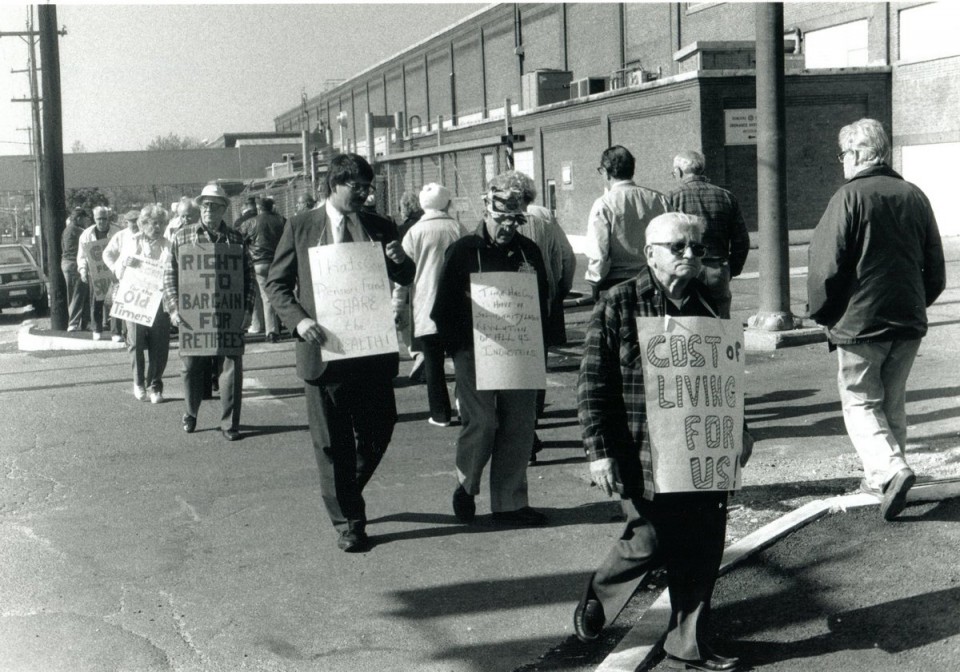




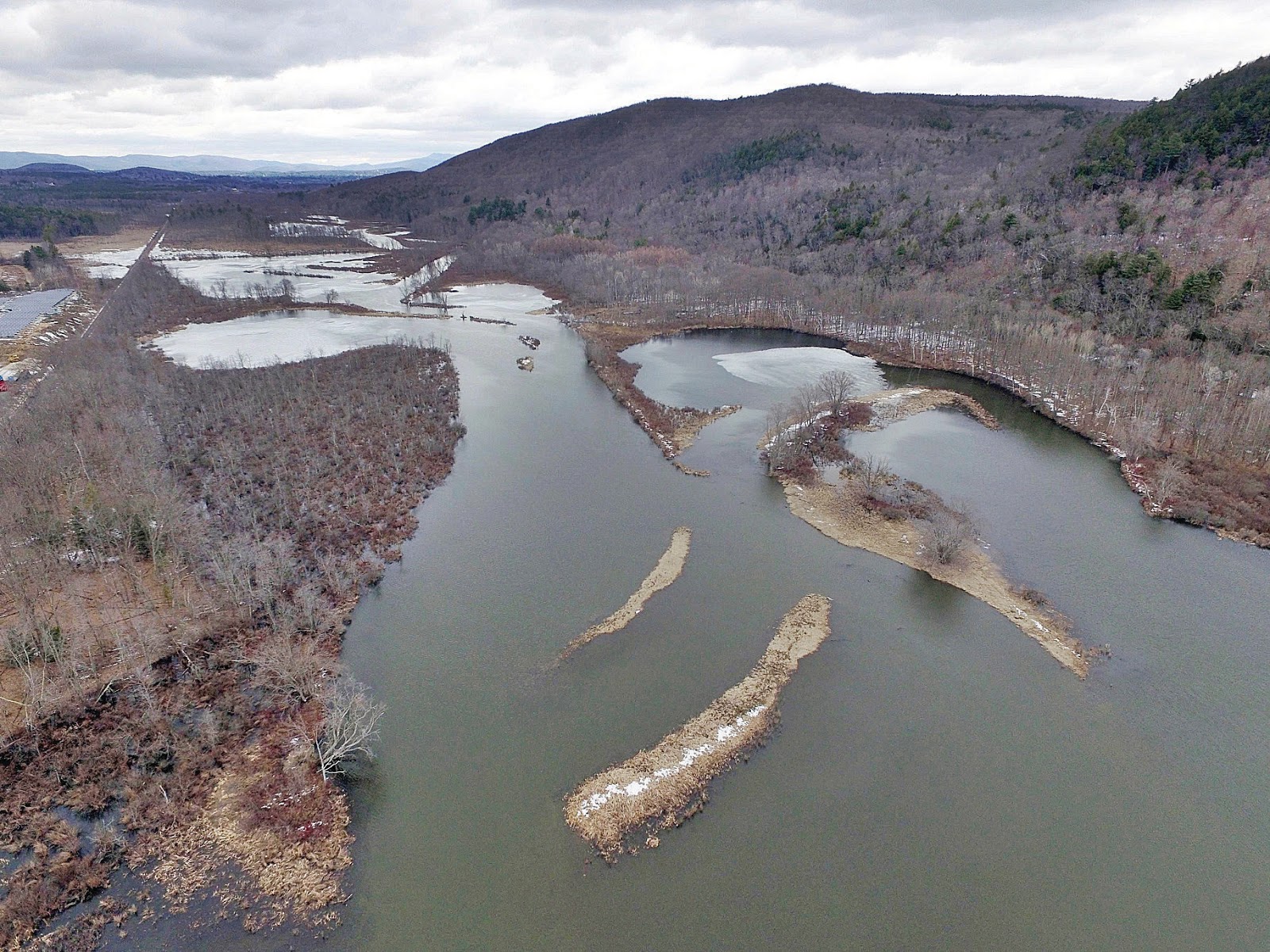


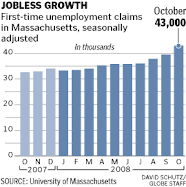








.png)