-

-
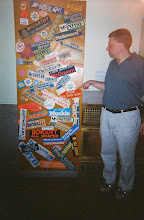
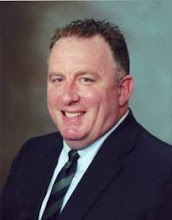
Above: Denis E Guyer & Phony Deval L Patrick!
-
"Advocates decry cuts to mental health funds"
By Lyle Moran, Berkshire Eagle Boston Bureau, Wednesday, December 03, 2008
BOSTON — For Donna Tarrant, a 52-year-old Lowell resident who suffers from bipolar disorder, the Renaissance Club has been a place for community support and job help since 1980.
Tarrant, however, says her safety net has frayed in recent months as the center has been forced to eliminate three part-time workers, two who had been at Renaissance over 10 years, as it deals with
cuts in state funding as resulting from the sour economy.
"I'm hurt because I have known the three people who were laid off for a long time," she said in a phone interview.
Tarrant, like many other Massachusetts citizens with mental illness, faces
a loss or reduction of services due to Gov. Deval L. Patrick's $33.5 million cut to the Department of Mental Health in October, a 5 percent reduction in funding. The cuts were part of Patrick's efforts to shore up the state's $1.4 billion budget deficit.
Due to $24.2 million in state trust accounts, the actual cut to mental health services will be $9.3 million, said Executive Office of Health and Human Services spokeswoman Kristina Saunders Barry.
In response, mental health advocates gathered at the Statehouse on Tuesday to demand that
Patrick reverse the
cuts they say
will eliminate funding for 2,600 adults receiving day services and hit education and community support programs for those with mental illnesses.
Toby Fisher, the policy director of the Massachusetts chapter of the National Alliance on Mental Illness, called Patrick's cuts "unfair, unsafe and unwise" and said he worried most about citizens who will be affected.
"Where are these folks going to go during days?" Fisher asked at a press conference. "If (Patrick) doesn't restore these cuts, he is going to cost the Commonwealth a lot of heartache and pain." Advocates warned that cuts to clubhouse programs, like Renaissance, will help make it very difficult for adults dealing with mental health illnesses to get help securing employment.
The Renaissance Club provides help each month to about 250 adults with mental illnesses.
Reva Stein, the executive director of the Massachusetts Clubhouse Coalition, which represents 32 community clubs that serve 8,000 people statewide, said
the governor's cuts have left clubhouses in an emergency situation.
"We know times are hard, but we think the administration should dip into emergency funding," Stein said. "Employment is a big part of the recovery process and we need the staff resources to make that happen." Following the press conference, advocates marched to the governor's office and presented a petition with 1,000 signatures calling for a restoration of the mental health funding to Lt. Gov. Timothy Murray.
"We are going to keep coming back to the governor's office until the cuts are restored," Fisher said.
Patrick hasn't ruled out further cuts if the state's financial picture worsens.
----------
12/3/2008
Re: The real Deval Patrick!
The news article, above, is a prime example of the real Deval Patrick. When he ran for Massachusetts Governor in 2006, Deval Patrick said nothing of proposing expanded gambling (regressive taxation), cuts to social services that many vulnerable citizens depend on for their survival and subsistence, and taking so much special interests campaign dollars. However, here we are nearly 2 years later, and we see the real Deval Patrick, who serves the corporate elite at the cost of the rest of or the bottom (class & status) 90% of the people he spoke his propaganda to in order to be elected Governor. Deval Patrick is a disappointment because he campaigned for CHANGE, and all Massachusetts got in return is not even more of the same, but rather, more inequity in public services. I liken Deval Patrick to my former State Representatives Peter J Larkin, William Pignatelli or Daniel Bosley: While taxpayers payed more for less, we still got to buy plenty of lottery scratch tickets in the face of our diminished quality of life!
In Dissent!
Jonathan Melle
----------
"Patrick admits state budget leaner than he thought"
By Associated Press, Thursday, December 4, 2008, www.bostonherald.com, Local Politics
BOSTON — Gov. Deval Patrick ran for office two years ago pledging to rid the state of $1 billion in budget fat, but now he says there’s not as much there as he once thought.
The Democrats said the $1 billion in cuts he ordered in October affected people and worthy programs and any further cuts would affect important services as well.
During his monthly appearance on WTKK-FM radio today, Patrick also said he would not be opposed to raising the state’s gasoline tax to pay for transportation programs.
But he says he would do so only if it was part of a comprehensive package to streamline the state’s transportation bureaucracy and there was an assurance the money wouldn’t be spent elsewhere when the economy recovers.
Article URL: www.bostonherald.com/news/politics/view.bg?articleid=1136823
----------
A BOSTON GLOBE EDITORIAL
"Unkind cuts for mentally ill"
December 9, 2008
WHEN THE STATE began closing its hospitals for the mentally ill decades ago, it promised that patients would be able to get vital daytime services - education, recreation, and supported employment - in community settings. This was reassuring to the mentally ill and their families, who feared the consequences if patients released from the hospitals lacked these programs and the safe social contact they provide. Now these services are at risk as the state targets them in its effort to bring spending in line with declining revenues.
No one envies officials the task of cutting the $29 billion budget by almost $1 billion, and the list of reductions might have to grow if revenues continue to fall. But some programs are so central to the state's mission of providing for the most vulnerable that they deserve special consideration. If the state cannot find the funds to sustain the day programs, they should be at the top of the list for restoration if Congress includes expanded Medicaid funding as part of a new stimulus package early next year.
Under the state plan, hours at clubhouses for the mentally ill would be reduced, and day rehabilitation programs would be eliminated for the 2,600 adults who use them. Without these services, many will have nowhere to go but the street, where they are often victimized.
Loss of the services is likely to cause some of the mentally ill to spiral downward to the point where they will need hospital care. The cost of that care will offset some of the savings gained by shuttering the programs.
Since the 1960s, community-based treatment has proved to be better for most patients than hospitalization. But dropping the day programs strikes at the very meaning of community-based treatment.
----------
"Mental health cuts are a disgrace"
The Berkshire Eagle - Letters, Monday, January 05, 2009
Due to Gov. Patrick's mid-fiscal year budget cuts, the Department of Mental Health is now going to eliminate the jobs of up to 101 case managers statewide. This is a huge number, considering there are about 380 "adult" case managers in the entire state.
Berkshire County has only 10 "adult," (as opposed to "child/ adolescent") case managers to cover the entire county. Based in Pittsfield, each case manager has about 30 clients that they assist on a regular basis. Five of these ten are low enough on the seniority list that if this cut goes through, on Jan. 7 they will receive notice of losing their jobs. That will mean about 150 chronically mentally ill neighbors will be either without, or with drastically reduced, services.
You can imagine the ripple effect in increased crisis team calls, ER hospital visits, police calls, court cases and so on. It also means that up to five more local families will be hard-pressed to make the mortgage payment, car payment, real estate tax payments and so on. Our state government has let down not only the mentally ill, but the struggling young couples who have chosen to dedicate their professions to caring for neediest among us.
It was especially ironic to read of the money that hopefully will come from the federal bailout funds to our state to pay for roads, bridges, and school buildings in order to provide jobs. How about using some federal money to keep our citizens in jobs they already had! Do the laid-off case managers need to become bridge builders or road construction crew members? If so, we will be losing a lot of talent, sorely needed in our mental health community. The Legislature needs to find some funding before the end of January to keep these essential state employees on the payroll!
In a recent column by economist Paul Krugman, he pointed out how shortsighted and economically damaging it is to lay off social service employees when the need for their help is only mounting daily. Our safety net has some huge holes.
SUSAN S. SCHNESKI
Williamstown, Massachusetts
----------
"Mental health liaisons laid off: Agency loses 100 case managers; more cuts feared"
By Carey Goldberg, Boston Globe Staff, January 8, 2009
The state Department of Mental Health, facing a more than $9 million cut in its budget, yesterday laid off nearly one quarter of the case managers who supervise people with severe mental illness and make sure they get the services they need.
About 100 case managers received their pink slips or will get them today, said John Labaki, president of the Department of Mental Health chapter of local 509 of the Service Employees International Union, which represents state case managers, clinical social workers, and others.
State officials said about 3,000 clients would lose their current case managers.
Those clients will be shifted to other case managers among the remaining 350, said Kristina Barry, spokeswoman for the Department of Mental Health.
"Case management is still very vital and highly valued at the Department of Mental Health," she said.
"These are challenging times for the Department of Mental Health and all the agencies in state government, so unfortunately a difficult decision had to be made," she said.
The mental health cuts and layoffs are part of the $1 billion in budget cuts that Governor Deval Patrick is making in response to revenues lost in the economic crisis. Further cuts are expected, and advocates say people with mental illness have been hit so hard by the cuts that they should be excluded next time.
"We feel that the first round of cuts is disproportionate for mental health and are adamant that the next round of cuts should spare mental health consumers," said Toby Fisher, policy director of the National Alliance on Mental Illness of Massachusetts.
The state is laying off mainly newer case managers with fewer than seven years of seniority, union officials said. The cuts also include 20 administrative staff members, Barry said.
Pamela Colton, a case manager with a master's degree, has worked for state agencies for nine years but moved to the Department of Mental Health's Hyannis office six months ago. She was laid off yesterday, eight months shy of the 10 years she would have needed to be vested in the state retirement system.
But it is not herself she is worried about, she said. It is the mentally ill children.
"I understand that the state has to balance budgets and do what they need to do," she said. "I just don't like it hurting children and their families. Some of these families are not going to have access to a lot of the resources that workers are extremely aware of."
Programs that provide mental health services sometimes complain that case managers act as an extra layer of personnel between them and clients. But case managers, as system "insiders," are also seen as greatly improving a patient's chances of receiving needed services. And for many people with chronic mental illness whose family and friends have fallen away, longtime case managers provide a much-needed sense of continuity.
"Case management is a really key element of recovery and getting proper treatment," said Karl Ackerman, president of the Transformation Center, a Roxbury-based nonprofit run by people in recovery from mental illness. "When you're overwhelmed with a psychiatric disability, it's very hard just to show up at an appointment, if you have an appointment, let alone try to juggle various appointments with clinicians, with services, housing issues - all those kind of necessary elements that are just the basic needs of anybody."
Even before these latest cuts, he said, "There weren't enough case managers. People going in to receive Department of Mental Health case management services were waiting months."
Labaki, of the SEIU, said vulnerable clients are facing a big loss. "We don't know for sure how it will end up for them. They may end up back in the street, back in the hospital, or, unfortunately, back in prison."
-
Carey Goldberg can be reached at goldberg@globe.com
-
----------
"Health advocates left reeling after hearing budget plan: Key programs are scheduled to get sharp cuts"
By Kay Lazar and Stephen Smith, Boston Globe Staff, January 29, 2009
Several key public health programs, including the state's landmark tobacco control initiative, face sharp cuts under the state budget proposed yesterday by Governor Deval Patrick for the next fiscal year.
The $28 billion spending plan also freezes Medicaid reimbursement rates for doctors and hospitals who care for poor patients, after steep cuts made in October.
"We have a state that has been visionary in pioneering health reform and universal coverage," said Dr. Bruce Auerbach, president of the Massachusetts Medical Society and head of emergency care at Sturdy Memorial Hospital in Attleboro. "Anything we do that reduces the ability of physicians to care for Medicaid patients is going to negatively impact our pursuit of true healthcare reform."
The state's closely observed health insurance initiative, which requires most adults to have coverage, emerged largely, but not entirely, untouched in the budget blueprint. A program that provided $3.5 million to help the uninsured enroll for health coverage was eliminated, just as thousands of Bay State residents are losing their jobs.
The governor's tax proposal also touched on public health: He is seeking new levies on alcohol, candy, and sweetened beverages. According to administration estimates, those new tariffs would generate $121.5 million for public health initiatives, if the Legislature goes along with them.
Overall, Patrick framed the cuts as difficult but necessary in a failing economy, saying that "we have to make do with less."
As an army of advocates digested Patrick's complex budget proposals - which reduced 2009 spending, along with outlining spending for 2010 - concern focused primarily on the Department of Public Health, which had enjoyed a revival after sustaining deep budget cuts during the administration of Mitt Romney.
At the start of the current budget year, the Patrick administration and the Legislature had committed a total of $639 million to programs that treat substance abusers, discourage tobacco use, provide school nurses, and an array of other public health services. But because of the economy, Patrick has proposed slashing the agency's funding to $565 million, according to Tom Lyons, a Public Health Department spokesman.
"There's no way to get around this or sugarcoat it," Lyons said. "This is going to be a very stark budget year coming up."
An analysis by Tobacco Free Mass, an advocacy group, shows that spending on the state's tobacco control program will fall to $7.5 million from more than $12 million. Lyons confirmed that analysis.
"We're disappointed because this is a program with a proven record of success," said Russet Breslau, executive director of Tobacco Free Mass.
In 2007, adult smoking rates in Massachusetts dropped by 8 percent, the steepest decline in more than a decade. Breslau attributed it, in large part, to reinvigoration of the tobacco control campaign.
Figures from the Department of Public Health show that total spending on addiction and tobacco control services will drop more than 11 percent under the proposed budget. Programs designed to promote healthy behaviors, such as preventing teen pregnancy and providing dental services, face cuts totaling more than $20 million. Similarly, initiatives that aim to improve nutrition and help children and families are confronting a $20 million reduction, although some of those services will be provided by another state agency, Lyons said.
Patrick ordered that programs for nursing services to rape victims and aid to domestic violence victims be spared, Lyons said.
The cuts proposed yesterday left health advocates reeling.
"We know this administration supports public health and wants to promote prevention and a sound and robust public health system, but this is a step backward," said Valerie Bassett, executive director of the Massachusetts Public Health Association, a confederation of health officials. "It's a step no one wants to take."
Many advocates are hoping Patrick will use an anticipated infusion of Medicaid funds from a federal stimulus package to restore cuts in health programs for the poor, including safety-net hospitals Boston Medical Center and Cambridge Health Alliance. But so far the governor has not committed to doing so.
"Using federal funding as intended to restore these services is a rational and important policy solution that the community is quickly rallying around, and hoping the governor will embrace," said Mike Fadel, executive vice president of 1199SEIU United Healthcare Workers East.
-
Kay Lazar can be reached at klazar@globe.com. Stephen Smith can be reached at stsmith@globe.com.
-
----------
"Crippling cuts to DMH in Berkshires"
The Berkshire Eagle, Letters, Wednesday, February 04, 2009
As an appointed member of the Berkshire Site Board of the Massachusetts Department of Mental Health, I wish to convey my deep concern regarding the recent cuts to the case management staff of the Berkshire Site.
Since the inception of the case management program within the Department of Mental Health in 1985, it has become a key role within the mental health system, both public and private, over the past 24 years. The department has developed a sophisticated, intensive network working with the most complex and severely mentally ill clients whether adults or child/ adolescents. The Board members all have had direct contact with the DMH case managers who work in the Berkshires. This service is highly regarded and meets many needs not otherwise addressed within the mental health and social services systems.
Currently, due to the 9C authority vested in the governor of Massachusetts and due to the dire fiscal crisis, we realize that drastic cuts to the state budget are absolutely necessary. However, the cuts to DMH case management in the Berkshires will cripple the deliver of services to clients/consumer who are in the most need.
In the first round of cuts in January, 2009 clients, 5 case managers out of a staff of 9 were laid off from adult services. In addition, the child/adolescent services has a staff of only 2 case managers from a previous total of 4. At this point, the only way to manage these cuts is to eliminate case management services to seriously mentally ill adults and to the most emotionally disturbed children and adolescents.
These clients were initially evaluated, prioritized and assigned to case management only after meeting triage criteria indicating they were the most at risk clients and in need of intensive intervention. It is certain that for those clients who lose case management services, increased, intensive services will be required from hospitals, homeless shelters and residential services. Of those who were case managed, only half or less will receive the services they need. Further, the needs of these clients will have to be addressed by outpatient services which are not designed to meet the needs of this population.
The major concern of the board, given the possible need for future cuts, is that no further cuts be made to the case management staff in the Berkshires. If additional cuts are incurred by this program, it is very unlikely that the objectives and responsibilities of this program will be met.
Further, the development and refinements made to the case management program state-wide, which have gained national recognition, will be lost and would take many years to replace, if it even could be.
AUDRA J. KINNER
New Ashford, Massachusetts
The writer is vice president of the Berkshire Site Board.
----------
"Advocates say rights of disabled trampled: Access at issue in stimulus projects"
By Stephanie Ebbert, Boston Globe Staff, March 6, 2009
The governor's task forces on federal stimulus funding, which helped identify billions of dollars last month in "shovel-ready projects" in Massachusetts, has angered advocates for the disabled by
suggesting that the state forego reviews of the need for handicapped accessibility to prevent construction delays.
Activists are threatening legal action and planning to protest a Monday meeting of the state Architectural Access Board. They fear that if the state overlooks accessibility in its rush to put federal stimulus funds to use, it will never find the money to make the buildings accessible.
"For the governor to put a document out that says the first thing we're going to do is abrogate the rights of people with disabilities in order to spend the stimulus money
is a real slap in the face to people with disabilities who have fought for civil rights for so many years," said Bill Allan, executive director of the Disability Policy Consortium, a Boston-based organization of volunteer disability rights activists.
The governor empaneled the task forces, chaired by
Lieutenant Governor Timothy Murray and Cabinet secretaries and undersecretaries, to help prioritize projects in line for federal stimulus funds.
Cyndi Roy, a spokeswoman for the Executive Office for Administration and Finance, said the administration is still trying to find a way to ensure that construction projects, which will face strict constraints, are accessible.
"The federal government has talked about a use-it-or-lose-it requirement to federal projects, and we have every intention of preserving accessibility and at the same time moving forward to capture funds that we can use for infrastructure improvements," Roy said. "We're in the process now of coming up with a way to make sure that both of those goals are achieved."
The federal Americans with Disabilities Act calls for public facilities to be accessible and safe for people with disabilities. On the state level, the Architectural Access Board enforces Massachusetts regulations on accessibility. The board reviews all public construction and renovation projects and fields complaints about privately owned structures with barriers to access.
"It surprises me, because it's going to cost money in the long run if you rush to spend money on projects that are ultimately inaccessible and could have been built correctly," said
Susan Stefan, who has written two books on the Americans with Disability Act. "It's
a false choice between getting the stimulus money and not building accessible projects. You don't have to make that choice."
But the task forces found that the review would present a barrier to tapping federal money. Their report, released last month, said a review could delay construction or even "hamper the success of the Federal Act package." Instead,
the task force called for a blanket variance that would cover all projects funded by the stimulus package.
"A blanket time variance sounds to me like we're never going to get to it," said John B. Kelly of the Neighborhood Access Group, which advocates for safe sidewalks. "Don't throw a blanket over our civil rights. We're always hearing about lack of money as a reason not to be able to secure our civil rights, and . . . now that there's money, there's no time."
It remains unclear which projects will get the first stimulus funding and how many of them would warrant review. Allan said that even bridges and highways typically face review because of their sidewalk ramps and slope standards. In a quick review of more than 1,800 "shovel-ready" projects identified, Allan identified 380 that he suspects would warrant review.
"It could be generations before those buildings get money again," said Kelly. "It just continues this culture of disregard. Access is not that complicated."
-----
SHOVEL-READY - AND ACCESSIBLE
"State committed to ensuring compliance"
The Boston Globe, Letter, March 12, 2009
IN RESPONSE to "Advocates say rights of disabled trampled: Access at issue in stimulus projects" (Metro, March 6), let me assure all that the governor has not proposed any action that would minimize the state's responsibility to ensure accessibility compliance. At issue was a recommendation of the federal stimulus task forces that Governor Patrick convened to identify potential projects, possible barriers to getting those projects done, and proposed solutions to address those challenges.
The governor, former US assistant attorney general for civil rights, has made access and opportunity a top priority and will continue to do so throughout this important federal recovery process. The state Architectural Access Board is willing to consider a process that allows projects to move forward to meet federal timelines, while maintaining the obligation to undertake accessibility compliance measures.
We understand how a recommendation, absent context and additional information, signaled inaccurate information. The commitment to undertake as many projects as the federal stimulus will facilitate will not occur by abrogating the moral and legal obligations we have to all citizens.
Ronald Marlow
Assistant secretary for access and opportunity
Executive Office for Administration and Finance
Commonwealth of Massachusetts
--
READER's COMMENT:
To Mr. Marlow: just what part of this (quoting from the Governor's Recovery Plan, Task Force Report, page 109) is "inaccurate"? "... in an effort to insure that Federal Act monies are able to be expended for immediate and proper use, the Department, on behalf of the AAB [Architectural Access Board], recommends granting a blanket time variance [read: waiver] for compliance with the Board’s regulations. It is understood that requiring immediate compliance would potentially cause unintended, negative consequences of preventing timely commencement of construction projects and hamper the success of the Federal Act package. This variance would apply to all projects that are funded with Federal Act monies." Any reasonable person reading this could think you are abrogating accessibility compliance.
- By "MaxCT", March 12, 2009, 10:54 A.M.
----------
"Case for the Brien Center"
The Berkshire Eagle - Editorial, Thursday, March 05, 2009
The state's overhaul of how it funds mental health services is plainly designed to encourage competition and rein in spending, which is admirable to a point. However, a purely bottom line approach could be harmful if it rules out a variety of other factors, which we hope will not be the case as the Department of Mental Health considers grant applications from Pittsfield's Brien Center.
Mental health providers are now being asked to submit bids to the Department of Mental Health for contracts, rather than receive a budgeted amount of funds as has been the case for decades. While Brien Center officials are confident they can make a good case for funding for a variety of grants, there is a danger that they could be underbid by an agency, for example in Springfield, that would then supply services in Pittsfield and Berkshire County.
Brien Center personnel know their clientele, many of whom face severe challenges, they know other county resource groups and they know the region. This level of experience and institutional memory cannot be matched by an agency from outside the Berkshires. With the impact of budget cuts, such as those that recently ended a Brien Center day program for the severely mentally ill, already being felt, the center's experience and knowledge of the region becomes even more valuable.
Awarding contracts to an outside agency would also cost some of the 450 jobs at the Brien Center, which the embattled city cannot afford. We hope the state will consider these factors, along with the Brien Center's fine record, in awarding grants.
-
www.topix.net/forum/source/berkshire-eagle/TGKTJFCQGI2FV43CI
-
----------
"Hundreds protest proposed disability budget cuts"
[Framingham, MA] MetroWest Daily News (see below), March 6th, 2009
Hundreds of people with disabilities and their families gathered at the state capitol in Boston this week to protest proposed cuts in essential services for people with intellectual disabilities.
Organizers estimated that the state Department of Mental Retardation, which serves 30,000 people, has another 3,000 people on its waiting list.
Massachusetts Gov. Deval Patrick has proposed to cut $78 million, or 6.5 percent, of the more than $1.2 billion budget for DMR and disability services for the year starting July 1.
*****
“We need these legislators to really be sensitive and considerate to some of our most vulnerable citizens,” said Pat Pakos, a Sudbury member of Arc of Massachusetts, an advocacy organization that works with families whose children have disabilities. “We need to help them realize how great the need is.”
*****
-
Source: www.patriciaebauer.com/2009/03/06/hundreds-protest-budget-cuts/
-
-----
"Protesters rue disability cuts on Beacon Hill"
By Rosemary D'Amour/Daily News correspondent, GateHouse News Service, Posted March 05, 2009
BOSTON — Hundreds of people with disabilities joined with their families at the State House yesterday to protest proposed budget cuts to what they said were essential services for the mentally disabled.
"We need these legislators to really be sensitive and considerate to some of our most vulnerable citizens," said Pat Pakos, a Sudbury member of Arc of Massachusetts, an advocacy organization that works with families whose children have disabilities. "We need to help them realize how great the need is.''
Pakos, who has a multi-handicapped 34-year-old daughter living in Andover, said that the Department of Mental Retardation, serving 30,000 people, currently has another 3,000 people on the waiting list.
The rally and lobbying day was in reaction to Gov. Deval Patrick's proposal to cut $78 million, or 6.5 percent, of the more than $1.2 billion budget for DMR and disability services for fiscal year 2010, beginning July 1.
Pakos said the threat of cuts have panicked families who receive services from DMR and those waiting for aid because the budget cuts mean family services - everything from babysitters to equipment - and day and employment programs will be the hardest hit.
"This really just reinforces to me that every budget dollar that the state spends has an impact on a person's life,'' said Sen. Jamie Eldridge, D-Acton, who was present at the rally.
If Patrick's proposal is passed, combined cuts to the DMR and disability services budget will total more than $85 million since October 2008.
Next year's budget will cut $45 million from community programs, potentially affecting more than 20,000 families throughout the state. The programs combine respite and family support services, day and employment services, and transportation, according to Arc.
Protesters said they want funds restored to the budget for community programs.
DMR, soon to be renamed the Department of Developmental Services, receives much of its funding from Medicaid, a federal program. Those participating at the rally encouraged lawmakers to find new sources of revenue, including looking at a potential $6 billion from the federal stimulus package, to save their budget.
Saving items is going to be a battle for lawmakers, who must make priorities because of the economic recession and a $3.1 billion budget gap for next year.
"Budget priorities I'm fighting for, in addition to local aid, are human services,'' said Eldridge. "Which includes fighting for DMR funding and programs underneath it.''
Eldridge said constituents from Acton and Stow came in to speak with him following the rally, and among their concerns was the elimination of the salary reserve for direct care providers.
The elimination of programs and the reduction in services is a major concern for Eileen Lee, the mother of a disabled son and director for Family Partnerships of the Northeast, an advocacy and support group.
"The powers that be don't understand that it's not just the money that families need, it's the agency,'' said Lee. "The resources I needed come from the agencies that are being cut.''
Lee's son Michael will graduate from school this year. Because he will be 22 years old, the system will not offer him further educational support. Day and job placement programs, the typical transition following schooling for those with mental disabilities, will suffer under the proposed cuts.
"It's kind of sad, he's stuck between a rock and a hard place,'' said Lee. "He's high-functioning enough that he would probably be a great fit for a work program with a job coach, but there's no funding for that.''
DMR estimates that 600 people per year are in need of similar transitional services upon turning 22.
Lee said that educating lawmakers has to be a priority for the DMR and families affected by the proposed budget cut.
Eldridge agreed.
"One of the primary functions of government is to serve the vulnerable members of our society, and that's what we need to work to do,'' he said.
-
Readers' Comments (3)
"foolinem" 3/5/2009 -
too many insurance issues for those with mental disabilities...and thats just wrong. We need a legislature that will go to bat for the poorest and take from the rich right now, and this must be a mandated measure aimed solely for improving the care those who cant care for themselves need. It is a sadder day In Massachusetts that the governor himself doesnt go to bat for this cause, as it is probably one of the longer ranging and personal attempts at preserving what small amount of dignity these people have. Why is it all about the Caddy or the drapes, why cant someone be asking why this has to happen to those who probably arent even capable of voting? What kind of society allows a legislative body to impose these cuts, cant we recall these who attempt to save their projects at the expense of the disabled?
"j.sweeney" 3/5/2009 -
Don't forget that when Glavin, etc. close, all of those people will need new day programs too.
"NOMOREAMERICA" 3/5/2009 -
Make retired state workers pay State Income tax on their pensions, then use that money to help out those with disabilities.
----------
"Massachusetts families of disabled face support cuts"
The Associated Press, Monday, March 16, 2009
BOSTON (AP) — Lauren Rico's limbs are stiff because of various disabilities — her fingers and toes curled, the elbows and knees of her 70-pound, 18-year-old body bent.
Her mother, Janet Sweeney Rico, has spent years ensuring her daughter can stay at home in Wrentham, and she relies on support from the state for families of the disabled to help pay for professional care after school and massage therapy to ease Lauren's body and lift her spirits.
But with state budget cuts set to take away $78 million of that support funding, massage therapy and extra care for Lauren will not be an option, Rico says, and she worries she'll need to cut back or even quit her own job as a nursing instructor to care for her daughter.
"That would be a huge hit for us financially," said Rico, 51. "If there's a cutback, the quality of care will be greatly impacted for a kid like Lauren, and that could be deadly."
Advocates estimate 11,000 developmentally disabled residents will be affected when state funds for supporting guardians of disabled children and adults end July 1, part of $1.1 billion in Massachusetts budget cuts. They are hoping stimulus funds will be able to restore some of the Department of Mental Retardation programs set to be cut.
"They're cutting the very services that keep people out of state institutions," said Gary Blumenthal, executive director of Association of Developmental Disabilities Providers. "If you cut the infrastructure of the community, that's penny-wise and pound-foolish for the commonwealth."
Blumenthal said he realizes the state has tremendous fiscal problems, and says disabled advocates are only asking for a portion of the $711 million in Medicaid funds for fiscal year 2010.
Rico and others say home care or similar programs are more cost-effective than institutions for the state, and better for those needing care.
Leo Sarkissian, executive director of the advocacy organization Arc of Massachusetts, said most families with home services through the state mental retardation department receive an average of $2,000 to $4,000, while the average rate per person in a community residence is $65,000 a year and a state institution averages $208,000 of public money a year.
Sarkissian added costs for someone with more medically intensive disabilities receiving home nursing or personal attendant care may average $65,000; the same services in a community residence would be more than $100,000 per person.
Costs for Lauren's care include the medically intensive classroom at her Mansfield elementary school, equipment, medications and a personal care attendant's trained help. Lauren has a neurodevelopment disorder called microcephaly, a seizure disorder, is legally blind and has delays in all area of development that leave her with the capabilities of a 4-month old.
Jennifer Kritz, a spokeswoman for the Executive Office of Health and Human Services, said it is too soon to know how much the department will receive in stimulus money and how those funds might be used.
"We are very committed to serving people with developmental disabilities," she said. "Unfortunately, due to current fiscal realities, DMR had to make difficult budget decisions."
----------
"Closure of care facilities draws protests: Patrick's plan would shut down 4 institutions for people with developmental disabilities"
By Matt Murphy, Berkshire Eagle Boston Bureau, Wednesday, April 8, 2009
BOSTON — Diagnosed with Type I diabetes, autism and severe developmental disabilities, 23-year-old Michael Feeley requires around-the-clock care.
For now, Michael's mother, Patricia, cares for her son in their Westford home. But she knows she won't be able to be there forever.
"I do it, but I'm not going to live to be 200. He's ready to have his own life, too. What 23-year-old do you know that always wants to hang around with his mother?" Feeley said.
The Feeleys joined dozens of families, care providers and health advocates at the Statehouse yesterday to protest Gov. Deval L. Patrick's plan to close four of the state's six residential institutions for people with developmental disabilities.
'One size does not fit all'
The closures include the Fernald Developmental Center in Waltham, the oldest publicly funded facility for people with developmental disabilities, along with the Glavin Regional Center in Shrewsbury, the Monson Developmental Center in Palmer and the Templeton Developmental Center in Baldwinville.
"One size does not fit all," said David Hart, president of the Coalition of Families and Advocates for the Retarded.
The Supreme Court on Monday decided not to hear a case brought by supporters of the Fernald Center seeking to prevent its closure. Former Gov. Mitt Romney was the first to propose closing Fernald as Massachusetts came to operate six of the last seven residential institutions in New England.
Patricia Feeley has been trying to get Michael accepted at either the Glavin Center or the New England Village in Pembroke since he became eligible for residential care last May.
'Changed their philosophy'
"The stumbling block appears to be that he requires 24/7 nursing care," Feeley said. "They just don't want you because they've changed their philosophy."
Patrick has proposed moving about 316 people living in those four facilities to community group homes or one of the two remaining centers. The administration argues the change will help integrate residents into the greater community and free up resources to better serve the state's other 32,000 clients who receive community-based services.
The Arc of Massachusetts, the state's largest advocacy group for people with developmental disabilities, supports the governor's strategy.
"Now, those at Fernald and other state institutions will have an opportunity to live in the community," said Leo Sarkissian, executive director of Arc.
The group says research on the health of patients supports the transition away from institutions to smaller, community-based settings.
The administration estimates about $13 million in first-year savings and $40 million annually after fiscal 2010. Legislative leaders, however, are starting to wonder whether the plan will generate any savings at all as the state invests in new, community-based services over the next four years. Disability advocates say they also worry whether patients will receive the same level of care in smaller community homes and argue that it is not in the best interest of families to be forced to move.
Legislators at the event criticized the Patrick administration for moving forward with the plan to close the facilities without debating the policy change with the Legislature.
Rep. Karyn Polito, R-Shrewsbury, said she would push for language in next year's budget calling for a two-year feasibility study. She said admissions to the state's six centers should continue until that study is complete.
"Community first is just words, it's just a title. It doesn't mean equal or better for you and your families," Polito told the crowd.
----------
"Cuts affecting disabled"
By: Ryan Burgess, capitalnews9.com - 4/11/2009
NORTH ADAMS, Massachusetts – Thirteen-year-old Billy O'Brien loves shooting hoops each week at United Cerebral Palsy of Berkshire County.
"He likes to throw the ball around. Whether it makes it into the basket or not, he's happy," said Billy's mother, Leann O’Brien.
But Leann is afraid Billy's fun could soon be taken away.
"I have huge concerns about the funding cuts. It affects my family directly," said O'Brien.
According to the center's executive director, state funding has been slashed by 32 percent, meaning programs will have to be cut.
"I am truly scared for our families. I think that we give them a lifeline to maintain their families and their homes and we'll be taking it away," said United Cerebral Palsy of Berkshire County executive director Christine Singer.
Erika DeSanty takes care of her 22-year-old brother. She says these are services he needs.
"It's scary and it's unfortunate," said DeSanty.
Complicating things for a lot of the kids who come here is that they need one-on-one care. That means they can't go to a so-called "typical" day care centers and it's why a lot of their parents say they need as much funding as they can.
"Typical daycares would prefer not to take children with special needs. They're a lot of care," said O'Brien.
It's a lot of care which brings them to the center, a place where learning is more than just about having fun. It's a fundamental need.
The program cuts aren't expected to go into effect until July 1st.
-
"Cuts affecting disabled"
A North Adams center that provides basic care for people with special needs has seen its state funding cut by almost one third. Ryan Burgess joins us now from the Berkshire County Bureau with more.
-
VIDEO -
http://capitalnews9.com/Video/video_pop.aspx?vids=87575&sid=1&rid=34
-
http://capitalnews9.com/content/top_stories/137251/cuts-affecting-disabled/Default.aspx
-
----------
-
www.patriciaebauer.com/2009/04/08/institutions-rally/
-
----------
"Don’t cut children’s home program"
The North Adams Transcript, Letters, 5/29/2009
To the Editor:
I am a daycare provider for children of all different age groups. I have been having the Parent-Child Home Program come to my house twice a week to bring books and toys to the children for eight months now.
All of the children love having Ms. Nicole come to see what book she will be reading this time and what new toys they will get to play with. The children love being able to take the books home and have their parents read to them.
Watching the children learn to share and love reading makes me very happy. They are developing skills with this program that are necessary for them to grow up to be successful.
I have just recently found out that the state wants to cut the funding to this program. Any cut in this funding will only hurt the children. They learn to love reading and how to share with this program, two skills that they need in their lives.
This program helps many children and parents connect through reading and play. With less funding, this program won’t be able to reach as many children as they have in the past. Please don’t cut the funding; our children’s future depends on it.
Geralyn Lesure
North Adams, Massachusetts
May 28, 2009
-
www.topix.net/forum/source/north-adams-transcript/T2QTALHRFH85EM15S
-
----------
"Gov. Deval Patrick sides with dental benefits, immigrant coverage"
By State House News Service, Sunday, June 28, 2009, www.bostonherald.com - Local Politics
Gov. Deval Patrick will agree to the Legislature’s plan to preserve $100 million worth of dental benefits for enrollees in MassHealth and Commonwealth Care, heavily subsidized programs that serve largely lower income residents, according to a person briefed on the governor’s plans for dealing with the $27.4 billion state budget on this desk.
Patrick plans to sign the budget on Monday afternoon.
The governor is also expected to propose a $70 million amendment to preserve health coverage for certain immigrants.
The budget bill reduces funding for this segment of the population by $130 million and the $70 million amendment is viewed as a “temporary solution” while the administration works on health design and benefit changes, perhaps with the federal government, according to the person briefed on Patrick’s plans.
The immigrants in question - termed "aliens with special status" - are those who entered the United States legally but have not completed certain residency requirements.
The cost of their coverage is paid for fully by the state budget, while insurance costs for many other comparable Medicaid enrollees is split roughly evenly between the state and federal governments
It was unclear how Patrick planned to pay for the health coverage for immigrants, whether through savings he envisions from vetoes, or one-time or new revenues.
----------
"Budget woes lead to service cuts for developmentally disabled adults"
By Tenley Woodman, Sunday, July 19, 2009, www.bostonherald.com - Local Coverage
The Westwood Respite Center will close its doors next weekend, leaving 68 families of adults with developmental problems without their home away from home.
The villain?
Massive cuts in the budget of the Massachusetts Department of Developmental Services.
The Westwood Respite Center, operated by Toward Independent Living and Learning Inc. (TILL), is a nonprofit contracted by the Department of Developmental Services (formerly the Department of Mental Retardation) that aids 32 communities in Eastern Massachusetts, including Boston. It offers adults with Down syndrome, autism and other special needs a place to hone their social skills while giving their families a break from caretaking responsibility.
Those who rely on the Center are outraged. “The zoo has gotten funding back. People with disabilites are not on the same level?” said Peggy Burns of Waltham. “Where are their priorities?”
Her daughter, Ellen Burns, 30, has been visiting the respite home for nearly 15 years. Ellen, who has Down syndrome, keeps her weekdays packed with a job at the Center for Corporate Citizenship at Boston College, visits to the gym and outings with her parents. But her father, John Burns, 68, of North Reading, said it can’t supplement what she recieves from Respite.
“I have her on regular weekends and we do things, but I’m her father not a peer,” John Burns said. “It’s a special thing this respite, going to see young people. They don’t want to be around old geezers. She wants to be young. Even if they have a disability they want to be young and be around young people.”
“I need a life,” said Ellen Burns. “I get lonesome.”
Ten years ago Westwood Respite was open seven days a week. As government purse strings got tighter, the center was forced to cut back to three days a week and create a waiting list for families seeking its services. Dafna Krouk-Gordon, founder and president of TILL, said competing for funds has been a roller coaster ride.
“For 22 years the human service industry has not gotten a single cost of living increase. We have not gotten increases and we have found ways to make things work, which is bad for the industry because they say, ‘See, you don’t need more money,’ ” Krouk-Gordon said.
If the Center’s $172,000 budget is not restored, TILL will have to sell the property. “We can’t use it. People will be out of jobs. And the families will be left totally without a program,” said Krouk-Gordon.
This reality is devastating to Beth Easter and her husband, Tom Danko, of Watertown. The center offers an outlet for their son Michael, 20, who has autism. “Michael needs to be learning how to survive without us,” said Easter.
Staff at the center help individuals learn social skills and how to manage independence.
“Every parent looks forward to that time when their child will be grown up and independent and do things on their own,” said Linda Norton, head of Westwood Respite. “We are talking about parents who will be doing that parenting the rest of their lives, and who will do that when they are gone?”
Michael’s autism will mean he will never be fully self-reliant, said Easter. “He just needs practice. As long as I’m around I’m going to be the little crutch,” she said.
In two years Michael will age out of educational services, and without the respite center Easter fears his progress will deteriorate.
“It is like they are putting us on the street,” said Ellen. “It is a big mistake, a great big mistake.”
----------
July 28, 2009
Re: A broken mental health system only makes matters worse!
The Boston Globe op-ed column, below, published today points out that Massachusetts' mental health system is broken because it is (a) greatly underfunded with annual operating deficits, (b) critical services and case managers alike were terminated due to state budget cuts, (c) psychiatric patients are being treated bureaucratically instead of being seen as people or human beings first & foremost, & therefore, we are sentenced to the underclass of society via poverty, (d) we receive crisis-focused care that is focused on medication, (e) we lack proper community supports, we lack recovery and peer-directed services, and we lack a consumer & family voice in the services we receive. In short, Massachusetts has a flawed and piecemeal mental-health system that fails to respond to the needs of mental-health consumers.
To fix these serious problems, Massachusetts needs to implement and administer more community services for people suffering from psychiatric disabilities. A community-care system that has stronger linkages between all level of services and supports, including mobile crisis and emergency services; outpatient and inpatient; urgent care and medication management; housing support; employment and education; peer-directed and self-help programs; and family support.
My thoughts on Brett & Sudder's op-ed is that while they did a great job pointing out the problems and what needs to change in Massachusetts mental health services, they also left out what is my belief that a broken mental health system only makes matters worse. As a person who has psychiatric disabilities, I have received mental health care for over a decade now and have received many different kinds of care under a myriad of providers. I did really well with my Clinical Psychologist when I was a graduate student at U Mass Amherst. However, I did a lot worse when I received "care" from my providers at the end of my US Army Honorable military service. The Army Psychiatrist and then Clinical Psychologist myopically misdiagnosed my condition to serve a bureaucratic model of out-processing troubled soldiers. I believe that the Army's broken mental health system only made matters worse for me -- as the Department of Veterans Affairs stated that all of my psychiatric conditions were permanently worsened as a result of my service. Post-Army, I went to a Pittsfield, Massachusetts, Social Worker who also misdiagnosed me and compared me to the terrorists who attacked out nation on 9/11/2001 in front of my parents. I predictably lost my job at a Pittsfield bank after about 8.5-months, and therefore lost my healthcare insurance. Later in 2002, the VA rescinded my healthcare eligibility and it took 6 years to be reinstated into the VA healthcare system in the Autumn of 2008. In the interim, I was falsely arrested and the Manchester, NH, Police Officer yelled at one of the two witnesses: "I do not care if he (Jonathan Melle) is disabled!" I now face a trial by jury on September 28, 2009, in NH Superior Court in Manchester to fight the 7 false criminal charges or alleged indictments against me. Fortunately, I have a advocate in a Clinical Psychologist from Massachusetts who is going to testify at my trial by jury as the Expert Witness. She met with me last week and continues to advocate for me during my times of crisis. She will help me over the long-term of my life. She will make things better for me.
In closing, I believe Massachusetts' broken mental health system will only make matters worse for people suffering from psychiatric conditions, such as myself. That is my experience as a Disabled Veteran who has received both good and bad psychiatric care.
Sincerely,
Jonathan Melle
-----
The Boston Globe, Op-Ed, JAMES T. BRETT AND MARYLOU SUDDERS
"We can do better for the mentally ill"
By James T. Brett and Marylou Sudders, July 28, 2009
THE TREATMENT of people with mental illness has come a long way from the days of back wards, when individuals languished in public hospitals with little hope of returning to their communities. Today, the goal of the more than 700,000 Massachusetts citizens living with mental illness is recovery. Much like people with diabetes or heart conditions, people with mental illness want access to quality treatment and support services.
At the Patrick administration’s request, we chaired a commission studying the Department of Mental Health’s adult psychiatric inpatient system. We understood the stark facts: DMH has a $13 million operating deficit; mental-health services were cut and case managers terminated in the fiscal year just ended; and the overall system is strained.
Three hundred people attended the commission’s five public hearings and many voiced their observations, experiences, and concerns. Much of what we heard was troubling. The system was described as responsible for sentencing individuals to lifelong disability and creating an impoverished underclass through poverty, crisis-focused care, treatment that relies mainly on medication, and a lack of community supports. We received powerful testimony about recovery and peer-directed services - reminders of the importance of the consumer and family voice in all aspects of public mental-health services.
Years of underfunding and budget cuts have resulted in a piecemeal mental-health system that fails to respond to the needs of mental-health consumers. A comprehensive system must offer appropriate levels of treatment consistent with individual need. Our goal was to provide a blueprint for a seamless system of care, treatment, support, and recovery for individuals with serious mental illness.
Acknowledging that the mental-health system is strained and lacks sufficient resources, it is reasonable to ask why the commission even considered closing facilities. Simply put, there are 200 reasons why. Two hundred men and women live on restrictive hospital units because the Commonwealth lacks community services. They deserve better.
More community services can be developed if three conditions are met: there is a onetime infusion of new dollars to commence the responsible discharge planning for individuals for whom no placement is available; the savings from closed inpatient beds are redirected to support the annual cost for these programs; and the Commonwealth commits to maintaining the resources necessary for these services.
If these conditions are met, the commission recommended that the closure of Westborough State Hospital currently projected for 2012, when a new public mental-health hospital opens in Worcester, could be expedited.
These recommendations are not made lightly. Any closure has a significant impact on the lives and well-being of the remaining hospitalized individuals, their loved ones, and the staff. The process of transferring patients to other facilities must occur in a manner that ensures that their clinical needs are met and minimizes disruption. And, there continues to be a need for public psychiatric inpatient care. The new Worcester hospital is designed to embrace active treatment and rehabilitation, support privacy and dignity, and promote recovery and return to community.
Other recommendations include the need for a community-care system that is sufficiently flexible to accommodate the changing needs of individuals with mental illness. The commission urges stronger linkages between all level of services and supports, including mobile crisis and emergency services; outpatient and inpatient; urgent care and medication management; housing support; employment and education; peer-directed and self-help programs; and family support.
The report is certain to have its opponents. We urge Governor Patrick to hear above all else the voices of our citizens living with serious mental illness and their loved ones. The system is not working. Difficult fiscal times are not an excuse to warehouse people with mental illness or to dismantle critical community supports. Rather, it is an opportunity to ensure every precious dollar is spent in a manner that assists individuals to recover, live, and be served in the most appropriate setting possible. If as a society we believe that mental illnesses are as legitimate as physical illnesses, then it is time to stop treating people with mental illness as second-class citizens.
-
James T. Brett is president and CEO of the New England Council. Marylou Sudders is president and CEO of the Massachusetts Society for the Prevention of Cruelty to Children and a former commissioner of the Department of Mental Health.
-
www.boston.com/bostonglobe/editorial_opinion/oped/articles/2009/07/28/we_can_do_better_for_the_mentally_ill/
-
www.boston.com/bostonglobe/editorial_opinion/oped/articles/2009/07/28/we_can_do_better_for_the_mentally_ill?mode=PF
-
www.boston.com/bostonglobe/editorial_opinion/oped/articles/2009/07/28/we_can_do_better_for_the_mentally_ill/?comments=all
-
Jonathan A. Melle
E-mail: jonathan_a_melle@yahoo.com
-
www.jonathanmelleonpolitics.blogspot.com/2008/12/governor-deval-l-patricks-335-million.html
-
----------
-

-
Sandy Lin (center), a lawyer at the Asian Outreach Unit of the Boston offices of Greater Boston Legal Services, spoke with Tuyet Thu Nguyen (left) and translator Nhu Phan yesterday. (Michele McDonald for The Boston Globe)
-
"Cuts in legal aid hit poorest: Funding plunges at Mass. agencies Thousands will be denied help"
By Jenifer B. McKim, Boston Globe Staff, August 6, 2009
A dramatic drop in funding is forcing legal aid programs across Massachusetts to lay off lawyers, cut back their office hours, and turn away a growing number of people who cannot afford to pay for legal help.
Tens of thousands of people statewide who would normally qualify for free assistance this year will not get it, according to the Massachusetts Legal Assistance Corporation, a quasipublic agency that administers most of the funding for the state’s legal aid programs.
Greater Boston Legal Services, the region’s largest legal assistance agency for the poor, reduced its staff from 135 to 124 employees this year and is preparing to lay off at least 10 more in the fall. South Coastal Counties Legal Services Inc. is planning to lay off five lawyers. And the Legal Assistance Corporation of Central Massachusetts has reduced its staff from 42 to 31, cut benefits, and closed its offices on alternating Fridays.
With low-income people struggling to fight foreclosures and avoid homelessness, the cutbacks could not come at a worse time, legal aid advocates said.
Legal aid services are available to low-income people in noncriminal cases over such issues as housing, healthcare, and domestic violence. Lonnie Powers, executive director of the state Legal Assistance Corporation, said 100,000 cases were closed with the help of legal aid attorneys in Massachusetts in 2008. But even before the funding shortfall, only a fraction of the people who needed the free legal help were getting it. The cutbacks are making the situation worse.
“More people who need help with foreclosures, or battered women, or people who have been illegally denied wages they’ve earned, are not going to have a lawyer,’’ Powers said. “It undercuts a foundation of a democratic society when people can’t get access to justice when they need it.’’
Sivaing An, an advocate for the disadvantaged who works with the Asian Task Force Against Domestic Violence, said she used to be able to get immediate help from attorneys at Greater Boston Legal Services but has been less successful this year.
Yesterday, An had to take a client to court herself because she could not find an attorney to come with her.
Her fear was that she would not be able to present her client’s case to the judge as effectively as a trained lawyer.
“I’m very, very worried,’’ An said. “Where are we going to go now? Everywhere I call, it’s a waiting list.’’
Funding for legal services comes from several sources, including money allocated by the state Legislature, but the biggest source is an obscure one: interest on funds that are temporarily set aside by lawyers on behalf of clients.
The Lawyers’ Trust Accounts program, established in 1985, allows attorneys to place certain escrow funds into pooled accounts. The earnings on those accounts are used to fund legal services.
As interest rates have fallen in the economic downturn, so has the amount of money available for legal aid.
The revenues for legal aid fell from $31.8 million in 2007, when the Federal Reserve rate on which interest on many pooled accounts is based averaged 5 percent, to $15.6 million last year, and only $4.1 million so far this year, with the rate down to 0.16 percent in July.
Also, the Legislature, the second-biggest money source for legal assistance, reduced its funding for legal aid by $1.5 million to $9.5 million for the fiscal year beginning July 1, according to the Massachusetts Legal Assistance Corporation.
In hindsight, Powers said, when funding peaked a few years ago, more revenue should have been saved for a rainy day. Instead, some was used to boost staff and raise salaries for lawyers, who historically receive a fraction of the salaries they would get at private firms. The starting salary for a Legal Aid attorney in Massachusetts averages $45,000, he said.
“We didn’t anticipate the downturn and certainly not the severity,’’ Powers said. “There were lots of people not getting services. We thought we should err on the side of getting services to people who needed them.’’
Sheila Casey, executive director of Neighborhood Legal Services in Lynn, likened the predicament to a “perfect storm.’’ The organization laid off five staff members in November and is writing grant applications in the hope of making it through the fiscal year with its remaining staff of 25 intact.
“The economy fell apart, our funding declined precipitously, and we had to reduce our staff,’’ Casey said. “At the same time, demand for services was rising by about 30 percent. We are not as able to serve the clients out there that need our help.’’
Greater Boston Legal Services is facing a budget deficit of $2.5 million in 2009, with no relief in sight for 2010. Already, the agency has implemented a salary freeze and an unpaid furlough program, and it has increased its fund-raising efforts. But cost-cutting efforts cannot stave off layoffs, and now management is considering what areas to cut.
“This couldn’t come at a worse time, in terms of the client need,’’ said Robert Sable, executive director of the Boston program. “There are going to be people who are homeless with no income or losing their lives because of this. This is the biggest loss of funding we’ve ever faced.’’
In an effort to prevent layoffs, Legal Assistance Corporation of Central Massachusetts launched a campaign this summer urging every lawyer in Worcester County to donate the cash equivalent of two billable hours of work.
The Worcester nonprofit’s executive director, Jonathan Mannina, said the agency is trying to offset a budget shortfall that set it back about $1.1 million in two years, from $3.5 million to $2.4 million for the fiscal year beginning in October.
Mannina said staff attorneys, who already accept lower salaries to work with the poor, are being squeezed too hard.
“They have enough struggles to deal with in terms of financially making it, and clients coming to them with their lives falling apart,’’ Mannina said. “Now they have to worry about getting laid off and paying their bills.’’
Western Massachusetts Legal Services in Springfield, facing a 50 percent budget cut, launched a work-share program this summer that reduced hours for every employee by up to 28 percent.
Executive director Cristina Poulter Elzeneiny said employees chose to cut back hours rather than lay off staff, which has already dropped through attrition to 38 from 50 in about two years.
Elzeneiny said the cuts mean about 2,500 fewer cases will be litigated this year.
“It’s a tough time,’’ she said. “I worry about my people. I worry about my clients. I want to keep up the integrity of the program. Nobody anticipated this huge dip.’’
-
www.boston.com/news/local/massachusetts/articles/2009/08/06/cuts_in_legal_aid_hit_poorest/?comments=all
-
----------
"Massachusetts Gov. Deval Patrick vetoes $33 million in expenditures"
By DAN RING - dring@repub.com - The (Springfield) Republican Newsroom, Saturday, August 08, 2009
BOSTON - Gov. Deval L. Patrick on Friday vetoed $33.3 million from an $80 million spending bill approved by state legislators last week, including money for the state's Trial Courts and for financially strapped hospitals.
Patrick approved $40 million for health insurance for legal immigrants, but said it falls short of what is needed for coverage. He also approved $1 million for two zoos in Greater Boston, bringing financing for the zoos to $3.5 million.
Patrick said the vetoes were necessary after state revenues for July totaled $1.253 billion, or $24 million less than projected.
"Regretfully, I am not able to approve all of the funding contained in this legislation in light of continuing revenue uncertainty in fiscal year 2010," Patrick said in a letter to legislators.
A spokesman for the budget leader of the state House of Representatives said it's too early to say if any vetoes will be overridden by legislators.
Patrick cut $6.1 million from the state's trial courts, or most of the $9.4 million approved in the spending bill. The trial court's budget is about $554 million, or about $48 million less than the original budget for last year.
Judge Robert A. Mulligan, chief justice for administration and management, has warned that the cuts could prompt about 250 layoffs. Mulligan was unavailable for comment on Friday.
Brian P. Lees, clerk of courts for Hampden County and former Senate minority leader, said he can't understand why the governor would finance a program for legal aliens and cut the courts.
"It's baffling," Lees said. "I cannot see the rational behind it in any way, shape or form."
Rep. Michael F. Kane, D-Holyoke, said he would push for an override of Patrick's veto of $2.5 million from a fund for hospitals such as Holyoke Medical Center and Noble Hospital in Westfield.
"Obviously, we need as many dollars as we can get when it comes to distressed hospitals," Kane said.
Legislators approved $25 million for the fund in the state budget for the fiscal year that started July 1, down 30 percent from last year. Patrick vetoed $5 million from the fund when he signed the state budget. Legislators last week restored $2.5 million, only to see Patrick veto that money on Friday.
Rep. Daniel E. Bosley, D-North Adams, said he had hoped that Patrick would cut the spending bill because state government is running short of money. "We don't have it to spend," he said. "We just don't have it."
Patrick's vetoes from the spending bill included $6.1 million for Medicaid health coverage for the elderly, $800,000 for a program to divert nonviolent heroin and OxyContin defendants to inpatient treatment instead of jail, $435,000 for the state's 15 regional transit authorities and $790,000 in aid for regional public libraries.
Legislators last week opted against overriding the governor's vetoes of spending items in the state's $27 billion budget. Instead of overrides, legislators approved the $80 million spending bill, which restored about $40 million of the governor's $147 million in budget vetoes and added $40 million for health insurance for legal immigrants.
Patrick said he regretted that legislators rejected his request for $130 million to maintain health insurance for the 28,000 immigrants. Many of the immigrants are refugees or applicants for asylum.
"The failure to provide the requested level of funding imposes significant constraints on our capacity to fund health services for this population in fiscal 2010," Patrick wrote. "We will work within these constraints to put the $40 million in funding to the best possible use to address these health care needs ... recognizing there will be limitations to what we can achieve."
----------
8/8/2009
Re: Daniel "Bureaucrat" Bosley is NOT representing the people of his district!
Rep. Daniel E. Bosley, D-North Adams, said he had hoped that Patrick would cut the spending bill because state government is running short of money. "We don't have it to spend," he said. "We just don't have it."
That means that the Bureaucrat supports the Governor's vetoes from the spending bill that included $6.1 million for Medicaid health coverage for the elderly!
Bureaucrat Bosley's legislative district has a high per capital poor and elderly population! This is further evidence that Daniel E Bosley is NOT interested in representing the people who comprise his legislative district!
Source: "Massachusetts Gov. Deval Patrick vetoes $33 million in expenditures"
(By DAN RING - dring@repub.com - The (Springfield) Republican Newsroom, Saturday, August 08, 2009 - www.masslive.com/news/index.ssf/2009/08/massachusetts_gov_deval_patric_4.html )
-
www.topix.net/forum/state/ma/TIHALPNP6D5M47C77/p2
-
www.jonathanmelleonpolitics.blogspot.com
www.luciforo.blogspot.com
www.frankguinta.blogspot.com
www.aldermanpetersullivan.blogspot.com
-
----------
-

-
"The face of budget cuts: Jessica wanted to study with students more like her, but that hope was slashed with the Hospital School’s funding"
By Vivian Nereim, Boston Globe Correspondent, August 15, 2009
A friendly girl with almond-shaped eyes and a soft smile, Jessica Fiasconaro loves to belt out songs on her karaoke machine, and she once played Gabriella in a production of “High School Musical.’’ But when some of her peers look at her, all they see is her wheelchair.
Jessica has cerebral palsy, and while she has made her way through Bourne Middle School with all the aplomb an 11-year-old can muster, it has not been easy.
“I don’t know,’’ she said. “I’m just different from the other kids.’’
Last winter, when her Sagamore Beach family discovered a state-run institution that provides free care and education to children like her, her world opened up, until she was told she could not be admitted because of
a state budget cut. She was placed on a waiting list.
Jessica’s story is but one example of how budget cuts are quietly rippling across the state, hurting families such as hers in profound ways. Many aspects of this year’s budget battle made headlines: the clash over the zoo funding, the fate of health care for legal immigrants, the rancor over the increase in the sales tax. But
across Massachusetts, there are deeply personal stories like this one that make clear the gravity of the fiscal crisis.
The Massachusetts Hospital School in Canton was critically affected by its $491,000 budget cut. It had to fire 13 staff members, close a residential ward, and temporarily freeze admissions earlier this summer.
“We’ve been hunting for years, and this was the best place we saw,’’ said Jessica’s grandmother, Marie Cheney. “She’s desperately in need of their services.’’
Jessica’s mother, Elizabeth Cheney, a single mother who works as a house cleaner and has developed back problems from lifting her daughter, said she believed that the Hospital School would give Jessica the care she deserves.
And Jessica said the school would be a better place for her.
“I would have kids that are like me,’’ she said. “And it’s accessible, and I wouldn’t feel different or left out.’’
Because the Hospital School is a chronic care facility, the admission process is slow, but 12 to 15 patients are typically accepted each year, said Katherine A. Chmiel, the Hospital School’s chief executive officer. The school serves 75 residential and 24 day patients between the ages of 7 and 22.
Marie Cheney said her family was told there were 33 children on the waiting list.
Chmiel could not confirm that number, but she said the list reflects an increasing number of needy families, not just the budget cut.
Admissions are no longer frozen, Chmiel said, but she added that the Hospital School must work on a one-patient-out, one-patient-in basis to avoid discharging anyone prematurely and that it is unlikely new patients will start at the Hospital School this September.
So Jessica expects to enter sixth grade at Bourne Middle School this fall.
Her English classes come easily to her, but tasks like opening doors do not. Some of her peers are kind, but some can be cruel. Jessica’s grandmother said that several years ago, a bully paid children $1 each to call her names and throw sticks and stones at her on the playground.
“It just gets harder and harder,’’ said Elizabeth Cheney. “And now that she’s gotten older, we’ve been more and more isolated.’’
For Jessica, the Hospital School is a haven. “You just walk up to a door and it opens for you,’’ she said.
She loves to swim, and she is enamored of the school’s 25-meter heated swimming pool, complete with a ramp. The 165-acre campus holds countless other marvels for her. There are 213 staff members to attend to students, and 140 recreational programs. A stable on the grounds houses about a dozen horses for therapeutic riding.
And the school hosts a prom for older students, held at a local restaurant.
“The girls get dressed up in their beautiful gowns,’’ said Chmiel.
The institution is run by the Department of Public Health, but expenses such as the horses are subsidized by the Hospital School Foundation, a nonprofit that raises donations for, among other things, a graduation trip to Disney World.
On Thursday at the Hospital School, patients in a cooking class waited for a chocolate pie to finish baking and, in the recreation center, a speaker blasted a patient-run radio station playing acoustic pop phenom Jason Mraz.
In the cybercafé, also paid for by donations, 19-year-old John Mariani of East Taunton played video games with a friend.
“This place has helped me grow in my independence,’’ he said. “I love it, because I have a lot of friends here.’’
“It’s so sad that some of these kids aren’t able to have the opportunity that our kids have,’’ said Kathleen Douglass of Cambridge, whose 21-year-old daughter is a day patient.
“In the regular public school system, she was made to feel freakish,’’ Douglass said. “I could just see her self-esteem was being eroded.’’
Elizabeth Cheney hopes that Jessica will never lose the confidence she has nurtured, but she worries.
“Right now she’s so outgoing and personable,’’ Cheney said. “I don’t want to wait until she’s crushed emotionally.’’
Jessica’s own hopes are simpler. This year, she wants to be able to open her classroom doors and go on field trips with other students.
-
Vivian Nereim can be reached at vnereim@globe.com.
-
----------
"Prison system to shutter substance abuse treatment center"
By Jonathan Saltzman, Boston Globe Staff, September 10, 2009
The state prison system will close the Massachusetts Alcohol and Substance Abuse Center on Nov. 6 because of budget cuts and transfer people placed there by the courts through civil commitments to other state facilities, a spokeswoman for the Department of Correction said today.
The spokeswoman, Diane Wiffin, said the closing will mean that about 100 individuals who are undergoing detoxification and receiving counseling will go to facilities run by the state Department of Public Health.
"The closing will enable the Department of Correction to focus its resources on its core mission, which is care and custody of committed offenders,'' she said, referring to convicted criminals.
Wiffin said she did not know how much money the state will save by closing the center. But she said the prison system has no plans to close any prisons.
"We're looking at fiscal 2011 now, and it's too early to project what that could mean," she said.
However, Steve Kenneway, president of the Massachusetts Correction Officers Federated Union, told the Globe in a brief interview that Harold W. Clarke, commissioner of the Department of Correction, met with union members today and said the state is considering closing four prisons to save money. Clarke said state officials would make a decision next month. Wiffin said she was not at the meeting and would not elaborate.
Terrel Harris, a spokesman for the Executive Office of Public Safety and Security, described the meeting as a routine, monthly meeting with the union, but said the state has no plans to close any prisons.
----------
"Top justice slams Deval Patrick’s plan to shut prison rehab facility"
By Hillary Chabot, Saturday, September 12, 2009, www.bostonherald.com - Local Politics
The Bay State’s top district court judge blasted Gov. Deval Patrick yesterday for plans to shutter a Bridgewater substance abuse facility, even as his administration continued to grapple with fallout over the possibility of multiple prison closings.
Lynda M. Connolly, chief justice of the state’s district courts, told Patrick the Nov. 6 Bridgeweater closure would force judges to ignore state law.
“This places judges in a highly undesirable position where their only alternatives appear to be to disregard the requirements of (the state law),” Connolly wrote in a letter dated Sept. 3.
Connolly said the law requires people involuntary committed for substance abuse treatment to be in secure, locked facilities, unlike public health department programs, where inmates will be sent after Bridgewater closes.
The judge’s rebuke comes after Steve Kenneway, head of the state’s corrections officers union, said prison officials were drawing up proposals to shut down four of the state’s already overcrowded lockups in anticipation of massive budget cuts.
Meanwhile, the scuttlebutt on Beacon Hill was that the North Central Correctional Institution in Gardner is next on the chopping block. But Patrick administration officials said there are no plans to close prisons - a politically risky move as Patrick seeks re-election.
----------
"Feds blast Deval Patrick on cuts to disabled: Furloughs expected to clog system"
By Dave Wedge, October 27, 2009, bostonherald.com - Local Politics
A top federal official rapped Gov. Deval Patrick yesterday for a belt-tightening move that could worsen a Social Security backlog, leaving tens of thousands of disabled citizens desperately waiting for benefits.
“We’ve got a rapidly increasing number of (disability) applicants. It tends to go up in bad economic times,” said Social Security Commissioner Michael J. Astrue.
Astrue called Patrick’s plans to furlough workers and possibly cap staffing at the Massachusetts Disability Determination Services offices “inappropriate and counter-productive.”
“These kind of unnecessary furloughs and restrictions on employment are going to push back by months the decisions on benefits,” the Social Security official said.
“The irony is it actually aggravates the fiscal crisis,” he said. “This is just not helping people. It just makes no sense. This is ultimately an indefensible policy.”
Even though the DDS office is federally funded, employees are technically state workers subject to state Civil Service rules.
The governor’s press office had no comment on Astrue’s comments. News of the flap comes as Patrick prepares to speak to 1,000 human-service providers Thursday and as advocates for the disabled hold vigil at the State House protesting cuts.
Mary Ellen Mayo, whose 21-year-old wheelchair-bound son James is among those applying for benefits, said streamlining the process should be the state’s goal.
“I worry about a lot of people with some of the cuts,” she said. “It’s almost a life and death situation. It’s the only way a lot of people can have a decent life.”
Ironically, Mayo says any delay in processing her son’s case will cost the state money as Massachusetts will cover his medical expenses until his federal disability is approved.
Astrue sent a letter to the state in January explaining the state-run agency receives 100 percent of its funding from the federal government and asking to exempt DDS offices from statewide furloughs and staffing caps. But Patrick has balked at exempting the offices as he plans furloughs - unpaid weeks off - for workers at every state agency.
Social Security currently has 17,000 disability applications pending in Massachusetts, each of which normally takes about three or four months to process. Astrue, a Belmont native, worries that furloughs or other cuts could cause that number to soar.
He also said state cuts to the federally funded jobs are illegal and that Social Security may take their case to court. The Obama administration has opposed similar cutbacks, and Vice President Joe Biden fired off a letter to California Gov. Arnold Schwarzenegger expressing opposition to similar cuts in California.
----------
-

-
‘WE NEED HELP AND SUPPORT’: About 800 mental health advocates and mentally ill adults gather in front of the State House yesterday to implore Gov. Deval Patrick not to shut down their clubhouses. Above, John Phelan, who attends the Crossroad. (Photo by Mark Garfinkel).
-
"Mentally ill rally against service cuts: Don’t club our ‘houses’"
By Katy Jordan, October 28, 2009, bostonherald.com - Local Politics
Disabled Bay State residents may now face even more cuts to the services they urgently need, advocates said.
As Gov. Deval Patrick prepares to narrow the $600 million budget shortfall, mentally ill residents and their advocates say they are bracing for slow processing of disability claims, as well as cuts that could eliminate services.
About 800 mental health advocates and mentally ill adults gathered in front of the State House yesterday, demanding the governor’s support to keep their clubhouses - facilities that provide job training, education and employment.
There are 32 Massachusetts clubhouse facilities across the state, which serve 15,000 adults.
The cuts come as the governor also looks at furloughs for employees at Massachusetts Disability Determination Services, a move that could stall processing for disability claims - worsening the services they provide - even as increasing numbers of people file for their Social Security disability payments.
David Beckwith, a member of Forum House in Westfield, has been receiving Social Security for disability for nearly 20 years.
“Usually when people apply for disability, they need that money right away. They have nothing else going for them,” said Beckwith about alternative income for the disabled, at yesterday’s rally.
Amos Pierre, a member of Boston’s 50-year-old Center Club, carried a sign that read “Save clubhouses” at the protest.
“These people need that money. We need help and support,” said the South Boston resident. Before going to the clubhouse, Pierre “was depressed and sick,” he said, “but I’ve made progress. My life’s been turned around.”
Patrick administration spokeswoman Cyndi Roy, said the governor’s office was hoping for “limited impact” on all social services.
The Herald reported Monday that the Massachusetts Clubhouse Coalition, which organized the rally, feared that budget cuts could close down the clubhouses as early as next month, cutting off the lifeline for many of the state’s mentally ill residents.
----------
"Treatment units for mentally ill inmates on hold: State cites budget crunch as talks to end suit fail"
By Jonathan Saltzman, Boston Globe Staff, November 10, 2009
The Patrick administration has shelved plans to build special treatment units for hundreds of seriously mentally ill inmates, two years after advocates for prisoners alleged in a federal lawsuit that the state’s practice of keeping such inmates in solitary confinement 23 hours a day was inhumane and causing suicides.
Citing the state budget crisis, lawyers for top state prison officials said negotiations to settle the civil rights suit by the Disability Law Center against the Department of Correction out of court have ended. The center has asked a federal judge in Boston to schedule a trial for January 2011, while the state wants it to start a year later.
The collapse of negotiations, made public in court filings Friday, marks a startling reversal from where things stood a year ago. Last November, Harold W. Clarke, the correction commissioner appointed by Governor Deval Patrick, and Leslie Walker, executive director of Massachusetts Correctional Legal Services, said they expected the suit would be resolved shortly with the announcement of plans to build maximum-security residential treatment units.
Inmates would be exposed to more types of therapy in such units, and advocates want the prisoners to have more time out of their cells.
“We’re hoping to be able to say, ‘We don’t have to go to court, we can avoid litigation,’ which I’m certain will serve all parties best,’’ Clarke said in a Globe report Nov. 16.
On Friday, however, lawyers for the prison system filed a document in US District Court that said, “Due to the fiscal crisis, the parties have discontinued formal settlement negotiations.’’ The state’s lawyers did not elaborate on the financial constraints.
The nonprofit Disability Law Center sued the state in March 2007, alleging that hundreds of mentally ill prisoners were kept in closet-size solitary confinement cells in response to unruly behavior. The conditions had led to self-mutilation, the swallowing of razor blades, and numerous suicides, said the center.
The suit, which resembled legal challenges that led to changes in other states, said Massachusetts ignored repeated calls from its mental health providers and consultants to provide high-security treatment units for violent, mentally disturbed inmates.
A Globe Spotlight Team series in December 2007 reported 15 suicides in the prisons from 2005 through 2007, most by those in solitary confinement with histories of mental illness or drug addiction. There had also been more than 3,200 suicide attempts and self-inflicted injuries in the prior decade, the Globe found.
Walker, of Massachusetts Correctional Legal Services, which helps represent the Disability Law Center in the suit, said yesterday that she was “deeply disappointed that we’re not going to be able to resolve this case short of trial.’’ She said she could not comment further because settlement talks were confidential.
In a brief statement, Diane Wiffin, a spokeswoman for the prison system, said correction officials plan to “continue providing appropriate levels of service to segregation inmates with serious mental illness.’’ She declined to elaborate, citing the litigation.
There is nothing appropriate about the segregation of inmates with mental illness, according to Laurie Martinelli, executive director of the National Alliance on Mental Illness of Massachusetts, an advocacy group that supports the lawsuit.
She said keeping such prisoners in their cells 23 hours a day violates the constitutional prohibition against cruel and unusual punishment and that the state’s fiscal crisis was irrelevant.
“You can’t get around a constitutional violation by saying, ‘We don’t have money,’ ’’ she said.
Fred Cohen, a retired criminal justice professor at the State University of New York at Albany and an expert on the treatment of the mentally ill in prisons, agreed, saying no federal court has ruled that finances trump an inmate’s constitutional rights. If the case goes to trial, however, plaintiffs would have to prove that the isolation of inmates violates their civil rights. In some states, Cohen said, politicians were glad for judges to order them to improve conditions for inmates; that way, judges, rather than the politicians, had to take the heat from the public for spending scarce tax dollars on convicted criminals.
“It’s not unheard of, and it’s especially popular during times of economic duress,’’ he said.
Several states, including Connecticut, New Mexico, Ohio, Texas, and Wisconsin have faced lawsuits in recent years that have been resolved by settlements or court orders requiring improvements in the treatment of mentally ill prisoners.
Kevin M. Burke, Patrick’s public safety secretary, was quoted as saying in 2007 that it would cost “several million’’ dollars to fully fund high-security treatment units. A spokesman for Burke, whose office oversees the prison system, said yesterday that the secretary would not comment on the litigation. Patrick also declined to comment through a spokeswoman.
Prisoner rights groups as well as specialists on the treatment of inmates have repeatedly criticized the Massachusetts prison system for failing to address the needs of inmates with mental illnesses.
An independent study of the state prison system released in February 2007 found that the number of mentally ill inmates increased by nearly 1,000 between 2000 and 2005 but that the state was not responding adequately to the challenges they presented. There are about 11,000 inmates in the state system.
Lindsay M. Hayes, a national specialist in prison suicide prevention who wrote the report, said suicidal inmates were being punished instead of being helped. The study, commissioned by the department after an increase in prisoner suicides in 2005 and 2006 left the state’s rate nearly double the national rate over the prior decade, made 29 recommendations. They ranged from improving the suicide-prevention training of correction officers to increasing the frequency of observation of at-risk inmates.
Although prison officials immediately said they embraced all of the recommendations, the department never endorsed a blanket ban on the segregation of mentally ill inmates. Inmates in segregation are typically allowed out of their cells for an hour only to shower or to get exercise in a small caged space.
In April 2008, the state prison system took a modest step to improve treatment of mentally ill inmates when it opened a unit for such prisoners at Souza-Baranowski Correctional Center, a maximum-security prison in Shirley. The unit is called the Secure Treatment Program and it houses 14 prisoners, Wiffin said.
-
Jonathan Saltzman can be reached at jsaltzman@globe.com
-
----------
"Compulsive gamblers’ treatment funds halved: Cuts called dangerous game"
By Thomas Grillo, Tuesday, November 10, 2009, www.bostonherald.com - Business & Markets
Gov. Deval Patrick has slashed funds to help gambling addicts in half - even as he supports building casinos in the state.
“I’m stunned,” said Kathleen Scanlan, executive director of the Massachusetts Council on Compulsive Gambling. “At a time when the state is seriously considering expanding gambling in Massachusetts, a cut of this size could wipe out the only services the state provides to treat problem gamblers.”
Patrick has reduced funds for compulsive gambling treatment to $500,000 from $1 million as part of $352 million in cuts across state government to close a projected $600 million budget gap.
Last year, when trying to win support from gambling opponents for three resort casinos, the governor vowed to spend $50 million for problem addicts.
At the time, a Patrick spokeswoman said the state must address the negative aspects of resort casinos and noted “this level of funding will make Massachusetts best in class, in terms of funding related to the social costs of gaming.”
But Scanlan, who said her nonprofit advocacy group does not take a position for or against expanded gambling, noted that the Massachusetts State Lottery generates more than $4 billion in revenue.
“If the state can’t take care of problem gamblers now, why would I think we could take care of them in the future?” Scanlan asked. “The governor’s cut has left us in danger of no longer being able to refer problem gamblers to help or provide a safety net for individuals who suffer problems as a result of state-sponsored gambling.”
A spokeswoman for the state Department of Public Health said the Patrick administration is working with the Council on Compulsive Gambling to find “other resource options to support its work.”
“This is one of many difficult decisions that were made as part of the governor’s fiscal action plan to deal with the unprecedented national economic crisis,” said Jennifer Manley, DPH spokeswoman, in a statement.
----------
-

-
Mass Health Law
"State proposes cuts to close $300 million MassHealth shortfall"
Posted by Kay Lazar, The Boston Globe (Online), November 13, 2009
More than a million low-income Massachusetts residents covered by Medicaid will be required to pay more for doctor visits and receive prior approval for some medications under a plan announced today by the Patrick administration to close a $300 million shortfall in the state's MassHealth program.
Some of the biggest changes will come in dental care for adults, who will no longer receive dentures or other oral care except for cleanings, X-rays and emergency services. That change, alone, is expected to save about $60 million annually, said interim Medicaid director Terence Dougherty.
"What other states are doing is eliminating services," Dougherty said. "What we are charged with doing" is to keep as many necessary services as we can, "and to realize that people won't get every single thing they got in the past.”
Dougherty said the recession and widespread job losses have swelled the number of residents seeking assistance through the Medicaid program, a phenomenon the Patrick administration could not forecast when it put this year's fiscal budget together a year ago.
Today, more than 1.2 million residents are receiving Medicaid assistance.
He said the cuts identified so far, which also include some reduced payments to hospitals for patients who stay beyond 20 days, will only add up to about a third of the savings needed to close the gap. Dougherty said his agency will also be scouring its budget to make sure the federal government is reimbursing Massachusetts for the full amount it is owed. Additionally, he said, he intends to ask state lawmakers for a "modest" cash infusion, though he declined to elaborate.
Dougherty said the proposed increases in patient co-payments and cuts in dental services likely won't go into effect until April because state lawmakers must first approve the measures and then there must be public hearings. He said he expects state lawmakers to vote next week.
----------
"$4.4m budget cut could affect child care"
By Jonathan Saltzman, Boston Globe Staff, November 24, 2009
Thousands of children in Massachusetts risk losing subsidized child care services because of a $4.4 million budget cut that Governor Deval Patrick has made, according to the head of a Boston-based antipoverty group that helps arrange the services.
John J. Drew, president and chief executive of Action for Boston Community Development Inc., said a cut announced last month by the governor imperils services to 57,000 low-income children statewide, including 12,000 served by his agency.
“I just get tired of trying to balance the budget on the backs of poor women and kids,’’ Drew said, with frustration in his voice, in an interview yesterday. “It’s just ridiculous.’’
He said he has implored top officials in the Patrick administration - including Sherri R. Killins, commissioner of early education and care - to restore the funds. Nearly all the funding, he said, is federal money provided to the state and then distributed to antipoverty groups.
Killins, for her part, said late yesterday that the state has restored $1 million cut from the budget, which Drew disputes, and has told the antipoverty groups they can apply for another $1 million in federal stimulus funds if they manage the child care program more efficiently. One of those efficiencies would be transferring certain administrative responsibilities to child care centers.
“There is no need for any kids to lose day care, absolutely not,’’ she said.
The dispute revolves around a federal child care block grant that enables 14 antipoverty groups to write vouchers totaling $268 million for 57,000 children, most of whose families are on welfare. The money pays more than 6,000 private child care providers to provide services around the state.
Drew said that the antipoverty groups got an additional $9.78 million this year to pay staff to administer the programs, verify eligibility, and write the vouchers. But Patrick cut that by $4.4 million in the middle of the fiscal year that began in July, leaving many of the groups in the lurch, he said.
As a result of the cut, Drew said, antipoverty groups around the state have already laid off about 100 employees, and Action for Boston Community Development may have to lay off most of the 20 people it employs to manage the program.
“It will wreak havoc with thousands of lives and come back to haunt the state economy as parents lose jobs and child care agencies shut down,’’ he said in a statement issued earlier. “We will see working parents return to the welfare rolls and homelessness increase as families miss rent payments.’’
On Nov. 5, he added, Action for Boston Community Development informed the 1,167 child care providers that it deals with that if the cuts are not restored, the antipoverty group might not have the staff to process families’ vouchers and providers’ payments after Dec. 1.
-
Saltzman can be reached at jsaltzman@globe.com.
-
www.boston.com/news/local/massachusetts/articles/2009/11/24/44m_budget_cut_could_affect_child_care/?comments=all
-
----------
"Close off cigarette tax loophole"
The Berkshire Eagle, Letters to the Editor, November 28, 2009
As stores begin advertising for the holidays, we think it's not too early to send legislators a wish list. Here's a creative request that will allow them to deliver good news to many in need this season: Pass House Bill 2773, a technical correction to last year's cigarette tax that will close the tobacco tax loophole on cheap, kid-friendly alternatives like flavored chewing tobacco.
When the state added a dollar per pack to cigarettes in 2008, cheaper tobacco products like chew and roll-your-own tobacco were left out. These "other tobacco products" are just as addictive as cigarettes and the unfortunate loophole has lead to a record spike in consumption.
Passage of this technical correction would contain health care costs and prevent kids from becoming addicted. And conservative estimates project that closing the loophole will annually generate over $10.5 million in new revenue. Public health advocates would like to see some of the tobacco money go to prevention and quit programs, which have been financially devastated, along with oral health programs. And while $10.5 million might seem small in context of a huge budget gap, there are dozens of desperate, worthy programs that could survive with these new funds.
Here's hoping the Revenue Committee advances this important bill. Closing the tobacco tax loophole would be a wonderful gift this season.
RUSSET MORROW BRESLAU
Framingham, Massachusetts
The writer is executive director of Tobacco Free Massachusetts
-
www.topix.net/forum/source/berkshire-eagle/TLB7PICPODAN4NC5H
-
----------
"Massachusetts Governor Deval Patrick vetoes $500,0000 approved by Legislature for Soldiers' Home of Holyoke"
By Dan Ring, The (Springfield) Republican, November 24, 2009
BOSTON - Gov. Deval L. Patrick Tuesday vetoed $500,000 approved last week by legislators to keep open the outpatient department at the Holyoke Soldiers’ Home.
Patrick also vetoed $500,000 approved by legislators for the outpatient department at the Soldiers Home in Chelsea. Because of the state’s fiscal situation, the Patrick administration is moving to close the departments by December 1, 2009, in order to save money.
In a letter to legislators, Patrick said it is important to point out that an overwhelming number of the veterans are insured and most receive primary care elsewhere. The veterans use the outpatient department for specialty services. Patrick said those services can be obtained at nearby health-care facilities.
“Discontinuing outpatient services at the Homes, therefore, would not break faith with our commitment to serve our veterans,” Patrick wrote.
Daniel E. Hamre of Springfield, commander of the American Legion in Hampden County, said the veto is disheartening. The outpatient department at Holyoke is used by about 2,500 people a year, he said.
“It really makes me feel bad for the older veterans,” Hamre said.
----------
"Disability safety net shaken"
southcoasttoday.com - Op-Ed By ROGER MONTY and KEVIN RODMAN CONARE, December 7, 2009
Late last month, disability advocates were thrilled when Gov. Deval Patrick spared services for people with intellectual and developmental disabilities in his round of mid-year cuts. Then two weeks later, on Nov. 13, he announced major cuts to critical long-term disability services to fill a $307 million MassHealth budget gap. The consequences of these cuts will be dire.
Even disabilities advocates, who closely follow all of the state budget developments, have found their heads spinning trying to track the ups and downs of the drama on Beacon Hill. While nearly every bit of news from the Statehouse has serious implications for thousands of people and families, the general public need only recognize the big picture of disability services funding.
It is not a pretty picture, indeed. Long before Patrick took office, previous administrations neglected disability community services, causing Massachusetts to lag nationally for years. Now, the recent worldwide economic downturn has compounded this problem exponentially, resulting in fiscal year 2010 budget cuts (set in stone in July) whose repercussions are hurting thousands of individuals and families across the state.
Statewide, more than $45 million was eliminated from the Department of Developmental Services' fiscal year budget, half of which funded direct community services (day, employment and family supports). The Arc estimates that these cuts translate to a loss of services for more 6,600 individuals and families. It is only now that the full impact of these cuts is becoming clear.
To document these impacts, our organizations, The Arc of Greater Plymouth and the Kennedy Donovan Center, participated in a survey by The Arc of Massachusetts that looked regionally at agencies who suffered some of the largest reductions to direct community services.
In Southeastern Massachusetts, cuts to critical direct community services (not including transportation cuts) totaled $4.44 million. At our two agencies, the cuts totaled more than $1.5 million, meaning that nearly 1,000 families and individuals lost respite services to pay for basic needs like food, clothes, rent and utility, transportation, personal needs and therapies.
At The Arc of Greater Plymouth, this means only eight of 434 families (1.8 percent) maintained their access to respite care. At Kennedy-Donovan Center 283 families out of 400 on Cape Cod lost their flex funds while only 33 of 288 families in New Bedford continue to receive flexible funding support.
It is important to remember, too, that these cuts have domino effects, as family members often have to quit jobs to care for loved ones at home.
Just one example of what is happening across the state is that of Brenda Kimball. At 69, Kimball has 31-year-old twins who live at home. Her husband, who suffered a stroke, has become disabled and needs assistance as well. The twins have cerebral palsy and mental retardation. They need total care, which includes bathing, meal preparation, transferring from bed to wheelchair, etc.
Because of the FY10 budget cuts, they lost $5,000 in family support funding that helped the Kimballs purchase essential items like diapers, extra clothing (due to toileting accidents), salves for the twins' skin and respite care. The Kimballs now try to purchase these items on their own, but struggle as they are on a fixed income.
This same story is repeated countless times in all regions of the state. Each one is a sad reminder that despite the most recent positive budget news, the disability services situation is badly frayed and is not mending itself.
-
Roger Monty is the executive director of The Arc of Greater Plymouth. Kevin Rodman Conare is president and CEO of the Kennedy Donovan Center, with offices in Plymouth and New Bedford.
-
----------
-

-
Linda Ivy Crowder prizes her independence, her apartment, and her beloved cat, Tyler. (Suzanne Kreiter/Globe Staff)
-
"A painful loss for mentally ill: More than 100 people have benefited from a ‘hospital without walls,’ but state cuts are threatening their gains"
By Carolyn Y. Johnson, Boston Globe Staff, December 19, 2009
Suffering from bipolar disorder and experiencing psychotic episodes, Linda Ivy Crowder used to wander the streets all night and frequently get picked up by the police and taken to the hospital. Nearly as soon as she was released, she would end up back in the emergency room.
Finally, she was told she would have to go to a state psychiatric hospital, a prospect that devastated Crowder, who prizes her independence, her apartment, and her beloved cat, Tyler.
Then in August 2008, she began to work with a new team designed to provide intensive support for mentally ill people like Crowder who do not do well with existing treatments. Not only has PACT, short for Program for Assertive Community Treatment, kept Crowder out of the hospital, it has helped her get to a point where she pursues hobbies such as painting, reading, and writing and is even looking for a volunteer job.
But now Crowder and more than 100 other people in the state are bracing for the loss of the program, sometimes called “a hospital without walls.’’ Because of a drop in tax revenues caused by the economic downturn, the state Department of Mental Health is cutting $10.3 million from its $644 million budget. That reduction has very real consequences for people like Crowder and others served by the PACT program, because two of its 16 locations will shut down to save nearly $1.2 million.
“I have my own apartment. I have a cat, it just wouldn’t make any sense - I’m not the type who needs to be hospitalized for long periods of time,’’ Crowder said.
PACT teams are being cut at North Suffolk Mental Health Association, which serves 53 people in Chelsea, Winthrop, East Boston, Revere, Cambridge, and Somerville; and the Center for Human Development, which serves 60 people in Springfield and Holyoke.
Marcia Fowler, assistant commissioner for mental health services, said that tough choices had to be made because of the budget cuts, which follow a deeper budget reduction of about $40 million last year. The two PACT programs were chosen because they were in locations where similar programs could absorb the clients, Fowler said.
In addition to cutting the two programs, more than 200 managers will each take up to nine furlough days, and administrative and operational cuts are being made, among other actions.
“There are no good choices here. Cutting staff and cutting programs or cutting services is never easy,’’ Fowler said. She added that the PACT programs will shut down when each client has made a transition to other services, including a program called Community Based Flexible Supports.
But to the staff members of PACT and the clients themselves, the end of the program will be devastating.
The program brings Crowder her pills in bags labeled for each day of the week, so she will not forget to take them. Staff come to her Cambridge neighborhood and take her out for coffee and talk about how she is feeling and whether she has any problems. A group that includes nurses, a psychiatrist, and social workers coordinates her care and helps her set goals. Program specialists also help clients get housing or manage their finances.
Jackie Moore, chief executive of North Suffolk Mental Health, said that in 2008, 44 clients in the PACT program racked up 523 days in acute care hospitals. This year, those clients plus new referrals had only 148 days in the hospitals through the end of November. The program costs about $50 per client per day, in contrast with hospitals that cost hundreds of dollars per day.
“We would like them to rethink this,’’ Moore said. “We think it’s actually going to cost the Commonwealth more money in other ways: These people are going to end up in hospitals and emergency rooms, or in jails.’’
Jim Goodwin, president of the Center for Human Development in Western Massachusetts, said that the program costs roughly $15,000 a year for each client - an amount easily racked up by two hospitalizations. He and others say that the new services are not sufficient and that the transition will be a major crisis for people who were finally beginning to thrive.
For Eve Spagnola, 46, of Chelsea, what happens next is a big concern. Just a few years ago, Spagnola was in and out of hospitals, hearing voices, hallucinating, and getting medications that were not helping. Now, the PACT team drops off her medication every day. She talks to her sister on the phone several times a day. She takes her medications and is learning to be more honest and open about how she is feeling. She is doing things she could have never imagined, including decorating a Christmas tree and making plans to spend Christmas Day with her daughter.
“They have helped me so tremendously,’’ Spagnola said. “I have a life again. I’m independent. . . . I can make my own appointments. I was never able to do that.’’
-
Carolyn Y. Johnson can be reached at cjohnson@globe.com.
-
www.boston.com/news/local/massachusetts/articles/2009/12/19/more_than_100_people_have__benefited_from_a_hospital__without_walls_but_state_cuts__are_threatening_their_gains/?comments=all
-
----------
“What’s happening in the Department of Mental Health is a crime. It’s not severing the safety net, it’s eliminating it.”
— Rep. David Sullivan (D -Fall River) criticizing cuts in the state’s mental health programs. PROFESSION: Psychiatric Social Worker. ORGANIZATION: Alliance for the Mentally Ill.
-

-
Source: "House approves bill banning drivers from texting", By Bob Katzen, Beacon Hill Roll Call, State House News Service, February 5, 2010, wickedlocal.com - Somerville, Massachusetts. — The Massachusetts State House and Senate during the week of February 1-5, 2010. There were no roll calls in the Senate last week.
----------
"Don't cut funding for oral health"
The Berkshire Eagle, Letters, February 10, 2010
As a dentist and MassHealth provider in Pittsfield, I am concerned about the $50 million in Mass Health adult dental benefit cuts included in Governor Patrick's recently released state budget proposal. Under this plan, the adult dental benefit would only cover screenings and cleanings. Therefore, oral health problems could still be diagnosed, but once uncovered, could no longer be treated except in already overburdened community health centers.
I have seen first-hand in my practice how the adult dental benefit has helped to save and restore the teeth of patients whose oral disease had long gone untreated due to their inability to afford dental care. Receiving this critical oral health care has eliminated problems that would eventually require more expensive treatment, improved their overall health and well-being, and even enhanced their ability to find a job, which is particularly critical during these difficult economic times.
Oral health is an important part of overall health, and there is extensive evidence that oral disease, if left untreated, can lead to other medical problems which require costly treatment and put the patient's health at risk. As the Legislature begins its budget debate, I urge legislators to preserve and protect access to oral health care as part of their commitment to comprehensive health care for all Massachusetts residents.
DR. MICHAEL WASSERMAN, DDS
Pittsfield, Massachusetts
-
(no comments)
-
----------
"Save our libraries"
The North Adams Transcript, Editorial, April 15, 2010
Alice Cande of North Adams struck to the heart of the matter Tuesday in decrying Gov. Patrick’s proposed 29 percent cut in funding for the state library system and the resulting consolidation of the regional system in to one huge bureaucracy.
"It’s not a true budget cut," Ms. Cande said. "You’re not cutting hours that can be added when things get better; you’re dismantling a system."
Shame on the governor for forcing the state Board of Library Commissioners into this ill-advised consolidation, which would eliminate the 50-year-old Western Massachusetts Library System, likely forever, to save a measly $7.3 million or so in a nearly $33.9 billion state budget.
This is the "education governor?" Hardly, since he’s also slashing the budget for state colleges and universities, forcing many of them to raise fees.
Libraries don’t have that option. They’re one of the few remaining "free" services available to anyone in this commonwealth. Now those services are likely to become a lot less extensive -- and a lot slower -- thanks to a simple-minded plan that saves very little money at the cost of throwing the baby out with the bath water.
How long, governor, before libraries are whacked out of the budget altogether? Even before these cuts, the library system was operating on less money than it was in 1997. Again, shameful.
The Board of Library Commissioners claims that interlibrary loans wouldn’t be eliminated by the consolidation plan, but you can bet that small, rural libraries wouldn’t fare well under one giant branch operated out of Boston (or Worcestor or wherever it might be). We foresee endless red tape and snafus that won’t be easily resolved. You can’t whack more than a quarter of a system’s budget and expect anywhere near the same level of competence and service.
Let’s keep the six regions the library system operates under now, thank you. We in Berkshire County have gotten the shaft all too often from Eastern Massachusetts over the decades, so please pardon our skepticism -- and our outrage. It’s time to close the book on this proposal and to let Mr. Patrick know quite clearly that if he doesn’t, it won’t be forgotten in November.
----------
"Budget cuts threaten dental service"
By Scott Stafford, Berkshire Eagle Staff, May 26, 2010
Massachusetts is on the verge of eliminating adult MassHealth dental insurance benefits for crowns, dentures, root canals, treatment for gum disease and cavity fillings.
The fiscal 2011 state budget, as proposed by the Patrick administration and passed by the state House of Representatives, eliminates adult coverage for all dental restorative benefits, leaving intact only the preventative coverage, such as exams, cleanings, X-rays and extractions.
Coverage for children will remain whole.
Today, the state Senate is scheduled to debate its version of the budget, which, as it stands, also cuts the dental restorative benefits. But there is a proposed amendment that would restore the $56 million in funding for the dental benefits.
"I think it's insanity," said Michelle Hamling, 39, of Pittsfield. "When I heard about it, I thought, ‘Oh my God, what am I going to do?'"
Hamling and her mother are both members of MassHealth. Her mother is scheduled to have several teeth pulled to make room for dentures. But if the denture benefit is cut, Hamling said her mother will "be without any teeth whatsoever."
Without the benefit, uninsured dental patients would have to pay $60 to $100 to have a cavity filled. For a denture or a crown, the cost is about $1,000.
In addition, wording in the budget legislation would allow MassHealth, not the dentist, to determine what dental treatment is necessary.
The new budget takes effect July 1.
Pittsfield dentist Dr. Alan Cutler said the word is out and he is hearing about it from his patients.
"They're going crazy," he said. "They're calling all day long trying to get an appointment before July 1. I would think that Massachusetts, with its health care for all, would be embarrassed by this."
More than a third of his patients are members of MassHealth, Cutler said. He added that if the benefits were cut it would also be a blow for local dentists who are MassHealth providers.
"I'm concerned for my patients and I'm concerned for myself," Cutler said.
Paulette Song, deputy communications director for the Massachusetts Executive Office of Health and Human Services, which administers MassHealth, said that the services in question will still be available at community health centers. MassHealth provides dental coverage for adults even though it is not a federally required component of Medicaid coverage.
"In addressing our budget challenges, we made it a priority to maintain preventive care benefits rather than eliminating dental services altogether," Song said in a written statement. "We also preserved the full range of services for children. The economic climate being what it is, we have had to continue to make some very difficult budget decisions -- the kinds of decisions that no agency wants to have to make."
The vote in the Senate is the final step in approving the budget, although it would still need to be signed by Gov. Deval L. Patrick.
-
www.topix.net/forum/source/berkshire-eagle/TG1VT9R59DIMHCLQR
-
----------
"Patrick cuts employment services in surprise move"
By Amanda Korman, Berkshire Eagle Staff, January 28, 2011
PITTSFIELD -- In his 2011-2012 budget proposal, Gov. Deval Patrick affirmed a commitment to various labor initiatives, but he surprised many by also putting on the chopping block employment assistance for teen parents and the needy.
"I was pleased to see the governor’s commitment to improving the workforce system ... I was equally surprised to see the elimination of the Employment Services Program," said Heather Boulger, executive director of the Berkshire County Regional Employment Board.
In his budget, Gov. Patrick proposed to bolster the workforce with programs like one-stop career centers, youth employment and adult basic education. But he also put forth a 100 percent cut to $15 million in training and support services for families receiving benefits through the Department of Transitional Assistance, which includes about 124,000 people in the state.
The eradication of the whole Employment Services Program (ESP) budget was a sour surprise to Melanie Gelaznik, program operations manager of the Young Parent Program (YPP), which would be eliminated if the proposal passes.
At YPP, teen parents and parents-to-be receive help with life skills, getting their GED and moving on to secondary education or employment. Other teen parent programs are available in the county, Gelaznik said, but most focus on education alone, and not job skills. Programs in Pittsfield and North Adams each serve around 10 young moms and dads at a time.
"Our program is year-round, which made all the difference for obvious reasons," Gelaznik said. "They were successful quicker."
Estimates from the Massachusetts Alliance on Teen Pregnancy indicate that Pittsfield’s teen birth rate was 47 per thousand young women in 2008.
The YPP at BerkshireWorks on North Street will be able to run until June 30, Gelaznik said. But in North Adams, operations will likely close by the end of February, according to Bruce Young-Candelaria, deputy director of the Corporation for Public Management, which runs the YPP there.
"This was more than a surprise," Young-Candelaria said of the proposed cuts. "It was a jolt."
On top of the proposed loss of the teen parent program, a more general employment program for the needy is slated to go, as well.
Gelaznik believes the removal of Competitive Integrated Employment Services (CIES), which serves more than 40 people in North Adams and Pittsfield, would be a big blow.
The program is "intense case management" for people who need a lot of help assessing their own skills and taking the first steps to employment, Gelaznik said.
"[The cut] is devastating for a population with so little -- not only monetarily. They have so few skills, so many barriers," Gelaznik said.
The proposed funding cut is particularly vexing because job opportunities are finally becoming more available, said Barbara Ouellette, career counselor for CIES and YPP at BerkshireWorks. But without specialized services, welfare populations will have a harder time harnessing those chances.
"It’s really odd timing," Oullette said. "It’s really frustrating."
Young-Candelaria, the deputy director in North Adams, expressed his own chagrin with the potential cuts.
"The president’s state of the union emphasized education and training for young people, and this is going in the exact opposite direction," he said. "We’re hoping that there will be a reconnect at some point between those two messages."
----------
"Big cut to child services assailed: Mass. lawmakers rip Patrick plan"
By Kyle Cheney, State House News Service, February 1, 2011
Warning that a proposed 27 percent cut by Governor Deval Patrick would decimate programs for newborns and young children with disabilities, advocates for early intervention programs shored up support from prominent lawmakers yesterday.
“The governor’s decision to cut [early intervention] to its lowest level in over 10 years is deeply disturbing,’’ said Senate majority leader Frederick Berry. “In all my years in politics I’ve never seen such a shortsighted decision.’’
Early intervention services include occupational, physical, and speech therapy for children from birth to 3 years old with developmental delays.
Children with autism and cerebral palsy are among those eligible for services, and backers say more than half of those admitted to early intervention avoid needing special education services when they reach school age.
Berry and other backers of early intervention say existing programs, funded by the state at $29.4 million this year, provide services for more than 30,000 children.
In the budget proposal unveiled last week, Patrick proposed cutting the early intervention budget to about $21.5 million, a cut supporters say would eliminate or reduce services for up to 15,000 children.
“Programs would close,’’ said Mary Ann Mulligan, a consultant for the Massachusetts Early Intervention Consortium. Backers say that without access to early intervention, parents will be forced to find costlier and less coordinated services that would drive up health care costs.
Administration officials say the number of children receiving early intervention services has increased steadily through the most recent recession.
“At the same time you have decreasing or perpetually problematic funds,’’ said Lauren Smith, medical director of the state Bureau of Family Health and Nutrition. “It does create a pretty tricky situation. For a program like Massachusetts, which has been really at the forefront of expanding coverage . . . the idea of contracting the program is not something that is attractive or appealing.’’
To absorb the cut in funding, the state Department of Public Health is looking into a tiered system of access to programs.
About 9,000 children with the most severe developmental delays would be entitled to federally funded services, said Ron Benham, director of DPH’s bureau of family health and nutrition.
Those with lesser delays would participate in a state early intervention program as long as funds remain available.
“There is certainly the potential of a waiting list,’’ Benham said. The proposal for that bifurcated system is pending before the federal Department of Education and Office of Special Education Programs.
Yesterday, the Massachusetts Early Intervention Consortium convened a briefing at the State House and won support from key members of the Legislature. Among those in attendance included Representative Steven Walsh, Democrat of Lynn, named cochair of the Health Care Financing Committee Friday, and Representative Thomas Conroy, Democrat of Wayland.
Conroy, the health care committee’s vice chair, described the governor’s proposed cut as very dangerous and said it amounts to “shooting ourselves in the foot.’’ Conroy said he was confident that the Legislature would reverse the governor’s cut and restore funding to the “30 to 35 million dollar range.’’
“We’ve got a great group of powerful legislators here,’’ Conroy said.
A handful of Republicans were on hand as well, including Representatives Shaunna O’Connell of Taunton, Angelo D’Emilia of Bridgewater, Geoff Diehl of Whitman, and Kimberly Ferguson of Holden.
----------

Diane Moulton took part in a vigil. Her stepdaughter was killed in a group home. (Matthew J. Lee/Globe Staff)
"Mental health workers decry planned cuts: Recent killings raise concerns about care of violent patients"
By Michael Levenson, Boston Globe Staff, February 11, 2011
Governor Deval Patrick’s proposal to eliminate one-quarter of the beds in the state’s mental hospitals has provoked strong opposition from mental health professionals who say it will increase the ranks of the mentally ill in the state’s jails, homeless shelters, and emergency rooms.
They say they are particularly concerned that hospital patients who are violent will not get the attention they need once they are released into understaffed group homes and other settings.
While the vast majority of patients pose no threat, advocates point out that two workers, one in a group home and one in a homeless shelter, were killed by mentally ill men last month, slayings that advocates say underscore the gaps in a system already weakened by budget cuts.
“One would hope that having adequate resources would reduce the occurrence of such terrible events,’’ said John Labaki, a social work supervisor at Taunton State Hospital. “I know it’s a cost. But what is the other cost?’’
Patrick unveiled his plan to eliminate 160 of the state’s 626 mental health beds last month, calling it one of many painful choices he has to make to close the state’s projected $1.2 billion budget gap. Barbara Leadholm, the commissioner of mental health, said eliminating the beds will save $16.4 million next year.
“Obviously, we’ve had to cope with the effects of the economic challenges we’re facing,’’ said Leadholm. “We have had to make difficult decisions.’’
She said the administration has not decided whether it will eliminate the beds by closing one hospital or spreading the cuts across the state’s five main mental hospitals.
“We understand there’s a budget crisis, but to close inpatient beds solely as a budget-balancing method is very, very risky,’’ said Vicker V. DiGravio III, president of the Association for Behavioral Healthcare, which represents 100 companies hired by the state to run residential treatment programs. “The community system is already stretched incredibly thin.’’
Patrick has cut the mental health budget by about $60 million, or about 10 percent, since taking office in 2007, although some of those reductions were offset by federal stimulus funds. Now that the federal stimulus money has dried up,
Patrick is proposing a $21.4 million, or 3.4 percent cut, to mental health services in his budget for the fiscal year that begins in July.
Mental health professionals and state officials have supported closing state mental hospitals over the past three decades, as part of a shift toward treating certain patients in less restrictive and less costly residential settings where they can learn job skills and see family and friends.
But advocates say this change is less about giving patients better care and more about cutting budgets.
“This kind of a cut is so overwhelming in its magnitude that it will really freeze up the entire public mental health system, so that no one will be able to transfer into Department of Mental Health inpatient beds, and individuals coming out of the hospitals will be at risk of being in the streets, or in highly marginalized settings,’’ said Marylou Sudders, a former state commissioner of mental health who is now president of the Society for the Prevention of Cruelty to Children. “There is no positive out of a cut of this magnitude.’’
Currently, 96 to 98 percent of the beds in the state’s mental hospitals are filled on any given day, often by patients who pose a threat to themselves or others or cannot take care of themselves without intensive attention.
The governor contends that his plan will only release those who can care for themselves into group homes and other residential treatment centers. Those who need intensive care would remain in hospitals. Leadholm said there are 100 to 150 patients who are ready to be discharged.
Advocates, however, say they have not been released because the state’s network of group homes and residential treatment centers are already filled and overburdened. The hospital cuts, combined with another 1 percent cut to residential programs, would only exacerbate the overcrowding or force more people onto the streets, they say.
Indeed, some workers in residential treatment centers say they are already stressed and cannot imagine taking on more patients from the hospitals.
“Already, we are overworking ourselves, and if you close these facilities, that means you’re going to dump more people on us,’’ said Tony Xatse, a group home worker in Worcester, who takes care of veterans with post-traumatic stress disorder, schizophrenics, and others addicted to drugs and alcohol. “It will worsen the caseload, and the attention we give won’t be enough.’’
Mental health workers say the risks they face were cast into sharp relief with the two killings last month.
On Jan. 20, Stephanie Moulton, a 25-year-old manager at a group home in Revere, was beaten to death by a patient with schizophrenia, police said. She was working alone, and her family has expressed outrage that the home did not have a security guard. Nine days later, Jose Roldan, a 34-year-old working at a Lowell homeless shelter, was stabbed to death by a man with a history of paranoia and violence, police said.
Sudders, DiGravio, and eight other mental health advocates have written to Leadholm, asking her to conduct a independent review of the state’s mental health services in light of the killings. They said the review should examine, among other issues, the impact of budget cuts, the safety and training of mental health workers, and the safeguards used to make sure patients are taking their medication.
Leadholm said she is considering what to do in response to the killings. But she said the administration remains committed to moving patients from hospitals into group homes and other residential settings. Last year, she said, the administration closed Westborough State Hospital, which had 160 beds, and successfully moved most patients into residential treatment facilities. That closing, however, was the result of years of planning.
“It’s challenging,’’ Leadholm said, “but we have a very talented staff who are committed to serving the patients.’’
Last night, about 60 mental health workers gathered on the State House steps, holding candles and calling on the governor to pay more attention to workers’ safety. The crowd included Moulton’s parents and other relatives.
“We want him to take this seriously,’’ said Maria Battaglia, a Woburn group home worker. “I’ve worked in this field for 15 years and I’ve never seen such violence against human services workers.’’
Michael Levenson can be reached at mlevenson@globe.com.
----------
"Advocates decry cuts for mentally ill in Massachusetts"
Boston.com - March 1, 2011
BOSTON — People with mental illness and their supporters are calling on lawmakers to restore a 17 percent reduction in funding for community-based services in Massachusetts.
Gov. Deval Patrick's proposed state budget for the next fiscal year calls for a $3 million cut for the 33 "Clubhouse" centers around the state. The centers provide day services for adults with mental illness who live on their own.
At a Statehouse rally Tuesday, several people who use the clubhouses on a regular basis said the program has helped them live independently and avoid costlier hospital treatment.
Rep. David Sullivan of Fall River, a member of the House Ways and Means Committee, told advocates he'd fight to restore the funding, but said the group must keep the pressure on other lawmakers to do the same.
----------
"Child nutrition program faces cuts: WIC benefit key for poor families"
By David Abel, Boston Globe Staff, April 16, 2011
Governor Deval Patrick and state lawmakers are proposing to slash more than 20 percent of state money from a decades-old program that helps thousands of low-income mothers afford formula and other basic foods for their children.
The Women, Infants, and Children program, widely known as WIC, is regarded as a pillar of the social safety net, providing 130,000 low-income women in Massachusetts who are pregnant, breast-feeding, or raising young children with supplemental food, health care referrals, and nutrition education.
Despite concerns raised by advocates for the poor, state officials said they have no choice but to make the cuts because of the state’s budget crunch.
“Massachusetts, like all states, continues to feel the impact of the global economic crisis,’’ said Julia Hurley, a spokeswoman for the state Department of Public Health. “No agency wants to have to make these decisions, but sound fiscal management has required tough choices.’’
Hurley said the effects of the proposed cut in state funding for WIC, such as how many families might lose support, remain unclear. State spending would fall from $12.4 million this fiscal year to $9.8 million.
The state also receives federal aid for WIC, which is likely to decline next fiscal year, advocates said. State officials could not say how much the state receives from the federal government for WIC, which provides aid to children until age 5.
Advocates for low-income women, however, said they fear that the consequences of cutting WIC again — it sustained a 9 percent cut in the past three years — will prove devastating.
“This would just make it much harder for poor families,’’ said Valerie Bassett, executive director of the Massachusetts Public Health Association. “It would undermine our effort to make sure that low-income families have access to healthy food.’’
The monthly WIC benefits package can provide a child between the ages of 1 and 4 with a dozen eggs, 16 quarts of milk, and $6 in vouchers for fruits and vegetables, among other foods, according to the US Department of Agriculture.
Administration officials said they need to make such undesirable cuts as they try to close a projected $1.2 billion budget gap. The governor’s proposed $30.5 billion budget for fiscal 2012 called for cutting $570 million, the largest year-to-year cuts in 20 years.
Representative Brian Dempsey, a Haverhill Democrat who serves as chairman of the House Ways and Means Committee, said the WIC cuts represented one of many difficult choices his committee had to make in drafting its budget.
“There are a lot of very important and essential programs that we weren’t able to fund at the appropriate level, and this is one of them,’’ he said.
But Dempsey said he expects an effort to mitigate the WIC reduction. “This is a very difficult cut, and we would like to avoid making it, if we could,’’ he said.
Officials in Senate President Therese Murray’s office said the Senate has yet to decide whether to include the WIC program cuts in its budget, which will not be released until next month.
“We’re still working on our budget recommendations,’’ said David Falcone, a spokesman for Murray.
Organizations such as Horizons for Homeless Children in Boston said nearly all the families they provide services to rely on WIC.
Stacy Dimino, a spokeswoman for Horizons, said some of the children in her program already hoard the food they serve by putting it in their pockets. She said some of the children do not know when their next meal will be.
“If they have to go without WIC, it’s going to be much harder for these families,’’ she said. “These families are already struggling to pay rent, utility payments, and food, and without WIC, I worry they will not make the best nutritional choices. This program is critical.’’
Dr. Sean Palfrey, a professor of pediatrics and public health at Boston University School of Medicine, said about 90 percent of his patients are either eligible for WIC or enrolled in the program, which also provides counseling from nutritionists and referrals for services as diverse as dental care and fuel assistance.
“Without WIC, I wouldn’t know how to help them,’’ he said.
He predicted that many families will turn to food pantries. But he said pantries rarely have the formula and other food needed for pregnant women and newborns.
“WIC ensures that they get quality foods,’’ Palfrey said. “Food pantries aren’t focused on mothers and babies. A baby’s brain development depends on their nutrition. If families are being stretched because they don’t get this, it’s going to hurt.’’
One of his former patients, Sheryl Debarros-Carter, said she relied on WIC to raise her two children when she lived in Roxbury two decades ago. It allowed her to buy milk, juice, cereals, eggs, and other necessities.
“It was a blessing to me,’’ said Debarros-Carter, now 49 and living in Malden. “The foods they supplied I would have probably bypassed. I just couldn’t have afforded it all.’’
She said too many poor families rely on fast foods like pizza as a substitute for the fruits, vegetables, and other vitamin-rich nutrients their children need.
David Abel can be reached at dabel@globe.com.
----------

Associated Press - Massachusetts Gov. Deval Patrick, left, takes questions from reporters as Mass. Lt. Gov. Timothy Murray, right, looks on during a news conference at the Statehouse, in Boston, Wednesday, Jan. 25, 2012. Patrick sent lawmakers a proposed $32.3 billion state budget for the next fiscal year on Wednesday. (AP Photo/Steven Senne)
"Gov. Deval Patrick's $32.3 billion Massachusetts budget boosts UMass, cuts teen pregnancy prevention, meals for the elderly"
By Dan Ring, The Republican, January 25, 2012
BOSTON – Gov. Deval L. Patrick submitted a $32.3 billion budget for the next fiscal year that increases the budget for the University of Massachusetts, level funds local aid for cities and towns, and calls for hiring additional public defenders to replace private lawyers for the poor.
The budget is up 3 percent from estimated spending for this fiscal year.
The budget is balanced with $400 million from the rainy day fund and $141 million in other one-time revenues, $260 million in new revenues and cost reductions. The cost reductions are achieved with cuts in programs and proposed reforms such as combining the state Probation Department with Parole under the executive branch and changes to control spending on health care.
Patrick took the wraps off his budget two days after his annual "State of the State" speech.
“As I've said before, I am asking the Legislature to make tough choices," Patrick said at a Statehouse news conference. "This budget is no different."
The budget now goes to the state House of Representatives, which will approve its own version. The state Senate will also approve a budget. A House-Senate compromise would be sent to the governor, who would sign the budget and could veto line items or offer amendments.
The governor's budget eliminates about 300 positions in the executive branch. Statewide grants to local tourist councils, including one to the Greater Springfield Convention & Visitors Bureau, would be cut by 66 percent to $2 million.
The budget also cuts $1.5 million, or 24 percent, from a $6.3 million program to provide free or subsidized meals to elderly people at local councils on aging, eliminating 240,000 lunches, the administration said.
The budget also seeks to end certain support services for about 1,750 families with developmentally disabled members, saving $5.5 million. The program is funded at $41 million for the new fiscal year.
The budget also calls for an increase of 50 cents in the state's $2.51 per pack tax on cigarettes to take effect on Aug. 1, raising $62.5 million to help pay for court-mandated state subsidized health insurance for legal immigrants who are eligible. Patrick also resurrected a past idea to impose the state's 6.25 percent sales tax on candy and soda, generating $61.5 million for public health services.
The five-campus University of Massachusetts budget is $455 million, up 6 percent, with the Amherst campus receiving about half that amount. The university system's budget includes $25.5 million to pay for bargained increases in contracts with union employees.
"These funds provide a major step in achieving our goal of 50 percent of our education budget coming from the state and keeping student charges as low as possible," University of Massachusetts President Robert L. Caret said in a statement. "We thank the governor for this important step in achieving that goal."
The state currently subsidizes about 45 percent of the university system's education budget.
Lt. Gov. Timothy P. Murray said the budget includes a substantial increase for services for military veterans.
The state Department of Veterans Services would receive $78.5 million, an increase of 14 percent, including more money to provide 100 percent reimbursement to communities for shelter services for homeless veterans, up from 75 percent, and additional funds for services such as job training and annuities for disabled veterans and parents of military members killed in combat.
The budget for the Holyoke Soldiers Home would increase to $20.8 million, up about 1 percent from estimated spending for this year.
Local aid fared well in the budget. General education aid rose by $145 million to $4.136 billion, the most state money ever for the program, Patrick said. "We owe it to ourselves to do everything we can to support the schools," Patrick said.
Unrestricted aid was left at $833 million with a provision to add another $65 million if there are sufficient surplus funds at the end of this fiscal year.
So-called Chapter 90 funds for local road repairs stayed the same at $200 million, as did $213 million for extraordinary costs of special education. Other aid that was level funded included $43.5 million for regional school transportation and $26.3 million for reimbursing communities for state-owned lands on which they cannot collect property taxes.
Jay Gonzalez, secretary for administration and finance, said the budget builds on an existing initiative by adding another 241 full-time public defenders to replace some work done by state-contracted private lawyers for the poor. If the Legislature agrees and public defenders are hired, indigent defense would be split 50-50 between public defenders and the private lawyers.
Public defenders currently handle about 25 percent of the cases involving people who can't afford to hire their own lawyer. The cost of defense for the indigent would be reduced by about $20 million if the additional staff public defenders are hired, according to the budget.
Patrick is also bringing back a plan to merge probation and parole, saying in the budget that it would create one coherent organization and would reduce rates of people relapsing into crime. State legislators have rejected the proposed merger the past two years.
Gonzalez said the administration is "relentlessly focused" on doing everything it can to change the way state government does business.
The administration was so driven to reduce spending that it saved $6,500 in printing costs by producing a budget document that is much thinner than in the past and putting other budget information online.
According to the budget, tax collections during the new fiscal year will grow by 4.7 percent, or $986 million, over this fiscal year. The extra tax money will quickly be gobbled up by increases in major programs, officials said.
Costs for MassHealth, the state's Medicaid program, are expected to grow by $518 million to $11.1 billion. Servicing state debt will increase by $178 million to $2.435 billion and pensions will jump by $74 million to $1.5 billion.
The increase in health care, safety net services and legal obligations such as debt and pensions means that many other state services will receive no increases or even reductions.
Teenage pregnancy prevention, for example, was cut to $2.284 million, down 4 percent, or $94,000, resulting in service losses for 1,000 people, the administration said. A medium-security state prison in the southeastern part of the state would be closed, saving $8.9 million.
"Some worthwhile programs will not be funded," Patrick said in his budget message. "Some have seen major reductions. But in the long run, these choices allow us to be responsible to the next generation."

Jay Gonzalez, secretary for administration and finance. (Photo by the governor's office).
----------
"AARP rips Mass. budget proposal"
Boston.com - January 28, 2012
BOSTON — Advocates for seniors are taking exception to Gov. Deval Patrick's state spending plan for the next fiscal year.
AARP Massachusetts says it will try to reverse a proposed $1.5 million cut in an elder nutrition program that could eliminate 250,000 free meals that are provided for seniors.
The organization warns that the cut could put some needy seniors at risk of going hungry.
While most other programs have been level-funded, AARP says the governor's budget proposal also offers no help to the nearly 1,000 seniors who are on a waiting list for home health care.
Administration officials say they have been forced to make difficult choices because of the continuing financial challenges facing state government.
----------
Letter: "Harmful cuts to mental health"
The Berkshire Eagle, Letter to the Editor, 1/29/2014
To the Editor of THE BERKSHIRE EAGLE:
It is hard to fathom that in a year when Massachusetts has significant new revenue, Gov. Deval Patrick has chosen to abandon the state’s mental health community. The governor’s fiscal 2015 budget calls for eliminating access to vital mental health services, a crushing blow to our most vulnerable population.
Mental illness affects one in four families and one in 10 children. Unless the cuts are restored, over 400 children, families and single adults would lose access to vital services that allow them to live independently in their own homes and communities. What’s more, the cuts would prevent "discharge-ready" individuals from moving out of state Department of Mental Health facilities and into less-costly, community-based settings to receive continued care.
The state chapter of the National Alliance on Mental Illness (NAMI Massachusetts), along with other advocates for the mental health community, must now rely on a state Legislature that has demonstrated great compassion and understanding in years past to reverse these unconscionable cuts. We remain energized in our efforts and hopeful that when the final budget is complete, critical funding for children and adults with mental illness will be restored.
LAURIE MARTINELLI
Boston, Massachusetts
The writer is executive director, NAMI Massachusetts.
----------


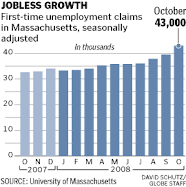








.png)