November 18, 2023
Hello Governor Maura Healey,
Since over the 20-year Lenox State Representative Smitty Pignatelli is being a disingenuous bully by blaming you for the housing crisis in Berkshire County earlier this year of 2023, and he is now blaming your administration for your non-plan for immigrants and homelessness, and he told a public radio journalist that you could bankrupt the state government in Massachusetts on your administration's immigration public policies and programs to defend himself and his fellow do-nothing State House lawmakers for not passing a supplemental budget prior to their 7-week holidays season vacation, I thought I would return the favor to Rep. Smitty Pignatelli by publicly writing to you about his failed public record in Boston:
* Smitty Pignatelli's first vote in Boston in early-2003 was for Speaker turned Convicted Felon Tom Finneran; Smitty Pignatelli also later voted for Speaker turned Convicted Felon Sal DiMasi
* Since 2003, Smitty Pignatelli voted against rules reform measures called "Sunshine Laws", and he openly and publicly said secretive State House government works well
* Smitty Pignatelli has voted for and/or happily accepted any and all public pay raises and perks that are paid for by taxpayers; In early-2017, Smitty Pignatelli voted for the outrageous and controversial 40 percent pay raise for himself and his fellow state lawmakers
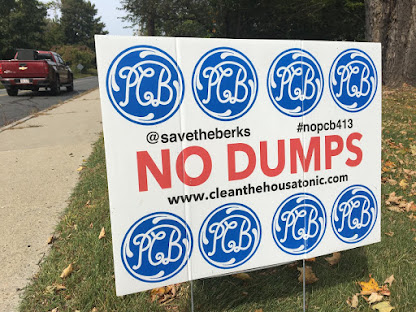
* Smitty Pignatelli supports GE putting a toxic waste dump inside of a watershed in the polluted Housatonic River over the objections of the people he represents in Lee and Lenoxdale
* Smitty Pignatelli writes op-eds about the Berkshires' shrinking tax base with thousands of lost living wage jobs and diminishing population numbers while the local tax burden increases without looking at himself in the proverbial mirror as a failed corrupt career politician who voted for hundreds of millions of dollars in state tax breaks for Boston area big businesses
* Smitty Pignatelli proposed legislation to give youths criminal records if they possess a small amount of marijuana near a youth center instead of helping them succeed in their young lives; (the real alleged criminals are the corrupt career politicians, registered lobbyists and marijuana dispensary owners with political connections at the Boston State House)
* I read on blogs that there are two Smitty Pignatelli's in one political man with an ego that is bigger than the Moon; the first Smitty Pignatelli acts like an arrogant buffoon around common people like Jon Melle; the second Smitty Pignatelli is a kiss-up around important political people like PAC Man Richie Neal
* Smitty Pignatelli writes op-eds complaining about Boston always low-balling state aid with inequitable financial formulas to Western Massachusetts' municipalities and public-school districts, while at the same time he almost always votes in lockstep with Boston's corrupt leadership on Beacon Hill that gives Boston area big businesses a little less than $18 billion per fiscal year in state tax breaks
* If Smitty Pignatelli is so concerned about the Berkshires' financial struggles, why isn't he asking Speaker Ronny Mariano and company to use their billions upon billions of dollars in surplus state cash plus "Biden Bucks" for middle class tax relief and increases in state aid for local governments and public-school districts?
* If Smitty Pignatelli is so concerned about the Berkshires' financial struggles, why doesn't he lead by example and vote to cut his and his fellow corrupt career politicians' public pay and perks by at least 50 percent and give the savings for middle class tax relief and state aid for local governments and public-school districts?
* In early-2004, I asked Smitty Pignatelli - along with Peter Larkin and Daniel Bosley - if they would please sign my nomination papers for Berkshire-based State Senator, and Smitty Pignatelli said to me, "I don't sign nomination papers", with similar declining words from Larkin and Bosley, who now are both greedy registered Beacon Hill lobbyists. Smitty Pignatelli blocks all of my political email letters, too, because I do not lie to him and tell him how wonderful he is as a career politician
* Smitty Pignatelli never speaks out against Beacon Hill lawmakers, including himself, taking weeks or months off at a time while the Salons collect all of their public pay and perks paid for by the taxpayers. Sarcasm: I hope that Smitty Pignatelli and his fellow Salons in Boston will enjoy their current 7-week taxpayer funded vacation from November 16th, 2023, through December 31st, 2023; It must be nice to get paid for doing nothing .... but DISSERVICES against the people and taxpayers!
* Smitty Pignatelli openly said that when he runs unopposed or in non-competitive so-called elections every two years, it means that people approve of his so-called (part-time) work in Boston .... and Pigs (& Smitty Pignatelli) have wings and fly
* Smitty Pignatelli voted to study, which meant not voting on, voting registration reform laws last year in late-January of 2022
* Smitty Pignatelli voted for and publicly endorsed the single largest state tax increase in the over 400-year history of Massachusetts: The surtax on incomes of over $1 million
Rep. Smitty Pignatelli blocks all of my political emails. He only wants people to tell him that he is wonderful when he is really a STINKER! I cannot believe the phony op-eds that Rep. Smitty Pignatelli writes in Western Massachusetts newspapers, but it makes for good material for me to write and blog about his real state legislative FAILED public record.
I don't like Rep. Smitty Pignatelli because he represents is everything that is wrong with the state government. Rep. Smitty Pignatelli is a corrupt career politician who votes himself huge pay raises plus perks, he rubber stamps the secretive, corrupt and inequitable State House Speaker's legislative agenda, he sold out his own constituents - along with Maryland Markey - by supporting GE's proposal to put a toxic waste leaky landfill full of industrial chemicals called PCBs inside of a watershed in the polluted Housatonic River, he voted for two State House Speakers named Tom Finneran and Sal DiMasi who later became Convicted Felons, he writes phony, lofty op-eds that does not match his failed public record over the past 20 years in Boston, he write about Berkshire County's distressed and very unequal economy without looking at himself in the proverbial mirror as a do-nothing State Representative from Berkshire County, and he refuses to listen to anyone who doesn't affirm and enable his failed leadership in Boston.
Happy Thanksgiving, but I am NOT thankful for Rep. Smitty Pignatelli!
Best wishes,
Jonathan A. Melle
-----
November 18, 2023
Hello Governor Maura Healey,
Over 20-year Lenox State Representative blamed your administration earlier this year of 2023 for the housing crisis in Berkshire County. I remember writing to you about the news story in iBerkshires.com
Yesterday, Rep. Smitty Pignatelli said in a public radio interview that your administration's non-plan for immigrants could bankrupt the Commonwealth of Massachusetts.
https://www.wamc.org/news/2023-11-17/berkshire-officials-on-beacon-hill-voice-frustration-over-stalemate-on-supplemental-budget-migrant-crisis-funding
How do you feel about Rep. Smitty Pignatelli blaming you for the do-nothing corrupt career politicians on Beacon Hill? I think it is unfair because Rep. Smitty Pignatelli is a total failure in Boston and the Berkshires alike!
Best wishes,
Jonathan A. Melle
-----
November 19, 2023
Hello Governor Maura Healey,
I do NOT understand how the news media allows Lenox State Representative Smitty Pignatelli to openly blame Governor Maura Healey for the state's issues, matters and problems. Rep. Smitty Pignatelli has been in the same elected office since the beginning of 2003, which is a little less than 21 years time now. He writes phony, lofty op-eds in the Berkshire Eagle and other Western Massachusetts newspapers about the public issues that face the people he represents in Boston. Never - not even once - has Rep. Smitty Pignatelli ever said and/or wrote about holding up a proverbial mirror to self-reflect on his over two decades-long FAILED public record in state government.
Governor Maura Healey has been in her current elected office for 10.5-months versus Rep. Smitty Pignatelli's 20-years and 10.5-months. The Berkshires has a housing crisis. Who did Rep. Smitty Pignatelli blame? NOT himself, of course. He blamed Governor Maura Healey, but the Berkshires' housing crisis long preceded her administration! The state has an immigrant and homelessness crisis. Who did Smitty Pignatelli blame? NOT himself, of course. He blamed Governor Maura Healey, who I see on my TV on the Boston news stations almost every single day, as well as I hear her on the Boston radio stations a couple of times per week, working hard on all of these public matters.
Rep. Smitty Pignatelli is on a 7-weeks-long taxpayer-funded vacation. In 2024, Rep. Smitty Pignatelli will go on a 5-months-long taxpayer funded vacation from August 1st - December 31st. Meanwhile Governor Maura Healey is always on TV on the Boston news, as well as radio, stations making a real difference for the people of Massachusetts.
Best wishes,
Jonathan A. Melle
-----
December 3, 2023
I have lived in Amherst, NH, for 20 years now. Pittsfield is a place many thousands of people have fled from. My dad, Bob, was a Pittsfield area politician 25 years ago when he served as a Berkshire County Commissioner from 1997 - mid-2000. We all know what happened to my dad and I back then at the hands of Pittsfield's devilish 4 foot tall piece of poop in the form of a man who has went to pot. I remember going to Beacon Hill with my dad back in the late-1990's when he testified about county government to state lawmakers. If looks and words could kill, my dad and I would not be around today. State and local career politicians only want big campaign contributions and millions and billions of taxpayer dollars. Someone such as "Jon Melle" and "Bob Melle" are supposed to tell "Smitty Pignatelli" how wonderful he is for going to Boston for a little less than 21 years now in late-2023, but that whopper would even worse than all of the world's HOT AIR!
Jon Melle
-----
December 3, 2023
Predictable Pittsfield politics has no choice but to play the same old financial shell games with the state government in Boston. Since Proposition 2.5 passed and was enacted into state law over 40 years ago now, the city has always passed a municipal operating budget with a spending increase of 5 percent or higher.
Proposition 2.5 is an irrational and arbitrary spending constraint that led to local governments having to play financial shell games with the state that ended up excessively increasing municipal spending since Larry Bird started winning NBA championships with the Boston Celtics. It is long passed time to repeal Proposition 2.5, along with all of the other unnecessary public spending constraints that lead to the exact opposite of their intended purpose: Increased Public Spending that kills private sector economic growth.
Why Proposition 2.5 is still on the books after over 40 years shows how STUPID and MISGUIDED the corrupt career politicians on Beacon Hill are about public financial management policies.
Do you all understand that Boston is systemically mocking "Gateway Cities" such as Pittsfield and the taxpayers who live in Pittsfield? The multi-billion-dollar Massachusetts State Lottery is a perfect illustration. The lottery SCAM pays the mostly low- to moderate-income buyers a small fraction of their scarce dollar(s) over the long-term. The lottery SCAM targets the underclass and mostly financially illiterate mostly blue collar working class residents. The lottery SCAM is nothing more than a (voluntary) regressive taxation SCHEME. The lottery SCAM makes profits off of distressed cities such as Pittsfield. The lottery SCAM pays Pittsfield state aid dollars, but otherwise equitable and progressive taxation schemes would pay Pittsfield a lot more money in state aid dollars than the lottery SCAM.
Why am I explaining all of this to you? The answer is that Pittsfield politics and the puppet-like state and local career politicians are playing all of you for FOOLS, especially in distressed cities such as Pittsfield, Massachusetts, which is my native hometown and a place I have studied for three decades of my adult life of 48 years.
The ruling elites in Pittsfield are in bed with the ruling elites in Boston, who are enriching themselves at the public trough by giving their wealthy big business campaign contributors billions of dollars per fiscal year in state tax breaks, while selling the lottery SCAM to Pittsfield and the people who live in Pittsfield. Also, Boston area big businesses do NOT exist in Pittsfield and many other areas of Massachusetts, which means that Beacon Hill lawmakers are screwing over these distressed areas they supposedly represent in Boston.
In Pittsfield politics, the career politicians are NOT your friends! It - state and local government - is all one big financial shell game to the ruling, corporate and financial elites. To be clear, the DISSERVICES the career politicians are doing to Pittsfield and its residents mean that there is nobody in state and local government representing the city and the taxpayers. Ergo, the December 12th, 2023, vote to increase the municipal tax by 8.75 percent is already a done deal.
Jon Melle
-----
December 4, 2023
Let's see. Nuciforo is suing the City of Pittsfield over his Pittsfield Pot Kingdom named "Berkshire Roots"'s payments to the city of $440,000 in HCAs fees from years ago. Why do you write that I should stop writing about Nuciforo's never ending political persecution of me over the past over 27.5 years now, but it is somehow O.K. for Nuciforo to sue the city over his predatory marijuana company's past HCAs payments plus unspecified damages?
What about the fact that the residential neighborhoods near Nuciforo's largest in the Berkshires marijuana growing three story building on Dalton Avenue in Pittsfield, Massachusetts, have complained for years that Berkshire Roots' pot growing operation fill their properties with unpleasant pot growing odors? As for Nuciforo, this past Summer of 2023, he purchased a $950,000 mansion in Pittsfield's elitist Gated Community that is 0.3 miles from Mayor Linda Tyer and CPA Barry Clairmont's mansion close to the Hancock border. Nuciforo himself does NOT live near his Dalton Avenue Pittsfield Pot Kingdom!
The irony of Nuciforo's lawsuit is that he himself is a disgraced politician. In 2006, Nuciforo had to step down in disgrace from his elected position as a Pittsfield, Massachusetts State Senator in Boston because he was allegedly illegally double dipping as the Chair of the State Senate Finance Committee while at the same time he served as legal counsel for Boston's big banks and insurance companies for the Boston Law Firm Berman and Dowell from 1999 - 2006. These facts were all published in the Boston Globe in early-2007.
Yet, Nuciforo's lawsuit basically argues that Mayor Linda Tyer acted in BAD FAITH with his marijuana company's HCAs payments to the city that took place years ago. Going back in history, it is clear that the bad faith politician was Andrea Francesco Nuciforo Junior, who is a disgraced former politician, while Mayor Linda Tyer is NOT a disgraced politician. In fact, Mayor Linda Tyer has received praises from state and local officials throughout Massachusetts because she is a good public manager.
Beacon Hill's Statehouse in Boston is a den of corruption, secrecy, financial inequity with the financial, corporate and ruling elites all enriching themselves at the public trough, while the common people and distressed areas throughout Massachusetts are mocked with DISSERVICES such as the multi-billion-dollar state lottery SCAM, which is nothing more than (voluntary) regressive taxation that exploits the underclass financial illiteracy.
For Nuciforo to have had to step down as a Massachusetts State Senator in 2006, he must have done something(s) really wrong back then. I wonder what Mayor Linda Tyer's thoughts are about Nuciforo's lawsuit against the City of Pittsfield. She must be thinking that Nuciforo is the pot calling the kettle black.
Jon Melle
-----
December 4, 2023
Do you people even know what happened to me in Pittsfield politics at the hands of "Luciforo"? Nuciforo persecuted me because he had a vendetta against my dad, Bob. It all started in the Spring 1996 when I was 20 years old and my dad started campaigning alongside of Nuciforo back then, and my dad was elected Berkshire County Commissioner and Nuciforo was elected State Senator in the 1996 election. It annoys me when people write that I am still complaining about events that happened 30 years ago, which is not at all accurate. Furthermore, Nuciforo's abuses against me never stopped, even after I moved to Amherst, NH, nearly 20 years ago. Other people, politicians and news media outlets have written about Nuciforo over the years. Most of the printed words were unfavorable to Nuciforo in politics, the law and the marijuana industry. The Berkshire Eagle once called Nuciforo a FRINGE politician. The Springfield Republican once called Nuciforo mean-spirited. The Boston Globe said that Nuciforo used his political connections in Massachusetts, along with his unknown financial backers with deep pockets, to be one of the first people to receive state and local permits to start his Pittsfield Pot Kingdom on Dalton Avenue with a dispensary in East Boston called "Berkshire Roots". I am NOT alone in writing about Nuciforo being a very questionable character who has disgraced himself in politics due to his corrupt special interests in the financial world, especially insurance companies; The Boston Globe once reported that Nuciforo co-hosted an elitist campaign fundraising event with then presidential candidate John Forbes Kerry whereby they wore matching tuxedos to impress billionaire John Kerry's wealthy donors. I never understood why someone such as Nuciforo would use so much of his energy to hurt "Jon Melle" over and over again, but I feel fortunate that people have defended me in Pittsfield and beyond over and over again. I am a nobody whose father was once a political and community activist in Pittsfield politics. It never made any sense to me. But Nuciforo's 2012 fringe and mean-spirited campaign for U.S. Congress was also nonsensical, which he lost by 40 percentage points to PAC Man Richie Neal, who also has a questionable reputation for being too close to insurance company lobbyists on K Street in the Swamp. Nuciforo's 2023 lawsuit against the City of Pittsfield is also a long-shot. Nuciforo is pushing 60 years old come next February 2024. I don't know what will come next for him, but I hope that he will either stop being a very questionable character or that he will end up in prison where he belongs!
Jonathan A. Melle
-----
December 6, 2023
There are 535 Members of U.S. Congress. There are 12,500 registered lobbyists in the Swamp in 2023. That equals over 23 greed-balls for every 1 career corrupt-ball. I wonder who really runs the U.S. Congress? If it goes by the number of lobbyists, then it is K Street instead of Capitol Hill.
Then there is the Beacon Hill Statehouse in Boston whereby some registered lobbyists earn 7-figure salaries, while many other greed-balls earn 6-figures.
Greedy lobbyist Dan Bosley is a former corrupt career politician who cashing in at the public trough. Greed-ball Dan Bosley likes to write letters and op-eds praising PAC Man Richie Neal (D-K Street).
Sarcasm: I am sure that the Founding Fathers envisioned greedy lobbyists using Pay to Play to legally bribe the career politicians for life in the state and federal government.
Jonathan A. Melle
-----
December 9, 2023
I disagree with your - blogger Dan Valenti's - praises for Jimmy Ruberto. He never owned a home, nor did he ever rent an apartment in Pittsfield, Massachusetts, but he got away with serving as Pittsfield's Mayor for 8 years from 2004- 2011. His backers were all of the Good Old Boys - Carmen Massimiano, Jr., Angelo Stracuzzi, Cliff Nilan, Andrea Francesco Nuciforo Junior, the late Mayor Gerry Doyle - who all disgraced themselves in Pittsfield politics. During Rolodex's tenure, Pittsfield always had VIOLENT CRIME, LEVEL 5 public schools, excessive municipal spending, the indebted and polluted PEDA debacle (that is now 25 years old in 2023), a few short years of downtown revitalization along with tens of millions of public dollars spent on North Street (for what exactly?), thousands of people fleeing "The Pitts", hundreds of living wage job losses, but to be fair, the brutal 2008 economic recession had a lot to do with it, several "ethics" complaints, and his long stays in Naples, Florida where he always really lived.
As much as I am unhappy with Aberration/Schoolmarm Sara Hathaway in Pittsfield politics, she was 100 percent correct when she warned us about the snake oil salesman Jimmy Ruberto in the early-2000's. Sara Hathaway always stood up to Jimmy Ruberto, especially when he supported the Berkshire Museum's selling of its historic artwork, including two paintings donated by Norman Rockwell himself. Sara Hathaway still lives in Pittsfield, while Jimmy Ruberto is a part-time resident of upscale Lenox (and a full-time resident of Florida).
Jimmy Ruberto appears to think that he is too great to live in Pittsfield. His ego must be even bigger than Smitty Pignatelli's deluded view of himself. If Jimmy Ruberto is in an elite group, then Pittsfield hit ROCK BOTTOM many years ago, but Pittsfield's downward spiral will continue with The Gavel: Mayor Peter Marchetti....
Jon Melle
-----
December 13, 2023
Please consider this: Pittsfield politics just increased its tax rate(s) by a little less than 9 percent. In addition, Pittsfield politics continues to raise its water and sewer fees each and every fiscal year. Pittsfield taxpayers are paying hundreds of dollar more this fiscal year 2024 than last fiscal year 2023 for the same municipal services. Furthermore, the City Council still does NOT have the state's certified FREE CASH amount from fiscal year 2023, which ended on June 30th, 2023 - the state is 4.5 months late so far!
In Boston, Beacon Hill lawmakers are sitting on a record high $8.2 billion cash surplus. If you don't believe me, then please click on the following link:
https://wbznewsradio.iheart.com/content/healey-shrugs-off-midyear-spending-cuts/
On December 12th, 2023, Governor Maura Healey filed her economic development plan with the state Legislature, which is currently on their 7 weeks-long taxpayer-funded vacation, which means that her plan to stimulate the Massachusetts economy is like her mailing a letter to Santa Claus in the North Pole.
Anyways, if state revenues fall short of estimates next year in 2024, who do you predict will receive the most cuts in state funding? Answer: Economically and financially distressed cities such as Pittsfield!
It is time to vote out all of the corrupt career politicians on Beacon Hill, who had their least productive legislative session so far in over one decade.
Jonathan A. Melle
-----
December 27, 2023
My dad, Bob Melle, was the last Chairman of the Berkshire County Commission, which was abolished and taken over the the Commonwealth of Massachusetts on July 1st, 2000. He served as a Berkshire County Commissioner for 3.5 years from 1997 - mid-2000. He served with Smitty Pignatelli for 2 years, and with Ron Kitterman for 3.5 years, and with Tom Stokes for 1.5 years. He opposed the state takeover of Berkshire County Government and the other 7 abolished county governments in Massachusetts, and he still comments that 6 county governments still operate all in the eastern half of the state.
Bill Weld was the Governor of Massachusetts in the 1990's and he pushed supply side economics that favor the wealthy and efficiency in state and local government. The irony of Bill Weld's tenure as Governor in the 1990's is that he mismanaged Boston's "Big Dig" public works project, which was the single most expensive public works project in U.S. history at the time. Bill Weld criticized county governments over millions of dollars in public spending, but it was Governor Bill Weld who was overseeing recurring billion dollar "Big Dig" cost overruns. In fact, the "Big Dig" went from over $5 billion at the beginning of his administration to doubling in cost to almost $12 billion. When one compared the inefficiencies of county governments to Governor Bill Weld's mismanagement of the "Big Dig", it became clear that Bill Weld was the biggest failure of all.
In Berkshire County, then Pittsfield State Senator Andrea Francesco Nuciforo Junior and then North Adams State Representative Daniel Bosley attached a secretive rider to the fiscal year 1999 state budget to abolish Berkshire County Government. Then Governor, the late Paul Cellucci, signed the state budget into law, and the people of Berkshire County no longer had regional representation in government. Ironically, Nuciforo anointed himself to a sinecure as the Middle Berkshire (County) Registrar of Deeds in 2006. Ironically, Bosley ran an unsuccessful campaign for Berkshire (County) Sheriff in 2010. Nuciforo and Bosley both abolished Berkshire County Government in the middle of 1998, but then years later, they both ran for county government elected positions that the state had taken over.
I still lived in the beautiful Berkshires when Governor Mitt Romney made the deepest cuts in state aid in 2003 to local government and public school districts. As I followed my dad's political activism in Berkshire County, I saw how the promise of the state's so-called efficiency in government was a lie even bigger than the "Big Dig" being "on schedule and on time". The municipalities and public school districts throughout Massachusetts did NOT receive more state funding, but, in fact, they received significantly less in only a few years time.
In recent years up to the end of 2023, I have read that the Massachusetts State Budget has increased by billions upon billions of dollars, while taxpayers are asking the do-nothing Beacon Hill lawmakers to please limit state spending. Compared to other states such as the much larger Pennsylvania, Massachusetts spends far more money. Furthermore, I receive political advocacy emails that Massachusetts is the least transparent, least accessible and least productive state government in the entire nation. Career politicians such as Lenox State Representative Smitty Pignatelli has been going to Boston's State House for 21 years now, and he has always voted against Sunshine laws and rules reforms. He is the norm in Boston's cadre of bureaucratic rubber stamp career politicians.
When I think about my dad's time as a community and political activist in Pittsfield politics, I believe that he was too idealistic for the likes of Nuciforo, Bosley and Pignatelli. Bill Weld is a Boston Brahmin blue blood who was born with an $80 million trust fund, his family's legacy at Harvard University goes back over 20 generations, and he was a Governor for the financial, corporate and ruling elites' Good Old Boys' club. Bill Weld was a snob who didn't care about social policies so long as the elites had all of the money and power. Bill Weld's idea of abolishing Berkshire County Government, along with the other 7 abolished county governments in Massachusetts, are a perfect illustration of Bill Weld's vision of Boston having all of the money and power, while the rest of the state could have been pushed off a cliff for all that he cared.
Jonathan A. Melle
-----
"Why did half of Massachusetts’s counties abolish their governments in the ’90s?"
"And what do the remaining counties do?"
By Chloe Courtney Bohl, Boston Globe, December 12, 2023
Twenty-five years ago, Gov. Bill Weld made history when he abolished Middlesex County.
Middlesex was established in 1643 as one of Massachusetts Bay Colony’s original three counties. It survived the Revolutionary War and bore witness to the entirety of American history. But by 1997, Middlesex was failing.
The county had been financially mismanaged, having wracked up $24 million of debt and recently defaulted on a $4.5 million bond. It had been forced to sell the insolvent Middlesex Hospital to a private buyer. Oh, and the county sheriff had just been imprisoned on racketeering charges.
Even before this spate of high-profile fumbles, the county had been in steady decline for decades. The state had taken over the county court system in 1978, relieving all 14 counties of one of their most important functions. Their district attorneys, too, had been moved onto the state’s payroll. In the 1980s, the Massachusetts House of Representatives voted to abolish Middlesex County’s highway department after learning that it had no highways of its own to maintain, yet employed upwards of 60 people.
To Weld (and many others in Massachusetts), Middlesex’s spectacular failure was a testament to the wastefulness of county governments in general, a useless extra layer between the municipalities and the state.
“Counties have become obsolete, inward-looking bureaucracies with dozens of departments and department heads that serve themselves and not the taxpayer,” Weld declared in 1997 as he signed the legislation formally dissolving Middlesex County.
The three-person County Commission was disbanded and its handful of employees let go. The county treasurer stayed on as a state employee, and the state absorbed the few departments that remained.
Public opinion of county government was so low and Weld’s abolition of Middlesex County seen as so successful that over the next few years, the House passed legislation eliminating Worcester, Hampden, Essex, Suffolk, and Barnstable counties, while Franklin County’s residents voted of their own accord to dissolve that county government. The state took control of their roads, hospitals, and registries of deeds. Their governments gone, the countries became no more than geographic boundaries on a map.
That left six functioning counties, clustered in the state’s southeast quadrant: Barnstable, Bristol, Dukes, Nantucket, Norfolk, and Plymouth.
What do the remaining county governments do?
The surviving Massachusetts county governments are less powerful than their counterparts in other states. They don’t operate the county jails (the state does), and they can’t directly tax their constituents. Instead, the towns and cities in their jurisdictions pay them a small assessment in exchange for their services.
Each county makes money from these assessments, from fees collected by their registries of deeds (which document real estate transactions), and from miscellaneous sources like parking fees.
All told, the counties’ operating budgets for Fiscal Year 2024 ranged from about $9 million to about $36 million. (That’s excluding Nantucket County, which contains only the Town of Nantucket and whose operating budget is just $1 million.) Those figures look puny compared to Boston’s annual budget of $4.28 billion, or even Cambridge’s $833 million.
Despite their small stature, the counties serve their communities in important ways. And they’ve learned from the embarrassments of the late ’90s, evolving to do more with less and stay accountable to the municipalities beneath them.
They know, in the words of Plymouth County Chairman Jared Valanzola, that “if we screw up, we will be on the chopping block.”
In 2020, Plymouth was awarded $91 million in federal COVID relief funding through the CARES Act.
Valanzola believes no one was better situated to distribute that money to the people who needed it than the county. It sent more than 90% of the $91 million to Plymouth’s 27 cities and towns, spending less than $1 million, or about 1%, to administer the program.
After setting aside some of the CARES money to buy COVID tests and support the county’s nonprofit hospitals, Plymouth County distributed the rest to its municipalities in proportion to their populations. Brockton used its $19 million to buy a Chromebook for every public school student as they transitioned to remote learning. Pembroke used some of its $3 million to add a walk-in cooler to the town food pantry.
Plymouth was the only county in Massachusetts to apply for CARES Act funding directly from the federal government and distribute it to the towns and cities in its jurisdiction. Other municipalities around the state still received CARES money, but Valanzola argues that because of its exceptionally low administrative costs, the county-level distribution was the most effective way to get communities the most money possible.
“We like to remind folks that if we didn’t exist, those communities would have received significantly less dollars,” he said.
Public health crisis response aside, the Plymouth County government does a myriad of seemingly mundane yet important things. Many of them have to do with saving its cities and towns time and money — by updating their antiquated parking ticket systems, by managing a regional retirement fund for government employees, by operating a dredge that it leases out to towns for cheap. Plymouth has a 4-H program and a county entomologist, who travels from town to town educating people about tick-borne diseases. These are the kinds of services that many towns need, but can’t afford to run themselves.
“Parking tickets, that’s not fun,” Valanzola admitted. “But it’s important, and it’s a revenue generator for a lot of communities. And we’re saving them money while administering that program for them.”
Like Valanzola, Barnstable County Administrator Beth Albert is proud to be providing useful regional programs that “transcend town boundaries.”
This year, Barnstable County’s operating budget was about $22 million. On top of that, the county received around $56 million in federal and state grants. So what did they do with the money?
Water quality is a major concern on the Cape, so the county government operates a dredge, runs a water quality lab, monitors beaches and ponds, and administers a program that helps residents get low-interest loans to replace their aging septic systems.
The county’s laundry list of regional services also includes broadband expansion, affordable housing partnerships with towns, Narcan distribution, education for seniors on their Medicare options, landfill monitoring, emergency planning, food safety training for restaurants, the AmeriCorps Cape Cod program, child sexual abuse services, regional IT services for town governments, and flood-plain planning.
Three county commissioners and a 15-member Assembly of Delegates decide how the county spends its money. These are elected positions; the entire county votes on the commissioners, and each of its 15 towns sends one delegate to the assembly with a weighted vote proportional to that town’s population.
“I’m really very proud of the work that we do,” Albert said, stressing that the county is efficient, accountable, and adaptive to its community’s needs.
Do people in Barnstable County realize all the cool stuff their government is doing?
Maybe not, Albert conceded. Some of the programs that are less hands-on might go unnoticed by the average resident.
In neighboring Norfolk County, Commissioner Richard Staiti agrees that the counties’ big issue isn’t performance, it’s visibility.
When he was running for commissioner, “half the battle” was explaining to people what the job entails, Staiti said. Public engagement was low because few people understood why they should care about county government.
Staiti is trying to change that. ARPA helped raise the county’s profile, he said. (After Plymouth County’s success with the CARES Act in 2020, other counties — Norfolk included — followed its lead and applied for American Rescue Plan Act funding in 2021.) Staiti travels within the county as much as he can — attending events, meeting with town officials, and talking about county-run programs.
“Every time I talk to people, it’s exciting,” he said. “People go, ‘Wow, we didn’t know that.’”
Like the other counties, Norfolk’s programs aren’t terribly flashy. Its modest budget goes toward programs like veterans’ services, an opt-in weights and measures program for towns, and the Norfolk County Agricultural High School.
Staiti remembers the wave of county abolitions in the ’90s, though he wasn’t a county commissioner at the time. He also remembers how the now-defunct counties were overspending and couldn’t sustain themselves.
“I don’t see that happening in Norfolk County,” he said.
Norfolk County Director John Cronin added that in 2021, the county hired a consultant to do a full audit of its operations. The recommendations helped them save money on capital planning, IT, and human resources.
Again, not flashy. But the point is, “we don’t want to sit and watch time go by,” Cronin said. “We want to look at how we operate to make sure that we’re giving all of the residents of Norfolk County the best bang for their buck.”
What’s going on in the inactive counties?
It’s hard to measure the exact impact of the abolition of eight of Massachusetts’s 14 county governments, because the state and the municipalities took over many of the former counties’ responsibilities after they were eliminated. Still, in some of these communities, new structures have popped up in place of traditional county governments that suggest a widespread desire for some form of regional collaboration.
You’ll remember that Franklin County voted to dissolve its government in the ’90s. In its place, they established the Franklin County Regional Council of Governments, or FRCOG (pronounced FER-cog) for short.
Like a traditional county government, the FRCOG provides needed services to towns. Unlike a traditional county government, membership in the FRCOG is voluntary.
“That means that we say to the towns of Franklin County, the municipal governments, ‘We believe we can provide you with strong services, will you be a member of our council of governments?’” explained FRCOG Executive Director Linda Dunlavy. “What that difference means is that we can’t rest on our laurels. We have to always provide valuable services to our member communities, so they stay members.”
To do this, the FRCOG offers what its communications manager Mark Maloni calls an “à la carte menu of municipal services” that towns can choose to pay for, or not.
Franklin is one of the commonwealth’s most rural counties, filled with small towns that don’t have the budget to hire full-time staff. That’s where the FRCOG comes in.
“We are the town accountant,” Dunlavy said. “We are the building inspector, plumbing inspector, health inspector for towns. Those municipal service programs are voluntary opt-in. Only the towns that want them get them, and they pay to be a member of that program.”
On top of these shared municipal services, the FRCOG runs programs targeting the county’s big-picture needs. In a region crisscrossed by rivers and dirt roads, flood-proofing and climate resiliency are top concerns. And with a rapidly-aging population, attracting newcomers to the county has become a priority.
All 26 towns in Franklin County elected to join the FRCOG in 1997 and have stayed for the 26 years since.
“We have made transformational change in Franklin County,” Dunlavy said. “Over the years, we’ve brought passenger rail back, we’ve realigned Route 2 to make it easier and safer, we’ve built [a] transit center, we’ve done a huge amount of watershed planning so that we know what’s going to happen when our rivers flood. We just do a lot of good.”
In Worcester County, where the government was abolished in 1998, the Central Massachusetts Regional Planning Commission has stepped in to cover some of those regional services.
The CMRPC is one of 13 regional planning agencies in the state. At its inception in 1963, it had just two departments: Transportation and Land Use Planning. But since the county was abolished, it’s expanded significantly, adding a Regional Services branch with seven full-time staff.
“We are the only regional connective tissue between very small towns,” explained Connor Robichaud, the CMRPC’s director of regional services. “So we have expanded to provide many more services, from economic development to … community planning.”
Even in the absence of any kind of county government or overarching regional entity, municipalities still share resources informally, because it’s the time- and money-saving thing to do.
Windsor is a town of 851 people in the state’s northwest corner, part of the erstwhile Berkshire County.
“For the most part, Windsor is a very, very independent town,” said Windsor Town Administrator Madeline Scully. “Very self-sufficient.”
Scully hardly remembers the Berkshire County government from before it was abolished.
“I don’t know what they did for us,” she admitted. Regardless, she said, the town runs well on its own.
But even independent-spirited Windsor is a member of a 14-town regional recycling program, shares a public health nurse with neighboring municipalities, and allows nearby Peru and Savoy to use its new emergency shelter.
‘Regionalization is the future’
Back in the ’90s, Massachusetts’s counties earned their reputation as cumbersome and wasteful. But today, Valanzola in Plymouth County argues they’re the most efficient form of government we have.
“I love the small town feel that New England has and Massachusetts has, but a lot of our town budgets have grown by leaps and bounds, exponentially,” he said. “Part and parcel, I think, because we’re not regionalizing certain things. When we talk about services, regionalization is the future.”
That doesn’t mean the eliminated counties are coming back any time soon. “Regionalization” is a flexible idea that can take many forms — like an opt-in council of governments, an expanded regional planning agency, or an informal multi-town partnership, to name just a few.
As for the surviving county governments, their leaders maintain that they’re not going anywhere.
“We’re not what we were,” Valanzola said. “We’re here to stay.”
-----
December 27, 2023
Hello correspondent,
It is too bad that Mayor Linda Tyer went low on her opponents on the outgoing City Council by having her hand in the Eagle's news article about the 4 dissenting City Councilors having arrears with the city government. I understand your beliefs that Mayor Linda Tyer is unproductive, manipulative, and scheming. I also understand that marijuana is very harmful to the mental health of young adults. Similar to the alcohol, tobacco, gambling, porn and sex workers industries, the marijuana industry is a predatory industry that exploits people's impulses, demands and desires.
I love to read about financial management, which has a dark side to its own industry. I tell people that my understanding of financial management is that we spend our adult lives trying to transition from negative income, to neutral income, to positive income, and if one does well enough and lives long enough, progressive income. I also tell people that given all of the predatory industries that play on our impulses, demands and desires as human beings, it is O.K. to spend one's money on "negative income" interests.
If I wish to play the lottery or go to a casino. I may say to myself, I have a $100 limit or another amount in a given month, and once I lose my $100 or another set amount of money in a given month, then I am done gambling for the rest of the month, and then I wish myself better luck next month with my new $100 limit or another set amount of money. I know that gambling is a predatory industry that plays on my impulses, demands and desires. I know that gambling is "negative income". I know that casinos are like the Opiate Dens of old times that I read about in my history books. I know that gambling - especially the state lottery - is regressive taxation that allows the state government to lower taxes for the corrupt career politicians' wealthy campaign donors who pay some of the super-greedy lobbyists $7-figure salaries. I know that greedy lobbyist Dan Bosley loves regressive taxation schemes such as the state lottery because it allows him to make more money than he otherwise would by Dan Bosley getting big tax breaks for the wealthy big businesses who hire him as their lobbyist in Boston and beyond.
When I buy a Powerball ticket that tonight advertises a $700 million jackpot, I call it a couple of dollars and my elusive dream of being wealthy. The odds of me winning tonight's Powerball $700 million jackpot prize are irrational. When I was a kid growing up in Pittsfield, people used to say to me that the lottery was "A dollar and a dream". Who comes up with these kinds of SCAMS? When I try find the answer, I think of greed-balls such as Dan Bosley, who is very intelligent about financial management and government operations, but he is also very greedy.
The trinity of addiction for people in need of dopamine rushes are substance abuse, paying for porn and/or sex, and gambling. For young adults who have an addiction(s) and are in need of dopamine rushes, their mental health is at stake because their youthful still developing brains are being wasted. Beer companies show celebrities, beautiful young women in bikinis on the beach - sex sells, and other dreamy ads that target young adults. Instead, they should show middle-aged adults with beer bellies complaining about their divorces, debts and bouts of depression.
Mayor Linda Tyer is who she is, but I believe that Dan Bosley is much worse than her in politics because he has spent his political and lobbyist careers supporting the wealthy campaign donors in state government in Boston by pushing predatory SCAMS such as the state lottery on the common people to further enrich himself for greed. I also believe that predatory industries and career politicians in state government mock the common people and the economically distressed and unequal cities that they live in, while the Dan Bosley's of the world cash in on regressive taxation and the elites enrich themselves at the public trough.
Best wishes,
Jon Melle
-----
January 3, 2024
The Springfield (Mass.) Republican published a news article touting the a little less than one-year-old $50 scratch ticket that led the over 50-year-old Massachusetts State Lottery to its most profitable fiscal year 2023 and going forward into the current fiscal year 2024. The favorable news story upset me because the lottery is an inequitable financial scheme that is nothing more than (voluntary) regressive taxation that targets low- to moderate-income mostly financially illiterate people in the underclass and working-class. The lottery also systemically mocks the "Gateway Cities" that the disadvantaged people and families live in, such as my very economically unequal native hometown of Pittsfield, Massachusetts.
Predatory industries include alcohol, tobacco, marijuana, gambling, sex work and porn, and the like. The lottery is a predatory operation. Does anybody understand that the more inequitable revenues from predatory industries such as the lottery equals more state tax breaks that the corrupt career politicians in Boston's Statehouse can giveaway to their wealthy campaign donors? Yes, indeed, the real purpose of the lottery is for greedy registered lobbyists such as Dan Bosley to enrich himself and the financial, corporate and ruling elites at the public trough! Let us note that some registered lobbyists in Boston earn 7-figure salaries pushing predatory and (voluntary) regressive taxation financial schemes on the people and families who live in Massachusetts.
In April 2021, The Boston Globe published a news story that stated that Beacon Hill state lawmakers giveaway a little less than $18 billion in state tax breaks per fiscal year. One of the ways they are able to giveaway so much money in state tax breaks to their wealthy campaign donors is through the lottery's structural assaults on the common people, who are being played for fools in a political and financial shell game by the elitist snobs in Boston. Moreover, the big business who receive these lucrative tax breaks do NOT live in most regions of Massachusetts, such as the mostly rural region of Western Massachusetts.
I wish that the news media outlets would publish my letter(s), especially about the corruption of state government in Massachusetts. My true belief about the lottery is it is wrong on more levels than the Empire State Building. It is elitist snobbery that goes over the heads most of the common people. The lottery should either be abolished outright or there should be a public outreach campaign(s) to explain what the lottery is really all about.
Jonathan A. Melle
-----
"Mass. State Lottery’s $50 ticket released Feb. 2023 is best-selling in country"
By Irene Rotondo | IRotondo@masslive.com - Published: Jan. 02, 2024
(The Billion Dollar Extravaganza scratch ticket, the $50 ticket introduced by the Massachusetts State Lottery in Feb. 2023. Photo by Christian Teja/Massachusetts State Lottery)
Massachusetts is pretty used to being number one — especially when it comes to the lottery.
The $50 lottery scratch ticket called “Billion Dollar Extravaganza,” released by the Massachusetts State Lottery in early 2023, topped not only the statewide charts in ticket sales, but it also has become the best-selling lottery ticket in the country.
“Billion Dollar Extravaganza” was released on Feb. 7, 2023. It made history by offering Massachusetts’ highest scratch ticket prize ever at $25 million. There were three grand prizes available to win, which were all claimed by the end of 2023.
The Massachusetts State Lottery reported over $900 million in sales over the last year for the $50 ticket, making it not only the state’s most popular ticket, but the best-selling game across every lottery in the United States.
“Part of it is the culture of the Northeast; if you look at Northeast lotteries, they tend to do well,” Mark William Bracken, director of the Massachusetts State Lottery, said.
“But that being said, no state offers the prizes, and the payouts, and the propositions that the Massachusetts State Lottery does. Numbers are numbers... people buy tickets in Massachusetts, because you can win on tickets in Massachusetts,” Bracken said.
Bracken gave the example of the Texas Lottery’s two $100 scratch ticket games, which have much lower grand prizes than Massachusetts’ $50 scratch ticket. The first $100 ticket released in Texas had a top prize of $20 million; its second was just $7.5 million.
And though Florida is the only other state to offer a $25 million prize for its $50 ticket, also with an 82% prize payout, Bracken explained Massachusetts is paying out more to its players than any state.
The prize payout, or the amount of the prize turned over to the winner, is comprised of the money left after the lottery turns over its mandatory compensations, such as overhead or administrative costs.
Bracken said Massachusetts’ transparencies on its games, the amount of prizes left, its odds and payouts contribute to its unique success with prize payouts. It also has the most lottery agencies per square mile and per capita in the country.
As of late December, about 70% of “Billion Dollar Extravaganza” tickets have been distributed and about 67% have been sold, Bracken said.
There are still four, $2 million prizes remaining to be claimed in the game as of Jan. 2, along with five $1 million prizes and 65 $50,000 prizes.
Every winning “Billion Dollar Extravaganza” ticket has a minimum prize of $100. The game offers over $1 billion in total lottery winnings besides its grand prizes, with five $2 million prizes and 15 $1 million prizes released at the start to win. The overall odds of winning any prize are 1 in 4.1.
The success of the $50 ticket this past year papered over concerns the Massachusetts State Lottery had over meeting its 2023 fiscal year goal. And Bracken again reiterated the need for more advertisement funding if the lottery hopes to continue breaking national records — especially without an online lottery.
“As the numbers show, we’re being saved by this $50 ticket,” Bracken said. “And as a lottery, I don’t want to be in a position that I’m getting saved because of one particular product.”
Massachusetts had joined more than a dozen other state lotteries offering a $50 ticket. The previously highest-priced scratch ticket available in Massachusetts was $30, and was first introduced in 2014.
According to the lottery, Massachusetts was the first state to create a scratch ticket game for players, which was in May of 1974. It released a $1 ticket called “The Instant Game,” and the lottery said the invention “revolutionized the industry and established Massachusetts as a lottery innovator.”
-----
January 4, 2024
Peter Marchetti: "Openly Gay"
Linda Tyer: "Gated Community"
Dan Bianchi: "Mayor Montello"
Jimmy Ruberto: "Rolodex"
Sara Hathaway: "Aberration"
The late Gerry Doyle: "Barstool"
Pittsfield politics: "RETRIBUTION"
re-Pete White: "Food Mood"
Tricia Farley Bouvier: "Country Buffet"
Smitty Pignatelli: "NO to transparency!"
John Barrett III: "Career Politician"
Paul Mark: "Rubber Stamp"
Maura Healey: "No productivity"
Andrea F. Nuciforo, Jr: "Pittsfield's Pot King"
Adam Hinds: "Chrome Dome"
Barry Clairmont: "Pittsfield's 3 am Cumby's Crusader"
Richie Neal: "PAC Man"
Maryland Markey: "Hot Air"
Elizabeth Warren: "Big Biden Supporter"
Joe Biden: "BIG government Biden Buck$"
Donald Trump: "Moral Hypocrite"
Bill Clinton: "Twice Convicted FELON"
Hillary Clinton: "Stand by your man"
John Kerry: "Millions of dollars invested in the oil and gas industries until early-2021"
Dan Bosley: "Greedy lobbyist for BIG business"
The Berkshire Eagle: "A yellow rag that is an embarrassment to journalism"
Blogger Dan Valenti: "The Stockbridge critic of Pittsfield politics"
Jon Melle: "The financial, corporate and ruling elites enrich themselves at the public trough, while the common people, families and taxpayers pound sand"
Capitol Hill: "The Swamp's Country Club of out-of-touch Members of U.S. Congress"
Beacon Hill: "Do NOTHING but DISSERVICES"
The lottery: "Voluntary regressive taxation that systemically mocks the mostly financially illiterate low- to moderate-income residents of "Gateway Cities" such as Pittsfield"
Casino Gambling: "Just the kind of people Massachusetts doesn't hope to attract"
North Street: "Social Services Alley surrounded by The Ring of Poverty inner-city Pittsfield distressed neighborhoods"
PEDA: "Millions of dollars in debts and unfunded liabilities that is still a polluted wasteland that is an eyesore that doesn't attract Fortune 500 companies to Pittsfield"
The American Dream: "To move your family out of Pittsfield like many thousands upon thousands of people and families did over the past 50 years"
The City Council: "Spend Pittsfield into oblivion"
The School Committee: "Level 5 is rock bottom"
Pittsfield: "A downward spiral...."
Jon Melle
-----
January 6, 2024
Hello blogger Dan Valenti,
I "Googled": city of pittsfield city council agenda
https://www.cityofpittsfield.org/government/city_council/city_council_agendas.php
Please review the Pittsfield City Council Agenda:
https://cms2.revize.com/revize/pittsfieldma/government/city_council/docs/January%209,%202024.pdf
The City Council is going to accept a settlement check of $8 million from GE due to GE's pollution of industrial chemical called PCBs that flows south to the Long Island Sound.
What is wrong with this picture?
1. The State of Connecticut and its municipalities are not receiving any settlement checks from GE. The last time I checked, the Housatonic River flows through Connecticut.
2. The 25-year-old polluted PEDA debacle has many millions of dollars in debts and unfunded liabilities with no financial plan to pay its creditors.
3. Pittsfield's acceptance of GE's $8 million settlement check is a slap in the face to the Town of Lee (Mass.). GE plans to put its capped leaky landfill of PCBs in Lee (Mass.).
4. While the City of Pittsfield, the corrupt EPA and GE signed off on this aforementioned settlement, the Commonwealth of Massachusetts' state environmental agencies refused to do so. What does that tell us?
5. Capped landfills do not last forever. Even GE has stated this unpleasant fact. Why on Earth would the City of Pittsfield accept GE's settlement when GE's capped landfills will someday cease to contain GE's industrial chemicals called PCBs?
6. Pittsfield has been down this road before, and it has been a debacle and environmental disaster. The definition of insanity is doing the same thing over and over again and expecting different results.
7. U.S. Senator Ed Markey (aka Maryland Markey) campaigned and touts the Green New Deal, but like "PAC Man" Richie Neal and Lenox State Representative Smitty Pignatelli, Ed Markey sided with GE's settlement with Pittsfield and the other handful of Massachusetts municipalities with the people of Lee (Mass.) protesting GE's settlement.
8. It has long been written that similar to Judas feeding Jesus to the wolves, the late Gerry Doyle sold out the people of Pittsfield for "30 pieces of silver".
9. Similar to Judas and the late Gerry Doyle, Peter J. Larkin (aka "Lobbyist Larkin") has collected million(s) of dollars for himself from GE, while Pittsfield is now GE's dump.
10. How much surplus cash does the City of Pittsfield have in its coffers? GE's $8 million settlement check to the City of Pittsfield would be on top of millions of dollars in "FREE CASH" and other "Slush Funds".
Jon Melle
-----
January 7, 2024
Re: Smitty Pignatelli will speak at a Statehouse art exhibit on the Opioid Crisis in Massachusetts
PHOTOVOICE OPIOID CRISIS EXHIBIT: The National Institute of Health Heal Initiative hosts an exhibit: "Voices of Resilience: The Opioid Crisis Through The Lens of Individuals with Lived Experience." An interactive display of photography and narratives featuring the stories of people affected by the crisis will be on display on the 4th floor of the State House from Jan. 8 to Jan. 12 [2024]. An event highlighting the exhibit will feature guest speakers Rep. Pignatelli, Public Health Commissioner Robert Goldstein and Boston Medical Center principal investigator with the HEALing Communities Study Dr. Jeffrey Samet. (Tuesday, 11:30 a.m., Nurses Hall)
Source: https://franklinobserver.town.news/g/franklin-town-ma/n/232651/people-power-and-politics
-----
January 7, 2024
I don't like that Joe Biden is trying to redefine FREE SPEECH. I also did not like that Mayor Peter Marchetti said that he is not a fan of social media and blogs, and that he publicly asked for a 90 day grace period from the people he works for from exercising our FREE SPEECH. I don't like that Maryland Ed Markey, Smitty Pignatelli, Tricia Farley-Bouvier and Paul Mark block all of my political emails. I don't like it that The Dirty Bird (aka The Berkshire Eagle) hasn't published any of my letters in the a little less than 20 years now. I don't like that Donald Trump uses similar words, speeches and propaganda - such as The Big Lie that the 2020 election was stolen from him and that the January 6th, 2021, insurrection on Capitol HIll that he led was not an insurrection - that Adolf Hitler used 100 years ago in his rise to power in Germany as the Nazi dictator in the 1930's. Even Donald Trump's own former Vice President Mike Pence said that he does not support Donald Trump in 2024.
https://thehill.com/homenews/4394194-cnns-christiane-amanpour-accuses-trump-of-nazi-talk/
Jon Melle
-----
January 12, 2024
Donald Trump is facing 4 criminal trials and multiple civil trials in 2024. Joe Biden is facing an impeachment inquiry in 2024. The corrupt career politicians in the U.S. House of Representatives on the Republican Party side want Hunter Biden to testify in privately held depositions to throw his father, Joe Biden, under the bus so that the Swamp politicians will have more ammunition to use against the sitting U.S. President. Hunter Biden defied the subpoena because he knows that it is a mousetrap.
For years now in Pittsfield politics (Massachusetts), I - Jon Melle - have written about the deadly mousetrap(s) set up to ruin my life because Nuciforo, who is an Attorney, had a vendetta against my dad, Bob, and tried to ruin his life in the mid- to late-1990's. People have said and written that what happened to me was many years ago, but the political and legal mousetraps are still there for me in my native hometown of Pittsfield.
This is called CONSPIRATORIAL POLITICS and LEGAL ENTRAPMENT(S)! They are doing it to Donald Trump. They are doing it to Joe Biden and his scoundrel son Hunter Biden. In Pittsfield politics, they are still doing to to me: Jon Melle - even though it happened many years ago now.
Why do politicians and lawyers set up these kinds of conspiratorial mousetraps? Aren't we supposed to be treated both FAIRLY and SAFELY with Equal Justice Under Law? If your father was the sitting U.S. President and you knew that a mousetrap was set up for you to throw your own father under the bus, would you take the bait like a rodent? Hunter Biden is a lawyer who has lawyers defending him. Hunter Biden chose to NOT throw his father, Joe Biden, under the bus.
Jon Melle
-----
January 13, 2024
Hello Erin Leahy at Act on Mass,
Thank you for your political email about Governor Maura Healey's cuts to social services programs in Massachusetts. She signed a huge state tax cut into law last Fall 2023. The wealthy households and big businesses received huge state tax breaks. Now, she is concerned that the state's revenues are not keeping up with the state government being able to balance its (cooked) books. I wonder why Maura Healey would even want to serve as the Governor of Massachusetts when she doesn't understand financial management 101.
I grew up in Pittsfield, Massachusetts and I lived a majority of my life in Berkshire County. My dad, Bob, was a political community activist in Pittsfield whereby he held elected positions in local government decades ago now. The problem that Western Massachusetts always faces is that Boston receives the biggest benefits of state government, while Western Massachusetts relies on state funding for local aid, public education, and social services programs.
The wealthy households and big businesses that exist in the Boston metro area are contrasted with economic inequality and a lot of state owned land in Western Massachusetts. When Beacon Hill lawmakers and the Governor giveaway around $18 billion per fiscal year (April 2021 figures) to wealthy households and big businesses, Western Massachusetts does NOT benefit like Boston because there are little to no wealthy households and big businesses in Western Massachusetts and other regions of Massachusetts.
Some registered lobbyists in Boston report 7-figure per fiscal year salaries because they lobby state lawmakers for billions of dollars in state tax breaks for their big business clients. Many registered lobbyists in Boston report 6-figure per fiscal year salaries. Many state lawmakers also report 6-figure per fiscal year state public pay plus perks. Given all of these high-income greedy lobbyists and corrupt career politicians in Boston, why don't they lead by example and cut their own lobbyist salaries or state public pay plus perks before the Governor's inequitable cuts in state funding for social services programs that assist the neediest households and communities in Massachusetts?
Best wishes,
Jonathan A. Melle
-----
January 13, 2024
Act on Mass: Saturday Scoop
Happy rainy day, Jonathan.
Sometimes the weather accurately reflects the current mood, and that is certainly true of today; this was a dark and dreary week in Massachusetts politics.
Childcare providers, student loan grantees, local fire departments, and more, learned that their funding was being cut in this year’s budget due to lack of revenue. But thank goodness we cut taxes for multi-state corporations in October! (More on that below.)
Luckily, it wasn’t all gloom and drizzle: criminal justice reform advocates won a long-fought battle this week. No thanks to the Legislature for that though – this victory came from a Supreme Judicial Court decision after years of legislative inaction.
Remind me, what are we paying our legislators for, again?
State House Scoop
Governor Healey announces $375 million in cuts to social services
I hate to say I told you so, Jonathan. I mean, really, really, actually hate it: in last week’s Scoop, we predicted that budget cuts were on their way due to the state’s lower than expected tax revenue, never mind the egregious tax cuts passed in the fall. But even we didn’t guess how bad it would be.
On Monday, Governor Healey announced a series of "9C" cuts, i.e. cuts to an approved budget due to lack of funds, totaling $375 million. These cuts affect 66 budget line items including, but certainly not limited to: MassHealth, behavioral health services, loan forgiveness, housing support, child care, emergency aid to the elderly and disabled children, community college grants, and transportation.
I’m no math wiz (I was a philosophy major, French minor ✌️), but maybe if we didn’t just throw away $1 billion in annual tax revenue, we wouldn’t have to cut a single one of those line items. More math for you: the three regressive cuts in the tax cut bill, i.e. the cuts that specifically benefit the rich and corporations, cost $347 million per year – almost as much as the total 9C budget cuts. That’s roughly $350 million out of our social programs, into the pockets of the wealthiest Bay Staters. Gee, I wonder who our lawmakers feel more accountable to?
In the wake of the 9C cuts, Healey defended her tax cut bill, calling it “absolutely essential” and saying it makes the state “more affordable.” But it’s worth asking: more affordable for whom? Certainly not for the 27,000 families in Massachusetts living below “deep poverty” whose monthly cash assistance was affected by the 9C cuts, according to the Lift Our Kids Coalition during their protest of the cuts on the State House steps earlier this week.
We at Act on Mass stand in solidarity with the Lift Our Kids Coalition in calling for these budget cuts to be rescinded. A spokesperson for the coalition put it mildly: “We really need to be doing better than this in Massachusetts.”
Hold our elected leaders accountable by telling Governor Healey and your legislators how you feel about these budget cuts today:
Governor Healey: (617) 725-4005
Find contact info for your Rep and Senator here
Revenge porn bill passes House for the second session in a row
Massachusetts may soon become the second-to-last state in the union to ban revenge porn – the act of sharing sexually explicit images or videos of someone without their consent. Yay?
This issue was a longtime priority of former Governor Baker, who lamented the Legislature’s failure to get the bill to his desk during his tenure. While accepting crumbs from the Legislature is pretty much all we can ever do, celebrating is still premature; last session, the House unanimously passed the bill only for it to idle in the Senate for seven months. In the final week of the term, the Senate passed it with some changes, sending the bill back to the House. Ultimately, the bill died during the chaos of the end of session crunch, meaning it had to be refiled this session so it could go through the whole legislative process, yet again. Round and around we go!
SJC rules that life sentence without parole for 18-20 year olds is unconstitutional
In other slow-churning legislative news, the Supreme Judicial Court of Massachusetts ruled this week that 18-20 year olds cannot be sentenced to life in prison without option for parole. (Read the full decision here). While this is a huge win, it’s yet another example of our Legislature’s harmful inaction, and how advocates often have to use unconventional measures, like court decisions or ballot petitions, to make changes outside of the legislative process; this same victory could have been achieved years ago by the passage of one of two long-time legislative priorities of ours: raising the age of criminal majority to 21 and eliminating the mandatory sentence of life without parole. Instead, these have both consistently been sent to study.
As one of just 10 states that has a mandatory life sentence without possibility of parole for certain crimes, this ruling states that imposing such a sentence on emerging adults (18-20 year olds), whose brains are “not fully developed and are more similar to juveniles than older adults,” would be cruel or unusual punishment. It’s believed that we are the first in the nation to implement such a ban.
At least 100 people currently incarcerated in Massachusetts could be immediately eligible for parole due to the ruling. But if the Legislature had swiftly acted upon either of the above bills, that could have meant years more that people who were unconstitutionally punished under that law could have spent with their loved ones and reintegrating into society.
Take Action
Fight for your Rights Lobby Day: January 23rd
It’s finally happening: we’re going under the golden dome! Join Act on Mass and Indivisible Mass Coalition on Tuesday, January 23rd at 9:45am, for our first ever Lobby Day! We’ll be meeting with our legislators to lobby for a slate of pro–democracy bills, including the Sunlight Bill, S.1963.
What: Lobby Day
Who: Indivisible Mass & Act on Mass
When: Tuesday, January 23rd, 9:45am-2:00pm
Where: State House, Room 428
RSVP FOR THE LOBBY DAY >>
Write a letter to the editor for the Healthy Youth Act on January 17th
We’re teaming up with the Healthy Youth Act Coalition to lead a training on writing a Letter to the Editor! Join us on Wednesday, January 17th from 6-7PM to hear more about the fight to make sex ed in our state medically accurate, consent-based, and LGBTQ+-inclusive, and how to take action in your local news outlet. No experience necessary, we’ll train you from drafting all the way through to publication.
RSVP FOR THE LTE WORKSHOP >>
That's all from me on this drizzly, rainy, windy, no good very bad day. Yes, this was a frustrating week. Heck, most weeks on Beacon Hill are frustrating. But you know what's the best way to relieve that frustration? Doing something about it. Call Governor Healey, call your legislators, and if you can, come to our Lobby Day! Our Fight for your Rights Lobby Day will be a perfect opportunity to advocate for structural reforms, like increased transparency and voting access, that can help us hold our elected officials accountable in the long term so they can't keep getting away with this GOP-esque behavior. These 9C cuts are a great example of the material consequences of a government that is accountable to the wrong people. It's up to us to remind them who they work for.
Ok ok, I'm stepping off my soapbox. But hey, it's a nice view from up here. I think the rain is letting up.
Until next week,
Erin Leahy
Executive Director, Act on Mass
-----
January 15, 2024
WAMC's journalist Josh Landes promote's North Street's sarcastic name of "Social Services Alley":
https://www.wamc.org/news/2024-01-15/pittsfields-peer-led-living-in-recovery-group-is-settling-into-its-new-downtown-headquarters
Downtown Pittsfield (Mass.)'s glut of Social Services Agencies and 15 empty storefronts on North Street is surrounded by Pittsfield's inner-city distressed neighborhoods that are sarcastically called: "The Ring of Poverty".
Social Services Staff always talk about the generations of traumatized individuals and families that face recurring episodes of direct, structural and cultural abuses, assaults, and community conflicts in Pittsfield, which is always ranked in the FBI's annual reports as being in the top ten cities by population in Massachusetts for violent crime.
I grew up in Pittsfield. One of my biggest fears in my life on 48.5 years was having to end up as a low- to moderate-income adult who resided in inner-city Pittsfield. It still amazes me - Jon Melle - that I own my own condo unit in a civilized community in Amherst, New Hampshire. I thank the lucky stars after leading a life of social anxiety and emotional traumas as a native of Pittsfield, Massachusetts.
Why does Pittsfield always have recurring themes of suffering people and families, along with a distressed community that has an over-reliance on social services? I am Exhibit A as a person who grew up in Pittsfield who had recurring themes of anxiety and traumas. I did everything in my power to not be part of Pittsfield's generations of traumatized individuals and families. It still saddens me to read about Pittsfield's never-ending and always recurring downward spirals....
Jon Melle
-----
January 15, 2024
A correspondent wrote to me: "Josh Landes is to me as Nuciforo is to you. He is absolutely a malevolent shit".
My reply is that there are many pieces of poop who exist in the form of men, including Andrea Francesco Nuciforo Junior and Josh Landes.
Please do not speak for me by saying that I wanted to be part of the club in Pittsfield politics, but I was denied membership (many years ago when my dad, Bob, was a politician in Berkshire County).
I wish to speak for myself, please. I wanted - and still wish to be - to be an American Citizen who uses my FREE SPEECH to participate in our government in our FREE COUNTRY!
You sound like a stool sample yourself. Do you know why government stinks? It is full of....!
Jon Melle
-----
January 20, 2024
Hello blogger Dan Valenti,
The Dirty Bird (Berkshire Eagle) rag (newspaper) published an editorial criticizing the 7 out of 11 Pittsfield City Councilors for voting in favor of a petition to level fund or close to level fund the yet to be proposed fiscal year 2025 municipal budget that will take effect on July 1st, 2024 and end on June 30th, 2025. The editorial did make some valid points, including that it was too soon for the petition and that it would have been better if the petition requested that the new Mayor, Peter Marchetti, find ways to reduce city spending in Pittsfield politics.
The issues I have with the Dirty Bird's editorial are that:
1. The Dirty Bird published a news story about the four no voting City Councilors tax arrears when they voted on then Mayor Linda Tyer's a little less than 9 percent tax rate increase. The Dirty Bird has a pattern of publishing unfavorable news stories and editorials against dissenting voices, such as their coverage of former Ward 2 Pittsfield City Councilor Charles Ivar Kronick. Also, The Dirty Bird took the nuclear option to sink John Krol's mayoral campaign the day after the preliminary election. In fact, The Dirty Bird has not published any of my many letters to them in a little less than 20 years because someone - (Andrea Francesco Nuciforo Junior) - doesn't like me: Jon Melle.
2. The bigger story would be for The Dirty Bird to follow up on Mayor Peter Marchetti's online WAMC radio interview whereby he publicly asked for a 90 day grace period from criticisms, as well as him saying that he is not a fan of social media and blogs. What message did Mayor Peter Marchetti send to the people he works for in Pittsfield, Massachusetts? I would think that The Dirty Bird would want to clarify the new mayor's public remarks!
3. There are so many other career politicians for The Dirty Bird to write about and comment on.
A. Joe Biden. U.S. Congress will likely impeach him in the coming months of 2024. His scoundrel son Hunter Biden is a very suspicious person in the Swamp for his overseas business dealings in Ukraine, Russia and China, among his other activities. Joe Biden raised and raises more big campaign dollars from Wall Street and K Street corporate lobbyist firms than any other person in U.S. history.
B. Elizabeth Warren. She claims to fight for Main Street, but she fully supports Joe Biden and all of his fortunes from big government and big business.
C. Ed Markey. He lives in Chevy Chase, Maryland, which is a wealthy suburb near the Swamp. He campaigned on the Green New Deal, but he openly supports GE's plan to put a capped leaky landfill full of PCBs in Lee (Mass.) over the objections of his constituents there.
D. Governor Maura Healey. She is the poster woman for being UNPRODUCTIVE. In the past year, she signed a record high state budget into law, tax relief for the elites into law, and she recently cut state funding for social services. It looks to me like she could not pass Financial Management 101. I cannot understand why she wanted to be Governor when she fails at public management.
E. Paul Mark. He is a big RUBBER STAMP for Karen Spilka in the State Senate.
F. Smitty Pignatelli. He has voted against Sunshine laws and rules reform measures in Boston for a little over 21 years now.
H. Tricia Farley-Bouvier. Another do nothing career politician who has not helped Pittsfield's distressed and extremely unequal economy.
I. John Barrett III. He has been a career politician for almost as long as Joe Biden's a little over 51 years in the Swamp.
J. Mayor Peter Marchetti. Victoria May alleges in a sex discrimination federal lawsuit that he called her a BITCH at the bank prior to her termination there.
K. City Council President Pete White. Like his City Council colleague and V.P. Earl Persip, he refuses to be interviewed by blogger Dan Valenti. Why?
L. School Committee member Sara Hathaway. Doesn't she work as a middle-school teacher? If so, should she even be on the Pittsfield School Committee? Also, she sued the City of Pittsfield over age and sex discrimination around one decade ago and walked away with an undisclosed settlement under the Dan Bianchi administration.
M. Andrea Francesco Nuciforo Junior. There is so much for me to write about him. He is a disgraced politician for double-dipping as a Pittsfield State Senator who chaired the State Senate Finance Committee in the mid-2000, but had to step down from his elected position in 2006 due to him also serving as a corporate Attorney for Boston's financial district - big banks and insurance companies - where he still has a law office today in 2024. In 2006, he proceeded to strong-arm two woman candidates - Sara Hathaway and Sharon Henault - out of the 2006 "election" for Middle Berkshire Registrar of Deeds to anoint himself to the 6-year term (sinecure). For nearly 6 years, Nuciforo plotted to oust the now late John W. Olver from his seat in U.S. Congress. In 2012, Nuciforo lost to Congressman Richie Neal by 40 points. In early-2017, Nuciforo used his political and financial business connections to start his marijuana business. In mid-2023, Nuciforo filed a civil lawsuit against the City of Pittsfield over the $440,000 in HCA's fees "Berkshire Roots" paid plus unspecified damages.
N. Richard Neal. Instead of Congressman, the fitting title should be PAC Man! Richie Neal has been in office since the dinosaurs roamed the Earth. Richie Neal only represents K Street corporate lobbyist firms in the Swamp, especially big Insurance Companies. If a common citizen wishes to contact Richie Neal, they would have better luck with talking to Santa Claus or the Easter Bunny.
O. Violent Crime in Pittsfield. Going back decades, Pittsfield always ranks in the top 10 cities by population for VIOLENT CRIME. The first thing that businesses look at in a community is the crime rate. How can any mayor honestly say they are for economic development when Pittsfield is a gang-land?
P. Level 5 public schools. Why are Pittsfield's public schools always rated Level 5, which is the worst rating by the state. The first thing than a middle-class family looks at in a community are the quality of the public schools. How can any mayor honestly say they are for middle-class families living in Pittsfield when the public schools are a disaster?
Q. PCBs. Allendale Elementary School abuts Hill 78, which is a capped leaky landfill full of GE's industrial chemicals called PCBs that cause cancer and learning disabilities in children and adults alike. Most of Pittsfield's PCBs sites are in capped leaky landfills, which do not last forever.
R. PEDA. How many millions of dollars in debts and unfunded liabilities does PEDA hold? Who will pay off these arrears? PEDA will turn 26 years old this upcoming Summer 2024, but it is still very polluted with GE's PCBs. PEDA is a DEBACLE!
S. North Street. Downtown Pittsfield has 15 empty storefronts, a glut of social services agencies, and a down and out vibe to it.
T. The state lottery. The multi-billion-dollar Massachusetts State Lottery boasts record profits, but it is really a regressive taxation scheme that systemically mocks "Gateway" cities such as Pittsfield. Why? ....
U. Dan Bosley. He is a greedy lobbyist in Boston and beyond. Dan Bosley is a big supporter of the lottery SCAM because it allows him to give his big business clients in Boston huge state tax breaks, while the low- to moderate-income residents of Pittsfield (and North Adams) are being played for fools by playing the lottery.
V. RETRIBUTION. Pittsfield politics' other name is RETRIBUTION. It seems like it is The Dirty Bird's other name, too.
W. Homelessness. The state sends homeless people and families - both domestically and around the world - to Pittsfield, and then the Governor cuts state funding for the social services the city and homeless people and families rely on. She should resign over this fiasco! If not, she should apologize to everyone and the cities involved, and then she should not only restore the state funding, but increase it.
X. Beacon Hill. Why is the Boston Statehouse so corrupt, inaccessible, inequitable, secretive and top-down? Answer: The ruling elites enrich themselves by enriching the financial and corporate elites with billions of dollars per fiscal year in state tax breaks. Some super-greedy lobbyists in Boston earn 7-figure per year salaries legally bribing the fictional Massachusetts State Representative Sellout Shakedown. I hear he is Dan Bosley's cousin!
Y. The Swamp. Joe Biden not only broke all of the records in raising big dollars in campaign cash, he also spent more money than any U.S. President in U.S. history. Oh, by the way, our U.S. national debt surpassed $34 trillion earlier this month of January 2024. Over 40 years of deficit spending, while the working class' median pay increased a whole $5 over the past 50 years. The system of government is broken! It must be why postindustrial Pittsfield is part of our nation's rust belt.
Z. The Kapanski's. The fictional Mary Jane and Joe Kapanski works hard for a living, plays by the rules, and lives in Pittsfield, Massachusetts. The Kapanski's never get ahead. They live their lives in Pittsfield by paying the bills, while City Hall, the Boston Statehouse, and the Swamp are all living the high life.
Jon Melle
-----
January 22, 2024
SARCASM:
I pretended to be Josh Landes. I interviewed Smitty Pignatelli. Here it is:
I asked Smitty why he always votes down state government transparency rules and bills over the past 21 years in Boston.
Smitty said that he is Dracula and Sunshine is his enemy.
I asked Smitty why he voted himself a 40 percent public pay raise in early-2017, along with all of the other countless public pay raises plus perks he has happily collected for himself.
Smitty said that he is Scrooge and he loves money and power over the people he serves as a Lenox State Representative.
I asked Smitty why he has been blaming the one-year Governor Maura Healey for all of the problems he has not himself resolved over the past 21 years in Boston.
Smitty said that Governor Maura Healey is like an evil Queen in a Disney Fairy Tale, while he is our Knight in shining armor.
I asked Smitty why he supports GE's plan to put a toxic waste capped leaky landfill in Lee (Mass.) over the objections of his constituents.
Smitty said that he wants to be like PAC Man Richie Neal and Maryland Ed Markey, who also support GE's poisonous plan.
I asked Smitty why the State House of Representatives has been so unproductive.
Smitty said that he likes his long taxpayer-funded vacations.
I asked Smitty why he writes op-eds decrying the distressed economic conditions in the Berkshires.
Smitty said that he is Dracula so it is useless for him to look at himself in the mirror.
I asked Smitty how many living wage jobs he has created and/or retained in the Berkshires over the past 21 years.
Smitty said that he has created a snow job and retained his con job.
I asked Smitty why he voted for two Speakers - Finneran and DiMasi - who later became Convicted Felons due to their leadership positions.
Smitty said that his first vote in Boston was for Finneran, while his vote for DiMasi is because he has a big brown nose.
I asked Smitty Pignatelli how many more terms he plans to serve in Boston.
Smitty said that he hopes to serve as many terms as possible, but the mid-2040's is his benchmark as a career politician; over 40 years in Boston.
I asked Smitty why people say and write that there are two Smitty's. One Smitty is very sweet around rich and powerful people. The other Smitty's nickname is "Shitty" around common people.
Smitty said that there is only one Smitty Pignatelli, but that he has two faces.
Lastly, I asked Smitty if he would like to take the floor and say whatever is on his mind.
Smitty said that the closest thing to perfection is Smitty Pignatelli, but some people say that he is self-deluded.
Jon Melle
-----
January 27, 2024
Hello Erin Leahy at Act on Mass,
Congratulations on all of the good news due to your public advocacy group pushing for needed reforms on Beacon Hill in Boston. Even if career politicians such as Lenox State Representative Smitty Pignatelli always votes down Sunshine laws and rules reforms, at least we are sending him and his corrupt colleagues a message that we count in the state government that mostly does DISSERVICES to the common people, families, communities, regions and taxpayers of Massachusetts.
You wrote about Governor Maura Healey's "devastating “9C” budget cuts to social services". She is either financially illiterate or just plain incompetent to cut social services state funding. Why? The answer is because Governor Maura Healey has been placing needy individuals and families in distressed "Gateway" cities throughout Massachusetts, which should have meant that she would have increased social services state funding to help the distressed "Gateway" cities publicly assist these marginalized people throughout Massachusetts.
I grew up in Pittsfield (Mass.), which is my native hometown. Pittsfield's downtown is sarcastically called "Social Services Alley", along with North Street's 15 empty storefronts. Pittsfield relies on state funding to balance its municipal and (level 5) public school district budget. Unlike the Boston metro area, Pittsfield does not benefit from the billions of dollars in annual state tax breaks from state lawmakers and the governor because there are little to no wealthy financial and corporations in Western Massachusetts. As an aside, Pittsfield sells Massachusetts State Lottery products to its mostly financially illiterate low- to moderate-income residents, and I believe that the elitist snobs and greedy lobbyists in Boston - such as Dan Bosley - are systemically mocking Pittsfield with the inequitable lottery SCAM.
Maura Healey does NOT understand even financial management 101. She does not understand the state government's inequitable public policies. Maura Healey should not be the Governor of Massachusetts - which is a very financially-based state - because she is making misguided policy decisions and being advised by the wrong bureaucrats in Boston. While she is not very different that her predecessors in the state's corner office, Maura Healey fails as a public manager due to her low financial management IQ and/or incompetent management policies.
I am a 100 percent totally and permanently disabled Veteran. I wish I could sit down with Governor Maura Healey and explain all of these issues and matters to her, but I cannot work for her administration. She needs to stop putting short-term fixes on systemic issues. She needs to restructure the state's financial management system and propose a revised fiscal year 2025 state budget that is based in economic and financial reality for the entire state. She needs to understand that Pittsfield and Boston are very different metro areas, and that she and Beacon Hill lawmakers are throwing Pittsfield off of the proverbial cliff.
Governor Maura Healey is UNPRODUCTIVE. Part of her inaction as Governor is due to the do-nothing State Legislature, which will so-called "work" until July 31st, 2024, and then they will take the following 5 months off for their long-term taxpayer-funded vacation. Governor Maura Healey needs to use her office as a sounding board for PRODUCTIVITY in the state government to take action for the people, families, communities, regions, and taxpayer of Massachusetts. She needs to use state policies and programs to invest in people and communities throughout Massachusetts.
Lastly, despite my criticisms of Governor Maura Healey, I support her in politics, while I do NOT support Smitty Pignatelli in politics. Governor Maura Healey is true-blue in her public service. Smitty Pignatelli is one big phony as a career politician in Boston for a little over 21 years now.
Best wishes,
Jon Melle
-----
January 27, 2024
Re: Saturday (Kiddie) Scoop: Sunlight Act is on the move following our lobby day!
Whew, Jonathan,
What a week!
We had our first ever Lobby Day on Tuesday, which was a huge success. THANK YOU to everyone who made it out to the State House early Tuesday morning to participate in the Fight for your Rights Lobby Day! We had a great turnout; 50 or so activists from across the state met with both their state rep and state senator to advocate for three bills which are critical to our democracy: The Voting ACCESS Act (S.410), the Location Shield Act (H.357/S.148), and last but not least, our very own Sunlight Act (S.1963).
Thank you to our friends at Indivisible Mass Coalition for hosting the event with us, and a special thanks to Senator Jamie Eldridge, lead sponsor of the Sunlight Act, for being the keynote speaker.
As we reel in the chaos from the past few weeks, we’re downsizing the Scoop, just for today. This week, we’re serving a kiddie-sized Scoop – a tiny cup full of good-flavored news to tide you over until next week.
And boy do I have some very good news for you. Yes, really:
State House Kiddie-Sized Scoop
The Sunlight Act, our flagship transparency bill, has been favorably reported out of committee!
The very same day over 50 advocates showed up at the State House to meet with their legislators about the Sunlight Act, it was favorably reported out of committee. Yes, that means what you think it means: our transparency bill was not “sent to study,”and has advanced to the next step in the legislative process. To all of you who attended the lobby day, have spoken with your legislators about transparency in the past, or have emailed your legislators about this issue: you made this happen. Clearly, Beacon Hill has been hearing a lot about this bill from constituents, and felt the need to act on it. This is a great day for our movement, and a testament to our people power. Read our full press release here.
The Sunlight Act includes several transparency reforms, including requiring all recorded committee votes to be posted on the Legislature’s website, requiring that committee hearings be scheduled at least a week in advance, making written testimony submitted to committees publicly available, and subjecting the Governor’s Office to the state’s public records law.
Pretty great, right? Sadly, commonsense pro-transparency measures like these are considered controversial on Beacon Hill because they aren’t supported by House Leadership – the very people who benefit from the status quo of closed-door meetings and off-record votes. That makes it all the more significant that our bill has made it this far.
So, what’s next? The bill has now been sent to the Senate Ways & Means Committee, where it waits for Senate Leadership to decide whether to bring it to the floor for a vote. This next hurdle is a big one, so our work isn’t done yet. We need to keep up the momentum through the end of the session to get this a vote before August. And the only chance we have at that, is to get way more cosponsors in the meantime:
ASK YOUR REPS TO COSPONSOR THE SUNLIGHT AGENDA >>
Stay tuned for more ways to take action as the new phase of this campaign emerges in the next few weeks!
And the cherry on top: MCI-Concord to close this summer
Weeks after Governor Healey announced her devastating “9C” budget cuts to social services, we’re finally cutting costs from someplace good: the state prison system. MCI-Concord is on the budget chopping block and is set to close as soon as June due to record-low incarceration rates, unsafe facilities, and a desire to reinvest in programming and educational opportunities for people experiencing incarceration. While it’s yet to be seen where the existing population will be transferred, advocates are pushing for many to be placed in minimum-security or pre-release facilities instead of maximum-security Souza-Baranowski. In any event, this is a huge win for abolitionists and decarceration advocates as we get another step closer to bringing loved ones home, and reinvesting in our communities.
Mmm, that was a nice little break from reporting on the typical tomfoolery of Beacon Hill. Sometimes all you need is a kiddie-sized Scoop to satisfy your sweet tooth!
But rest assured, we’ll be back to our normal Saturday Scoop next week with an analysis of Governor Healey’s FY2025 budget proposal, so bring your appetite.
Until then,
Erin Leahy
Executive Director, Act on Mass
-----
January 28, 2024
Why do we common citizens even expect all of the stool samples in elected office to not block our political emails to them? The pieces of poop in elected office who always block my political emails are: Maryland Ed Markey, Paul Mark (Marxism), Smitty Pignatelli (Shitty Pig-pen), and Tricia Farley-Bouvier (Country Buffet, Illegal immigrants, and Happy Endings). The government is supposed to serve the people, but I must not be good enough to email the aforementioned stool samples. Then there is the biggest piece of poop of all in my adult life who exists in the form a 4-foot-tall man who is sarcastically called Luciforo as well as Pittsfield's Pot King. Career politicians, greedy lobbyist such as Dan Bosley, and the financial and corporate elites are all systemically mocking us common people, especially with the multi-billion-dollar Massachusetts State Lottery SCAM. They are all in bed with each other, while we have to pound sand.
Jon Melle
-----
January 31, 2024
In referring to the state legislation pushing for Sunshine - government transparency rules and laws reforms - in Boston's secretive Statehouse, The Berkshire Eagle's editorial states: "We urge the Berkshire delegation to be a part of that step toward a more responsible and responsive state government."
For a little over 21 years now, Lenox State Representative Smitty Pignatelli has always voted down Sunshine rules and laws legislation. Moreover, I read news articles from around 20 years ago whereby Smitty Pignatelli said that closed door government is more efficient and gets things done.
To my knowledge, I cannot remember when even one Berkshire delegate to Beacon Hill voted in favor of Sunshine rules and laws reforms legislation. My memory of Berkshire delegates to Boston are that they are Rubber Stamp votes for the top-down State House Speaker or State Senate President.
On a separate and unrelated subject, on Dan Valenti's Planet-Valenti blog today, he discredits one of Donald Trump's accusers who won an $83 million civil court case against the former 45th U.S. President. I want to say that while blogger Dan Valenti made valid points, Donald Trump epitomizes MORAL HYPOCRISY and that there is no bigger MORAL HYPOCRITE than Donald Trump other than Bill Clinton who has 26 flight logs on Jeffrey Epstein's private jet, along with Bill Clinton being a twice Convicted Felon for perjury and suborning perjury in the Paula Jones Sexual Harassment civil case that he settled with her by Bill Clinton paying Paula Jones a little less than $1 million because when Bill Clinton was the Governor of Arkansas, she entered a room for a job interview, but Bill Clinton had his pants down with his penis exposed to her in hopes that Paula Jones would give him a blow job. Like Donald Trump, Bill Clinton is an impeached but not convicted of impeachment former U.S. President due to Monica Lewinsky giving Bill blow jobs in the Oval Office - the "oral orifice" - and other rooms in The White House.
Donald Trump openly cheated on all three of his wives. He has 5 children by 3 mothers, including a daughter named Tiffany who was conceived out-of-wedlock with Marla Maples. He paid off a porn star actress and a Playboy Bunny model to stay silent about his extra-marital love affairs with him. There are questions about his relationship with Jeffrey Epstein, but no proof of any wrongdoing against Donald Trump. He was caught on a hot mic saying that he likes to grab women by their [genitals].
Jon Melle
-----
Our Opinion: "Massachusetts, a state with woeful government transparency standards, needs the Sunlight Act"
The Berkshire Eagle, Editorial, January 30, 2024
We have been consistent and vocal critics of Massachusetts’ dubious distinction as a national leader in state opacity. The Bay State is the only one in the nation that exempts all three branches of state government from its own public records laws. That’s a shameful standard of transparency for the commonwealth that served as the cradle of American democracy, and we support all reasonable efforts to pierce the veil of secrecy between the people of Massachusetts and their public institutions.
The so-called Sunlight Act (S.1963) would further that goal by enshrining transparency measures that are strong, simple and long overdue.
For the Legislature, this bill would bring into public light legislative processes that are now obscured from the view of the voters who elect our representatives on Beacon Hill. Currently, the Legislature does not have to reveal how individual lawmakers vote on bills in the critical committee phase, which means citizens can’t see how they’re being represented when legislation advances or languishes on Beacon Hill. What’s also kept from public view is written testimony delivered to the legislative committees that can influence policy. The Sunlight Act would require all members’ legislative committee votes to be posted on the Legislature’s website no more than 48 hours after such a vote, as well as mandate the public release of testimony received by legislative committees with reasonable provisions for redacting sensitive or personal information. In addition to giving Bay Staters a better view of what’s influencing legislative action (or inaction), it would also encourage public comment and participation in hearings by requiring committees to schedule them at least a week in advance.
For the governor’s office, this bill would actually enforce the public records law that already binds municipal officials but is currently not applied to the state’s executive branch (or the other two branches, for that matter). That exemption stems from a Supreme Judicial Court case, Lambert v. Executive Director of the Judicial Nominating Council, that has unfortunately been interpreted as providing blanket exemptions for the state Legislature, judiciary and governor’s office since that 1997 ruling. Anyone who cares about transparency, though, knows it’s all the more valuable and necessary when it comes to higher offices and more powerful leaders. The Sunlight Act would push the commonwealth toward more fully recognizing that principle by explicitly writing into state law that the state’s most powerful executive officials, including the governor, must abide by public records law just like their municipal counterparts in town halls and mayor’s offices across Massachusetts.
These are common-sense and long overdue upgrades to the basic mechanisms of public accountability in a state with a disappointing posture and record on governmental secrecy. We aren’t alone in that sentiment. Transparency advocates like Act on Mass have been pushing for many of the principles in this bill for a long time, and they deserve credit for keeping this fight up amid years of entrenched political resistance. We’ve also highlighted in the past officials like Secretary of State William Galvin, a longtime public servant whose duties include overseeing the state’s Public Records Division, who have leveled full-throated critiques of the state’s unacceptable levels of official opacity. Mr. Galvin has even proposed legislation in the past that would hold the state’s highest public officials to the letter of public records law. Sen. Jamie Eldridge, the lead sponsor of the Sunlight Act, deserves credit for pushing this important legislation.
Officials and institutions rarely welcome more scrutiny of themselves, but this bill carries critical momentum. The Joint Committee on Rules, comprising lawmakers from both houses on Beacon Hill, gave the bill a favorable report. And the prospect of applying public records law to the governor’s office has received a nod of approval from Gov. Maura Healey — or at least it did when she was still candidate Healey and Gov.-elect Healey. On more than one occasion, Gov. Healey said she would support enforcing the public records law all the way up to the state’s executive branch, although the governor has been a bit squishy as to whether she will follow through with that pledge. Hopefully this bill makes it to her desk so she can reaffirm that commitment to good and open governance.
For that to happen, the Sunlight Act needs to make it out of the Legislature — an uphill battle even with the positive report from the Joint Committee on Rules. If you believe citizens have a right to know how our most powerful state leaders are handling the people’s business, then let your representatives know and tell them to support this long-needed upgrade to state transparency and governmental accountability. Ideally, we’d go further. Just as there’s no good reason for the governor’s office to be totally exempt from public records law, the Legislature and state judiciary shouldn’t be either. And the Open Meeting Law could use some modern updates as well. But the Sunlight Act would be a great first step. We urge the Berkshire delegation to be a part of that step toward a more responsible and responsive state government.
-----
Our Opinion: Beacon Hill can and should move quicker to regulate ghost guns
We were encouraged to see the Senate forward their streamlined response to the House’s so-called gun omnibus legislation. We have argued on this page that the initial bill that originated in the Statehouse’s lower chamber contained some vital updates to state firearms regulations — particularly on untraceable “ghost guns” — but was weighed down by an unnecessarily broad approach with many other measures that courted more opposition and pulled attention from its most pressing tenets. The Senate’s bill sharpens the focus, coming in at 94 pages lighter than the House’s effort. It was wise to trim some fat and center the most pressing updates to firearm regulations, such as cracking down on the proliferation of ghost guns and smartly expanding the state’s red flag law. That focusing effort earned the Senate legislation support from the Massachusetts Chiefs of Police Association — an endorsement that the House’s bill notably lacked. Certain gun owners’ groups and firearms industry lobbyists will oppose any firearm legislation no matter how necessary, but with support from a critical law enforcement group, hopefully the Senate’s bill sees a clearer path forward for these needed updates to the commonwealth’s nation-leading gun safety laws.
-----
"Echoing Berkshire County locals, Western Mass. politicians call for GE’s toxic waste removal plan for the Housatonic to hinge on rail, not trucks"
By Josh Landes, WAMC Northeast Public Radio, February 1, 2024
Western Massachusetts legislators are locking arms behind a call for General Electric to use rail — not trucks — to transport higher-level toxic waste from the Housatonic River out of Berkshire County.
General Electric dumped toxins into the county’s main waterway from a Pittsfield plant over decades in the 20th century. While the first two miles of the river south of the dumping were remediated over 20 years ago, the remainder of the Housatonic remains full of cancer-causing chemicals that sit out in the open to this day. As part of a controversial cleanup plan brokered between GE and communities along the river, the company held a meeting to present a plan to remove the most contaminated materials from the river out of the Berkshires in November. Locals like Stockbridge select board member Patrick White were outraged that it heavily favored trucking over rail.
“Approximately 50 years ago, GE laid off my dad, along with tens of thousands of other people and put this county in a depression, and the people of Berkshire County lifted themselves up out of that depression, and we built a tourism economy and a service economy," said White. "And if you think we're going to trust you not to wreck that economy over the next 20 years as you put all these trucks over our roads past Oak and Spruce and Tanglewood and the Red Lion Inn, tens or dozens or 50 trucks a day, you have another thing coming.”
Now, legislators are amplifying calls for a solution that favors rail over trucking by publicizing their support for the plan and urging the EPA to back it as well.
“Everything I'm hearing from the communities from the towns, even from a meeting I had with Housatonic Railroad, GE is prioritizing saving costs- And that might be what's best for GE, but what seems to be better for the community is to reduce the wear and tear on the roads, reduce the amount of trucks driving through these neighborhoods, it would reduce the noise, reduce the smoke coming out of exhaust pipes, and focus on using rail as much as possible," said Democratic State Senator Paul Mark of the Berkshire, Franklin, Hampden, and Hampshire district. “No one’s telling anyone, build a bunch of new tracks to cover every single inch of the area and do what's not practical- But wherever it is feasible, wherever it is realistic, and wherever it is clearly the better option to do it, and not think about the bottom line of a really big corporation that is responsible for a lot of this damage, and apparently is trying to get out of that responsibility.”
“Well, I think rail is the only option to make it fair to all the communities impacted and the people who live in those neighborhoods where the truck routes are going to be going," said fellow Democrat State Representative Smitty Pignatelli represents the Southern Berkshires on Beacon Hill. “We’ve got to do whatever we can to get GE to change their mind, and I think the EPA has been very supportive of the rail concept. It's not going to eliminate trucks, but it's going to be dramatically a reduction of truck traffic. And if we approach this thing the right way, it's going to lessen the impact environmentally and practically for these neighborhoods that the trucks will be going through.”
Democratic Congressman Richard Neal of the 1st district also backs the rail solution.
Since it was announced in early 2020, much of the controversy over the cleanup plan has been focused on the new landfill for lower-level contaminates it will bring to the town of Lee. Critics say it poses a health risk to the surrounding community and that it will torpedo the town’s property values. Mark says that since he took over his district in 2023, constituents have focused their concerns on how to transport the more toxic materials out of the county.
“The overwhelming communications that I've received have been about this part of it, is, if it’s going to happen, let's make sure it's happening as safely as possible, with as little impact and as much mitigation as possible,” he told WAMC.
For his part, Pignatelli – noting that a series of legal challenges to the landfill plan have failed in court – says it’s time to move on.
“When you go to a judge and say, no landfills in Berkshire County, and the response is, well, you've already got one called Hill 78 in Pittsfield that they agreed to 25 years ago," Pignatelli told WAMC. "So, I think it was an uphill battle to begin with. The towns fought the good fight, and I think we're going to get some better things out of it if we approach this thing and get it on rail instead of trucks. And I tell you, everybody will be a winner.”
-----
February 2, 2024
Homelessness in the USA is at an all-time high, along with rent and mortgage payments. I wish I was a billionaire so I could put a roof over the heads of all of the marginalized people and animals who need a home. Oh yeah, Donald Trump is said to be a billionaire, but he is paying all of his legal bills and funding his third campaign for U.S. President. I find it interesting that Governor Maura Healey is finding ways to house the homeless after she cut state funding for social services agencies.
Jon Melle
-----
February 5, 2024
I hope that the good people who are working to reform the government will be successful in Pittsfield politics and beyond. Please look at what is happening in Lee (Mass.) with Rep. Smitty Pignatelli supporting GE's planned capped leaky landfill that the local people oppose. Please look at what is happening in Boston with Rep. Smitty Pignatelli long supporting the top-down secrecy on Beacon Hill, while Erin Leahy at Act on Mass is promoting her organization's Sunlight Agenda in the corrupt and unproductive state government. Look at what is happening in the Swamp with the do-nothing U.S. Congress that hasn't even passed a federal budget, while PAC Man Richie Neal is only representing K Street Corporate Lobbyist Firms that have nothing to do with Western Massachusetts.
While "The Road to Hell is paved with good intentions", the career politicians are already pseudo-governing in Hell. It won't matter if reformers who want a real government ends up failing because it couldn't get any worse than it is now.
Jon Melle
-----
February 5, 2024
Eric SwanSIN the SINNER:
Tricia Farley Bouvier has been a Pittsfield State Representative in Boston for over one dozen years now. In all of that time, she has done little to NOTHING (but DISSERVICES). In early-2017, she - along with Smitty Pignatelli and Paul Mark - voted for her own 40 percent state legislative pay raise that cost taxpayers millions of dollars. In 2018, she sided with The Berkshire Museum's selling two Norman Rockwell paintings and other historic paintings for tens of millions of dollars. She sponsored state legislation that gives illegal immigrants state driver's licences. She is sponsoring state legislation to decriminalize sex workers in Massachusetts. She wrote op-eds from Pittsfield to Boston newspapers arguing for state tax increases, while she is a Rubber Stamp vote for the top-down State House leadership that gives away billions of dollars per fiscal year in state tax breaks to Boston area big businesses that do not exist in Western Massachusetts.
Although, I giver her credit because she is NOT as bad as the over 21 year career politician in Boston named Lenox State Representative Smitty Pignatelli, who is one of the worst state lawmakers in the over 400 year history of Massachusetts. In closing, I ask: Has the over 33 combined years of Tricia and Smitty in Boston made us better off than we would have been without them earning 6-figure public pay plus perks in state government?
Jon Melle
-----
"How low can it go? MA misses revenue projections"
By State House News Service, February 5, 2024
Make it seven months.
Having already made mid-year budget cuts and dimmed the outlook for tax collections through June based on six consecutive months of underwhelming receipts, the state reported Monday that tax revenue came in below even downgraded expectations during January and that year-to-date revenue collections now trail actual collections from the same portion of last budget year.
The Department of Revenue reported collecting $3.594 billion last month — $268 million or 6.9% less than actual collections in January 2023 and $263 million or 6.8% below the administration’s revised monthly benchmark of $3.858 billion.
The Healey administration last month lowered the monthly benchmark for January from the $4.121 billion it projected for the month prior to the governor’s fiscal year 2024 adjustments.
MassFiscal, a conservative watchdog, said the millionaire’s tax is not working.
“Gov. Maura Healey is dealing with an economy she helped create. It’s safe to say the income surtax is driving wealth and resources out of the state,” said Paul Craney, MassFiscal’s spokesman. “The poor decision to endorse a ballot question that wrote into the state constitution an 80% income tax hike on some high-income earners, small business owners, home sales, and retirees is having a devastating impact.”
Since fiscal year 2024 started in July, DOR has collected $21.460 billion, which is $212 million or 1 percent less than actual collections in the same period of fiscal 2023 and $263 million or 1.2 percent less than what the Healey administration projected last month that it would have hauled in by this point in the calendar.
“January collections decreased in income tax withholding, non-withheld income tax, corporate and business tax, and ‘all other’ tax in comparison to January 2023,” Revenue Commissioner Geoffrey Snyder said. “These decreases were partially offset by an increase in sales and use tax. The decrease in non-withheld income tax was driven by lower income tax estimated and return payments and an unfavorable increase in income tax refunds. The decrease in withholding was mainly due to typical timing factors in collections. The decrease in corporate and business tax was due to an increase in corporate refunds and a decrease in corporate estimated and return payments. The decrease in ‘all other’ tax is mostly attributable to a decrease in estate tax, a category that tends to fluctuate.”
With tax revenues running $769 million behind projections after December, the Healey administration last month slashed the year-end revenue estimate by $1 billion. Reducing the revenue estimate by $1 billion was meant to address the existing $769 million shortfall while also providing some breathing room for the second half of the budget year, when Administration and Finance Secretary Matthew Gorzkowicz said he expected additional months of below-benchmark collections. The administration also said it thought its January actions would be enough to avoid further 9C cuts this year.
Now, after the governor cut $375 million in spending and newly tapped $625 million in non-tax revenues to account for the $1 billion revenue downgrade, the state still finds itself in a hole.
The Executive Office of Administration and Finance said the administration was not making any additional budget moves in tandem with the below-benchmark January revenue report.
January is the start of a crucial six-month period for the state’s coffers. Collections are not split evenly across the 12 months and the second half of the fiscal year (January through June) typically produces about 60 percent of the state’s annual tax revenue, officials have said. The second half of the budget year also tends to be more volatile for tax collections.
Last year, the head of the Massachusetts Taxpayers Foundation urged a cautious approach to the end of the budget year because “we know from long history that what happens in the first six months of a fiscal year doesn’t often have a lot to do with what happens in the second six months.”
One factor that could work in the state’s favor is the relative strength of the U.S. economy, which grew at a faster clip than expected in the second half of 2023. And with inflation starting to fall back to Earth and the stock market performing at or near record levels, there is a glimmer of optimism from the economy at large.
When Gov. Maura Healey made budget cuts last month, Gorzkowicz also decreased the fiscal year 2024 revenue estimate by $1 billion, from the $41.41 billion figure that he and key lawmakers agreed a year ago to $40.41 billion. Backing out $1 billion in revenue from the surtax on household income above $1 million put the revised non-surtax revenue estimate at $39.41 billion.
Since then, the year-end revenue assumption has been further reduced by about $577 million to settle at $38.834 billion (or $39.834 billion if counting surtax revenue), DOR said. The change is meant to reflect the impact of the tax relief package that Healey signed in October, a law that takes an approximately $576.8 million bite out of fiscal 2024 revenues.
This year’s costs of the package were fully covered in the budget, but the year-end tax revenue benchmark had not previously been adjusted to reflect its passage, DOR and the Mass. Taxpayers Foundation said.
DOR is due to report revenue collections for February, the least significant month remaining in fiscal year 2024, by Tuesday, March 5. The monthly benchmark for February is set at $2.018 billion, or $38 million more than what was collected in February 2023.
-----
February 6th, 2024
Good riddance, Smitty Pignatelli. You are one of the worst career politicians in Massachusetts history.
You support GE's plan to put a capped leaky landfill in Lee (Mass.) over the strong objections of the town's residents who will be impacted by GE's industrial chemicals called PCBs.
You always voted against Sunshine rules and laws reform measures that would have brought transparency to Beacon Hill's secretive operations. You even publicly stated that you support closed door governance because you said it is efficient and gets things done.
You are a Rubber Stamp vote in favor of the top-down State House leadership. Beacon Hill lawmakers and the inequitable governor's office gives away billions of dollars per fiscal year in state tax breaks to Boston area big businesses that do not exist in Western Massachusetts - the worst of both worlds for your constituents.
You voted for two House Speakers - Finneran (your very first vote in Boston) and DiMasi - who later became Convicted Felons as a result of their illegal actions in their leadership positions.
You voted for your own 40-percent state legislative pay raise bill that cost state taxpayers millions of dollars. You happily accepted countless state legislative public pay raises plus perks for over 21 years now. You will file for a 6-figure state public pension plus perks one year from now.
You wrote op-eds decrying Berkshire County's past 50 years of losses in population and living wage jobs - a shrinking tax base - while state and local taxes increased - a distressed economy in Western Massachusetts. You never once looked at yourself in the proverbial mirror of self-reflection as a career politician who is part of the problem.
You proposed legislation to give youths criminal records if they possess a small amount of marijuana near a youth center instead of helping them succeed in their young lives; (the real alleged criminals are the corrupt career politicians, registered lobbyists and marijuana dispensary owners with political connections at the Boston State House)
In early-2004, you - along with now greedy lobbyists Dan Bosley and Peter Larkin - refused to sign my nomination papers for Berkshire-based State Senator because you chose loyalty to then Pittsfield State Senator Andrea Francesco Nuciforo Junior, who two years later had to step down from his elected position due to Nuciforo allegedly illegally double-dipping as the Chair of the State Senate Finance Committee while at the same time serving as legal counsel for Boston's big banks and insurance companies in Boston's Financial District where Nuciforo still has a law office in 2024.
You block all of my political emails to you because your ego is bigger than the size of the Moon. Moreover, you blame Governor Maura Healey's one year in her current elected office for the problems that you have failed to solve in over 21 years in Boston.
You have two faces. One was sweet for the rich and powerful. The other was sour for the rest of us. Instead of Dr. Jekyll & Mr. Hyde, it is Smitty & Shitty.
You represent everything that is wrong with state and local politics.
Jon Melle
-----
"State Rep. William 'Smitty' Pignatelli will not run for another term. Friends, Colleagees and Constituents say he'll be hard to replace"
By Greg Sukiennik, The Berkshire Eagle, February 6, 2024
Lenox - State Rep. Smitty Pignatelli will not run for another two-year term representing the 3rd Berkshire District in the Massachusetts House of Representatives, the longtime Democratic lawmaker told The Berkshire Eagle on Monday.
Pignatelli, who was first elected to the House in 2002, said he made that announcement now to give would-be hopefuls “plenty of opportunity to explore” a run for the seat.
But Pignatelli, 64, emphasized that his leaving Beacon Hill is “not a retirement” when it comes to public service, and that he remains focused on finishing out his 11th two-year term. “I promise you that I’ll be running through the tape at the end of my term in January 2025,” he said.
“There is always more to do, but I feel it’s time for a new generation of leadership to hopefully make the people of the 3rd Berkshire District their priority as your new state representative," he said.
"I'm still humbled by the show of support that I have received," he said in a letter announcing the decision. "Each day that I enter the Statehouse I think about my immigrant grandparents who wanted nothing but a better life for themselves and their families. In our Commonwealth, with nearly 7 million people, I think that they would be proud knowing that their grandson was one of 160 people chosen to serve our state in the House of Representatives."
Why now?
“I think it’s time,” he said. “I've seen a lot of changes and I've been losing a lot of dear friends — it’s keeping life in perspective. After 40 years of elected office and over 50 years of service, I feel it’s time to move on.”
Also, Pignatelli never expected to make a career out of Beacon Hill.
“I gave up a very good job just to run for this job,” he said of his former role in business development at Lee Bank. “This was never my plan ... it just happened.”
“I told my staff for 22 years do your job every day and the next election will take care of itself. I still believe that,” he said.
SOLVING PROBLEMS
Friends, town officials and fellow lawmakers said Pignatelli’s tireless effort and follow-through, empathy, willingness to listen and commitment to the district’s needs made him effective — and popular. They also pointed to the many favors Pignatelli has done for others, quietly and without fanfare or publicity.
“South County identifies itself geographically as a place. But there’s only been one unifying government we could call for the last however many years — it’s been Smitty,” Lenox Town Manager Christopher Ketchen said. “So the idea we’ll no longer have him is understandable from his perspective, but sad for us who have enjoyed working with him.”
“The strength of Smitty is his ability to connect with people,” said Gene Dellea, president of Fairview Hospital and Hillcrest Family Health Center of Berkshire Medical Center. "Beyond being a legislator he is there to solve problems for people other than legislation.
"He's the go-to person for South County — I know that firsthand. He’s responsive and always gets back to people. If he says he’ll do something it always will be done,” Dellea said.
“The thing I think of is he's fast on his feet,” said Mary Ellen Deming, who recently retired as Lenox director of administrative services. “He was sincere and honest and always there to help anyone … you could call him at any moment and he will help you.”
Pignatelli made the announcement on the day his late father, former Lenox Select Board and Berkshire County Commission member John Pignatelli, would have turned 100. The fifth anniversary of his late mother Mary Jane Pignatelli’s death, in 2019, is Tuesday.
“I owe everything I am today to my parents, who laid the foundation for service to our community,” Pignatelli said.
"My father was a great mentor to me. He taught me you have to understand history to chart a path forward, otherwise you're going to make the same mistakes," he said. "Whoever the next state rep. is needs to have his perspective."
John Pignatelli, a World War II veteran and electrician, joined the Lenox Planning Board in 1957, and served as a Lenox Select Board member from 1961-93 and a county commissioner from 1972-92. Smitty — named after his father’s childhood friend, William Henry Smith, who was killed in World War II — also started his public service career on the Planning Board, and was elected to the Select Board in 1992, serving with his father for one year.
Deming, who worked with both father and son in town government, said the younger Pignatelli went about things the same way as his dad. “That’s how he grew up," she said.
Michele Rivers Murphy, a longtime friend who grew up in the same neighborhood as the Pignatellis, said she thinks about how proud John Pignatelli would be of his son.
“I think about his father a lot, just knowing what his father meant to Lenox and to Berkshire County politics — and how proud he would be of those 40 years of selfless service to others,” she said.
“From a public service standpoint it's hard to imagine you’ll ever find such a staple of goodness and service again," she said. "Everyone’s posturing and positioning. And then there’s Smitty.”
Of his mother, a world language teacher in the Lenox Public Schools, Pignatelli was impressed by her combination of compassion, tenacity and dedication to public service.
“It was about doing something to help other people,” he said of his mother’s efforts. “She did things in a very different style — quiet and behind the senses but equally as effective.”
Another close friend, Doug Trombly, recalled how he and Pignatelli bonded during a weeklong trip to New Orleans in 2007 to rebuild a Lower Ninth Ward home that had been decimated by Hurricane Katrina.
Two years after the storm, a family was still living in a FEMA trailer not much bigger than an SUV, Trombly recalled. Pignatelli organized a small army of Berkshire building contractors and tradesmen and led a weeklong trip to build the family a new home.
“It says everything about who he is. He cares about people. He’s not the politician of politicians; he sincerely cares for you,” Trombly said. “If I call and tell him I've got a problem, or a buddy of mine has a problem, this is what he’d tell you: ‘Give him my cell phone number.’ He’d never hesitate to do that. And he’d help him out. He’d see it through. I think that’s what makes him special.”
BIG SHOES
Whoever follows his footsteps has big shoes to fill — and an 18-town district stretching from Dalton to Mount Washington.
“In a district that size you need somebody who has a lot of energy, a lot of commitment. Being a representative in a district like that means working 14-hour days, six days a week,” said state Sen. Paul Mark, whose Senate district is even larger. “It’s a lot of time away from family and has a significant impact on your personal life.”
Mark said Pignatelli was invaluable as a mentor. He recalled that one time before a tough vote — in which he was bucking leadership — Pignatelli related his experience with the 2004 same-sex marriage bill, in which he gave his first House floor speech in favor of the state granting that right.
“The point I took from it was even when you’re worried about doing the right thing, the right thing is usually its own reward in the end,” said Mark, D-Becket, of the advice. “That meant a lot to me.”
LOCAL IMPACT
While many hailed Pignatelli for his advocacy on behalf of the Berkshires, others said the loss of a 22-year veteran will be felt.
“Smitty has moved up in seniority and he’s well known,” Dellea said. “He knows how to approach an issue with a commissioner or the governor. For a new person there’s a learning curve."
When it comes to future priorities for his successor, Pignatelli remains convinced that the state must do more to ease the Berkshires' housing crisis — not with a single project in a single town, but with a "patchwork" spreading homes throughout the county.
But he remains convinced that the most important work is constituent service.
"The day-to-day interactions you can have are far greater than trying to go down there to solve big issues," he said. "I’m glad to be part of a team to solve big issues. But don't lose sight of where you came from."
-----
Letter: Where was this Rest of River accountability when Lee raised concerns?
The Berkshire Eagle, February 6, 2024
To the editor: All the concern and outrage from the town leadership of Lenox, Stockbridge, Great Barrington and Sheffield rings hollow.
Where have they been for the last four years? There was absolutely no concern in the Rest of River settlement until they realized that the trucks would be coming through their towns, not only Lee and Pittsfield. They were perfectly content to let Lee shoulder the burden and adopted a NIMBY attitude.
Every single group or organization that agreed to the settlement did so because they didn't think it would be a problem for them. And yet, here we are.
Nancy Stuart, Lee
-----
Our Opinion: "Pignatelli will end his tenure as South County's rep. the same way he served — with great care and consideration for his constituent district"
The Berkshire Eagle, Editorial, February 7, 2024
”Sincere and honest and always there to help anyone.” “Ability to connect with people.” “A staple of goodness and service.”
Those were just a few of the ways that Rep. William “Smitty” Pignatelli’s constituents described his impact on the legislative district he’s served for more than 20 years.
Rep. Pignatelli’s career of public service began well before his time on Beacon Hill. In addition to working for his family’s company Pignatelli Electric, he served on the Lenox Planning Board, Lenox Select Board and Berkshire County Commission. Even after he ran to represent the 3rd Berkshire District in the state House of Representatives (which was then the 4th Berkshire District when he won his seat in 2002), he maintained that sense of responsiveness forged during his time as a local official.
Few in this sprawling, rural district would wonder who their representative was over the last two decades — because he’s been there. Smitty Pignatelli showed up and met his constituents where they were, whether his districts’ communities were celebrating good news or needed help amid bad news. That enduring presence and sense of service is a simple but effective antidote to the apathy and polarization we see far too much of in our political climate at all levels.
On the floor of the House, he consistently centered issues affecting South County and the greater Berkshire community: staunchly supporting West-East rail, pushing for a first-in-the-nation state cultural facilities fund, sponsoring measures aimed at regional equity of health care access and opioid crisis harm reduction. Just as consistently, he stood for the values that make the Bay State great, from bolstering health care to protecting reproductive rights to advocating early on for the commonwealth’s same-sex marriage law that tilted America toward nationwide marriage equality.
Those decades of public service are admirable, as is the considerate manner in which Rep. Pignatelli is making his exit. He will serve out the rest of his current term, which lasts until January of 2025. Meanwhile, his announcement this week leaves plenty of time for this year’s electoral process to play out, during which other candidates can emerge, seek the necessary signatures and make their cases ahead of the September primary and November general.
We have used this page in the past to praise politicians who take a purposeful approach to leaving their posts when the time is right rather than letting inertia play an outsize role in how critical public offices are filled. It is not always easy to know when that right time is, but credit where it’s due to leaders like Rep. Pignatelli who “feel it’s time for a new generation of leadership,” as he put it, and then responsibly act on it. That respect for his constituents and the necessary electoral process is appreciated, especially as that respect for voters and decent democratic norms is unfortunately not a given at any level of our political ecosystem at the moment.
We are curious to see who emerge as candidates for South County’s first new face in the House in more than 20 years, and we look forward to assessing the field as it materializes. For now, though, we simply hope that whoever does emerge will be as responsive and present for South County as Rep. Smitty Pigantelli has been during a laudable tenure representing the Berkshires on Beacon Hill.
-----
February 7, 2024
I read the Dirty Bird (Berkshire Eagle's) glowing editorial praising one of the worst State Representatives in the history of Massachusetts who is called Smitty Pignatelli. It is one of the worst editorials I have read in my life. I don't think that Kafka or The Twilight Zone writers could have written a more distorted opinion piece. The Eagle's editorial was a perfect illustration of 2 + 2 = 5.
Over the years, I have read the Eagle's glowing editorials praising the now and forever greedy lobbyists Peter Larkin and Dan Bosley, who never left the Boston Statehouse after they retired from state politics. I also read the Eagle's glowing editorials praising Jimmy Ruberto, including the absurd headline that he left Pittsfield better off.
Pignatelli, Larkin, Bosley, Ruberto, and the like, all failed the people and taxpayers of Pittsfield and the Berkshires. Pignatelli's public record is one of always voting down Sunshine rules and laws reform measures, voting for and always accepting his own excessive state legislative pay raises, supporting GE's poisonous plan to put a capped leaky landfill full of industrial chemicals called PCBs in Lee (Mass.) over the strong objections of his constituents who live in Lee and Lenoxdale, and so on.
Even blogger Dan Valenti continues to praise Jimmy Ruberto as a so-called great Mayor of Pittsfield.
Jimmy Ruberto's downtown revitalization plan failed after a few short years of success and a whole lot of taxpayer dollars. Jimmy Ruberto's so-called "Rolodex" stands as a sad symbol of postindustrial Pittsfield's distressed economy. Jimmy Ruberto never owned his own home, nor did he ever rent an apartment, in Pittsfield in his entire life. He now lives full-time in the state of Florida and part-time in Lenox, Mass.
Peter Larkin sold his soul to GE a long time ago. GE left Pittsfield in the ditch without even one GE job, while Pittsfield has become GE's toxic waste dump. Peter Larkin cashed in on Pittsfield's demise to the tune of millions of dollars.
Dan Bosley is a greedy lobbyist for big businesses that do not exist in mostly rural Western Massachusetts. His public record was one of supporting inequitable public policies that enriched Boston area big businesses, while he represented one of the poorest cities - North Adams - in Massachusetts. Dan Bosley's gift to North Adams, Pittsfield and other similar down-and-out cities was more (and more) state lottery tickets that exploits the mostly financially illiterate low- to moderate-income residents in Massachusetts.
I do not understand how the news media in Berkshire County praises these failed politicians. The only way it makes sense to me is that the Berkshire County news media, especially The Dirty Bird, operates in The Twilight Zone.
Jon Melle
-----
February 10, 2024
Sarcasm: I asked Smitty Pignatelli who he would like to see replace him as the next Southern Berkshire County-based State Representative to Boston.
Sarcasm: Smitty Pignatelli told me that he hopes it will be somebody who will blame Governor Maura Healey for all of the problems in state government, support GE's poisonous plan to put a capped leaky landfill full of industrial chemicals called PCBs in Lee, Massachusetts, always vote down Sunshine rules and laws reform measures in the Boston State House, vote for his or her own 40 percent public pay raise, write op-eds that decries the distressed economy in Western Massachusetts, spend 22 years as a Rubber Stamp vote in favor of the corrupt State House Speaker(s), and retire with a 6-figure state pension plus perks for life.
Sarcasm: I told Smitty Pignatelli that we don't need another career politician like himself.
Sarcasm: Smitty Pignatelli replied that 99 percent of the career politicians are just like him.
Jon Melle
-----
Letter: "Another way forward for Housatonic River mediation"
The Berkshire Eagle, February 10, 2024
To the editor: It must be dawning on those who for years have been involved in the Housatonic River PCB cleanup that the cure might be worse than the disease.
Whether it's trucks or trains taking away the polluted muck, the river will become an ugly construction zone for 12 or more years. When the muck is gone, the river will take many more years to heal, possibly never returning to its original channel and condition. And those hundreds of millions General Electric's dollars will have gone up in clouds of diesel fumes or lie buried in possibly leaky landfills as useless sludge.
Here's a better idea. It's not too late to find a biological agent to break down the PCBs into harmless compounds. How, you may ask? Give GE's hundreds of millions earmarked for the cleanup to the Berkshire Taconic Community Foundation to invest and manage. A conservative return between 4 and 5 percent would yield about $25 million annually. Invest half of that every year until a biological agent is found. It should not take very long; that research has been simmering for a long time. An infusion of serious funding would accelerate finding a noninvasive solution, making open-heart surgery on the river unnecessary.
The leftover millions (eventually, all the income generated by the trust forever) would be dedicated to community needs of Berkshire County: human services, education, scholarships, historic preservation, open space, regional agriculture, music, arts, culture.
If Berkshire County's man in Boston, Rep. "Smitty" Pignatelli, were to make it happen, he would be revered for generations. Let's give him a call to see what he thinks.
Jonas Dovydenas, Lenox
-----
February 16, 2024
We already know that Mayor Peter Marchetti and the City Council rubber stampers are going to increase city spending by 5 percent to 10 percent when they pass the fiscal year 2025 municipal budget sometime this Spring 2024 to possibly early-Summer 2024 before the June 30th, 2024, deadline. Oh, and guess what, there is the threat of a possible recession later this year, 2024. If a recession occurs, then it may (or may not) dawn on Pittsfield politics that they will have to budget in economic reality instead of spend, spend, spend....taxpayers' money.
Cities comparable to Pittsfield (Mass.) do not spend nearly as much money as Pittsfield politics spends. States comparable and even larger than Massachusetts do not spend nearly as much money as the do nothing (but DISSERVICES) Beacon Hill lawmakers spend. A taxpayer in Pittsfield experiences the WORST of both worlds between their City Hall and the far away Statehouse in Boston.
In return for a couple hundred million taxpayer dollars per fiscal year, Pittsfield hosts many Level 5 public schools, violent crime rates that have more than doubled the statewide average since at least 1980, GE's capped leaky landfills full of industrial chemicals called PCBs, the soon to be 26-year-old heavily indebted and polluted PEDA debacle, a downtown full of around 15 empty storefronts along with a myriad of social services agencies due to the city and region's distressed and very unequal economy, and so on.
This past week, I have read editorials, op-eds, letters, and news stories praising the outgoing Lenox State Representative who is called Smitty Pignatelli. All of it propaganda at its worst, of course. What has Smitty Pignatelli really done for Berkshire County during his a little over 21-year political career in Boston? Answer: DISSERVICES!
In closing, I either live in "The Twilight Zone" or Smitty Pignatelli and all of the career politicians who are similar to him are failures in leadership.
Jon Melle
-----
February 17, 2024
Hello Erin Leahy at Act on Mass,
Just because a Beacon Hill corrupt career politician retires does not mean that they actually leave the secretive Boston Statehouse. Greedy lobbyist Dan Bosley, GE lobbyist Peter Larkin, and the disgraced Stan Rosenberg, who is a lobbyist, all collect their state public pensions plus perks for life after they retired from being Beacon Hill lawmakers, but they are still at the Boston Statehouse lobbying state lawmakers on behalf of the special interests who receive millions and collectively billions of dollars in state tax breaks per fiscal yer.
I was surprised to read that good ol' Rep. Smitty Pignatelli is a cosponsor of the Sunlight Act because for the past a little over 21 years, he has always voted down Sunshine rules and laws reforms. Similar to Smitty Pignatelli's retiring colleagues in Boston, Smitty Pignatelli will collect his 6-figure state public pension plus perks for the rest of his life. It is called greed-balls cashing in at the public trough.
I support raising the minimum wage in Massachusetts. In New Hampshire, the minimum wage is a paltry $7.25 per hour, which means that a very low-wage worker is paying the system to work, which is similar to Slavery. Most of the U.S.A.'s original U.S. Presidents and Founding Fathers owned slaves, so I guess New Hampshire is going backwards while Massachusetts is going forwards.
I support workers at the Boston Statehouse having the right to unionize. Let us not forget that the Boston news media reports that on the weeks when Beacon Hill lawmakers meet in formal session, they usually work on Tuesdays, Wednesdays and Thursdays, while Fridays, Saturdays, Sundays and Mondays are their long weekends. In 2024, Beacon Hill lawmakers' 5-months-long taxpayer-funded vacation runs from August 1st, 2024 through December 31st, 2024.
The MBTA has a public debt-load in the tens of billions of dollars. Talk about a way to dump public debt on a state agency, just look at the MBTA's public finances. I imagine a black hole sucking up our taxpayer dollars when I think about the MBTA's public financial mess.
As for the bill(s) proposing a 5 year prison moratorium in Massachusetts, I ask, "Whatever happened to investing in people and communities instead of mass incarceration?" It is a sad state of affairs when I read about the public school to public - sometimes private - prison pipeline that Wall Street firms are earning lucrative profits off of. Instead of growing the middle class family structure, the system is growing the underclass population to record high levels.
Growing the middle class family structure is as old as socioeconomics itself. Fund public education, public healthcare, public housing, public transportation, teach financial literacy, invest in people (living wage full-time jobs) and communities (social services, public safety, good governance), and so on. Why we elect corrupt career politicians who only serve themselves and their elitist campaign donors is beyond my comprehension, but then I look at the untouchable PAC Man Richie Neal, who is a big corporate Democrat from of all places Western Massachusetts who is the darling of K Street's corporate lobbyist firms - especially big insurance companies - in the Swamp.
Best wishes,
Jonathan A. Melle
-----
February 17, 2024
Re: Saturday Scoop: Who’s not running for reelection and why it matters
They’re dropping like flies, Jonathan!
And by “they” I mean legislators, and by “dropping like flies” I of course respectfully mean not running for reelection.
Among the lawmakers who recently announced their retirement or that they plan to seek other office this year are: Sen. Marc Pacheco, Sen. Sue Moran, Rep. Sarah Peake, Rep. Ruth Balser, Rep. Josh Cutler, Rep. Denise Garlick, Rep. Gerry Cassidy, Rep. Angelo D’Emilia, Rep. Paul Schmid III, Rep. Daniel Carey, Rep. Dylan Fernandes, Rep. Mathew Muratore, and last but certainly not least, good ol’ Rep. Smitty Pignatelli (a cosponsor of the Sunlight Act!).
Oof, I’m out of breath just typing all that.
Such a mass exodus means some key leadership positions will be up in the air; Reps Peake and Balser are both in House leadership, and several others listed above are committee chairs and vice chairs.
Some, uh, not key leadership positions will turn over as well; when he retires, Senator Pacheco will be relinquishing the entirely ceremonial title of “Dean of the Senate,” a role reserved for the longest continuously-serving senator. According to Senator Michael Barrett, the title had previously been granted to the earliest-serving senator, and let me tell you he has some feelings about it. Barrett, who began serving before Pacheco but whose long tenure in office wasn’t contiguous, feels he was wrongfully passed over for the deanship in favor of Pacheco years ago, and so claims to be a “victim of nefarious discrimination.”
Gentlemen, gentlemen, come now. There’s no need to fight. How about I break the gavel in half so each of you can preside over the first session, and share all the other non-duties and non-powers that come with the role?
Another outcome of these lawmakers moving on to greener pastures: a whole lot of open seat elections this fall. Challenging incumbents is so difficult in Massachusetts that the vast majority of legislators get elected to open seats. In fact, Massachusetts has had the least competitive elections in the country four cycles in a row – a critical reason why our legislators don’t feel accountable to their constituents (and instead feel accountable to House and Senate leadership).
But right now, it means that this election cycle poses a rare opportunity to elect more new legislators than usual. If the progressive, pro-democracy, pro-transparency movement can elect even just a handful of champions to the state house, it can make all the difference.
If anyone reading this lives in one of the districts where incumbents are not seeking reelection (listed above) and would consider running for office or know someone who should, we very much look forward to hearing from you: admin@actonmass.org.
State House Scoop
Years after unionization, Senate staff pay structure changes
Senate staff are set to get a pay raise, following the release of a study by the National Conference of State Legislatures last month that once again confirmed that state house staff are paid consistently below market rates. Across all positions, Senate staff compensation lags the market by an average of 25%, and in some positions that soars above 40%. In response, the Senate Human Resources department sent a letter to Senators and their staff detailing plans to roll out new staff positions and titles, increase salary ranges, and implement new benefits like stipends for bilingual staffers and reimbursements for professional development.
This study, the second one the Senate has requested from the NCSL since 2021, reaffirms what their staff have been saying for years: their wages are inadequate and inequitable. The Senate staff successfully formed a union almost two years ago, and have communicated demands for livable pay, clear and comprehensive leave, protections from sexual and racial harassment, and contracts negotiated by the union.
And yet, Senate leadership has refused to recognize the union, instead commissioning studies, and even hiring a “compensation specialist” to examine how to navigate pay issues (it’s worth noting that according to public payroll data, this specialist was paid $100,000 in 2022, which was nearly double the average base pay of a Senate staffer). Call me crazy, but maybe it’s a waste of time and resources to “study” this issue when the solution is quite obvious: recognize the Massachusetts State House Employee Union, and negotiate a fair contract.
Think the staffers should have a right to collectively bargain? So do we. That’s why one of our Sunlight Agenda bills explicitly codifies the right of legislative staff to unionize (S.2014 / H.3069). The bill survived Joint Rule 10 day by way of an extension, which means we have a few more months to fight to get this bill passed. Call or email your lawmakers in support of this bill today:
CONTACT YOUR LEGISLATORS >>
ICYMI: The latest MBTA funding woes, and our blog post on how we got here
This week, Governor Healey spoke on the new task force established to examine how to bridge the gap in MBTA funding. The group will meet later this month and is supposed to issue a report by the end of the year, but the MBTA estimates its budget gap will grow to over $628 million by July. They’re currently forecasting a paltry 1% in annual revenue growth over the next five years, but expenses are expected to climb by almost 5%. This, of course, is on top of debt interest that accrues faster than the MBTA can pay it off and an ever-growing list of dire maintenance repairs.
Our Political Organizing Intern Sydney took a deep dive into how we got to this dire funding situation, and explores the myriad deliberate policy decisions that led to the T’s troubles today.
READ THE BLOG POST >>
A very happy correction
Last week we stated that the bill to establish a 5 year prison moratorium was sent to study. In actuality, while the House version of the bill (H.1795) was sent to study, the Senate version (S.1979 ) is still very much alive! The Senate bill was granted a reporting extension to 7/1. Learn more about the campaign behind this bill and get involved at justiceashealing.org/nonewwomensprison.
Take Action
Email your senators in support of the Sunlight Act!
Lead sponsored by transparency champion Senator Jamie Eldridge, this comprehensive legislation includes several transparency reforms, including requiring all recorded committee votes to be posted on the Legislature's website, requiring that committee hearings be scheduled at least a week in advance, making written testimony submitted to committees publicly available, and subjecting the Governor's Office to the state's public records law. The bill has received a favorable report from the Rules Committee, and now sits in Senate Ways & Means - the last hurdle before it can be brought to a vote and passed.
Email your senator today to express your support for the Sunlight Act and urge them to bring it to a vote this session!
EMAIL YOUR SENATOR >>
Tell your legislators to support a minimum wage increase in Massachusetts!
With the cost of so many things increasing, from food and gas to housing, we need a higher minimum wage for MA workers. This year, our friends at Raise Up Massachusetts (the coalition behind the Fair Share Amendment) are advocating for An Act relative to raise the minimum wage (S.1200 / H.1925), which would raise the minimum wage to $20 by 2027 and index it to inflation in the future.
This bill is critical to ensure that workers in Massachusetts can afford to stay in the state amidst the affordability crisis, and elected officials need to hear about it. Click the link below to show your support for legislation increasing the minimum wage in Massachusetts to $20/hr!
EMAIL YOUR LEGISLATORS >>
Are you or someone you know a low or minimum wage worker? Share your story!
As part of their #TimeFor20 campaign to raise the minimum wage, Raise Up Massachusetts is collecting the stories of people who would be directly impacted by the wage increase, i.e. people who make the current minimum wage or under $20/hour. These stories will be shared with legislators and the public to uplift the urgent need to pass this legislation.
SHARE YOUR STORY >>
That's it for this week! And by Jove, stay warm out there.
Until next time,
Erin Leahy
Executive Director, Act on Mass
-----
Letter: "My issue with GE’s quality of life compliance plan"
The Berkshire Eagle, February 14, 2024
To the editor: General Electric’s quality of life compliance plan for the Housatonic River remediation project is flawed, necessitating urgent attention from various Berkshire stakeholders.
The Environmental Protection Agency is seeking public feedback until March 29.
A key concern is the plan’s reliance on truck transportation over rail, an issue still unresolved by the EPA. Crucially, it lacks assessment of the project's impact on Berkshires tourism and business, including traffic to attractions like Tanglewood and its effect on local charm and businesses along anticipated truck routes down Main Streets in Stockbridge and Lee.
Moreover, GE's exemption from local regulations raises accountability questions, notably concerning project noise standards that exceed local limits. The plan overlooks impacts on municipal parks and playgrounds and fails to address health concerns regarding volatilized PCB particles. And the report's section on that was supposed to focus on health failed to mention health once.
Stakeholders, including local Select Boards, health officials, chambers of commerce and business leaders must review the plan at https://semspub.epa.gov/work/01/679162.pdf and submit feedback to the EPA at R1Housatonic@epa.gov before the end of next month to ensure all impacts are addressed adequately.
Josh Bloom, Lee
-----
March 02, 2024
Sarcasm:
As a career politician, I lie, raise taxes, increase spending, and dish out retribution....
As a lobbyist, I greedily shakedown big businesses for money, put some of my loot in the pockets of the career politicians, and then support regressive taxation schemes such as the state lottery SCAM to give my wealthy clients big tax breaks....
As an accountant, I cook the books for my boss and then I crawl back under my desk in shame....
As an economist, I say that "the ratio" always has trade-offs, but all of the income gains go to the super wealthy 1 percent, while the working class received a whole $5 pay raise over the past 50 years....
As a bureaucrat, I only care about the elites whom I serve, along with my pay plus perks for life....
As a lawyer, I make hundreds of dollars per hour, interpret the law in favor of my client(s), and my picture is on my opposing side's dart board....
As a journalist, I work for my media outlet, which is funded by big corporations to divide and conquer the people based on our political beliefs....
As a blogger, I write about my views of Pittsfield politics and beyond, read Dan Valenti's blog posts, and redundantly write that the financial, corporate and ruling elites are all enriching themselves at the public trough, while the rest of us pounds sand....
Jon Melle
-----
Letter: "Legislature must act on state's housing crisis"
The Berkshire Eagle, March 2, 2024
To the editor: Massachusetts and the Berkshires have a housing crisis.
To rent the average two-bedroom apartment in Massachusetts requires an income equal to $41.64 per hour, more than twice the minimum wage. Home-ownership has become increasingly out of reach as the state’s median home price nears $600,000.
The high cost of housing has led to displacement, and in a growing number of municipalities the local workforce can no longer afford to live there. The Legislature needs to take action before the crisis gets worse.
I’m glad that Gov. Maura Healey has responded to this crisis by introducing the Affordable Homes Act, which combines funding authorizations for various housing programs with important new policy measures for affordable housing. One of the most exciting proposals is the real estate transfer fee local option. This would enable cities and towns to levy a small fee on large real estate transactions in order to create a dedicated revenue stream for affordable housing production and preservation.
I am grateful that the housing crisis will be at the center of the Legislature’s attention this year, and I hope that our Berkshire legislators will advocate for the strongest legislation possible as the only way to make or keep that a reality is through good policy.
Al Blake, Becket
-----
March 4, 2024
Re: Governor Maura Healey's ongoing social cuts and inequitable financial policies
The Boston Globe published a news story today explaining that Governor Maura Healey's proposed fiscal year 2025 Massachusetts state budget (a) cuts social services funding that helps compulsive gamblers who live a life of addiction(s) and distress, and (b) doubles the state's gambling marketing budget that would attract new gamblers. What the news story does not explain is that on a policy level, gambling is a regressive taxation scheme targeted at the mostly financially illiterate and policy ignorant low- to moderate-income residents of the commonwealth.
Earlier this year, Governor Maura Healey cut $375 million in state funding to social services agencies and other programs that help people and communities in need of assistance. Last Fall 2023, she signed into state law a huge tax cut that disproportionately favors the wealthy in Massachusetts.
In 2022, did Governor Maura Healey campaign on any or all of decisions that treats the people like a doormat, while treating the wealthy like gold? Answer: No. To be clear, Governor Maura Healey is a big PHONY!
The following is what happens when someone such as Governor Maura Healey serves the elites instead of the people: The greedy lobbyists in Boston only see MONEY. Gambling takes from the poor and redistributes the MONEY to the rich. The career politicians receive big dollar campaign donations from the gambling industry and other big businesses, which makes state elections non-competitive (because MONEY matters instead of democracy to the elites). The greedy lobbyists use the gambling and other regressive revenues to get millions of dollars more in state tax breaks for their big business clients. The elites all cash in at the public trough.
What is the problem here? The answer is that most regions of Massachusetts do not host the elites like the wealthy Boston area does. To illustrate, in my native hometown of Pittsfield (Mass.), there are little to no big businesses there like there are in Boston. Instead, Pittsfield hosts social services agencies, not-for-profit agencies, state lottery tickets, and so on. The benefits of inequitable financial public policies that boosts Boston have the opposite impact in Pittsfield.
Jon Melle
-----
"Critics assail Healey plan to cut funding for gambling addiction"
By Chris Serres, Boston Globe Staff, March 4, 2024
A year after Massachusetts legalized online sports betting, unleashing a torrent of gambling advertisements and wagering on everything from the Super Bowl to college basketball, Governor Maura Healey is proposing cuts to the state’s main fund for combating gambling addiction.
The proposal, tucked deep inside her $56 billion budget plan, would reduce by half the percentage of casino gambling revenues earmarked for a public health fund that, since 2018, has supported programs to reduce the harm associated with gambling and to research its effects. If enacted, money directed to the fund could be cut by more than $6 million.
The cuts would come as researchers are still scrambling to understand the public health effects of a new era of legalized sports betting in Massachusetts. In the past year, online sports betting operators like DraftKings and FanDuel have unleashed an avalanche of advertising and celebrity endorsements. Increasingly, adolescents and teenagers are circumventing regulatory safeguards and gaining access to the new digital betting platforms, stoking concerns that the gambling industry may be sowing the seeds of a future addiction crisis.
Since the onset of mobile sports betting here, gamblers have wagered about $4.8 billion on various online platforms. More than 1 million wagering accounts were opened with online sports betting platforms, which recorded approximately 135 million transactions in the last fiscal year, according to data from the state Gaming Commission.
“This is the absolute wrong time to be scaling back funding for problem gambling,” said Representative Adam Scanlon, a North Attleborough Democrat. “It’s never been easier for people in our state to place a bet and fall into the trap of addiction and now, with these cuts, we could see programs turn people away.”
A spokesperson for the Executive Office for Administration and Finance said the administration had to explore “creative solutions” to balance the 2025 budget amid lower-than-expected tax revenues. The change would be a one-time cut to the amount deposited in the Public Health Trust Fund, which has a balance that carries from year to year. The money would be shifted to support local aid, transportation, education, and economic development, he said.
“There will be no impact to programming supported by the trust fund” in fiscal year 2025, the spokesperson said in a statement.
Under law, the fund receives 5 percent of the state’s gambling revenues. The proposal seeks to cut that percentage to 2.5 percent. The fund has a balance of about $25 million and helps pay for the gambling help line as well as a variety of initiatives to prevent problem gambling and to mitigate its harms.
The Gaming Commission estimates that the budget change would have reduced by $6.4 million the amount of money received by the fund in the last fiscal year, had it been implemented then. At the same time, Healey’s proposed budget calls for more than doubling state spending on advertising the lottery to $10 million from $4.5 million.
Massachusetts spent nearly $12 million on problem gambling services in the last fiscal year — more per capita than almost any other state.
Gambling addiction is on the rise in teens. What do parents need to know?
A year after Massachusetts legalized online sports betting, some local addiction experts are seeing teenagers coming to them for help. Reporter Chris Serres explains the risk for young people and what parents should know.
Yet gambling researchers, public health advocates, and several state lawmakers say they fear losing ground in efforts to track and combat compulsive gambling — at a time when record numbers of people are placing bets online. There hasn’t been a statewide study published on the prevalence of gambling problems since 2015, when researchers at the University of Massachusetts Amherst concluded that 2 percent of the state’s adult population had a gambling problem (in line with national averages) and another 8 percent were at risk. In 2020, the state, citing funding pressures, abruptly discontinued an expansive study exploring the economic and social effects of gambling over time.
“With all the [gambling] advertising that’s happened over the past year . . . we need to get a good measure on its impact,” said Senator John Keenan, a Democrat from Quincy. “If we don’t get out in front of the industry now, then we will have a very significant public health problem in the near future.”
Rachel Volberg, a research professor at UMass Amherst who leads much of the state’s gambling research, said she is concerned that Healey’s budget proposal wouldundercut efforts to understand the impact of legalized sports wagering, including how many adolescents and other vulnerable groups are using the new technology and falling prey to addiction. Rates of problem gambling are significantly higher among sports bettors, primarily because they are engaged in a wider range of gambling activities, according to a 2022 analysis by Volberg and other UMass Amherst researchers.
“It does not seem to me to be a good idea to cut back on resources to minimize and mitigate gambling harm in Massachusetts at the very point when gambling opportunities have expanded, explosively, in the Commonwealth,” Volberg said.
Among the problem-gambling prevention programs that could be affected by Healey’s proposal is GameSense, which received $2.7 million in state funding last year and began when lawmakers legalized casino gambling in 2011. The program employs green-shirted staff on the casino floors who are trained to identify bettors at risk of developing a gambling problem, and can help them manage their behavior by setting limits or voluntarily banning themselves from betting. GameSense advisers also provide round-the-clock help to people betting online through its live chat service.
Marlene Warner, chief executive of the Massachusetts Council on Gaming and Health, a nonprofit that helps people with gambling problems and advocates for protections, said the budget change would be “potentially devastating” to GameSense and other outreach programs.
“We are still trying to assess the impact of a year of online sports wagering, and cutting vital services to at-risk populations would be short-sighted,” she said.
In the last three months of 2023, GameSense advisers had nearly 44,000 interactions with gamblers at the state’s three licensed casinos and fielded more than 1,300 live chat requests, according to the state Council on Gaming and Health, which operates the program under a contract with the Gaming Commission.
Many GameSense advisers are former casino workers who are familiar with the signs of problem gambling.
Jolyn Barreuther spent 25 years working craps, roulette, blackjack, and baccarat tables in casinos before becoming a GameSense manager at Encore Boston Harbor. Barreuther said she made the career move in part because she felt guilty dealing to bettors who were clearly in distress over their gambling problems, and she felt powerless to help.
Now, Barreuther can intervene and help people set voluntary betting limits and connect them with addiction support groups such as Gamblers Anonymous.
“Working on the other side of the table, it was hard to see great people slowly fall apart,” she said. “Sometimes I felt like I was contributing to the habit. At least now, I can make a difference in people’s lives.”
Chris Serres can be reached at chris.serres@globe.com. Follow him @ChrisSerres.
-----
March 06, 2024
Wait until Mayor Peter Marchetti's fiscal year 2025 municipal budget proposal increases city spending by between 5 percent to 10 percent starting on July 01st, 2024. He should donate all of his public pay plus perks to the city to lead by example, but Hell would freeze over first.
Governor Maura Healey's administration wants us financial fools to be compulsive gambling addicts, while she cuts state funding for social services that otherwise help people and distressed communities in need. She needs to resign over her inequitable decisions.
Joe Biden is running federal budgets deficits of over $2 trillion per fiscal year. What the Hell does he care because sooner than later, he will be a memory we will all have to pay for for the rest of our lives.
This is the government that the fictional Mary Jane and Joe Kapanski working class family who lives in Pittsfield (Mass.) does NOT deserve!
Jon Melle
-----
March 09, 2024
Hello Erin Leahy at Act on Mass,
Like you, I look forward to Sunshine Week from Sunday, March 10th - 16th, 2024. I hope that voters will elect new state representatives and senators to Boston's corrupt, inaccessible, inequitable, secretive and top-down Statehouse in 2024. It would be too good to be true for all of the Rubber Stamp career politicians in Boston (and beyond) would be voted out of their elected offices in 2024.
The government is supposed to serve the people of Massachusetts, not the Almighty Dollar and the financial, corporate and ruling elites in Boston who profit off of corruption. The government is supposed to use the taxpayers' dollars to invest in people and communities. If not, then the career politicians are no different than a thief in the night who breaks into one's home and steals their belongings while one sleeps. I liken career politicians who only do DISSERVICES in the government to thieves in the night.
The cap of 9-months on emergency shelter stays is a structural assault on the underclass families in Massachusetts. Homelessness and poverty are a structural assault on a person and a family. There are three types of conflicts and violence. The first kind is direct assaults such as verbal assaults and physical assaults. The second kind is structural assaults such as poverty, joblessness, and homelessness. The third kind is cultural assaults such as one race, religion, gender, etc., saying that they are superior to the would-be inferior race, religion, gender, etc. When any and all of these types of assaults occur in society, it is all of our duty to limit and stop conflicts and violence against people and families. Unfortunately, the most vulnerable people and families experience a majority of these types of assaults, while the elites think and say it is not in their interest to help. Whatever happened to being a good man, good woman, or good person?
State House Speaker Ronny Mariano opposes state legislation that would require that the schools that teach sex ed and use a medically-accurate and LGBTQ+-inclusive curriculum. Massachusetts is one of 11 states out of 50 that does not teach children about sex education. Since I was a teenager, I learned that when a man has an erection, a man emits sperm prior to, during ejaculation, and after, and that when a man's genitals are near or in a woman's genitals, the sperm can travel to a woman's egg, and that the woman can become pregnant. In short, a man should not have his genitals near or in a woman's genitals because the man's sperm can reach the woman's egg, and then the woman can get pregnant. I do not understand why schools would not explain these sex ed facts to their student. Pregnancy and giving birth to a baby and raising a child is a life-altering event for every person and family in human history.
Governor Maura Healey's financial proposals and policies are misguided and inequitable. She proposes a 50 percent reduction in state funding for re-entry programs for formerly incarcerated people in Massachusetts. In addition, she proposes level-funding other initiatives that advocates say would reduce recidivism rates, including rental assistance and reentry programs for young adults. Also, she proposes online lottery gambling, cutting state funding for gambling addiction services, and would double state funding for marketing gambling in Massachusetts. As we all know all too well, gambling on a policy is really regressive taxation. The record-breaking profits by the Massachusetts State Lottery is achieved by decades of the state government marketing their regressive taxation scheme(s) to the mostly financially illiterate low- to moderate-income residents who live in poor communities. The greedy lobbyists, such as Dan Bosley of the poor City of North Adams and the big business-filled City of Boston, see the lottery's huge profits as a way to get bigger state tax breaks for their big business clients. The state lottery is a big SCAM!
Moreover, Governor Maura Healey recently cut $375 million in state funding to Social Services agencies and other state programs that assists people and communities in need. This is the same Governor Maura Healey who places the underclass population in distressed cities throughout Massachusetts who rely on state funding for Social Services agencies to balance their budgets. Governor Maura Healey's misguided and inequitable financial policies are at extreme odds with her support for illegal immigrants having emergency shelters and the right to shelter law(s) in Massachusetts. She refuses to raise state taxes to pay for her big state government proposals and policies. Governor Maura Healey is misguided. I believe that she should step down from her elected office of Governor of Massachusetts because she is leading the commonwealth towards an iceberg similar to the one that sank the Titanic over one century ago.
Best wishes,
Jonathan A. Melle
-----
March 09, 2024
Re: Saturday Scoop: House votes to limit emergency shelter stays
Happy almost Sunshine Week, Jonathan!
NEXT WEEK IS Sunshine Week across the country — a tradition among journalists and good governance advocates to highlight the importance of public records and government transparency. Here in Massachusetts, the clouds are hanging low — and we aren’t just talking about the drizzly weather.
2023 was a bad year for good governance on Beacon Hill. The Senate eliminated the Senate president’s term limits, Gov. Healey walked back her promise to comply with the state’s public records law, and the House shot down an amendment that would have made legislative committee votes public without a public vote. And that was just February.
Wow, what sparkling prose, what a daring editorial. Who are the bold truth-tellers (voices of their generation, perhaps?) that penned such powerful words?
Well, your humble Act on Mass staffers, of course! Read the full opinion piece, Sunshine Week casts light on Beacon Hill’s democratic decline, that Brenna and I published in Commonwealth Beacon on Tuesday:
READ THE OP-ED >>
But this is about more than one piece; we want to take advantage of Sunshine Week by using the power of the press to call attention to the state of our democracy on Beacon Hill, and whip up support for the bill best poised to fix it: the Sunlight Act (S.1963).
We are calling on all supporters of transparency and accountability on Beacon Hill to write and submit your own letters to the editors. A deluge of pro-transparency LTEs in the papers during Sunshine Week will get the message across to our legislators, loud and clear: their constituents care about this issue.
We’ve already done the hard part for you; from talking points to local paper submission guidelines, we’ve put everything you need in our handy dandy LTE Hub:
CHECK OUT THE LTE HUB >>
All right, enough about how we can take action to fight for democracy on Beacon Hill. Now, on to exactly why we need it.
State House Scoop
House passes Healey’s funding bill, placing time limit on emergency shelter stays
The House passed a supplemental budget bill on Wednesday that allocates an additional $245 million to the state’s emergency shelter system. The bill passed 121-33, with eight Democrats voting against it. Why the rare display of disapproval from some members of the majority? Likely because the bill would also impose a new nine-month time limit on families staying in these shelters — on top of the shelter cap of 7500 families already in place. The average stay time in the shelters is currently 13-14 months.
“Whenever you limit time, it begs the question: What happens when that time expires?” What a great question from radical lefty bomb-throwing activist *checks notes* Senate Ways & Means Chair Michael Rodrigues?
The ball is now in the Senate’s court, and it remains to be seen whether the Senate will similarly propose a limit on shelter stays. And even after that it will remain to be seen what the conference committee appointed to hash out any differences decides, which as a reminder, happens entirely behind closed doors and is unable to be amended upon emerging. Let’s hope the Senate continues their current progressive streak and omits the potentially disastrous time limit from their version of the bill. It could make all the difference for thousands of our most vulnerable, new Bay Staters.
Mariano not interested in Healthy Youth, again
As predicted in the last edition of the Scoop, the Senate just passed the Healthy You Act, the crucial bill to update our sex and relationship education standards, for the fifth session in a row. The bill has now been sent to the House Ways + Means committee where the Speaker of the House has already said he has no intention of letting his chamber touch the bill.
In a statement, Mariano expressed that he was not inclined to act on HYA since the Department of Elementary and Secondary Education (DESE) recently adopted new guidelines for curriculum, saying: “it is important that we give school districts adequate time to implement them, rather than rush to potentially amend or codify them into law.”
Remember, these DESE guidelines are not standards or requirements for curriculum, and can be changed by any future governor’s administration. For a state that has a lengthy history of Republicans in the corner office, this means that when Massachusetts elects their next GOP governor, these guidelines could disappear in an instant. So why would Speaker Mariano, who is very aware of the precarious nature of the DESE guidelines, and the fact that HYA has been around for 13 years, use them as an excuse not to pass the bill?
It’s just that: an excuse. For years, advocates have connected the House’s unjustifiable opposition to this bill to a "disinclination to vote on issues relating to sex, to sexuality to gender identity." Don’t believe the advocates? Take it from the bill’s lead House sponsor, Rep. Jim O’Day, right before another ill-fated attempt to pass the HYA in the House in 2018: "There are some of my colleagues who are still skittish about this issue [...] It blows my mind. But it is what it is."
Massachusetts lags behind other states on this issue; the Bay State is not among the 39 states that currently require any form of sex ed or HIV education. The HYA wouldn’t even change that fact; it merely requires that the schools that do teach sex ed use a medically-accurate and LGBTQ+-inclusive curriculum. To put it mildly, Jonathan: we’re not asking for a lot here.
House Ways + Means Chair Aaron Michlewitz and Speaker Mariano have the sole power to bring the Healthy Youth Act to a vote this session, and we’re not falling for their excuses. Tell them we want to see the Healthy Youth Act passed this session, and that it’s imperative that we codify the DESE guidelines into state law:
CALL YOUR REP IN SUPPORT OF HYA >>
Advocates flag Healey’s proposal to slash reentry program funding in half
This week, advocates for decarceration convened at the State House to urge lawmakers to reinstate adequate funding for the Community Empowerment and Reinvestment Grant Program which finances reentry programs for formerly incarcerated people in Massachusetts. In her proposal for the FY25 budget, the governor allocated $7.5 million — a mere half of the $15 million they were awarded in FY24. The Governor’s Office insists that the drop in funding is adequate “to meet projected need,” but advocates disagree. In fact, MassAction for Justice has requested $17 million to meet the program’s growing needs.
In addition to the Community Empowerment and Reinvestment Grant Program cuts, Healey is also recommending level-funding other initiatives that advocates say would reduce recidivism rates, including rental assistance and reentry programs for young adults.
Incarceration rates in Massachusetts have dropped by 34% since 2017, meaning nearly 6,000 people are being reunited with their families and communities. With more people eligible for reentry programming and a shrinking prison population, it’s imperative that these systems are funded adequately to maintain progress on criminal justice reform and decarceration. We will be closely watching the House and Senate budget proposals to see whether they differ on cutting this funding.
Take Action
Write a LTE for the Sunlight Act this Sunshine Week!
Sunshine Week, a time when journalists and advocates emphasize the importance of open government, is just around the corner: March 10-16th. And you KNOW we can’t let that pass us by…
That’s why we’re launching our Sunshine Week Letter to the Editor Campaign to turn up the volume about the Sunlight Act! If everyone writes and submits their letters in the next week, we’ll see a deluge of pro-transparency LTEs in the papers during and just after Sunshine Week, and more importantly, so will our legislators. I can practically feel the sunburn already!
WRITE A LTE FOR TRANSPARENCY >>
Make calls for the Sunlight Act with Act on Mass at Activist Afternoons!
Sunday 3/10 3:00 - 4:30 in Andover
Sunday 3/17 4:00 - 6:00 in Cambridge
Join us at the Greater Andover Indivisible Activist Afternoons on 3/10 and at the Cambridge Activist Afternoons on 3/17 to phonebank in support of transparency and accountability on Beacon Hill! These will be friendly calls to Act on Mass members across the state encouraging them to contact their Senator in support of the Sunlight Act. Be sure to bring your phone and laptop, and headphones are recommended.
RSVP FOR ANDOVER 3/10 >>
RSVP FOR CAMBRIDGE 3/17 >>
That's it for this week. Enjoy the upcoming fickle early spring weather and remember to turn your clocks forward tomorrow! That's right — we made it through another Massachusetts winter.
Until next [daylight saving] time,
Erin Leahy
Executive Director, Act on Mass
-----
March 9, 2024
Hello Governor Maura Healey,
I am not a subscriber to The Dirty Bird rag otherwise called The Berkshire Eagle so I am unable to read the full news story of the starving underclass families in Western Massachusetts, which has systemic multi-generational poverty that has been studied by the Boston Federal Reserve over the years. Of course, I - Jon Melle - grew up and spent a majority of my life in Western Massachusetts, so I understand the severe economic inequality there on a personal basis.
You need to not only reverse the $375 million in state funding cuts to Social Services Agencies, but also, you should increase the state funding to meet the increasing need of the starving underclass families, especially in Western Massachusetts which has it the worst in the commonwealth.
As the Governor, you have to deliver positive results for the entire commonwealth, not just the wealthy elites in and around Boston and its wealthy suburban municipalities. If you fail to deliver, then you are a failed public manager, and you need to step down as the Governor of Massachusetts to let a new Governor deliver for the entire commonwealth.
If I were the would-be Governor of Massachusetts, I would be all over this matter of the starving underclass families in the commonwealth. Unlike you, I would not be supporting all of the gambling industries, cutting state funding for Social Services for compulsive gambling addicts, doubling the state funding to market gambling in Massachusetts, and so on. On a policy level, gambling is really regressive taxation. If you do not understand any and all of these matters, then unfortunately, you are similar to the underclass residents you are doing DISSERVICES to.
I want to help you, but I am a disabled man. I hope that my letters to you are helping you, but I am very frustrated by your decisions as the Governor of Massachusetts. You are different than the very wealthy trust fund Harvard legacy Governors Bill Weld and Willard Mitt Romney. You are not as corporate as Governor Deval Patrick and Charlie Baker. It seems to me that you may not understand financial management policies because you are an Attorney by education and career. If you do, indeed, understand financial management policies, then you are the most misguided and inequitable Governor of Massachusetts to date.
Best wishes,
Jon Melle
Berkshire County food pantries are grappling with a need that is 'increasing all the time'
The Berkshire Eagle, March 09, 2024
Food pantries across the Berkshires are reporting substantial increases to the number of households they serve a year after the end of pandemic SNAP benefits. The South Congregational Food Pantry is capping its deliveries for the first time.
-----
March 18, 2024
Hello blogger Dan Valenti,
On my way to the VA Medical Center today, I drove by a highway sign that said Litchfield (NH), which rhymes with Bitchfield (Pittsfield, Mass.).
Anyways, instead of being called Governor Healey, we should call her "misguided Maura". She cut $375 million in state funding for social services to the underclass, which Pittsfield has in spades, but she is punishing municipalities who vote down her proposals for "affordable" housing. Misguided Maura's fiscal year 2025 state budget proposal cuts additional state funding for various social programs, but she wants to double state funding for the marketing budget for gambling in Massachusetts, which on a policy level is really regressive taxation that allows the greedy lobbyists in Boston to get their big business clients even bigger state tax breaks that have no real benefit to many regions of the commonwealth because there are little to no big businesses in these areas.
Mayor Peter Marchetti's upcoming fiscal year 2025 municipal budget proposal will increase city and public school spending by between 5 percent - 10 percent. In his municipal budget proposal, he will have to account for the city's large underclass population's increased demand for social services that misguided Maura keeps cutting state funding for. During the public hearings on the Mayor's municipal budget proposal, a few fictional Kapanskis will show up and speak, but it will be a done deal from day one. The city plays financial shell games with the state, while the local taxpayers will pay for it.
Joe Biden averages around $2 trillion per fiscal year in federal deficit spending. I read that his annual deficit spending levels are really way above what the federal government reports. U.S. inflation is still rising well above the benchmark rate. The government on all levels is growing, while the common people's financial accounts are shrinking in real value. The states are starting to run annual budget deficits (again) due to the influx of illegal immigrants and the always growing larger underclass population.
Lastly, let us note that Joe Biden has and is raising more money from Wall Street and K Street corporate lobbyists than any other politician in U.S. history. He has and is buying the White House by over-spending our federal taxpayer dollars to benefit the financial, corporate and ruling elites, while the rest of us pound sand. The rich are still getting richer, while the poor are still getting poorer with old man Joe Biden in the White House!
Jon Melle
-----
March 18, 2024
Economic growth in Pittsfield = the excessive Underclass population
Financial growth in Pittsfield = the always growing bigger state and local Government
Educational growth in Pittsfield = Level 5 public schools that cost a lot of MONEY
Social growth in Pittsfield = Moving out of Pittsfield or getting stuck in the ditch
Job growth in Pittsfield = Marijuana, Alcohol, Tobacco, Lottery Tickets, etc forms of (voluntary) regressive taxation that greedy lobbyists such as Dan Bosley love to hate
Tax and Fee growth in Pittsfield = Kufflinks' secretive Slush Funds and Cooked Books
Political growth in Pittsfield = Mayor Peter Marchetti always increasing city spending because residents enjoy city services
Journalism growth in Pittsfield politics = The Twilight Zone of praise and persecution
The Governor in Pittsfield = Misguided Maura dumping illegal immigrants in Pittsfield while she cuts state funding for social services - the WORST of both worlds
The Gated Community neighborhood in Pittsfield = Linda, Luciforo, & all of the Latte Limousine Liberals
The Rolodex in Pittsfield = Jimmy Ruberto living in Florida and Lenox, but how about that Rolodex?
Jon Melle
P.S. Nadia Milleron's op-ed on her campaign to oust PAC Man Richie Neal:
https://www.masslive.com/westernmass/2024/03/next-lawmaker-in-1st-congressional-district-should-help-people-not-corporations-viewpoint.html
-----
March 19, 2024
Hello Governor (misguided) Maura Healey,
Kelly Ayotte denounced your comments about a disabled teenage 15-year-old girl who was raped by a 26-year-old migrant housed by the state. Kelly Ayotte said that former Manchester (NH) Mayor and Democratic candidate for Governor of New Hampshire Joyce Craig should denounce your words about the situation.
I live near Nashua (NH), and people told me that Kelly Ayotte is an executive a BAE Systems in Nashua, and that she makes over $500,000 per year at BAE because she is a politically connected former U.S. Senator who gets big defense government contracts for BAE systems. In 2024, she is running for Governor of New Hampshire in 2024, and her tagline is that she will prevent New Hampshire from becoming another version of Massachusetts.
After the tragedy at Sandy Hook Elementary School in New Town, Connecticut, then U.S. Senator Kelly Ayotte was the only U.S. Senator in the entire Northeast region of our country to vote against gun control reform legislation. Her vote was unforgivable, and it showed her to be a true career politician who is only interested in her own success.
While it is tragic that a migrant housed by the state raped a 15-year-old disabled girl, we should all be condemning Kelly Ayotte for her aforementioned vote that left school children vulnerable to school shootings since mid-December, 2012. Kelly Ayotte's political career is far worse than your - misguided Maura's - political career ever will be, but hopefully you will change for the better soon.
In closing, Kelly Ayotte is cashing in at BAE Systems by using her political connections, she put her own political ambitions before the tragedy at Sandy Hook Elementary School, and she is using you, (misguided) Maura Healey, and the state you run as her 2024 campaign tagline to try to win the Governor's Office in Concord, NH.
Compared to Kelly Ayotte, I would support you any day, month, season, year, etc. Please take Kelly Ayotte's criticisms of you with a grain of salt because all you have to do is look at the source.
Best wishes,
Jonathan A. Melle
-----
"NH governor’s race rocked by Healey comments over alleged migrant child rape"
By Matthew Medsger, Boston Herald, March 19, 2024
Former U.S. Senator and candidate for New Hampshire governor Kelly Ayotte is calling on her Democratic opponent to reject an endorsement by Massachusetts Gov. Maura Healey, over comments the Bay State’s chief executive made after it was learned a migrant housed by the state allegedly raped a disabled child.
Ayotte, in a Monday morning statement to supporters, called on former Manchester Mayor Joyce Craig to “denounce” Healey’s endorsement of her campaign.
The call comes after Cory Alvarez, a 26-year-old migrant sheltered by the state at Comfort Inn in Rockland, allegedly raped a 15-year-old disabled girl. Alvarez has pleaded not guilty in Hingham District Court to one count of aggravated rape of a child and is being held in jail ahead of a dangerousness hearing scheduled for Friday.
“It’s a horrible situation. It’s a horrible allegation. My thoughts are with the victim and her family,” Healey told Boston25. “I think we have the right systems in place. Unfortunately this is a terrible incident.”
When asked if future acts of violence could be prevented by a more stringent vetting process, Healey said that Alvarez was in the U.S. legally according to federal law and that “it is unfortunate, from time to time, things will happen.”
According to Ayotte, the Commonwealth’s governor went too far.
“This is the problem with politicians. There are real consequences for these dangerous sanctuary policies and when the system fails our children, it is not good enough to say it will happen — it is unacceptable, and it must be fixed. Maura Healey should be ashamed of herself,” Ayotte said in a statement.
Craig received Healey’s endorsement last July, not long after she announced she would take a run at the executive seat currently occupied by Republican Gov. Chris Sununu, who is not seeking reelection.
Ayotte has hammered Craig on her leadership of the state’s Queen City, claiming that the Democrat supports “radical immigration policies like Sanctuary Cities” and warning that a statewide emergency declared in Massachusetts foreshadows a similar threat facing New Hampshire.
“Unfortunately, Joyce Craig agrees with her Massachusetts mentor’s dangerous sanctuary policies and would bring this crisis to New Hampshire. Craig needs to denounce Healey’s endorsement, and once and for all condemn sanctuary policies,” Ayotte said.
Craig’s campaign staff did not return a request for comment by press time.
Distributed by Tribune Content Agency, LLC.
-----
March 23, 2024
Hello Erin Leahy at Act on Mass,
I enjoyed the online video of you speaking on TV about Act on Mass' equitable policy positions on state government in Boston. I support your work advocating for all of the people and taxpayers of Massachusetts.
Governor (misguided) Maura Healey's financial public policies are inequitable. For generations now, it is well understood that to limit the always growing underclass population in Massachusetts and beyond, the career politicians need to support equitable public policies such as housing, education, health insurance, financial literacy, living wage jobs, realistic disability and retirement programs, social insurance programs such as Social Security, Medicare, and Medicaid, and so on. Instead, misguided Maura cut state funding for social services agencies, proposes to increase the marketing budget for gambling - regressive taxation - in the commonwealth, and signed state tax cuts and breaks that disproportionately benefit the wealthy instead of the common people and families.
Like misguided Maura, the State Legislature in Boston is unproductive. I believe that most career politicians do nothing but DISSERVICES to the common people and taxpayers they represent. I believe that greedy lobbyists such as Dan Bosley support misguided Maura's inequitable financial public policies because it allows them to obtain even bigger state tax breaks for their big business clients in the Boston area - not the rest of the state. I believe that the financial, corporate and ruling elites are all enriching themselves at the public trough, while government spending increases, along with inflation, along with state lottery tickets (regressive taxation), along with all of the other SCAMS that we are structurally assaulted with on a daily basis.
I support a government that invests in people and communities. To illustrate, if the government is inequitable, then it is like a thief in the night who breaks into my home and steals my belongings while I sleep. The woman, Nadia Milleron, who is challenging PAC Man Richie Neal this year 2024, writes that her over 3-decades in the Swamp opponent has not held a Town Hall meeting since 2017, and that he is one of the top recipients of K Street corporate lobbyists campaign donations. Joe Biden raises more money from Wall Street and K Street than any other politician in U.S. history. He has been in the Swamp since early-1973, which is before I was born in mid-1975. I hope that the failed leaders of today will give way to successful leaders in the future who will stop being all about money and power.
Best wishes,
Jonathan A. Melle
-----
March 23, 2024
Act on Mass: Saturday Scoop
Happy spring, Jonathan!
And what a classic first week of New England spring it’s been! Which is to say, cold, windy, wet, and cloudy.
*sigh* I guess Sunshine Week couldn’t last forever.
Speaking of gloomy seasons, it’s also tax season across the country. Here in the Bay State, this is the first tax season since the infamous tax cut bill was passed into law in the fall. In case you’ve forgotten (or mentally blocked it), this is the tax package that costs $1 billion annually and is disproportionately benefiting the wealthy and corporations.
Or, as Governor Healey puts it in her new digital ad campaign, it’s “Making Massachusetts more affordable.”
These tax cuts save low-income seniors a max of $1,200 per year, low-income parents a max of $700 per year, and renters a whopping $50 per year. The top 1% wealthiest Bay Staters, on the other hand, save an average of $3,600 per year, and heirs to large fortunes will save $99,000. None of this is to mention the tax cut for multi-state corporations which now costs taxpayers $85 million annually.
We’ve said it before, and we’ll say it again: these tax cuts make the state more affordable for whom, governor? A quarter of young people in the Boston Area intend to move out of the area within the next five years, according to a recent survey. What are some of the main factors respondents cited as reasons they may leave? “Ability to buy a home” and “cost of rent.”
But hey, maybe if they see Governor Healey’s ad and learn about the extra $50 they should receive as renters this year, that might just convince them to stay!
State House Scoop
Massachusetts poised to become the 49th state to ban revenge porn
In a unanimous vote, the Senate passed their version of a revenge porn bill on Thursday that’s been years in the making, and if signed into law, would make Massachusetts the penultimate state to ban revenge porn.
Doesn’t it feel great to lead the nation on policy? 🙄
The bill now goes to a closed-door conference committee where members are hand-picked by leadership to hash out differences between the versions passed in the House and Senate. The bills diverge in a few key areas, including which institution should oversee education and diversion programming for teens involved in sexting, and how long prosecutors can pursue charges in certain abuse cases.
This issue was a longtime priority of former Governor Baker, who lamented the Legislature’s failure to get the bill to his desk during his tenure. But don’t roll out the victory wagon just yet; last session, the House unanimously passed the bill only for it to idle in the Senate for seven months. In the final week of the term, the Senate passed it with some changes, sending the bill back to the House. Ultimately, the bill died during the chaos of the end of session crunch, meaning it had to be refiled this session so it could go through the whole legislative process, yet again. In the MA Legislature, it truly is never over ‘till it’s over.
Governor Healey announces plan for blanket marijuana possession pardons
Speaking of years in the making: this week Governor Healey announced her plan to pardon people convicted of marijuana possession, marking a historic change in policy that could impact tens of thousands of Bay Staters, and right a wrong that has vastly disproportionately impacted people of color. For example, according to a report from the ACLU, 24% of those arrested for marijuana possession in 2014 were Black, despite being just 8% of the state’s population at the time.
The governor’s pardon recommendation now goes to the Governor’s Council for approval. You may recall that back in 2022 Joe Biden pardoned and commuted the sentences of thousands of people with federal simple marijuana possession charges, and called on governors to do the same in their respective states. Since then, Healey has only pardoned 13. While Healey initially opposed marijuana legalization citing concerns for public health, she has since changed her stance, stating those concerns to now be “unnecessary.” Gee, you think? This shift in opinion from the governor could mean the livelihood of thousands would improve nearly overnight by removing barriers to education, housing, and employment for people convicted of marijuana possession — something that has been legal in Massachusetts since 2016.
These pardons are an enormous victory for many currently and formerly incarcerated people and marginalized communities in the state. But this is only the beginning; we still have a long way to go in terms of addressing issues in the prison system as a whole in the Bay State. Yes, and.
House has taken half the amount of recorded votes typical in recent years
Remember when I told Adam Reilly on GBH last week that 2023 was a banner year for bad governance on Beacon Hill? Well, I wasn’t kidding. Thanks to numbers crunched by our good friend Jonathan Cohn at Progressive Mass, we now know that the House has taken fewer than half the number of recorded votes this session to date than in recent sessions. As of March 11th this year, the House had taken just 81 recorded votes. Let’s see how that compares to roll call votes taken as of March 11th in the last 6 sessions:
In a word: bleak.
In two words? Very bleak.
Although they’re not as bad as the House, the Senate has also seen a sharp decline in roll call votes; they’ve taken 114 recorded votes at this point this session, compared to 135 in 2022, and 186 in 2020.
So, what does it mean that our lawmakers are taking half as many roll call votes as they used to? For starters, it’s indicative of the fact that legislating is increasingly done with few, near-unanimous votes on mega-bills with dozens of policy items. When lawmakers only get to vote “yea” or “nay” on dozens of policy items, their stances on individual bills are not available to the public.
Most roll call votes come on amendments to bills already on the floor, but even those have dropped off; it’s well understood that in state house culture, to request a roll call on an amendment not preordained by leadership is considered a major transgression worthy of punishment like loss of committee chair positions, reduced funding for one’s district in the budget, and social isolation from your peers. They even have a term for it — it’s called “spotting” your colleagues, because by making them take a vote, you’re “putting them on the spot.” You know, making them do their job.
The upshot: we shouldn’t just be troubled that there are fewer roll call votes, but that those votes in and of themselves have become largely ceremonial. By the time a bill comes to the floor, the decision-making has already been done by a handful of people in a closed-door meeting. This throws a major wrench in our democracy: how can constituents hold their legislators accountable when they don’t know their stances on the issues? How can a legislator represent the will of their constituents when they rarely take votes? And how can a legislator represent their constituents when they are convinced that the votes they do take can’t change the outcome?
Take Action
Snag a ticket for our Spring Fundraiser on April 7th!
Join Act on Mass and Senator Jamie Eldridge, lead sponsor of the Sunlight Act, for a genuine conversation about the broken state of our democracy on Beacon Hill and how we can work together to fix it! Tickets are limited, so get them while you can!
Shining Sunlight on Beacon Hill: A Conversation with Senator Jamie Eldridge & Act on Mass
When: Sunday April 7, 2:00 - 4:00 PM
Where: Wellesley (exact address will be provided upon purchase of a ticket)
RSVP >>
Can’t make it on the 7th? Donate to help us reach our goal!
We need to raise $10,000 by our fundraiser on April 7th to keep pace with our budget needs and continue to campaign as strongly as possible for the Sunlight Act and get it to a vote in the Senate. We’ve raised $2,395 thus far! THANK YOU to everyone who has contributed or bought a ticket! We're well on our way but not there yet. In lieu of buying a ticket, you can contribute any amount to help close the gap.
Can you make a donation to help us reach our goal?
MAKE A DONATION TODAY >>
Testify in support of the ballot question to audit the Legislature!
Because of your help this past fall, the campaign behind the ballot question to audit the Legislature collected the 75,000 signatures necessary to clear the first hurdle in the process to getting on the ballot. Now, the petition sits in the Legislature as a bill, where it gets a committee hearing: this Tuesday 3/26 at 10:00 am-1:00 pm! After this hearing the Legislature will decide if they want to take the bill up themselves (which is about as likely as Hell freezing over) or send it back to the ballot committee, who then is responsible for collecting another 12,000 signatures to solidify its spot on the ballot in November.
This is a great opportunity to speak directly to the Legislature on this issue. The deadline to register to testify orally is Monday at 12:00. The deadline to submit written testimony is Saturday 3/30. Find information on how to watch the hearing, register to testify, or submit written testimony here:
SEE FULL HEARING DETAILS >>
That's it for this week! Wishing you and yours a safe and healthy tax season. May you owe nothing at all, and may your refunds be plentiful.
Until next time,
Erin
Erin Leahy
Executive Director, Act on Mass
-----
March 27, 2024
Kelly Ayotte is a New Hampshire Republican who served one 6-year term in the U.S. Senate. She is running for Governor of New Hampshire in 2024. She is using Massachusetts Governor Maura Healey as her example of bad governance. Her campaign tagline is to not let New Hampshire become another version of Massachusetts.
What is the problem with Kelly Ayotte scapegoating Maura Healey? Answer: The problem is that Kelly Ayotte's own public record is wrong. After the New Town, Connecticut's Sandy Hook Elementary School shooting, then U.S. Senator was the only U.S. Senator in the entire North-Eastern region of our country to vote against legislation to stop school shootings, which never passed because politicians chose to leave school children vulnerable to school shootings.
When Obama nominated Judge Merrick Garland to the U.S. Supreme Court, then U.S. Senator Kelly Ayotte allowed his nomination to never be voted on in the U.S. Senate.
In 2024, Kelly Ayotte promises to endorse Donald Trump for U.S. President. Only 8 years earlier, Kelly Ayotte chose not to endorse Donald Trump for U.S. President after he was caught on a hot mic saying that he likes to grab women by their genitals - only he did not say genitals.
I support Governor Maura Healey. I do not support candidate for Governor Kelly Ayotte. It is not because one is a Democrat and the other is a Republican. It is because Maura Healey stands for good causes, while Kelly Ayotte has a bad public record and if she is elected to the Governor's Office, she would be an extremist who supports Donald Trump, which is not what New Hampshire needs.
Jonathan A. Melle
-----
April 13, 2024
You sound like Kelly Ayotte, who is running for Governor of New Hampshire in 2024. By the way, did Maura Healey ever pay a porn star sex worker, as well as a Playboy Model, hush money? A: NO. Rather, I think that was Donald Trump. By the way, did Maura Healey ever say on a hot mic that she "grabs women by their [genitals]"? A: NO. Rather, I think that was Donald Trump, too. Lastly, it is NOT Maura Healey who is endorsing Donald Trump for U.S. President in 2024. Rather, it is Kelly Ayotte who is endorsing Donald Trump in 2024, despite the fact that she declined to do so 8 years prior in 2016. Hmmm.
Jon Melle
-----
April 15, 2024
Retiring Lenox State Rep. Smitty Pignatelli said that the Governor Maura Healey administration does NOT have a plan for the 2023 influx of migrants that filled Massachusetts’ emergency shelter system. Pignatelli said that there is a sharp distinction between Healey’s and the House’s competing plans. Pignatelli said, "this is not a sustainable model for Massachusetts, and without a good solid plan, not only of the housing needs, but of the financial needs of these folks, I think we're proceeding very cautiously. We want to just continue to work with the administration, but our dollar numbers are very different right now.”
Smitty Pignatelli believes that there real reason why Governor Maura Healey has not plan to spend somewhere around $1 billion per fiscal year on the migrant crisis in Massachusetts is because she is holding out hope that the dysfunctional U.S. Congress and the high inflation Biden administration will provide the commonwealth with billions of "Biden Bucks" to fund the needed social services.
https://www.wamc.org/news/2024-04-16/berkshire-state-reps-dig-into-58-billion-house-budget-draft-ahead-of-debate-earmarks
What is wrong with this picture? The Massachusetts State Legislature is one of the most unproductive in over one decade. Smitty Pignatelli does NOTHING but complain about Governor Maura Healey, who has been in her current elected position for 15.5-months, while Smitty Pignatelli has been in his elected position in Boston for over 2 decades.
Jon Melle
-----
April 18, 2024
I think The Bible meant to say "Pizza on Earth", but it was erroneously translated to "Peace on Earth". At least we have Pizza on Earth, but we also have to live in a world full of NUKES.
I didn't know that books could be cooked, but then I followed the creative accounting work by government and business financial managers alike, which led me to realize that money is only for the ruling, corporate and financial elites, while the rest of us have to pound sand.
I thought that Pittsfield (Massachusetts) would cost a similar amount of taxpayer dollars to operate per fiscal year compared to similar sized small cities. Then I realized that the city government's tax rate and operating budget is a Bait & Switch shell game with the state for Pittsfield to receive as much state aid as possible.
I thought that the multi-billion-dollar Massachusetts State Lottery SCAM was for public education, local aid, and other good causes. But over the years, I have followed the public record of greedy lobbyist Dan Bosley and others like him who see the lottery for what it is - a tax on all of the financial fools in the underclass - while the greed-ball lobbyists in Boston use the regressive state revenues to get huge state tax breaks for the big business clients in the Boston metro area, but let us not forget that big businesses don't exist in most other areas of Massachusetts like they do in Boston. Does that mean that the lottery is really an inequitable scheme to redistribute Massachusetts commoner residents' money to Boston area big businesses in the form of lucrative state tax breaks?
I could be wring about all of these matters, but I do enjoy eating Pizza, I read that the super-wealthy HAVE received most of the income gains over the past 50 years, while the Have Nots have received a whole $5 per week pay raise since the early- to mid-1970's, I know that Pittsfield politics increases its annual spending by at least 5 percent all the way up to 10 percent per fiscal year for state aid funding, despite all of the decades of large losses in population and living wage jobs in Pittsfield, and, lastly, that during last Summer 2023, Massachusetts Officials had the nerve to brag to the public about the lottery's record profits in fiscal year 2023, which ended on June 30th, 2023, and now, less than one-year later, the same state bureaucrats are complaining about declining state revenues, while the greedy lobbyists in Boston are earning up to 7-figure per year salaries by legally bribing the fictional Massachusetts State Representative Sellout Shakedown.
Jon Melle
P.S. PIZZA, PIZZA
-----
"Berkshire Democrats oppose State Auditor DiZoglio’s controversial effort to investigate the legislature"
By Josh Landes, WAMC Northeast Public Radio | By Josh Landes, April 16, 2024
As Massachusetts Democrats continue to feud over an audit of the legislature, Berkshire County politicians are weighing in.
First-term State Auditor Diana DiZoglio has made auditing Beacon Hill her signature issue, much to the dismay of her fellow Democrats in the state house who claim she lacks the authority to undertake the investigation. She spoke with WAMC this spring.
“We are frequently ranked as one of the least transparent state legislatures in the entire nation, not subject to public records laws, not subject to open meeting laws," said the auditor. "Bills are able to be passed in the middle of the night, sometimes with no recorded roll calls. Committee votes are not recorded.”
With the legislature resisting the audit, DiZoglio is backing a ballot question in November’s election that, if passed, would pressure the body into compliance.
“If the legislature does not adopt this measure and does not agree to adopt the verbiage that was sent to them of including the general court in the language of the law – because we did get 75,000 signatures already to get this issue on the ballot – if they don't accept what the voters want and what the voters have already proven that they wanted via those signatures, then what happens is, we will need to go back to the voters in May and collect another over 12,000 signatures in order to gain ballot access,” she told WAMC.
Attorney General Andrea Campbell told WAMC in February that she doesn’t believe DiZoglio has the authority to conduct the audit.
“Based on our thorough analysis, including reviewing all the materials that the auditor sent us, it was crystal clear that she does not currently have that authority to audit the legislature as she has described that she wants to do," said Campbell. "There’s- Of course, there’s a separate ballot initiative. We approved that ballot initiative that she is also pursuing, and that's up to the voters. If it gets to stage, it will show up for them to vote on, and we’ll proceed from there.”
Members of the Berkshire legislative delegation are unsurprisingly siding with both House leadership and the attorney general.
“I'm not a lawyer, but the Attorney General has sided with the legislature," said 3rd Berkshire District State Representative Smitty Pignatelli. "I mean, as far as I'm concerned, our books are open. I think the auditor can look at them any way she wants. It may not be an official audit under her definition, but I think it's been an open book. The attorney general has backed us up, and she's going to have a ballot question in the fall, and then we'll see where it goes from there. But like I say, I think there's far bigger things to deal with as a political agenda than this particular issue here right now.”
2nd Berkshire District State Representative Tricia Farley-Bouvier also opposes DiZoglio’s audit.
“There seems to be confusion, or some misinformation about this, and one is, there's an argument that audits happened regularly years ago, and that is true," she told WAMC. "But that was before we had an inspector general in Massachusetts. And so, I think that's important to put that into context. And the other thing that is the most important, the central issue for me, is, you know, I took an oath to uphold the constitution, and this very much appears to be, you know, unconstitutional."
DiZoglio has vowed to fight on despite the intraparty turmoil.
“We have demonstrated clear precedent that the legislature was always audited, and it was always audited up until just recent years, when some speakers decided to push back and decided that they were above the law and above being audited and that the auditor shouldn't have the authority to hold the legislature accountable like every other state entity," she said. "And they stopped complying."
The general election is November 5th, 2024.
-----
Amendment 698, homeless veterans prioritization for shelter assistance, was rejected on a 27-129 roll call vote.
https://www.statehousenews.com/amend-698/pdf_db5e1a5a-0402-11ef-ad73-8f37db1591c1.html
On Friday, April 26th, 2024, Berkshire State Representatives (aka Rubber Stamps): Tricia Farley-Bouvier, Smitty Pignatelli, and John Barrett III all voted against a state legislative amendment that would have given homeless veterans priority for shelter assistance in Massachusetts.
https://fallriverreporter.com/house-democrats-reject-giving-massachusetts-homeless-veterans-preference-over-migrants-in-shelter-system/
-----






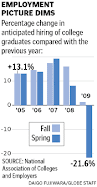
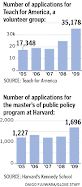





























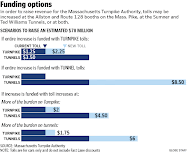














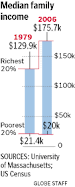

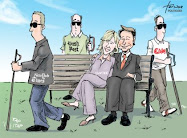
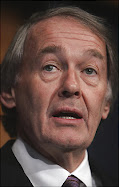
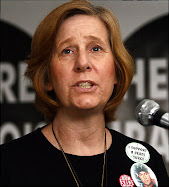




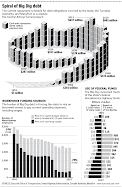
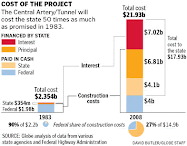






































.png)