

-
http://nickwhalen.wordpress.com/2009/12/15/203/
-

-

-

-
Megan P. Whilden, director of Pittsfield's Office of Cultural Development, right, leads a group of Springfield officials and business leaders through the streets of Pittsfield to showcase the city's downtown revitalization efforts. On the left is Springfield City Councilor Timothy J. Rooke. (Photo by Don Treeger / The Republican)
-
www.pittsfieldartshow.org, www.topix.net/city/pittsfield-ma/
-
Pittsfield's political henchman, Carmen Massimiano II, who wanted me jailed to appease "Luciforo's" persecution of me (& my dad) in the Spring 1998.
-

-
Pittsfield's political inbred, dark prince: Andrea F. Nuciforo, Jr.! -(below)-
-

-

-

-
North Street, Pittsfield, Massachusetts; Photo (above) by Mary Carey.
-

-
--------------------
-

-
"Jonathan Melle's sad North Street Ballad..."
November 27, 2006
The Pittsfield Gazette
Pittsfield, Massachusetts
Attention: Jonathan Levine, Editor
Re: Jonathan Levine’s Editorials questioning the city government’s public policies concerning the business district in and surrounding North Street
Dear Jonathan Levine:
I was given a recent copy of your excellent community newspaper. I must say that I am impressed by your first-rate journalistic skills! It is an honor for me to have known you while I lived in the otherwise great city of Pittsfield, Massachusetts that I will have criticized in the following paragraphs.
You have often questioned the city government’s public policies concerning the business district in and around North Street. I find your insights to be thoughtful, but also lacking in the cruel reality of the context of economic perverse incentives that has dominated the North Street area for over four decades. In other words, when social injustices and exploitation are recurring as thematic yet banal daily events, I must cut through the onion and explain why North Street has not recovered from its rational business peak in the 1950s.
In the 1960s, national welfare displaced communal care, and both the solid work ethic and brotherhood of small town America transformed into both an entitlement culture and seeing those in needs as inputs into a formulaic equation for aid instead of a person looking to be a tax paying citizen. As the unique small towns went into a monolithic and plastic national vision of cookie cutter uniformity, so did North Street.
The great retail stores in the center of town became a disincentive next to guaranteed entitlement money for people simply in need of a job. So herein lies the perverse economic incentive that North Street has become for a city government ever desperate for more and more revenues. By transforming North Street into a corridor of social service entities a.k.a. state and local government and non-profit agencies, the city government guaranteed itself both fixed revenues and jobs. What came next was not major retail business center like in the 1950s, but rather small businesses to complement the social service public businesses that have long monopolized the city’s central business district.
So why is all of this a perverse economic incentive? The answer is that the city government modeled its main business district on the needs of the poor people instead of the demands of the citizenry. The reason why the city government kept North Street the way it is now for about 4 decades is because the city is in a win-win (or moral hazard) situation. There will always be disabled people, elderly residents, and welfare families all in need of services. The federal government appropriates many billions of federal tax dollars to the state governments to administer grants and like funds to the municipalities for social service programs. The state government provides these public monies to cities such as Pittsfield so that, in theory, but not in the cruel reality, the people will be guaranteed social services to improve their lives. This money is highly valuable to the city government because it guarantees many millions of dollars to the municipal revenues and city coffers. In short, the city government has been more concerned about the annual millions coming in from Washington, D.C. via Boston’s State House than the actual people receiving the sub-par social services for so many consecutive decades.
Then, in 2003, Pittsfield elected the best Mayor in her recent history. Jim Ruberto promised to break the downward cycle and rusty mold of Pittsfield politics and promised to bring change to the city. He was an energetic and positive voice for real and positive change. During his local administration, he has seen the Colonial Theater open on South Street, and the beginnings of a cinema center on North Street – all of which have been proposed for many years and decades before he took the oath of office. Unfortunately, Mayor Ruberto has caved to the same old machine politicians that have kept Pittsfield a place of social injustice and exploitation via the perverse economic incentives and moral hazards. Moreover, he has also not yet improved the public educational system, lowered the staggering teen pregnancy rate (that doubles the statewide average), and brought the changes to Pittsfield that he had promised to the voters whom he campaigned to as then valuable members of his leadership team.
To illustrate my point of self-defeatism as the norm for common residents, I must highlight the longest serving Pittsfield Pol I have known of and heard about since my birth in the summer of 1975. This liability and abomination of a human being I am referring to is Carmen C. Massimiano, Jr. This man exemplifies the banality of social injustice! When I participated in local and state politics, he always made snide and negative remarks. When I tried to talk to Carmen Massimiano, he talked down to me in a negative and abuse of power tone of voice.
What I mean to say is that Carmen Massimiano is one of those guys who profited by the failings of Pittsfield residents. By the teen pregnancy rate doubling the statewide average on an annual basis, Carmen was guaranteed to control Pittsfield’s entitlement state allocated funds over the local poor people in need of social services, and then to ultimately meet them in his capacity of Berkshire County Sheriff. By Pittsfield’s worsening public school system, Carmen is guaranteed to have unskilled people come to him for jobs at the Berkshire County Jail and also use his networking prowess in other areas of this perversely incentivized and tightly constrained local economy. In short, Carmen Massimiano profits by Pittsfield’s social problems! My personal conclusion is that Carmen Massimiano is a terrible and mean-spirited man for cultivating the worse of a city and people with so much otherwise positive potential.
In conclusion, Pittsfield controls its poor people by an unjust system of perverse economic incentives and uses an economic model of moral hazards to guarantee itself state administered revenues originally appropriated from the U.S. Congress in Washington, D.C. that in theory (but not in the cruel reality of life) are supposed to help the plight of poor people nationwide.
To illustrate, if I were to have had become another Pittsfield poor resident statistic by way of having an unplanned for baby with a Pittsfield (area) woman whom I did not marry and/or cohabitate with, Pittsfield would definitely own my soul by way of probate mandated child support payments and then like civil and criminal laws. I would be another poor resident who was economically forced into being filed into North Street and then going to local machine Pittsfield Pol like Carmen Massimiano to get “out of trouble with the strong arm of the state”. Regardless of their possible “help” to me, they would definitely treat me like crap while ringing their greedy hands with their power over me while I became another number inputted to the broken system that provides Pittsfield with now more public dollars for sub-par social services that would keep me down and under their control. That is the reality I faced for so many years growing up and living in Pittsfield, and I resented it then as I resent reading about it now!
Sincerely,
Jonathan A. Melle
-----------
-

-
11/21/2007
Dear Mary E. Carey:
Go to: http://aboutamherst.blogspot.com/2007/11/first-day-of-snow-2007-etc.html
Pittsfield, Massachusetts, is an aesthetically beautiful town, but I must concur with the British art critic that beneath its facade are "themes of anxiety, loneliness, mystery and separation, all played out in arenas of jarring domestic banality."
The feelings I get when I think of living my life on or near North Street in Pittsfield, Massachusetts give me all of the above psychological negative emotions. Just to be 130 miles away (Manchester, NH) from being persecuted for being poor and living in Pittsfield and having it all reinforced by walking on North Street gives me daily relief.
Sometimes I believe my psychiatric disabilities that Denis E. Guyer -- a golddigger who married Allison Crane for her millions of inherited trust fund dollars -- relentlessly and unapologetically picks on me for by spreading the most vile and vicious rumors against me to the people of Pittsfield, Massachusetts, comes from the negative feelings I used to get by walking down North Street to participate in fruitless social services -- as Pittsfield was the #1 place in the Commonwealth of Massachusetts for job LOSSES in 2006!
-

-
I have been clinically told that my intellectual abilities are much higher than the average person, but that I have some social limitations or impairments. In a way, maybe Denis E. Guyer should use a paltry portion of his wife's inheritance to reinforce the banal and put up a statue of JONATHAN ALAN MELLE in the middle of North Street in Pittsfield, Massachusetts to symbolize the "themes of anxiety, loneliness, mystery and separation, all played out in arenas of jarring domestic banality."
Best regards,
Jonathan A. Melle
P.S. The words below on my concrete pedastal shall read: "The three men I admire most: The Father, Son, & Holy Ghost"
-

-
-----
-

-
http://en.wikipedia.org/wiki/William_McKinley
William McKinley, Jr. (January 29, 1843 – September 14, 1901) was the twenty-fifth President of the United States, and the last veteran of the American Civil War to be elected.
-

-
-----
Re: Pittsfield on display in NYC
April 03, 2008
Dear Mary Carey:
I still think Denis E. Guyer should reinforce the banal and put a statue of me in the middle of North Street to: "symbolize the "themes of anxiety, loneliness, mystery and separation, all played out in arenas of jarring domestic banality."
www.luhringaugustine.com/index.php?mode=upcoming&object_id=210
www.nymag.com/arts/all/process/45584/
www.aboutamherst.blogspot.com/2008/04/atmospheric-places.html
Best,
Jonathan Melle
----------
-
New York City: Pittsfield's Antithesis!
-

-
Mary Carey's Photo of the Empire State Building
(www.aboutamherst.blogspot.com/2008/04/new-york-city-even-better-than-i.html)
-
Mary Carey's Photos of Pittsfield, Massachusetts:
www.aboutamherst.blogspot.com/2008/04/scenes-from-pittsfield.html
-
-----------
-

-
Harry's Supermarket
-
--------------------
-
http://en.wikipedia.org/wiki/Gregory_Crewdson
-
Gregory Crewdson (born September 26, 1962) is an American photographer who is best known for elaborately staged, surreal scenes of American homes and neighborhoods.
Crewdson was born in Park Slope, a neighborhood in Brooklyn, NY. As a teenager was part of a punk rock group called The Speedies that hit the New York scene referencing Preston North End in many of their songs. Their hit song "Let Me Take Your Foto" proved to be prophetic to what Crewdson would become later in life. In 2005, Hewlett Packard used the song in advertisements to promote its digital cameras.
In the mid 1980s Crewdson studied photography at SUNY Purchase, near Port Chester, NY. He received his Master of Fine Arts from Yale University. He has taught at Sarah Lawrence, Cooper Union, Vassar College and Yale University where he has been on the faculty since 1993.
Crewdson is represented in New York at the Luhring Augustine Gallery and in London by the White Cube Gallery
--
Synopsis:
Gregory Crewdson's photographic series capture a particularly American state of normalcy--in dissolution. The viewer, at first seduced by what appears to be an idyllic scene, soon discovers subtle off-kilter elements more akin to Film Noir than an NBC comedy. In a work from his Twilight series, yellow school buses are parked outside white wooden houses, and students stand and lounge around in seeming passivity. Something is happening--what, we don't know. The vision is familiar yet unfamiliar, seemingly benign yet threatening. Crewdson goes to great lengths in dramatizing his disturbing suburban scenes, employing elaborate lighting, cranes, props, and extras, espousing a level of behind-the-scenes preparation more akin to the making of a Hollywood movie than the making of a still image. Here perhaps is one place to locate the eerie unreality and narrativity of his pictures, the creepy attention to detail so out of place, come to think of it, in the oh-so-ordinary settings he evokes. Middle-class reality meets the other side of the normal here--by way of Sigmund Freud.
---
-

-
Gregory Crewdson, a Yale professor of photography, was signing copies of his book about the photos. He captured "haunting, elaborately staged photographs, most of which are of my hometown Pittsfield". (Photo, quote by Mary E. Carey).
-
---

-
Former-"Sugar Bowl Restaurant" (above) on North Street.
---
--------------------
From The Sunday Times
April 3, 2005
Desperate house lives
Hollywood's biggest names are flocking to small-town America — to star in the dramatic, big-budget extravaganzas of Gregory Crewdson. Tony Allen-Mills meets a visionary photographer with a mission
-
When Gregory Crewdson was scouting locations for Beneath the Roses, his latest collection of exquisitely choreographed but profoundly disturbing photographic dreamscapes, he found himself in the small town of Pittsfield, Massachusetts. At a meeting with the mayor, the fire chief and other local notables, Crewdson explained that the town's main street would have to be closed while he constructed the elaborate suburban tableaux that have made him one of America's most intriguing photographers.
The mayor didn't bat an eyelid. Not many internationally renowned artists have ever shown much interest in Pittsfield, a decaying backwater on the western edge of the state. "They told me, 'Sure, that'll be no problem,'" Crewdson recalls with a grin. Then, casually, he told them that he had one picture in mind that required something special. He needed to burn down a house. "You could see a gleam in the fire chief's eye," he says. "A few hours later they showed us up to 40 possible houses we were welcome to burn down. They were all owned by the city, on schedule for demolition. They said we could do anything we wanted."
The results, three years in the making, of Crewdson's imagination being allowed to run wild Ð in Pittsfield and other small towns in Massachusetts and Vermont — will soon be on display at London's White Cube gallery, and will be shown next month at galleries in Beverly Hills and New York. He seems assured of a triple triumph.
Few flowers are on view in the 21 images of Beneath the Roses (Crewdson actually made more than 40 pictures, but rejected half of them as not good enough for public display). The title speaks of the deeper entanglements that lie beneath surface beauty — of Crewdson's favourite themes of anxiety, loneliness, mystery and separation, all played out in arenas of jarring domestic banality. In his huge digital chromogenic prints — produced from 8-by-10in negatives, they are more than 7ft wide — lies a warped psychological world of strange figures, unsettling symbols and improbable collisions of the ordinary and the weird. Little in his pictures makes sense and nothing is explained.
"One of the things I love about a photograph, as opposed to a film or other narrative form, is that the viewer will always bring their own story to the photographs, because my photographs are unresolved," says Crewdson, who is 42. "When I say that I don't really know precisely what a picture is about, I'm telling you the truth."
Crewdson's elusiveness is all the more intriguing in the light of his unusual childhood. His late father was a Freudian psychoanalyst who had an office in the cellar of the family home in Brooklyn. Crewdson has often been reported to have derived much of the inspiration for his work from pressing his ear against his father's door as patients on the couch inside talked about their dreams. Did he really eavesdrop on his dad, the shrink? "Well," he replies, laughing, "this is an ongoing discussion between me and my mother." There's a grain of truth to the story, but the reality is actually more revealing. "My father had an office in our basement — that was a very powerful fact," he says. "As children, me and my brother and sister were always aware when my father was in session. There was always a sense that whatever was happening beneath our living-room floor was secret and forbidden."
He was not allowed downstairs, and acknowledges that he could not have heard much by trying to listen through the floor. "But in retrospect, it did create my first aesthetic viewpoint of trying to project images in my own mind. That is exactly what I am still doing. I also think that in all my work, there is a very strong undercurrent of voyeurism. And a very strong sense of a certain kind of alienation between me and the subject. And I think that was all set up in some weird way by the circumstances at home."
Nowadays he enjoys long-distance swimming, and has many of his ideas in the pool. "I think it's something about being underwater, sort of removed from the cares of the world. I come up with images and they float around, and if they stick we move to the next step and start incorporating them into our next production."
Crewdson works on a grand scale. The production notes for Beneath the Roses list more than 150 participants, including 55 "actors", eight "set dressers", several "best boys", a lead greensman, an aquarist and a manufacturer of synthetic corpses. When one of his images called for rain, he lined a street with water towers feeding sprinklers. He has borrowed fire engines, ambulances, and once used a bucket of pig's blood. In the past his images have featured well-known actors such as Gwyneth Paltrow, William H Macy and Tilda Swinton. In Beneath the Roses, the only celebrity involved is Jennifer Jason Leigh, a close friend, who in one of the images sits unrecognisably in a car.
The result of what Crewdson freely admits is his "obsessive... maniacal... perfectionist" approach is a unique body of work that combines the all-American eye of the painter Norman Rockwell with the brooding menace of Norman Bates, the motel owner from Hitchcock's Psycho. Crewdson denies that he is trying to send any kind of message, or has any political axe to grind. "I'm just trying to create beautiful images that have some kind of psychological content to them," he says.
"The thing that is important to me is that I want a sense of complicated beauty: not a beauty that is purely seductive or elegant. My pictures reside in the collision between my irrational need to make a perfect world, and the impossibility of doing so. I want them to be psychologically fraught with certain anxieties or fears or desires."
His pictures are certainly fraught, but Crewdson turns out in person to be a relaxed and affable figure who sometimes seems as mystified as everyone else by the tensions in his work. He spends tens of thousands of dollars (he won't say exactly how much) and employs dozens of people to create fabulously detailed re-creations of what are ultimately deeply personal visions. "There's almost a paradox in that, really," he muses.
He also acknowledges that too much tension and angst can be bad for you. This summer he intends to relax. He will take a simple digital camera into the New England countryside, to photograph fireflies dancing at dusk.
Gregory Crewdson's photographs are at White Cube, London N1, from April 15 to May 14. Tel: 020 7930 5373
-
http://www.timesonline.co.uk/tol/life_and_style/article436134.ece
-
http://www.timesonline.co.uk/tol/life_and_style/article436134.ece?print=yes&randnum=1195670980079
----------------------------------------
Jennifer Jason Leigh in a car on North Street in a photo by Gregory Crewdson.

Gregory Crewdson's photographs which were displayed at the Berkshire Museum last year.
--------------------
Jennifer Jason Leigh in Pittsfield

--------------------
Pittsfield's Wahconah Park

Picture taken by Mary E. Carey
----------------------------------------
"Loneliness and Multitudes: Gregory Crewdson’s singular approach"
By Amy Larocca Published Mar 30, 2008
-

-
Crewdson's crew at work, on a soundstage in Massachusetts, the resulting photograph is from "Beneath the Roses."
(Photo: Clockwise from top left: Pete Deevakul; Cosi Theodoli-Braschi; Pete Deevakul; Daniel Karp)
-
When the photographer Gregory Crewdson was growing up, in Park Slope, his psychoanalyst father’s office was in the basement of the family’s brownstone. Crewdson and his siblings were told to ignore the stream of grown-ups who marched hourly through the house, even if they were outside, playing on the stoop, and wound up face-to-face with one. But sometimes he’d lie on the wide planks of the living-room floor and wonder about conversations below. “I always tried to imagine what I heard and make pictures out of it in my mind,” Crewdson says. He is 46 now, with two kids of his own and a longish wave of graying hair. He’s recently begun seeing a therapist whose office is directly below his Greenwich Village studio, and yes, they’ve discussed what that means.
“But I could never really hear anything,” he says of his childhood eavesdropping. “All I knew was that it was a secret and that it was forbidden.” He laughs. “And there you have it. There’s my work in a nutshell.”
Crewdson produces large-scale, elaborately constructed photographs taken in and around the town of Pittsfield, Massachusetts, where the Crewdson family has forever had a small log cabin in the woods. He has just completed a series of 32 new photographs called “Beneath the Roses,” some of which will be shown at the Luhring Augustine gallery beginning this week. Thematically, “Beneath the Roses” is a lot like “Twilight,” the series that launched Crewdson into the photographic big (up to six-figures-a-picture) leagues. In both, ordinary people in ordinary places are surreally and beautifully lit, and there’s an unease to everything, a suggestion of something lurking just outside, underneath, or possibly within the frame. Even at their most lush, Crewdson photographs are epically lonely. “There are two possible interpretations,” he says of his work. “One is the possibility of impossibility and two is the impossibility of possibility. I know there’s a sadness in my pictures. There’s this want to connect to something larger, and then the impossibility of doing so.”
Crewdson’s method of photography is highly unusual; he has not taken a picture all by himself for the past ten years, save the occasional snapshot of his kids. He works with a crew of about 40: lighting, set, production designers, and even a director of photography. For “Beneath the Roses,” there was one crew that made snow, another for rain. Crewdson is pains-takingly specific with them, personally directing the scattering of dirty, gritty snow, for example, along the side of a road.
As much as the theme of alienation persists in Crewdson’s work, so, too, does the location: Pittsfield. He is a city boy totally uninterested in the city as artistic subject. “You have to be able to see it all new every time,” Crewdson says of situating his work in one small place only, “and it’s excruciating, but it’s joyful. I feel like the artists I admire most are artists aligned with a particular geography, like Cheever, or Edward Hopper, or even Norman Rockwell, who worked in the next town over from me. And I like the separation. When I go up there, I’m going to work.” Crewdson no longer vacations in the Berkshires; he takes his family to Montauk instead.
His process goes like this: He starts by driving around and around familiar old Pittsfield and its environs until something familiar feels unique. He stops, he registers it all, and calls in his team. Then he frames, with his hands, the shot. “He tells me the physical focus of a picture,” says Rick Sands, the director of photography who’s been with him for eleven years, “and the emotional focus as well. And then we get to work.”
“Beneath the Roses” consists of four separate productions. Three were on location and are concerned primarily with broad landscapes, a somewhat new direction for Crewdson. The other was in a soundstage on which Crewdson and Co. constructed elaborate interiors.
-

-
Beneath the Roses
(Photo: Gregory Crewdson)
-
It’s not an easy undertaking: The snow nearly killed him it was so hard, and a number of houses were demolished or set on fire for the photographs. But when all that effort comes together in one picture, “It’s the most beautiful moment for me,” Crewdson says. “Everything’s aligned in the world at that moment. The world makes sense. Order. Perfection even. It makes me weep.”
It is also an extraordinarily expensive way to make art. The productions are under-written by the three galleries that represent Crewdson, but he won’t get specific about what it cost to produce these 32 images, saying only that his line producer is quite strict. Still, any suggestion that Wall Street’s travails may take a bite out of the contemporary-art-market mania turns him pale: “Of course I worry about that!”
Because Crewdson’s method is so cinematic, and he has close relationships with many filmmakers—Noah Baumbach and Wes Anderson, to name two (he freely admits his childhood brownstone is very Baumbachian in tone)—and because the photographs have a decidedly narrative feel, almost as if they were film stills, it would seem a logical next step for him to direct a movie. He doesn’t agree. “I think in terms of single images,” he says. “My work is profoundly connected to that tradition. I really don’t know what happens before or after an image. I really have no clue.”
The last time Crewdson shot anything himself was when his first marriage had fallen apart, a decade ago, and he’d retreated, of course, to that cabin in the woods and begun to photograph fireflies. He put the images away after that painful summer but recently reopened the box. “They couldn’t be more different from the way I’m making pictures now because they are so economical, so simple, but at the same time they’re very connected to what I do. They use light as a way of telling a story, and a moment of wonder. I guess my point is that you can’t really get away from yourself ever. Every artist has a story to tell. The form of the story changes, but the core obsessions are still there.”
----------------------------------------
Community Spotlight: City of Pittsfield, Massachusetts
This week (5/30/2008) Western Massachusetts State Senator Ben Downing highlights the City of Pittsfield in Berkshire County. Quiz your friends to see if they know these fun facts about Pittsfield!
Pittsfield, Massachusetts (Berkshire County)
* Hometown of State Senator Benjamin B. Downing
* Proud to be the birthplace of the game of baseball... not to be confused with Hoboken (first organized game) or Cooperstown (Baseball Hall of Fame).
* Berry Pond in Pittsfield State Forest is the state's highest elevation natural water body at 2,300 feet above sea level.
* The white terra-cotta "Pittsfield Building" in downtown Chicago is a reference to Marshall Field, who was born in Massachusetts and has a direct connection to Pittsfield, where he once served as an apprentice merchant for several years before heading to Chicago and revolutionizing the department store industry and establishing Marshall Field & Co. as a popular department store brand name.
* Pittsfield is known for its HOMETOWN INDEPENDENCE DAY PARADE. It's one of the biggest and best July 4th parades in the nation, which as been broadcasted on national television. Pittsfield's parade annually features Mummers, Shriners, marching bands, decorated floats, and much more.
* Local leaders have been working towards the revitalization of Downtown Pittsfield, which now boasts various restaurants offering different types of cuisine, Barrington Stage Company, the Colonial Theatre, a renovated Berkshire Museum, and access to public higher education classes at the Intermodal Center.
----------------------------------------
-

-
----------------------------------------
-

-
www.berkshireeagle.com/dining/
-
www.eatatspice.com (Sorry, page NOT found).
-
-----
The Maplewood's luxury condominiums with mountain views

Bought for $650,000 and renovated for $4 million, The Maplewood was converted into luxury condominiums with mountain views.
Pittsfield is finally benefiting from its proximity to the Berkshires' many cultural and recreational attractions, as tourists and others discover its lower-priced housing and a citified atmosphere in the country.
(Stephen Rose Photo for The Boston Globe)
-----
The Maplewood's luxury condominiums - inside view of the rebuilt staircase

A rebuilt staircase in The Maplewood is seen here.
The luxury condominium complex was once the site of the Pittsfield Young Ladies' Institute, as well as an elegant hotel in the days of the horse and buggy and Model T.
Made up of 18 condo units, The Maplewood was restored two years ago. Condos there currently sell in the $250,000 to $400,000 range.
(Stephen Rose Photo for The Boston Globe)
-----
Retired Couple moves to Pittsfield, Massachusetts

Toshi Abe and Nancy Hall, a married couple from Princeton, N.J., bought their unit as a second home after a few memorable trips to the Berkshires.
"One of my friends said, 'You have to do something special for your 60th birthday,' " said Hall, 61. "We came to Lenox and had a wonderful weekend and ended up seeing something that was happening in another month. We came back for the jazz festival, and, while we were there that weekend, Arlo Guthrie was singing in Pittsfield. I told my husband we needed to buy an apartment."
(Stephen Rose Photo for The Boston Globe)
-----
Couple enjoys Dottie's Coffee Lounge on North Street

New clubs and restaurants are helping to revive Pittsfield's nightlife.
Here, Evan Moriarty and Olya Yefremova enjoyed some conversation and "bring your own" beer at Dottie's Coffee Lounge on North Street in Pittsfield.
(Stephen Rose Photo for The Boston Globe)
-----
Live Music at Dottie's Coffee Lounge

Diners at Dottie's Coffee Lounge enjoyed live music while they ate.
(Stephen Rose Photo for The Boston Globe)
-----
A new downtown Pittsfield restaurant

A look inside the kitchen of Burger, a '50s-inspired hamburger joint. Owner Joyce Bernstein (center) watched as chef Douglas Luff prepared burgers at the restaurant's grand opening party.
(Stephen Rose Photo for The Boston Globe)
-----
A new downtown Pittsfield restaurant - Joyce Bernstein

Restaurant owner Joyce Bernstein served slices of an Octoburger, a 2-pound cheeseburger sliced like a pizza.
(Stephen Rose Photo for The Boston Globe)
-----
A new downtown Pittsfield restaurant - the Octoburger

Jim Wright of Dalton tried a slice of the Octoburger.
North Street in Pittsfield is a mix of newly renovated spots and more utilitarian establishments such as hardware stores and pizza pads.
(Stephen Rose Photo for The Boston Globe)
-----
"The NEW CULTURE of North Street"

As Bernstein sees it, the revitalization of Pittsfield is a result of people there adopting a new attitude about their city.
They "had to start looking at the downtown not as a dying factory town," she said, "but as part of the cultural Berkshires."
(Stephen Rose Photo for The Boston Globe)
-----
News Article:
Alive in the Hills
Hit by decades of hard times, Pittsfield is moving beyond its inferiority complex, led by pioneers who see potential in its low prices and Berkshires setting
By Joan Axelrod-Contrada, (Boston) Globe Correspondent
November 11, 2007
Joyce Bernstein wanted a Starbucks on her block.
A transplanted New Yorker, Bernstein in 2002 had just bought a building in downtown Pittsfield with a Goodwill store as a tenant. The Goodwill wanted to expand, but Bernstein and her partner, Larry Rosenthal, hoped to attract a more upscale tenant.
"Why can't we have a Starbucks here?" she remembered thinking. "But Starbucks said no to a five-year rent concession, and we couldn't find a restaurant, so I said I'll do it myself."
The result? Spice, a stylish restaurant that Bernstein opened last year. With its mahogany trim and bright-red awning, Spice is one of many new additions that are transforming this overlooked old mill city to a destination in its own right.
New art facilities, restaurants, and cafes dot the downtown, and now even second-home owners are paying up for stylish new properties. Pittsfield is finally benefiting from its proximity to the Berkshires' many cultural and recreational attractions, as tourists and others discover its lower-priced housing and a citified atmosphere in the country.
One of the Berkshires' early famous residents was Herman Melville, who was said to have gotten the inspiration for the white whale in Moby Dick by the profile of Mount Greylock that he could see from the study window of his rambling farmhouse in Pittsfield; to him, it resembled the back of a surfacing whale.
In the 20th century, Pittsfield's fortunes rose and fell with General Electric Co., its largest employer. After GE cut thousands of jobs in the late 1980s and early 1990s, the city fell on hard times and developed a reputation for drugs and crime, while the tonier communities around it continued to enjoy influxes of tourists.
"Pittsfield had a not undeserved inferiority complex," Bernstein, 57, said of this city of about 45,000.
Even so, urban pioneers such as Bernstein saw new possibilities in downtown Pittsfield's low-priced and abandoned storefronts. In 2002, a group of artists spearheaded by Maggie Mailer, daughter of author Norman Mailer, won Bernstein's blessing to move Mailer's Storefront Artist project into Bernstein's building on North Street rent-free. The old pessimism about the city's future gave way to a new spirit of optimism as artists painted and sculpted in public view of passing pedestrians.
"Pittsfield was this big canvass you could create something on," said Megan Whilden, director of Pittsfield's Office of Cultural Development. "It wasn't finished like Lenox or Stockbridge."
A series of new developments clinched this old blue-collar city's reinvention as a cultural destination. In 2004, newly elected Mayor James M. Ruberto created an Office of Cultural Development. The historic Colonial Theatre reopened last year, and the Barrington Stage Company relocated from Sheffield.
Real estate developers such as Beth A. Pearson saw a new market for well-heeled professionals and second home buyers. In 2003, Pearson, a GE marketing executive whose father was a development director in upstate New York, purchased a 12-unit apartment building on drug-infested Bradford Street for $250,000. To attract upscale tenants to the brownstone, she put up a sign, "Boston-style apartments."
"The guys at the local tavern around the corner had bets out that I wouldn't be able to pull it off," said Pearson, 44, a dynamo in high-heeled boots. "I'd go there to rile things up."
Around the same time, Pittsfield police made a major arrest that quelled drug-related violence that was plaguing the city. And Pearson succeeded in renting all 12 of her apartments on Bradford Street for $700 to $850 a month.
Then she fell in love with another old building, once the site of the Pittsfield Young Ladies' Institute and an elegant hotel in the days of the horse and buggy and Model T. She was so taken with this stately building with its sweeping four-story staircase that she quit her job at GE.
She bought it for $650,000 and sank $4 million into a renovation, creating luxury condominiums with mountain views and landscaped gardens. Condos at The Maplewood currently sell in the $250,000-to-$400,000 range.
Pearson estimates that, in the past two years, second home ownership of condos and single-family homes in town has increased 30 to 40 percent.
While home sales have slowed in the current down market, prices of the properties that are selling are escalating. The median price of a single-family home through the first nine months of 2007 is up 5.65 percent to $163,650 over the same period last year, according to real estate data publisher Warren Group.
The condo market is more active. With the addition of new projects, Pittsfield has notched 49 condo sales so far this year, compared to 40 last year and just 24 in 2005. And the type of condos selling now are much more expensive than in previous years. The median condo price at the end of September was $369,500, according to the Warren Group, compared to $146,250 in 2006.
Nancy Hall and Toshi Abe, a married couple from Princeton, N.J., bought their unit at The Maplewood as a second home after a few memorable trips to the Berkshires. The retired research scientists hadn't set out to become second home owners. It just happened.
"One of my friends said you have to do something special for your 60th birthday," said Hall, 61. "We came to Lenox and had a wonderful weekend and ended up seeing something that was happening in another month. We came back for the jazz festival, and, while we were there that weekend, Arlo Guthrie was singing in Pittsfield. I told my husband we needed to buy an apartment."
She had grown up in New York City and her husband in San Francisco, so they wanted a second home in a city like Pittsfield as opposed to a small, rural town.
"We wanted to be someplace where you didn't have to get into your car to live your life," she said.
With revitalization fever in the air, 26-year-old Jessica Rufo opened the whimsical Dottie's Coffee Lounge in September. It has a flapper motif and features live entertainment on Saturday nights. "I get street people next to bankers next to kids with purple hair," Rufo said.
Down the street from Dottie's is the new Poetry Cabin, a sculptural installation of wood and steel where passersby can jot down their thoughts on paper and hang them from a rope like clothes drying on a clothesline.
The city's weekly cultural calendar buzzes with ceramics classes, theatrical productions, and jazz concerts. Pittsfield also has attracted entrepreneurs and creative businesses such as Interprint Inc., a décor printing company, and WorkshopLive, which produces music lessons on the Web.
North Street is a mix of newly renovated spots and more utilitarian establishments such as hardware stores and pizza pads. Nondescript brick low-rises share the downtown with grander-styled Gothic buildings. Pittsfield is a city, after all, and it doesn't have the Norman Rockwell-like innocence that the famous painter found in nearby Stockbridge.
"We have all the same social problems large cities have but on a smaller scale," said Jim Ruberto, 60.
Still, Pittsfield continues to move forward. The city has a $1.8 million Streetscape project scheduled for spring that will bring cobblestones and period lighting to North Street. Pearson has the $12 million New Amsterdam project, a cluster of newly created modular structures and rehabbed buildings that will provide moderate-rate housing in downtown Pittsfield.
And Bernstein has just opened Burger, a '50s-inspired burger joint, next door to the more elegant Spice. As she sees it, the revitalization of Pittsfield is a result of people here adopting a new attitude about their city.
They "had to start looking at the downtown not as a dying factory town," she said, "but as part of the cultural Berkshires."
-----
"Condominiums catch on"
By Ellen G. Lahr, Berkshire Eagle Staff
Tuesday, December 11, 2007
--

Lori Rose and Martha Piper show off a signature space in the Clock Tower condo project yesterday. Above, a model condo is ready for viewing. (Ben Garver / Berkshire Eagle Staff)
--
PITTSFIELD — In the midst of uncertainties in the national and local real estate market, local brokers are courting a new sort of customer: the urban-condo shopper.
For the past two years, buyers have been paying between $130,000 and $375,000 to live downtown — with most sales under $200,000 — at two new condominium projects, 33 Maplewood Ave. and 433 North St., according to Registry of Deeds documents.
At Clock Tower Condominiums on Church Street, in a section of the former Sheaffer-Eaton division of Textron pen and paper mill, 31 units are under construction. Although not scheduled for occupancy until April, nine prospective buyers have paid 1 percent of the purchase price to "reserve" unfinished units.
A "reserve" allows buyers to hold a unit while reviewing construction plans and condo contracts, prior to signing a purchase-and-sales agreement, said Martha Piper, the broker handling the Clock Tower sales.
"The upper-end condos were reserved first," said Piper, of Stone House Properties LLC, referring to the higher-end townhouse and loft units, with prefinished asking prices starting at $265,000. "All four artists' lofts are taken."
Prices start at $136,500 for a studio and rise from there. Unfinished lofts are $50 per square foot; the largest is 2,500 square feet.
Yesterday, Piper led a walk through the property, where developer David Carver of Scarafoni Associates has kept the old brick walls exposed, updated the broad windows and buffed up the ceiling beams and wood columns. An outdoor roof deck will be built and common rooms constructed for socializing.
Two model units have been completed in the north building, with tall ceilings, contemporary kitchens, track lighting, granite kitchen counters and stainless steel appliances.
The urban condominium is a newer phenomenon in Pittsfield, which has a number of developments on the outskirts devoted to views and more rural living.
The urban-condo buyer may be a young transplanted professional, a retired couple or an investor, according to brokers handling the deals.
Among the buyers of finished units, one is an investment adviser with a local firm, another is a California retiree, one is a young professional couple soon to arrive, and still another is a real estate agent who has made one his home.
The finished projects at 33 Maplewood were developed by Beth Pearson and at 433 North, by George Whaling.
At Maplewood, most of the 11 units sold were bought in 2006, and six were bought before completion, Pearson said.
Only two have sold this year, but a third is now under contract and should close by year's end, she said.
"We sold out of the smaller units very quickly, and the higher-priced units are moving more slowly," said Pearson yesterday. "I'd say that's indicative of the market. But we're definitely on target. We were a bit of a trend-setter in this process and figured it would be two years before all the units were sold."
Maplewood got a boost two weeks ago, when two buyers got into a bidding war for a larger unit, priced at $250,000, Pearson said.
The winning bidders are a young professional couple moving to the area with a job relocation, she added.
Pearson said she has noticed a shift in the demographics of the urban-condo shopper: More are newcomers who would not have considered Pittsfield a few years ago.
Lisa Baker of New Milford, Conn., was one.
She and her husband have been Berkshire visitors for years and always considered Pittsfield that place to drive through on the way to Williamstown.
A meal at the trendy new Spice restaurant on North Street last year drew their eye to Pittsfield while they were looking for a retirement home. They considered South County too crowded and congested.
"What we were looking for is some city living in a country setting," she said. "That's what the revitalization of Pittsfield is going to be."
The Bakers bought the most elegant of the units at Maplewood for $375,000 in March and are leasing it to tenants until they retire, Baker said.
At 433 North, Whaling's building — which includes commercial condominiums and two street-level galleries— has drawn a steady stream of buyers this year. Half of the 12 condominiums are sold.
The rest are one- and two-bedroom units, with asking prices from $130,000 to $235,000, said agent Kim Evans of the Kinderhook Group, which is listing both Whaling's and Pearson's properties. Two of those are under contract, Evans said.
At that building, condo fees range from $100 to $160 per month, including high-speed Internet.
At Maplewood, prices are $255,000 to $395,000, with monthly condominium fees ranging from $187 to $280.
Fees at the Clock Tower include 50 percent of the units' heating costs, high-speed Internet and cable television service, Piper said. Monthly costs will run from $270 to more than $500.
Each of the three projects is uniquely located: 433 North is on the city's main street, near galleries, retail shops and eateries, with outdoor parking.
Maplewood, a block off North Street, is a historic 1820s building on 1.25 acres, with a landscaped garden, 24 fireplaces and indoor parking.
"I'm sitting here in my office looking out at 20-foot blue spruces, and I don't see any evidence of downtown," said Pearson, whose project was featured in The Boston Globe real estate section recently.
The Clock Tower, a few blocks from downtown, has long, open views of the city and hills, across from the Big Y market and near the CVS pharmacy, overlooking the Goodyear auto service shop on West Street. Parking is outside.
Evans, of Kinderhook Group, also has capitalized on downtown's energy. The Chatham, N.Y.-based company opened an office on North Street a couple of years ago.
"We wanted very much to be involved in the Pittsfield real estate scene," she said.
To reach Ellen G. Lahr: elahr@berkshireeagle.com, (413) 496-6240
--
At a glance ...
The number of single-family house transactions has slowed in the past few years, but prices continue to rise throughout the county, according to data from the Berkshire County Board of Realtors.
However, condominium transactions are up, along with prices.
Pittsfield property sales
2005
Houses sold, 360; average price, $195,664.
Condominiums sold, 27; average price, $169,723.
2006
Houses, 354; average price, $199,000.
Condos, 38; average price, $219,259.
Year-to-date
Houses, 308; average price, $222,000.
Condos: 30; average price, $225,000.
Berkshire County sales
2005
Houses sold, 1,341; average price, $299,000.
Condos, 116; average price, $263,000.
2006
Houses sold, 1,205; average price, $307,000.
Condos sold, 106; average price, $270,000.
Year-to-date
Houses sold, 1,048; average price, $325,000.
Condos sold, 112; average price, $276,000.
---------------
-

-
---------------
News Article:
Scenic Berkshires staying alive at night
By Steve Morse, (Boston) Globe Correspondent
November 11, 2007
The Berkshires are beloved for beautiful mountains and lakes, warm country inns, antiques shops, fine restaurants and theaters, and hiking trails and ski hills galore.
Time to add another plus: burgeoning night life.
Two recent evenings in the region confirmed that the after-dark vibe has taken a big step forward. Much of the appeal lies in restaurant-bar-club combinations, but the action doesn't slow down once the last meal is served.
Pittsfield and Great Barrington are the most dynamic spots, perhaps because each has a 2 a.m. license compared with 1 a.m. in Stockbridge, Lee, and Lenox. Pittsfield has undergone a profound rejuvenation - the exciting Spice and festive Brazilian Restaurant & Pub have opened in the past year. And while Great Barrington continues to soar with the ever-fresh Club Helsinki (the top live music club in the area), it now shares the stage with the elegant Celestial Bar (featuring jazz acts and adjoining the stylish Castle Street Café), and the new Allium, with a best-and-brightest Berkshires clientele and a drink menu ranging from fine wines to Belgian ales.
I stayed at a decent Comfort Inn in Pittsfield, which afforded an equidistant launch point to most venues. I hit a dozen sites and was struck by their mounting variety. For years I've stayed at the Kripalu Center for Yoga & Health in Stockbridge, then made the nightly rounds from the Olde Heritage Tavern in Lenox (a cool sports bar as long as you don't mind sharing stools with Yankees fans) to the Lion's Den in Stockbridge (a great subterranean folk bar), to Club Helsinki. But I didn't think there was much else around. Lenox has some great restaurants in Bistro Zinc (where I had a terrific omelet brunch) and Firefly, but is not known for clubs.
For my first night, I explored some places that were new to me, starting with the spacious Asters Steaks & Raw Bar on Route 7 in Pittsfield. It has a couple of romantic rooms with meals running from Idaho brook trout to Asters' signature steak. It also has a modern lounge where the acoustic performer Justin Allen was playing his heart out (he's a clever, Jack Johnson-like singer), but sadly, most people were talking, not listening. From there I went to another Route 7 steakhouse called Dakota, which has a hunting lodge flavor and a small, friendly bar with overhead TVs. It was quiet and peaceful, but I wanted more.
I got it in Great Barrington, which has an almost surreal sense of innocence. I eased into the Celestial Bar, where the smooth Armen Donelian Trio played for a mixed-aged crowd amid photos of jazz greats on the walls. Close by is Allium (the name means "anything that comes from a bulb," said manager Halle Heyman), which featured a casual-chic decor with a personal choice of Velvet Underground records played by a bartender. A visiting wine exporter was offering samples at the bar. This is a convivial spot that offers live Brazilian jazz every other Friday, as well as an attractive restaurant in the next room.
Next up was Club Helsinki, a short stroll away. It's a dark hideaway but very cosmopolitan and adjacent to the Helsinki Café. Both the club and cafe are co-owned by Deborah McDowell (granddaugther of the former manager of Hotel Helsinki in Finland) and Mark Schafler. The club has a capacity of only 100, but has booked Norah Jones four times, plus Jamaican legend Burning Spear and African-American star Olu Dara, along with Bostonians from Sarah Borges to Chris Smither. Many acts are persuaded to play between gigs in Boston and New York, partly because the owners are able to trade free lodging with local innkeepers for dinners for inn patrons at the Helsinki Café. It's a nice barter system and the consumer is the winner.
On this night, Club Helsinki was grooving to the Homegrown Band, a reggae group that includes a couple of members from Bermuda and Ian Evans from Great Barrington. They pump out the reggae while clusters of dancers take to the floor.
The next day, I started early in North Adams, where I visited MASS MoCA, then hit the Mohawk Bar across the street. The Mohawk is a working-class, no-frills place, but it also attracts artists from some of the nighttime concerts at MASS MoCA. And next to it in the same block are the Gramercy Bistro and a great coffeehouse called Brewhaha.
Pittsfield was the next stop. First up was Sabor, a Latin restaurant-bar owned by a couple from Ecuador, Paul Soltana and Digna Gonzalez. Her brother, Jose, mans the turntables under the name of DJ Master Mix and the place is known to be hopping late at night. Nearby is the new Brazilian Restaurant & Pub, which has a buffet menu and a band led by Mexican native Octavio Hernandez. Called Mighty Mouse & the Stray Cats, the group also contains his sons, Eric and Nico, performing a strong cross-section of Latin-Caribbean rhythms. And later, a DJ comes in for dancing.
Pittsfield's main street used to be nearly deserted at night, but recently added an excellent new sports bar-restaurant called Bobby Hudpuckers Grill & Pub, and a block away, the swinging new Spice, a modern restaurant so crowded that all the tables had been reserved. Diners sampled an American-style menu from sautéed calf liver to spaghetti with poached Hancock Shaker Village egg and speck, garlic, truffle, and Parmesan cheese. Spice was opened by partners Joyce Bernstein and Lawrence Rosenthal, who left New York after 9/11.
Spice also boasts an artsy lounge with French posters on the walls and contemporary couches. Sparking the night was a Latin jazz band called the Berkshire Bateria, a talented troupe of dancers and musicians that ranges up to 17 pieces. It is led by Jim and Teri Weber, and includes their drum-playing daughter, Raina, who stated the obvious: "Pittsfield was once considered the armpit of the Berkshires, but it's becoming the place to be."
It was time to hit Stockbridge, so I drove to the Lion's Den, part of the famed Red Lion Inn complex (dating to the 18th century) that also houses the upstairs Widow Bingham's Tavern, where a gentlemanly bartender in tie and vest dispensed drinks. But the music is in the Lion's Den. It has a New Orleans feel and a red decor with old-fashioned lanterns on the walls. The music is an entertaining mix, this night led by Bev Rohler and John Colby, who played soul tunes with panache. I love this place and wouldn't think of visiting the Berkshires without stopping by. Friendly bartenders, too.
Around the corner in Stockbridge is Michael's Pub, a lively, mostly townie hangout where a band called Balance played well-received, classic-rock tunes from Pink Floyd to U2. Patrons also bounced between an outdoor patio and an upstairs billiards room.
I topped off the trip with another visit to Great Barrington, about 10 minutes away. I ended up again at Allium, from whence an afterparty developed at an apartment up the street that went until dawn. Attendees ranged from a local filmmaker to a soldier who had just come back from Iraq. It was a great time.
As I happily discovered, anything can happen in the Berkshires.
Steve Morse, a freelance writer living in Cambridge, can be reached at spmorse@gmail.com.
-----
The Boston Globe - Letters
Hills are alive with the sound of money
November 18, 2007
RE "ALIVE in the Hills" (Real Estate, Nov. 11): As a Berkshire County native and a social worker, I was troubled by your feature article on development in Pittsfield. This article shows what we already know about many out-of-town developers throughout Berkshire County: They have little concern for existing community.
This is most clearly demonstrated by the developer who thought that a Starbucks was just what Pittsfield needed. The Goodwill store that previously rented in the building she bought was an important asset to many Pittsfield residents for whom a $4 venti half-decaf vanilla macchiato will neither clothe their families nor furnish their homes. Coupled with the opening of new restaurants serving $30 entrees, it is clear that the needs of second-homeowners and tourists come before those of low-income residents.
Development is inevitable - and in some cases desirable - in the Berkshires, but this trend of exclusionary gentrification is concerning.
It saddens me that the Globe has painted a picture of a city devoid of life and where empty storefronts and drug-addled streets will be revived by the good graces of wealthy out-of-towners. Ask a local if they appreciate it, but do it quickly, before the locals are forced to move away.
CARRIE BURKE
Cambridge
----------
"Downtown drama"
By Tony Dobrowolski, Berkshire Eagle Staff
Friday, December 07, 2007
-

-
PITTSFIELD — A chase through backyards on Hamlin Street. A crime scene where Fourth and Fenn streets intersect.
Those incidents took place last week, and to passers-by, they may have seemed real. But they actually were scenes from the short narrative film "All in the Game," shot by independent filmmaker Marc Maurino's production company, White Light Filmworks, in Pittsfield and Lenox.
The 34-year-old Maurino, of Lenox, who wrote, directed and produced the film, shot it entirely film between Nov. 28 and Dec. 2.
"Five full 12-hour days," he said.
The majority of the film — "75 to 90 percent," Maurino said — was shot in Pittsfield. Besides Hamlin Street, and Fourth and Fenn, exterior scenes were filmed along Mill Street, and interior scenes at Pittsfield Brew Works on Depot Street.
"The story fit here," Maurino said.
Maurino describes "All in the Game" as a story about a police detective and his relationship with his son and a witness.
"It's a family drama done through the drama of a police procedure of a homicide detective investigating a robbery-slash-murder at a drug house, and the subsequent relationship he develops with an informant," he said.
That relationship "awakens him to establishing a relationship with his son and his witness," he added.
"There's both an exhaustion and grace about Pittsfield that fit with the world of the characters and the universe that I created," Maurino said. "Pittsfield, I think, is a city on the move. But it's also a city that has seen some hard times. And I'd like to think of my characters that way."
Maurino, who moved to Lenox from his native New Jersey in 2001, is one of many filmmakers, both small and large, who have found the Berkshires a convenient place to film. According to Megan Whilden, Pittsfield's director of cultural development, the Berkshires are on the short list of locations being considered for the Martin Scorsese film "Shutter Island," starring Leonardo DiCaprio and Mark Ruffalo, which is due to begin filming in March.
Maurino has shot his last three films in the Berkshires, including "Trigger Finger," which debuted at the Berkshire International Film Festival in May 2006 and went on to win awards at several similar venues.
He said the city of Pittsfield was "hugely helpful" in assisting him with his project, especially Whilden, Mayor James M. Ruberto's secretary, Paula King, and the Pittsfield Police Department.
"Each of them, starting with Megan, smoothed the way for me to shoot here," he said. "The mayor's office did not require me to pay for or obtain permits or require a law-enforcement presence. That's huge. New York City doesn't either, and New York City is a major production hub.
"I'd recommend that anybody shoot here because of how supportive they were," he added.
The scenes in Lenox were filmed at both Shakespeare & Company and inside a private home. The majority of the actors are local. Actors Elizabeth Aspenlieder, Jerome Spratling, Tyisha Turner and Dana Harrison, who is also Maurino's wife, have appeared in various Shakespeare & Company productions. Aspenlieder and Pittsfield native Grant Haywood also appeared in "Trigger Finger."
As with "Trigger Finger," "All in the Game" was co-produced by Harrison.
Maurino said Shakespeare & Company allowed the film's crew, which included some members imported from New York City, to stay at one of its dormitories, Lawrence Hall.
"When you're writing a low-budget film, you write to your budget and resources," Maurino said. "My resources are a city that's friendly towards the arts and Shakespeare & Company, which has a very talented company."
Postproduction on the film is scheduled to take place in New York City this winter. Maurino and Harrison plan to submit it to film festivals next year.
--------------------
"Santa grounded by BCAC silence"
The Berkshire Eagle - Letters
Friday, December 07, 2007
It saddened me to hear that the executive board of Berkshire Community Action Council (BCAC) waited until Dec. 5 to announce in The Eagle that it was discontinuing both its Holiday Elf Program and the Giving Tree at the Berkshire Mall. I don't understand why it waited until Dec. 5 to announce this.
As the people in this community are well aware, there are many, many needy children right here in Pittsfield who will be waiting for a Santa who will never come this year. This absolutely breaks my heart.
The article went on to say that the reason these programs were being discontinued was for the staff to be able to concentrate their efforts on food and heat for these families this winter. This, obviously, is more important, but what about Santa? What about all these children's hearts that are going to be broken on Christmas morning? How do their parents explain?
I work for a large insurance company in Pittsfield and when people in my department read this article, we all said the same thing? Why didn't BCAC publicly ask for help with these programs back in October or November? I know first-hand many people who would have answered this call for help. Who would have volunteered their time to make sure these programs still ran this year. Who would have helped organize, wrap gifts, and even deliver them in time for Christmas.
I agree with Robyn Staples from Maxymillian Technologies who couldn't have said it better: "How many kids are going to be left out, when there are so many people willing to help?"
KRISTEN WRIGHT
Pittsfield, Massachusetts
--------------------
"Grounding of the elves"
The Berkshire Eagle - Editorial
Friday, December 07, 2007
The decision of the Berkshire Community Action Council to end its Pittsfield Holiday Elf program after more than two decades will lead to a sad Christmas for many of the city's low-income families. The BCAC has a right to establish its own policies, but an effort could have been made to preserve a program that has accomplished so much good.
BCAC Executive Director Donald P. Atwater told The Eagle that the Pittsfield agency will focus its resources on helping low-income residents pay for heat and energy through the winter, which is certainly its highest priority. However, it is difficult to see what this effort has to do with the Holiday Elf program, in which anonymous donors provide the children of low-income families with toys and winter clothing. The donors handle the expense and the BCAC the distribution. The BCAC will be running its elf programs in North and South Berkshire this year, as only Pittsfield's program has been canceled.
The Holiday Elf program did not duplicate programs run by other social service agencies in the Berkshires, so the Pittsfield children left out will not receive toys from any other source. If it safe to say that if the BCAC announced the cancellation of its program, other agencies would have stepped in. If it had put out a call for volunteers to keep the program alive, the call would assuredly have been answered by generous city residents.
In these tough economic times, with parents squeezed by stagnant wages and rising health care costs, efforts like the Holiday Elf program are needed more than ever. We hope the BCAC will restore it next December. The Elf program undoubtedly has had benefits for the BCAC as it attracts people to the program and gives it the kind of favorable publicity money can't buy. Failing that, we hope someone else will step forward. Unfortunately, it may be too late for the families who could have been helped this Christmas.
--------------------
"City must catch big drug dealers"
The Berkshire Eagle - Letters
Friday, December 07, 2007
When I was watching the Springfield news this past weekend, I saw that the Springfield police arrested something like 14 people and got over 100 grams of crack, heroin, and guns. I then looked back at the Eagle's article of Dec. 4 and read that the Pittsfield drug task force got six grams of crack. I was further puzzled when I the officer interviewed said that the man they arrested was a "mid-level dealer." If six grams in Pittsfield makes you a "mid-level dealer," then by those standards, 100 grams would make you a "cartel."
Why don't the Pittsfield police go to Springfield to learn from those officers and start catching the real drug dealers, not just those who make your arrest statistics look good?
ALAN THOMAS
Pittsfield, Massachusetts
--------------------
-

-

-
"Our cultural obsession with breasts"
The Berkshire Eagle - Letters
Friday, December 07, 2007
As the Pittsfield Parks Commission and/or the City Council consider the "topless/shirtless" petitions submitted by Ms. Gundelfinger, no doubt the main concerns will be public indecency and gender discrimination. But there are other factors to be considered such as the sexual attitudes towards and natural functions of the human breast.
When a similar petition went to trial in New York, expert testimony suggested that "the enforced concealment of women's breasts reinforces cultural obsession with them, contributes toward unhealthy attitudes about breasts by both sexes and even discourages women from breastfeeding their children" (People v. Santorelli).
I urge the powers that be to remember the fact that the female breasts are natural, nurturing organs, not merely sex objects. Please be sensitive to the strides our society has made in encouraging breastfeeding. Although Massachusetts still does not have a law that explicitly protects breastfeeding in public, I know of only a few mothers who have been asked not to nurse their child at public places in Berkshire County. For the most part, my fellow moms and I have found our local parks and dining establishments to be "breastfeeding-friendly." We'd like to keep it that way.
Breastfeeding is not an indecent, obscene or lewd act. In the consideration of these petitions, please do not do anything that would jeopardize a mother providing nourishment for her baby. You don't eat your lunch in a bathroom or under a blanket. I don't expect that my child should have to either.
MARYA LAROCHE
Cheshire, Massachusetts
--------------------
A Berkshire Eagle Political Column
"I Publius: Ripped from the headlines once again"
By Alan Chartock
Saturday, December 08, 2007
Katherine Gundelfinger, of Pittsfield, would like to see a section of beach at Onota Lake set aside for topless (but not totally nude) bathing. I'm for it. I remember walking on a topless beach on Martha's Vineyard and having the lovely Roselle going native. If it's good enough for Roselle, it's good enough for me.
There are several moral and philosophical issues at play. First is the matter of gender equality. Why shouldn't women have the same right to go shirtless at the beach as men?
Somehow, this country got all hung up about women's breasts years ago. Women are regularly being arrested for breast feeding their babies in public spaces. In fact, in February of 2005, an attorney argued that if a woman was caught breast feeding in public, she risked being listed as a sex offender.
What, are we crazy? We have made something perfectly natural into something dirty, forbidden and illicit. Why in the world are we teaching our children that our bodies are dirty things that need to be covered up? No wonder we have so many people spending millions on degrading porno.
It seems to me that we should be questioning why we have accepted some of these rules.
Maybe it has to do with the expectation that only women were expected to be chaste. I anticipate that some people will tie this issue to religious proscriptions and some might mistakenly argue that this is an invitation to rape.
These would be the same people who argue that modern fashion, miniskirts, exposed belly-buttons, daring cleavage or high heels are equally provocative. However, Ms. Gundelfinger says that she does not wish to argue for a totally nude beach. This proves, once again, that it is all a matter of where one chooses to draw the line.
--------------------
"Topless concept toppled"
By Amy Carr, Berkshire Eagle Staff
Thursday, December 13, 2007
PITTSFIELD — The City Council may have wrapped up a petition to designate a portion of Burbank Park at Onota Lake for top-free sunbathing, but Katherine Gundelfinger says she will continue to bear the burden of fighting for women's rights.
Council vote: 9-2
Gundelfinger, whose petition for the topless area and an ordinance that would restrict anyone from walking shirt-free on North Street was killed by a 9-2 Council vote on Tuesday, says she now plans to file the Burbank Park petition with the Parks Commission.
"It was mentioned (at the meeting) that this might not be the end of this because it is in the jurisdiction of the Parks Commission instead of the City Council," the Maplewood Avenue resident said yesterday. "And I hope it won't be. Women deserve a place outside to feel the sun."
Questions raised
According to Council President Gerald M. Lee, councilors voted down the petition in part because it raised two separate questions, making it an invalid petition. Only the Parks Commission can formally decide to accept or reject the proposal.
Still, Gundelfinger's request for an ordinance geared to restrict residents - especially men — from walking downtown shirtless, would be acceptable as an individual City Council petition.
"I think the North Street ordinance makes sense, but I don't know if that would violate anyone's constitutional rights," said Councilor Anthony Maffuccio, who voted down the initial petition.
"But, this isn't a community where topless bathing is accepted, and this isn't dead," he said. "She's looking for equal rights for women, and she can still file with the Parks Commission and see what they tell her."
--------------------
iBerkshires.com
"Berkshire Blueprint Details Progress"
By Jen Thomas - December 13, 2007
PITTSFIELD – Nine months after unveiling the Berkshire Blueprint, key leaders on the project outlined formal benchmarks for the action plan that aims to move Berkshire County toward prosperity and future development through collaboration and innovation.
"Berkshire County is an abundantly rich and exciting place to live and do business. This substantive and quantified self-examination, and the highly evolved research behind it, will give us new muscle with which to affect change and improvement where we most need and desire it," Michael Supranowicz, president and CEO of the Berkshire Chamber of Commerce, said in a statement released on Wednesday morning.
"Measures for Success" – as the first scorecard for the Berkshires is called – details how the county has faired in four categories, using 15 indicators, in areas like economic and business climate, people and prosperity, innovative capacity and the environment. Chosen for their critical need in "improving the economic climate," these categories will be the criteria by which the Berkshire Blueprint's success is measured.
"This progress report is the first of many forthcoming reports, reliant upon solid research by Berkshire Navigation [a countywide data collection organization], that are intended to help us continually evaluate our work and meet our goals," said David Bruce, the chairman of the Berkshire Blueprint steering committee and president of Lee Bank.
Released in March, the Blueprint is a strategy and implementation plan that uses the county's own unique resources to help support future economic growth, while maintaining "Berkshire County's quality of life" and marketing the area as a destination for visitors and entrepreneurs alike.
As Supranowicz, Bruce and Berkshire Economic Development Corp. President Tyler Fairbank highlighted the progress of the project throughout the year, Bruce was quick to note that not all the information was positive.
"Keep in mind that all the data presented today is not good news. We'll show our weaknesses and where we are downright failing," he said.
Out of the 15 indicators, the data indicated that the Berkshires were excelling in nine areas, failing in five and there was room for improvement in three. In the "Economic and Business Climate" category, growth in the gross domestic product, the labor force, the average wage and the number of new businesses was sullied by a poor mark in the cost of health care.
From 2001 to 2005, the median monthly cost of employers' share of a family plan increased from $488 to $713. The national average in 2005 was a $681 share.
Positive scores in benchmarks in the environment category underscored the countywide commitment to preserving the natural beauty of the Berkshires but low marks in the innovative capacity category reflected areas where the Blueprint needs to work to gain momentum.
"Though we have not painted a completely rosy picture, there's a lot to be proud of," said Bruce. "Our community's blueprint is necessary to preserve the economic health and vitality of Berkshire County. When we announced the Berkshire Blueprint, we said that this was not just another survey. We promised action; we promised results."
According to Fairbank, the planning stages of the project are over and the implementation phase is moving forward – and has been for some time.
"The planning is over and, now, we're doing. This is the not-so-glamorous aspect of things. This is the part where you roll up your sleeves and start doing all the work," he said.
With the launch of the Angel Network, which pairs aspiring entrepreneurs with individuals looking to invest in creative startup businesses, the Berkshire Creative Economy Project and the BEDC can already claim success. Further, the BEDC and the Chamber expect to announce tangible goals during the early part of next year.
For David Pellegrino, an engineering manager at Hi-Tech Mold and Tool Inc. in the city, the Blueprint means a bright future for his company.
"My company really represents the future of what's going on in Berkshire County," said Pellegrino of Hi-Tech, a plastics manufacturer that employs approximately 100 people. "And it looks to us that our growth potential is only limited to how many capable people we bring in."
Pellegrino said he expects the sales growth of Hi-Tech to increase by 50 percent in 2008 and the staff to grow by 15 to 20 percent. Further expansion is needed, however, and Pellegrino said he hopes the Blueprint can attract a trained and educated work force to the area.
"How do we get people out there to understand that you can live in a place like this – with such natural beauty – and still have a good career?" he asked.
For Supranowicz, the answer may be in getting more public input in the next phases of the project.
"We have to say not 'Where do we go from here?' But 'Where do we see ourselves?'" Supranowicz said.
--
Click here to download the full Berkshire Blueprint Benchmark Report (Powerpoint file 607KB): www.iberkshires.com/files/chamber.ppt
--------------------
"Make Allen House part of rebirth"
The Berkshire Eagle - Letters
Wednesday, December 19, 2007
The time is now to restore the William Russell Allen House and return it to useful service to the Pittsfield community.
Why? This house is architecturally and historically important. Completed in 1886, it is one of the last examples of Gilded Age architecture left standing in Pittsfield. Twelve years ago, Finch & Rose studied the house and said this H. Neill Wilson-designed house "has substantial architectural importance as a rare example of American Queen Anne architecture." The National Register Listing calls it "the finest example of the Queen Anne style extant in Pittsfield and one of the most important examples in Berkshire County." The report highlights the "hand painted ceiling decoration, fireplaces with polished onyx marble and cast bronze surrounds, and fine stained glass." This house is the last of several houses owned by the Allen family, whose ancestor, the Fighting Parson, began service in your community in 1764.
Why now? This house has been boarded up for nearly 30 years. Amazingly, the interior does not appear to be significantly degraded from the time of the Finch & Rose report, but every day the house continues to deteriorate. Time is running out on this grand old house.
In recent years, Pittsfield has reinvented itself, reinvigorated its economy, brought back North Street, encouraged new restaurants, nurtured arts and cultural organizations, and renovated the Colonial Theatre into a stunning performing arts venue.
The William Russell Allen House restoration fits beautifully into Pittsfield's rebirth. When complete, it will stand as a shining gem on East Street, a tribute to the spirit and industriousness of Pittsfield's citizens.
During this past year, a group of dedicated Pittsfield people has committed to save the William Russell House. They have incorporated a non-profit organization to direct the renovation and future operation of the house. They have built a board of directors comprised of several of Pittsfield's community leaders. They have reached out to the Allen family. They have convinced Becky Smith — no stranger to historic renovations, as evidenced by the Thaddeus Clapp house — to serve as president of the board. They have had discussions with the state to pave the way for conveying the house to the community. They have created a plan for restoring the house and returning it to public service, and for fundraising to provide the needed resources. They have recruited an executive director, the tireless and immensely creative Carole Owens.
Why is a Californian writing this letter to the Eagle? Because the Allen family is proud of our ancestor, the Reverend Thomas Allen, the Fighting Parson, and his son Jonathan Allen, whose Merino sheep grazed the pastures of Pittsfield in the 1810's, and the Fighting Parson's grandson, Thomas Allen of Missouri railroad fame and donator of the Pittsfield Athenaeum, and Thomas Allen's son William Russell Allen, who built the beautiful Queen Anne house that stands today on East Street in Pittsfield, awaiting your loving attention.
THOMAS W. ALLEN
St. Helena, California
--------------------
"Berkshire County's creativity piqued"
By Ellen G. Lahr, Berkshire Eagle Staff
Saturday, December 22, 2007
PITTSFIELD — Berkshire Creative, the economic development organization linking the right and left brains behind the area's commerce, manufacturing, culture and arts economy, is gaining steam.
The mostly volunteer organization, founded by two area museum leaders and now including a spectrum of business and culture leaders, is seeking to hire its first full-time executive director to represent the organization locally, regionally and nationally.
And the Berkshire Creative Economy Council has named as chairwoman one of the county's most prominent business leaders and philanthropists.
Nancy Fitzpatrick, owner of the Red Lion Inn in Stockbridge and of Porches Inn in North Adams, and vice chairwoman of Fitzpatrick Companies Inc., will take the lead role as the public ambassador of Berkshire Creative.
"Nancy will be the out-front person, and we will continue to work on aspects of assignments related to Berkshire Creative," said Laurie Norton Moffatt, executive director of the Norman Rockwell Museum and a co-founder of Berkshire Creative.
Ellen Spear, co-founder of Berkshire Creative and director of Hancock Shaker Village, described Fitzpatrick as "the embodiment of our message, and what we hope, collectively, to achieve."
Said Fitzpatrick: "When I think of it, every single thing I do is pretty directly involved with this thing we're calling the creative economy."
Fitzpatrick is linked to many of the county's cultural organizations, including Mass MoCA, the Boston Symphony Orchestra and the Berkshire Museum. She has business interests in the Evivva clothing shop in Lenox, the Elm Street Market in Stockbridge, Country Curtains and the Housatonic Curtain Co.
The Berkshire Creative Economy project operates on a parallel track with Berkshire Blueprint, an economic development initiative of Berkshire Economic Development Corp., seeking to bring businesses to the Berkshires and preserve those here.
Berkshire Creative received an initial start-up grant of $150,000 from the John Adams Institute, and last summer, another $100,000 matching grant came from the Massachusetts Cultural Council.
That award includes $60,000 toward the salary of a new executive director.
The position defines the ideal candidate as one with experience in economic development, project management, networking and fundraising.
"I think there's definitely traction now," Moffatt said. "This is taking Berkshire Creative to the next level, in terms of its alliances in stepping out and into the working community and developing an incredibly strong base of creative industries."
The organization also has launched a Web site, berkshirecreative.org, designed by Studio Two in Lenox, that outlines Berkshire Creative's business initiatives and lists its participating business leaders, artists, designers and cultural leaders.
The Web site includes links to Berkshire Creative's founding documents, including the Berkshire Creative Economy Report.
On Nov. 28, Berkshire Creative hosted delegations from New Bedford, Brockton and Merrimack Valley, where leaders are interested in learning more about the Berkshire initiative.
The group of 15 visitors spent the day touring cultural institutions and for-profit creative economy businesses and met with economic development officials and mayors.
"This is just very inspiring," said Eva Valentine, a Merrimack Valley representative. "The communities are very diverse, yet (you've) been able to get together with a collaborative effort for the betterment of the area."
"We are a grass-roots, guerrilla organization," Moffatt said yesterday. "And now we have people from diverse sectors of the economy who used to meet in silos of like industries, meeting in all kinds of cross-sectors, and birthing new ideas."
Eugenie Sills, a council member and owner of The Women's Times in Great Barrington, was especially pleased with Fitzpatrick's selection as chairwoman.
"Nancy's a great choice. She understands business and is intimately connected to the arts and other creative endeavors," Sills said. "She's thoroughly invested in economic development, and an endeavor as broad as Berkshire Creative will be well preserved by the status and independence she brings.
"What we're seeing is the fruits of all our planning, and with a director in place, we'll see things really take off."
--
12/14/2007
Dear Pittsfield Gazette:
At times, being unflaggingly optimistic can be a good thing. But there becomes a point when such unflagging optimism at first turns in naiveté, ultimately culminating into borderline psychotic denial of the way things truly are. It makes us feel good for the moment, but steals the desire to engage in meaningful introspection. Eleanor Porter in 1912 wrote a novel “Pollyanna,” based upon a character of the same name. Pollyanna, an orphan living with her aunt, engaged in “the Glad Game,” which consists of finding something glad to be about in each situation. At the novel’s climax, appearing she will lose a leg forever due to a car accident, she is glad that she once had legs. Eleanor Porter published one “Glad Book” after another about Pollyanna in her popular series, similar to the “Harry Potter” series of today. Pollyanna—and her power of positive thinking—proved to be so popular that Parker Brothers sold the “Glad Game,” a board game similar to Parcheesi from 1915 all the way up to 1961. But being a “Pollyanna,” sometimes even spelled with a small case “p” because the term has reached such popular use, can be a negative thing. For this reason, and correctly so, the term “pollyanna” has developed a derogatory connotation regarding a hopelessly naïve individual whose optimism has interfered with the type of clear thinking that would be salutary for their own welfare.
But in Pittsfield, Pollyanna’s “Glad Game” seems to rein supreme, with our local daily newspaper being first and foremost in the Glad Game glee club. A December 13th Berkshire Eagle Story regarding the Berkshire Blue Print unquestioningly quoted the Berkshire Economic Development Corporation Glad Game stories about the Berkshire Economy: “Fresh measures of the county's economic health show marked signs of growth and business confidence . . . .” True, there appears to be some balance with discussions of “ongoing troubles with health-care costs, energy prices” but it ends by talking about the biggest “challenge for employers — an under-educated work force.” Its kind of like that job interview technique when your asked about your greatest weakness and you turn it into a strength—I work too hard is the stock answer. So too, Pittsfield’s “weakness” is that is so blossoming with high-paying jobs that require a college education, employers just cannot seem to find enough people to hire. At least Eleanor Porter’s Pollyanna saw things as they were, and tried to find a “bright side” using her Glad Game, rather than inventing a reality that was not there.
As anybody remotely familiar with the 2006 gubernatorial election will recollect, Massachusetts was the only state in the nation to lose population two years in a row, and downtown Boston and Berkshire County lead the pack. There is possibly no greater measure of how poorly an economy is doing than by population loss. No doubt, some of these were college grads who decide to bolt instead of starve. Accordingly, we threw the Republican’s out of Beacon Hill’s corner office with story after story how areas like the Berkshires were not making it economically. Apart from some promising developments at SABIC (thank goodness), we continue to lose the high paying jobs that in the 70’s made Pittsfield one of the wealthiest per capita municipalities in the Commonwealth—we are now continuously ranked at the bottom. From everything I can reasonably glean, Pittsfield is a shadow of its former self as concerns the ability to earn a good wage and enjoy a reasonable standard of living. I recently attended a high school graduation for the PHS class of 1982—virtually everyone had left the area and none planned to return.
No doubt, there are some who agree with me and properly recognize Pittsfield for the economic giant it once was, and the dirt-poor former industrial town it has now become. But these are a distinct minority, making playing the Glad Game a necessary ingredient to success in local Pittsfield politics. We have a voting population that largely consists of retirees or people in government—sectors of the population that do not immediately feel the vicissitudes of the local economy and who apparently believe the endless Berkshire Eagle headlines stories about the wonders of our new “creative” economy. We want to feel good about ourselves, so why not play Pollyanna’s “Glad Game”? We then kid ourselves into thinking that getting a few restaurants to move downtown and a brand-new theater constitutes major economic development. A new multiple-cinema complex constitutes economic Utopia. When you are a GE retiree, or someone employed in government, this type of feel-good thinking does make us feel better about ourselves and we are gravitated toward it.
Psychological studies indicate that we gravitate towards such positive thinking, making the Glad Game a successful political tactic. So just what is wrong with feeling good about ourselves? Such “Glad Game” thinking only exacerbates real economic problems because we tend to downplay them or deny them altogether, rather than addresses them; if things are so good, why change? Why not “stay the course?” The Eagle article included a sentence, “In highlighting the overall data, Berkshire Blueprint leaders urged that no single measurement be viewed alone, but should be taken along with other factors. And the loss of nearly 300 paper mill jobs in South County must be viewed in a larger context, said David Bruce, chairman of the Berkshire Blueprint Steering Committee.” Let us talk about that context. The economic outlook for Pittsfield and the Berkshires is fairly obvious—we have suffered tremendous loses in industry, high tech sectors. These job losses are not being made up anywhere with similar paying jobs in the low-paying travel and tourism industry, widely touted as the new “creative economy.” (A “creative economy” that produces no intellectual property such a copyrights, trademarks, patents or trade secrets is largely a misnomer.)
If wages are so great, if jobs are so plentiful, where are they? Certainly not in the local want ads. And that’s why people are leaving, and the only thing stabilizing population loss are immigrants who will work for peanuts. Fixing a problem begins with the recognition that there is a problem, for we do not fix what “ain’t broke.”
Rinaldo Del Gallo, III
Pittsfield, Massachusetts
December 14, 2007
--
December 27, 2007
Dear Rinaldo, News Media, Politicians & the People:
I received a recent email from my political friend Rinaldo Del Gallo III on Pittsfield, Massachusetts’ economy. Moreover, several years ago, Rinaldo was right when he proposed public economic and financial incentives for my native hometown’s existing and future businesses. Rinaldo proposed streamlining and thereby expediting the municipal and state permitting bureaucracy, having structured incentives in place, and targeting industrial firms that will pay living wage and above jobs.
Unfortunately, Rinaldo was not listened to by the communitarian elites who run Pittsfield, Massachusetts, including The Berkshire Eagle, the politically well connected, Berkshire Bank, Greylock Federal Credit Union, Legacy Bank, and the like.
Rinaldo points out that most young people are financially unable to remain in Pittsfield. The working class of his generation through today found necessity in relocating to other areas of our country to support themselves and their families. The people who remain in Pittsfield are either elderly retirees, working poor individuals and families, and those who receive public assistance.
In his past writings on public policies, such as child support or incarceration, Rinaldo has found that the state and municipal governments are given incentives from the federal government to deny shared parenting, or preventive and rehabilitative programs. Rinaldo has pointed out that the more estranged fathers paying child support, the more money the state receives from the federal government for social programs. The incentive for the state is to support Judges who favor the mother being entitled to full of the child so the state can then collect more federal dollars. The more criminals and people the state incarcerates, the more money the state will receive in federal dollars for public safety programs.
Rinaldo has pointed out that state governments are BRIBED by the federal government to keep the system inequitable. Instead of the state supporting fathers’ rights, thereby reducing social problems, the state wants fathers behind the proverbial 8-ball because the state will then receive more federal funding. Instead of the state supporting preventive and rehabilitative programs for criminals and other people, the state wants overcrowded county jails and state prisons because the state will then receive more federal funding.
In reading all of Rinaldo’s writings, I have suggested to him that the state’s public policies on social issues are derived from an economic concept called PERVERSE INCENTIVES. While the state is going to support “The Corporate Elite” with RATIONAL INCENTIVES to keep its wealthy businesses profitable, the state is conversely going to “REGULATE THE POOR” with PERVERSE INCENTIVES.
Why is that so? This is something I have written about to Rinaldo many times before, but he will never quite understand the DESIGN or MANIPULATION of the SYSTEM. The reason why the state supports social policies with perverse incentives is two-fold: (a) the state government will always take the bribes the federal government gives it to control its “have-nots” or masses via economic and financial legal regulations, and (b) the state government receives its other half of its revenue from its wealthy businesses ran by “The Corporate Elite.”
To understand government, one must know that the real power in government is economic and financial. After “The Civil War”, our nation scrapped the “Slave System” put into place by our Founding Fathers, and replaced it with the “Corporate System”, put into place during the Industrial Revolution of the mid to late-Nineteenth Century. The “Corporate System” is still in place today. “The Corporate Elite” runs the Corporate System. The corporate elite’s power base is on Wall Street, NY, NY. The Corporate System controls the federal government via its wealthy economic and financial institutions. The corporate elite makes the federal government rich, and in return for the federal government’s annual trillions of dollars, the federal government influences its political subdivisions with social policies designed to keep the common man working for the cliché Corporation.
In financial management terms, the average common man yields a 3% on his income per year. The “Rule of 72” stipulates that you take the number 72 and divide it by the Annual Percentage Yield, or 3%, and it takes the common man 24-years for him or her to double his or her income. Now, what happens every 24-year? The answer is a new generation of have-nots.
By the state government taking the federal government’s social service--including public education--public dollars, and then being bribed into using that social money perversely to make society worse off for the benefit of the state government’s revenues and also its wealthy businesses who pay the other half of the state’s revenues, the common man gets screwed with child support account(s), draconian jail/prison sentences, and poor communities that economically force its local population to either flee or be regulated with low-wage jobs, public assistance, and the like.
Lastly, financial management stipulates diversification of funds. The state has between 20 to 30 lucrative accounts that they complement funds with. The state government uses social service dollars for SPECIAL INTERESTS. Local governments are mini-state governments. They receive bribes and perverse incentives just like their counterparts. Pittsfield, Massachusetts, is a financial institution that takes bribes and uses perverse incentives so they can fund their SPECIAL INTERESTS!
Sincerely,
Jonathan Alan Melle
--------------------
"Carousel project moving ahead"
By Tony Dobrowolski, Berkshire Eagle Staff
Sunday, January 06, 2008
PITTSFIELD — A former city resident who is interested in placing a carousel in downtown Pittsfield recently found a site for the project.
Jim Shulman of Galena, Ohio, a retired psychologist and Berkshire history buff who grew up in Pittsfield, said that he recently purchased slightly less than an acre of land on the corner of South Church and Center streets for $300,000 from CVS Pharmacy.
Shulman first announced that he was interested in building a carousel in Pittsfield in 2005. But with no place to build one, he has had trouble moving the carousel project forward.
"The big stumbling block is that it's taken a year and a half to find a place to build a carousel," Shulman said in a telephone interview yesterday. "No one would ever take it seriously. The first question that I was always asked was, 'Where are you going to build it?' "
He said the project has progressed slowly since it was first announced.
"It's been low-keyed," he said. "We've been doing a lot of research and development."
Through a consultant, Gene C. Wenner, a local group that includes Ward 5, City Councilor Jonathan Lothrop has formed a nonprofit known as Berkshire
Carousel Inc. The name was chosen to reflect the carousel as being part of the community, project coordinator Maria Caccaviello said.
Shulman's parcel is part of a 2.5-acre site that CVS purchased for $1.35 million from Berkshire Sports and Events Trust in July 2003. New England Newspapers Inc., the parent company of The Berkshire Eagle, and Berkshire Bank had formed the trust to build a stadium on that site.
The entire parcel has been the home to oil and lumber sheds, a junkyard, multiple gas stations and several automobile dealerships dating back to the 1880s. Shulman said he spent $200,000 for a company to conduct environmental studies on the site after he purchased it, but no pollutants we found in the ground.
"The land contains no gas or PCBs," he said.
With the site secured, Caccaviello said Berkshire Carousel Inc. plans to formally kick off a fundraising campaign in May. The projected cost of the carousel is between $500,000 and $750,000, Caccaviello said. The group hopes to have the carousel completed by 2011, the 250th anniversary of Pittsfield's incorporation as a town.
"That's our target date," Shulman said.
Caccaviello said the group is looking for master carvers and other volunteers to help build the carousel. More information can be obtained at caccavi@berkshire.rr.com.
"Jim and Jackie want to give back to the community," Caccaviello said, referring to Shulman and his wife.
She said that Berkshire County historical artifacts that Shulman has collected will be on display in the building that will be constructed to house the carousel.
Although several community organizations are currently conducting fundraising campaigns, Caccaviello believes there is room for one more.
"Everybody loves a carousel," she said.
Plans call for the carousel to contain carved figures that are found in medium-size carousels, Caccaviello said. The figures do not necessarily have to be horses.
"Some carousels are indicative to the environment they are built in," she said. "In the Adirondacks, they have flies. In other places, there are fishes. The Berkshires are different. We'll be looking for ideas. It could be anything.
"How about sheep?" she said, a reference to the plastic sheep that graced downtown Pittsfield during the Sheeptacular project in the summer of 2004.
A 1962 graduate of Pittsfield High School, the 62-year-old Shulman has lived in Ohio for more than 30 years. His father, Irving Shulman, owned Jim's Department Store on Tyler Street, which was destroyed by fire on Christmas Eve in 1957. The business relocated to North Street, where it is now known as Jim's House of Shoes.
After leaving Pittsfield in the late 1960s, Shulman lived in Missoula, Mont., one of the country's first communities to build its own carousel. Shulman and his wife decided to pursue the idea in Pittsfield after visiting the New England Carousel Museum in Bristol, Conn., in 2005. He said community carousels in Missoula, in North Bay, Ontario, Canada, and in Salem, Ore., all have been successful.
Shulman, who keeps tabs on his hometown, said that most of the summer arts projects that have taken place in downtown Pittsfield the past few summers have been targeted mostly for adults. A carousel would provide an activity for young people, he said.
"Who doesn't smile when you see a carousel?" Shulman said.
-
To reach Tony Dobrowolski: tdobrowolski@berkshireeagle.com, (413) 499-3419
--------------------
-

-
Tom Carmon of Hi-Tech Mold & Tool lifts a mold used at the Pittsfield plant. The plastics company agreed to a $200 million contract to supply parts for a new Boeing airplane. The deal is expected to mean 15 to 25 new jobs. (Ben Garver / Berkshire Eagle Staff)
-
"Pittsfield company will get $200M over 20 years for 'Dreamliner' parts"
By Ellen G. Lahr, Berkshire Eagle
Wednesday, January 9, 2008
PITTSFIELD — Hi-Tech Mold & Tool's $11 million deal to supply parts for the new Boeing 787 "Dreamliner" plane has mushroomed into a $200 million contract over the next 20 years, the company announced yesterday.
Hi-Tech's contract with Hamilton Sunstrand of Windsor Locks, Conn., sealed two years ago, now reflects most of the additional $8.5 million in projected revenues for this year, well above the $12 million mark met in 2007 with sales to current customers of airplane parts, medical supplies and consumer products, company executives said yesterday.
The larger contract also means an additional 15 and 25 jobs for the 100-person work force on Dan Fox Drive in 2008. A second building will also likely be built on the property, within three to five years.
At a press event at the family-owned company's headquarters on Dan Fox Drive, Hi-Tech's founder and president, William Kristensen Sr., said the company's success comes from its fine, smart and creative employees.
The size of the revamped contract, he said, is rather shocking.
"All of a sudden, it's just going crazy," said Kristensen, 67, who on the cusp of retiring has nearly doubled his company's annual revenues. "Now, the thing we're concerned with is hiring. But anyone here now will have long-term job stability."
The new business has come about because Hamilton Sunstrand agreed that Hi-Tech Mold & Tool should take on more aspects of producing the environmental control devices for the 787 airplanes, to streamline the process.
"It's mind-boggling, beyond expectations," said Kristensen of the company's growth, and its niche markets in medicine and airplanes. "There's nothing we do here that will ever go to Mexico or China."
The company's biggest challenge now will be filling new jobs, said Kristensen, as he announced a new training partnership with Berkshire Community College.
BCC has already created an associates degree program in manufacturing, in conjunction with vocational high school programs and the Berkshire Applied Technology Council, to help address the labor shortage in specific area industries.
Kristensen said Berkshire job seekers do not include many plastics technology engineers, technicians and quality control experts. The hundreds of paper mill employees recently laid off from jobs in South County do not have skills that transfer to plastics manufacturing jobs, and they aren't applying for the entry level positions in plastics companies, he said.
So far, 802 Boeing "Dreamliner" planes have been ordered by commercial airline companies, according to Boeing's Web site.
Hi-Tech's new vice president of administration, Carleen Matthews, said Boeing had initially projected building 100 planes per year but is now predicting 140.
"This is a total new frontier for us," said Matthews. "This year is going to be a true test."
Boeing has not yet delivered its first planes. A test flight that was set for last August has yet to take place, said David Pellegrino, who has been promoted to vice president of manufacturing.
Yesterday, along with the Berkshire Economic Development Corp., Hi-Tech Mold & Tool also dedicated its new 20,000-square-foot addition to the 55,000-square-foot plant, originally built on Dan Fox Drive in 1998.
"We are now eyeing another expansion in the next three to five years, if growth continues as we expect," said Pellegrino.
In addition to internal promotions, William Hines Sr., retired CEO and founder of Interprint Inc. in Pittsfield, has been named to serve on Hi-Tech's board of directors.
Hines who presided over dramatic growth in his own laminate and decorative paper production business in the 1980s and 1990s, said yesterday that the plastics technology companies now operating in Pittsfield are led by people who have kept up with new technology, research and shifting markets.
"This company today is growing very, very quickly, and I will be involved in the growth process," said Hines.
"I don't know if that man knows what he's getting into," Kristensen mumbled dryly, as Hines wrapped up his remarks to the gathered crowd in the company's foyer.
Hi-Tech gained a foothold in the aerospace market in 2002, when it began supplying water extractors for the F-16 fighter jet, through a contract with Hamilton Sunstrand. The equipment eliminates condensation in the airplane cockpit.
Sixty percent of Hi-Tech's other big business comes from the medical industry and plastic components used in consumer products, including Thule bicycle racks.
Tyler Fairbank, executive director of Berkshire Economic Development Corp., yesterday lauded Hi-Tech Mold & Tool as a "the poster child for getting the most out of economic development opportunities in the Berkshires."
Hi-Tech has taken advantage of all possible business incentive programs, including a $2.5 million tax-exempt bond that financed the recent addition and new equipment, said Fairbank.
The Boeing 787, using more plastic and less metal, will use 20 percent less fuel per passenger, according to Boeing's marketing information.
Vietnam Airlines, Japan Airlines, Qatar Airlines, British Air, Icelandair, Royal Jordanian Airlines and Virgin Atlantic, among others, have ordered the new planes. A recent purchase of 12 planes by Vietnam Airlines has a list value of $2 billion, according to Boeing.
Bill Mulholland, dean of lifelong learning and work force development at BCC, said he is enthusiastic about the partnership with Hi-Tech Mold & Tool.
"BCC is committed to helping you grow your work force so that it has the foundation to embrace new technologies needed to keep Hi-Tech Mold and Tool always on the competitive edge," he said.
Kristensen, confident in leaving the company in the hands of his two new vice presidents — Matthews is his daughter — expects to spend just a day or two each week at the plant when he retires.
He said he regularly receives offers to sell the company, but will never sell it.
"I'd never do that to these people," he said of his staff.
--------------------
Berkshire Brigades: “Berkshire Creative Energy Showcase” & 2008 Democratic Campaign Kick-Off
Start: Friday, January 11, 2008 - 5:00pm
Location: Spice, 297 North St., Pittsfield, Mass.
Berkshire Brigades cordially invites you to our
“Berkshire Creative Energy Showcase” & 2008 Democratic Campaign Kick-Off
Friday evening, Jan. 11, 2008, at Spice, 297 North St., Pittsfield
From 5:00 p.m. – 6:30 p.m.
Local companies, institutions, and organizations involved in the Berkshire Creative
Economy (arts, theater, music, etc.) and/or Renewable Energy (wind, biodiesel, etc.) will host tables upstairs at Spice to showcase their programs, initiatives, and products, which are the very foundation of the economic revitalization of the Berkshires. The Colonial Theater, Hancock Shaker Village, Jacobs Pillow, Mass College of Liberal Arts, Topia Inn, Berkshire Biodiesel, The Williamstown Film Festival, and others have already signed on.
This part of the evening, which is free and open to the public, is strictly a celebration of the economic revitalization of the Berkshires and the part that the creative economy and clean, green, renewable energy are playing in that revival. There is no cost to the participants or attendees. And this will be a great way for folks involved in the creative economy and renewable energy to meet and chat with their Lt. Governor, Congressman, State Senator, State Representatives, State Democratic Party Chair, and Pittsfield Mayor Ruberto. So if your organization would like to host a table – or if you know of organizations that would – please contact us.
Then from 6:30 p.m. – 8:30 p.m. we’ll kick off the critical 2008 Campaign with a Democratic rally.
Lt. Governor Tim Murray and John Walsh, Chairman of the Massachusetts Democratic Party, will join us along with Congressman John Olver and State Senator Ben Downing. Sen. John Kerry will be speaking at around 7 o'clock.
Governor Deval Patrick has also been invited.
Tickets for the Democratic Rally are $25, and can be purchased in advance or at the door.
It’s impossible to overstate the importance of the 2008 election. Individual rights, human rights, health care, our national economy, The Iraq War, how we combat global warming – and indeed our very future – depend on electing a Democratic President and Congress. So let’s kick off the 2008 Presidential Campaign in a big way.
--------------------
1/12/2008
Dear Rinaldo, Mary Carey, Pols, People, & the news media:
Go to Mary Carey's Blog: www.ongeicocaveman.blogspot.com
What saddens me about the "Rinaldo debacle/vindication" is that Pittsfield, Massachusetts, will once again LOSE by the politics of marginalization. If ever there was a microcism for the cliche: "Rome is burning!", it is my native hometown in the center of the Berkshires, but most likely not the Universe--the latter thought is heresy!
Pittsfield is the #1 place in the Commonwealth of Massachusetts for job LOSSES! Teen pregnancies now double the statewide average with an average of 5 to six babies born to a welfare mother and deadbeat dad every month! That is more than one poor baby per week. Pittsfield is known by state economist as a place with low economic outputs with skyrocketing high welfare caseloads.
Does not anyone see the FOOLISHNESS of Pittsfield's sideshows?
Most of Rinaldo's economic public policy ideas made sense and many of his predictions proved true for Pittsfield, Massachusetts. NO ONE LISTENED TO HIM!
Mary Carey perfectly captures Pittsfield's decaying mentality, but without much humanity towards the poor people struggling to survive there.
I am glad I left Pittsfield, Massachusetts. It is really depressing to watch, even from 130 miles away from another neighboring state.
In Dissent!
Jonathan Alan Melle
--
Google Alerts
Google News Alert for: "rinaldo del gallo iii"
"Pittsfield Del Gallo considering suit vs. DA"
Berkshire Eagle - Pittsfield,MA,USA
... attorney and fathers' rights advocate Rinaldo Del Gallo III said yesterday that he may file a lawsuit against Berkshire District Attorney David F. ...
--------------------
"New York firm buys County Concrete"
By Ellen G. Lahr, Berkshire Eagle Staff
Saturday, January 26, 2008
PITTSFIELD — A large Albany, N.Y.-based construction materials firm has purchased five operations of County Concrete Corp., with five separate real estate transactions totaling about $2.1 million.
The purchases this month involved County Concrete's ready-mix plants and two gravel operations, which will remain operating with current personnel, in Adams, Pittsfield, Cheshire, Dalton and Washington. The facilities will be absorbed into an affiliate of Callanan Industries Inc. of Albany, a major contractor for New York state highway jobs and other contracts.
Callanan is a subsidiary of Oldcastle Materials, an American holding company of a Dublin, Ireland-based firm, CHR-PLC, which has posted revenues around $32 billion until recent market troubles.
County Concrete is a privately owned operator in the Berkshires and in Connecticut and Vermont, whose asphalt mixing trucks are familiar on road paving jobs throughout the area.
Joe Kroboth, owner of County Concrete, said yesterday he will retain ownership of the corporation's remaining operations for pre-caste concrete, welding and trucking. He said he'll keep his other businesses, Northern Foundations Inc. and a land development company, K.D. Landcorp., which is presently at work on two subdivisions.
He said he'll retain an advisory role with Callanan, and that he structured the deal to ensure continued employment of some 48 employees around the county.
"I'm just taking some work off my plate," he said of the deal, which was in the works for about a year. "I've done a lot of research on this company, and they are very large, have great benefits.
"We had a common goal of keeping everyone in place," he said. "They needed everyone, and we have a good ongoing business."
A longtime employee of the main Pittsfield Sand & Gravel plant, owned by County Concrete, said yesterday he's felt no major ripples as a result of the new deal.
"I've been here 44 years and I'm not going anywhere; we're keeping all these places open," said Carmen Deluca, a dispatcher. "We were told on the 14th that on the 15th we'd have new owners."
Callanan, he said, "isn't just big. They are massive."
A Callanan spokesperson could not be reached for comment yesterday.
Perri Petricca, president of Unistress, a division of Petricca Industries, said Callanan is a company with a fine reputation, and he doesn't anticipate any major management changes to the Pittsfield operations.
Petricca Industries has long been a buyer of construction products made by County Concrete, and will continue to do business with the new County Concrete division of Dolomite, yet another Callanan affiliate that is the new owner of record for four of the five plants.
"I think this is good for them (County Concrete)," said Petricca, describing Callanan as an "excellent company."
"It doesn't really change any of the market dynamics," he said. "There are still the same number of competitors."
Kroboth said news of the deal has had some competitors saying County is closing up shop, which is untrue.
"We're still in business as usual," said Kroboth, "and we're not closing the doors as some of the competition has been saying. This company will survive, and I do have a say in what goes on in the business."
-
Included in the deal are:
County Concrete's property at 321 Old Columbia St., Adams, which sold for $296,000;
Bushika Sand & Gravel Inc., at 926 North State Road, Cheshire, $491,000;
Property at 320 Hubbard Ave., Pittsfield and Dalton, $400,000;
Pittsfield Sand & Gravel Inc., 1530 East St., Pittsfield, $798,000;
Pittsfield Sand & Gravel Inc., Route 8, Washington, $148,291.
It was not clear yesterday whether the transactions included additional payment for the business operations and equipment, in addition to the real estate.
--------------------
"Local leaders hail biz chief: David Rooney's hiring as president of Berkshire Economic Development Corp. is met with excitement"
By Ellen G. Lahr, Berkshire Eagle Staff
Friday, February 08, 2008
PITTSFIELD — Area business leaders are applauding the hiring of David Rooney, an Albany, N.Y., area economic development veteran, as the new president of the Berkshire Economic Development Corp.
Rooney, a veteran of New York state government, private-sector business and economic development programs during the Capital Region's "Tech Valley" boom, will take the BEDC to the next level of regional development, said business leaders yesterday.
A past senior vice president of the Capital Region's Center for Economic Growth, Rooney was plucked from his new job as regional director of the Empire State Development Corp., a position he began in January.
"I wouldn't take this rare opportunity if the foundation wasn't outstanding," he said. "The (Berkshire) partners in business, government, arts and culture are all coming together to chart a new course. I want to be in on that from the ground up, building collaboration and consensus."
He starts his BEDC job on March 15, succeeding Tyler Fairbank, the organization's first president. Fairbank is leaving his $150,000-per-year post to pursue an undisclosed business venture in the private sector.
Fairbank said he is excited by Rooney's agreement to take the job: "He has a unique skill set for the future direction of this organization and fits the bill unbelievably well."
Michael Daly, CEO of Berkshire Bank and chairman of the BEDC board of directors, said Rooney's salary will be comparable with Fairbank's. The agency budget has ranged from $600,000 to $800,000 since its inception in 2005.
Rooney was well known to the BEDC board and was the first man recruited for the job, said Daly.
"He was the only one we talked to," he said.
Now in its third year, the BEDC will be seeking renewal of three-year membership commitments from key area businesses.
"This is a perfect time to go out and resolicit those contributions," Daly said. "Tyler has done a great job of getting us to this point. At some point when you have all your ducks in order, you are in a position to execute."
Fairbank, a Dalton resident whose family owns Jiminy Peak ski resort in Hancock, has led BEDC's day-to-day operations since the organization was founded in 2005.
Fairbank has championed the Berkshire Blueprint, a grant-funded study of the county's economic status, demographics and development opportunities. He has worked aggressively to boost the area's post-industrial morale and attract new business investment.
His efforts, however, were often contrasted by the loss of hundreds of manufacturing jobs and dramatic increases in energy costs.
Not every leader is sold on the BEDC. Mayor John Barrett III of North Adams said he is only lukewarm about economic development programs and expenditures, regardless of who has the job.
He said the BEDC hasn't done much for Northern Berkshire, and whatever growth has happened in North Adams has been generated by the community.
"Economic development comes from the vitality of a community, and that's where our efforts should be," he said. "If you create a positive image of your community, that's what will attract interest. I'm not one who believes in chasing smokestacks."
Pamela Sawchuk Brown, president and CEO of Sawchuk Brown Associates in Albany, a public relations firm representing numerous businesses and organizations in the capital area, said Rooney is exceptionally qualified and smart. She said he made big strides in global marketing that attracted business to Albany.
"You have a great addition to your community," Brown said. "We have such a significant overlap in work force, arts, culture and media, and he would be able to work to leverage those opportunities."
Pittsfield Mayor James M. Ruberto said he agrees with Barrett that the community must create an inviting culture. But he said he welcomes sales and marketing efforts that government can't always do.
"The idea of a sales and marketing organization focused on recruiting business is something I embrace," he said. "But its success can only be built on the success of a community that is attractive and warm to entrepreneurs and business people who say, 'This is a community we want to invest in.' Government is responsible for setting the table."
--------------------
"Parking policy is bad for businesses"
The Berkshire Eagle - Letters
Saturday, February 16, 2008
This is the second time I have received a parking ticket for being a patron of a local business on North Street, and this time I never even received a ticket, just a bill in the mail telling me I was late on my payment and an extra $5 had already been added. It doesn't say exactly where I parked that was illegal, just a general "North Street," and it didn't come until a month later, so I have no way of figuring it out.
The first time, I was trying to bring a large amount of laundry to the dry-cleaner and there was no parking, so I went around back and parked where there is additional parking. I grew up nearby but was new to Pittsfield and the spot I happened to park in turned out to be an unmarked spot for the senior citizens building. By the time I brought two dry-cleaning bags into the building and walked back out, there was someone writing a ticket. I paid it because apparently I was in the wrong, even though the space was not clearly marked. This time I pay, with a late fee, even though I have no idea where I parked that was illegal.
My request is for government-based action that would help the citizens supporting local businesses rather than punish and antagonize them. Creating safe, well-marked parking on North Street is essential to drawing customers there. I know that I am beyond being aggravated and am no longer willing to lug a 10-month-old baby and whatever business articles I am bringing for five blocks and still get a parking ticket. This is not the way to encourage support for our local economy and for me it is becoming much more attractive to do my local service-oriented business off North Street, and any other consumer business on-line in the comfort of my own home.
I applaud the entrepreneurial spirit these business owners demonstrate and wish to support them as I have in the past, but there has to be a satisfactory parking solution.
GAIL CERRUTI
Pittsfield, Massachusetts
--------------------
"Spice in Pittsfield closes indefinitely"
By Amy Carr, Berkshire Eagle
03/18/2008, 2:26 PM EDT
PITTSFIELD - Spice owner Joyce Bernstein said today that the upscale North Street restaurant that has been at the center of the city's downtown renaissance will be closed indefinitely due to financial hardship.
Spice's Web site notes the restaurant will be closed from March 16 to March 31, but Bernstein said the business will remain dark due to the economic climate of the city.
"Unfortunately the present economic model is not particularly viable in Pittsfield," Bernstein said. "And at this point, we have no other choice but to close and see if we can reconfigure (the restaurant) in a different way."
The burger joint, "Burger," which Bernstein and business partner Larry Rosenthal opened in November in a space adjacent to the culinary North Street icon, will remain open with shortened hours for the next two weeks.
Aliah Bakari, an employee at Burger, said workers were notified of the change Monday.
Bernstein and Rosenthal launched Spice in June 2006 and invested more than $6 million in transforming the former Besse-Clarke building, which the pair purchased in 2002 for $270,000.
--------------------
"'A hope that didn't work': Co-owner: Spice lost $1.2M in 22 months"
City
Article Last Updated: 03/21/2008 11:40 AM EDT
Thursday, March 20, 2008
By Ellen G. Lahr, Berkshire Eagle Staff
--
CORRECTION
Spice restaurant has not served lunch for more than a year. A reference in yesterday's Eagle to a local company's plans for a business lunch at the restaurant, which closed this week, was incorrect.
--
PITTSFIELD — It was a straight-up business decision by Joyce S. Bernstein and Lawrence M. Rosenthal to close Spice restaurant, which had amassed an operating loss of $1.2 million in the 22 months since opening, Rosenthal said yesterday.
He said the downtown business turned a profit in two of those 22 months — last July and August — but otherwise lost money every month. The much-needed weekday clientele for upscale fine dining did not materialize for Spice, Rosenthal said.
He said he was personally spending $100,000 a month to keep the business going.
"I would not do it again," he said, when asked if the high-end Spice concept was realistic when planned in 2002. "My current belief is Pittsfield doesn't — yet — have the weekday market to support it. It was a hope that didn't work.
"I do care strongly about what we tried to do, and we're not abandoning it yet, but I'm not rich enough to keep shelling out $100,000 a month and not have it throw me into a depression," he added.
Rosenthal, who spoke via phone yesterday from California where he was tending to his real estate business, said he and Bernstein were not interested in "cheapening" the business with $12 dinner specials. Spice was a restaurant that served $10 martinis and entrees that cost well above $20.
What the future holds for Spice, where about $6 million was invested to transform the old Besse-Clarke department store building on North Street into a unique architectural mix of preservation and new flair, is uncertain, he said.
Although hopeful rumors circulated yesterday that Spice would reopen with a new business angle, Rosenthal said no such decision has been made.
The 2006 opening of the upscale restaurant was hailed as a harbinger of the city's economic revitalization, and Spice earned awards from a restaurant trade association and accolades in travel pieces written about Pittsfield's re-emerging economy.
The project earned tax incentives from the city. Two Nine Seven North Street LLC, the owners' limited liability company, also received a $10,000 loan from Pittsfield's federal Community Development Block Grant funds to outfit Burger, Bernstein's other North Street eatery, with a handicapped-access ramp, Director of Community Development Deanna Ruffer said. These loans are structured in the form of a mortgage and are available to any city business, she said.
Rosenthal said he has no financial issues with Berkshire Bank, which holds a $7.8 million mortgage on the building, and that he remains on good terms with the bank on this loan and others he holds.
"(Berkshire Bank was) one of the first four calls I made," said Rosenthal, about the decision to close.
The commercial building at 273-279 North St. holds the Spice restaurant and its upstairs banquet room, the casual Burger restaurant next door, and Rosenthal's Link to Life business, on the second floor. The Berkshire Opera Company rents space upstairs as well.
Rosenthal said the total investment in commercial building was closer to $10 million.
"We're going to sharpen up Burger and see if there is another viable thing for us," he said.
He said Spice's venture into the live music business drew some high-talent musicians, but that crowds did not turn out in strong numbers.
Bernstein yesterday declined to comment further on the decision to close the restaurant.
Meanwhile, Spice stuck with plans last night to host a private party for Tyler Fairbank, outgoing director of the Berkshire Economic Development Corporation, who is leaving his high-profile position to pursue a private business venture.
But for Sabic Innovative Plastics, whose clients and executives have been steady patrons of the North Street restaurant, the shutdown meant relocating a business lunch that was scheduled for today, said a local businessman who was headed to the event.
Nancy Fitzpatrick, owner of the Red Lion Inn in Stockbridge and the Porches Inn in North Adams, and chairwoman of the Berkshire Creative Economy Council, said this week she was stunned to learn of the restaurant's abrupt closure.
She said she also was taken aback to learn of the $7.8 million loan associated with the restaurant.
"It certainly is too much to invest in a restaurant in the Berkshires," Fitzpatrick said yesterday.
Fitzpatrick said that Bernstein, despite her lack of restaurant experience, was a "born restaurateur" who had an innate knack for the business.
"I was under the impression they knew what they were getting into," she said. "They knew the finances of some of the most successful restaurants in the county and had a very realistic picture of what the restaurant business is in the Berkshires."
She said she admires the hard work and commitment that Bernstein and Rosenthal brought to downtown Pittsfield and hopes they will reopen in the summer.
When the restaurant opened amid the fanfare of downtown redevelopment excitement in 2006, the owners stated that they had invested $6 million in the elaborate project, which included the restaurant, bar, lounge and private banquet room upstairs.
In November 2007, Bernstein also opened Burger.
Fitzpatrick predicted that the couple will come up with a plan of some sort.
"They are smart cookies, and they will figure out something," she said.
Yvonne Pearson of Downtown Inc. said yesterday that the closing of Spice was disheartening.
"But we're lucky we have other choices," she said, mentioning Brix wine bar on West Street, and Trattoria Rustica and Bobby Hudpucker's restaurants on North Street.
-
To reach Ellen G. Lahr: elahr@berkshireeagle.com (413) 496-6240
-
--------------------
"Spice didn't meet customers' needs"
The Berkshire Eagle - Letters
Friday, March 21, 2008
The closing of Spice is unfortunate, but not completely unexpected, as the financials and format of this venture never made sense to me, even in good economic times.
My wife and I dined at Spice at least 10 times, which is a lot given our average check of always $95 or more. Spice faced difficult challenges, including an over-sized dining room and multiple competing formats, high overhead, reliance on seasonal customer base (menu and pricing not aligned to existing demographics), untested/inexperienced ownership and difficult economic times.
I feel badly for the employees of Spice, first and foremost, next for those who financed the venture, and for those who placed the fate of Pittsfield's renaissance on Spice's back.
Businesses thrive and survive when they understand their customer's changing needs, adapt their offering and innovate. Our mayor's assertion that the citizens of Pittsfield are to blame for Spice's failure is a shame ("if want it, you have to support it"). No, it's about price/value perception and creating an experience. That is how you win customers. If you fail, it is not your customers' fault.
Let's hope Spice re-opens with a new focus and format, aligned with local realities, which is sustainable for the long term so it can one day support our tax base, which is so desperately needed.
WARREN JAFERIAN
Pittsfield, Massachusetts
--------------------
"Spice Latest in String of Restaurant Closings"
iBerkshires - Staff reports - March 18, 2008
PITTSFIELD - The popular Spice restaurant on North Street closed its doors on Monday, reportedly because of financial hardship.
A posting on the restaurant's Web site says it will be closed from March 16 to March 30 but The Berkshire Eagle is reporting that the upscale eatery will be shuttered indefinitely.
"Unfortunately, the present economic model is not particularly viable in Pittsfield," owner Joyce Bernstein told The Eagle on Tuesday. "And at this point, we have no other choice but to close and see if we can reconfigure [the restaurant] in a different way."
It was known that the owners had planned a budget and financial review at the end of February/beginning of March.
The restaurant was hailed as a symbol of the city's cultural reawakening and the rebirth of North Street and was a frequent gathering spot for political and community events.
Last November, it became the first Berkshire County business to receive an Award of Excellence from the 10-year-old Retailers Association of Massachusetts. It was nominated for the 2007 RAMAES for Restaurant of the Year by state Sen. Benjamin B. Downing, D-Pittsfield.
Burger, which Bernstein and business partner Larry Rosenthal opened in November adjacent Spice, will remain open with shortened hours for the next two weeks, The Eagle reported.
Bernstein launched Spice less than two years ago with partner Larry Rosenthal in the former Besse-Clark building at 297 North St., across from the YMCA. The building also houses the partners' other business, Link to Life. They bought the building 2002 for $270,000 and invested $6 million in it.
A number of North County eateries have closed because of financial woes over the past few years, including the Taconic Restaurant in Williamstown and Steeples, Gideon's and Milan at 55 in North Adams.
Milan is expected to reopen as The Hub under Kate and Matthew Schilling of Williamstown; the Holiday Inn is searching for a new owner for Steeples. Gideon's Fine Dining is now Taylor's Fine Dining and the former Gideon's Nightery on Eagle Street is being revamped by new owners.
--------------------
"Heavy on the Spice"
The North Adams Transcript (TheTranscript.com) - Editorial
Wednesday, March 26, 2008
The closing of Spice restaurant in Pittsfield last week is not the end of the world for our neighboring city, as some of the Internet chatters and letter writers in The Berkshire Eagle would make it out to be. Nor are Joyce Bernstein and Lawrence Rosenthal villains. Rather they are well-intentioned business people whose vision was faulty and whose business plan was pathetic.
Pittsfield was not ready for $44 steaks and won't be for some time to come, if ever. But while Bernstein and Rosenthal failed in trying to cram New York City prices down blue-collar throats -- or in attracting the pretentious or elite willing to pay those prices for mediocre fare -- they succeeded in a few things. For one, renovating the former Besse-Clarke clothing store on North Street into a building where a successful business or businesses can operate. They also generated quite a buzz, giving Pittsfield residents some much-needed optimism.
Just because Spice fizzled doesn't mean that optimism should. As numerous letter writers have pointed out in The Eagle, Pittsfield has several other fine restaurants -- restaurants where the average diner doesn't gasp at the dinner bill or the price of drinks.
And other success stories have emerged, including the $10 million revamping of The Berkshire Museum, the $11 million renovation of The Colonial theater and the move to Union Street from South County by the surging Barrington Stage Co. At some point, the downtown will also have a multi-screen movie theater complex (although the amount of public funding for the project seems excessive).
Restaurants, as North Berkshire residents certainly know, come and go. Those with good food, reasonable prices and good business plans can make a go of it, even in tough economic times. Judging by Spice's plummet from grace (it was reportedly losing about $100,000 per month), Ms. Bernstein and Mr. Rosenthal need to find someone with better restaurant management skills for their next endeavor, if they can muster the courage to launch one. It might also be a good idea for Ms. Bernstein to enlist someone else for hostess duties, as she appears to have rankled more customers than she made welcome.
But for Pittsfield to move forward with the renaissance so many in the county hope for, it needs to move beyond the restaurants, the theaters, mueums and art galleries and to embark on a job-creation endeavor that has been stalled for too long. That would be the development of the William Stanley Business Park at the abandoned General Electric facility that the city has inherited. Where are the tenants? Where is the plan?
The region cannot rely entirely on tourists. It's well past time for the Pittsfield Economic Development Authority to stop hemming, hawing and dilly-dallying. The business park needs to get off the ground if Pittsfield -- and Berkshire County -- is ever to play home again to the kind of employees who can afford theater tickets and fine dining.
--------------------
"Infrastructure at root of problems"
The Berkshire Eagle - Letters
Monday, March 31, 2008
I find it curious that Mike Daly of Berkshire Bank was summoned to an Eagle editorial board meeting to discuss the very public fallout from the demise of Spice. What's the surprise? Many Berkshire entrepreneurs and small business owners have long been frustrated by the revitalization efforts of our local political leadership in the face of continued population decline.
To them, Spice is reminiscent of the investment made in the Central Block. With generous tax concessions and public funds, the developers painted a picture of increased foot traffic from the arrival of new businesses and interesting retailers. The reality was that tenants were lured from other private local landowners who couldn't offer the same incentives. Subsequently, the property was sold to a private investor at a value substantially less than the investment.
The pols and bigwigs who touted these projects as evidence of revitalization have ignored the economic statistical realities of this region. The commercial property tax rate in Pittsfield is one of the highest in the state, yet per capita income remains among the lowest. Multiple studies have pointed out the challenges of doing business in Berkshire County, yet little has been done to improve the region's competitiveness by committing to infrastructure improvements and transforming our urban centers by enhancing neighborhood quality.
The completion of the regional intermodal transportation center was a hopeful sign that our state and federal political delegations and transportation officials recognized the importance of inter-city passenger rail access connecting Pittsfield to the New York and Boston metropolitan areas with reliable service. However, despite the pomp and circumstance of the moment, meaningful rail service seems as distant as updating our aging and inadequately maintained highway infrastructure.
There needs to be greater political recognition of and funding support for regional highway infrastructure initiatives to improve turnpike access and capacity throughout the region, together with continued telecommunications and other utility capacity upgrades. Driven the mall road lately? Do you enjoy stopping every few hundred yards at uncoordinated traffic signals? How difficult can it really be to expand MBTA commuter rail service from Worcester to Pittsfield over the existing CXS trackage?
Sustainable and meaningful economic growth will not be built solely on the arts or tourism. Our challenge is to improve the quality of life for every resident of Berkshire County by creating quality non-seasonal employment opportunities. These opportunities will not come until we focus on our infrastructure needs and demand responsiveness from our elected officials.
SAMUEL P. HAUPT
Peru, Massachusetts
The writer is a member of the Berkshire Metropolitan Planning Organization Transportation Advisory Committee and chairman of the Berkshire Regional Planning Commission from 2002 to 2006.
--------------------
Pittsfield, Massachusetts
"Tax incentive plan floated"
By Tony Dobrowolski, Berkshire Eagle Staff
Tuesday, April 01, 2008
PITTSFIELD — City officials have proposed a new economic incentive program, one that would provide tax breaks for commercial and residential projects, particularly affordable housing.
The Urban Housing Initiative Tax Increment Financing Zone is being proposed for downtown Pittsfield, upper North Street, the Tyler Street neighborhood business district and portions of the West Side neighborhood.
The City Council's community and economic development subcommittee will hold a public hearing on the plan tomorrow at 7 p.m. at City Hall.
If it is adopted by the city, the program would provide Tax Incentive Financing plans, known as TIFs, to prospective property buyers if they create affordable housing units within the boundaries of the prescribed zone, according to plans on file at City Hall.
In 2005, the City Council approved the Downtown Arts Overlay District, which allows for mixed commercial and residential uses along the North Street corridor.
Yesterday, Community Development Director Deanna L. Ruffer characterized the new program as a "different tool" from the arts overlay district, explaining that it will allow the city to provide tax incentives to projects that include a mix of residential and housing uses.
"Our (current) TIF program does not do that," she said. "It's strictly for industrial and commercial uses."
According to the 2000 U.S. Census, only 9.4 percent of Pittsfield's 21,000 year-round housing units are considered to be affordable housing.
The New Amsterdam Urban Center Project, a development that is expected to include 67 affordable housing units located on and around Bradford Street, is an initiative that is expected to benefit from this new economic zone if the council approves the project. Named after the style of housing that the units will include, the New Amsterdam Project has been approved and is currently in the planning stages.
Another project that is expected to benefit from the establishment of such an area is the renovation of the former A.H. Rice Silk Mill at 55 Spring St. Boston-based Berkshire Silkville LLC, consisting of partners Roy Krantz and Sam Levine, is interested in converting the vacant 131-year-old mill into an "urban village" consisting of 64 residential units. The mill is one block south of Tyler Street.
The reuse of former mills and churches is the project's second objective. Three of the six Roman Catholic Churches that the Diocese of Springfield plans to close by July 1 are located within the proposed zone's boundaries.
The third objective is to encourage new business and job creation in downtown Pittsfield. If approved, this would be the second economic initiative that the city has adopted to encourage residential and commercial development in downtown Pittsfield. In 2005, the City Council approved the formation of a Downtown Arts Overlay District that allows for a mixture of residential and commercial uses along the North Street corridor.
-
To reach Tony Dobrowolski: tdobrowolski@berkshireeagle.com 413) 496-6224
-
--------------------
"Pittsfield City Council weighs incentive package"
By Tony Dobrowolski, Berkshire Eagle Staff
Thursday, April 03, 2008
PITTSFIELD — A new economic incentive program that is available to the city would encourage the use of residential development as a catalyst for the revitalization of commercial areas, Community Development Director Deanna L. Ruffer told a City Council subcommittee last night.
The council's community and economic development subcommittee debated the pros and cons of the Urban Housing Incentive-Tax Increment Financing Zone for more than two hours before voting unanimously to continue the public hearing until April 17.
Several questions regarding the scope and flexibility of the program were raised, leading some board members to request a continuance so the initiative could be studied more thoroughly.
"This is a lot to take in," said Ward 5 Councilor Jonathan N. Lothrop.
Created by state law in 2005, the UHF-TIF Zone is designed to provide tax breaks for commercial and residential projects, particularly those that contain affordable housing. The initiative will focus on multi-family housing and/or mixed use developments and can be used for new construction, reconstruction, rehabilitation or renovation, Ruffer said.
"In essence, we are proposing the city establish a program to allow us to negotiate with a developer of residential or mixed uses in order to negotiate TIFs," or Tax Increment Financing plans, Ruffer said.
Under Pittsfield's current program, only projects that have industrial or commercial uses are eligible for tax breaks.
The TIFs would be available to projects proposed in an area or zone that includes downtown Pittsfield, upper North Street, the Tyler Street neighborhood business district and portions of the West Side neighborhood.
"We're trying to establish a tool to help us revitalize and instill residential development in these areas," Ruffer said.
According to the 2000 U.S. Census, only 9.4 percent of Pittsfield's 21,000 year-round housing units are considered to be affordable housing. Market rates have increased between 10 percent and 25 percent over the last five years while median and family household incomes have not grown at rates commensurate with inflation. No affordable housing has been built by the private sector in Pittsfield since 1979, Ruffer said.
In order to qualify for the TIF program, developers in the zone will need to ensure that at least 25 percent of the housing remains affordable to low- and moderate-income residents for at least 40 years, she added.
Two current housing proposals, the New Amsterdam Urban Center on Bradford Street, and the renovation of the former A.H. Rice Silk Mill at 55 Spring St., are expected to benefit from the new TIF program, Ruffer added.
But she said the city has yet to negotiate with the developers of either project. If the City Council approves the program and zone, those two projects would be brought before the council separately for consideration, Ruffer added.
Beth Pearson, the developer of the New Amsterdam project, said she has been working for the last two years to bring affordable housing to the city, and plans to build at least 43 affordable housing units on Pittsfield's West Side.
The project has already received state tax credits.
"The last piece is the TIF," Pearson said.
Stan Wojtkowski Jr. of 63 Lumar Drive, a member of the West Side Initiative's Steering Committee, the Habitat for Humanity Site Committee, and a volunteer appraiser for housing projects, called the adoption of the TIF program "an embarrassment to the city."
The proposed New Amsterdam project would create further density issues in an area of the city that is already overcrowded, he said.
"This isn't a project about affordable housing, it's a project about money and greed," Wojtkowski said.
Grier Horner, of 84 East Acres Road, a member of the Master Plan Steering Committee, said he believed adoption of the TIF Zone would help people who have trouble affording housing units in Pittsfield.
"It seems to me that all the stuff that is being built in Pittsfield is for people who have quite a bit of money," Horner said. "There's little housing for people who are not well-heeled.
"The problem with this ordinance is that it doesn't address the needs of people who are really poor," he added. "Nothing is being built in this price range."
-
To reach Tony Dobrowolski: TDobrowolski@berkshireeagle.com (413) 496-6224
-
--------------------
"(Berkshire) County aims to erase struggling-artist stereotype"
By Ellen G. Lahr, Berkshire Eagle Staff
Wednesday, April 09, 2008
PITTSFIELD — Berkshire Creative, in its mission to fortify the region's arts economy, is launching a financial assistance and business training program to assist working artists this year.
"Assets for Artists" is a grant-funded program that will provide business training and matching funds to help artists build savings for work-related investments or a housing purchase.
The program is a partnership between Massachusetts College of Liberal Arts, Mass MoCA, Pittsfield's Office of Cultural Development and Berkshire Creative. Information sessions for prospective applicants are set for next week, with one in Pittsfield and one in North Adams.
This year, nine income-eligible artists in Berkshire County will be selected to open individual development accounts, in which savings are matched to provide a small pool of investment funds.
The money can be used to make a down payment on a home or a live/work loft, or to buy equipment or services that will help increase earnings.
Additional artists will be invited to participate in specialized workshops on buying property and planning business strategies.
Blair Benjamin of Mass MoCA, also the director of Assets for Artists, said the Massachusetts Small Business Development Center will provide business training for artists. A homeownership program will be offered by ArtHome, a nonprofit organization advocating for artists and art education.
So far, about $30,000 in grants has been received for the program, according to Benjamin.
The Assets for Artists program came about after a countywide artist survey conducted last summer by MCLA's Berkshire Cultural Resource Center and Mass MoCA, along with the Office of Cultural Development in Pittsfield.
The study also involved focus groups of working artists and was intended to gain insight into the financial, housing and professional development needs of visual, performing and literary artists throughout the county.
Close to 300 artists participated in the needs assessment, which was funded with a planning grant from the Massachusetts Cultural Council.
"The survey confirmed what we suspected," said Benjamin, who is director of real estate and community development at Mass MoCA. "Many artists today, especially younger artists, are struggling financially, finding it difficult to meet their housing needs, and are eager for training in financial and business management topics," he said.
Megan Whilden, Pittsfield's director of cultural development, said, "Artists are playing an important role in helping to turn around communities like Pittsfield and North Adams. We want to ensure that the artist community here continues not just to survive but to thrive and make powerful contributions to Berkshire County's economy."
Benjamin said artists eligible for matching grants will have incomes that do not exceed 80 percent of the region's median income.
That translates to income limits of $42,000 for a single person, ranging to a $59,000 income for a family of five. Participation in the grant program is limited to nine participants this year "to have high impact on all participants," said Benjamin said.
Nancy Fitzpatrick, chairwoman of Berkshire Creative, has high hopes for the pilot initiative.
"This effort makes so much sense for the Berkshires and is just the sort of innovative program that we were formed to launch," she said. "It's sure to be noticed outside the Berkshires."
If you go ...
What: Assets for Artists information session.
When & Where: Monday, April 14, 5:30 p.m. at Lichtenstein Center for the Arts, 28 Renne Ave., Pittsfield; Thursday, April 17, 5:30 p.m., Gallery 51, 51 Main St., North Adams.
Information: Blair Benjamin, (413) 664-4481, ext. 8104, or blair@massmoca.org.
Pre-apply: www.cultural pittsfield.com.
I was re-directed to: www.pittsfield.com/departments.asp?ID=239
--------------------
PITTSFIELD, MASSACHUSETTS
"Pittsfield: The City I Love: East side, West side: The divide"
By Brian Sullivan, The Berkshire Eagle Online
Thursday, April 17, 2008
It's more than an imaginary line in the city. The fact that it's North Street that helps separate the eastern and western sections makes the division more emphatic. There's a north and south part of our city, too. But it doesn't seem to mean as much. Unless, of course, you are a Wahconah Street north-ender compared with, let's say, a Deming Field product. You can be proud of laying claim to either.
Our east and west boundaries create a more recognizable divide. Somewhere along the way, our west side became the West Side. The distinction then became that much greater in the eyes of many.
I grew up and still live on the east side. In recent years, my life has taken me more to the West Side. It means that, on occasion, I frequent West Side businesses, none of which I knew much about prior to getting my West Side visa from City Hall.
I am a loyal east-ender. My homes away from home are the Dalton Avenue Variety, the Tyler Street Angelina's, Kirk's Variety and Tyler Street Pizza House. I pump away my hard-earned savings at the Hess station on Tyler Street.
But I do stray to the West Side from time to time. You can find me at Costanzo's Package Variety & Deli on Onota Street, Johnnie's Superstore on upper Peck's Road and the Hot Dog Ranch on Linden Street, where I happened to end up recently for lunch.
The Ranch, by the way, is part of Red Sox Nation. And, oh, by the way, I was sporting my green Yankees cap. I sat down at the counter and politely asked if wearing my Bronx Bombers lid was OK. I asked because my bartender/host was wearing a Red Sox cap and a Red Sox 2007 World Series championship shirt.
As a paying customer in a lousy economy, I think he cut me a break. Because when I asked about wearing my cap, he said, "Not really."
Uh, he didn't smile when he said it.
But he let me sit down and order nonetheless.
And then he bent my ear. "What's with the green Yankees cap?" he asked. "I saw a Yankees cap the other day with a shamrock on it. How do you figure that? New York's an Italian city, not an Irish one. Boston's an Irish city."
I wanted to remind him that Boston's North End was like being in downtown Verona — but I stayed away from further ethnic discussions.
I asked for one of the establishment's "better burgers." He looked exasperated. "Do you mean a hamburger, cheeseburger?"
Then it occurred to me. I'm ordering lunch on the West Side trying to use my east-side charm. Which, as I certainly knew, ain't gonna cut it on the West Side. So I quickly got my act in order and requested the house cheeseburger, fries and a bottle of lemonade.
My host was Shaun (or Sean) — believe me, I wasn't about to ask about spelling — and he was running the bar area by himself. I admired his work ethic, even though it looked as though he would rather have been somewhere else.
I tried to make peace with my Red Sox Nation friend. I noticed a New York Giants Super Bowl flag hanging out over the counter.
"Hey," I said. "You got my team hanging there. Nice to see that."
I got the feeling that Sean (or Shaun) may have heard that line before.
"That's for me," he said, that rare admission of being a fan of the Red Sox and the New York Giants being put forward in public for what was probably the one-millionth time in his life.
I didn't push it because that kind of identity crisis usually ends up involving professional help.
To east-enders, there is a rough edge to the West Side. To those on the West Side, the east-enders probably appear to be a little soft. The east side is Johnny Mathis, I thought, while the West Side is Louis Armstrong.
Does that make sense?
Here I am, a longtime Teo's Hot Dogs patron, that East Street establishment where, in my day, I spent countless evenings. Now I'm lunching in the home of the enemy. Costanzo's? Johnnie's? What's next? Shopping at Big Y instead of the Elm Street Harry's?
It comes down to this. I'm an east-ender who, no matter how much I immerse myself into the West Side culture, can't hide my east-side spots. I've learned to respect the West Side, but I know I'll never be granted anything more than a visitor's pass.
That's just the way it is.
-
Brian Sullivan is a(n) (Berkshire) Eagle editor and longtime Pittsfield resident.
-
--------------------
"City faces incentive issues"
The Pittsfield Gazette, 20 March, 2008
Despite a blow this week that wiped out one-fifth the jobs reportedly created through the city’s current economic incentive program for businesses, officials say the tax break plans pay dividends for the community.
“It’s been an overall win for the city and the businesses that have participated,” said community development director Deanna Ruffer.
Just two days after Spice restaurant — recipient of one of the most generous tax package in city history — closed, the finance subcommittee conducted its annual review of the incentives.
During a 90-minute meeting Wednesday night, Ruffer and the city councilors present never mentioned Spice by name — but the shadow caused by the sudden shutdown of the mega-eatery shaped much of the discussion.
At-large councilor Peter Marchetti, chairman of the finance subcommittee, said that residents don’t understand the incentive program.
“In light of everything that’s taking place today, people are already scrambling around town and making false statements and false impressions of what may be taking place,” said Marchetti.
Ruffer noted that this week’s presentation concerned the progress of the incentive program through June 30.
Any current changes — such as Spice’s termination of several dozen employees — would be reviewed after the current fiscal year.
“It will be next year this time we have this discussion about the current situation,” she said.
Ruffer said that even if an incentive plan doesn’t go as expected, the city doesn’t lose revenue because tax breaks accrue only on new investment. She said all businesses that receive packages still pay whatever taxes they owed prior to any investments.
“It’s not as if we are giving up any tax revenue,” she said. “We are deferring new income for the benefit of the capital investment being made and the jobs being created.”
The state created the the tax incentive program in 1994 allowing targeted communities to offer inducements to businesses that add to the tax base through capital investments while creating new jobs.
Ruffer said that businesses must commit to investment in new equipment or infrastructure as well as specific job creation goals.
For approved projects, the state offers investment tax credits and vacant building investment deductions. The city offers customized real estate tax breaks on the value of the new investment.
Twenty-nine projects have received certified status in the city , with 11 still active as of June 30.
Three additional tax break projects were approved in Pittsfield last year: Hi-Tech Mold & Tool, Pine Cone Hill and North Street Cinema.
City councilors were poised to reject a fourth proposed package from Mayor James Ruberto — for the Shops at Unkamet Brooks shopping plaza on Merrill Road — but the developer withdrew that request in the face of the opposition.
The city also decertified the final year of tax breaks for PerferX Optical, because the company said it would not meet its obligations.
“They voluntarily submitted to decertification,” said Ruffer.
The community development director said that the active tax break packages (prior to this week’s collapse of Spice) have led to the creation of 301 jobs, exceeding the businesses’ commitment by 124 positions.
“This has been a net gain for the city both in terms of job creation and in terms of capital investments being made,” she said.
Former councilor Pam Malumphy, who now works for the office that coordinates the program, said that the state carefully reviews tax break plans. Particularly for manufacturers, she said that the benefits at the state level can be significant because a standard five percent investment credit can add up to millions of dollars for bigger manufacturers.
“The state investment benefits are huge,” said Malumphy.
Ward 6 councilor Dan Bianchi peppered the officials with questions, beginning with why the city seems to give more tax breaks to “a North Street restaurant” than to manufacturers.
Ruffer said that Pittsfield has shifted from just subsidizing manufacturers to also targeting vacant buildings and downtown buildings.
“We benefit when a downtown building is rehabbed,” she said.
The community development director said that a key consideration when evaluating packages is how the city is enhanced. “We’re looking at each business just like a lender would,” she said. “What is the benefit we are getting as a community from this?”
Bianchi indirectly referenced Spice, asking how the city assesses the performance of tax break recipients, adding “it’s hard not to draw references from what we read today.”
Ruffer said that investment and job levels are monitored on an annual basis. She said other benefits also must be considered.
“Think about what we’ve gained,” she said. “The conversion of a blighted business to prime commercial space in our downtown... That’s a significant benefit that’s not going to go away.”
The city takes a long term view, she added, because “it’s very common that businesses have ups and downs.”
Ward 4 councilor Mike Ward asked what consideration is “given to the quality of the jobs, not just the quantity.”
Ruffer said that the “application process is very thorough” and that projected wages are spelled out in detail.
At-large councilor Matt Kerwood said that job creation is important but “there’s also the job retention piece.”
Kerwood said the program has been a boon to the city. “The City of Pittsfield has used this program very very well,” he said.
Malumphy agreed, saying that the city’s approach to economic development has led to additional state funding. “From Boston, there’s true recognition of this city called Pittsfield,” she said.
Kerwood cited the Central Block as a project that benefitted through the program.
Ruffer agreed that’s “a blighted building that’ is now a gem.” The city’s report claims that 100 new jobs have been created in that North Street building.
Kerwood specifically praised City Hall employee Ann Dobrolowski who coordinates the program, saying she has been a behind-the-scene hero.
Marchetti concluded the review of the program by stating taxpayers need to understand that incentives don’t wipe out existing tax obligations. “People automatically think all taxes are forgiven,” he said. “That’s not what’s really happening.”
--------------------
"New leader touts county's assets"
By Ellen G. Lahr, Berkshire Eagle Staff
Thursday, May 01, 2008
PITTSFIELD — Four county businesses and organizations were saluted yesterday, and the region's new economic development expert offered optimism for growth at yesterday's monthly Chamber of Commerce breakfast.
David Rooney, president and CEO of the Berkshire Economic Development Corp., said in his keynote address that he marketed the Berkshire region long before joining the BEDC: In his former economic development jobs in the Albany, N.Y., area, he often touted the virtues of the nearby Berkshires in trying to attract new business to the Capital District.
"I could say to folks, 'In 45 minutes, you can be at Tanglewood or at the Philadelphia Symphony Orchestra at Saratoga,' " he said. "Together, we have a very powerful region to market."
In the month or so since joining BEDC, Rooney said he has toured the county, which he said has "good bones" in its mills, houses, natural resources, storefronts and theaters. The Ashuwillticook Trail and Appalachian Trail are both great assets to the area.
"I don't think there's a place of similar size that can rival the arts and culture here," he said.
He repeated what he has said before: His challenge is harnessing the region's appeal as a tourist destination and transforming it to a magnet for more business development, retaining young people and keeping local businesses in place.
Speaking regionally, the area is situated ideally within reasonable distance of Boston, the Pioneer Valley, the Capital District and edges of Connecticut and Vermont, he said.
Energy costs remain a stumbling block in attempting to attract businesses, and are worrisome to existing businesses as well, said Rooney, but the regional collaboration among area businesses and organizations is unusually strong.
"I wouldn't have come here without that," he said.
June Roy-Martin of Quality Printing Co. in Pittsfield delivered honors to four businesses and a nonprofit organization that have been making a difference in Pittsfield.
Recognized yesterday were:
The Berkshire Visitors Bureau, which has grown since its formation 70 years ago to an organization today of 750 members and a $1.6 million budget, $522,000 of which came from state grants in 2008. The business is drawing increasing numbers of visitors to the area each year.
Carr Hardware of Pittsfield, which has four stores in Berkshire County and expanded last year with the purchase of a store in Watervliet, N.Y. Owned by the Raser family, the business also includes a rental center, and each is located in a downtown community. The business prides itself on customer service, and the Raser family is active in many area civic organizations.
The Country Club of Pittsfield, with its array of year-round family recreation programs and golfing amenities for 700 members. The club has preserved and restored the original Broad Hall Mansion on South Street, originally built in 1785. The club's ballroom received a face-lift, completed just a few days ago, and other renovations have been made to the deck and other amenities.
Special Olympics of Massachusetts, and its Berkshire chapter. The chapter was saluted for its dedication to sponsoring competitive sports for children and adults with disabilities. The Berkshire Special Olympics has been operating in the Berkshires since 1969 and serves more than 500 athletes, ranging in age from 3 to 76, who compete in 16 sports events.
Several participants and volunteers also were recognized yesterday: Judy Furer of Lee, Pat White of Great Barrington and the Adler family of Lenox.
Berkshire Wireless Learning Initiative received a community recognition award for its efforts to bring laptop computers to students in Pittsfield and North Adams Public Schools, and to Pittsfield Catholic Schools. The program operates in partnership with Massachusetts College of Liberal Arts, the Chamber of Commerce, Berkshire Connect Inc., the Massachusetts Technology Collaborative and Berkshire Taconic Community Foundation.
--------------------
"Glass firm eyes Pittsfield: LTI move and expansion could bring 100 jobs"
By Tony Dobrowolski, Berkshire Eagle Staff
Tuesday, May 13, 2008
PITTSFIELD — City officials are considering a plan to provide a $350,000 incentive for an expanding Lenox business that hopes to move to Pittsfield — and bring with it the promise of up to 100 jobs.
The proposal from Mayor James M. Ruberto represents the third currently under consideration for funding through the city's GE Economic Development Fund. Requests for the delayed Beacon Cinemas project and the Berkshire Museum are pending.
LTI Smart Glass LLC, a supplier of laminated glass and polymer products, is planning to invest more than $5 million on an expansion project that includes the purchase of a 35,000-square-foot manufacturing building with 3,000 square feet of office space on Federico Drive, according to the mayor's petition to the City Council.
The company, which is currently located in leased space on Crystal Street in Lenox Dale, is described as a pioneer in the processing and laminating of electrified films with a customer base that services a wide range of markets including architectural, automotive, airline, marine, entertainment, security and industrial.
The firm intends to expand the Pittsfield building to add space for an autoclave and an additional 50,000 square feet. LTI also intends to spend $1.6 million to acquire new equipment. An additional $3.6 million is slated for the acquisition and building addition costs. The project will be financed with a tax-exempt industrial revenue bond from MassDevelopment, underwritten by a local bank, and with owners' equity from the business.
According to the mayor's petition, LTI's current space in Lenox Dale will not accommodate the firm's future needs.
LTI will move 50 jobs to Pittsfield and create 50 new jobs over the next three years, according to the petition.
Annual employee wages range from $30,000 to $40,000 for administrative and production staff, $40,000 to $80,000 for sales staff, and $50,000 to $70,000 for production engineers.
John Martino, of Lenox, began the business eight years ago in Melbourne, Fla., where LTI's sister company, Laminated Technologies Inc., is located. After becoming partners with co-owner Jeff Besse, a native of Bedford, the pair opened LTI in Lenox some five years ago.
The partners looked at several places for the planned expansion, including some old mills in South County, but they said Pittsfield put together a package, through the GE Economic Development Fund, that made it attractive to move to the city.
Ruberto could not be reached for comment.
The funding would be secured by a deferred payment, forgivable eight-year promissory note and mortgage that will be placed on the Federico Drive property, according to the mayor's petition. The funding will only be released provided LTI Glass meets certain capital project and job creation commitments.
Martino said yesterday those conditions are reachable based on the company's current rate of growth. Net revenues for both companies, known as the LTI Group, have gone from $1.3 million to $6.7 million between 2000 and 2007.
The City Council tonight is scheduled to give final consideration to a $250,000 allocation from the GE Economic Development Fund to the Berkshire Museum.
The council also is expected to refer the LTI request to its community and economic development subcommittee, which meets tomorrow.
The subcommittee is scheduled to continue its discussion on Ruberto's second GE Fund request, a proposed $1.1 million allocation to the delayed Beacon Cinemas project on North Street.
The subcommittee will discuss the proposed LTI allocation at its next meeting, which is scheduled to take place before the full council's next meeting on May 27, Chairman Matthew M. Kerwood said. The full council will not discuss the LTI allocation until June, he said.
The GE Economic Development Fund is a $10 million settlement that Pittsfield received as part of the PCB cleanup agreement that was finalized in October 2000. Under the terms of that agreement, GE provides $1 million annually to Pittsfield through the 10-year period that ends in 2010.
As of yesterday, it contained an available balance of $5.6 million, interim city treasurer Susan M. Carmel said. Pittsfield received its $1 million 2008 installment from GE at the end of April, she added.
Allocations from the GE Economic Development fund required a super majority from the 11-member council of eight "yes" votes.
-
To reach Tony Dobrowolski: tdobrowolski@berkshireeagle.com, (413) 496-6224.
-
--------------------
"Patrick to tap business park as 'growth' district: Gov. Patrick will name William Stanley Business Park a high-priority area for economic development"
By Matt Murphy, (Berkshire) Eagle Boston Bureau
Friday, May 16, 2008
BOSTON — Efforts to redevelop downtown Pittsfield and attract companies to the William Stanley Business Park will get a boost today when Gov. Deval L. Patrick visits the city to designate the area one of the state's 16 "growth districts."
Patrick will make the announcement this morning at Pittsfield City Hall designating the Pittsfield Urban Center Revitalization District as the eight growth district targeted for development in the state, according to an administration source.
"We bottomed out a while ago and have been working hard to move up. This will be a big help. We hope it can put us over the top," said Thomas Hickey Jr., director of the Pittsfield Economic Development Authority.
The 1,200-acre "growth district" area includes the 52-acre William Stanley Business Park and encompasses the downtown classrooms for Berkshire Community College and Massachusetts College of Liberal Arts, as well as Berkshire Medical Center, which employs 1,500 people.
"Investing in these regional economies helps the statewide economy," said the administration source, adding that the Pittsfield district has the ability to create 350,000 square feet of new commercial, industrial and office space and more than 300 new housing units.
Patrick announced his plan to highlight select growth districts in an economic policy address at M.I.T. in April, hoping to copy what was done by the state to redevelop the former Army base Fort Devens.
The growth districts will be targeted by the state for streamlined permitting to make the areas immediately ready for business, and the state will leverage marketing and promotional resources through agencies like MassDevelopment to help regions attract employers.
Hickey oversees the William Stanley Business Park, created out of the effort to clean pollution from the Housatonic River after General Electric moved its transformer operations out of the city in the late 1980s and early 1990s, taking with it almost 10,000 jobs.
About 27 acres of buildings have been demolished and put through environmental remediation to make the area business ready, Hickey said. Another seven acres will be turned over to the city by the end of the summer and the remainder of the property is under contract for demolition.
With the state's help, Hickey said he hopes businesses will begin to see the region as a place to start and expand their companies in a time frame that does not discourage development.
"We need help in marketing both the Berkshires and Pittsfield so people will want to come and see what we do have to offer," Hickey said.
The governor's $1 billion life-science initiative poised to pass through the Legislature early this summer also contains $6.5 million to help construct a building that will serve to give new companies temporary or permanent space downtown as they establish their businesses.
Growth districts have already been identified by the Patrick administration in Devens, Worcester, Weymouth, Haverhill, New Bedford, Attleborough and Chicopee.
Patrick plans to visit local businesses downtown, before joining city officials at City Hall at 11 a.m. The governor also plans to announce a $191,000 work force development grant for Crane and Co. in Dalton that will help train 210 employees, the source said.
Patrick will also swear in Judge Richard Simons at Berkshire Superior Court as a Probate and Family Court Associate Circuit Justice. Simons' appointment was first announced by Patrick on Jan. 22.
--------------------
"New Pittsfield tech firm lures engineers"
By Ellen G. Lahr, Berkshire Eagle Staff
Friday, May 16, 2008
PITTSFIELD — A Maryland-based subsidiary of the $31 billion BAE Systems company - the combination of British Aerospace (BAe) and Marconi Electronic Systems will open a new office on North Street sometime in June, and is already tapping into local engineering talent.
Technology Solutions & Services, the Rockville, Md.-based division of BAE, provides systems engineering and other technical support to a number of customers, like U.S. Department of Defense branches and law enforcement.
The Pittsfield office has already hired five engineers who've worked at General Dynamics to staff a new office at 100 North St., said Thomas Kinnas, senior project engineer and a Pittsfield native.
Kinnas joined BAE Systems three months ago, after leaving General Dynamics, and several other engineers from there have also been hired, he said.
The office will open with five or so employees initially, and will expand to include a dozen to 15 during the coming year, Kinnas said.
"This is a huge win-win situation," said Kinnas. "It potentially sets up a competitive atmosphere in Pittsfield, so for people who are attracted to this area, there is now more than one option."
Doug Belair, the president of Technology Solutions & Services who is also a Pittsfield native and former General Dynamics engineer, turned to his hometown with a new office plan due to the region's existing brainpower, he said.
"As a Pittsfield native, I'm well aware of the outstanding engineering talent in Berkshire County," said Belair. "We are always looking for ways to better serve our customers and it made great sense to add Pittsfield to our growing list of global locations."
Overall, BAE Systems, the world's third largest defense company and the sixth largest one in the United States, designs and manufactures a wide variety of products — from ammunition to wireless communications networks for the battlefield to combat helmets and infantry vehicles.
Kinnas said it's difficult to attract certain talent in some industry sectors, so the concept of locating an office where skilled professionals already work is one way to address the issue. He called it the "virtual office" concept.
"If you can get two companies in the same area, that's a good way to attract new employees, and it's a good thing for both of us, and a good thing for Pittsfield," said Kinnas.
Both General Dynamics and Technology Solutions & Services have extensive contracts with the Navy, but Kinnas said there isn't much overlap in competition for defense contracts.
An open house will be held sometime in June to introduce the company.
About BAE ...
Company: BAE Systems
Pittsfield division: Technology Solutions & Services (based in Rockville, Md.)
BAE's 2007 sales: More than $31 billion
Worldwide employees: 97,500
U.S employees: 45,000
In Pittsfield: The office located at 100 North St. has already hired five former engineers from General Dynamics and will likely foster county competition in the engineering field.
--------------------
"Pittsfield's Center Named Growth District"
By Tammy Daniels, iBerkshires Staff - May 16, 2008
PITTSFIELD — City officials are hoping the long-simmering William Stanley Business Park will finally get cooking now that it's been identified as one of Gov. Deval Patrick's 16 municipal growth districts.
The governor hinted at the economic stimulus initiative at a Berkshire Chamber of Commerce breakfast in March. Combined with some $18 million in work-force training grants being awarded through June, the targeted districts will be given priority in terms of administrative support and permitting in conjunction with local officials.
"This is not the state saying what businesses are most important, it's about local communities saying what business is most appropriate and about our having a partnership in that dialogue," said Patrick at a press conference at City Hall on Friday, surrounded by diagrams touting the city's newest housing and commercial projects.
In addition to the designation, Crane & Co. received $191,000 in work-force grants to train 210 employees in lean and waste-reduction techniques. Patrick said some 200 companies and 16,000 workers will benefit from training grants.
"This is going to help us accelerate development at sites that our local leaders have selected as the most compatible for development," said state Rep. Christopher N. Speranzo, D-Pittsfield, adding that it was an example of the administration listening to communities.
The existing Pittsfield Urban Center Revitalization District covers downtown Pittsfield, including the Intermodal Transportation Center and the Berkshire Medical Center, and south to the business park on the former GE site off East Street. It also includes an arts overlay district and state Chapter 43D priority development, allowing for streamlined permitting and qualification for a variety of state and federal tax incentives.
Pittsfield's central core is the eighth growth district named by Patrick, who said the benefits accorded each site depend on its needs. The business park, operated by the Pittsfield Economic Development Authority, would likely need more in terms of marketing and permitting than other districts while others might benefit from infrastructure improvements. The mix covers commercial, retail and housing.
The initiative is based on the successful model of Fort Devens, which has been transformed over the last decade from a 4,400-acre polluted Army base into a burgeoning village with a thriving commercial district through a partnership between federal, state and local agencies and its community.
"We have a whole portfolio of destinations," said Patrick. "Being able to say to a company considering an expansion site, consider PEDA and here's why and here's some to the elements we can make available to you to assist ... is powerful."
The 52-acre PEDA site is a result of the consent agreement made with GE nearly a decade ago. Planned as a economic engine on the brownfields site, the project has been languishing. Its proposed first tenant, Unistress, cancelled plans for multimillion-dollar facility last summer over construction issues.
However, the $1 billion life sciences bill nearing completion in the Legislature contains $6.5 million for an incubator site at the park. The growth district designation is considered another boost for the project.
PEDA Executive Director Thomas Hickey Jr. said the help will be essential to continuing to market the park. As to its effect on the downtown district, "anything we can point to show the progress we're making certainly helps us a lot."
One of the things city officials were eager to point to was plans by Great Barrington developer Richard Stanley to turn the deteriorating Kresge-Kinnell Building into a movie house and retail center. The $22-plus million project, dubbed the Beacon Cinema, is expected to be an important anchor for North Street's retail and cultural revival.
Escorted by Mayor James M. Ruberto and Stanley, Patrick picked his way through the rubble and perused the plans for the cinema, which is being funded by a broad range of private and public partners.
The City Council will take up a request on May 27 to loan the project $1.1 million from the GE Development Fund, which could mean a groundbreaking in July for the long-delayed project.
The growth designation won't have an effect on the cinema project, said Stanley afterward. "But in a way, this being a catalyst project, when people look to relocate in some of these areas, the PEDA area, when executives come and want to know 'what are my people going to do in the evening,' they'll now have an answer. That's where this whole partnership and things working together come in."
Patrick stopped to greet citizens on the walk back to City Hall; he also was to swear in Judge Richard Simons at Berkshire Superior Court as a probate and family court associate circuit justice in the afternoon. Simons' appointment was first announced by Patrick on Jan. 22.
Among the civic and community leaders in attendance were state Sen. Benjamin B. Downing, Rep. Denis E. Guyer and Rep. William "Smitty" Pignatelli, who, along with Speranzo, were obviously pleased with the city's recognition and optimistic about its future.
Guyer noted the thousands who streamed to North Street on Thursday night for 3rd Thursday kickoff events. "We keep saying Pittsfield's coming back but if you were walking around last night, you would say it's already back."
None were more effusive than Ruberto, who lauded Patrick for his support and commitment to being "governor of the whole commonwealth."
"We want to thank you for the help and guidance we've received from your administration," said the mayor. "Our community development efforts have been tremendously aided. I can assure you we're committed to aggressively using all the economic development help you give us and we're also committed to using all the affordable housing [aid] that have been presented to us.
"Thank you for being our friend, thank you for being my friend."
-
www.iberkshires.com/story/27154/Pittsfield-s-Center-Named-Growth-District.html
-
www.williamstanleybusinesspark.com
-
www.peda.cc/defaulthome.asp
-
www.iberkshires.com/story/26581/Chief-Executive-Optimistic-of-State-s-Economic-Outlook.html
-
www.iberkshires.com/story/21342/Council-approves-Mayor-Ruberto-s-Cinema-proposal.html
-
www.boston.com/news/globe/editorial_opinion/oped/articles/2006/05/09/a_community_springs_out_of_fort_devens
-
--------------------
-

-
--------------------
"Patrick plans economic incentives for Pittsfield"
By Tony Dobrowolski, Berkshire Eagle
Saturday, May 17, 2008
PITTSFIELD -- Gov. Deval L. Patrick on Friday unveiled a plan designed to provide additional economic incentives for Pittsfield, particularly the William Stanley Business Park of the Berkshires on East Street.
At a City Hall press conference, Patrick named Pittsfield the state's latest "municipal growth district" -- one of 16 "development ready" sites in the state, where residential and commercial development will be accelerated.
In addition to the William Stanley Business Park, the "Pittsfield Urban Center Revit-alization District" includes downtown, the Morningside and West Side neighborhoods -- the city's two poorest areas -- and sections of a proposed greenway along the west branch of the Housatonic River.
The designation levies a variety of state and federal development programs, including a streamlined 180-day permitting process that will benefit the Pittsfield Economic Development Author-ity, which manages the Stanley Business Park.
"I know that" -- streamlining of the permitting process -- "doesn't sound like a glamorous thing, but that is enormously important to the business community," Patrick said.
"It's the No. 1 thing that I hear from people all over the commonwealth -- that it's hard and slow and unpredictable to work your way through the approval process through the state and to some extent the local level. This will really help us bear down on that."
Patrick said the municipal growth districts are modeled on initiatives first begun under former Gov. Mitt Romney's administration, that have been used to revitalize the former Fort Devens military base north of Boston. In addition to Devens, the six other municipal growth districts are in Attleborough, Chicopee, Haver-hill, New Bedford, Weymouth and Worcester. Pittsfield is the eighth.
"A lot of thought went into creating a district where permitting was simplified, and infrastructure and other underground investments were made on the front end," Patrick said. "Then, that district was offered as a magnet for attracting new business investment expansion.
"We have looked to take that Devens model and replicate it across the commonwealth by identifying 16 other places that would serve as growth districts, both for business growth, housing development, or mixed use."
Patrick said the benefits of being a growth district will vary depending on the site.
"They have different needs," he said. "Some redevelopment sites need infrastructure improvement. That's less true of PEDA but that's also true of PEDA depending on the companies that come in."
Patrick said the initiative is targeted mostly for Pittsfield's urban areas and the Stanley Business Park. The Pittsfield Economic Development Authority, which runs the Stanley Business Park, was formed in 1998, but General Electric did not turn over the site's first 27 acres to the city until three years ago.
Pittsfield has been actively marketing the business park to potential customers since 2003, the year GE began to demolish buildings on the site. The site has languished, however, and a deal last year to bring Petricca Industries Inc. to the park was scrapped when the company decided to expand on its current property.
The governor's $1 billion life-sciences bond bill, which is near completion, includes $6.5 million for an incubator building at the Stanley Business Park, which would be the first building constructed there since GE turned over the land to the city. Developing the PEDA site is also considered key to lowering Pittsfield's high commercial tax rate, especially to relieve the burden on the city's small business owners.
When asked specifically how the new designation would help the Stanley Business Park grow, Patrick said it would provide the city with marketing assistance and a method to speed up the permitting process.
"We have a whole portfolio of destinations that we use for companies and residential developers" interested in growing in Massachusetts, he said. "Being able to say to a company that is considering an expansion site 'Consider PEDA and here's why and here are some of the elements we can make available to assist' is powerful. It's how Devens had been used and how Devens has become successful."
In a related move, Patrick also announced that a $191,000 work force training grant has been awarded to Crane & Co. in Dalton to train 210 employees in lean manufacturing and waste-reduction techniques.
Patrick said the initiatives announced on Friday are part of his campaign promise to not forget Western Massachusetts -- and Berkshire County -- after he was elected governor.
"I meant what I said when I said I was going to run to be governor of the whole commonwealth," Patrick said. "And I am trying my level best to be governor of the whole commonwealth."
Mayor James M. Ruberto and four members of the county's legislative delegation in attendance praised Patrick for his partnership efforts.
State Rep. William "Smitty" Pignatelli, D-Lenox, whose district includes the Pittsfield Municipal Airport, said the governor's initiatives will benefit not just Pittsfield, but the entire Berkshire region.
"As Pittsfield goes, so goes the county," Pignatelli said. "What we are really doing here today is the injection of fuel to get that economic engine back."
--------------------
"Pittsfield's urban district"
The Berkshire Eagle - Editorial
Saturday, May 17, 2008
The concept of creating municipal growth districts and targeting them for needed economic assistance is not a new one in Massachusetts but it is a new one for this side of Route 91. Yesterday's designation of a Pittsfield growth district, the eighth of 16 to be named, gives a psychological boost to the city and Berkshire County we hope will be followed by a more tangible one.
The Pittsfield Urban Center Revitalization District is only the second such district created in Western Massachusetts and lends further substance to Governor Deval Patrick's campaign pledge to work on behalf of the often-neglected Berkshires. The designation offers access to a variety of state and federal development programs and it features a stream-lined permitting process for businesses or potential businesses within the district. The districts are modeled after the encouraging strategy adopted to reclaim the Fort Devens area after the military base was closed.
Pittsfield's district includes the 52-acre William Stanley Business Park, which carries so many of Pittsfield's thus far unrealized hopes of bringing in new businesses and jobs. The economic climate is not ideal for business expansion, but the district designation should help the Pittsfield Economic Development Authority market the site more aggressively.
In Pittsfield yesterday for the announcement, Mr. Patrick acknowledged that streamlining the permitting process isn't glamorous, but cumbersome red tape is something businesses considering moving to Massachusetts and operating in Massachusetts routinely cite as a drawback. The regulatory process is critical to making sure businesses treat their employees, the community and the environment properly, but it should not be an unnecessary hindrance. If the district strategy can relieve some needless aggravation for business that will accomplish as much as a grant.
The district also includes Pittsfield's two poorest neighborhoods, Morningside and West Side, which is important because the city will never achieve its potential unless everyone is brought aboard. There was a time not that long ago when those neighborhoods were part of Pittsfield's blue-collar core, and they deserve help in regaining that status. Portions of the proposed greenway along the west branch of the Housatonic River and small sections of the city under consideration for some local assistance are also included and may see benefits from the state effort.
Economic revitalization is a slow process, particularly slow when the economy is sluggish and the area in need has struggled for a period of time. This effort, however, along with the governor and Legislature's promising life sciences initiative, which is close to being realized, demonstrate the role government can play in helping a community help itself.
--------------------
May 20, 2008
Pittsfield's economic development policies are perversely incentivized to serve the Pittsfield area's vested (the city government) & special interests (institutions that benefit the city government). If Pittsfield wanted to change, it would have changed many decades ago. Pittsfield's real goal is to receive federal & state governmental funds in order to lower its tax liabilities for its communitarian elites & well-connected instead of grow its tax base like a rational community. The tragedy of Pittsfield is that it feeds off of the system instead of allowing real economic development for growth. The outcome of Pittsfield's perversities & self-serving economic behaviors is GROWTH in job losses, teen pregnancy rates that double the per capita statewide average, & high per capita welfare caseloads. Pittsfield only cares about itself (narrow constituency). The real reason why Deval Patrick was praised while Rinaldo Del Gallo III was ignored is because the Governor will deliver the pork to Pittsfield.
-Jonathan Melle
-----
From: RDelGalloIII@aol.com
Date: Sun, 18 May 2008 13:13:52 EDT
Subject: Why didn't it matter when I said it: Gov. focuses on Fort Devens and permitting
To: RDelGalloIII@aol.com
The following is authored by Rinaldo Del Gallo III:
This is NOT meant for general publication.
What follows is a story about Governor Deval Patrick and some of his ideas to rejuvenate Pittsfield.
It should be noted that when I last ran for Pittsfield City Council, I mentioned the word "Fort Devens" perhaps one thousand times--it never made the Eagle. I also used the words "90-day maximum on the permit process" and "one-stop shopping" one thousand times, as well as "economic development zone." Around election time, we even hosted an economic forum to talk about some of these important ideas which many candidates for office attended—the Berkshire Eagel refused to cover the event.
While a city cannot simply announce itself an economic development zone, it was my position that we should make all efforts to accomplish that status on a state was well as a federal level. We could have made the changes to permit processing and one-stop shopping and to some extent we did for the PEDA site. I attended the Governor's economic announcement Friday and thought to myself, if I was crazy, the Governor must have been also, since much of what he was saying was eerily reminiscent of my fun for city council. It was as if he was reading my press announcements and speeches. If streamlining the permit process with one-stop shopping and caps the number of days it takes to seek a permit based on the Fort Devens model was on a good idea of Governor Deval Patrick's, it must have been a good idea in 2003 and 2005 when I ran for city council. While I expressed an imagination to transcend economic development through based on the development of recreational and cultural amenities, the Eagle refused to cover the story. In fact, many candidates for office (many who did not get elected may I add), showed up at that economic forum and while not having the detailed thought on permitting and following Fort Devens and the like, expressed a deep concern that we were focusing too much time on cultural amenities.
I would be dishonest if I did not state that I am bitter for the Berkshire Eagle ignoring my run for office, and instead putting on the front page of the Eagle an obviously false story from a half-wit about being thrown out of the Berkshire Fatherhood Coalition—a story of which many others in the newspaper and media industry advised me was (1) not newsworthy and (2) unfairly covered because the story was dropped when it became apparent that it was not true. Here’s to ruining the reputations of highly educated people that try to something positive for Pittsfield.
What the Berkshire Eagle did, both through its editorial staff and writers like Jack Dew, was completely eviscerate any hopes for candidates that ran on platforms of serious changes in the way economic development is taking shape in Pittsfield by simply ignoring our ideas. In an election where everyone has the same ideas or is speaking in vague generalities such indifference by Eagle is understandable—but when there was real difference in facing the major problems facing Pittsfield today and platforms are reduced to two sentences while the Dick Hover crapola was made a front-page story, you understand why I am upset with the paper.
The Berkshire Eagle intentionally ignored a story regarding plans and ideas that on Saturday, May 17th were the subject of glowing editorial. As we sit today, much of the GE economic development funds have been used (I will desist from using the value-laden term “squandered”) on the museum, the Colonial Theater, and a movie theater.
The Governor was right on the money when he discussed Fort Devens (most people in this city do not know what it is because local office holders do not talk about it) and permitting. When I introduced a petitions, based on the Fort Devens model several years ago, I was confronted with nettling barbs about how we already have a stream-lined permitting process and one stop shopping. (I specifically remember an exchange with Matt Kerwood and Deanna Ruffer about how all this was in place anyhow, and how I didn’t do my homework.) Obviously, people of the Governor’s stature are listened to and aren’t accused of being hyper-critical loudmouths when they make sensible suggestions regarding streamlining permitting etc. Nobody corrected the Governor on Friday and said “we are doing it already.” The problem with Pittsfield is that when anyone brings forward any bold idea, or even not so bold an idea, they are dismissed as somehow implicitly criticizing the current political establishment.
What this long editorial does show is that (1) the Eagle either is not seriously listening to the platforms of local candidates and/or (2) they play favorites. If the Governor was right, so was I.
Apart from my bruised ego and (thanks to the Eagle) a damaged reputation, it is a positive that the Governor is bringing up so many things that were part of my 2003 and especially 2005 campaign. Largely because of the councils own initiative and the Eagle controlling the media, the Colonial, movie theaters, and downtown development were the sole subject of these campaigns. Making matters worse, when in 2005 the Berkshire economy started to show real signs of going under, the Eagle started doing stories about the high amount of job growth.
As we stand today, we are facing the consequence of not following the directions I offered in 2003 and 2005. I think if we used our GE economic development funds differently, if we focused on permitting, if we focused on known tax incentives, site grants etc., we might be in a different place today.
There is one last problem—Mass Development should have been doing for Pittsfield what it was doing Fort Devens.
The Governor had a lot of great ideas Friday. Truly insightful ideas. While I could quibble with him on the importance of neighborhood development over industrial development ( I am infinitely more concerned with PEDA than the West Side initiative), I thought he knocked the ball out of the park. Much of this is simply listening to business.
They have been complaining for years that they can’t get their businesses up and running due to red tape.
As negative as this letter may seem, I am encouraged the Governor is proposing many of the ideas that was I proposing several years ago. It suggests I might have been on the right track.
Fort Devens. Fort Devens. Fort Devens. Why was I the only public person talking about it for so many years?
Rinaldo Del Gallo
May 18, 2008
-
"Pittsfield's urban district"
The Berkshire Eagle - Editorial
Saturday, May 17, 2008
The concept of creating municipal growth districts and targeting them for needed economic assistance is not a new one in Massachusetts but it is a new one for this side of Route 91. Yesterday's designation of a Pittsfield growth district, the eighth of 16 to be named, gives a psychological boost to the city and Berkshire County we hope will be followed by a more tangible one.
The Pittsfield Urban Center Revitalization District is only the second such district created in Western Massachusetts and lends further substance to Governor Deval Patrick's campaign pledge to work on behalf of the often-neglected Berkshires. The designation offers access to a variety of state and federal development programs and it features a stream-lined permitting process for businesses or potential businesses within the district. The districts are modeled after the encouraging strategy adopted to reclaim the Fort Devens area after the military base was closed.
Pittsfield's district includes the 52-acre William Stanley Business Park, which carries so many of Pittsfield's thus far unrealized hopes of bringing in new businesses and jobs. The economic climate is not ideal for business expansion, but the district designation should help the Pittsfield Economic Development Authority market the site more aggressively.
In Pittsfield yesterday for the announcement, Mr. Patrick acknowledged that streamlining the permitting process isn't glamorous, but cumbersome red tape is something businesses considering moving to Massachusetts and operating in Massachusetts routinely cite as a drawback. The regulatory process is critical to making sure businesses treat their employees, the community and the environment properly, but it should not be an unnecessary hindrance. If the district strategy can relieve some needless aggravation for business that will accomplish as much as a grant.
The district also includes Pittsfield's two poorest neighborhoods, Morningside and West Side, which is important because the city will never achieve its potential unless everyone is brought aboard. There was a time not that long ago when those neighborhoods were part of Pittsfield's blue-collar core, and they deserve help in regaining that status. Portions of the proposed greenway along the west branch of the Housatonic River and small sections of the city under consideration for some local assistance are also included and may see benefits from the state effort.
Economic revitalization is a slow process, particularly slow when the economy is sluggish and the area in need has struggled for a period of time. This effort, however, along with the governor and Legislature's promising life sciences initiative, which is close to being realized, demonstrate the role government can play in helping a community help itself.
--------------------
"Business Outlook for the week ahead"
By Herald staff, Monday, May 19, 2008, www.bostonherald.com, Business & Markets
Urban renewal: Mayors and managers of 11 cities come to Boston to form an alliance aimed at revitalizing their aging economies. The “Gateway” cities are Brockton, Fall River, Fitchburg, Haverhill, Holyoke, Lawrence, Lowell, New Bedford, Pittsfield, Springfield and Worcester.
--------------------
"Several cities forge alliance"
Tuesday, May 20, 2008, By DAN RING, dring@repub.com, The Springfield Massachusetts Republican Newspaper Online
BOSTON - Traditionally ignored by Beacon Hill, leaders of 11 "gateway" cities, including Holyoke and Springfield, yesterday formed an alliance to get more clout in pursuing common goals.
The alliance follows the release of a report last year that found the 11 historic mill communities collectively lost 11,000 jobs over the last three decades while the economy in Greater Boston boomed.
The report, co-authored by MassInc., a public policy think tank in Boston, and The Brookings Institution in Washington, warned that the cities might drift further behind Boston.
Holyoke Mayor Michael J. Sullivan said the alliance can strengthen the cities as they advocate for needs on Beacon Hill.
"It's great to recognize the importance of urban communities, that they have different challenges," Sullivan said.
Mayors of each of the cities signed a compact that was unveiled yesterday during an event at the Old Statehouse in Boston.
The main speaker at the event, Lt. Gov. Timothy P. Murray, said he and Gov. Deval L. Patrick believe that municipal officials are partners in government. Murray discussed plans the administration has for the cities including preparing old industrial areas for redevelopment.
"The compact fits perfectly with the way our administration is trying to do business," Murray told the audience. "We want to help and promote gateway cities as smart places for economic growth."
By banding together, municipal leaders said they will have more power on Beacon Hill to push for money for programs such as job training, adult education, transportation and an increase in a tax credit for restoring historic properties.
"It's important that the city of Springfield is here today to show our support," said Denise R. Jordan, chief of staff for Springfield Mayor Domenic J. Sarno.
Jordan attended the event with Darryl E. Moss, a mayoral aide, and Brian M. Connors, deputy director for economic development.
Sullivan and Sarno didn't attend the event but signed the compact ahead of yesterday's gathering in Boston.
MassInc. and the Urban Initiative at the University of Massachusetts at Dartmouth sponsored the event, held in the building where the Declaration of Independence was first read in Boston in 1776.
Called the gateway cities because they attract immigrant populations, the communities are lagging partly because of a paucity of trained workers, the MassInc. report said.
The compact calls for building a middle-class work-force in the cities through increased education and training and improving urban schools.
The document also underscores the need for educating the public and policy makers about the importance of reinvesting in the 11 cities and getting commitments from state officials for a statewide urban agenda.
--------------------
-

-
Berkshire Bank, guided by CEO Michael P. Daly, leads the field in assets, but Greylock Federal's Angelo C. Stracuzzi, middle, and Legacy Bank's J. Williar Dunlaevy are in pursuit. (Illustration by Frankie Galasso / Special to The Eagle)
-
Pittsfield, Massachusetts
"Local banks compete"
By Ellen G. Lahr, Berkshire Eagle Staff
Sunday, May 25, 2008
At the Colonial Theatre one night last January, rock 'n' roll was pumping up a full-house audience of bankers when their leader swooped in from a third-floor balcony above, stage right.
Michael P. Daly, president and CEO of Berkshire Bank, was airborne, flying in banker attire, with arms stretched forth, as he floated in for a touch-down on stage.
He straightened his red tie. He unfolded black Aviator sunglasses. His hair-loss-be-damned shaved head gleamed in the lights.
The Vin Diesel of banking had landed.
It was the sixth annual Berkshire Family Gathering for Berkshire Bank employees, and it was being held at the Colonial, a downtown theater revival gem completed with hefty fiscal backing from Berkshire Bank itself.
"We are not bankers!" Daly blazed out to the crowd, launching into a motivational message. "We are family!"
A bank that answers to stockholders, he insisted, can put employees first, customers first, community first, and can deliver profits. A bank can work from the inside out, he said.
Daly, 46, is an intensely competitive man who plays on an amateur ice hockey team. He fights his receding hairline with a razor, and he is a man for whom building the county's most muscular bank is not enough.
That night at the Colonial, his message had big numbers behind it: Berkshire Bank counted a record $20.8 million in revenues in 2007 and had assets of $2.5 billion, a 17 percent increase from the previous year after an expansion into Southern Vermont.
In those numbers, Berkshire Bank is comfortably ahead of the key county-based competition, in great part due to Berkshire Bank's commercial banking strength and its stretch into three adjacent counties and two other states.
In other measures of banking, however — such as the $1.27 billion mortgage market tallied in Berkshire County last year — Daly watches the competition's moves almost every day: Berkshire Bank, Legacy Banks and Greylock Federal Credit Union hold approximately 40 percent of that business, with Greylock declaring the edge.
The big three also compete with seven other nonpublic banks anchored in Berkshire County, so with 10 financial institutions and a shrinking population in the county, the race is on for home loans, car loans, checking accounts and retirement wealth.
Legacy and Berkshire, the two publicly traded banks of disparate size, have ventured into New York's Capital Region with new branches. Berkshire Bank also has expanded into Vermont and neighboring eastward counties in Massachusetts, establishing new branches and insurance companies.
And both banks are eyeing northwestern Connecticut.
Legacy Banks, which maintains a solid standing despite 14 layoffs in December, noted in its 2007 annual report that it faces "direct competition from a number of financial institutions within Berkshire County, many with a statewide, regional or national presence."
"It's fiercely competitive," said Elizabeth Mach, vice president of marketing at Berkshire Bank, which launched its "America's Most Exciting Bank" marketing brand last year, paying handsomely for rights to the Pointer Sisters' 1980s hit song, "I'm So Excited."
Marketing and customer service are the skirmish grounds in which each institution contends it best meets the needs of employees and customers. Each aims to capture all of a customer's banking business, with incentives and deals for people who "bundle" all their accounts at one bank.
"An old adage is, your present customer is your best customer," said J. Williar Dunlaevy, CEO and president of Legacy Banks, whose demeanor is more of a sage, experienced uncle than of a flying superhero. "The challenge in this market is that if we get a new customer, for the most part we have to take one away from someone else. There's not a lot of 'new' business."
Legacy reported asset growth of 14 percent last year, up to $924.5 million, but spent $1.5 million in severance pay and buyouts with the 14 layoffs, resulting in a 55 percent income loss for the year. Still, the Legacy Banks Foundation gave $453,000 to 143 area organizations.
The employee losses were painful for Dunlaevy, who said they were an overdue response to the efficiencies brought about largely by modern banking business technology. Daly, meanwhile, described Legacy's challenge as surmountable.
"(Dunlaevy) has made great progress, and we see him as a stiff competitor," Daly said.
Legacy last year opened two new branches in the Berkshires, and some offices offer Sunday hours with a coffee bar, Internet access and a paper shredder for customer papers. Legacy also has two more offices in the works in the Albany area.
In the race for dominance, Berkshire Bank wins easily in overall numbers, boosted most by its commercial loan power: The bank has $660 million in commercial loans producing income every month.
In the race for prominence, however, it's tight among Berkshire Bank, Legacy (2007 assets: $924.5 million) and Greylock ($987.9 million), whose 150 percent growth in "membership" since 1995 has figured into the banks' efforts to retool their consumer focus.
"We're in a position at Greylock to handle much more credit than the banks, and our tax-exempt status helps us," said Angelo C. Stracuzzi, Greylock's president and CEO. "We are consumer-oriented; that's our forte."
"Angelo brings out the best in us," Daly said, adding that, "The better competitors (Legacy and Greylock) are, the better we perform."
But the competition goes way beyond the county borders: Mortgages now can be bought with a click in cyberspace, which poses an invisible virtual challenge for the locals.
The Warren Group of Boston, which tracks New England real estate business, offers one industry measure of market share, and it shows how much business the 10 Berkshire-based banks stand to gain if they could lure those who borrow from outside of the county.
According to an analysis of 190 lenders that have a piece of the county's 2007 mortgage business — new property purchases, home equity lending, refinancing — $1.12 billion in new lending was recorded in county registries. About half that money came from lenders outside of the region.
Greylock's new-purchase mortgages topped the list at $69.6 million, followed by Berkshire Bank at $40.2 million and Legacy at $35 million. Greylock wins, with 16.4 percent of the market share.
In home equity and refinancing, Berkshire Bank had $129 million of the business, with Greylock second at $115 million and Legacy third at $97 million.
The Warren Group data is drawn from the Berkshire County registries of deeds and doesn't include bankwide lending information.
In overall mortgage lending among 190 loan-makers, Greylock's business comprised 16.4 percent of the market share, while Berkshire Bank was at 15 percent and Legacy at 11.7.
Greylock's numbers are boosted by easier credit, an aggressive first-time homebuyer program, and lots of lower-cost loans.
Regarding Greylock's dominance in home mortgages, Daly said he was unconcerned.
"Sometimes we strive to be number one in almost every area, and sometimes there are reasons to be number two or three," he said. "And it might come down to credit scores."
Stracuzzi, a former Pittsfield city councilor who worked in traditional local banks for 15 years, has championed the cause of his credit union members, whose ranks have grown from 20,000 — originally GE employees and their families — to more than 62,000 today.
He has been a steady foot soldier in selling Greylock as a kinder, gentler institution when it comes to credit scores and life's hard knocks. He often moves about town, meeting with customers or seeing to it quietly that Girls' Inc. secures a new $5,000 roof.
Greylock was named the top credit union in the United States last year by Callahan Associates, an industry organization that tracks credit union performance.
Mike Shafir, an analyst with the Sterne Agee brokerage firm, said credit unions can have a big impact in the retail banking marketplace, but they also carry higher-risk loans and mortgages on their books.
Greylock's assets are "certainly quite sizable," Shafir said.
But the credit union's charter confines it to the county, so it has gone full-speed ahead in local marketing of its key products: car loans and mortgages. Greylock also has diversified — opening insurance offices last year — and is developing an advertising and marketing company.
Its growth reflects a broader clientele: Greylock takes more comers, people whose credit scores might not meet the tightening standards of traditional banks. Some new borrowers are people who have ditched their subprime loans, according to John Bissell, Greylock's senior vice president for marketing.
Stracuzzi, 59, who built his professional base in part as Pittsfield's longest-serving city councilor and longtime conventional banker, said Greylock's strength is its capacity to bend.
"We say, 'Come and talk to us,' " he said. "People have glitches in their lives, and you have to listen to people. We can help that single mom with three kids more easily than some of the other banks."
Daly bristles about Stracuzzi's working-class mantras: The Berkshire Bank CEO also grew up in Pittsfield, once serving as a gravedigger at St. Joseph's Cemetery while in college. His dad, meanwhile, was a Sears service manager.
"I'm a blue-collar guy, too, in a white shirt," Daly said.
But the guy in the white shirt is what Stracuzzi calls "the big gorilla" in commercial lending.
Greylock has left that area to the bigger banks, but Legacy's Dunlaevy said he has made strides and would like to cut into Berkshire Bank's dominance there.
Legacy's commercial lending is growing steadily, especially in New York state, and now comprises 32 percent of the bank's lending portfolio, more than double its value since 2001, to about $239.8 million at the end of last year.
"We are rock solid, we are very consistent and focused on our customers, so we can help people reach their goals and dreams," Dunlaevy said. "We are always looking for pockets of growth and areas to expire before our competitors."
Among smaller banks in the Berkshires, each is showing growth in assets and lending. One in particular — South Adams Savings Bank — opened a Lee branch last year, where the big three have busy branches and the venerable Lee Bank has operated for decades.
Charles O'Brien, president and CEO of South Adams Savings, said one thing is a near certainty in Berkshire County: Outside banks are unlikely to launch any takeover wars here. The former Bank of Boston, Fleet Bank and others have come and gone, as customer loyalty is solidly local, O'Brien said.
"This county is dominated by smaller banks, and their traits are very customer-friendly in terms of services and rates," said O'Brien, whose bank had $662,000 in net earnings last year, and $200 million in assets. "That makes it difficult for larger banks to make inroads here."
For all of their competitive efforts, however, area banks also are collaborators: Legacy, Berkshire and Pittsfield Cooperative Bank have teamed to finance two major downtown development projects: the Beacon Cinema development and the Barrington Stage Company capital project.
"What I find most interesting is their undying commitment to the community of Pittsfield and their willingness to work together on community development projects to ensure their success," said Pittsfield Mayor James M. Ruberto. "They make it easy for this office to approach them with ideas and requests."
Berkshire Bank gave away more than $1.6 million in philanthropic money to organizations of all stripes last year, mostly in Berkshire County.
Sean Gray, the bank's senior vice president for retail banking, said the institution's community involvement is unlike what he experienced at national banks where he worked.
Daly is competitive, Gray said, "but you have to be."
"It's hardly a bunch of stuffy bankers sitting around a conference table," said Gray, who recently took some managers to Clapp Park for a lesson on a new home-equity loan product and some three-legged races.
Daly said the 100-mile radius around Pittsfield is now Berkshire Bank turf.
And he's so excited.
"We're feeling good, we're energized, and we're going to be creative and have service standards that are the best," he said. "There are no limitations; there's excitement on Wall Street. We have a 'buy' rating from every analyst."
But it's a jungle out there.
"We find the situation very, very competitive, and we think it will remain that way, so it's a challenge," said Paul Merlino, the 32-year president of tiny Lenox National Bank, a smaller, traditional bank just now creating a Web site. "People are jumping from bank to bank, depending on the special of the week, and they'll jump for an eighth of a percentage point.
-
To reach Ellen G. Lahr: elahr@berkshireeagle.com, (413) 496-6240.
-
The CEO's
MICHAEL P. DALY, Berkshire Bank
Age: 46.
Residence: Lanesborough.
Family: Wife, Carol; two grown daughters.
CEO since: 2002.
High school: St. Joseph's in Pittsfield.
College: MBA from Columbia University.
Favorite hobby: Playing ice hockey.
Previous jobs: Gravedigger, bank teller.
Berkshire Bank 2007 net earnings: $20.8. million, up 20 percent from '06.
Bank's 2007 assets: $2.5 billion, up 17 percent from '06.
J. WILLIAR DUNLAEVY, Legacy Banks
Age. 62.
Residence: Lenox.
Family: Wife, Sue; two grown sons.
CEO since: 2001, after merger between City Savings and Lenox Savings banks.
High school: Brunswick in Connecticut.
College: MBA from UMass-Amherst.
Favorite hobby: Vegetable gardening.
Previous jobs: CEO of City Savings Bank until merger with Lenox Savings Bank. The merger created Legacy Banks.
Legacy Bank 2007 net earnings: $1.2 million, down 55 percent from '06.
Bank's assets: $924.5 million, up 14 percent from '06.
ANGELO C. STRACUZZI, Greylock Federal Credit Union
Age: 59.
Residence: Pittsfield.
Family: Wife, Rosanne; three grown daughters.
CEO since: 1995.
High school: Pittsfield.
College: BA from Southern Vermont College.
Favorite hobby: Beach-going.
Previous jobs: Banker, Pittsfield city councilor from 1973-1997, floor mopper at Berkshire Medical Center.
Greylock 2007 net earnings: $5.9 million, up 50 percent from '06.
Credit Union's assets: $987.9 million, up 8 percent from '06.
Sources: Berkshire Bank, Legacy Banks, Greylock Federal Credit Union
--------------------
"Sushi to give Spice new life"
By Benning W. De La Mater, Berkshire Eagle Staff
Wednesday, May 28, 2008
PITTSFIELD — A revamped Spice restaurant with a sushi spin will open on North Street in July.
That was the news last night from Jae Chung, the restaurateur who owns Asian-themed locations in Williamstown and the Boston area.
Chung said he has partnered with Joyce Bernstein and Larry Rosenthal and executive chef Douglas Luf to bring back the defunct epicurean spot that closed in mid-March.
"We're really excited about it," he said. "We're going to meld the menus of the two restaurants — Jae's Inn and Spice."
The new restaurant will be called Jae's Spice.
Mayor James M. Ruberto made a comment at last night's City Council meeting that "now I can call Jae" to tell him about the Beacon Cinema project winning a $1.1 million allocation from the GE Economic Development Fund, which was approved last night.
"This is incredible," Ruberto said later. "It's the marrying of two phenomenal restaurants."
Ward 2 Councilor Louis A. Costi said: "This is huge."
Spice closed after nearly two years of losses that Rosenthal said amounted to $1.2 million. During the 22 months it was in business, Spice turned a profit only four months — July and August of the two summers it was open.
"I have reluctantly come to the conclusion that the present Spice model is not viable in Pittsfield," Bernstein wrote in a March letter to employees.
Rosenthal, reached at home last night, declined to discuss details the plan.
Chung said he approached the couple and Luf about bringing sushi and other Asian dishes to the cosmopolitan, fine-dining-themed restaurant, and that Roy Kranz, a friend and entrepreneur, helped broker the deal. He did not go into specifics about the business plan.
Chung said designs are being drawn up for a minor remodel, which will include a sushi bar placed in the center of the space.
"We are going to be working very hard over the next few weeks to get it all done," he said. "We want to be open by the first week in July. We don't want to miss the summer season."
--------------------
"City's Palace remains a loss"
The Berkshire Eagle - Letters
Wednesday, May 28, 2008
Twenty years ago we took down the Palace Theater. Anyone living then would remember the uniqueness of this theater, and of all five theaters on North Street in Pittsfield. Can you imagine today if the Palace Theater was lit up today?
It was a shame to tear it down. To me, the parking lot in its place seems like a huge root canal of emptiness. So much for "progress."
BARBARA ARPANTE
Pittsfield, Massachusetts
--------------------
"Spice and the Beacon"
The Berkshire Eagle - Editorial
Thursday, May 29, 2008
The Pittsfield City Council's approval of a $1.1 million loan from the GE Economic Development Fund to the Beacon Cinema project and the reincarnation of Spice means that North Street will be bustling in July. The anticipated beginning of construction of the theater and the appearance of Jae's Spice should provide a summer jolt after the well-documented struggles of spring.
Spice, which closed its doors in March, didn't find its audience, but it also carried a heavy burden of expectations that no restaurant needs to be saddled with, especially in these difficult economic times. Business partners Joyce Bernstein and Larry Rosenthal and executive chef Douglas Luf are now joining with North Berkshire restaurateur Jae Chung to fashion a restaurant that includes Asian dishes with the fine-dining approach of Spice. The varied menu may attract a wider clientele as the restaurant looks to find its footing in what is not an easy market.
The City Council's unanimous vote on the GE loan, with Councilors Peter Marchetti and Michael Ward abstaining because of their employers' business relationships with theater developer Richard Stanley, constituted a ringing endorsement of a project whose potential is as considerable as it is complex. To see construction actually begin on what is now a $22.4 million project in the Kinnell-Kresge building would put many minds at ease around the city.
Like the City Council, we hope that Mr. Stanley and the Berkshire County Building Trades Association can reach an agreement in which local contractors can join Allegrone Construction carpenters on the theater project, but this dispute did not justify the requested two-week delay. The project has been delayed enough, and, given the complexity of funding involving local banks, state grants and GE funding, it is important that it get under way. Ideally, in late 2009, the theater project will be drawing people to an energized North Street.
There is an element of risk to the project, as Ward 5 Councilor Jonathan Lothrop observed Tuesday night, but he contrasted that risk to the futility of the city watching its North Street theaters rot away because it had no idea of what to do with them. A petition presented to the council by more than 400 young people endorsing the theater project speaks to its potential to involve youth more fully in a city that hasn't always reached out to them. The Beacon Cinema project is well worth whatever risk is being taken on its behalf.
--------------------
"Energy prices and politics"
The Berkshire Eagle - Editorial
Friday, May 30, 2008
A Canadian company that abandoned plans to establish itself in Pittsfield. Restaurants whose declining profit margins may result in job losses. Alternative energy projects stopped in their tracks. These are the results of high energy costs and the destructive energy politics that go hand in hand with those high costs. They are crippling the nation — and the Berkshires, with its fragile economy, is being hit particularly hard.
Senator John Kerry, in his role as chairman of the Senate Committee on Small Business and Entrepreneurship, came to the right place Wednesday when he hosted a hearing at Berkshire Community College on the impact of high energy costs on small businesses and the small communities they are an important part of economically. Those skyrocketing prices set off a chain of dominoes comprised of everything that fuel costs affect, from food prices to the decisions of CEOs about where they will establish their businesses. Wednesday's hearing made crystal clear the extent of the impact those fuel prices have had on this region.
Tight supplies of crude oil and the weakening dollar play a big role in the rise of gasoline to more than $4 a gallon, but as Senator Kerry observed, the "historic understanding of supply and demand forces" has been knocked awry by this year's unprecedented price hikes. This was obvious to anyone who noted that the $4 a gallon mark for gasoline was reached on Memorial Day weekend, when millions of Americans set off on their first holiday weekend of the summer season. The office of Attorney General Martha Coakley, who attended the hearing, is investigating price gouging by dealers in the state and county, and should crack down hard on the guilty parties.
On a larger scale, oil speculators are playing a part in rising fuel prices, though how large a part is unknown. The senator proposed a Justice Department fraud task force to investigate energy market manipulation and corruption, but we question whether this Justice Department, infested as it is with right-wing political ideologues, would have its heart in such a task. Eight years of Bush White House anti-regulatory policies have had a devastating impact, from Wall Street corruption, to the profiteering of U.S. businesses in Iraq, to energy market manipulation, and the damage will be with us long after the president has mercifully gone back to his ranch in Texas.
Cynical energy politics are holding up congressional extension of renewable energy tax incentives, to the detriment of companies like EOS Ventures, a Berkshire-based business that was part of an 18-megawatt wind farm project in the Midwest that fell apart because of the uncertainty of those tax credits. The Investment Tax Credit and the Production Tax Credit are set to expire December 31, and though the House has voted to extend them, Republican opposition in the Senate has stalled their passage.
Why oppose such a good program? Because the Democratic leadership, seeking to avoid adding to the Bush administration's record budget deficit, wants to pay for them by reducing subsidies to the oil industry. Why continue subsidies for an oil industry stinking of record profits? Because so many congressmen are bought and paid for by the oil industry. The fate of this and so many other good programs may be determined by whether or not Democrats can maintain and extend their slim majority in the Senate.
The Patrick administration and state Legislature are far more environmentally responsible than is Washington, though more must be done to reform a Byzantine regulatory process that "environmentalists" are exploiting to its fullest to hamstring the wind turbine project in North Berkshire. There are limits to what Boston can do, however, and while there are limits to what Washington can achieve, there are virtually no limits to what Washington can prevent, either through action or non-action. This we know, right here in the Berkshires.
--------------------
Pittsfield to Dalton
"Plastics firm may depart: Reduced tax rate is the lure"
By Amy Carr, Berkshire Eagle Staff
Friday, May 30, 2008
A Pittsfield plastics company that once considered moving to the William Stanley Business Park is poised to relocate to Dalton.
The warrant for Dalton's June 23 special town meeting names Sinicon Plastics as the potential beneficiary of a five-year reduced tax rate if the company moves into the former General Electric Co. Operating Plant-8 building on East Housatonic Street, near the Depot Restaurant.
According to Town Manager Kenneth E. Walto, the plastic parts and injection molding manufacturing company is in the final stages of a financial agreement with the building's owner, Coldwell Banker Rose Real Estate, to acquire 35,000 square feet of industrial space. According to the meeting warrant, Sinicon would pay the full tax rate after five years.
The company would become the principal tenant of the building, which currently rents space to a few small businesses. The move would double the workspace of Sinicon's current location at 455 West Housatonic St., Pittsfield. The company serves 40 to 50 customers, employs 30 people and has an annual payroll of about $1 million.
Although company President and CEO David Allen recently told The Eagle that the move is not official, he said the "business has been doing very well and needs more space."
From 2004 to 2007, Sinicon Plastics engaged in talks with the Pittsfield Economic Development Authority about moving to the William Stanley Business Park. At the time, the company said it was on the verge of outgrowing its 12,000-square-foot leased facility on West Housatonic Street.
In August 2005, Allen told The Eagle that his company would open a facility at the business park in spring of 2006. But the move never came to fruition, as both Allen and PEDA officials said the business park did not offer the right size or shape to accommodate a 23,000-square-foot building, parking or expansion for Sinicon.
Allen said the biggest push to move came from his health industry customers, many of whom require vendors with more hygienic settings.
--------------------
"Sprucing up upper North Street"
The Berkshire Eagle - Letters
Sunday, June 08, 2008
When one is either leaving or entering our gracious city via the upper end of North Street, whether driving south along Pontoosuc Lake, or heading north approaching the lake, a good or not so good impression of the city is received.
Among the many good sights along North Street is the recently completed Bartlett's Landscape and Garden Center. It offers the serious gardener or the weekend warrior all that could be needed in the quest to beautify one's property, with a choice selection of plants, shrubs, trees and a large choice of garden and lawn care products. What once was a rather unsightly section has been transformed into a lovely garden center, tastefully designed, and significantly adding to the sense of community we're seeing.
A number of homes have been brought back to their original beauty through careful and loving attention. One especially needy smaller home was, for years, in need of TLC. And it has become over the past couple of years one of the jewels of our neighborhood. Up the road a bit is one of the most successful restaurants in town, Zucchini's, if the jam-packed parking lot is any indication. Not only is the food great, the restaurant is a finely restored building adding to the ambiance.
Welcome and good luck to each of you who are in the process of making this end of North Street so beautiful. It is the writer's hope that what you have done will stimulate your neighbors to take a look at their properties and do likewise. One for instance comes to mind immediately, and that is the removal of the rusted hulk of a tractor trailer rotting alongside Domino's Pizza. Can you imagine a lovely garden or park in its place?
PAUL DUFOUR
Pittsfield, Massachusetts
--------------------
Pittsfield, Massachusetts
"Man accused of $3M fraud: The entrepreneur received federal and city grants for a firm that never materialized"
By Ellen G. Lahr, Berkshire Eagle Staff
Saturday, June 07, 2008
PITTSFIELD — A Pittsfield man who received about $3 million in federal and city grants to launch an electric vehicle battery business that never fully materialized has been indicted in Boston on federal bank fraud and money-laundering charges.
Michael J. Armitage, 55, of Eastbrook Lane, is also charged with making false statements to a financial institution, United Bank, to which he applied for a series of business loans and a residential mortgage to refinance property owned by him and his wife, Melissa Armitage.
The federal charges against Armitage span a period when he was starting up Electric Vehicles Worldwide LLC in Pittsfield, which later became ElectraStor.
The indictments against him do not indicate that the Pittsfield companies were involved in the charges against him.
Armitage's other businesses, Springfield-based Venture Properties LLC, is named in the indictment, along with Power Development Company LLC, which has an address in Somers, Conn.
EV Worldwide, established in 1999, morphed into ElectraStor LLC in 2001, a different business that would develop advanced performance batteries. As recently as 2004, Armitage was upbeat about the business, claiming he had invested a total of more than $15 million in the technology and claiming ownership of 17 patents.
The phone number listed for the company based at 333 West St. several years ago is now answered by a fitness center.
Armitage, who also has a residence in Fort Myers, Fla., received a $1.35 million federal grant from the Federal Transit Administration to start up EV Worldwide, with the support of U.S. Rep. John W. Olver, D-Amherst.
Another $800,000 federal grant followed for ElectraStor in 2002, and Armitage also received $250,000 from the city's GE Economic Development Fund.
Olver could not be reached yesterday to comment on the status of the business or grant awards.
According to the indictment released May 29, Armitage faces three counts each of bank fraud and making false statements to a financial institution, and one count of money-laundering.
The charges allege that between February 2001 and April 2006, Armitage engaged in a series of schemes to obtain three different loans: A $975,000 commercial loan for Springfield-based Venture Properties LLC in 2001; a $400,000 commercial loan in 2002 for the same company; and in 2003, a loan of $400,000 to refinance his Pittsfield residence.
According to the U.S. Attorney's office, the loans involved false or fraudulent documents that misrepresented Armitage's finances. The loan documents allegedly concealed the fact that Armitage owed substantial back taxes and was obliged to repay some of the $1 million he had embezzled from another business, Power Development Co. LLC.
He allegedly failed to file personal income tax returns from 1993 through 2006 and allegedly used nearly $400,000 in "fraud proceeds" to pay off his initial mortgage.
Documents on file with the Massachusetts Registry of Deeds reflect several state and federal tax liens against his property on Eastbrook Lane, amounting to more than $400,000.
Armitage could not be reached by telephone yesterday.
The state's corporate database lists Armitage as the manager or signatory of numerous limited liability companies registered in Massachusetts. EV Worldwide was listed with an address at Armitage's Pittsfield home.
Armitage was also president of Berkshire Power, a controversial power company that broke ground in Agawam in 1998, and he was involved in real estate investing in Springfield's downtown entertainment district.
He faces up to 30 years in prison and a $1 million fine, if convicted.
--------------------
"Whilden has earned full-time help"
The Berkshire Eagle - Letters
Wednesday, June 11, 2008
I was dismayed at the actions of the Pittsfield City Council last week in cutting in half the proposed salary for a full-time assistant to Megan Whilden. To echo the words of Clarence Fanto in the Berkshire Eagle on Sunday, June 8 ("Arts earning respect, not budget cuts,") Ms. Whilden, through her work in the Office of Cultural Development, has performed heroically.
Ms. Whilden reaches out to promote and coordinate the work of a wide range of fine and performing artists in this city. For the citizens of Pittsfield, she creates links with arts organizations and performers from all over, bringing them into the city, or working with those who do to promote and publicize their work. Her salary pays for close to 24/7 involvement in planning, coordinating, publicizing and facilitating events and experiences in our city.
Venture out to any one of the performances, forums, lessons or lectures listed in her weekly Cultural Pittsfield e-mail, and you will likely see Megan there. Ms. Whilden has a broad and inclusive concept of culture that reflects the diverse interests of our citizenry. From baseball to ethnic events, from classical music to punk, from middle, high school and college student work to that of internationally known artists, Megan markets, makes connections, and works to make things happen. Countless groups come to her in search of her acumen, and like Ado Annie from the musical "Oklahoma," she can't say no.
Megan has developed a vast array of contacts, and can serve as a cultural matchmaker when people come to her in need of help. She is consistently genuine and honest in her work. Her goal is to seek a fair measure of free and low cost events, and to afford all members of our community access to cultural offerings in our city.
Third Thursdays are a dramatic example, but just one of the many projects Megan has facilitated. Coordination of efforts, people and equipment go into these evenings, and for citizens of Pittsfield, as well as visitors, the community pride is palpable. The synergy of diverse people, businesses and events profits Pittsfield in countless ways. Cultural development is community development, and the atmosphere on a Third Thursday is a microcosm that illustrates and celebrates both.
The City Council made a wise move when it created this office, and a wiser one when it selected Ms. Whilden. I strongly suggest that they recognize Megan for the rare asset she is and support her strengths and energy by restoring the assistant position in her office to full-time.
MARY BETH ELDRIDGE
Pittsfield, Massachusetts
The writer is an art teacher at Taconic High School.
--------------------
"At forefront of city revitalization"
The Berkshire Eagle - Letters
Thursday, June 12, 2008
Pittsfield's Office of Cultural Development, under the leadership of Megan Whilden, has been at the forefront of the revitalization taking place throughout the city. Third Thursdays and the weekly e-blasts are visible evidence of her success and tangible benefits coming to the city as a result of the mayor and City Council's establishment of this office.
Whilden and this office play an integral role in dynamic community and economic development. In the last year, four new businesses have opened on upper North Street and more are in planning stages. As each new company, retail business, residential tenant or condominium purchaser chooses Pittsfield they do so because of a number of factors, including the friendly business climate that supports their vision and the lively mix of culture and entrepreneurial spirit that is thriving on North Street. We commend the mayor and City Council for increasing the budget for the Office of Cultural Development. This increase will support and maintain the momentum for our city's growth at the center of the creative economy in Berkshire County.
In order of start date for various businesses on upper North Street: Jim Benson, Mission, summer '08; Jessica Rufo, Dottie's Coffee Lounge, fall '07; Leslie Ferrin and Donald Clark, Ferrin Gallery, summer '07; Ken & Laurie Green, Museum Facsimile, spring '07; Chris Holmes, Yoga on North, winter '07; John Yates, Berkshire Fine Handcrafts, fall '06; Beth Pearson, Bradford Street Development, 2005; George Whaling, Whaling Properties, 2001; Carla Lund, Greystone Gardens, 1980; Mark Pappas, The Lantern, timeless.
LESLIE FERRIN
&
DONALD CLARK
Pittsfield, Massachusetts
The writers are owners of the Ferrin Gallery.
--------------------
"Goal: A better work force"
By Jenn Smith, Berkshire Eagle Staff
Saturday, June 14, 2008
PITTSFIELD — The Berkshire Compact for Higher Education has come a long way from a scribbling on the back of an envelope during a brainstorming session between former state Rep. Peter J. Larkin and North Adams Rep. Daniel E. Bosley.
The compact's past three years of activity and a discussion of its future goals were part of a two-hour presentation given yesterday at the Massachusetts College of Liberal Arts.
"Our compact has made tremendous strides. Working with legislators, educators and employers, we've started turning our goals into action," said Berkshire Compact Chairman Andrew H. Mick, addressing an audience of more than 40 such representatives. Mick is also publisher and president of The Berkshire Eagle.
The pillars of compact's plan are to raise aspirations, improve access and increase the use of technology in educating and training residents of Berkshire County so that they can be better citizens and a better work force, a goal easier cheered than accomplished.
William Coan, former Pittsfield principal and recently retired superintendent of Lenox Public Schools, has been a member of a compact working group that has focused on raising aspirations for achievement.
This year in particular, the group has looked at a demographic assessment of Berkshire County, which was done last year by the Donahue Institute at the University of Massachusetts.
They've also been combing through the "My Voice" student survey of aspirations, which included the participation of more than 8,000 students in grades 6 through 12.
Inquiring about students' feelings on subjects such as their sense of belonging, level of enthusiasm and confidence to take action in school, the nationally distributed survey found that Berkshire County students tend to be less positive than their national peers by an average margin of 4 percentage points.
"Perceptions aren't necessarily reality and we don't know exactly what this means. But we need to peel that onion and take a good look," Coan said.
State Sen. Benjamin B. Downing, D-Pittsfield, agreed, "We need to change hearts and minds," he said.
Compact member and Berkshire Chamber of Commerce President and CEO Michael Supranowicz spoke of one project in the pipeline that has potential to change these perceptions.
Called the Berkshire Youth Leadership Program, he said, it would be modeled after a program now in its fourth year in Collier County, Fla., that teaches young people leadership and problem-solving skills and engages them in social and civil action.
Supranowicz said the Florida program would cost about $50,000 a year and that the Berkshire version is targeted to launch in the summer of 2010.
Compact and MCLA board of trustees member Dr. Eugene Liebowitz said the program is a good idea but that some may consider it "two years too late."
The Berkshire Compact delegation as a whole said it is also interested to see whether similar issues and initiatives will be identified in Gov. Deval Patrick's so-called Readiness Project, slated to be unveiled at the end of this month.
Either way, MCLA President Mary Grant said she doesn't see the county's effort slowing. "One of the things that has impressed me deeply in my time here is that this is not a community that's afraid of rolling up its sleeves and working hard. It's not a community that ever says 'we have all the answers.' It's always going back and looking at old problems and finding new ways to do things."
--------------------
"An ambitious Compact"
The Berkshire Eagle - Editorial
Saturday, June 14, 2008
The Berkshire Compact for Higher Education, beginning its fourth year of activity, continues to explore ways of improving the state's educational system at a time when demands are high, issues complex and money scarce. It's a considerable challenge, but one that the Compact's educators, business people and elected officials are determined to meet.
The Compact, which began with a brainstorming session between former state Representative Peter Larkin of Pittsfield and current state Representative Daniel Bosley of North Adams, was founded with the goals of increasing the use of technology in the educational system, improving access and raising the aspirations of students. It was the latter aspect that earned the focus of Compact members yesterday during a two-hour session at the Massachusetts College of Liberal Arts. A nationally distributed survey revealing that Berkshire County students tend to be less positive than their national peers echoed a past survey indicating that Berkshire students don't feel fully involved in the educational process.
The Berkshire Youth Leadership program, scheduled to begin in 2010, is a promising way of addressing this disconnect. Based on a Florida program, it would teach students leadership and problem-solving skills and get them involved in community projects. The cost would be $50,000 annually when money is particularly tight in the Berkshires, but this appears to be the kind of program whose long-term dividends would be worth the cost.
We share the interest of Compact members in Governor Patrick's Readiness Project, full details of which will be revealed at the end of this month. MCLA President Mary Grant said yesterday that the Berkshire community is "always going back and looking at old problems and finding new ways to do things," which is essentially the ambitious goal of the Readiness Project, a key component of the governor's effort to boost education in the state.
In its three years of existence, the Berkshire Compact has initiated a number of programs, both on its own and in cooperation with other groups. It has helped create new programs at MCLA and Berkshire Community College, supported career fairs, opened downtown Pittsfield's Intermodal Education Center and coordinated the aforementioned My Voice student survey of aspirations. The years ahead are sure to pose a wide variety of challenges for the ambitious Berkshire organization and the teachers and students it serves.
--------------------
June 14, 2008
Re: The Berkshire Eagle's incomplete Editorial
The B-Eagle stated: "A nationally distributed survey revealing that Berkshire County students tend to be less positive than their national peers..."
www.berkshireeagle.com/editorials/ci_9584802
As a former Berkshire County student, I, Jonathan Melle, will cite four legitimate political reasons why many young adults flee the Berkshires:
1. The worst economy in the commonwealth!
"Currently the Berkshires have the highest rate of job loss in Massachusetts."
cited:
www.jonathanmelleonpolitics.blogspot.com/2008/06/andrea-nuciforo-his-dismal-record-on.html
2. Skyrocketing teen pregnancies & high welfare caseloads!
"Instead of jobs, young people are indentured servants to the state & local government with high teen pregnancy rates, high welfare caseload rates, high divorce rates, high child support & custody probate court rates, and the like." (Also, see reason #4 - Dan Bosley's INEQUITY!).
Cited:
www.jonathanmelleonpolitics.blogspot.com/2008/04/pittsfields-high-teen-pregnancy-rate-is.html
3. Corrupt politicians!
The Number One Corrupt Politician in Berkshire County is ANDREA F. NUCIFORO, Jr.-"Luciforo"!
Cited:
http://blogsearch.google.com/blogsearch?hl=en&ie=UTF-8&q=%22Luciforo%22+%22Nuciforo%22+blogurl:http://jonathanmelleonpolitics.blogspot.com/&sa=N&start=10
&
Others include, the current Mayor of Pittsfield, Jimmy Ruberto
Cited:
www.jonathanmelleonpolitics.blogspot.com/2007/10/mayor-jim-ruberto-pittsfield-regime-of.html
&
Peter Larkin receives tens of thousands of lobbyist-related $'s from GE every year while Pittsfield capped--(lasts less than 25-years)--its "known" PCB-toxic-waste-sites instead of cleaned them up.
Cited:
www.jonathanmelleonpolitics.blogspot.com/2007/09/peter-j-larkins-costly-adventures-and.html
4. Dan Bosley gives us lottery tickets (regressive taxation) instead of progressive state government services & dollars. That means Daniel Bosley screws the people he pretends to represent by taking money from poor people & middle class families and redistributing it to wealthy vested and special interests!
Cited:
www.jonathanmelleonpolitics.blogspot.com/2007/10/daniel-e-bosley-hypocritical-big.html
IN CONCLUSION, the politicians who run Berkshire County are part of the problem for young people. First, the Berkshires lead Massachusetts in Job Losses. When jobs are lost, they are very difficult to get back. That is a long-term economic problem. Second, young adults are pressured into social dysfunction instead of achieving economic achievements. The young adults who stay in Pittsfield are surrounded by high teen pregnancy & welfare caseload rates. Third, Andrea Nuciforo, Jimmy Ruberto, Peter Larkin, et al, have not created a net surplus of jobs or economic equity during their terrible & failed tenures in political office. In fact, they only represent their corrupt, insider's only, network, not the people. Fourth, Dan Bosley, especially, et al, supports the state Lottery instead of progressive state government services. Rep. Bosley, et al, supports the wealthy vested & special interests and screws over his "constituency" in the process.
In Dissent,
Jonathan Melle
www.jonathanmelleonpolitics.blogspot.com
--------------------
"Rainbow closes doors suddenly"
By Ellen G. Lahr, Berkshire Eagle Staff
Saturday, June 14, 2008
PITTSFIELD — Employees of the Rainbow restaurant on First Street arrived at work Wednesday to find the door locked, and the restaurant apparenty closed down.
Efforts to reach the owners for information about the shutdown were unsuccessful this week; messages were not returned by either James McManama or Alexandra Neary, so the reasons are unclear.
Jim Kilminster of Pittsfield, who said he was a regular patron of the restaurant, spending time there with friends several times a week, said "We're pretty much in the dark, but we're speculating they're done for good."
He liked the place, he said, which had a good jukebox and decent food.
However, he said, business recently hasn't appeared all that strong during the week, though Friday nights seemed busy.
A former waitress at the restaurant said she worked there for a while a few months ago, and that business was not as brisk as she'd hoped.
The business, which serves pizza and family-style meals and appetizers, has changed hands several times in recent years.
It was not clear yesterday how many employees were impacted by the shutdown.
--------------------
"Pittsfield needs good affordable housing"
The Berkshire Eagle - Letters
Wednesday, June 18, 2008
I have been following the discussions about which projects the city should support with tax credits, low or interest free loans and tapping into the GE fund, and it concerns me to see which projects the city favors and supports. I am not an expert in urban or economic development but I think common sense seems to be missing in all of these discussions, meetings and street talk.
I am in support of art and culture. I think it is important for any urban community in order to increase the standard of living, giving people things to do that are enjoyable. So yes, museums and theaters deserve consideration and support, and since these venues in most cases don't have a business plan per se they need to be subsidized.
This is where I think the common sense is missing. If there are not enough jobs created and no affordable housing is in place for the low-paying jobs this city currently has to offer, then who can live here, who can enjoy art, who can afford it?
If this city supports the expansion of the Berkshire Museum and a movie theater on North Street in a very substantial way, then why is there even a question to support a development that will bring not only affordable (not subsidized) but also humane and energy efficient housing that this city is lacking?
I moved to the Berkshires from Germany six years ago and what I have seen here as "apartments" that landlords try to rent for $500-plus are a disgrace.
No one in Germany would ever consider living in such places. I can't understand why people accept living under such inhumane living conditions, but the problem is there aren't many choices.
This is why a project that creates affordable and beautiful housing, like New Amsterdam, is so important, just as important to support as the Berkshire Museum. It would give people a choice and raise the living standards in this city, which will attract young, smart and creative people that will help support and grow the local economy.
The argument I hear is that other landlords will lose their tenants. Well, so be it. This is America, land of the free market economy. Everyone has the freedom to choose. I can tell you I'd much rather spent $650 on an apartment that is new, clean, modern, energy efficient, beautiful, in a nice and safe neighborhood with nice and like-minded people than giving the same amount to some slumlord who rents the apartment next door to drug dealers.
If you don't want to lose your tenants take a look at what you have to offer.
FRANK SCHARFENORTH
Pittsfield, Massachusetts
--------------------
-

-
"Sampco adds subsidiary"
By Ellen G. Lahr, Berkshire Eagle Staff
Tuesday, June 17, 2008
PITTSFIELD — A Pittsfield company that makes building supply samples has expanded into large-format digital printing, augmenting its services to customers and diversifying beyond the volatile construction industry while promising to add additional jobs in the future.
Brilliant Graphics Group, a new venture of owner Michael O. Ryan, will operate as a subsidiary of Sampco Companies, which makes customer samples for brick, tile, roofing, architectural stone and other products such as those found at Home Depot and Lowe's home improvement stores.
Sampco employs 525 people in five locations across the country, with 100 workers in Pittsfield, the 22-year-old company's headquarters.
Ryan told Mayor James M. Ruberto and a group of assembled business leaders that Brilliant Graphics could expand to include 25 employees, working three shifts, within three years. The current demand is such, he said, that he eventually may need a new building entirely.
Ryan said at yesterday's announcement that he was "beaming with pride in that what we have to celebrate with you is a remarkable culmination of technology, strategic positioning and a team effort of community and business. This story truly carries what I will call the 'wow factor.' "
The new operation already has added five employees and is seeking a sixth to fill graphic design positions. The jobs require at least a two-year associate degree and several years of experience with digital imaging technology, he said.
Sampco, by contrast, is a low-tech operation, but has been growing by about 12 percent annually. This new investment will expand the company's revenues from existing clients and bring a high-tech element that is already attracting new growth, he said.
Ryan invested in European-made scanning and printing equipment — he declined to state the cost of the expanded operation — to provide large-scale digital photography used in advertising displays, banners and signs. In other applications of the technology, the company is designing a stage floor for a Broadway show and graphics displays for the Boston Public Library.
He also is targeting clientele who seek airport signage, vehicle advertising and fine-art reproduction services.
The large-format printing industry in the U.S. is an $8 billion to $12 billion business, aspects of which are growing 30 to 90 percent annually, he said.
Ryan said his initial Sampco customers already have provided the basis for the expansion, which happened over six months with an interior redesign of the Sampco headquarters.
He said he has been fortunate that other printing businesses in the county that do not offer large-format digital printing already are interested in referring clients, who have had to go out of town for their large-scale digital printing.
"Our ability at Brilliant Graphics Group and Sampco to serve these markets begins with the proper investment in color management technology, digital printing equipment, a climate-controlled environment and our employees — what I refer to as intellectual capital," Ryan said.
He said Brilliant Graphics could be the only operation in New England offering the full spectrum of large-scale digital printing, from the initial scanning of products and photography through the graphic design process and the final printing phase.
William Hines Sr., a business consultant who founded Interprint Inc., a decorative paper manufacturing company in Pittsfield, in the late 1980s, was in attendance yesterday and was impressed with the breadth of the new operation.
"I know of nothing under one roof here that has scanning, graphics and printing," Hines said.
Ruberto, after yesterday's remarks and a hands-on tour of the graphics design studio and printing laboratories, declared the expansion "a home run."
-
--------------------
"Clothing store with heart, soul"
The Berkshire Eagle - Letters
Thursday, June 19, 2008
I had the privilege of bringing my son to Steven Valenti's this past month and having the best experience from a elegant clothing store that is humanly possible. Why should I be telling you this? My son was going to the prom. Why is this so different from any other person's child who goes the prom? Well it's not all that different except my son is special needs.
Steven Valenti's is without a doubt a store with heart and soul. I was very nervous bringing him in there, not knowing how we would be treated, if they would want to deal with someone who can have differences in the way he says (loudly at times) or does things, getting stares from other patrons and workers at the store. They were totally understanding and caring and did it with smiles on their faces the whole time. His autism did not matter.
This store treated myself and my son with the utmost respect and love, fitting him with a tux (to die for, by the way) that made my Stephen smile ear to ear on the day he wore it! Never once did they make him or myself feel like we should not have been in there and always made us feel most welcome. Not only were Steven Valenti and his staff the most wonderful group I have ever been able to deal with but they did it with class! Thank you Steven Valenti and the ladies who helped make our Stephen's prom day the most memorable day in his life.
SHEILA LEPOTAKIS
Pittsfield, Massachusetts
--------------------
"East Street building hurts city image"
The Berkshire Eagle - Letters
Tuesday, June 24, 2008
Can't Pittsfield do something to get the old Grossman's building between East Street and Merrill Road torn down? It's a gloomy carnival garbage dump on one side and a dangerous pile of hazardous graffiti-covered bricks on the other.
It's terrible that visitors from all over the country and overseas who drive from our one large hotel to go to one of the last two large companies doing business in Pittsfield have to drive past such an ugly falling-down mess.
PATTY MCDONOUGH
Pittsfield, Massachusetts
--------------------
Pittsfield, Massachusetts
"Brazen robberies becoming a trend: 2nd suspect still at large in daylight theft at knifepoint"
By Conor Berry, Berkshire Eagle Staff
Wednesday, June 25, 2008
PITTSFIELD — One man pressed a knife against the boy's rib cage, while another kept watch for the police or any civilian brave enough to come to the aid of the 16-year-old motorcycle rider.
Unfortunately for the teenager, who lives in Pittsfield with his family, there were no police officers around when two large men cornered him in the parking lot of the Getty Food Mart on Wahconah Street on Sunday afternoon, stealing his $130 cell phone and $50 cash.
Local heroes were equally scarce, as witnesses to the brazen daylight crime scattered in every direction.
No one intervened.
No one called the cops.
The victim got on his bike and headed home, where he told his father about the ordeal, who then contacted the Pittsfield Police Department.
The robbers — one white, one black — fled on foot toward Berkshire Medical Center. The incident occurred around 4:40 p.m., according to police records on file in Central Berkshire District Court.
The white male, Joseph R. Fillio, 26, was arrested at his Westchester Avenue residence later that day. He was released on $2,000 cash bail following his arraignment Monday on charges of armed robbery and assault and battery with a dangerous weapon.
Fillio, who denied being at the Getty station Sunday, faces up to 10 years in prison on the assault charge and a possible life sentence on the armed robbery charge.
The 6-foot-5, 215-pound man has a criminal record. He was convicted of assaulting and accosting two girls in Adams in February 2003, for which he received a two-year probation sentence. Additional offenses, including a rape charge, were dismissed at the request of the Berkshire District Attorney's office.
Police still are looking for the black male, who is roughly 6 feet 2 inches tall, 200 pounds, according to court records.
Despite the fact that crime is down in Pittsfield, criminals apparently are becoming emboldened, targeting their victims during the daytime and, in some cases, while numerous witnesses are present.
Several recent crimes, including an afternoon gun assault on Tyler Street, occurred at busy hours of the day as civilians watched.
"We need more good Samaritans," said Detective Sgt. Marc E. Strout, head of Pittsfield's busy narcotics unit. "We need people to call 911."
The same Wahconah Street Getty station was the scene of an armed robbery in October. In that case, however, the assailant pulled a gun on a customer inside the store, while demanding that the clerk hand over money from the cash register.
In the Sunday incident, the victim told police that the black man threatened to steal his motorcycle. The assailant told the teenager that "if it wasn't daylight," he would have taken his bike, too.
Fillio worked part time for a tree service company in the Berkshires. His former employer, who asked to remain anonymous, described him as a decent kid who tends to run with the wrong crowd.
"He's got the work ethic of 10 men," the boss said.
-
To reach Conor Berry: cberry@berkshireeagle.com, (413) 496-6249.
-
--------------------
"Good jobs, good housing"
The Berkshire Eagle - Editorial
Thursday, June 26, 2008
The cry is heard constantly, perhaps most loudly from critics of the current city government, that Pittsfield needs jobs. Well, Pittsfield won't get those jobs if there is nowhere for those job-holders, and their families, to live. The proposed Smart Growth Zoning Overlay District economic incentive program is an imaginative way of addressing the lack of affordable housing that afflicts Pittsfield, as well as the rest of Berkshire County.
Pittsfield has a dramatic shortage of quality rental housing, as well as aging housing stock, and as Nathaniel W. Karns, the executive director of the Berkshire Regional Planning Commission, said before the City Council Tuesday night, lack of housing is a "prime impediment" to persuading qualified people to move here for jobs. If good, affordable housing is available, the young people who are leaving the county will be more likely to stay, Berkshire businesses will find it easier to fill demanding jobs, and businesses will be more likely to consider moving to the county.
Frank Scharfenorth, who moved to Pittsfield from Germany six years ago but hasn't brought his business here because of the housing shortage, told the City Council that he doesn't understand the concern about affordable housing. As a relative newcomer, he doesn't realize yet that the city remains afflicted by defenders of the failed status quo who oppose the introduction of new people and new ideas. The Smart Growth proposal is a threat to them because it may accomplish just that, to the betterment of the city as a whole.
There are many legitimate questions to be asked about the specifics of the Smart Growth District, as well as another incentive program, the Urban Housing Tax Increment Financing (TIF) program, and public hearings have been and will be scheduled so residents can learn more about them. It makes more sense to find ways to make things work than to find fault with efforts to improve the city.
--------------------
-

-
Pittsfield Police officers talk to Rev. Shaun Stolfi regarding the whereabouts of a man, Eric Holland, who had reportedly been acting in a threatening manner. Hollister was later taken into custody. (Photo by Ben Garver, Berkshire Eagle Staff). July 3, 2008.
--------------------
"City's ongoing airport boondoggle"
The Berkshire Eagle - Letters
Sunday, July 06, 2008
The July 1 Eagle suggests that Dan Duquette was "sucking up" to Mayor Ruberto by selling him two tickets to a Red Sox 2004 World Series game for the face value of $190 each. Duquette's alleged purpose was to influence the ongoing negotiations for the Dukes' contract to play at Wahconah Park. Considering the real elephant in the room, Pittsfield's messy little secret about the airport expansion, even if true, the Red Sox tickets sale was a penny-ante event.
When the Federal Aviation Administration notified all airports that runway overrun extensions at each end of the runway would be required, Pittsfield's taxpayers were told that if Pittsfield did absolutely nothing our airport would eventually be closed. Insofar as taking no action was concerned, the warning was correct.
However, the FAA has never been in the business of shutting down viable airports unless absolutely necessary. The FAA therefore offered an option. Where the 1,000 foot provision wasn't practical or possible, the FAA would, under certain conditions, accept shorter overruns.
We soon learned that Pittsfield had signed a contract with a company that was expert in planning these kinds of projects. The contract specified the full 1,000 foot safety overruns. I telephoned our regional FAA representative and asked him if anyone had contacted his office about the possibility of a waiver of the 1,000 feet. He said no one had contacted his office, but he would consider a waiver based upon its specifics. He noted several airports like Pittsfield's, hemmed in by roads, wetlands, or train tracks that had been given waivers. I got some names and telephoned a few airport managers. There is no reason to believe the FAA would not grant Pittsfield similar waivers.
Since I hadn't flown a light airplane since the mid-'60s and then never into Pittsfield, to get a better perspective, I telephoned a retired TWA captain, an old buddy, who was flying copilot for the late Sydney Pollack in his twin turbine Gulfstream. Pollack and my friend had been into Pittsfield several times so Pollock could interview actors in upcoming projects. I was told the length of the runway was fine. I was told that the Global Positioning approach was fine. An Instrument Landing System (ILS), however, would be useful. The only real suggestion was that the runway could be widened to facilitate "U" turns short of the end of the runway.
To accommodate the 1,000-foot runway extensions, Pittsfield began taking private properties by eminent domain. Pittsfield's property owners and businesses alike share the loss of the tax revenue when properties are taken. There seemed to have been a general lack of concern for the families who were rudely uprooted, working farm lands threatened, etc. Additionally, the current plan wreaks havoc on the pristine Wild Acres Conservation Area.
No replication area precisely duplicates Mother Nature's work, The closing of South Mountain Road, at today's gasoline prices, will trigger an expensive detour for many commuters.
The March 2006 issue of the prestigious Air Line Pilots Association magazine featured ALPA's recommendations for runway safety. On page 29 there is a photo of a vastly shortened overrun area that had been approved by the FAA. The area had been excavated and filled with concrete "foam," or Engineered Materials Arresting System (EMAS). I mailed photocopies to each of our city councilors and Mayor Ruberto. No one has yet bothered to respond.
The meta-message I took from this was that the enormity of our blunder is such that none of our city officials have the grit needed to demand a revision of the original plan. Ergo, the boondoggle lives on. This is enlightened government?
ROBERT W. ALLARDYCE
Pittsfield, Massachusetts
--------------------
"City ticket policy bad for business"
The Berkshire Eagle - Letters
Wednesday, July 09, 2008
Last week, my husband and I went up to Pittsfield from our summer home in Lenox to do some shopping. We parked on North Street, outside the Ferrin Gallery. We went to the gallery, and left something to be framed at Museum Facsimiles. Then we walked down the street where we bought over $100 worth of merchandise at Wild Sage. Then we visited with an old friend, Teresa, at Black Market. We got back to the car 94 minutes later to find a parking ticket on the window!
This is no way to treat a money-spending tourist. Our car has Florida license plates.
I think a good idea would be to have a policy that allows a ticketed parker to send in the ticket unpaid with a copy of their sales slips and, if they spent more than, say, $25, they should not have to pay the ticket. I intend to fight my ticket and, if I lose, do all my shopping in one of the other Berkshire towns.
It is time to rethink parking policy in Pittsfield.
VICKI WINTERS
Lenox, Massachusetts
-&-
North Palm Beach, FL
--------------------
"Religion mars Pittsfield parade"
The Berkshire Eagle - Letters
Wednesday, July 09, 2008
Since when did the 4th of July parade become so infused with religion? I was astonished and dismayed at the sea of red shirts for Berkshire Revival Fire — with "Jesus is Lord" on the back. Not only did the red-shirted people march in mass, but they were carrying banners for Legacy Bank, Country Curtains and other local businesses. The first prize float for St. Agnes was lovely, but displayed a large gold cross and there were young people on the float singing, "My God is an Awesome God."
As the sea of red was marching past, there was a young father with his small son and daughter in front of me. The father and son were both wearing yamakas, and I wondered how they saw this parade. There was an older couple with their grandchild; the woman was wearing a beautiful sari, and I wondered what they thought.
I thought the Fourth of July was a holiday where we celebrated the birth of this nation and where we proudly raised the American flag to honor those who have fought to preserve the freedom our forefathers risked their lives to claim in 1776. I believe in the right for all to practice their religion, whatever it is, but I also believe in the separation of church and state, and this parade on Friday clearly crossed that line.
CAROLE IRELAND
Pittsfield, Massachusetts
--------------------
-

-
Alex Messer is seen working at Unistress Steelworks on Laurel Street in Pittsfield.
-
"Unistress unveils steel shop"
By Ellen G. Lahr, Berkshire Eagle Staff
Thursday, July 10, 2008
PITTSFIELD — Construction men don't cut ribbons. They cut steel cable.
The hard-hatted crew at Unistress Steelworks on Laurel Street, along with some local dignitaries and company leaders, lined up yesterday for the ceremonial moment of the opening of the new $3.5 million steel fabrication operation, a new division of Petricca Industries.
With yesterday's event, the Lanesborough-based construction company marked the completion of an $7 million overall expansion, financed with a combination of funds from MassDevelopment and TD Banknorth in Pittsfield.
An expansion of the plant, a new storage site nearby and the new fabrication plant in Pittsfield reflect the steady growth in the company's precast and prestressed concrete products. Those products are used in multi-level parking facilities, segmental bridges, retail and industrial buildings, stadiums, casinos, and railway stations around the Northeast, New York and New Jersey.
Company President Perri Petricca said Unistress operations bring $100 million per year in revenue to Berkshire County. The new Unistress Steelworks component on Laurel Street, where 50 employees are at work on new automated machinery — 30 employees were relocated from the Lanesborough plant, 20 are new — could boost that number further.
The new 21,000-square-foot plant on Laurel Street reflects the "in-sourcing" of a crucial manufacturing component that's been purchased from elsewhere for years at a cost of around $15 million per year, said Petricca.
With the new manufacturing capability, Unistress will eventually seek to sell the materials elsewhere.
The new plant's crew uses automated machines to cut, bend and weld long steel reinforcing bars that form the internal skeleton of precast concrete slabs. Without the steel innards, the concrete would not hold up, said Plant Manager Joe Joppich.
What's new here is the sophisticated machinery that has automated some of the backbreaking work that had been done by hand. Output has increased dramatically, said Joppich.
And orders that took two weeks to receive from suppliers before can now be produced in 24 hours on site, he said.
Marc O'Neill, a 24-year Unistress employee who moved down to the new Pittsfield plant from Lanesborough, can hardly believe what people were doing manually before.
"It was a backbreaking operation, and now we have four times the output," said Joppich.
A robotic welder was also at work behind a plastic shield, working, sparks flying.
Before the tours, there were chatter and speeches from local and state officials excited by this new-job facility. Unistress is working on four multi-level garages at Yankee Stadium in New York — a $50 million job — and on a large commercial project in West Nyack, N.Y., a city suburb.
Petricca said he hasn't yet felt serious economic effects of the economic slowdown, but that some caution has set in among customers.
Pittsfield City Council President Gerald M. Lee remarked that a number of local businesses are "tickled pink" at the residual business they are getting from the new steel plant, which needs gas and parts for its machines and lunch for its employees.
Mayor James M. Ruberto commended the Petricca family for its three generations of dedication to the community, through its generosity and employment of so many people — around 400 now — and for "staying in Pittsfield when they had other options."
The company's growth has led to issues of just where to grow: In place — at its home site in Lanesborough, hemmed by some land-use limitations — or out of state, where the costs of business are lower.
But the Petriccas opted to stay put, even if it meant the steel fabrication operation would have to operate a few miles away from the home plant.
"Anybody who believes Berkshire County can't be competitive in manufacturing hasn't seen these guys working," he said of his workers lined up outside the plant.
-
To reach Ellen G. Lahr: elahr@berkshireeagle.com, (413) 496-6240.
-
--------------------
-

-
Poor sales recently forced Robert Quattrochi to close Pete's Motors in Pittsfield.
-
"Pete's closes second shop"
By Ellen G. Lahr, Berkshire Eagle Staff
Friday, July 11, 2008
GREAT BARRINGTON - The owners of Pete's Auto Mall on Stockbridge Road, purveyors of increasingly unpopular big American vehicles, are closing shop and showroom.
It's the second oil-driven business casualty for the Quattrochi family of Pittsfield since March, when owner Robert Quattrochi sold Pete's Motors in Pittsfield to the Haddad dealership based in Lenox.
Quattrochi said at the time he intended to keep the Great Barrington business running with his daughter Joanne for as long as possible. It just wasn't long enough, and he estimated yesterday he'd have to mortgage the commercial property for about $750,000 to keep the dealership open until 2010, the year American car manufacturers are expected to roll out more gas-friendly vehicles.
With the exception of its inventory of Ford Escape hybrid vehicles, Pete's crop of bigger Jeeps, Ford trucks and Chevrolets simply don't cut it for car shoppers whose first question is miles per gallon instead of horsepower.
The business is now advertising a liquidation sale for Dodge Challengers, Ford Explorers and Escapes, Jeep Wranglers, Liberties, Commanders; Dodge Ram pickups and Durangos. Only one Ford Escape hybrid is left, but no good deal on that is offered.
Quattrochi said he isn't angry at OPEC and big oil, but he has plenty to say about the American car manufacturers whose brands he has hitched his fortune to — mostly with success — for his entire career in cars. He said he poured significant personal money into the Pittsfield business and, to a lesser degree, Great Barrington, to keep the businesses afloat.
"Since I've been back down here (in Great Barrington) the last 60 days, conditions have changed drastically, and I'm not getting any younger," said Quattrochi, who is 81. "I don't mind the demands of business, but I look at what's happening with the acceleration of oil prices ... and the disappointing thing is the domestic manufacturers seem to be in turmoil. They are pretty unanimous in predicting the consumer shift in preference is not temporary, away from trucks and SUVs to smaller vehicles."
American auto companies simply haven't been working fast enough, or soon enough, to meet changing consumer trends, he said.
"Don't ask me why they aren't prepared, there have been enough signals, and they just kept riding the tide," he said.
He said his and his daughter's fortunes might be different if he had a popular foreign car brand to offer at the Great Barrington store, but those manufacturers keep a tight hold on geographical distance between franchises. He said he's looked into bringing a Honda franchise to Pete's in Great Barrington, but the Honda people believe the one dealership in Cheshire — Bedard Bros. — is sufficient.
The former Pete's dealership in Pittsfield, while heavy on big American vehicles, also offered the popular Subaru — an efficient Japanese brand that made the dealership attractive to Haddad. But the Great Barrington operation was all-American, with few efficient alternative models that can compete with the Asian car market.
Hundreds of American car dealerships selling GM, Ford and Chrysler vehicles have closed, mostly in metropolitan areas, according to reports published earlier this year.
Quattrochi said the manufacturers would like to see the Great Barrington dealership remain, but he said he's now looking at the potential benefits of selling his prime commercial real estate on busy Stockbridge Road. The property is not officially on the market, he said, but he's had some informal interest.
In better times, the side-by-side Pete's Motors and Pete's Ford businesses employed 50 to 60 people; that number has slid to about 35, said Quattrochi.
For consumers, the eventual shutdown — the Quattrochi's have about 135 vehicles to sell — will also mean a loss of local service for vehicles under warranty. Those customers will now have to drive to Pittsfield, to Haddad's, formerly Pete's Motors.
-
To reach Ellen G. Lahr: (413) 496-6240; or Elahr@berkshireeagle.com
-
--------------------
"Neighbors to meet on zoning law"
By Tony Dobrowolski, Berkshire Eagle Staff
Sunday, July 13, 2008
PITTSFIELD — As the debate over the proposed Smart Growth Zoning Overlay District continues, a neighborhood community group has scheduled an educational meeting on the measure on Tuesday.
The Westside Neighborhood Initiative is holding the meeting to review both the Smart Growth ordinance and a second initiative, the Urban Housing Initiative Tax Increment Financing Plan, or TIF, and the impact it will have on the neighborhood. The meeting takes place at 7 p.m. at Conte Community School, 200 W. Union St.
"Anybody can ask questions," said Pittsfield real estate broker and Westside Initiative Steering Committee member Stan Wojtkowski. He said any city resident is welcome to attend.
Last week, the City Council voted to continue consideration of both economic incentive plans until Aug. 12. Both state programs are designed to provide economic incentives for projects in a prescribed zone or area. However, the boundaries of the TIF zone are much larger than those in the Smart Growth ordinance, which would be implemented for only nine designated downtown areas.
One of those nine downtown areas would include the proposed New Amsterdam Village on Bradford Street, a project that would provide 43 new affordable housing units. The units would be constructed on nine properties; five of those parcels contain buildings that would be torn down, according to Director of Community Development Deanna L. Ruffer.
New Amsterdam developer Beth Pearson has already received a special permit from the city, and is free to begin developing at any time, Ruffer said. However, the incentives available to the city through the state program cannot be accessed unless the city adopts the Smart Growth ordinance, she added.
City officials have made small revisions to the Smart Growth proposal which can be viewed under the Department of Community Development on the Web site, www.Pittsfield.com.
A group known as the Associates for Intelligent Development that includes Pittsfield attorney Alan J. Righi submitted a five-page document to the City Council last month that contains 37 "questions, concerns and observations" on the Smart Growth ordinance.
"We want to have our concerns heard," Wojtkowski said.
The Westside and Morningside Initiatives also co-sponsored a public information meeting on the Smart Growth ordinance before the June 24 City Council meeting that drew some 20 residents. Although the meeting was held to give residents of those two neighborhoods a chance to express their concerns, only seven people who live in either West Side or Morningside attended, according to a show of hands.
Westside Initiative member Kenneth Duncan apologized for the low turnout from West Side residents at the June 24 meeting, saying a lot of people were unable to attend because it started at 5 p.m. He said more West Side residents could attend next week's meeting because it begins later.
According to Wojtkowski, Mayor James M. Ruberto, Ward 6 Councilor Daniel L. Bianchi, Middle Berkshire Register of Deeds Andrea F. Nuciforo Jr., and the voting members of the Community Development Board have been invited to attend.
-

-
"Luciforo" (Andrea Nuciforo) swears in Jimmy Ruberto as Pittsfield's Mayor in early-January, 2008.
-
--------------------
"Sushi at Jae's Spice: Pittsfield Board of Health approves 'formality' variance"
By Tony Dobrowolski, Berkshire Eagle Staff
Tuesday, July 15, 2008
PITTSFIELD — The Board of Health in a special meeting yesterday granted Jae's Spice Restaurant at 297 North St. a variance that will allow the establishment to serve sushi.
The original Spice Restaurant closed in March because of financial problems, but after sushi entrepreneur Jae Chung, of Pittsfield, joined forces with the establishment's owners, Joyce Bernstein and Lawrence Rosenthal, in May, the target date for the new eatery's opening was scheduled to be this month.
Jae's Spice has passed all of the city's health requirements, Health Director James J. Wilusz said. But when the new restaurant will officially open for business could not be determined last night.
No one representing Jae's Spice attended yesterday's meeting. Neither Chung nor Bernstein returned telephone messages seeking comment.
Jae's Spice Executive Chef Douglas Luf filed a request for the variance with the Health Department on July 2. Wilusz said the granting of the variance was a "formality," but the state Sanitary Code requires establishments that serve sushi to undergo this procedure.
According to Wilusz, the rice served with sushi is acidic because the rice vinegar used in preparation drops the food's pH level below safe operating levels.
"So they need to maintain it a little more," he said.
Along with obtaining a variance, the state Sanitary Code also requires restaurants that serve sushi to submit a Hazard Analysis Critical Control Point plan to the local health department. An HAACP plan is a comprehensive tool for food service professionals to use in inspecting and documenting potentially hazardous food to make sure it is being handled, prepared and served in a safe and sanitary way.
The plan is required for restaurants where fish is introduced, served, prepared and sold, Wilusz said. He said the Health Department will receive a copy of the HAACP plan, and will use it to monitor the new restaurant. Of particular concern is the amount of time it takes for the bacteria that cause food-borne illnesses, such as salmonella or E. coli, to develop. If the temperature of fish goes above 41 degrees, Wilusz said it can take four hours for that type of bacteria to form.
He said health inspectors will visit Jae's Spice on a quarterly basis once the summer ends. Jae's Spice will not be required to renew the variance.
Chung, a graduate of Berkshire Community College who lives in Pittsfield, also owns restaurants that serve sushi in Boston, Brookline and Williamstown.
-
To reach Tony Dobrowolski: tdobrowolski@berkshireeagle.com, (413) 496-6224.
-
--------------------
"Local banks feel economic pinch"
By Ellen G. Lahr, Berkshire Eagle Staff
Wednesday, July 16, 2008
Area banks anchored by stockholders are feeling the punch of investors' anxiety, despite their insulation from subprime lending practices that have shaken the national lending industry.
"The industry as a whole has been treated with the same broad brush," said J. Williar Dunlaevy, president and CEO of Legacy Banks, which saw its lowest stock price of $10.51 yesterday.
It's a dip that hurts, but things are worse for bigger, more vulnerable banks, he said.
"But locally, everything is going well with us, and with other local banks," he said. "But it creates great bargains all around, and there are hundreds of banks that will benefit from this cycle in the long run."
On a national level, the federal government has intervened to shore up mortgage giants Freddie Mac and Fannie Mae, which together hold nearly 50 percent of the total U.S. mortgage debt. Customers of IndyMac bank lined up to take cash from their accounts after the bank was seized by the federal government Friday.
Such troubles have not touched Berkshire County's banks, for which lending practices have been relatively conservative and subprime loans — based on loose lending rules and/or predatory consumer practices for unqualified customers — are not written.
'We are worlds away'
And in Massachusetts, deposits at all state-chartered banks are fully insured beyond the $100,000 per customer insured by the Federal Deposit Insurance Corp.
"We are worlds away from IndyMac," said Dunlaevy.
Michael P. Daly, president and CEO of Berkshire Bank, said stock prices of all public banking companies are taking a hit because of tremendous losses "by some of the big guys."
Berkshire Bank's stock price, he said, has held up well under the circumstances, with its stock trading closing at $22.03 yesterday.
"Our shareholders are hanging with us," Daly said. "The conservatism of New England has helped credit issues to be almost benign compared wtih other areas."
Berkshire Bank will release its second quarter earnings tomorrow, and Daly said the quarter was a good one.
Consumers, said he and the others interviewed, should see no changes in their access to credit in refinancing or other borrowing issues with the bank. But people seeking to do business with mortgage companies will find tighter credit demands, Daly said.
'Most are in good shape'
At Pittsfield Cooperative Bank, which is not a publicly traded bank, the bank has long been assuring customers of its healthy lending practices.
"We're not involved in subprime lending practices, and we make loans to borrowers who live here and work here and they are not speculators," said Conrad Bernier, president and CEO of Pittsfield Cooperative. "Most the institutions here are in good shape."
He said customers are reminded that their deposits are fully insured as well.
TD Banknorth, based in Maine with offices throughout New England, New Jersey and Pennsylvania, is also feeling the pinch, and yesterday regional President Jay Anderson, in Pittsfield, was surprised at the drop the bank's stock has taken: from $77 in June to $53 yesterday.
And customers have questions, he said.
"It seems like a lot of customers want to have a conversation about the global nature of finance," said Anderson.
-
To reach Ellen G. Lahr: elahr@berkshireeagle.com, (413) 496-6240.
-
--------------------
"Unkind cuts"
The Berkshire Eagle - Editorial
Thursday, July 17, 2008
Balancing a state budget in a sluggish economy requires some painful choices, and Governor Patrick made some choices that will pain the Berkshires as part of the $122.5 million in vetoes that accompanied his signing of a $28.1 billion budget. The Legislature still has an opportunity to override the vetoes before the current session ends on July 31, and while a case can be made to restore all of the cuts affecting Berkshire County, there are clear priorities.
Programs that could generate funding are the easiest to make an argument to fund, and the $250,000 slashed from the $375,000 the Legislature budgeted for the Berkshire Economic Development Corporation can be justified on those grounds. The three-year-old BEDC is charged with attracting new businesses and helping current ones survive and thrive in a tough economy, and if successful, the agency will have more than justified whatever state money is spent on it. With funding for all of the state's economic development corporations cut by the governor, the Berkshire delegation will have allies in the fight.
The Berkshire delegation will be on its own in seeking to restore funding for the Berkshire Museum ($125,000 of $250,000 cut), the Mahaiwe Performing Arts Center ($200,000 of $300,000 cut) and Hancock Shaker Village ($125,000 of $200,000 cut). These tourist attractions, however, are among the many cultural draws critical to the Berkshire economy, and they too generate money for the related hotel and restaurant industries.
We're not unsympathetic to the governor's dilemma and realize cuts will be made. These vetoes of Berkshire programs, however, save little in comparison to the harm they cause.
--------------------
"Close North Street on Third Thursday"
The Berkshire Eagle - Letters
Wednesday, July 23, 2008
My wife, Gail, and I went to the Third Thursday for the first time on July 17. Kudos to the city of Pittsfield. We had a wonderful time.
The only thing — if possible, can North Street be closed for the time of the street festival? It would allow for the people to walk easier, due to the amount of people. I am sure the mayor's office and the Pittsfield police could divert traffic elsewhere for three hours. This would allow for more vendors and more people to enjoy the evening.
JOE MULLADY
Hancock, Massachusetts
--------------------
-

-
Six of the 31 units at the ClockTower building have sold recently, and the residents are moving in to their new quarters.
-
"Condos fill up"
By Ellen G. Lahr, Berkshire Eagle Staff
Wednesday, July 23, 2008
PITTSFIELD — The newest condo dwellers are moving in.
Six newly finished apartments at the 31-unit Clock Tower condominiums, in the old Sheaffer Eaton paper mill, have sold in recent weeks for $187,000 to $305,000.
The third floor's north-side units are the first to be completed, part of a condo-living trend that has been catching on in downtown Pittsfield over the past three years, with locals and newcomers staking claims to city housing.
At Clock Tower, the first units sold have been higher-end townhouses, for which prefinished prices started around $265,000. Some new residents have added $40,000 worth of finish work to their loft areas, with office space, bathrooms or guest quarters, according to Martha Piper of Stone House Properties, which has marketed the building.
In the past three years, even before the Clock Tower units were completed, buyers have been paying $130,000 to $375,000 to live within walking distance of downtown Pittsfield.
Among the Clock Tower's newcomers are Anna and Edward Gershenson, who sold their home in Sudbury, near Worcester, after Edward retired from his computer science career. His wife is a chef and caterer who hopes to keep working here.
For 10 years, they've been coming twice yearly to their time-share condominium in Lenox, so the Berkshires ranked high when they considered their retirement plan. They said they didn't even bother shopping in South County, where real estate prices are far higher.
They checked out the condominiums at Bousquet in Pittsfield, but Anna Gershenson said she found them high on views but low on the sort of charm she found at the refurbished Clock Tower mill, a renovation job by David Carver of Scarafoni Associates.
The old mill's tall ceilings, exposed brick and wood beams, vast windows and overall recycled-building style appealed to her and her husband. They even said they like the exposed silver air ducts and water pipes at right angles, running just below the ceilings.
Old building, new life
"Nothing comes close to this," Anna said yesterday amid boxes of her cookware and art. "And with the green attitude of an old building having new life, we wanted to contribute to that."
The end unit they selected had ample space for Anna's elderly father, who will move here in October. Their two daughters live in the New York area, along with one grandchild, so the location is ideal, they said.
"We only saw the architect's drawings," Anna said of their initial visit to the building last fall. "But it happened to be one of those Thursdays (Third Thursday) in Pittsfield."
Downtown draw
The action downtown was a lure, and they realized the city they'd been driving through for years on their way to visit Williamstown was transforming.
Now, the former suburban couple are getting a taste of city living: the sounds of passing freight trains nearby, the night glow of streetlights, the view down onto Pittsfield Tire & Auto, and the rooftops of other buildings nearby.
They also had a small-world surprise: The couple who bought the unit next door also hail from Worcester: Anna had catered their daughter's bat mitzvah years earlier, and both couples attended the same synagogue at various times.
That couple, in N304, are also pals with Barbara Iwler and Mark Mellinger, residents of Dobbs Ferry, N.Y., who bought unit N302.
Iwler and her husband, who work as a private-practice social worker and a psychoanalyst, respectively, had been looking for a loft to buy in Harlem, but prices were out of reach.
They wound up in Pittsfield, near their close friends, and near others who live in Chatham, N.Y., Great Barrington and Lakeville, Conn. They will use their place as a vacation home for now and decide later whether to retire here.
A fun, funky place to be
"There's something beautiful about the whole thing. It's a fun place to be, with people we've known for many years," said Iwler, who bought his unit when it was just rough space and drawings, back in November. "It's funky and feels like SoHo in the '70s."
Farther north in town, at 33 Maplewood, 11 units had sold by January of this year, as had half of the dozen condos at 433 North St.
Now, only one unit remains at 433 North. Meanwhile, at the Maplewood, sales — but not interest — have stalled, said Lisa Bouchard, a broker with The Kinderhook Group, which is listing those properties.
-
To reach Ellen G. Lahr: elahr@berkshireeagle.com, (413) 496-6240.
-
--------------------
"Ambulance firm seeks to feed need"
By Ellen G. Lahr, Berkshire Eagle Staff, Thursday, July 24, 2008
PITTSFIELD — A new ambulance company has emerged to try to fill the void left by the departure of American Medical Response last year.
The new venture, a division of CRT, has been named Central Berkshire Ambulance. It has three new ambulances and 11 employees, said CRT's general manager, James Regan, whose company had already transported disabled passengers through contracts with the Berkshire Regional Transit Authority.
The business started work July 1 and is mainly handling calls initiated by nursing homes already familiar with CRT's other transportation services. The business is not yet fully staffed to handle emergency 911 calls, but Regan said that is the goal.
"What we're working toward now is to come up to the full paramedic level within eight months or so," said Regan, who ran the former Berkshire Ambulance company for 15 years. "We have four, but we need more than that to staff around the clock."
Once a 24-7 paramedic team is in place, with all the necessary advanced equipment, Central Berkshire Ambulance will attempt to snag a piece of the city's 911 dispatch calls.
So far, Central Berkshire has invested about $210,000 to buy three ambulances and equipment for basic life support, said Regan.
Another $100,000 will be needed to reach the full paramedic service for 911 emergencies, he said.
In Pittsfield, those calls have been handled exclusively by County Ambulance since Jan. 1, when the city's other 911 responder, American Medical Response, closed its Pittsfield operation. Now, County Ambulance doesn't want to share the business.
When AMR left, County Ambulance invested more than $150,000 and hired 18 new employees to double its response capacity. The business added three new ambulances and now staffs a total of eight vehicles, said Brian Andrews, president of County Ambulance.
"I have no intention of giving up our market share because of the investment we've made," said Andrews. "I won't give away business to anybody, especially with the environment we're in with gas prices and the economy. We have to be as efficient as possible and do as many calls as possible, so we can pay the bills."
Andrews said the business has been handling about 1,000 calls per month without any difficulties, including about 3,000 emergency 911 calls for Pittsfield so far this year. Other calls are a combination of non-emergency transportation and assistance to outlying town's ambulance departments.
While some emergency officials had questioned whether County could handle the increased load, Andrews said the staffing patterns and business strategy have been ideal.
Thomas E. Hickey Jr., head of the Pittsfield Ambulance Review Committee, agreed that the transition has been "flawless," and commended Andrews for making the investment needed to fill the AMR void, when there were no other providers to do so. He said he appreciates Andrews' position that his expanded business would suffer if the load were now divided up.
But the city is under no obligation to have an exclusive contractual arrangement for 911 ambulance services, said acting City Solicitor Richard Dohoney.
Hickey said he hopes to revisit the past routine of requesting proposals from qualified providers for the service. In the past, both County and AMR submitted "no cost" proposals for the service, since patients' insurance or Medicare typically pays for transports.
Since both were qualified to provide advanced life support and 24-hour coverage, the 911 business was split between the two. Those proposals typically led to three-year agreements with the city; the last agreement expired in January and has not yet been renewed.
Hickey said the process has been delayed because the city's is awaiting state approval of its overall emergency service plan. Once that is completed, he said he expects a request-for-proposals process to begin anew.
At this point, Central Berkshire Ambulance may not be a contender, as its paramedic staffing level is not yet complete.
Central Berkshire Ambulance secured its license from the state Emergency Medical Services division of the Department of Public Health, and is, meanwhile, hoping to drum up more routine business.
"We're not real busy yet," said Regan. "Some days we get four or five calls, some days we get one." A routine call, depending on mileage, can bring anywhere from $350 to $480, he said. The ambulances are dispatched from 77 Seymour St.
Regan agreed that County Ambulance has been doing a fine job since Jan. 1. But still, he said, "competition is good. It keeps everybody on their toes." Andrews said there's been no problem with maintaining quality of services at County Ambulance.
"I was dismayed, everyone was predicting doom and gloom, and we had a great transition," he said.
--------------------
-

-
A firefighter works his way up a ladder last night while battling the blaze at 716 North Street in Pittsfield. No one was injurd in the fire, but dozens of residents of the apartment building were displaced. (Caroline Bonnivier / Berkshire Eagle)
-
"Fire torches Pittsfield complex: Dramatic downtown fire displaces dozens; no injuries reported"
By Benning W. De La Mater, Berkshire Eagle Staff
Wednesday, July 30, 2008
PITTSFIELD — A fire consumed the third floor of a brick apartment building on North Street last night, displacing dozens of residents, drawing thousands of onlookers and giving firefighters a stubborn fight.
As of press time, no one was reported injured in the blaze, which continued to burn into the night sky.
The initial call that came into the dispatch center just after 8 p.m. reported a kitchen fire at 716 North St.
Fire Chief James Sullivan said when firefighters arrived on the scene they encountered heavy smoke and fire bursting out of two windows.
Firefighters and residents worked quickly to evacuate the building.
Jason O'Brien was in his third-floor apartment with his girlfriend Sue Keegan when he smelled smoke. He opened the door to see a thick cloud hugging the ceiling and moving down the corridor.
"I just grabbed Sue and the old lady across the hall and we got out," he said.
"There goes everything I own," cried Keegan, pointing to her apartment window, then crumbling in a friend's arms.
The scene was chaotic at times, with people running to the scene with cell phones in their ears and screaming, "Did they get out?"
Crowds lined the street corners surrounding the blaze, 10 to 30 deep on Burbank Street, at the corner of First and Tyler streets, up Wahconah Street, and in front of Berkshire Medical Center.
Police closed all roads in the area.
At one point, glowing embers and smoke rained down on the bystanders on Burbank, sending a crowd of 100 running at full sprint to First Street. One man yelled to a firefighter that there were several oxygen tanks stored in a woman's room in the white annex building.
Hundreds on North Street audibly groaned as a cat jumped in and out of a third-floor window enveloped in smoke. The cat jumped out and cowered on a metal fire escape, and Kathy Nash urged firefighters to rescue it.
"I'm an animal lover and this is torture," she said. "Go get that cat."
Several onlookers snapped pictures with their phones or recorded the event on video. One child said to a group of friends, "Man, this is sweet." Another responded, "Guys, I don't think this is sweet at all."
Sullivan said at least 22 firefighters worked the blaze, with trucks from Lenox and Dalton assisting in the battle. They set up positions around the building with their hoses, and several climbed to the tops of ladder trucks to douse the flames from above.
Firefighters were treated in ambulances for exhaustion. The smoke was so thick at times that traffic officers donned face masks and onlookers covered their mouths and noses with shirts. Volunteers ran to the scene carrying gallon jugs of water in each hand.
Building co-owner Kathleen Shove tried to console residents at the scene. She said 14 of the 18 apartments in the complex were rented, but she couldn't say how many people lived there.
The American Red Cross of Berkshire County set up a station on the sidewalk in front of BMC for residents and one closer to the blaze for rescue workers.
Director of disaster services Lindsay Errichetto said she received word that there could be anywhere from 30 to 40 displaced residents.
"The plan is to offer residents immediate critical needs tonight," she said. "And then we'll take it from there."
BMC supervising nurse Karen Roark said no one was admitted to the hospital for a fire-related injury as of 11 p.m.
Resident Christine Fuller, who lives in the complex with her two children, was pacing back and forth inside the BMC reception area, visibly distraught.
"My children lost everything because of that woman," said Fuller, pointing at an elderly woman breathing oxygen from a tank. "I'm angry as hell."
-
To reach Benning W. De La Mater: bdelamater@berkshireeagle.com, (413) 496-6243.
-
-----
"State fire marshal will investigate North Street blaze"
By Jenn Smith, Berkshire Eagle Staff
Wednesday, July 30, 2008
PITTSFIELD — Last night's blaze at 716 North St. was the talk of the town this morning, still drawing pedestrian onlookers and rubbernecking drivers in the vicinity of Berkshire Medical Center.
"A major downtown fire always draws a crowd," said Deputy Fire Chief Bruce Kilmer.
Only minor injuries were reported, which included one resident receiving treatment for smoke inhalation and one firefighter sustaining a minor shoulder injury.
-----
"Stove ignited Pittsfield apartment fire: The dramatic blaze caused at least $750K in structural damage."
By Jenn Smith, Berkshire Eagle Staff
Thursday, July 31, 2008
PITTSFIELD — The devastating North Street blaze that displaced as many as 30 residents, involved about 48 fire personnel and drew a crowd of thousands of onlookers started on a kitchen stove, officials said yesterday.
Tuesday night's fire, declared accidental, was the talk of the city yesterday morning.
Located at 716 North St., at the corner of Burbank Street, the 18-unit, four-story stone and brick apartment building is owned and managed by landlords Kathleen and Richard Shove of Lenox.
The fire caused about $750,000 in structural damage to the building, not including tenants' losses, said Deputy Fire Chief Bruce Kilmer.
Kilmer emphasized that sum was a very rough estimate.
As investigations continued and residents returned to reclaim whatever they could salvage yesterday, the wet, smoldering scene continued to draw pedestrian onlookers, rubbernecking drivers and both professional and amateur media attention throughout the day.
"A major downtown fire always draws a crowd," Kilmer said.
Pittsfield Fire Chief James Sullivan participated in an investigation with members of the state fire marshal's office and state police along with local fire personnel yesterday morning.
By noon, they had determined that at approximately 8:17 p.m. on Tuesday, the fire started on the stove, while a 70-year-old woman was cooking in apartment 6, a third-floor apartment.
Sullivan said the woman phoned authorities as the fire quickly spread throughout the third floor. Thick smoke and shouts prompted residents to evacuate their apartments.
Firefighters who entered the building also had to leave as the fire raged, launching an aggressive exterior attack on the flames. Pittsfield received mutual aid services and personnel from Lenox, Dalton and Hinsdale.
The fire tanks and hydrants helped pump water at a rate of 8,000 to 10,000 gallons per minute through the roof and windows of the building.
"It took us about seven hours. I've got a lot of tired guys. But we got the fire under control around 3 a.m.," Sullivan said.
Miraculously, only minor injuries were reported, which included one resident and two bystanders receiving treatment for smoke inhalation and one firefighter sustaining a minor shoulder injury. Other residents were screened for safety across the street at Berkshire Medical Center.
The fire chief said that a cat, which jumped out of a third-floor window and onto a fire escape, apparently survived.
"The firefighters tried to grab him but he wasn't having it, so he jumped down and ended in a foot-deep puddle. He's alive, but he's only got eight lives left," Sullivan said.
Captain Ray Tart and a crew of five firefighters were on duty early yesterday morning securing the scene of the smoldering brick apartment building, which was officially closed by city building inspector Albert Leu.
Traffic on upper North, Tyler, and Burbank Streets, which had been barricaded since the fire, was reopened yesterday afternoon, police said.
No residents were allowed into the building throughout the day, but firefighters spent the afternoon digging personal effects and important documents out of the drenched and ashen rubble.
Though the landlords do carry fire insurance, it is not known whether all tenants carried renter's insurance.
Sullivan said that over the next few days, building surveys will be conducted to evaluate the integrity of the building and assess the overall damage, which currently has no price tag.
In the meantime, the security of the building has been turned back over to the landlords, who plan on installing a fence around the property beginning today.
-----
"North Street fire: Residents' lives are reduced to smoldering ruins"
By Jenn Smith, Berkshire Eagle Staff
Thursday, July 31, 2008
PITTSFIELD — Blue skies and a warm summer sun soared over the site of a burned North Street apartment building yesterday, but the smell of smoke and the tremendous weight of loss hung in the air.
Tuesday night's fire at 716 North St. sent many already-struggling tenants back to ground zero yesterday, where the emotionally drained residents returned to see if they could salvage anything they might have left.
"A lot of stuff has been damaged beyond recovery," said Pittsfield Fire Chief James Sullivan. "Most of the people in this building lost everything when they had little to start with."
Guadalupe Herrera's three children, who range in age from 9 months to 8 years, were quiet and playful, as she and other friends and family members waited to talk to firefighters about retrieving some belongings. She said she had a little money and that they would stay with other family members for a while.
The Spanish-speakers spoke to Captain Ray Tart and his crews through the translation of a "sister" of theirs from the First Baptist Church.
One woman asked for her "papeles" — papers.
Tart went into apartment 15A and came back with a dripping wet head and shoulders, and a vinyl folder.
"Mojado," said the woman, Spanish for "they're drenched."
The captain spoke to the woman translating. "A pipe may have burst somewhere. It's raining in your apartment. The ceilings are caving in," he said.
Still, there were no tears and hardly a cringe from the family. Asked why, the woman with the folder said "Jesus Christo" — because of Jesus Christ.
Asked if she was scared, Guadalupe Herrera said, "Yesterday, yes. But today, no."
Other tenants, however, were not so composed.
Christine Fuller wasn't home with her children, ages 1 and 5, and boyfriend when the fire broke out. She got the call and rushed over.
"My youngest got out with only a diaper," she said, her voice shaky with sadness and frustration.
A tenant for three-and-a-half years, Fuller said 716 North St. was her first home outside of a homeless shelter. At age 42, she recently graduated from Berkshire Community College and celebrated her daughters' birthdays in June.
"All their new birthday presents, everything, gone. My daughter asked me this morning, 'Can you go home and get my ChapStick?' It crumbled me," she said.
Though the American Red Cross of Berkshire County has offered assistance such as three-day hotel vouchers, clothing and food, other assistance has been limited.
Out of the crowds and crowds of spectators that sat by commenting, taking photos and video, at least one Burbank Street neighbor decided to step out to lend a hand.
Louise Barnes, who suffered through her own share of loss in a fire in 1972, provided bagels and coffee for the firefighters yesterday morning and made several bank runs in the afternoon to set aside envelopes of a little bit of money for each family from the devastated building.
She and her sister Teresa Sutton also offered hugs and back pats to tenants throughout the day.
"If anyone deserves a medal of honor in Berkshire County, it's those firefighters. (The landlords) lost their building, but the people lost their foundation, their everything," she said. "It's time for the community to step up."
-----
--------------------
"Cinemas clear a hurdle"
The Berkshire Eagle - Editorial
Monday, July 28, 2008
With the Massachusetts Housing Investment Corporation signing off on the final piece of the complex funding package for the $22.4 million Beacon Cinemas project last week, construction will begin in August or September on a Pittsfield effort that is nine years in the making. It will not be a savior for downtown but should be a welcome contributor to a rebounding downtown that doesn't need saving.
The complex nature of the funding, and the escalating construction costs, posed challenges that may now have been overcome. The 90-year-old Kinnell-Kresge building that will house the movie theater poses challenges of its own, and demolition of an interior section of the building facing McKay Street will likely disrupt businesses on that small street. McKay Street businesses will benefit in the long run from the theater, but during construction, the city should do whatever it can to help those businesses remain profitable.
The movie industry has well-documented ups and downs, but with stadium seating in its six theaters and the latest in sound technology, the Beacon Cinemas should be able to maintain equilibrium. About one-quarter of the nation's movie screens have gone dark over the last decade, a number that includes the unlamented Pittsfield Cinema Center. Poor quality theaters are being weeded out in the era of DVDs and home sound systems, but as long as people want to get out of the house, top quality theaters will survive and thrive.
The cost of the Beacon Cinemas project is daunting, but if it succeeds in bringing people downtown to shop and dine out, as well as see a movie, it will be worth it in the long run. And Pittsfield and its downtown are clearly in it for the long run.
--------------------
"Pittsfield: Vision is now in place: Master plan draft was two years in the making."
By Tony Dobrowolski, Berkshire Eagle Staff
Friday, August 01, 2008
PITTSFIELD — More than two years after the process began, the city has released a draft of its first new master plan in 15 years.
When the Master Plan Advisory Committee met for the first time in April 2006, it hoped to have the entire process completed by December 2007.
But Director of Community Development Deanna L. Ruffer said the project's second phase — finishing the elements and strategies to be included in the document — took longer than expected. Some of the proposed strategies overlapped.
"It's a difficult process and to rush it would have shortchanged everybody," said committee Chairman Albert A. Ingegni III. "It takes what it takes, you know."
Master plans provide guidance for a community's future growth and development. In Pittsfield's case, the emphasis is on land-use strategies, Ruffer said. The city has struggled in recent years with development of its open space. There was a sharp fight over a proposal of 375 time-share condominiums at Ponterril, next to Pontoosuc Lake. There was a similar debate over an effort by Petricca to convert a field into storage space.
According to the plan's introduction, the document should describe "a vision for Pittsfield's growing and revitalized future," with a focus on improving the "people climate" by concentrating on Pittsfield's assets: Its historic and urban character, the region's natural beauty, strong neighborhoods, and natural resources.
"The plan builds on and projects these components in order to attract the 'creative class' of people that will drive the economy in the decades ahead," according to the introduction.
The draft plan contains strategies in categories including land use and development, economic and cultural development, housing quality and affordability.
Pittsfield's current master plan was approved in 1993. Although land use strategies have changed since then, Ruffer said the biggest difference may lie in the city's change of direction between now and 15 years ago.
"We're a much different community than we were in 1993," Ruffer said. "In 1993, the community was just beginning to realize the consequences of losing a major employer. Now the community has adjusted to change."
-----
"Residents may offer opinions"
City, Friday, August 01, 2008
PITTSFIELD —
The public is invited to comment on the draft of Pittsfield's master plan, but Director of Community Development Deanna L. Ruffer said its basic elements are in place.
"We've established the vision, the goals to achievement, and the specific strategies to achieve those goals," Ruffer said. " ... I think there could be come people who might identify things we've missed, or want to complement an order which we plan to implement."
An 18-member advisory committee has already worked with many of the plan's shareholders through a series of public meetings.
Copies of the plan are available for review at the Community Development Department in City Hall, the Berkshire Athenaeum, or online at the city's Web site, www.Pittsfield.com.
A final public meeting on the master plan will take place at City Hall on Sept. 10. Adoption of a final master plan will occur in October.
City residents can submit written comments on the draft master plan at either masterplan@Pittsfieldch.com, or to the Master Plan Advisory Committee, 70 Allen St., Room 205, Pittsfield, MA 01201. The public can also call Melissa Provencher of the Berkshire Regional Planning Commission at (413) 442-1521, ext. 22.
— Tony Dobrowolski
-----
August 1, 2008
Pittsfield, Massachusetts, which is my native hometown, is NOT going to grow economically , except for ever increasing taxes, skyrocketing welfare caseloads and teen pregnancy numbers that now double the statewide average, being in the #1 region--Berkshire County--in the commonwealth for job LOSS, having one of the bottom 10 worst performing public school system and very high drop out rates from high school students, corrupt, insiders-only and strong-armed pols like "Luciforo", Jimmy Ruberto, Carmen Massimiano, et al, and the like.
Pittsfield is nothing more than a third-world community in deep denial to the economic realities of the 21st Century! AND IT ALL BREAKS MY HEART! To put it succinctly, one does not demand or desire to live in Pittsfield, one ends up there by circumstance. That is an economic formula for LOSS! -- (www.jonathanmelleonpolitics.blogspot.com/2008/04/suzanne-bump.html), (www.jonathanmelleonpolitics.blogspot.com/2008/06/andrea-nuciforo-his-dismal-record-on.html) -- not growth!
In Dissent!
Jonathan Melle
More of my Blog Pages backing up my REALISTIC assessment of Pittsfield:
www.jonathanmelleonpolitics.blogspot.com/2007/11/pittsfields-revitalization-via-perverse.html
&
www.jonathanmelleonpolitics.blogspot.com/2007/10/mayor-jim-ruberto-pittsfield-regime-of.html
&
www.jonathanmelleonpolitics.blogspot.com/2007/11/carmen-c-massimiano-jr.html
&
www.jonathanmelleonpolitics.blogspot.com/2007/12/pittsfields-persecution-of-peter-arlos.html
&
www.jonathanmelleonpolitics.blogspot.com/2008/01/nuciforos-corruption.html
&
www.jonathanmelleonpolitics.blogspot.com/2007/10/denis-e-guyer-political-insider-gold.html
&
www.jonathanmelleonpolitics.blogspot.com/2008/01/andrea-nuciforo-strong-armed-two-women.html
&
www.jonathanmelleonpolitics.blogspot.com/2008/04/pittsfields-high-teen-pregnancy-rate-is.html
&
www.jonathanmelleonpolitics.blogspot.com/2008/05/andrea-nuciforo-jonathan-melle-month-of.html
&
www.jonathanmelleonpolitics.blogspot.com/2008/04/berkshire-countys-healthcare.html
-----
--------------------
"Pittsfield's master plan"
The Berkshire Eagle - Editorial
Monday, August 04, 2008
Pittsfield's current master plan is a plan for a different city, a city that in 1993 hadn't begun to adapt to the loss of General Electric. Pittsfield today is trying to bring in new business and grow current ones while protecting the integrity of neighborhoods and addressing a lack of affordable housing. It took two years to produce a draft of a new master plan, but this isn't a task that should be rushed, as the plan will provide guidelines for many of the important decisions to be made in the months and years ahead in this very different Pittsfield.
The need for a new master plan became evident during the dispute over a proposed time-share condominium at Ponterrill. Pittsfield never saw itself as appealing to second home-owners and the laws in place provided little guidance for how to address a plan that would have severely impacted neighborhoods. Every contingency cannot be anticipated, but Pittsfield needs to better prepare itself for a reality that is much different, for better and worse, than that of its days as a GE town.
Along those lines, the draft notes that Pittsfield's zoning and subdivision regulations are "unwieldy and unfriendly" to both potential investors in the city and those who must administer them, and sets out to change that. The draft notes wisely that these regulations must consider the character of the community and the impact on the environment, and sites as an example the conservation subdivision, a strategy that calls for the developer and community to work together to assure that the land being developed will "drive the design."
To assure the development of housing that is in keeping with the community, the plan suggests creation of a Pittsfield HomeStore to help buyers learn about different neighborhoods, as well as obtain mortgages. It also recommends a detailed housing needs study and development of an affordable housing plan.
The Master Plan Advisory Committee, chaired by Albert Ingegni III, also addressed the creative economy, the city's parks, transportation deficiencies, and other issues in considerable detail. This is, of course, a draft, and residents should take the opportunity in the next two months to continue to provide their input into this important process.
-----
Reader's Comment; 8/5/2008:
Took this genius of a mayor two terms+ to figure out what?That we need jobs,resturants, night clubs and clean parks in the city. YIKES, how much did this committee cost us to tell us this. mayor should have known what to do when he first ran for mayor not ten years later.YIKES
-----
--------------------
-

-
Debbie Condry and Don Keefner take a look at some of the cars gathered on North Street in Pittsfield for last night's Antique Automobile Club of America show. (Photos by Darren Vanden Berge / Berkshire Eagle Staff)
-
"Viewing vintage vehicles: Pittsfield hosts antique car show"
By Jessica Willis, Berkshire Eagle Staff
Thursday, August 07, 2008
PITTSFIELD — There they were, the gleaming beauties of years past, lined up in a row on North Street.
The city played host to 110 cars from the Antique Automobile Club of America last night, and onlookers got to feast their eyes on everything from the very rare (a 1908 Hatfield), to the very glamorous (a 1961 Bentley), to the just plain big, like that 1976 Cadillac Eldorado convertible, the last American ragtop to roll off the line until the 1980s.
No, they don't make 'em like they used to.
The Eastern Division of the auto club has been making stops in the Berkshires all week; on Monday, the cars visited Arrowhead and The Mount on Monday, on Tuesday, they rolled into Great Barrington and Tanglewood, and today, the last day of the tour, the participants will drive the Mohawk Trail to Shelburne Falls.
Make no mistake: These lovelies are touring machines, not "trailer queens," said Alfred Meyer, referring to the flawless show cars that get carted from event to event and never do any serious road time.
Meyer, 68, of West Simsbury, Conn., pointed to the mud splatter on his 1930 Ford Phaeton.
"We like to really drive," he said, gesturing to his wife Janet, who was sitting next to the car. "We poke along at about 35 to 45 miles an hour."
Local auto clubs, such as Pittsfield's Piston Poppers, also presented their cars at the event.
One muscle-car fan said that he loved automobiles because of "expression, style and performance."
Nate Patsos, 18, of Berlin, N.Y., the proud owner of a 1994 Pontiac Firebird, said technology has made the newer models safer and more efficient, but it was still fun to drive.
"It should be thrilling," Patsos said.
Tom Inman made the 700 mile drive from his home in Stuart, Va., in his 1975 Chevrolet Caprice Classic. He said the car gets about 18 miles to the gallon, and he didn't feel the gas pinch until he hit New York state, which had the worst gas prices, he said.
Would high gas prices ever make car shows a thing of the past? Never, Inman maintained.
"The true hobbyist will always do their thing, no matter what the gas prices are," he said.
--------------------
"How about a donation, Dukes?"
The North Adams Transcript - Letters
Thursday, August 7, 2008
To the Editor:
This past Saturday evening we went to the Dukes vs. SteepleCats playoff game in
Pittsfield. We were charged $5 for parking and were told it was to help reduce the cost of the fireworks.
Due to the rain delay, by the time the fireworks were due to be set off later that evening, they were canceled due to a city noise ordinance, as was announced at the game.
I would like to think that, since the fireworks were canceled, the money that was collected that evening from anyone who was charged for parking will be donated to the Children's Cancer Fund, for which there were fundraisers done that evening at the park. It would be nice to know my donation was being used in a positive way.
Congratulations also to the Dukes for making the playoffs this year and good luck with the rest of the series.
Anita Gutmann
Adams, Massachusetts
August 5, 2008
--------------------
"Bookstore Marks Opening With Novel Debut"
By Justin Saldo-iBerkshires Intern-August 01, 2008
PITTSFIELD — Anyone walking North Street tonight should be on the lookout for vampires.
No, it's not Halloween. The creatures of the night are expected to help launch the grand opening of the downtown's newest business — Chapters Bookstore Inc.
The store will celebrate its opening in the wee hours of Saturday morning to mark the debut of the eagerly awaited fourth and final installment in Stephenie Meyers' "Twilight" series, "Breaking Dawn."
The proprietors of Chapters, Aimee McLear and Kelly Wright, are looking to provide personalized service to patrons of the independent bookstore while still offering the variety and convenience of the big chains.
"Chapters wants to be your local bookstore and can get you books as fast as big retailers like Amazon.com or Barnes & Noble," said Wright in a phone interview Friday.
The newly renovated store, located at 78 North St., features 2,000-square-feet of selling space and 600-square-foot event space. It's been open for short time but tonight's event, beginning at 11 p.m. (the book goes on sale at midnight) marks its official unveiling. The best-dressed vampires get a chance for a $20 gift certificate; the book will be on sale for 40 percent off.
The grand opening will continue Saturday with storytelling at 10 a.m., and clowns, face painting, balloon animals and DJ Chuck Wright from WTBR-FM. The store will be noon to 6 on Sunday for the Pittsfield Ethnic Fair. Different books will be on sale throughout the weekend.
"We decided to open our store in Pittsfield because we have a great deal of pride as members of the Berkshire region and wanted to be an active part of our community," said Wright.
Work on the store had barely begun when Gov. Deval Patrick stopped by earlier in the spring to give words of encouragement. At the time, Mayor James M. Ruberto said it's opening was a sign of North Street's revitalization.
"Once an independent bookstore feels there's a true market opportunity," said Ruberto during the stop, "you know that Pittsfield's downtown is really becoming a downtown that will be successful."
Chapters currently offers 9,000 titles with an expectation of holding up 20,000 at maximum capacity. The store features new books of all genres and magazines as well as book-related items. The shop will also research titles and authors, and will the ability to get books not in stock within one to two days.
"We want people to think of us as a full-service bookstore that offers titles from every genre and the ability to get any books we don't have on hand," said Wright.
At the same time, Wright said she didn't see the bookstore as in direct competition with chain store Barnes & Noble, which has a store in Berkshire Crossings. "We have our own niche as a smaller store that caters to people who want to avoid the hustle and bustle of larger book retailers but with the same level of quality," she said.
The event space will be used as a reception area for visiting authors, a gallery for local artists and staging point for local events. "We plan to have at least one live night a week among other events," said Wright.
The two women have worked together for years. McLear, 26, of Cheshire, has eight years experience in the book business and Wright, 37, of Pittsfield, has 10 years experience in the same profession. Both worked together at the former Waldenbooks at the Berkshire Mall as managers and at a Borders Bookstore outlet in Lee, all the while discussing the idea of opening their own store.
Chapters has four employees with the intention of hiring more as the store expands.
Store hours are 10 a.m. to 6 p.m. on weekdays, 11 a.m. to 5 p.m. on Saturdays. For more information, call 413-443-2665 or Chaptersinc@yahoo.com.
-
www.iberkshires.com/story/27937/Bookstore-Marks-Opening-With-Novel-Debut.html
-
--------------------
Pittsfield Zoning
"Council moves on overlay proposal"
By Tony Dobrowolski, Berkshire Eagle Staff
Wednesday, August 13, 2008
PITTSFIELD — Following three months of debate around the city, the City Council last night voted 10-1 in favor of the first reading of an ordinance that would establish a new downtown overlay zoning district.
The "Smart Growth Overlay District" is a zoning area based on a three-year old state program that encourages municipalities to amend existing zoning in downtown or urban neighborhoods to allow "by right," or without a special permit, a mix of residential and commercial uses at different densities.
The measure requires that 20 percent of the units constructed within such a district be designated as affordable housing.
In Pittsfield, the incentives in the state program — known as Chapter 40R — would be applied for projects that are located in nine designated downtown areas. The council will need to approve a second reading of the ordinance before the zoning area can go into effect, possibly at its next meeting on Sept. 9.
The council decided to consider a first reading last night after voting 10-1 against waiving the requirement that the proposal be sent to its ordinance and rules subcommittee for further review. Ward 6 Councilor Daniel L. Bianchi cast both dissenting votes. The council also voted unanimously to accept the amendments that have been added to the ordinance since it was first presented in April.
The Community Development Board in early June had recommended that the council approve the ordinance. Last night was the third time the council had convened a public hearing on the measure. Informational meetings sponsored by neighborhood groups took place in June and July.
"We have a tendency to debate things here ad infinitum," Ward 1 Councilor Lewis C. Markham Jr. said in urging the council to take action last night. "If we were still debating the Revolutionary War we'd be debating whether Washington should cross the Delaware.
"The only responses I've gotten," from constituents, Markham said, "is move on."
The council's vote came after the resumption of the public hearing in which six residents spoke against the measure and none in favor. Many of the concerns regarding density, the lack of open space, parking issues, and the projects chosen to be included in the overlay district had also been discussed during previous forums.
Three of the speakers, Stan Wojtkowski of 63 Lumar Drive, Alan Righi of 29 Commonwealth Avenue, and Donna Walto of 46 Elmview Terrace, urged the council to spend more time studying the issue.
Bianchi said he was concerned that none of the owners of any of the properties included in those nine designated areas had come forward publicly during the discussion process. He expressed concern over two studies that revealed different percentages in Pittsfield's vacancy rate, adding that the proposal needed more "comprehensive involvement."
The other councilors all spoke in favor of the project.
"The concept of offering incentives for development to enable the people of Pittsfield to live in a different way positions us for 20 years from now," said Ward 4 Councilor Michael L. Ward.
Councilor at large Matthew M. Kerwood characterized the possibility of the city receiving $350,000 from the state for public infrastructure improvements around these projects if it used the program to develop over 200 housing units as a "no-brainer."
Ward 3 Councilor Linda M. Tyer, who is also a member of the Community Development Board, said the design standards in the amended ordinance would give the city a blueprint to follow.
"The is the first time we have had design standards to make a decision," Tyer said. "I don't believe we are giving up any ability to control development."
-
To reach Tony Dobrowolski: TDobrowolski@berkshireeagle.com (413) 496-6224
-
--------------------
"Incident prompts arrest at Pittsfield City Hall"
By Tony Dobrowolski, Berkshire Eagle Staff
Thursday, August 14, 2008
PITTSFIELD — A 49-year-old Pittsfield man was arrested outside City Hall on Tuesday night for allegedly harassing people leaving the City Council meeting, police said.
Kenneth E. Duncan of John Street pleaded not guilty to disorderly conduct and resisting arrest when he was arraigned yesterday in Central Berkshire District Court.
District Court Judge Fredric D. Rutberg released Duncan on personal recognizance, pending a pre-trial hearing on Oct. 14.
According to police, officers were dispatched to City Hall at 10:26 p.m. for a report of a man harassing people. City Hall is located across Allen Street from the police station. The police report doesn't describe specific incidents of Duncan's behavior, but witnesses described Duncan as stalking, menacing, bellowing and pacing.
Several city officials felt threatened by Duncan's behavior outside of City Hall.
When officers arrived on the scene, Ward 1 Councilor Lewis C. Markham Jr. identified Duncan, who by then was standing in front of a Fenn Street bar. According to police, Duncan appeared to be unsteady on his feet.
"I thought I recognized him from a (recent meeting) over at Conte (Community School)," Markham said yesterday. "I don't know his name directly, but I thought I remembered him from an open mic (the City Council's public comment period) many moons ago."
Duncan attended a public information meeting on the proposed Smart Growth Overlay District that took place at City Hall in June, and helped set up a similar forum that took place at Conte in July. The council on Tuesday night voted to approve a first reading of an ordinance that would establish the overlay district, which is based on a state program known as Chapter 40R.
One person said he heard Duncan muttering "40R" outside of City Hall.
Once Duncan had been identified, Sgt. Marc E. Strout went inside the bar to speak with him. According to the police report, Strout approached Duncan when it appeared he was about to fight another man inside the bar. Duncan resisted Strout's attempts to remove him from the bar. Once outside the establishment, police said Duncan raised his hands in a "fighting manner" toward Strout, challenged him to a fight, and said, "Let's go!"
The three other officers on the scene assisted Strout in taking Duncan into custody. Duncan continued to struggle until police were able to place him in handcuffs.
-
To reach Tony Dobrowolski: tdobrowolski@berkshireeagle.com, or (413) 496-6224.
-
--------------------
"Jae's gives boost to downtown"
The Berkshire Eagle - Letters
Thursday, August 14, 2008
On Saturday evening we went to the long awaited opening of Jae's Spice in Pittsfield. It was so wonderful to see the establishment flourishing as we have been long-time patrons of Jae's Inn in both North Adams and Williamstown.
The changes made to the decor of the building are beautiful and tastefully done and there is only one word for the food — fantastic..
Best wishes to Jae's Spice and all the other great businesses that have opened to be a part of the revitalization of our downtown.
MARCIA SANGINETTI-HARRIS
Pittsfield, Massachusetts
--------------------
"Citing concerns about bias, SJC overturns murder conviction"
August 18, 2008, 11:45 AM, The Boston Globe Online, By Globe Staff
Prosecutors didn't give an adequate race-neutral explanation when they removed the only black person in the jury pool in a 2005 Pittsfield murder case, the state's highest court ruled today, reversing the defendant's second-degree murder conviction in a racially-charged case.
Tyson J. Benoit, who is black, was convicted of killing Anthony Hopkins, who is white, on May 30, 2005. Benoit was 17, while Hopkins was 18.
During jury selection, the prosecution used a peremptory challenge to remove a woman who was the only black person left in the jury pool. Benoit's attorneys said the removal of the juror was invalid because the prosecutor hadn't given adequate reasons for it.
The majority of the court agreed, saying that "the prosecutor's stated reasons for his challenge, considered separately or together, do not satisfy the Commonwealth's burden" of offering a genuine reason for the challenge that had nothing to do with the juror's race.
The court, in an opinion written by Justice Margot Botsford, said, "the defendant has an unquestionable right to be tried before a jury that has been selected in a manner that is free from discrimination, and this right was not adequately protected in this case."
In a dissenting opinion, Justice Judith Cowin, along with two other justices, said she believed that the court should have stuck with the trial judge's finding that there were race-neutral reasons for the challenge.
"We choose instead to insinuate ourselves unnecessarily into the process, making credibility determinations on a written record years and miles removed from the trial," she said.
-----
"SJC overturns Benoit conviction; new trial ordered"
By Jack Dew, Berkshire Eagle Staff, Monday, August 18, 2008
PITTSFIELD — The Supreme Judicial Court overturned the murder conviction of Tyson J. Benoit today, ruling that the only black person in Benoit's jury pool was inappropriately excluded from serving.
Benoit, 20, was convicted in January 2007 of killing Anthony Hopkins on May 30, 2005. Benoit admitted stabbing Hopkins, but argued that he acted in self-defense after Hopkins threatened him.
Benoit is black and Hopkins was white. Benoit told police that Hopkins yelled, "I'm going to stab you, nigger," and jumped off his parent's porch and charged Benoit, who took a knife from a friend and stabbed Hopkins.
During jury selection in Berkshire Superior Court, First Assistant District Attorney Paul J. Caccaviello used a peremptory challenge to dismiss a black woman from the jury pool, blocking her from serving.
The defense objected, telling Judge Daniel A. Ford that Caccaviello's challenge was race-based and therefore inappropriate; Massachusetts courts have held that potential jurors cannot be dismissed solely because of their race.
In a 4-to-3 decision, the Supreme Judicial Court agreed with the defense. Benoit, who was serving a life sentence with the possibility of parole after 15 years, will now be given a new trial.
-
To reach Jack Dew: jdew@berkshireeagle.com (413) 496-6241
-
--------------------
"Police release crime numbers ... and they're up"
By Conor Berry, Berkshire Eagle Staff, Wednesday, August 20, 2008
PITTSFIELD — City Councilor Anthony Maffuccio, a West Side native, said his neighborhood gets a "bad rap."
Saturday night's drive-by shooting has helped fuel the negative perception of the neighborhood, but Maffuccio insists the area is safe. He still goes out after dark, he said, and never fears for his safety.
He conceded, however, that the West Side and Morningside neighborhoods are collectively viewed as the city's "rough" sections. And overcoming negative perceptions is not easy, according to residents dedicated to fighting crime and increasing pride in the neighborhoods, among the poorest in Pittsfield.
Police continue to investigate Saturday's shooting, which took place around 8 p.m. on Dewey Avenue near the intersection of Bradford Street.
Capt. Patrick F. Barry, head of Pittsfield's detective bureau, said three bullets struck a garage at 161 Dewey Ave., while single bullets hit a house at 169 Dewey Ave. and a nearby fence.
Barry said the shots were fired from a dark-colored SUV and were intended for two males walking along Dewey Avenue. Neither man was hit and neither has come forward since the incident, police said.
Shell casings found at the scene indicated a semi-automatic weapon was used in the drive-by shooting, according to Barry.
The shooting was Pittsfield's fourth this year and the 78th since 1999, according to police department data The Eagle acquired through a public records request. The city has averaged about eight shootings annually since 1999, reaching a high of 12 in 2003.
The vast majority of incidents occurred on the West Side, where police have investigated 27 shootings since 1999, including Saturday's incident. The Morningside neighborhood has the second-highest incidence of gunfire, with 13 confirmed shootings over the past nine years, followed by 10 shootings in city-run housing projects, which were not broken down individually. Pittsfield has 10 public housing projects.
The West Housatonic Street area, which includes a warren of streets close to downtown lying north and south of the main thoroughfare, registered nine shootings, as did the North Street/Central section of Pittsfield, which includes blocks abutting the First Street Common.
The Wahconah Street corridor logged six shootings since 1999, while the Highland Avenue and Allendale neighborhoods had two each.
Police said that, in most of cases, they discovered physical evidence of shots fired such as shell casings, projectiles or bullet holes. Of the 78 shootings, 17 involved victims who were struck by bullets, including a Hinsdale man who was shot outside a city nightclub in March. He survived, but two gunshot victims over the course of the last nine years died from their wounds, according to police. The rest did not sustain life-threatening injuries.
In other shootings, bullets struck either private residences, trains or vehicles, police said.
Meanwhile, an Aug. 3 report of shots fired in the vicinity of Marchesio Park on Dalton Division Road remains under investigation. A 38-caliber shell casing found last week inside the Morningside apartment of Rudolph "Mook" Williams, an alleged drug dealer, had the date of Aug. 3, 2008, etched on it. But Barry said investigators are unsure if there is a link between the casing and that shooting report.
"It is highly unlikely that someone would write a date on a spent shell casing without it having some significance," Officer David Kirchner, a city narcotics investigator, stated in a report on file at Central Berkshire District Court.
Maffuccio, the city councilor, said he "was more shocked than anything else" about the shooting on Dewey Avenue, located only a half-mile from his Danforth Avenue residence.
"It concerns me that it's so close to home," said Maffuccio, "but I do have confidence that our police department will get things under control."
A lifelong Dewey Avenue resident told The Eagle that she no longer knows her neighbors on the block. "They come and go around here," said the woman, who lives just a few yards from the shooting scene and said she first learned about the incident when contacted by a reporter.
Churchill Cotton, a longtime West Side activist, said he was disappointed that the shooting occurred just as the "Gatherin'," an annual community celebration at nearby Pitt Park, was wrapping up for the day.
"I was disappointed that, on a day when we had such a good turnout, that it had to be ended by that shooting," said Cotton, chairman of the steering committee for the West Side Initiative, an organization dedicated to making the neighborhood "safer, cleaner and healthier for residents."
"As a society, we need to figure out how to deal with conflict without shooting people," said Cotton.
The city's latest shooting "challenges" the West Side Initiative's objective of making the neighborhood safer, Cotton said.
"I know (Pittsfield Police Captain) Mike Wynn and the police force are going to do everything they can to find out who did this," said the activist.
Still, Cotton emphasized that he has a problem with "cowards" who choose to use guns and strong-arm tactics to intimidate people.
"Drive-bys are meant to be intimidating," said Cotton. "To me, that's very cowardly, though it does have an intimidating effect on people because you don't know when it's going to come."
Meanwhile, city police have charged two Pittsfield men with using a gun to shake down a man who allegedly owed drug money to Williams, 25, the alleged dealer arrested in last week's Morningside raid.
Police said Brandyn T. Powell, 20, and Anthony Lewis, 27, went to a Tyler Street residence in the Morningside neighborhood Friday afternoon in search of a Becket man who owed Williams $1,200. When they located the Becket man, Powell brandished a handgun and threatened to kill him and his family if he didn't come up with the money by Saturday, according to police.
Powell and Lewis pleaded not guilty to assault and other charges at their arraignments Monday in District Court.
Lewis posted $5,000 bail and was released from custody that day, while Powell and Williams remain locked up at the Berkshire County Jail & House of Correction in lieu of $10,000 and $40,000 cash bail, respectively.
--------------------
Pittsfield, Massachusetts
"Housing tax plan sparks debate"
By Tony Dobrowolski, Berkshire Eagle Staff
Friday, August 22, 2008
PITTSFIELD — A new tax incentive program recently approved by the City Council will benefit the developers of large and small residential projects, the city's housing specialist said.
But one of the two city councilors who voted against the incentive is questioning why only one other community in the state has adopted the measure during the three years since it was created.
Ward 6 Councilor Daniel L. Bianchi said he is opposed to the tax increment financing — or TIF — program because he believes giving tax breaks to developers to create additional housing will burden Pittsfield's already overstrained municipal services.
"That doesn't make much sense," he said.
The state program is known as the Urban Center Housing Tax Increment Financing. Justine Dodds, the Department of Community Development's housing specialist, said the initiative will focus on multi-family housing and mixed-use development, but not one-to-three family homes.
New affordable housing
It can be used for new construction, reconstruction, rehabilitation or renovation. In order to be eligible for the tax incentives, developers must ensure that 25 percent of their housing will remain affordable to low and moderate income residents for 40 years. According to city officials, no new affordable housing has been built in Pittsfield by the private sector since 1975.
Two projects — the proposed
New Amsterdam Village on Bradford Street, which would provide 43 new affordable housing units; and the renovation of the former A.H. Rice Silk Mill on Spring Street — are expected to benefit from the new TIF zone. According to Dodds, neither developer has filed an application with the city.
Although the council has approved the measure, Dodds said the state won't officially sign off on the proposal until the city has reached a negotiated TIF agreement.
Going through the process
"Quite a few other cities are in the same position," she said. "They have gone through the process, but don't have a developer yet."
According to the Executive Office of Housing and Economic Development, Quincy is the only community that has adopted the tax incentive program since the state program was created, although the measure is also under consideration in Framingham, Lawrence, and Worcester. Dodds said Framingham is in the same position as Pittsfield: The city's governing body has approved the tax incentive program, but an agreement with a developer has not yet been reached. The proposal in Quincy is for an elderly housing project.
Unlike the city's Smart Growth Overlay District, which is designed for nine specific areas in Pittsfield, the TIF zone is comprised of 701 parcels on 325 acres located between Tyler and East streets.
"This gives us a tool to improve housing in downtown areas," Dodds said.
Community Development Director Deanna L. Ruffer has said the program will allow the city to provide tax incentives to projects that include a mix of residential and housing uses. Pittsfield's current TIF program applies to only commercial and industrial properties.
The City Council voted 9-2 in favor of approving the new zone last week, with Ward 6 Councilor Bianchi and Ward 7 Councilor Anthony V. Maffuccio casting the dissenting votes.
The tax breaks for housing projects in the new TIF zone are similar to what the city currently offers for industrial and commercial properties. The city will continue to collect property taxes based on the current value of the property, but will defer taxes on the improvements for a period of time, giving the developer a tax break as he or she fixes the buildings.
Maffuccio said he is against the establishment of any additional Pittsfield tax breaks because he believes city residents will end up paying the difference for tax breaks that developers receive.
"Someone's going to have to get it from somewhere," he said.
--------------------
"The neighborhoods' fight"
The Berkshire Eagle - Editorial
Thursday, August 21, 2008
Pittsfield's West Side and the Morningside neighborhood face problems of reality and perception. The reality is that both sections confront long-term problems of crime, and the perception that they are dangerous and unsafe is not entirely accurate. It is fair to say, as Ward 7 Councilor Anthony Maffuccio did in The Eagle Wednesday, that the West Side gets a "bad rap." The answer to both problems of perception and reality is obvious, but reducing crime is a complex task that goes beyond law enforcement to economic and social issues.
It's no secret that the drug trade in Pittsfield has generated crime for years, and the city has gangs or at least wanna-be gangs on the streets to further stir violence. These problems are hardly unique to Pittsfield, and there are many cities where they are far worse. The Pittsfield police and the Berkshire County district attorney's office have made some prominent drug busts and convictions in recent years, but both the police and the DA's office are quick to acknowledge that crime prevention goes beyond arrests and convictions.
Crime prevention begins in the neighborhoods, and that effort in Morningside is anchored by the Morningside Initiative. The Initiative has helped create a sense of community, not just in terms of safer streets but in improving the performance of students at Morningside School, for one example. When residents have pride in their streets and care about their neighbors, it is more difficult for the criminal element to go unnoticed long enough to take root. Tuesday's fourth annual Morningside Pride Night, sponsored by the Initiative and the Police Department, again brought together residents, police officers and city officials to stake their claim to the neighborhood.
A Dewey Avenue resident told The Eagle that she no longer knows her neighbors, and a neighborhood's loss of its sense of community constitutes an invitation to crime. Fortunately, the West Side Initiative, like its Morningside counterpart, is working to build that sense of a community in a section of the city that has had more than its share of shootings in recent years, most recently an unsettling drive-by shooting Saturday night on Dewey Avenue.
That same Dewey Avenue resident observed that her neighbors "come and go," and transient populations frequently linked to the drug trade cast a light on the role that landlords play in high crime areas. Landlords who concern themselves only with the next month's rent, not who they are bringing in to ruin a neighborhood, are a problem in Pittsfield, and City Hall must continue its efforts to crack down on the slumlords who ignore the city's housing rules and regulations.
The West Side and Morningside are poor areas as well, but economic efforts launched by the city and state, such as the designation of the Pittsfield Urban Center Revitalization District, could provide a boost. These are long-term efforts, but if these neighborhoods are gradually strengthened economically, the criminal elements that prey on poor areas will be gradually squeezed out.
Pittsfield can't fulfill its dream of revitalization if it doesn't take its poorest and most crime-plagued neighborhoods along with the rest of the city. The West Side and Morningside are taking on the issues they face, but it is important for them to know they are not alone in the fight against reality and perception.
--------------------
-

-
"Three-car crash in Park Square"
By Jenn Smith, Berkshire Eagle Staff
Tuesday, August 26, 2008
PITTSFIELD — A three-car crash in Park Square sent several people to Berkshire Medical Center this morning.
According to accident investigator Marc Maddalena, none of the injuries appeared to be life-threatening.
The accident occurred shortly after 10 a.m. today in which one car rear-ending another apparently caused a chain reaction.
By a preliminary investigation, a beige Geo Prizm appeared to have been making a right-hand turn from North Street to West Street when it was struck in the rear, causing it to hit the West Street median.
Two other vehicles, a Toyota Corolla and a Lexus sedan with Connecticut license plates collided, the first into the rear of the latter vehicle, and came to rest near the corner of West and South streets.
Several air bags were deployed and all of the vehicles had to be towed. Five people involved were transported to the hospital.
The cause of the accident and names of the victims have not yet been released, as it is still being investigated.
Members of the Pittsfield Police and Fire departments cleared the scene in about an hour.
--------------------
"Crime is holding Pittsfield back"
The Berkshire Eagle - Letters
Friday, August 29, 2008
As I read the August 20 article "Police release crime numbers . . . and they're up," I was very disheartened by the statistics. I left Pittsfield in 2002 to attend college in Boston, and there I lived in one of the most crime-ridden neighborhoods. It seems to me that I am reading about more and more crime in Pittsfield that equals that of what I read about in my neighborhood. When I visit Pittsfield, I do think twice about the areas I drive in after dark or the gas stations I stop at.
What is happening to the neighborhoods? What are the statistics on active crime watch community groups? Residents of the city really need to step up to work together with the police department to put an end to this crime. Trying to fix it section by section is not going to help because then those committing the offenses will just move on to another section that is not currently being scrutinized by law enforcement.
Pittsfield is undoubtedly trying to rebuild itself economically, but with a recent crime history as rich as the one detailed in the aforementioned article, I fear that the city may never again be the prosperous city it was years ago.
JACQUELINE CONDRON
New York, N.Y.
--------------------
"Sensible growth built around rail"
The Berkshire Eagle - Letters
Wednesday, September 10, 2008
The Eagle's editorial ("Westward, ho", Sept. 3) is both hopeful and troubling. There is no question that Berkshire County would benefit greatly by an expanded economic base and not be as reliant on tourist dollars as it now is. We need to attract more light industry, IT firms, and things like life science companies.
But we also need to be very careful about where we let these institutions locate. Will they be willing to set up shop primarily in the downtowns of the cities, like North Adams and Pittsfield that are most in need of revitalization? We cannot afford to allow more "greenfield development" that destroys open space and forest land, or we risk losing the tourists, hikers, and boaters, and yes, also the second-homers, who form the other side of our economic base. We don't want to begin a slow slide into the kind of suburban, automobile-oriented, sprawl that has made the metropolitan regions of some of the nation's larger cities so unpleasant and congested.
The Eagle editorial seems wistful when it says "... Berkshire communities like Pittsfield, that are not close to the Turnpike, will never have a road like that nearby." The editorial sounds downright upset that "... airport expansion in Pittsfield ... may take longer to happen than it took Beijing to build its Olympic stadiums."
Does the Eagle want to see a little LaGuardia? Does the Eagle want to see attendant highway expansion for access to that airport that eats up even more land then the airport itself? Look at every airport expansion that's ever been done. Massive road projects go along with them. I don't agree that the Berkshires have a "poor" road network. Other then some that need repaving, they are excellent. What we have is a poor network of adequate transit so we don't have to be so completely auto-dependent.
Gas prices are not going to be allowed to drop for long! That means more frequent BRTA service so it becomes viable to do successive errands.
We need to rebuild passenger and freight rail service into this region. All the predictions of how much truck traffic will increase over the next several years, as advanced by the folks at the Berkshire Metropolitan Planning Organization (BMPO), and those road-oriented consultants advising it, are a self-fulfilling prophecy if we don't explore other means of moving freight in and out of the region. We don't need to build an airport for the benefit of some well-heeled businessmen who fly their corporate jets. We do need passenger trains for all that can link Pittsfield with Boston and Albany, N.Y., and offer connections to other destinations on the Amtrak system. We need trains running every two hours at a minimum, linking Pittsfield, Lenox, Lee, Stockbridge, and Sheffield with Danbury, Stamford, Southern Connecticut and Grand Central Terminal.
The rail lines are in place. All that needs to be done is to work out infrastructure expansion plans with the track owners, CSX Transportation and the Housatonic Railroad. The former would comprise installation of second main track, where it existed until the mid-'80s, between Albany and Worcester. The Housatonic would require track upgrading for respectable passenger train speeds and deployment of an electronic traffic control system between Pittsfield and Danbury, Conn.
If the transportation planners in Berkshire County continue to pursue only the fly/drive options, and not explore the rail option that will give some balance, the mobility crisis that has engulfed other metropolitan regions will engulf us as well.
MARK SHAPP
Lenox, Massachusetts
--------------------
-

-
6/5/2007 -- Traffic makes its way on North Street. Photo By: Darren Vanden Berge.
-
NORTH STREET PROPAGANDA!
Pittsfield, Massachusetts
"The city is on a major upswing despite recent setbacks"
By Clarence Fanto, Special to The Eagle, June 05, 2007
PITTSFIELD — The doomsayers had practically given up Pittsfield for dead; North Street seemed on a terminal decline; much of the GE campus that sustained the city for so many decades was a Brownfields site, a decaying industrial wasteland; the economy seemed mired in a status quo, at best; crime was rampant; the drug marketplace was thriving; and the city's self-image had plunged to rock bottom.
That was just three years ago, and as a North Street merchant put it the other day: "Everything has changed, and it's now all happening!"
North Street — the heartbeat of the city — is on a major upswing, sporting new restaurants ranging from the Spice complex (a fine-dining mecca and a soon-to-open burger joint, with a retail food operation to follow), the prestigious Barrington Stage Co. in its newly renovated home on Union Street, and the nearby, beautifully restored Colonial Theatre on South Street bringing more people into the city on the evenings when the figurative marquee is lit. Pending the resolution of last-minute complications, the six-screen Beacon cinema complex should finally become a reality, opening sometime in 2009, with stadium seating in two of the screening rooms and an expected capacity of 1,200 seats.
With his characteristic ebullience and optimism, Mayor James Ruberto — seeking his third two-year term this November — proclaims his goal of making Pittsfield "the finest small city in the Northeast" to everyone within earshot.
Longtime residents appear to have come to terms with the reality that GE is gone forever. The company was the lifeblood of the city, employing nearly 14,000 at its peak 30 years ago, and the city's population topped out at nearly 58,000 in 1960. As of today, there has been a decline of about 18 percent.
A city founded for taxes
The city that eventually became the county seat and population center of Berkshire County got off to an uncertain start. According to a history compiled by Susan Eisley, former head of the Berkshire County Historical Society: "Taxes were the motivation for the founding of Pittsfield. In 1735, the city of Boston, complaining that its tax burden was unfair, petitioned the General Court for a grant of deeds in Western Massachusetts that it could then resell to earn revenue."
In 1738, Col. Jacob Wendell partnered with a relative, Philip Livingston of Albany, N.Y., and Col. John Stoddard of Northampton, to invest in 25,000 acres of land dubbed Pontoosuck by the Mohican Indians — "a field or haven for winter deer." The goal of the speculative real estate deal was to subdivide and attract the first settlers to 60 building lots.
According to the official city history, land-clearing began in 1743 but threatened raids during the French and Indian wars delayed meaningful settlement until 1752, when groups began arriving — many from Westfield — and a village was incorporated as Pontoosuck Plantation. The township, with 200 residents, was incorporated in 1761 and named for British Prime Minister William Pitt, who became a leading supporter of the colonists just prior to the Revolutionary War.
Wendell himself never lived here and there's doubt he ever visited, according to the official city history.
A growing city
By the time independence was declared in 1776, farming was the leading pursuit of nearly 2,000 residents; soon, lumber, grist, paper and textile mills were opening. The arrival of Merino sheep from Spain in 1807 (commemorated by the city's Sheeptacular event several years ago) created a thriving woolen manufacturing center that lasted for most of the 19th century.
By 1829, public sidewalks and many beautiful churches and public buildings lined the main intersection, Park Square. Pittsfield was selected as the "county seat" for Berkshire County, supplanting Lenox, and in 1868, the city built the county courthouse on the southeast side of Park Square at the entrance of Wendell Avenue, named for Jacob Wendell.
In 1891, having grown into a busy metropolis, the City of Pittsfield was incorporated. The year before, a crucial phase in the city's history had begun when William Stanley moved from Great Barrington and established the Stanley Electrical Manufacturing Co. to produce the first electric transformers.
The Stanley Electric Manufacturing Co. was absorbed by the General Electric Co. in 1905. By 1930, GE employed close to half of the city's work force; in that year, the population first approached 50,000.
The gradual erosion of GE's presence gained momentum with a series of major layoffs in the mid-1980s, leaving a legacy of industrial pollution and designation as a Superfund site that led to the Consent Decree of 2000. The agreement among more than 10 stakeholders required GE to spend at least $250 million to remove PCBs from the old GE Transformer campus, adjacent neighborhoods, and a mile and a half of the Housatonic River downstream. Plans for additional PCB removal further south in Berkshire County, and possibly Connecticut, are in negotiation between GE and the U.S. Environmental Protection Agency. The cleaned-up GE site is to be developed for business and industry as the William Stanley Business Park.
The list of Pittsfield residents who have achieved national renown is a long one. It includes Herman Melville, who wrote "Moby-Dick" while gazing at the whale-like outlines of Mount Greylock from his farmhouse window at Arrowhead, as well as three other novels, plus short stories and magazine stories and a volume of poetry; Oliver Wendell Holmes, poet-author, father of the Supreme Court justice and great-grandson of Jacob Wendell; poet-educator Henry Wadsworth Longfellow; the Rev. Thomas Allen ("The Fighting Parson") of Revolutionary War fame; the Civil War's youngest major general, William F. Bartlett, who was 24 when he earned those stripes; Lt. Col. Charles W. Whittlesey, who commanded the World War I "Lost Battalion" and won the Congressional Medal of Honor; and Samuel Harrison, the Pittsfield pastor and chaplain of the famed 54th regiment during the Civil War. As depicted in the film "Glory," he led the successful fight to win equal pay for black soldiers.
More recent notables who were either born in or lived in Pittsfield include astronaut Stephanie Wilson, retired GE CEO Jack Welch, Lexan plastic inventor Daniel Fox; author Jay McInerney ("Bright Lights, Big City"), actress Elizabeth Banks ("Seabiscuit," "Spider-Man," "The 40-Year-Old Virgin"), and Emily Erwin of the Dixie Chicks. It's reported that actor-comedian Robin Williams has owned a summer home in Pittsfield.
A city of historical oddities
The city has also been the scene of some historical oddities. President Theodore Roosevelt was on campaign swing to support Republican Congressmen when his fancy horse-drawn carriage collided head-on with a trolley en route from downtown to the Pittsfield Country Club on Sept. 3, 1902. Roosevelt, Gov. Winthrop Murray Crane, secretary to the president George Bruce Cortelyou, and bodyguard William Craig were thrown into the street. Craig was killed; he was the first Secret Service agent killed while on a presidential protection detail. Roosevelt suffered some severe bruises and nearly came to blows with the trolley engineer, Euclid Madden. Madden later pleaded guilty to manslaughter charges and served six months in jail.
Three years ago, research revealed a 1791 bylaw referring to the game of "base-ball" in Pittsfield; the bylaw prohibited the game within 80 yards of the city's new meeting house. The authenticated document, discovered in the Berkshire Athenaeum, would stand as the earliest reference to the game in the United States. Cooperstown, N.Y., had been considered the community where baseball was first played in 1839 by Abner Doubleday. A vice president of the National Baseball Hall of Fame and Museum in that city is on the record with the statement that "baseball wasn't really born anywhere." Pittsfield's Wahconah Park was home to a series of professional baseball teams starting in 1919; the deteriorating facility is now off-limits to minor-league baseball teams.
Texas Rangers outfielder Tom Grieve and Baltimore Orioles shortstop Mark Belanger were both Pittsfield natives. Earlier players of note included Ulysses Frank Grant (1865-1937), considered the greatest African-American player of his time; Alfred Joseph "Cy" Ferry (1878-1938) and John Francis "Jack" Ferry (1887-1954) both played for major league teams.
Other landmarks
The city's history is still reflected in the presence of the Arrowhead museum, a national registered historical landmark owned and operated by the Berkshire Historical Society; the Berkshire Museum, founded in 1903 by Zenas Crane; the restored Thaddeus Clapp House on Wendell Avenue, a bed-and-breakfast and home (starting in 1871) of the industrialist and president of the Pontoosuc Woolen Mill; the William Russell Allen House on East Street, slated for restoration; and Samuel Harrison's home on Third Street, site of a proposed museum.
Hancock Shaker Village is a popular living-history museum visited by about 75,000 people each year. The site of a major Shaker settlement lies mostly in the town of Hancock, along Route 41, just west of the city line in an area once known as West Pittsfield. There are 20 historic buildings set on 1,200 acres of farm, field, meadow and woodland, and a collection of 22,200 objects.
Extensive resources chronicling the city's history are available at the Berkshire Athenaeum's Local History Department.
--------------------
PITTSFIELD, Massachusetts
"Allen House and the next industrial revolution"
By Carole Owens, Monday, September 22, 2008
Is it possible that the William Russell Allen House finally will be restored and put to constructive use?
Allen House was opened in 1886. For its first 30 years it was a private residence — a very elaborate and privileged private residence. In 1916 the Catholic Archdiocese of Springfield purchased Allen house, and between 1916 and 1926 it was the first laying-in hospital in Berkshire County. Prominent Berkshire residents were born in the Allen House, including Mary Flynn of Stockbridge, Teddi Laurin and Donald Feigenbaum of Pittsfield.
The diocese built St. Luke's Hospital on one side of Allen House in 1926, and, in 1950, Madonna Hall on the other side. In 1978 the commonwealth of Massachusetts purchased Allen House, and for its last 30 years, it stood silent, unused. Madonna Hall became a state office building; St. Luke's was converted into senior housing. Allen House was placed on the National Register of Historic Places, the house was mothballed, the roof replaced, and since 1979, state employee Paul Brozoski has watched over it.
In many respects the state was a good steward, and therefore the condition of Allen House is superior to that of other Berkshire cottages before they were restored. However, that did not satisfy everyone; many locals wanted Allen House fully restored and opened for public use. In the intervening 30 years, many tried, but all failed.
Today, success requires two things: a partnership with the state to meet the cost of restoration, and a plan for use that is relevant to the 21st century. One of the difficulties is that Berkshire cottages like Allen House are symbols of another era. It makes Berkshire cottages lovely to look at and fascinating in their opulence, but rather more difficult to restore and reuse.
Most of the house museums in the United States are Gilded Age mansions, and most often when restoration of a Gilded Age mansion is contemplated, house museum is the anticipated use. Unfortunately, many house museums no longer generate sufficient public interest and annual income to support annual costs. If public interest and annual income from visitors is dwindling, is a house museum that best reuse? Is there a way to widen the lens and look at historic homes more broadly? Can a 19th century house represent 21st century interests?
With Allen House, the answer is yes. The broader story of Allen House brings together history and the most relevant issue of the 21st century.
Allen House is a symbol of the Gilded Age. The Gilded Age is nothing less than the era in which modern America was invented. Too often our focus on Gilded Age houses has been on the expenditure of wealth: how the Gilded Age economic elite spent their money and how they spent their leisure time. What about how they made their money? Once we ask how they made so much money, by becoming major manufacturers of goods for the world, we find the way in which past and future come together, we find the way in which our past does light the steps to our future.
The basic component of economic growth during the Gilded Age was a change in the source of energy — it was the age of petroleum. That new source of energy fueled a new American lifestyle. It was during the Gilded Age that the output of factories grew exponentially. At home, Americans had indoor plumbing, central heating, a telephone, and electricity on demand. Outside at the curb, they had automobiles to enable living further from work and to travel at will.
Now we stand on the precipice of a new age. Sweet crude is running low. What there is, our politicians will have us remember, is controlled by countries that don't seem to like us. New energy sources are mandatory. When we think back to life before the Gilded Age and the change energy brought to every aspect of American life, we can guess that alternative energy sources may bring similar changes.
What changes can we expect in our daily lives? What does a solar panel look like and what does it cost? How much energy does it generate in the Berkshires in April and November when the sun hides? What does a windmill sound like, and how well does it work in the still dog days of August? What is hydro-power? Does everyone have to move next door to running water?
Scientists say that the public will be more willing to support alternative energy when they understand what it means to them at home and at work. The change at work will be so significant that Thomas Friedman of The New York Times calls it the new industrial revolution. At home we need to know what to do, how to pay for it, and how it will change domestic life.
An alternative energy showcase seems a good idea, a demonstration of the choices we have now, how they work, and what we need to invent. But why demonstrate all this, why establish an alternative energy showcase, in a house that is 122-years-old?
1886, the year William Russell Allen house opened, was the same year William Stanley came to Pittsfield to establish the Stanley Works; to manufacture and distribute electricity. Alternating current made widespread use of electricity possible.
We may not know what the future America will look like, but we can study the past, the changes that were wrought, and the way the public responded. At William Russell Allen House we can bring together past and present in an effort to understand and prepare for the future. We can demonstrate what comes next as we investigate what we did before. We can let past invention inform a future breakthrough. Look at how we reacted and how we were changed and prepare for the next big shift — the next industrial revolution.
-
Carole Owens is a local historian, author and executive director of William Russell Allen House Inc.
-
--------------------
"Shooting victims identified"
By Conor Berry and Jenn Smith, Berkshire Eagle Staff
Thursday, September 25, 2008
PITTSFIELD — Two of the three men who were shot at a West Side bar last night have been identified as Pierre Norris and Joseph S. Davis, both of Pittsfield.
Davis, a reputed gang member who is well known to Pittsfield police, was shot twice in the leg, while Norris was shot once in the foot, according to investigators. A third man who has not yet been identified was shot in the chest. All three victims are expected to survive, police said.
Police said they still do not know what prompted the shooting at Teti's bar, nor do they know if the trio was deliberately targeted or the victims of indiscriminate shooting.
What police do know, however, is that multiple shots were fired inside the Columbus Avenue bar around 11:39 p.m., and that a tall black man with a medium build was seen fleeing the establishment. Police have issued a countywide alert for a silver SUV that was seen fleeing the area at a high rate of speed.
"We're following up on several strong leads," said Detective Sgt. Marc E. Strout, head of Pittsfield's narcotics unit. It is unknown if the gunfire was tied to a drug dispute.
"(The suspect) walked in the front door and started shooting," Strout said.
Davis suffered serious injuries to his lower leg, which reportedly was shattered by the shooting.
Massachusetts State Police units backed up city police who responded to the shooting, the city's second since August. Nobody has been charged in connection with the earlier shooting, which occurred on Dewey Avenue on Aug. 16. No one was injured in that incident, but a house and garage were raked with bullets.
In that incident, two males who were walking along Dewey Avenue were the intended targets, Pittsfield police have said.
This isn't the first time Teti's has received attention from city police. This past spring, police arrested three men at the Columbus Avenue bar on drug charges as part of a larger investigation into Pittsfield's illegal narcotics trade. And this summer, a Teti's patron was brutally beaten by several people just outside the bar on nearby Circular Avenue. At least one individual has been charged in connection with that crime.
Davis, meanwhile, was recently indicted on felony carjacking and assault charges for allegedly threatening a man with a knife outside a Morningside convenience store, then stealing the man's car. According to police, Davis is a member of the Bloods, a notorious street gang that originated in Los Angeles.
Anyone with any information about last night's shooting has been asked to contact the Pittsfield Police Department at (413) 448-9700 or the Detective Bureau at (413) 448-9705.
-
To reach Conor Berry: cberry@berkshireeagle.com; (413) 496-6249.
-
--------------------
"3 shot in Pittsfield: Shooter targets men in local luncheonette"
By Conor Berry, Berkshire Eagle Staff, Friday, September 26, 2008
PITTSFIELD — Joseph Teti was behind the counter of his West Side saloon when a lone gunman walked through the door Wednesday night and shot a patron seated at the bar.
The gunman fled, Teti said, but returned seconds later, shooting another customer standing at the end of the bar. Pittsfield police say a third man also was shot in the attack, though Teti did not witness that incident, he told The Eagle yesterday.
The longtime proprietor of Teti's Variety and Luncheonette admitted to feeling a little "rattled" and "tired" yesterday morning, just hours after his landmark bar and grill was the scene of a triple shooting. But the 73-year-old said it was business as usual yesterday at the Columbus Avenue establishment, which he has operated for the past 37 years.
"It was an isolated incident," Teti said of Wednesday's shooting, which forced patrons to dive for cover and sent three men to the hospital.
All three victims were treated at Berkshire Medical Center and are expected to recover from their injuries, police said.
Two of the men have been identified as Pittsfield residents Joseph Davis, 23, and Pierre Norris, 29, both of whom have been arrested by city police in the past. Davis was shot in the lower leg, while Norris was shot in the foot. But detectives have yet to name the third man, who was shot in the chest while seated at the bar.
Teti said he and several bar patrons chased after the shooter, who "disappeared around the corner and ran up Circular Avenue."
Police described the suspect as a tall black man with a medium build, who may have left the scene in a silver SUV observed fleeing the area at a high rate of speed.
Pittsfield police had not located the gunman or any vehicle matching that description as of late yesterday afternoon. Police issued a countywide alert and also contacted New York State Police.
Meanwhile, another recent West Side shooting remains under investigation, according to police, who do not know if an Aug. 16 incident on Dewey Avenue is linked to Wednesday's shooting.
"It's too early to tell right now," said Detective Thomas Bowler, the lead investigator on the latest shooting case, the city's fifth this year.
Since 1999, there have been 79 confirmed shootings in Pittsfield, 28 of which occurred on the city's West Side — the highest of any city neighborhood.
Of the 79 shootings since 1999, 17 people were struck by bullets, two of whom were killed. The rest of the victims did not sustain life-threatening injuries. In the other cases, police said, bullets either struck private residences, trains or vehicles.
Wednesday's shooting happened so quickly, Teti said, he hardly had a chance to worry about his own safety. His immediate reaction was to pursue the gunman, he said.
"It was 'bing,' 'bing,' and then he ran out the door," Teti said of the gunman, adding that he had never seen the man or his three victims prior to Wednesday night.
Davis, who police claim is linked to the Bloods street gang, was arrested by city police in June after he and another man with putative gang ties allegedly carjacked and assaulted a man at knifepoint in the city's Morningside section. Davis and Ryan Aulisio, 19, were indicted last month by a Berkshire grand jury on charges related to the June case.
Teti said his establishment gets a bum rap as a place where bad things happen. In reality, he said, customers of his bar and restaurant are "regular, working people," most of whom "mind their own business."
"Black, white, Puerto Rican — we get everybody," he said, describing his everyday patrons.
Of the gunman, he said, "He knew exactly what he was doing."
If the assailant had waited another five minutes, "everybody would have been out of here," said Teti, who typically closes the bar around 1 a.m. But business was slow Wednesday night, Teti said, and many of his regulars had already left before the 11:39 p.m. shooting.
"The out-of-towners are ruining it for the regulars," he said, referring to newer customers, who are not Pittsfield natives or longtime city residents.
Davis, Norris and the unidentified victim had only been in the bar about 10 minutes prior to being shot, according to Teti, who did not see the trio enter and was unsure if they came in together or separately
Just three blocks west of Teti's bar, Caroline Stone, who lives next door to a Dewey Avenue house and garage that were raked by gunfire on Aug. 16, was surprised to learn of Wednesday's shooting.
"I think it's a shame that this kind of thing seems to be coming along again," said Stone, a member of the West Side Initiative, a local civic group dedicated to revitalizing the neighborhood, among the city's poorest.
Stone said things were pretty rough when she first moved to Dewey Avenue in 2003, citing the heavy police presence on her block, numerous domestic incidents and, on one particular night, a car that was set ablaze by local hoodlums. Not to mention a 2005 murder on nearby Robbins Avenue, she said.
But after getting more involved in the neighborhood civic group, Stone said, she has been "very encouraged" by the progress that has been made on the West Side. Despite the recent shootings, her "immediate environment" has improved greatly, she said.
-
To reach Conor Berry: cberry@berkshireeagle.com; (413) 496-6249.
-
--------------------
"Shooting witnesses hard to find"
By Conor Berry, Berkshire Eagle Staff, Saturday, September 27, 2008
PITTSFIELD — The lead detective probing Wednesday's triple shooting at Teti's Variety & Luncheonette said investigators have been stymied by the public's apparent reluctance to help identify the gunman.
Of the roughly 10 to 15 customers who were at the West Side bar Wednesday night, when a man entered Teti's and shot three patrons at close range, only three have spoken to the police about the incident, according to Detective Thomas Bowler.
And all three of those statements came from bar employees, including Joseph Teti, the owner the Columbus Avenue establishment.
"We're not getting a whole lot of cooperation from the patrons at Teti's," Bowler said yesterday. "A lot of locals won't talk to us out of fear of retaliation."
Police said that, based on what little information they have received, the assailant was described as a tall black male with a medium build. A silver-colored SUV was seen speeding away from the scene, but investigators aren't sure if the gunman left in that vehicle.
Gang ties pondered
Two of the gunshot victims have been identified as Joseph Davis and Pierre Norris, both of Pittsfield. The third victim, who was shot in the chest while seated at the bar, has yet to be named. That individual has not been forthcoming with investigators, according to police.
All three victims are expected to survive.
Davis is known to have gang ties, but police have not determined whether the shooting was gang-related or if it stemmed from quarrel between the parties. They also have not publicly said if Davis, Norris and the unidentified victim were familiar with their shooter.
What investigators do know, however, is that multiple shots were fired inside Teti's bar around 11:39 p.m. Wednesday. The suspect then fled in the direction of Circular Avenue, a hilly section of the city's upper West Side that's home to a large housing project and many dilapidated apartment buildings.
"We're following up on several strong leads," Detective Sgt. Marc E. Strout, head of Pittsfield's narcotics unit, told The Eagle Thursday.
Strout said the suspect "walked in the front door and started shooting."
Davis was shot twice in the leg and suffered serious injuries to his shinbone, which reportedly was shattered by bullets. Norris was shot once in the foot.
The shooting was the city's second since August and the fifth this year. Three of those shootings occurred on the city's West Side, including an Aug. 16 incident on Dewey Avenue that remains under investigation.
Bowler said yesterday it was "still too early to tell" if the recent shootings are linked. The August shooting occurred after the annual Gatherin' at Pitt Park, a summertime staple on the West Side that includes music and food and typically attracts a large crowd.
Police have said that two males walking along Dewey Avenue were the intended targets of the bullets, which instead struck a house and neighboring garage.
Teti, who has run his Columbus Avenue business for nearly four decades, insists his bar and grill is a safe heaven for neighborhood regulars, who come in search of food and drink in a casual setting.
"I've never even had a fight in this place," Teti told The Eagle the day after the shooting.
But police say the bar is on the department's radar for obvious reasons: It's been the scene of past crimes.
Beating victim was 'wannabe'
This past spring, for instance, narcotics officers arrested three men at the bar as part of a larger investigation into Pittsfield's illegal drug trade. And last month, a Teti's customer was brutally beaten just outside the bar on nearby Circular Avenue. At least one individual has been charged in connection with that crime.
Teti described the assault victim, who received two broken ribs, head lacerations, a punctured lung and a swollen right leg, as a "wannabe." He did not elaborate.
Meanwhile, Davis, one of the men shot on Wednesday, was indicted last month by a Berkshire County grand jury on felony carjacking and assault charges for allegedly threatening a man with a knife outside a Morningside convenience store before stealing the man's car.
Anyone with information about the shooting at Teti's, or any other crime in the city, has been asked to contact the Pittsfield Police Department at (413) 448-9700 or the Detective Bureau at (413) 448-9705.
-
To reach Conor Berry: cberry@berkshireeagle.com; (413) 496-6249.
-
--------------------
"Teti's gets reprimanded: The owner of the bar and grill must cooperate with police or lose his liquor license after 3 people were shot."
By Dick Lindsay, Berkshire Eagle Staff, Tuesday, September 30, 2008
PITTSFIELD — The Pittsfield Licensing Board has put on notice the owner of Teti's Variety and Luncheonette — cooperate with police or likely lose your liquor license.
While the three-member panel took no official action against Joseph Teti during yesterday's show cause hearing, Board Chairman Carmen C. Massimiano Jr. told the 73-year-old owner of the West Side bar and grill his "license hangs by a thread."
"If you're not fully and completely cooperating I will vote to revoke your license," said Massimiano.
Pittsfield police requested the hearing following last week's shooting in Teti's on Columbus Avenue in which three people were injured, one seriously with a gunshot wound to the chest.
Massimiano noted the cooperation must go beyond the owner.
"If anyone in your employment doesn't fully and completely cooperate, it's also a black mark against you," added Massimiano.
"I work with the police 100 percent," Teti said.
Captain Michael J. Wynn concurred saying Teti and his staff "have been more than cooperative."
Police say the problem is the 10 to 15 patrons in Teti's when the shooting began are still not talking.
"The victims are no stranger to us," Detective Thomas Bowler told the board. "No doubt someone in the bar knew who the shooter was. We know who the shooter was but don't have enough evidence to make an arrest."
Police have not publicly said the shooting victims were familiar with the gunman.
Bowler and Wynn felt Teti needs to keep better tabs on the clientele frequenting his establishment.
"It's no secret we've had several investigations for narcotics and disturbances in Teti's," Bowler said.
Wynn noted that three or four known gang members were in Teti's when the shooting began just after 11:30 p.m. last Wednesday.
Victim have may gang ties
Police have stated that one of the gunshot victims, Joseph Davis, is known to have gang ties, but police have not determined whether the shooting was gang-related or if it stemmed from a quarrel between the parties.
"It's hard to say who is a gang member and who is not," said Teti. "As long as (the patrons) behave, they can stay or I'll throw them out."
Massimiano cautioned Teti against allowing troublemakers back into his establishment, because that too would count against him in trying to keep his all-alcohol restaurant license.
"This license is a privilege," said Massimiano. "Licensed premises will not break out into gunfights."
Teti's for decades has been the local gathering place on the West Side and an unfamiliar face would stand out.
"If you're not known in a neighborhood bar, you'll draw attention," added Massimiano.
Board member Albert Pisani urged Teti to call police anytime he gets a stranger in his place.
"Joe, you've always cooperated," said Pisani, "We're asking you be more vigilant."
"I have always protected my livelihood," Teti said. "But this has been a nightmare for me."
He added business has been "way off" since the shooting.
Massimiano told Teti the shooting has been a black eye for the city.
"In one night we did more damage to Pittsfield's reputation," he said. "We don't want these people in Pittsfield, never mind in your place."
--------------------
"Silence at Teti's"
The Berkshire Eagle - Editorial
Wednesday, October 01, 2008
Neighborhood crime cannot be addressed by the police department alone. In South Boston, crime infests neighborhoods because of an unofficial code of silence that has hamstrung police and made the life of residents upholding that destructive code miserable. It is safe to assume that among the 10 to 15 people present in Teti's Variety and Luncheonette on Columbus Avenue in Pittsfield last week when three people were injured in a shooting there are some who know who the shooter is and are not coming forward to help police. This led police to request a hearing of the Licensing Board, which made it clear Monday night that Teti's license is in jeopardy if assistance in tracking down the shooter isn't forthcoming. City taverns, and the people who frequent them, are obligated to do whatever they can to help police bring criminals to justice. Incidents like this one at Teti's, if they go unsolved, poison neighborhoods and thwart the city's efforts to rehabilitate its streets and its image.
--------------------
"Pittsfield shootings - Dewey, Teti's gunfire related: The police suggest a link between last week's incident and an Aug. 16 drive-by."
By Conor Berry, Berkshire Eagle Staff, Friday, October 03, 2008
PITTSFIELD — The city's two latest shootings are linked, according to Pittsfield police, who have yet to make arrests in either case.
Last month's shooting at Teti's Variety and Luncheonette, a West Side bar and grill, appears to be linked to an August shooting on Dewey Avenue, according to Detective Sgt. Marc E. Strout, head of Pittsfield's narcotics bureau.
Three men were struck by bullets in the Sept. 24 incident at Teti's. But the two intended targets in an Aug. 16 drive-by shooting on Dewey Avenue escaped injury.
Meanwhile, city detectives have tentatively identified the third Teti's shooting victim as Rashard Brown, 17, of Charleston, S.C., who has not cooperated with police.
"His identity has yet to be confirmed," Strout said. "He won't even give us fingerprints."
Police say the reluctance of bar patrons to provide witness statements also has made their job more difficult. Det. Thomas Bowler, the lead investigator on the case, said police have a suspect in the Teti's shooting, but lack enough probable cause to charge him. But that could soon change.
"We're actively seeking an arrest warrant in this case," Strout added.
Besides Brown, the other two victims in the Teti's shooting are Pittsfield residents Joseph Davis, 23, of Linden Street, and Pierre Norris, 29, whose street address was not immediately known.
Around 11:39 p.m. on Sept. 24, a gunman walked into Teti's and fired multiple rounds into Brown, Davis and Norris, all of whom were treated for non-life-threatening gunshot wounds.
Davis and Norris were reportedly shot in the leg and foot, respectively, while Brown was shot in the chest.
Police have not publicly identified a motive, but they now believe the shootings at Teti's and Dewey Avenue are connected.
The incidents also may be gang-related, according to police. Capt. Michael J. Wynn, the ranking officer in charge of the Pittsfield Police Department, said at least three gang members were in Teti's on the night of the shooting. Davis has local gang ties, police have said.
Of the six shootings in Pittsfield since October 2007, four men were struck by gunfire. But only one suspect is in custody — Sammy Santos, a Pittsfield resident accused of shooting a Hinsdale man outside a city bar in February. Strout said the other shootings remain under investigation, including an Oct. 22, 2007, shooting at Wilson Park, a public housing project off Wahconah Street.
Police initially arrested a male suspect in that case but later dropped all charges when they realized they had the wrong man.
-
To reach Conor Berry: cberry@berkshireeagle.com; (413) 496-6249.
-
--------------------
"Parking disaster at Morningside"
The Berkshire Eagle - Letters
Sunday, October 05, 2008
I want to know why the police are not at Morningside School in Pittsfield directing traffic. Every day I go there to pick up my child and the traffic is a mess.
You have people parking anywhere they want to. Some times it is three wide, even parking on the sidewalk. I have seen cars parked in the street running with no one in them. I have and others too have been blocked in by double-parked cars, and if you ask the person to move they say they're not going to, they are waiting for their kids. The driver of one big van that double-parks every day told me she would not move until her kids were in her van, blocking three cars from leaving.
I hope that some kind of action is done before there is an accident there or a child runs out from between the mess of parked cars and gets hurt. I know that if my child gets hurt because of lack of police I will raise hell with all of the responsible people. So Mr. Mayor, earn your pay and do something to earn my vote.
BILL SMITH
Pittsfield, Massachusetts
--------------------
"Board gives OK to growth plan"
By Dick Lindsay, Berkshire Eagle Staff, Thursday, October 09, 2008
PITTSFIELD — The Community Development Board has unanimously and enthusiastically approved the first project under Pittsfield's new downtown zoning district.
The board Tuesday found the 67-unit affordable housing project by New Amsterdam Limited Partnership met all the requirements of being in the Smart Growth Overlay District.
The project is being spread over four sites: The Wood Brothers building on North Street, two parcels on Bradford Street, and a fourth property at Bradford and Hayes streets.
The Pittsfield developer will spend in excess of $10 million to either construct new multifamily housing or renovate existing apartment buildings.
New Amsterdam expects to complete the project in two years. "This is a well-planned project and I'm happy to support it," said board member Sheila B. Irvin.
"The project will do a lot of good for Pittsfield," added board member Florianna Fitzgerald.
Thomas J. Hamel, attorney for New Amsterdam, essentially presented the board the same project he brought forward in June 2007, when it granted a special permit for portions of the current project. The Wood Brothers building was not part of the original proposal.
Hamel made clear the special permit remains valid.
"In no way will the existing permit be withdrawn, rescinded or returned," said Hamel. "This is additional approval we're seeking to tie all the parcels together."
The Smart Growth district is based on a state program that encourages cities and towns to amend zoning in a downtown or urban area to allow "by right" — or without a special permit — a mix of commercial and residential space.
Smart Growth projects with housing must have at least 20 percent of the units labeled affordable and remain so for at least 30 years.
New Amsterdam went well beyond those requirements.
"We've already put an affordable housing restriction on the project for the next 50 years, 20 more than is required," said Hamel.
Hamel added all 67 units will be affordable, meaning tenants with an average yearly income of $35,000 will be paying the rent.
Smart Growth also requires a monitoring agent to oversee the project to make sure it does meet the affordable housing requirements.
New Amsterdam has hired Berkshire Housing Development Corporation for that job, which also met the board's approval.
However, several staunch opponents to Smart Growth zoning, which the City Council approved last month, spoke against the project.
Stan Wojtkowski, of 63 Lumar Drive, and Ward 6 Councilor Daniel L Bianchi felt the 67 units would only add to the parking problem in the area.
Attorney Alan Righi, speaking on his own behalf, was also concerned about such a project under Smart Growth zoning.
Deanna Ruffer, Pittsfield's director of Community Development, said the project does have parking requirements and the developer is not seeking any waivers from other zoning requirements.
-
Dick Lindsay can be reached at (413) 496-6233 or rlindsay@berkshireeagle.com.
-
--------------------
Pittsfield, Massachusetts
"Stabbing suspect sought: The victim is expected to survive, despite multiple stab wounds to the chest, face, back and stomach."
By Conor Berry, Berkshire Eagle Staff, Tuesday, October 14, 2008
PITTSFIELD — Police are asking the public to help them identify a male suspect who stabbed a man on McKay Street early Saturday morning.
The victim, whose name was not released, was stabbed multiple times in the chest, face, back and stomach, according to a Pittsfield Police Department spokesman. Both the victim and the suspect reportedly had patronized the Brazilian Restaurant and Pub on McKay Street prior to the stabbing, the spokesman said.
Police interviewed the victim yesterday at Berkshire Medical Center. Despite his serious injuries, the man is expected to survive, said Pittsfield Police Capt. Patrick F. Barry, head of the city's detective bureau.
Meanwhile, a co-owner of the Brazilian Restaurant and Pub told The Eagle yesterday that the popular late-night bar, with entrances on both McKay and North streets, might be forced to close its doors for good following Saturday's incident.
"I don't want to be in a place where this happens," said the co-owner, who declined to be named for this article. However, the businessman emphasized that the stabbing occurred outside the bar, which was put on notice by the city's licensing board this past summer for various problems.
Bill Singh, another part-owner of the Brazilian pub, lives in Framingham and could not immediately be reached for comment.
Saturday's stabbing was the second high-profile crime connected to a Pittsfield tavern since a shooting last month at Teti's Variety & Luncheonette, a Columbus Avenue bar that has been linked to past criminal investigations.
"Several people witnessed this fight," Barry said of the McKay Street stabbing, which left a trail of blood on the street.
After leaving the Brazilian pub, the men got into an argument as they exited a McKay Street parking lot. The suspect exited a dark-colored SUV driven by a woman and proceeded to argue with the victim, who had been in another car.
The dispute quickly turned physical when the assailant, whom police believe is in his mid-20s to 30s, pulled a knife and stabbed the man repeatedly in the upper torso.
"We want to know who he is," Barry said of the suspect, adding that investigators are hoping the public will help them solve the crime. The dark-colored SUV might have been a Jeep Cherokee, Barry said.
This past summer, the Brazilian Restaurant and Pub drew scrutiny from the licensing board after overcrowding issues and a large disturbance outside the bar. The city board voted unanimously to place the incidents on file, meaning they could be used against the business if future problems arise.
Pub staff called the police on July 19, when it appeared that a fight was about to break out outside the bar. But nobody from the bar called 911 after Saturday's incident, Barry said.
At Teti's, meanwhile, three men were seriously injured after a lone gunman entered the Columbus Avenue bar and began shooting. All three are expected to recover, but the suspect in that case also remains at large, police have said.
Anyone with information about either incident is asked to contact the Pittsfield Police Department at (413) 448-9700 or via an anonymous tip line at (413) 448-9708.
-
To reach Conor Berry: cberry@berkshireeagle.com, (413) 496-6249.
-
--------------------
"North Street haymen are a distraction"
The Berkshire Eagle - Letters
Thursday, October 16, 2008
As I made my way home to Pittsfield from Williams College the other day for the long weekend I couldn't help but be distracted by the haymen on North Street. Since it was dusk, several times I slammed on my brakes because I thought the haymen were people running out into the road. It's already challenging enough for cars to yield to pedestrians in crosswalks without the added frenzy of the haymen.
I give Pittsfield credit for maintaining the arts here and trying to decorate North Street for the holidays. However, I feel there are better places for such works of art to be displayed. How about having a Festival of Haymen in the Berkshire Museum similar to the Festival of Trees in the winter, with a nominal fee? This way they will be better preserved, items will not be stolen and there will be no distraction for drivers.
On one last note, if a haymen couple can get married on North Street, then how come a few years ago an actual human couple was put through such red tape to be granted permission to be wed on Park Square due to the disturbance it would potentially cause?
STEPHANIE WREN
Williamstown, Massachusetts
--------------------
"Stabbing victim identified"
By Conor Berry, Berkshire Eagle Staff
Friday, October 17, 2008
PITTSFIELD — A convicted criminal accused of stabbing a local man outside a city bar over the weekend was held on $15,000 bail after his arraignment yesterday in Central Berkshire District Court.
Police arrested George A. Stewart, 28, at his girlfriend's Pittsfield apartment shortly after 9 p.m. Wednesday. He is charged with stabbing city resident Andre Ortiz outside the Brazilian Restaurant and Pub on McKay Street after an early-Saturday-morning traffic dispute.
Prosecutors said Ortiz is lucky to be alive, considering the knife allegedly used by Stewart narrowly missed his heart. But Stewart also got lucky, narrowly avoiding a murder charge.
"If (the knife) had penetrated just a little bit farther ... it would have been a fatal blow," said Berkshire Assistant District Attorney Kelly Mulcahy Kemp.
Stewart pleaded not guilty to charges of armed assault with intent to murder and assault and battery with a dangerous weapon.
Kemp had requested Judge Fredric D. Rutberg to hold the defendant on $100,000 bail, cash or bond. But Rutberg set Stewart's bail at $15,000 cash or $150,000 bond.
Stewart's attorney, Joseph Colonna, said his client, an unemployed construction laborer, could only afford about $1,000 bail.
Kemp said Stewart has a "relatively significant record in the commonwealth of Massachusetts," including a conviction for armed robbery.
Investigators initially had a tough time piecing together Stewart's legal address, citing his past addresses in Springfield and Greenfield prior to moving to the Pittsfield area.
Colonna said that, up until Stewart's arrest, his client had lived with his girlfriend on Hull Avenue in Pittsfield's Morningside neighborhood.
Details of how detectives identified Stewart as their prime suspect were not revealed in court yesterday. Ortiz and Stewart had been patrons at the McKay Street bar prior to having an altercation outside the establishment, police said.
The men got into a traffic dispute as they left a McKay Street parking lot in separate vehicles, prompting Stewart to exit a Jeep Cherokee and stab Ortiz several times, according to police. Ortiz remains hospitalized.
Pittsfield Police Capt. Patrick F. Barry, head of the department's detective bureau, said the Cherokee has been seized and will undergo a forensic examination by crime scene investigators. Barry did not rule out the possibility of additional arrests.
--------------------
"SJC: Property tax surcharges cannot be used to improve parks"
October 24, 2008, 1:41 PM, By Martin Finucane, Boston Globe Staff
The state's highest court has ruled that property tax surcharges collected by some communities under the Community Preservation Act, a state law intended to preserve open space, cannot be used to improve existing parks.
The Supreme Judicial Court upheld a lower court ruling in a lawsuit brought in 2006 by 10 taxpayers in Newton, who challenged the city's appropriation of $765,825 in CPA funds for projects at Stearns Park and Pellegrini Park.
Newton appealed the lower court ruling, arguing that the funds could be used because the law authorized spending the money, among other things, for the "creation and preservation of land for recreational use."
But the SJC, in a five-page ruling by Justice Francis X. Spina, said the law allowed spending the money "for the creation of land for recreational use, not the creation of new recreational uses on existing land already devoted to that purpose."
"Land for recreational use is not being created where a municipality chooses simply to enhance or redevelop that which already exists as such," the ruling said.
The court also rejected Newton's contention that the projects were meant to "preserve" the parks.
"Newton is not seeking to 'preserve' the parks by protecting them from decay and destruction, but to improve substantially the parks' over-all quality, attractiveness, and usage," the court said.
The court did note that CPA funds could be used when land that was blighted or used for some other purposes was converted to recreation land.
The Community Preservation Act was enacted in September 2000. If communities vote to adopt the law, they can collect a 1 to 3 percent property tax surcharge, which is matched by the state. The funds that accumulate can be used for acquiring land for open space or recreation, as well as affordable housing, and historical preservation.
-
6 readers' comments:
1. The dirty little secret is If these two parks were in a more affluent area in Newton then this lawsuit would have never been pursued.
-Posted by Chris October 24, 2008, 2:26 PM
2. The CPA is a bad law. It lets rich communities get a state subsidy to beautify their communities that poorer communities cannot afford to match. Now, the SJC is saying that you can use the CPA to spruce up old buildings, but you can't use it to spruce up old parks? That is an assinine reading of an assinine law.
-Posted by Pat October 24, 2008, 2:56 PM
3. The CPA is not a bad law. It has been an important tool on behalf of municipalities throughout the state to tackle problems that, while not as "sexy" as a new school or rec. center, are also very important quality of life issues for residents throughout the state. The CPA allows communities to choose the amount (anywhere from .5 to 3%) then the state matches that money. The total is required to be disbursed on behalf of open space, historic preservation and affordable housing. The biggest problem with the CPA is not a disparity between rich and poor communities, but a general misunderstanding among residents about what the kitty is supposed to pay for
-Posted by AE October 24, 2008, 3:26 PM
4. The CPA is just another hidden tax cloaked in good intentions. Given the state's current financial crisis, what's to prevent the state from merely not awarding the matching funds. Could not the line item in the state budget for CPA matching funds be cut given the state's deficit? Of course! Then the town citizens are stuck with a tax and no matching funds. CPA....bad law! Whatever safeguards in place, if any, to make sure the state keeps its part of the bargain with respect to the CPA, they can always be changed. The legislature already declared that they will not be bound by the income tax repeal vote if it passes!
-Posted by rozo1955 October 24, 2008, 3:50 PM
5. The CPA is a good law, as a town can use the money to buy land before the 40B's take over the town.
-Posted by Tim October 24, 2008, 4:05 PM
6. Chris doesn't know what he's talking about. I was the lead plaintiff in the suit. We first attempted to bring the suit against the city for attempting to use CPA funds to install an artificial turf field at Newton South High School. That would have been a very high end project. That case was rejected because the funds, though requested, hadn't yet been approved. The next instance of Newton approving expenditure for the misuse of CPA funds was for Stearns and Pelligrini parks. By preventing the towns from raiding the CPA fund for special interest projects, money is left in the fund for its intended purposes, one of which is affordable housing.
-Posted by Jeff Seideman October 24, 2008, 4:53 PM
-
--------------------
"Pedestrian neglect on city's West side"
The Berkshire Eagle - Letters, Sunday, October 26, 2008
I am a resident of Pittsfield and work in the area of West Street in Pittsfield. For years I have used extreme caution when driving my car between West Street and Columbus Avenue on College Way and Government Drive, due to the many pedestrians traveling on the shoulder of the road. Often I wonder why a proper sidewalk was never planned for these streets when they were constructed. I imagine it was assumed pedestrians would use an alternate route.
The reality is pedestrians of all kinds, some with baby carriages, use this route at all times of the day and in all weather conditions. These streets directly connect lower income neighborhoods as well as low income housing to downtown services, including the new intermodal station. Not providing a safe walkway for these residents is a public safety failure and leaves the city open to allegations of discrimination against lower income residents.
Obviously, in times of economic uncertainty, money for such projects may be lacking; but the money to beautify downtown seems to have materialized. The city is moving forward with plans for a new downtown streetscape, with one of its stated goals being the improvement of pedestrian safety, circulation, and comfort. This is a worthy goal. We can only hope our city leaders remember that downtown residents do not all live in condos on North Street and that downtown does not end one block west of Park Square.
MARK BEDARD
Pittsfield, Massachusetts
--------------------
PITTSFIELD, Massachusetts: "The City I Love"
"Jimmy's matters to most of us"
By Brian Sullivan, Op-Ed, The Berkshire Eagle Online
Thursday, October 30, 2008
It mattered. It mattered because a lot of us care about what happens to our city. We all have our own problems, so the woes of a restaurant owner can't be our No. 1 priority. But when a popular eatery run by local folks shuts down, it takes a little more wind out of our sails.
Jimmy's Restaurant, however, reopened after closing briefly amid rumors of its permanent demise. The place was packed on Friday night, when it officially reopened, because it was important for the people to be there and say thank you to co-owners Joe Breault and Frank J. Penna Jr. for not closing the doors for good.
It can't be easy running a restaurant these days. Money is tight and people don't go out as they did in better times. The local restaurants reflect the strength of any city, and to have Jimmy's closed and The Rainbow on First Street about to be sold at a public auction, it left one to wonder if the venerable Highland might be next.
Neither Jimmy's nor the Highland are critical to the work in progress that is the North Street revival, which might explain why an ill-conceived idea like Spice caught the fancy of the city and earned some delectable tax breaks while Breault, Penna and crew along with the Arace clan at the Highland were given just pats on the back and some attaboys.
It's OK, because the guys that run Jimmy's and the Highland are locals who know how to roll up their sleeves and put a good product on the table instead of a particular group who chose to use smoke and mirrors to entice a clientele that quite frankly never existed in the first place.
Still, shutting down and reopening Jimmy's might have been a business ploy to ignite the customer base. Or maybe it was, as Breault explained, a chance to change the menu, lower some prices and just overall tighten up the operation.
I don't mind chain stores or chain restaurants. They are mostly run by faceless creatures caught in the corporate loop. The businesses serve a purpose — the revival of Wendy's out on Hubbard Avenue has been a hot topic of conversation this week — and help fill in the cracks amid the tattered landscape that is fast-food and fast-shop who are fast to empty your pockets.
But I'd rather frequent our local guys. Talk about hanging in there. While the big corporate guys can blow up one of their shops and shut it down in a 24-hour period, places like The Lantern, Teo's, the Hot Dog Ranch, Jimmy's, the Highland, the Home Plate, O'Laughlin's, the Tyler Cafe, the Elbow Room, and quite a few others are run by people who have roots in the community. They sweat blood to make it happen.
Do you want to make a comparison? When Wendy's shut down, well, it might have inconvenienced some of the more faithful customers who were fans of that double with cheese. But those customers survived.
Jimmy's? We all took that personally. It was one of our own. The restaurant has its name on four youth baseball uniforms during the summer. Those are the kind of things that make it personal.
The casualty list has been long over the years. England Brothers, Besse Clarke, all the neighborhood markets that were pushed out so that Stop & Chop or Price Chipper or Price Ripper or Chop & Snip could set up house.
A lot of people took that personally, too. It's why I shop at Harry's. There are some good local folks steering that bus.
Can we live without Jimmy's or the Highland? Sure, but if we had to, we could all live under a bridge in a cardboard box. That doesn't mean that's the way we want to go. In a world that's blowing up all around us, we like a little stability if we can get it.
Having our little haunts where we can go for a quality and quiet meal or sip a drink with friends is still important. That's why when Jimmy's closed its doors for a period of time, we all caught our breath. That's why when it reopened, we exhaled.
It was never about whether you are a regular there or if you have ever been at all. It was the idea that another domino in the city might have fallen for good. We didn't like that because we still care.
And that's a good thing.
-
Brian Sullivan is an Eagle editor and a native of the city.
-
--------------------
"City's public art impresses visitor"
The Berkshire Eagle - Letters, Wednesday, November 05, 2008
My husband and I recently visited your lovely part of the world for a full week. Each day we toured for about eight hours, seeing what there is to see, learning something new, talking with the locals and finding out why they live where they live, and of course soaking up the fall color.
In our venturing we "discovered" Pittsfield's public art. In our opinion, it is over-the-top spectacular. I hope the citizens of your lovely community realize how lucky they are to "have art around every corner."
Serendipitously, when we attended the opening night of "To Kill a Mockingbird" at the Barrington Stage Theatre, I sat next to one of your city arts commissioners. She and I discussed Pittsfield's public art and how it was funded. It's great to know that the businesses and the citizens of Pittsfield support the arts in this way.
I live in a small town 35 miles outside of Portland, Oregon. We used to be a logging town and are now reinventing ourselves. I am the chair of our city arts commission, and we continue to strive to bring art into our lives, as well as bringing tourist dollars into our community. We are a much smaller community than Pittsfield, but we are on the road to becoming the "Paris on the Clackamas River."
Congratulations to the citizens of Pittsfield for realizing that Art Changes Lives.
GLORIA FEIDER POLZIN
Estacada, OR
--------------------
"North Street building gets a facelift"
By Tony Dobrowolski, Berkshire Eagle Staff, Sunday, November 09, 2008
PITTSFIELD — For several years it had lain buried beneath a covering of red pine boards topped with vertical vinyl siding. The cement facade at the top of the 68-year-old AdLib building at 215 North Street, which includes an octagon-shaped design in the center, had been all but forgotten, a victim of progress and time.
Not any more. Using an old photograph of the building as a guide, Bradley Architects of Pittsfield has been working on restoring the building's original facade to its original intended state. The project began in February, according to principal architect Donald S. Ferry, and the coverings over the facade were removed a few weeks ago.
Overall rehabilitation
The restoration of the building's upper facade is part of an overall rehabilitation of the outside of the entire structure, which was built in 1940 to replace the New American House hotel, and originally contained several small storefronts.
Built in 1898, the New American House, where Thomas Edison and Harriet Beecher Stowe once stayed, was torn down in 1937 after the Berkshire County Savings Bank sold the property at public auction for $200,000 to two Boston area men who built the AdLib building. It was the second hotel on that site. The first one had been built before the Civil War.
AdLib Inc., a private, nonprofit agency that provides independent living and specialized services for disabled Berkshire County residents, moved into the structure at the corner of North Street and Columbus Avenue in 1996, and purchased the building in 2002.
"We kind of new what was behind (the covering) from the old photographs we had seen," said AdLib's Executive Director Joseph Castellani Jr.
An Eagle photo used as reference
The photo that has been used for reference was published in The Berkshire Eagle on Aug. 24, 1943 and shows a group of people standing in line in front of two shoe stores, a dress shop, an Army-Navy store, and a fifth shop with no sign. Castellani said the Army-Navy store's fitting rooms are still located in the basement.
"The organization wanted to freshen up the front and have it more in keeping with what was happening on the street," Castellani said, referring to the ongoing efforts to refurbish the North Street corridor as part of Pittsfield's Downtown Streetscape Project.
"We liked what we saw in that 1943 photo," he added. "It showed a nice looking facade, and we thought that's what we had."
AdLib, which is celebrating its 25th anniversary this year, added the vertical vinyl siding to the facade when it moved in 12 years ago. The red pine boards were already there.
Covered facades
Neither Castellani nor Ferry knows who originally put up the boards. But Ferry, who is working on the project with Bradley's interior designer and project manager Sarah Lawson, said covering original building facades was common in the 1950s and 1960s.
"The attitude was this looks old and dated," Ferry said. "They were trying to put a contemporary look to it."
Lawson said there is currently a lot of "nostalgia" for the way buildings originally looked.
"For many years we turned our backs to it," she said. "Now it's back to our roots, back to who we are."
Ferry said the first step towards restoring the building's upper facade was to make sure it wasn't damaged enough to be restored. Using the old England Bros. building on North Street as an example, Ferry said original building facades are often altered when coverings have been placed on them.
No major damage
A concrete slab located on top of the original facade had been removed, Ferry said, but the remainder was still intact. When workers removed a section of the covering, Ferry said they found no major damage.
"We were pretty fortunate," Ferry said.
The facade did however, contain several cracks. According to Ferry, the facade is made up of several large blocks of pre-stressed concrete that were mortared together.
"Structurally, they were pretty sound," Ferry said. "But patchwork was needed."
Ferry said workers used a patching material from Vermont that he describes as "thick paint".
"It's very thick," he said. "It's made for concrete...It's not a maintenance item. It's a long-term bonding product."
Jeff Cantarella of Champlain Masonry in Pittsfield is conducting the masonry work, while A.J. Schnopp of Dalton is the project's general contractor.
Some of the detail inside the octagon was also lost to time. Ferry and Lawson said the original design inside the eight-sided structure appears to have been either a tree or a plant. Ferry said AdLib originally considered placing its logo inside the octagon until the design was discovered.
Ferry said the project also includes restoring the granite columns that ran down the front of the building, and adding awnings, if those projects can be completed within AdLib's budget. He expects the entire project to be completed by the spring.
Castellani said AdLib budgeted around $50,000 for the renovation project, and that the recent economic downturn could curtail some of the additional items.
--------------------
"Immigration workshop in Pittsfield"
Updated: 11/14/2008, 7:09 AM; Friday, November 14, 2008
By: Ryan Burgess, Capital News 9
PITTSFIELD, MA - Silvia Soria moved from Ecuador to the United States nine years ago.
"When I came to this country, not knowing English, I was just working in a factory," said Soria.
Since then, she learned English and found a better paying job. On Thursday, Soria and about 30 others participated in an immigration workshop in Pittsfield.
"I think it's really important to educate the community at large about, not only who's here and why they're here, but what they face, the hurdles in terms of overcoming some of the barriers to accessing a green card or even a temporary residency here in the United States," said Berkshire Immigrant Center Program Coordinator Brooke Mead.
According to local immigration officials, the county has between 10,000 to 15,000 immigrants living here. That's why they say this workshop is needed to provided information on how to access some basic benefits.
"The other issue is the lack of legal counsel for immigrants. If you are an immigrant, you don't have the right like you would in a criminal proceeding to have a lawyer. And so the only hope you have for a lawyer if you can't pay for one is legal services," said Lutheran Social Services Program Coordinator Julie Dahlstrom.
Here in Berkshire County, the tourism industry relies heavily on the immigrant population for staffing. That's one of the reasons why there's a need to let as many foreign workers as possible understand their rights.
"Our population is declining. Many of our young people are moving out. So immigrants coming in are really helping to boost our population and once again, fill these jobs that have been traditionally harder to fill in the county," said Mead.
They're jobs that may be hard to fill, but they've helped people like Silvia Soria start new lives.
"Each day it's important to be ready because the world is changing and you need to be ready," said Soria.
-
"Immigration workshop in Pittsfield"
Finding out some basic information on immigration rights can be a challenge anywhere, Berkshire County being no exception. That's why our Ryan Burgess went to a workshop for immigration rights that took place in Pittsfield Thursday to find out more.
-
http://capitalnews9.com/content/headlines/128006/immigration-workshop-in-pittsfield/Default.aspx
-
--------------------
"A step backward for Pittsfield, Massachusetts"
The Berkshire Eagle - Letters, Tuesday, November 18, 2008
I am still very sorry that the Pittsfield City Council accepted the permit to have a car wash business go in place of the old Friendly's lot at Barker Road and West Housatonic Street. Where are the mayor and our creative engines behind a better and more economically sound city? A car wash? We are just blacktopping our Albany to Pittsfield entrance. New traffic lights, new sidewalks and we put a car wash in its presence?
A car wash employs two or three people maximum. A nice welcoming restaurant like Misty Moonlight employs 12 people, not to mention establishes an atmosphere that says Pittsfield is alive and well and welcoming tourists from New York state and locals alike. With another car wash less than one mile up Route 20, is this progress?
Even before this coming recession, no one ever looked at the arts as a welcoming business proposal or solution. There are no tourist buses coming to Pittsfield.
I am very sorry that Pittsfield does not sustain the quality about which all of these community development meetings I have attended have been about this year.
BARBARA ARPANTE
Pittsfield, Massachusetts
--------------------
Pittsfield, Massachusetts
"City man sent to prison for slashing"
By Conor Berry, Berkshire Eagle Staff, Sunday, November 16, 2008
PITTSFIELD — A city man was sentenced to prison Thursday for slashing a teenager in the face with a sharp object.
Berkshire Superior Court Judge Peter A. Velis ordered Charles W. Daniels, 24, of First Street, to serve 4 to 5 years in state prison for the assault, which occurred after Daniels and his 19-year-old victim exchanged words after leaving a city convenience store on April 19.
The victim, who had been drinking alcohol, approached Daniels after the defendant left the Cumberland Farms Store on the corner of First and Adam Street. The victim asked Daniels if he knew of any parties in the city that night, then proceeded to follow Daniels as he headed down Adam Street with some friends.
After the man asked Daniels for a light, an argument ensued. Police said Daniels then slashed the teenager in the face with a sharp object, possibly a beer bottle. The victim sustained a gaping 3- to 4-inch gash along his left jaw line that required 30 stitches to close, according to court records.
At a plea hearing yesterday in Superior Court, Daniels pleaded guilty to single counts of assault and battery with a dangerous weapon, mayhem and witness intimidation related to the April 19 assault.
He also pleaded guilty to several other offenses related to another case, including single counts of cocaine possession with intent to distribute, drug violation in a school zone and assault and battery on a police officer.
Velis ordered him to serve a concurrent prison term on those charges, which stem from the execution of a police search warrant at Daniels' First Street home on April 15.
The investigations were handled by the Pittsfield Police Department and the Berkshire County Drug Task Force.
Pittsfield police said they did not recover a knife or any other cutting instruments, but they did find remnants of a broken beer bottle near the site of the alleged assault.
According to court records, Daniels' lengthy criminal record includes assault and drug convictions and a "significant record of violence as an adult and juvenile."
--------------------
Pittsfield, Massachusetts
"Clock is ticking now for sports bar opening"
By Dick Lindsay, Berkshire Eagle Staff, Tuesday, November 18, 2008
PITTSFIELD — The city's newest sports bar might need an extra week to open.
Then again, it might not.
"The first week in December if everything falls into place," Douglas Luf, co-owner of The Pressbox sports bar on North Street, told the Pittsfield Licensing Board yesterday.
After the meeting, however, Luf told The Eagle that a late-November opening remained possible. That's the target date he gave The Eagle last week.
The Pressbox will replace the former Burger restaurant in its North Street location.
The Pittsfield Licensing Board yesterday approved a corporate name change on the all-alcoholic restaurant license for the corporation that will do business as The Pressbox and Jae's Spice at 273-297 North St.
The name was changed from North Street Marketplace, LLC to Jae's Spice Inc. Luf will remain the manager of record on the license.
Luf and his partner, Jae Chung, bought Burger from its former owners, Joyce S. Bernstein and Lawrence M. Rosenthal, in September. The establishment has been closed for renovations since then.
Bernstein and Rosenthal also owned Spice before abruptly closing the restaurant in March, but it reopened as Jae's Spice on July 29 after Chung formed a partnership with the two.
Bernstein and Rosenthal still own the building that houses the two establishments, located where the Besse-Clarke department store once thrived.
Luf said after the licensing meeting that work continues on the corridor that will connect the guest areas of both eateries, which already are linked via their backroom operations.
Although Luf could not nail down a definitive opening date for The Pressbox, he said the switch to a sports bar is going smoothly.
"The city has been accommodating in regards to our permits," said Luf, who also is the chef at Jae's Spice. "Overall there have been no hiccups."
Luf said The Pressbox will have seven large-screen televisions and offer comfort foods such as burgers and fries. He said the owners want to create a place that people will be receptive to in tough economic times.
"I find more people are dining out in restaurant/bar establishments because they are a little more comforting," Luf said.
-
To reach Dick Lindsay: rlindsay@berkshireeagle.com, or (413) 496-6233.
-
--------------------
Economy in the Berkshires
"Berkshire Bank has applied for $40 million from U.S. financial bailout"
By Tony Dobrowolski, Berkshire Eagle Staff, Friday, November 21, 2008
PITTSFIELD — Berkshire Bancorp, the parent company of Berkshire Bank, has applied for $40 million from the federal financial bailout.
President and CEO Michael P. Daley said funding from the Troubled Asset Relief Program, or TARP, a fundamental component of the $700 billion federal bailout, is only available to banks that are financially strong. Berkshire Bank had $333 million in capital during the third quarter, and has posted record earnings this year.
By obtaining these funds, Daley said, stronger banks are able to use their capital reserves to help weaker banks that may be looking for lending partners.
"The idea of the TARP has been to find the strongest banks they can to access additional capital," Daley said.
Berkshire Bank has also acquired numerous properties and opened several new branches the last few years.
News of Berkshire Bank's application was first reported Tuesday. Since then, the bank's stock has dropped 11 percent, from $25.99 a share to $23.03. It is believed to be the only bank in Western Massachusetts to have applied for funds from the bailout.
The U.S. Treasury in October announced the formation of the voluntary TARP Capital Purchase Program to encourage financial institutions to build capital to increase the flow of financing to American businesses and consumers and to support the U.S. economy.
Financial institutions had to apply for funds before Nov. 14. The Treasury will determine the eligibility and allocations for the interested parties after consulting with federal banking authorities.
According to Berkshire Bank, many of the largest and healthiest banks in the country are participating in this program, which is a private/public partnership intended to build up the capacity of healthy banks to provide more financing to the U.S. economy. Daley said Berkshire Bank should learn whether it receives the TARP funding within the next 10 days.
The TARP funding has already been approved by the Federal Deposit Insurance Corp., but still needs approval from the federal Office of Thrift Supervision.
If the funding is approved, the bank intends to invest it while looking for loan opportunities, Daley said.
-
To reach Tony Dobrowolski: TDobrowolski@berkshireeagle.com, (413) 496-6224.
-
--------------------
-

-
"Family donates tree to the City of Pittsfield"
Updated: 11/21/2008, 6:51 AM, By: Ryan Burgess
PITTSFIELD, Mass. -- Pittsfield Recreation Coordinator Becky Tefft said, "This is the best one that we could find, and it's absolutely gorgeous. We were so excited when we found this one."
It's an annual sign the holiday season is upon us. The City of Pittsfield cut down a massive spruce tree donated from the backyard of a local family. Now it'll become Pittsfield's official Christmas tree in Park Square.
Tree donor Joan Mastrogiovanni said, "I think it was mostly my decision because I was out there trimming it this summer and a lot of tree branches were hitting the house."
Joan and her family planted the tree 32 years ago when they moved to Berkshire County. But now, with the buzz of a saw, a piece of their family history is missing from their Pittsfield backyard.
Page Torrey said, "It's just a part of the family, and it'll be very strange not to see the tree there any longer, but I just could not be any happier that it's going to be the Christmas tree for the City of Pittsfield."
Kimberly Bruce said, "The fact that now our tree has been chosen, it has just shown that we've been such a part of the community."
It's almost funny to think of something like a tree as being a part of your family. But when it's been there for 32 years, saying goodbye can clearly become emotional.
Torrey said, "My soon-to-be 9-year-old, she took it really hard that Nana and Grampy's tree was gonna you know, be down. I can't believe I'm breaking down like this."
The family is a little sad to say goodbye to their real life family tree. But after the lighting ceremony on Dec. 6, it'll officially become their Christmas gift to share with everyone.
-
"Family donates tree to the City of Pittsfield"
It may be hard to believe, but the City of Pittsfield is already looking a whole lot like Christmas. And it's all thanks to a local family who donated one massive Christmas tree. Our Ryan Burgess has that story.
-
http://capitalnews9.com/content/headlines/128489/family-donates-tree-to-the-city-of-pittsfield/Default.aspx
-
--------------------
"Asters eatery to close doors"
By Jessica Willis, Berkshire Eagle Staff, Saturday, November 22, 2008
PITTSFIELD — The economy is sinking, food prices are spiking, and Berkshire locals are eating out less. Asters restaurant owner Joseph M. Toole says this trend has forced him to make an "agonizing" decision: To close his restaurant for good, tonight, after the last diner leaves.
After tonight's service, regular dining hours will end, and Asters will be open only for Thanksgiving, and for several large holiday parties, Toole said. A Christmas show scheduled for Dec. 20 also will be held.
Speaking from his home in Lenox yesterday afternoon, a few hours before he planned on delivering the bad news to his staff, Toole said an "impossible situation" spurred the move to close the South Street restaurant — prices for restaurant basics like flour and dairy were skyrocketing, and high grain prices were driving up beef. As early as two years ago, Asters' diners were "pulling back," he said, and the average sale per check was declining.
"People were eliminating an appetizer, a dessert, they were having one less drink," Toole said. "Eighteen months ago I said, 'Whoa, there was something going on here.' Restaurants are a very accurate barometer, and a discretionary dining experience like Asters gets hit first."
Restaurants across the country are struggling with the same problem, Toole said.
The Berkshires certainly aren't immune, and Asters is not the city's first fine dining destination to fall under the crumbling economy. Spice, an ambitious $5 million North Street project that opened to much fanfare in the summer of 2006, failed to turn a profit; owners Larry Rosenthal and Joyce Bernstein abruptly closed the restaurant last March. Now leased by local restaurateur Jae Chung, the space reopened as Jae's Spice in July.
"When Spice opened, I wondered how the area could support (it)," Toole said, adding that he didn't see any change to Asters' traffic flow when Spice was open — or when it closed and opened again.
Toole purchased the property in 2003 and renovated it in 2004. The decor was polished and muted, and the menu, with its steaks, seafood, and raw bar, was decidedly high end; Toole described it as "superb cuisine at an affordable price."
Asters represented an expression of "his personal vision of what a restaurant should be," and when the economy started to falter, Toole realized he could no longer offer diners top quality meals and keep the prices even remotely reasonable.
The price of scallops, an Asters specialty, has almost doubled: One scallop used to be $1.50, now they're $2.75 each.
Toole said he didn't want to pass that kind of increase onto his customers.
"I want to stay true to (Asters) original concept, and this concept is just not workable right now," he said.
On the current Asters menu, a pan-seared Diver scallops entrée is $25.99; a mussels appetizer is $10.99, hot wings are $8.99. Filet mignon is $29.99.
Toole, a Lee native, owns the Hampton Inn & Suites and the Yankee Inn in Lenox, the Chambery Inn in Lee, and Yankee Suites in Pittsfield. Asters, his only restaurant, will be for sale "effective immediately," he said.
The "real tragedy," Toole said yesterday, "is that the most talented and caring people in the business are going to be without a job." About 35 people are on Asters' payroll.
Restaurant manager Raya Loman and executive chef Ron Reda both said they were "devastated" by the closing, and they weren't happy about letting go of their employees.
"I have many single mothers (on staff) who have accomplished a lot," Loman said last night. "It will be hard to look at their faces. We're like a family."
Reda, a Chicago native whose résumé includes duties as head chef on the submarine USS Stonewall Jackson, and kitchen supervisor at the White House during the Clinton era, said he would be staying in the area, and who knows? Maybe he and Loman would work as a team. They're "simpatico" business partners, Toole said, and the pair clicked when Reda came to Asters a year ago.
"The world hasn't heard the last of Ron and Raya," Reda said, adding that both of them were available to "discuss opportunities."
Toole added that customers who bought an Asters gift card after Nov. 1 should call (413) 499-3700, ext. 2434.
-
To reach Jessica Willis: jwillis@berkshireeagle.com, (413) 528-3660.
-
--------------------
"Aster's regrets Thanksgiving mix-up"
By Jack Dew, Berkshire Eagle Staff, Saturday, November 29, 2008
PITTSFIELD — Not everyone got the news of Asters' demise.
A handful of hopeful diners arrived at the South Street restaurant on Thursday expecting to eat Thanksgiving dinner. Instead, they were greeted by a shuttered restaurant.
"We tried to call all the people who had made reservations ... but evidently there were people who were not reached," said Joe Toole, Asters' owner.
Toole announced on Nov. 21 that he was closing the restaurant after four years. At the time, he expected to be open for Thanksgiving but found he was unable to keep enough staff. Toole said his manager then called "five-pages worth" of people to cancel their reservations. Friday, he heard from some would-be diners that they hadn't received the warning.
"I deeply regret this," Toole said. "I feel that it was a real breach on our part, and I'm just very, very upset that I ruined Thanksgiving Day for people."
He is asking anyone who was inconvenienced to call him at (413) 499-3700, ext. 2222.
Rebecca Weeks and her family had hoped to take the stress out of the holiday by eating out, she said, but they arrived shortly before their 1 p.m. reservation to find Asters closed.
"We were in shock, we didn't know what to do," she said. With a party of seven, they scrambled to find another restaurant. They finally secured a table at the Crowne Plaza.
"They were great, and we were really lucky," she said. "My family was trying to make it less stressful this year, and this only made it worse."
-
To reach Jack Dew: jdew@berkshireeagle.com, or (413) 496-6241.
-
--------------------
"Shopping Pittsfield"
The Berkshire Eagle - Editorial
Sunday, November 30, 2008
Pittsfield and Berkshire County residents of a certain age have fond memories of North Street in the days when it could have arrived full-blown from "A Miracle on 34th Street." Happy Christmas shoppers laden with boxes and bags moved in and out of England's and other downtown stores in droves, the ringing bells of the Salvation Army Santas echoing the din of the cash registers. Add a light snowfall and you had a Currier & Ives print come to life. Those were the days.
North Street isn't what it was in the GE days and the national economy isn't what it was even last Christmas. The most severe economic crisis in decades will test retailers across the nation, and in Pittsfield, where store-owners are at least used to confronting tough times. It will require imagination to survive and thrive, and the "Shop Creatively, Shop Pittsfield!" campaign initiated by downtown businesses and arts organizations is the kind of imaginative idea required.
While North Street may not be what it was in its glory days, it has come a long ways since the despondent days of just five or six years ago. This is because of an ambitious public-private collaboration between City Hall, specifically the cultural development office directed by Megan Whilden, downtown retailers and the arts community, which includes individual artists and nonprofit organizations. Cultural tourism is and will continue to be an important component of the Pittsfield economy, as it long has been throughout the Berkshires, and this collaboration could bring economic dividends this Christmas season.
The participating organizations, and we hope there will be more joining as we move into December, seek to offer unusual gifts, many of them hand-crafted, that can't be found at more generic mass retailers. Local cultural institutions will offer gift certificates for passes or memberships. The Web site www.culturalpittsfield.com will provide more information, as well as links to the groups participating in the program.
Because Americans do much of their shopping, in particular at the holidays, on-line these days, those box-and-bag-laden holiday shoppers that once crowded streets are now for the most part tapping away on computers in the solitude of their homes. On-line shopping is convenient, but it does nothing for the local economy, the health of which impacts all Berkshire residents. By drawing people downtown, the "Shop Creatively, Shop Pittsfield!" will ideally bring shoppers into the city's many downtown taverns and restaurants, some of them new, some of them with us since those fondly remembered days of yesteryear.
Economic hard times aren't new to Pittsfield, and now we have plenty of company. Communities that work together to find ways to boost the economy have the best chance of succeeding, and the opportunity is here to do so this holiday season.
--------------------
12/2/2008
Dear Berkshire Eagle:
I have spent a majority of my adult life doing anything and everything in my individual power to avoid being captive to both the figurative and especially the real "North Street" in Pittsfield, Massachusetts 01201!
"North Street" is NOT a nice place to have to be. You, The Berkshire Eagle Editors, have even stated in recent years that many people AVOID "North Street" after hours. The problem with "North Street" is that if a rational person has a choice between being on "North Street" or somewhere else, one would choose to be elsewhere.
It kills me that Pittsfield made "North Street" into the hell-hole it has become. I fear "North Street". The very thought of being on "North Street" still haunts me to this day. I strongly fear that even though I have lived away from my native hometown for the past +4.5-years, if I walked down "North Street" tomorrow, everything would snap back into place like I never left. The lowlife "North Street" bullies--Carmen Massimiano, Jimmy Ruberto, "Luciforo!"--and their minions would rule the day once again at my dismay and eventual demise.
I have a Blog page on "North Street":
www.jonathanmelleonpolitics.blogspot.com/2007/11/pittsfields-revitalization-via-perverse.html
In Dissent!
Jonathan Melle
P.S. To end up on "North Street" means to be controlled by Carmen Massimiano after being abused by his Jailer Staff!
--------------------
PITTSFIELD, Massachusetts
The City I Love
"Scare tactic has no place in city schools"
By Brian Sullivan, Op-Ed, The Berkshire Eagle, Thursday, December 04, 2008
We are raising some severely misguided youths. And in the process, we are becoming misguided ourselves, because we are caving in and allowing mindless teenagers to dictate our day by giving them the credibility and confidence to blow up the public high school agenda when their prank phone-in or message-on-the-wall bomb threats get taken too seriously.
Pittsfield High was delayed two hours Tuesday morning, and Taconic High students had their day interrupted Wednesday morning. Both events took place on the heels of some knuckleheads' sorry sense of humor.
Hey, punk ... you reading this?
We all know what happened in Great Barrington recently when Monument Mountain High School was shut down for three days because of similar threats of destruction. At least Taconic stood somewhat tall and didn't bow to pressure to open school two hours late Wednesday.
If the loser who thought he could entice Taconic Principal Doug McNally into delaying the start of classes Wednesday was paying attention, he now knows that wasn't the case.
Given that the school administrators have to follow strict guidelines in the face of such threats, I hardly expect them to embrace my thoughts and ideas. But, much in the way our country refuses to deal with terrorists, it would be refreshing if just once one of these threats could be treated for exactly what it is — a pitiful attempt by an attention-starved young man or woman who has the intelligence quotient of a box of sand.
Statistics tell part of the story. In more than 1,000 national incidents in which someone has phoned or otherwise predicted that a bomb or other explosive device would be set off in a school, only 14 actually have gone through with the crime. There is no record in Berkshire County of anyone phoning in a threat and following through.
The problem with trying to fix this issue is that there is no real consequence for the actions. You can't disguise the fact that the high school student bodies in this city — and many other places, to be sure — can't be reached by a school's typical punishment.
Legally? There are severe consequences if these criminals are caught. The perpetrators, however, fail to see the bigger picture. School weekday detention? Forget it. Saturday detention? Forget it. Suspensions? Are you kidding? That's nothing more to some than an extension of their weekend or added and welcome time off.
If I could, I would bring back corporal punishment to the public schools. OK, you're not sure what that is? It goes something like this: Corporal punishment is a direct intent to inflict pain as a means of discipline or as a way to change delinquent behavior.
Do I have your attention now, punk?
I mention this option because I wonder that if given a chance to put some real consequences on the table, we might begin to reverse some of the disturbing behavioral patterns that exist in our elementary, middle school and high school hallways.
There was a time in this country when corporal punishment existed. The vice principal's office usually was where discipline was meted out. The device in question often was a paddle. Now, corporal punishment not only is off the radar in the United States, it's been banned in more than 20 nations.
As our own country fragments and the strong family unit becomes less like something you see on reruns of "Father Knows Best" or "My Three Sons," incidents such as the ones the city has seen this week are becoming more prevalent.
The arguments against corporal punishment are valid. Paddle a kid today, and he's likely to take a swing at you. There is an increasing number of child abuse cases going on in our homes, and some teens are so shell-shocked by the domestic violence they experience that to lay a hand on them is akin to throwing gasoline on a fire.
It's a different world today, but we need to make our teenagers more accountable. There need to be consequences so real that they will think twice before they engage in mindless behavior. In our post Sept. 11 years, the old bomb-threat prank no longer is funny.
The students who enjoy this type of behavior should be banned from public schools forever. A public spanking on Park Square in front of their peers? Sure, that's pretty extreme. And it will never happen. But it might be effective.
But if that is not the case, I challenge our public school administrators to come up with ways to make our students accountable and responsible. This bomb scare/threat stuff is ridiculous.
Something has to be done, and soon.
-
Brian Sullivan is an Eagle editor and a Pittsfield native.
-
--------------------
"Threat incites school action: Bomb hoaxes at PHS and Taconic spur warnings from officials at both schools."
By Dick Lindsay, Berkshire Eagle Staff, Thursday, December 04, 2008
PITTSFIELD — City school officials made it clear Wednesday night they will aggressively go after whoever made a bomb threat at Pittsfield High School on Monday, followed by one discovered at Taconic High School late Tuesday afternoon.
"To all students: Let your classmates know this behavior won't be tolerated," said School Committee member Churchill Cotton, during the board's regular meeting. "That person needs to get as much punishment as possible."
"We have leads in the case," said Superintendent of Schools Howard "Jake" Eberwein III regarding the Pittsfield High threat. "We will aggressively prosecute whoever did this."
Classes at Pittsfield High were delayed two hours on Tuesday to allow police and fire, along with staff, do a sweep of the building after the word "bomb" and the date "12/2/08" was found written on a mural in the school.
No explosive was found.
Eberwein told The Eagle after the School Committee meeting that the bomb threat found written at Taconic was different than the one at Pittsfield High and a search of Taconic occurred Tuesday night, Wednesday morning before classes began and again during the school day, requiring that building be evacuated for 40 minutes.
"We assess the nature of each threat and determine the best course of action," he said regarding the different response.
He suspects the threat at Taconic was a copycat.
"A student probably saw what happened (as reported) in the media," Eberwein added.
School officials continue to urge anyone with information regarding both incidents should call police at (413) 448-9700.
While Taconic students and staff dealt with their threat, Pittsfield High returned to normal on Wednesday, according to the principal Christopher Sposato.
"The students did a great job of getting right back to learning," Sposato said.
In fact, several students and staff at Pittsfield High gave a 10-minute presentation to the School Committee about what kind of learning, activities and achievements have been going on at the East Street campus.
Each school in the district gives a similar report to the School Committee throughout the year and it just so happened Pittsfield High had its turn Wednesday night.
Sposato said the timing couldn't have been better to show all the good students due, despite the actions of one person.
Several committee members gave Pittsfield High a morale boost with high praise for the students and staff.
"My best teachers were at Pittsfield High School and (it) continues that tradition," said Carmen C. Massimiano Jr., an alumnus.
"This is one school that seems to offer something for everyone," added committee Chairwoman Kathleen A. Amuso.
--------------------
Park Square, PITTSFIELD, Massachusetts
"Lighting up joyous season: Young, old enjoy Christmas tree lighting ceremony"
By Trevor Jones, Berkshire Eagle Staff, Saturday, 12/6/2008
While local towns continue look for ways to cut back, that certainly isn't the case for one annual tradition in this city — the Christmas tree.
The nearly 30-foot tree had 200 people gathered in Park Square Friday night, braving freezing temperatures to watch the annual Christmas tree lighting ceremony.
"I never dreamed it would get this big," said Joan Mastrogiovanni, about the tree she donated with her husband, Fred. The couple decided to gift it to the city because it had become to big for their back yard.
"It's the best cause it ever could have served," Fred Mastrogiovanni said.
Given to them as part of a state program, the Mastrogiovanni's planted the tree in their yard on Oak Hill Road 20 years ago, when it was just a foot tall.
Mayor James M. Ruberto was on hand and said he was glad so many people came out for the event and that the tree was a representation of what the city strives for.
"It's the symbol of all that good here in Pittsfield because it's the true symbol of growth and a true symbol of peace," said Ruberto.
The Mastrogiovanni's grandchildren — Katerina Bruce, 10, Hailey Torrey, 9, and Makayla Torrey, 4, officially lit the tree and said they were happy to take part.
"It was special because we get to share it with the Pittsfield family," said Katerina.
Though it was hard to tell if the girls were more excited to light the tree or meet Santa Claus, who was on hand with Rudolph and Frosty to usher in the holiday season.
The Taconic High School Chorus performed as well, and there were food donations being taken for the Christian Center.
But it was the tree that brought the crowds out and after years of pruning and transplanting a tree many people told the Mastrogiovannis to just give up on as it overgrew their lawn, they were pleased with its new home in the center of the city.
"I guess it knew it was meant to be here," said Joan.
-
To reach Trevor Jones: tjones@berkshireeagle.com or (413) 528-3660.
-
--------------------
"Bringing education to a downtown site"
By Tony Dobrowolski, Berkshire Eagle Staff, Sunday, December 14, 2008
PITTSFIELD — When a news conference announced the opening of the Intermodal Education Center on Columbus Avenue a year ago, the entire 3,100-square foot space was vacant.
"It echoed," said William Mulholland, the dean of Life Long Learning and Workforce Development at Berkshire Community College. "We actually had to rent the chairs from Carr Hardware."
It took a while to get the educational space on the second floor of the four-year-old, $11 million Joseph Scelsi Intermodal Transportation Center up and running, but by all accounts it appears the idea of bringing higher education and workforce development courses to downtown Pittsfield has been worth it so far.
Michael Supranowicz, the president and CEO of the Berkshire Chamber of Commerce, said members believe the new education center's location makes it easier for employees to take courses there.
"What we're hearing is that it makes it so convenient," he said. "There's parking available. And the rooms are fantastic."
The Intermodal Education Center, a joint venture between BCC and the Massachusetts College of Liberal Arts in North Adams, provides access to associate, baccalaureate, master's degree, workforce skills-assessment and development programs.
Students pay their own tuition for degree programs; area companies pay to set up workforce programs for their employees.
The center consists of two classrooms, one of them a computer lab; an assessment center; three offices and a conference room.
One classroom features a multimedia SMART board. That same room was recently outfitted with a state-of-the art teaching console.
22 courses for spring
Phlyene Farrell, BCC's director of off-site campus centers, said that because the center didn't officially open until last January, a few days before each college's spring semester began, only eight courses were offered for the 2008 spring semester, five by MCLA and three by BCC. She said 22 courses are currently being offered for the 2009 spring semester.
"We actually ran out of room for this coming spring," Farrell said. "We're looking at selectively moving some courses back (to BCC's main campus) to make room across the board. We're going to be using the conference room as a classroom."
At MCLA, Associate Dean for Continuing Education Nicholas Spina said the college had 70 students enrolled in its Fast Track program, a baccalaureate initiative for non-traditional students, during the fall semester. Because most of the students in this program are employed, courses are given during eight week "modules," instead of over traditional three-month semesters.
"We project that by September 2009 we'll have about 110," Spina said. "Right now we're running about 60-to-70 seats per module...When you factor in where we were a year ago the growth has been exponential. We're very pleased."
'A success story'
U.S. Rep. John W. Olver, D-Amherst, who secured $8.7 million for feasibility studies and the construction of the Intermodal Transportation Center, is scheduled to visit the facility on Tuesday for a progress report.
"The Intermodal Education Center is a great success story," Olver said in a statement. "The pressures of everyday life are enough of a barrier to pursuing a college degree...Centrally locating public transportation and educational opportunities simply makes sense."
According to BCC, 431 students have taken courses at the center in the 11 months that it has been open. Of that number, 215 students have been served in the 34 workforce development courses that have been offered since January. The majority of those courses involve computer training at numerous levels and in a variety of applications. Many of the companies whose employees have taken courses are members of the Berkshire Applied Technology Council.
"I think it makes a significant statement for economic development downtown," Mulholland said.
Some firms, such as Crane & Co. in Dalton, have employees who have been taking workforce development courses at BCC for several years. According to Barbara Chaput, Crane's human resources manager, former BCC President Barbara Viniar began the college's workforce development program several years ago.
"Barbara Viniar really understood the role a college could play in meeting the needs of a contemporary workforce," Cha-put said. "The workforce development does that very well."
Becky Mitchell, the vice president of design, technology and innovation at Unistress Corp., said many of the firm's employees have not attended college and enjoy taking courses in a non-traditional setting instead of having to find their way around a campus to the right building.
"From what I've heard, it makes them feel more comfortable going there," Mitchell said. "The class sizes are nice. It makes a nice option for us."
"We enjoy that particular location because it's a little bit easier for us to get there," said Peter Stasiowski, the marketing and communications manager for Interprint Inc. "It's downtown so our employees can get there more conveniently."
Ellen Chiacchiaretto, the education specialist for Berkshire Health Systems, said her employees began taking computer courses at the center this fall when the hospital ran out of room.
"So far I have heard very, very good reports about it," she said. "Sometimes there have been some technical problems, but (the students) really love it...the setup, the institution, the parking, everything."
Outreach to immigrants
The Intermodal Education Center also provides outreach to immigrant populations for assessment, advising and the pursuit of a college degree. According to Mulholland, BCC can assess the educational abilities for prospective students from the immigrant population downtown, to see if they are eligible to take courses on the main campus.
BCC is also planning to open a student art gallery in a vacant first floor room at the Intermodal Center probably by early in the spring semester, Mulholland said.
Supranowicz said it's possible that other vacant spaces on the first floor could house retail shops.
"Retail is tough right now with the economy the way it is," Supranowicz said. "But there's always an opportunity for retail there."
-
To reach Tony Dobrowolski TDobrowolski@berkshireeagle.com (413) 496-6224
-
--------------------
Pittsfield, Massachusetts
"Eatery eagerly expanding: Hot Harry's is finding success — even in tough times"
By Tony Dobrowolski, Berkshire Eagle Staff, Wednesday, December 24, 2008
PITTSFIELD - While some businesses falter, Hot Harry's Fresh Burritos continues to thrive.
The fast-food chain, which will celebrate its fifth anniversary in January, opened its sixth restaurant earlier this month. The new restaurant, located in Schenectady, N.Y., is the chain's second in New York's capital region, joining another eatery in East Greenbush, N.Y., which opened in 2007. Hot Harry's also has two restaurants in Pittsfield, one in Lee, and another in Cedar Rapids, Iowa.
"It's not easy," Hot Harry's owner Samir Abdallah of Pittsfield said, when asked how his business keeps growing in these tough economic times.
But Abdallah said his product — reasonably priced, tasty food — is geared to last through the economy's ups and downs. He said his offerings may differ from those found at fast-food giants such as McDonald's, but — like McDonald's — he believes the product is, "is somewhat recession-proof."
"My feeling is that families are going to want to enjoy themselves," he said. With menu selections as low as $7, along with a $5 value meal, it's hard for consumers to argue with the price. "We're at the price range where it's very attractive to everyone."
Hot Harry's clientele range from the elderly to adults to teenagers, to preschoolers, Abdallah said. His restaurant on North Street, which opened in 2006, frequently attracts students from Pittsfield High School on lunch break.
Of the chain's six restaurants, Abdallah owns the North Street and Schenectady eateries himself. He sold the Tyler Street restaurant to his uncle, Faisal Ali of Dalton, who heads the Angelina's Submarine chain, and helped start Hot Harry's.
The three other restaurants are franchises under different ownership. The owners of the Iowa restaurant discovered Hot Harry's online while searching for different fast food options, Abdallah said. He met with the prospective owners, and they bought into his concept.
The chain isn't done expanding. Abdallah said he'd like to focus future expansion efforts on the Northeast, particularly the Albany, N.Y., Springfield, and Connecticut markets, before expanding further into the Midwest.
"The competition is so much more in the South that I want to protect our own market," he said.
Born and raised in Pittsfield, the 37-year-old Abdallah moved to Ocean City, Md. in the mid-1980s, and worked at an Angelina's sub shop that his mother ran there. After graduating from high school in Maryland, Abdallah attended Georgia State University in Atlanta, where he majored in marketing with a minor in management.
Abdallah then worked for Georgia Pacific in customer sales before deciding to come back to Pittsfield and open his own restaurant; something he said was always a personal goal.
Abdallah and his uncle began formulating the concept that became Hot Harry's two years before the first store opened on Tyler Street in 2004. Abdallah describes the relationship between uncle and nephew as "yin and yang."
"He's old school, I'm new school," Abdallah said. Ali knew who to talk to in the Berkshire to get the business started, plus had relationships with the local banks and purveyors, Abdallah said.
"I had more experience in the day-to-day operations," said Abdallah, who now runs the chain with his 31-year-old wife, Maggie, an Atlanta native.
After the Tyler Street restaurant opened on Jan. 5, 2004, Hot Harry's opened its second restaurant, in Lee, the following year. The North Street restaurant opened in early 2006, and the East Greenbush and Iowa eateries followed last year.
Instead of selling a traditional fast-food item such as pizza or burgers, Abdallah said he decided on burritos, "because it's the hottest concept out there right now. I love the food as well."
He said the restaurant in Iowa, was "hit hard" by other similar fast food chains, but that Hot Harry's has an advantage "because we still do most of our cooking in-house."
The chain's newest restaurant in Schenectady was supposed to open in August, Abdallah said, but the couple got "cold feet" while having their second child and put the decision on hold for awhile.
"I don't think there's ever a good time to open," Abdallah said, when asked why he decided to open the restaurant during the current economic climate. "There's always going to be something."
But he said the couple had already gone through the planning process for the Schenectady restaurant before putting the project on hold, which made the decision to open the new eatery easier.
The Schenectady restaurant has exceeded expectations so far, he said.
"It opened the day that Union College closed (for the holidays)," Abdallah said. "We've had no catering, but it's exceeded our expectations even without that."
-
Tony Dobrowolski can be reached at: Tdobrowolski@berkshireeagle.com (413) 496-6224
-
--------------------
2009: A look ahead for PITTSFIELD & Berkshire County
"PCBs, KB and trials: River cleanup, economic woes, courts at forefront"
By Jack Dew, Berkshire Eagle Staff, Thursday, January 01, 2009
After more than a decade of cleaning the Housatonic River and weighing its future, the U.S. Environmental Protection Agency will announce the biggest piece of the cleanup in 2009, continuing a project that could last decades and cost hundreds of millions of dollars.
The EPA and General Electric have been inching toward this moment since the PCB settlement was struck in 1998. The EPA has conducted massive studies along the Housatonic, documenting the pollution's threat to people, animals and the ecosystem.
The two miles of river below GE's 250-acre plant already have been dredged. Now the EPA must decide how much farther that cleanup should extend. The agency is scheduled to announce that decision in the spring, although it easily could be delayed until summer.
Most observers expect the EPA to extend the cleanup — likely including a significant amount of dredging — to at least Woods Pond on the Lee and Lenox town line, a 10-mile stretch. The agency, however, might decide to stretch the work beyond that point.
Whatever the EPA's decision, GE will have a right to file an appeal, which likely wouldn't happen until 2010.
Other stories to keep an eye on in 2009:
Economic fallout. The grim national economy hit the Berkshires hard at the end of 2008. KB Toys will continue to move through its bankruptcy proceedings, during which it is expected to close all of its retail stores and finish laying off 240 people at its headquarters in Pittsfield.
Sabic Innovative Plastics has announced that it intends to find a new, smaller home for its Pittsfield headquarters. Officials say they will do their best to keep the firm in the city, but it's possible that Sabic might look to nearby upstate New York, where the company already has a facility.
Cultural institutions from Tanglewood to MassMoCA will keep an eye on the recession, which could hurt tourism this summer and dampen donations to nonprofits. The trickle-down effect would harm hotels, restaurants and retail stores throughout the county.
Construction projects. The Hadley Overpass in North Adams will undergo a much-needed overhaul this year. The crumbling bridge that leads into downtown has been the bane of Mayor John Barrett for nearly a decade.
In Pittsfield, the unpopular Park Square rotary will cease to exist, replaced by a redesigned route that will let traffic travel straight through.
And, though construction won't occur this year, the Berkshire Mall road — one of the county's most unpopular byways — will continue to move through the planning and fundraising processes, inching closer to being rebuilt.
Murder trials. Three murder trials are expected to dominate the docket in 2009.
Henry E. Dozier Sr. of Great Barrington is scheduled to go on trial for the June 2007 murder of his wife, the Rev. Esther Dozier, who was the pastor of the Clinton AME Zion Church.
Rodney M. Ball also is expected to face a jury for the March murder of his mother, Donna Agar, in New Marlborough.
And Eugene Shade II is expected to go to trial for allegedly killing his estranged wife, Julie Shade, in North Adams in July.
Beacon Cinema. The cinema, which features six screens, on Pittsfield's North Street is slated to open in December. The $22.4 million project has been in development for nine years and finally broke ground in September.
Local politics. There will be a full slate of local elections this year, and Pittsfield could feature the most energetic mayoral campaign in six years. Mayor James M. Ruberto has hinted that he will not seek a third term in Pittsfield, and there is no heir apparent. Meanwhile, all 11 city councilors will be up for re-election, as will the city clerk's seat that Jody Phillips vacated and Ward 3 City Councilor Linda Tyer filled on an interim basis.
Regional school debate. South County will continue to wrestle with issues confronting regional school systems. The Berkshire Hills and Southern Berkshire Regional school districts are exploring the creation of a super district that also could encompass the Lee, Lenox, Richmond and Farmington River school districts.
Leadership change. Williams College will say goodbye to President Morton Schapiro in August; he'll leave to take the helm at Northwestern University in Illinois. Williams likely will appoint an interim president while it conducts a search for Schapiro's permanent replacement.
--------------------
"The Berkshires in 2009"
The Berkshire Eagle - Editorial
January 03, 2009
Economically, politically, environmentally and culturally, 2009 shapes up as a dramatic year in Berkshire County. The challenges are many, as the county is tossed to a large degree by economic forces beyond its control, but the opportunities are many as well.
The Berkshires suffered a huge if not unexpected blow when KB Toys filed for bankruptcy and laid off 240 people at its corporate headquarters in Pittsfield. KB management chose not to address significant issues like severance for workers or its plans for its West Street building, but it appears the Berkshire-bred company whose struggles increased as it moved farther from its roots is finished. Relatively modest year-end layoffs at Sabic Innovative Plastics may just be a hint of what is to come, as it is possible the former GE Plastics will move to a Sabic facility in Selkirk, N.Y.. For a city trying to attract new business, losing Sabic on top of KB would be a major blow.
The city's economic woes will be front and center in the coming election campaign. Mayor James Ruberto may find this a good time to move on or he could decide to run again to confront these problems. Either way, there is no obvious successor waiting in the wings. With all 11 city councilors up for re-election, preceded by a special election in Ward 3, this could potentially be the most active political year in the city since the 2003 election brought major change to the political landscape.
The economy will continue to pose problems for the cultural institutions that are of such importance to the Berkshires. Many have already been hit with cuts in state aid and all will confront the reality that residents and tourists alike will be pinching pennies in 2009 unless the national economy improves dramatically.
Barrington Stage in Pittsfield closed the year with some welcome good news as it raised the final $100,000 to reach its $1 million fund-raising goal for 2008. State funding cuts left it $100,000 short, but the nonprofit's success in finding the money at this difficult time speaks to its support locally. Should the Beacon Cinemas open in December, the presence of a downtown movie theater will give North Street and environs a major boost.
Tanglewood has already released its 2009 schedule and begun marketing its summer in these cold days of winter. If Wilco's highly successful appearance in 2008 proves to be a one-off for concerts by rock bands that are ideal for the venue, Tanglewood is missing an opportunity to build its audience. The dismissal of popular, long-time manager Al Schwartz has embroiled Great Barrington's Mahaiwe Theatre in the kind of controversy it doesn't need. The move could have been handled better from a public relations standpoint but it is the kind of tough decision that cultural institutions are forced to make in this economic climate.
Ten years after the PCB settlement was reached, the EPA will announce its plans for the cleanup of the Housatonic River below Pittsfield this year. What worked for Pittsfield won't work in this rural section of the river, and we expect the EPA will have explored alternative cleanup methods in recent months.
Stay tuned for an eventful 2009 — we hope more for good than for ill.
--------------------
"Pittsfield City Hall's long, troubled history"
The Berkshire Eagle Online - Letters
Saturday, January 03, 2009
Your article of Dec. 20 regarding radon levels in Pittsfield City Hall is nothing new. More than 14 years ago, the clerical union, because it was concerned about the high number of incidences of breast cancer among female employees, petitioned the City Council for an air quality check. Three registrars of voters contracted breast cancer, one after another. Hardly a coincidence.
There was so much radon in the mailroom in the basement that it had to be relocated. The clerk who worked there contracted cancer.
I worked in the basement in the Department of Public Works and Utilities. All basement offices had cellar windows (City Hall was converted from the post office.) If you attempted to open them for fresh air, all you got was exhaust from automobiles. We were told that our offices used to be the coal bin in the old post office.
The worst office was probably the public utilities (water) office in the basement because that was the only office without wallboard on the outside walls. Instead, they painted the bricks. Either they ran out of money or somebody pocketed it. I would not think that those brick walls prevented radon gas from seeping in.
The result of our inspection was that the air in our office would not kill anyone, but it would be uncomfortable.
We had some kind of air system that heated in winter and cooled in summer. The filter was cleaned once a year. When smoking was allowed in City Hall it was worse. The City Council's magnificent decision was to put a brand new air system only in the City Council chambers where the councilors could be found twice a month. The employees who were there every day had to tough it out.
Could it be that their decision was too little, too late? Maybe converting the old post office wasn't such a good idea.
BARBARA AVANZATO
Pittsfield, Massachusetts
--------------------
"Our glass is more than half full"
By David M. Rooney, Op-Ed, The Berkshire Eagle, Monday, January 05, 2009
PITTSFIELD, Massachusetts
While the end of the year offers a time to reflect on what was, it is also a time to look ahead to what could be in the New Year and beyond. That is what is missing from the front page story and accompanying editorial in the Sunday, Dec. 28 issue of the Eagle which recount a self-described "grim Top 10" stories for 2008.
What is missing, as well, is an accounting for many of the positive stories and steps taken in 2008 that will help to position Berkshire County for success as we emerge from this economic downturn. Challenges do provide opportunities for the prepared and the innovative, and we are fortunate to house both those traits in our regional DNA.
2008 had its bright spots as well as its undeniable challenges. Construction of the Beacon Cinema brought boom cranes and additional promise to Pittsfield's burgeoning downtown. The opening of Jae's Spice and the Mission Tapas underscored that new restaurants are vital to urban living even as the failure of others paves the way for future successes.
The opening of BAE's operations in Pittsfield, the re-emergence of the Berkshire Plastics Network and the continued growth of companies like Pittsfield Plastics illustrate that agile firms with niche businesses can still thrive in Berkshire County. And larger firms can thrive here too, with General Dynamics adding more than 100 jobs in Pittsfield and Crane & Co. striking a private equity deal that bodes well for their future growth.
The region's hospitality and tourism venues enjoyed a strong year. Jiminy Peak had its best year ever in 2008, while new facilities and installations at the Sterling and Francine Clark Art Institute and Mass MoCA garnered rave reviews and drew great crowds.
Yes, several paper mills closed and good jobs were lost as commodity business shifted to lower cost locations worldwide. Yet interest in the mills brought new business, new investment and the potential for adaptive reuse in the years ahead. The Hazen Paper Company purchased the former Rising Mill in Housatonic and started operations in October. A New York investment group purchased the Eagle Mill in Lee with plans for a mixed-use redevelopment.
*
Our Berkshire County state delegation played a crucial role in the last year. The appropriation to build a new life sciences center at MCLA is a critical investment for our economic future. 2008 also saw the passage of the Green Communities Act and the Green Jobs Act that will help spur clean and green job growth. Prospects for renewable energy businesses here are strong, with the creation of EOS Ventures and the potential of start-up Solace Energy just two examples of Berkshires' entrepreneurs pursuing innovative business opportunities. Many more examples exist, with over 75 entrepreneurs, investors and interested parties attending our Berkshire Angel Network event in November.
The Berkshires did manage to navigate some of the choppy national economic waters. The local real estate market has been predictably soft, yet remarkably stable, contrary to the troubling national trends. Our regional financial institutions remain well removed from the sub-prime lending practices and consequences that plague many regions.
By no means should we be Pollyannaish about our prospects. Much critical work remains. Investment in workforce training and public infrastructure and education are essential if we are to create and sustain opportunities for our incumbent workforce who have lost jobs or our graduates we strive to keep in the Berkshires. The impressive growth of the Berkshire Young Professionals, now more than 775 strong, shows that the county can retain and energize an age group critical to our future.
So as a remarkable and challenging 2008 draws to a close, let me encourage Eagle readers to consider, on balance, the many important positives that emerged this year that will position us for longer-term vitality. 2009 will not be without its trials, but focusing largely on the negative undermines the forward progress well underway in the Berkshires.
-
David M. Rooney is the president of the Berkshire Economic Development Corporation.
-
--------------------
Pittsfield, Massachusetts
"Housing on North Street: But parking issues could scuttle plans for former bank building"
By Dick Lindsay, Berkshire Eagle Staff, Wednesday, January 07, 2009
PITTSFIELD — The owner of the former Union Federal Savings Bank building on North Street wants to return the 153-year-old structure to its glory days, but the project is falling victim to a modern-day downtown problem — the lack of parking.
David Kahn wants to convert the 19th-century, four-story building into one or two businesses on the ground floor, and 11 market-rate apartments on the upper floors.
The building at 38-48 North St. had such a mixed use for decades after it was erected in 1846. Union Federal took over the entire building when bank officials purchased it in the 1930s.
But in 2009, Kahn is having trouble getting the necessary 11 parking spaces for the apartments, which must be within 800 feet of the building according to Kahn's attorney, Anthony Doyle.
"We were able to locate parking spots owned by several private property owners nearby, but none were willing to negotiate," Doyle told the Pittsfield Community Development Board on Tuesday night. The board was holding a public hearing on the special permit for the project, which was continued until Feb. 3.
The board postponed its decision because the one-year parking lease the developer did secure from the Crowne Plaza hotel is not enough.
"This leaves us with no guaranteed parking," said board member Sheila B. Irvin. "We need more assurance of a long-term parking solution."
City-owned parking spaces may solve the problem.
"The use of McKay Street lot is open for discussion, as the city is reviewing the parking situation there," said city planner Lisa Haynes.
The board also wants more information for next month's meeting on why the project is devoid of affording housing units.
Doyle said Kahn needs to recoup his investment, which could total $2 million, according to project manager Anna Kunce.
"He has to totally redo the building to code," Doyle said. "The cost is a lot more than originally anticipated."
"It is a small project coming totally out of Mr. Kahn's pocket," Doyle added.
Kunce told The Eagle in a separate interview, Kahn has already spent $800,000 renovating the former bank building.
When the project is completed, the 2nd and 3rd floors will each have four, 2-bedroom apartments, with the 4th floor having a pair of 1- or 2-bedroom units, which Kunce expects will draw the most prospective tenants.
"They're big with a beautiful view of City Hall and the churches," Kunce said.
She added that rent for the apartments will start at $1,100.
Kahn has owned the building for more than four years, but he's just now coming forward with plans to redevelop it.
-
www.topix.net/forum/source/berkshire-eagle/TGCB6V5GLJUOA5TSQ
-
--------------------
"Mazzeo's lines up new home"
By Benning W. De La Mater, Berkshire Eagle Staff, Saturday, January 10, 2009
PITTSFIELD — One of the city's most popular and successful restaurants is moving to the defunct Asters location.
Anthony Mazzeo said Friday that he and his brother Michael Mazzeo have entered into an agreement with Asters owner Joseph M. Toole to buy the South Street location for an undisclosed amount and move their Mazzeo's Ristorante there by the spring.
The brothers plan to keep the current building — a funky spot tucked behind two billboards on Winter Street — and use it as a base for banquet services and catering.
"We've been actively looking for a while," Mazzeo said. "We have big issues with parking, and our kitchen is small. Our business has been growing, so our backs have been against a wall. Asters has a very good location."
Mazzeo said Asters' kitchen space is three times larger than their current location, and seating will jump from 90 to about 200.
The brothers hope to be open by mid-April — May 1 by the latest.
Toole said the facility is "turn key" ready.
He purchased the property in April 2003, spent millions in renovation costs and opened in July 2004.
"I spared nothing when we rebuilt it," he said. "It's in mint condition."
In mid-November, Toole was forced to close the acclaimed restaurant due to several circumstances. He cited a flagging economy, a spike in food prices and fewer people dining out.
He called the sale bittersweet.
"Yes, but it feels right because the thought of a local, hardworking family coming in adds a lot of sweetness," he said. "The Mazzeos have worked very hard to build their business. I think they will have an opportunity to take it to the next level."
Mazzeo said the restaurant, which employees about 10 full-time and 20 part-time employees, will face the same economic factors that forced Asters' closing, but he believes Mazzeo's long-standing tradition will ensure success.
He and his parents, Pasquale and Gabriella, opened the Italian-American eatery in 1988, and his brother Michael later joined the trio.
The restaurant is regarded in many circles as having the area's best Italian fare. Prices range from $15 to $30 for entrees.
Mazzeo said the current menu will remain with perhaps a few minor tweaks. The stained-wood interior and jazzy decor will get a bit of an Italian touch. Asters' famous firepit and outdoor eating on the patio will also be incorporated.
The location along Route 7 may also help draw some of the tourist crowd in the summer.
"We'll definitely get more exposure," Mazzeo said. "And being close to a number of hotels along the strip will help."
Will the family miss the "billboard" identity?
"It depends on who you ask," Mazzeo said. "It was either a knock or a landmark."
-
To reach Benning W. De La Mater: bdelamater@berkshireeagle.com, (413) 496-6243.
-
--------------------
1/15/2009
Pittsfield's Mayor, Jimmy Ruberto, and his rubber-stamp City Council used many millions of dollars in GE's Economic Development money to invest in cultural institutions instead of job creation! Pittsfield has seen increased job LOSS. The average Pittsfield taxpayer has paid very high taxes so that their corrupted Mayor, Jimmy Ruberto, could receive an award he paid for via GE's $'s to Pittsfield for the terrible "Consent Decree" where GE capped, NOT cleaned and removed, its toxic waste cancer causing PCB lethal chemicals from the area. While Berkshire County has cultural institutions, it also has the highest rate of job loss in the Commonwealth of Massachusetts! Moreover, I still believe the real North Street -- not the propaganda marketed to NYC & London -- is a scary place to be around!
- Jonathan Melle
www.jonathanmelleonpolitics.blogspot.com/2007/11/pittsfields-revitalization-via-perverse.html
-&-
www.jonathanmelleonpolitics.blogspot.com/2008/04/pittsfields-high-teen-pregnancy-rate-is.html
-&-
www.jonathanmelleonpolitics.blogspot.com/2008/06/andrea-nuciforo-his-dismal-record-on.html
-&-
www.jonathanmelleonpolitics.blogspot.com/2009/01/mayor-jimmy-ruberto-city-leaders-fail.html
-&-
www.jonathanmelleonpolitics.blogspot.com/2007/09/peter-j-larkins-costly-adventures-and.html
-
"Arts and education"
The Berkshire Eagle - Editorial, Thursday, January 15, 2009
The Berkshires have long been associated with the arts, but specifically that meant towns like Lenox, Stockbridge and Williamstown. Now it also means Pittsfield, which earned a Creative Community Award Tuesday, one of nine Commonwealth Awards presented by the Massachusetts Cultural Council.
In an effort to diversity its economy, revive downtown and tie into the cultural tourism going on around it, Pittsfield has in recent years emphasized the arts by renovating the Colonial Theatre, adding the Barrington Stage Company, and participating in the growth of institutions like the Berkshire Museum. As keynote speaker Elizabeth Banks, a Pittsfield native and one of Hollywood's busiest actresses, observed, North Street has been re-energized by the artists' galleries that replaced empty storefronts.
Ralph Hammann, Ms. Banks' drama teacher at Pittsfield High School, noted that all of his students will benefit from arts education, even if they don't move on to movie stardom. Arts programs are too often the first to be cut when economic hard times strike, as they have in recent months, but Ms. Banks rightly said Monday that creative minds are needed to address the problems the world faces, and art education cultivates creativity.
Pittsfield's creative community is a public-private effort built by elected and appointed officials, businesses, artists, educators and volunteers. It is enriched by an emphasis on arts education and its many varied benefits. That community and education go hand in hand, and they must continue to do so in the future as the city strives to overcome current economic troubles and emerge stronger for it.
-
www.topix.net/forum/source/berkshire-eagle/TR9O954F1UVJJ9CTS
-
--------------------
"Nichols Package Store is sold"
By Dick Lindsay, Berkshire Eagle Staff, Saturday, January 17, 2009
PITTSFIELD — One of the city's first liquor stores to open following the repeal of Prohibition has changed hands.
After nearly 75 years, Nichols Package Store at 268 Wahconah St. will no longer be run by the Nichols family, as co-owners Charles Nichols and his brother-in-law Peter Maniatis have sold the business for an undisclosed amount of money to Linda and Gregory Babich of Lenox Dale. Nichols and Maniatis had been third-generation owners since the mid-1980s of a store started by Nichols grandfather Harry Nichols.
The Nichols family will retain ownership of the building, that also housed Nichols Pharmacy which closed several years ago.
But the Nichols name will remain on the storefront and the Babiches have kept the four employees who worked for the previous owners.
"We wanted to keep the name and (Nichols) was appreciative," said Gregory Babich.
"It will only help them," said Nichols in terms of retaining the regular customer base the store has built up over the years.
While, the Lenox Dale couple officially took control of the popular neighborhood store on Jan. 1, Nichols and Maniatis continue to help out.
"We're helping them with payroll and dealing with orders," said Maniatis. "If they ever need me, I'm only a phone call away and can be here in 10 minutes."
"Having Tracy and the others also helps learning what to do," said Babich, referring Tracy Parisi and the other three veteran store clerks.
Parisi said the sale was a bit of a shock to some of the regular customers, but they are adjusting to the new ownership.
"We had one woman who came in and started crying and she got me crying, too," said Parisi.
Giving up the family business was "a hard decision to make" and an emotional one, according to Nichols who said he did it for personal reasons that his family understands — especially his father.
While Nichols had several inquiries about the store since it was put on the market last April, he said Babich was the first one who was serious about buying the popular package store.
"The questions he asked showed he was very interested," Nichols added. "I also didn't want an absentee owner."
The Babiches are apparently in the Berkshires to stay. They've built a new home in Lenox Dale since moving from Rhode Island three years ago and all four of their teenage daughters are enrolled in the Lenox Public Schools.
In fact, Linda Babich is a native of Lenox and her mother has known the Nichols family for years.
However, her return didn't seem to be in the cards.
"I never really thought I'd come back, now that GE is gone," said Babich.
She and her husband had worked for General Electric years ago.
But after knocking around the manufacturing industry in New England, the last two at Unistress, Gregory Babich said it was time to be his own boss.
While Nichols has ended his lengthy career of self-employment, he has no immediate plans except to "take the winter off."
He said he will miss seeing the neighborhood's next generation come into the store.
"We've seen a lot of kids grow up and now they have kids," Nichols added. "It's the people that really made this business."
-
To reach Dick Lindsay: rlindsay@berkshireeagle.com, or (413) 496-6233.
-
--------------------
"Drug bust finds gang ties"
By Conor Berry, Berkshire Eagle Staff, Saturday, January 17, 2009
PITTSFIELD — Narcotics officers claim they found weapons, ammunition and enough cocaine to charge an admitted gang member with drug trafficking when they raided his Pittsfield apartment on Thursday night.
Springfield native Luis N. Serrano, 25, told Berkshire County Drug Task Force investigators that the handgun and drugs found inside his Fourth Street apartment — about 67 grams of cocaine — belonged to him, yet he pleaded not guilty to drug and weapons offenses when he was arraigned the following morning in Central Berkshire District Court.
In addition to the cocaine, which included crack and powder forms of the drug, police seized a .357-caliber Colt Python revolver, "numerous rounds" of ammo, a pair of brass knuckles, a switchblade knife, a police scanner, and more than $500 cash, according to court records.
Police also found gang paraphernalia, including camera images of Serrano making gang hand signals with other members of the Bloods, the street gang to which he belongs.
Serrano volunteered that information, according to police, and further identified himself as a member of the "9 trey" set of the Bloods, the nationwide street gang that originated in Compton, Calif., in the 1970s.
Massachusetts State Police Lt. David B. Foley, a member of the task force, told Serrano that it was time to "man up," after confronting the avowed gang member about drug sales allegedly made from Serrano's Fourth Street apartment.
Foley told Serrano that undercover operatives had made controlled buys from Serrano, prompting the accused drug dealer to question who, precisely, had made the alleged purchases.
When Foley declined to supply that information, "Serrano then claimed that if someone made buys from him, they did the cocaine with him because he (is) an addict," police said.
Serrano's bail was set at $25,000 cash or $250,000 bond. The unemployed man posted bail shortly after Friday morning's arraignment and is due back in court for a pretrial hearing on Feb. 10.
Serrano was represented by defense attorney Glynis MacVeety.
-
To reach Conor Berry: cberry@berkshireeagle.com; (413) 496-6249.
-
www.topix.net/forum/source/berkshire-eagle/THCBGT407G3KU6AME
-
--------------------
"Berkshires Visitors Bureau now Web savvy"
By Scott Stafford, Berkshire Eagle Staff, Tuesday, January 20, 2009
PITTSFIELD — The Berkshires Visitors Bureau has increased its global reach.
The visitors bureau now is using innovative Internet and marketing technology to market the Berkshires using travelogue episodes on the World Wide Web.
Four 31 2-minute "Webisodes" are on the bureau's Web site (www.berkshires.org) and on YouTube, and six more are slated for production, officials said. The relatively new strategy is called viral marketing.
With the visitors bureau posting the Webisodes on its site and on YouTube, the video footage will find its way to hundreds of other Web sites and to thousands more viewers. The Webisodes also are being e-mailed to 55,000 subscribers to www.berkshires.org.
"We applaud the Berkshire Visitors Bureau on their innovative approach to marketing the region," said Betsy Wall, executive director of the Massachusetts Office of Travel and Tourism.
Carrie Saldo, the Berkshire Visitors Bureau's communications director, helped move the project forward. Saldo, a former staff writer at The Berkshire Eagle an ex-reporter for WAMC radio, helped with the production process and script writing. She also served as the on air-talent.
"The way we're organizing it, we're trying to include as many (BVB) members as possible," Saldo said. "And we include a section that reveals upcoming events in the Berkshires, to give people a sense that there are a lot of things happening here."
Ray Smith, the bureau's vice president, praised Saldo's efforts.
"She knows this region and was also able to create a rapport with the various people we would be filming," Smith said.
Golden Lamb Productions, a video production company in Chatham, N.Y., was hired to handle the technical end of the process.
Funding came from a $10,000 state grant last summer.
The four Webisodes that have been shot feature Hilltop Orchards, Berkshire Outfitters, Jiminy Peak Mountain Resort, Herman Melville's Arrowhead home, Cranwell Resort and fall foliage.
Because of the Webisodes, the number of unique visitors to the Berkshire Visitors Bureau site has increased by more than 20 percent, Smith said, adding that the average time a visitor spends on the site has gone up by more than 90 seconds.
"In marketing circles, more people are turning toward video because you get the experience — people can see what is going on as opposed to still photography," said Betsy Strickler, Jiminy Peak's marketing director. "And it's working."
"I think it's really progressive thinking," Strickler added. "The Berkshire Visitors Bureau is definitely ahead of the curve."
-
To reach Scott Stafford: sstafford@berkshireeagle.com or (413) 664-4995
-
--------------------
"'Major' drug dealers busted: Law enforcement uses high-tech methods to catch cocaine dealers."
By Conor Berry, Berkshire Eagle Staff, Saturday, January 24, 2009
PITTSFIELD — Two sophisticated Pittsfield drug dealers who allegedly distributed kilos of cocaine over the lifespan of their illicit enterprise were sentenced to state prison this week, pleasing the law enforcement officials who worked on the high-profile case.
Rocco D. Brower, 34, and Henry M. "Bobby" Aimable, 36, each will spend roughly the next decade behind bars for a host of drug crimes, including cocaine trafficking and distribution. Prosecutors claim Aimable brought drugs from New York City to the Berkshires, while Brower mainly supplied other local drug dealers and users.
'Cell taps'
The case was important not just because of the volume of cocaine the men handled over the course of their operation, but for the technology used to foil their illegal enterprise: Investigators gathered evidence by placing wiretaps on Brower's and Aimable's cell phones.
Police have tapped traditional "hard" phone lines in the past, but this was the first time so-called "cell taps" were used in Berkshire County, according to District Attorney David F. Capeless. The district attorney praised the federal Drug Enforcement Administration for providing "the technology, training and equipment" to conduct the taps.
"These were major dealers, among the bigger dealers we've dealt with," he said.
"We didn't just have the wiretaps," Capeless added. "We had cooperating witnesses — co-defendants — who were prepared to testify."
Plea deal
Their testimony was never required, however, since Brower, represented by Pittsfield attorney William A. Rota, and Aimable, represented by Great Barrington attorney Judith C. Knight, both accepted plea deals on Thursday, the day their drug trial was scheduled to begin in Berkshire Superior Court.
Aimable, the former owner of Legend's Barber Shop on West Housatonic Street, and Brower, originally from North Carolina, ultimately were brought down after a lengthy, multi-agency investigation, said Massachusetts State Police Lt. Joseph P. McDyer, commander of the Berkshire County Drug Task Force.
McDyer particularly praised Berkshire Assistant District Attorney Richard M. Locke, the prosecutor assigned to the case, and two dogged investigators — Lt. David B. Foley, a state trooper assigned to Capeless' office, and Pittsfield Police Investigator Michael Nykorchuck, a member of the city's narcotics bureau. Both officers belong to the Berkshire County Drug Task Force, which handled the overall investigation.
'Large-scale dealer'
Aimable was the supplier who ferried drugs from New York to the Berkshires, while Brower, "a large-scale drug dealer," mainly sold coke to other area dealers, according to authorities.
Judge John A. Agostini sentenced Aimable to 10 to 12 years in prison and Brower to 9 to 12 years. As part of the plea deal struck by defense attorneys and the district attorney's office, prosecutors agreed to drop another count of cocaine trafficking originally lodged against Aimable and two other counts of conspiracy to commit trafficking lodged against Brower.
Brower's attorney said he had been in regular contact with prosecutor Locke prior to Thursday's trial date.
"I called Locke late (on Wednesday) and tried to get him going," Rota said, referring to the possibility of reaching a last-minute plea agreement with the assistant district attorney.
After some discussion, Rota said, Capeless' office, which "had been unmoving for some time," agreed to terms that were acceptable to both parties.
"(Brower) was happy to reach a reasonable resolution that allowed him to move forward with his life," Rota said, adding that the prison sentence his client received "was the best we could expect" considering the damning evidence in the case.
'Hides'
Investigators listened in on conversations between Brower and Aimable in which the men could be heard discussing details of their drug business. McDyer said drug task force agents seized the men's assets, including $30,000 and two vehicles from Aimable and about $20,000 and one vehicle from Brower.
"We got the top people," said McDyer. "They were bringing kilos (of cocaine) into the county."
Police actually seized only around 100 grams of cocaine, however, which was kept in "hides," or specially designed hollowed-out storage areas inside the drug dealers' vehicles, McDyer said.
The veteran narcotics investigator said the hides could only be accessed electronically, after certain switches and mechanisms were triggered.
"They have body shops that do it," McDyer said, referring to the creation of the secret storage compartments.
McDyer said Aimable and Brower created hides in "average cars," including a Taurus, Kia and Impala, rather than use "flashy" vehicles, such as an Escalade or other high-end SUV.
"These were very sophisticated hides," McDyer said, noting that police "had to get training just to open them."
McDyer said Aimable was "able to get large quantities of cocaine (in New York City) at reasonable prices," while Brower purchased the coke from Aimable and distributed it in Pittsfield and elsewhere in the Berkshires. Both Aimable and Brower have prior criminal records.
High-tech methods
Officials said the cell tapping technique is an effective way to shut down illegal drug operations.
"We're able to do this, and we do it very well," McDyer said. "This is how we get the people in these drug trafficking organizations. We now have the capacity to go after them in a high-tech way."
Knight, Aimable's attorney, was unsuccessful in her bid to get a judge to suppress evidence gathered via the cell taps.
"This case has demonstrated that, not only are we determined to go after big-time drug dealers," Capeless said, "but we can and will go after them."
The district attorney said that many of the lower level drug dealers and users who got "caught up" in the Brower-Aimable investigation, which dates back to May 2007, have since turned their lives around.
"They are productive citizens, and that is the best result," Capeless said. "People should realize that the overarching goal of the (Berkshire County Drug Task Force) and my office is not simply to prosecute drug dealers, but to combat and hopefully put an end to substance abuse because of its horrible effects on the community, on families, on neighborhoods and individuals throughout the county. Turning somebody around and helping them to become sober (is) far more important than having a conviction statistic."
-
To reach Conor Berry: cberry@berkshireeagle.com; (413) 496-6249.
-
www.topix.net/forum/source/berkshire-eagle/TQDBRFG05R431QVJT
-
--------------------
"Good show will boost city parade"
The Berkshire Eagle, Letters, Saturday, January 24, 2009
On Friday, Feb. 6, five local musical groups will play at the Colonial Theatre to help raise funds for the Fourth of July Parade in Pittsfield — the best parade anywhere!
The Parade Committee has struggled in recent years to raise money for the parade and is seldom completely successful. This year, the following musical groups have stepped forward to help: Oldies but Goodies Rock 'n Roll Show, Memory Lane, Broadway to the Berkshires, The Wanna-B's, Romance, Soul & Rock N' Roll. Good for them!
When I learned about this, a friend and I dashed directly to the Colonial and bought our tickets; only $20 for this outstanding show, with a great recipient, Pittsfield's Fourth of July Parade.
JANE H. BLAKE
Pittsfield, Massachusetts
--------------------
The Berkshire Eagle - Editorial, Friday, February 06, 2009
"Making case for city"
Pittsfield officials were in Boston Wednesday to make the case for the city's economic potential, and recession aside, there is a good case to be made. As Deanna L. Ruffer, the community development director, pointed out, the Stanley Business Park is an ideal spot for the kind of "shovel-ready" project to be part of an economic stimulus plan. As MassDevelopment President Robert Culver said in a speech, the expansion of broadband will enable nano-technology and other online driven businesses to put down roots in desirable locations to live. While in some ways isolated, Berkshire County is in a position to take advantage of opportunities in Massachusetts and bordering states when they emerge, hopefully sooner rather than later, in a better economy.
---------
"Pittsfield looks to draw in developers: Officials attend Boston conference"
By Jack Nicas, Berkshire Eagle Boston Bureau, Thursday, February 05, 2009
BOSTON — Pittsfield officials mingled with private developers in Boston yesterday, seeking to lure new investment to the city.
The conference for "gateway cities" — the state's 12 former industrial communities — focused on "shovel-ready" opportunities, or projects developers could begin on without the usual yearlong permitting process.
The group also discussed how the anticipated federal stimulus package affects those opportunities and other state projects.
Deanna L. Ruffer, Pittsfield's community development director, said she would lobby strongly "to bring the (federal) dollars as close to the local governments as possible."
"We have a list of shovel-ready projects that we're committed to having within 180 days," she said. "So the timing for us is right."
She cited the 52-acre William Stanley Business Park and a water main project the city is ready to move on, she said.
Robert Culver, president of MassDevelopment, a quasi-public economic development agency, said in a speech that Pittsfield and Berkshire County also stood to gain from the anticipated broadband-connectivity portion of the stimulus package.
"As broadband moves into the Berkshires, we will see an extraordinary transformation," he said, "not only of Boston folks moving out to the Berkshires, but of New York and Connecticut folks coming up."
Ruffer said Pittsfield is specifically targeting nano-technology companies, considering the city's "intellectual capital."
"(Pittsfield) now has a residual of folks that are chemists, chemical engineers and physicists from the GE days," Culver said in his speech. "And it's a place that works easily with the nano-tech business."
David Rooney, president of the Berkshire Economic Development Corp., said Pittsfield also has a "proximity opportunity" to companies looking to connect with the nano-tech industries in Boston and Albany.
"(In) the commonwealth, there are better than 60 companies all within that nanosphere alone, and all of them are in the eastern part of the state," he said. "Well, if you look at where Berkshire County is, and Pittsfield in particular, we can access both (Boston and Albany), as well as everything up and down the Hudson Valley."
Rooney and Ruffer spoke with architects, engineers and developers throughout the morning, handing out pamphlets on opportunities in the city.
"The chance to showcase Pittsfield among these other communities is a very valuable one," Rooney said as he collected the few remaining brochures.
"You're getting a constant audience of developers who may have a notion of the Berkshires and Pittsfield, but don't know what its current state is or what are its future plans."
-
www.topix.net/city/pittsfield-ma/2009/02/pittsfield-looks-to-draw-in-developers
-
--------------------
"Artists invited to apply for juried Pittsfield show"
Entertainment, benningtonbanner.com, Thursday, February 5, 2009
PITTSFIELD, Mass. — A "Call for Artists" has been issued to fine artists and craftspeople for the 5th Annual Pittsfield Art Show, to be held July 18-19, 2009, 10 a.m. to 4 p.m. under the tents at Palace Park on North Street in downtown Pittsfield.
In addition to the weekend outdoor art show, artists may choose to be juried for inclusion in the Pittsfield Art Show Invitational, a new gallery exhibition added this year at the Lichtenstein Center for the Arts, 28 Renne Avenue. The Invitational is open only to artists accepted into the weekend art show. The exhibit will run from Wednesday, June 17 through Sunday, July 19 with an Opening Reception from 5 - 8 p.m. on Thursday, June 18.
Applications and information may be downloaded from the Pittsfield Art Show website - www.pittsfieldartshow.org. The printed prospectus and application will also be available at the Lichtenstein Center and the Berkshire Athenaeum, or by mail from Downtown Inc., 413-443-6501.
Completed applications with photos (three 8 12 by 11 inch images) of representative work must be postmarked by April 1, 2009 in order to be considered. Images will be juried during April, and all applicants will be notified the first week of May.
The jurors for this year's show are Stuart Chase, Director, Berkshire Museum; Stephanie Hoadley, owner, Hoadley Gallery in Lenox; and Don Muller, owner, Don Muller Gallery, Northampton, MA.
According to co-chair Carolyn Koch, 75 artists are expected to participate in this year's outdoor art show, which has consistently grown in size, attendance and sales every year since its inception. Besides paintings in all mediums, previous years' shows included jewelry, ceramics, and pottery from artists from six states in the Northeast. Also on display were pressed flowers, bookbinding and woodworking, sculpture, fine art photography, glass art, printmaking, collage and fabric art.
The mission of the Pittsfield Art Show is to present a high-quality, outdoor summer show of fine art and crafts in downtown Pittsfield. In addition to providing a venue for regional and national artists, the Pittsfield Art Show serves as a vehicle for local, emerging artists to get experience in marketing and selling their work in a supported, safe setting. The show also brings thousands of people to the downtown.
The Pittsfield Art Show is a joint project of the City of Pittsfield's Artscape Committee and Office of Cultural Development, Downtown, Inc., and the Berkshire Art Association. Co-chairs are Carolyn Koch and Mary Rentz. Major underwriting is being provided by The Berkshire Eagle with additional generous support from Legacy Banks, Berkshire Bank and local businesses.
-
www.topix.net/city/pittsfield-ma/2009/02/artists-invited-to-apply-for-juried-pittsfield-show
-
--------------------
"City, BEDC, PERC Collaborate on Business Recruitment Materials"
iBerkshires.com - February 20, 2009
PITTSFIELD, Massachusetts – Mayor James M. Ruberto today released new marketing materials to help recruit businesses to the City. The new brochure was developed in collaboration with the Berkshire Economic Development Corporation (BEDC) and the Pittsfield Economic Revitalization Corporation (PERC), two organizations the City works closely with in its efforts to grow jobs and investment in Pittsfield.
“Pittsfield has available sites, buildings, incentives and assets that make this a very desirable location for new business investment,” said Mayor Ruberto. “Our work with BEDC, funded by PERC, has created new materials that highlight the benefits and opportunities available here. They help us tell our story.”
The new brochure entitled “Creative Pittsfield” highlights several available development sites within the City as well as featuring notable companies located in Pittsfield. The piece, which is also posted on the City’s website as well as the BEDC website, provides an overview of incentives and impressive regional assets that are available for new business investment in Pittsfield.
“Developing marketing materials that capture the opportunities and enviable assets of Pittsfield and the Berkshires is a critical step in positioning the region for growth in a highly competitive marketplace,” said David Rooney, President of the BEDC. “This collateral piece, together with the marketing video loop we developed from the multiple videos currently available on the City’s website, provides us with some of the basic tools to reach out to developers, site selectors, target businesses and commercial brokers as they explore new locations in the Northeast.”
The brochure and video loop were developed with funding support from PERC and Jobs for Pittsfield. “These marketing materials are building blocks for the City as we continue to support the redevelopment of Pittsfield through new investment and diversification of our job base,” said Jay Anderson, President of PERC. “The collaboration with BEDC and the City allows us to leverage site information, marketing experience and available resources to market the City effectively.”
Source: www.iberkshires.com/story.php?story_id=29898
--------------------
"Berkshire Bank invests $50M more for area 'stimulus'"
By Jack Dew, Berkshire Eagle Staff, Friday, February 20, 2009
PITTSFIELD — While nationally banks are curling inward to protect their assets, a local bank is looking to expand, reaching into new corners of the community in an effort to stimulate the Berkshire economy.
Berkshire Bank is unveiling its Community Investment Program, offering increased lending, help for nonprofit cultural institutions, assistance to real estate developers, and outreach to troubled borrowers to help the local economy survive the recession.
"We are one of the strongest banks around, we have significant capital levels," said Michael P. Daly, Berkshire Bank's president and CEO. "So it seemed appropriate to us that we step up at this point and try to put together an investment package that can help the economies in our market areas — Berkshire County, Pioneer Valley, Southern Vermont and the Albany area — at a time when things are pretty difficult."
The initiative will begin on March 16, with details available on the bank's Web site and at all its branches.
Berkshire Bank plans to increase its personal and business lending to $500 million this year, a $50 million jump over 2008 levels. Of that sum, $300 million will be used for residential mortgages and home equity lines of credit. Daly said he hopes the boost will help stabilize the real estate market.
The bank will also offer free financial and budgeting consultation at its branches. Customers who might be stretched by skyrocketing credit card interest rates could find relief in a consolidated loan.
The bank will also help draft a monthly budget that includes setting aside savings, and it will offer special financing terms and up to a $100 savings incentive to some.
Sean A. Gray, Berkshire's senior vice president of retail banking, said the company asked itself, "How do we help the everyday, regular consumer that ... may have done everything right, but because of the times that are upon us, are struggling right now?"
The answers may be simple, Gray said: Refinancing debt with better rates, reducing monthly debt obligations, and helping people save money and avoid digging new credit card holes.
"This is a good way to get folks doing the right things," Gray said. "If we can get back to the basics of responsible borrowing, responsible spending habits, responsible lending, we will have a greater impact on a solution."
Berkshire will also support the nonprofit museums, theater companies and institutions that form the core of the county's creative economy. Daly said the bank's charitable arm will give $1 million to these institutions this year and use another $100,000 to support school field trips that are otherwise being cut from tight education budgets. The bank will offer qualified nonprofits short-term lines of credit to carry them through a recovery.
"The nonprofits rely so heavily on personal contributions, corporate contributions, federal and state aid, and those things came to an abrupt halt in the third and fourth quarter, so it was really important that the nonprofit piece become part of our investment plan," Daly said.
Laurie Norton Moffatt, director of the Norman Rockwell Museum in Stockbridge, said the opportunity to consolidate debt and receive a line of credit during troubled times can be a lifeline for institutions whose contributors are unable to give as much as they once did.
Moffatt described a conversation that is becoming more and more typical: A loyal patron of the museum who had pledged $100,000 over two years but now needs to spread that contribution over four years. The adjustment won't do serious damage to the museum's fiscal health, but it will affect its short-term cash flow.
"The creative economy has been shown to drive 25 percent of the jobs in this community, and we are committed to maintaining the labor pool in the creative economy," she said. "To get (the bank's) help when we don't have access to capital in the short term, when we have seen all of our revenue sources strained — from philanthropy to endowments to state and federal funding — is a tremendous benefit."
State Sen. Benjamin B. Downing said he can feel the tension among his constituents as he travels his sprawling district.
"They want to see people working together to get results," Downing said. "That's what is so refreshing about this plan. It a local institution (that is) stepping up and saying, 'No one is telling us to do this, we just know it is the right thing to do. We know this will be good in the long term because if the region is healthy, we will be healthy.' It speaks to what is strongest and best in the region and in Berkshire County."
Berkshire Bank avoided the temptation of easy sub-prime money, which has left it in a strong position even as the economy has weakened, Daly said. In 2008, when the county experienced 298 foreclosure auctions, Berkshire Bank took only one of its 4,000 mortgages to auction. Now, by expanding during a time of trouble, it hopes the risk will be repaid with a larger market share and a raft of new, well-made loans on its books.
"We are focused on areas that we believe are underpinnings of the local economy, things we think can help to improve the economic health here and around the Berkshires," Daly said. "It's not going to be the whole resolution, but it's something that we can do to help."
-
To reach Jack Dew: jdew@berkshireeagle.com (413) 496-6241
-
www.topix.net/forum/source/berkshire-eagle/TK07BJR7BS26LQ99O
-
-----
"Berkshire Bank's investment: By the numbers"
berkshireeagle.com, Friday, February 20, 2009
Berkshire Bank will unveil its Community Investment Program on March 16, 2009. Some highlights:
Increased lending. Berkshire Bank plans to lend $500 million this year, $50 million more than last year, in personal and business loans.
Nonprofit support. The bank will offer lines of credit to help cultural institutions meet their cash-flow needs.
Help for developers. Berkshire Bank will create a database of local development projects and offer preferred mortgage terms and discounted closing costs to people who buy a qualified home or building lot.
ON THE WEB: www.berkshirebank.com
-
www.topix.net/forum/source/berkshire-eagle/TI8MKO1G23BIMIOJ6
-
--------------------
Pittsfield, Massachusetts
"Zen's Pub is scene of latest violence in city"
By Conor Berry, Berkshire Eagle Staff, Wednesday, February 25, 2009
PITTSFIELD — A shooting outside a Morningside bar sent two men to Berkshire Medical Center with non-life-threatening injuries on Monday night, the latest in a wave of violent crimes to hit the city in recent weeks.
In addition to Monday night's shooting, city police have investigated eight knife assaults — including a homicide — since Jan. 31.
Pittsfield Police Capt. John Mullin said the incident happened shortly before 11:30 p.m. in the parking lot of Zen's Pub on Tyler Street, where a fight between two men ended when one shot the other in the hand.
Kyle M. Jones, 23, of Francis Avenue, was arrested and charged with assault and battery with a dangerous weapon, unlicensed possession of a firearm, and discharging a gun within 500 feet of a building.
Jones, who was injured during the incident, was arraigned at Berkshire Medical Center Tuesday, where he will remain under armed guard until he is discharged from the hospital, said Detective Capt. Patrick F. Barry, commander of the department's detective bureau and special operations unit.
After Jones is released from the hospital, he will be transported to the county jail, where he will be held on $100,000 bail, cash or bond.
Police said Jones and David Kelly, 41, exchanged words inside Zen's Pub before they went outside to fight in the parking lot. During the fight, Kelly knocked Jones to the ground, who then pulled a handgun from his waistband and shot Kelly in the hand, police said.
When officers arrived at Zen's, they located Jones inside the bar. While they didn't find the gun, police said, Jones had an empty holster clipped to his waistband. He was highly intoxicated and taken by ambulance to BMC.
Kelly had left the scene, police said, and showed up at the hospital on his own.
With both men at BMC at the same time, officers had to keep the combatants away from each other.
"When the second person got to the hospital, we had to maintain the separation of the two parties," Mullin said.
Kelly was later moved to another hospital, where he underwent emergency hand surgery, said Mullin, who declined to identify the facility. Mullin said the shooting triggered "a full response by patrol and detectives," who are still investigating the incident.
Police said eyewitnesses reported that only one shot was fired during the incident.
It was not immediately clear what caused Jones' head injury, which was described in court papers as a "superficial wound to the back of his head."
Due to his level of intoxication, however, he remained at the hospital overnight and was arraigned there Tuesday.
"There were several witnesses to this," said Barry, who commended Zen's staff for cooperating with police.
"It's still under investigation," said Barry, "and more charges may be forthcoming."
Detectives John E. Gray and Thomas Bowler are the lead investigators on the case.
Monday's shooting was the latest high-profile crime to occur in the city's Morningside neighborhood. The troubled neighborhood has been the scene of two recent stabbings — one of which remains under investigation — and a recent drug raid.
The suspect in a Feb. 15 knife assault outside a lower Tyler Street convenience store remains at large. Two days later, a man was charged with stabbing his ex-girlfriend's current lover multiple times. The suspect is being held without the right to bail for 90 days.
Other recent high-profile crimes, including a homicide and two knife attacks, have occurred on the city's West Side. Suspects have been charged in all three cases.
On Friday, a man suffered a severe face laceration and a partially severed ear lobe after being slashed at the corner of Onota and West Union streets.
On Saturday, a man was charged with stabbing his friend in the back outside the victim's West Street apartment.
On Feb. 6, a wife was arrested for allegedly stabbing her husband at a West Side housing project. The woman was charged with murder after her husband bled to death from his injury.
Prior to that, police were busy investigating three slashings — two on Feb. 4 and one on Jan. 31. No one has been charged in connection with those incidents. Barry said victims in each of those cases have been uncooperative.
-
To reach Conor Berry: cberry@berkshireeagle.com; (413) 496-6249.
-
www.topix.net/forum/source/berkshire-eagle/T1MHH7SUMRC0192NL
-
--------------------
Pittsfield, Massachusetts
"Police looking for suspect in slashing"
By Conor Berry, Berkshire Eagle Staff, Wednesday, February 25, 2009
PITTSFIELD — City detectives continue to look for a second suspect in a West Side slashing that partially severed a man's ear lobe and carved a deep gash into his face.
Pittsfield police quickly arrested a man in connection with the violent assault, which occurred early Friday morning at the intersection of Onota and West Union streets. But they are still seeking another man in connection with the incident, said Detective Capt. Patrick F. Barry, commander of the department's detective bureau and special operations unit.
Ryan H. Young, 24, a resident of Dower Square, a city-run housing project on Wahconah Street, pleaded innocent last week to charges of mayhem and assault and battery with a deadly weapon.
He was ordered held without bail until a so-called dangerousness hearing on Tuesday. However, because police believe another man may be involved in the attack, that hearing never took place, Barry said.
As of Tuesday afternoon, Young was still being held at the Berkshire County Jail & House of Correction in lieu of $1,000 cash bail, $10,000 bond.
Justin L. Dus, 20, of West Union Street, suffered a 7-inch-long laceration to the left side of his face. The severe cut began at his upper left ear lobe and ran down his cheek, roughly following his jaw line. A police report described the wound as a "potentially disfiguring" injury.
Dus also received a puncture wound to his left arm, according to case records.
Police were led to Young after witnesses provided a license plate number that was traced to Young's vehicle, which was observed leaving the crime scene. Young initially cooperated with police and admitted to driving the alleged slasher to and from the scene, but denied cutting Dus with a knife or other sharp instrument. But Young refused to identify the supposed culprit, police said.
Meanwhile, witnesses identified Young as one of the two suspects, according to case records.
-
To reach Conor Berry: cberry@berkshireeagle.com; (413) 496-6249.
-
www.topix.net/forum/source/berkshire-eagle/TLLGHTQOUQ0HQNT58
-
--------------------
"Berkshire Chamber of Commerce stays positive"
By Jenn Smith, Berkshire Eagle Staff, Thursday, February 26, 2009
PITTSFIELD — As its members gathered Wednesday morning to share what good economic news there is in the county, the Berkshire Chamber of Commerce echoed President Obama's optimistic tone that crisis will ebb.
More than 200 local business people and professionals met in the Crowne Plaza ballroom for eggs, bacon and a dose of financial talk, focusing on bright spots in the economic landscape.
"Through the Berkshire Compact for Higher Education, we're ready to deal with whatever we're given," said Michael Supranowicz, president and chief executive officer of the chamber. "Our banks in Berkshire County have money to lend. And even in this tough economy, we've been able to bring new members to the chamber."
More than 40 new members have joined since the last breakfast in October.
In addition to publicly acknowledging the milestones of achievements of Big Brothers Big Sisters of Berkshire County, Blass Communications, Downtown, Inc., Norman Rockwell Museum and the Mahaiwe Performing Arts Center, the chamber recognized the recent accomplishments of Berkshire Medical Center.
The hospital made headlines twice this month. First, it earned a distinguished hospital rank by HealthGrades, a consumer health company that rates 5,000 hospitals annually and publishes the information at www.healthgrades.com. It was one of 270 hospitals in the nation to earn the distinction and one of two in Massachusetts. The other award went to Massachusetts General Hospital in Boston.
Then, last Thursday, BMC was lauded for its response to a bus crash that sent the entire team and traveling staff of the Albany (N.Y.) River Rats hockey team to the hospital at roughly 4 a.m. for emergency care.
The team was so pleased that it will publicly recognize BMC staff and emergency responders at Sunday night's game.
"A lot of people say, 'What can you expect in the Berkshires?' But I hope you understand the kind of hospital we have here," said David Phelps, president and CEO of the hospital's parent company, Berkshire Health Systems.
"We're not perfect. We still make mistakes. But we want to make sure that there's no reason ever to go anywhere else," he said. "Although we're going through challenging times, we're focused on continuing to improve."
Those improvements, however, are banked on the state of the economy. After watching Obama's Tuesday night address, Phelps said, "What's clear to me is that the current system used to finance health care is broken."
Phelps said hospitals often struggle to adequately fund mental health care and to offer nationally competitive salaries to caregivers.
"Meaningful health care reform is necessary," he said. "But we have to work together to come up with solutions."
-
www.topix.net/forum/source/berkshire-eagle/TNS453TOOPIQTJ256
-
--------------------
Pittsfield, Massachusetts
"Asters back on market: Mazzeo's deal nixed"
By Tony Dobrowolski, Berkshire Eagle Staff, Friday, February 27, 2009
PITTSFIELD — The owner of the former Asters restaurant has put the eatery back on the market after a deal to sell the South Street property to the owners of Mazzeo's Ristorante fell through.
On Thursday, each side accused the other of breaking off the deal.
Asters owner Joseph M. Toole and Mazzeo's owner Anthony Mazzeo said they had signed a written agreement for the sale of the property. But Toole said Mazzeo decided to withdraw from the deal before the official closing date.
"He was the buyer and he exercised his right to withdraw," Toole said. "In the agreement there were a number of contingencies, and he exercised his right to withdraw during the allotted period."
Anthony Mazzeo declined to comment on whether he withdrew from the sale before the deal closed. He said that he and his brother Michael are still interested in purchasing the property, but that it was Toole who decided to end the negotiations.
"He's the one who decided not to go forward," Anthony Mazzeo said. "I don't know why he would say that," Toole said in response. "It was completely his decision."
Anthony Mazzeo said there were "bumps" in the negotiations, but he declined to go into detail.
"The only thing I can say is that I'm willing and ready and want to buy it," Mazzeo said. "But Mr. Toole is a difficult man to deal with."
After the deal fell through, Toole said he decided to place the property with a New York brokerage firm. If Anthony Mazzeo is interested in resuming negotiations, Toole said Mazzeo needs to notify him in writing, "like everybody else does."
"I have not heard from him," Toole said.
Toole, who also owns motels and inns in Lee, Lenox and Pittsfield, purchased the Asters property at 1015 South Street in 2003 and renovated it the following year. He closed Asters last November, when the economic downturn caused the price of food to skyrocket.
Mazzeo's Ristorante, located on Winter Street in Pittsfield's Morningside neighborhood, opened in 1988. In January, Anthony Mazzeo said the family-run business has been looking to relocate because of parking issues, a small kitchen, and limited seating capacity.
Last month, Toole and Mazzeo publicly announced that a deal to purchase Asters had been reached. But Toole said Thursday that several issues regarding the transaction had yet to be resolved when The Eagle published an article about the sale on Jan. 10.
In January, Anthony Mazzeo said he planned to open his family's restaurant at its new South Street location between mid-April and early May.
"I'm very disappointed," Anthony Mazzeo said, referring to the sale falling through. "I spent a lot of time and effort to get it done."
Anthony Mazzeo said the restaurant will continue to look for another site, but plans to stay in Pittsfield.
-
To reach Tony Dobrowolski: TDobrowolski@berkshireeagle.com
-
www.topix.net/forum/source/berkshire-eagle/TD1U7J1ENV1FAMP7H
-
--------------------
"DOT chief backs gas tax: James A. Aloisi says all regions of the state would benefit from the 19-cent increase."
By Trevor Jones, Berkshire Eagle Staff, Saturday, February 28, 2009
PITTSFIELD — James A. Aloisi, commissioner of the Department of Transportation, visited the area Friday to underscore the urgency of establishing a proposed gas tax increase to stave off dire consequences stemming from massive budget shortfalls.
Aloisi met with local officials to push Gov. Deval L. Patrick's proposed 19-cent gas tax increase, and while he understood the concern of residents in western Massachusetts about the proportion of funds going east, he said the tax increase is in the best interest of the state as a whole.
"I know people are concerned about the gas tax and seeing the money go east," Aloisi said in a meeting with the Eagle editorial board. "So part of my job is to say I'm here and we're all part of one state."
Aloisi said the tax would bring equity to the each of the state's regions, with 1.5 cents of the tax going to Regional Transit Authorities and 1.5 cents to targeted regional road projects. He said is important the tax increase not pass for a lower amount, as regional funding would likely be eliminated along with funding toward future projects in the area.
"If anything is going to happen, it's because those cents are there," Aloisi said.
He also spoke about the need to streamline and reform the state's transportation departments. He said the Turnpike Authority — which is $2.2 million in debt — will be abolished, and reforms have to come to other departments through eliminating positions, standardizing employee health benefits and shifting payroll practices.
"People have to understand, everyone is going to have to give something for the larger good," Aloisi said.
Five weeks into the job, Aloisi is still amazed by the size of the problem and bureaucratic issues in the departments.
"I'm astonished by the gravity of the problem. The fiscal problem is jaw dropping and the sense of entitlement and coziness in all these bureaucracies I'm trying to bust up is jaw dropping," said Aloisi.
He said if the gas tax increase does not pass, he will be forced to start cutting back on services across the state as early as July to make up for budget shortfalls.
Some Berkshire legislators are looking at revenue increases that would be less costly to local residents that rely on driving.
Rep. Denis Guyer, D-Dalton, supports reinstituting some western toll on the Turnpike and can't understand why the state hasn't looked more seriously at tolling New Hampshire residents who commute to Massachusetts everyday before raising taxes on its own residents.
"Members of the House first look out for their constituents. That's what we do," said Guyer. "I'm displeased that in the two meetings I went to (Wednesday) I could not get a straight answer on border tolls."
Aloisi said he believes members of the Berkshire delegation will vote for the measure, which he hopes will pass in March.
Aloisi met with the Berkshire delegation and the mayors of Pittsfield and North Adams earlier in the day to discuss their concerns, as well as improvements planned for local roads and highways.
Aloisi called Pittsfield Mayor James M. Ruberto a "visionary" for his downtown improvement plan, and agreed to secure funds for repairs to the Hadley Overpass in North Adams as well.
-
Matt Murphy contributed to this article.
-
To reach Trevor Jones: tjones@berkshireeagle.com. or (413) 528-3660
-
www.topix.net/forum/source/berkshire-eagle/TOFB3AJLAA4KSLCUE
-
-----
"Reform comes before tax hike"
The Berkshire Eagle - Letters, Wednesday, March 4, 2009
During his visit to the Berkshires last Friday, DOT Commissioner James A. Aloisi was quoted as saying, "I'm astonished by the gravity of the problem" (the need to streamline and reform the commonwealth's transportation departments). "The fiscal problem is jaw dropping and the sense of entitlement and of coziness in all these bureaucracies I'm trying to bust up is jaw dropping."
Mr. Commissioner: before you ask for that new tax to be imposed on the taxpayers: clean up those departments; streamline and reform; eliminate the entitlement and coziness. Then pick up your jaw and come back and tell us how much you really need. Asking for money before you have discharged these responsibilities is just one more example of entitlement.
ANNE PINKSTON
Housatonic, Massachusetts
--------------------
"Sabor Bar & Grill closes its doors"
By Tony Dobrowolski, Berkshire Eagle Staff, Sunday, March 01, 2009
PITTSFIELD — Citing a fall-off in business, caused partly by the current recession, the owners of Sabor Bar & Grill have decided to closed the eatery that they ran at 17 Wendell Ave. Ext. for the past three years.
The restaurant closed following the conclusion of business on Saturday night.
"Business has been very slow," said Digna Gonzalez of Pittsfield, who owns Sabor with her husband, Paul Saldana, the restaurant's chef. "I don't know if with the economy people are not really going out that much. It's been kind of hard to support the restaurant."
The drop-off in business has been so severe that the restaurant has been open only three days a week, Thursdays through Saturdays, since December, Gonzalez said. On a typical Saturday night the number of patrons had dropped from around 95 to 20. With the fall-off in revenue, Gonzalez and Saldana, who have two children, had taken other jobs to supplement their income.
"It's been hard to make ends meet," she said.
"I want to say thank you to all of the people who supported us," Gonzalez said.
The couple decided not to find another location in the Berkshires for Sabor. They don't own the restaurant's all-alcoholic beverage license, and cannot obtain one because they are not American citizens. Gonzalez and Saldana are both natives of Ecuador.
Sabor's liquor license is owned by Daja Inc., a corporation headed by Dana Carpenter of Northampton, a financial planner who owns the apartment building that the restaurant is located in. On Saturday, Carpenter said he will either keep the restaurant's liquor license or sell it, and could rent the space currently occupied by Sabor to someone else.
"Probably after the next Licensing Board meeting you'll know what's happening," he said.
Gonzalez and Saldana, who came to Pittsfield from New York City, opened Sabor, which means flavor in Spanish, in 2006. The restaurant became well-known for its food, but ran into trouble with the Licensing Board for a series of liquor license violations that were brought forward by Pittsfield Police.
The city and the state both suspended Sabor's liquor license for short periods of time between 2006 and 2008. Last July, the board banned Sabor from playing music after 11:30 p.m. for 60 days following a noise complaint that was filed by a resident of the building that the restaurant is located in.
Late night problems involving the eatery and its patrons go back to 2005 when it was under different management and known as Club Red. Carpenter also held the liquor license to that establishment.
Sabor is the second Pittsfield restaurant to close in the last five months. Asters on South Street closed last November.
-
To reach Tony Dobrowolski: TDobrowolski@berkshireeagle.com (413) 496-6224.
-
www.topix.net/forum/source/berkshire-eagle/TFN2GR0OJD8OQ27E4
-
--------------------
"Man escapes injury following stabbing"
By Dick Lindsay, Berkshire Eagle Staff, Monday, March 02, 2009
PITTSFIELD — A city resident escaped serious injury after being punched and slashed over the weekend, the ninth victim of a knife assault in Pittsfield — which includes a stabbing death — since the beginning of February.
Pittsfield Police Capt. Patrick Barry said a 32-year-old Pittsfield man suffered cuts to the back of the head and on his right ear after being attacked around midnight on Friday outside Pepe's Wings and Dogs eatery on Wahconah Street. He was taken to Berkshire Medical Center, where he received several stitches and was released.
Barry said the victim, who he did not identify, was approached by three other men, when one of them punched the victim and then another used the weapon.
William R. Purry, 23, — aka P-J Purry — allegedly threw the punch and has been charged with assault and battery, along with assault and battery with a dangerous weapon. Officers Christopher Whitney and J.P. Murphy arrested Purry on North Street around noon on Saturday — 12 hours after the attack.
Barry said Purry's vehicle has also been seized in connection with the crime and will be searched for evidence in the case. As for the knife-wielding suspect and the third person who was with Purry, Barry said they remain at large.
He added the motive for the crime and the relationship of the victim to his attackers remains under investigation, which is being led by Det. Dale Eason.
City detectives have been busy the past 30 days investigating eight other knife assaults. The most serious occured on Feb. 6 when a wife was arrested for stabbing her husband at a West Side housing project. The woman was charged with murder.
-
To reach Dick Lindsay: rlindsay@berkshireeagle.com, or (413) 496-6233.
-
www.topix.net/forum/source/berkshire-eagle/T6V9EVNNT0LPA55SF
-
--------------------
Stimulus Hitting Home
"Boon for small businesses: $730 million of federal package to fund regional programs"
By Tony Dobrowolski, Berkshire Eagle Staff, Friday, March 6, 2009
PITTSFIELD — The economic stimulus package that is designed to create jobs and transform the economy also contains several provisions to help small business owners, representatives of the U.S. Small Business Association said on Thursday.
Robert Nelson, the state district director of the federal SBA, said the $787 billion American Recovery and Reinvestment Act that President Obama signed into law last week contains $730 million for his agency, and makes changes to the SBA's lending and investment programs so that they can reach small businesses that are in need of help.
Nelson appeared with local and regional SBA officials on Thursday morning at the Berkshire Chamber of Commerce to discuss the new initiatives. The majority of the chamber's 1,100 members are considered small businesses as defined by the SBA.
"I'm really excited about some of these changes that are coming down the pike," Nelson said. "I think there will be some dramatic and significant changes that will impact businesses in Massachusetts as well as the U.S."
"It's going to make the SBA part of the solution by making it easier and less expensive for small businesses to get loans, and providing our lenders with more capital to get things flowing again," he said.
Although the event was billed as a news conference, the majority of the attendees were members of the local business community. Patricia "Pam" Malumphy, the regional director of the state Office of Business Development, called the SBA's new programs "phenomenal." The funds will stabilize small businesses that are doing well, and help them through the current economic recession, she said.
Of the new changes, Nelson said he believed the most demand will be for the SBA's new business stabilization loan. Under this program the loan will be made by the bank, but contain a 100 percent guarantee from the SBA. These loans will contain proceeds up to $35,000 that small businesses can use to pay up to six months principle and interest on an existing small business loan. Payment on the interest doesn't begin for 12 months.
"Anyway you look at it I believe that it's a win-win for small businesses, the SBA, and our lending partners," Nelson said.
The SBA also plans to reduce or eliminate the fee it charges to obtain loans from the agency, which Nelson said should make these transactions more affordable to small businesses.
Waiving the fee should also encourage the granting of SBA loans to small business startups, which Nelson said have experienced a "dramatic falloff" in Massachusetts over the last five months, from 35 percent to 20 percent.
"So I'm hoping with a 90 percent guarantee it's going to get the banks more comfortable in giving loans to start-ups," he said.
The influx of economic stimulus funding will also allow small businesses to refinance loans through an SBA program that funds improvements related to real estate transactions, and provide increased funding in the agency's surety bond program that will allow small businesses to bid on expected infrastructure programs. An additional $30 million will be provided to expand the SBA's microloan program.
-
To reach Tony Dobrowolski: TDobrowolski@berkshireeagle.com (413) 496-6224
-
www.berkshireeagle.com/ci_11850369
-
www.topix.net/forum/source/berkshire-eagle/TM4SCCD51IMQJSFCO
-
--------------------
"SBA programs offer hope"
The Berkshire Eagle, Editorial, Saturday, March 07, 2009
With a handful of exceptions, when you talk about businesses in Berkshire County you are talking about small businesses. Many or most are struggling mightily in this persistent recession, but President Obama's economic stimulus package offers them real hope, as articulated by representatives of the U.S. Small Business Association Thursday (3/5/2009) in Pittsfield.
Appearing before the Berkshire Chamber of Commerce along with several local and regional officials, Robert Nelson, the state director of the federal SBA, revealed that the stimulus package contains $730 million for his agency and includes changes to the agency's lending and investment programs so struggling small businesses can be specifically targeted. Perhaps the most noteworthy program enables the SBA to offer 100 percent guarantees on bank loans provided to new businesses. This will eliminate risk for banks that are understandably cautious in the current economic crisis. Small businesses will also be allowed to refinance loans through the SBA, and additional funding in the agency's bond program will encourage businesses to bid for the infrastructure projects that will be part of the president's "shovel-ready" financing efforts.
The visit to Pittsfield by SBA officials came as the unemployment rate in Massachusetts hit 7.4 percent in the wake of the loss of 4,900 jobs in January. The economic stimulus package is not a cure-all for a state and nation that have all but ceased manufacturing goods to sell domestically and to export, but provisions like the SBA programs defined before the chamber will help small businesses stay afloat and avoid layoffs while riding out the downturn.
The Obama stimulus package, derided as socialism by those imprisoned by ideology, is in fact an effort to jump-start a capitalistic system brought to a halt by greed, dishonesty and the absence of government regulation. If some Republican officials are sincere about petulantly turning down the money for their states, Massachusetts will gladly take their share.
--------------------
"Gang member is jailed: Luis N. Serrano is sent to the Berkshire County Jail after pleading not guilty to trafficking and weapons charges."
By Conor Berry, Berkshire Eagle Staff, Saturday, March 07, 2009
PITTSFIELD — A member of the Bloods street gang was held on high bail Thursday after his arraignment on gun and drug charges in Berkshire Superior Court.
Judge John A. Agostini remanded Pittsfield resident Luis N. Serrano, 25, to the Berkshire County Jail & House of Correction in lieu of $25,000 cash, $250,000 bond, after the Fourth Street man pleaded not guilty to a felony drug trafficking charge and several weapons offenses.
Serrano denied single counts of cocaine trafficking, possessing a gun during commission of a felony, illegal possession of a weapon, illegal possession of ammunition, improper storage of a gun, possession of a dangerous weapon, and a school-zone drug violation.
The Springfield native was taken into custody Jan. 15, after the Berkshire County Drug Task Force raided and searched his Pittsfield apartment.
Narcotics officers claim they found "numerous rounds" of ammunition, weapons, and enough cocaine to charge Serrano, an admitted drug addict, with multiple offenses.
Despite entering not-guilty pleas at both his District Court arraignment in January and his Superior Court arraignment this week, Serrano told police that the drugs — about 67 grams of cocaine — and a .357-caliber Colt Python revolver belonged to him, according to case records.
In addition to the cocaine, which included crack and powder forms of the drug, narcotics agents also seized a pair of brass knuckles, a switchblade knife, a police scanner, and more than $500 cash, according to court papers.
Police said they found gang paraphernalia, including camera images of Serrano flashing gang signals with other members of the Bloods. Serrano further identified himself as a member of the "9 trey" set of the notorious street gang, which originated in the early 1970s in Compton, Calif.
Massachusetts State Police Lt. David B. Foley, a member of the drug task force, told Serrano that undercover informants had made controlled buys from Serrano, prompting the accused drug dealer to question who had made the alleged purchases.
When Foley declined to supply that information, "Serrano then claimed that if someone made buys from him, they did the cocaine with him because he (is) an addict," according to case records.
Serrano was still in custody at the county jail as of late Friday afternoon.
-
To reach Conor Berry: cberry@berkshireeagle.com, or (413) 496-6249.
-
www.topix.net/forum/source/berkshire-eagle/TSJU5VLQU8951KN8N
-
--------------------
"Press Box new bar on block"
By Tony Dobrowolski, Berkshire Eagle Staff, Saturday, March 07, 2009
PITTSFIELD — The Press Box, a sports bar located at the site of the former Burger restaurant on North Street, officially opened for business this week.
Burger closed after Douglas Luf and Jae Chung purchased the eatery from its former owners, Joyce S. Bernstein and Lawrence M. Rosenthal, last September.
The partners had originally hoped to open their sports bar by the end of November.
But Luf said on Friday that the partners had "a lot going on" running Jae's Spice, which is located adjacent to the Press Box, and decided to focus on their other restaurant instead.
Jae's Spice, the former Spice restaurant, which was also run by Bernstein and Rosenthal, opened last July.
"We decided to reflect and take it a little slow," Luf said, "pay our bills, that sort of thing. We figured in the winter people would be looking for something to do."
The Press Box officially opened with little fanfare.
"We took the paper down (from the storefront windows) and opened the doors," Luf said. "We decided to just get it open. We had everything in order."
In keeping with the low-key approach, the Press Box has yet to advertise, but Luf said business has been good so far.
"People are finding out through the grapevine," he said. "It's mostly been through word-of-mouth. That way, they can ease into this.
"When you open a place like this and do a big opening it's taxing on the servers and cooks," Luf continued. "We wanted to do it nice and easy."
According to Luf, the Press Box has an elm bar with 24 stools, seven television sets, a pool table and a trivia game. The menu includes burgers, nachos, wings, chili, salads as both appetizers and entrees, and a children's menu.
Luf said the items on the menu are reasonably priced.
The price of the burgers are similar to those served at Friendly's Restaurant, he said, and all the food items are made on the premises.
"I've got Pabst Blue Ribbon in cans for two bucks," he said. "We're trying to keep things appropriate instead of high end."
The eatery also has several items of sports memorabilia on the walls, including a framed picture of what Luf believes is the 1926 Pittsfield High School football team that he bought on the Internet.
"I'm a Yankee fan, but Jae's a Red Sox fan," Luf said. "Unfortunately, there's more Red Sox stuff than Yankees' stuff. But we want to have a little bit of everything."
Luf and Chung named their sports bar after the original Press Box restaurant that was located on Eagle Street in Pittsfield between 1949 and 1965.
-
To reach Tony Dobrowolski: tdobrowolski@berkshireeagle.com, or (413) 496-6224.
-
www.topix.net/forum/source/berkshire-eagle/TB0O6QDCFRI1VKDGG
-
--------------------
-

-
Barrington Stage Company received a $500,000 grant to begin renovations on its new home in an old movie theater when it relocated to Pittsfield. Since that time, it has undergone a multi-million-dollar transformation.
-
"Breakthrough in the Berkshires: How Pittsfield Penned a Turnaround Story"
By KATHLEEN MITCHELL, businesswest.com, March 2, 2009 Edition
Mayor James Ruberto has an ambitious goal: to make Pittsfield “the best small city in New England.”
By many accounts, he’s well on his way.
Indeed, this city of roughly 45,000 has scripted a stunning turnaround over the past decade or so, making the transition from a tired former mill town that rose and fell hard with corporate giant General Electric into a thriving cultural metropolis.
This is a transformation many cities in the Northeast have been trying to make, and thus Pittsfield’s success is drawing attention — from both state economic-development leaders and elected officials in a host of other communities who want to borrow the blueprints.
On Jan. 13, Ruberto accepted the 2009 Commonwealth Award in the Creative Community category, given to Pittsfield for demonstrating the central role of arts and culture in building healthier, more vital, and more livable communities. Meanwhile, the mayor and other leaders have hosted delegations from communities across Massachusetts and New York — leaders who want to learn about this renaissance and how it was accomplished.
What they’ve gleaned is that Pittsfield has managed to evolve from a city long dependent on one main employer — GE, which once had nearly 15,000 people working in its sprawling plant before reducing that number to hundreds — into a community with a diverse economy fueled by everything from ‘green’ technology businesses to tourism.
“We are building a new economy, 25 employees at a time,” said Deanna Ruffer, Pittsfield’s director of Community Development, adding that small and, in some cases, very small businesses across a wide range of sectors are what now make the city hum.
“We are quite proud of what we’ve accomplished,” said Ruberto, adding quickly that work is ongoing and much remains to be done. “This has been a very interesting leadership. We have to constantly improve, but underlying everything are five values which we have embraced: entrepreneurship, innovation, creativity, tolerance, and compassion.”
In this issue, BusinessWest looks at how these traits have been blended to usher in a new and exciting chapter in Pittsfield’s history.
A Landscape Transformed
People who haven’t visited Pittsfield for many years will find an entirely new landscape in the capital of the Berkshires. The bleak devastation that accompanied GE’s downsizing and eventual departure has been replaced by signs of progress and hope.
Perhaps the most visible is the Colonial Theater, the downtown landmark, built in 1903 and renowned for its acoustics, that has undergone a $22 million renovation (more on that later) and, in the process, become the face of Pittsfield’s revitalization.
But there are many others, including the Storefront Artist’s Project, an innovative re-use of formerly underutilized buildings downtown. There are also the many thriving storefronts on North Street, which now house an eclectic mix of businesses, including specialty shops, cafes, and restaurants.
A change in the zoning laws downtown to include a ‘creative arts overlay district’ allowed former office space in the second and third floors of downtown buildings to be converted to apartments, condominiums, and artist’s studios.
Today, there are more than 50 working artists, with studios that draw tourists and classes that include tai chi, yoga, hand drumming, and more.
Meanwhile, new housing projects downtown are creating that critical mass of residents, and thus consumers, which experts say is needed for a central business district to thrive. The latest example is the old clock tower building off West Street, a former watch-making facility that is in the process of being converted into 28 condominiums.
It’s an attractive picture, and to appreciate it, one must turn back that clock several years to the period after GE downsized and then left its 500,000-square-foot transformer-manufacturing facility, which employed generations of city residents and essentially fueled much of Pittsfield’s economy, from housing to cars to restaurants.
When the plant shut down, the city fell, and there was simply no safety net.
“Pittsfield is a very different place than it was seven years ago,” said Megan Whilden, director of cultural development. “People had shut the door on Pittsfield and couldn’t imagine it getting any better. I have a friend who said you could hear the sound of the city hitting bottom, like a ship landing on sand. There were more than two dozen empty storefronts … it was practically a ghost town.”
Ruffer used similar language. “The city was devastated after GE closed, and we had to go through the devastation of that loss. Pittsfield hit a wall, and the whole city was in a collective state of depression. There was an air of resignation in town.”
Operations at GE had contaminated the Housatonic River and its floodplains. Initial cleanup began in 1996 when the Environmental Protection Agency ordered GE to begin the work. In 1999, negotiations between the EPA, the city, GE, and the state resulted in a settlement paid for by GE which was valued at over $250 million for one of the largest industrial cleanups in the nation. The work began in earnest in 2000.
Revitalization of the city’s economy, meanwhile, didn’t happen overnight. In fact, it took many years, and there were many who played leading roles.
One was artist Maggie Mailer, the daughter of author Norman Mailer, who moved to Pittsfield from New York City. She viewed the shuttered storefronts as prime real estate for working artists.
She approached property owners, asking them to allow artists to use their space until it was rented, Whilden said.
They agreed, and Mailer’s idea gave birth to the Storefront Artists Project.
“When artists set up their studios, it attracted attention and drew business downtown,” said Whilden. “Many of the storefronts had been empty for years, but this garnered national attention.”
Work of Arts
Ruberto took office in January 2004 with the goal of creating a new downtown that would attract businesses as well as the arts community.
“I truly believe that downtown is the soul of any community,” said Ruberto. “Our downtown reflected all the frustration of residents without having any sense of vitality.”
The mayor said he was inspired by the grassroots efforts that led to the Storefront Artist’s Project. “My goal was to redirect all of our efforts and remake downtown. The challenge was how to get the message across,” he said.
One of the first steps his administration took was to award a $1 million grant to those revitalizing the Colonial Theater, which was then badly in need of restoration. Efforts to revitalize the landmark had begun in prior administrations, and the first feasibility study was conducted under Mayor Anne Wojtkowski, who served from 1988 to 1991.
“Some engineering had been done, but the project was stalled; we worked with the banking community and Downtown Inc., then went to Boston and approached the Mass. Housing Investment Corp.,” said Ruberto. This group explained the commitment the city was willing to make, the history of their fund-raising, and the support they had from banks, and were rewarded in time with state and federal tax credits.
However, the commitment of $1 million was not without controversy. “There were people who didn’t think the city should make this commitment to what appeared to have little to do with economic development,” said Ruberto. “But they are truly connected. Unless you have venues appealing to people in their 20s, 30s, and 40s, employers are not able to maintain labor pools, nor do you have a place where new businesses want to relocate.”
The next step Ruberto took was to develop an office of Cultural Development, which was approved by the City Council and is now headed by Whilden.
A committee of volunteers was put together, and they created an enormous wish list for the city.
The city embraced its history, celebrating and promoting institutions such as Pittsfield’s Hancock Shaker Village Museum, one of the largest of its type in the world.
In addition, Barrington Stage Co. was given a $500,00 grant to convert the old movie theater it had purchased into an off-Broadway setting.
“The process continued, and then we went after housing,” said Ruberto, noting that the model for modern, thriving downtowns calls for a mix of retail, culture, and residential components, thus creating an environment in which people can live, work, and play.
And many of those choosing to do all three are young people, a phenomenon that makes this city the envy of most others.
“ Our young people are coming back after college, which is every city’s dream,” Whilden said. “Many cities are aging, but we are seeing a return migration here as young people can’t believe how interesting things are.”
Taking Center Stage
When General Electric began closing operations, it compensated the city with $10 million in redevelopment funds. The money was awarded in annual $1 million increments, beginning in 2000.
Projects began during former Mayor Gerald S. Doyle Jr.’s administration, from 1998 to 2000, and continued under Mayor Sara Hathaway, who followed Doyle. Many ideas stemmed from their administrations, and when Ruberto came into office, the time was right to implement them.
He invested funds into projects such as the continued restoration of the Colonial Theater and a ‘for-profit’ six-screen movie theater that is under construction in an old, underutilized property downtown. It is expected to open in November and attract more than 200,000 people each year.
“We worked on the financing for this, which will be one of the country’s most technologically advanced movie theaters,” said Ruberto, adding that many of the entrepreneurs who have renovated buildings downtown have received grants due to the historic nature of those structures.
Many of these buildings now house the small businesses that are fueling the city’s revival. New downtown start-up businesses such as ‘Workshop Live,’ which sells music lessons via video on the Internet, are changing the face of the central business district and areas outside it.
“The entrepreneurial ventures are really creating momentum,” said Ruffer, noting that small plastics companies have taken root and flourished, and larger firms, such as a division of General Dynamics, now call Pittsfield home.
Partnerships have also developed, including one between Country Curtains and Hancock Shaker Village, with the goal of creating Shaker-style laminates.
Other industries have also come to Pittsfield.
“If you go the edges of the downtown district, the former Notre Dame Catholic School is now a fiber arts company with eight weavers,” said Ruberto, noting that Sam Kasten Handweavers is now occupying the entire building. Across the street, another fiber arts artist, Cristina ffrench, has a successful business she established in Notre Dame’s church and rectory, which she purchased.
Old structures, such as a vacant apartment building from the 1850s, which was once a nursing school, have been converted into upscale condominiums.
Meanwhile, tourism has become much more a part of Pittsfield’s economy than ever before.
“The Berkshires were already getting a lot of tourists. But in the past, Pittsfield was considered a commerical and business center,” Whilden said. “Now, it has stepped up as a full partner in the tourism and marketing of the Berkshires. Today, we are more on a par with Lenox and Williamstown. This is a city in the country.”
Events that draw tourists include the annual juried outdoor artist’s show, staged in July, as well as “Third Thursdays,” when downtown streets come alive with musicians, artists, activities, and outdoor dining from May through October.
“The street festival runs through the entire downtown and brings a lot of people here,” Ruffer said.
A streetscape renovation, projected to cost $4 million to $5 million, is underway. It includes new lighting, new pedestrian gathering areas, colorful outdoor banners, and wider sidewalks so cafés and vendors have more room to do business.
“We have seen considerable growth in new restaurants over the past five years and the expansion of long-established ones,” said Ruffer.
Blueprint Special
Summing things up, Ruberto said Pittsfield’s rise has been the result of hard work and the ability to get diverse groups to move together — and, for the most part, in the same direction, something that anyone in municipal government knows isn’t easy.
“We have created public and private partnerships which include the financial community,” Ruberto said, adding that such collaborations are necessary to get major projects completed. “These things truly do advance themselves to reinvent a community.”
Pittsfield’s reinvention is still ongoing, as is the mayor’s drive to become one of the best small cities in New England. Recognizing that this gem of the Berkshires isn’t there yet is one of the things that will help see to it that the mission is accomplished.
--------------------
Pittsfield, Massachusetts
"Brochure aimed at developers"
By Dick Lindsay, Berkshire Eagle Staff, Monday, March 09, 2009
PITTSFIELD — Pittsfield's latest marketing tool to boost employment provides a bird's-eye view of where businesses could establish themselves within the city.
"Creative Pittsfield" is a four-page color brochure that has aerial photographs of four potential sites for new development.
"The goal of the brochure is to provide a quick snapshot of the sites to potential developers," said Mayor James M. Ruberto.
Showing the four properties from up above made sense, according to a pair of local business leaders.
"Most (businesses) look at aerial views when trying to decide on a location," said Jay Anderson, president of the Pittsfield Economic Revitalization Corporation.
"It gives folks a sense of scale and what surrounds the sites," added president of the Berkshire Economic Development Corporation, David Rooney.
The two organizations, in conjunction with city officials, used funds from "Jobs for Pittsfield" to produce the brochure which features the yet-to-be developed William Stanley Business Park, open land along Dan Fox Drive, a parcel on West Housatonic Street near Pittsfield Plastics and the Big Y World Class Market on West Street.
The supermarket building and six acres it sits on is being promoted for future development because Big Y plans to relocate to the Pittsfield Plaza, if city officials approve the project.
"Creative Pittsfield" also highlights the city's success stories such as Sabic Innovative Plastics, General Dynamics, Interprint Inc.and LTI Smart Glass which is the process of making city its new headquarters.
"Interprint and LTI Smart Glass show that specialty manufacturing still has a home in Berkshire County," Ruberto said.
"The days of having a large, single employer in Pittsfield are over," he added, referring to General Electric Co.
A month since the brochure was first printed, it has some businesses looking in Pittsfield's direction.
"We've had some conversations with developers," said Rooney. "We are getting some interest."
Rooney unveiled the brochure during a conference in eastern Massachusetts in early February, having presented it to the National Association of Industrial and Business Parks.
-
www.topix.net/forum/source/berkshire-eagle/T6162S2PDLHJ1GASP
-
--------------------
-

-
Colleen Casucci of Legacy Banks teaches personal finance to fifth-graders at Egremont Elementary School in Pittsfield.
-
"Economics lesson: Students learn savings"
By Jenn Smith, Berkshire Eagle Staff, Friday, March 13, 2009
PITTSFIELD — When it comes to financial responsibility, even kids are doing their part to be cautious with spending.
Legacy Banks, which has long been partnered with Egremont Elementary School, has sent its members to fifth-grade classrooms for more than a decade to teach a program about financial planning and money management.
And nowadays, these lessons seem to resonate even louder with students.
"I watch (news reports) with my mom about how the economy's not so great and that people have to save money," said fifth grader Hannah Stechmann.
Several of her classmates also said they've been talking with their parents about the economy and money regularly.
"Even if it's not really interesting, it's something you need to know," said another student, Anthony Wasuk.
Over the past two months, a total of 87 Egremont students and 10 Legacy volunteers have talked about topics ranging from creating a budget to managing a checking account to learning how to apply for a bank loan.
On Thursday, the classes of Christine Riello and Karen McHugh participated in their last classroom session. They will tour Legacy's main branch at the end of the month.
In McHugh's class, Heather King, a manager for Legacy's real estate finance division and secretary for the bank's charitable foundation, encouraged the children to start thinking about their money now, even if their only income comes from
birthday cards, odd jobs and weekly allowances.
"When you get money, you have to make a decision with it," King explained to the class. "Start writing down where you spend your money and how you spend it. Look at the list and decide: Was that a need, or a want?"
Looking at things that a young person could spend money on, Mikolai Pixley waxed hypothetical.
"An iPod is a want, not a need. But savings is kind of a need," he said. "If you want to go to college you have to use your life savings — that's what my parents call it — to go to school."
--------------------
North [Berkshire] County: "Low-cost ride service to cut hours, raise fees"
By Jennifer Huberdeau, New England Newspapers: The North Adams Transcript & The Berkshire Eagle, Friday, March 13, 2009
NORTH ADAMS — BerkshireRides will cut late-night rides and raise fees in an effort to keep the low-cost ride service around for local residents needing a ride to work.
Starting May 1, the program will discontinue rides between the hours of midnight and 4 a.m. and will stop all rides to Pittsfield and Lanesborough. Fares for rides will also increase from $1.50 to $2 within the seven North County towns and from $4 to $5 outside of those areas.
"It's about being able to continue to provide rides," Jana Hunkler Brule, project manager, said Thursday. "We want to be able to do as much as we can."
She said high gas prices throughout the summer and fall, coupled with a smaller than-expected federal grant used to fund the entire transportation program, left the annual budget with a short fall. The program was level-funded at $725,000 for fiscal 2009, a figure well below what was anticipated.
"We begin our fiscal year in July and have always planned our budget around a slightly higher figure," Brule said. "The federal government's fiscal year begins in October, so we were four months into the budget season when we found out we were going to receive less than expected. We found ourselves needing to redesign our budget around what we received from the government."
Chad Jzyk, president of the agency's board of directors, said during a monthly meeting on March 6 that the board faced some difficult decisions, including the reduction of office staff.
"We need to decrease our program expense, and the cuts we had to implement make sense from a business and operations standpoint," he said in a release. "We preserved as much of our ride service as possible and took into consideration our riders needs and those of local employers."
Elimination of ride services will not affect any current customers, Brule said.
"Right now, there is no one using the ride service between midnight and 4 a.m.," she said.
The agency provides rides for about eight people to Pittsfield and Lanesborough, whom they are working with to find alternative transportation over the next few weeks.
"These rides are inefficient and costly," Brule said. "We try to bring as many people as once, but it doesn't work that way most of the time. It's not like it used to be where the mills had shift work and everyone worked the same schedule. We're usually taking one person at a time — 30 miles one way. We're meeting with each person on a one-on-one basis to help them find transportation through MassRides, the state-wide carpool system, or by helping them make changes that will help get them to the B-bus."
By raising the fares, an additional $1,000 a month will be raised.
"That's a huge chunk of money for us if you look at it over a 12-month period," she said.
BerkshireRides has been providing employment-related rides to residents of Adams, Cheshire, Clarksburg, Florida, North Adams, Savoy and Williamstown since 2002. About 125 people use the service each month, with between 800 to 1,000 individual riders using it each year.
--------------------
"Future of bus service discussed"
By Trevor Jones, Berkshire Eagle Staff, Friday, March 13, 2009
GREAT BARRINGTON — With the goal of modernizing public transportation in the county and making service more user-friendly, two local organizations have been seeking public input to meet those ends.
The Berkshire Regional Planning Commission and the Berkshire Regional Transit Authority hosted a public meeting at the Mason Library in Great Barrington Thursday, seeking feedback on the biggest proposed changes to the county's public transportation system in more than 35 years.
The changes focus on efficiency and modernization, by creating regional and express routes, extended hours, use of smaller busses, more frequent visits to stops and technological improvements that would improve tracking of rider usage and arrival times of busses.
Changing demands
The changes are needed, according to Gary Shepard, BRTA administrator, because the demands of the county have changed drastically since the routes were first established.
"These routes haven't been looked at in over 20 years and, let's face it, times have changed," he said.
Shepard said he envisions three separate regions with smaller busses — with different color schemes to differentiate them — and routes that can be adapted to meet consumer needs, including shifting in the summer to tourism-based routes and back to school-based routes in the fall.
"It's all based upon giving the right product mix to the areas and giving them what they want," he said.
Among the biggest changes will be having fixed stops in some of the larger communities, with more frequent visits to those locations and tracking devices telling potential riders when exactly the bus will arrive. There will also be smaller busses that can pick up riders at their homes in smaller communities or places where there are no routes, funneling those passengers to the bus stops.
Public comments
Many of the public comments Thursday, and at the three previous meetings, focused on more trips to places not currently serviced and improved timeliness on current routes, according to Alison Church, BRPC transportation program manager.
But Church believes the proposed system will answer many of those concerns.
"It provides that flexibility that right now the BRTA does not provide," she said.
Shepard said all these changes will have to be phased in and will require greater funding. He added that since the state is looking at major changes to the Department of Transportation, there should be greater levels of regional equity so these changes can be undertaken.
The BRPC's final proposal will be submitted to the BRTA at the end of the month, and the final public meeting will be held at 6:30 p.m. Wednesday at Adams Town Hall.
--------------------
-

-
RELIEF NEEDED: A home for sale in Dorchester, where many homes have been foreclosed recently. (Photo by John Wilcox)
-
"State to get $54M for foreclosures: Fed money to target hard-hit cities"
By Thomas Grillo, Monday, March 16, 2009, www.bostonherald.com, Real Estate
Gov. Deval Patrick is set to announce millions of dollars in federal help for beleaguered cities to buy up foreclosed properties.
Patrick will be in New Bedford today to unveil the Department of Housing and Urban Development’s Neighborhood Stabilization Program. More than three dozen communities hardest hit by foreclosures will be eligible for the grants. The cities, from Boston to Springfield, have more than 11,000 homes in foreclosure.
“The governor will announce a statewide clearinghouse to connect the bank-owned properties with local nonprofit organizations that will renovate and sell them to income-eligible families,” a source familiar with the program told the Herald.
Massachusetts will receive $43.6 million, and four cities - Boston, Brockton, Springfield and Worcester - will get a direct allocation totaling $11 million.
Under the program, part of a housing bill Congress passed last fall, cities can use the money to purchase and rehabilitate foreclosed properties and make financing available for the purchase of these homes.
The money can also be used to demolish blighted properties.
Potential buyers will be required to complete eight hours of homebuyer counseling from a HUD-approved agency.
Boston plans to use the money for downpayment and rehab assistance. Eligible homebuyers would get up to $25,000 in downpayment assistance for a foreclosed property in neighborhoods hardest hit by foreclosure, such as Dorchester, East Boston, Mattapan, Hyde Park and Roxbury. Up to $50,000 of rehabilitation assistance will also be available.
“The federal money is designed to flood our cities with new resources to combat foreclosures,” said Lucy Warsh, a spokeswoman for the Boston Department of Neighborhood Development.
Kofi Jones, a spokeswoman for the state’s Executive Office of Housing and Economic Development, declined comment. But the governor’s schedule for today lists an announcement about foreclosure prevention at 11 a.m. in New Bedford.
-
Article URL: www.bostonherald.com/business/real_estate/view.bg?articleid=1158841
-
--------------------
"Sprucing up downtown Pittsfield: City receives $1.2M grant toward improving North St. traffic flow"
By Dick Lindsay, Berkshire Eagle Staff, Friday, March 20, 2009
PITTSFIELD — The city's estimated $2 million streetscape project on North Street from Park Square to Columbus Avenue has received a $1.2 million boost from state transportation officials.
The Public Works Economic Development (PWED) grant awarded by the Executive Office of Transportation will help pay for the construction of new sidewalks and other improvements with the work scheduled to begin in 2010.
Pittsfield's Community Development Director Deanna L. Ruffer said the state grant combined with anticipated leftover federal money from four other streetscape projects, should cover the cost of the North Street work — a portion of which could begin this fall.
As the Beacon Cinema is completed, Ruffer said a new sidewalk in front of the building could be installed to accommodate movie patrons.
PWED funds are designed to pay for infrastructure that is tied into economic development.
"The PWED is more in recognition of the overall work being done on North Street," said Ruffer. "But we're also sensitive to the cinema."
Ruffer added "with a couple hundred thousand people" projected to attend the Beacon Cinema each year, a new sidewalk is crucial to the complex.
Some sections of sidewalk on North Street from Park Square to Columbus Avenue are relatively new, Ruffer said, and don't need replacing.
The North Street project is Pittsfield's latest effort to improve roads, sidewalks and traffic flow in the downtown corridor.
MassHighway is overseeing four other projects totaling $6.4 million that have four different contractors ready to work.
"With the four projects going into construction by the end of April," said Pittsfield Mayor James M. Ruberto, "this is an exciting time for the streetscape program."
The most expensive of the four is the $2.6 million being spent to reconfigure the traffic pattern around Park Square. The long-awaited project will create a straight path between South and North Streets, bypassing the rotary. The traffic that once circled Park Square will be blocked off by extending to the park the median divider that separates East Street.
The remaining projects involve new traffic lights at the intersection of West and Center streets, improvements at the intersection of Housatonic and South Streets and road and sidewalk work on South Street from that intersection to Park Square.
"It just happened that all these projects are being done at once," said Pittsfield's Commissioner of Public Works and Utilities, Bruce I. Collingwood. "It's going to one very busy summer."
-
To reach Dick Lindsay: rlindsay@berkshireeagle.com, or (413) 496-6233.
-
www.topix.net/forum/source/berkshire-eagle/TCU3UDKE1M9T3A357
-
--------------------
"Sheriff’s Office Working with the City to Finish Projects"
iBerkshires.com - March 19, 2009
PITTSFIELD, Massachusetts – Mayor James M. Ruberto announced that with the support of Sheriff Carmen Massimiano and the Berkshire County Sheriff’s Office, the City of Pittsfield has been working hand-in-hand to provide services to the citizens of Pittsfield.
“The work that the Community Service Program has done and continues to do in Pittsfield is a great service. Sheriff Massimiano’s drive for civic engagement and sense of community is greatly appreciated by the City of Pittsfield,” said Mayor Ruberto.
The Community Service Program will be working closely with the Department of Public Works Highway Division to fill potholes throughout the City for the next two weeks. The recent drier weather has made pothole filling easier, and work crews are out in force across the whole City. Service crew is escorted by an Officer and directed by the Highway Division Staff.
“It has always been my strong belief that the Community Service Program provides a valuable resource in Berkshire County,” said Sheriff Massimiano. “In these times of fiscal restraint and cutbacks, this service truly becomes a benefit.”
The last project that the Community Service Program through the Berkshire County Sheriff’s Office worked on in Pittsfield was removing snow and ice from the sidewalk in front of the Ralph J. Frio Senior Center in late February. This 72 hour project, created a safer environment for the hundreds of seniors that attend programs at the Senior Center and all the foot traffic walking up and down North Street.
--------------------
"Berkshires to get boost for unemployed"
By Tony Dobrowolski, New England Newspapers: The Berkshire Eagle & The North Adams Transcript, March 23, 2009
PITTSFIELD -- Berkshire County is expected to receive more than $873,000 in economic stimulus funds next month that will be used for job training programs for youths and adults, and the resources will assist about 100 people, according to Heather P. Boulger, executive director of the Berkshire County Regional Employment Board.
Boulger said Saturday that she had hoped for more resources, "especially because we lost several paper companies and our unemployment is very high."
Berkshire County's unemployment rate has been increasing steadily, hitting 8.3 percent in January, its highest level since 1993. That percentage is higher than the 8.1 national rate and the 7.4 state figure.
The majority of the county's stimulus money -- $379,476 -- is slated for dislocated workers, Boulger said.
Of the remaining funds, $320,456 is for programs for eligible youth, $127,980 goes to adults through the Workforce Investment Act, and $45,720 is for job-training resources for job seekers and employers who have no eligibility requirements.
Most of the economic stimulus funding will be managed by BerkshireWorks career centers, with offices in Pittsfield and North Adams. The Berkshire County Regional Employment Board is BerkshireWorks' policy-setting board.
Melanie Gelaznik, BerkshireWorks' manager of program operations, said the funding will allow the career center to expand the programs it currently offers.
"We'll be allowed to serve more people," Gelaznik said. "We've been out of training funds since December. So we've been unable to help people with marketable skills in a training service."
The money for the Berkshires is between 1 and 3 percent of the total economic stimulus funding that the state is expected to receive in all four categories in which it obtained money. The resources can be used through June 30, 2011.
Boulger said the federal funding is distributed through a formula that is based on "a snapshot in time" that may not take into consideration the economic realities of unemployment rates that may rise even higher. The state is expected to release local unemployment data for February on Tuesday.
The Berkshires funding will be used for summer youth employment, work experiences for income-eligible youth, on-the-job training, work readiness workshops, and crucial and emerging industry trainings in fields such as health, manufacturing and transportation for income-eligible adults and dislocated workers, Boulger said.
The funding will help promote self-help kiosks and short-term training programs that can put people to work efficiently.
Without the funding, Gelaznik said, BerkshireWorks couldn't consider operating job-training programs until it received federal funding for fiscal 2010, which starts July 1. "This will help fill the gap," she said.
The federal government gave communities the go-ahead to use economic stimulus funds as of Feb. 17. The holdup locally is that the funding has yet to arrive.
However, some county projects already have received approval to use economic stimulus funds.
The Berkshire Metropolitan Planning Organization recently approved the addition of stimulus funding for three county highway projects, and one of those initiatives -- $1.7 million to restore and rebuild the road and sidewalks on Route 116 in Adams -- has received the go-ahead from Gov. Deval L. Patrick's administration.
Pittsfield has secured $13.4 million in economic stimulus funds to install a photovoltaic system at its wastewater treatment plan on Holmes Road.
-
To reach Tony Dobrowolski: tdobrowolski@berkshireeagle.com, (413) 496-6224.
-
www.topix.net/forum/source/north-adams-transcript/TNBS3PO18KSH5HS53
-
--------------------
"Study: Colonial Theatre has economic impact"
By Tony Dobrowolski, Berkshire Eagle Staff, Sunday, March 29, 2009
PITTSFIELD — Preliminary results of a Williams College study have found that the Colonial Theatre has made a significant impact on the Berkshire County economy.
The $21.6 million renovated theater, which reopened in August 2006, has generated an annual economic impact of $3.9 million, and its presence has created an estimated 92.3 jobs, according to the Williams College Center for Creative Development, also known as C3D, which is conducting a study funded by the Massachusetts Cultural Council.
Besides the Colonial, the study also examines the economic impacts of the Worcester Art Museum, the New England Quilt Museum in Lowell, and the Boston Center for the Arts. The entire study is expected to be released in May, followed by a workshop at each of the four venues. In the Colonial's case, C3D has yet to determine the theater's effect on the local housing and property markets.
A summary of C3D's current findings was recently released, and the entire study is expected to be issued in May, said Williams College economics Professor Steven C. Sheppard, who runs the center.
Sheppard said the job estimates created by the Colonial's presence are based on data collected from state employment agencies. No effort was made to determine whether these paid positions include part-time jobs or jobs that contain amounts of overtime, he said.
"These are our estimates of the number of positions that would likely be associated with our estimate of the change in the economy that is attributable to the Colonial," Sheppard said.
C3D said the Colonial's annual economic impact by constructing a model of the local economy based on information collected by the federal Bureau of Economic Analysis. The data take into account the patterns of buying and selling between the different sectors of the economy, including households.
"You trace the whole pattern of interrelationships through the economy, and add it all up," Sheppard said. "It's based on a general amount of dollars. You add up the change in the total output of the local economy that would occur if the Colonial went away."
Although C3D's model is set up to determine the economic impact on Berkshire County, Sheppard said the majority of those impacts are felt in Pittsfield.
C3D's computer model is similar to the one that the center used to determine Mass MoCa's local economic impact when the art museum opened in North Adams 10 years ago.
In 2002, Sheppard and a group of his students conducted a study for Pittsfield on the potential impacts a renovated Colonial Theatre would have on the local economy. The Colonial's Executive Director David Fleming said a similar economic impact study was done on a theater that he ran in Austin, Texas, before coming to Pittsfield.
"Based on my experience with other centers, and what (Sheppard) told me, this is a fairly conservative estimate," Fleming said.
The Colonial alone has created only 11 jobs, Fleming said, but he compared the theater's presence to the "ripples from a stone" on the local economy, because the services it uses go farther and farther into the community.
The owners of two local restaurants located near the Colonial, the Pizza House on South Street, and Patrick's Pub on Bank Row, said the theater's presence has helped their businesses.
David M. Rooney, the president of the Berkshire Economic Development Corp., hasn't read the C3D study of the Colonial but said theaters do have an economic impact on communities.
"Opening a theater does a couple of things," Rooney said. "Obviously, the first part was the renovation, so that obviously helped construction companies who provide lighting, sound equipment or seats. That's one immediate impact."
Then there's the residual economic benefit to restaurants and similar businesses located near the Colonial that receive a bump in business on show nights.
"Those things do have an impact," Rooney said. "The whole notion is that, if I'm working at that restaurant and have a job where I'm working an extra 10 hours a week, and I'm getting 10 extra tips a week because of the increased activity coming out of Colonial patrons, now I'm going to turn around and have that 10 hours of extra income to spend in the mall, or pay my bills, or get my own driveway plowed.
"That's where the part of this multiplier effect is," Rooney said, "and that's where the whole churn of dollars in the regional economy becomes important. The more money you're putting in people's ... bank accounts, the more it allows them to meet their obligations, make new investments, and shop at the store."
-
To reach Tony Dobrowolski: TDobrowolski@berkshireeagle.com, (413) 496-6224.
-
www.topix.net/forum/source/berkshire-eagle/TFPC6GQAEEPERAUHJ
-
--------------------
Pittsfield, Massachusetts
"$50K in cocaine seized on First Street"
By Jack Dew, Berkshire Eagle Staff, Sunday, March 29, 2009
PITTSFIELD — The keen eyes of an off-duty police officer early Saturday morning led to the arrest of a slashing suspect and the discovery of more than $50,000 worth of cocaine and four ounces of marijuana, police said.
Officer John Bassi was off-duty when, at about 1:30 a.m. Saturday, he spotted Adam Smith sitting in a parked car in the Burger King parking lot on First Street. He knew Smith, 29, was wanted for a probation violation and called the station, police said.
Officer Brett Wallace responded and found Smith and Ashley Martin, of Lebanon Avenue, in the parked car, according to reports. When officers searched the vehicle, they said, they found roughly 300 grams of cocaine, a large amount of cash, four ounces of marijuana and a box cutter.
Wallace was charged with trafficking in cocaine and possession of marijuana with intent to distribute, among other offenses.
Capt. Patrick Barry said yesterday that police will also charge Smith with the slashing that partially severed a man's ear lobe and carved a deep gash in his face on Feb. 20 at the intersection of Onota and West Union streets.
Justin L. Dus, 20, of West Union Street, suffered a 7-inch-long laceration to the left side of his face in the early morning attack. Police quickly arrested Ryan H. Young, 24, for the slashing but had been seeking a second suspect.
Smith was held on $100,000 bail over the weekend and is scheduled to be arraigned in Central Berkshire District Court on Monday.
Martin, whose charges include trafficking in cocaine and possession of marijuana with intent to distribute, was free Saturday after posting $1,000 bail. She is also expected in district court on Monday, Barry said.
To reach Jack Dew: jdew@berkshireeagle.com (413) 496-6241
-
www.topix.net/forum/source/berkshire-eagle/TK6O7AIBDPAF1DA7A
-
--------------------
Pittsfield, Massachusetts
"Shooting-spree suspect arrested"
By Jack Dew, Berkshire Eagle Staff, Sunday, March 29, 2009
PITTSFIELD — Police have arrested a suspect they believe was a trigger man in a brazen, mid-day shooting in the city's West Side and are seeking his accomplice.
As details of the day's events emerge, it has become clear that police may have been able to prevent the shooting if the state's stronger marijuana law was still on the books: Both alleged shooters were pulled over earlier that day, and officers said they found a partially smoked marijuana cigarette in their car. Neither could be detained, however, since last year's referendum effectively decriminalized possession of less than an ounce of marijuana.
The Pittsfield Police Department said Saturday that Cory A. Moody, 20, of Second Street, was arrested late Friday night for armed assault with intent to murder and other charges. Moody is accused of being one of two gunmen who targeted Milford Whitted on Columbus Avenue on March 18.
Pittsfield Capt. Patrick Barry said detectives are still seeking the second gunman, Ryan Aulisio, 20.
Police said they believe Aulisio and Moody have ties to the Bloods street gang but would not comment on the possible motive for the shooting.
The shootout erupted on Columbus Avenue shortly after 2:30 p.m. on March 18 — a Wednesday — as children played nearby and school buses were about to make their afternoon drop-offs.
According to police and eyewitness accounts, two men in a passing car fired multiple shots at Whitted as he walked along the street. Whitted took out a gun and returned fire as the car sped west and turned onto South John Street.
No one was injured in the shooting, though bullets were found in a truck parked nearby and embedded in an apartment building.
Within hours of the gun fight, police arrested Whitted and his brother, Lance. Milford Whitted, 25, faces armed assault and gun charges, while Lance is accused of being an accessory after the fact. Both have pleaded not guilty.
Just a few hours before the shooting, police stopped Moody and Aulisio for speeding on Columbus Avenue.
The two were among four passengers in a rental car with Connecticut plates. Officers frisked and handcuffed the occupants — all of whom were dressed in bright red, the color worn by members of the Bloods street gang — and searched the car with the help of a drug-sniffing dog, who found a partially smoked marijuana cigarette in the center console, Barry said.
But because the amount was less than an ounce, police could not arrest anyone, Barry said. The most they could do was issue a $100 fine.
Barry said eyewitness accounts led to Moody's arrest and helped officers identify Aulisio as the other suspect. Moody was taken into custody at about 10 p.m. Friday after members of the Police Department's drug unit stopped his car on Second Street.
Moody was held over the weekend in lieu of $100,000 bail and is scheduled to be arraigned in Central Berkshire District Court on Monday. In 2007, he pleaded guilty to possession of a firearm without a license and possession of ammunition. He was sentenced to two years in jail.
-
To reach Jack Dew: jdew@berkshireeagle.com (413) 496-6241
-
www.topix.net/forum/source/berkshire-eagle/THOBAI254R62OJT24
-
--------------------
"The Colonial Theatre effect"
The Berkshire Eagle, Editorial, Tuesday, March 31, 2009
The initial results of a Williams College study point statistically to the benefits Pittsfield has reaped from the Colonial Theatre, and tangible results were provided this past Saturday night. Together, they suggest that the revived Colonial will be a key player downtown for many years to come.
The Colonial generates an annual economic impact of $3.9 million according to the Williams College Center for Creative Development, whose study is funded by the Massachusetts Cultural Council. The Colonial creates "ripples from a stone" through the local economy, according to center director Steven Sheppard, a economics professor at Williams, and as such, is paying dividends on the $21.6 million renovation that brought the historic theater back to life in the summer of 2006.
The Colonial's impact was evident Saturday night when a nearly packed house enjoyed Guitar Jam '09, featuring some of the Berkshires' top guitarists as chosen in The Eagle's reader poll, and their bandmates. Many in attendance were seeing local musicians they hadn't enjoyed since youthful days gone by, while others were learning first hand of the wealth of talent here in the Berkshire hills. When the house lights went up, many in the audience fanned out to local taverns and restaurants. More days and nights like this one will benefit all parties involved.
Like the Mahaiwe in downtown Great Barrington, the Colonial is demonstrating how a revived theater can contribute considerably to a community's economy. The evidence is in the statistics and in the seats.
--------------------
Stimulus Funds For Pittsfield, Massachusetts
"$614K targets homelessness"
By Dick Lindsay, Berkshire Eagle Staff, Tuesday, March 31, 2009
PITTSFIELD — Federal help is on the way for city residents who are homeless or on the verge of becoming so because of the poor economy.
Pittsfield's Department of Community Development is receiving a $614,000 federal stimulus grant to prevent homelessness from the U.S. Housing and Urban Development agency — money one local housing group says is much needed.
"There's a tremendous increase of people at risk of losing their homes due to the economy," said Elton Ogden, president of Berkshire Housing Development Corp. Ogden said 60 percent of his agency's clientele lives in Pittsfield, and the goal of BHDC "is to provide as much affordable housing as possible" in order to prevent homelessness.
Once an "action plan" is in place, Community Development Director Deanna L. Ruffer said, "I expect services and financial support to be offered by mid-summer."
Ruffer said the plan is to work through organizations already dealing with local housing issues.
"We would expect to draw on the resources of the Berkshire Country Regional Housing Authority, Berkshire Housing Development Corp. and the (Berkshire Community Action Council)," Ruffer said.
"We anticipate working in partnership with these groups," she added, " and we'll likely contract with one of the organizations to take the lead."
Besides preventing further homelessness in the short-term, Ogden said the grant gives local housing agencies an "opportunity to improve the delivery service" in the long run.
"If we can stabilize our staffing," Ogden said, "we can increase the capacity of our services."
-
To reach Dick Lindsay: rlindsay@berkshireeagle.com, or (413) 496-6233.
-
--------------------
-

-
Park Square traffic is being rerouted to reflect fiuture changes to the rotary.
-
Pittsfield, Massachusetts
"A Park Square makeover"
By Trevor Jones, Berkshire Eagle Staff, Wednesday, April 1, 2009
PITTSFIELD — The largest of four downtown road construction projects in the city got under way Tuesday with the long-anticipated reconfiguration of the Park Square rotary.
The $2.6 million Park Square project began with the closing of the two left lanes turning toward South Street from East Street.
With a total price tag of $5.6 million, all four projects will begin in the coming weeks and are expected to be finished by the end of the summer construction season. The rotary project is expected to last the longest.
Bruce Collingwood, the city's commissioner of public works and utilities, said it's a coincidence the projects are beginning around the same time.
Drivers will have to endure delays and detours during construction. But Collingwood said it will be worth it in the end: "It's a fixed period of time. And when it's done, it's going to be really nice."
While the left-turning lanes are closed on the rotary, there will be a left-turn signal added in the lanes typically used to enter West Street. When the work is complete, South and North streets will be one contiguous street and the median will be extended from East street to Park Square.
Along with the rotary, new traffic lights will be installed at the intersection of West and Center streets; the intersection at Housatonic and South streets will be reworked; and South Street will undergo a streetscape project.
-
www.topix.net/forum/source/berkshire-eagle/TOPK7G3NMU98JT2BE
-
-----
"Worth the aggravation"
The Berkshire Eagle, Editorial, Thursday, April 2, 2009
The beginning of four downtown road construction projects in Pittsfield Tuesday is a cause for celebration, particularly in the case of the Park Square makeover, and if it causes some inconvenience for drivers over the next few months — big deal. That inconvenience will be forgotten soon enough, while the road projects will make downtown a better place for, we believe, decades to come.
Park Square is inconvenient under the best of circumstances, with drivers heading north or west routinely ignoring yield signs to jump into the traffic whirlpool. Pedestrians properly using the crosswalks with the lights still nervously eye traffic coming from nearly every direction. By creating a straight path between South and North Streets, the $2.6 million project will dramatically simplify traffic patterns, to the benefit of residents and tourists, and of the local arts and business community.
The streetscape project will make sections of downtown more attractive and safer for pedestrians, boosting the Colonial Theatre and Berkshire Museum, among others so important to the city. A $1.2 million Public Works Economic Development state transportation grant should complete funding for important streetscape projects like a sidewalk in front of the Beacon Cinema. All are good projects, with long-term payoffs for Pittsfield.
-
www.topix.net/forum/source/berkshire-eagle/T986TB3720R8NLCOJ
-
--------------------
-

-
Nick Durwin, dressed as a clown, dances in Park Square on Wednesday afternoon as part of a 'protest' of the Berkshire Fools Festival. (Photos by Darren Vanden Berge / Berkshire Eagle Staff)
-
"'Protest' plugs Berkshire Fools Festival"
By Trevor Jones, Berkshire Eagle Staff, Thursday, April 2, 2009
PITTSFIELD — Whatever you do, don't go downtown this week. You'll only anger the clowns.
A pack of protesting clowns, a lonely mime and a bat-wielding gorilla were all in Park Square Wednesday morning, protesting the first Berkshire Fools Festival and trying to get people to avoid this weekend's events.
According to the clowns, Wednesday marked the 30th anniversary of a peace treaty ending the long-fought war between mimes and clowns. And the city's festival — expected to be the largest April Fools' celebration in the Northeast — only mocks their progress.
"It makes light of our struggles with the mimes," one clown declared.
The mime, not surprisingly, declined to comment for this story.
OK — so, really — the event was a ruse perpetrated by people involved with the festival, holding signs, acting goofy and "protesting" as an April Fools' joke to kick off five days of music, theater, activities and art exhibits in downtown Pittsfield.
"People talk about how there's a lot of doom and gloom," said Joe Durwin, who held character in an ape costume and kept his fellow motley crew in line. "People should remember spring is here and things aren't that bad, so come out (to the festival)."
The group of anti-fools garnered a different response than your "typical" protesters: Confused looks, honks from passing cars, smiles from passersby.
Lorrie Swistak, of Adams, works nearby, and said it was good to give people something to smile about during tough times, and the "protest" was certainly more light-hearted than other protesters who demonstrate on Park Square.
"It kind of brightens people's spirits, especially with everything going on," said Swistak.
"I think that's a great idea, that people can go out and protest whatever they want," said Michael Surdyk, a 16-year-old exchange student living in Pittsfield, who joked that he would never see something like that back home in Poland.
But for the pack of protesters who spent an hour in Park Square, they just couldn't understand why people weren't supporting their cause.
"I don't know why people don't take us seriously," said one clown, adorned in a blue afro, neon clothes, giant shoes and an ear-to-ear painted grin. "I don't know why."
Today (4/2/2009)
"Into the Woods," theater-musical, Taconic High School, 7:30 p.m., $12, or $5 with pass.*
"The Lynch Bride," theater, First Congregational Church, 7:30 p.m., $9, or free with pass.
Friday
"Spring Folly," costume ball, St. Joe's High School gym, 8 p.m. to midnight, $10, or free with pass.
"Into the Woods," theater-musical, Taconic High School, 7:30 p.m., $12, or $5 with pass.
Debt Free Players, improv comedy, Mission Bar & Tapas, 8 p.m.
Saturday
"The Musical Hat," theater-family, Berkshire Athenaeum, 1 p.m., free.
Playwright Mentoring Project, performance, Barrington Stage stage 2, 2 p.m., free.
"Clown Games," activity/performance for all ages, Pittsfield Common, 2 to 5 p.m., free.
"Bunker Mentaility," theater, Lichtenstein Center, 3 p.m., $5, or free with pass.
"The Noble Fool," concert, Berkshire Museum, 3 p.m., $12, or free with pass.
"The Lynch Bride," theater, First Congregational Church, 4 and 7:30 p.m., $9, or free with pass.
Royal Berkshire Improv Troupe, dinner/performance, Dottie's Coffee Lounge, 7 p.m., $45, or $40 with pass.
"Into the Woods," theater-musical, Taconic High School, 7:30 p.m., $12, or free with pass.
"Explicit Comedy," Tom Scott, Micro Theater, 8 p.m., $5, or free with pass.
Sunday
"Fools Errands," scavenger hunt for all ages, Dottie's Coffee Lounge, 11 a.m. to 5 p.m., free.
"Coulrophobia & Evil Clowns," lecture, Storefront Artists Project, 1 p.m.
"The Lynch Bride," theater, First Congregational Church, 2 p.m., $9, or free with pass.
"Bunker Mentality," theater, Lichtenstein Center, 3 p.m., $5, or free with pass.
"The Noble Fool," concert, Berkshire Museum, 4 p.m., $12, or free with pass.
Hawk & A Hacksaw, band, the Copperworks, 7:30 p.m., $10, or free with pass.
Ongoing exhibits
"Greasepaint Tears," exhibit, Berkshire Museum, today through Sunday, April 5, free with pass.
"Man of the Future," exhibit, Michael Hitchcock, Zeitgeist Gallery, today through Sunday, April 5.
"Wayne's World," exhibit, Wayne Duffy, Ferrin Gallery, through May 1, free.
* Passes are $25 for adults, $10 for children under 12. Passes available at several downtown locations.
-
www.topix.net/forum/source/berkshire-eagle/T6HMK9KKNCR6EVA33
-
-----
-

-
www.berkshirefoolsfestival.org
-

-
For more information, please contact: bcfoolsfest@gmail.com
...or call 1-413-629-9166
...or write to us at:
Fools Festival
C/O Zeitgeist Gallery
468 North Street
Pittsfield, MA 01201
-
--------------------
"Clown-mime 'war' serious business"
The Berkshire Eagle, Letters, Thursday, April 2, 2009
In reference to your reporting on Pittsfield's Fools Festival occurring April 1 through 5, I would like to speak on behalf of the clowning world in saying that it is disappointing to see this kind of biased reporting. Nowhere was there given any mention to the heated controversy that surrounds April Fools' Day in the U. S.
In 1999, more than 11,000 clowns, mimes, jesters and other circus performers signed a manifesto denouncing this "holiday" as inflammatory and insensitive. As everyone knows, April Fools' Day was born here in the Berkshires, following the April 1 signing of the Greasepaint Treaty in 1972. This ended the hostilities then occurring between clowns and mimes.
Exhibits like the "Clown Wars" exhibit being shown at the Berkshire Museum as part of this Fools Festival try to hype this brief internal conflict as an intense, if laughable, military conflict between clowns and mimes.
However, what may have seemed like a "war" to laypeople was in fact a series of perfectly legitimate bureaucratic maneuvers from the point of those in the circus and/or street performer world. Instead of filibustering and voting, we just use pies and banana peels, that's all.
In short, many of us in the local clowning population are appalled by the distortions and stereotypes being perpetuated by this "Berkshire Fools Festival," and I think that Pittsfield residents in general should boycott or even picket this offensive "celebration."
JED KELLY
Pittsfield, Massachusetts
-
www.topix.net/forum/source/berkshire-eagle/T2BSU2ROCS0AQ8TE1
-
--------------------
"Wheelchair, car collide in Pittsfield"
By David Pepose, New England Newspapers: The North Adams Transcript Online (& The Berkshire Eagle), Posted: 4/3/2009
PITTSFIELD - For the second time in just over a week, a person in a motorized wheelchair was involved in a traffic accident along West Street in Pittsfield.
Glen Moore, 43, of Pittsfield, was crossing Center Street at 6:41 p.m. on Thursday when he was knocked from his motorized wheelchair by a Chevrolet Malibu driven by 72-year-old Marilyn Simeone, who was making a right-hand turn from West Street, according to Pittsfield Police.
Moore, who suffered minor injuries, was transported to Berkshire Medical Center, where he was treated and released.
Police said Simeone had a green light and Moore was in a crosswalk at the time, and neither party has been cited. The accident, police said, is still under investigation.
Last Wednesday, a three-car, chain reaction accident resulted from a driver waiting for an unknown woman to cross West Street in a motorized wheelchair.
The North Adams City Council had been considering enacting stricter laws for motorized wheelchairs in that but recently abandoned the effort.
--------------------
-

-
Najwa Drury looks out the window of her new apartment in the New Amsterdam complex in Pittsfield. She is the first resident to move into the complex.
-
Pittsfield, Massachusetts
"Rooms ready for rent: New Amsterdam Apartments open in Pittsfield"
By Tony Dobrowolski, Berkshire Eagle Staff, April 6, 2009
PITTSFIELD — Born in Lincoln, Neb., Najwa Drury moved to Pittsfield when she was 4 years old, and grew up near the corner of Second and Hamlin streets, which is near the old Berkshire County House of Correction.
Drury, who turns 31 next month, said she likes the urban lifestyle, especially the close proximity to Pittsfield's downtown nightlife attractions. That affinity for the city led Drury to become one of the first tenants to move into the $10 million New Amsterdam Apartments on the corner of Bradford and Center streets.
Drury moved into the European-style apartment complex on March 1, the day after the first building received its certificate of occupancy from the city of Pittsfield. Another woman moved into a different apartment on the same day but could not be reached for an interview.
New Amsterdam, named because of its European-style of architecture, is the first deed-restricted multifamily rental housing complex built by a private developer in Pittsfield since the Oak Hill Apartments on Crane Avenue were constructed in the mid-1970s, said Community Development Director Deanna L. Ruffer. They have been touted by city officials as a way to relieve Pittsfield's chronic need for quality affordable housing.
Drury's building is one of three structures laid out in a village-style setting that contain 33 units and are located behind the Polish National Home on 55 Linden St.
The 10 additional units are located in two similarly styled buildings located on the east side of Bradford Street.
Pearson is also developing an additional 24 affordable housing units that will go on the market after the rehabilitation of the Boston-style apartments at 105 Bradford St., and the Wood Bros. building at 429 North St.
Although workers were still seen doing exterior work at the New Amsterdam Apartments last week, the city cleared the entire complex for occupancy on March 30, developer Beth Pearson said.
Pearson, who also developed the high-end Maplewood Condominiums on Maplewood Avenue, said demand for the units has been fierce since they went on the market.
"So many people are calling me for applications that I'm overwhelmed," she said. "I have seniors, first-time young professionals just getting out of college, and lots of folks who are employed in the service industry. It runs the gamut."
Drury, a buyer and seller for a Lenox shoe store, spent the previous three years living directly across from her current building in the Boston-style apartments. Her new apartment is one of two in the New Amsterdam complex that includes a turret.
"When it came time to move, Beth let me have first pick," Drury said, looking south down Center Street from the windows in the turret. "I wasn't going to pass this up."
"She got her paperwork in early," Pearson said.
Bradford Street is located on the outskirts of Pittsfield's West Side neighborhood, two blocks north of Columbus Avenue, where a drive-by shooting occurred in broad daylight two weeks ago.
Drury said she hasn't experienced noise or safety issues since moving in last month.
"Not at all," she said. "And believe me, I grew up in Pittsfield and my mom was not thrilled three years ago when I said I was looking at an apartment on Bradford Street. I've never had a problem walking home. And I've never had my car broken into, knock on wood.
"That was one of the first comments I heard when people found out I lived in Pittsfield," Drury said, referring to public safety. "But personal responsibility has a lot to do with it. You just have to be careful where you are. People break into cars in Lenox."
-
To reach Tony Dobrowolski: tdobrowolski@berkshireeagle.com, or (413) 496-6224.
-
www.topix.net/forum/source/berkshire-eagle/T45N97KLQM6UQ0FOJ
-
--------------------
Pittsfield, Massachusetts
"Pool hall hopes to pocket customers with live bands"
By Dick Lindsay, Berkshire Eagle Staff, Tuesday, April 7, 2009
PITTSFIELD — The owner of Casey's Billiards is turning to live entertainment in order to increase business — so she can stay in business.
Carol Donahue said soon, every Friday and Saturday night, her pool hall at 501 Dalton Ave. next to Ken's Bowl, will have local musical groups perform, while patrons either dance or play pool to the music.
The poor economy is driving Donahue's decision.
"My income is down the past few months by 18.7 percent," said Donahue.
"If I don't do this now, I won't make it through the summer," she added, noting the summer months are her slowest time of the year.
Casey's foray into the nightclub scene will begin once Donahue lines up the local talent and a small dance floor is installed in the northeast corner of the 5,000-square-foot open space. She said the "$5 or $6" cover charge will include free pool playing for the rest of the night.
Donahue expects her regulars will like the change.
"Most of my customer base is 21 to 30 and they don't like the bar scene," said Donahue, who noted only those 21 and older will be allowed into Casey's on band nights.
She added the bar will be open and the regular kitchen menu offered.
The Pittsfield Licensing Board on Monday backed Donahue's plan by extending Casey's closing time from 1 a.m. to 2 a.m. on band nights only and stipulated the nightclub activity be open only to the 21-and-older crowd.
"My concern is over young people being there late at night," said Board Chairman Carmen C. Massimiano.
While Donahue does let minors play pool, she said Casey's will close at 8 p.m. on music nights to make sure those under 21 have left the building and allow the band or D-J to set up. Donahue noted the doors would re-open no sooner than 9 p.m. for the live entertainment.
Donahue, whose owned Casey's the past four years, is confident she can continue to offer a safe environment for her customers.
"I will hire someone to monitor the door and someone to monitor the parking lot," Donahue told board members.
"I hardly ever have an incident," she added, "and I've never had a violation."
Board member Albert "Butch" Pisani wants to keep it that way.
"You're really going to have to buckle down on this," Pisani said.
Donahue admits billiards and bands is a unique combination, but one borne out of necessity.
"Pool halls are closing all over the nation," she said. "I don't want to be one of them."
-
To reach Dick Lindsay: rlindsay@berkshireeagle.com, or (413) 496-6233.
-
www.topix.net/forum/source/berkshire-eagle/TM4MMPA8UVS51BLE6
-
--------------------
-

-
Pittsfield Police officers investigate a shooting on Lincoln Street, where the blast shattered an apartment window and just missed a sleeping teen. It was the sixth shooting in Pittsfield in the past three months. (Photos by Ben Garver / Berkshire Eagle Staff)
-
"Another shooting in Pittsfield: Lincoln Street blast just misses teen"
By Conor Berry, Berkshire Eagle Staff, Thursday, April 9, 2009
PITTSFIELD — City police are investigating another shooting, this time in Pittsfield's Morningside neighborhood, where a shotgun blast narrowly missed a teenager sleeping in her Lincoln Street apartment Wednesday morning.
Police said the girl was uninjured in the shooting, which took place some time between 4 a.m. and 5 a.m. at 66 Lincoln St., located at the corner of Second Street.
But the Pittsfield Police Department did not receive a report of "shots fired" until 10:20 a.m., according to acting Chief Michael J. Wynn, who declined to speculate about the hours-long delay in notification.
As of early Wednesday afternoon, police still had no motive for the shooting, Wynn said, during an impromptu press conference outside the pale-green apartment building, located just east of the Tot Spot Day Nursery playground.
It was not immediately clear if the teenager knew her apparent assailant, who remains at large, or if she was even the intended target. By late Wednesday morning, the girl was still being interviewed at the police station, according to Detective Capt. Patrick F. Barry, commander of the Police Department's detective bureau.
Tenants reported hearing a single gunshot, said Barry, noting that preliminary investigation indicates the blast came from a shotgun. A large bullet hole was noticeable in the girl's bedroom window, located at the rear of the apartment building.
Several officers, including plainclothes detectives, remained on scene for several hours Wednesday, combing the building and its grounds for clues.
Wynn said the city's latest shooting — the sixth in just over three months — was unsettling.
"Obviously, we're concerned," he said. "Any noticeable uptick in any kind of crime, particularly a crime of this type, is cause for concern."
Meanwhile, police are spending time and resources probing the recent shootings and developing "new strategies" to combat gun violence, Wynn said.
"Unfortunately, clearing (shooting cases) after the fact doesn't help us deal with the perception issue and the prevention issue," Wynn said.
Prior to Wednesday's incident, police responded to a Friday afternoon report of a man who was shot in the head on the city's West Side, the scene of two other shooting reports since then.
One of those investigations — a report of shots fired on Dewey Avenue Friday night — turned up no evidence, but a Monday night incident on Onota Street is still under active investigation, according to police. In that incident, police said, a woman reportedly heard three, quick popping sounds, then noticed her car's driver-side rear window was blown out.
A neighbor who lives across from the Lincoln Street shooting site said the recent spate of violence has prompted her to question the wisdom of moving her family to Pittsfield.
"I'm not used to this," said Amy Maendel, a former resident of Norfolk, Conn., who moved to Pittsfield with her two children in December.
"I got two small kids living with me here," she said, standing outside her Second Street apartment.
An unidentified man who was with her said he, too, was concerned about the violence, noting that his 9-year-old child attends the nearby Morningside Community School, the neighborhood's elementary school.
Detective Diane Caccamo is the lead investigator assigned to the case.
Anyone with information about the shooting is asked to contact the Police Department at (413) 448-9700. Anonymous tips can be made by calling (413) 448-9708 or via the city's Text-A-Tip feature, which is accessible by logging onto www.pittsfield-ma.org, then clicking on the "Crime Watch" category.
-
To reach Conor Berry: cberry@berkshireeagle.com, or (413) 496-6249.
-
www.topix.net/forum/source/berkshire-eagle/TA18KNODQDRKAAKMC
-
--------------------
"Gun crimes on the rise in Pittsfield"
By Conor Berry, Berkshire Eagle Staff, Friday, April 10, 2009
PITTSFIELD — The city is on a record pace for shootings this year.
If the current clip of six in 14 weeks continues, Pittsfield could register as many as 22 shootings by the end of the year, surpassing the high of a dozen, recorded in both 2003 and 2005.
"We recognize we have a serious problem," Mayor James M. Ruberto said Thursday. "I'm appalled by the behavior of the thugs that are invading — and who have invaded — the city of Pittsfield."
If there's a silver lining to the recent gun violence, which has caused two injuries but no deaths, none of the incidents appear to be random, according to police, who believe particular individuals were targeted.
Meanwhile, the Pittsfield Police Department has beefed up patrols in so-called hot spots, including the Morningside and West Side neighborhoods, where most of the violence has occurred.
Two shootings occurred in Morningside, and three took place on the city's West Side. The other one happened in the vicinity of Wahconah and Wilson streets.
The department's traditional first line of defense is the public. And acting Police Chief Michael J. Wynn is urging anyone who witnesses criminal or suspicious activity to call 911. As a general precaution, Wynn said, citizens should avoid confrontations with strangers.
"They're all still under investigation," Wynn said of the shootings, the most recent of which occurred Wednesday in the Morningside neighborhood, where a shotgun blast left a large hole in the bedroom window of a sleeping teenager.
On Monday night, a West Side woman reported hearing gunshots outside her Onota Street home and noticed one of her car windows was "shot out."
Identifying 'good suspects'
On Friday afternoon, a young man was shot in the head as he walked along West Union Street on the city's West Side. The man survived the gun attack but has not provided police with much information about the incident.
And that's a problem, according to Wynn, who noted that reluctant witnesses can stymie criminal investigations.
In several of the recent shootings, Wynn said, police were able to identify "good suspects." But without statements from victims and witnesses, he said, detectives have been unable to make arrests.
That was not the case in last month's brazen, daylight gun battle on the West Side, in which police quickly captured two suspects, then another suspect a few days later. A fourth suspect later turned himself in at police headquarters.
Ruberto cited that case as "a perfect example" of the quality work performed by police, who had two suspects in custody about an hour after gunshots rang out on Columbus Avenue on March 18.
Children were playing nearby at the time of the shoot-out, which sent residents of a Columbus Avenue apartment building scrambling for cover.
"I'm appalled by the flagrant behavior that is taking place, and I'm very concerned about the locations and the time of day (of the shootings)," Ruberto said.
The mayor vowed to do everything in his power to ensure public safety in Pittsfield, including continuing to adequately fund the Police Department, whose annual budget has hovered around $7 million in recent years.
Ruberto said it was "too early to say where the Police Department budget will be" for fiscal 2010, which begins July 1. He noted, however, that the budget rose from $7 million 2008 to $7.3 million in '09.
This year's rash of gun violence, which began with a Feb. 23 shooting outside a Morningside bar and continued March 8 with an incident near Wahconah and Wilson streets, has gotten the attention of citizens, some of whom have voiced their concerns in e-mails and online discussion forums.
City Councilor Matthew M. Kerwood has formally requested that Wynn address the council's Public Health & Safety Subcommittee "to discuss the Police Department's response to, and action plan for, the recent increase in gun-related crimes."
Recognizing the circumstances
Wynn said the department takes all "shots fired" reports very seriously.
"We recognize the circumstances that are occurring in the city," he said, noting that the department has added two officers to the drug unit and is shifting resources to where they are needed most.
Wynn said the Police Department, the largest in the Berkshires, maintains regular contact with the Berkshire County Drug Task Force, a countywide investigative unit whose members include Massachusetts State Police troopers and officers from municipal departments.
"We're (also) speaking and meeting with the FBI, ATF and the DEA" on a regular basis, Wynn said, citing the various federal agencies involved in combating gangs, guns and drugs in this region.
Police have yet to publicly identify motives for any of the recent shootings, including the possibility of gang involvement. However, the same can't be said of Pittsfield's dozen-plus knife assaults since the fall. Law enforcement officials said several of those have involved known or reputed gang members.
"The victim, identified suspect, witness, or other involved participant" in eight of Pittsfield's 13 reported stabbings or slashings between Oct. 25 and Feb. 21 have been identified "as a validated or suspected member of a local street gang," according to Pittsfield police data provided to The Eagle through an information request.
"There are gangs in Pittsfield," Wynn said bluntly. "We're aware of them, and we're targeting them through whatever means necessary."
Wynn in particular cited the Bloods — a notorious street gang that originated in Los Angeles — as the most prevalent criminal group in the city.
Since 1999, there have been 85 shootings in Pittsfield, or an average of 8.3 a year, according to Police Department data. Over the past decade, the West Side has logged 31 shootings, the most of any city neighborhood, followed by Morningside, with 15 confirmed shootings.
Of those shootings, 22 involved people who were struck by bullets, including two murders. However, the actual number of shooting victims is unknown, police said, citing instances in which victims either seek medical attention beyond the Berkshires or do not come forward.
-
To reach Conor Berry: cberry@berkshireeagle.com; (413) 496-6249.
-
www.topix.net/forum/source/berkshire-eagle/T973VOT36LSRVMGQL
-
--------------------
Pittsfield, Massachusetts
"Road to a better downtown: 'Streetscape project' gets $1.2M boost"
By Tony Dobrowolski, Berkshire Eagle Staff, Saturday, April 11, 2009
PITTSFIELD — Friday morning, the route around Park Square was a very sunny side of the street.
On the Park Square common, city and state officials celebrated the $1.2 million Public Works Economic Development grant for roadway and sidewalk improvement work leading from Park Square north to Columbus Avenue.
The city will begin work along North Street between Park Square and Depot Street this summer, and hopes to have it completed in time for the opening of the $22.6 million Beacon Cinemas in December, according to Community Development Director Deanna L. Ruffer. The rest of the job will take place next summer.
Besides the Beacon Cinemas, that section of North Street includes restaurants, small businesses, the Central Block, the Berkshire District Attorney's office, and Ernie Jordan, Pittsfield's lone hot dog vendor.
"This is all about thinking ahead," said state James A. Aloisi Jr., the state's transportation secretary, who was at Friday's ceremony.
Aloisi said investments in infrastructure improve the quality of life for Massachusetts residents.
"If we don't make these investments now, if we allow ourselves to decline now, especially during an economic recession, then we'll never catch up," he added. "So, it's our duty, and our obligation, to seek out these projects and support them."
State Rep. William "Smitty" Pignatelli, D-Lenox, said transportation projects that benefit Pittsfield, which he referred to as the region's "capital city," benefit Berkshire County as well.
"I think it's a wise investment," Pignatelli said.
Mayor James M. Ruberto thanked Aloisi for his support, and listed a series of projects involving state and local partnerships that have been completed in Pittsfield during his tenure.
The North Street improvements are phase two of Pittsfield's three-part $10 million "streetscape project," which is intended to give the city a more welcoming feel by slowing traffic and improving pedestrian safety along the downtown corridor.
The first phase, which includes improvements from the Housatonic and South street intersection north to Park Square, and within the rotary itself, began a few weeks ago. Those two projects, along with the installation of a new traffic signal system at the Housatonic and South street intersection, contain $3.4 million in state highway funds.
The improvements along North Street will be similar to those along South Street, Ruffer said. They include sidewalk upgrades, the narrowing of one lane of the roadway to slow vehicular traffic, the installation of new streetlights, and a series of areas described as "pedestrian bumpouts" that will provide places for people to gather and cross the street, Ruffer said. One of those areas will be located in front of the new cinema center.
"It's kind of like redecorating your living room," Ruffer said. "This is Berkshire County's living room."
-
To reach Tony Dobrowolski: tdobrowolski@berkshireeagle.com, or (413) 496-6224.
-
www.topix.net/forum/source/berkshire-eagle/TNJ2IPGG5JASJLAPU
-
--------------------
"Salvation Army: Fulfilling the public's needs"
By Tony Dobrowolski, Berkshire Eagle Staff, Monday, April 13, 2009
PITTSFIELD — The Salvation Army, which has had a presence in Pittsfield since at least the 1920s, serves people in need. But the location of its thrift shop, which provides clothing to the needy, has bounced around the city like some of the people the organization assists.
Since the 1960s, the Salvation Army thrift shop has been located on Tyler Street, Fourth Street, and at two separate locations on West Housatonic Street, most recently at Pittsfield Plaza.
The thrift store at the plaza, which existed on a month-to-month lease, closed at the end of September. But the resilient thrift shop folks immediately began looking for a new location, and recently re-opened the store on the other side of the city at the former Body Works gym at 501 Dalton Ave. The gym's sign is still over the building's main entrance, which the thrift shares with a billiard hall.
"We looked at 15 or 20 different places," said store manager Sally LeBarron. "It was just ideal for us."
Body Works had been located on and off on Dalton Avenue since 1991, but it also closed in September. According to LeBarron, the building's owner, Trevor Volastro, of Pittsfield, offered the former gym to the Salvation Army after shop had closed. Volastro could not be reached for comment.
Pittsfield's Salvation Army is part of an organizational district that is headquartered in Albany, N.Y., and three workers from that area began renovating the gym in December, LeBarron said.
The workers replaced the carpeting and put in a new front door. The distance the workers had to travel to reach Pittsfield from Albany is one reason the renovations took so long, LeBarron said.
The thrift store occupies about 13,000 square feet of the 28,000-square foot building, which was constructed in 1976. LeBarron said a karate studio located in the back of the building also went out of business, which gave the thrift shop two extra rooms.
The thrift shop's new location is also helpful because its near several businesses, LeBarron said. The store employees nine.
The thrift store is opened between 9 a.m. and 8 p.m. Monday through Saturday. Items should be dropped off only when the store is open.
-
To reach Tony Dobrowolski: TDobrowolski@berkshireeagle.com, (413) 496-6224.
-
www.topix.net/forum/source/berkshire-eagle/T77PGBE4KS2KACVH5
-
--------------------
"Census count affects funding: 'Listers' will update addresses, and their numbers will determine who gets federal dollars."
By David Pepose, Berkshire Eagle Staff, Monday, April 13, 2009
PITTSFIELD — If you see someone with a black canvas bag outside your home tapping information on a handheld computer, don't be alarmed: It's just the latest initiative from the U.S. Census Bureau.
The Census announced this week that it would be implementing a wave of more than 140,000 address canvassers — or "listers" — who would patrol the country over the next three months confirming every housing address in United States. According to the Boston regional office, Berkshire County should see listers by the end of the month.
Local programs affected
The numbers generated by the Census then will determine how much of $300 billion in federal funds Berkshire County will receive. Among the programs that could be affected are Berkshire Community Action Council, the Community Development Grant Program, and Small Business Lending.
"They will make a courtesy call, knock on the door just to let someone at the house know what they are doing, but not to ask any questions," said Derick Moore of the Census' Public Information Office. "All listers carry an official ID badge on a lanyard around their neck. ... They also have a black canvas bag with the 'Census Bureau' on it."
GPS capability
Additionally, each lister will carry a handheld computer with GPS capability, which will allow them to update their nearly decade-old address listing. If it is unclear whether there are multiple housing units in one building, a lister may conduct a brief interview to determine the number of units.
"New houses have been built, old houses have been torn down, new apartments have been built. ... Houses may be not only vacant, but condemned," Moore said. "So we need to very carefully make sure our list is up to date."
Meanwhile, if a resident does not answer, the lister will make a judgment based solely on "the front door and the initial visual — nothing invasive," said Paul Powell of the Census' Boston regional office.
Occasionally, Moore said, a canvasser will identify themselves as an enumerator, despite the actual census not taking place until April 2010.
While some may be concerned about giving information to the government, Moore said each lister also will have a copy of a confidentiality statement.
"All census data are confidential and not released to law enforcement. Not even the president can get them," Moore said.
Powell agreed: "They ask no names; they just ask the address or the living structure."
Additionally, citizenship status is not questioned by the Census Bureau, and Moore said he encourages every resident — illegal or not — to cooperate with the bureau.
"That does not factor in our constitutional mandate," he said. "It's totally irrelevant to our mandate."
--------------------
"Berkshire Living moves to Pittsfield"
iBerkshires.com - April 13, 2009
PITTSFIELD, Massachusetts – The offices of the award-winning regional magazine Berkshire Living have moved to 7 North Street in Pittsfield, Massachusetts Berkshire Living also publishes Home+Garden and BBQ: Berkshire Business Quarterly and includes Berkshire Living Custom Publishing.
Berkshire Living’s second floor suite of offices features fresh, contemporary décor; the twelve-foot ceilings and architectural details are original to the 1868 structure, which has been listed on the National Register of Historic Places since 1986. The building, owned by Scarafoni Associates, overlooks bustling Park Square.
“Berkshire Living makes a great addition to all the business activity happening in downtown Pittsfield,” said Mayor James M. Ruberto. “I applaud their investment in our downtown and welcome them as one of our new neighbors.”
Pittsfield was selected as being a more central location for Berkshire Living and its affiliated publications, which cover the greater Berkshire region from northwestern Connecticut and nearby New York to southern Vermont.
“Pittsfield is a city on the move, and we are thrilled to be a part of its growth,” says founder and publisher Michael Zivyak.
“From our new offices in Pittsfield, we will be well-positioned to carry on our tradition of covering the greater region and working with contributors from throughout the Berkshires,” says Editor-in-chief Seth Rogovoy.
Since its launch in December 2004, the magazine’s headquarters has been in Great Barrington, Massachusetts, first on Railroad Street, and more recently at 244 Main Street.
--------------------
"A plan for the future"
The Berkshire Eagle, Editorial, Tuesday, April 14, 2009
Adoption of the newly written Pittsfield Master Plan by the Community Development Board will provide a blueprint for a community that for too many years moved from one crisis to another without a larger vision to provide guidance. While the economy will slow implementation of some programs, much of the plan involves planning and perspective, and there is no cost attached to either.
The city's antiquated zoning regulations need updating, and as Department of Community Development Director Deanna Ruffer observed in The Eagle, that process has already begun. Greater zoning flexibility is required if commercial growth is to be spread around the city. The city can encourage cultural development by providing a welcoming atmosphere, as it has in recent years.
Transportation is a key component of the Master Plan, and while Pittsfield can do nothing about its comparative isolation in central Berkshire County, far from the Turnpike and farther from Interstate 91, it can make the city friendlier for drivers and pedestrians. The streetscape project, which got a boost from a $1.2 million state Public Works Economic Development Grant celebrated Friday, will make much of North and South streets more attractive and walkable, benefiting visitors and residents alike, as well as local businesses.
State Transportation Secretary James Aloisi Jr. noted Friday that if infrastructure is allowed to slide because of a lack of investment, it is difficult to catch up — a lesson brought home during the Big Dig era. Money spent on projects like streetscape pays economic dividends Pittsfield is in a position to collect in the years and decades ahead.
-
www.topix.net/forum/source/berkshire-eagle/TQOIKUCQVFI6HVLND
-
--------------------
"'Major' drug raids in Pittsfield: Simultaneous busts net gang leader, weapons"
By Conor Berry, Berkshire Eagle Staff, Friday, April 17, 2009
PITTSFIELD — City police, FBI, ATF and DEA agents carried out three simultaneous, daytime drug raids on Thursday afternoon — and the result should help stem the recent violence that has plagued Pittsfield over the past several months, law enforcement officials said.
The raids — two in the Morningside neighborhood and one in the vicinity of Springside Park — netted drugs, weapons and money and led to the capture of a Bloods gang leader.
Police said the arrest of Joseph Davis, 24, of Lincoln Street, will put a dent in the illicit drug trade in Pittsfield, ground zero for most of Berkshire County's recent drug, gun and knife violence.
Acting Pittsfield Police Chief Michael J. Wynn characterized Davis as "one of the leaders of our local Bloods street gang" and a "major distributor of cocaine, heroin and marijuana."
Davis, whose Lincoln Street address was one of the sites police raided, is to be arraigned today in Central Berkshire District Court. District Attorney David F. Capeless is expected to handle the arraignment himself, suggesting the level of importance of Davis' capture.
Capeless said he was very pleased with Davis' arrest.
"The public needs to understand that this is not simply bringing justice to a major drug dealer," he said. "But this also will address the great deal of violence that is taking place here in Pittsfield."
Capeless said Thursday's quick police action "came about because of the patience, professionalism and hard work of law enforcement officers, who want to make sure that they're making good arrests and that we're getting the right people."
Since that time, officials said, two others have been taken into custody in connection to the raid — Ashley Martin, 21, and Genese Letini, 26, both of Pittsfield. More arrests are expected, Capeless said.
The simultaneous no-knock raids occurred shortly after 1 p.m., with officers forcibly entering homes on Lincoln Street, Pine Street and Weller Avenue.
Most of the activity centered around 132 Lincoln St., the so-called headquarters of the local drug distribution network. The other sites — 72 Pine St. and 8 Weller Ave. — are the addresses of known Davis associates, police said.
"This was the principal target," Wynn said Thursday, standing outside the Lincoln Street apartment.
"The other (locations) were affiliated with this target," Wynn said.
Davis and his alleged associates have been involved in much of the recent violence, said Wynn, without providing specific details. Pittsfield has been rattled six shootings so far this year, two of which resulted in woundings.
"We know this organization to be directly involved, or indirectly responsible, for much of the recent" crime in Pittsfield, the chief said.
The Berkshire County Special Response Team — the county's equivalent of a SWAT team — participated in the Lincoln Street raid, while smaller groups of officers entered the other sites.
Heavily armed members of the team were strategically stationed at points along Lincoln, Oak and Fourth streets. Traffic was blocked from Lincoln Street between Oak and Fourth streets for the duration of the raid.
The raids were the result of an ongoing investigation by the Berkshire County Drug Task Force and the Pittsfield Police Department's drug unit, headed by Detective Sgt. Marc E. Strout. Other agencies involved in the investigation included the intelligence units of the Berkshire and Hampden county sheriff's departments and various federal agencies, including the FBI, the Bureau of Alcohol, Tobacco, Firearms and Explosives, and the Drug Enforcement Administration.
"All agencies were crucial to the furtherance of this investigation," said Wynn, noting that more details would be released after all three crime scenes were processed. A precise inventory of the items seized in the raids was unavailable Thursday afternoon, but the cache included quantities of cocaine, heroin and marijuana, according to Wynn.
"This was a great grab," Wynn said. "This is going to have an effect on the local (drug) trade."
As police rerouted traffic from the Lincoln Street site, numerous onlookers — many wearing bright red clothing, the "colors" of the Bloods — gathered on nearby porches.
A man who identified himself as Davis' father criticized the police and The Eagle for enforcing the law and writing about crime, respectively. The man muttered some obscenities, then walked away from the crime scene.
Strout said Davis "has an extensive (criminal) history," including a recent carjacking offense, for which he was indicted. Davis was among three people who were shot inside Teti's Variety & Luncheonette, a West Side bar and grill, last September. The gunman remains at large.
"Street gangs do not control this city," Wynn said. "We will come and get them."
-
www.topix.net/forum/source/berkshire-eagle/TD93PDNVDOIEUEG7D
-
--------------------
"Senseless trashing of Pittsfield"
The Berkshire Eagle, Letters, Saturday, April 18, 2009
In the past seven months, I have picked up fast food litter from the front of my place of business several times per day. I sometimes see people dumping the trash from their car window, and I am completely ignored when I berate or question the offenders.
Today, I witnessed a teenage female driving a small car, and while talking on a cell phone, dumping a large amount of fast food waste, soft drink cans, lottery tickets and the contents of her ashtray into the street while waiting in traffic. When I questioned her from outside the front door of my office, the only reply I got was an obscene hand gesture. If that wasn't bad enough, other motorists were annoyed by my being in the road to clean up the mess (even though they were sitting five cars back at a stop sign). Why can't people wait to get home, or to one of the many trash cans located throughout the city to dispose of their refuse?
Another major contributor is the huge amount of scratch tickets being discarded within a mile of every lottery retailer in the area. This is unacceptable!
I once participated in the "adopt a highway" program, where a group of us would clean a two-mile stretch of roadway monthly. The amount of trash we collected every month was incredible! I would fill my pick-up truck with 20-30 bags of trash, while the state highway department would pick up the rest (another 30-40 bags). This was every month, from just two miles of roadway!
The majority of that trash was scratch tickets and fast food waste. The ironic part of this was the fact that our starting point was a highway rest area, where the trash cans were invariably empty.
If the offenders were to step out their front door in the morning to find a pile of trash in their front yard, whom would they blame or complain to? Please don't litter!
ANDY WOOD
Pittsfield, Massachusetts
-
www.topix.net/forum/source/berkshire-eagle/T888VCH9D8US1IJNA
-
--------------------
"Pittsfield post office even less accessible"
The Berkshire Eagle, Letters, Saturday, April 18, 2009
Congratulations are in order! As a life-long Berkshire resident and a box holder at the Pittsfield Post Office, I thought it was Impossible to make a trip there any more difficult. But with the removal of the stairs along Willis St. they have succeeded. Boy, what will they think of next?
BILL ARMSTRONG III
Windsor, Massachusetts
--------------------
-

-
Tyler Fairbank, whose family owns Jiminy Peak ski resort in Hancock, last year launched EOS Ventures, a renewable-energy, finance-and-development company that has solar and wind-power projects under way in Connecticut and Maine.
-
"Tyler Fairbank looking ahead: His EOS Ventures is building solar and wind projects"
By Clarence Fanto, Special to The Berkshire Eagle, Sunday, April 19, 2009
HANCOCK, Massachusetts
When entrepreneur Tyler Fairbank, a Berkshire native to the ski slopes born, was pondering his next career move earlier this year, he was inspired by the Zephyr wind turbine above his family's business, Jiminy Peak Resort.
Winding up his three-year term as president of Berkshire Economic Development Corp. (BEDC), Fairbank saw major potential in the renewable energy industry. So he launched EOS Ventures, a renewable-energy, finance-and-development company, serving as CEO in partnership with his father, Brian Fairbank, and Joseph O'Donnell, both long-time partners in Jiminy.
EOS, named for the Greek goddess of the new dawn, handles major solar and wind installations for businesses and municipalities. It has construction under way on three solar installations in Connecticut and is planning a wind-turbine project on Vinalhaven, an island off mid-coast Maine.
EOS will own the solar installations and sell the power to customers. It will not own the wind turbines, but will collect fees for overseeing the engineering, procurement and construction.
Tax incentives and rebate programs subsidize construction costs, which can range from $500,000 to $1.5 million for solar projects and $12 million to $40 million wind-turbine installations, Fairbank explained. The Maine wind-turbine farm is expected to cost more than $14 million.
Fairbank, 39, was born in Pittsfield. His parents had just arrived from western New York, where his father had started in the ski industry.
He grew up in Hancock with his younger brother, Ethan, in the shadow of Jiminy Peak, where Brian Fairbank was managing what was then a low-profile, underdeveloped ski area.
Tyler Fairbank attended the Hancock Elementary School and Mount Greylock Regional High. (His father remarried after a divorce from Tyler's mother, Donna, a health educator who lives in Dalton.)
"I lived in the middle of nowhere, but created some fun out of it," he recalled during a recent interview in his office at Jiminy. "I grew up on skis before I could legitimately walk. Skiing was how I defined life."
He participated in competitive alpine racing, spending the winter at Killington (Vt.) Mountain School, a seasonal training program. He also competed fiercely in football, but a knee injury led to a series of surgeries.
"That was the start of a downward spiral for my skiing career," he said, acknowledging aspirations and a passion for Olympic-level skiing, but wondering if he had the required talent.
Fairbank did not consider his entry into the family business as inevitable. After he graduated from the University of Massachusetts at Amherst with degrees in economics and philosophy, he came home to work at Jiminy, but soon returned to UMass to obtain an MBA, having decided that he wanted to be a leader in the ski industry.
"I really felt that I needed to go prove myself to myself," he emphasized. "I needed to do my own thing."
At 29, he left the ski business, unsure if he would ever return. Embarking on what he now calls "a very eclectic career path," he ran MassExcellence, a not-for-profit organization in Lowell focusing on management performance.
"That gave me tremendous perspective on how businesses effectively operate, on what those who are the best of the best do," he said.
Funding for such organizations slowed after 9/11, so he joined TUV, a global auditing, testing and certification company based in Germany.
As business-development director for North America, he was on a rapid ascent up the corporate ladder that required frequent travel from his office in Hancock.
In April 2005, however, he seized the opportunity to run the Berkshire Economic Develop-ment Corporation, whose purpose was to attract new business and industry to the region.
"I was worn out, tired, I missed my family, so I thought this would make a lot of sense," he recalled. "I could always jump back on the corporate ladder if I wanted to, but a three-year stint with the BEDC would give me the opportunity to build something that would have a really significant impact on the local region, and would give me visibility since my entrepreneurial spirit has always burned pretty brightly."
Later, nearing the end of his three-year BEDC contract, Fair-bank explored "a host of career opportunities, political, private, and public." But he saw the Zephyr wind-turbine project — which supplies 43 percent of Jiminy's energy needs — as "an opportunity to take this renewable, on-site energy development and bring it to a large number of enterprises in the Northeast. It's very rare to marry up one's personal desire to better one's environment and community with a business venture."
EOS was formed in a strategic alliance with Sustainable Energy Developments, Inc., of Ontario, N.Y., a general contractor for wind projects. For solar power projects, it partners with Alteris Renewables, a major regional developer based in Wilton, Conn.
The fledgling business encountered severe turbulence, however. Federal tax incentives for renewable energy ventures were about to expire because the U.S. Senate was unable to muster the votes to renew them. Without the tax credits, Fairbank acknowledged, "it would have been virtually impossible to finance these projects."
Then, the financial meltdown last year shut down access to sources of funding.
But in October, the tax credits were renewed as part of the federal bailout package for the banking system. The following month, Berkshire Bank entered an alliance with EOS. The bank benefits from the tax credits while Fairbank's company develops the projects.
"We are way ahead of schedule in terms of being financially independent," Fairbank explained, noting that EOS did not need to use a two-year commitment of up to $500,000 in startup capital. "But if I had known a year ago how hard it was going to be, I would have said, 'No way! I don't know if I can even stomach it.' It has been so tremendously hard, not knowing if the tax credits would be in place, then all kinds of shifts in the details behind the tax credits."
Fairbank described year one of EOS as "a wild roller-coaster ride. I think right now, we are very, very successful as a young enterprise, we have a very bright future.
"Is it still volatile? Sure, what's not volatile? But we have finally hit a level of maturity ... that gives me a sense of confidence that we're around for the long haul."
Employing 10 people, EOS has the potential to become a sizable company, says Fairbank, earning investor fees for developing wind and solar projects. EOS takes ownership of solar installations within 10 years.
At the same time, Jiminy Peak's $27 million sale to CNL Lifestyle Properties, Inc., last January gives him a route to eventual ownership of the Jiminy Peak Resort management company, now a three-way partnership of the Fairbanks and O'Donnell.
The company has a 40-year lease from CNL, thus escaping a mountain of debt and enabling Brian Fairbank, 63, to keep control in the family when he retires.
"We're having a ball together," said Brian Fairbank of working with his son. "We don't know where it's taking us, but a lot has been accomplished in the first year and a lot more will be accomplished in the year ahead.
"I'm really lucky to be able to work with my son for many years to come."
The deal "doesn't affect EOS in any way, but it certainly puts an added layer of responsibility on my shoulders, knowing that over time I'll be assuming oversight and ownership of Jiminy," said Tyler Fairbank. "When I become solely responsible for it, there'll be a pretty seamless transition."
Despite his intense work schedule, Fairbank reserves some down time for his family and his long-time avocation, playing the guitar with his son, Ryder, 14.
He lives in Dalton with his wife, Christina, a paraprofessional at the Craneville School, Ryder, and their other cild, daughter Savannah, 9.
"I feel very fortunate to be in the position that I'm in right now," he declared. "It didn't come at all easily. I think we're in the right space at the right time, making mistakes, but also making some good decisions and some good moves. So we just have to hang on tight!"
-
www.topix.net/forum/source/berkshire-eagle/TPS7ALVGIGOVJMQF7
-
--------------------
Checking the math
"Arguing the numbers: A new company looks to crunch tourism data, but some caution against misinterpreting the info."
By Tony Dobrowolski, Berkshire Eagle Staff, Friday, April 24, 2009
LENOX — A former chairman of the Berkshire Visitors Bureau's board of directors has formed a company that he hopes can provide information that will benefit the county's tourism industry as a whole.
Through his firm — Plum Market Research — Richard L. Woller of Lenox said he and his partner, Nancy Stoll, will gather information on the local tourism industry that members can use to gauge how their businesses compare with their peers.
"I've gone to a lot of meetings where they talk about what's going on in the tourism community, and it's pretty clear that we're data starved, that we can't make what are called 'data-driven decisions,'" said Woller, who was a member of the Berkshire Visitors Bureau's board for 15 years and runs his own tour company.
"That got me thinking about what it would take to really measure the performance of the various sectors that make up the tourism industry here in the Berkshires," he said.
Plum Market Research recently collected data from the Berkshire Museum in Pittsfield, the Clark Art Institute in Williamstown, Hancock Shaker Village in Pittsfield, the Norman Rockwell Museum in Stockbridge, and Mass MoCA in North Adams that Woller said show a significant decline in total and group admissions from July through September in 2007 to the same period in 2008.
Berkshire Visitors Bureau President and CEO Lauri Klefos said she's a "big fan of data, but you always have to be careful how it's interpreted."
"You can't make statements based on part of the data," she said, referring to Plum's museum research. "You have to look at the whole picture."
Woller said he wants to help businesses and institutions make informed decisions. While several entities in the local leisure and hospitality industry — including cultural attractions, lodging establishments and restaurants — already compile their own data, the information remains in a vacuum because it isn't shared with anybody, he said.
"They don't get together. It's more on the telephone. 'Hey, how are you doing? What were your numbers?' And some individuals profess to know what's going on in the industry. But they really don't because a lot of it is hearsay," he said.
"We think these numbers are important for the captains of these industries to make decisions about whatever they're thinking about," he said.
'Benchmark against peers'
Smith Travel Research, a national, independent research firm, already supplies data to the lodging industry, Klefos said.
And Hancock Shaker Village President and CEO Ellen Spear said the Pew Charitable Trust plans to release a report on cultural data in June that will allow Berkshire cultural institutions to "benchmark against our peers all over the country."
But Spear, current chair of the Berkshire Visitors Bureau, said Woller's idea has merit and was discussed when Berkshire Creative, an organization designed to create a connection between the county's cultural institutions and businesses, was formed.
"One of the things that we recognized in the report ... was that there wasn't an active way to measure economic activity in the creative sector," said Spear, who helped found Berkshire Creative. "That's still something that's a tremendous need."
Robert Cohen, a member of the Berkshire Hotels Group, which owns several hotels in the Berkshires, including the Holiday Inn Express in Great Barrington, said his group already uses Smith Travel Research.
Expanding the research
But Cohen said having a full set of data that would be available to the entire tourism industry would enable Berkshire institutions to determine the best places to spend their advertising dollars.
Woller said he plans to expand his research to include other sectors of the tourism industry and has already started collecting data from six inns in Lenox, Lee and Stockbridge.
Klefos said the Berkshire Visitors Bureau is interested in accumulating more data on lodging, cultural attractions, restaurants, retail and group businesses.
"Where Rich's company ends up, who knows, but that's what we need to compare apples with apples and oranges with oranges," she said.
-
To reach Tony Dobrowolski: TDobrowolski@berkshireeagle.com (413) 496-6224
-
www.topix.net/forum/source/berkshire-eagle/T4GMLHQICTPIK4211
-
--------------------
"Pittsfield can learn from other cities"
The Berkshire Eagle, Letters, Saturday, April 25, 2009
In regard to the letter of April 21 ("Pittsfield is a well-defined city"), at most, based on census, Pittsfield would be considered a small city. As for being the city beautiful, that, too, is subjective, so why even write such a letter, unless one has a vested interest, which the executive director of Downtown Inc. surely has?
To my eye, Pittsfield is the city ugly. The cities of Fitchburg and Fall River (I have lived in both), like Pittsfield, have their pluses and minuses. If the Downtown Inc. members have visited the other two cities, they have learned that both have main streets which only allow traffic in one direction. When I lived in Fitchburg, it had two-way traffic on the main street, but circa 1990, it was made one-way. Both cities, unlike Pittsfield, are cursed with narrow main streets.
This writer feels that one of Pittsfield's few nice features is the broad boulevard of a main street. In fact, the lushness of the street is not consistent with the other dimensions of the downtown streetscape.
So, why do I read in an Eagle article a few weeks ago that some of the lanes on North Street will be narrowed to slow down traffic? That is not going to work. The only thing which will slow down traffic on North Street is Pittsfield police ticketing speeders. Drivers of all ages will associate newness with heightened efficiency and speed and drive fast, regardless of the reduced width of the lane and the signage.
TOM MALONEY
Lenox, Massachusetts
--------------------
"Victim shot, stabbed in Pittsfield's latest crime"
By Conor Berry, Berkshire Eagle Staff, Tuesday, April 28, 2009
PITTSFIELD — A West Side man was in critical condition Monday after being shot and stabbed in his Onota Street apartment on Sunday afternoon — one of three violent incidents that were reported in a 28-hour period over the weekend.
The spasm of violence began Saturday night with a stabbing at a West Side housing project, continued Sunday afternoon with the shooting and stabbing at a West Side apartment building, and ended early Monday with a shooting in the Morningside neighborhood.
Police said two people were seriously injured in the violence, including a gunshot victim who remains in critical condition at Berkshire Medical Center. The West Side man, whose name has not been released, reportedly suffered multiple stab and gunshot wounds at his home at 272 Onota St.
Officers initially thought they were responding to a stabbing at the man's Onota Street apartment around 3:30 p.m. Sunday. However, it turned out the man also had been shot, according to Detective Capt. Patrick F. Barry, commander of the Police Department's detective bureau.
"It was a shooting," Barry said. "The victim that lives there is in critical condition from gunshot and stab wounds."
The other serious injury occurred at the Riverview Homes, a city-run housing project on the West Side, where an unidentified man was stabbed in the chest around 11 p.m. Saturday.
Barry said the man was assaulted in the hallway of the West Street housing project. In addition to the chest wound, the victim apparently received cuts to his arms and hands when he tried to ward off the attack, Barry said.
The man, who was treated and admitted to BMC, is expected to recover from his injuries, according to Barry.
The Morningside incident was reported around 3 a.m. Monday, when residents told police they heard gunshots near the corner of Lincoln and Second streets — the scene of a shooting less than three weeks ago.
Police released few details about the early-morning incident, which "appears legitimate," Barry said.
An April 8 shooting was reported at 66 Lincoln St., a multi-unit apartment building at the corner of Second Street located directly across from a nursery school. In that incident, police said, a teenage girl was asleep inside the Lincoln Street apartment building when her bedroom window was hit by a shotgun blast.
Back on the city's West Side, residents expressed concern about Sunday's shooting on Onota Street, which police believe may be linked to an attempted break-in at 270 Onota St., the unit located directly next door to the shooting site. The duplex apartment building is located at the corner of Onota and Martin streets.
For Werner Guttmann, 55, of Martin Street, crime is not the only problem plaguing Pittsfield. City leaders must figure out how to woo jobs to Pittsfield, which would create opportunities for young people, he said.
"We gotta bring back the work," said Guttmann, an unemployed engineer who lost his job about five weeks ago. "We gotta get the kids working and away from drugs. ... Pittsfield has got to bring industry back to the city."
It was around 3:30 p.m. Monday when Guttmann took a brief break from working on his car to offer his candid remarks. He gazed at the nearby crime scene, which just 24 hours earlier had been buzzing with police activity, but now appeared utterly tranquil as the everyday rhythm of life carried on like normal.
Guttmann said he and a few other Martin Street residents keep an eye out for crime in their corner of the West Side. But Sunday's violence rattled his daughter so much, he said, she now sleeps with a baseball bat next to her bed.
When asked about crime in her neighborhood, Sarah Guttmann, 24, was far more blunt than her father. "It's just scary," she said.
With Sunday and Monday's back-to-back incidents, there have now been at least eight shootings in Pittsfield since the beginning of the year. In the wake of the April 8 shooting in Morningside, Mayor James M. Ruberto told The Eagle: "We recognize we have a serious problem."
The West Side's four shootings in four months puts the neighborhood in the lead for gun crimes so far this year, followed by Morningside's three shootings. The eighth shooting occurred in the vicinity of Wilson and Wahconah streets.
Anyone with information has been asked to contact the Pittsfield Police Department at (413) 448-9700. The detective bureau may be dialed directly at (413) 448-9705.
-
www.topix.net/forum/source/berkshire-eagle/T5OI26H4N881Q1JIL
-
--------------------
Pittsfield, Massachusetts
"Pittsfield police chief given an invite"
By Dick Lindsay, Berkshire Eagle Staff, Tuesday, April 28, 2009
PITTSFIELD — The City Council wants to hear how the Pittsfield Police Department will further stem the recent uptick of violent crimes.
Acting Police Chief Michael J. Wynn has been asked to appear before the council's public health and safety subcommittee for a "conversation" about his department's crime-fighting plan, according to Councilor at large Matthew M. Kerwood.
"We want a true, open dialogue," said Kerwood. The councilor officially requested Wynn speak before the subcommittee, which could come as soon as its next scheduled meeting on May 14.
However, Wynn "can't be as candid" as the public may want, said City Council President Gerald M. Lee, who was the city's police chief from November 1992 to January 1997. "He can't just speak his mind with ongoing investigations," Lee said.
City officials realize some residents are frustrated and frightened about the rapid rise in stabbings, shootings and other violent crimes since the beginning of the year. Local law enforcement have said the violence should decrease after city police and federal agents conducted three simultaneous raids on April 16. However, two more violent crimes, a Saturday night stabbing and a Sunday afternoon stabbing and shooting, took place this past weekend.
The April 16 raids netted drugs, weapons, money and led to several arrests, including Joseph Davis, 24, of Lincoln Street, an alleged Bloods gang leader.
"We know this organization to be directly involved, or indirectly responsible, for much of the recent crime," Wynn stated after the raids.
While several councilors praised the police for the raids and arresting suspects in other cases, Lee said they can't do it alone.
"The support of the public is crucial," said Lee. "People can't pretend they don't see anything. They must get involved."
While the chief has been away at training and unavailable for comment about speaking to the subcommittee, Kerwood said he expects Wynn to appear before the panel.
Subcommittee Chairman and Ward 4 Councilor Michael L. Ward, said city police are doing "good work," but it's often behind-the-scenes work before crimes are solved.
"I've learned the amount of time it takes (police) to gather evidence in order to build a case" against suspects, said Ward.
Ward admits with "so many" violent crimes within the last four months, he understands why residents are concerned.
"No doubt, it has been scary for everyone," he said.
Kerwood agreed the recent crime wave has caught residents off-guard.
"There has always been — or will be— a criminal element in the city," Kerwood said.
"However, the crimes being violent and brazen in their nature," he added. It "is not the norm for Pittsfield."
-
www.topix.net/forum/source/berkshire-eagle/T9FPD343LCMMI60IG
-
--------------------
"Beacon Cinema: Completion close"
By Tony Dobrowolski, Berkshire Eagle Staff, Monday, May 4, 2009
PITTSFIELD — Covered in protective sheeting on the North Street side, open to the elements on McKay Street, the $22.4 million Beacon Cinema project is full of activity on a cold, wet Friday morning.
Construction workers move around inside the partly completed structure, as the rattle and hum of their equipment breaks the silence. The work is continuous. Nine years in the planning stages, the renovation of the historic 91-year-old Kinnell-Kresge building into a structure that can house six cinemas with stadium seating, offices and retail space, began last September, and is on track to be completed in time for its grand opening on Dec. 14.
"The overall project is at least 50 percent done," said project manager Richard Stanley on Friday. "The toughest part is done. The part with the most delays, and cost overruns We're well past that now."
Historic elements a concern
Construction was originally expected to begin in 2007, but was delayed when the National Park Service determined that the design did not retain enough of the historic elements of the faces and entryway of the historic building to qualify for $900,000 in federal historic tax credits. The delay sent the project's total cost skyrocketing from $12.6 million to $22.4 million.
Absorbing the extra cost
Cost overruns can occur in almost any construction project, but Community Development Director Deanna L. Ruffer said contingency funds intended to absorb those extra costs were included in the $22.4 million price tag at the request of the financiers, which include five local financial institutions.
The Cinema Center, which city officials believe is the linchpin of their efforts to bring people to downtown Pittsfield, consists of two projects. In order to build such a facility, Allegrone Construction preserved the east side of the building to maintain its historic interior, as mandated by the National Park Service. But it gutted the west side.
On the east side, which borders North Street, workers are concentrating on preserving what is already inside the historic structure. On the McKay Street side, where the six cinemas will be housed, workers are essentially creating a whole new building.
The McKay Street side contains girders and metal flooring on the two floors where the cinemas will be located. Three cinemas will be located on each floor. Stanley said that the paneling and roofing of that section, which is currently open to the elements, should take place shortly.
"In 30 days you should see a lot more here," he said.
The traffic flow on McKay Street, which has been rerouted through a nearby parking garage since construction began, will remain that way until the cinema center is ready to open. It will serve as a staging area for the seating and projectors, some of the last elements that will be added to the project, Stanley said.
Plans call for a concession stand on the top floor to serve wine and beer, but in order for that to occur Ruffer said the Cinema Center needs to obtain a permit from the Licensing Board. The Cinema Center has already obtained a liquor license from the city for a second floor restaurant on the North Street side.
Stanley said the restaurant will be staffed by a "food-type operation" that's already operating in Berkshire County, but he declined to say which one. "It's not a chain restaurant," he said.
On the North Street side, which will contain mainly office and retail space, the Cinema Center will retain many of the old features of the Kinnell-Kresge building including wood floors, tin ceilings, wooden glass partitions, and the terra cotta facade. The facade, located on the North Street side, is being fixed; the tiles are being cleaned and reinstated piece-by-piece. Ruffer said the city plans to take the siding down from that side of the structure by mid-October.
-
To reach Tony Dobrowolski: TDobrowolski@berkshireeagle.com (413) 496-6224
-
www.topix.net/forum/source/berkshire-eagle/TGPHBUCI02FJ7MF2C
-
--------------------
"Pittsfield drug bust reveals weapons"
By Jack Dew, Berkshire Eagle Staff, Tuesday, May 5, 2009
PITTSFIELD — A drug bust led to the discovery of two loaded handguns, and a city man is being held on $10,000 bail in connection with the case after his arraignment Monday.
Anthony Cargill, 38, faces several drug and gun charges, including possession of a firearm after three convictions for a violent or drug crime, which carries a mandatory 15-year prison sentence.
Cargill had not-guilty pleas entered on his behalf in Central Berkshire District Court.
The Berkshire County Drug Task Force said it executed a search warrant on Cargill's Elizabeth Street house on Thursday night. When officers arrived shortly before 9:30, they found Cargill and Jill Boutin, 32, standing outside, according to court documents.
When police told him they had a search warrant, Cargill said he had a gun in his pocket, and police said they found a loaded, .38-caliber handgun there.
Inside the home, according to court documents, investigators found three adults and five children — ages 1, 7, 11, 12 and 13. In a kitchen cabinet, police discovered Boutin's pocketbook with seven small bags of marijuana, along with a pill bottle containing 26 tablets of Percocet, a narcotic pain reliever.
Upstairs, officers said they found a .357-caliber handgun, also loaded, under a mattress. In a baseball cap, they discovered several unidentified purple pills that Cargill later said were Ecstasy, a hallucinogenic drug.
A search of a car in the driveway yielded eight bullets in the driver's side door, authorities said, and police found three more bags of marijuana.
Boutin was released after posting $250 bail, while Cargill was being held Monday night.
-
www.topix.net/forum/source/berkshire-eagle/TGLSPQNLAL1O2G8Q0
-
--------------------
"State funds revive literacy program"
By Jenn Smith, Berkshire Eagle Staff, Monday, May 18, 2009
PITTSFIELD — Over a bulletin board in the Pittsfield Adult Learning Center reads this phrase: "Change your mind. Deepen your life. Start here."
At the Lyman Street center, a family literacy program formerly known as Even Start was the cornerstone of the above concept.
It was a way for parents to come to school with their children in a setting where they can not only take classes and/or finish a high school equivalence program, but also pick up parenting and life skills as well.
Two years ago, that program faced extinction after nearly $2 million in Even Start budget cuts statewide.
But on Friday, that cornerstone celebrated a great comeback. Thanks to a new state grant and local support, the program now known as the Berkshire Children & Families (BCF) Family Literacy Program appears to have a stable and sustainable future.
"This program is about the future of kids and families in Berkshire County," said Carolyn Mower Burns executive director of Berkshire Children & Families.
Kelley DeLorenzo, BCF's assistant director of community-based programs, said there was a lot of community concern when the literacy program faced cuts. "We were told, 'But you can't stop,'" she said.
During Friday's open house program, DeLorenzo credited the teachers, parents and the community for saving the program. "It's because of the community that this program is here."
In addition to a $56,000 Pathways to Family Success literacy grant received in January from the state Department of Elementary and Secondary Education, the program has received funding from local private donors, the City of Pittsfield, Berkshire United Way and the Berkshire Bank Foundation.
This year, the program served at about 35 families with young children.
At the heart of the program are collaborations to provide these families with classes and instruction, family and career services. Partners include BCF, the Adult Basic Education program of Pittsfield Public Schools, BCF's McInerney Parenting Services, the Pediatric Development Center, Berkshire County Head Start, and this year's newest partner, the Berkshire County Regional Employment Board.
But the ultimate partners, according to these sponsors, are the parents who have committed themselves to the program.
"The primary teacher in any community is the parent," said Pittsfield Public Schools Superintendent Howard "Jake" Eberwein III.
--------------------
"Local banks make list"
By Tony Dobrowolski, Berkshire Eagle Staff, Tuesday, May 26, 2009
PITTSFIELD — Berkshire County's two largest banks are the only county companies included in The Boston Globe's recent rankings of the top 100 publicly traded corporations in Massachusetts.
Berkshire Hills Bancorp of Pittsfield, the holding company for Berkshire Bank, is ranked 41st. Legacy Bancorp of Pittsfield, the holding company for Legacy Banks, is 84th. Berkshire Bancorp was 78th in The Globe's top 100 rankings last year. This is Legacy's first time on the list, said the bank's President and CEO J. Williar Dunlaevy.
"I'm proud for the bank," Dunlaevy said on Friday, adding that companies that make the list usually benefit from their size. "I have to give credit to the bank and the community."
"I think it's great that Berkshire County would have two banks among the top 100 firms in the state," he added.
Berkshire Bank President Michael P. Daly could not be reached for comment.
The Globe's rankings are based on return on average equity, the measure of how effectively shareholder money is employed, one-year percentage change in revenue; one-year percentage change in profit margin; and the previous year's revenue. The material used in the rankings is all public information.
"It's a complicated formula," Dunlaevy said. "I think it's fairly revenue-based."
Based on The Globe's rankings, Legacy posted $28.8 million in revenue last year, while Berkshire compiled $102.8 million in 2008.
To be considered for The Globe 100 this year, companies were required to maintain their corporate headquarters in Massachusetts, trade its shares on the New York Stock Exchange, the NASDAQ, or the American Stock Exchange, to have been a public company for all of 2008, and report revenues and profit for both 2007 and 2008 by April 6, 2009.
The Globe rankings are top heavy with Eastern Massachusetts companies. Besides Berkshire and Legacy, only five other companies in Western and Central Massachusetts made the list.
United Financial Corp. of West Springfield (51st), and Westfield Financial of Westfield (96th) are the other Western Massachusetts companies that are ranked.
Heading the list is Cubist Pharmaceuticals of Lexington, a biotechnology firm that wasn't ranked in 2008.
--------------------
"City's promise was on display"
The Berkshire Eagle, Letters, Thursday, May 28, 2009
Downtown Pittsfield on Thursday, May 21 was a fabulous sight to see. With hundreds and hundreds of local citizens enjoying the perfect evening, marvelous entertainment, great food, music and vendors, it brought back wonderful memories of years ago.
I was able to take it in while helping man the Veterans Restoration Booth as a volunteer. It was obvious that a great time was had by all.
We all know that our city, like many others, is in a deep recession, but from the smiling faces on North Street that night you would never know it. What a pleasure it was to be part of it.
Congratulations to everyone who participated in the evening's festivities. It proves that Pittsfield still has it, and with some support and help from its citizens and good leadership, it can once again be a bright star in the Berkshires.
GREG YOUNG
Pittsfield, Massachusetts
-
www.topix.net/forum/source/berkshire-eagle/T7FKI8PILU4L2OOUE
-
--------------------
"Parallel between spending, learning: A state study has found that education reform has produced gains, but there's still a funding gap."
By Matt Murphy, Berkshire Eagle Boston Bureau, Friday, May 29, 2009
BOSTON — Education reform in Massachusetts has succeeded over the past 15 years in producing gains in student achievement in the poorest school districts, but a wide achievement gap still exists between high-spending and low-spending districts, according to a new study.
Shifting demographics since the implementation of the Education Reform Act in 1993 has also resulted in a greater concentration of low-income and limited English proficient students in lower spending districts like Pittsfield, making it difficult for certain communities to close the performance gap.
The report, published by the independent research institute MassInc., is the culmination of two years of research that sought to measure the effects of the landmark reform effort that aimed to reduce disparities in funding in the state's public schools.
The research was funded entirely by Bank of America, and suggests that districts most dependent on state aid are also at a greater risk of losing the gains they've made since 1993 during the current recession.
"One of the things that we're trying to do is talk about a greater sense of urgency in urban school reform. We've been complacent with this achievement gap. We need to generate more focus, discussion and urgency about some of the challenges our urban districts face," said Jon Schneider, executive vice president of MassInc.
The report found that the law ultimately succeeded in raising the level of spending per student in so-called "low-spending" districts.
The influx of state aid helped reverse a trend that showed test scores dropping among students in the low-spending districts, resulting in students' performance on standardized testing across the state outpacing their national and international peers.
Education reform, however, has failed to close the achievement gap between poorer urban centers like Lowell, Springfield, Holyoke and Pittsfield and wealthier suburbs that invest more in their schools.
Contributing to the achievement gap is evidence that low-income student enrollment in certain districts has skyrocketed over the past 15 years, making it more challenging to increase student performance.
In Pittsfield, for example, the percentage of enrolled students who qualified for free or reduced lunch grew by 19.6 percentage points, from 23.9 percent in 1992 to 43.5 percent of the overall student body in 2008.
Furthermore, the percentage of students in Pittsfield with limited English proficiency (LEP) grew from just 57 students in 2001 to 216 in 2008.
"Districts and schools with relatively rapid LEP growth tended to somewhat unsuccessful in producing achievement gains," said Tom Downes, the author of the report and an associate professor of economics at Tufts University.
Downes said the state funding formula for Chapter 70 school aid could be revised to better account for limited English proficient students, but he said it was unlikely that money alone could close the achievement gap.
"We wouldn't want to overstate it. State aid can be a piece of it, but probably not a huge piece. That's why the emphasis is on other reforms rather than trying to redistribute the dollars that are out there," Downes said.
--------------------
"Springfield City Leaders Visit Pittsfield: Springfield Leaders Take Lessons from Pittsfield"
Local news from abc40, By Ray Hershel, May 27, 2009
PITTSFIELD, Massachusetts (abc40) -- A group of city leaders in Springfield paid a visit to Pittsfield. They met with the mayor and his cultural development team and toured the downtown.
Pittsfield Mayor James Ruberto says his city is the best small city in the Northeast, largely due to its cultural transformation, "What we have is a spirit of energy, a creativity that is driven by an artist community and appreciated by the residents of the city."
After a stop at city hall, the Springfield group visited the refurbished Colonial Theater which symbolizes the re-emergence of Pittsfield as an economic and cultural center.
They also got a look at the Barrington Stage which many call the fastest growing arts venue in Berkshire County.
There are art galleries downtown and the artist friendly atmosphere has paid dividends for the city's economic revitalization according to Megan Whilden, Director of Cultural Development for the city of Pittsfield, "If you think thriving city in the world, each of those cities has a thriving cultural center so you want to include that kind of energy because it brings creativity, it brings activity, and it increases the quality of life for the desirability of an area as well as having a nuts and bolts economic impact."
The Springfield group liked what it saw says John Osborn, President of Springfield's Hoop City Jazz, "They have empowered themselves and they have the necessary components in place to really make a difference in terms of getting their arts community to be a sort of cornerstone for economic development which is precisely what we're looking to do in Springfield."
Evan Plotkin of Samuel Plotkin Associates sees Springfield as being able to follow suit, "Pittsfield is now the cultural hub of this region and Springfield has every reason to be that for our region."
Springfield city councilor Tim Rooke was impressed by what he saw and would like to see Springfield do what Pittsfield has already done when it comes to cultural development and attracting artists to the downtown area, "They give them an overwhelming feeling of being welcomed into the city as a new business and I think we have to duplicate all of those in the city of Springfield if we really want to see something happen."
-
www.abc40tv.com
-
-----
"Boosters of Springfield's arts scene looking at Pittsfield as ..."
The Republican - MassLive.com - 5/29/2009
Mayor James M. Ruberto said he saw it first-hand as Pittsfield tried to attract business back when the city's main drag, North Street, was empty. ...
--------------------
'Huge problem here'
By Conor Berry, Berkshire Eagle Staff, Friday, June 5, 2009
PITTSFIELD — The news that a Pittsfield man has been charged with beating his girlfriend to death is disturbing but not surprising, according to a local domestic-violence expert.
"We've been seeing increases in the numbers of calls we've been getting, and we've been seeing an increase in the level of violence," said Janis Broderick, executive director of the Elizabeth Freeman Center, a countywide domestic-violence agency with offices in Pittsfield, North Adams and Great Barrington.
The number of restraining orders issued in Berkshire County is 40 percent higher than the statewide average, according to Broderick.
"So we have a huge problem here," she said.
Broderick called the death of 27-year-old Pittsfield resident Rebecca C. Moulton, allegedly at the hands of her live-in boyfriend, "really horrifying."
Statewide, there has been a 300 percent increase in deaths related to domestic violence over the past three years, Broderick said.
And nationwide, nearly one-third of women report being the victims of physical or sexual assault by a husband or boyfriend, Broderick said, noting that domestic violence is the leading cause of injury for women ages 15 to 44.
Experts said they can't pinpoint a single factor for the dramatic rise in domestic violence in the commonwealth. But a variety of social and economic factors likely play contributing roles, including job losses, substance abuse issues, eroding family structures and high poverty rates.
From 2006-2008, Western Massachusetts had the state's highest percentage of children in foster and residential placement, and the region had the second-highest number of open child protection cases, according to the Massachusetts Department of Children and Families.
Meanwhile, the reported rape rate in North Adams is more than twice the statewide average, according to the federal Justice Department, while female-headed households in Berkshire County have the second-lowest income level in the state, the U.S. Census Bureau has reported.
State education data reveal that children from rural areas, including Berkshire County, are more likely to report dating violence or sexual abuse than their urban counterparts, or 11.9 percent compared with 10.5 percent.
A major reason many women stay in abusive relationships is fear: the fear of being physically harmed or killed.
"That's when women die," Broderick said. "When they decide to leave a relationship."
-
www.topix.net/forum/source/berkshire-eagle/TVSDBEQK4222JLGSL
-
--------------------
"Death at home"
The Berkshire Eagle, Editorial, Friday, June 5, 2009
On Thursday, 27-year-old Rebecca C. Moulton of Pittsfield died in a particularly terrible way, of injuries suffered in a savage beating. A terrible way but unfortunately not an uncommon one, if she was, as authorities have charged, a victim of domestic violence.
Charged in the case is Ms. Moulton's live-in boyfriend, David W. Vincent III, a convicted criminal with a history of domestic violence that had made him the subject of eight prior restraining orders. According to police and prosecutors, Mr. Vincent had been charged with assaulting Ms. Moulton last November.
Every case of domestic violence is different, and all the particulars of this case are yet to be established, though we do know that Ms. Moulton suffered a traumatic brain injury, fractured ribs and lacerations to her liver. In general, cases of domestic violence often involve possessive men with anger management issues and abused women with nowhere to go except the street. Restraining orders won't necessarily discourage the determined abuser. The cases are so many in number they can overwhelm police and social service agencies. Difficult economic times like those we are now experiencing and the resultant pressures can lead to increases in domestic violence.
On the opposite page, Dr. Susan Birns, vice president of the board of the Elizabeth Freeman Center in Pittsfield, observes that budget cuts threaten help for battered women. Many state programs have good arguments to make against funding reductions, but few if any are better than those for programs addressing the ugly, persistent problem of domestic violence.
--------------------
-

-
"Pittsfield, Massachusetts named a top 10 housing market"
By Tony Dobrowolski, Berkshire Eagle Staff, Tuesday, June 9, 2009
PITTSFIELD — A national magazine has identified the greater Pittsfield area as one of the country's top 10 housing markets for the next 10 years.
According to U.S. News & World Report, the revitalization of downtown Pittsfield could help area home prices increase by 3.5 percent annually during the next decade. The article, which puts the Pittsfield area ninth on its list, is published in the magazine's current issue. U.S. News ranked each area based on the projected annual increase of area home prices.
The Pittsfield area includes all of Berkshire County except the upper northern and lower southern regions, according to Berkshire County Chamber of Commerce CEO and President Michael Supranowicz.
"I'm excited every time that Pittsfield is mentioned in a national publication that celebrates the revitalization of downtown," Mayor James M. Ruberto said.
The mayor said the ranking demonstrates "the investments regarding city growth that have been made over the last five years are being recognized beyond our area by professionals."
The magazine's findings are based on information compiled by Moody's Economy.com. The index examined employment and population data, then analyzed geographic and industry trends to arrive at the 10-year home price projections.
The Pittsfield area is one of the country's 384 so-called "metropolitan statistical areas."
Acknowledging that home prices at the national level have dropped 32 percent since 2006, U.S. News states that despite the ongoing struggles in the housing market, the overwhelming majority of the country's real estate markets are expected to appreciate over the next decade.
"In the long run — subtracting from the ups and downs of the business cycle — house prices should grow at the rate of household income," Mark Zandi, the chief economist at Moody's Economy.com told U.S. News & World Report.
"If people's incomes are rising, then they will buy more housing and house prices will rise," Zandi said.
Vincent Valvo, group publisher and editor in chief of Banker & Tradesmen, said a 3.5 percent annual increase in the area's home prices "seems a little optimistic in the short run" given the current housing market.
According to The Warren Group, which publishes Banker & Tradesmen, the median price of a single-family home in Berkshire County dropped 28 percent — from $215,000 to $155,000 — between April 2008 and April 2009, while the year-to-date median price declined 17.5 percent, from $200,000 in April 2008 to $165,000 in April 2009.
The projection "doesn't seem out of the realm of possibility if we're talking 2012 to start," Valvo said, referring to past increases in state real estate prices. "Right now, however, every indication is that both the city of Pittsfield and the county are on a decline that's running pretty consistent with the rest of Massachusetts on a percentage basis. I certainly don't see an increase this year and I'd be hard-pressed to see a substantial increase next year."
However, Valvo points out that when the state economy is rolling, the price of the average single-family home tends to mirror that growth. He said the state housing boom between 1998 and 2004 caused the median price of the state's average single-family home to jump from $165,000 to $365,000 during that six-year time period.
"U.S. News says, 'Oh, boy, we might have a 3.5 percent increase,'" Valvo said, "but I don't know if it's an 'Oh, boy' or not — given to what we're used to in this state."
The Berkshire County Board of Realtors reports that area home sales have increased from 35 in January to 81 in May. The volume of local home sales has increased from $7.7 million countywide in January to $18 million in May, which includes a $7 million jump between April and May. The median sale price has jumped from $146,500 to $180,000 over the past five months.
"While our sales numbers are definitely lower than last year at the same time, you can see our market cycle is intact," said Berkshire County Board of Realtors President Franz J. Forster in a statement.
He said Central Berkshire real estate agents are reporting a burst of new activity, and that in the short run, the $8,000 first-time home-buyer tax credit program that the federal government introduced to stimulate the housing market should open up the market to new buyers.
The local board's CEO, Sandra J. Carroll, said U.S. News & World Report's projections "fall into what we've talked about in the past: slow and steady wins the race.
"Pittsfield housing slowly appreciates, and that also allows for a much more stable market," she said.
-
To reach Tony Dobrowolski: tdobrowolski@berkshireeagle.com, or (413) 496-6224.
-
www.topix.net/forum/source/berkshire-eagle/TQ1GJPIGHHO62UU02
-
www.topix.net/forum/source/berkshire-eagle/T54VQ2I3PLB0MBMNA
-
-----
"Bullish on Pittsfield"
The Berkshire Eagle, Editorial, Tuesday, June 9, 2009
The selection by U.S. News & World Report of the greater Pittsfield area as one of the country's top 10 housing markets for the next 10 years is a vote of confidence in the city and its downtown revival. It would lend further credence to the strategy that revitalizing downtown must come before economic growth, and not wait for an economic boom that may not happen.
Citing the downtown renewal as the key impetus, the magazine projected a 3.5 percent annual rise in home prices over the next decade, placing Pittsfield and surrounding towns ninth among the top 10 housing markets cited. The conclusions are based on information gathered by Moody's Economy.com, which looked at geographic, employment and population data, as well as industry trends.
A 3.5 percent growth rate is modest by pre-recession standards, but the housing boom was a myth, one built upon accounting tricks like subprime mortgages, greed on the part of lenders and borrowers and what Alan Greenspan called "irrational exuberance." The rate predicted for the Pittsfield area is far more realistic, though it represents a dramatic turnaround from the 29 percent drop in the sales of family homes in Berkshire County in April.
The economy will rebound at some point, and we hope with lessons learned. When it does, Pittsfield, with a downtown attractive to new residents and businesses, low costs, and a high quality of living, may be ready to reap the benefits.
-
www.topix.net/forum/source/berkshire-eagle/T5M0023OM6OQ84PPM
-
--------------------
"Pittsfield's Green Expo"
iBerkshires.com - June 08, 2009
PITTSFIELD, Mass. – Mayor James M. Ruberto announced the First Annual Pittsfield Green Expo to be held June 18, 2009; an initiative of City of Pittsfield’s Green Commission, Center for Ecological Technology, Downtown Inc., and the Department of Cultural Development.
The event, sponsored by Harrison Design Associates, will begin at the Berkshire Museum with a panel discussion at 3:00 p.m. focusing on practical ideas that people can do everyday to help lead a greener life – including green-minded local food movement, ways to make your home more efficient, and more fuel-efficient transportation.
Well-known local environmentalist have teamed up to be speakers on the panel, including: Barbara Zheutlin with Berkshire Grown, Chris Swindlehurst a biodiesel specialist, Al Silverstein the Co-Director for the Center for Ecological Technology, and Crispina French of the Alchemy Initiative. This event is free and open to the public. Those attending will also receive a tour of the Berkshire Museum’s new exhibit: Frogs: A Chorus of Colors.
“The Pittsfield Green Expo is a great event to kick off the summer,” said Mayor Ruberto. “With the knowledgeable panel of speakers and the Green vendors from around Berkshire County, all that come to downtown Pittsfield will be able to leave with great tips and easy things they can to, because “It is easy being Green.”
At 5:00 p.m., during Third Thursday, Green vendors will locate on Dunham Mall, located in front of City Hall, to showcase Green Companies.
Anyone interested in having their green-related business showcased at the Green Expo/Third Thursday event is asked to contact the Mayor’s Office at (413) 499-9322.
--------------------
"Give people reasons to go downtown"
The Berkshire Eagle, Letters, Tuesday, June 9, 2009
In response to Dan Valenti's June 6 op-ed column ("Walking North Street again") suggesting closing a portion of North Street as a remedy for lack of popularity, a column had appeared in The Eagle espousing the opposite view, citing the current experiment at Times Square in New York City and Downtown Crossing in Boston ("They're called cities for a reason," Sam Allis, editorial page, June 4.) That writer suggested that the vehicular traffic on Broadway and 7th Avenue was indeed the "spine" of activity. The traffic disruption has the taxi drivers enraged and has added to the constant vehicular snarl of the Big Apple. At least it is an experiment. Time will tell.
The author went on to say that the experiment at Boston Crossing had resulted in less commerce. I am unfamiliar with Boston's Downtown Crossing, but as a Floridian, I am familiar with Lincoln Road on Miami Beach.
Circa 1960, when Miami Beach started its decline, its most prominent business and tourist street was closed to vehicles on the assumption that closure would be an attraction. Death ensued. Businesses failed and landlords suffered for decades. The cause, in my opinion, was not the presence or absence of the cars, but a decline that was a product of sociological factors: an aging population, an influx of Cuban immigrants, the rise of crime, the rampaging proliferation of drug activity, a real estate speculative bust, the lack of upkeep of hotel facilities to make them desirable and the attractiveness of other cities as vacation destinations. I am sure there were other reasons as well.
It was not until an arts community appeared in the run-down neighborhoods and the stores were reoccupied by artists that a rebirth occurred. This was more than 20 years later. In the '80s, the discussion was about putting the cars back on Lincoln Road. That was not done. However the socio-economic factors of rebirth, an aggressive public-private campaign to refurbish the then-decrepit pedestrian mall, the arrival of TV production companies making programs and commercials, the restoration of art deco buildings, and arrival of the "beautiful people" on the South Beach scene have now made Lincoln Road Mall a focal point of activity. It is not just the presence or absence of cars. There is much more to the mix.
Pittsfield's "Third Thursdays" seem to illustrate the point. People show up when there are good reasons. Sometimes it is just a generational occurrence, and one must wait for a convergence of factors.
RICHARD S. MASINGTON
Dalton, Massachusetts
-
www.topix.net/forum/source/berkshire-eagle/T5JR23U91RG11SL0O
-
--------------------
"Alleged henchmen indicted"
By Conor Berry, Berkshire Eagle Staff, Wednesday, June 17, 2009
PITTSFIELD -- Two alleged associates of Joseph S. Davis, whom authorities have characterized as a principal player in Pittsfield's illegal drug culture, have been indicted by a Berkshire grand jury for their alleged roles in an illicit narcotics ring.
Genese E. Latini, 26, of Weller Avenue, and Ashley L. Martin, 21, of Lincoln Street, pleaded not guilty to multiple drug offenses when they were arraigned Monday in Berkshire Superior Court. Both women entered the courtroom freely, having posted bail amounts set during their previous arraignments in District Court.
Latini's Weller Avenue apartment and a Lincoln Street apartment shared by Davis and Martin were the prime targets of an April 16 raid by the Berkshire County Drug Task Force.
Davis pleaded not guilty to trafficking and other serious drug offenses at his Superior Court arraignment earlier this month. On Monday, Latini and Martin denied three counts of cocaine trafficking and single counts of drug conspiracy.
In addition, Latini was charged with three counts of violation in a drug-free school zone, while Martin was charged with five counts of that offense and with single counts of possession with intent to distribute heroin and marijuana, both second offenses.
The multiagency raid team, which included local and state police officers, specifically targeted Davis, described by District Attorney David F. Capeless as a "major figure" in Pittsfield's drug trade. Police also have identified Davis as a local leader of the Bloods street gang, which has been blamed for much of this year's violent crime in the city.
-
www.topix.net/forum/source/berkshire-eagle/T31HCDDD16H0V0VPP
-
--------------------
"Pittsfield sees ninth shooting of 2009: Morningside victim suffers 3 leg wounds"
By Conor Berry, Berkshire Eagle Staff, June 20, 2009
PITTSFIELD -- A man was shot multiple times in Pittsfield's Morningside neighborhood just after midnight Friday.
The unidentified man suffered three bullet wounds to the leg, according to Pittsfield Police Detective Capt. Patrick F. Barry, commander of the city's detective unit.
The shooting, which is Pittsfield's ninth since Jan. 1 and Morningside's third serious gun crime this year, occurred near the corner of Tyler Street and Forest Place. It was reported by off-duty Police Officer Ryan M. Williams when he noticed a disturbance and reported hearing at least four gunshots at 12:08 a.m., Barry said.
In addition to the victim, who showed up at Berkshire Medical Center after the incident, a nearby building also was hit by gunfire.
A spent round was recovered in a downstairs window of a large brick apartment building on Tyler Street, across from Kirk's Hobby & Variety Center. The shooting allegedly occurred near the rear of 760 Tyler St., which backs onto Forest Place.
"[The victim is] not being overly cooperative at this time," Barry said. "He said he didn't know who shot him."
Joe Castoldi, the owner of Castoldi's Barber Shop at 764 Tyler St., said he's getting fed up with the nonsense that goes on after dark in Morningside.
"I'm pretty upset with it," he said of the latest shooting, after taking a brief break from cutting hair late Friday morning.
Castoldi, who's been a neighborhood fixture for roughly three decades, said he's unsure what the city can do to curb violent crime.
"Maybe we should have more police surveillance," he offered. "I don't have the answers."
The city has witnessed a burst of shootings this year, though none have proven fatal. A man was shot in the hand during a Feb. 23 altercation outside Zen's Pub on Tyler Street. On April 3, a man survived a gunshot wound to the head during a daylight assault on West Union Street on the West Side. And a Lincoln Street teenager narrowly escaped injury April 8 when her bedroom window was hit by a shotgun blast.
A suspect has been charged in connection with the February incident, but no arrests have been made in connection with the latter shootings.
Prior to Friday, the city's most recent shooting occurred April 26, when a West Side man was shot and stabbed during an Onota Street home invasion. Five suspects have been charged in connection with that incident.
-
www.topix.net/forum/source/berkshire-eagle/TTS2VH12L4FLFK140
-
--------------------
"Parking rules are bad for North Street"
The Berkshire Eagle, Letters to the Editor, Tuesday, June 23, 2009
We recently attended the play "Freud's Last Session" produced by the wonderful Barrington Stage Company of Pittsfield at its Stage II venue. The evening was a great success except for the fact that it is so difficult, if not impossible, to park on North Street, which is adjacent to the small theater on Linden Street, where the play was held. Unfortunately, the parking lot for the theater was full because it was being shared with a VFW function.
As we drove around to park, we noticed that North Street in that area permits only 90 minutes of parking from early in the morning till midnight. We can't understand why parking isn't permitted during the evening hours when most of the stores are shut. The result is an empty North Street, with no open businesses and no cars on the street. Does this make sense?
We cannot think of any good reason why parking is so restrictive. If anyone has the answer, please let us know. Otherwise, it would be nice to find a warmer welcome to Pittsfield than these severe parking restrictions.
GAIL WEINSTEIN & ROBERT WEINSTEIN
Becket, Massachusetts
-
www.topix.net/forum/source/berkshire-eagle/TJ4BNTDV9H1R9H83O
-
--------------------
-

-
This Barrington Stage Company set is from 'Carousel.' Barrington Stage has received a grant from the National Endowment for the Arts to aid in the production of the play.
-
"Federal grants give boost to nonprofits"
By Tony Dobrowolski, Berkshire Eagle Staff, Tuesday, June 23, 2009
PITTSFIELD -- With the economy down and funding tight, four Berkshire County cultural organizations have turned to the federal government to fund a variety of projects.
The Barrington Stage Co. in Pittsfield, Jacob's Pillow Dance Festival in Becket, Shakespeare & Company in Lenox, and Community Access for the Arts in Great Barrington have received funding from the National Endowment for the Arts to finance initiatives this year.
Each year, the NEA awards grants to nonprofits that meet the criteria in three categories: Access to Artistic Excellence, Challenge America, and Learning in the Arts along with partnership agreements.
Barrington Stage received a $20,000 grant in the Access to Artistic Excellence category, while Shakespeare & Co. and Community Access received $40,000 and $15,000 grants, respectively, from the Learning in the Arts category.
Jacob's Pillow received a $60,000 grant from the NEA's American Masterpieces category, which is a special program, according to NEA spokeswoman Liz Starke. That funding will support The Pillow's presentation of the Merce Cunningham Dance Company as part of its 50-year history with Jacob's Pillow and Merce Cunningham's 90th birthday.
The Pillow's application to that program was a "one-time thing," according to Development Director David Barrett, because Cunningham's dance company has an experimental-style that doesn't appeal to the nonprofit's traditional audience.
"Merce Cunningham has a dance company that does a lot of polarizing," Barrett said. "A lot of people don't like it, and a lot of people don't get it. We can't count on our normal type of ticket sales. We thought that this would make it easier so we don't have to fill the house to break even."
Jacob's Pillow applied to the NEA for money last fall. The other local organizations applied to the NEA last August during the second round of the organization's fiscal 2009 grant funding program, said Carol Lee Lanoux, the NEA's acting director for theater and musical theater. The second round of the grant funding is for projects that begin after June 1 this year, she said.
The Barrington Stage Co. applied to the NEA to help fund its current production of "Carousel," which opened on June 17 and runs through July 11. According to Barrington Stage Artistic Director Julianne Boyd, the NEA program helps fund both new musicals and classic musicals such as Rodgers & Hammerstein's Carousel, which first premiered in 1945.
With 24 cast members, Boyd said Barrington Stage would not have been able to put on "Carousel" this year without the NEA's help.
This is the third time in four years that Barrington Stage has received funding from the NEA. In 2006, the Pittsfield nonprofit was awarded an Access to Excellence Grant for the inaugural season of its Musical Theater Lab. The following year, the NEA awarded a Coming Up Taller grant to BSC for its Playwright Mentoring Project.
"Not only have we received local and state recognition, but we've also received national recognition, which makes this so wonderful," Boyd said.
According to Lanoux Lane, all of the grant applications that the NEA receives are evaluated by a peer panel for their artistic excellence and merit. She said the process is competitive, and that organizations normally don't receive funding in multiple years.
"Obviously, [Barrington Stage Co. has] been making the case every time they send in a project," she said.
Barrett said Jacob's Pillow also receives funding from the Access to Excellence program every year. It received $80,000 from that program last December.
"We have to apply every year, and it's a competitive process," he said. "We've been lucky to get it for many years."
Shakespeare & Company received the NEA grant to support Shakespeare in Action, a theater arts residency program. Community Access to the Arts will use its grant funding to support a program that will allow faculty artists to collaborate with special education administrators and teachers in local high schools to provide arts activities for students with disabilities.
Established by Congress in 1965 as an independent agency of the federal government, the NEA is a public agency based in Washington D.C. that is dedicated to supporting excellence in the arts both new and established. The arts endowment is the country's largest annual national funder of the arts.
-
To reach Tony Dobrowolski: tdobrowolski@berkshireeagle.com, or (413) 496-6224.
-
www.topix.net/forum/source/berkshire-eagle/TEJO1UHS7ELKFRV2Q
-
--------------------
"Fourth of July parade route will be safe"
By Dick Lindsay, Berkshire Eagle Staff, Monday, June 29, 2009
PITTSFIELD -- Organizers of the Pittsfield Fourth of July Parade will spend this week making sure the new parade route is safe for both viewers and participants before it steps off on Saturday.
The parade will traditionally begin at the intersection of West Housatonic and South streets, but proceed in the southbound lane directly from South to North Street, bypassing the Park Square rotary, and continue as usual from North Street to Wahconah Street and ending at Wahconah Park.
The alternate route was deemed necessary due to the ongoing construction in the Park Square area. So parade officials will walk the route twice more to "make sure any potential hazards" aren't a problem, according to the parade coordinator, Peter M. Marchetti.
"It is a construction site, so use caution," Marchetti urged of the tens of thousands of people who watch the parade each year.
Parade officials expect the temporary route will become permanent next year because the rotary traffic pattern will be eliminated once the construction work is completed.
Marchetti said a steady stream of donations has pushed the latest tally to $67,000 raised of the $85,000 needed to defray parade expenses.
As for the parade lineup, the 120 units include local veterans and military groups, 19 marching bands, 10 floats and five large helium balloons featuring cartoon characters Richie Rich, Garfield and Rocky the Flying Squirrel of "Rocky and Bullwinkle" fame.
The grand marshal is Executive Director Yvonne Pearson of Downtown Inc.
-
www.topix.net/forum/source/berkshire-eagle/TQVID4IB1RV52FKBG
-
--------------------
"3rd Thursdays Gets AAA Regional Recognition"
iBerkshires.com - July 01, 2009
PITTSFIELD, Massachusetts - Mayor James M. Ruberto announced today that the City of Pittsfield’s Third Thursdays was recognized by Horizons AAA Southern New England for being in Top 10 Free Things to do in Massachusetts.
“This is another example of how our investment in Cultural Development has delivered accolades to the City of Pittsfield,” said Mayor Ruberto. “Whether it is US News & World reports, AAA, or countless others who have highlighted the special things happening here, it continues to change the perception that is transforming Pittsfield into the Best Small City in the Northeast.”
The July 2009 issue AAA Horizons spot lights ways ‘you don’t have to empty your wallet to enjoy summer in Massachusetts.’ And July is Pittsfield’s annual Summer Beach Party themed Third Thursday. Palace Park will be transformed into a beach so kids young and old can bring their shovels and pails to play in the sand. The Silver Swimmers will be back entertaining the masses up and down North Street. The festivities start at 5, go until 8, but shops and restaurants are open late.
“We’re thrilled that 3rd.Thursdays reputation, as a free family-friendly celebration that showcases Pittsfield’s lively downtown and cultural attractions, is spreading far and wide,” said Cultural Development Director, Megan Whilden.
If you would like to participate in Third Thursdays please contact the Office of Cultural Development at 413-499-9348.
--------------------
Pittsfield, Massachusetts
"Gelato, Shiro soon on North Street"
By Dick Lindsay, The Berkshire Eagle, Monday, July 6, 2009
PITTSFIELD -- The developer of the former Union Federal Savings Bank on North Street has secured two new downtown businesses and will begin seeking residential tenants once the project is completed -- possibly in September.
The owner of Shiro Restaurant in Great Barrington has agreed to open a second, smaller establishment, Shiro Lounge, on the left side of the first floor at 38-48 North St. with Pittsfield's Anna Kunce operating a gelato (Italian ice cream) and pastry shop to the right.
Kunce currently manages the project for building owner David Kahn, and she expects to continue with the double duty.
"I have come this far," she said, "I think I can handle just about anything."
Kahn said Kunce has been "very good" at overseeing the estimated $2 million project, which he expects will cost more money and may require additional time to finish.
"The project is taking longer than anticipated," Kahn noted. "If you're in the real estate business, you're never on schedule."
Yet, he added, "A lot was accomplished within a week," leading up to the July Fourth holiday weekend.
In addition to rebuilding the first floor interior to accommodate the two eateries, Kahn has the general contractor, A R Quality Home Builders & Sons of Pittsfield, converting the upper three floors of the 153-year-old building into nine market-rate apartments and two affordable ones.
While the developer will not actively advertise the rental units until the project's completion date is known, Kunce expects the new housing will be in demand as it's across from the Beacon Cinema, which is scheduled to open in mid-December.
"Word-of-mouth indicates young people want to be downtown," she said. "They want to be where the action is."
Kunce added, most of the apartments will have two bedrooms so two or three roommates can afford to share the living expenses.
-
www.topix.net/forum/source/berkshire-eagle/TDSGMM6PD8RIG721G
-
--------------------
The City I Love
"North Street, Onota Lake do it for me"
By Brian Sullivan, The Berkshire Eagle, Op-Ed, Thursday, July 9, 2009
My two favorite tracts of land in this city are only about 5 minutes apart. But no two landmarks here exist in such stark contrast as do North Street and the shoreline of Onota Lake. It is both wonderful and reassuring to know that we have both the heat and heavy pulse of a downtown and the cool and serenity that exists at our secluded city lake.
There remains much more upside than downside to both venues, although for sure in recent years the health of the water and the overall health of our downtown have been compromised and come under considerable scrutiny.
That said, North Street remains at the hub of Pittsfield while Onota Lake maintains its presence as a first-rate calmer and quieter option.
n
The view looking west across Onota Lake remains one of the city treasures. It's a reminder that everything need not erode over time. Monday morning was also a reminder that on a spectacular sunny day, with the lake breeze blowing gently into your face, Onota Lake surfaces and takes its rightful place as one of the true delights the city has to offer.
North Street, meanwhile, continues to fight its way off the canvas. The Beacon Theater is closer to reality and new restaurants continue to try and make some inroads into both the tourist market here and with the city regulars. The recent and successful Fourth of July parade here again showcased the fact that while the spirit of the city sometimes appears to have been boxed and stuffed away in the basement of some city building, the heart and soul of the people will still answerthe call to muster and deliver a solid right hook to anyone who might suggest that we are down and out.
There is still plenty of fight in this dog.
One other thing about Onota Lake and North Street -- they are both free and open to the public. And both offer an amazing view of what Pittsfield offers at each end of the spectrum
n
Having said all that, let me vent a bit about the lake and the street. There are things about both that bug me. It's not so much the locations as the people who sometimes inhabit those spots.
Take North Street, for example. If it wasn't for the fact that their chosen profession of street drug dealer was so vile, then we could laugh a bit longer or louder at their ‘Bozo visits the country farm' street garb and their equally ridiculous and far from sophisticated street names they dub themselves.
Mad cool? Uh, I don't think so guys. Can someone call wardrobe and get them to North Street pronto? Some of these characters are starting to look like leftovers off a Saturday morning cartoon set. I'll tell you what, that ain't mama dressing these boys in the morning.
I don't doubt that in their little fantasy world they have some clue about what they are doing. But please, if you are going to stand on our street corners all day, then tidy up.
Those pants? Too short to be long and too long to be shorts. I mean if it's too soft to be rock and too hard to be pop then what the heck kind of music do we have playing anyway?
Some advice, guys. Before Chief Winn puts you away, invest a little cash into the wardrobe. Or is that "dress for success" motto not in your lexicon.
n
Finally, all you mothers who like to take the family to the lake. Please don't lather up with the lotion and close your eyes while you lay there staring blindly into the sun while your 7-year-old has to watch his siblings, age 3 1/2 and 18 months. The 7-year-old ends up with his own agenda and the other two are left watching each other.
This is not a good thing because it only takes a few inches of water to cause a larger problem. Over the years I've had to sprint to the water many times to pull up "Junior," who fell face down and wasn't able to get back up quickly on both feet.
Moms, please watch your kids when you are at the lake. Come to think of it, keep an eye on them on North Street, too. I just want you all to have a safe and happy summer.
-
Brian Sullivan is an Eagle editor and a Pittsfield native.
-
www.topix.net/forum/source/berkshire-eagle/TF6JTTB6O13U33TKC
-
--------------------
"Art critic offers valuable insight"
The Berkshire Eagle, Letters to the Editor, Thursday, July 9, 2009
I want to congratulate your art critic Keith Shaw for his very intelligent and knowledgeable reviews of art exhibits. He has a very acute eye for excellent art and is a valuable resource for what to see in the Berkshires.
I was especially interested in his recent review of an exhibit at the Storefront Artists show in Pittsfield. I found his review of Meryl Joseph's work very sensitive and comprehensive, showing a great appreciation for innovative contemporary art.
DIANE KAGAN
New York City
-
www.topix.net/forum/source/berkshire-eagle/TB9VN732SIM4PT43E
-
--------------------
"Pittsfield Art Show coming"
The Berkshire Eagle & The North Adams Transcript, 7/8/2009
PITTSFIELD -- The fifth annual Pittsfield Art Show and first-ever invitational month-long art exhibit are shaping up to be the most successful and festive events yet.
The weekend juried art show will be held July 18 and 19, 10 a.m. to 4 p.m., under the tents at the Lichtenstein Center for the Arts. It is being preceded by the indoor invitational exhibit through July 19.
The Pittsfield Art Show received a record number of applicants to this year's event. Each year the number of applicants and successful exhibitors has grown, but this year's numbers far exceeded the committee's most optimistic expectations.
Professional jurors evaluated the works of more than 145 applicants and selected the 80 artists who will be exhibiting this year. The jurors were Donald Clark, co-owner of the Ferrin Gallery, Pittsfield; Stuart Chase, Director, Berkshire Museum; and Don Muller, owner, Don Muller Gallery, Northampton.
The Pittsfield Art Show Invitational Exhibit, which is new this year, presents the works of 13 artists selected by the jurors as the best of those accepted and worthy of a special month-long exhibit. Each of the artists has been invited to display up to five of their works in this first-of-its-kind exhibit for the Pittsfield Art Show.
The artists include Nancy Magnusson and Barbara Patton (ceramics); Matt Evald Johnson (forged iron); June D. Ferrin, James Fissel, Jaye Fox , Sean McCusker, Douglass Truth, and Thor Wickstrom (painting); Noelle Horsfield (collage); Carl Berg, Robert Castagna (photography); William Moser (wood sculpture).
During the 5th annual weekend show on July 18 and 19, an assortment of art and fine crafts will be on display. As in the past, visitors will be able to view and purchase works representing a broad spectrum of creativity, including painting, photography, jewelry, fabric art, woodworking, ceramics, and sculpture.
Painting, in all mediums and styles, is the category that includes the largest number of exhibitors (32). In addition to those artists (in all mediums) appearing in the Invitational Exhibit, included Liza Abelson, Beverly Bourassa, Marguerite Bride, Pat Dowling Bull, Michael J. Castronova, Jennifer Currie, Cindy Duryea, David Geer, Gerald M. Goldberg, Suzanne Goudreau, Scott Harrington, Joel Haynes, Alison Kolesar, Gerald Lubeck, Nancy Lubeck, Carolyn Newberger, Christine O'Brien, Molly Pomerance, Susan Robinson, Enid Romanek, Dorothy Napp Schindel, Steve Suzuki, Scott Taylor, Patricia Trahanas, and K. Velis Turan.
The next largest category is Fine Art Photography with 14 exhibitors. They include Fordan Bonardi, Sarah Cunningham, Angela Dimock, Jeffrey Gardner, Judy Olson, Patricia Hall Pellegrino, Paul E. Perachi, Jeffrey Reynolds, David Sekac, Allan Seppa, and Bob Wiley.
There are eight exhibitors in the jewelry category, including Matthew DiSpagna, Shauna Gilardi, Ray and Ruth Laliberte, Julie Salatino, Lucy A. Sandler, Jill Balawender, Colleen A. Williams, Heather Goodwin and Kerry Alice Collins.
Seven artists who work with fabric include Kathy Burg, Jan Charbonneau, Lynette Cornwell, Ellen Howard, Kayton Kraft, Janet McKinstry.
Also, six artists who work in wood will be exhibiting are Bob Weaver and Deb Salzarulo, Robert Lord, Patricia Melville, William Powers, and Nicholas Thielker.
Other exhibitors in less populated categories include Kari and Ivan Cukier (mixed media sculpture); Ulrike Grannis (bookbinding); Ed Kobus (copper and steel); and Shoshona Snow (ceramics and porcelain), Ellie Roden (pressed flowers).
Seven states are represented in this year's show, which include California, Florida, Maryland, New York and three New England states (Massachusetts, Connecticut, and Vermont). As expected, Massachusetts has the highest number of exhibitors. With 39, fewer than half of the exhibitors, coming from within Berkshire County, the show continues to extend its reach and has become a major regional event.
For the first time, the Pittsfield Art Show has extended a special invitation to the Hilltown 6, a guild of fine artisans located in the hill towns of the Berkshires. Widely know for their exquisite pottery and ceramics, these members are nationally recognized Berkshire potters and include Christy Knox, Michael McCarthy, Constance Talbot, Hiroshi Nakayama, Mark Shapiro, and Sam Taylor.
More details about the show and exhibiting artists can be found at the show's Web site, www.pittsfieldartshow.org.
The Pittsfield Art Show is a joint project of the City of Pittsfield's Artscape Committee and Office of Cultural Development, Downtown Inc. and the Berkshire Art Association. Co-chairwomen are Carolyn Koch and Mary Rentz.
--------------------
Pittsfield, Massachusetts
"Woman has her throat slashed: The defendant, 18, is held on $1 million bail in attack, rape attempt."
By Conor Berry, Berkshire Eagle Staff, Tuesday, July 14, 2009
PITTSFIELD -- A prosecutor described a savage attack inside a Pittsfield woman's apartment Sunday, when a man with a Mohawk haircut allegedly broke into the residence, attempted to sexually assault the woman, then slashed her throat with a knife.
The sexual assault was thwarted, said Berkshire Assistant District Attorney Kelly Mulcahy Kemp, noting that the man then sliced the woman across the throat twice before fleeing the scene.
Sergio Santiago, 18, of Taylor Street, pleaded not guilty to attempted murder, assault with intent to commit rape, armed burglary, unarmed burglary and witness intimidation -- all felonies -- at his arraignment Monday in Central Berkshire District Court.
Judge Paul M. Vrabel ordered him to be held on $1 million cash, $10 million bond, and scheduled a pretrial hearing for Aug. 12.
May be an illegal immigrant
Kemp said federal immigration officials were alerted because Santiago may have entered the United States illegally. His nation of origin was not revealed in court, but a Spanish-speaking interpreter was required for the arraignment.
Should Santiago post bail, Vrabel ordered him to stay away from the alleged victim and her Taylor Street apartment, the scene of the alleged attack.
The woman was not identified during the arraignment, nor was she identified in court papers. A report detailing the alleged incident was sealed shut. The Eagle typically does not identify victims in sexual assault cases.
Santiago's court-appointed attorney, Joseph P. Colonna, of Pittsfield, said his client, who is entering his senior year at Pittsfield High School, has minimal financial resources available to him, making it virtually impossible to post the high bail set by Vrabel.
Crime of opportunity?
It is unclear if Santiago knew the woman prior to the alleged attack, or if the incident was a so-called crime of opportunity. Colonna said that other than what was revealed in court, he did not know have much additional information about the case or his client's background.
Santiago entered the woman's apartment through the kitchen window, Kemp said. The woman confronted Santiago and told him to leave, then went to close the window, the prosecutor said.
Kemp said, Santiago charged the woman, whom he repeatedly punched and kicked until she fell to the floor.
Kemp said Santiago did not go through with the sexual assault, but he did slice her across the throat. Kemp said the woman grabbed the knife, rupturing a tendon in the process. She underwent emergency hand surgery at Berkshire Medical Center, and is in stable condition.
Investigators said they found Santiago's hand and palm prints on the window used to gain access to the woman's apartment. They also found strands of blonde hair matching the victim's hair, her underwear, and a key to her apartment when they arrested Santiago at his nearby apartment.
"Clearly, the commonwealth has a very strong case against the defendant, your honor," Kemp told Vrabel, pointing out that Santiago has "great incentive to flee the jurisdiction."
In his "reasons for ordering bail," Vrabel noted that U.S. Immigration and Customs Enforcement officials have been contacted because Santiago "may be in the country illegally."
-
To reach Conor Berry: cberry@berkshireeagle.com, or (413) 496-6249.
-
www.topix.net/forum/source/berkshire-eagle/T2BOEL3CMV20G367E
-
--------------------
"Berkshire County looks to compete for tech jobs"
By David Pepose, The Berkshire Eagle, Saturday, July 25, 2009
PITTSFIELD -- As computer chip manufacturer GlobalFoundries broke ground on a $4.2 billion plant in nearby Saratoga County, N.Y., local officials have continued to work toward making the Berkshires a hub for the region's burgeoning technology industry.
"Now that [GlobalFoundries is] finally breaking ground, Intel has a facility in Hudson, Mass., and IBM has a facility in East Fishkill, N.Y.," said Michael Supranowicz, president of the Berkshire County Chamber of Commerce. "If you take Hudson, Fishkill and Saratoga, Berkshire County and Pittsfield are in the middle of that triangle."
Completion in 2012
GlobalFoundries' new plant, built in the Luther Forest Technology Center in Malta, N.Y., is an ambitious, expensive undertaking in the face of the global recession. When the plant is completed in 2012, there is expected to be 1,400 semiconductor manufacturing jobs, and 5,000 other positions throughout the facility.
‘Competition is fierce'
With several Berkshire County towns being only an hour away from the new plant, officials such as David Rooney, president of the Berkshire Economic Development Corporation, are working with GlobalFoundries representatives to establish a workforce "pipeline" from the county.
"That process is really now under way, and we're learning more about who the companies are in the supply chain, which companies might be resident in Massachusetts, which companies would be looking for a Northeast operation," Rooney said. "It's difficult to put a true measurement on it because the competition for these businesses is fierce -- they're worldwide."
One plan to maximize the Berkshires' edge is Berkshire Community College. BCC President Paul Raverta, who attended GlobalFoundries' groundbreaking ceremony with Rooney, said that the college is currently in discussions with GlobalFoundries representatives to find out what qualifications they look for in workers.
BCC would then create two-year associates degree programs, in hopes of creating a workforce "pipeline" which runs through Berkshire County. In addition, BCC also brought members of GlobalFoundries' human resources department to the Berkshires in May, in order for them to begin a relationship with administrators and students.
‘Tremendous regional impact'
"They will start producing [computer] chips around 2012, so there's still time -- it's still early," Raverta said. "But when you think of the impact of this type of operation , that means there's going to be a tremendous regional impact."
Still, Rooney was quick to note that progress on any front would take significant periods of time -- even up to 10 years -- but that this sort of investment could eventually lead the region along paths that led to the technology hubs in Portland, Ore., Houston, and Raleigh-Durham, N.C., as component companies could find their way to settling in the Berkshires.
‘That's very exciting'
"This is one of the most advanced semiconductor manufacturing site in the U.S., if not the world," Rooney said. "We're really at the cutting edge of this technology, and I think that's very exciting."
Supranowicz was especially enthusiastic, saying that the biggest obstacles were now over.
"What's great from my standpoint is that and even as we experience such a tough economy, they're having a groundbreaking," he said. "They must feel really confident to invest money into this, and I think that's a sign for us that the economy might be swinging up in the pendulum again."
--------------------
"Arts are at core of downtown revival"
The Berkshire Eagle, Letters, Saturday, July 25, 2009
I am an artist who lived in Pittsfield from 2001 to 2007. I moved to California, but I recently returned to be a part of the Pittsfield Art Show last weekend. The show was, as usual, a great success due to the efforts of Carolyn Koch, Mary Rentz, and many others I wish I had space to mention.
I saw Mayor Ruberto at the show and thanked him. I've never met a mayor anywhere who is more approachable, more positive, and so supportive of the arts. I think Pittsfield is very lucky to have him. When we at the Storefront Artist Project were bone-tired and ready to quit, he wouldn't let us.
I remember North Street when, through the efforts of Maggie Mailer and Peter Lafayette, I was given studio space in what is now the lobby for the Bradford Arms. At the time, it was a retail space that had been empty for perhaps 15 years. On North Street there was, if memory serves, only Bagels Too, House of India, and the Lantern Bar and Grill (now remodeled and even better than before.) Now, of course there are many fine restaurants, Dottie's, one of the best coffee shops I've ever been to, Mission tapas bar, a yoga studio, Barrington Stage, Art on No, and on and on.
There's a spirit and energy on North Street that just didn't exist eight short years ago. And it seems to be getting better and better.
I've lived in many marvelous parts of this country, but I've never seen anyplace go through such incredibly positive changes in such a short time. I tell my friends, "You wouldn't believe this little city in the Berkshires -- Pittsfield rocks!"
I am proud and very, very grateful to have seen it and participated in it. See you next year at the Pittsfield Art Show.
DOUGLASS TRUTH
Nevada City, Ca.
The writer owns a home in Pittsfield, Massachusetts.
--------------------
-

-
"Downtown wireless"
By Tony Dobrowolski, The Berkshire Eagle, Friday, August 21, 2009
PITTSFIELD -- Calling it another facet in economic development, a free public wireless network is up and running in a swath of downtown Pittsfield.
"Downtown Pittsfield has gone wireless," Michael Supranowicz declared Thursday.
The president and CEO of the Berkshire Chamber of Commerce, Supranowicz spoke at a news conference at the Central Block building, 75 North St., where one of four nodes, or antennas, are set up to provide free wireless service downtown.
The other antennas are in the Wright Building, 239-261 North St.; BBE Office Interiors, 122 North St.; and the Greylock Federal Credit Union's headquarters, 100 West St.
Their locations enable businesses, residents and visitors Internet access along North Street between Park Square and Union Street, and along West Street between Park Square and the credit union's headquarters.
A fifth antenna is coming but its location hasn't been selected. "One more business on North Street is very interested in that node," Supranowicz said.
The wireless zone is marked by signs that say "Unwired Village," the name of the Cape Cod-based nonprofit that collaborated on the project with the Berkshire Chamber. Two signs are in front of the Central Block, and the others will go up by the end of the week.
Supranowicz said 28 visitors were logged on the Central Block's node at 10 a.m., an hour before the official announcement took place.
"So people already know that the system exists," he said.
"Although we have more to do downtown, I think that this is the kind of touch that continues to spark the energy and the efforts that are going to go on," said Mayor James M. Ruberto.
The project is underwritten by Greylock Federal Credit Union, which spent $3,500 to acquire the equipment. Every business that has invested in an antenna is pays an additional monthly fee to maintain the DSL line.
"The idea of downtown Pittsfield having a hotspot where you could flip open your laptop and do various things would have been unthinkable seven years ago because there was no one coming downtown seven years ago," said John Bissell, the vice president of the Greylock Federal Credit Union. "Now, this makes sense. It's time."
Unwired Village, which has created similar wireless access zones in the Cape towns of Falmouth and Orleans, is funded by a grant from the John Adams Innovation Institute, which is part of the Massachusetts Technology Collaborative. The nonprofit combines with business and government institutions to provide free wireless access zones in public places.
Supranowicz said the chamber discovered Unwired Village in 2007 when a committee was formed to explore downtown wireless options at the same time the city was developing a similar capacity for all municipal buildings.
A security measure that is built into the system allows the Chamber to limit access to the wireless network if concerns are raised about user traffic, Supranowicz said. Users are required to create a free password to log onto the network, but initial access is limited until the user's e-mail address can be validated.
"It gives a little more sense of security for people like us that have paid for that line," he said.
-
www.topix.net/forum/source/berkshire-eagle/T0B3KMLML868EJG4R
-
--------------------
-

-
Large downtown eatery shuts doors; new tavern may open at site
-
"Prominent downtown eatery closes"
The Pittsfield Gazette Online, By Jonathan Levine, Publisher & Editor, 30.AUGUST.2009
Bobby Hudpucker's, a restaurant and tavern, closed Sunday.
The eatery, in business since 1996, relocated to 41 North Street in autumn 2007.
Management on Sunday removed many items from the building, papered over the windows and posted handwritten signs indicating the establishment may reopen at an unspecified date with a new identity.
Hudpucker's had been one of the city's largest restaurants. Unlike other high-profile downtown restaurant openings, its North Street relocation occurred with minimal public subsidy.
One new sign in the window states, "Closed for Theater Renovation," referencing the publicly funded cinema and restaurant complex under construction next door. Richard Stanley's $22 million project will include a six-screen multiplex, a bar, potentially several other eateries and commercial space.
As part of its support for the cinema venture, the city closed a section of McKay Street one year ago and closed the McKay public parking lot, making it harder for customers to access other businesses, such as Hudpucker's. The city has provided Stanley with loans, grants, tax credits and tax breaks. The city has also obtained state and federal money for Stanley, including a Massachusetts grant for manufacturers that bring at least 100 full-time jobs from other states.
The cinema portion of the project is scheduled to open in December.
The Hudpucker's signs also state that a new eatery will be "opening soon" with "new menu" and "new theme" but with "same great people" and "atmosphere."
Coincidentally, the licensing board on Monday is scheduled to conduct a show-cause hearing regarding Hudpucker's former liquor license.
When the eatery moved from 1350 East Street in 2007, the owners obtained a special downtown liquor license that reverts to the city if a business closes. That happened because their lease with Pamela Rice, owner of the 1350 East Street property, specified that if Hudpucker's moved, she would be able to purchase their existing license for $1.
Rice has now been summoned by the board to update the status of that inactive license. The board's agenda lists the hearing as pertaining to the possibility of the permit being improperly held as a "pocket license." In June 2007, Rice and her attorney told the board that the license would remain active even if Rice had to open an eatery herself.
--------------------
Pittsfield, Massachusetts
"Hudpucker's Grill closed temporarily"
By Tony Dobrowolski, Berkshire Eagle Staff, Tuesday, September 1, 2009
PITTSFIELD -- A North Street restaurant has apparently closed temporarily.
Bobby Hudpucker's Grill and Bar at 41 North St. has closed for "theater renovations," according to a sign posted in the restaurant's window. Hudpucker's is located next door to the $22.4 million Beacon Cinemas, which is scheduled to open in December.
Attorney John Martin, who represents restaurant owners Tom Rizzo and Ben Enright, was unavailable for comment on Monday.
The sign states that Hudpucker's will have a "new theme" and "new menu" along with "dinner/movie specials" and "live entertainment." No re-opening date is listed on the sign.
Hudpucker's opened on North Street in October 2007. Original owners Tony Rizzo and the late David Byrd founded the restaurant on East Street in 1996. Tom Rizzo and Ben Enright purchased the business in 2005.
-
www.topix.net/forum/source/berkshire-eagle/TOP25JG0VS6U9AK7J
-
--------------------
"Hudpucker's plans to reopen"
By Tony Dobrowolski, The Berkshire Eagle, Wednesday, September 2, 2009
PITTSFIELD -- Bobby Hudpucker's Grill and Bar at 41 North St. closed on Sunday, but the hope is to re-open it with a new menu and live weekend entertainment when the $22.4 million Beacon Cinemas open in December, the restaurant owners' attorney, John J. Martin Jr., said on Tuesday.
"They've come through some very difficult times, and are still facing a number of challenges both financial and economic," Martin said. "Plans are under way to remedy and rectify their financial stress, and their plan is to re-open."
Martin believes that business at Hudpucker's is down around 40 percent this year, partly because of the theater renovations, which have limited parking options for patrons, and hampered the restaurant's visibility on North Street. The renovations began in September 2008. The seven-screen cimena center is located next door to Hudpucker's in the historic Kinnell-Kresge building.
"Driving south on North Street, you can't see the restaurant's marquee at all," said Martin, who represents restaurant owners Tom Rizzo and Ben Enright.
He said the economy, and the fact that Hudpucker's is no longer the newest restaurant on North Street, as it was during the summer of 2008, have also led to the decline in business. He said Rizzo and Enright would "have made these changes anyway" regardless of the cinema project.
"Circumstances dictated this decision," Martin said.
"There has been a substantial decline in customers from this summer to the last," Martin added. "But everyone they've spoken to, customers and folks in the business community, has encouraged them to make a go of it with the theater. There's a lot of optimism and hope about what that project will do for the downtown. They're right next door, and they have the opportunity to take advantage of that."
Instead of serving sit down meals as it has in the past, Hudpucker's will serve pub food if it re-opens, Martin said.
"The customers are less interested in a full sit-down dinner," he said.
Hudpucker's already has an entertainment license, but Martin said if the eatery re-opens live entertainment will probably take place between Thursday and Saturday.
The re-opened restaurant will also plans to have movie/dinner specials, Martin said, that will include free admission with ticket stubs.
Hudpucker's opened in its present location on North Street in October 2007. Original owners Tony Rizzo and the late David Byrd originally opened the restaurant at 1350 East St. in 1996. Tom Rizzo and Enright have owned Bobby Hudpucker's since 2005.
-
To reach Tony Dobrowolski: tdobrowolski@berkshireeagle.com, or (413) 496-6224.
-
www.topix.net/forum/source/berkshire-eagle/TH0L8FUD2T35JN5Q8
-
--------------------
"Liquor license extended: Restaurateur Pamela Rice looks to lease East Street building"
By Dick Lindsay, Berkshire Eagle Staff, Wednesday, September 2, 2009
PITTSFIELD -- The city Licensing Board is allowing the owner of the East Street building that formerly housed Bobby Hudpucker's Grill and Bar more time to open a new restaurant or risk losing the liquor license she holds for that location.
The board held a hearing Monday afternoon to determine if Pamela Rice had "pocketed" -- or failed to enact in a timely manner -- the license transferred to her from the restaurant nearly two years ago. Bobby Hudpucker's received a new liquor license when it relocated to 41 North St. in the fall of 2007.
Chairman Carmen C. Massimiano said the board was concerned the license has gone unused.
"If you're not using it," he added, "sell it and move on."
Nevertheless, the board didn't give Rice a deadline to implement the license after hearing her difficulty in opening a new restaurant in trouble economic times.
Rice, a 40-year veteran of the restaurant business, had planned to open her own eatery but decided instead to find someone else to re-use the building at 1350 East St.
"We've tried to lease it, lease it with an option or outright sell the building," said Rice's real estate agent and appraiser Stan Wojtkowski.
The board recognized the "honest effort" Rice was making to use her license and took no action against her for now.
"We don't want people to go into business to go out of business," Massimiano said.
After the meeting, Rice told The Eagle she wants someone who knows the restaurant industry who can be a success at the East Street site.
But Wojtkowski said, given the economic climate, a prospective restaurateur wont be able to rely solely on a bank loan to finance a new venture.
"You got to come in with your own money too," he said.
To reach Dick Lindsay: rlindsay@berkshireeagle.com, or (413) 496-6233.
-
www.topix.net/forum/source/berkshire-eagle/TK68DJJ6LI14PKA1P
-
--------------------
-

-
The front portion of the Beacon Cinema will be restored to historic accuracy, and finished several weeks earlier than expected. (Photos by Ben Garver / Berkshire Eagle Staff)
-
"Cinemas to open early"
By Dick Lindsay, The Berkshire Eagle, September 17, 2009
PITTSFIELD -- The Beacon Cinema will premiere sooner than expected much to the delight of the developer and city officials.
The six-screen movie complex in the historic Kinnell-Kresge building on North Street will now open Nov. 20, instead of Dec. 14, the project’s managing partner, Richard Stanley of Egremont, said on Wednesday.
During a ceremony in front of the Beacon, Stanley also revealed the first tenant for the retail and office space that is also part of the $22.4 million project. He told city and business leaders that the owners of The Marketplace in Sheffield, a cafe and catering business, want to open an eatery on the first floor next to the Beacon’s entrance. When that will take place has yet to be determined, he said.
Stanley said he was excited to learn in August that the project’s general contractor, Allegrone Construction Co., could wrap up work a month earlier due to a more aggressive work schedule.
"These guys run a tight ship," Stanley later said. "They were able to put pressure on the subcontractors to accelerate the project."
As for the final cost being lower as a result, he added, "Under budget? I wish, but we will be on budget."
Nevertheless, Mayor James M. Ruberto is anxious to relive the glory days when Pittsfield had a movie theater on North Street.
"I can’t wait for people to come downtown, catch a movie, have a snack and enjoy the company of family and friends," Ruberto said.
Stanley’s announcement surprised some, but not Downtown Inc. Executive Director Yvonne Pearson, who "had an inkling" the project -- which broke ground a year ago this month -- was moving at a faster pace.
"I watched the workers every day as I had a bird’s eye view of what was going on," said Pearson, whose office in the Central Block building next door overlooks the movie complex.
The Beacon Cinema opening ahead of schedule is good news for a project that has had a history of delays and cost overruns. The project was first conceived by Downtown Inc. in 1999. Stanley then agreed to develop the cinema four years later. The final design was completed in 2004.
Once initial funding was secured in 2006, construction was scheduled for the following year, but was delayed when the National Park Service determined the blueprints didn’t retain enough the historic elements of the Kinnell-Kresge building to qualify for $900,000 in federal historic tax credits. The delay and project redesign nearly doubled the price tag from $12.6 million to the current $22.4 million.
Despite the skyrocketing cost, Stanley praised city officials for standing behind a project that they view as a key to further boosting the downtown economy.
Ruberto said the Berkshire Museum, Colonial Theatre and Barrington Stage Co. already generate 175,000 visitors annually and he expects the Beacon Cinema will double that figure.
"We’re once again going to be the cultural hub of Berkshire County," he added.
In addition, the movie complex will employ 30 people, with another 40 jobs created by the business tenants, according to Beacon officials.
The cinema opening Nov. 20 -- the weekend before Thanksgiving Day -- means it can take advantage of lucrative holiday movie releases. Stanley said all six screens will show first-run films and ticket prices will be comparable with those at the Regal Cinemas at the Berkshire Mall in Lanesborough.
And as movie fans munch on their popcorn and wash it down with a beverage, Stanley noted they will view the feature presentation courtesy of state-of-the-art digital projectors.
"The movie-going public will not know whether they are looking at 35 milimeter film or a digital movie," he added. "The quality is the same."
-
www.topix.net/forum/source/berkshire-eagle/TQQ4774HK2HJ4U4D6
-
--------------------
-

-
Kevin Schmitz and David Renner will be open The Marketplace Cafe in the new Beacon Cinema Center in Pittsfield. (Darren Vanden Berge / Berkshire Eagle Staff)
-
Pittsfield, Massachusetts
"Eatery joins Beacon Cinema card: Marketplace Cafe will open on North Street"
By Dick Lindsay, Berkshire Eagle Staff, September 18, 2009
PITTSFIELD -- The owners of a well-established South County business are the latest local entrepreneurs being drawn to North Street, mainly due to the soon-to-be completed Beacon Cinema.
David Renner and Kevin Schmitz of The Marketplace Cafe based in Sheffield plan to open a second breakfast and lunch cafe on the first floor of the six-screen movie complex by the end of this year.
The first Marketplace Cafe debuted 14 months ago, shortly after Renner and Schmitz relocated their successful catering business from Great Barrington to 18 Elm Court in downtown Sheffield.
The Marketplace also operate a specialty foods shop at Guido's Fresh Marketplace in Great Barrington.
While Renner has looked at expanding into downtown Pittsfield for several years, he said the project manager for the Beacon Cinema, Richard Stanley, finally lured him to North Street.
"He approached me three years ago and then I finally call him this spring," Renner said. "I've always felt good about Pittsfield and this move is just icing on the cake."
Given the initial success of the Sheffield cafe in a sluggish economy, Renner said adding a second makes sense and gives balance to a catering business that has a busy and slow season.
"Something like a cafe is not affected by the summer and winter," he added. "It's more recession-proof."
Renner expects the Pittsfield eatery to be ready between Nov. 20 -- the cinema's new, earlier opening date announced on Wednesday -- and Jan. 1. The cafe will employ six to 12 people and operate from 7 a.m. until 9 or 10 p.m. Renner couldn't give a cost estimate as he's still trying to secure financing for the project.
The Marketplace joins several other businesses to expand, relocate or open anew, primarily to be close to the Beacon Cinema. City officials predict the theater will bring nearly 200,000 more visitors to the downtown each year.
Flavours of Malaysia moved from the Econo Lodge Routes 7 & 20 in Lenox to the Central Block to the Beacon to take advantage of the weekday lunch crowd and eventually the city's downtown nightlife.
Co-owner Sabrina Tan said the move is starting to pay off, just a week after re-opening to 75 North St.
"Absolutely we have more traffic as we have a lunch business," Tan said. "Dinner is getting better as more people realize were are now here."
Across from the Beacon at 38-48 North Street, the former Union Federal Savings Bank is being converted into 11 apartments on the upper two floors and two new eateries on the first floor.
Project manager Anna Kunce will operate a gelato (Italian ice cream) and espresso shop next to the Shiro Lounge whose owners will continue to run the Shiro Restaurant in Great Barrington. Kunce said the second Shiro could open by Oct. 31.
Kunce is not only "excited" about the Beacon Cinema opening before the holiday, but she welcomes another restaurant to the neighborhood.
"I'm delighted," she said. "The more the merrier."
Veteran North Street businessman and clothier Steven Valenti said the Beacon Cinema will give people another reason to stay longer in downtown Pittsfield.
"I had a Williamstown customer who would come shop and go home," Valenti said. "Recently he not only shopped, but had dinner at Spice and went to Barrington Stage."
-
To reach Dick Lindsay: rlindsay@berkshireeagle.com, or (413) 496-6233.
-
www.topix.net/forum/source/berkshire-eagle/TL0LNQI50FQQMCMRB
-
--------------------
Pittsfield, Massachusetts
"Ruberto gets award: The Berkshire Visitors Bureau honored the mayor."
Berkshire Eagle Staff report, October 28, 2009
PITTSFIELD - In recognition of downtown Pittsfield's development efforts, Mayor James M. Ruberto received the extraordinary leadership award on Tuesday night from the Berkshire Visitors Bureau at the organization's 71st annual meeting and member celebration.
"Mayor Ruberto has done so much for downtown Pittsfield, and in turn, the Berkshires," said Berkshire Visitors Bureau President and CEO Lauri O. Klefos. "We were extremely pleased that he was nominated and selected to win this award."
Ruberto received his award at the Berkshire Museum from several Berkshire Visitors Bureau Board members, including Hancock Shaker Village President and CEO Ellen Spear; David Fleming, the executive director of the Colonial Theatre; and Berkshire Museum Director Stuart Chase.
The board members cited the importance of the revitalization of downtown Pittsfield as a cultural destination, and the resulting business that has grown in the area because of those efforts as reasons for honoring Ruberto. "I'm humbled by the award and I'm proud of the accomplishments that we're made in the city of Pittsfield over the last six years," Ruberto said. "An award like this is really a team award and it is deserved by so many people."
Ruberto said U.S. Rep. John W. Olver, D-Amherst, the county's state legislative delegation, the City Council, Pittsfield's business and financial community, entrepreneurs and small business owners, along with the cultural organizations that have hosted free downtown events all contributed to the award.
The bureau also awarded its annual Greylock Awards to Jason Lyon of the Boston Symphony Orchestra, and Stan Rosen, the owner of the Hampton Terrace in Lenox. Lyon received his award for exceptional service, while Rosen was honored for being the bureau's outstanding industry contributor. Those awards are given at the annual meeting to tourism professionals who are nominated by their peers as having reached the highest peak in their profession.
The bureau also elected new officers to its board of directors. Spear was elected chair; Reggie Cooper of Canyon Ranch as chair- elect; Chip Moore of the Greylock Federal Credit Union as treasurer; and Carolyn Edwards, the chief marketing director of the Prime Outlets in Lee, as secretary.
-
www.topix.net/forum/source/berkshire-eagle/THF2KCRU2AGLQ2Q59
-
--------------------
"Brawl at Pepe's bar results in many arrests"
By Conor Berry, Berkshire Eagle Staff, November 3, 2009
PITTSFIELD -- City police officers responding to a noise complaint inside Pepe's bar on Sunday had to call for reinforcements after a violent mêlée erupted outside the Wahconah Street watering hole.
Officers were unable to control unruly Halloween patrons as they exited Pepe's early Sunday morning and joined a fracas that was in full swing outside the bar.
Every on-duty officer in the city was summoned to the violent scene, which culminated in several arrests. Capt. John Mullin, the highest-ranking Pittsfield police official available for comment Monday, declined to talk about the fracas, which required police to use pepper spray on some of the combatants.
Officer Jason A. Breault was among the officers who responded to the original noise complaint shortly after 1 a.m. Sunday.
In a report detailing the disturbance, Breault claimed that Pepe's was "filled to over capacity." He estimated that 150 to 200 people were inside the bar, whose official capacity was not immediately available.
Bar personnel initially complied with a police request to lower the volume of music played by a DJ inside the bar. A few moments later, however, the music was blaring loudly again, police said.
"While speaking with the management of Pepe's, it was clear that they had no intention of complying with our requests at any point of our visit," said Breault, who was joined by Officer Christopher Colello.
The volume eventually was lowered, and the officers exited the bar. But as patrons began leaving Pepe's, police said, Breault and Colello witnessed a "pushing match" between two male patrons.
One of the men -- later identified as 26-year-old Nicholas J. Lewis, of Park Avenue, Dalton -- was charged with disorderly conduct and assault and battery with a dangerous weapon after allegedly kicking a man who fell to the ground.
Police identified the alleged victim as 43-year-old Stephen J. Haile, of Gordon Street, Pittsfield.
Lewis was released on personal recognizance after denying the felony assault charge at his arraignment Monday morning in Central Berkshire District Court. Haile and several others were charged with disorderly conduct after the brawl.
Supporters of Lewis and Haile continued to "verbally harass each other" even after the two men were separated, police said. As officers tried to control the hectic scene, a large-scale brawl erupted as patrons filed out of the bar and joined the fray.
"We were clearly outnumbered at that point," said Breault, "and couldn't arrest everybody involved."
Lt. Katherine O'Brien, the midnight shift commander, issued a "10-33" over her police radio -- the code for "officers need help." Minutes after that call was made, every available unit in the city responded to "suppress the brawl," police said.
O'Brien was unavailable for comment Monday night.
But Sgt. James Roccabruna said "it's very rare" that a 10-33 is issued, suggesting the level of danger officers were faced with during the fracas.
Police said people continued to "linger in the area" and ignored officers' commands to leave -- even after some brawlers were blasted with pepper spray.
It's unclear what sparked the violent incident, which could land Pepe's in trouble. It would not be the first time that the establishment -- formally known as Pepe's Wings & Dogs -- has come under fire by city officials.
In March 2008, Pepe's was cited for failing to notify police about a brawl outside the bar in which an individual was assaulted by a man with a knife.
Haile and Lewis were described as "acquaintances" in court papers, which did not include further details.
-
To reach Conor Berry: cberry@berkshireeagle.com; (413) 496-6249.
-
www.topix.net/forum/source/berkshire-eagle/T1S90P6EQ4I6RFENJ
-
--------------------
"The City I Love - Rick Stohr: A diamond in the rough"
The Berkshire Eagle, Op-Ed, By Brian Sullivan, Thursday, November 12, 2009
PITTSFIELD, Massachusetts
This is the first of three installments that examines North Street business owners and their perceptions of doing retail business in the hub of the city.
Rick Stohr didn't focus on the sometimes transient nature of the restaurant and retail scene on North Street. Instead, he looked around at the pillars of downtown. He saw Steven Valenti's fine clothing store, Carr Hardware, The Lantern restaurant, Jim's House of Shoes and Paul Rich & Sons furniture.
Stohr could have flinched, but didn't. He looked at those longtime North Street businesses and decided that if they could make a go of it, then so could he. Now, two years hence later this month, Stohr looked back at his decision to buy the former James Jewelers and turn it into Stohr Diamonds and Fine Jewelry and said that his decision to operate his business on North Street was the right one.
"We could have gone somewhere else," said Stohr, whose location at 90 North St., in the shadow of Dunham Mall, has been a jewelry store for about 50 years, including such shops as Pharmer's and Cleary's. "But if I was going to open a jewelry business, it was going to be on North Street. We bought the inventory and now we're looking at our third Christmas here.
"We're growing, and we're pleased. We're growing despite the economy. We're pleased, not satisfied. But things could be much worse. I believe that North Street needs a jewelry store."
It's the kind of business, Stohr added, that caters to the daytime pedestrian traffic on North Street. There is City Hall nearby, the courts and banks in and around Park Square and the other businesses that draw customers to North Street.
Stohr said his place of business is "convenient."
He could have gone to another location in Pittsfield, but in doing so would have lost what he calls "downtown people."
Stohr added this thought, "It's like this: You might be getting your hair cut or shopping or eating somewhere on North Street and suddenly remember there's an anniversary coming up. That's the convenient nature of our location. We're there for people who are already there on North Street."
Stohr, a Lee native, has been living in Pittsfield for almost 25 years. He feels he's earned native status, and he should be given that allowance. He knows the North Street history and even two years when he began life as a North Street merchant life downtown wasn't as flush as it is now. He went so far to say that he can recall a time when North Street might not have been his first option for a business location.
Things, though, have changed.
"The visibility we have now because of places like the Barrington Stage, the Colonial and now the Beacon Cinema is great for us," Stohr said. "We've seen people start to invest money into North Street and we know that the mayor is behind much of what is going on downtown. And, Downtown Inc. is working hard to keep things right."
Stohr looks up and down North Street and takes notice of the business survivors. Just around the corner from his store, he can look down the wide expansive sidewalk that is Dunham Mall and see City Hall. He knows that Mayor James Ruberto is an advocate. But the third and final piece to the puzzle, he said, are the fine people of the city who are starting to find their way downtown once again.
These are, after all, the potential customers.
"The city is becoming more excited about spending time downtown," Stohr said. "I think our Third Thursdays showed that. People were having a good time out there on North Street. We were able to showcase retail, dining and the arts."
But will the economy let people spend? Stohr and other business owners remain optimistic. They have to, their financial and emotional investments into downtown mandate that attitude.
"People want to spend," Stohr said. "They want to do the things they did before. Right now, though, they just aren't spending as often or as much."
That's noted. But, Stohr senses things will get better. And that's no pipe dream, he said.
"We're becoming a little bit like Great Barrington and Northampton with our downtown," he said. "If you don't mind walking, there is plenty to see and do."
-----
"The City I Love - Steve Valenti: The mayor of North Street"
By Brian Sullivan, The Berkshire Eagle (Online), Op-Ed, November 19, 2009
PITTSFIELD, Massachusetts
This is the second of three installments that examine North Street business owners and their perceptions of doing retail business in the hub of the city.
Steven Valenti calls North Street his neighborhood.
"When I walk down the street to Carr Hardware to buy something, I must go past about 15 shops. We all wave and say hello to each other. It is like a neighborhood."
Valenti has owned his men's clothing store at 157 North St. for 27 years. During that period of time, he's seen downtown go through more changes than a pubescent teenager. And while the good and tough times at the store haven't always mirrored the economics of the city or the nation, he has survived with a style and substance that is comparable to the fine inventory available in his shop.
Valenti, without question, is the unofficial mayor of North Street.
And with that title comes a job description that requires the veteran clothier to offer advice, guidance and direction to those who are putting their businesses in the heart of the city.
"I'm honored that people respect my judgment and opinions," said Valenti, who is a 1969 graduate of Pittsfield HIgh and a city native. "Personally, it's been a great ride. But it is a humbling experience to have your brain picked."
Valenti, like many others, believes that a healthy North Street translates into a healthy community.
"When a driver goes through a downtown city," Valenti said, "it gives that driver a great feeling if he's looking at a healthy and vibrant area."
That Valenti cast his fate with North Street should not be a surprise to anyone who knows his history. He has spent much of his life in retail sales -- and most of it in the same three-block stretch on the west side of North Street.
Valenti started work on North Street as a teenager in 1965 at J.J. Newbury before moving in 1966 about a block north to the Besse Clark clothing store. He moved to Mike's Berkshire Hills Shop in 1973 -- again, about a block north -- and then to the Brothership clothing store in 1979.
Valenti then opened his store in 1983.He's been there ever since.
All those stores, Valenti said, are on the same side of the street.
Valenti refers to tougher times as "interesting times," which is an interesting choice of words. To his credit, he's remained positive throughout the years. Anyone who knows the history of downtown realizes that it hasn't always been easy to maintain that happy face.
He recalled one "interesting" time when the city was reconstructing the bridge at North and Columbus streets. It was a two-year project about 15 years ago that minimized traffic through the downtown area.
"It also took away some parking," Valenti said.
But that situation has changed for the better, he added.
"The city has worked well with the business community and we've been able to create a lot of extra parking. We have the Columbus Avenue parking garage and the garage on McKay Street.
"Think about how far you might have to walk when you park at the [Berkshire] mall. I bet if you measured it, you would realize that it's a shorter walk to park somewhere on North Street and go to stores there."
Valenti has seen North Street success stories. Some, he said, have withered and failed.
"Happiness and sadness," he said. "Dreams that come true and some that don't. But we have had an effective mayor in recent years and an effective City Council and business community.
"The financial institutions are also behind many of the downtown projects. They've stepped up to the plate in a really big way. I've never seen the harmony between all these groups better than it is now."
-
Brian Sullivan is an Eagle editor and Pittsfield native.
-
--------------------
"The City I Love: The Torras: It's no dress rehearsal"
By Brian Sullivan, The Berkshire Eagle (Online), Op-Ed, November 26, 2009
PITTSFIELD, Massachusetts
This is the third and final segment in a series of installments that examine North Street business owners and their perceptions of doing retail business in the hub of the city.
Joe and Deidre Torra did the unthinkable, a mind-bending decision in their business plans. What was so horrific? Well, they let their hearts lead a major business decision instead of their heads. This, my friends, in some circles is called financial suicide.
Joe Torra has other business ventures, but when Deidre closed Chase Ballou, the women's fashion store on the Pittsfield-Lenox Road over 10 years ago, the two combined their knowledge of the city and began a search for a site for a new business for Deidre. They chose North Street and ended up in the Central Block.
Keep in mind, this was the North Street of 10 years ago. It was a North Street struggling with its identity and a North Street that didn't exactly have, uh, shall we say -- momentum.
But now look. Nestled right next to the Beacon Cinema at 75 North St., Deidre's is viewed by many as the top bridal shop in the Berkshires. The business is now known as Special Day at Deidre's, and it is indeed special days for the husband and wife, who are in their 10th year at the location and doing just fine on a North Street that is seeking to be born again.
Joe Torra loves to tell a story. He loves this particular one, because it speaks loudly about everything North Street is and could become.
"I was eating at [North Streets] On a Roll on opening night for the Beacon," Torra recalled. "There was a table with young women and I decided to talk to them to see what brought them to North Street. They were from Albany, N.Y., and had heard about the new cinema on television. They decided to take a ride over and the check it out.
"I took the time to tell them about Deidre's. I mean that's proof-positive that people are starting to come back to North Street."
Aware of the marketing possibility, Deidre's was well-lit so that people on the sidewalks the night of the Beacon's debut could stroll by and look in the windows and see much of what Deidre's is all about. The Beacon, by the way, was a long time coming. When the Torras chose the Central Block location for their business, one of the lures was the possibility of a downtown cinema being next door.
That was 10 years ago. But worth the wait? Absolutely.
The Torras are both natives of the city, Joe a Pittsfield High guy while Deidre was St. Joe. They were teenagers in the 1960s and remember the North Street that buzzed with activity and excitement, especially on Thursday night when the GE guys would get paid and the stores stayed open late.
It's why, said Deidre, they chose North Street. They hoped to be one brick in what would be the slow and tedious rebuilding of a new and equally exciting and vibrant North Street. And even though Dedre calls her shop a "destination business" -- by that she means a shop that is exclusive to one product -- North Street was still a gamble. But the pair loved the old North Street and felt they could give back to the city by putting the new business downtown.
"Yes, it's North Street," Deidre said. "But we grew up here and we missed the way things on the street used to be. We missed the old days. It was sad to see what it had become.
"We felt that if we came in and put the business here, then others might do the same."
Added Joe, "It was desolate. There was nothing. When we were looking for a site, there were five or six legitimate choices in the city, including the Crawford Square building near Steve Valenti. We wanted to be one more piece to the North Street puzzle. The decision-maker to go to North Street was that we were born and raised here."
The Torras are dedicated to each other, their business, the city and the people in it. They could have bailed out a few years ago when both were battling cancer. Joe was being treated at Dana Farber, while Deidre was fighting her third bout with breast cancer.
Quit? Not a chance.
They chose not to take on any new customers. But the bridal gown business is a different animal, and sometimes you keep customers in the loop for as long as two years. They chose not to take on any new customers while they battled the medical challenges, instead choosing to continue doing business with customers they already had.
"North Street was changing," Joe said. "We had come so far and waited so long, we just didn't want to get out. We didn't want to leave people hanging the way some businesses do. But those were hard decisions to make."
Deidre misses those days at Chase Ballou, but she said many of her old customers there have found her again on North Street. Plus, she said, Chase Ballou did a pretty good business with prom dresses, and new many of those high school girls are seeking Deidre's expertise on bridal gowns.
"We're very excited about what's happening on North Street," she said. "The lights are on and people are walking and shopping again. It's not like the old days when the kids used to cruise up and down the street, but it's close. There's always people now on North Street."
Added Joe, "There's a lot of private money being thrown onto North Street now. The master plan is coming together. I guess Deidre and I deserve a pat on the back for hanging in since 2000."
Yes, Joe. A pat on the back for you and Deidre and all the other downtown businesses -- it's not a long list -- who have weathered the storms of the past and can now look ahead hopefully to some sunny days.
North Street is good again, and getting better.
-
Brian Sullivan is an Eagle editor and a native of the city.
-
www.topix.net/forum/source/berkshire-eagle/T2HIKSF1KBAC6K48T
-
--------------------
-

-
An artist's rendering depicts the owner's vision for Crawford Square.
-
"Local man buys 2 North St. buildings: Renovation in store for Crawford Square"
By Tony Dobrowolski, Berkshire Eagle Staff, November 19, 2009
PITTSFIELD -- The owner of several downtown Pittsfield properties has bought two North Street buildings, one of which he intends to renovate.
Through the limited liability company GCR LLC, George Whaling of Pittsfield-based Whaling Properties acquired the 109-year-old Crawford Square Building at 137 North St., and a three-story structure at 344 North St., which is located between the St. Joseph's Church property and the Ralph J. Froio Senior Center.
Cathay Bank of Boston had purchased the three-story Crawford Square Building for $550,000 at public auction in June after its former owner, local restaurateur Jae Chung, breached the mortgage agreement, according to documents on file at the Middle Berkshire Registry of Deeds. Chung bought the building for $920,000 from Crawford Square Nominee Trust in October 2007.
Whaling is the managing partner of GCR LLC, which he said purchased the building from the bank for $450,000 in cash. GCR LLC purchased 344 North St. for $542,500 from Ron and Anne Trabulsi of Pittsfield, Whaling said.
GCR LLC has obtained a $450,000 mortgage with Legacy Banks to buy 344 North St., but owns Crawford Square outright, Whaling said.
Whaling said he was interested in obtaining the Crawford Square building before Chung bought it, "but I couldn't make the numbers work."
"I've been very comfortable and very confident with what's been happening on North Street since the day that I bought the Greystone building in 2001," said Whaling, who owns four other North Street properties, and buildings on Bradford and Depot streets.
"The Beacon Cinema obviously makes this property more attractive, too," Whaling said.
The Beacon is less than a block south of the Crawford Square building, which is on the corner of North and Depot streets.
"I probably would have bought it in spite of the Beacon," he said. "It's a function of price.
"Pittsfield is still faced with, in my estimation, 30 percent vacancy rates for commercial space," he said. "If you can deliver a better product at a highly competitive price, you can be successful in filling these resources."
GCR LLC plans to put between $300,000 to $350,000 into the Crawford Square building in facade, hallway and mechanical improvements. The current occupants include several small businesses and a luncheonette.
"We want to make it an attractive pleasing property to look at, and hopefully we're going to draw people inside," he said.
The building has four commercial spaces on the first floor, and 4,500 square feet of available professional space on the second floor.
"The building is about 50 percent occupied right now," he said.
He's interested in having retail businesses located at street level, and professional offices on the upper floors. Whaling said he's also interested in having a restaurant located in street level space formerly occupied by the Twin Hearts yarn shop, which moved to Willis Street last summer.
Whaling said he would obtain permits from the city of Pittsfield if decides to provide any "build-outs" for future tenants.
The building at 344 North St. includes commercial businesses at the street level, and 14 apartments on the second and third floors.
"It's been a very well-managed building," Whaling said. "I will attempt to run it as good or better than it has been in the past."
-
To reach Tony Dobrowolski: tdobrowolski@berkshireeagle.com, or (413) 496-6224.
-
www.topix.net/forum/source/berkshire-eagle/TPJL2TBH8ILS06IG8
-
--------------------
"Theater gives boost to home town"
The Berkshire Eagle, Letters, November 23, 2009
I decided not to read any on-line comments posted in response to the articles about the Beacon theater in Pittsfield before I wrote this. There are too many naysayers on every issue who write just to see their name without caring or thinking about what they say.
Just seeing that a movie theater has finally come back to downtown Pittsfield was enough incentive to write this. Although I live 500 miles west of Pittsfield via Interstate 90, I am looking forward to seeing a movie in the city I grew up in rather than drive to Lanesborough or another city the next time I visit.
I hope that residents and visitors will all say downtown is the place to go, as it was when I graduated high school in 1971, instead of the place to avoid.
Good luck with the movie theater and the existing and new businesses downtown.
LYNN KATZ DANZIG
Beachwood, Ohio
-
www.topix.net/forum/source/berkshire-eagle/T7G7BIOSRGBC2U480
-
--------------------
"Downtown Inc. plans redevelopment study"
Berkshire Eagle Staff, Tuesday, December 1, 2009
PITTSFIELD -- Downtown Inc. is undertaking a strategic planning study to help guide downtown redevelopment for the next five to 10 years.
The last strategic plan was completed in 1998 and laid the framework for the revitalization that has taken place downtown over the last decade. That study recommended the development of an arts and entertainment district with a focus on arts and culture, the creation of new first-class office space and the opening of new restaurants and retail shops. Downtown Inc. has hired two Boston-area consultants to guide the planning process.
The study will consist of two parts: A market study and assessment of current business conditions and the development of strategic priorities and a strategic plan.
The market study portion is currently under way and an inventory is being done of all downtown retailers, offices, cultural organizations and service providers. An online business survey will be launched this week of all downtown businesses and establishments to obtain information and opinions about business conditions, downtown customers, downtown activities, needed improvements and new businesses people would like to see downtown. The market study portion is being overseen by Peg Barringer of FinePoint Associates of Brookline.
The strategic planning portion is being directed by Jackie Gelb of Community Ventures Consulting of Boston. This will take place from January to April 2010.
She will work with a planning team of 10 to 12 downtown leaders, business people and city representatives to assess information gathered in the market study and define priorities and opportunities. This will lead to the development of the strategic plan and action steps to be taken by Downtown Inc. and the city in the next few years. It is hoped that all downtown businesses and establishments will participate in the business survey and offer their suggestions.
"With the opening of the Beacon Cinema and new businesses and restaurants springing up throughout the downtown area, we see planning for the future as critical to keep the current momentum moving forward," said Yvonne Pearson, executive director of Downtown Inc., in a statement. "We need a plan to guide us over the next five to 10 years. Input from the downtown community is crucial to the success of the planning process. Working together we will continue to make downtown a great place to work, live, relax and have fun in."
Peter J. Lafayette, a Downtown Inc. board member, is serving as chairman of the Strategic Planning Study.
-
www.topix.net/forum/source/berkshire-eagle/TID8HAPQ4C1BFQO79
-
--------------------
Pittsfield, Massachusetts
"Lenox gift shop targets North Street"
By Dick Lindsay, Berkshire Eagle Staff, December 5, 2009
PITTSFIELD -- A Lenox gift shop is the latest business outside of Pittsfield wanting in on the action of the city's downtown revitalization.
The owners of the Lenox Old Country Store have temporarily opened "Emporium" at 431 North Street, across from St. Joseph Church. If their second gift and boutique shop proves successful during the holiday shopping season, Bill and Carrie Wright expect it will become a permanent fixture.
If the decision is made to stay, the young married couple would have to move Emporium, which opened Thanksgiving weekend, since they only have a 30-day lease at the North Street location that expires January 1, 2010. Nevertheless, the Wrights are confident of finding another available storefront.
"I just love North Street," said Bill Wright. "Besides, we want to help create a great downtown."
The Marketplace in Sheffield and Shiro Restaurant in Great Barrington also plan to open second eateries on North Street, in hopes of capitalizing on more consumers being drawn to the city's center.
Wright and his wife Carrie bought the Lenox store in March 2007, after moving to Pittsfield with their two children from Connecticut in 2003. They began gravitating toward North Street four months ago, when Bill Wright relocated his photography studio from the family's Pomeroy Avenue home to the Onota building. The couple next wanted to build upon their success in Lenox, by expanding to a rejuvenated downtown.
"People want to shop locally," said Carrie Wright. "People want to walk or bike to North Street."
The Wrights said they've quickly developed a following in Pittsfield and have the support of other downtown businesses.
"We've had a lot of really good feedback from merchants," said Bill Wright.
"The camaraderie among other businesses is amazing," added Carrie Wright, a native of Lenox and whose father, Dr. Barry Lobovits, still practices in Pittsfield.
Emporium is also providing exhibit space for four young area artists, including Jennifer Kimball whose full-time job is working at Dottie's Coffee Lounge across the street. Kimball, 41, also lives on nearby Danforth Avenue with her two children and enjoys the downtown lifestyle.
"I walk everywhere," she said. "I don't want to drive all the time."
While the Beacon Cinema and Colonial Theatre are seen as anchors to North Street's success, Bill Wright said the businesses will also play a key role.
"For me, the arts and young entrepreneurs are going to drive this [revitalization]," he noted.
-
www.topix.net/forum/source/berkshire-eagle/TFAL3AQ72P1NADBMM
-
--------------------
"The City I Love: Chasing the spirit of Christmas"
By Brian Sullivan, Op-Ed, The Berkshire Eagle, December 24, 2009
PITTSFIELD, Massachusetts
I've always had the Christmas spirit. Even now, when the sky becomes dark on Christmas Eve, I scan the skies looking for Santa and his sleigh.
But this year, well, let me tell you about this year. I'm pumped up a little more than usual because I spent a recent day here in the city chasing around the Christmas Spirit himself. It turns out he's a frequent visitor the Berkshires and I've heard through the Santa's elf pipeline that he absolutely loves Pittsfield.
It started with an anonymous call late one morning.
"I think I've just seen the Christmas Spirit standing at Park Square admiring the big Christmas tree," the caller said.
I hurried to Park Square and didn't see anyone looking like the Christmas Spirit. I saw Mayor Ruberto crossing East Street and yelled to him: "Hey, Mr. mayor, have you seen a Christmassy-looking fellow in the area?"
The mayor shrugged his shoulders. "I saw a peculiar looking fellow head down West Street," he said.
The trail led me to Jimmy's Restaurant. I asked the head honchos at Jimmy's -- Joe Breault and Rocky Penna -- if the Christmas Spirit had been there.
"Oh, well, maybe," Breault said. "I think he went out the back door with some take-out meatballs."
Paul Dowd was having lunch there and he agreed. "He went out the back," said Dowdy. "He headed back toward North Street."
The chase was on. I just had to meet the Christmas Spirit and thank him for all the joy in my heart.
I hustled to North Street and ran into Buddy Pellerin and Cliff Nilan. I was breathless. I'm trying to find the Christmas Spirit, I told them.
They each gestured down Fenn Street.
"I think I heard him say something about The Highland Restaurant as he ran by," Pellerin noted.
"Or maybe Cim's Tavern," Nilan added.
Off I went. Surely I would find him in one of those places. But no. Pittsfield attorney Bill Barry was having lunch at The Highland and told me he thought the Christmas Spirit was headed down toward East Street -- maybe to the Home Plate.
I was winded, but determined. I made it to Cim's and the Home Plate. But no dice.
I checked the East Side Cafe to no avail. My own spirit was beginning to ebb. I made it back over to Elm Street and saw Rocky Daley coming out of Flynn's Pharmacy. I pulled over and yelled out the window. Maybe, just maybe, Rocky had seen him.
But he hadn't.
"Gees, Rock -- this is important to me," I said. "What should I do?"
Said Rock, "I don't know, Sull. Just keep believing."
It was good advice. I headed back up Elm Street to East Street, taking a quick look into the parking lot at Harry's Supermarket and determined he wasn't there. At the stop light at East Street, I looked across at the "Donut" shop and thought I saw him entering the side door.
The light couldn't have turned green quick enough.
But when I stuck my head in the door all I saw were Tom Stanley, Bob Sykes and Mike Perkins sharing a coffee. Mike gestured up East Street toward Park Square..
It was a school day so I decided to just check in quickly with Pittsfield High Principal Joanne Soules. Maybe the Christmas Spirit was running around the halls at PHS.
"Well, we certainly have the holiday spirit here," she said. "But not "The" Christmas Spirit.
I went back to Park Square and to my surprise there he was standing and gazing at the Christmas tree once again.
I walked slowly over to him and stood by his side.
"Beautiful tree isn't it?" I said.
He turned to me, his eyes ever so clear and put his hand on my shoulder.
"Without you and people like you I don't even exist," he said. "Please, never stop believing and never stop carrying good feelings in your heart. And don't just carry that good will this time of year. Carry it with you all the time.
I promised him I would. It's a promise I intend to keep.
-
Brian Sullivan is an Eagle editor and a Pittsfield native who believes in the spirit of Christmas.
-
--------------------
Pittsfield, Massachusetts
"A new North St. neighbor"
By Tony Dobrowolski, Berkshire Eagle Staff, December 28, 2009
PITTSFIELD -- Dottie's Coffee Shop, Mission Bar & Tapas, new condominiums and apartments in newly renovated buildings. These are just some of the changes that have moved the 400 block of North Street from an urban wasteland into a neighborhood.
Now there's a new business whose purpose is to cater to the eating habits of those who live in that area. It's a grocery store known as "the Market," that is expected to open next week in a former insurance agency at 391 North St. The storefront is located in the 93-year-old Lloyd building at the northwest corner of North and Bradford streets.
The Market intends to provide high-quality food and convenience goods at affordable prices.
"It will be a little bit of everything," said the Market's owner, Jim Benson, who also owns Mission Bar & Tapas. "The concept is it's a neighborhood store. It's geared towards providing for the people who live and work around here.
"It's sort of modeled on what you would find in a big city," he said. "A small market on a couple of corners."
Following the trend towards locally grown produce, the Market will feature produce, meats, and dairy products from local farms when they are in-season. Eight Berkshire County farms located between Sheffield and Williamstown have already indicated that they will provide products for the store.
Benson, who is originally from the Kansas City area, came to Pittsfield 12 years ago. He said the idea for The Market came out of conversations regarding the development of a business that wasn't a restaurant, but would have be a natural fit in that area of the city.
"The Market is just another piece in the puzzle that will make Pittsfield another viable place for people to live, work and play," said Benson, echoing a line that Mayor James M. Ruberto frequently uses to describe the revitalization of the city's downtown corridor.
With the exception of an international market located on the other side of North Street next to the Ralph Froio Senior Center, there are no places for people who live in the new dwellings in that area of town to shop for fresh produce.
"You have to get in the car and drive 15 minutes to the grocery store," he said. "It seems like a lot more fun when you can walk around and get what you need."
Benson said he spent around $250,000 renovating the Market from an insurance agency into a grocery store. He said he has a long-term lease with the building's owner, George Whaling.
The Market will open with six employees. Benson said he hopes to expand the work force to between 10 and 20 full- and part-time employees.
Although the business is set up to service people who live in that area of the city, Benson said the Market is intended to appeal to everybody.
"What it isn't is a snooty, upscale kind of place," he said.
"It's not Dean and DeLuca,'" Benson added, referring to a well-known gourmet food store chain. "It's upper North Street."
-
To reach Tony Dobrowolski: TDobrowolski@berkshireeagle.com - (413) 496-6224
-
www.topix.net/forum/source/berkshire-eagle/T8GGJD2A8LP9P17GL
-

-
The interior of ‘The Market,’ a new, small-scale store that will open soon on North Street. (Ben Garver / Berkshire Eagle Staff)
-
--------------------
-

-
The Scarafoni family, wife Missy, husband Matt and son Luke were served at Shiro Lounge on North Street on Monday evening. (Scott Stafford / Berkshire Eagle Staff)
-
Pittsfield, Massachusetts
"Japan has landed on North Street"
By Scott Stafford, Berkshire Eagle Staff, December 29, 2009
PITTSFIELD -- A new restaurant has become the latest contributor to the North Street renaissance.
Shiro Lounge, offering sushi and Japanese cuisine, opened Dec. 23 directly across the street from the new Beacon Cinema.
Owner Harry Yu opened the Shiro Sushi and Hibachi in Great Barrington about 10 years ago and has earned a solid reputation and a widespread network of loyal customers. At the time, he said Tuesday night in his new eatery, North Street in Pittsfield was on the decline, with little foot traffic and many vacant storefronts.
But in the last few years, he said, he has seen promising developments rippling through the town.
"For the past few years it seems like good things have been happening," Yu said. "First there was the opening of the restored Colonial, then the Barrington Stage Company moved in. Then we heard a movie theater was opening. Now, every time you drive down North Street, something is happening."
He credits Third Thursdays for bringing in a lot of people, and said that when he was exploring the idea, the promise of the Beacon Cinema soon to open across the street from his proposed new location cinched the deal for him.
"I would say the movie theater is a big draw," Yu said. "It's like I'm back in the city again."
The small restaurant can seat 50 diners, and employs eight.
It is open for both lunch and dinner, and has been getting great reactions from downtown office workers happy to have a new choice nearby, Yu noted.
The full dinner menu for Japanese cuisine entrees range from $13.95 to $25.95. The sushi menu ranges from $4.50 to $27.95, with sushi and sashimi boats available for two, three or four people. The boat for four costs $106.95.
"I brought my good reputation in South County to North County so people know they're going to get good, quality food," Yu said. "I am very confident."
In less than a week since opening, Shiro has already served about 500 dinners, "and that's without advertising," he noted.
Yu acknowledged that Jae's Spice offers a sushi menu just down the street, but maintained that the two are not in direct competition because Jae's is more of an "Asian fusion" menu, while Shiro is more strictly Japanese cuisine.
Matt Scarafoni brought his wife and son to Shiro for dinner Tuesday night.
"We're just perfectly thrilled that this place is open now," Scarafoni said. "We try to eat out on North Street once a week, and this place has got everything you could want."
And with two nice North Street restaurants that feature sushi, he added, "look out Lenox, Pittsfield is here."
-
To reach Scott Stafford: sstafford@berkshireeagle.com or (413) 496-6241.
-
www.topix.net/forum/source/berkshire-eagle/TR92M64DQ0KJM31JR
-
--------------------
-

-
A photo tour de force: "Lichtenstein exhibit showcases Pittsfield"
By Scott Stafford, Berkshire Eagle Staff, 1/15/2010
PITTSFIELD - A juried exhibition of photography at the Lichtenstein Center for the Arts is not just an art show.
These are photographs that focus on Pittsfield, from its gritty industrial side all the way through a variety of neighborhoods and setting to some of the soaring architectural beauty that graces the downtown area. And while the show was launched to highlight local artists, it was also a way to give new perspectives to film industry location scouts seeking exciting settings for scenes in upcoming movie projects.
According to Megan Whilden, Pittsfield's director of cultural development, the idea formed more than a year ago when she was touring the city with a location scout prepping for Martin Scorcese's upcoming film, "Shutter Island." It grew further in a meeting with Nick Paleologos, executive director of the Massachusetts Film Office.
The goal, she said, is to give a boost to the creative economy by increasing film industry activity in Berkshire County. The challenge is that the stereotypical image of Berkshire County among many filmmakers is its old mansions, rolling hills, bucolic farmland and pastoral forests. By posting these photos on the Web, film professionals will have new views of the Berkshires to choose from.
"The very first point of sale for movie settings is the location scout, and our best tool to show them what we offer is the Web site (for the Berkshire Film and Media Commission, www.berkshirefilm.com)," Whilden said. "So this show is a great way to celebrate the talent, the neighborhoods and the urban landscape while encouraging a new source of income for the Berkshires."
The exhibition, which begins today, consists of about 40 photographs submitted by 26 photographers. The jury of three, without knowing the name of the photographers, selected the pieces from about 200 entries submitted by 36 artists. But many more of the 200 entries might still be chosen to appear on the Berkshire Film and Media Commission's Web site for viewing by location scouts, directors and producers.
The Internet is usually the first step in finding potential filming locations, Whilden said.
The chosen photographs will start appearing there within the next couple of weeks, said Diane Pearlman, executive director of the commission.
"One of the purposes of the Berkshire Film and Media Commission is to facilitate and promote film and television production here," Pearlman said. "So we want to show the back alleys, the railroad tracks, the whole urban setting we have here."
Producers and directors are always looking for more locations, she noted, so offering realistic and artistic views of the Berkshires' urban areas increases the odds that a filmmaker will want to see more.
And the photo exhibition, which they are considering as an annual event, capitalizes on the "many talented photographers we have here, and it allows more people to see many more perspectives of Pittsfield," Pearlman said.
"Berkshire City: Pittsfield on Film" will run through March 6 at the Lichtenstein Center, at 28 Renne St., just east of North Street. The exhibition is free and open to the public Wednesday through Saturday from noon to 5 p.m.
Photographers featured in the show include Kevin Sprague, Kay Canavino, Karl Volkman, Mary Garnish, Joseph Wilk, Timothy Kushi, Scott Barrow, Scott Edward Cole, and Nicole Garzino.
-
To reach Scott Stafford: sstafford@berkshireeagle.com or (413) 496-6241.
-
www.topix.net/forum/source/berkshire-eagle/TAF739AFAP253JSQA
-
--------------------
-

-
Jessica Rufo, left, owner of Dottie’s Coffee Lounge in Pittsfield, has proposed opening a second coffee shop on Main Street in North Adams. (Photos by Ben Garver / Berkshire Eagle Staff).
-
"Double Dottie’s? North Street hub could open sister shop at former Cup and Saucer in North Adams"
By Jenn Smith, Berkshire Eagle Staff, 1/15/2010
PITTSFIELD -- Dottie’s Coffee Lounge is looking to expand to North Adams.
Dottie’s owner Jessica Rufo said on Friday that she has notified Scarafoni Associates that she is interested in expanding her operations to the space formerly occupied by the vacated North Adams cafe, Cup and Saucer. Scarafoni owns the building on the corner of Main and Holden streets that the Cup and Saucer was located in.
Scarafoni Associates is currently accepting proposals for the space at 67 Main St. that Cup and Saucer owner Daniel Lester vacated at the end of December.
Rufo had heard rumors about Cup and Saucer’s closing but didn’t contact Scarafoni Associates until she heard the coffee house had officially vacated the premises.
She has spent more than a week crafting her pitch for the vacant space. Rufo has solicited testimonials from patrons and created a 2 1/2 minute video on "latte art" demonstrating the cafe’s commitment to coffee.
"Being here in Pittsfield is not the end for me," said Rufo, who opened Dottie’s in Pittsfield two and a half years ago. "There’s a desire to spread the Dottie’s vision and to continue building the community around coffee and food and stimulate local business all over Berkshire County."
David Carver, Scarafoni Associates’ managing partner, is on vacation and could not immediately be reached for comment.
If she is able to secure the 3,100-square-foot space, Rufo said Dottie’s in North Adams would be a turn-key operation. Interior design improvements and the addition of a sign would be the only major changes, she said.
Rufo doesn’t see her plan as being a major threat to other area coffee shops like Brewhaha and Elf Parlor.
"I’d actually like to cross-promote and build a specialty coffee scene," she said.
But for now, Rufo’s proposal to expand Dottie’s northward is still just a plan. If it doesn’t pan out, the 28-year-old entrepreneur said she’ll keep her options open and continue to develop the Pittsfield location. On a typical day, the café brews and serves 85 cups of coffee and specialty drinks in addition to the food its sells.
Rufo recently hired 24-year-old Carli Bourassa as kitchen manager in Pittsfield to raise the bar on the café’s culinary and customer services. This year, Rufo is also planning to invest $20,000 in kitchen and capacity upgrades, which will include a new cook top, grilled sandwich makers, and smaller bistro tables to give customers more seating options.
Meanwhile, Dottie’s will expand its specialty coffee services by featuring a "brew-to-order" option. The café will offer patrons specialty, limited edition coffees from Barrington Coffee Roasting Company, brewed through either a Chemex vessel (a glass drip filter system made in Pittsfield), siphon, or Turkish method.
"We’ve grown really well," said Rufo. "We have a model which I think works well. And I feel like Dottie’s is a member of the community.
-
To reach Jenn Smith: (413) 49-6623, JSmith@berkshireeagle.com
-
www.topix.net/forum/source/berkshire-eagle/TBAE3J5M107BC6N73
-
--------------------
-

-
Courtney Taylor shops at The Emporium, a new business on North Street near the intersection of Linden Street while shop owner Carrie Wright, far left, looks on. (Ben Garver / Berkshire Eagle Staff)
-
Pittsfield, Massachusetts
"North Street merchants look to boost sales"
By Dick Lindsay, Berkshire Eagle Staff, January 26, 2010
PITTSFIELD -- Strategically locating more retail stores on North Street while strengthening the area's existing businesses will help continue the city's downtown revitalization for the next decade, according to a study released on Monday.
Consultant Peg Barringer of FinePoint Associates in Brookline, who conducted the study on behalf of city planners and Downtown Inc., found that only 50 percent of the 424 downtown businesses were retail compared to 80 percent, which is typical for an urban shopping district. The rest of North Street is comprised of restaurants (10 percent), personal services (10 percent) and professional services (30 percent).
Since professional services generate little foot traffic and usually operate only on weekdays, Barringer said they break up the continuity of downtown shopping, especially on weekends.
"If you have enough dead spots, it makes the downtown like Swiss cheese -- leaving holes in retail," said Barringer during her presentation to more than 40 city officials, business and community leaders.
Barringer suggested zoning changes and incentives for building owners as two ways to bolster downtown's retail and to group retail stores as such to attract customers. She cited, for example how a coffee shop, dry cleaners, prepared foods and drug stores located together will appeal to shoppers.
The nearly 100 downtown business owners who responded to the study's survey want more stores to stop so-called "sales leakage" whereby city residents annually spend $39 million outside Pittsfield. The study found "much of these sales are likely going to the Berkshire Mall" in Lanesborough.
"It's time for North Street to take business away from the mall, instead of the reverse," said an unidentified North Street merchant quoted in the study.
Downtown Inc.'s newly created 15-member strategic planning committee will now review the 30-page document and convert it into an action plan in a couple of months. Committee chairman Peter Lafayette expects the plan to guide downtown revitalization for the next five to 10 years.
"We have really a good database [on North Street] for the first time," said Lafayette.
"We don't want a plan that will just sit on a shelf."
The downtown study recommended several other ways to increase foot traffic on North Street, besides adding new stores. Among the suggestions: Increasing the promotion of the downtown to year-round residents and tourists, repairing the McKay Street parking garage, and taking advantage of special events.
"Expand the farmers market [since] 60 percent of farmers market customers patronize at least one other store," Barringer suggested.
Furthermore, Barringer said some North Street businesses need more consistent hours to boost their customer base and they should stay open to coincide with hours of downtown anchors such as the 2-month-old Beacon Cinema.
"Waltham has revitalized itself by cultivating the concept of dinner and a movie," said Barringer.
The Beacon Cinema's opening in November capped Pittsfield's 10-year downtown cultural revolution that included reviving the Colonial Theatre, upgrading the Berkshire Museum and getting Barrington Stage Company to relocate from South County.
These permanent venues, along with the seasonal events such as the city-sponsored Third Thursday monthly block parties from May to October, have doubled the number of North Street visitors, according to the study and city officials.
While Mayor James M. Ruberto said he is proud of Pittsfield's downtown redevelopment to date, the process is far from over.
"We must incorporate neighborhoods close to [North Street] into the revitalization," said Ruberto. "What we are building is a 24-hour-a-day lifestyle in the downtown."
-
To reach Dick Lindsay: rlindsay@berkshireeagle.com, or (413) 496-6233.
-
www.topix.net/forum/source/berkshire-eagle/THPVLHRDVPM66H2E1
-
-----
"Selling retail"
The Berkshire Eagle, Editorials, January 27, 2010
That Pittsfield's North Street needs more retail businesses is of no surprise, but the value of the consultant's study done on behalf of Downtown Inc. and city planners is in pointing out how deficient downtown is in retail compared to other communities and in proposing ways to address this deficiency. For the most part, this will involve not money but imagination, aggressiveness and flexibility.
A successful urban downtown needs businesses, entertainment, residents and retail, all of which Pittsfield is trying to build. According to the study, 50 percent of downtown's 424 businesses are retail, compared to the 80 percent typical of an urban shopping district. Downtown Inc.'s strategic planning committee will come up with an action plan, but as the study pointed out, better promotion of downtown to attract local residents and the tourists so prevalent in South Berkshire would have benefits in a variety of areas. Establishing business hours that coincide with draws like the Beacon Cinema would also help current and new businesses.
The Beacon, Colonial Theatre, Barrington Stage and other cultural venues give downtown a core to build around. That core must include retail, and it must also include the neighborhood streets that comprise a key part of downtown.
-
www.topix.net/forum/source/berkshire-eagle/T9GI779MIM9BMJCQV
-
--------------------
"A parking issue not yet addressed"
The Berkshire Eagle, Letters, February 21, 2010
It's nice that the sidewalks, ramps and entrances are shoveled out on North Street in Pittsfield. However, that's not the only issue the mayor should look at.
A handicapped driver, confined to a wheel chair, my sister being one, cannot park on North Street at all. Parallel parking forces the driver to get out of their vehicle into ongoing traffic. Try getting out of your vehicle reaching into the back seat to get a wheelchair out, while all the while, cars are whizzing by.
Handicapped parking on North Street is totally useless! The only way to correct this is to angle park so drivers can safely get in and out of their vehicles, even if it's only on one side of the road.
With all the money spent on removing the Park Square roundabout you would think the city would figure that out.
VALERIE NICKERSON-BIRD
Windsor, Massachusetts
-
www.topix.net/forum/source/berkshire-eagle/TUUQAC9GJ53N5NJNJ
-
--------------------


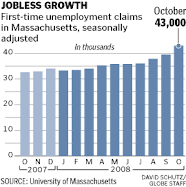







.png)


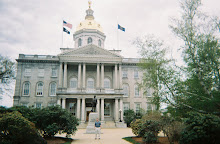





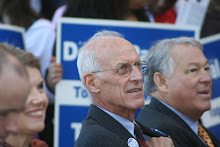





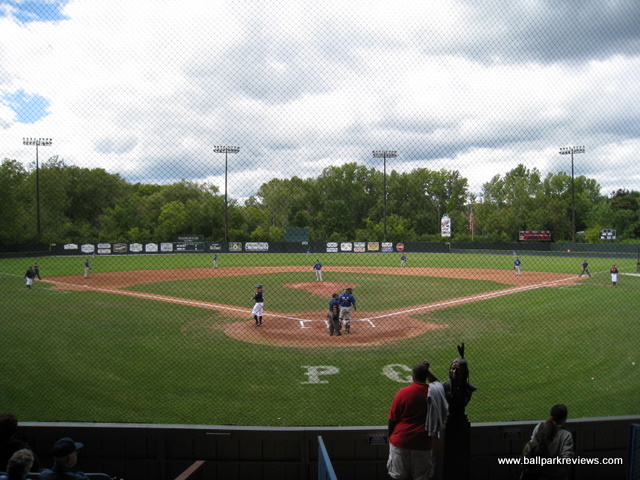









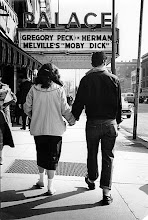
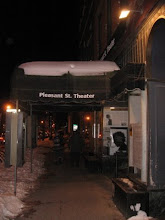










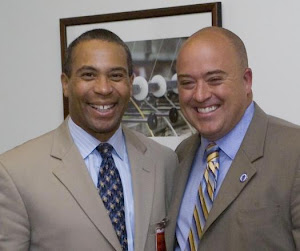










1 comment:
It's interesting how government policies can unintentionally shape commercial districts.
Post a Comment