

-
"Reality and the Catholic Church"
The Berkshire Eagle - Letters, Saturday, December 01, 2007
This is a response to the Eagle's views in recent years opposing the Catholic Church's views of reality. The Eagle has taken the Catholic Church to task for not confronting the reality of the problems created by changing social forces and the clergy sexual abuse scandal. The Eagle seems to ignore the fact that the Catholic Church has been handling the reality of these problems for over 2,000 years. What is more current is the emphasis the liberal establishment and media have used to make a large target of the Catholic Church for the problems.
In 2003 the liberal New York Times gave extensive coverage to the scandal. In a study going back over 50 years, The Times concluded that 1.8 percent of priests ordained since 1950 have been accused of sexually abusing minors, including 3.3 percent of priests in two particular years 1970 and 1975. Phillip Jenkins, a non-Catholic and a professor of history and religious studies at Penn State University who authored the book "Pedophiles and Priests," said his 20-year-study of the subject led him to conclude that sexual abuse in the Catholic Church was relatively small and occurs in all denominations. Jenkins stated the Catholic Church is being unfairly tarred as a result of "religious bigotry." Why doesn't The Eagle's view of reality report on the sexual abuse occurring in other religious groups?
Let's examine The Eagle's view of social forces affecting our world. Eagle reality has no problem with mothers aborting their pre-born babies despite all the evidence that a living, growing, unique human being is deliberately killed, and that the mother may damage herself emotionally and physically. Eagle reality encourages embryonic stem cell research (ESCR) where a unique embryonic human being is created in a laboratory and then deliberately killed for its stem cells. ESCR has failed to alleviate disease in even one human person. Meanwhile Catholic Church reality opposes abortion and encourages adult and cord blood stem cell science that has helped numerous people with diseases and no necessity of killing a human being. Eagle reality promotes same-sex marriage which deceives a homosexual couple into thinking they can be married to each other when in the normal and natural meaning of marriage they can't. Catholic Church reality says marriage requires a man and a woman.
JACK MURPHY
Pittsfield, Massachusetts
-----
"Realities that elude Catholic Church"
The Berkshire Eagle - Letters
Wednesday, December 05, 2007
This is in response to Jack Murphy's Dec. 1 letter ("Reality and the Catholic Church"). Mr. Murphy asks why The Eagle doesn't give equal coverage to sexual abuse occurring in religious groups outside of the Catholic church. It does; for example, the recent trial and conviction of Mormon leader Warren Jeffs, and the revelations emerging from some of the nation's mega-churches. The main reason Mr. Murphy does not see even more coverage is because either victims are not coming forward or the pattern of sexual abuse is not occurring as in the Catholic Church.
Celibacy is a slippery slope. There are ways to redirect sexual energy (since it is God-given, natural, and will find expression in one form or another), but the Church is clueless in how to do that. Look toward time-tested yogic practices in that regard. Until that happens, sexual abuse in the Catholic Church will resume with the passage of time.
Mr. Murphy decries stem cell research and abortion because he believes in the sanctity of life. That is both worthy and noble. But God forbid when those children he insists on bringing to full term grow up gay or lesbian. Mr. Murphy will make them wish they had never been born.
"Catholic Church reality," he writes, "says marriage requires a man and a woman." People of the same sex marrying, and adopting, is abhorrent to Mr. Murphy. I suggest he put down his Bible long enough to notice the "reality" of the millions of children abandoned to orphanages (born of heterosexual couples). But it sounds like Mr. Murphy and his fundamentalist kin are either planning to adopt all these kids themselves or they have uncovered a Christian-based truth that says an institutionalized child is preferable to receiving individual care and nurturing from loving adults. Maybe we're reading different Bibles.
JEFFREY REEL
Becket, Massachusetts
-----
A BOSTON GLOBE EDITORIAL
AIDS in the world, 2007
December 1, 2007
LAST WEEK, the lead United Nations agency in the fight against AIDS announced that for several years it had been overestimating the number of people infected with HIV, the virus that causes AIDS. The number of new infections, officials at UNAIDS declared, likely peaked around 1999. This news is welcome, but it should not lead to any weakening of financial support or social commitment to the global fight against AIDS.
Even with the lowered estimate, UNAIDS still believes that 33.2 million people, down from 39.5 million, are infected. Only a small minority in developing countries are getting the best drug treatments.
Meanwhile, recent news on the vaccine front has been discouraging. Recently, Merck announced that a vaccine it had been testing had failed. Indeed, it actually raised a person's risk of infection. The difficulty of developing a vaccine against HIV puts a premium on the best available means of preventing infection. The "ABC" strategy - Abstinence, Being faithful to one partner, and Condoms - remains the best hope of keeping the number of people with HIV from rising.
Past UNAIDS figures overstated that number because the agency's data were based largely on the testing of pregnant women in urban clinics. Researchers now believe that extrapolating from those results was a mistake, because, they say, patients in urban settings are likely to have more sex partners than rural women and thus are more likely to be infected. To get more accurate figures, researchers financed by the US Agency for International Development have chosen households at random in urban and rural areas and deployed health workers to collect medical and lifestyle histories and blood samples.
The information gleaned from such surveys can be invaluable, not just in gauging the state of the epidemic but also in figuring out how to deal with it. In parts of sub-Saharan Africa where a high percentage of people are HIV-positive, one important factor in lower rates of new infections appears to be more fidelity in sexual relationships, according to Paul De Lay, the director of evidence, monitoring, and policy for UNAIDS.
An emerging hypothesis for the high prevalence of AIDS in sub-Saharan Africa is that, while people there have roughly the same number of sexual partners over a lifetime as people elsewhere, it is more common there for a man to have a sexual relationship with two or more women at the same time. A person who is newly infected with HIV has a high viral load in the first month or so and is especially likely to transmit the disease to partners. For this reason, according to Helen Epstein, a public health specialist and former AIDS vaccine researcher, "overlapping relationships" are riskier than consecutive ones.
Someone who has as few as one long-term sexual partner, Epstein has noted, is at risk of infection if that partner has another long-term partner who is on, as she puts it, the "HIV superhighway." In a teleconference this week, Epstein said it is important to get this information to people, so that they will "have an understanding of where the real risk comes from."
This hypothesis also points to the importance of raising the status of women so that they do not have to enter such overlapping relationships for economic reasons, and, if they are in such relationships, can insist on the consistent use of condoms. A study in 2004 and 2005 by Physicians for Human Rights found that lack of control by women over sexual decision-making was a major factor increasing their vulnerability to the disease. In sub-Saharan Africa, 61 percent of those with AIDS are women.
De Lay, the UNAIDS official, cited other factors besides increased fidelity to one partner that have likely played a role in reducing infections, such as more frequent use of condoms by prostitutes and other high-risk groups, and more attention to other sexually transmitted diseases, which if untreated can increase a person's vulnerability to HIV.
The improved surveys on HIV infection rates by health workers have another benefit: They can also alert officials to any tendency among individuals who have access to effective antiretroviral drugs to engage in risky sexual behaviors or to be more willing to use intravenous drugs with contaminated needles. De Lay said reasearchers are finding that, in both the United States and Uganda, the transformation of AIDS into a chronic, largely treatable disease is leading more people to return to unsafe practices.
Officials and grass-roots public health workers alike must fight this attitude. While promising evidence suggests that new infections have declined in recent years, the trend will only reverse if broader access to HIV drugs makes the infection appear to be a risk worth taking. Defeating AIDS requires the best drugs and the best prevention strategies, buttressed by the best research on what is working and what is not. Paying for this will continue to require generous support for the Global Fund to Fight AIDS, Malaria, and Tuberculosis, and this country's own international program of AIDS relief. The new calculations must prove to be not just a statistical blip, but a long term trend to greater survival.
----------
A Boston GLOBE EDITORIAL
"Time to rally against HIV"
February 22, 2008
AS RECENTLY as 2001, the state was spending $51 million a year to prevent HIV/AIDS and provide services to those suffering from the disease. Spending plummeted, however, during the budget crisis in the early years of this decade, and Governor Patrick is asking for only $37.1 million in his new budget - just $200,000 more than is being spent this year. To reduce the spread of the disease, especially in the minority communities where it is taking its greatest toll, the Legislature should add substantially to the state's HIV/AIDS programs.
More prevention education and outreach could cut down on the nearly 1,000 new cases of HIV infection each year in Massachusetts. Efforts to head off new infections are complicated by the fact that, of the 22,000 people believed to be HIV-positive, an estimated 5,000 to 7,000 don't know their status. So members of the anti-AIDS coalition Project ABLE would like to see the state invest more in rapid testing at clinics and other community settings, with counseling and referral follow-up part of the service.
Project ABLE is also calling for more funding for programs that assist infected individuals in disclosing their condition to their sex and drug-using partners. Such programs also include referrals for the partners to testing, treatment, and preventive services. The coalition would like the Legislature to boost funding enough to make sure that the county houses of correction have the full array of HIV/AIDS services, as well as programs to reintegrate HIV-infected inmates as they return to the community.
Much of the focus of AIDS prevention must be on black and Hispanic communities, which are increasingly bearing the brunt of the disease. Each group is just 6 percent of the state population, but more than 28 percent of people living with HIV/AIDS are black, and 25 percent are Hispanic. Among gay and bisexual men between the ages of 13 and 24 diagnosed with HIV between 2004 and 2006, 53 percent were black or Hispanic.
Project ABLE is also seeking more money for state-supported services, from meals to transportation, that help those with the disease cope with it and live independently. The demand for such services increases each year with the growth in the number of patients living with HIV/AIDS and benefiting from AIDS medications.
In December, the HIV/AIDS Bureau of the state Department of Public Health published a well-documented report on the heavy impact of HIV/AIDS on communities of color. Its recommendations are similar to ones made by Project ABLE and are replete with words like "expand" and "increase." The Legislature should ensure the bureau has the resources it needs to reduce the disparity and prevent further transmission of the disease.
----------
-----

A Kenyan grandmother has been left to fend for orphans after her own children died of AIDS. (Antony Njuguna/Reuters)
-----
THE BOSTON GLOBE: Op-Ed
MAX ESSEX AND LORETTA MCLAUGHLIN
Vigilance and setbacks in the AIDS fight
By Max Essex and Loretta McLaughlin
December 1, 2007
SELDOM HAS the prospect of containing the AIDS epidemic looked so discouraging.
The best strategies for preventing the spread of the disease have always been the creation of a preventive vaccine or a gel able to kill the AIDS virus when applied before sexual intercourse.
These measures are far more reliable than the important but limited public health practices currently available - trying to change human behavior in terms of condom-protected sexual pursuits and/or abstinence, or trying to prevent exposure to contaminated blood via needles used by drug abusers.
As matters stand, the extraordinarily wily HIV virus, which causes AIDS, infects more than 33 million people worldwide, according to the United Nations.
Nearly a quarter-century ago, Margaret Heckler, the secretary of Health and Human Services, predicted a vaccine against AIDS would be ready for testing within two years. Now most AIDS specialists predict that it will take at least 20 years before we have one that works.
In September, human trials using the most promising anti-HIV vaccine, the Merck model, were stopped. And for good reason.
Hopes had been high that this vaccine might largely, if not wholly, prevent the transmission of new HIV infections. Ideally, such a vaccine would also help as a treatment for patients already infected by lowering the quantity of internal virus production.
The vaccine used a common cold virus (adenovirus 5), weakened so as not to cause any respiratory illness, as a vector for the HIV components. Attached to this respiratory virus were harmless segments (three key genes) of HIV known to be ones that would prompt the immune system to single them out as the targets of a full-scale attack against them. It was reasoned that the immune system would produce enough anti-HIV responses to protect a person against exposure to HIV. The Merck model vaccine had worked that way in monkeys, but it didn't work in humans.
Not only was the HIV-specific immune response insufficient to protect people, there were also worrisome suggestions that the vaccine might enhance the likelihood of HIV infection following exposure in real life.
No one is certain how this vaccine might inadvertently increase the risk of HIV infection. Some specialists speculate that since most of us carry biologic "memories" of adenovirus 5, its use as a vector for HIV genes might have inadvertently stimulated an outpouring of the wrong immune response cells, some of which were then more susceptible to real HIV shortly after vaccination.
Cancellation of the Merck vaccine trials was particularly disheartening within the AIDS research community because it will hold up trials with the next promising vaccine in line for testing, a model from the National Institutes of Health model that somewhat resembles Merck's.
This was not the first AIDS vaccine to fall by the wayside. Earlier this decade, others had failed whose designs were more closely patterned after the prevailing vaccines against such diseases as polio and measles. The Merck vaccine design was revolutionary by comparison.
Other promising anti-AIDS agents also have failed in human trials. Microbicides - gels to thwart the AIDS virus by harming or killing it - were first seen some 10 years ago as likely candidates to prevent the spread of AIDS on a large scale.
Results from trials with the first HIV microbicide, nonoxynol 9, were reported five years ago. This year, results from the second such product, Ushercell, came in. Both not only failed to protect against HIV transmission during sexual intercourse, but also seemed to increase the risk for HIV infection.
Fortunately, progress with drugs to treat and control AIDS disease has been substantial. Through combinations of these medicines, the majority of patients in such economically advantaged nations as the United States live out extended and productive lives. For them, AIDS is no longer the death sentence it once was.
Such success with anti-AIDS drugs, however, is still more the exception than the norm across the world. Only 10 percent of the tens of millions living with HIV today have access to effective drugs. Through long-term, multibillion-dollar programs like President Bush's Emergency Plan for AIDS Relief, the Global Fund, and the Clinton and the Bill & Melinda Gates foundations, millions more AIDS patients in developing countries will receive treatment next year and beyond.
Today, more is known about the AIDS virus than any other in medical history, even though it changes its structure billions of times in each infected person - far more than any other virus.
Still, AIDS has become the leading cause of death in all of southern Africa and in many populations of young adults worldwide. While success with treatment is now reality, prevention of AIDS through vaccines and microbicides will follow as long as we remain committed.
Max Essex is professor of health sciences and chairman of the Harvard School of Public Health AIDS Initiative. Loretta McLaughlin is former Boston Globe editorial page editor and a senior fellow at the Harvard AIDS Initiative.
-----
"AIDS prevention funds debated: Role of abstinence key in Africa plan"
By John Donnelly, Boston Globe Staff, December 12, 2007
WASHINGTON - The most important battle today in fighting the AIDS pandemic, health specialists told a Senate committee yesterday, was stopping the transmission of the HIV virus in the first place. But with hundreds of millions of dollars in prevention money at stake in Congress, the experts couldn't agree on just how to do that.
Congress is considering a $30 billion five-year extension of the Bush administration's global AIDS plan that would roughly double the funding from its first five years. While there is bipartisan support for a second five-year commitment, one provision has sparked fire.
Backed by powerful conservative Christians and several epidemiologists, the White House wants to set aside a percentage of the money for messages promoting abstinence and sexual fidelity. But a group of global health specialists convened by the Institute of Medicine reported earlier this year that the strategy unwisely eliminated countries' flexibility to choose how to spend the money.
The United Nations estimates that 33.2 million people globally are living with HIV and that 2.5 million became infected this year.
At a hearing before the Senate Health, Education, Labor and Pensions Committee yesterday, several specialists testified that, unless the numbers of new infections drastically decrease, treatment programs will not keep pace.
In the first five years of the US program, Congress required that a third of total prevention budget be used to support abstinence; the requirement was later expanded to include initiatives promoting monogamy. A plan before the Senate, submitted by Richard G. Lugar, a Republican from Indiana, would allocate half of the prevention funds aimed at sexual transmission of the disease for abstinence and fidelity programs.
Dr. Mark R. Dybul, the US global AIDS coordinator, told the committee yesterday that he "strongly favored" Lugar's approach because evidence supports abstinence and monogamy as ways to prevent the spread of HIV. But he added that prevention strategy could change, saying "I'm not sure 50 percent [of the budget] will be needed in five years."
Other prevention strategies include trying to stop HIV transmission from mother to child at birth, promoting consistent use of condoms, and expanding programs for male circumcision, which studies have concluded is a highly effective means of reducing the risk of transmission.
Dr. Norman Hearst, a researcher at the University of California-San Francisco, told the panel that Uganda's reduction of HIV infections in the late 1980s and '90s can be attributed largely to a decrease in the number of adults having multiple sexual partners.
Hearst argued that Congress must set targets for abstinence and fidelity rates for African countries that receive US aid because plans to fight AIDS there were "put together by Western consultants" who often believe condoms should be the chief means of prevention. "A condom-first approach has never worked" in areas where sexual transmission drives the spread of the disease, he said.
But Dr. Helen L. Smits, the co-chair of the Institute of Medicine report on the US global AIDS program, said that Hearst's characterization of the plans was unfair. If there were no spending requirements, she said, countries could tailor programs to their needs. "If a country discovers it has a big program with needle-sharing [spreading HIV], they could devote all their money in one year to stamp it out," Smits said.
Senator Edward M. Kennedy, the Massachusetts Democrat who chairs the committee, indicated he, too, favored a comprehensive approach that allowed nations some flexibility for spending the prevention money.
The complexities of building prevention programs, some specialists said, have become apparent in the emerging evidence that a large number of sexual partners in Africa do not have the same HIV status - one partner is HIV-positive while the other is not.
One survey estimated that 450,000 "discordant couples" in Kenya alone fit into this category.
"This is a major challenge that frankly we don't know how to deal with," Dr. Peter Piot, executive director of UNAIDS, said after the hearing. "Condoms are critical for these couples. Marriage was not made for abstinence."
Prevention campaigns targeting these couples could include a mix of strategies, said specialists - including pledges to abstain, health counseling sessions, and consistent use of condoms.
Piot, who co-discovered the Ebola virus in 1975 in then-Zaire and who has worked on AIDS since the mid-1980s, said he still believes that fighting the virus depended on using several intervention strategies at once. "You need to combine interventions. I'm deeply suspicious of the search for a magic bullet," he said.
----------
The Boston Globe, Op-Ed, JAMES CARROLL
"A unified effort on AIDS, global health crises"
By James Carroll, February 11, 2008
LET US NOW praise initiatives taken by the comfortable in behalf of the afflicted. Governments of the world's richest nations have launched significant responses to the rampant health crises of those living in the poorest nations. Wealthy individuals, like Bill and Melinda Gates, are also making extraordinary interventions. A measure of this hopeful movement's unexpectedness lies in the fact that one of its leaders is the American president, George W. Bush.
In last month's State of the Union address, the president called on Congress "to double our initial commitment to fighting HIV/AIDS by approving an additional $30 billion over the next five years." This request for a reauthorization of the President's Emergency Plan for AIDS Relief solidifies what will likely be regarded as the Bush administration's finest act. The war in Iraq costs far more, of course, but still this aid program is major.
Since the initiative began in 2003, with a commitment of $15 billion, nearly 1.5 million Africans have been receiving antiretroviral treatment. Almost 3 million orphans and vulnerable children are being cared for. Bush's renewed program aims to expand the ARV treatment by a million, and to provide care for an additional 12 million infected people, including 5 million children.
Such are the complexities of health and global intervention, however, that even these proposals spark controversy. Last November, the United Nations AIDS Epidemic Update offered estimates of the disease's spread that were lower than previous assessments. Around the same time, some experts began advocating cuts in AIDS funds in favor of improving "health systems" in poorer countries, like clean water, nutrition, and maternal care.
"AIDS has grossly distorted our limited budget," an editor of the British medical journal Lancet said. Some argue that the entire "disease specific" approach, including programs aimed at tuberculosis, polio, and malaria, is equally misguided. Instead, these advocates insist that donors should be shoring up health infrastructures, not targeting particular diseases.
What the past five years of the President's Emergency Plan for AIDS Relief show, however, is that disease-specific strategies do create systemwide collateral benefits, making the dichotomy false. The point now is for planners and politicians to make a conscious effort to enhance that pattern. Opportunities must be seized to expand in-country workforces of health professionals. The focus on particular prevention programs must simultaneously broaden to encourage in ordinary people the fuller health consciousness on which systems depend. When insecticide-treated bed nets are introduced into communities for malaria prevention, for example, all measures of health have been shown to improve. That lesson must be built upon.
The benefits of narrowly targeted interventions can be general, even beyond health, and they, too, should be nurtured. When women are supported, women's equality grows. When children are protected, a sense of children's rights is enhanced. When aid programs are rooted in on-the-ground needs of sick people, outcomes can be measured, education spread, and funds more efficiently used. Such results are crucial for systemwide improvement.
The demands of multiple health crises must not be reduced to a zero-sum game, with care for malaria or preparation for Avian flu set against the needs of those infected with HIV. By doubling the American dollar commitment to AIDS/HIV in Africa, Bush gave an example of what is needed - which is a drastic expansion of financial support for the health of people living in poorer nations.
As such programs expand, the eyes of donor nations and foundations must constantly adjust between foreground and background, taking in both immediate needs and broader systemic problems.
Measurable results in the near term must be calibrated to more abstract goals of improvement over the long term. Against a crippling brain drain, local health workers must be firmly supported in place, which will enable them to remain.
AIDS captured the attention of the world, for good reason. It, more than any other single factor, has generated a global political conversion, drawing a first serious commitment by the well-off to help the most desperate. AIDS has been our call to action. But a second, more nuanced call to action is needed now.
AIDS must not be seen as sucking the oxygen out of an enclosed global healthcare crisis, but as a wind blowing fresh air across the frighteningly open plain of what all humans on this planet need to live. Expanding our response to this disease can prompt a needed expansion of our responses to the others. And responding with focus to each disease can help the broader health systems of the world become what they must be.
-
James Carroll's column appears regularly in the Globe.
--------------------

Several Boston-area gay bars and clubs have closed in recent years, including Chaps (shown in 2005). (Photo courtesy of Edge Publications, Inc. )
-

-
OPINION/IDEAS
Last call
Why the gay bars of Boston are disappearing, and what it says about the future of city life
By Robert David Sullivan | December 2, 2007
THE FIRST THING I ever did to identify myself as a gay man - before coming out to a friend or relative, before putting a rainbow-flag pin on my jacket - was to walk into a gay bar. This was not so unusual in the early 1990s, when few gay men identified as such before they left high school. Some of us needed to walk around the block four or five times before finally pushing open a dimly lit, unmarked door.
At the time, there were plenty of dimly lit doors in Boston. The Napoleon Club was a piano bar near Park Square that attracted theater students and older men who left big tips on small glasses of red wine. A few blocks away, Luxor was a video bar for younger guys; nearby were Buddies (all ages) and Chaps, a dance club where dressing conservatively meant keeping your shirt on. In other parts of town, there were Sporters, a friendly Beacon Hill dive, and Playland, a Combat Zone bar known for its sketchy clientele, banged-up piano, and year-round Christmas lights. In all, there were 16 gay bars in Boston and Cambridge, according to Pink Pages directories from 1993 and 1994.
Today, that number has been cut to less than half. None of the bars I've mentioned are still in business, and most of the city's seven remaining gay-every-night bars have sparse customers for most of the week. (Lesbian bars were never numerous to begin with.) The gay population may have political clout and the right to marry in Massachusetts, but it has fewer and fewer public spaces to call its own.
The disappearance of places like Buddies and Chaps may sound like a problem limited to gay men, but it is part of a much larger trend reshaping American cities. As gay bars vanish, so go bookstores, diners, and all kinds of spaces that once allowed "blissful public congregation," as sociologist Ray Oldenburg described their function in his 1989 book "The Great Good Place."
In New York, the Jewish deli - a staple of the city's identity - has all but vanished. In the Boston area, many of Harvard Square's bookstores, Kenmore Square's student eateries, and myriad other places that guaranteed a diverse urban experience have closed their doors, replaced by a far more uniform lineup of bank branches, chain stores, and upscale restaurants.
This change is a serious challenge to the city, which has historically been defined by the breadth and variety of its street-level experience - and the wide diversity of people it threw together. "City air makes free," a saying that dates to medieval times, was a favorite of urban-studies pioneer Jane Jacobs. But as a wide range of gay bars dwindles to a handful of survivors - and the city's diners, indie bookstores, and dive bars yield to high rents and shifting patterns of commerce - that air is becoming the province of an increasingly narrow set of people.
Oldenburg calls public gathering spots a "third place" where we can temporarily step out of our household and workplace roles. Besides taverns, he cites drugstores (the kind with soda fountains), pool halls, and barber shops as examples. But if you were a gay man in the late 20th century, the place with all the qualities of an ideal third space was the gay bar.
For many closeted gays, bars were the only places where they could safely be themselves. They were also a nexus for political organizing and charitable work, they promoted safer-sex education after the onset of AIDS, and they served as a welcome mat for gay newcomers to a city.
"When I was in college, I'd go out to a few different bars with my friends every week," says gay novelist Wayne Hoffman, who came to Boston in the late '80s and now lives in New York. "It was a chance for us to socialize off campus, meet new people - including new boyfriends - and figure out how we fit into the larger gay world. The bars opened up a whole world of possibilities for me."
For decades gay bars kept a low profile (unmarked doors, blackened windows), and were often run by mobsters or underworld figures, since more respectable businessmen weren't crazy about the prospect of frequent police raids. The general population was either unaware of them or saw them as sinister.
But in 1969, New York police raided the Stonewall Inn, a rather boisterous Greenwich Village bar, and the gay patrons unexpectedly fought back. The resulting riot helped to turn bars into flag-bearers for gay culture, and "Stonewall" itself began to be used in the names of gay and lesbian political organizations (the Stonewall Democrats, for example) as shorthand for "don't push us around."
When gays moved out of the shadows during the '70s, then began settling in certain areas of major cities (like the South End in Boston), gay bars evolved. Some became respected neighborhood institutions, offering meeting space to social groups, sponsoring softball teams and arts festivals, distributing condoms and health information, and buying ads in local newspapers. By the mid-1980s, they were a major force in turning Gay Pride holidays into citywide celebrations, sponsoring eye-catching parade floats and raucous block parties.
But at the same time, larger trends in American life were massing that would soon sweep these bars away.
One was the rising price of urban real estate. Gay bars traditionally appeared in marginal neighborhoods, or in predominately gay neighborhoods, with cheap rents and accommodating (or indifferent) neighbors. As those areas have progressively been developed with high-end housing, bars have struggled to pay their rent, and neighborhood groups have been increasingly hostile toward anything that creates noise or attracts idlers. The same forces have stripped such neighborhoods of other iconic businesses, such as fringe theaters and free and low-admission art spaces.
Meanwhile, the gay population is becoming more dispersed. As gay men feel more comfortable coming out to family, neighbors, and co-workers, they may also feel more comfortable living in small cities or towns rather than in the "gay ghettos" of large cities. As a result, it's much harder for a neighborhood gay bar to attract a steady clientele.
Perhaps the most important change, however, is the Internet. When Internet access became widespread in the mid-1990s, gay chat rooms on America Online and other subscription services quickly attracted a crowd. More elaborate sites such as Gay.com quickly followed, usurping gay bars' most important function: a place for men to meet each other.
At the time of the Stonewall riots, "gay people had to go out to a bar to meet other gay men," at least if they didn't want to go to more dangerous cruising areas such as parks and men's rooms, says Michael Bronski, Dartmouth College professor and author of "The Pleasure Principle: Sex, Backlash, and the Struggle for Gay Freedom."
There are several gay chat sites where a month's membership can cost as little as the price of one cocktail at Club Cafe - and on a recent Saturday night, one of them listed nearly 600 Boston-area members online. The site claims 600,000 members nationwide.
As a result of these changes, there are stories of gay bars closing all over the country. Since the early '90s, New York has lost its two biggest leather bars (the Spike and the Lure), as well as piano bars (the Five Oaks and Pegasus) and martini lounges (the popular but short-lived Hell). In Laguna Beach, Calif., the first city in America to elect an openly gay mayor, one of the two biggest gay bars closed this spring, and the other has been purchased by a developer who wants to tear it down. And the oldest gay bar in Pittsburgh (ironically, the setting for the TV series "Queer as Folk") closed earlier this year, after Carnegie Mellon University purchased its building.
Gay bars are just one kind of business struggling to survive in what is, to use the phrase popularized by Chris Anderson in his book of the same name, the age of "the long tail." That phrase refers to an economy in which the Internet can make even low-demand products profitable. Until the Internet, large cities offered the closest thing to a long tail economy. Thanks to Cambridge's concentration of intellectual shoppers, for instance, Harvard Square had stores full of the most obscure books, magazines, and records you could think of buying. The students in Kenmore Square kept cheap eateries, music clubs, and record stores alive; the South End's gay population once supported not just bars, but also inexpensive card-and-gift shops (such as Tommy Tish), a sex-toy shop with the feel of an old-fashioned general store (the Marquis de Sade), and a gay bookstore.
Now the classic example of a long tail business is online retailer Amazon.com, which stocks close to a million book titles - including more gay novels and intellectual books than any local store could offer. As long tail businesses migrate to the Internet, cities like Boston are being skinned alive.
Businesses like bookstores, video stores, and gay bars can no longer afford to occupy valuable real estate when their goods or services are more easily and cheaply delivered electronically. As these businesses disappear from Boston streets, they're usually replaced by more profitable land uses, such as office towers and high-end restaurants. The result is a variant of the "tragedy of the commons": Hotels, condo complexes, and other upscale businesses market themselves as part of a vibrant city, but they can also make it more difficult to maintain that vibrancy. (The ground floors of new office and housing buildings are often reserved for retail use, but CVS and other chain stores usually snap up the space.) These high-end businesses attract new residents and consumers to urban neighborhoods, but when they aren't balanced by other types of economic activity, the result can be a sterile streetscape rather than a diverse ecosystem.
This development would have disappointed William H. Whyte, the sociologist who may be rivaled only by Jane Jacobs in the cogency and passion of his arguments for active city life. Albert LaFarge, editor of "The Essential William H. Whyte," says that the ideal urban neighborhood from Whyte's point of view is fueled by "the intensity and unpredictability of different people using the same space for their own reasons, and often contradictory ones, but all respecting the goals of vibrancy and function."
If a place like the South End accommodates fewer and fewer of these reasons for a person to be there, says LaFarge, it not longer meets the definition of a successful urban neighborhood.
Gay neighborhoods in New York and San Francisco are reportedly undergoing the same transformation as in the South End, but there is at least one exception to this trend. In Philadelphia, the city has encouraged the development of its "Gayborhood," a nine-block part of downtown, by adding rainbow flags to street signs, and the city's tourism board has an aggressive campaign targeted at gay travelers. Jeff Guaracino of the Greater Philadelphia Tourism Marketing Corp. says that the Gayborhood provides "a very good economic return for the city. Businesses are making a profit there."
Making a profit, of course, isn't always the same as serving a community's needs. Gay bars seem to be doing well in resort areas such as Palm Springs and Provincetown, but they're more vacation party spots than true third spaces for locals.
The fate of the Jewish delicatessen in New York is a reminder that "theme park" gay bars would be no substitute for what we've lost in Boston. Thousands of delis have disappeared from New York since the 1930s. Many of the dozen or so survivors seem to be thriving, but the tourist-oriented Carnegie and Stage delis, with their long lines and rapid turnover of tables, don't bear much resemblance to the classic model. At a panel discussion called "Jewish Cuisine and the Evolution of the Jewish Deli," held this summer and reported on by The New York Times, food historian Joel Denker described the delis of the '50s and '60s as having "this sort of yeasty combination of intellectuals, writers, and leftists, sitting together over tea and cottage cheese and fruit, talking about the issues of the day."
Sitting and talking for hours at a time. Sadly, that's not considered an efficient use of space during today's supposed revival of city life.
Boston's gay community is adapting to its scaled-down bar scene, but there's still a sense of something missing. There are probably more spiritual groups, youth programs, and health resources than ever in the gay community, but none of them really fit the definition of a third space where one can drop in and hang out. "There was a whole group of friends who I would only ever see at the Napoleon Club," says Rick Park, a Boston-based actor, "and when it closed, they all disappeared."
You can see the change for the worse in the city's annual Gay Pride celebration. Years ago, the highlights of the parade were the outrageous parade floats, featuring drag queens and go-go boys, sponsored by gay bars. Now those delightfully pointless displays are outnumbered by contingents of waving employees from banks and utility companies in matching T-shirts. It's a positive development that so many people are out at work, to be sure, but the parade has become a lot less fun for gay and straight spectators alike.
A few weeks ago I attended a panel discussion sponsored by the History Project, which maintains archives on Boston's gay and lesbian history. A lesbian of a certain age, reflecting on the changes in the gay community since the Stonewall rebellion, said with rueful irony that "life may be easier now, but it might have been more exciting then."
That sounded a little bit like Red Sox fans complaining that they liked watching the team more when it was laboring under an 86-year curse. But I knew what she was talking about. So does Abe Rybeck, artistic director of the gay-themed Theater Offensive. He no longer considers himself a bar regular - there's too much to do running a theater company and participating in other activities - but he says that he would feel their disappearance.
"I went to Fritz to watch a World Series game this year," he says, "and it was fun to be in a room with a bunch of gay men enjoying a sports event in the way gay men would. In their minds, they were all going home with Jacoby Ellsbury. I was glad I could watch the game with my people."
-
Robert David Sullivan is the managing editor of CommonWealth magazine and primary writer of the blog Beyond Red & Blue (at massinc.org). The History Project (historyproject.org), which maintains archives on Boston's gay and lesbian history, provided much of the information in this article.
--------------------

-----

--------------------
Thursday, 12/13/2007, "This Day in History" (Boston Globe):
On this day in 2002, Cardinal Bernard Law resigned as Boston archbishop because of the priest sex abuse scandal.
--------------------
"N.H. Catholic diocese issues voting guide", By Associated Press, December 16, 2007
MANCHESTER, N.H. - New Hampshire's Roman Catholic Diocese is asking voters to pick the presidential candidate whose leadership would cause the least harm to life.
The diocese is distributing a six-page pamphlet to parishioners with the message, but not endorsing any candidate or siding with a political party. The pamphlet asks parishioners to weigh church teachings when considering candidates' positions on such issues as abortion, embryonic research, and the death penalty.
The diocese has spoken out against abortion and the death penalty before the state Legislature over the years.
Bishop John McCormack said this is the first such pamphlet issued before a presidential primary.
"The church says that there are social issues in society that have moral dimensions and that Catholics should form their consciences on those social issues and then vote for a candidate who supports those issues the best way possible," he said.
The pamphlet acknowledges they will have trouble finding a mainstream presidential candidate whose stances completely align with church teaching.
Catholics must review whether "candidates support or tolerate policies that include intrinsically evil acts" and then "carefully assess the situation and decide which candidate will produce the least harm to innocent life, if elected," the pamphlet says.
Catholics will have differing viewpoints on important social issues such as war, economic justice, and healthcare, the pamphlet says. But Catholics will recognize - when they use reason supported by faith - that abortion, euthanasia, human cloning, and the destruction of human embryos for research are intrinsically evil acts, the pamphlet says.
"The best thing to say is they would be choosing a candidate who would produce the most good for people in terms of dignity or, in terms of human life, who would produce the least harm," McCormack said.
More than 50,000 copies of "Conscience and Your Vote" were being handed out at weekend Masses. Joseph and Theresa Grassi, parishioners of St. Patrick Church in Nashua, got a peek at them after Mass Wednesday.
"You hear candidates say they're against abortion, but once they're in office, they'll say, 'I have to respect the law,' " Joseph Grassi said. "So you have to judge their sincerity, or ask if it is a cop-out."
Theresa Grassi said she supports Hillary Clinton. "I'm very much against abortion," she said. "I wish she could change."
--------------------
"Abstinence Programs Face Rejection: More States Opt to Turn Down the Federal Money Attached to That Kind of Sex Ed"
By Rob Stein
Washington Post Staff Writer
Sunday, December 16, 2007; A03
The number of states refusing federal money for "abstinence-only" sex education programs jumped sharply in the past year as evidence mounted that the approach is ineffective.
At least 14 states have either notified the federal government that they will no longer be requesting the funds or are not expected to apply, forgoing more than $15 million of the $50 million available, officials said. Virginia was the most recent state to opt out.
Two other states -- Ohio and Washington -- have applied but stipulated they would use the money for comprehensive sex education, effectively making themselves ineligible, federal officials said. While Maryland and the District are planning to continue applying for the money, other states are considering withdrawing as well.
Until this year, only four states had passed up the funding.
"We're concerned about this," said Stan Koutstaal of the Department of Health and Human Services, which runs the program. "My greatest concern about states dropping out is that these are valuable services and programs. It's the youths in these states who are missing out."
The number of states spurning the money has grown even as Congress considers boosting overall funding for abstinence-only education to $204 million, with most of it going directly to community organizations.
The trend has triggered intense lobbying of state legislators and governors around the country. Supporters of the programs are scrambling to reverse the decisions, while opponents are pressuring more states to join the trend.
"This wave of states rejecting the money is a bellwether," said William Smith of the Sexuality Information and Education Council of the United States, a Washington-based advocacy and education group that opposes abstinence-only programs. "It's a canary in the coal mine of what's to come."
"We hope that it sends a message to the politicians in Washington that this program needs to change, and states need to be able to craft a program that is the best fit for their young people and that is not a dictated by Washington ideologues," Smith said.
Smith and other critics said they hope that if enough states drop out, Congress will redirect the funding to comprehensive sex education programs that include teaching about the use of condoms and other contraceptives.
"I think this could be the straw that breaks the camel's back in terms of continued funding of these programs," said John Wagoner of Advocates for Youth, another Washington advocacy group. "How can they ignore so many states slapping a return-to-sender label on this funding?"
But supporters said they plan to fight for the programs state by state.
"We're talking about the health of millions of youth across the United States," said Valerie Huber of the National Abstinence Education Association. "We know abstinence education offers the best for them. Now is the time to put more emphasis on that message, not less."
Huber disputed criticism that the programs are ineffective or overly restrictive.
"Our critics would have governors believe that these programs are just somebody standing in front of the class wagging a finger and saying, 'No. No. No. Don't have sex.' That's not what these classes entail," Huber said. "They are holistic. They include relationship-building skills and medically accurate discussions of sexually transmitted diseases and contraception."
Congress is considering boosting the $176 million in annual funding for abstinence programs by $28 million. State governments can apply for portions of a $50 million fund, which they use for a variety of purposes, including school classes, community groups, state and local health departments and media campaigns. But the money is restricted to efforts focused on promoting abstinence.
The jump in states opting out follows a series of reports questioning the effectiveness of the approach, including one commissioned by Congress that was released earlier this year. In addition, federal health officials reported last week that a 14-year drop in teenage pregnancy rates appeared to have reversed.
"This abstinence-only program is just not getting the job done," said Cecile Richards of the Planned Parenthood Federation of America. "This is a ideologically based program that doesn't have any support in science."
But Koutstaal, the federal official, took issue with critics who blame abstinence programs for the increase in teen births, noting that rates have continued to decline for 10-to-14-year-olds -- the ages typically targeted by the programs.
"I think it's awfully hard to blame abstinence education for the increase in birth rates," he said.
The program was started as part of the 1996 welfare reform. California, however, dropped out in 2000, forgoing more than $7 million it was eligible to receive, and Maine opted out in 2005, giving up $161,000. Most states, however, did participate. New Jersey decided to opt out last year, rejecting more than $900,000 in funding, and others followed.
"The governor has often stated that abstinence-only education does not show any results," said Gordon Hickey, a spokesman for Virginia Gov. Timothy M. Kaine (D), who announced plans to give up the funding last month. "It doesn't work. He's a firm believer in more comprehensive sex education."
Colorado also decided this fall not to seek about $450,000 that it is eligible to receive.
"Why would we spend tax dollars on something that doesn't work?" asked Ned Calonge of the Colorado Department of Health and Environment. "That doesn't make sense to me. Philosophically, I am opposed to spending government dollars on something that's ineffective. That's just irresponsible."
The reasons given for passing up the federal money vary from state to state. Some governors publicly repudiated the programs. Others quietly let their applications lapse or blamed tight budgets that made it impossible to meet the requirement to provide matching state funds. Still others are asking for more flexibility.
"The governor supports abstinence education," Keith Daily, a spokesman for Ohio Gov. Ted Strickland (D). "What he does not support is abstinence- only education. We are asking to put the money toward abstinence in the context of a comprehensive age-appropriate curriculum."
Most of the battles on the state level are being fought by local affiliates supported by national groups. In Illinois, opponents are planning to launch a campaign next month involving more than 100 state groups to try to sway the governor and state legislature to forgo about $1.8 million in funding.
"These programs are dangerous," said Jonathan Stacks of the Illinois Caucus for Adolescent Health. "We're trying to get people across the state to raise their voice on this issue. I think once those voices are heard, the legislature and the governor won't have any choice but to back the will of the voters."
--------------------
"Another Catholic writer heard from"
The Berkshire Eagle - Letters
Thursday, December 20, 2007
These Catholic letter writers are wearing me out, and I'm Catholic! It makes me wonder how much our non-Catholic friends can take. I plan on finding out.
Jack Murphy says that The Eagle attacks the "Catholic view" of reality (is there such a thing?) and focuses too keenly on the sexual abuse scandal within the church. Eric Biss defends The Eagle by pointing out that they've also reported, in alarming detail, on the sexual misdeeds of Jim Bakker, David Koresh, Pat Robertson, Jim Jones, Jimmy Swaggart, Warren Steed Jeffs, Martin Luther King and Jesse Jackson.
I'm upset at Mr. Biss for saying this — he left out Ted Haggard.
Michael Rachiele adds another layer to the Catholic cake by opining that it's a better course to stay with the church than to leave it in a time of crisis. I agree with his sentiment, but feel there are two things missing from his critique.
First, Mr. Biss has not left the church, but rather made a neatly strategic lateral move to another rite (Eastern/Greek) that is quite different in some particulars but nevertheless still part of the Catholic Church. I hope we in the Western/Latin Rite get him back.
Second, the important thing about a crisis is not whether we leave or stay, but what we do to solve the crisis.
ROBERT M. KELLY
Lee, Massachusetts
--------------------
THE BOSTON GLOBE, 12/29/2007
Holyoke, Massachusetts
"Ground broken for new Catholic Church"
The Roman Catholic Diocese of Springfield has broken ground for a church in Holyoke that will replace a church established in 1905. Bishop Timothy McDonnell was joined by other church and city officials yesterday at the site of Immaculate Conception Church on North Summer Street. The project is slated for completion late next year. The church in The Flats neighborhood was originally built for a large French-speaking population. It now serves a diverse community that includes a growing number of Latinos. The parish community has been worshiping in temporary locations since 2005, when structural and safety concerns forced the diocese to close the building,. The structure was torn down last year. The construction project is expected to cost more than $1.2 million. (AP)
--------------------
"Vatican to reinforce shift on Latin Mass: Officials note some resistance to pope's ruling"
By Nicole Winfield, Associated Press, January 4, 2008
VATICAN CITY - The Vatican has begun drafting a document to elaborate on Pope Benedict XVI's recent liberalization of the old Latin Mass because some bishops are either ignoring his move or misinterpreting it, officials said.
Cardinal Tarcisio Bertone, the church's second-ranking official, said in comments published yesterday that the Vatican would be issuing an "instruction" on how to put the pope's document into practice, since there had been what he called some "uneven" reactions to it since it went into effect last summer.
The document Benedict issued in July removed restrictions on celebrating the so-called Tridentine Mass, the rite celebrated in Latin before the liberalizing reforms of the Second Vatican Council in the 1960s paved the way for the new Mass used widely today in local languages.
Following the 1960s reform, the Tridentine rite could only be celebrated with permission from local bishops - an obstacle that supporters of the old rite said had greatly reduced its availability.
In a gesture to such traditional Catholics, Benedict removed that requirement in his document, saying parish priests could celebrate the Tridentine Mass if a "stable group of faithful" requested it.
Implementation, however, has been uneven, with some bishops issuing rules that "practically annul or twist the intention of the pope," Monsignor Albert Malcolm Ranjith, secretary of the Vatican's Congregation for the Divine Cult and Discipline of Sacraments, said recently, according to the Vatican's missionary news agency, FIDES.
Such reactions amounted to a "crisis of obedience" toward the pontiff, he was quoted as saying, although he stressed that most prelates had accepted the pope's will "with the required sense of reverence and obedience."
While giving no date for its publication, Bertone, the Vatican's secretary of state, said the upcoming instruction would lay out criteria for the pope's document to be correctly applied, according to the interview in an Italian religious affairs weekly, Famiglia Cristiana. He complained that reactions to the pontiff's document had been uneven.
"Some have even gone so far as to accuse the pope of having reneged on Council teaching," Bertone was quoted as saying. "On the other hand, there are those who have interpreted" the document "as authorization to return exclusively to the pre-Council rite. Both positions are wrong, and are exaggerated episodes that don't correspond to the pope's intention."
Despite such incidents, the Rev. John T. Zuhlsdorf, who runs a blog that has charted implementation of the pope's document, said he had seen increased interest in the older form of the Mass.
"In some dioceses in the United States, bishops have been stepping up to the plate and not only learning the older form, but celebrating it themselves," he said in an e-mail. "Younger priests are attending workshops. Several seminaries are offering training for their priesthood candidates."
Even before the pope's document was released, liberal-minded Catholics had complained that Benedict's move amounted to a negation of Vatican II, and some bishops and cardinals warned that its implementation would create a rupture in the church.
Also, Jewish groups criticized the old rite's Good Friday prayer calling for the conversion of Jews. Bertone has said the issue could be resolved and that the church in no way intended to go against its spirit of reconciling with Jews.
Benedict's document was also a bid to reach out to the followers of an excommunicated traditionalist, the late Archbishop Marcel Lefebvre, who split with the Vatican over Council reforms, notably the introduction of the new Mass.
--------------------
Letter From New York
"Jews, Catholics on the city's streets"
By Leonard Quart
Friday, January 18, 2008
NEW YORK
Moynihan and Glazer's seminal work about New York racial and ethnic groups, "Beyond the Melting Pot: The Negroes, Puerto Ricans, Jews, Italians, and Irish of New York City," was written in the early '60s and a second edition (with an updated introduction) was published in 1970. It was in its time the most incisive analysis of how these groups had maintained their distinctive social and cultural identities over the years in New York.
A recent book by a historian, Joshua M. Zeitz, "White Ethnic New York: Jews, Catholics and the Shaping of Postwar Politics" (UNC Press), cogently and subtly goes over some of the same ground as Moynihan and Glazer do, but centers on the political conflict between Jews and Catholics in post-war New York. Zeitz's main thesis is that "Irish and Italian Catholics and Jews shared the same city streets, they shared the same institutions, and to many people they looked the same. But they came at culture and politics from fundamentally different viewpoints."
.
Zeitz elaborates in his book how in the post-war years large percentage of the city's white populations were either Jewish or Irish and Italian Catholic, and lived in relative economic and geographical isolation from each other. A much larger proportion of Jews than Catholics attended college (though it was still a minority of the Jewish college-age population), and were white-collar workers, managers, and professionals rather than Catholics where many of whom remained in blue-collar occupations.
Also, their political and cultural attitudes and underlying ideology remained sharply divergent. Jews believed in dissent and individual liberty, and were generally secular liberals or radicals given to minimal religious observance, while most Catholics went to church and believed in order, authority, and allegiance to an organic sense of community. Jewish middle class parents tended to be child-centered, granting their children a fair amount of freedom, while Catholic parents emphasized obedience to parents, church, and community. Those values were reinforced by the fact that two-thirds of Catholic children in New York City from the 1940s through the '60s attended parish schools that offered doctrinal and liturgical instruction, while about 95 percent of Jewish children attended non-sectarian public ones.
Zeitz's book points out that though race was an issue in post-war New York, it was never as volatile a one as it was in other cities like Philadelphia and Chicago. Jews were generally high-minded about civil rights, though in their day-to-day life few lived up to their rhetoric. And if race-related issues had some effect on Catholic voter support for the Democratic Party in this period, there were issues like their fear of communism that did much more to shift New York Catholics from the old New Deal coalition and put them in conflict with Jews.
Zeitz describes Jewish voters as tending to exhibit a great deal of tolerance of the American left. And ex-communists and leftists (disproportionately Jewish) played influential and enduring roles in New York Democratic clubs, while, given the Cold War atmosphere, fear of communism moved many Catholic voters further to the right than in other cities, creating a sizable body of support for Sen. McCarthy, including the endorsement of Cardinal Spellman. Even the organized Jewish community was less disturbed about the menace of communism than by the threat to free speech that the red scare led to. Nevertheless, though Zeitz may emphasize group differences, he makes it clear that New Yorkers, although not free of racial and ethnic prejudice, were more cosmopolitan, and more open to diversity than people in other places.
.
However, from the '70s on, the city's demographic changed radically. New groups like Asians — Chinese, Koreans, Indians and Pakistanis — Latinos from all over Central and South America, Albanians, Africans, Russian Jews, and a plethora of other groups have joined the mix. And the city's social dynamics are very different today. A great many members of the original groups are intermarrying — often blurring their ethnic identities (African-Americans much less than the others), large numbers of Jews and Catholics have left the city for the suburbs, and university education and social mobility have undermined the insularity and prescriptive quality of many of the political and cultural beliefs of the Catholic ethnic groupings.
In fact, enclaves of lower middle class Jews and Catholics no longer dominate the outer boroughs. New immigrants are preeminent in some neighborhoods, and a number of Brooklyn neighborhoods, especially, have become extensions of a Manhattan-style ethos. For example, the once predominantly Irish working class Park Slope is now filled with upper middle class professionals and people working in the arts, where ethnicity and religion no longer play a dominant role in their lives. The same is true for neighborhoods like Cobble Hill, Boerum Hill, and Clinton Hill, Carroll Gardens and Fort Greene.
True, there are still political differences between the ethnic groups. A powerful conservative voice in the Jewish community has been created by the rise of intellectual neo-conservatism (many of whose leading figures happen to be Jewish, like Paul Wolfowitz and William Kristol), a fear that Israel will be destroyed, and the growth of ultra-orthodox Jewish neighborhoods. Still, a preponderance of Jews voted for Kerry rather than Bush in 2004 — 74 percent to 25 percent — while the city's most conservative neighborhoods, Bay Ridge and much of Staten Island, remain predominantly Catholic, as opposed to the liberal, primarily Jewish Forest Hills and Riverdale.
But it's the divide between blacks and whites, not between Jews and Catholics, whose dissimilarities are today much less defined, that is now the fault line in most American cities.
-
A part-time resident of South Egremont, Leonard Quart is a regular Eagle contributor. He can be reached at cinwrit@aol.com.
--------------------
-

-
-

-
"US religious identity is rapidly changing: Protestants likely to become a minority; Growing percentage now unaffiliated; Immigrants help fill Catholic parishes"
By Michael Paulson, Boston Globe Staff, February 26, 2008
The United States, founded by dissident Protestants seeking religious freedom, is on the verge of becoming a nation in which Protestants are a minority.
A growing fraction of Americans identify themselves as unaffiliated with any religious tradition, and a small but increasingly significant number say they are Muslim, Hindu, Buddhist, or Orthodox Christian. And a flood of overwhelmingly Catholic immigrants, mostly from Latin America, is helping to offset a high dropout rate among US-born Catholics
These are among the key findings of a groundbreaking study of the American religious landscape released yesterday by the Pew Forum on Religion and Public Life. The study, which is the most comprehensive such examination of the country in at least a half century, finds that the United States is in the midst of a period of unprecedented religious fluidity, in which 44 percent of American adults have left the denomination of their childhood for another denomination, another faith, or no faith at all.
"Americans are not only changing jobs, changing locations, changing spouses, but they're also changing religions on a regular basis," said Luis E. Lugo, director of the Pew Forum. "We have nearly half the American public telling us they're something different today than they were as a child, and that's a staggering number. It's such a dynamic religious marketplace and very competitive."
The study is based on a survey of 35,000 Americans age 18 and over, a very large number for survey research, and the size of the pool allowed the researchers to get more detail about minority religious groups than is usually available from smaller studies. The study is also important because the quantification of religious affiliation in the United States is often difficult and contested; the US Census does not include questions about religion, and many studies rely on counts submitted by denominations, whose self-reporting is often unreliable.
Protestantism in America has been declining at least since the 1980s, the researchers said, when about two-thirds of Americans identified themselves as Protestant. Scholars have debated the causes of the decline, but said it might be due in part to low birth rates among mainline Protestants and difficulties among mainline Protestant churches in retaining the children of their members.
"The continuing decline in the size of Protestantism is very important for American culture and American politics," said John C. Green, a professor of politics at the University of Akron and a fellow at the Pew Forum. The traditions of civility, tolerance, and individualism are values that arose from Protestantism, Green said. "So much of our values and institutions in American public life came out of mainline Protestantism."
The new study is filled with findings about a remarkably diverse nation, with a population that is shaped by affiliation with a vast and shifting array of religious groups and sects. Every religious family - Christians, Jews, Muslims, and Buddhists - is represented by a number of subgroups. Scholars believe, for example, that the Muslim population of the United States - which is made up of African-Americans, whites, and immigrants from both south Asia and the Arab world - is more diverse than anywhere else.
"Every indication is that adherents of these other world religions - such as Islam, Buddhism, Hinduism, etc. - will continue to grow as a percentage of the US population," Lugo said. "It is now at 5 percent, which is not insignificant. When the census bureau took its own numbers back in the '50s, these groups were virtually a rounding error. So, clearly they are growing, and we know that you don't need a high percentage of folks who are new or different, as perceived by most folks in the society, to generate a lot of conversation, not least in politics."
The nation is still predominantly Christian - 78 percent of adults say they are Christian - but nearly 5 percent identify themselves as members of other faiths, and 16 percent say they are unaffiliated.
The largest single faith tradition in the country is evangelical Protestantism, with about 26 percent of the adult population; followed by Catholicism, at 24 percent; mainline Protestantism, at 18 percent; the unaffiliated, at 16 percent; and historically black Protestant churches, at 7 percent.
Evangelical Protestantism appears to be growing, but its growth is being dwarfed by a decline in mainline Protestantism, and the result is that just 51 percent of Americans are now Protestant, the brand of Christianity that has dominated this nation's history, generating all but one of its presidents and dominating its town squares.
"There is no question that the demographic balance in American Protestantism has shifted in the last several decades decidedly in the direction of evangelical Protestant churches," Lugo said.
The average age of mainline Protestants, as well as Jews, is also higher than for other faith groups.
The willingness of Americans to change their religion is a relatively new phenomenon, after generations in which one's faith was largely determined by the faith of one's parents.
And the survey found that about 37 percent of adults are married to someone with a different religious or denominational affiliation; many conversions do not appear to be driven by marriage, the researchers said.
"The study confirms that religion in America is achieved, rather than ascribed - it's something we choose - and, in that sense, it is so different from what religion has been like for the previous 2,000 years of history," said Alan Wolfe, director of the Boisi Center for Religion and American Public Life at Boston College, who reviewed the study.
The study determined religious affiliation simply by asking respondents their religion and denomination. Later this year, the Pew Forum plans to release studies exploring the beliefs and practices and the social and political views of members of different religious traditions.
Among the study's more unusual findings: Jehovah's Witnesses have the worst record of any faith group at retaining their members. Hindus and Mormons are the least likely to be married to someone of another faith, and the least likely to be single. Mormons and Muslims have the biggest families. Three-quarters of American Buddhists are converts. Jews are the highest-income group in America, but Hindus are now the best educated: Nearly half of all adult Hindus have some post-graduate education.
Catholicism, the biggest single denomination in the country and the dominant faith group in the Northeast, is losing members nationwide faster than any other major grouping.
One in three people raised Catholic is now a former Catholic, the study finds, and, as a result, 1 in 10 Americans is now a former Catholic.
Yet, the overall Catholic population in the country remains fairly stable, because most immigrants today are Catholic.
"If you remove immigrants, then Catholicism is in free fall, the way Episcopalianism and other mainline religions were 20 or 30 years ago," Wolfe said.
The study finds that among former Catholics, a little less than half are now Protestant and about the same number are unaffiliated.
Latinos make up only one in eight Catholics over age 70, but half of those between ages 18 and 29, strongly suggesting that the makeup of the Catholic Church, which is now one-third Latino, will become increasingly Latino over time.
Locally, the Archdiocese of Boston already offers Mass in Spanish at about 40 parishes, and counts several hundred thousand Hispanics among its parishioners. Priests who work with Hispanics in the Boston area say the change is visible throughout the church.
"The Hispanicization brings a tremendous dynamic into the church, with a love of Mary and a wonderful sense of celebration of life and celebration of faith," said the Rev. James J. Ronan of St. Mary-St. Catherine of Siena Parish in Charlestown, which just consolidated two congregations, one predominantly white and the others with a substantial Hispanic minority.
But Ronan said the integration of the church also poses challenges, adding that "people are also struggling to work this out, because it's not easy to do."
Ronan expressed skepticism about the permanence of findings that show people leaving Catholicism, saying his experience is that many come back.
"I would be reluctant to take at face value a response that's a Catholic saying, 'I'm no longer a Catholic,' because things change, people find themselves looking for bigger answers, and they revisit it and they come back," he said.
The study finds that Massachusetts is more Catholic and more Jewish than the nation at large and that the state has fewer evangelicals and fewer African-American Protestants.
In general, the study confirms, the Northeast remains the most Catholic region, the South the most evangelical, and the West the most unaffiliated.
-
Paulson can be reached at mpaulson@globe.com. The study is available at pewforum.org.
-
--------------------
"Ads tout Massachusetts as a gay-friendly destination"
By Jenn Abelson, Boston Globe Staff, February 29, 2008
The Massachusetts Office of Travel & Tourism is unveiling a new campaign today, with 90 advertisements showcasing destinations and lifestyles across the state, including its first spots featuring same-sex couples.
The travel office is spending $4.6 million on the campaign - about 35 percent more than last year - and will expand its reach into new markets, including Albany, N.Y., and Providence. The ads will debut this afternoon at the 21st annual Massachusetts Governor's Conference on Travel & Tourism and will begin airing on television and appearing on the tourism group's website starting April 1.
This is the first time Massachusetts, which became the first state to permit gay marriage in 2004, will officially capitalize on its gay-friendly status through its tourism campaign. The new campaign has several ads that feature same-sex couples, but the most direct targeting includes a biracial male couple in Provincetown, visiting the art museum, sharing a meal, and walking down the street arm in arm.
"We're spending taxpayers' money here, and we don't want to paint a picture of one version of Massachusetts. This is a place that is diverse and varied," said Betsy Wall, executive director of the travel and tourism office. "We're trying to show that Massachusetts is welcoming to everyone and there truly is a lot to do here for a lot of different people."
Gay and lesbian travelers make up about 10 percent of the travel industry, and the annual economic impact of these tourists is about $64.5 billion in the United States alone, according to Community Marketing Inc., a San Francisco company specializing in gay tourism marketing.
The explosion in the gay tourism industry has led numerous cities and towns to promote their gay-friendly spots, such as Seattle and Dallas, but Massachusetts is one of the first on a state level to reach out to these audiences, said Thomas Roth, the president of Community Marketing.
Pennsylvania recently started targeting the gay and lesbian market after a successful Philadelphia campaign showed that gay and lesbian travelers who saw the ads stayed longer and spent more than those who did not see it. Community Marketing, which conducted the research, said that for every dollar invested into the campaign, Philadelphia saw $152 in return, through hotel stays, restaurants, and attractions.
The Massachusetts campaign includes television, print, radio, online, direct mail, a guide book, and other promotional efforts. The theme for the ads, produced by Wenham advertising agency Mullen, is: "There's so much to see and do in Massachusetts, we have to run a new ad every day."
The unprecedented 90 spots allowed the state to feature different lifestyles and destinations across Massachusetts, such as a woman in a wheelchair riding along Horseneck Beach in Westport Point. The state's travel and tourism industry annually infuses the Commonwealth's economy with upward of $14.2 billion in direct expenditures.
-
Jenn Abelson can be reached at abelson@globe.com.
-
--------------------
"Sex abuse claims vs. clergy on decline: Catholic bishops: Costs skyrocketed"
By Rachel Zoll, Associated Press, Boston Globe Online, March 8, 2008
NEW YORK - The number of sex abuse claims against Roman Catholic clergy dropped for the third consecutive year, but total settlement payments to victims nearly doubled to reach their highest level ever, according to a new report for the US Conference of Catholic Bishops.
Dioceses and religious orders received 691 new allegations last year, compared with 714 in 2006. The overwhelming majority of claims date back decades. Settlements with victims increased by 90 percent over the same period, to more than $526 million - the largest amount for one year.
The findings, released yesterday, are part of an annual review the American bishops commissioned in 2002 as the abuse crisis hit the church. A companion audit of bishops' child-safety policies found that nearly every diocese was following the plan.
Still, the bishops' child protection officer cautioned against "issue fatigue."
Teresa Kettelkamp, executive director of the Office of Child and Youth Protection, said the sense of urgency surrounding the issue is easing as dioceses finish enacting the changes and cope with the many other demands on their resources.
Auditors found some lay-clergy review boards hadn't met in more than a year because no new allegations had been made. Two archdioceses - Denver and Anchorage - hadn't reported abuse claims to civil authorities until after the lapse was discovered in the audit.
Jeanette DeMelo, spokeswoman for the Denver Archdiocese, said church officials promptly investigated both claims mentioned in the audit and no physical contact was alleged in either. She said no report was required under Colorado law, and when the claims were referred to civil authorities, they declined to investigate.
The abuse crisis erupted with the case of one priest in the Archdiocese of Boston, then spread to dioceses nationwide and beyond. The bishops responded by enacting the Charter for the Protection of Children and Young People, which requires dioceses to conduct background checks on workers, provide safety training to children, and reach out to victims.
Nearly 14,000 molestation claims have been filed against Catholic clergy since 1950, according to tallies released by the bishops' conference. Abuse-related costs have reached at least $2.3 billion in the same period.
Last year, total abuse-related costs, including settlements, legal fees, therapy for victims, and support for offenders, surpassed $615 million.
Several dioceses reached big agreements with victims in the past 12 months. The Archdiocese of Los Angeles had the biggest by far, pledging $660 million to about 500 people. But many of the settlements have yet to be paid fully.
Of the 691 new abuse claims, five cases involved alleged victims who were under age 18 last year. Some of the accused clergy in these cases were priests from overseas working in the United States.
American dioceses are relying increasingly on overseas priests as the number of US clergy sharply declines. The National Review Board, the lay panel the bishops established to monitor their policies, said dioceses should improve background checks on priests from other countries.
The number of accused clergy overall rose by 10 percent to 491. Most of the new allegations were made by adults who said they had been abused about three decades ago. About 40 percent of the clergy hadn't been accused before.
--------------------
"Lawmakers assess D.C. papal assembly"
Friday, April 18, 2008, By JO-ANN MORIARTY, The Springfield Republican Online
WASHINGTON - In a word, U.S. Rep. Richard E. Neal said Mass with Pope Benedict XVI at Nationals Park yesterday was "majestic."
"He is the spiritual leader of a billion people and the papacy is a 2,000-year-old institution," said Neal, D-Springfield. "And when you hear music that dates back to the Renaissance and consider that people in the far-reaching areas of the world recite the same prayers, it is a universal church."
Later yesterday, the pontiff gave a speech on the importance of Roman Catholic education at The Catholic University of America. A number of Western Massachusetts educators were in the audience, including Elms College President James H. Mullen Jr.
Everyone sang off the same sheet of music at Nationals Park. Neal sat near former Republican House Speaker Newt Gingrich of Georgia, whose leadership in the House Neal challenged and criticized, and near House Speaker Nancy Pelosi, D-Calif.
The stadium was filled to capacity - about 47,000 - and it was a perfect spring day in Washington.
"It was majestic," Neal said. U.S. Rep. John W. Olver, D-Amherst, hadn't planned to attend the event. Both of Massachusetts' U.S. senators, Democrats John F. Kerry and Edward M. Kennedy, attended the Mass. Kerry was accompanied by his wife, Teresa, and Kennedy was accompanied by his wife, Vicki.
Kennedy called the Mass, "a very moving experience for tens of thousands who were there and the millions more who watched it on television, and I'm honored to have attended it."
Kerry welcomed the pope to the United States, which the senator said, is enduring "trying times."
"It meant the world to Teresa and me to hear Pope Benedict speak. I will always look back on this day as very special and spiritually nourishing," Kerry said. "I still remember taking my young daughters to see Pope John Paul II when he visited Boston, and it's something you never forget."
"Today his Holiness offered a vision of peace, understanding and reconciliation for those of the Catholic faith and for all the people of the world who look to him for inspiration," Kerry said following the Mass. "He told us that Americans have always been a people of hope and reminded us to always seek to fulfill our Christian responsibility to care for our most vulnerable.
Everyone sang off the same sheet of music at Nationals Park. Neal sat near former Republican House Speaker Newt Gingrich of Georgia, whose leadership in the House Neal challenged and criticized, and near House Speaker Nancy Pelosi, D-Calif.
The stadium was filled to capacity - about 47,000 - and it was a perfect spring day in Washington.
"It was majestic," Neal said. U.S. Rep. John W. Olver, D-Amherst, hadn't planned to attend the event. Both of Massachusetts' U.S. senators, Democrats John F. Kerry and Edward M. Kennedy, attended the Mass. Kerry was accompanied by his wife, Teresa, and Kennedy was accompanied by his wife, Vicki.
Kennedy called the Mass, "a very moving experience for tens of thousands who were there and the millions more who watched it on television, and I'm honored to have attended it."
Kerry welcomed the pope to the United States, which the senator said, is enduring "trying times."
"It meant the world to Teresa and me to hear Pope Benedict speak. I will always look back on this day as very special and spiritually nourishing," Kerry said. "I still remember taking my young daughters to see Pope John Paul II when he visited Boston, and it's something you never forget."
"Today his Holiness offered a vision of peace, understanding and reconciliation for those of the Catholic faith and for all the people of the world who look to him for inspiration," Kerry said following the Mass. "He told us that Americans have always been a people of hope and reminded us to always seek to fulfill our Christian responsibility to care for our most vulnerable.
The nation's more than 200 Catholic colleges and universities have been at the center of a tug-of-war within the church for decades over religious identity and free expression.
The leaders of more than 200 Catholic colleges and universities and superintendents from nearly 200 dioceses were invited to hear the address. Mullen and Sister Andrea M. Ciszewski, superintendent of schools for the Diocese of Springfield, were among those in attendance.
"He kept pointing ... to the importance of how we form our young people," Sister Ciszewski said, adding that the main thrust of the speech was "the importance of teaching truth and developing conscience."
"He was very clear and concise," Sister Ciszewski also said. "He thanked us for the efforts in Catholic education."
Mullen noted that the pope said it was an important responsibility for Catholic educators at all levels to inspire students to serve others. He also said the pontiff talked about the difference Catholic education has made in America's history for those of all economic backgrounds, but particularly for immigrants.
Mullen said the pope left his audience with the feeling that "much good has been done but we have to work hard every day, and I think that's what he intended to do."
"I think he did a very nice job of ... being pastoral," Mullen added.
-
Staff Writer Michael McAuliffe contributed and material from The Associated Press was used in this report.
-
----------
THE PAPAL VISIT
"Tears, prayers as pope meets with abuse victims from Boston: Local advocates hail overture"
By Michael Paulson, (Boston) Globe Staff, April 18, 2008
WASHINGTON - Pope Benedict XVI, in a dramatic and unprecedented move, held an emotional meeting yesterday with five people from Boston who had been sexually abused by priests.
The 25-minute gathering, in a small chapel at the Embassy Row mansion that is the home of the pope's US ambassador, came toward the close of the third straight day that the 81-year-old pontiff, on his first visit to the United States, spoke out about the sexual abuse crisis that has roiled the Catholic Church in this country.
The private session, described last night by several people who were present, was punctuated by frequent emotion. Many of the participants cried. They all prayed. And one by one, each of the victims spoke alone with the pope, holding his hands, whispering in his ears, and telling him their stories of wounded bodies and broken faith.
Cardinal Sean P. O'Malley, who pushed for the meeting after the pope decided not to include Boston in his US itinerary, gave the pope an oversize hand-sewn book made of color-washed paper in which a calligrapher had written the names of nearly 1,500 men and women from the Boston area who have reported being sexually abused by priests over the last six decades.
"I asked him to forgive me for hating his church and hating him," said Olan Horne, 48, of Lowell, who gave the pope a picture of himself as a 9-year-old boy, just before the Rev. Joseph E. Birmingham started molesting him. "He said, 'My English isn't good, but I want you to know that I can understand you, and I think I can understand your sorrow.' "
The meeting between a pope and abuse victims, which was first reported yesterday by the Globe on Boston.com and later confirmed by the Vatican, is a historic development, not only in the three-year-old pontificate of Benedict, but also in the clergy sexual abuse crisis that has roiled the Catholic Church since 2002, when the Globe began publishing a series of stories about the church's handling of abuse by priests. Immediately after yesterday's meeting, the tone of the reaction to Benedict began to shift.
"It certainly feels good to know that the leader of our church finally has acknowledged responsibility in such a personal way," said James E. Post, a former president of Voice of the Faithful, an organization headquartered in Newton, Mass., advocating change in the church. "Now, every bishop in America has a model to follow. There are many steps yet to be taken, and much to be done to obtain justice for every survivor, but an important step was taken today."
And the Rev. Keith F. Pecklers, a professor of theology at the Pontifical Gregorian University in Rome, said: "This is a huge step forward. He wants to give a clear signal to America that he gets it."
But David Clohessy, the national director of the Survivors Network of those Abused by Priests, said his organization is still looking for action, particularly in the form of discipline for bishops who failed to remove abusive priests from ministry.
"It's a very long overdue small step forward, especially if it leads to reform," he said. "Talk can produce change or complicity. We hope it's the former. But the cold, hard reality is no child is safer tomorrow than they are today."
The five victims who met with Benedict yesterday included three men and two women, all of whom were abused as minors by priests in the Archdiocese of Boston. Most are in their 40s and 50s, but one, Faith Johnston, is in her early 20s and was abused relatively recently.
Two have been leading advocates for victims in eastern Massachusetts. Horne and Bernard McDaid, 52, of Peabody, who was also abused by Birmingham, helped organize a meeting of victims with Cardinal Bernard F. Law in 2002, and McDaid later traveled to Rome with another victim in an unsuccessful effort to meet with Pope John Paul II.
At yesterday's meeting, McDaid said: "I shook his hand, and I said, 'Holy Father, I was an altar boy when I was abused, in the sacristy, a place where I prayed, and I want you to know I was not only sexually abused but I was spiritually abused.' And I said, 'Holy Father, you have a cancer in your flock, and you need to do something about it.' And then I gave him an Irish bread from my mother."
Horne and McDaid both said that they were moved by the pope's attentiveness, and that they were confident that their visit made a difference. McDaid said he first began to feel a twinge of hope yesterday morning, when he brought his mother to the papal Mass at Nationals Park, and the pope spoke about the abuse crisis.
"It hit me that this man might mean something," McDaid said.
As the meeting began the pope entered the room - clad in a white cassock, a white skullcap, and his trademark red shoes - and knelt to pray at a kneeler called a Prie Dieu. O'Malley, who has himself met with several hundred victims of clergy sexual abuse, led the small group in prayer, including the Our Father and a Hail Mary. He then introduced the victims; told the pope about the impact of the abuse crisis, including the suicides and drug overdoses that killed some victims; then quoted from his own installation homily, saying that sexual abuse, "is a wound on the body of Christ."
The pope, after speaking a few words to the group, then sat as each victim approached him and spoke or cried, often while clasping the pope's hands. Most of the victims offered some kind of gift to the pope. He gave each of them a rosary, as is his custom, and blessed the group.
"I think the Holy Father has been horrified at the thought of priests abusing their ministry and harming these children, and he said he came to the US with sorrow in his heart over this, and has been praying for all of those who have suffered this abuse," O'Malley said later in an interview. "In the morning, in his homily, he said the American church must be about pastoral care and solicitude for those who have been abused, and I think that by this meeting he was giving us an example."
Although there was much anticipatory discussion about whether and how the pontiff might acknowledge the abuse crisis during his trip this week, Benedict has surprised observers by returning to the subject daily, and he is expected to talk about it at least once more, during a Mass for priests and nuns at St. Patrick's Cathedral in New York tomorrow.
Yesterday, during a sun-drenched morning Mass for 46,000 at Washington's new Nationals Park baseball stadium, Benedict addressed his comments to lay people, urging them "to assist those who have been hurt" due to sexual abuse by priests.
"I acknowledge the pain which the church in America has experienced as a result of the sexual abuse of minors," he said. "No words of mine could describe the pain and harm inflicted by such abuse."
The scale of the abuse is still the subject of some uncertainty, but the John Jay College of Criminal Justice, which did a study for the US Conference of Catholic Bishops, found that 4,392 priests had been accused of abusing 10,667 individuals between 1950 and 2002. The crisis led in December 2002 to the resignation of Law, who was criticized for failing to remove abusive priests from ministry. John Paul II named Law to oversee a prominent basilica in Rome and appointed O'Malley to replace him as archbishop of Boston.
Benedict has a long and complex history with the abuse crisis. He also has a deep familiarity with the crisis, because in his previous post as prefect of the Congregation of the Doctrine of the Faith, he was in charge of the office that oversaw the abuse cases that were referred to Rome by dioceses around the world.
Early in the crisis, when Benedict was still Cardinal Joseph Ratzinger, he appeared to minimize its scope and seriousness. But just before he was elected pope, he referred to abusive behavior as "filth." And after being elected pope, he removed from ministry a prominent Mexican priest, the Rev. Marcial Maciel, the founder of the Legionaries of Christ, who was repeatedly accused of sexual abuse but was not disciplined by John Paul II.
-
Michael Paulson can be reached at mpaulson@globe.com
-
----------
-

-
www.boston.com/news/local/massachusetts/specials/062308_religion_graphic/
-
----------
"Americans see truth in a range of faiths, massive study finds: State among nation's least religious"
By Michael Paulson, (Boston) Globe Staff, June 24, 2008
The United States is a nation of believers: most Americans say they believe in God, they pray, and they attend worship services regularly; they also believe in angels and demons, in heaven and hell, and in miracles.
But they also say, contradicting the teachings of many faiths, that truth comes in many forms. Large majorities of Americans say that many religions - not just their own - can lead to eternal life, and that there is more than one way to interpret religious teachings, according to a massive new study of religion in America conducted by the Pew Forum on Religion & Public Life and released yesterday.
"Even though the country is highly religious . . . most Americans are, in fact, not dogmatic about their faith," said Luis Lugo, director of the Pew Forum.
New Englanders are among the least likely to say they are religious, according to the study. Massachusetts lags behind the nation - often near the bottom of all states - in the percentage of its residents who say they are certain that God exists, that they believe the word of God is literally true, that religion is very important in their lives, or that they attend worship weekly or pray daily.
The study confirms a fact known widely by scholars of religion in public life: the more often people attend worship, the more likely they are to be politically conservative. Mormons and evangelical Protestants are the most likely to be doctrinally orthodox and politically conservative, while Jews, Buddhists, Hindus, and atheists are more liberal in both their theology and their politics, the study finds.
But there is tremendous di versity within each faith - among evangelical Protestants, for example, only 52 percent describe themselves as conservative, and 30 percent say they follow government and public affairs only some of the time. Although evangelicals have traditionally been viewed as Republican voters, the poll suggests a significant minority do not view themselves as conservative, a fact reflected this year as Democratic presidential candidate Barack Obama tries to reach out to evangelical voters.
"The diversity within Americans' religious communities is not as widely reported as perhaps it should be," said John C. Green, a senior fellow at the Pew Forum. "There is a tendency to focus on the most vocal members of religious traditions, that often happen to be the most orthodox, or the most traditional, or the most observant, largely ignoring people of more moderate views, or who are largely nominal in their religiosity."
The study of Americans' religious beliefs and practices is the second analysis of an unusually detailed study of faith in America, a Pew poll of a representative sample of 35,000 Americans interviewed by telephone last year. The first report, released in February, examined the religious affiliation of Americans, and found a remarkable degree of fluidity, in which 44 percent of Americans have switched faiths or denominations, and that Protestants, who founded the nation, are poised to become a minority here.
Scholars are already zeroing in on the study's new findings about the openness of Americans to multiple paths to salvation and multiple interpretations of religious teachings. The study found that 70 percent of Americans - and even 57 percent of evangelical Protestants - believe that many religions can lead to eternal life, while 68 percent of Americans say there is more than one true way to interpret the teachings of their religions.
"As Americans rub shoulders with people of other religious traditions, they are less judgmental, and less likely to offer pronouncements about other people's eternal life," said Rice University sociologist D. Michael Lindsay.
But the flexibility of most Americans toward church teachings is likely to trouble many church leaders. Many Christian churches, for example, teach that Jesus is the only way to salvation; the Southern Baptist Convention, which is the nation's largest Protestant denomination, declares that "There is no salvation apart from personal faith in Jesus Christ as Lord." And many churches assert their authority to interpret religious teachings; the Catholic Church, for example, says in its catechism that the task of interpreting the Bible "is ultimately subject to the judgment of the Church."
"While one applauds what could be thought of as an openness to other religions, one has to wonder if this is essentially bland secularism," said Todd M. Johnson, director of the Center for the Study of Global Christianity at Gordon-Conwell Theological Seminary.
The poll, like many others, finds Americans claiming to be deeply faithful - 92 percent say they believe in God. But conceptions of God vary - 60 percent, including most Christians, say they believe God is a person, while 25 percent, including pluralities of Jews, Buddhists and Hindus, believe God is an impersonal force.
Although the Catholic church is known for its ardent opposition to abortion, the poll finds Catholics almost evenly split on the issue, with 48 percent saying abortion should be legal in most cases, and 45 percent saying it should be illegal.
On gay rights, Buddhists, Jews, Catholics and mainline Protestants are the most likely to say homosexuality should be accepted, while Jehovah's Witnesses, Mormons, Muslims and evangelical Protestants are the most likely to say homosexuality should be discouraged. Overall, 50 percent of Americans said homosexuality should be accepted by society, while 40 percent said it should be discouraged.
-
Michael Paulson can be reached at mpaulson@globe.com. The full report is available at www.pewforum.org.
-
----------
-

-
Cardinal Sean P. O'Malley of Boston. (David L. Ryan/Globe Staff/file)
-
"Cardinal O'Malley's statement on abortion issue"
The Boston Globe Online, October 30, 2008
Cardinal Sean P. O'Malley of Boston, asked about the increasing outspokenness of bishops over the abortion issue this fall, issued the following written statement to the Globe:
"In defending the cause of life, we are not only fulfilling our vocation as Catholics, but we are also defending the vision of democracy that is embodied in the Declaration of Independence that states 'We hold these truths to be self evident,' namely, that we are all created equal and are endowed by our Creator with certain inalienable rights, the first of which is the right to life. Today, this most fundamental human right is threatened. As the bishops of the United States have said in our document 'Living the Gospel of Life': 'As we tinker with the beginning, the end, and even the intimate cell structure of life, we tinker with our own identity as a free nation dedicated to the dignity of the human person.'
If we ask ourselves what is the leading cause of death in the United States, we usually think of heart disease, cancer, and other serious illnesses. Actually the leading cause of death in the United States is abortion. The architects of the proabortion movement in the United States thought that within a year or so the opposition would go away or die off. More than 30 years later the issue is still alive because people care about life, and an ever-increasing number of young people are making it known that they, too, are committed to upholding respect for life.
The American people are not in favor of abortion on demand, partial birth abortion, or allowing babies who have survived an abortion to die. If we had the opportunity to vote as a nation, there would certainly be limitations imposed on the abortion industry that destroys not just the lives of the babies but also the lives of all involved. A dictatorial court has imposed an unethical decision on our country and divided the American people. We pray for the opportunity to allow the American people to have a voice in such a crucial issue.
As people of compassion we must defend the rights of the most vulnerable. The church's social teaching is very coherent and extends to all aspects of economic justice, racial equality, war and peace, immigration, education, and healthcare issues. But the centerpiece of our teaching will always be the right to life."
----------
"As abortion foes grow more intense, a new view surfaces"
By Michael Paulson, Boston Globe Staff, October 30, 2008
In New York, Cardinal Edward M. Egan published a picture last week of a 20-week-old fetus in his newspaper column and declared that abortion is a crime "no less heinous than what was perpetrated by Hitler and Stalin."
In Dallas and Fort Worth, two bishops jointly declared that voting for a politician who supports abortion rights is "morally impermissible." In Pennsylvania, a bishop made a surprise visit to a parish politics forum, declared, "I own this building," and dismissed the bishops' own voting guide that says Catholics are not single-issue voters.
Over the last few weeks, more than 60 Catholic bishops, articulating their traditional views in ever stronger language, have urged voters to make abortion their top priority in an election dominated by the nation's economic turmoil.
But the urgency of the bishops reflects an increasing concern about a new argument posed by some antiabortion intellectuals and organizations: that the legislative battle to outlaw abortion is hopeless and that antiabortion groups would be better off devoting themselves to preventing unwanted pregnancies and persuading pregnant women to carry their fetuses to term rather than trying to change the laws of the land. The discussion is taking place within evangelical Protestantism, as well as among Roman Catholics, but it is more visible in the Catholic Church because of the high profile of Catholic bishops.
The debate, which Trinity College professor Mark Silk termed "an emerging civil war within the upper reaches of American Catholicism," is playing out in diocesan newspapers, speeches, blogs, and op-ed pages. But the bishops' views do not appear to be having much impact on voters.
Recent polls have suggested that Catholics are tilting increasingly toward Democrat Barack Obama, who supports abortion rights, and some polls have suggested that Obama is also making incremental gains among evangelicals.
"The banning-abortion position, conservatives will admit, is not a realistic one in this country - it's never going to happen, and they admit it's not going to happen," said Jim Wallis, a leading progressive evangelical. "Maybe abortion reduction could result in a more prolife outcome than taking what have become symbolic stances that are never going to be achieved" in the United States.
Within the Catholic Church, the argument has been made most prominently by Nicholas Cafardi, a legal scholar at Duquesne University in Pittsburgh who has held several important church positions, and who wrote last month: "While I have never swayed in my conviction that abortion is an unspeakable evil, I believe that we have lost the abortion battle - permanently."
The reason, Cafardi and others have argued, is that even if Roe v. Wade were overturned, the battle would return to the states, many of which would not outlaw the procedure.
Church leaders are responding loudly. Cafardi, who was the legal counsel for the Catholic Diocese of Pittsburgh and who was appointed by the bishops to a sexual abuse prevention panel, resigned from the board of a conservative Catholic university after making public his case for Obama. And another leading Catholic legal scholar, Douglas Kmiec, a Pepperdine University professor who is the former dean of the Catholic University of America law school, drew protesters during a speech at a Catholic university after he publicly outlined a case for supporting Obama.
Antiabortion Obama supporters have been using the Internet to fuel an argument that has captivated a corner of the blogosphere. A new organization called Catholic Democrats has posted a Q&A on its website suggesting that Democrats would do a better job than Republicans at reducing the abortion rate, and Catholics United, another liberal organization, has launched a direct-mail campaign in swing states urging Catholics to rethink what it means to be "pro-life."
Earlier this week, a group called the Matthew 25 Network began broadcasting on Christian radio stations in swing states an ad featuring Kmiec with the theme "Pro-Life, Pro-Obama," and today, a coalition of Catholic and evangelical activists plans to hold a news conference to speak out against single-issue voting and to launch a radio ad campaign urging a more comprehensive strategy to reduce the abortion rate.
"There's been a lot of evidence among evangelical leaders, not on the hard Christian right, but among more moderate conservatives, of an openness to the kinds of initiatives we saw from members of Congress trying to figure out ways to reduce the prevalence of abortion," said James L. Guth, a professor of political science at Furman University in Greenville, S.C.
Guth said Obama "certainly has been the most prochoice imaginable over the years, but that doesn't seem to have picked up much traction except among the usual folks who pay attention among the issue."
Scholars say the idea of abortion reduction is not new. As president, Bill Clinton wanted to make abortion "safe, legal, and rare." But it has gathered new currency as the Democratic Party included the idea in its platform and two Catholic Democrats in the House of Representatives - Rosa DeLauro of Connecticut, who supports abortion rights, and Tim Ryan of Ohio, who opposes abortion rights - have pushed an abortion reduction package in Congress.
Obama raised the issue in the last presidential debate, saying, "there surely is some common ground when both those who believe in choice and those who are opposed to abortion can come together."
Republican John McCain, an opponent of abortion, disagreed, saying: "We'll do everything we can to improve adoption in this country. But that does not mean that we will cease to protect the rights of the unborn."
Clearly, the bishops have noticed the new line of argument.
Last week, two officials of the US Conference of Catholic Bishops issued a direct and detailed response to critics, rejecting the strategy of abandoning legislative efforts in favor of behavioral change. "The Catholic community is second to no one in providing and advocating for support for women and families facing problems during pregnancy," the bishops said. "These efforts, however, are not an adequate or complete response to the injustice of Roe v. Wade."
Archbishop Charles Chaput of Denver addressed the issue in a recent speech, saying, "People who claim that the abortion struggle is lost as a matter of law, or that supporting an outspoken defender of legal abortion is somehow prolife, are not just wrong; they're betraying the witness of every person who continues the work of defending the unborn child."
A high-ranking American at the Vatican warned that the Democratic Party is becoming a "party of death," and nearly every day, another bishop speaks out; the count of more than 60 bishops to date was generated by blogger Rocco Palmo.
Cardinal Sean P. O'Malley of Boston has weighed in somewhat gingerly, criticizing House Speaker Nancy Pelosi's comments on abortion in his blog, and, at the annual March for Life, praising Sarah Palin's choice to carry to term a fetus with Down syndrome. In a written statement to the Globe for this story, he said, "The leading cause of death in the United States is abortion."
"If we had the opportunity to vote as a nation there would certainly be limitations imposed on the abortion industry that destroys not just the lives of the babies but also the lives of all involved," O'Malley said. "A dictatorial court has imposed an unethical decision on our country and divided the American people. We pray for the opportunity to allow the American people to have a voice in such a crucial issue."
-
Michael Paulson can be reached at mpaulson@globe.com.
-
----------
"O'Malley heartened, worried by election: Fears a loosening on abortion access"
By Michael Paulson, Boston Globe Staff, November 11, 2008
BALTIMORE - Forty years ago, in the weeks just after the Rev. Martin Luther King Jr. was assassinated, a young friar named Sean O'Malley joined thousands of other civil rights activists in a rainy vigil on the National Mall in Washington.
Today, as much of the nation celebrates the first election of an African-American as president, O'Malley is visibly moved by the moment, but also horrified by what he sees as Barack Obama's "deplorable" record on abortion rights.
"When I was in high school, I joined the NAACP and did voter registration in black neighborhoods when I wasn't old enough to vote myself, and I was there at Resurrection City after Martin Luther King was murdered, and living in the mud with thousands of people on the lawn of the Lincoln Memorial and having off-duty redneck policemen throwing canisters of tear gas at us and shouting obscenities," O'Malley, now the cardinal-archbishop of Boston, said in an interview yesterday, his eyes welling with tears.
"So, to me, the election of an Afro-American is like the Berlin Wall falling. I mean, for my generation, I suppose young people today can't appreciate that, but to me it is something very big."
But O'Malley, an ardent opponent of abortion, made it clear that he is aghast at the specter that Obama might ease access to the procedure. The cardinal made his comments on the opening day of the semiannual meeting of the US Conference of Catholic Bishops in Baltimore.
"My joy, however, is tempered by the knowledge that this man has a deplorable record when it comes to prolife issues, and is possibly in the pocket of Planned Parenthood, which, in its origins, was a very racist organization to eliminate the blacks, and it's sort of ironic that he's been co-opted by them," he said.
"He is the president, and everyone wishes him well, and we will try to work with him. However, I hope he realizes that his election was not a mandate to rush ahead with a proabortion platform."
His allegations about the organization's racist history are a subject of dispute in the debate over abortion.
In several local newsletters, Planned Parenthood has denied the suggestion by abortion rights activists that it is racist. A New York State affiliate, for example, wrote this spring that "such race-baiting tactics are the most cynical form of politicking. Planned Parenthood has a proud history of social justice."
The founder of Planned Parenthood, Margaret Sanger, has been the subject of controversy because of her interest in eugenics, or selective breeding. Sanger died in 1966, and her attitudes on race have been debated by historians.
Planned Parenthood spokespeople in Washington, D.C., and Boston and the Obama office in Chicago did not return calls seeking comment on O'Malley's remarks yesterday.
The bishops are meeting one week after voters chose Obama, a Democrat who supports abortion rights, over Senator John McCain, a Republican abortion foe.
Dozens of bishops spoke out in recent weeks, urging Catholic voters to make opposition to abortion their top priority, but exit polls suggested that a majority of Catholics voted for Obama.
As a senator, Obama voted 100 percent of the time with abortion-rights organizations, according to evaluations by abortion rights groups.
The bishops are planning to discuss lessons learned from last week's election today, as commentators and bloggers are routinely declaring the bishops among the election's losers.
But yesterday, in speeches, interviews, and at a news press conference, the bishops made clear that most of them see the election as a reflection of the economic downturn, and not a referendum on abortion.
"In working for the common good of our society, racial justice is one pillar of our social doctrine," Cardinal Francis E. George of Chicago, who is the president of the bishops' conference, said in an opening address. However, he said, "The common good can never be adequately incarnated in a society when those waiting to be born can be legally killed at choice. . . . Today, as was the case 150 years ago, common ground cannot be found by destroying the common good."
Bishop Thomas J. Tobin of Providence, who before the election wrote, "I could never vote for a candidate - of any party for any office - who supports laws that promote or allow the death of thousands of children in the hideous crime of abortion," yesterday offered the rosiest analysis of the election, saying, "There's a possibility it could have been worse if the bishops weren't speaking out."
Although a handful of bishops have suggested that Catholic politicians who support abortion rights should be denied Communion, most of the big-city bishops have not taken that step, and there is no indication of a major shift on that front.
Archbishop Donald W. Wuerl of Washington, whose archdiocese in January will become home to the first Catholic vice president, Joseph Biden, said he would not seek to deny Communion to Biden, who supports abortion rights. "I have never thought that that was the way to proceed," he said.
And O'Malley, whose archdiocese is home to two prominent abortion-rights supporting Catholics, Senators Edward M. Kennedy and John F. Kerry, said, "We do not want to make a battleground out of the Eucharist."
Both Wuerl and O'Malley said Catholics should be grappling with their own consciences to determine whether they are worthy to receive Communion.
The bishops are under pressure from all sides. Antiabortion organizations, led by the American Life League, are planning a prayer vigil outside the bishops' hotel tonight to push for a "crackdown" on Catholic politicians who support abortion rights.
"It's time the bishops set the record straight - you can't be Catholic and proabortion, no matter how many politicians masquerade otherwise," said Kathleen Walker, a spokeswoman for the American Life League.
But liberal groups are urging a different approach. Patrick Whelan, of Catholic Democrats, said the bishops should "recognize that there's no place at the table for groups that peddle hateful labels like 'proabortion politician' or advocate using the Holy Eucharist as a political weapon on behalf of the Republicans."
Chris Korzen, executive director of Catholics United, said the bishops "now must figure out how to rebuild bridges they have burned with the incoming administration and the Democratic Party, and how to recover lost good will with the millions of Catholics who clearly do not recognize bishops' moral authority in political matters."
-
Michael Paulson can be reached at mpaulson@globe.com.
-
----------
"Holocaust survivors appeal to Vatican"
REUTERS, November 11, 2008
VATICAN CITY - One of the most influential groups of Holocaust survivors accused Nazi-era Pope Pius XII yesterday of keeping "silent in the face of absolute evil" and asked the Vatican to freeze his sainthood process.
The New York-based group, the American Gathering of Jewish Holocaust Survivors and their Descendants, announced a global campaign to lobby Vatican ambassadors so that Pope Benedict will put the sainthood process for his predecessor on hold.
"What we as survivors and their children seek to convey to our friends at the Vatican is our moral anguish and deep pain at this moment," Elan Steinberg, the group's vice president, said. "There were many individuals and representatives of the Church whose shining heroism during the terrible years of the Holocaust should be recognized, but Pope Pius was not among them," said Steinberg, who is also director emeritus of the World Jewish Congress.
Some Jews have accused Pius, who reigned from 1939 to 1958, of turning a blind eye to the Holocaust. The Vatican says he worked behind the scenes and helped save many Jews.
The American Gathering, which has about 60,000 members, will seek meetings with the Vatican nuncio in Washington. Other survivor organizations will approach Vatican envoys in dozens of other countries.
Benedict has yet to decide if Pius can proceed to sainthood.
----------
"Living stones of the Catholic Church"
The Berkshire Eagle - Letters, Monday, November 17, 2008
It is common in Catholic Churches to hear the hymn "The Church's One Foundation." The first line of the hymn states that this foundation "is Jesus Christ, Her Lord." It seems as though, at least from the last few months of letters to the editor, that a common misconception amongst those affected by parish closings not only close the doors to "their" church (small 'c') building but also close the doors of their own faith, hope, and charity.
The foundation, cornerstone, of the Church (capital 'C') is Jesus Christ who is truly present, in every Catholic Church, in the Eucharist. The cornerstone of our Catholic faith, therefore, is Christ, not the cornerstones of our church buildings.
The closing of any parish church is undoubtedly hard. It is where we have received God's grace in the sacraments, been challenged, encouraged and consoled by his word, and have been nourished by the Eucharist. In these buildings we raised families in the faith, built friendships and community, and worshiped God. Most important, we have developed and grown in a relationship with Jesus Christ, from whom all good things flow. This relationship has formed our foundation in faith, hope and love. The friendship and love for Christ, in the Catholic Church, is not found in the building, the pastor, the art and architecture, but rather in the Eucharist and within the depths of the human heart.
We are living stones, laying on the foundation, built into a Church, a community of faith, hope and love. The process, rationale and ramifications for deciding to close a parish may not make sense and may be frustrating but the one thing that does make sense is, at least it is professed every Sunday, "we believe in One, Holy, Catholic and Apostolic Church." If we believe solely in a French, Italian, Irish, Polish church and that these ethnic buildings have become our foundation, then I dare say we have never had a proper foundation and understanding on which to build our faith.
There is no doubt that challenges face the communities that suffer from parish consolidations and closings but there is, or can be, hope that lies within us, the living stones. There is a lot of truth found in the old saying "the community that prays together, stays together." This is our opportunity to pull together and to embrace our true universality as Catholics. This is our chance to be "lights to the world and salt for the earth." This is the time to build up our communities in faith, hope and love without the prejudice of ethnicity or parish affiliation but with a pride in who we are as Catholics.
The words of St. Teresa of Avila seem to be very appropriate. "Let nothing frighten you, nothing disturb you, all things are passing, God never changes. Patience obtains all things. Nothing is wanting of him who possesses God. God alone suffices." Are we going to simply reject the stone or shall we, as living stones and temples of the Holy Spirit, build upon our unchanging and everlasting cornerstone?
MATTHEW ALCOMBRIGHT
North Adams, Massachusetts
----------
"Won't be silenced by online attacks"
The Berkshire Eagle - Letters, Wednesday, January 14, 2009
I now live in Gilbert, Arizona but grew up in Lee until I moved away in 1998. This explains why I read the Eagle on line, including the editorials.
I occasionally post comments if I believe I have something to offer, and on Jan. 8 I responded to comments made in response to the letter to the editor, "Bush's religiously sanctioned circus." I approached the topic without calling anyone names. I responded to stimulate thought and discussion by quoting Australian and Catholic author Matthew Kelly, as I believed he had something profound to say about our times.
I was met with insults and daggers. I was not surprised, but the response stoked the fire in me to respond and defend and discuss with anyone willing to engage with what I had written. The outcome of having disclosed that I am Catholic: I am brainwashed, arrogant, a moron. That by being a faithful church-attending Catholic like so many of you, I: follow a Nazi pope and the red-skirted Mafia; I am a co-conspirator to pedophilia, I am not interested in the "truth." I was told I was a bad mother for bringing up my children Catholic, that the Church promotes sin and greed.
I was told that I have a duty as an American to comply with the separation of church and state and that the Roman Catholic Church will fall and none too soon. Because of being practicing Catholics, we are called "sheeple" by these individuals.
Posters by the names of Scott and Gemini are responsible for the above attacks. I will not be stifled by these hateful attacks because ultimately, I want to help spread the message of Christ and I want to do so with kindness and acceptance.
I had to turn off the computer with the promise not to revisit the site because it was starting to consume me to the point of toxicity. Yet before I signed off, I wrote that I was going to forgive Gemini for her hurtful attacks. Her response was not very nice.
My point in writing this letter is to rally all Christians and especially Catholics who love Jesus and want to follow that narrow path to Him faithfully, to stand up and be heard! We can fight this fight with loving, accepting and forgiving hearts, but we have to stand up and shout as loud as we can that we will not be stifled. We are soldiers and it is battle time.
ANDREA BOUVIER
Gilbert, AZ
----------
-

-
"Postcard campaign set to alert legislators about FOCA: ‘Insidious legislation,’ Bishop McManus says"
By Tanya Connor, www.catholicfreepress.org
Bishop McManus is asking all parishes in the diocese to launch a postcard campaign Jan. 24-25 to oppose what he calls “the most … morally insidious piece of legislation” ever placed before Congress.
That legislation is the Freedom of Choice Act (FOCA), which the bishop says would require all states to permit “partial birth” abortions, invalidate any laws protecting physicians’ and hospitals’ conscientious objection to abortion, and “deny parents the chance to be involved in their minor daughter’s abortion decisions.”
FOCA “would sweep away over 300 federal, state and local laws and regulations that have been passed to protect the life of unborn children,” he says, calling its legislative intention “far more radical” than the Roe v. Wade U.S. Supreme Court decision which legalized abortion.
“Some disturbing implications of FOCA, or any other law or executive order like it, are that taxpayers would have to pay through their tax dollars for abortions that they find morally wrong,” he says.
FOCA may be reintroduced in Congress within the next weeks or months, the bishop says. During the presidential campaign, President-elect Barak H. Obama promised to sign it if it is passed, he notes.
The U.S. bishops voted unanimously, at their November conference in Baltimore, “to mobilize our Catholic faithful to state publicly their ethical objections to FOCA or to any other legislative or executive order that would further erode” legal protection of the unborn, Bishop McManus says.
“See your signature on your postcard as your moral response to the words of Jesus that we will all hear on the day of our personal judgment, ‘I assure you, as often as you did it for one of my least brothers and sisters, you did it for me.’ (Mt. 25:40)”
For the postcard campaign Catholics around the country will be given postcards to send their representative and two senators Jan. 24 and 25. Coordinating the campaign are the United States Conference of Catholic Bishops Secretariat of Pro-life Activities and the National Committee for a Human Life Amendment.
Allison LeDoux, director of the diocesan Respect Life Office, was offering information sessions about the campaign and distributing postcards and information sheets to parish representatives at four meetings around the diocese this week.
“Abortion supporters have been trying to pass FOCA since 1989 – and now we have a Congress more disposed than any in recent years to pass the bill,” says the information sheet. “At this time of serious national challenges, Americans should unite to serve the good of all, born and unborn – not single out the most defenseless human beings for an expanded attack on their lives.”
It says FOCA would “eliminate regulations that protect women from unsafe clinics and unscrupulous abortionists,” and mentions the other things Bishop McManus’ letter says FOCA would do.
“FOCA also explicitly encourages challenges in court against any law or regulation that protects unborn children and their mothers and families in the abortion context, promising a virtual cottage industry of lawsuits,” it says. The information sheet says citizens can sign a postcard, write a letter, make a phone call, send an E-mail, write a letter to the editor, call a radio talk show, speak at a public event, meet with their legislators and place an ad in a newspaper. It provides sources for further information, including the Web site nchla.org and usccb.org/prolife/issues/FOCA.
The Worcester Diocese’s Web site also suggests praying, helping one’s parish with this project and E-mailing aledoux@worcesterdiocese.org with a request to be added to the office’s E-mail list for updates.
The diocesan TV Ministry cable show about FOCA, part of the “Conversations with Bishop McManus” series which aired this week, can be watched online at www.worcesterdiocese.org by clicking on the icon in the lower right of the home page.
The postcards repeat some of the points in the information sheet, and call FOCA “the most radical and divisive pro-abortion bill ever introduced in Congress,” which “would create a ‘fundamental right’ to abortion that government could not limit but would have to support.”
“Please oppose FOCA or any similar measure, and retain laws against federal funding and promotion of abortion,” the postcards urge legislators. “As your constituent, I would appreciate a written response telling me how you would vote on these matters.”
Massachusetts Sen. John F. Kerry was among co-sponsors of the 2007 Senate FOCA bill. Congressmen James P. McGovern, John W. Olver, Michael E. Capuano, Barney Frank, Martin T. Meehan, John F. Tierney and Niki Tsongas were among sponsors of the House bill.
Language in both bills call it a “bill to protect, consistent with Roe v. Wade, a woman’s freedom to choose to bear a child or terminate a pregnancy, and for other purposes.”
“It’s got nothing to do with freedom and it’s got nothing to do with choice,” Mrs. LeDoux said of FOCA. “It’s restricting freedom and nullifying choice. It’s a very deceptive title.”
----------
-

-
----------
"When Holocaust denial is an unforgivable sin"
By Michael Gerson, Monday, February 9, 2009, www.bostonherald.com, Op-Ed
WASHINGTON - I recall sitting at a Kigali restaurant with a Tutsi woman who described the death of her younger sister during the Rwandan genocide. The girl had been given up for murder by one of her own teachers, who was a nun. The survivor across from me, previously a Catholic, had never attended church again. In the sacrifice of the Mass, she could only see the sacrifice of her sister.
Many items on the list of horribles laid at the door of religion are libels or exaggerations. But this charge - the indifference or complicity of many Christians during the great genocides of modern history - is one of the genuine scandals.
It is difficult to understand how those who worship a man on a cross could help to drive the bloody nails themselves. But when religion is infected by racism, ideology or extreme nationalism, it can become a carrier of hatred instead of conscience. And when churches are concerned mainly for their institutional self-preservation, they often end up neck-deep in compromise or paralyzed by cowardice.
This is the historical context for the Vatican’s lifting of the excommunication against Bishop Richard Williamson, who last month claimed, “I believe that the historical evidence is strongly against, is hugely against 6 million Jews having been deliberately gassed in gas chambers as a deliberate policy of Adolf Hitler.”
Pope Benedict XVI was distressed by the Williamson controversy, using his audience last week to affirm his “full and indisputable solidarity” with Jews. His attempted reconciliation with dissidents such as Williamson was meant to be a statement about church unity, not about Holocaust history.
But it was a large, insensitive error. Not only the Obama administration struggles with an incompetent vetting process.
The stakes of such failure, however, are higher for the Vatican. Christianity cannot tolerate leaders who deny the Holocaust without adding to its greatest scandal.
Benedict has ended up at the right place, demanding that Williamson recant his statements. But damage has been done because the wounds are so recent, and the historical offense so huge.
-
Article URL: www.bostonherald.com/news/opinion/op_ed/view.bg?articleid=1150874
-
----------
-

-
A pro-life activist demonstrates outside Trinity University in Washington.
Brendan Smialowski, AFP, Getty.
-
"The Catholic Crusade Against a Mythical Abortion Bill"
By Amy Sullivan, time.com, Washington, Thursday, February 19, 2009
The U.S. Catholic Church's crusade against the Freedom of Choice Act (FOCA) has all the hallmarks of a well-oiled lobbying campaign. A national postcard campaign is flooding the White House and congressional offices with messages opposing FOCA, and Catholic bishops have made defeating the abortion rights legislation a top priority. In the most recent effort to stop the bill, Cardinal Justin Rigali of Philadelphia sent a letter to every member of Congress imploring them to "please oppose FOCA."
There is only one hitch. Congress isn't about to pass the Freedom of Choice Act — because no such bill has been introduced in the current Congress.
At a time when the United States is gripped by economic uncertainty and faces serious challenges in hot spots around the globe, some American Catholics are finding it both curious and troubling that their church has launched a major campaign against a piece of legislation that doesn't exist and wouldn't have much chance of becoming law even if it did. To many critics, it feels like the legislative equivalent of the dog that didn't bark. (See 25 people to blame for the financial crisis.)
The campaign against FOCA, which would essentially codify the Roe v. Wade decision by saying the government can't place limits on abortions performed before viability, began shortly after Barack Obama's election in November, at the annual general meeting of the U.S. Conference of Catholic Bishops (USCCB). In a unanimous decision, the bishops voted to "mobilize the resources of the USCCB, dioceses and the entire Catholic community" to oppose the act.
A chain e-mail of unknown origin soon began making its way into Catholic inboxes, warning of an imminent threat to the anti-abortion cause. "For those of you who do not know," it read, "the Freedom of Choice Act (FOCA) is set to be signed if Congress passes it on January 21-22 of 2009. The FOCA is the next sick chapter in the book of abortion." The e-mail urged Catholics to say a novena — a devotion of dedicated prayer for nine successive days — beginning on Jan. 11 and ending the day prior to Inauguration Day. (See pictures of Pope Benedict XVI's trip to America.)
When Jan. 22 came and went without a Freedom of Choice Act becoming law, the USCCB's Committee on Pro-Life Activities announced a nationwide postcard campaign to blanket congressional offices and the White House with appeals to stop FOCA. Anti-FOCA groups on Facebook soon had more than 150,000 members and added thousands more each day. Priests started preaching against the legislation, and churches began circulating petitions to oppose its passage.
In the midst of all this activity, the fact that there was no Freedom of Choice Act before the 111th Congress went largely unnoticed and unmentioned.
A Freedom of Choice Act was introduced in the 108th and 110th Congresses (from 2003 to '05 and '07 to '09, respectively) by Representative Jerold Nadler, a New York Democrat. It was developed at a time when the future of Roe was in doubt because it was unclear if George W. Bush would have the opportunity to appoint another justice to the Supreme Court. But FOCA had a hard time gaining traction — even under Democratic control of Congress, the bill not only was never voted on but never made it out of committee. And now abortion-rights advocates are breathing easier with Obama in the White House — so much so that when a coalition of 63 organizations sent the Administration its top 15 priorities for reproductive rights and health, FOCA did not even make the list. (See pictures of Barack Obama's Inauguration.)
Congressional Democrats have also been less than enthusiastic about the proposal. A spokesman for Nadler says that while he expects the legislation to be reintroduced, "it won't be anytime soon." Even if FOCA is reintroduced in the current Congress, Speaker of the House Nancy Pelosi has indicated she has no intention of bringing it up for a vote. And even if she did, there are not enough votes in Congress to pass the bill.
In some respects, President Obama has only himself to blame for the current controversy. As a presidential candidate, the then Senator himself pointed a spotlight on the legislation he co-sponsored when he told the Planned Parenthood Action Fund in 2007 that "the first thing I'd do as President is sign the Freedom of Choice Act. That's the first thing I'd do."
But FOCA has provided ammunition for those on the right who want to paint Obama as "the most pro-abortion President ever." It's been less than a month since he took office, but so far the President has given social conservatives little evidence to back up that charge. He did repeal the Mexico City policy banning the giving of federal funds to foreign family-planning organizations that provide abortion referrals or services — but so did Bill Clinton. At the same time, Obama has directed his Presidential Advisory Council on Faith-Based and Neighborhood Partnerships to make the issue of abortion reduction one of its top priorities.
Still, FOCA is proving to be the perfect political issue for anti-abortion advocates — and for congressional Republicans, who have taken up the cry as well. Unless and until FOCA is voted on by Congress, they can invoke it as a looming threat. And the longer it remains a dormant issue, the more credit they can take for their own "proactive" efforts to "defeat FOCA," as a letter from House Republicans to Cardinal Rigali on Tuesday put it.
James Salt, director of organizing for the progressive organization Catholics United, thinks the USCCB has been prodded into focusing on FOCA by misinformation from conservative groups. "These right-wing organizations are deliberatively misleading people in order to stoke the culture war," says Salt. "They're using this as a fundraising tool, as a way to gin up their relevancy. And unfortunately, some of these groups have the ear of certain bishops."
After worried parishioners started contacting Catholics United about the postcard campaign, the group sent out an alert to its supporters telling them that "FOCA is not going anywhere" and urging them to contact their local bishops. "In this time of increasing job layoffs, poverty, and food insecurity across America, we should instead be calling on Catholics to commit increased resources to helping children and families survive the collapsing economy," read the message.
Some of the USCCB's own policy staffers are reportedly frustrated by the attention given to FOCA. And a few Catholic officials have even taken the rare step of speaking out to correct misinformation about the issue.
While the USCCB's literature about FOCA has been generally accurate, the chain e-mail has disseminated a number of false claims, including warnings that the proposal would force Catholic hospitals to shut down and lead to at least 100,000 more abortions each year. Some versions of the e-mail even claimed that FOCA could "result in a future amendment that would force women by law to have abortions in certain situations — and even regulate how many children women are allowed to have."
In response, Catholic News Service — the official news agency affiliated with the USCCB — ran an article that began, "Internet rumors to the contrary, no Catholic hospital in the United States is in danger of closing because of the Freedom of Choice Act." Sister Carol Keehan, president and CEO of the Catholic Health Association, told the news agency that the legislation "has never contained anything that would force Catholic hospitals or Catholic personnel to do abortions or to participate in them." She added, "I don't believe that FOCA will pass."
----------
-

-
DECISION PROTESTED - The pope lifted the excommunication of Bishop Richard Williamson, who denies the Holocaust.
-
"Cardinal reaches out to Jewish leaders: Offers ceremony on Holocaust menorah"
By Michael Paulson, Boston Globe Staff, February 24, 2009
Cardinal Sean P. O'Malley, facing a group of local Jewish leaders upset by the Vatican's decision to lift the excommunication of a Holocaust denier, yesterday declared the Holocaust to be "the worst crime in human history" and pledged to move a Holocaust memorial to the new Braintree headquarters of the Archdiocese of Boston.
O'Malley and his top advisers on interfaith relations met for about 75 minutes late yesterday with about 20 Jewish leaders at the downtown office building that serves as the headquarters for many Jewish community organizations. Two Holocaust survivors, Israel Arbeiter and Stephan Ross, told the cardinal about their experiences during World War II, and the group then discussed the ramifications of Pope Benedict XVI's decision to lift the excommunication of four traditionalist bishops, including Richard Williamson, who denies that the Nazis used gas chambers to kill Jews.
In a telephone interview after the meeting, O'Malley was unusually forceful in his condemnation, not only of Holocaust denial, but of the leadership of the Society of St. Pius X, the ultraconservative and schismatic organization to which the four bishops belong.
"I sincerely believe that many of the Catholics who have gravitated toward this movement have done so because of nostalgia and a desire to participate in the old Mass, but in some of their leadership there's a broader agenda that's very poisonous," O'Malley said.
But the cardinal reiterated his support for the pope's decision to lift the excommunications, saying it opens the door for the Catholic church to reconcile with as many as 1.5 million members of the society, most of whom live in Europe. One of its congregations worships in Woburn.
"The Holy Father lifted this excommunication unaware of the statements that Bishop Williamson had made, and his intention was to try and begin a dialogue that might lead to reconciliation with this group," O'Malley said. "The alternative is that this group is going to evolve farther and farther away from the Catholic church and probably embrace more and more of an anti-Semitic agenda."
Jewish community leaders said they are particularly sensitive to anti-Semitism now because they perceive a rise in the behavior globally. They noted that there has been a very strong relationship between the Catholic and Jewish communities in Boston for several decades, and said they were pleased by yesterday's meeting.
"It was a good conversation, and obviously the next steps really have to come out of the Vatican," said Alan Ronkin, the deputy director of the Jewish Community Relations Council. "The cardinal understands the pain of the community, and we walked out of there feeling that both sides had been heard."
The current crisis presents the first real opportunity for O'Malley to publicly demonstrate leadership on Catholic-Jewish relations in Boston.
At yesterday's meeting, O'Malley said he had been planning to move a large outdoor menorah that commemorates the Holocaust from the grounds of the former chancery building in Brighton to the new pastoral center in Braintree. He suggested a Holocaust memorial service to mark the transfer. The Jewish community leaders agreed to participate in the ceremony.
O'Malley also said that he would travel this week to Washington for a memorial service for Rabbi Leon Klenicki, the longtime interfaith-affairs director for the Anti-Defamation League and a friend of the cardinal for the past several decades. O'Malley said that after the memorial service, he would meet with national leaders of Jewish organizations to discuss "improving communications."
O'Malley also said the pope's expected trip to Israel in May "will be a wonderful occasion for him to be able to clarify before the world the church's strong feelings about the Holocaust and our special friendship with the Jewish community."
-
Michael Paulson can be reached at mpaulson@globe.com.
-
----------
-

-
The Caritas Christi Health Care network, whose Dorchester hospital can be seen in this photo, is considering joining with a company that offers abortions.
-
"Caritas draws fire on abortion: Catholic system may join with secular firm"
By Kay Lazar, Boston Globe Staff, March 4, 2009
Catholic and antiabortion groups in Massachusetts are criticizing a proposal by the Caritas Christi Health Care network, an affiliate of the Catholic Archdiocese of Boston, to join forces with a nonreligious health organization that would cover abortions and other "confidential family planning services."
The joint insurance venture with a St. Louis company - part of Caritas's proposed entry into the state's subsidized health program, Commonwealth Care - was unveiled last week and drew protest over the weekend.
"This appears to be an appalling betrayal of Catholic principles and a grave scandal," said C. J. Doyle, executive director of the Catholic Action League of Massachusetts.
Anne Fox - president of Massachusetts Citizens for Life, one of the state's largest antiabortion organizations - said she has heard from so many members that the group's executive committee will address the issue at a meeting tonight,
"It looks to me as though . . . an entity has to give up certain of its basic principles, and that just doesn't hang right," Fox said.
Yesterday, Caritas responded by saying it is only considering the partnership with Centene Corp. Contracts with healthcare providers would be negotiated by Centene, not the archdiocese, Caritas said, and Caritas hospitals will make up only six of the 39 hospitals and 66 health centers providing services under the plan. The statement also makes clear that Caritas hospitals will not provide abortion services, saying that "at all times and in all cases" Caritas will follow Catholic moral teaching, as well as a set of ethical guidelines for Catholic hospitals issued by the US Conference of Catholic Bishops.
State regulators are scheduled to vote March 12 whether to accept the Caritas-Centene bid, as well as four others submitted by companies already providing coverage in the state's subsidized system.
The abortion issue was first raised Thursday, as the state's Connector Authority, which oversees the subsidized insurance program, was reviewing bids from insurers, including the new Caritas-Centene proposal. A Connector Authority member said she was concerned that low-income women might not receive full services under the Caritas venture because the Catholic hospital network does not provide abortions.
Later that day, Caritas and Centene Corp. released a one-sentence statement that said the venture "will contract with providers, both in and out of the Caritas network, to ensure access to all services required by the authority, including confidential family planning services."
The additional statement released yesterday by Caritas spokeswoman Teresa Prego was more detailed as it responded to the growing c,horus of criticism.
"Applying for participation in the [state program] is a complex public policy process," it said. "We will carefully investigate all aspects of this proposed relationship in order to insure that Caritas Christi's participation will be in accord with Catholic teaching."
While state regulators presented the proposed Caritas-Centene bid last week as a "joint venture," Caritas characterized its participation yesterday as a "minority investment." It also said the venture, to be called Commonwealth Family Health Plan, has filed for licensing by the state Department of Insurance.
The Caritas statement further said that "at all times and in all cases we will observe the Ethical and Religious Directives of the United States Conference of Catholic Bishops and the basic principles of Catholic moral theology."
The bishops' directives, which guide Catholic healthcare providers that are forming new partnerships with other providers, state that "Catholic healthcare organizations are not permitted to engage in immediate material cooperation in actions that are intrinsically immoral, such as abortion, euthanasia, assisted suicide, and direct sterilization." The directives also state that sensitive decisions should be made in consultation with the diocesan bishop or his healthcare liaison.
Asked about the issue, Terrence Donilon, spokesman for the Boston Archdiocese, said in an e-mailed statement that "Caritas is the appropriate agency to respond," and declined further comment.
It was hardly the first time Caritas officials have had to walk a fine line between state regulation and Catholic teaching. In December, NARAL, an abortion rights group, said a survey it conducted of 70 hospital emergency rooms statewide revealed that all but two provided emergency contraception to rape victims, as required by a 2005 state law. The two that said they did not were Caritas hospitals, Caritas St. Elizabeth's Medical Center in Brighton and Caritas Holy Family Hospital in Methuen, according to NARAL.
Caritas responded to NARAL's concern with a December statement that said it trains staff to abide by the Massachusetts law and "in all cases, clinical staff follow established protocol while treating each patient with dignity and compassion."
The concerns about Caritas's proposed new venture come as the Catholic hospital network, the state's second-largest hospital system, faces substantial financial pressures.
It announced late last year that it plans to lay off about 160 workers to cut expenses. It also said a $100 million financing deal it planned with Ascension Health of St. Louis, another Catholic healthcare organization, is on hold because of the recession.
-
Michael Paulson of the Globe staff contributed to this report. Kay Lazar can be reached at klazar@globe.com.
-
----------
The Boston Globe, Op-Ed, JOIA MUKHERJEE
"Continuing leadership in world AIDS fight"
By Joia Mukherjee, March 9, 2009
AS THE post-mortem is done on the Bush presidency, there is one remarkably bright spot in the relationship between the United States and the rest of the world - the program known as the President's Emergency Plan For AIDS Relief. In 2003, the Bush administration and Congress took the visionary step to commit an unprecedented level of resources for HIV prevention and care in the world's poorest and most heavily AIDS-burdened countries. The $15 billion, five-year initiative had the bold goals of treating 2 million people living with AIDS and preventing 7 million new infections by 2008.
By the end of last year, those goals had been surpassed. More than 2.1 million men, women, and children had received life-saving antiretroviral treatment through PEPFAR. The program had also supported a wide range of prevention initiatives, including community outreach programs that reached nearly 60 million people, distribution of more than 2.2 billion condoms, and programs to prevent mother-to-child transmission of HIV during nearly 16 million pregnancies. The United States has led the way for rich countries in the world to bring major resources to bear against the AIDS pandemic, both through the creation of PEPFAR and as the major contributor to the multilateral Global Fund to fight AIDS, tuberculosis, and malaria.
In 2008, in an effort led by then-Senator Joseph Biden, Congress renewed and expanded the commitment to PEPFAR. Because of their foresight and desire to make PEPFAR even more effective, then-Senators Biden and Barack Obama fought for and won legislation to renew the program for another five years, to increase its funding to $48 billion, and to extend its coverage to include tuberculosis and malaria, the training of health workers, nutrition programs, and expanded access to essential medicines.
Obama and Biden also campaigned on these promises even as the financial downturn loomed.
Now is the time to fully fund this expanded version of PEPFAR. In 2010, $9 billion is needed to enact all the reforms and expansion promised in PEPFAR's reauthorization and Obama and Biden's campaign. Additional funding is also needed for the Global Fund, which faces a shortfall of $5 billion through 2010. In order to meet our fair share and to provide significant leverage for other donor countries to fill the remaining gap, the United States should provide an additional $1 billion in supplemental funding this year and a commitment of $2.7 billion for 2010.
In this time of global economic crisis, it becomes even more imperative that we keep our promises to the world's poor, who are even more affected by this crisis than those in the developed world. Funding the expanded commitment to PEPFAR and the Global Fund is critical to fight the three diseases that collectively kill 6 million people each year and cost African nations an estimated $12 billion a year in lost productivity. If this economic crisis has taught us anything, it's that the fate of one economy can affect all of us. By investing in health in poor countries, the United States helps to stabilize and grow the world economy.
Congress and Obama made a promise to expand the US commitment by reauthorizing PEPFAR in 2008. Fulfilling this significant commitment to the health and development of the world will go a long way toward promoting economic stability and good will for the United States.
-
Dr. Joia Mukherjee is medical director of Partners In Health.
-
----------
"Abortion, evolution and the pope"
The Berkshire Eagle, Letters, Monday, March 09, 2009
Recently, three intelligently designed Berkshire Eagle editorials exhibited anti-God, anti-life and anti-religion stances on issues. The January 30 editorial applauded President Obama's reversal of a pro-life policy. The reversal permits the United States to send millions of tax dollars overseas to organizations that perform or promote the killing of pre-born girls and boys. President Bush blocked the killings during his eight years in office. Before Bush, President Clinton funded pro-abortion efforts by these groups. Now taxpayers are forced to share the guilt of the Democrats' baby-killing fervor.
The Eagle's Feb. 9 editorial places a wedge between Jews and Catholics by not reporting all the facts in the situation, apparently misunderstanding the Pope's role as a reconciler and healer. An arch-conservative splinter group, Society of St. Pius X (SSPX), broke from the church after Vatican II. Four bishops ordained by the group were excommunicated, but recently, SSPX sought to heal the break. One of the four, Bishop Williamson, is a Holocaust denier.
A Jan. 21 Vatican decree lifting the excommunications emphasized that the denial was absolutely unacceptable and strongly rejected by the Pope. A Feb. 4 Vatican statement said that lifting the excommunications does not change the juridicial situation of SSPX, which currently does not have any canonical recognition in the Catholic Church, nor can the four bishops exercise a ministry in the church. SSPX must meet all conditions required by the Vatican, including recognizing the Holocaust, to be admitted to the church.
The Eagle's Feb. 13 editorial attempts to promote Darwin's evolution writings to support its atheistic thinking and ridicule intelligent design. Science involves knowing, and if we observe the universe and use logic and reason and the cause/effect principle with its correlations, we can intelligently prove the existence and necessity of a First Cause (Supreme Intelligence or God) who designed the universe and is responsible for all the matter and spirit therein. Religion or theology is not needed to know this fact, which existed long before the current religions began and acknowledged by great thinkers like Aristotle.
Also, The Eagle didn't say that differing comments by Pope Benedict XVI and Pope John Paul II on evolution were concerned only with evolving matter. Both popes agree that the evolution of unique human beings requires a First Cause who infuses a unique spirit in each of us.
JACK MURPHY
Pittsfield, Massachusetts
-
www.topix.net/forum/source/berkshire-eagle/TM7A3GKEP4TLSOH4T
-
----------
"Number of N.E. Catholics tumbles: Study finds ethnic, geographic transformation"
By Michael Paulson, Boston Globe Staff, March 9, 2009
The Catholic population in New England, long the most Catholic region in the country, is plummeting, according to a large survey of religious affiliation in the United States.
The American Religious Identification Survey, a national study being released today by Trinity College in Hartford, finds that the Catholic population of New England fell by more than 1 million in the past two decades, even while the overall population of the region was growing. The study, based on 54,000 telephone interviews conducted last year, found that the six-state region is now 36 percent Catholic, down from 50 percent in 1990.
In Massachusetts, the decline is particularly striking - in 1990, Catholics made up a majority of the state, with 54 percent of the residents, but in 2008, the Catholic population was 39 percent. At the same time, the percentage of the state's residents who say they have no religious affiliation rose sharply, from 8 percent to 22 percent.
"It's quite an amazing change," said Barry A. Kosmin, one of the study's authors. He is the director of the Institute for the Study of Secularism in Society & Culture, a research center at Trinity that was founded after two previous versions of the study, in 1990 and 2001, found a sharp increase in the number of Americans who say they are not religious.
"You have a transformation of the Catholic population in two ways - one is a relocation, from the Rust Belt to the Sun Belt, and the second is an ethnic transformation, a replacement of Irish-Americans by Latino-Americans in the Catholic Church," he said.
The study confirms findings by other studies, particularly by the Pew Forum on Religion and Public Life, that have found the size of the Catholic population in the United States to be relatively stable - about one-quarter of the nation's population - as immigration by Catholics, mostly from Latin America, makes up for a decrease in American Catholics whose families emigrated from Europe.
The Trinity study finds that, even as the number and percentage of Catholics in New England are falling, the percentage in the Southwest and West is growing, so that in California the population is 37 percent Catholic, up from 29 percent in 1990, and in Texas it is 32 percent Catholic, up from 23 percent.
The Vatican has recognized the demographic shift - in 2007 Pope Benedict XVI named Archbishop Daniel DiNardo of Houston the first cardinal in the American South.
The study did not ask New Englanders why they ceased identifying with Catholicism, but the researchers said it was probably some combination of the general secularization of American society with alienation among some Catholics over the sexual abuse crisis and other issues.
"You can't say this is entirely the fault of disgust at the hierarchy, because it was happening before 2001," said Mark Silk, director of the Trinity College Program on Public Values.
Silk said the study found that Irish-Americans, along with people of Jewish ancestry and Asian-Americans, are disproportionately represented among those who report no religious affiliation.
"The other thing is that New England Catholics have become sort of like New England Protestants - not particularly attached" to religion, he said. Northern New England is now less religious than the Pacific Northwest - long the nation's least religious region - the study found.
Officials of the Archdiocese of Boston declined to comment yesterday, saying they had not seen the study.
But church officials have repeatedly acknowledged a decline in Mass attendance and have been closing parishes throughout the state.
Among the other highlights of the study is a finding that the United States is becoming less Christian overall - 76 percent of Americans said they were Christian in 2008, down from 86 percent in 1990.
Fifteen percent of Americans say they have no religious identification, up from 14.1 percent in 2001 and 8.2 percent in 1990. In one measure of what that means, the study found that 27 percent of Americans do not expect a religious funeral when they die.
A professor who has reviewed the survey said that it will be an important source of data for scholars of religion in America and that the New England data is the most significant finding.
"The huge loss, in absolute terms and as a percentage, of Catholics in New England is the most striking element, as well as the fact that most of them didn't join another religion," said Ryan T. Cragun, an assistant professor of sociology at the University of Tampa. "They didn't become Protestant, but they actually dropped out of religion and became nonaffiliated."
-
Paulson can be reached at mpaulson@globe.com. The summary report of the studycan be found at www.boston.com/religion.
-
----------
"Massachusetts health plan finds place in abortion debate"
By Kelsey Abbruzzese, Associated Press Writer, March 12, 2009
BOSTON --A health care partnership between a Catholic hospital group and a national insurance corporation worries activists on both sides of the abortion-rights aisle.
Anti-abortion advocates say hospital workers who oppose the procedure will now be forced to help patients find a willing provider, while abortion rights supporters fear the hospitals will deny care on religious grounds.
The groundbreaking 2006 Massachusetts law that requires all residents to have health insurance covers such services as reproductive and sexual health care. Participating insurers are beholden to the law.
Caritas Christi Health Care, which operates six hospitals in Massachusetts, was approved Thursday to partner with health insurer Centene Corp. and offer a new state-subsidized health plan called the Commonwealth Family Health Plan.
Normally that would mean the hospitals would have to offer services required by state law. But Catholic doctrine teaches against abortion and contraception, and church-run hospitals have generally refused to offer the services.
Hoping to avoid having to offer abortions and birth control, Caritas Christi struck a deal with Commonwealth Family Health to refer patients to a hot line that will provide names of nearby providers offering the services.
Cardinal Sean O'Malley of the Boston Archdiocese said Caritas Christi assured him it would not violate Catholic teachings.
For some activists, that is not enough.
"This fatally compromises what remains of the Catholic character of Caritas Christi," said C.J. Doyle, executive director of the Catholic League of Massachusetts. "These so-called attempts to insulate Caritas Christi from participating in abortion are cosmetic and meaningless."
Dick Powers, spokesman for the Commonwealth Health Insurance Connector Board Authority, said low-income residents with the Caritas and Centene Corp. plan, called the Commonwealth Family Health Plan, will be referred to the hot line to find providers if they request an abortion, contraception or sterilization.
The hot line will be available 24 hours, seven days a week, Powers said. The authority received written assurances from Caritas that members will have access to services and that contracted providers must tell them of options, he said.
But a two-step indirect referral for an abortion makes no moral difference, Doyle said, calling the plan a serious defeat for the anti-abortion movement.
Caritas staffers often work at the Catholic hospitals to avoid procedures that conflict with their beliefs, said Anne Fox, president of Massachusetts Citizens for Life. Asking them to refer people to other providers for abortions is unacceptable, she said.
"Referring for an abortion is something you can't do," Fox said. "We're very concerned on conscience end of things."
Caritas needs to be monitored to make sure hospitals don't deny care because of Catholic teachings, said Andrea Miller, executive director of NARAL Pro-Choice Massachusetts.
"The bottom line is, under Massachusetts law, basic health services -- including reproductive and sexual health care -- are covered under Commonwealth Care," Miller said. "It's incumbent on any entity contracting with state and receiving state funds to provide that care, especially to the underserved population of the state."
----------
Catholicism: "Catholic Church cites progress on abuse"
boston.com, Posted by Michael Paulson, March 13, 2009, 12:11 P.M.
The U.S. Conference of Catholic Bishops today released its sixth annual report (www.usccb.org/ocyp/annual_report2008.shtml) on how well dioceses are doing at complying with the child abuse prevention measures adopted by the bishops back in 2002. Almost all dioceses are complying, the bishops reported; one of the holdouts remains a Melkite (Eastern Rite) eparchy (www.melkite.org) headquartered in Boston.
The bishops' conference also released an annual statistical snapshot of abuse-related matters, produced by the Center for Applied Research in the Apostolate (cara.georgetown.edu) at Georgetown.
*
Some highlights:
*
"Last year, dioceses received ten new credible allegations of abuse to a person still under 18 years of age. CARA reported that in 2008, more old cases came to light as 620 victims made 625 allegations against 423 offenders. Most incidents took place decades ago, most frequently in the 1970-74 period. Most victims were male and a little more than half were between the ages of 10 and 14 when the abuse began. About 23 percent were younger than age 10.
About 83 percent of the offenders among diocesan clergy are deceased, already removed from ministry, already laicized or missing. About 60 percent of those identified offenders in new allegations in 2008 had been identified in previous allegations.
A total of 16 priests or deacons were returned to ministry in 2008 based on resolution of an allegation made during or prior to 2008.
Money expended in relation to the abuse crisis decreased, though it is still substantial.
'The total allegation-related expenditures by dioceses, eparchies, and clerical and mixed religious institutes decreased by 29 percent between 2007and 2008 after increasing in each of the previous three years,' CARA reported. Dioceses, eparchies and religious institutes paid a total of $374,408,554 in settlements."
*
The Archdiocese of Boston (www.rcab.org) was found compliant with the Charter for the Protection of Children and Young People; I have a story in today's paper...
(www.boston.com/news/local/massachusetts/articles/2009/03/13/cardinal_sean_omalley_cites_progress_made_against_clergy_abuse/)
...about the audit and a letter...
(http://cache.boston.com/bonzai-fba/Original_PDF/2009/03/12/C%3A%5CDocuments_and_Settings%5Crgreene%5CDesktop%5Comalley__1236895840_3923.pdf)
...that Cardinal Sean P. O'Malley released declaring that the archdiocese is moving "beyond an atmosphere of crisis to one of implementation and vigilance" and revealing that he expects in the "very near future" to release some kind of list of accused priests -- a goal long sought by survivor groups. An excerpt from the cardinal's letter, which was addressed to the chairwoman of the Implementation and Oversight Advisory Committee:
*
"From the earliest days of the abuse crisis, we have understood the need to continuously evaluate and enhance our policies and practices for the protection of children...the Church must bear constantly in mind the paramount importance of assuring the protection of children. While much has been accomplished to date through your work, and that of many other good and devoted people, it would be a mistake to think that the Church in Boston is completely beyond this crisis. We must be ever vigilant for the protection of children in order to restore the confidence of the faithful in the Church and its institutions.''
*
O'Malley's characterization of the crisis was disputed by Mitchell Garabedian, an attorney for victims and a frequent critic of the archdiocese, who e-mails:
*
"I do not believe the Archdiocese is moving 'beyond an atmosphere of crisis to one of implementation and vigilance.' I have reported many incidents of clergy sexual abuse to the Archdiocese within the past year. Yet, the Archdiocese has carefully categorized abusive incidents so that that the Archdiocese can state that there has been only one report of clergy sexual abuse in a category. In doing so, the Archdiocese deceptively leaves the impression that no other clergy sexual abuse victims have recently come forward. Although the Archdiocese appears to have moved beyond an 'atmosphere of crisis,' it is deceptively leaving the clergy sexual abuse victims behind."
*
-----
"Cardinal Sean O'Malley cites progress made against clergy abuse: Might publish list of accused"
By Michael Paulson, Boston Globe Staff, March 13, 2009
BRAINTREE - Reflecting on his five years responding to the local sexual abuse scandal, Cardinal Sean P. O'Malley said the Archdiocese of Boston is moving "beyond an atmosphere of crisis to one of implementation and vigilance."
In a six-page letter being released today, O'Malley outlines a series of changes the archdiocese is carrying out to make abuse prevention and detection a permanent part of the bureaucracy.
The cardinal also suggested the archdiocese is on the verge of publishing a list of priests accused of abuse, saying church officials are considering "disclosing information about accused clergy and the status of cases against them." Such lists are a top priority of survivor advocacy groups and have been released by a few other dioceses.
"This is a complex issue," the cardinal wrote, alluding to concerns that have been raised about the fairness of publishing names of people who have been accused but not convicted of a crime. "However, my expectation is that in the very near future we will be in a position to report a revision of present archdiocesan policy on this subject."
Church officials interviewed yesterday said that since they began running parish-based training programs encouraging people to report child abuse, 500 accusations have been lodged, and all have been reported to state authorities. The officials said 90 percent of the accusations were against a family or household member. Only one of the accusations was against a priest, the archdiocese said.
The cardinal's letter is being issued to coincide with the release of the annual audit of all dioceses in the United States for compliance with the child protection measures to which the American bishops committed in spring 2002. The Archdiocese of Boston said it was found in full compliance - unlike last year, when it was ruled out of compliance because several dozen parishes had refused or failed to train children to resist abuse.
Archdiocesan officials said that this year, only one priest, the Rev. David J. Mullen of Bellingham, is declining to implement a training program for children.
"I've never been, in principle, been opposed to a safe environment program, and he could have his 100 percent compliance if the programs were in compliance with Catholic principles," Mullen said in a phone interview.
Mullen argued that the programs advocated by the archdiocese are not appropriate for young children and that the entire concept "is based on an illusion, and the illusion is that children can protect themselves. Children cannot protect themselves; adults protect children."
Mullen said his parish had requested a meeting with the cardinal; O'Malley has instead asked staff to respond.
The archdiocese said that it believes that another 20 parishes, including three visited by the auditors, are not fully implementing the program because of procedural, rather than principled, concerns and that all of those parishes are now coming into compliance.
"Over the course of more than seven years, a variety of people, both members of the church and people who are not members of the church, have reviewed these programs and have found them to be appropriate and effective. And the vast majority of the parishes, clergy, parents, and teachers in the archdiocese have not only been trained in them, but have embraced them," said the Rev. John J. Connolly, who oversees abuse-related issues for O'Malley.
Connolly also said that after several years in which the archdiocese has used supplemental curriculums developed by child advocacy groups to teach children to resist and report inappropriate touching by adults, the archdiocese is now working with Catholic publishers to integrate abuse prevention lessons into the texts used in religious education.
Many of the other changes the archdiocese is making are structural, but reflect the end of several temporary measures taken at the height of the abuse crisis and the attempted integration of abuse-response measures into the permanent archdiocesan operation, which includes 12 people who work full time on preventing and responding to abuse.
An advisory committee is being disbanded after six years and its tasks folded into a permanent diocesan review board; an annual audit of the archdiocesan prevention measures is being altered so the archdiocese will report its own progress two of every three years and external auditors will come only during the third year.
"In 2002 and 2003 the archdiocese mounted all these new programs in response to a terrible crisis and a terrible revelation," said Mary Jane Doherty, a Regis College administrator who chairs the Implementation and Oversight Advisory Committee, the panel being disbanded. "What we've been working on is getting them routinized, because there is so much abuse out there, this has to be more normative than special."
-
Michael Paulson can be reached at mpaulson@globe.com.
-
----------
"Settlements still costing Catholic Church dioceses"
By Rachel Zoll, Associated Press, March 14, 2009
NEW YORK - The price for failing to rein in predatory clergy keeps rising for the US Roman Catholic Church.
The church has paid more than $2.6 billion in settlements and related expenses since 1950, according to an annual report released yesterday by the US Conference of Catholic Bishops.
The costs to dioceses and religious orders dropped in 2008 by 29 percent, to about $436 million. But 2007 was an unusually high year, when the Archdiocese of Los Angeles began paying its $660 million settlement to about 500 people. It was the largest deal by a US diocese.
"The overall costs are still very high," said Mary Gautier of the Center for Applied Research in the Apostolate at Georgetown University. She compiles the statistics on claims and expenses each year.
New allegations continue to pour in, seven years after the abuse scandal erupted in the Archdiocese of Boston. The crisis put an unrelenting national and international spotlight on the problem and inspired victims to come forward by the hundreds.
"It's proof that victims come forward only when they're able," said David Clohessy, national director of the Survivors Network of those Abused by Priests.
The number of claims rose last year by 16 percent to 803. As in previous years, nearly all the new cases were brought by adults who said they were abused as children decades ago. Dioceses and religious orders said 98 of the new allegations could not be proven or were deemed false.
Most of the accused are dead, missing, or out of public ministry or the priesthood.
The statistics are part of an annual review of child safety in American dioceses and religious orders that is mandated by the US Conference of Catholic Bishops.
The evaluation is among the reforms that the bishops adopted in 2002, at the height of the abuse crisis. The plan includes background checks for employees and volunteers, training children to identify abusive behavior by adults, and a discipline policy for offenders that removes them from any public church work.
This year's audit found nearly all participating dioceses compliant with the child protection policy. Still, auditors urged church officials to improve contact with law enforcement so that police can evaluate claims, and to publicize contact information for the lay panels that help bishops respond to new cases.
Dioceses spent $23 million on child safety last year, the bishops said.
"There are areas we need to improve on, but the structures are in place," said Teresa Kettelkamp, a former Illinois State Police officer who leads the bishops' child protection office. "People have victim assistance coordinators. They have safe environment coordinators."
Regarding costs, lawyers for victims have repeatedly accused bishops of falsely crying poor when confronted with new abuse claims. The plaintiffs' lawyers say dioceses have more resources - property, insurance, or other assets - than they reveal.
Dioceses told researchers that insurers have covered about one-quarter to one-third of abuse-related expenses each year since 2004.
To pay the rest, bishops have sold land and buildings, including diocesan headquarters, taken up special collections, and cut staff.
----------
-

-
A placard depicting Pope Benedict XVI and reading: "His holiness Benedict XVI sprinkles us all with papal blessings" hangs outside a shop selling Catholic prayer beads, bibles, and statues in central Yaounde, Cameroon Monday, March 16, 2009. Pope Benedict XVI will arrive in Cameroon Tuesday on his first trip to Africa, the fastest-growing region for the Roman Catholic church. (AP Photo/Rebecca Blackwell)
(AP)
-
"On Africa Trip, Pope Says Condoms Won't Solve AIDS: Pope Benedict XVI says condoms will not solve Africa's AIDS problem", By VICTOR L. SIMPSON Associated Press Writer,
The Associated Press
YAOUNDE, Cameroon
Condoms are not the answer to Africa's fight against HIV, Pope Benedict XVI said Tuesday as he began a weeklong trip to the continent. It was the pope's first explicit statement on an issue that has divided even clergy working with AIDS patients.
Benedict arrived in Yaounde, Cameroon's capital, on Tuesday afternoon, greeted by a crowd of flag-waving faithful and snapping cameras. The visit is his first pilgrimage as pontiff to Africa.
In his four years as pope, Benedict had never directly addressed condom use, although his position is not new. His predecessor, Pope John Paul II, often said that sexual abstinence — not condoms — was the best way to prevent the spread of the disease.
Benedict also said the Roman Catholic Church was at the forefront of the battle against AIDS.
"You can't resolve it with the distribution of condoms," the pope told reporters aboard the Alitalia plane heading to Yaounde. "On the contrary, it increases the problem."
The pope said a responsible and moral attitude toward sex would help fight the disease.
The Roman Catholic Church rejects the use of condoms as part of its overall teaching against artificial contraception. Senior Vatican officials have advocated fidelity in marriage and abstinence from premarital sex as key weapons in the fight against AIDS.
About 22 million people in sub-Saharan Africa are infected with HIV, according to UNAIDS. In 2007, three-quarters of all AIDS deaths worldwide were there, as well as two-thirds of all people living with HIV.
Rebecca Hodes with the Treatment Action Campaign in South Africa said if the pope was serious about preventing new HIV infections, he would focus on promoting wide access to condoms and spreading information on how best to use them.
"Instead, his opposition to condoms conveys that religious dogma is more important to him than the lives of Africans," said Hodes, head of policy, communication and research for the organization.
Hodes said the pope was right that condoms are not the sole solution to Africa's AIDS epidemic, but added they are one of the very few proven measures to prevent HIV infections.
Even some priests and nuns working with those living with HIV/AIDS question the church's opposition to condoms amid the pandemic ravaging Africa. Ordinary Africans do as well.
"Talking about the nonuse of condoms is out of place. We need condoms to protect ourselves against diseases and AIDS," teacher Narcisse Takou said Tuesday in Yaounde.
Benedict's African trip this week will also take him to Angola.
A crowd of photographers and cameras flashed as Benedict stepped off the plane in Yaounde, where the temperature was 88 degrees Fahrenheit (31 Celsius) with high humidity.
The pope was greeted by Cameroon's President Paul Biya, who has ruled since 1982 and whose government has been accused by Amnesty International of abuses in crushing political opponents.
The pope made no specific reference to the situation in Cameroon, but he did say in general remarks on Africa that "a Christian can never remain silent" in the face of violence, poverty, hunger, corruption or abuse of power.
"The saving message of the Gospel needs to be proclaimed loud and clear so that the light of Christ can shine into the darkness of people's lives," Benedict said as the president and other political leaders looked on.
Thousands of people lined the road to watch the pope's motorcade drive into Yaounde, standing shoulder to shoulder in red dirt fields or under palm trees to escape the punishing sun.
Africa is the fastest-growing region for the Catholic church, though it competes with Islam and evangelical churches.
The pope also said Tuesday he intends to make an appeal for "international solidarity" for Africa in the face of the global economic downturn. He said while the church does not propose specific economic solutions, it can give "spiritual and moral" suggestions.
He described the current crisis as the result of "a deficit of ethics in economic structures."
"It is here that the church can make a contribution," he said.
On the plane, Benedict also dismissed the notion that he was facing increasing opposition and isolation within the church, particularly after an outreach to ultraconservatives that led to his lifting the excommunication of a Holocaust-denying bishop.
"The myth of my solitude makes me laugh," the pope said, adding that he has a network of friends and aides whom he sees every day.
In a letter to Catholic bishops last week, the pope made an unusual public acknowledgment of Vatican mistakes and turmoil in his church over the rehabilitation of Bishop Richard Williamson.
While acknowledging mistakes were made in handling the Williamson affair, Benedict said he was saddened that he was criticized "with open hostility" even by those who should have known better.
-
Associated Press Writer Krista Larson in Johannesburg and Emmanuel Tumanjong in Yaounde, Cameroon contributed to this report.
-
----------
-

-
Jenifer Vick (right) of Planned Parenthood of East Central Iowa, shown above with nurse practitioner Sharon Spiller, said there has been a sharp rise in the number of women who need help paying for birth control because of lost jobs and lost health insurance. (Charlie Neibergall/ Associated Press)
-
"Abortions, vasectomies on increase in economic crisis: Clinics say more seek financial aid for birth control"
By David Crary and Melanie S. Welte, Associated Press, The Boston Globe Online, March 29, 2009
The pregnant woman showed up at the medical center in flip-flops and tears after walking there to save bus fare.
Her boyfriend had lost his job, she told her doctor in Oakland, Calif., and now - fearing harder times for her family - she wanted to abort what would have been her fourth child.
"This was a desired pregnancy - she'd been getting prenatal care - but they reevaluated expenses and decided not to continue," said Dr. Pratima Gupta. "When I was doing the options counseling, she interrupted me halfway through, crying, and said, 'Dr. Gupta, I just walked here for an hour. I'm sure of my decision.' "
Other doctors are hearing similarly wrenching tales. For many Americans, the recession is affecting their most intimate decisions about sex and family planning. Doctors and clinics are reporting that many women are choosing abortions and men are having vasectomies because they cannot afford a child.
Planned Parenthood of Illinois clinics performed an all-time high number of abortions in January, many of them motivated by the women's economic worries, said Steve Trombley, chief executive officer, who declined to give exact numbers. Abortions at Planned Parenthood's St. Louis-area clinics were up nearly 7 percent in the second half of 2008 from a year earlier - ending a stretch in which the numbers were dwindling.
Planned Parenthood said it has no up-to-date national abortion figures, nor do other private or government agencies. Stephanie Poggi of the National Network of Abortion Funds, which helps women in need pay for abortions, said, however, that calls to the network's national helpline have nearly quadrupled from a year ago.
"A lot of women who never thought they'd need help are turning to us," Poggi said. "They're telling us: 'I've already put off paying my rent, my electric bill. I'm cutting back on my food.' They've run through all the options."
Vicki Saporta, president of the National Abortion Federation, said her organization's helpline is receiving many calls from women who postponed an abortion while trying to raise money to pay for it. Such delays often mean riskier abortions at even higher cost; the price can double in the second trimester.
Among the women recently obtaining financial aid was Lalita Peterson, 23, of Painesville, Ohio, who in a thank-you note described the partial subsidy of her abortion at Cleveland's Preterm clinic as "probably the only relief I've felt during this very lonely time."
Peterson, who is studying cosmetology and has a 3-year-old daughter, learned in February that she had become pregnant despite using contraception.
"I thought, 'I totally cannot afford another child,' " she said in a telephone interview. "I knew immediately what I had to do."
Peterson said she is a single mother, unable to collect child support from her daughter's absent father, and struggling to get by with the help of food stamps. Her financial situation, she said, "is tighter than tight."
Sometimes the decision goes the other way.
Brooke Holycross, 25, of Port Orange, Fla., was offered financial assistance for an abortion and went to the clinic this month, but changed her mind after seeing a sonogram of the 15week-old fetus. Holycross already has three daughters, and her common-law husband was laid off.
"We're in a spot where we're scared," she said. "Babies are expensive. . . . I'm just praying to God I did the right thing."
In Pittsburgh, newlyweds Mindi and Marc Feldstein are nowhere near that level of desperation; she is a schoolteacher and he owns a cheesesteak restaurant. They hope to have a child soon, but Mindi said recession-related worries have convinced her that she will need to keep working and abandon her long-held dream of stay-at-home motherhood.
If they were younger, they might have delayed having children to wait out the recession, she said. "But I'm 36, Marc is 39," she said. "At this point we want a family more than we fear what the economy is doing."
Dr. J. Stephen Jones, a urologist at the Cleveland Clinic, said he has seen a surge of men seeking vasectomies, with his monthly caseload rising from about 45 to more than 70 since November. He said most of the men were married, had children, decided they couldn't afford more, and opted to get a vasectomy while they still had job-related health insurance.
"Several articulated very forcefully that the economy was the motive," Jones said. "I have a long discussion with them and ask if there's any chance they still might want kids. They say they know it's time."
Similarly, Jenifer Vick of Planned Parenthood of East Central Iowa said there has been a sharp rise in the number of women who need help paying for birth control because they or their husbands have lost their jobs and their health insurance.
"What they're experiencing is, 'Oh, my gosh, how am I going to pay now that full price for my birth control pills?' " Vick said.
Dr. Anne Davis of New York City, medical director of Physicians for Reproductive Choice and Health, said one of her married patients recently became pregnant with what would have been her third child.
Because the husband was self-employed, the couple could afford only a low-cost family health policy without maternity benefits, Davis said. They estimated the birth would cost at least $30,000 and reluctantly opted for abortion.
"They said that if it had been five years ago, they could have made it, but right now they're barely hanging on," Davis said. "It was a very calculated decision to say 'We can't do this.' "
----------

----------
"Awareness Campaign On HIV/AIDS Begins: U.S. to Spend $45 Million Over 5 Years"
By Darryl Fears, Washington Post Staff Writer, Wednesday, April 8, 2009; A03
The Obama administration began a five-year, $45 million media blitz yesterday to spark awareness about HIV infection and AIDS, saying that Americans have grown complacent about the deadly illness even though it represents "a serious threat to the health of our nation."
The campaign, Act Against AIDS, will include public service announcements, advertising on trains, buses and other modes of public transportation, text messages and a Web site, http://NineAndaHalfMinutes.org, a reference to the frequency with which people are infected.
"There is a complacency . . . a false sense of security and a false sense of calm," said Kevin Fenton, director of the national center for HIV/AIDS at the Centers for Disease Control and Prevention. "Every 9 1/2 minutes, someone's mother, someone's daughter, someone's father, someone's friend is infected."
Fenton said the aim of campaign, at a cost of $9 million a year, "is to put the HIV epidemic back on the front burner, on the radar screen." But the program is being criticized as inadequate by a leading HIV/AIDS nonprofit group.
"There are approximately 1.2 million people in the U.S. living with HIV/AIDS today. More than 300,000 of these individuals have never had an HIV test and therefore do not know their HIV status," said Michael Weinstein, president of the AIDS Healthcare Foundation. "A $45 million communications plan, no matter how well-intended, will do little to help identify those 300,000 infected individuals who may unknowingly be infecting others."
Fenton said the campaign will initially target a group that nonprofit organizations overlooked for years as the disease spread: African Americans. Black people make up slightly more than 12 percent of the population, but they represent nearly half of new HIV infections and nearly half of Americans living with the disease, according to the CDC. One in 16 black men will be infected with HIV in his lifetime, along with one in 30 black women.
A separate phase of the awareness campaign will target Latinos, who represent 15 percent of the country and 17 percent of new infections, according the CDC statistics. The rate of new infections among Latino men is double the rate among white men, and the rate among Latino women is four times that among white women.
Domestic Policy Council Director Melody Barnes said the District is of particular concern. A recent study by the D.C. HIV/AIDS Administration that showed 3 percent of District residents have HIV or AIDS.
The rate was 6.5 percent for black men in the District and 2.6 percent for black women. Fenton said an estimated one in five people who have HIV are not aware of it.
To help get the message out, the White House and CDC will work with black interest groups including the Southern Christian Leadership Conference, 100 Black Men of America and the American Urban Radio Networks.
Twenty-five years ago, skeptics questioned the National Council of Negro Women's conference on HIV/AIDS. Today, the answer is clear, said Dorothy I. Height, a civil rights icon and president emeritus of the council.
"Here we are today with African American women being 15 times more likely to be infected than white women in our country," she said. "We want to be able to talk about this as we talk about jobs, as we talk about housing, as we talk about civil rights. We all have a responsibility to break the silence and speak out about this disease."
-
www.cdc.gov/nineandahalfminutes/index.html
-
----------
The City I Love
"Catholic community rebounds"
By Brian Sullivan, The Berkshire Eagle, Op-Ed, Thursday, April 23, 2009
PITTSFIELD, Massachusetts
The steps leading into St. Charles Church on Briggs Avenue are rather steep. So, too, was the challenge of redirecting and integrating the Catholic community into the four remaining Catholic churches in the city following the decision by the Springfield diocese to close six churches here almost one year ago.
The toll included St. Mary's, Mount Carmel, All Souls, St. Francis, St. Teresa and Holy Family. When the smoke finally cleared it was St. Joseph's, St. Charles, St. Mark and Sacred Heart still standing.
It was, said the Rev. Peter Gregory, pastor at St. Charles, a time for grieving. But it was also a time, he added, for the Catholic community to reach out and embrace the displaced parishioners.
And now, almost a year later, the transition — while not entirely complete — has been made perhaps easier than some might have thought.
"It's been interesting," Gregory said. "And it's still going on. A lot of people have yet to officially join other parishes. But I believe that Pittsfield served as a model for other dioceses. There was a lot of pastoral planning that went on before everything happened."
Six down, four left. The math tells the story. That's a lot of free agents without a church home. It was, said Gregory, a time for the remaining churches to put their best foot forward.
And that's exactly what happened, because the truth is that for some people, switching churches was a traumatic experience.
St. Mary's had longtime parishioners in the Morningside area of the city, while the disbelief over the fact that Mount Carmel has closed left Fenn Street and the surrounding sidewalks awash with tears.
"I can empathize," Gregory said. "I think at churches like St. Mary's and St. Francis they knew. But I don't think they believed it would happen at Mount Carmel and St. Teresa. But at this point I think people are adjusting and accepting what's happened."
To that end, Gregory said that his own church offered welcome ministries, and that two additional ministries at St. Charles currently reflect strong parishioner input from those who are new to the congregation.
The migration of the suddenly displaced churchgoers would be interesting to track, although it's doubtful that there will ever be any public record of whom ended up where.
St. Agnes, in Dalton, for example, probably picked up its fair share of the Cheshire Road-area parishioners of the former St. Francis Church. But, as Gregory noted, the choices that have been and are yet to be made are not entirely about geography. Not everyone opted for the nearest active church.
"Some people have gone to Cheshire, others to Lenox, Lenox Dale or Dalton," Gregory said. "People who have come to St. Charles have told me they are here because they feel the spirit."
Gregory said the loss of one's church isn't unlike the loss of a family member or close friend.
"For some it was a painful loss," he said. "There was fear. Change is difficult. You have a grieving period, and then there are the stages of recovery. It was a time for the other churches to reach out and be an instrument of healing."
And that's what has happened for the better part of the last year. The Pittsfield Catholic community has rallied and reached out in successful fashion. The four churches — St. Joseph's, St. Charles, St. Mark and Sacred Heart have literally opened their doors and welcomed their friends and neighbors.
Those doors remain open for the ones still not sure of where they want to land. In the meantime, don't think for a second that the workload for the pastors and all those who contribute to the Catholic community didn't increase greatly. It did.
There are more baptisms, weddings and funerals for the four remaining churches as they continue to absorb what were the day-to-day responsibilities of the now six defunct churches. Gregory said that during the Christmas and Easter seasons he has noticed a substantial increase in attendance at St. Charles.
The same holds true, I'm sure, at St. Joseph's, St. Mark and Sacred Heart. If it is about feeling the spirit, then the Catholic community in Pittsfield has done just that during a difficult time. The road to higher ground, at least in this city, is much smoother now. That's a good thing.
-
Brian Sullivan is an Eagle editor and a native of Pittsfield.
-
----------
"Movie full of lies about Catholics"
The North Adams Transcript, Letters, 5/8/2009
To the Editor:
The upcoming movie "Angels and Demons" is anti-Catholic.
The movie, starring Tom Hanks and written by well-known anti-Catholic Dan Brown, consists of lies about the Catholic Church. Its mission is to degrade the church with lies.
A Canadian priest, Father Bernard O’Connor, was in Rome during the filming of the movie, and he engaged in conversation with crew members who didn’t know he was a priest. In the magazine "Inside the Vatican," he wrote telling what a "production official" from the movie had to say: "The wretched Church is against us yet again and is making problems."
Pertaining to Dan Brown, he said: "Like most of us, he often says that he would do anything to demolish the detestable institution, the Catholic Church. And we will triumph. You will see." The official further explained, "Within a generation, there will be no more Catholic Church, at least not in Western Europe. And really the media deserves to take much of the credit for its demise."
The movie tells of a group called the Illuminati, which consists of scientists who oppose religion. On Dan Brown’s Web site, he falsely said, "It is a historical fact that the Illuminati vowed vengeance against the Vatican in the 1600s. The early Illuminati -- those of Galileo’s day -- were expelled from Rome by the Vatican and hunted mercilessly."
Bill Donohue of the Catholic League rebuked this by saying, "This kind of libel is easy to disprove. The Illuminati were founded by a law professor, Adam Weishaupt, in Bavaria on May 1, 1776. It didn’t last long: It totally collapsed in 1787. This isn’t a matter of dispute, so dragging Galileo into this fable is downright dishonest. He died in 1642, almost a century and a half before the Illuminati were founded."
The movie invents another lie, saying the Church is opposed to science.
Professor Thomas Woods Jr. clarified saying, "Virtually all historians of science have concluded that the Scientific Revolution is indebted to the Church."
The movie is a cowardly attack on Catholics because we know that they would never make a movie slamming any other religion! Shame on you, Tom Hanks, Dan Brown, director Ron Howard and crew!
Mike Rachiele
Pittsfield, Massachusetts
May 6, 2009
-
www.topix.net/forum/source/north-adams-transcript/TP0JMMC7PGFT2N3GR
-
----------
"Pope calls for ethics in financial world"
By Associated Press, July 8, 2009
VATICAN CITY - Pope Benedict XVI called yesterday for a new world financial order guided by ethics and the search for the common good, denouncing the profit-at-all-cost mentality blamed for bringing about the global financial meltdown.
In the third encyclical of his pontificate, Benedict pressed for reform of the United Nations and international economic and financial institutions to give poorer countries more of a say in international policy.
“There is urgent need [for] a true world political authority’’ that can manage the global economy, guarantee the environment is protected, ensure world peace, and bring about food security for the poor, he wrote.
The document, “Charity in Truth,’’ was in the works for two years, and its publication was repeatedly delayed to incorporate the fallout from the crisis. It was released a day before leaders of the Group of Eight industrialized nations meet to coordinate efforts to deal with the global meltdown, signaling a clear Vatican bid to prod leaders for a financially responsible future and what it considers a more socially just society.
“The economy needs ethics in order to function correctly - not any ethics, but an ethics which is people centered,’’ Benedict wrote.
The German-born Benedict, 82, has spoken out frequently about the impact of the crisis on the poor, particularly in Africa. But the 144-page encyclical, one of the most authoritative documents a pope can issue, marked a new level of church teaching by linking the Vatican’s longstanding social doctrine on caring for the poor with current events.
----------
"Pope presses Obama on abortion, stem cells"
By Victor L. Simpson And Ben Feller, Associated Press Writers, July 10, 2009
VATICAN CITY – Pope Benedict XVI stressed the church's opposition to abortion and stem cell research in his first meeting with President Barack Obama on Friday, pressing the Vatican's case with the U.S. leader who is already under fire on those issues from some conservative Catholics and bishops back home.
The 30-minute meeting Vatican audience was described by both sides as positive — constructive talks between two men who agree on helping the poor and pushing for Middle East peace but disagree on what the Vatican considers prime ethical issues.
"It's a great honor," Obama said, greeting the pope and thanking him for this first meeting.
Afterward, the Vatican said the leaders discussed immigration, the Middle East peace process and aid to developing nations. But the Vatican's statement also underscored the pair's deep disagreement on abortion.
"In the course of their cordial exchanges, the conversation turned first of all to questions which are in the interest of all and which constitute a great challenge ... such as the defense and promotion of life and the right to abide by one's conscience," the statement said.
Even in his gift to the U.S. leader, the pope sought to underscore his beliefs. Benedict gave Obama a copy of a Vatican document on bioethics that hardened the church's opposition to using embryos for stem cell research, cloning and in-vitro fertilization. Obama supports stem cell research.
"Yes, this is what we had talked about," Obama said, telling the pope he would read it on the flight to his next stop, Ghana.
Earlier, the pope's secretary, the Rev. Georg Ganswein, told reporters the document would "help the president better understand the position of the Catholic church."
Benedict's spokesman, the Rev. Federico Lombardi, insisted the talks between the two leaders were not "polemical" and that the issues in the 2008 document were known to be of special interest to the church in America. He said Benedict told him after the meeting that Obama pledged to seek to reduce abortions, a promise the president made publicly during a visit to Notre Dame University that was contested by conservatives.
Denis McDonough, a deputy White House national security aide, said of the pope and Obama, "They discussed a range of those issues, and I think the president was eager to listen to the Holy Father." He said Obama was "eager to find common ground on these issues and to work aggressively to do that."
Bu he said there may be some issues on which they can't agree.
McDonough said the topics discussed included interfaith dialogue, a shared desire for Middle East peace, the president's effort to reach out to Muslims, a mutual desire to fight militarism and extremism and a shared interest in overhauling immigration rules and practices.
Some Catholic activists and American bishops have been outspoken in their criticism of Obama, though polls have shown he received a majority of Catholic votes.
"There's no question what the pope made his priority," said John Allen, a Vatican expert for the National Catholic Reporter. "When other leaders visited him this week they were only given his new encyclical."
Obama is very popular in Italy, and hundreds of people lining the broad avenue leading to St. Peter's Square cheered his limousine as it went by. Obama waved.
His election presented a challenge for the Vatican after eight years of common ground with President George W. Bush in opposing abortion, an issue that drew them together despite Vatican opposition to the war in Iraq.
But the Vatican has been openly interested in Obama's views and scheduled an unusual afternoon meeting to accommodate him at the end of his Italian stay for a G-8 summit in the earthquake-stricken city of L'Aquila.
L'Osservatore Romano, the Vatican's daily newspaper, gave Obama a positive review after his first 100 days in office. In a front-page editorial, it said that even on ethical questions Obama hadn't confirmed the "radical" direction he discussed during the campaign.
Tensions grew in the spring when Obama was invited to receive an honorary degree at the leading U.S. Catholic university, Notre Dame. Dozens of U.S. bishops denounced the university, and the local bishop pointedly declined to attend the ceremony.
Former St. Louis Archbishop Raymond Burke, who now heads a Vatican tribunal, accused Obama of pursuing anti-life and antifamily agendas. He called it a "scandal" that Notre Dame had invited him to speak.
As a child in Indonesia, Obama's Muslim father enrolled him in Catholic school for a few years. Obama is a Protestant.
McDonough, the Obama national security aide, spoke to reporters about the influence of Catholic social teaching on Obama, saying the president "expresses many things that many Catholics recognize as fundamental to our teaching."
In an interview with Catholic journalists before meeting the pope, Obama said he would tell Benedict of his concern that the global financial crisis not be "borne disproportionally by the most poor and vulnerable countries."
Just this week, Benedict issued a major document calling for a new world financial order guided by ethics and a search for the common good, denouncing a profit-at-all-cost mentality blamed for the global financial meltdown.
As Obama has pledged to step up efforts for Middle East peace through a two-state solution, Benedict made a similar appeal during a trip in May to Jordan, Israel and the Palestinian territories. He issued the Vatican's strongest call yet for a Palestinian state.
Obama's wife, Michelle, joined him at the end of the meeting with Benedict, and gifts were exchanged. Daughters Malia and Sasha, who accompanied their parents on the trip, also met the pope.
Obama gave Benedict a letter from Sen. Edward Kennedy, who was diagnosed a year ago with brain cancer. McDonough said Obama asked the pope to pray for Kennedy, a member of one of the United States' most prominent Roman Catholic families and a politically ally of the president.
----------
The Boston Globe, Letters, August 15, 2009
THE EUCHARISTIC RITUAL: "Demeaning portrayal of Catholic practice"
MICHAEL PAULSON’S Aug. 10 article “Adoration with no end’’ manages to present a demeaning impression of the ancient and traditional Catholic practice of Eucharistic adoration. The distinctive element of the Catholic faith, as Paulson notes, is the belief that the body and blood of Jesus Christ miraculously become present under the appearance of bread and wine during Mass. This belief, also shared by Orthodox Christians, finds its origin in the words and actions of Jesus himself at the Last Supper. Accordingly, Catholics use specific language to refer to these elements after their consecration. Usually the bread is referred to as a “host’’ (meaning “victim’’) or the Blessed Sacrament, to denote its sacredness and avoid confusing it with the mundane.
One would think this might be of interest to non-Catholic readers, but Paulson repeatedly eschews those terms in favor of “wafer’’ or “consecrated bread.’’ Sure makes Catholics sound crazy, eh? What’s next, worshiping graven images? It is disrespectful to Catholics - who comprise nearly half of the population of Massachusetts - for a newspaper to describe their beliefs and practices in terms that explicitly trivialize them. Would the Globe treat any other faith so cavalierly?
Allen M. Maynard
North Carver, Massachusetts
----------
-

-
Archbishop Raymond Burke argues that pro-choice Catholics should be denied Communion and funeral rites. (Jeff Roberson / AP)
-

-
Boston Cardinal Sean O'Malley, who blogs, has staunchly defended his participation in Ted Kennedy's funeral Mass. (Rick Friedman / WPN)
-
"Priests Spar Over What it Means to Be Catholic"
By Amy Sullivan, TIME, Sunday, November 8, 2009
The leaders of the Roman Catholic Church traditionally couch even the harshest disagreements in decorous, ecclesiastical language. But it didn't take a decoder ring to figure out what Rome-based Archbishop Raymond Burke meant in a late-September address when he charged Boston Cardinal Seán O'Malley with being under the influence of Satan, "the father of lies."
Burke's broadside at O'Malley was inspired by the Cardinal's decision to permit and preside over a funeral Mass for the late Senator Ted Kennedy. And it has set the Catholic world abuzz. Even more than protests over the University of Notre Dame's decision to invite President Barack Obama to speak, disputes over the Kennedy funeral have brought into the open an argument that has been roiling within American Catholicism. The debate nominally centers on the question of how to deal with politicians who support abortion rights. Burke and others who believe a Catholic's position on abortion trumps all other teachings have faced off against those who take a more holistic view of the faith. But at the core, the divide is over who decides what it means to be Catholic.
A Bull in a China Shop
It strikes no one as surprising that the 61-year-old Burke is at the center of the current fight. The former Archbishop of St. Louis made national headlines in 2004 when he became the first Catholic leader to say he would deny the Eucharist to Democratic presidential candidate John Kerry. He led an unsuccessful drive to bar Communion for politicians who support abortion rights. And as Election Day approached in 2004, Burke issued a warning to Catholics in the key swing state of Missouri that they should not present themselves for Communion if they voted for pro-choice candidates.
The Archbishop's outspoken comments did not go unnoticed in Rome. In June 2008, Burke was unexpectedly transferred to the Vatican. The move was widely interpreted as a way to put some distance between Burke and the political contest in the States. "It was not unrelated to issues of political timing," observes Mark Silk, a professor of religion at Trinity College.
Burke's new assignment came with an impressive title: Prefect of the Supreme Tribunal of the Apostolic Signatura — essentially chief justice of the Vatican's highest court. But the job, which involves hearing appeals of lower-canon-court rulings on issues like annulment requests, did not stop him from commenting on American politics. In January he charged that the United States Conference of Catholic Bishops was responsible for Obama's victory because it overwhelmingly approved a document suggesting that Catholics could consider issues besides abortion when deciding how to vote. The conference's in-house news service, he added, failed to highlight Obama's moral failings in its campaign coverage. And he called Health and Human Services Secretary Kathleen Sebelius, a pro-choice Catholic, a "source of deepest embarrassment to Catholics."
Burke's confrontational approach doesn't always mesh with the more discreet diplomacy favored by his Italian colleagues. "He's seen as a bull in a china shop," says an American priest and longtime Rome resident. "I've seen Italian bishops roll their eyes."
In retrospect, it should have been obvious that the funeral plans for Kennedy would reignite a lingering dispute within the church. The question of whether the Senator should even be described as a Catholic because of his support for abortion rights and his checkered life history was hotly debated on Catholic blogs and religion websites like Beliefnet.com. Right-wing Catholics lobbied the Boston archdiocese to refuse the Kennedy family a church funeral. Robert Royal of the Faith & Reason Institute called O'Malley's decision to go ahead with the Mass a "grave scandal" on a par with the sexual-abuse crisis.
But it's one thing for partisans and bloggers to disparage a Mass for a dead Senator; it's quite another for a Vatican official to do so. Even some leading conservative Catholics may find they cannot support Burke's latest salvo. When told of the Archbishop's assertion that pro-choice Catholics should not be permitted funeral rites, Princeton professor Robert George was taken aback: "That's a very different, and obviously graver, claim than that with which I would have sympathy. I haven't heard before any bishop say that pro-abortion politicians should not be given a Catholic funeral."
Friends of O'Malley's say the cardinal was stunned by the criticism. The 65-year-old O'Malley is temperamentally Burke's opposite, a shy man who dislikes celebrity and shuns politics — a major reason he was appointed to the sensitive post in Boston. With his full beard and preference for wearing the brown robe of a Capuchin friar, the man who goes by "Cardinal Sean" is not easily identified as a Prince of the Church. When O'Malley received his red hat in 2006, he persuaded some friends to go out for a late-night snack in Rome after a long day of ceremonies. But he ran into some trouble when he tried to return to his quarters. The Vatican guards didn't believe that the casually attired man who smelled of pizza was a newly minted Cardinal.
Though he has presided over the difficult task of closing parishes and schools within the archdiocese, O'Malley is well liked in Boston and the broader Catholic community. He celebrated his inaugural Mass in Boston at a Spanish service, and he once joked that his scarlet Cardinal's robes would come in handy if Dick Cheney ever invited him to go hunting. O'Malley, however, should not be mistaken for a liberal member of the hierarchy. He is a conservative on matters of doctrine, and for the past few years, he has been the face of the church's opposition to Massachusetts' gay-marriage law.
But O'Malley did not hesitate to push back against the uproar that surrounded the Kennedy funeral. In a Sept. 2 post on CardinalSeansBlog.org — he is the only Cardinal with a blog — O'Malley wrote, "In the strongest terms I disagree" with those who believe Kennedy did not deserve a funeral Mass. "We will not change hearts by turning away from people in their time of need and when they are experiencing grief," he continued. "At times, even in the Church, zeal can lead people to issue harsh judgments and impute the worst motives to one another. These attitudes and practices do irreparable damage to the communion of the Church."
It was the first time a Cardinal had directly and publicly challenged the Burke position. O'Malley's statement was followed by another from Bishop Robert Morlino of Madison, Wis., who lamented that "the death of Senator Kennedy has called forth at least an apparent rejection of mercy on the part of not a few Catholics." It was inevitable that Burke would emerge to fire back. At a Sept. 18 dinner in Washington sponsored by the conservative media outlet Inside Catholic, Burke declared that "neither Holy Communion nor funeral rites should be administered to [pro-choice] politicians." The audience gave Burke a prolonged standing ovation.
Silence from Rome
The American hierarchy has been divided before, most recently in the 1990s by Cardinal Joseph Bernardin's argument that abortion is not the only issue in the "seamless garment of life" that Catholics are called to promote. But the current debate, which is expected to surface again when the United States Conference of Catholic Bishops (USCCB) holds its general meeting later this month, is the bitterest yet. A minority faction of bishops had hoped Pope Benedict XVI would lead the way in punishing those who dissent from church teaching. His preference for avoiding the political fray has both frustrated them and emboldened them to act on their own.
The question now is whether the Vatican will move again to muzzle Burke. When he criticized Washington Archbishop Donald Wuerl last spring during a videotaped interview, he was forced to apologize less than 24 hours after the video aired. In early September, the bishop of Scranton, Pa. — a Burke protégé — abruptly resigned after a stormy tenure and was not reassigned. Veteran Vatican watchers took it as a sign that some Burkean antics — such as threatening to refuse Vice President Joe Biden Communion and disparaging the USCCB — would not be tolerated.
Rome has been silent about Burke's most recent public statements. In late September, O'Malley was named to the Pontifical Council for the Family, a minor and expected appointment, but also a reminder that the Boston Cardinal has friends in high places. "From the point of view of doctrine, Benedict has absolute firmness," says a Vatican insider. "But he does not want to see it play out in a confrontational way."
There are other signs that the word has gone forth, at least for now. In years past, the annual Red Mass held the Sunday before the U.S. Supreme Court's term opens has been so heavily steeped in pro-life rhetoric that Justice Ruth Bader Ginsburg now declines to attend. This year's service, however, featured a homily by the new chair of the bishop's pro-life committee that included only the subtlest of references to abortion. More striking was the image of Biden taking Communion without incident.
—With reporting by Jeff Israely / Rome
----------
-

(Photo by AP)
-
"Patrick Kennedy, R.I. bishop trade jabs over communion ban"
By Jessica Van Sack, Monday, November 23, 2009, www.bostonherald.com - U.S. Politics
Rhode Island’s top Roman Catholic leader issued a scathing remonstrance of U.S. Rep. Patrick Kennedy yesterday after his bombshell admission that the bishop barred him from receiving communion because of his pro-choice stance.
“I am disappointed that the Congressman would make public my pastoral and confidential request of nearly three years ago that sought to provide solely for his spiritual well-being,” said Bishop Thomas Tobin in a strongly worded statement. “I have no desire to continue the discussion of Congressman Kennedy’s spiritual life in public.”
Added the bishop, “At the same time, I will absolutely respond publicly and strongly whenever he attacks the Catholic Church, misrepresents the teachings of the Church or issues inaccurate statements about my pastoral ministry.”
The bishop’s smackdown came after Kennedy, 42, told the Providence Journal that Tobin barred him from receiving communion and instructed priests not to deliver the sacrament to him “because of the positions that I’ve taken as a public official.” Tobin confirmed the order but fervently denied having discussed it with anyone other than Kennedy.
Tobin vowed to “continue to pray - sincerely and fervently - for his conversion and repentance, and for his personal and spiritual well-being.”
Tobin also released portions of a February 2007 exchange with the congressman in which he promised to keep Kennedy’s communion ban confidential. He said Kennedy had previously indicated he would no longer discuss his relationship with the church publicly.
The Rhode Island congressman has been entangled in a nasty and public exchange with Tobin over the church’s support of health-care reform provisions that would prohibit federal funding for abortions.
“I thought they were pro-life. If the Church is pro-life, then they ought to be for health-care reform because it’s going to provide health care that (is) going to keep people alive,” Kennedy told the Catholic News Service in October, less than two months after the death of his father, the late Sen. Edward M. Kennedy.
The most recognizable Catholic family in the nation has a history of clashing with the church. The late senator’s advocacy of abortion rights put him in hot water with the church, but Boston Cardinal Sean O’Malley nonetheless decided to participate in his funeral, a move that outraged many in his flock.
O’Malley defended the decision in his blog, warning against “harsh judgments” and writing, “If any cause is motivated by judgment, anger or vindictiveness, it will be doomed to marginalization and failure.”
----------
"Tax churches that play politics"
The Berkshire Eagle, Letters to the Editor, Monday, November 30, 2009
The Catholic Church is quite active in lobbying to make sure that any health care legislation that is passed by Congress and the president contains very strong anti-choice (abortion) legislation. This reminds me of the presidential campaign in 2008 when several clergymen actively took a stance against then candidate Barack Obama due to his pro-choice position. All of this makes the church appear politically active.
Not only is there a separation of church and state but in order to have tax-exempt status from the IRS - as churches, synagogues, temples, and mosques have - there has to be no political involvement. Actively campaigning against a politician from the pulpit as some clergy did indeed do to Obama is a direct violation of that tax- exempt status. Campaigning for an anti- choice exemption in health care legislation is attempting to deny that service to women and so circumvent the Supreme Court's ruling in "Roe Vs. Wade" and is, therefore, another step in making church policy government policy. It may not technically be a violation of the church's tax exempt status but once again shows that the church is not content to confine its efforts to its members and communities but has a political agenda all of its own.
Perhaps it is time that the various religious groups in our country begin paying their fair share of taxes. And it's not like religions cannot afford to pay up. The Catholic Church alone, which often decries the poverty in the world, holds onto unimaginable wealth, strutting the pomp and circumstance of its riches at the Vatican in the face of that poverty. The Catholic Church, including Vatican City, is undoubtedly worth billions of dollars. (On a side note, it's as power hungry and corrupted as wealth often makes one and needs to clean house.) However, it's not just the Catholic Church or Christianity that bears criticizing. All churches, synagogues, mosques, and temples should have a percentage of their income taxed.
Actively campaigning against a political candidate as some clergy did against Obama, knowing no politician or the IRS would dare to relieve them of that tax-exempt status, was flouting its law-breaking in the face of the country's citizens. Now we see more attempts to shape legislation, in this case health care, around church policy of anti-democratic choice. Paying taxes seems to be a "win win" situation for all involved. The extra money would help to address some of the needs of the poor that religious groups, in part, seek to address, and religions would be free to speak up politically without violating their tax exempt status - some of the very political activities they seem determined to engage in anyhow.
JASON V. FRANCIS
Clarksburg
-
www.topix.net/forum/source/berkshire-eagle/T6SENMJO08HAG3149
-
----------
-

-
Rev. Raniero Cantalamessa, preacher of the papal household since 1980, giving a service at the Vatican on March 5, 2010. (L'Osservatore Romano, via European Pressphoto Agency).
-
"At Vatican Service, Persecution of Jews Is Invoked"
By DANIEL J. WAKIN and RACHEL DONADIO, The New York Times, April 2, 2010
ROME — A senior Vatican priest, speaking before Pope Benedict XVI at a Good Friday service, compared the world’s outrage at sexual abuse scandals in the Catholic Church to the persecution of the Jews, prompting angry responses from victims’ advocates and consternation from Jewish groups.
The Vatican spokesman quickly distanced the Vatican from the remarks, which came on the day Christians mark the Crucifixion. They underscored how much the Catholic Church has felt under attack from recent news reports and from criticism over how it has handled charges of child molesting against priests in the past.
The pope and his bishops have denounced abuses in the church, but many prelates and Vatican officials have lashed back at news reports that Benedict failed to act strongly enough against pedophile priests, once as archbishop of Munich and Freising in 1980 and once as a leader of the Vatican’s powerful Congregation for the Doctrine of the Faith. The Vatican has denied that he was at fault, and Vatican officials have variously described the reports as “deceitful,” an effort to undermine the church and a “defamatory campaign.”
Speaking in St. Peter’s Basilica, the priest, the Rev. Raniero Cantalamessa, took note that Easter and Passover fell during the same week this year, and said he was led to think of the Jews.
“They know from experience what it means to be victims of collective violence, and also because of this they are quick to recognize the recurring symptoms,” said Father Cantalamessa, who serves under the title of preacher of the papal household. Then he quoted from what he said was a letter from a Jewish friend he did not identify.
“I am following the violent and concentric attacks against the church, the pope and all the faithful by the whole world,” he said the friend wrote. “The use of stereotypes, the passing from personal responsibility and guilt to a collective guilt, remind me of the more shameful aspects of anti-Semitism.”
Good Friday has traditionally been a fraught day in Catholic-Jewish relations. Until the liberalizing Second Vatican Council in the 1960s, Catholic liturgy included a prayer for the conversion of the Jews, and Catholic teaching held Jews responsible for the Crucifixion.
The Vatican spokesman, the Rev. Federico Lombardi, stressed that Father Cantalamessa’s sermon represented his own thoughts and was not an official Vatican statement.
Father Lombardi said the remarks should not be construed as equating recent criticism of the Catholic Church with anti-Semitism.
“I don’t think it’s an appropriate comparison,” he said. “That’s why the letter should be read as a letter of solidarity by a Jew.”
Yet the official Vatican newspaper, L’Osservatore Romano, published the remarks in its Saturday edition, which appeared online on Friday evening.
Even as the priest spoke out against attacks on the church, Archbishop Robert Zollitsch of Freiburg, head of the German Bishops Conference, said Friday that sexual abuse victims were not helped enough “out of a misplaced concern for the reputation of the church.”
The church, he said, was shaken by “the suffering inflicted on the victims, who often for decades could not put their injuries into words.” Bishops around Europe have been offering similar remarks in recent days, following a major statement by the pope on molesting in the Irish church.
Father Cantalamessa’s comments about the Jews came toward the end of a long talk about Scripture, the nature of violence and the sacrifice of Jesus. He also spoke at length about violence against women, but gave only slight mention of the children and adolescents who had been molested by priests. “I am not speaking here of violence against children, of which unfortunately also elements of the clergy are stained; of that there is sufficient talk outside of here,” he said.
Disclosures about hundreds of such cases have emerged in recent months in Germany, Ireland, the Netherlands, Austria and France, after a previous round of scandal in the United States.
A leading advocate for sexual abuse victims in the United States, David Clohessy, called comparing criticism of the church to persecution of the Jews “breathtakingly callous and misguided.”
“Men who deliberately and consistently hide child sex crime are in no way victims,” he said. “And to conflate public scrutiny with horrific violence is about as wrong as wrong can be.”
Another American victims’ advocate rejected the Vatican’s statement distancing itself from the remarks. “Father Cantalamessa chose to equate calumny against the Jewish people as the same as criticism of Pope Benedict,” said Kristine Ward, a spokeswoman for the National Survivor Advocates Coalition. “It is incomprehensible that Father Cantalamessa did this and that Pope Benedict, the ultimate authority in this church who presided at the service, did not stand during the service to disavow this connection to anti-Semitism.”
The comments also ruffled Vatican-Jewish relations, which have often been tense during Benedict’s papacy.
Rabbi Riccardo Di Segni, the chief rabbi of Rome, who was host to Benedict at the Rome synagogue in January on a visit that helped calm waters after a year of tensions, laughed in seeming disbelief when asked about Father Cantalamessa’s remarks.
“With a minimum of irony, I will say that today is Good Friday, when they pray that the Lord illuminate our hearts so we recognize Jesus,” Rabbi Di Segni said, referring to a prayer in the traditional Catholic liturgy calling for the conversion of the Jews. “We also pray that the Lord illuminate theirs.”
Abraham Foxman, the national director of the Anti-Defamation League in the United States, attributed the remarks to ignorance, not malice. “You would think that a senior priest in the church would have a better understanding of anti-Semitism than to make this hideous comparison,” he said.
Benedict caused friction with Jewish groups in 2007 when he issued a ruling making it easier to use the Latin Mass, including that Good Friday prayer. In January 2009, he stirred outrage when he revoked the excommunication of four schismatic bishops, one of whom turned out to have denied the scope of the Holocaust.
Father Cantalamessa’s remarks come after weeks of intense scrutiny of Benedict, which some in the Italian news media have seen in conspiratorial terms. Last week, the center-left daily newspaper La Repubblica wrote , without attribution, that “certain Catholic circles” believed the criticism of the church stemmed from “a New York ‘Jewish lobby.”
Father Cantalamessa is a longtime fixture in the papal household, having been appointed its official preacher by Pope John Paul II in 1980. The apostolic preacher, as he also is called, gives meditations — especially during Advent and Lent — for the pope and Vatican hierarchy. The role was established by Pope Paul IV in the middle of the 16th century, and the job was later reserved for a member of the Franciscan Order of Capuchin Friars Minor.
Father Cantalamessa was also tasked to deliver a meditation on the problems facing the church and need for careful consideration to the college of cardinals shortly after the death of John Paul II, as they prepared to elect his successor. Their choice was Cardinal Joseph Ratzinger, now Pope Benedict.
-
Nicholas Kulish contributed reporting from Berlin.
-
----------
-

-
Bishop Manuel Moreno, shown in 2002, requested an evaluation to determine if the Rev. Robert Trupia could continue his career as a priest in good standing. (Arizona Daily Star via Ap)
-
"Benedict called agent of delay in Ariz. cases: Long review before notorious priests removed"
By Michael Rezendes, Boston Globe Staff, April 3, 2010
In 1997, a Catholic tribunal in Tucson formally determined that a local priest had solicited sex while hearing confession, saying that evidence in the case against the Rev. Michael Teta showed that his “insidious ‘rape’ ’’ of his victims was “so heinous that the only solution is that he take up some other occupation.’’
In a sentencing document that runs more than 100 pages, the tribunal recounted the evidence against Teta, saying at one point that “there is almost a satanic quality in his mode of acting toward young men and boys.’’
Despite the urgency of the findings, Cardinal Joseph Ratzinger, a top Vatican official, took more than six years to review the case before Pope John Paul II affirmed a decision to strip Teta of his status as a priest, or laicize him. Tuscon’s bishop, the Most Rev. Gerald Kicanas, said yesterday that Teta was not allowed to wear a clerical collar or represent himself as a priest during the long proceedings against him, nor did church officials receive allegations that Teta committed sexually inappropriate acts after the proceedings against him began.
But attorneys for two of Teta’s victims say that Ratzinger’s lengthy review of the case, along with the extended consideration of the case of a second Tucson priest, are evidence that Ratzinger was unreasonably reluctant to discipline abusive priests.
“Ratzinger’s role in these cases is of someone so concerned with procedural niceties that he ignores the spiritual and physical safety of his victims,’’ attorney Lynne Cadigan said. “Local bishops wrote directly to Cardinal Ratzinger on several occasions begging him to expedite the process and immediately laicize these priests, who were two of the most notorious serial sexual abusers within the Diocese of Tucson, but he never responded to those appeals.’’
Ratzinger, now Pope Benedict XVI, assumed a personal role in the Teta case in 1992, five years before the tribunal’s ruling, when he wrote to Tucson Bishop Manuel Moreno, informing the bishop that his office would review the results of the tribunal, along with evidence in the case. In his two-page letter, which has come to light because of civil lawsuits against the Tucson Diocese, Ratzinger also admonished the diocese to adhere to a set of procedures designed to ensure that the proceedings remain secret.
“We would very much appreciate your giving assurance that the judicial process for Father Teta is being pursued in fact in accordance with this Congregation’s ‘Instructio,’ a copy of which is herewith enclosed,’’ said Ratzinger. At the time, Ratzinger was in charge of the Vatican’s Congregation for the Doctrine of the Faith, which had oversight of cases in which priests were accused of abusing the sacrament of confession.
Yesterday, which was Good Friday, a holy day for Catholics, the Globe was unable to reach Catholic authorities at the Vatican Embassy in Washington for a response to the documents in the two cases. But in Tucson, Kicanas released a written statement laying primary responsibility for the length of the process of laicizing Teta on the procedural requirements of Church law. “Canonical trials in the Church, because of the need to respect the right to due process, can take a long time,’’ Kicanas said. “In my mind, after a review of the documentation, it would be inaccurate to suggest that Cardinal Ratzinger’s office delayed resolution of the Teta case. In fact, the office sought to expedite the case.’’
While the diocese in its written statement said that neither Teta nor the second Tucson priest, the Rev. Robert Trupia, were allowed to act as priests during the Vatican review, both continued to be paid the equivalent of about $1,500 a month.
Regardless of what restrictions were placed on the priests, lawyers for the victims of Teta and Trupia say formal laicization is significant because this action — unlike the previous proceedings — is made public, revealing the identities of abusive priests.
In addition to the Catholic tribunal’s action against Teta, which found he solicited sex from adult men in the confessional, a civil court later awarded more than $1.5 million to two men who said Teta sexually abused them when they were children. The men said they were abused in the late 1970s, after Teta lured them into the priest’s chamber during confession, according to lawyers for the victims. One of the victims was 7 at the time, giving his first confession.
The Globe documented the allegations against Trupia in 2002, which included accusations that he was a serial sexual molester who resisted efforts by Tucson church officials to discipline him, at one point going so far as to attempt to blackmail his bishop.
The newly aired documents show that Ratzinger’s office became involved in the Trupia case no later than 2003, two years after Pope John Paul II ordered his office to assume oversight of all clergy sexual abuse cases. Up to that time, Trupia had been engaged in an 11-year battle with his supervisors over the allegations against him and a request by Moreno that Trupia undergo a psychological evaluation to determine whether he could continue his career as a priest in good standing.
The documents do not show that Ratzinger personally intervened in the Trupia case, as he did in the Teta case, but they include notices from his office regarding Trupia’s status. They also include letters to Ratzinger written by officials in the Tucson Diocese beseeching him to immediately laicize Trupia.
On March 28, 2003, for example, Kicanas wrote directly to Ratzinger requesting “an urgent administrative decision by the Holy See to dismiss [Trupia] from the clerical state,’’ referring to Trupia as “a repetitive abuser’’ and noting that the diocese had settled a multi-million dollar civil suit based on allegations that Trupia had molested minors.
It was not until July of the following year, an interval of 16 months, that the Vatican laicized Trupia and Teta.
-
Michael Rezendes can be reached at rezendes@globe.com.
-
----------
"Massachusetts Catholic school won't admit lesbians' son"
By Jay Lindsay, Associated Press Writer, May 12, 2010
BOSTON -- A Roman Catholic school has withdrawn its acceptance of an 8-year-old boy with lesbian parents, saying their relationship was "in discord" with church teachings, according to one of the boys' mothers.
It's at least the second time in recent months that students have not been allowed to attend a U.S. Catholic school because of their parents' sexual orientation, with the other instance occurring in Colorado.
The Massachusetts woman, who spoke on condition of anonymity because of concerns about the effect of publicity on her son, said she planned to send the boy to third grade at St. Paul Elementary School in Hingham in the fall. But she said she learned her son's acceptance was rescinded during a conference call Monday with Principal Cynthia Duggan and the parish priest, the Rev. James Rafferty.
"I'm accustomed to discrimination, I suppose, at my age and my experience as a gay woman," the mother said. "But I didn't expect it against my child."
Rafferty said her relationship "was in discord with the teachings of the Catholic Church," which holds marriage is only between a man and woman, the woman said.
She said Duggan told her teachers wouldn't be prepared to answer questions her son might have because the school's teachings about marriage conflict with what he sees in his family.
Rafferty and Duggan did not respond to requests for comment.
Terrence Donilon, a spokesman for the Boston Archdiocese, said it learned about the school's decision late Tuesday. He said the archdiocese is now in "consultation with the pastor and principal to gather more information."
Donilon said the archdiocese does not have a policy prohibiting the children of same-sex couples from attending its schools.
Massachusetts was the first state to legalize gay marriage, in 2004, and the Catholic Church strongly opposed the decision. The woman, who is not married to her partner, said she didn't expect the church to approve of her relationship but didn't think it should affect her son's education.
The case mirrors a situation in Boulder, Colo., in which the Sacred Heart of Jesus school said two children of lesbian parents could not re-enroll because of their parents' sexual orientation. The Denver Archdiocese posted a statement in support of the school's decision.
Gay rights groups later took out full-page newspaper ads in protest.
In 2004, a lesbian couple in Eugene, Ore., filed a lawsuit against a Catholic elementary school after officials there declined to admit their daughter. Their lawyer said the refusal violated Eugene's city code, which forbids discrimination based on sex, marital status, domestic partnership status or sexual orientation.
Meanwhile, in California some Catholic schools have allowed children of openly gay parents to enroll. For example, in 2005 officials at St. John the Baptist School in Costa Mesa agreed to keep in the school two adopted sons of a gay couple. But the case drew an angry response from some parents and forced the school to later draw up new admission guidelines.
Jennifer Chrisler, executive director of the Washington, D.C.-based Family Equality Council, an advocacy group for gay and lesbian parents, said as gay and lesbian families become more common more families are running into private schools that refuse to enroll their children based on parents' sexual orientation.
"It's, unfortunately, legal, but there's no question that it's wrong," Chrisler said. "It's sad that any school would deny a child an education because of who their parents are."
In Hingham, the woman said she and her partner don't regularly attend church but are Christian and wanted their son to have a strong education that also emphasized Christian values, such as compassion and empathy. They also found the size of the small K-8 school appealing and saw it as entry into a strong Catholic schooling tradition that extends through college.
The church's stance against homosexual relationships was no shock, but the woman said she didn't think it was a deal-breaker, given the church's "many variations of tolerance," such as its inclusion of families of divorce, which the church doesn't recognize.
"There are many different non-traditional families that fall under the umbrella of the Catholic Church, and I guess we assumed we would fall under one of those," she said.
The woman and her partner filled out both their names during the application process -- which asked for the names of "parents" rather than mother and father -- and attended an open house together at the school in February.
"We weren't hiding," she said.
They paid their deposit and got uniform order forms, and last week the woman visited Rafferty to discuss their son's religious education. At that meeting, Rafferty started asking questions about her relationship with her partner, the woman said. A few days later, he and Duggan called with the decision.
Her son will likely be back in public school next year, since it may be too late to get into another private school, she said.
"I think overall, it's a missed opportunity," she said.
-
Associated Press writer Russell Contreras in Boston contributed to this report.
-
----------
"Pope: condoms can be justified in some cases"
By NICOLE WINFIELD, Associated Press, November 20, 2010
VATICAN CITY (AP) -- Pope Benedict XVI says in a new book that condoms can be justified for male prostitutes seeking to stop HIV, a stunning turnaround for a church that has long opposed condoms and a pontiff who has blamed them for making the AIDS crisis worse.
The pontiff made the comments in a book-length interview with a German journalist, "Light of the World: The Pope, the Church and the Signs of the Times," which is being released Tuesday. The Vatican newspaper ran excerpts on Saturday.
Church teaching has opposed condoms because they're a form of artificial contraception although it has never released an explicit policy about condoms and HIV. The Vatican has been harshly criticized in light of the AIDS crisis.
Benedict said that for male prostitutes - for whom contraception isn't the central issue - condoms are not a moral solution. But he said they could be justified "in the intention of reducing the risk of infection."
He called it "a first step in a movement toward a different way, a more human way of living sexuality."
Benedict drew the wrath of the United Nations, European governments and AIDS activisits when he told reporters en route to Africa in 2009 that the AIDS problem on the continent couldn't be resolved by distributing condoms.
"On the contrary, it increases the problem," he said then.
Journalist Peter Seewald, who interviewed Benedict over the course of six days this ummer, revisited those comments and asked Benedict if it wasn't "madness" for the Vatican to forbid a high risk population to use condoms.
"There may be a basis in the case of some individuals, as perhaps when a male prostitute uses a condom, where this can be a first step in the direction of a moralization, a first assumption of responsibility," Benedict said.
But he stressed that it wasn't the way to deal with the evil of HIV, noting the church's position that abstinence and marital fidelity is the only sure way.
Christian Weisner, of the pro-reform group We Are Church in the pope's native Germany, said it was "surprising, and if that's the case one can be happy about the pope's ability to learn.
In other comments, Benedict said:
- If a pope is no longer physically, psychologically or spiritually capable of doing his job, then he has the "right, and under some circumstances, also an obligation to resign."
- On Islam, in Europe, he declined to endorse such moves as France's banning the burqa or Switzerland's citizen referendum to forbid topping mosques with minarets.
"Christians are tolerant, and in that respect they also allow others to have their self-image," Benedict replied when asked if Christians should be "glad" about such initiatives. "As for the burqa, I can see no reason for a general ban."
- He was surprised by the scale of clerical sex abuse in his native Germany and acknowledged that the Vatican could have better communicated its response. "One can always wonder whether the pope should not speak more often."
A man of deep personal faith, the former Cardinal Joseph Ratzinger has alienated some Roman Catholics with his zeal in enforcing church orthodoxy.
He grew up in the conservative Alpine foothills of Bavaria and 78, he has become the 265th pope of the Catholic Church and the first Germanic pope since the 11th century.
Many in Germany blamed Ratzinger for decrees from Rome barring Catholic priests from counseling pregnant teens on their options and blocking German Catholics from sharing communion with their Lutheran brethren at a joint gathering in 2003.
He also clashed with prominent liberal and moderate theologians.
In his autobiography, Ratzinger said he sensed he was out of step with his fellow Germans as early as the 1960s, when he was a young assistant at the Second Vatican Council in Rome.
Ratzinger wrote that he was enrolled in the Nazi youth movement against his will when he was 14 in 1941. He deserted the German army in April 1945, re-entered the seminary and was ordained, along with his brother, in 1951. He then spent several years teaching theology. In 1977, he was appointed bishop of Munich and elevated to cardinal three months later by Pope Paul VI.
John Paul II named him leader of the Congregation for the Doctrine of the Faith in 1981, where he was responsible for enforcing Catholic orthodoxy and was one of the key men in the drive to shore up the faith of the world's Roman Catholics.
Ratzinger who speaks Italian, English as well as his native language German, has been called a subtle thinker with a deep understanding of Catholic tradition and a personal touch he's not often given credit for.
----------
"God was behind Big Bang, universe no accident: Pope"
By Philip Pullella, January 6, 2011
VATICAN CITY (Reuters) – God's mind was behind complex scientific theories such as the Big Bang, and Christians should reject the idea that the universe came into being by accident, Pope Benedict said on Thursday.
"The universe is not the result of chance, as some would want to make us believe," Benedict said on the day Christians mark the Epiphany, the day the Bible says the three kings reached the site where Jesus was born by following a star.
"Contemplating it (the universe) we are invited to read something profound into it: the wisdom of the creator, the inexhaustible creativity of God," he said in a sermon to some 10,000 people in St Peter's Basilica on the feast day.
While the pope has spoken before about evolution, he has rarely delved back in time to discuss specific concepts such as the Big Bang, which scientists believe led to the formation of the universe some 13.7 billion years ago.
Researchers at CERN, the nuclear research center in Geneva, have been smashing protons together at near the speed of light to simulate conditions that they believe brought into existence the primordial universe from which stars, planets and life on earth -- and perhaps elsewhere -- eventually emerged.
Some atheists say science can prove that God does not exist, but Benedict said that some scientific theories were "mind limiting" because "they only arrive at a certain point ... and do not manage to explain the ultimate sense of reality ..."
He said scientific theories on the origin and development of the universe and humans, while not in conflict with faith, left many questions unanswered.
"In the beauty of the world, in its mystery, in its greatness and in its rationality ... we can only let ourselves be guided toward God, creator of heaven and earth," he said.
Benedict and his predecessor John Paul have been trying to shed the Church's image of being anti-science, a label that stuck when it condemned Galileo for teaching that the earth revolves around the sun, challenging the words of the Bible.
Galileo was rehabilitated and the Church now also accepts evolution as a scientific theory and sees no reason why God could not have used a natural evolutionary process in the forming of the human species.
The Catholic Church no longer teaches creationism -- the belief that God created the world in six days as described in the Bible -- and says that the account in the book of Genesis is an allegory for the way God created the world.
But it objects to using evolution to back an atheist philosophy that denies God's existence or any divine role in creation. It also objects to using Genesis as a scientific text.
(Editing by Tim Pearce)
----------
"Kansas City Bishop Is Indicted for Failing to Report Abuse"
The New York Times, October 14, 2011
The Roman Catholic bishop of Kansas City, Robert Finn, and the diocese he leads have been indicted by a state grand jury on a charge of “failure to report suspected child abuse” in the case of a priest who had been accused of taking lewd photographs of young girls.
The indictment is the first ever of a Catholic bishop in the 25 years since the scandal over sexual abuse by priests first became public in the United States.
----------
"U.S. Catholic bishops oppose Obama birth-control plan"
By James Vicini | Reuters – February 11, 2012
WASHINGTON (Reuters) - U.S. Catholic Church leaders said they will fight President Barack Obama's controversial birth-control insurance coverage policy despite his compromise that religious employers would not have to offer free contraceptives for workers, shifting the responsibility to insurers.
In an abrupt policy shift aimed at trying to end a growing election-year firestorm, Obama on Friday announced the compromise.
But the U.S. Conference of Catholic Bishops said its concerns were not addressed and cited "serious moral concerns."
In a statement issued Friday evening, the bishops said Obama's proposal "continues to involve needless government intrusion in the internal governance of religious institutions, and to threaten government coercion of religious people and groups to violate their most deeply held convictions."
"We will therefore continue - with no less vigor, no less sense of urgency - our efforts to correct this problem through the other two branches of government," the bishops said in urging Congress to take action to overturn the rule.
The regulation at the center of the controversy requires religious-affiliated groups such as charities, hospitals and universities, but not churches themselves, to provide employees with coverage for birth control as other health insurance providers must do.
Catholic Church leaders and Obama's Republican opponents previously led the fight against the rule requiring coverage for contraceptives as a violation of religious freedom, making it a potential big issue in the 2012 presidential race.
Obama's compromise sought to accommodate religious organizations, such as Catholic hospitals and universities. But the reaction from the bishops and other Catholic leaders made clear the battle would continue.
NO "CLEAR PROTECTION"
The bishops said the compromise failed to provide "clear protection" for many employers who might oppose birth control personally but not be classified as a religious institution, and thus ineligible to seek exemption from the federal mandate to provide free contraception as part of every insurance package.
Under the compromise, religious employers could opt out of providing coverage, but their workers could then ask their insurance company for that benefit, and the company would be required to provide it free of charge.
In reality, the bishops suggested, that meant the employer would still in effect be subsidizing the benefit, because the insurance company would likely pay for it out of the pool of revenues it earned from its contract with the employer.
"This, too, raises serious moral concerns," the bishops said.
Meanwhile, three religious groups will continue to pursue their legal challenges to the government's regulation, despite Obama's announcement, said Hannah Smith, a lawyer at the Beckett Fund for Religious Liberty, which represents the plaintiffs.
The lawsuits, filed by two religious colleges and a Catholic television network, said the government violated their constitutional rights to freedom of speech and religion. Two were filed last year and the third was filed last week.
The rule, initially announced on January 20, sparked an outcry not only from Catholic leaders but also from social conservatives, including Republican presidential hopefuls. It even drew opposition from several Democratic lawmakers.
Republicans have seized on the issue, seeking to put Obama on the defensive as signs of economic improvement appear to have re-energized his re-election bid.
Obama's compromise was aimed at preventing the controversy from becoming a liability for him with Catholic voters, while at the same time trying not to anger his liberal base.
"Birth control is basic healthcare and women should have access to birth control, no matter where they work," said Tait Sye, a spokesperson for Planned Parenthood.
"It should not be left up to a boss's personal beliefs whether his employees should be allowed birth control coverage," he said.
"SHELL GAME"
Michael O'Dea, the founder and executive director of Christus Medicus Foundation, a nonprofit advocacy group for religious healthcare providers, said many Catholic institutions have created their own self-insurance plans to get around state regulations requiring independent insurers to provide birth control if they cover other prescription drugs.
The compromise, he said, would require those insurance plans to cover the contraception - even if the insurers are arms of the Catholic Church.
"This compromise means nothing. It is nothing more than a shell game," O'Dea said.
Polls indicate a majority of Americans and Catholics support requiring contraception coverage.
On Saturday a group supporting expanded access to birth control released a survey showing that 57 percent of Catholic women favor the compromise set forth by Obama.
It found that 56 percent of independent Catholic voters favored the revised contraceptive coverage rule.
Among Hispanic Catholics, who could be pivotal in swing states such as New Mexico and Nevada, the poll found 59 percent supported the policy.
The survey, commissioned by the Coalition to Protect Women's Health Care and conducted on Friday night by Public Policy Polling, queried 466 Catholic voters. It had a margin of error of 4.5 percentage points.
(Additional reporting by Stephanie Simon in Denver and Terry Baynes in New York; Editing by Xavier Briand)
----------
"The Democratic Party and Catholicism’s ‘non-negotiables’"
The North Adams Transcript (thetranscript.com), Letter, August 21, 2012
To the Editor:
I was a proud Democrat until my reversion to Catholicism. It wasn’t until my mid 30s that I started to have an interest in my faith and began to read the Bible daily and attend Mass every Sunday, and even daily. It was during this time that I started to notice that Christianity and the Democratic Party are at odds and something had to give for me.
The Catholic Church teaches that there are four "non-negotiables" that we must give priority to when deciding whom to vote for. These issues are: abortion, euthanasia/assisted-suicide, embryonic stem-cell research and gay "marriage."
I wholeheartedly agreed with the Church on all these issues but learned the Democratic Party failed on all four of the "non-negotiables." Sadly, the Democratic Party is not the same party it used to be. It has sadly become liberal and Godless.
It was the Democratic Party’s belief that a woman has a right to kill her unborn baby that I took grave offense at. What ever happened to our right to life guaranteed in the Declaration of Independence? What ever happened to the fact that our rights come from our Creator, not the government? What ever happened to my religious freedom guaranteed in the First Amendment? If I don’t have religious freedom, how can I pursue happiness, when it is serving God that makes me, and mankind, happy?
These are all questions all Christians should ask themselves before voting, and to think why it is we are here on Earth. Is it to serve God, ourselves, or Satan’s instrument, the Democratic Party, hiding behind the smokescreen of labeling itself, "the party of the poor?"
As Christians, we can disagree on what policies best help the poor, but we cannot disagree on the intrinsically evil acts of the four "non-negotiables." The Democratic Party should be renamed the Socialist Party, especially under our current leader’s warped policies. Not only does he strongly believe that killing an unborn baby is a "right," but he believes that Catholic institutions, and even individuals, don’t have a right to conscience. For him, the government has all the answers, not God or the people. This is a violation of the Catholic principle of subsidiarity.
Subsidiarity means that problems should be dealt with at the lowest level and then, when all else fails, let the government help. We know how the Democratic Party has this reversed, don’t we? So will you "render unto Caesar what belongs to Caesar? Or to God what belongs to God?" Unborn babies, the sick, elderly, traditional marriage and freedom belong to God. Do you?
Mike Rachiele
Pittsfield, Massachusetts
Aug. 18, 2012
----------
"Catholics want more focus on poverty than abortion: survey"
By Mary Wisniewski | Reuters – October 22, 2012
CHICAGO (Reuters) - Most U.S. Catholics think the church should focus more on social justice and helping the poor, even if it means focusing less on issues like abortion, according to a poll released Monday by the nonpartisan Public Religion Research Institute.
The 2012 American Values Survey finding on Catholics goes against the focus of many U.S. Catholic bishops, who have stressed the church's ban on abortion and artificial contraception in their public policy statements.
The poll found that 60 percent of Catholics want a greater focus on social justice issues rather than abortion, while 31 percent support the opposite approach.
The divide was true even among Catholics who attend church once a week or more, a group often considered more socially conservative. A slim majority of this group, 51 percent, thought the church should focus more on social justice issues.
"The survey confirms that there is no such thing as the ‘Catholic vote,'" said Robert P. Jones, chief executive of the institute and co-author of the report. The survey included more than 3,000 respondents. "There are a number of critical divisions among Catholics, including an important divide between ‘social justice' and `right to life' Catholics."
U.S. bishops strongly oppose same-sex marriage, abortion and contraception. They specifically oppose the mandate in the U.S. 2010 health care overhaul which requires hospitals, universities and other institutions to provide insurance that covers artificial birth control, which is against Catholic teachings.
The survey also found that among Catholics who attend church weekly or more Often, 57 percent support a prison sentence of life without parole as opposed to the death penalty.
This was also true among Catholic conservatives, who supported life without parole over the death penalty by 51 percent to 44 percent, compared to non-Catholic conservatives, who favor the death penalty.
"The church has clearly had a real impact on Catholic attitudes toward the death penalty, particularly among conservative Catholics," said E. J. Dionne, senior fellow at the Brookings Institution and a co-author of the report, speaking at a press event Monday morning.
He noted that Catholics who are more conservative on the abortion issue are more "liberal" on the death penalty.
The religiously unaffiliated is the fastest growing group in the country's religious landscape, comprising 1 in 5 Americans and more than doubling in size since 1990, the survey found.
The majority were raised in a particular faith, and their reasons for leaving range from a fading belief in God to negative personal experiences with religion.
Regarding political preferences, the religiously unaffiliated, Hispanic Catholics, non-Christians and black Protestants were more likely to support President Barack Obama.
Nearly 8 in 10 likely supporters of Republican contender Mitt Romney identified themselves as white Christians, including 37 percent who said they were white evangelicals, 19 percent who identified as white mainline Protestants and 19 percent who identified as white Catholics.
Support for Obama among the religiously unaffiliated was high, at 73 percent, but this group was less likely to say they were certain to vote, compared to religiously affiliated Americans.
"We are not feeling the full force of their presence at the ballot box," said Jones.
A third of religiously unaffiliated Americans were ages 18-29, the study found. People in this age group were also more likely to support Obama, at 70 percent.
If younger voters continue to vote Democratic, as they have in recent elections, they could represent the "replacement generation" for the old "New Deal" generation of Democratic voters who grew up in the 1930s, Dionne said.
The survey was taken between September 13 and September 30, before the presidential debates, and involved 3,003 respondents, with a margin of error of plus or minus 2 percent.
(Reporting By Mary Wisniewski; Editing by Greg McCune and Todd Eastham)
----------
"Acting on faith"
By Donald Wuerl, Published: January 25, 2013
Opinion - The Washington Post
Cardinal Donald Wuerl is archbishop of Washington.
The Catholic Church is no stranger to criticism from those who disagree with its teachings, but the petition posted recently on the White House Web site to label the church a “hate group” is beyond the pale, even in an age when an aggressive secularism seeks to marginalize the influence of religious belief.
The church has long been criticized as “too dogmatic.” Demands are constantly made that it change its 2,000-year-old teachings on marriage, family, sexuality, morality and other matters related to the truth about human beings. But even if others do not agree, the church understands that what it proclaims is revealed truth — the Word of God. The church’s teachings are timeless. They cannot be changed, even though adherence may be upsetting to some. That the church is built on a rock with fixed beliefs is a positive feature, both because it can withstand the shifting winds of public opinion and because of the cherished content of our faith itself, which fosters love among Catholics and non-Catholics alike.
Although these precepts may be misunderstood by many today, the fundamental vocation of the Catholic Church is to provide the witness of love and truth to the world, including offering the voice of an informed conscience. Catholics are taught to respect the fundamental, inherent dignity of every person, each made in the image of God, and to work to establish a just society. The church teaches that it is our obligation to manifest love of neighbor, to provide charitable service to others, and to promote truth, genuine freedom and authentic humanism. We work for the poor, the oppressed and the suffering, because that is what our faith teaches we must do. There is thus a positive side to being dogmatic: The teachings and works of the church advance the common good throughout civil society. Just as our dogma is constant, so is the work it commands.
The Archdiocese of Washington is the largest nongovernmental provider of social services in our area: Seventy-five programs in 48 locations offer assistance to whoever needs it, regardless of religion, race, gender, nationality or sexual orientation. Each year, more than 100,000 people in the Washington area rely on Catholic charitable organizations for housing, food, job training, immigration assistance, legal aid, dental care, mental health care, lifespan services for those with disabilities and their families and prenatal care and assistance for vulnerable pregnant women and unwed mothers.
Catholic hospitals provide millions of dollars’ worth of uncompensated care every year to our poor and vulnerable, and Catholic schools save taxpayers hundreds of millions of dollars annually in per-pupil costs.
The church does not do these things for money or profit or because they’re nice to do. When the church treats the sick and injured, or feeds the hungry, or teaches, or provides assistance to those in need, it does so as an answer to the call made by Jesus Christ. We are obligated to do these and other works of mercy and to give voice to moral truth because He asks us to.
The church has made these and other indispensable positive contributions for two millennia. Indeed, the Catholic Church was essential to the formation of Western civilization as we know it. Scholars point out that it was the church that established the modern university and hospital systems. Modern-day music, art, architecture, economics, philosophy and our legal system all have their roots in the Catholic Church. Concepts such as natural rights and social equality, not to mention the idea that government and religion are separate spheres, were developed in Catholic thought. And it was Catholics supported by the church — with its dogmatic ideas that faith and reason are complementary and that the universe is orderly — who led the way in the sciences, including astronomy, cosmology, physics, chemistry, genetics, optics and seismology.
The church is dogmatic, and that is good — even if it means that the church is a sign of contradiction in the world and the object of animus and disdain. It is a positive, attractive feature that what we profess is unchanging and unchangeable — the good news of a love and truth that we are called to share with the world. It is good for Catholics and non-Catholics. Were the church to compromise its creed, if we were to simply go along with today’s secularized culture, not only would the church cease to be the church but the common good would suffer greatly.
----------
"Pope Benedict XVI Will Resign"
Pope Benedict XVI, the former Cardinal Joseph Ratzinger who took office in 2005 following the death of his predecessor, said on Monday (February 11, 2013) that he will retire on Feb. 28 (2013), the first pope to do so in six centuries.
Source: The New York Times.
----------
"New Pope is Cardinal Jorge Mario Bergoglio, From Argentina; to Be Named Francis"
A gathering of Catholic cardinals picked a new pope from among their midst on Wednesday — choosing the cardinal from Argentina, Jorge Mario Bergoglio, the first leader of the church ever chosen from South America.
The new pope, 76, who will be called Francis, the 266th pontiff of the Roman Catholic Church, is also the first non-European leader of the church in more than 1,000 years.
Source: The New York Times, March 13, 2013.
----------

----------
"Pope Francis calls for church 'for the poor': Pontiff explains choice for his new name"
WMUR.com - March 16, 2013
ROME (CNN) — The new pope gave an insight into his choice of the name Francis in an audience with journalists Saturday -- and said how he wished for a church that was both poor and "for the poor."
His words came in his first meeting with the media since he became the only Jesuit and first Latin American to be chosen as leader of the Roman Catholic Church three days ago.
Francis, who before he became pope was known as Cardinal Jorge Bergoglio, said a fellow cardinal from Brazil had told him "don't forget the poor" as the votes stacked up in his favor.
This thought stuck in his mind, Francis said, as it became clear that he had won the two-thirds majority that meant he was the new pontiff.
"Right away, with regard to the poor, I thought of St. Francis of Assisi, then I thought of war," he told the assembled journalists. "Francis loved peace and that is how the name came to me."
He had also thought of St. Francis of Assisi's concern for the natural environment, he said, and how he was a "poor man, a simple man, as we would like a poor church, for the poor."
St. Francis of Assisi, who gave up his own wealth and prestige, is revered among Catholics for his work with the poor.
The journalists included Vatican communications staff and several Latin American reporters, mostly from Argentina.
Francis began by thanking them all for their efforts to share with the world the momentous events for the church in the days since Benedict announced his unexpected resignation.
Blessing for all
----------
"Pope Warns Church on Divisive Rules on Abortion, Gays"
By Nicole Winfield and Rachel Zoll, Associated Press (AP), VATICAN CITY, September 19, 2013
Pope Francis has warned that the Catholic Church's moral structure might "fall like a house of cards" if it doesn't balance its divisive rules about abortion, gays and contraception with the greater need to make it a merciful, more welcoming place for all.
Six months into his papacy, Francis set out his vision for the church and his priorities as pope in a lengthy and remarkably blunt interview with La Civilta Cattolica, the Italian Jesuit magazine. It was published simultaneously Thursday in Jesuit journals in 16 countries, including America magazine in the U.S.
In the 12,000-word article, Francis expands on his ground-breaking comments over the summer about gays and acknowledges some of his own faults. He sheds light on his favorite composers, artists, authors and films (Mozart, Caravaggio, Dostoevsky and Fellini's "La Strada") and says he prays even while at the dentist's office.
But his vision of what the church should be stands out, primarily because it contrasts so sharply with many of the priorities of his immediate predecessors, John Paul II and Benedict XVI. They were both intellectuals for whom doctrine was paramount, an orientation that guided the selection of a generation of bishops and cardinals around the globe.
Francis said the dogmatic and the moral teachings of the church were not all equivalent.
"The church's pastoral ministry cannot be obsessed with the transmission of a disjointed multitude of doctrines to be imposed insistently," Francis said. "We have to find a new balance; otherwise even the moral edifice of the church is likely to fall like a house of cards, losing the freshness and fragrance of the Gospel."
Rather, he said, the Catholic Church must be like a "field hospital after battle," healing the wounds of its faithful and going out to find those who have been hurt, excluded or have fallen away.
"It is useless to ask a seriously injured person if he has high cholesterol and about the level of his blood sugars!" Francis said. "You have to heal his wounds. Then we can talk about everything else."
"The church sometimes has locked itself up in small things, in small-minded rules," he lamented. "The most important thing is the first proclamation: Jesus Christ has saved you. And the ministers of the church must be ministers of mercy above all."
The admonition is likely to have sharp reverberations in the United States, where some bishops have already publicly voiced dismay that Francis hasn't hammered home church teaching on abortion, contraception and homosexuality — areas of the culture wars where U.S. bishops often put themselves on the front lines. U.S. bishops were also behind Benedict's crackdown on American nuns, who were accused of letting doctrine take a backseat to their social justice work caring for the poor — precisely the priority that Francis is endorsing.
Just last week, Bishop Thomas Tobin of Providence, Rhode Island, said in an interview with his diocesan newspaper that he was "a little bit disappointed" that Francis hadn't addressed abortion since being elected.
Francis acknowledged that he had been "reprimanded" for not speaking out on such issues. But he said he didn't need to.
"We cannot insist only on issues related to abortion, gay marriage and the use of contraceptive methods. This is not possible," he said. "The teaching of the church, for that matter, is clear and I am a son of the church, but it is not necessary to talk about these issues all the time."
Francis, the first Jesuit to become pope, was interviewed by Civilta Cattolica's editor, the Rev. Antonio Spadaro, over three days in August at the Vatican hotel where Francis chose to live rather than the papal apartments. The Vatican vets all content of the journal, and the pope approved the Italian version of the article.
Nothing Francis said indicates any change in church teaching. But he has set a different tone and signaled new priorities compared to Benedict and John Paul — priorities that have already been visible in his simple style, his outreach to the most marginalized and his insistence that priests be pastors, not bureaucrats.
"Mercy has been a hallmark of his papacy from its earliest days," said the Rev. James Martin, editor at large for America magazine. "The America interview shows a gentle pastor who looks upon people as individuals, not categories."
It also shows a very human Francis: He seemingly had no qualms about admitting that his tenure as superior of Argentina's Jesuit order in the 1970s — starting at the "crazy" age of 36 — was difficult because of his "authoritarian" temperament.
"I have never been a right-winger. It was my authoritarian way of making decisions that created problems," he said.
Two months ago, Francis caused a sensation during a news conference when he was asked about gay priests. "Who am I to judge?" about the sexual orientation of priests, as long as they are searching for God and have good will, he responded.
Francis noted in the latest interview that he had merely repeated church teaching during that press conference (though he again neglected to repeat church teaching that says while homosexuals should be treated with dignity and respect, homosexual acts are "intrinsically disordered.")
But he continued: "A person once asked me, in a provocative manner, if I approved of homosexuality. I replied with another question: 'Tell me: when God looks at a gay person, does he endorse the existence of this person with love, or reject and condemn this person?'
"We must always consider the person. In life, God accompanies persons, and we must accompany them, starting from their situation. It is necessary to accompany them with mercy. When that happens, the Holy Spirit inspires the priest to say the right thing."
The key, he said, is for the church to welcome, not exclude and show mercy, not condemnation.
"This church with which we should be thinking is the home of all, not a small chapel that can hold only a small group of selected people. We must not reduce the bosom of the universal church to a nest protecting our mediocrity," he said.
———
Religion Writer Rachel Zoll reported from New York.
———
Follow Nicole Winfield at www.twitter.com/nwinfield and Rachel Zoll at www.twitter.com/rzollAP .
———
The interview can be found in the original Italian at La Civiltà Cattolica: http://www.laciviltacattolica.it , in English at America Magazine: http://www.americamagazine.org , and Spanish at Mensaje: http://www.mensaje.cl .
----------
"Pope Francis faces church divided over doctrine, global poll of Catholics finds"
By Michelle Boorstein and Peyton M. Craighill, The Washington Post, February 9, 2014
Most Catholics worldwide disagree with church teachings on divorce, abortion and contraception and are split on whether women and married men should become priests, according to a large new poll released Sunday and commissioned by the U.S. Spanish-language network Univision. On the topic of gay marriage, two-thirds of Catholics polled agree with church leaders.
Overall, however, the poll of more than 12,000 Catholics in 12 countries reveals a church dramatically divided: Between the developing world in Africa and Asia, which hews closely to doctrine on these issues, and Western countries in Europe, North America and parts of Latin America, which strongly support practices that the church teaches are immoral.
The widespread disagreement with Catholic doctrine on abortion and contraception and the hemispheric chasm lay bare the challenge for Pope Francis’s year-old papacy and the unity it has engendered.
Among the findings:
● 19 percent of Catholics in the European countries and 30 percent in the Latin American countries surveyed agree with church teaching that divorcees who remarry outside the church should not receive Communion, compared with 75 percent in the most Catholic African countries.
● 30 percent of Catholics in the European countries and 36 percent in the United States agree with the church ban on female priests, compared with 80 percent in Africa and 76 percent in the Philippines, the country with the largest Catholic population in Asia.
● 40 percent of Catholics in the United States oppose gay marriage, compared with 99 percent in Africa.
The poll, which was done by Bendixen & Amandi International for Univision, did not include Catholics everywhere. It focused on 12 countries across the continents with some of the world’s largest Catholic populations. The countries are home to more than six of 10 Catholics globally.
“This is a balancing act. They have to hold together two increasingly divergent constituencies. The church has lost its ability to dictate what people do,” said Ronald Inglehart, founding president of the World Values Survey, an ongoing global research project.
“Right now, the less-developed world is staying true to the old world values, but it’s gradually eroding even there. [Pope Francis] doesn’t want to lose the legitimacy of the more educated people,” he added.
After his election to the papacy 11 months ago, Francis seemed to immediately grasp the significance of the divisions among the world’s 1.2 billion Catholics. He has chosen inclusive language, has played down the importance of following the hierarchy and has warned against the church locking itself up “in small-minded rules.” The poll reflects previous ones in finding that the vast majority of Catholics appreciate his approach.
Other faiths have seen many fissures over similar questions about doctrine, including Protestant denominations and Judaism.
Pope Francis appears particularly eager to engage with divisions around sex, marriage and gender and has called a rare “extraordinary synod” this fall on “The Pastoral Challenges of the Family.” For that, he has asked bishops to survey Catholics about their views of cohabitation, same-sex parenting and contraception, among other things.
Areas of similarity
Of the seven questions pollsters asked about hot-button issues, there appeared to be the greatest global agreement on contraception (opposing church teachings) and gay marriage (supporting the church’s stance).
Seventy-eight percent of Catholics across all countries surveyed support the use of contraceptives, which violate the church’s teaching that sex should always be had with an openness toward procreation. The church teaches natural family planning, which Catholics can use to plan sex and attempt to avoid getting pregnant.
More than 90 percent of Catholics in Argentina, Colombia, Brazil, Spain and France support the use of contraception. Those less inclined to support it were in the Philippines (68 percent), Congo (44 percent) and Uganda (43 percent). In the United States, 79 percent of Catholics support using contraception.
Debate in the church over reproductive technologies is nothing new, said Jose Casanova, a leading sociologist of religion at Georgetown University. He noted that a papal commission in the 1960s recommended approving the use of birth control pills (it was later rejected) and said dramatic recent medical advances have challenged theologians.
“If you accommodate contraception, does that mean you’d allow abortion? How do you distinguish which aspects of teaching go together? Bioethics is a new frontier that forces moral thinkers and ethicists to constantly ask: What is humanity?”
Catholics have been intensely divided over the centuries over other issues, he said, from whether it was all right to evangelize native peoples to how the church could accumulate wealth while holding up the value of poverty.
However, the disagreements around sex and pregnancy have built to “a crisis in the church with women,” Casanova said. The church can neither accept “the radical secularization of sexuality” — or the idea that sex has nothing to do with religion — nor can it continue insisting on practices that are being completely ignored. “Unless they face it, the church will be in trouble.”
The poll also showed 66 percent of Catholics opposing same-sex marriage, with majorities in eight of the 12 countries surveyed agreeing with church doctrine.
The poll suggests that in his first year, Pope Francis has proved apt at navigating this diverse flock. Eighty-seven percent of Catholics around the world said the Argentine pastor is doing an excellent (41 percent) or good (46 percent) job. Catholics in Mexico were least likely to approve of his performance, at 70 percent.
Areas of disagreement
The poll showed stark divisions among Catholics over church teachings on abortion, divorce and remarriage. Catholics who don’t get an annulment or who marry again outside a Catholic Church setting aren’t eligible for Communion and are considered not in unity with the faith.
Overall, 65 percent of Catholics said abortions should be allowed: 8 percent in all cases and 57 percent in some, such as when the mother’s life is in danger. But the highest support for abortion rights is in European countries, then in Brazil and Argentina, then in the United States, where 76 percent of Catholics said it should be allowed in some or all cases. In the Philippines, 27 percent of Catholics said abortion should be allowed under certain circumstances. In Uganda, 35 percent said so.
Catholics are most evenly split over the question of whether women and married men can be priests. The dividing line, again, falls on hemispheric lines, with those in Africa and Asia more traditional and others less so.
What’s distinctive today, Catholic theologian Lawrence Cunningham said, isn’t that there are disagreements but that they center on similar topics.
“Even if you look in the North American church of my youth, Polish Catholics and Irish Catholics and Italian Catholics weren’t focused on the same issues. They had their own views on family,” Cunningham said. “I don’t think [today] it’s an issue of disagreement. It’s more: ‘Whoa, we’re finding a lot of people from across the Catholic world talking about the same kinds of issues and we better face up to them.’ ”
U.S. and Latin America
Catholics in fast-developing Latin America fit somewhere in the middle, but not neatly. Thirty-nine percent of the world’s Catholics live in Latin America and the Caribbean, the biggest share in any region of the world. But Latin American Catholics’ relationship with the institutional church varies depending on many factors, including whether their government has been intertwined with church officials and whether evangelical Protestants have made recent inroads.
In the United States, Catholics are divided on some issues, including gay marriage (54 percent support it; 40 percent oppose it). Compared with Catholics worldwide, they are more liberal than Africa, Asia and some parts of Latin America but not as liberal as Spain. The poll mirrored ones that show U.S. Catholics support married priests, female priests, abortion and contraception.
Since the liberalizing and divisive Second Vatican Council, Pope Benedict XVI and Pope John Paul II appeared to approach the gap with an explicit plan: Narrow it. They emphasized doctrine and called for institutions that wanted to call themselves Catholic to follow the rules. Benedict prompted a lot of debate by saying and writing that a period of shrinkage seemed inevitable if the church was to stick to its teachings.
Francis seeks feedback
So what is Pope Francis’s plan, if he has one?
Critics say his solicitation of opinions wrongly gives the appearance that Catholicism is a democracy. Others — including the authors of this poll — say there’s no evidence that he would touch doctrine and is seeking a deeper understanding of why so many Catholics reject church teachings so as to better market them.
Casanova said it’s not clear what Francis plans to do with the research, but the approach “fits with his idea of the church going out into the world and encountering the world as it is, not expecting the world to come to it.”
Any change would be a complex undertaking, as Catholics are going in many directions, he said. He noted that Catholics in Brazil, the most populous Catholic country, widely reject some core church teachings but are seeing a surge in men becoming priests for the first time in decades. Filipino Catholics, he said, support church teachings on some social issues but have a powerfully charismatic faith that isn’t focused on being in step with church leaders.
The church “may be in a period of moral evolution,” he said. “It’s not about seeing where the wind blows, but which are signs of God and which are simply fashion? This is a very difficult theological enterprise, kind of a new way of trying to understand the situation of the church in the world.”
Scott Clement contributed to this report.
----------
"Pope Francis asks for forgiveness over child sex abuse in Catholic church"
By Zeninjor Enwemeka, Boston.com Staff, April 11, 2014
Pope Francis today asked for forgiveness over the “evil” sexual abuse of children by priests in the Catholic church.
“I feel compelled to personally take on all the evil which some priests, quite a few in number, obviously not compared to the number of all the priests, to personally ask for forgiveness for the damage they have done for having sexually abused children,” Francis was quoted saying by Vatican radio.
Francis was addressing members of the International Catholic Child Bureau (BICE), an NGO that works to protect children’s rights, during a meeting at the Vatican. Francis also vowed to take action and “be even stronger” when dealing with perpetrators.
“The Church is aware of this damage, it is personal, moral damage carried out by men of the Church, and we will not take one step backward with regards to how we will deal with this problem, and the sanctions that must be imposed.”
In March, Francis named eight people to a new anti-abuse commission , including Cardinal Sean P. O’Malley of Boston. The commission is made up of lay and religious experts who will advise Francis on sex abuse policy.
O’Malley first announced the commission in December, after meeting with Francis at the Vatican. At that time, O’Malley said the commission would study programs to train church personnel and better screen priests. The Vatican has said the members will look into legal responsibilities and draft statutes, the Associated Press reports.
In his remarks today, Francis also spoke about the need to fight against all forms of violence towards children as well as slave-labor and the recruitment of child soldiers. He also spoke about reaffirming parents’ rights to “the moral and religious education of their children.”
----------

President Barack Obama, Cardinal Timothy Dolan, Archbishop of New York, and Republican presidential candidate Mitt Romney pray during the 67th Annual Alfred E. Smith Memorial Foundation Dinner at the Waldorf Astoria Hotel in New York. New York Daily News—NY Daily News via Getty Images.
"Mending the Rift Between Obama and Catholics"
Time.com - Opinion, Religion - By Robert Christian, July 14, 2014
The president's pro-family agenda, which promotes greater workplace flexibility, an increase in the minimum wage, affordable quality childcare and greater protections for pregnant workers, aligns perfectly with the Church’s rich tradition of social thought.
The U.S. Conference of Catholic Bishops and President Barack Obama have had a rocky relationship over the past six years, with perhaps no issue more contentious than the Health and Human Services mandate, which has sparked the Bishops’ three “Fortnight for Freedom” campaigns. But President Obama’s recent speech at the White House Summit on Working Families provides a good opportunity for the two sides to turn the corner in the President’s final two years and work together on promoting an agenda that would benefit millions of American families.
If the Bishops hope to follow Pope Francis’ lead, fighting to undo the pressures and hardships that menace American families seems like an obvious next step. Pope Francis has constantly drawn attention to the impact of economic injustice on families, calling for changes that will give them greater economic security and more time for one another.
On both the left and the right, there is a growing recognition that families are facing intense pressures that are undermining family unity. Both Francis and Obama argue that no one should have to choose between dignified work and their family.
President Obama has responded by calling for a series of measures that will reduce that burden. He has proposed greater workplace flexibility, paid family leave, an increase in the minimum wage, increasing access to affordable quality childcare and greater protections for pregnant workers. All of these proposals align with the Catholic Church’s rich tradition of social thought and would help countless families across the country.
Obama even echoed a key teaching of the Church—one that Pope Francis has emphasized repeatedly—when he explained that “work gives us a sense of place and dignity.” Work allows people to contribute to the common good and use their gifts to participate in the creation of stronger communities and a better world. It can give people a sense of meaning and purpose.
Of course, people have dignity and worth whether they work or not. But this sense of worth and dignity is vital, and work allows many to have this sense and to live in a way that is compatible with that dignity. But it should not come at the cost of their family life.
President Obama noted that for many hourly workers, taking a few days off can result in them losing their jobs. But what happens when an aging parent needs assistance or a child needs help? Our responsibilities to our loved ones seem clear, but what is someone supposed to do when helping a family member risks creating an economic crisis in the family? If we value these family ties, we will work to eliminate such tragic choices.
And that also means working to increase the minimum wage. The Church has called for both a family wage and a living wage for decades upon decades. Church teaching demands that employers pay employees enough to ensure that their families have all of their needs met. There is a tendency to think of minimum wage workers as teenage kids looking to pick up some cash on the side, but many of these workers are trying to provide for their families. Progress must be made toward a living wage for these workers upon whom we all depend for our way of life.
President Obama noted that in 31 states, “decent childcare costs more than in-state tuition.” The scarcity and high costs of quality childcare have delayed my own academic and career progress, as I have chosen to serve as primary caretaker for my 15-month old daughter (which I find very fulfilling). My experience is far from uncommon, as many parents struggle to make difficult career choices, or worse, feel compelled to send their children to receive childcare that they know is not up to par.
While working at a think tank, editing, researching and care-taking has left me in a constant state of exhaustion. It has only been feasible because of the workplace flexibility I have in my chosen professions and because my boss is actually willing to implement the pro-family policies he promotes as a prominent Catholic political activist. But many do not have this type of workplace flexibility. We need companies to realize that these policies are not only about them doing the right thing for their workers, but actually result in higher productivity and lower turnover, as President Obama pointed out.
The leaders and members of the Church are the perfect partners in this push for economic justice and stronger families. From supporting the Pregnant Workers Fairness Act to minimum wage increases to a paid family leave program, Catholics should take up the battle to provide American families with the flexibility, support and economic security they need to thrive in the 21st Century.
Robert Christian is the editor of Millennial, a PhD Candidate in Politics at The Catholic University of America, and a graduate fellow at the Institute for Policy Research and Catholic Studies. He is a senior fellow at Democrats For Life of America.
----------
"Columnist versus Catholics"
The Boston Herald, Letter to the Editor, July 18, 2014
Columnist Margery Eagan is a Catholic in name only (“Court’s Catholic justices attack women’s rights,” July 1). She, along with similarly minded politicians, seem to revel in criticizing and castigating Catholic morals while they openly support and promote lifestyles and procedures that clash with the church’s teachings and beliefs.
— Joseph T. Dillon
Dorchester, Massachusetts
----------

Cardinal Raymond Burke leaves the Synod Hall at the end of a session of the Synod on the themes of family on October 7, 2014 in Vatican City, Vatican. | Franco Origlia via Getty Images
"Cardinal Raymond Burke: Gays, Remarried Catholics Are Just As Sinful As Murderers"
Religion News Service, By David Gibson, March 27, 2015
(RNS) When Pope Francis last year effectively demoted U.S. Cardinal Raymond Burke by moving him out of a senior post in the Vatican to a largely ceremonial role as head of a Rome-based Catholic charity, it was viewed as a way to sideline one of the pontiff’s most outspoken critics on the right.
But the move seems to have left Burke free to air his conservative — and pointed — views on efforts to change church practices, not that he was ever terribly hesitant about speaking his mind.
Now the American churchman has spoken out again, telling an interviewer that gay couples and divorced and remarried Catholics who are trying to live good and faithful lives are still like “the person who murders someone and yet is kind to other people.”
“If you are living publicly in a state of mortal sin there isn’t any good act that you can perform that justifies that situation: the person remains in grave sin,” Burke said in an interview with LifeSiteNews, a U.S.-based web service focused on battling abortion and promoting other conservative causes.
“And to give the impression that somehow there’s something good about living in a state of grave sin is simply contrary to what the (Catholic) Church has always and everywhere taught,” said Burke, who spoke to LifeSiteNews in Rome.
Asked if being “kind” and “generous” and “dedicated” is enough, Burke replied: “Of course it’s not. It’s like the person who murders someone and yet is kind to other people.”
The lengthy interview was published on Tuesday (March 24).
On the surface, Burke’s comments break little theological ground; the church has always taught that sin is sin, and some sins are especially serious. For example, cohabitation, homosexual relations and adultery (which is how the Catholic Church views the relations of a couple who are divorced and remarried without annulling the first marriage) are viewed as mortal sins, as is murder.
But comparing those situations in any context is unusual, and certainly out of step with the pastoral tone that Francis has set in his papacy. Moreover, reformers argue that a murderer — or almost any other sinner — can go to confession, receive absolution, and take Communion in a state of grace. But there is no such option for a gay person or those who are divorced and remarried, except permanent celibacy.
The cardinal’s comments take on added weight in the context of the increasingly heated debate that Francis opened over how the church should respond to rapid changes in family life in the modern world.
The issues were heatedly debated at a global summit of bishops and cardinals at the Vatican last October, and the debates have continued as both sides jockey for position ahead of a follow-up synod this October. Those who back reforms in church practices and attitudes — especially toward gay couples and those who are divorced or cohabiting — are opposed by those who see any changes as tantamount to undermining doctrine.
During last fall’s synod, several high-ranking churchmen spoke about the lives of unmarried or remarried couples as having value that the church should recognize.
Austrian Cardinal Christoph Schoenborn, for example, repeatedly stressed that the church should “look at the person and not the sexual orientation.” He cited the case of a gay couple he knew in which one partner cared for the other through a long-term illness in a way that was “exemplary. Full stop.”
Similarly, Cardinal Reinhard Marx of Munich, a senior adviser to Francis, said that “one simply cannot say that a faithful homosexual relationship that has held for decades is nothing.”
“We just mustn’t lump things together and measure everything with the same yardstick, but must differentiate and take a closer look, which doesn’t mean that I endorse homosexuality as a whole,” he said.
But such language sounded alarm bells for traditionalists like Burke, who after the synod was named to the largely ceremonial post of patron of the Order of the Knights of Malta. In his earlier post in the Roman Curia, Burke was automatically included in the synod discussions; he will probably not take part in this fall’s meeting.
In this latest interview, he repeated his earlier claims that reformers were manipulating the synod discussions and waging a media campaign “to justify extra-marital sexual relations and sexual acts between persons of the same sex” that would undermine church teaching.
Burke, 66, has raised eyebrows, and made headlines, with previous comments. Earlier this year, he argued that the church has become too “feminized” and he blamed the introduction of altar girls more than 20 years ago for the decline in vocations to the church’s all-male priesthood.
The cardinal also blamed gay clergy for the church’s sexual abuse crisis, saying priests “who were feminized and confused about their own sexual identity” were the ones who molested children.
----------
March 27, 2015
Re: The Catholic Church should stop its Hate speech!
The Catholic Church should stop its Hate speech. I believe that Conservative Cultural Catholics are all moral hypocrites! Who the hell are they to pass judgment on others as if they were God? I dislike anyone who lives their life being a moral hypocrite passing their judgment on other people! That includes Catholics like Cardinal Raymond Burke, who represents the worst that religion has to offer humankind!
If you want to stop abortion, lead from the front lines. If you are a man, do not get a woman pregnant, but if you do, then take care of her and your child.
If you want to stop broken homes, lead from the front and be a dedicated family member.
If you want to promote morality, lead from the front and be a moral person instead of a moral hypocrite!
- Jonathan Melle
----------
Pew survey: "Percentage of US Catholics drops and Catholicism is losing members faster than any denomination"
By Michael O'Loughlin, cruxnow.com - National reporter, May 12, 2015
For years, two truisms dominated coverage of the US Catholic Church: about one quarter of the population is Catholic and each year at Easter, Catholics entering the church offset those leaving it.
But new data suggests a new story.
A report released Tuesday by the Pew Forum finds that the total number of Catholics in the United States dropped by 3 million since 2007, now comprising about 20 percent – or one-fifth – of the total population.
And perhaps more troubling for the church, for every one Catholic convert, more than six Catholics leave the church. Taken a step further, Catholicism loses more members than it gains at a higher rate than any other denomination, with nearly 13 percent of all Americans describing themselves as “former Catholics.”
The report, America’s Changing Religious Landscape, found that in 2014, the overall share of Christians in the United States dropped to an all-time low of just under 71 percent, down about 7 percentage points from 2007.
The big winner in terms of growing numbers is the unaffiliated, or the so-called “nones,” shooting up to about 23 percent of the total population from just 16 percent seven years ago. The 56 million adults not belonging to any faith tradition outnumber both Catholics and mainline Protestants; only Evangelical Christians comprise a larger share of the population.
Big demographic shifts within Catholicism continue to change the face of the church. Hispanic Catholics now comprise 41 percent of the US church, up 6 points from 2007. And the average Catholic is getting a bit older, with the median age of 49 up four years. Immigration from Latin American countries has kept Catholic number stable in recent years, and 39 percent of American immigrants are Catholic.
More than a third of all millennials – those born between 1981 and 1996 – claim no affiliation, and just 16 percent identify as Catholic.
In the traditional Catholic hub of Massachusetts, for example, Catholics still comprise the largest Christian denomination at 34 percent, but the unaffiliated cohort is right behind at 33 percent. The share of Mass. Catholics dropped 9 percentage points since the last survey in 2007, while the unaffiliated grew a staggering 16 percent.
Rhode Island has the highest per capita Catholic population at 44 percent, and other northeast states all have percentages above 30 percent, including Connecticut, Massachusetts, New Jersey, and New York. Mississippi, with just 4 percent, has the lowest per capita Catholic population.
The Catholic Church is 54 percent women and 59 percent white. Income wise, the church is fairly evenly distributed across four brackets, though 36 percent of Catholics have an annual household income of less than $30,000. More than half – 52 percent – of Catholics are married, and another 8 percent live with a partner, while 12 percent are divorced.
Though the Pew report shows a population decline in the Catholic Church, it includes an appendix noting that there is uncertainty among demographers about the size of the church.
Additionally, many Catholic leaders contend that Hispanic Catholics are vastly undercounted due to mistrust regarding immigration issues.
The survey of 35,071 adults was conducted in English and Spanish between June and September 2014.


----------
"Ireland Becomes First Country to Legalize Gay Marriage by Popular Vote"
The New York Times, May 23, 2015
Ireland has become the first nation to approve same-sex marriage by a popular vote, sweeping aside the opposition of the Roman Catholic Church in a resounding victory Saturday for the gay rights movement and placing the country at the vanguard of social change.
With ballots from 34 out of the 43 voting areas counted, the vote was almost two to one in favor of legalizing same-sex marriage. All but one of the districts that were counted voted yes, and it appeared to be statistically impossible for opposition votes to overcome the ayes.
Turnout was large — more than 60 percent of the 3.2 million people eligible to vote cast ballots. Government officials, advocates and even those who had argued against the measure said that the outcome was a resounding endorsement of the constitutional amendment.
Not long ago, the vote would have been unthinkable. Ireland decriminalized homosexuality only in 1993, the church dominates the education system and abortion remains illegal except when a mother’s life is at risk. But the influence of the church has waned amid scandals in recent years, while attitudes, particularly among the young, have shifted.
----------
"Sisters stand together"
The Boston Herald, Letters, May 27, 2015
The Herald’s publication of Howie Carr’s column after the jury sentenced Dzhokhar Tsarnaev was unfortunate (“Stop crying moonbats: Jury served up justice,” May 16). Carr’s use of the words “crackpot nun” to describe a woman of sound standing in her Catholic religious community is deeply offensive and disrespectful. Words sting and need to be chosen with care. It is clear that Carr disagrees with Sister Helen Prejean’s evaluation of Tsarnaev. That is his right.
However, he crosses a line when he disparages her with such flippant, insulting words.
Catholic religious sisters have been and continue to be women of commitment and integrity who serve among us in many different ways. I am proud to count myself as a Catholic religious sister in service to God’s people, especially those who find themselves marginalized by us here in the United States.
— Maureen McLaughlin, Hyattsville, Md.
The writer belongs to the Sisters of Notre Dame de Namur.
----------
"Radical gay agenda is a threat to nation"
The Berkshire Eagle, Letters, May 28, 2015
To the editor:
The editorial on Tuesday, May 26, regarding the gay rights vote in Ireland ("Gay rights vote in Ireland is key landmark,") reveals the distortion of the real issues at hand in this whole debate which is so prevalent in the media today.
The popular media spin is that anyone who disagrees with the radical gay agenda is intolerant and a bigot. The reality is that those who subscribe to the radical gay agenda are intolerant and hateful towards anyone who disagrees with their position. They try to intimidate and threaten any person or institution who will not adhere to their agenda.
Furthermore, the statement made that the institution of marriage has not been undermined in Massachusetts over this past decade is totally false. I challenge anyone who is intellectually honest to carefully view the video presented by Mass Resistance on its webpage: www.MassResistance.org which carefully documents the many adverse effects that imposition of same-sex "marriage" has had on children, adults and families across this commonwealth.
The Catholic Church, as well as most institutions in this nation, are not intolerant of persons with same-sex attraction. They are most welcome to attend Holy Mass and other church services. The Catholic Church, as well as all truly Christian Churches, must adhere to the teachings of its founder, Jesus Christ, who clearly states that marriage is comprised of one man and one woman who commit their lives to one another for the sake of loving each other and begetting children for God's kingdom.
I ask the editorial staff of this newspaper as well as all its readers to carefully examine all the facts involved in this "debate" before taking sides and making statements. If the U.S. Supreme Court opts to try to redefine marriage in this nation, the future of our nation will be in grave peril.
Fr. Bob Shaldone, Stockbridge, Massachusetts
-----
"Revisionist history on role of marriage"
The Berkshire Eagle, Letters, May 31, 2015
To the editor:
Fr. Bob Shaldone's May 29 letter lays bare the radical heterosexual agenda for all to see: accept the historically revisionist view of marriage or else we're all on the way to hell in a handbasket.
The simple fact is that all legal marriages are civil unions, i.e., binding contracts sanctioned by the state. If people want to celebrate that union in a religious ritual, that's their right, but it's not required by the law we all have to live by.
Further, Fr. Shaldone's suggestion that the reason for marriage is procreation casts into doubt, by his reasoning, the validity of unions between heterosexual couples who can not or choose not to have children. He does, however, say that marriage for the "sake of loving each other" is part of his understanding of a divine plan. I heartily agree with him there.
Thom Lipiczky, West Stockbridge
-----
“Gay marriage foes infringe on freedom”
The Berkshire Eagle, Letters, June 1, 2015
To the editor,
I was dismayed to read the May 26 letter to the editor "Radical gay agenda is a threat to nation." It was disheartening to see such a condemnation delivered by a member of the clergy, who is supposedly called to minister to God's flock, some of whom are gay. To say that gay people are allowed to attend religious services, but then to condemn their civil marriages, is not only disrespectful, it is unchristian.
Even where civil marriage is an option for same sex couples in the United States, the church is exempted from performing the religious ceremony by the First Amendment to the Constitution. So, clergy cannot be compelled to perform same sex marriages.
However, to openly condemn civil marriages is to cast judgment on them, in spite of the fact that Jesus instructed us not to judge. He also said, "'Love the Lord your God with all your heart and with all your soul and with all your mind.' This is the first and greatest commandment. And the second is like it: 'Love your neighbor as yourself.'"
In fact, Jesus doesn't address homosexuality at all, and at that time, period homosexuality wasn't even a word. Even Pope Francis has said "Who am I to judge?"
The assertion is raised that some of the reasons for marriage are loving commitment and procreation. However, there is not now, nor has there ever been, a prerequisite of procreative ability or a requirement of procreation relative to civil marriage.
Regularly those who are elderly, infertile, or simply have no intention of procreation are allowed to civilly marry. I suspect that some of them also celebrate the religious sacrament of marriage in a church. The inability to procreate is a very weak rationalization to disallow same sex marriage.
Regarding the citation of MassResistance as a source for information, I find it sad that anyone of faith would put stock in an organization whose mission is to diminish the rights and freedoms of fellow citizens. It has been classified as a hate group by the Southern Poverty Law Center for its activities.
The facts of this debate are simple. Increasingly, individuals are securing the freedom to marry the ones they love, even if that relationship may be viewed by some as unconventional or sinful. If one holds such beliefs, there is a simple remedy; don't marry someone of the same sex. That someone else elects to do so in no way infringes upon the rights or freedoms of any other person.
Finally, there is no gay agenda, save for to secure equality under the law, which is guaranteed by the 14th Amendment to the US Constitution.
Brian Barnett, Glendale
-----
“Mean-spirited letter reaffirms stance on Church”
The Berkshire Eagle, Letters, June 2, 2015
To the editor:
I am writing regarding the letter from Fr. Bob Shaldone in the May 29 Eagle "Radical gay agenda is threat to nation." I left the Catholic Church many years ago, mostly over the treatment of women. If this hooey Fr. Shaldone is promoting is the official position of the Church, then I reaffirm my decision.
First, I do not remember reading much in my Bible about Jesus' alleged position on marriage. He did seem to embrace its importance by performing his first miracle at a wedding, but I don't think he left any words about it. Marriage has taken many forms over the years, including the enslavement of women, who were bought and owned by their husbands.
I loved the good Father's invitation to those attracted to the same sex to attend Mass in Catholic churches. Not the sacraments, mind you, but they are welcome at the services. He is welcome to walk by my garden and enjoy the flowers, but not to think of stepping in to sit and enjoy some tea.
I do wish he, or someone, would explain to me just what the "gay agenda" is. I know a fair number of gay people, and their agendas seem to be about the same as mine: To love and care for our families and friends, to pay the bills, to work a decent job, volunteer some time to causes important to us, to be good citizens, care for our planet, and get a little face time with the sun after a long, cold winter.
Anne Harrison, Lenox
----------
"Christians should protest gay marriage"
The Berkshire Eagle, Letters, July 1, 2015
As a Catholic Christian, I am obliged to stand for the teaching of God on His desire for a man and a woman. Genesis 1:27a: "God created man in His image. Genesis 1:28a: "God blessed them, saying, "Be fertile and multiply".
We are all his children who want to please and obey our father.
I object to the support that The Eagle and other news media give to promote same-sex marriage. I call on all pastors and Christians to stand up and be heard.
Dorothy H. Kelly, Pittsfield
----------
"Pope Francis, in Sweeping Encyclical, Calls for Swift Action on Climate Change"
The New York Times, June 18, 2015
Pope Francis on Thursday called for a radical transformation of politics, economics and individual lifestyles to confront environmental degradation and climate change, as his much-awaited papal encyclical blended a biting critique of consumerism and irresponsible development with a plea for swift and unified global action.
The vision that Francis outlined in the 184-page encyclical is sweeping in ambition and scope: He described a relentless exploitation and destruction of the environment, which he blamed on apathy, the reckless pursuit of profits, excessive faith in technology, and political shortsightedness. The most vulnerable victims are the world’s poorest people, he declared, who are being dislocated and disregarded.
----------

Pope Francis waved to the faithful as he arrived on Wednesday at the Vatican to lead his weekly general audience.
AFP/GETTY IMAGES
"Pope Francis comes with a message of peace, acceptance"
By Cardinal Seán O’Malley, Op-Ed, The Boston Globe, September 16, 2015
DURING THE course of the past 50 years, papal visits to the United States have been the subject of remarkable interest and recognition in the life of the church and wider society. Pope Paul VI’s historic journey to America in 1965, Pope John Paul II’s numerous travels, beginning with Boston in 1979, and Pope Benedict XVI’s visit in 2008 all captivated the attention of our socially and religiously pluralistic country. The upcoming visit of Pope Francis will surely continue this history of public respect and enthusiasm, of which Americans can be very proud, and also will be singular in its significance.
Following the tradition of his predecessors, Pope Francis’ primary focus will be pastoral. The Holy Father comes to pray with us and to share the Gospel message that calls us to the service of people who are in need; those lacking the most basic provisions of life, those who seek meaningful and productive employment, those who yearn for understanding, acceptance, and peace. It is not surprising that the pope’s itinerary in Washington, New York, and Philadelphia includes visits to a soup kitchen, a prison, and a Catholic school in Harlem that seeks to lift children and families to the promise of a better future.
During his visit, Pope Francis also has three important and substantive engagements concerning our civic life and national identity. President Obama will welcome him to the White House, where they will exchange greetings and participate in a private meeting. Later that day, the pope will address a joint session of Congress, a first in our nation’s history, and in New York will address the United Nations. In each of these settings, we can expect the pope to address some of the most pressing issues in the world today.
Since his election in 2013, Pope Francis has repeatedly held up a wide range of moral and political concerns that have particular significance for the United States’ position of international leadership. He has been a powerful voice challenging the world to respond to the needs of immigrants displaced by political and economic turmoil. In recent weeks, the Holy Father called for the Vatican and all European parishes and religious communities to welcome refugee families from Syria as their circumstances became more critical, and President Obama has established our country’s commitment to this relief.
The pope has spoken of the need for substantive economic change to provide meaningful inclusion for individuals and nations at the edge of the global economy. He has drawn our attention to the increasing numbers of individuals and families who are experiencing instability and face an uncertain future, casualties of technological and economic forces that have overtaken their place in life, their sense of purpose, and their dignity. He has addressed the recent history of extreme disparity in wealth, calling for public and private policies that motivate people to strive for success and allow them to enjoy the benefits of their work without discarding those who might be deemed unproductive or not useful. The pope has pointed to the connections between human poverty and environmental degradation, consequences of a lack of care and respect for all of God’s creation.
The prompting for Pope Francis’ visit is the World Meeting of Families, which takes place in Philadelphia, the first time this event has been held in the United States since established by Pope John Paul II in 1994. The pope has consistently acknowledged the crucial role that families have for the good of the church and society. In his homily at the Mass for the World Meeting, we can expect the Holy Father to hold up the centrality of marriage and children for the progress and well-being of our civilization, and the importance of a society that encourages and supports family life. We can also expect he will affirm the sanctity of life from conception to natural death, emphasizing protection of the unborn and respect for the human dignity of all people at all times, regardless of age or infirmity.
In all that he says and does, Pope Francis never wishes to be the center of attention in personal terms. Before his election to the papacy, he spent each day in humble and selfless service to the needs of the people entrusted to his care. From his office as the spiritual leader of more than 1.2 billon Catholics throughout the world, the Holy Father calls people of all faiths and all people of good will to raise their hearts and minds to see the needs of the world today. His message is always filled with the hope of our potential to come together as a human family, to join in the joys and the sufferings of our brothers and sisters, and together to work for a better future for all. Our nation is greatly blessed, even in the midst of our challenges. A prayer that we can share those blessings at home and abroad, striving for a more just and peaceful world, will be at the heart of Pope Francis’ visit to our country.
Cardinal Seán O’Malley is the archbishop of Boston.
----------

United Nations Secretary-General Ban Ki-moon looks on as Pope Francis signs a visitors book Friday in front of Norman Rockwell's "Golden Rule," which is on view at the U.N. headquarters in New York City. (Samir Afridi — U.N. courtesy photo)
"Rockwell painting backdrop for meeting between Pope Francis, U.N. secretary general"
By Jenn Smith, The Berkshire Eagle, September 25, 2015
NEW YORK - "Let us remember the Golden Rule: 'Do unto others as you would have them do unto you.' "
Those words, from the Gospel of Matthew, were invoked by Pope Francis on Thursday during his historic address to a joint session of Congress.
"This Rule points us in a clear direction. Let us treat others with the same passion and compassion with which we want to be treated," he went on saying. "Let us seek for others the same possibilities which we seek for ourselves. Let us help others to grow, as we would like to be helped ourselves."
The theme continued on Friday morning when, during the pope's visit the United Nations, Norman Rockwell's iconic 1961 painting, "Golden Rule," served as a both a backdrop and also a centerpiece for a meeting with U.N. Secretary General Ban Ki-moon.
Pope Francis first took a white card from his pocket and copied a lengthy message into the thick, bound visitors' book of the secretary-general's conference room, according to Associated Press reports. Ban then showed the pontiff the painting bearing the quote he invoked on Thursday, before the two posed for photos with the illustration.
"It is significant that an important work of American art by Norman Rockwell, from our own collection, out of all the museums in the nation and the world, was chosen as the backdrop for the meeting of these two humanitarian leaders," said Norman Rockwell Museum Director and CEO Laurie Norton Moffatt.
She shared with The Eagle on Friday images of these moments, taken by Samir "Sam" Afridi, U.N. speechwriter and senior assistant to Deputy Secretary-General Jan Eliasson. Norton Moffatt said Afridi and Eliasson were "instrumental" in the collaboration between the U.N., the United Nations Foundation and the Norman Rockwell Museum in Stockbridge that brought an exhibition of Rockwell's works from the museum to U.N. headquarters this summer to mark the agency's 70th anniversary.
The exhibition, "We the Peoples: Norman Rockwell's United Nations," officially closed to the public on Sept. 15, but officials asked that "Golden Rule" and a large, detailed 1985 charcoal mosaic, "United Nations," remain on view for several important diplomatic tours and celebrations in conjunction with the anniversary. According to museum officials, it's the first time Rockwell's painting and the mosaic have ever been on view together.
Earlier this week, curatorial staff members from the Norman Rockwell Museum were deployed to U.N. Headquarters in New York to oversee the reinstallation to a special location on the highly organized and secured route that Pope Francis would take through the building.
Ban spoke about the meaning and connection of Norman Rockwell's art to the United Nations, in his public address at the opening of the exhibition: "I think it is exceptional that this artist — so anchored in American society — was quite literally drawn to send the message: we belong to the world. ... His drawing brings the message of the United Nations home."
Rockwell himself visited the U.N. in 1952, after he conceived an image of the United Nations as the world's hope for the future.
"It's been a privilege and personal life highlight to work with the United Nations these past two years to exhibit Rockwell's work for the U.N. to commemorate the 70th anniversary of this humanitarian body," Norton Moffatt said. "Today's picture of the 'Golden Rule' with two world leaders dedicated to improving lives around the world holds special meaning for all of us at the museum — three humanitarians together: Norman Rockwell, Ban Ki-moon and Pope Francis."
Norton Moffatt added, "As deputy secretary-general is fond of saying, the goal of the United Nations is to close the gap between the world the way we would like it to be and the world that is. I think that is a fitting description of Norman Rockwell's aspiration too."
Contact Jenn Smith at 413-496-6239. jsmith@berkshireeagle.com @JennSmith_Ink on Twitter.
----------
"Questioning Kaine’s faith"
The Boston Herald, Letter, August 18, 2016
The Democratic vice presidential candidate has proven to be a Catholic in name only (“Kaine proves he’s able to attack,” July 28). U.S. Sen. Tim Kaine defies the Catholic Church’s teaching on the sacredness of marriage as a union between one man and one woman. And he condones taking the lives of the most vulnerable of God’s creatures, the unborn.
Kaine’s misdeeds trump whatever he says about his Catholicism.
— Eugene M. Long, Eaton, N.H.
----------
Pat Buchanan: "Anti-Catholics and elitist bigots"
By Pat Buchanan, Op-Ed, via The NH Union Leader, October 16, 2016
WILL HILLARY Clinton clean out the nest of anti-Catholic bigots in her inner circle? Or is anti-Catholicism acceptable in her crowd?
In a 2011 email on which Clinton campaign chief John Podesta was copied, John Halpin, a fellow at the Center for American Progress that Podesta founded, trashed Rupert Murdoch for raising his kids in a misogynist religion.
The most "powerful elements" in the conservative movement are Catholic, railed Halpin: "It's an amazing bastardization of the faith. They must be attracted to the systematic thought and severely backward gender relations..."
Clinton spokesperson Jennifer Palmieri agreed: "I imagine they think it is the most socially acceptable politically conservative religion. Their rich friends wouldn't understand if they become evangelical."
"Excellent point," replied Halpin. "They can throw around 'Thomistic' thought and 'subsidiarity' and sound sophisticated because no one knows what the hell they are talking about."
What the pair is mocking here are both the faith decisions of the Murdoch family and traditional Catholic beliefs and social teaching.
This is a pristine example of the anti-Catholicism that historian Arthur Schlesinger Sr., called "the deepest-held bias in the history of the American people."
In another email in this latest document dump from WikiLeaks, writes Ben Wolfgang of The Washington Times, Podesta and Neera Tanden, the president of the Center for American Progress, mocked the Miss America pageant, because so many finalists are Southern girls and young women.
Said Podesta, "Do you think it's weird that of the 15 finalists in the Miss America, 10 came from the 11 states of the CSA?"
The CSA would be the Confederate States of America.
"Not at all," says Tanden, "I would imagine the only people who watch it are from the confederacy and by now they know that so they've rigged the thing in their honor."
In another email, Podesta himself uses the sort of language liberals once said disqualified Nixon from staying on as President, regarding former Gov. Bill Richardson. Podesta refers to him and other Hispanics whom he is trying to court for Clinton as "needy Latinos."
What these emails reveal is the sneering contempt of liberal elites for Catholics, Evangelical Christians, Southerners, and even Hispanics loyal to them. And the contents of these emails correlate with the revealed bigotries of Hillary Clinton and Barack Obama.
In September, Clinton told a gathering of rich contributors at a gay rights fundraiser in New York City:
"(Y)ou could put half of Trump's supporters into what I call the 'basket of deplorables.' Right? The racist, sexist, homophobic, xenophobic, Islamaphobic - you name it."
Responding to the cheers and laughter, Clinton went on, "Now, some of those folks - they are irredeemable, but thankfully they are not America."
What Clinton said to the LGBT partisans echoed what Obama told rich contributors in San Francisco in 2008, who wondered why he was not doing better in Pennsylvania.
"You go into these small towns in Pennsylvania and ... the jobs have been gone now for 25 years. ... And it's not surprising then they get bitter, they cling to guns or religion or antipathy toward people who aren't like them or anti-immigrant sentiment or anti-trade sentiment as a way to explain their frustrations."
Obama was saying that when small-town Pennsylvanians fall behind, they blame others and revert to their Bibles, bigotries and guns.
Yet Obama has never explained what caused him to sit content for 20 years - and be married and have his daughters baptized - in the church of a ranting racist like Rev. Jeremiah Wright, who, at the time of 9/11, roared from his pulpit "God Damn America!"
What so attracted Barack Obama to Rev. Wright's bigotry?
These latest emails confirm what we already knew.
Our elites, who are forever charging others with "racism, sexism, homophobia, xenophobia," are steeped in their own bigotries - toward Southerners, conservatives, Middle Americans, Evangelical Christians, and traditionalist Catholics - the "irredeemables."
Though the election is still a month off, the campaign of 2016 has already done irreparable damage to the American establishment.
Its roots in the nation it purports to lead have been attenuated if not severed. It has shown the world a portrait of American democracy at its apex that approaches the repellent.
Through the savagery of its attacks on those who have risen up against it, the establishment has stripped itself of all claim to be the moral leader of American society. Its moral authority is gone.
Even if Clinton wins, it can no longer credibly speak for America.
The national press corps has been compromised, its credibility crippled, as some of the greatest of its institutions have nakedly shilled for the regime candidate, while others have been exposed as propagandists or collaborators posturing as objective reporters.
What institution in America today, besides the military, enjoys national respect? And if people do not respect the regime, if they believe it acts in its own cold interest rather than the nation's, why should they respect or follow its leadership?
We have entered uncharted waters.
Patrick J. Buchanan is the author of the new book "The Greatest Comeback: How Richard Nixon Rose From Defeat to Create the New Majority."
----------
“Church stuck in time”
The Boston Herald, Letter to the Editor, November 17, 2016
Ray Flynn writes: “Pope John Paul II concluded in 1994 that since Jesus chose only men as his apostles the ordination of women was simply not possible” (“Women already cornerstone of church,” Nov. 3). Apparently the church is not aware that women have been liberated sometime after the beginning of the New Testament. No doubt if Mary Magdalene was living in this age she would have been an apostle.
She was one of the few that followed Jesus to his death and did not run away, as most of the apostles did. If women had become priests, having that authority as priests do, pedophilia would never have been allowed to run rampant in the church for years and years. Women would not have put up with that.
- Estelle Morrison, New Hampton, N.H.
----------
“Religious instruction fine, assuming it isn't imposed”
The Berkshire Eagle, Letter, December 19, 2016
To the editor:
I read with nostalgic interest Tom Birmingham's Dec. 15 commentary, "The case for a Catholic education." In the second paragraph, he recalls that "even in the public schools our teachers marched us down the street in the middle of the day to the nearest Catholic school for religious instruction."
When he says "us," could Mr. Birmingham possibly mean ALL the kids in his public school classroom? Since I am Jewish, I assume that if I were his classmate in the Chelsea public schools, I would not have been forced to go on that march. He probably meant the Catholic kids in his class. In that case, I wonder what I and his Protestant classmates would have been doing while Tom and his friends were escorted by our teacher. What would we have been learning while he was receiving religious instruction?
I grew up in Newark, N.J., during that same era. Like Mr. Birmingham, I would also say that the education I received was an "inescapably moral endeavor for passing along knowledge, wisdom and history" to my generation. I would also say that the Newark public schools offered us, as he reports of Catholic school, the "liberal arts to imbue their students with character and moral education" — yet fully separate from any particular faith.
As I remember, on Wednesdays, the Catholic kids in our class were dismissed early so they could go to Catechism. They left class, a nun picked them up downstairs, and my education went on uninterrupted. Since I went to Hebrew school from 4 to 5:30, I understood where my Catholic classmates were going, and I respected their religious instruction. However, their religious instruction was not imposed on me nor did it take time away from my own instruction — as Mr. Birmingham would lead us to assume from his account.
I agree with the author's preference for "values-based instruction," which my public school education in Newark provided at the time. That was the pedagogical purpose of our traditional, secular liberal arts and sciences curriculum.
I'm glad that I went to school with Catholic kids and Protestant kids, rather than exclusively with Jewish kids. My education with them was all the better because I learned reading, writing, arithmetic, history, geography, wood shop, gym, music, art, and — most importantly — the American values that we all shared in common.
Howard Martin Katzoff,
New York, N.Y.
The author is a retired Springfield teacher.
----------
“Pope Francis accepted the resignation of Cardinal Theodore McCarrick, a former U.S. archbishop who is at the center of a sexual abuse scandal”
The New York Times, July 28, 2018
The announcement came amid accusations that the pontiff has long turned a blind eye to sexual abuse by clergy in Chile and elsewhere.
----------
“Pope Francis defrocked Theodore McCarrick, an ex-cardinal accused of sexual abuse. It appears to be the first such penalty for a U.S. cardinal.”
The New York Times, February 16, 2019
Pope Francis has expelled Theodore E. McCarrick, a former cardinal and archbishop of Washington, from the priesthood, after an expedited canonical process that found him guilty of sexually abusing minors and adult seminarians over decades, the Vatican said on Saturday.
----------
"It is not a closet. It is a cage." Two dozen gay Catholic priests and seminarians share intimate details of their hidden lives.
The Sunday New York Times, February 17, 2019
The stories of gay priests are unspoken, veiled from the outside world, known only to one another, if they are known at all. Fewer than about 10 priests in the United States have dared to come out publicly. But gay men most likely make up at least 30 to 40 percent of the American Catholic clergy, according to dozens of estimates from gay priests themselves.
----------
“The Vatican confirmed it has a secret set of rules for priests who break celibacy vows and father children.”
The New York Times, February 18, 2019
The children are sometimes the result of affairs involving priests and laywomen or nuns — others of abuse or rape. There are some, exceedingly rare, high-profile cases, but the overwhelming majority remain out of the public eye.
----------
“Pope Francis called for "an all-out battle" against clerical sexual abuse. But his speech ending a landmark meeting offered no policy remedies.”
The New York Times, February 24, 2019
He argued that eradicating the scourge required more than legal processes and “disciplinary measures.”
----------
Letter: “Bishops must end silence on Roe Act”
The Berkshire Eagle, May 27, 2019
To the editor:
The Massachusetts Legislature is now debating the Roe Act, which if approved would allow abortions later in a pregnancy. Where is the outcry against this bill? Everyone is too busy vilifying the heartbeat bills that have become law in several states. How hypocritical and cynical we have become.
Yet the most disturbing and unsettling silence comes from our own bishops who apparently do not have the moral backbone to stand up against this atrocity. Their silence is deafening, and I pray they will come out of hibernation and speak in one voice against this despicable bill. In other words, do their jobs.
May I congratulate and thank our pastor for supporting the meeting on this matter.
Frederick H. Paulmann, Stockbridge
----------
Letter: “Bastille Day shame”
NH Union Leader, September 11, 2019
To the Editor: “European leaders including German Chancellor Angela Merkel joined French President Emmanuel Macron on Sunday for the traditional Bastille Day military parade in Paris”. Union Leader 7/15. Attacking the French prison was an attack against Catholicism, an attack against monarchy, and an attack on the liberty of decent, God-fearing Frenchmen. Those wicked armies of the Republic, led by Jacobins, killed thousands of Catholics- clergy, nuns and laity. The king and queen were beheaded, their young son left to die in prison. Churches were looted. Clergy were sent running. Any remaining priests were forced to swear allegiance to the French state instead of the Pope.
Warren Goddard, Portsmouth
----------
Letter: “Catholicism phobia”
The NH Union Leader, September 15, 2019
To the Editor: It appears that Warren Goddard (“Bastille Day shame,” 9/11/2019) has a phobia about Catholicism being a victim. It’s clear that he’s not much of a history buff. He complained about the anti-Catholic happenings that accompanied and followed Bastille Day on 7/14/1789. He neglected to mention the seeds that were planted about 140 years previously, when Catholics won the 30-Year War — it was payback time for what the Catholics had done to the Protestants after that war.
Rather than being victims, Catholics have a long history of being aggressors. How about the Crusades, all of them?
Also, the continuous, nearly 2000-year-long campaign of anti-Semitism that was promulgated by the Church.
That is, until Pope John XXIII (of blessed memory) initiated an end to it as Church doctrine.
Irving W. Glater, Exeter
----------
"Pope Francis named Wilton Gregory, the archbishop of Washington, as cardinal. He would be the first African-American to hold such a position."
The New York Times, October 25, 2020
The archbishop is one of 13 new cardinals announced on Sunday.
For the United States, the most significant elevation is that of Archbishop Gregory, who led the Roman Catholic Church’s response to its sexual abuse crisis in the early 2000s and has taken over a diocese once led by Theodore McCarrick and Donald Wuerl, two prelates tarnished by that crisis.
----------
"A Vatican report on the disgraced U.S. cardinal Theodore McCarrick found that Pope John Paul II and others had believed his denials of sexual abuse."
The New York Times, November 10, 2020
The report, which, given Mr. McCarrick’s long career in the church, had the potential to engulf three separate papacies in scandal, did not directly cast blame on Pope Francis or his predecessors for knowingly abetting or protecting him.
But a 14-page summary of the report, which included a Who’s Who of Vatican power players and American church officials, seemed to put it at the apostolic doorstep of Pope John Paul II, who personally made the decision to appoint him.
----------
"The U.S. Cardinal Crusading Against the Catholic President-Elect"
By Barbie Latza Nadeau, The Daily Beast via Yahoo! News, November 15, 2020.
ROME — When then-candidate John F. Kennedy gave his landmark stump speech to the Houston Ministers Conference in September 1960, he stressed that he was “not the Catholic candidate for president.” He insisted instead, “I am the Democratic Party’s candidate for president who happens also to be a Catholic. I do not speak for my church on public matters—and the church does not speak for me.”
Two months later, JFK was elected the first Catholic president of the United States amid fears that his presidency would be guided by the Vatican and Pope John XXIII and warnings that he might compromise the separation of church and state—none of which happened. Sixty years later, Joe Biden is the second Catholic ever to win the presidency, and this time the criticism isn't from outside the Catholic Church, but from within, with conservative American Cardinal Raymond Burke leading the charge, painting Biden as an anti-Catholic not fit to lead.
In the months leading up to the election, Burke was on a campaign of his own, stumping for the thrice-married incumbent President Trump while pleading that Biden is “not a Catholic in good standing” over his views on abortion and birth control. Burke said Biden should not receive communion at Catholic mass and should not tout his faith. “I don’t understand why Catholics who are involved in politics can’t get this straight in their heads, but they should,” Burke told the Catholic Action for Faith and Family association, for which Burke is a spiritual adviser, in an interview that was run by the popular conservative Catholic website Lifesite. “If someone says, ‘I’m a devout Catholic,’ and at the same time is promoting abortion, it gives the impression to others that it’s acceptable for Catholics to be in favor of abortion. And of course, it’s absolutely not acceptable. Never has been. Never will be.”
Biden is not Burke’s only target. He has also condemned Pope Francis for his recent remarks on extending civil rights to same-sex couples. Burke, whose office did not respond to multiple requests for comments, accused Francis last month of inciting “error and confusion with words that do not correspond to the constant teachings of the Church,” when the pope commented in a documentary that he supported legal rights for gays. “To speak of a homosexual union, in the same sense as the conjugal union of the married, is misleading, because there can be no such union.”
The pope did not respond directly to Burke’s criticism of himself or the president-elect, but he did call Biden Friday to congratulate him. In a readout of the call, which was confirmed by the Holy See press office, the Biden-Harris transition team said Biden “thanked His Holiness for extending blessings and congratulations and noted his appreciation for His Holiness' leadership in promoting peace, reconciliation, and the common bonds of humanity around the world.” The two then discussed shared interests including “caring for the marginalized and the poor, addressing the crisis of climate change, and welcoming and integrating immigrants and refugees into our communities.”
The difference between the pope’s reaction to Trump and Biden could not be more stark with the pope and Trump clashing on a number of occasions. In February 2016, Francis said anyone who wants to build walls is “not Christian” when asked about the southern border wall between the U.S. and Mexico. Francis also criticized Trump’s decision to pull the U.S. out of the Paris climate accord and expressed concern over when Trump undid President Obama’s move to restore trade and travel with Cuba.
Steven Millies, associate professor of Public Theology and director of The Bernardin Center, Catholic Theological Union, has studied Catholicism in the American political spectrum for 30 years. He points to other up-and-coming Catholics in the Democratic Party including Julián Castro, Ted Lieu, and Alexandria Ocasio-Cortez as beacons of light. He says the Biden presidency provides a moment of “opportunity to promote the diversity of Catholic social teaching rather than seeing it through the preeminent, singular lens of abortion.”
To be clear, Francis is not an advocate of abortion, and it may be this issue that divides the two if Biden takes decisive action to protect women’s reproductive rights, though it is already clear that Francis has more tolerance for Biden than Catholics like Burke.
Millies says today’s church under Pope Francis is not the same as it was under Pope John XXIII when the first Catholic president was sworn in six decades ago. “The Catholic Church today is very different from the one to which JFK belonged,” he says. “The church is more diverse, but it is also shrinking rapidly. And, increasingly, the Catholic Church is a body at war with itself. Biden is a different sort of Catholic for this moment.” In short, Biden is a Pope Francis kind of Catholic.
----------
January 24, 2021
Re: Biden's faith and politics
I read a news article about Joe Biden's Catholic faith being far apart from his political beliefs. Conservative Catholics, who I personally dislike and see as moral hypocrites, oppose Joe Biden because of his support for abortion, contraception, same sex legal rights, and other policies that the Catholic Church opposes. Yet, conservative Catholics supported the ultimate moral hypocrite to serve in the Oval Office since Bill Clinton: Donald Trump! I believe that people are sexual beings who have a right to live their lives free of religious and political moral hypocrisy. The Catholic Church, which is led only by men, has a horrible history of sexual abuse of children, and special rules for Priests that coverup their sexual deviancy and moral hypocrisy. I believe that the Catholic Church does a lot of good in the World because of its commitments to helping the poor, education, and Peace on Earth. I do not support cultural conflict by any religious or political institution. No religion or political group is superior to others. No religion or political group is inferior to others. Joe Biden's Catholic faith and politics coexist because he is free to believe in both the Catholic Church and his political beliefs as the 46th U.S. President. In closing, I believe religious and/or political extremists are like fascists when they believe their faith/beliefs are pure and right, while a man such as Joe Biden is corrupt and wrong.
- Jonathan Melle
----------
"Pope Benedict"
The Boston Herald, Letter to the Editor, January 8, 2023
Gary Franks’ ill-timed, one-sided and uninformed column on Pope Benedict was a mixture of factual errors, unwarranted conclusions and irrelevant assertions, (Franks: “Pope’s passing sparks reflections on scandals & fallout,” 1/6/2023).
Franks made the preposterous claim that Cardinal Ratzinger was responsible for disciplining clerical offenders for 25 years before becoming Pope. Ratzinger’s authority over sexual abuses cases in the Church extended for just four years, from 2001 to 2005.
He actually sought that responsibility because he believed bishops were not doing enough to remove perverts from the priesthood. Many objective observers credit then-Cardinal Ratzinger with revolutionary initiatives which resulted in the first effective action by the Vatican to combat clerical sexual abuse.
As Cardinal and as Pope, Benedict had 848 molesting priests defrocked. Among them was the previously untouchable Reverend Marcial Maciel of the Legionaries of Christ. Benedict was also the first Pope to meet with sexual abuse victims.
There are many culprits in the scandal of sexual abuse in the Church. Benedict XVI is not one of them.
C. J. Doyle,Executive Director
Catholic Action League of Massachusetts
Boston
-----


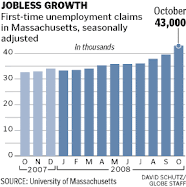


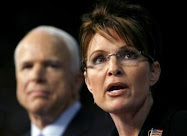




.png)


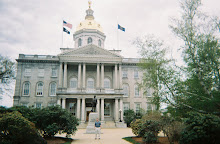


































No comments:
Post a Comment