
-
Chris Speranzo
-

-
State Legislator representing Pittsfield, Massachusetts from the Spring of 2005 - (?). Peter J. Larkin annointed Chris Speranzo to his legislative seat after Larkin resigned six days after taking the oath of office in January 2005 to become a high paid, special interest lobbyist. Chris Speranzo, like Pittsfield Pols Peter Larkin, Jimmy Ruberto, Carmen Massimiano, Andrea Nuciforo, Mary O'Brien, John Barrett III, and the like, are part of the Good Old Boy Network. Chris Speranzo played inside politics to beat out 2 women--Rhonda Serre and Pam Malumphy--in the Democratic Primary Special Election and then Republican Terry Kinnas in the General Special Election. The only real reason why the election was "Special" is because Chris Speranzo winning Larkin's seat was predetermined from day one!
-----
"Legislator Profiles: Speranzo, Just a Hometown Boy"
By Jen Thomas - iBerkshires.com - October 09, 2007
Rep. Christopher N. Speranzo
PITTSFIELD - A born and bred Pittsfield native, Rep. Christopher N. Speranzo couldn't be happier representing 12 of the 14 precincts in the city.
"Being a born and raised Pittsfield man, I love it here," said Speranzo, 34. "It's a city, but with a small-town feel. In this one district, you get it all."
From urban neighborhoods with drug and crime problems to expansive farmland with agricultural needs, Speranzo gets to see it all in his hometown. Tackling such a variety of issues is a challenge for the Democrat, who has been the 3rd Berkshire District's representative since defeating Republican Terry M. Kinnas in a 2005 special election.
"There's a lot going on in this one small city and there's a lot of different focuses," he said. "But on the other side of it, there are benefits. I have the one city council, the one mayor, the one fire department. Everything is centralized."
Coming Back Home
Speranzo, now in his second term, returned to the Berkshires after attending colleges in Boston and Cambridge, England, and began working as city solicitor under Mayor James M. Ruberto in 2004.
"I was the city's lawyer and I loved it. I was so happy to be back in Pittsfield and I got involved in a lot of issues important to the city," he said.
As city solicitor, Speranzo represented the city on key issues including preventing the proposed move of a transfer station to a location off South Street and ensuring that the city not engage in a hostile takeover when considering the expansion of the municipal airport. With experience on city topics already under his belt, taking the plunge to becoming state representative seemed like the next logical step.
"It's a big jump to state government and it's tough to make regional issues known, but it's my job to make our voice a little stronger," said Speranzo.
Working closely with the other members of the Berkshire delegation made the transition a little bit smoother.
"With the exception of [Rep. Daniel] Bosley, we have a young delegation," Speranzo said. "All of us being new legislators together helps and we all work very closely together. Because we all work so well together and we are so vocal, we can make a difference in our districts."
Serving on three critical committees - the House Committee on Ways and Means, the Joint Committee on Community Development and Small Business and the Joint Committee on Healthcare Financing - has Speranzo completely immersed in the issues that are most pertinent to his small city. As the only member of the Ways and Means Committee west of Worcester, Speranzo has to work to keep valuable state dollars in the area.
"These budget hearings gave me a window into the state budget. Even though I'm only in my second term, being able to have that firsthand access through the Ways and Means Committee allowed me to learn a tremendous amount about the budget and the Berkshires," Speranzo said.
Speranzo said the city has struggled to reshape its image from an industrial center to a more diverse landscape where many different kinds of businesses can thrive.
"The focus of the city has changed. The real concentration the last few years has been on diversifying and it's really affected the way we go after funding," said Speranzo, using the development of the Cultural Facilities Fund as an example. This year, the county received $2.3 million in grants to support organizations and projects that increase tourism, create new jobs, leverage private funding and expand arts and cultural activities in communities across the state.
Speranzo is also proud of his role in securing $150,000 from the state budget for the Berkshire County Drug Task Force, which had never before seen any state funding.
"As a lawyer, I'm specifically interested in crime and crime prevention issues," said Speranzo. "The drug task force never had any funding and this new money paid for the police officers to work on the task force. Now, it's an established line item."
Working for the Berkshires
Speranzo also detailed his legislative plans for the upcoming year.
"There's so much to work on but regional education in a whole variety of fashions is my priority. I'm working on the development of the downtown, on getting critical funding for infrastructure, on healthcare issues, and on bringing small businesses to the area," he said.
Specifically, Speranzo named the challenges of enforcing the state's comprehensive health-care reform as a legislative priority this year. The Health Care Reform bill, which requires all state residents have health insurance by the end of the year or lose a tax-return deduction, was enacted in 2006 but still 330,000 people are uninsured, according to Speranzo.
"How do we tackle this?" he asked.
Additionally, a lack of primary-care physicians in the commonwealth exacerbate an already strained system.
"If we had everyone covered, we'd have a shortage of doctors across the state, especially in Berkshire County," Speranzo said.
To address this problem, the Legislature will consider the best ways to recruit doctors and retain them, using a host of incentives.
"Massachusetts is at the front line of this. If we can make this work, other states will adopt our model," Speranzo said.
Making Home a Destination
Just a hometown boy who loves his city and cares about its future, Speranzo wants others to see the Berkshires as a place to be.
"I want this to be a destination for people. I want them coming to places that they hadn't thought of going before," he said. "I want them to be here when they could be anywhere."
----------
-

-
Pittsfield Awarded $2.85M for Affordable Housing
iBerkshires.com - January 26, 2008
PITTSFIELD - The state has pledged nearly $2.85 million in funding toward two projects offering affordable housing in Pittsfield.
The combination of private and public funds awarded by the state Department of Housing and Community Development was announced this week by Sen. Benjamin B. Downing, D-Pittsfield, and Rep. Christopher N. Speranzo, D-Pittsfield.
In total, the state agency announced its intention to provide more than $100 million in assistance to support two dozen developments that will yield 908 new rental apartments in 21 communities across the state. Some 771 of those apartments will offer long-term affordable rents for low- and moderate-income families.
The New Amsterdam Project on Bradford Street in Pittsfield will receive $1 million in Federal Low Income Housing Tax Credits, a $525,000 in Federal HOME Funds and $750,000 Housing Stabilization Fund for a total of $2.75 million toward low-income housing.
The developer, New Amsterdam Project LP, plans to build a 67-unit housing complex on Bradford Street that will also feature retail and gallery space. The project offers solutions to the housing gap often noted in Berkshire County by providing a attractive option to families, young professionals, artists and others. City leaders hope New Amsterdam will encourage people to take a second look at Pittsfield's downtown as they consider their housing options.
"This project is another leap forward in Pittsfield's revitalization. Once it is constructed and when families and young professionals start to move in, New Amsterdam will serve as a residential gateway to the city's downtown," said Downing.
The project has long enjoyed the support of Pittsfield's leaders, on both the state and local level. Downing and Mayor James M. Ruberto arranged a meeting with DHCD and the project proponents in July to discuss its merits and importance to the city.
"This project provides needed workforce housing and creates an additional link between our revitalized downtown and the Westside neighborhood," said Ruberto.
Beth A. Pearson, principal of New Amsterdam Partnership LP, expressed her gratitude for the help and support she received while working to advance her vision.
"I have to express my huge thanks to my wonderful development team as well as to the guidance and support provided by Senator Downing, Representative Speranzo and Mayor Ruberto," said Pearson. "I look forward to breaking ground to provide this crucial housing in the Berkshires."
The balance of the state and federal funding, $569,999 will be awarded to Berkshire County ARC's Traumatic Brain Injury Residence. The money comes from the Housing Stabilization Fund.
Berkshire County ARC is constructing a single-family, ranch-style home for six people suffering from a traumatic brain injury. This funding completes budget requirements to build the home, which will be designed by native son and Taconic High School graduate Barry Buchinski of Blackstone Block Architects.
Buchinski designed another Berkshire County ARC residential facility on First Street.
"Berkshire County ARC has a strong track record for providing important services to the community and it is wonderful to see them receive the necessary funds to get this project off the ground," said Speranzo.
Berkshire County ARC Executive Director Kenneth Singer said, "We are thrilled to move forward with this housing project and to serve these people with specialized staff and around-the-clock care. We appreciate all the support we received from Senator Downing, Representative Speranzo and all our elected officials."
"We are pleased the commonwealth is providing critical financial support to two organizations that have proven track records for developing high-quality housing in the city of Pittsfield," said Ruberto.
----------
"Boosting state businesses"
The Berkshire Eagle - Editorial
Monday, January 28, 2008
Inspired by a local business owner's struggles, two members of Berkshire County's state delegation are sponsoring a bill that would favor Massachusetts businesses that bid on state contracts. The proposal, co-sponsored by state Sen. Benjamin B. Downing and state Rep. Christopher N. Speranzo, both Pittsfield Democrats, would extend the existing Uniform Procurement Act, which gives preference for locally grown agricultural products in state contracts to other kinds of businesses. In fairness to taxpayers, the state must have some flexibility if a firm in a nearby state can do a far better job at a much-lower cost. On balance, however, this initiative should help small businesses in the state grow, and it will especially benefit the Berkshires, which is full of small businesses fighting a tough economy.
----------
"Transit choice alarms board"
By Scott Stafford, Berkshire Eagle Staff
Friday, February 08, 2008
NORTH ADAMS — The Berkshire Regional Transit Authority's search for a new administrator is nearing an end, and some members of the agency's board aren't pleased with the final nominee.
They wonder why, out of three final candidates, the only one who has been investigated by federal authorities, fired from his job, and is suing his former employers is being recommended for the post with the apparently unanimous backing of the local legislative delegation and the mayors of the county's two largest cities.
Gary Shepard, the former administrator of the Pioneer Valley Transit Authority and former Adams selectman, was put forward by a search committee of three board members. Three candidates were interviewed, but only Shepard's name was recommended to the full board with little information to substantiate the recommendation, according to some board members.
Shepard, who took the PVTA post in 1997, was fired in 2006 amid an investigation by the FBI into charges of bid-rigging and mishandling of federal funds.
No charges ever resulted, and on Jan. 4, Shepard filed suit against his former employer for unpaid contractual obligations, back pay and to get his old job back.
Several sources have noted that during his interview, Shepard characterized the events at PVTA by saying he was used as a scapegoat for the agency's financial difficulties.
'It's not something I'd support'
Margaret Ware, a BRTA board member from Williamstown, said she was disappointed that the search committee didn't provide more information on all three candidates so that all the board members could make an informed choice on whether to hire the committee's recommendation.
"Right now, it's not something I'd support," Ware said. "I really expected a formal report from the search committee — who's their choice, what's the reason. We didn't even get any résumés."
The board voted last week to delay the final vote on hiring Shepard for two weeks, until Feb. 14.
"We need more lengthy discussion, and now people (board members) are having to do their own research," Ware said.
There is a move afoot to allow the vote to be weighted equally for each board member, said Joseph R. Dean Jr., the board member representing Adams.
Normally, each member's vote is weighted differently, depending on the population and ridership of the community he or she represents. That means the bigger cities and towns have a bigger vote on the board. So if Pittsfield and North Adams vote for one side, it would take the votes of nearly all the other 21 board members to vote the other way to win. But many board members don't attend the board meetings.
'That's when I expect a complete report'
So defeating North Adams, represented by Sandra Lamb, and Pittsfield, represented by Deanna Ruffer, is nearly impossible in a weighted vote process. Dean and others hope this vote will be more equitable, considering the gravity of the decision.
"If somebody doesn't have a crystal clear résumé, that's when I expect a complete report with logical argument supporting the nomination," Ware said. "At this point in time, I'm not prepared to give him my vote, although he doesn't really need it at this point."
In support of Shepard's application, state Sen. Benjamin B. Downing and state representatives Daniel E. Bosley, William "Smitty" Pignatelli, Christopher N. Speranzo, and Denis E. Guyer signed a letter that was sent to the search committee.
"The Berkshire delegation has worked very hard over the years to bring to the region the tools to expand our county's employment opportunities," the letter reads, in part. "One of the foremost barriers to economic growth has been transportation. We have great trust that Mr. Shepard, former RTA director and former assistant secretary of economic affairs for the Commonwealth, is uniquely qualified to broaden job opportunities and operate our BRTA."
Shepard was elected to the Adams Board of Selectmen in 1978, at the age of 23, defeating current Adams representative on the BRTA board, Joseph R. Dean Jr. He served there until 1983. In 1982, Shepard was the Berkshire County coordinator for the Michael Dukakis gubernatorial re-election campaign. Dukakis appointed him to head up the economic development effort for Western Massachusetts in 1983. He later served as director of the Springfield Economic Development Corporation.
Mayor John Barrett III said if Shepard is the best-qualified applicant, he should get the job. The mayor wondered why an investigation that produced no charges should even be an issue in the deliberations.
"I would look very carefully at this," he said. "I don't believe in witch hunts, and I think that's what's happening here. The bottom line is whether Mr. Shepard is qualified to do the job."
Dean noted that the Pittsfield and North Adams board members were two of the three members of the search committee and both supported advancing Shepard's name to the full board for hiring. Dean's was the lone dissenting vote.
Pignatelli said he has been acquainted with Shepard since he was a teen working on his father's political campaigns. He also remembers that Dukakis and Shepard were instrumental in attracting Canyon Ranch to Lenox.
"I think he should be considered innocent if he's never been charged or convicted of any crime," Pignatelli said. "I never had dealing with Gary professionally, but because of my knowledge of Gary Shepard personally, I signed the letter. I didn't really give it much thought at the time."
Pittsfield Mayor James M. Ruberto also expressed support for Shepard.
"When you see a résumé like that, you have to look carefully at it and give it due consideration," he said. "The fact of the matter is that this guy is capable and qualified — probably over-qualified — to do this job."
Dean said that while Shepard has a hefty résumé, there are reasons for further discussion.
"My concern is that the day after we interview him, we find out he is suing the PVTA for his former job back and for $300,000," Dean said. "That never came up in the interview."
He added that while Shepard may be well connected with some members of the Legislature, he is not well connected with everyone.
"I have people calling me and saying, 'Are you people crazy?' " Dean said.
----------
-

-
----------
"Pittsfield ARC lands $570K grant: Will build home for residents with traumatic brain injuries"
By Tony Dobrowolski, Berkshire Eagle Staff
Sunday, February 10, 2008
PITTSFIELD — Berkshire County ARC has received a $570,000 grant from the Massachusetts Housing Stabilization Fund to build a single-family, ranch-style home in Pittsfield that will house six people with traumatic brain injuries.
The state grant completes the financing for the project. Berkshire County ARC also has received funding from U.S. Housing and Urban Development (HUD) for this initiative.
Two years ago, BCARC received a $1.39 million HUD grant to tear down two old houses on First Street and Maplewood Avenue and to replace them with a residential structure to house people with developmental disabilities.
"We are pleased the commonwealth is providing critical financial support to organizations that have proven track records for developing high-quality housing in the city of Pittsfield," Mayor James M. Ruberto said in a written statement.
"Berkshire County ARC has a strong track record for providing important services to the community," added state Rep. Christopher N. Speranzo, D-Pittsfield, in a written statement. "It is wonderful to see them receive the necessary funds to get this project off the ground."
In a telephone interview, BCARC Executive Director Kenneth W. Singer said he expected construction on the ranch house to begin by either spring or early summer.
Barry Buchinski of Blackstone Block Architects of Boston, who designed the First Street building, also will design the ranch house.
Singer said there is a need within the Berkshires to supply housing for people with traumatic brain injuries. "There's a huge need for people with traumatic brain injuries due to car accidents."
The residents will be selected with help from the Massachusetts Rehab Commission's state head-injury program. BCARC has contracted with the program to provide 24-hour residential services for individuals who have traumatic brain injuries. It's possible that a returning war veteran could reside in the home.
"We don't know," Singer said. "I'm not going to say no because it's possible."
The ranch house will be the sixth residence for people with developmental disabilities that BCARC has established throughout the Berkshires, Singer said.
Founded in 1954, Berkshire County ARC is a nonprofit human services organization based in Pittsfield that offers a large range of community-developed services to more than 400 people with developmental disabilities in Berkshire and Hampden counties. The agency operates 34 residential programs as well as day and vocational initiatives.
----------
"The power of endorsements: How much does a name really mean?"
By Hillary Chabot, Eagle Boston Bureau
Monday, February 11, 2008
BOSTON — Did Oprah Winfrey fizzle? Has the court of Camelot crumbled? And did Gov. Deval L. Patrick's grassroots campaign wilt?
Despite three high-profile endorsements in the Bay State, Illinois Sen. Barack Obama failed to win Massachusetts in his bid to become the Democratic presidential nominee. Obama's showing left some local politicos questioning the power of endorsements.
Reid Cherlin, a spokesman for Obama, said the endorsements helped Obama walk away with 41 percent of the vote and 38 delegates.
"When we came to Massachusetts, we were down more than 30 points. We didn't close that gap entirely, but we made great strides and Senator Kerry, Senator Kennedy and Governor Patrick were instrumental in doing so," Cherlin said. "These public figures resonated with voters."
Democratic analyst Mary Anne Marsh begged to differ.
"This year, endorsements don't mean what they used to. The endorsements that matter are the ones that deliver votes, and people who deliver votes tend to be more local or people with really active political operations who work it day in and day out," she said.
Case in point: former acting Gov. Jane M. Swift, who appears to have delivered several Williamstown votes to Sen. John McCain, R-Ariz.
But no matter their influence — or lack of it — on the electorate, an endorsement from a sitting member of Congress, the governor or center party VIPs can have a tangible benefit at the Democratic nominating convention: Each is a so-called "super delegate," able to vote for the candidate of his choice, regardless of the outcome of last week's Super Tuesday primary. There are no "super delegates" in the Republican party, thereby rendering an endorsement less weight.
Politicians such as Kerry and Kennedy, who run every six years and often don't face serious challengers, find their voter base a little rusty, said Suffolk University pollster David Paleologos.
Kennedy had more sway than Oprah, with 43 percent of Bay Staters polled pointing to his endorsement as the most influential, according to a poll conducted by Suffolk University in Massachusetts released last Monday. Bill Clinton was next, with 23 percent believing his endorsement was most influential, and Oprah came in dead last with 9 percent.
"My experience is endorsements matter in smaller races. The more you head up the food chain, the less people pay attention," Paleologos said.
North Adams Mayor John Barrett III seemed to sway residents to back New York Sen. Hillary Rodham Clinton, who swept by more than 30 points in communities such as North Adams, Adams and Savoy.
"The endorsement only helps if you get an endorsement from an elected official and you get their people to work for you. If you endorse a candidate and you do nothing, it's not worth the paper it's written on," Barrett said.
The more local the endorsement, the more weight it carries, Barrett said, which proved accurate in Pittsfield, where Mayor James M. Ruberto and Rep. Christopher N. Speranzo, D-Pittsfield, both backed Clinton, who won by nearly 30 points.
But the endorsements swayed voters by only a couple of points, if any, Paleologos said. He pointed to other factors, such as the fact that 62 percent of women went with Clinton in Massachusetts.
Clinton also pulled a slim majority of the youth vote, but the support of residents 60 years old or more in a landslide.
State Sen. Benjamin B. Downing, D-Pittsfield, is not sure whether voters are following the lead of local politicians or if local politicians are simply reflecting their constituent base with their endorsements.
Obama managed to nab 13 of the 32 communities in the Berkshires, and another healthy chunk of Obama's support came from nearby Franklin County.
Romney's recent ties to Massachusetts pushed him over the edge in the state, but in the Berkshires, McCain won in all but two communities.
Peter Giftos, executive director of the Berkshire County Republican Party, said the results are indicative of bitter relations with Romney.
"This is Jane Swift territory, and they were all soured on the way Jane was squeezed out of the gubernatorial race," Giftos said. "Others resented the fact that Romney spent no time at all in Berkshire County."
----------
2/23/2008
Dear Honorable State Rep. Chris Speranzo:
How did yesterday's Q&A at EPOCH go?
What are the key issues facing your constituents? How are they being addressed on Beacon Hill's State House?
-Jonathan Melle
--
"Politicians to hold Q&A at EPOCH"
Community, Thursday, February 07, 2008
PITTSFIELD — State Rep. Christopher N. Speranzo and state Sen. Benjamin B. Downing, who both maintain Pittsfield district offices, will hold a town-hall style question-and-answer session at EPOCH at Melbourne, on Friday, Feb. 22 at 10:30 a.m.
Schedule permitting, state Rep. William "Smitty" Pignatelli, D-Lenox, will join the meeting.
The politicians plan to discuss key issues the legislature that face this general court session, in addition to fielding constituent questions. EPOCH at Melbourne is located at 140 Melbourne Road.
This event is free and open to the public.
Information: (413) 499-1992.
------------
"County banks on science bill: MCLA, Pittsfield set for funds"
Berkshire Eagle Online, Staff and Wire Reports
Thursday, February 28, 2008
BOSTON — House lawmakers gave initial approval to their version of Gov. Deval L. Patrick's $1 billion, 10-year life sciences bill yesterday.
Legislators will continue today to debate the bill, which includes more than $55 million in projects for the Berkshires.
Funding for a new science building at Massachusetts College of Liberal Arts in North Adams netted $49.5 million in the bill, while state Rep. Christopher N. Speranzo, D-Pittsfield, managed to secure $6.5 million for a life sciences incubator building at the William Stanley Business Park in Pittsfield.
"Having an incubator building at the William Stanley Business Park will give Pittsfield the ability to attract life sciences and high-tech businesses and encourage the redevelopment of Pittsfield," Speranzo said.
The multifaceted bill is designed to make targeted investments in education, research and business to spark a long-term development of the life sciences in Massachusetts.
MCLA's Center for Science and Innovation will receive the nearly $50 million that state Rep. Daniel E. Bosley, D-North Adams, promised to handle a 10 percent boost in science majors. The building will mark the first major construction project at MCLA since the Flagg Townhouses were built 30 years ago.
Bosley, co-chairman of the Economic Development Committee, is one of the bill's chief supporters. He said life sciences is not just about creating good jobs but coming up with therapies for some of the world's toughest diseases.
"We have the largest life science cluster in the United States," Bosley said. "This is an industry on the move in Massachusetts, and it's an industry that can only grow."
The bill was not trumpeted by everybody throughout the Bay State, as many of the state's long-standing smaller businesses said they are feeling jilted. They said putting money into the state's existing businesses would be a surer, road-tested use of limited state resources rather than investing in an uncertain, cutting-edge technology.
"To focus so much of our resources on this particular industry doesn't seem to give us the bang for the buck," said Bill Vernon, state director for the National Federation of Independent Business.
s said the state instead should focus on smaller businesses, the true powerhouse of job creation. Small businesses in Massachusetts employ about 1.5 million workers — nearly half the state's work force — and create two-thirds of new jobs, he noted.
He said the state should spend the money cutting unemployment insurance, business taxes, health insurance, energy, wages and development costs.
"It's not the role of state government to be picking winners and losers," he added. "That's up to the venture capitalists."
House lawmakers gave the bill initial approval on a 134-13 vote and could pass a final version of the bill as soon as today.
-
Material from The Associated Press was used in this report.
-
Eagle reporter Hillary Chabot contributed to this story.
-
------------
Massachusetts
"Cracking down on tax deadbeats"
By Matt Murphy, Eagle Boston Bureau
Monday, March 03, 2008
BOSTON — Tax season rolls around every April, as sure a sign of spring as the melting of the snow.
And yet as roughly 3.5 million Massachusetts residents prepare to file their tax returns this year, some simply won't bother.
The Department of Revenue reports that there is just under $2.2 billion in delinquent taxes that the state should have in its coffers but doesn't, enough to pay off the projected budget deficit in 2009 and still have $1 million left over.
Subtract the $200 million under agreement with scofflaws to be paid back over time, $213 million deemed uncollectible and almost $1 billion tied up in litigation, and the state estimates that there is roughly $874 million out there to be collected.
"We have a problem, but we're addressing it," said Navjeet Bal, the new commissioner of the Department of Revenue. "We're doing a much better job of enforcing people's existing obligations to us."
Berkshire County residents and businesses accounted for a relatively small portion of the outstanding taxes, given the size of the region, totaling only about $2.4 million.
The Bijou Restaurant Corp. in Dalton and Rene L. Champoux, of Pittsfield, topped the list of Berkshire business delinquents, each owing $141,456 in back taxes.
Garry Burris, of Dalton, meanwhile, ranked eighth on the state's list of most-wanted scofflaws, racking up $950,677 in unpaid debt. Another debtor in Berkshire County is Paula Nolin of Richmond, who owes the state $131,968.
As long as there have been taxes, undoubtedly there have been people who refuse to pay up.
Bal said her department uses a variety of techniques to go after tax deadbeats, including late notices, garnisheeing wages and seizing bank accounts.
Since September, the Department of Revenue has hired 87 additional auditors and collectors to go after money owed to the state, an investment Bal said she and Gov. Deval L. Patrick hope will generate an extra $60 million in revenue.
The DOR also has made an effort to electronically target scofflaws, more aggressively mining federal tax databases and comparing names with their own databases.
As part of this get-tough policy, Patrick has included a new weapon in his budget that would allow the state to strip tax delinquents of their driver's licenses if they refuse to pay their taxes.
Bal said the Department of Revenue would move to suspend someone's driver's license only if all else fails.
"It's a way of getting people's attention that we otherwise haven't been able to get," Bal said.
Delinquent taxpayers first would receive a series of notices over six months detailing what they owe. If they do not appeal, ask for an extension or enter into a payment agreement, they would be notified that their license would be suspended in 30 days if they do not respond.
Massachusetts has taken a similar approach to deadbeat parents, threatening to take away the driver's licenses of those who don't pay child support.
Since adopting that policy in 2001, the state has managed to collect about $125 million in delinquent child support payments.
The Patrick administration hopes that the threat will be enough to generate at least an additional $7 million in fiscal 2009, including it in a package of tax reforms in next year's budget intended to collect $166 million in new revenue.
House Speaker Salvatore F. DiMasi has embraced the concept, including the governor's reforms, in his own plan to close the projected budget gap for next year.
State Rep. Christopher N. Speranzo, D-Pittsfield, said that, as a former city solicitor, he understands the difficulty of getting delinquent taxpayers to settle up.
"There is no doubt this is a serious problem," he said.
He said he has no problem with the driver's license proposal as long as the state is careful not to take licenses away from those who drive for a living, thus impeding their ability to pay.
Not everyone agrees.
Barbara Anderson, director of Citizens for Limited Taxation, compared this latest proposal with threats in the past of stripping licenses for overdue library books and other violations.
"If you're going after delinquents, you have to find a way to make them pay their taxes. But this has nothing to do with their driver's license," Anderson said. "That comes from this assumption out there that driving is a privilege, not a right. Driving is a right until you do something behind the wheel to give that up."
If approved in next year's budget, Massachusetts would join states including Rhode Island, Louisiana and the District of Columbia, which suspend driver's licenses to help collect taxes.
------------
-

-
Photo by John Suchocki / The Republican. State Rep. Christopher N. Speranzo, D-Pittsfield, left and state Sen. Michael R. Knapik, R-Westfield, look over budget papers during a budget hearing at Westfield State College today.
-
"State brings budget road show to Westfield"
By The Republican Newsroom, &, ALEX PESHKOV (apeshkov@repub.com)
Thursday February 21, 2008
WESTFIELD - Gov. Deval L. Patrick's proposed budget for fiscal year 2009 contains some good news for people with disabilities, Judy Ann Bigby, health and human services secretary, said at a state budget hearing today at Westfield State College.
"We are very excited about this budget. We feel that it provides a balanced funding for community based services," she said.
There is a 5.6 percent overall funding increase for MassHealth, as compared to the current fiscal year, she said.
"Most importantly, we have a very large investment in what we are calling Community First, a $45.8 million new MassHealth line item," she said. "This money is for the purpose of making sure that people with disabilities and elders have a choice of staying in their community even if they have a medical problems or disabilities that require a care detention.
"By putting that amount of money right up front for community-based home services, we think it will prevent people from going unnecessarily into nursing homes and other institutions," Bigby said.
Officials from the state Department of Social Services, the Department of Youth Services, the Department of Transitional Assistance, the Department of Mental Retardation, the Disabled Persons Protection Commission, the Rehabilitation Commission, the Commission for the Deaf and Hard of Hearing and the Commission for the Blind presented their projected needs for the coming fiscal year at the college's Woodward Center.
Bigby said that Community First represents a serious commitment to long-term care reform. Nursing facilities have historically been the only choice after acute care for many senior citizens and people with disabilities, she said.
During the first half of the hearing, the administration testified about its portion of the state's proposed $28 billion budget, followed in the second half by testimony from the public.
"I think it's important for the administration to come to Western Massachusetts," said state Sen. Michael R. Knapik, R-Westfield, a member of the Senate Ways and Means Committee.
"This is a big state. We are a hundred miles from the capital and these regional hearings are critical for the citizens to understand the budget process," he said.
--------------
"(Red) Sox Trophy Tour Coming to Pittsfield(, Massachusetts)"
By Tammy Daniels - March 06, 2008
iBerkshires Staff
PITTSFIELD – When the Red Sox finally broke their 86-year-old drought to win the World Series in 2004, their faithful fans were rewarded with a close-up view of the long-awaited trophy.
The 2004 World Series trophy appeared in nearly every city, town and hamlet in the Bay State in the months following the historic victory. Thousands turned out to see it and to have their pictures taken with the symbol of victory - no doubt a few thinking it could be generations before such an event could happen again.
Well it did, or at least the victory happened again as the Red Sox went on to capture the Series again last fall.
But where was the grand tour for the trophy? Didn't happen.
Instead, it was decided to bring both trophies - 2004 and 2007 - to three select cities.
On Thursday, Mayor James M. Ruberto, Sen. Benjamin B. Downing, D-Pittsfield, and Rep. Christopher N. Speranzo, D-Pittsfield, announced that Pittsfield was one of those cities.
The trophies will visit the scene of baseball's birth on Sunday, March 9, (2008), from 10 to 4 p.m. at Taconic High School at 96 Valentine Road.
"We are proud to be one of the three communities to have the Red Sox in Pittsfield, 'The Garden of Eden of Baseball,' with the World Series trophies," said Ruberto in a statement released late Thursday evening. "I hope that all Red Sox fans can make it to Taconic on Sunday to take pictures and be a part of baseball history."
The other two towns to host the trophies are Athol and Shrewsbury.
Residents from throughout Berkshire, Hamden, Hampshire and Franklin counties are encouraged to come to Pittsfield to view the two trophies and have their pictures taken with them.
Who knows when you'll see them again.
-
This reporter gets her Yankees son to pose with the 2004 trophy.
-
2004 World Series Trophy
-
--------------
-

-
Members of the Department of Social Services protest yesterday in Pittsfield. Similar protests were held across the state. (Ben Garver / Berkshire Eagle Staff)
-
"DSS protests lack of staff, funds"
By Jack Dew, Berkshire Eagle Staff
Wednesday, June 25, 2008
PITTSFIELD — Claiming that inadequate staff numbers are placing abused and neglected children at further risk of harm, Department of Social Services workers held noon protests across the state yesterday.
In Pittsfield, about 20 social workers gathered at Park Square during their lunch break to urge the House and Senate conference committee to include $5 million in the state budget to hire 100 new social workers. That money was in the House version of the budget but not the Senate's.
Carrying cardboard signs that read, "Smaller caseloads" and, "More social workers," the protesters walked the oval sidewalk that rings Park Square, waving at honking cars.
Social worker Jonathan Lothrop said that the Pittsfield office — which covers all of Berkshire County — has seen a sharp rise in cases. A year ago, he said, it averaged between 175 and 225 reports of abuse or neglect a month. Each must be screened, perhaps investigated, and may require DSS intervention. Now, he said, the office gets about 300 reports a month.
"We are really getting hammered," said Lothrop, who also is a Pittsfield city councilor. "If you want these conditions to change, you have to give us the money to fund (the office) properly. We are saying that we really need help in the state budget."
Lori Kays, a family resource worker, said the rally's goal was to make the public and legislators aware of the number of kids that social workers are handling. The Pittsfield office has a record number of children in foster care, she said, and is overseeing more than 300 children.
"It is a ripple effect, with the economy and everything else that is happening," she said.
"It means stuff just doesn't get done," Lothrop said. "You are always in crisis mode, always trying to prioritize, and you are putting out fires instead of doing social work."
The Child Welfare League of America — an association of nearly 800 public and private nonprofit agencies that work with children — recommends that social workers carry a caseload of 12 to 17 families, depending on the nature of the cases. In Massachusetts, the average is about 20. In Pittsfield, Lothrop said, it is about 21.
Joyce Johnson, a spokeswoman from the Child Welfare League, said higher caseloads mean less time spent with each family. More problems fall through the cracks, and the chance of a tragedy goes up.
"Every locality struggles" with caseload numbers, Johnson, based in Virginia, said in a telephone interview yesterday. For some states, the Massachusetts average of 20 cases is a goal, she said. Others have passed legislation seeking better ratios, and still others have been forced to change by lawsuits.
Floyd Alwon, also of the Child Welfare League, said Massachusetts is among the better states in terms of caseload, "but there are some states in pretty sad shape, with much less financial resources and less of a commitment to case work."
-
To reach Jack Dew: jdew@berkshireeagle.com, or (413) 496-6241.
-
To Watch: Eagle video on the DSS protest: www.youtube.com/watch?v=6n1YBhkMrU4
-
--------------
"Help DSS, families"
The Berkshire Eagle - Editorial
Thursday, June 26, 2008
For whatever reason, perhaps the strain a bad economy is placing on families, the Berkshire County office of the Department of Social Services is experiencing a dramatic increase in cases of child abuse and neglect. All of these cases must be screened, and perhaps investigated, and the social workers in Pittsfield's office are seeing several more cases than are recommended by The Child Welfare League of America. We strongly urge the Legislature to include the $5 million to hire 100 new social workers that was included in the House budget but not in the Senate's. The state's social workers, and the families and children they serve, need help.
--------------
"Budget hangs on golf course plans: Legislators discuss rescuing Canton links"
By Matt Viser, (Boston) Globe Staff, July 2, 2008
As Beacon Hill talks on the $28 billion state budget wound down yesterday, one of the most dramatic moments turned not on healthcare, corporate taxes, or education spending, but on a prized, if dilapidated, recreational jewel. Top lawmakers huddled into the evening to come up with a rescue plan for the Ponkapoag Golf Course in Canton.
Nonduffers, scoff not.
The storied course has a rich history and was designed by renowned links architect Donald Ross. But while under management of the Department of Conservation and Recreation, it has fallen into severe disrepair, with dead grass and swamped, sunken fairways.
Last night, Senate President Therese Murray and House Speaker Salvatore F. DiMasi agreed to lease the course to a private manager who would restore it to its former glory, or at least reasonable playability, according to two sources who have been briefed on the content of budget discussions.
But it also could mean more expensive greens fees that could turn Ponky, as it is affectionately known, into a more exclusive course.
The agreement, reached after an hourlong meeting in Murray's office, will be included in a compromise budget that could be presented today, followed days of wrangling between House and Senate budget writers.
What to do about the golf course, which was the subject of a June 16 Globe report, was one of the last remaining items holding up budget negotiations and was among the top reasons the state began the fiscal year yesterday without a budget in place.
For weeks, a committee of six lawmakers has been meeting behind closed doors to try to come to agreement on the different versions of the budget. Details of their discussions were guarded so closely that rank-and-file lawmakers were unaware of the sticking points.
Sources who were briefed on the talks said Murray was pushing hardest for a lease of the course. When approached yesterday in a State House hallway, however, Murray adamantly declined comment.
"Who told you that?" she said. "No comment on the Ponkapoag. I don't talk about what goes on in conference."
DiMasi, an 8-handicap who is a member of Ipswich Country Club, also declined to comment, but then seemed to scoff at how bad the course has become.
"Have you ever been to Ponkapoag?" he said, laughing as he repeated the question. "Have you been to Ponkapoag?"
Nine of the 36 holes are currently shut down, and it has long been pilloried as a symbol of state mismanagement. The Globe reported last month that the state was laying the groundwork for a multimillion-dollar reconstruction of the course, including a new drainage system to stop chronically soggy fairways from flooding and importing truckloads of peat to raise holes that have sunken from years of neglect.
But officials at the state's Department of Conservation and Recreation are supportive of leasing the course out, instead of running it themselves.
"We believe there is some interest in the private market in having that happen," Commissioner Rick Sullivan said in an interview yesterday. "This would allow us to run that process and see if there is any interest out there."
The state also operates another golf course, the Leo J. Martin Golf Course in Weston, although that course does not have the maintenance problems that Ponkapoag does. At both courses, it costs $25 to play golf Friday through Sunday, a price some fear would not be preserved if Ponkapoag is privatized.
Attendance at Ponkapoag has dropped by 20,000 starts since 1985, to 60,000 last year, according to state figures.
Golfers at the course had mixed reactions yesterday on whether the course should be privatized.
"It could be a better course," said Matt Donahue, 20, of Westwood, who said higher fees could discourage the sort of golfers who play without shirts or drink beer on the course. "I'd just like to see it where it could be."
Others wanted to keep it state-owned because they were afraid prices would go up.
"If you take the public course away from the people, it's going to be difficult," said Rita Hubner, a Newton businesswoman who would like her son, Kyle, 11, to become a professional golfer. "For the next generation of golfers not to have this is kind of tough."
Senator Brian A. Joyce, a Milton Democrat, has been pushing for years to lease the course, arguing that some of its loyal golfers have abandoned it because it has deteriorated so badly.
He wants the course to bring in state revenue by leasing Ponkapoag for 25-year terms to Canton or to a private management company. Joyce's proposal was included in the Senate budget, but was not part of the House version, which led to the impasse.
The standoff ended when the Senate agreed to a more-defined bidding process to decide who will run the course, sources said.
Despite protests from House lawmakers that greens fees would soar if a private company took over, the agreement includes no price restrictions, but there are certain standards for the state to decide who gets to lease the course. A prospective operator, for example, would have to spell out ways to promote public access and discount programs.
Canton would be allowed to take over the course before it went out to private management companies, but lawmakers do not expect the town to be interested.
-
Globe correspondent Ryan Kost contributed to this report. Matt Viser can be reached at maviser@globe.com.
-
--------------
"Showing off the Berkshires: Legislators tour local sites: Delegation makes rounds at attractions."
By Scott Stafford, Berkshire Eagle Staff
Thursday, August 07, 2008
Yesterday was tour day in the Berkshires for several state legislators.
In one caravan, Rep. Christopher N. Speranzo, D-Pittsfield, was showing Rep. Robert A. DeLeo, D-Suffolk, some of the projects DeLeo helped provide funding in his role as chairman of the powerful House Ways and Means Committee. Speranzo is a member of that committee.
Another junket carried Rep. Daniel E. Bosley, D-North Adams, as he introduced Rep. John A. Lepper, R-Attleboro, to some of the attractions Berkshire County has to offer.
The tour included stops at the Clark Art Institute in Williamstown, Hancock Shaker Village and the Berkshire Museum in Pittsfield and Mass MoCA in North Adams.
"At the end of every legislative session the (Berkshire County) delegation has traditionally brought out legislators to sort of get a feel for the Berkshires," Speranzo said. "It's also an opportunity to talk about the projects that are important to us, and make them understand how they affect the Berkshires."
Speranzo said DeLeo expressed interest in seeing some of the entities that received funding from the state in the latest budget sessions — some of which were vetoed by Gov. Deval L. Patrick and had to be preserved by legislative overrides.
"This year we had a veto of the money for the museum, and we overrode the veto. And this morning, Bob DeLeo wanted to take a look at what the money from the state did, what's so important about the Berkshire Museum," Speranzo said. "So we jumped in the car and made an visit to the Berkshire Museum."
They also visited the Joseph R. Scelsi Intermodal Transportation Center, which received $100,000 to make it appropriate as an extension campus for the Massachusetts College of Liberal Arts and Berkshire Community College.
"It's something that's the first of its kind — it's not being done anywhere else in the commonwealth," Speranzo said.
They also visited Wahconah Park, and the Clark Art Institute in Williamstown.
"We had a great trip looking at some of the items that we placed in the budget to see exactly how they're working out and get a better idea about the importance of keeping these items in the budget," DeLeo said.
He noted that he had been the subject of recent criticism regarding state funding earmarked for Berkshire County purposes.
"After visiting the Berkshire Museum, Shaker Village, Tanglewood, the Clark, and I see how much money they're bringing back to the county and state economy, it really just gives me a better opportunity to say these are good investments," DeLeo said.
"We basically were taking a look at some of the Berkshire projects that are important and that state funding has helped to make a difference," Speranzo added. "This is a committee that funds these local projects in the budget, so I think it's important to bring the chairman out to look at projects and really understand how important they are."
Meanwhile, Bosley took another group through the Williams College Museum of Art, the Clark, and Mass MoCA, largely for the same reasons.
--------------
"Samuel Harrison Society hosts a groundbreaking ceremony"
iBerkshires.com - August 20, 2008
PITTSFIELD – Friday, August 22 at 10 a.m. the Samuel Harrison Society hosts a groundbreaking ceremony for the Samuel Harrison House, 82 Third Street, Pittsfield, Massachusetts.
The house, longtime home to renowned African-American equal rights advocate Reverend Samuel Harrison (1818-1900), is a National Register of Historic Places landmark, a National Parks Service “Save America’s Treasures” Preservation project, and a Massachusetts Historical Commission Preservation project. The ceremony is free and open to the public. State Senator Benjamin Downing and State Representative Christopher Speranzo are expected to attend.
The preservation and restoration of the Samuel Harrison House began in May 2004 when Ruth Edmonds Hill, great-granddaughter of the Reverend Samuel Harrison traveled with her husband, Dr. Hugh M. Hill, to Pittsfield from Cambridge by train to meet with a small group of Pittsfielders interested in saving the Samuel Harrison House, including Mayor James M. Ruberto, Ivan Newton, historian of the Second Congregational Church, and Susan Denault, archivist from the Massachusetts College of Liberal Arts, Ruth’s intuition that her family homestead had historic value saved the modest 19th century house in one of Pittsfield’s oldest neighborhoods known as Morningside from the wrecking ball. She had notified the Massachusetts Historical Commission of her great-grandfather’s lifelong pioneering spirit and they, in turn, denied the city’s request to demolish the deteriorating structure. At just about the same time, filmmaker Mike Kirk was producing a documentary “A Trumpet at The Walls of Jericho: The Untold Story of Samuel Harrison” which aired on PBS in February of 2005.
Rev. Samuel Harrison, an African-American minister born into slavery and living from 1818 to 1900, was a pioneering civil rights activist, an ardent abolitionist, and an eloquent orator and writer. Rev. Harrison was the first minister of the Second Congregational Church, Pittsfield, founded in 1846, a church exclusively for persons of color.
Rev. Harrison interrupted his ministry at the Second Congregational Church when he was commissioned by Governor John Albion Andrew who encouraged President Abraham Lincoln to create the first black Civil War regiment. During his service, Rev. Harrison learned that the paymaster refused to pay the men of the 54th Regiment the same amount paid to white troops because they were of “African descent.” Rev. Harrison immediately pleaded their case to Governor Andrew who vigorously and repeatedly petitioned President Lincoln to honor the claim for equal pay. In June 1864, legislation requiring equal pay was passed in the army appropriations bill. In his autobiography, Rev. Harrison writes that it was suggested during his brief military service that he was “the victim upon whom the whole matter of equal pay would turn.”
Two years after his death, a tablet commemorating his forty years of ministering to Pittsfield’s African-Americans was placed at the Second Congregational Church with the inscription: “A Wise Leader, An Honored Citizen, An Ardent Patriot, A Beloved Messenger of the Lord; he wrought well for his people, his Country and his God.”
The Samuel Harrison Society’s very first champion was U.S. Congressman John Olver, who secured a Save America’s Treasures matching grant in the amount of $246,000. Congressman Olver’s significant support validated the Society’s belief that that the house is an historic asset that needs preserving and launched a collaboration of efforts by Mayor James M. Ruberto, State Representative Christopher Speranzo and State Senator Ben Downing.
“The Samuel Harrison Society is extraordinarily grateful to Ruth for trusting our stewardship of her family homestead. We are committed to honoring Harrison family history by restoring and preserving Reverend Harrison's homestead; using it as a place to teach the values embodied in his noble life, his enduring beliefs, his extraordinary writings; and to define a chapter in the story of us as a people by providing greater insight into African-American history. We have a significant, yet still undiscovered, piece of national history and civic pride right here in Pittsfield, Massachusetts,” states Samuel Harrison Society President Linda Tyer. She continued, “It is with great pride that we have achieved this milestone – a groundbreaking. And we anticipate with enthusiasm a day in the not too distant future when we welcome our first visitors to the Samuel Harrison House.”
For more information on the Samuel Harrison Society, a non-profit organization dedicated to the restoration of the Samuel Harrison House, please visit www.samuelharrison.org.
--------------
"Question 1: Berkshire Chamber of Commerce opposes tax measure"
By Tony Dobrowolski, Berkshire Eagle Staff, Wednesday, October 08, 2008
PITTSFIELD — The Berkshire Chamber of Commerce's board of directors has voted to oppose ballot Question 1, a measure that would eliminate the state income tax.
The board decided that the measure, if it passes, would adversely affect residents and the business climate in the Berkshires, according to Chamber President and CEO Michael Supranowicz.
"We think the elimination of the income tax is going to cripple the state when it comes to public services," Supranowicz said.
Supranowicz surmised the state would likely raise fees, and cities and towns would increase property taxes to compensate for the projected loss of $12 billion in state revenue. That $12 billion represents 40 percent of the state's current budget.
Voters will be asked to consider whether the state should eliminate its 5.3 percent income tax on Nov. 4. Approval of the measure will slash the state income tax by half, to 2.65 percent, next year, and eliminate it entirely in 2010. A similar ballot question was defeated by 55 percent of the vote eight years ago.
Those in favor of Question 1 believe that state taxpayers would receive $3,700 in annual savings if the state income tax were eliminated. They maintain that eliminating waste in state government would make up for the $12 billion in state revenues.
Berkshire Community College's Board of Trustees recently voted 10-1 in favor of opposing Question 1.
The chamber board's vote was unanimous, but just more than half of the board's 36 members attended the meeting, according to director of marketing and communications Christina Barrett. In order to vote, the board was required to satisfy its quorum requirement, which Barrett said is half the board's current membership plus one member.
"I believe there were 19 (members) in the room, and no one opposed it," Barrett said.
The chamber represents 1,200 Berkshire County firms and 35,000 employees. More than 80 percent of the membership is made up of small businesses.
Supranowicz said eliminating the state income tax would create a ripple effect on chamber members since businesses would adjust their practices if the state cut essential services and became more frugal in its spending practices.
"It would just compound, and compound, and compound," Supranowicz said.
If the law passed, employers would be reluctant to bring businesses to both the Berkshires and the state.
"There wouldn't be anything to attract them to this region," he added.
But Supranowicz said those savings would quickly disappear if the state raised property taxes and increased fees.
-
To reach Tony Dobrowolski: tdobrowolski@berkshireeagle.com, (413) 496-6224.
-
--------------
"City's timely celebration"
The Berkshire Eagle - Editorial
Thursday, October 16, 2008
At a time when bigotry has marred the presidential campaign trail, Pittsfield is in the middle of a celebration of its cultural diversity, while also recognizing a work, "To Kill A Mockingbird," that speaks to the responsibility of the average American to stand up against fear, ignorance and racism. The timing for these celebrations could not have been better.
The appearance at the Colonial Theatre last night of the Song and Dance Ensemble of West Africa anchored a celebration of Pittsfield's African immigrant community. Immigrants from Ghana, Ivory Coast and Gambia are among those who have enriched Pittsfield and the Berkshires, and organizations like the Berkshire Immigrant Center and the United Africans of the Berkshires, among others, are striving to ease their transition to the area while maintaining their cultural roots. These newcomers and organizations are also working to highlight the poverty afflicting these African nations that the United States and world community must be willing to confront.
Jazz, a distinctively American art form, is being celebrated through Oct. 24 as "Jazz Fortnight" in Pittsfield, which also marks the fourth birthday of Pittsfield's CityJazz Festival. More than 14 jazz ensembles have been playing at restaurants and clubs throughout downtown in a celebration that is linked to Pittsfield's ambitious Jazz in the Schools program, which also serves as a reminder of the importance of arts education in the schools.
Harper Lee's "To Kill A Mockingbird," the story of small-town Alabama lawyer Atticus Finch's defense of a black man wrongly accused of raping a white woman, at considerable risk to his livelihood and family, is a focal point of the Big Read, a National Endowment for the Arts program to encourage reading. Readings of the book have been conducted throughout the city, along with a screening of the Gregory Peck film of the same name, the presentation of a play at Barrington Stage based on the book, and related art exhibitions, including tonight's Mockingbird Project jazz improvisation, a co-production of the CityJazz Festival and City Big Read Project, conducted by Evan Lurie at the Berkshire Museum.
In Pittsfield, people are coming together for good causes while learning and having fun. That is worth emulating everywhere.
--------------
"Berkshires brace for budget cuts"
By: Jessica Layton, WNYT.com, October 16, 2008
PITTSFIELD, Mass. - Massachusetts Gov. Deval Patrick is ordering hundreds of millions of dollars in budget cuts.
That will significantly affect towns and cities in the Berkshires.
Local mayors are desperately searching for ways to reduce their own budgets without laying people off. But North Adams Mayor John Barrett says he's cut as much as he can.
“We will be able to limp through this year, but next year will be brutal,” Barrett said.
In his 25 years as mayor, Barrett has served through three major economic downturns. He says this is the worst yet. This time, Barrett can't imagine what he'll cut from his city's already bare bones budget.
“The fire department is 40 percent of what it was 10 years ago. Police department down 35 percent. Public works, 50 percent. Cuts that have been made and jobs that haven't been filled,” the mayor said.
But Patrick is asking local cities and towns to tighten the budget belt even more. The first-term Democratic governor announced he will eliminate 1,000 state jobs. He's asking state agencies to cut spending by $750 million.
“I know you are anxious. There is cause for concern, but not for panic,” the governor said Wednesday.
Patrick promises the cuts won't affect local aid for cities and towns yet. Still, Pittsfield Mayor Jim Ruberto is asking department heads to try to slash about five percent of their budgets.
However, Ruberto says city workers shouldn’t worry about their jobs.
“No, we're building a community, not subtracting from one,” he said.
Meantime, Barrett says it's time the state gives cities the tools to make money. He says adding a two percent tax for hotels and motels would generate $125,000 for the city. He also says it's time for the telecommunication tax.
“Allowing us to tax cable companies and phone companies, that would generate 110 to 115 thousand dollars more in the city,” Barrett said.
The North Adams mayor says the combined money is enough to fund several teacher's salaries -- positions he's worried will eventually be cut.
If implemented in Pittsfield, those same taxes would give that city an additional $1.5 million.
Source: http://wnyt.com/article/stories/S621324.shtml?cat=10114
--------------
"Pols feel $ting from Deval Patrick’s ax"
By Hillary Chabot, Friday, October 17, 2008, www.bostonherald.com, Local Politics
The brutal $1 billion in budget cuts delivered by Gov. Deval Patrick in response to the worldwide economic crisis prompted howls of pain across the state yesterday as officials and agencies were left licking their wounds.
“I understand we’re in a crisis mode, I just wish some of these items could have been reduced and not eliminated,” said Rep. Jim Miceli (D-Wilmington) about a $90,000 special-needs camp in Tewksbury that was slashed.
Municipal police departments were cut by more than $9 million in community policing and training grants.
“I understand the fiscal climate, but everyone who has a stake in the matter is pretty disappointed,” said Lowell police Superintendent Ken Levalle.
Lawmakers huddled for nearly two hours to sort through the various cuts and figure out how badly their communities were impacted.
Legislators hadn’t decided whether to come back into formal session before January, although more than $300 million of Patrick’s cuts require legislative approval.
Patrick chopped 1,000 jobs from the state’s 450,000 work force and hacked $1 billion in various line items to make up a $1.4 billion budget gap Wednesday.
While town officials were pleased local aid was untouched, many were still hit in the wallet either by losing a dam safety program or reimbursements for special-needs programs.
“We probably took a $100,000 cut right there,” said North Adams Mayor John Barrett.
Most understood everyone needed to share the pain, but some felt they had been cut a little deeper. Environmental programs took a $17 million hit, and higher education was slashed by more than $25 million.
“We haven’t recovered from the cuts back in 2002, so we hope once things get better that we’ll be among the first agencies replenished,” said Lora Wondolowski, executive director of the Massachusetts League of Environmental Voters.
--------------
"State fiscal problems may worsen: Stock market plunge could widen deficit"
By Casey Ross and Frank Phillips, Boston Globe Staff, October 17, 2008
This week's announcement of 1,000 state employee layoffs and $1 billion in budget cuts may just be the beginning, as financial forecasters say that Governor Deval Patrick's predictions of revenue shortfalls are as much as $500 million too low.
The reason: the continuing plunge in the stock market is dragging down capital gains taxes that have kept Massachusetts flush in the boom times.
The state has already factored big projected losses into this week's budget cuts. But if the stock market continues its downward slide, the state could face an additional deficit of more than $400 million to $500 million in capital gains and income tax losses, state officials and specialists said.
"Unfortunately, I think it's going to get worse," said Representative John J. Binienda, a Democrat from Worcester and House chairman of the Legislature's Joint Committee on Revenue. "People will not be filing for profits this year, they'll be filing with losses."
A Patrick spokesman said the governor consulted with economic analysts and others to predict that tax revenues would fall by $1.1 billion. But the administration acknowledged that the extreme volatility in the stock market makes forecasting a difficult exercise and that the state's financial picture could change.
"Our approach was responsible and thoughtful and we will continue to monitor the economic situation throughout the remainder of the fiscal year," said spokeswoman Cyndi Roy.
Patrick's revenue commissioner, Navjeet K. Bal, said she is relying on a forecast that the state will lose 30 percent in capital gains taxes. Binienda predicted that revenues could drop more than 50 percent, citing the last two stock market crashes in 1987 and 2001, when capital gains collections dropped 57 percent and 71 percent, respectively.
That more pessimistic view is echoed by analysts at the Massachusetts Taxpayers Foundation, an independent nonprofit organization that closely monitors state finances.
"The governor has taken a strong first step, but I fear it is only the first step," said the group's president, Michael Widmer.
During the past four years, taxes collected on capital gains have risen steadily, from $1.49 billion in fiscal year 2005 to $1.9 billion last year, according to the state Department of Revenue. The windfall has allowed the state to increase spending on key areas like education and healthcare without dipping into the state's cash reserves, known as the rainy day fund.
But the sudden drop in the stock market - the Dow has lost nearly 18 percent of its value since Sept. 15 - has left the state veering toward a financial crisis not seen since 2003, when Governor Mitt Romney made sweeping cuts in local aid to cities and towns.
The Dow Jones industrial average yesterday rallied 401.35 points, or 4.7 percent, to close at 8,979.26, but it remains about 30 percent down for the year.
"You can't count on capital gains being a stable source of revenue this year and probably beyond that," said Karl Fryzel, a partner in the tax practice group at the law firm Edwards, Angell, Palmer & Dodge. "No one knows when this is going to end."
Gus Faucher, director of macroeconomics for Moody's economy.com, said Massachusetts relies on capital gains more than other states because it has a wealthier population that derives significant income from investments. That means tax collections are particularly susceptible to swings in the stock market and real estate values, causing a precipitous drop in revenue when those assets lose value.
"Capital gains have been a big contributor to Massachusetts in recent years, but that's about to come to a screeching halt," Faucher said.
Economists also fear that worsening economic conditions will continue to attack other categories of tax collections. If the economy falls into the expected recession, businesses will earn less money, resulting in lower corporate tax collections.
A sharp reduction in profits could also lead to widespread layoffs, which would mean a drop in payroll taxes. The turmoil could also hit taxes on retail sales, meals, cigarettes, and gas, all revenue sources that could drop sharply.
"The question is how big this problem is going to be," said Alan Clayton Matthews, a professor of economics at the University of Massachusetts at Boston.
Thus far, Patrick and legislative leaders have avoided any talk of imposing fees or new taxes, such as an increase in the gas tax, to help balance the budget. Observers say this is because the governor and lawmakers don't want to risk angering voters who will be asked in a Nov. 4 ballot question whether they want to eliminate the state income tax - which generated $12.5 billion last year.
"With that on the ballot, any talk about raising taxes will take place after the election," predicted Senate Republican leader Richard R. Tisei. "But I am sure they are looking at ways to raise revenues."
"That's the elephant in the room that no body wants to talk about," said former state senator and 2002 gubernatorial candidate Warren Tolman.
Fees and taxes have been part of the equation in the major budget crises of the last 30 years. House Speaker Thomas M. Finneran used taxes as part of his budget balancing plan in 2002. Romney raised hundreds of million of dollars in fees to deal with the fiscal downturn he faced in his first year in office. Governor Michael S. Dukakis signed tax bills to deal with two of the state's worse fiscal crises in modern times, in 1975 and in 1989-90.
Asked yesterday about raising taxes, Patrick said during a press conference that it was not on the table.
"The time to go to the public for broad-based taxes is just not now," Patrick told a press conference Wednesday. "I don't think taxes are evil. . . . But I think people are squeezed right now."
--------------
"Budget cuts alarm state lawmakers"
By Dick Lindsay, Berkshire Eagle Staff, Friday, October 17, 2008
Members of the Berkshire delegation to the Statehouse are worried that some of Gov. Deval L. Patrick's massive cuts to close a $1.4 billion shortfall in the state budget could severely hurt public higher education, tourism and health and human services in Berkshire County.
"While I'm not surprised by the cuts, I'm bitterly disappointed," said State Rep. William "Smitty" Pignatelli, D-Lenox.
Pignatelli was particularly concerned with the Massachusetts Office of Travel & Tourism taking such a deep cut that will "devastate the Berkshires."
"We are practically wiping out funding to organizations the (state) supports," Pignatelli said referring to the local tourism agencies and organizations. "They will have a more difficult time ahead."
While tourism dollars have increasingly driven the Berkshire economy in recent years, so has investment in Berkshire Community College and Massachusetts College of Liberal Arts in North Adams, and state Sen. Benjamin B. Downing, D-Pittsfield, said he fears cuts to those institutions will affect the colleges' ability to collaborate with the business community.
Under the governor's plan, MCLA will lose nearly $719,000 and BCC $464,000 in the fiscal year that ends June 30.
"Those institutions have already done an incredible amount of work with incredibly less money," Downing said.
"Having gone to MCLA and BCC myself, I understand the great education they give at an affordable price," added state Rep. Denis E. Guyer, D-Dalton. "These cuts may force them to raise fees and tuition."
State Rep. Christopher N. Speranzo, D-Pittsfield, said he worries about the impact the cuts will have on state agencies that mental health and child services in the Berkshires.
The legislators are pleased Patrick didn't touch local aid to cities and towns or Chapter 70 funds for public school systems — at least for now.
Downing also praised the governor for leaving alone essential services like veterans programs, dealing with homelessness, feeding the hungry and providing heating fuel assistance.
The lawmakers further credit Patrick with anticipating that the state budget crisis will last until June 30, the end of fiscal 2009.
"It's a smart move to do the cuts all at once," said Pignatelli. "We can always put money back in if revenues improve."
Speranzo agreed, saying making cuts throughout the fiscal year "leaves people waiting for the other shoe to drop."
Downing said the state budget crisis "cries out for further examination" of ways to make government spending more efficient.
Pignatelli said cities and towns should be more frugal with their budgets, too.
"I would encourage (that) they proceed with caution and be conservative with their spending," he said. "We anticipate problems for two — possibly three — more fiscal years."
--------------
-

-
Jim Agostinelli and Barbara Drew, who are blind, in Stoneham yesterday. They are losing their jobs because of state cuts. (Essdras M Suarez/Globe Staff)
-
"Protests loom over state cuts: Disabled, blind said unfairly hit; Mental health programs affected"
By Matt Viser, Boston Globe Staff, October 18, 2008
A fierce backlash is brewing over social services budget cuts imposed this week by Governor Deval Patrick, foreshadowing potential hazards as the first-term governor attempts to navigate the economic crisis.
Advocates for the blind are planning a protest next week of Patrick's elimination of funding for Ferguson Industries for the Blind, a state-run business in Malden, which will lead to layoffs of 25 visually impaired workers. The advocates are also objecting to reductions in funding for basics like magnifying glasses and talking clocks for poor, elderly blind residents.
This morning, a group of mental health advocates was expected to demonstrate at a state conference of the National Alliance for the Mentally Ill in Danvers over cuts to training programs for the mentally disabled.
"I've been doing this work for 40 years, and these are the most dramatic cuts I've seen to people with mental disabilities," said Stan Connors, president of Bay Cove Human Services, which serves about 14,000 people with mental health disabilities such as schizophrenia, chronic depression, and bipolar disorder. Bay Cove is losing about $3.5 million annually from a $63 million budget, and will lay off 40 of its 1,400-member staff. It estimates the cut will prevent it from serving about 760 people.
"This is really breathtaking," said Connors. "Frankly, many of these people will end up in the hospital. Some will end up incarcerated, and, I believe, some will die."
The protests are building as social workers and nonprofit advocacy groups pore over the details of Patrick's 1,000 layoffs and $1 billion in budget cuts and spending controls, which were required to make up for revenues lost in the economic crisis. About $625 million of those cuts were made unilaterally by the governor this week across dozens of accounts, using his power to balance the budget, and went into effect immediately. He is preemptively denying another $146 million in anticipated spending requests from his departments. He needs legislative approval for the remainder.
The state's financial problems, for instance, have required $9.3 million in cuts in the Department of Mental Health budget.
Administration officials said they wanted to preserve services that provide homes and medical care to mental health patients, but transitional programs that help mentally ill residents get training and find jobs will be scaled back.
"I'm very concerned about every one of the cuts we put on the table," said Barbara Leadholm, commissioner of the Department of Mental Health. "We're cutting programs that we believe are important, effective, and support our consumers' recovery. That being said, we still had to make these cuts. We're having to prioritize in a way none of us wants to do."
The administration yesterday gave department heads several options for cutting back on staff, including delaying comp time and offering one-time payments of up to $7,500 to employees who accept layoffs.
Services for Employment and Education, a program that helps reintegrate adults with mental illnesses into the workforce, is being eliminated as a result of the budget cuts. The program, which relies on $6.6 million from the state, will shut down on Dec. 31 and leave about 2,000 people statewide without job support.
Next month, Ferguson Industries for the Blind is scheduled to close, and 25 blind workers were told on Thursday that they would lose their jobs. Another seven workers at the facility are state employees, most of whom will be relocated to other areas of state government.
The 102-year-old manufacturing facility employs blind workers who make brooms, office supplies, and linens.
"With a stroke of the pen, they eliminated us," said Jim Agostinelli, a 59-year-old from Stoneham who has been legally blind for about 13 years after glaucoma gave him pinhole vision.
Agostinelli has been calling state representatives and members of the Massachusetts congressional delegation, hoping anything could help prevent the center's closure. He and others are planning to come to the State House next week to protest the cuts.
The budget cuts the governor announced this week included few winners, with veterans programs and antigang grants for police officers being among the few areas that were not cut. The governor also decided not to cut local aid to cities and towns, which has won him plaudits from municipal officials.
Even high-profile initiatives important to the governor were cut, including $5 million that was going to bolster the state's life-sciences sector; $3 million to expand full-day kindergarten classes; and $4 million for putting new police officers on the streets.
The governor also cut into pet projects that state lawmakers boast about in their district, although many in the Legislature so far have been accepting of the governor's plans. Even House Speaker Salvatore F. DiMasi was not immune. The North End visitor center in the heart of his district will be all but eliminated, one of his aides said. But some have criticized the fact that one of the governor's pet projects, the $3 million Commonwealth Corporation, is only taking a 5 percent trim.
"This is obviously a sacred cow," said Senate minority leader Richard Tisei. "I don't know how you can cut mental retardation and mental health services and leave boondoggle like this."
Joe Landolfi, a spokesman for Patrick, said Patrick has made numerous cuts throughout his favored programs, including a 17 percent reduction for his own office budget.
Meanwhile, workers from Ferguson Industries will have to start looking for new jobs.
Barbara Drew, a legally blind, 42-year-old Haverhill resident, used to work at Melrose-Wakefield Hospital, delivering meals to patients, until she mixed up the 8 and the 6 on one of the rooms and gave a meal to a patient about to go into surgery. Embarrassed by the mixup and fearful she could have endangered someone, Drew said, she went home, cried, and quit her job. About 14 months ago, she was hired at Ferguson Industries.
She has four children in college and her salary is dedicated to helping them stay there. She just doesn't know how.
"We live check to check," Drew said. "We're looking at not sending one or two, or trying to work something out. It's not good. It's not good."
-
Frank Phillips of the Globe staff contributed to this report. Matt Viser can be reached at maviser@globe.com.
-
--------------
A Slippery Winter Looms
"It's salt into the wound: The cost of keeping local roads dry has skyrocketed"
By Jack Dew, Berkshire Eagle Staff, Sunday, October 26, 2008
Get ready for a slippery winter.
The price of road salt has skyrocketed nationally, forcing Berkshire cities and towns to scale back on their use of salt this winter or face a big deficit in their snowplowing budgets in the spring.
"Unless we get lucky with a mild winter without a lot of storms, people can anticipate less clear roads," said Gregory Federspiel, Lenox town manager and director of the Berkshire group purchasing program that buys salt for the county's communities.
This fall, the group purchase price rose by nearly 40 percent over last year, with rock salt going for about $69 a ton, up from about $50 a year ago.
In Lenox, Federspiel said, the town spent about $100,000 last year on salt. This year, it budgeted $125,000, but is now facing a $140,000 bill. While snowplowing is the one account in which communities can run a deficit, Federspiel and other administrators said they are loath to dig a financial hole in an already slumping economy.
"Then you have to make up that deficit the following year in your tax assessment," he said. "Instead, we'll look at ways to try to trim (salt usage) back. This is New England; people should anticipate slippery roads."
Road salt — which is sold in large crystals and often treated with an anti-caking agent to make applying it to roads easier — is rising this year after the nation used a near-record 20.3 million tons last year, largely because areas from the Northeast to the Midwest had heavier-than-average snowfall.
A spokesman for Morton — the salt company giant — told the Associated Press that the company had increased production at its mines when orders rose between 8 and 28 percent.
"We're producing at the highest practical safe level we can," the spokesman said.
The rising cost of gasoline and diesel is also adding to the price, with distributors paying more in fuel costs to ship salt from mines in Kansas, Louisiana and Texas and even Chile in South America.
In North Adams, Mayor John Barrett III said the higher price is just another rising cost in an already difficult year.
"It's just adding to our woes," Barrett said.
To cope, he said his hilly city will mix more sand with the salt and try to do the best it can.
"We have to put (salt) down. We are a city of hills, and our worse driving conditions are when we get a half inch or two inches of snow and the entire city turns into a skating rink," he said. "We have been mixing (salt and sand) for years, but does it do as good a job? No."
In Pittsfield, the Public Works Department spent $409,000 last year on salt. If last winter's tough weather repeats this year, that figure could easily jump to more than $570,000.
Public Works Commissioner Bruce Collingwood said he's hoping instead for a repeat of the winter of 2007, when the city only used about half the amount of salt.
--------------
-
Berkshire Athenaeum
-

-
Kathleen Reilly, supervisor of the local history department of the Berkshire Athenaeum, peers into the stacks in the history vault.
-
"History lover's delight"
By Conor Berry, Berkshire Eagle Staff, Tuesday, October 28, 2008
PITTSFIELD — Bibliophiles, politicians and patrons of local history were among those who flocked to the Berkshire Athenaeum yesterday to mark the grand opening of the library's refurbished local history and reference departments.
The renovation was the result of a public-private funding collaboration and was completed during the summer. But yesterday's gathering was a formal acknowledgment of the project's success, according to officials.
More than $750,000 in public and private money was raised for the effort, and the result of that financial investment was evident yesterday.
Officials and guests converged in the library's revamped reference section and toured the rejuvenated Melville and Berkshire Authors rooms.
"The Athenaeum never closed during the renovation," said Ben Smith, president of the Trustees of the Berkshire Athenaeum. Smith praised library personnel for persevering throughout the project.
Smith was joined by about 50 people, including Mayor James M. Ruberto, state Rep. Christopher N. Speranzo and state Sen. Benjamin B. Downing, all Pittsfield Democrats.
Upgrades include moveable shelves, a climate-control system, additional storage, and better security and accessibility features, among other improvements.
Ronald B. Latham, the director of the Berkshire Athenaeum, first approached city hall about the renovation project. City funding constitutes more than 90 percent, or $923,820, of the library's fiscal 2008 operating budget of $1,018,319. The private, nonprofit Athenaeum provides library service to the city through a contract.
"I think that what you accomplished, Ron, far exceeded my expectations," Ruberto told Latham.
In the well-appointed Melville Room, for example, visitors can experience a creative oasis that conjures the essence of Herman Melville, the author of the classics "Moby Dick" and "Billy Budd." In fact, the mahogany desk at which Melville sat when he penned "Billy Budd" is on display in the room.
Major funding for the renovation came from the Trustees of the Berkshire Athenaeum ($500,000), the City of Pittsfield ($150,000), the Massachusetts Cultural Facilities Fund ($84,000), and the Friends of the Berkshire Athenaeum ($25,000).
The Athenaeum was incorporated in 1872 and moved to its current Wendell Avenue location in 1975.
--------------
"Thar she goes: Bill honoring 'Moby-Dick' advances"
The Boston Globe Online, October 10, 2008
Call me Speranzo.
The House of Representatives yesterday passed a bill - sponsored by Representative Christopher N. Speranzo - that would make "Moby-Dick" the official "epic novel" of Massachusetts.
"It really did open a lively discussion," said Speranzo, a Democrat from Pittsfield, where Herman Melville wrote the novel in a study with a view of Mount Greylock. "There's different viewpoints."
Some questioned whether, in a literature-rich state like Massachusetts, there were better novels.
A legislator from Salem suggested that Nathaniel Hawthorne's "The Scarlet Letter" or "The House of the Seven Gables" might be a better choice.
"I am appalled!" said Representative Cory Atkins, who contends her district in Concord has "more authors per square mile than any other."
"What about Louisa May Alcott? What about Hawthorne? How am I going to face my constituents?" she said.
A compromise was agreed upon.
"Moby-Dick" will be the state's "epic novel" instead of the "official book," leaving a loophole for other novels to be recognized.
State lawmakers, after all, have found room to honor five different rocks: an official rock (Roxbury Puddingstone), historical rock (Plymouth Rock), explorer rock (Dighton Rock), building rock (granite), and a glacial rock (Rolling Rock).
Speranzo filed the bill at the request of fifth-grade pupils at Egremont Elementary School so they could follow the bill through the legislative process.
"I would have to say 'Moby-Dick' would not be my favorite kind of reading," said Karen McHugh, who taught the class. (They read an abridged version of the book.)
Those pupils are now in the seventh grade, and the bill still isn't law. It needs to pass the state Senate and get the signature of Governor Deval Patrick.
Oh. And yes, Speranzo said he has read "Moby-Dick," in college. Asked whether it was his favorite novel, he was diplomatic. "As a representative from Pittsfield, I am very proud 'Moby-Dick' was written in Pittsfield," he said.
-
MATT VISER
-
www.boston.com/ae/books/articles/2008/10/10/thar_she_goes_bill_honoring_moby_dick_advances/
-
-----
"Q&A: Sizing up a whale of a tale"
October 10, 2008, 11:43 AM
By Roy Greene, Boston Globe Staff
The state House of Representatives has approved a bill that would make "Moby-Dick" the official novel of Massachusetts. Boston.com asked Boston University's Maurice S. Lee, an assistant professor of English and an expert on 19th-century American literature, about the historical significance of Herman Melville's epic work.
Q. What makes "Moby-Dick" a great and enduring novel, even though it can be daunting to some readers?
A. Besides women, the novel has everything a big novel should have: compelling characters, moral complexity, philosophical depth, heightened emotion. What particularly distinguishes "Moby-Dick" is its strange mix of powerful and playful language and its wildly experimental form.
It also is a weirdly prophetic text: The passages about bloody wars in Afghanistan and tyrants taking oil-seeking ships to their doom are obvious and painful examples for today.
Q. How does it stack up historically against other notable books based in Massachusetts, such as works by Nathaniel Hawthorne and Louisa May Alcott, for example, that have their vocal proponents?
A. Hawthorne and Alcott were certainly better received in their time than was Melville, and they remain important figures. You can even argue that they are better representatives of Massachusetts literature (Melville wrote "Moby-Dick" in the Berkshires, and the novel begins in New Bedford, but he was born in New York and spent most of his life there).
That said, "The Scarlet Letter" and "Little Women" don't have nearly the same international reach today as does "Moby-Dick," perhaps because they are more local to Massachusetts. "Moby-Dick" is at once local and global, rooted in a Calvinist, whaling mentality but also pre-post-everything (that is, Melville seems to anticipate post-modernism, post-structuralism, post-nationalism, etc.).
Q. What is one of your favorite passages from "Moby-Dick"?
A. "There are certain queer times and occasions in this strange mixed affair we call life when a man takes this whole universe for a vast practical joke, though the wit thereof he but dimly discerns, and more than suspects that the joke is at nobody's expense but his own."
Q. What about this region stirs authors so? Could it be the brooding, rugged landscape and sullen, flinty Yankee characters? Could it be the stellar fried clams?
A. The clams help (Ishmael waxes poetical over them in the "Chowder" chapter of "Moby-Dick"). It also has something to do with Puritanism, transcendentalism, Boston's intellectual culture and printing industry, and the hegemony that Harvard has exerted over the study of American literature (kidding, kind of).
-
www.boston.com/news/local/breaking_news/2008/10/q_a_sizing_up_a.html?p1=Well_MostPop_Emailed7
-
--------------
"Local food pantries receive critical funding"
iBerkshires.com - November 20, 2008
PITTSFIELD, Mass - State Senator Benjamin B. Downing (D-Pittsfield) and State Representatives Daniel E. Bosley (D-North Adams) and Christopher N. Speranzo (D-Pittsfield) announce Project Bread’s The Walk for Hunger has awarded a total of $17,500 in emergency food program grants to six local organizations.
“Widespread economic constraints have touched everyone’s lives, especially our most vulnerable populations,” said Downing. “These emergency funds will provide critical cash supplements to sparse food pantries and help countless families keep food on the table.”
Local Recipients:
Berkshire Community Action Council - BCAC Food Pantry $4,000
Salvation Army, Pittsfield $3,000
Berkshire Food Project, North Adams $3,000
VFW Post 10338 Veteran’s Food Pantry, Lanesborough $2,500
Salvation Army, North Adams $2,500
Vietnam Veterans of America 54, North Adams $2,500
Representative Bosley said, "These grants come at an imperative time as days grow colder and those on a fixed income in particular are tasked with paying for fuel and food. The continued efforts of volunteers and of community participation in the annual Walk for Hunger have allowed this program to flourish each year. With the assistance from Project Bread's Walk for Hunger, these local organizations will be able to serve more people in Berkshire County."
Representative Speranzo said, “No family is immune from the tough economic times that we are facing and any amount of money that we are able to provide to these important food pantries goes directly to help a need in our community.”
These grants are funded each year directly from Project Bread’s Walk for Hunger. This year’s 40th Walk for Hunger was a great success and included over 40,000 walkers. In 2008, over 400 emergency food programs and 128 communities will use these grants to provide approximately 43 million meals to hungry families and individuals across the Commonwealth. Guidelines require that 75 percent of the grant be used for food and related supplies, and that up to 25 percent can be allocated for operating expenses.
To learn more about Project Bread’s programming and donation opportunities, please visit www.projectbread.com or call 617-723-5000.
--------------
Massachusetts State budget
"Officials gird for more budget slashing: Berkshire County legislators plan to adjust to the governor's second round of cuts."
By Dick Lindsay, Berkshire Eagle Staff, Friday, January 02, 2009
PITTSFIELD — Gov. Deval L. Patrick's second round of state budget cuts, totaling $1 billion, came as no surprise to Berkshire state legislators.
In fact, they said it may not be enough.
"The $1 billion on top of (what was cut) last time, might not cover the revenue shortfall," said State Rep. William "Smitty" Pignatelli, D-Lenox referring to the spending reductions made in October.
Secretary of Administration and Finance Leslie Kirwin will release revenue figures for the second quarter of the current fiscal year by Jan. 15 and lawmakers aren't optimistic.
"Capital gains is way down and the sales tax is flat," said state Rep. Daniel E. Bosley. D-North Adams.
Patrick's first round of cuts came at the expense of human service agencies, but Bosley and Pignatelli said the additional reductions would have to be more far reaching.
"Local aid is definitely on the table," Pignatelli said. "Human services can't take any more cuts. They've already taken it on the chin."
While Patrick did avoid reducing direct aid to cities, towns and school districts the first time, some municipalities did take a hit on state grant funding. The Pittsfield Public Schools, for example, had state funding for its Teen Pregnancy Prevention program reduced from $125,000 to $67,500.
As communities across the commonwealth hold their collective breath awaiting how the latest state budget cuts will affect them through June, many have begun preparing their fiscal 2010 budget plans — which take effect July 1, 2009 — expecting less state aid.
Richmond Town Administrator Bruce Garlow is using as a guideline House Speaker Salvatore DiMasi's projected 5 to 10 percent cut in state aid.
"We're taking that figure seriously," said Garlow, who noted a 10 percent reduction translates into $50,000 — roughly the salary of a Richmond public works employee.
"That's more than enough to pay for a highway worker for a year, including overtime," added Garlow, who noted the town isn't planning any municipal layoffs.
Preliminary state aid figures will be released in late January, when Patrick releases his state budget proposal.
Lenox Town Manager Gregory Federspiel is already assuming a 10 percent cut, or $300,000 less state aid to spend in fiscal 2010.
"I'm very nervous my assumptions are not Draconian enough," said Federspiel, fearing the state aid reduction could be more.
How much state aid will be allocated will depend on revenue projections for 2010 and according to state Rep. Christopher N. Speranzo, D-Pittsfield, that will be a tougher task than usual.
"We are so far down on revenues that taking last year's model and reworking it for fiscal 2010 and 2011 won't make sense," said Speranzo, who sits on the House Ways and Means Committee.
He added revenue projections are hard to make because they rely heavily on the capital gains tax "which is so volatile."
Lawmakers are also encouraging cities and towns to save money in the long run by joining the state pension fund or enrolling their municipal employees in the state health insurance.
In October, Pittsfield opted into the General Insurance Commission beginning next July, saving taxpayers an estimated $2.7 million.
"If communities are looking to cut costs, they should look at the GIC," Guyer said. "Health insurance is a huge cost factor, whether it be a town or school district."
But local lawmakers said the state, too, must find ways to save money over the long run, likely by streamlining or consolidating state agencies.
Speranzo said certain human service departments could join forces without impacting the people they help.
State Sen. Benjamin B. Downing, D-Pittsfield, said the time is right for government reform, including the possible merger of the Massachusetts Turnpike Authority and MassHighway into one agency, which has been a hot topic on Beacon Hill.
While the new legislative session begins Jan. 7, Pignatelli is ready to return to Boston now.
"I can't wait to get back to work," he said. "I felt we should have been called back sooner to deal with the budget crisis."
-
To reach Dick Lindsay: rlindsay@berkshireeagle.com, or (413) 496-6233.
-
--------------
"Quick action in Boston"
The Berkshire Eagle - Editorial
Friday, January 02, 2009
"State to trim another $1B" read the front page headline in Wednesday's Eagle. Happy New Year. 2009 is going to be a difficult one economically in Massachusetts, with tough decisions facing Governor Deval L. Patrick, the Legislature and local elected officials.
Tax collections continue to lag, in large part because Wall Street's ongoing struggles have severely reduced revenue from the capital gains tax, and while the governor managed to avoid cuts in local aid when he trimmed a billion dollars from the budget in October, that may not be possible this time. Cuts in local aid to already financially strapped cities and towns would be painful in the extreme.
All the more reason why Beacon Hill must be aggressive in the weeks and months ahead in finding new ways to generate revenue and make savings. President-elect Obama is promising an ambitious economic stimulus plan after he is sworn into office in three weeks and the state must be prepared to make its case for "use it or lose it" funding. If the state wins federal funding for infrastructure improvements, to go along with the state's own plan to put people to work on long-neglected highway and bridge projects, that money must be shared equitably with the Berkshires, where the funding drain caused by the Big Dig was sorely felt.
The state should hike the gasoline tax by 10 to 15 cents a gallon to generate further revenue, with the majority of it designated for infrastructure improvements. The tax has been 23.5 cents a gallon for nearly 18 years and an increase that will produce tangible benefits for the state is readily justified.
The state can save money by merging the Turnpike Authority with the Highway Department, as proposed by Mr. Patrick. It is a complicated process, but one that will eliminate a costly bureaucracy. The governor should continue his campaign to replace police officers with civilian flag men at most highway construction sites, and not just because of the savings that can be gained from doing so. Perhaps more significantly, that will symbolize that the days when perks were handed out to favored groups are nearing an end in the state.
Beacon Hill must aggressively pursue ethics reform in January through the governor's task force and efforts by individual legislators. House Speaker Salvatore F. DiMasi, embroiled in a controversy over his connections to Richard Vitale, a friend and personal accountant who is the subject of a grand jury investigation, is likely to be re-elected as speaker, but ethics issues hang over the Legislature far too regularly. The year will get off to a good start if ethics laws are toughened and given teeth in terms of enforcement before spring arrives.
--------------
Pittsfield, Massachusetts
"Policing grant program faces a cut"
By David Pepose, Berkshire Eagle Staff, Saturday, February 07, 2009
PITTSFIELD — With the Pittsfield Police Department already understaffed due to budget constraints, city officials are worrying about proposed cuts from the state level that could eliminate the community policing grant program.
"That's my biggest concern with the state grants right now," said acting Chief Michael Wynn. "If our community policing grant goes from our current budget to zero, that's going to be devastating."
Pittsfield Mayor James M. Ruberto agreed.
"If (the cut) is to happen, the impact would be considerable," he said. "The policing grant is used for any number of things, from training to the DARE summer camp to salaries for administrative assistants to certain types of overtime for work in the community."
The proposed cut comes from Gov. Deval L. Patrick's first proposed House budget. Wynn added that the community policing grants were cut from $325,000 to $228,000 last fall. "Now they're contemplating cutting that to zero," he said.
Pittsfield's state representative, Chris Speranzo, said that while this recommendation was only at the beginning stages, the zeroing out of the program was "obviously a serious concern to all of us in the Legislature, and something we'll be looking at in our hearings in the next few weeks."
That said, these funds will not be impacting typical "reactive" policing of the 86-officer crew, Wynn explained, but more proactive community engagement such as enforcing drug- and alcohol-free proms and placing additional short-term details on local problem zones.
Other items to be cut include educational programs for officers with advanced degrees, as well as a $23,593 statewide cut in protective vests. While the police chief said Pittsfield has replaced their vests within the past three years, the cut may further impact the city budget when the force is required to replace the gear.
Wynn said that the state police chiefs association was "doing their due diligence" in lobbying to keep some of the grants. In addition, Speranzo said, "I know we'll be bringing up our concerns at the Ways and Means (committee) meeting in the next few weeks, and I hope the mayor and police chief do, too."
Ruberto, meanwhile, said he planned to have the city budget ready by Tuesday to keep local services above water.
"This is not a time, whether its with the police or with any other municipal department, this is not the time to wring our hands," he said.
Yet with the city already considering a $548,000 budget cut, and the police struggling to quash layoffs by instituting a hiring freeze, the situation is far from sunny.
"We're already looking at a restructuring for our local budget issues," he said. "If that budget goes, we're going to have to eliminate some of the things we've been doing the last few years."
-
www.topix.net/forum/source/berkshire-eagle/TCP5KD16BR621V8HU
-
--------------
"Eggs, coffee, budget talks"
By Tony Dobrowolski, Berkshire Eagle Staff, Saturday, March 7, 2009
PITTSFIELD — The Massachusetts Municipal Association on Friday briefed a group of local and state officials on its positions on fiscal 2010 budget issues during a legislative breakfast at the Berkshire Athenaeum.
The MMA's views on local revenue options such as the closing of the telecommunications tax loophole, municipal health care reform, and local control over the rooms and meals tax were discussed, along with problems with charter school funding, according to Mayor James M. Ruberto, who hosted the meeting.
The presentation was followed by a short question-and-answer session. Members of Berkshire County's state legislative delegation, officials from various county communities, and representatives of Pittsfield's Police, Fire and School departments were in attendance.
The MMA is a nonprofit, nonpartisan association that provides advocacy, training, publications, research and other services to state cities and towns.
"Today was a good exchange between our municipal partners who provide services on the front line and the Berkshire delegation to talk about where we are with the budget coming up, and the budget that we're closing out," said State Rep. Christopher N. Speranzo, D-Pittsfield.
With the state facing the possibility of a $4 million budget deficit, Speranzo said it was important for the legislative delegation to hear what local officials have to say.
"You can't tax your way out of this problem; you can't cut your way out of the problem," he said. "When you look at fiscal 2003, which was then unprecedented, we had a $2.3 million budget hole after (the Sept. 11 terrorist attacks), and we could be up to twice that.
"We've started the ways and means hearings," on the budget, Speranzo said, "so it's important for us to hear from our mayors and selectmen about what they need as we go into this."
Councilor at large Matthew M. Kerwood attended the meeting in his capacity as Richmond's town administrator. He said that he asked the state legislators to support a joint amendment on local aid, so that communities will have some assurances of what state aid will look like as they craft their fiscal 2010 budgets.
The state legislators agreed to support the resolution, according to Lenox Town Manager Gregory F. Federspiel.
"It was a good opportunity to come in and speak candidly with the delegation as to what cities and towns are feeling as everybody tries and deals with the issues at hand," Kerwood said. "I don't envy the positions that the legislators are in. There are a lot of decisions that need to be made.
"But as we sit here as local officials the more assurances and the more understanding that we can get from them as they wrestle with all these issues is what we're looking at in terms of local aid," he said.
Besides Pittsfield, the MMA also held legislative breakfast meetings on Friday in Belchertown and Newburyport.
-
To reach Tony Dobrowolski: tdobrowolski@berkshireeagle.com, or (413) 496-6224.
-
www.topix.net/forum/source/berkshire-eagle/TC8VQP775VG3QAAU0
-
--------------
"State secretary of education calls for reform in local school systems"
By DAVID A. VALLETTE, dvallette@repub.com, The Springfield Republican, Tuesday, March 10, 2009
MONTAGUE - Waiting on federal stimulus funds to deal with school and municipal government money woes is not such a good idea, according to the state secretary of education, Paul Reville.
"It's not a substitute for taking tough reform actions," Reville told members of the state Legislature's Joint Committee on Ways and Means, at a state budget hearing held at Turners Falls High School.
Reville said Massachusetts can expect from $6 billion to $9 billion from the stimulus package, but it is not clear when it will arrive, or the limits on its use.
"We're awaiting guidance," he said.
Northampton Mayor Mary Clare Higgins, who appeared before the committee as part of a delegation from the Massachusetts Municipal Association, said that although her city has "a $6 million problem" regarding its fiscal 2010 budget, and federal money could help, she said that the stimulus and its uncertainties right now are "a distraction."
She said many hard decisions have to be made, and the sooner the better, yet many of them are being put off out of stimulus hope.
State education officials offered little information to the legislators about what the federal money will pay for, but said a spending plan will be ready, and the intent is to see that the funds are quickly spent.
The hearing was held here at the urging of two local legislators, Stephen Kulik, D-Worthington, and state Sen. Benjamin B. Downing, D-Pittsfield. Other Western Massachusetts legislators on the joint committee were Sen. Michael R. Knapik of Westfield, Rep. Christopher J. Donelan of Orange, Rep. James T. Welch of West Springfield, Rep. Christopher Speranzo of Pittsfield, Rep. Michael F. Kane of Holyoke, and Rep. Denis E. Guyer of Dalton.
Reville said the state will continue to push for more collaboration and regionalization of schools.
He said he realizes, however, that while there has been general agreement "at the top" regarding the need for collaboration, at the local level it has not been so simple. The state is therefore providing funds to school districts to help study possible collaboration with each other, from sharing administrators and programs to regionalization.
Geoffrey C. Beckwith, executive director of the municipal association, said that municipal governments will be hit hard by proposals in the 2010 budget.
"Overall, we predict thousands of layoffs of teachers, police officers, firefighters, public works employees and many other key workers," he said.
Aid to cities and towns is slated to drop by $369 million from this year, he said.
Among other things, the association is pushing the state to allow municipalities to impose sales taxes on meals in their restaurants, and also drop the requirement that changes in health insurance for municipal employees must be negotiated.
Others presenting a budget case to the legislators included Bernard R. Kubiak, Deerfield's town administrator, who called for "a halt to the expansion of charter schools," until a better funding system can be worked out. Currently, charter students are students lost to the local school system, thereby decreasing the amount of school aid from the state. He said state aid to cities and towns has dwindled, while costs have gone up.
"State aid has not kept pace with inflation, let alone local need," Kubiak said.
--------------
"House gives OK to ethics reform"
By Matt Murphy, Berkshire Eagle Boston Bureau, Friday, March 27, 2009
BOSTON — Tainted by several high profile corruption scandals, House lawmakers passed a broad ethics reform bill last night that expands the definition of a lobbyist and increases fines for foul play.
Local leaders said the bill, passed unanimously, marked an important step toward restoring the public's trust in the Legislature at a time when the state faces unprecedented financial challenges.
"We need to restore public confidence, and hopefully this will do that. It's hard to move other important issues forward if the public doesn't trust you," said Rep. Denis Guyer, D-Dalton.
House Speaker Robert DeLeo made ethics reform a top priority this session, and the bill passed last night became the first major piece of legislation to advance during his tenure.
The Senate will tackle ethics reform next, before a final version heads to the governor's desk for his signature.
The bill would double the penalty for violations of lobbying laws to $10,000, bar any gift from a lobbyist to a public official and increase the penalty for bribery from $5,000 to $100,000 and 10 years in prison.
The legislation expands the definition of a lobbyist by lowering the threshold before someone must register as a lobbyist from 50 hours or $5,000 in salary to 25 hours or $2,500.
The House unanimously approved an amendment by Rep. Lewis Evangelidis, R-Holden, which would prohibit officials from paying ethics fines out of their campaign accounts.
Publicly lawmakers applauded the move, but privately some grumbled that the bill imposed unnecessary reporting requirements and would limit public input on lawmaking by broadening the definition of a lobbyist.
Others said the bill made a strong statement, but does not change the fact that bribery and corruption have always been illegal.
Rep. Daniel Bosley, D-North Adams, supported the bill, but said its effectiveness will depend on the ethics commission's ability to enforce it.
He said the state must also be careful not to infringe on people's first amendment rights to discuss laws with public officials.
"If someone's going to take cash they're going to fins a way to do it," Bosley said.
Gov. Deval L. Patrick appointed a task force on ethics reform in 2008 after ex-Sen. Dianne Wilkerson's arrest on federal bribery charges.
In a response to Wilkerson's defense that money came from friends to help pay off her personal debt, the bill passed by the House includes an explicit ban on gifts to public officials by people who may try to influence business before the Legislature but aren't registered lobbyists. That provision, which lowers the burden of proof in court, was originally left out of the House version, but was later added in as an amendment.
The bill would also give the attorney general the ability to call statewide grand juries to investigate local corruption and gives the secretary of state subpoena power.
However, the House avoided making decision on whether to give the state attorney general wiretapping authority in corruption investigations, a key provision in Patrick's recommendation.
The House bill instead establishes a special commission to study the proposal.
With regard to campaign finance laws, the bill increases the number times candidates must report donations in off-election years, increases fines for late filing and authorize the removal of a candidate's name from the ballot for failure to file a campaign report if the Office of Campaign and Political Finance has filed a legal complaint.
-
www.topix.net/forum/source/berkshire-eagle/T7NNKDBO31NP67MEF
-
--------------
"Officials chime in on fiscal trims"
By David Pepose, Berkshire Eagle Staff, Friday, April 17, 2009
PITTSFIELD — Just a day after the House of Representatives released its fiscal 2010 budget, the Berkshires delegation gave mixed reactions to the spending plan, and vowed to fight for individual amendments they plan to submit later today.
The $27.4 billion House budget is $532 million less than the budget proposed by Gov. Deval L. Patrick three months ago and $700 million less than the budget approved by lawmakers last year. The House's bare-bones budget slashes local aid to cities and towns by 25 percent starting July 1.
"I think we are doing our best to manage what is a very difficult and catastrophic revenue situation for the state," said Rep. Denis Guyer, D-Dalton.
"The deficit after 9/11 hit was somewhere just under $2 billion," Guyer said. "Our deficit (now) is somewhere around $4.5 billion to $5 billion. ... We're basically managing a fiscal crisis that is almost three times as large as the last one."
Today, House members can submit amendments to the budget plan. A final vote will occur in the coming weeks. Once the Senate adopts its budget, the differences between the House and Senate versions will be ironed out, resulting in a state spending plan for fiscal 2010.
The Berkshire delegation is in agreement on restoring funds for the Department of Developmental Services.
"That is one area where I think the House recognizes the most vulnerable in our community still need to be taken care of, even in what is a very catastrophic fiscal crisis," Guyer said.
Guyer plans to file a budget amendment today restoring the $60 million line item for regional school transportation funding, which now stands at $30 million. If Guyer's amendment passes, it would reimburse 80 to 85 percent of costs rather than 40 to 50 percent.
"That is a six-figure loss from some of our districts," he said. "That money would have to be made out at the local level, and would have to come out of the school budget."
Rep. Daniel Bosley, D-North Adams, said that while few groups were left untouched by the budget cuts, they sustained a deeper hit because 30 to 40 percent of the state's budget is beholden to contractual obligations.
"There were some earmarks we didn't get that I think are very important for the Berkshires," Bosley said, including funds for the Turner House in Williamstown and the Western Massachusetts Enterprise Fund.
The most important amendment, Bosley said, deals with the cut funding to the Regional Transit Authority, which is not forward-funded like the MBTA.
"Every budget is a reimbursement from last year," Bosley said. "Now that budget has been cut, and that's money we have to restore because we've already spent it."
Meanwhile, Rep. William "Smitty" Pignatelli, D-Lenox, said he was "very concerned about the devastating cuts in local aid."
"A 25 percent cut in local aid on top of the governor's 10 percent cut a couple of months ago could be devastating to many communities along the Berkshires," he said.
Regarding amendments, Pignatelli said that he and Rep. Christopher Speranzo, D-Pittsfield, were "leading the charge" for funding the Drug Task Force operated through the Berkshire County District Attorney's Office.
"It's predominantly focused on Pittsfield, but we need to realize that it's a countywide problem," Pignatelli said.
Included are programs with Railroad Street Youth to combat drug abuse as well as to reinstate the governor's original $2 million for dual enrollment. The latter program would allow students to take college courses for credit while still in high school.
"This is saving families in the state a tremendous amount of money in the long term while allowing kids a jump-start on their education," Pignatelli said.
One topic many of the representatives touched upon were the comments of North Adams Mayor John Barrett III, who told The Eagle Tuesday that legislators "(took) the easy way out" by not tapping into the state's reserve funds.
"He's dead on. ... He hit the nail right on the head," Pignatelli said. "We need to provide some relief for some of these drastic cuts."
Guyer disagreed with Barrett.
"The problem is, from a budgetary perspective, what's the bottom of this crisis? If we were to spend out our entire rainy-day fund to fix this $4.5 billion problem, we would still be $3.5 billion short," Guyer said, adding that the Statehouse has already committed $1 billion in reserves to cover this year's deficit.
--------------
"413 Youth Conference set for Friday"
North Adams Transcript - 5/5/2009
NORTH ADAMS -- The Berkshire Youth Development Project (BYDP), a collaborative effort of the Northern Berkshire Community Coalition, the Pittsfield Prevention Partnership, and the Railroad Street Youth Project/South Berkshire Youth Coalition, is hosting its third annual "411 in the 413 Youth Conference" on Friday, May 8, 2009. While registration for the conference has closed, the public is invited to a concert later in the evening on that day that serves as the capstone event for the conference day.
The conference will bring young people together to explore, debate, and address topics of interest. All Berkshire County public high schools were invited to send up to 10 students each to participate at no cost. More than 100 high school students from across Berkshire County will gather at Hancock Shaker Village from 10:30 a.m.-10 p.m. They will experience a variety of dynamic keynote presentations from local youth and nationally-recognized speakers on youth empowerment. At 7:30 p.m., the event will open to the public as conference-attendees transition into a unique music event featuring youth talent from across Berkshire County. The concert, which costs $5 and is open to all ages, will be held at the HSV Round Barn. Proceeds from the concert will support next year’s youth conference.
This event is made possible by support from the Berkshire County Legislative Delegation, the Massachusetts Department of Public Health, and the Hancock Shaker Village. For more information about this event, contact Kate Merrigan at 413-663-7588 or kmerrigan@nbccoalition.org.
--------------
"Neglecting state parks"
The Berkshire Eagle, Editorial, Friday, May 29, 2009
Budget cuts are affecting many aspects of the state, but the cuts leading to the decision of the Department of Conservation and Recreation not to staff two Berkshire County parks are indicative of a far larger problem — Boston's indifference to the declining quality of our wilderness recreational areas.
The DCR has been forced to eliminate about 330 employees, or 15 percent of its work force, which to the Berkshires means that Berry Pond in Pittsfield and Windsor State Forest will be closed to camping and swimming for the indefinite future. As there is no real way to make a forest inaccessible, the concern of Barbara Giusti, chairman of the Windsor Board of Selectmen, that there could be a drowning in the unsupervised Windsor State Forest should be taken seriously.
The state's indifference to its parks is personified by the farcical situation in which one park ranger serves the western end of the state while more than 60 range around the Statehouse in downtown Boston and the city's urban "parks." This is a product of eastern selfishness along with a residue of 9/11 paranoia, as the unarmed rangers ranging the Statehouse are supposedly on the lookout for terrorists.
Meanwhile, the true state parks of Berkshire County are wide open to damaging off-road vehicles and partiers, who trash the parks with activities violating laws that are unenforced because there is no one to enforce them. Now, as summer looms, Berry Pond and Windsor State Forest will be officially off limits — though people who choose to ignore the rules will find a way to throw beer bottles around or tear up the wilderness on ATVs. If, however, Boston doesn't care enough about state parks to protect them or staff them, why should the louts who ruin the parks care either?
--------------
News & Notes: "No State Money for Flood Damage"
By Larry Kratka, iBerkshires Staff reports - June 26, 2009
PITTSFIELD, Massachusetts — The Massachusetts Emergency Management Agency announced earlier this week that there would no state money available to cover damages to Pittsfield or homeowners in Pittsfield following the June 15 flash floods.
The Berkshire News Network asked state Sen. Benjamin B. Downing, D-Pittsfield, and state Rep. Christopher N. Speranzo, D-Pittsfield, if they had anything to say about the issue. Speranzo said in a statement that damages to municipal and private property caused by flash flooding in Berkshire County on June 15 underscore the importance of ongoing negotiations in the Legislature regarding the establishment of a permanent disaster relief fund under the jurisdiction of MEMA.
Downing said he fully supports Speranzo's proposal, authorizing such a fund. Downing also said he is ready to work with federal representatives to advocate for Federal Emergency Management Agency funds to help Massachusetts communities during states of emergency, and his casework staff is always available to assist residents to ensure that their insurance companies are meeting their obligations. State Rep. William "Smitty" Pignatelli, D-Lenox, also supports the Speranzo bill.
--------------
"Overseeing history"
By Scott Stafford, The Berkshire Eagle, 8/24/2009
PITTSFIELD -- Tucked away behind the scenes at Arrowhead, the former home of "Moby Dick" author Herman Melville, in unseen bedrooms, closets, bathrooms, attic nooks and basement crannies is a hidden treasure trove of local history.
Riding herd over the hundreds of thousands of separate historical artifacts, photographs and documents is a cadre of local volunteers who donate several hours every week to the cause.
They spend their time doing the tedious, loving work that any massive historical collection endlessly needs -- removing staples from historical documents, Xeroxing newspaper clippings, cataloguing postcards and photographs, moving precious ancient artifacts into acid-free packaging.
"It's a treasure -- a history of the county and really a microcosm of the history of the nation," said Becky Smith, president of the Pittsfield Historical Commission and member of the board of the Berkshire Historical Society. "We have some things that date back to the Revolutionary War."
There are more than 10,000 photographs dating back to the very early days of photography, roughly 24,000 postcards, more than 6,000 items of clothing from as far back as the late 1700s. There are hundreds of books, thousands of government and personal documents, more than 100 pieces of historical furniture and hundreds of pieces of china, porcelain and crystal, Smith noted.
There are also ancient hand-made quilts, dolls, toys, antique maps, blueprints, brochures, contracts, letters, business cards, greeting cards, medical records, phone directories, even a muster list of local men who traveled to Lexington to battle the British.
Keeping track of all of it are these dozen or so senior community members whose only motivation is their passion to be guardians of a past that can serve as a path to the future.
"I don't know what we would do without them," Smith said. "They have been doing this for years, and they know where everything is."
Retired from jobs as teachers, librarians, secretaries and homemakers, they gather together every Tuesday morning to move a few steps further down the road of preserving the past of the Berkshires.
They also use the time to catch up and share their victories and comfort each other through their losses.
Norma Purdy has been at it for 17 years, Maida Henriques for 20.
"I absolutely love history," Purdy said during a recent group interview. Reflecting the feelings of her fellow archivists, she added, "And I am so interested in finding out more things about Pittsfield."
Barbara Bell explained the enormity of the job: "Each item has to be numbered and catalogued -- it takes forever."
And the stuff keeps coming in. When someone passes away, many times the family will donate any historical items from the estate to the historical society.
The volunteers are also tasked with setting up the historic displays in the Pittsfield Post Office and at Naumkeag, the guilded-age mansion in Stockbridge, and formatting history page printed weekly in the Pittsfield Gazette.
In addition, they give tours of Arrowhead, work in the gift shop and some serve on the board of the Berkshire Historical Society.
Then there are the questions they field via email and telephone from around the world.
Some they can answer after some research, some they refer to other agencies, and some they can't help with.
"Someone from Finland wanted to know about a former prison in Lenox," Purdy said. "That one we answered."
They are obviously close friends, sometimes even completing each other's sentences.
"One thing that keeps us all coming back is that it's all done with a sense of humor," Bell said.
"I think we all feel like we're truly a hysterical -- um, I mean historical -- family," added Mary Catherine Murphy with a grin.
Something they are all looking forward to is the Saturday, Aug. 29 auction and tag sale, at 1 p.m. at Arrowhead, to raise money to build a new place to house and display the collection.
A barn from the Melville period purchased from a property in Westfield for $1 cost $18,000 to disassemble and transport to storage near Arrowhead. Now they are trying to raise the nearly $1 million they'll need to re-erect the barn behind Arrowhead. The new (old) building will have green energy-saving features, climate controls for preserving the collection, and another urgent need -- a computer inventory system.
Right now, the volunteers serve as a brain-trust. Between all of them, and using the rudimentary paper inventory lists and catalogues they meticulously maintain, they can find almost anything.
But digitizing the inventory is essential for future maintenance and display.
Once that project is complete, the volunteers can more freely concentrate on their two tasks -- keeping track of the monumental collection local historical artifacts, and preserving and expanding the parts of Arrowhead that can be viewed by the roughly 4,000 annual visitors.
"It is a real need that we have, to conserve and preserve the collection," noted Barbara Fuchs. "Our lack of space is so acute that we are unable to show the whole Melville house, and unable to properly display this wonderful historical collection."
-
To reach Scott Stafford: sstafford@berkshireeagle.com.
-
--------------
"Kirk named interim senator: Gov. Patrick appoints former DNC chairman as the successor to the late Edward Kennedy."
By David Pepose, Berkshire Eagle Staff, Friday, September 25, 2009
PITTSFIELD -- Gov. Deval L. Patrick on Thursday appointed former Democratic National Committee Chairman Paul G. Kirk Jr. to fill late U.S. Senator Edward M. Kennedy's seat on an interim basis. He will be sworn in this afternoon.
Kirk is a Kennedy family confidant who served on the senator's staff for eight years, and is chairman of the John F. Kennedy Library Foundation. He has also been named the executor of Kennedy's will, and served as master of ceremonies for a remembrance ceremony held the night before the late senator's funeral. Kennedy died on Aug. 25 after a yearlong battle with brain cancer.
"I think that Paul Kirk clearly is someone who understands how important any number of different issues were to Senator Kennedy," said state Sen. Benjamin B. Downing, D-Pittsfield. "He helped shape how the Senator thought on many of those issues, and was there to help him make any number of difficult decisions. In that way, he's the perfect choice for the interim senator."
Kennedy's widow, Victoria, and his son Edward Kennedy Jr. had urged Patrick to pick Kirk, a 71-year-old Boston attorney, who is a former lobbyist for the pharmaceutical industry. He will hold Kennedy's seat until voters pick a permanent replacement in a special election on Jan. 19.
"Senator Kennedy always said that serving the people of Massachusetts in the United States Senate was the greatest honor of his life," Kennedy's family said in a written statement that was released by the late senator's staff on Thursday. "He would be so pleased that Paul Kirk will also now have that honor."
State lawmakers this week gave Patrick the power to appoint an interim replacement for Kennedy, five years after they took that power away when Republican Mitt Romney was governor.
State Rep. Denis E. Guyer, D-Dalton, felt Kirk's appointment was a good thing because it would keep Kennedy's Washington staff intact. Without a senator present, Kennedy's staff had planned to shut down the Washington office next month.
"Really, the majority of my work -- and most legislators, whether local or federal -- comes down to constituent work" such as social security, Medicare, and immigration concerns, Guyer said. "Keeping someone who understands [Kennedy's] office, and keeps the day-to-day constituent services going. That's an important thing."
State Rep. Daniel E. Bosley approved of Kirk's appointment, but was surprised that former governor Michael Dukakis wasn't named as the interim replacement. Dukakis had been a candidate for the position.
"Mike Dukakis has been a policy lock his entire life," the North Adams Democrat said. "You could plug him into any situation and he would know what to do."
"I think Paul Kirk was a safe choice in the fact that he's very knowledgeable, very close to the Kennedys, knew the sorts of things Ted Kennedy was doing," Bosley said.
The appointment of an interim replacement for Kennedy allows President Barack Obama to regain a critical 60th U.S. Senate vote to pass an overhaul of health care.
"I am pleased that Massachusetts will have its full representation in the U.S. Senate in the coming months, as important issues such as health care, financial reform, and energy will be debated," Obama said in a statement.
"Paul Kirk is a distinguished leader, whose long collaboration with Senator Kennedy makes him an excellent, interim choice to carry on his work until the voters make their choice in January."
State Rep. Christopher N. Speranzo, D-Pittsfield, said that while the proposed overhaul of the healthcare system might be considered while Kirk is in office, there are 11 other appropriation bills -- ranging from housing to economic development -- that he could be voting on.
"Any of those could come up," Speranzo said. "We can't determine what's going to come up, but we know [Kirk] has the ability to handle any of them."
-
www.topix.net/forum/source/berkshire-eagle/TLUAUB93P5QH85KD2
-
-----
"The interim senator"
The Berkshire Eagle, Editorials, Friday, September 25, 2009
It is revealing that on the same day that Paul Kirk Jr. was named by Governor Patrick to fill the late Senator Edward Kennedy's seat in the Senate on an interim basis it was revealed that Mr. Kirk will also serve as the executor of Senator Kennedy's estate. This remains very much a Kennedy seat, and will be until a new senator is elected in January.
The former chairman of the Democratic National Party, the 71-year-old Mr. Kirk is more recently a lobbyist for the pharmaceutical industry. Most significantly, the former special assistant to the senator is a long-time Kennedy friend, chairman of the John F. Kennedy Library Foundation and the host of the moving and often hilarious tribute to the late senator that was televised the evening before his funeral last month. The Kennedy family wanted Mr. Kirk to have the interim position and made that clear to Governor Patrick.
Mr. Kirk will undoubtedly perform capably during his limited tenure in Washington. He will benefit from what is acknowledged to be one of the best if not the best staffs in the Senate, which can address the procedural and constituent service matters it was handling in Senator Kennedy's frequent absences during his courageous fight against brain cancer. While Mr. Kirk's close connections to the health care industry are worrisome, it is difficult to imagine him standing in the way of the health care reform efforts that were so dear to his friend and predecessor.
Still, former governor and Democratic presidential nominee Mike Dukakis would have been a better choice. Unlike Mr. Kirk, Mr. Dukakis served as an elected official, and presumably still has political pull today. Mr. Dukakis, however, was always an outsider to a degree in state Democratic politics even at his most prominent on a national basis. Unlike Mr. Kirk, he was never a Kennedy insider.
The appointment would also have been an appropriate tribute to a selfless elected official who is not only subject to ridicule from Republicans, which is to be expected, but Democrats also, which is shameful. When Mr. Dukakis lost his presidential race to George H. W. Bush, he did not become a highly paid lobbyist (like Mr. Kirk when he left the DNC) or earn big bucks on the lecture circuit. He went to Northeastern to teach college students (try to imagine George W. Bush taking that route) where he remains, and has been a vocal advocate for improved public transportation, in particular rail service.
Regardless, Massachusetts voters will get to choose their own senator soon enough. On the Democratic side, Attorney General Martha Coakley, who has Berkshire roots, and Representative Michael Capuano are generally acknowledged as the front-runners, while state Senator Scott Brown is the most prominent Republican in the field. In an era of two-year electoral campaigns, this one will be admirably brief -- but no less significant than any other.
-
www.topix.net/forum/source/berkshire-eagle/TUROAAPF464B3Q4I4
-
--------------
"Group Insurance Commission: Insurance co-pays, deductibles hiked mid-year"
By Dick Lindsay, Berkshire Eagle Staff, 1/15/2010
PITTSFIELD - City officials and employees are livid with anger following the Group Insurance Commission's ( GIC) unprecedented mid-fiscal year increases in fees, which come less than a year after Pittsfield joined the statesponsored health insurance program to save taxpayers and workers millions of dollars.
Effective Feb. 1, the GIC will charge between $5 to $25 more for co-pays, depending on the type of medical care or physician office visit.
The state insurance group is also adding a $250 deductible for individual health plans and $750 deductible for family plans that affect ancillary tests and procedures performed during an office visit without preapproval.
GIC officials claim the fee hikes are necessary to erase a $35 million shortfall in its current $1.4 billion budget. The increases affect 135,000 state employees and municipal workers from 26 cities, towns, regional school districts and other government entities -- including Pittsfield -- that are covered by the 11 health coverage plans offered through the GIC.
Nearly 2,000 of the more than 2,400 active and retired city workers eligible for the GIC enrolled in the state health insurance program last spring.
"We voted for the GIC hoping to save families money and it hasn't," said Scott Eldridge, president of the 600- member United Educators of Pittsfield, which represents Pittsfield's teachers, and is the city's largest union.
"If [the increase] isn't illegal, it's certainly immoral," Eldridge added.
The city and its 17 collective bargaining units in October 2008 agreed to sign a three-year contract with the GIC, which took effect for fiscal 2010 starting last July 1. City officials convinced the unions the move would save workers and taxpayers more than $5 million combined.
"We vouched for this being a viable, credible program," said Ward 5 Councilor Jonathan N. Lothrop, himself a state employee. "I've never seen premiums and co-pays go up in the middle of the year."
The City Council this week unanimously approved Lothrop's petition to the GIC and the local legislative delegation opposing the increases.
Mayor James M. Ruberto, who aggressively lobbied city unions to switch from Blue Cross Blue Shield to the GIC, said he is "terribly disappointed" by the fee hikes and supports the council's petition.
State Rep. Christopher N. Speranzo, D-Pittsfield, also supports the council's position, saying, "The GIC is going down an unfair path. Municipalities would never look at mid-year increases."
"The problem is not so much the cost going up, but the entire $35 million put on the backs of employees and retirees," said Lothrop. The GIC should have instead raised the premiums to offset the deficit and allow government employees and their employers to share the burden, he said.
In Pittsfield, the city would have absorbed 85 percent of the increase, with workers and retirees picking up the remaining 15 percent, based on the city-employee negotiated split for local health care costs.
GIC Executive Director Dolores Mitchell admits a mid-year price hike is rare, saying it was last done 15 years ago. Mitchell said the hike is necessary to maintain health care coverage for GIC members.
"Adding to co-pays and deductibles is tough enough of a mid-year change," Mitchell said. "It's more of a problem changing premiums."
The GIC could ask the state Legislature for emergency funding to close the $35 million shortfall, but Mitchell said such an appropriation is "not on the radar screen" due to the state's fiscal crisis.
Lothrop's petition claims "the deficit could have been avoided" had the GIC raised premiums by 5.39 percent rather than 3.19 percent for fiscal 2010.
Mitchell said estimating health insurance costs is difficult to do. "We have to make decisions before we know who joins the GIC and what health plan employees choose," she noted.
-
www.topix.net/forum/source/berkshire-eagle/TUBR724SJM2FM4911
-
--------------
"Budget picture looking better: Town officials discuss aid with state Reps. Benjamin B. Downing and Christopher N. Speranzo."
Berkshire Eagle Staff, March 5, 2010
LEE -- The state’s budget outlook is "still not a pretty picture, but it’s improving," an official with the Massachusetts Municipal Association told the area’s town officials Friday morning.
Matthew Feher, a legislative analyst for the MMA -- a nonpartisan advocacy group that lobbies for cities and towns on Beacon Hill, also said state aid is expected to drop by as much as 4 percent in fiscal 2011, which begins July 1. However, that estimate is lower than previously thought, and is below what many municipalities have based their budget proposals on.
Friday’s meeting at the Lee Town Hall came as the fiscal 2011 budget process begins at the state level, and cities and towns await word on what amount of state money they will receive as they build their budgets. In the face of the economic crisis, local cities and towns have had to contend with reductions in state aid, which in turn affects local municipal and school budgets.
The meeting was part of the MMA’s semi-annual tour through the area. And officials from various local towns at the meeting had an open dialogue at Town Hall with state Sen. Benjamin B. Downing, D-Pittsfield, and state Rep. Christopher N. Speranzo, D-Pittsfield.
With general government aid to towns cut by $377 million, or 29 percent, since the beginning of the 2009 fiscal year, the MMA is supporting a bill that would give cities and towns more leeway to offset some of those losses, and it is lobbying for level funding in local aid in the upcoming fiscal year.
Speranzo warned that it is too soon to firmly commit to local aid figures, because of the state’s fluid budget situation. The fact that some other programs’ funds have been cut so much already, he said, that further decreases would make them "so underfunded that I don’t even know if they have a value."
But the biggest financial impediment towns are struggling with, many in attendance said, is the ever-increasing cost of health care, which can take up as much as 15 percent of a town’s budget.
Lee Town Administrator Robert Nason said the town’s insurance costs increased 10.5 percent, or $225,000, this year, absorbing any added revenue which could be used to provide employee raises.
The problem, Feher said, is local municipalities have no control over changes to insurance plans beyond collective bargaining.
The state, however, does not have to follow those guidelines, creating an "indefensible double standard," according to Feher, with the MMA estimating a change in that rule could save municipalities $75 million to $100 million statewide.
"This is the one thing that would create such a saving for municipalities immediately and truly provide relief," he said.
The Legislature is also looking at making it easier for towns to join the Group Insurance Commission, the insurance provider for state employees. Currently, joining the GIC would require approval from 70 percent of union workers, but Downing said the state is considering lowering the threshold to 50 percent.
But town officials at the meeting were less inclined to go along with joining the GIC, saying it wouldn’t help their budget situation.
"I can’t save a dime by going to GIC right now," said Williamstown Town Manager Peter Fohlin. "Please don’t push us in that direction."
-
To reach Trevor Jones: tjones@berkshireeagle.com, or (413) 528-3660.
-
--------------
"Political season heats up"
By Dick Lindsay, Berkshire Eagle Staff, April 28, 2010
PITTSFIELD -- All four state representative districts in the Berkshires will be contested in this fall's state election.
The latest race to emerge is Mark Miller of Pittsfield who will challenge incumbent state Rep. Christopher N. Speranzo, D-Pittsfield, for the 3rd Berkshire District, which represents all of Pittsfield, except Wards 1B and 5B.
Miller, 64, a Green-Rainbow Party candidate, submitted his nomination papers Tuesday, the deadline for legislative candidates to file with local election officials.
Prior to Tuesday, Speranzo, 37, didn't have opposition, while contests had already been established in the other three state representative districts.
Miller, who will officially kick off his campaign at a later date, said on Tuesday he feels obligated to challenge Speranzo. Miller is a former executive editor of The Eagle.
"I don't like to see a seat go uncontested," Miller said. "Incumbents do need opposition."
While Speranzo, first elected in 2004, hasn't faced opposition in his two successful re-election bids, he said he welcomes a challenge for his fourth two-year term to show he's needed on Beacon Hill.
"The fiscal challenges facing the state are so serious and so significant, my experience dealing with budgets prompted me to run again," Speranzo said.
Meanwhile, Pittsfield's director of Veterans Services, Rosanne M. Frieri, became the fifth candidate to run for the 2nd Berkshire District seat being vacated by state Rep. Denis E. Guyer, D-Dalton, who's not seeking re-election. Frieri, a Republican from Richmond, will square off against Michael F. Case of the town of Washington in the state primary election on Sept. 14. The general state election is Nov. 2.
Thomas S. Szczepaniak, a Dalton selectman, and Paul Mark, an attorney from Hancock, are the two candidates seeking the Democratic Party nomination in September. The fifth 2nd Berkshire hopeful is Stefan G. Racz, an independent from Buckland, who ran against Guyer in 2006.
The September primary will likely settle the race for 1st Berkshire District since three Democrats are vying to replace state Rep. Daniel E. Bosley, D-North Adams, who is leaving the Legislature after 24 years. Bosley instead is running to become Berkshire County sheriff.
The three people vying to succeed the veteran lawmaker include North Adams City Councilor Gailanne M. Cariddi, former Adams Selectman Edward MacDonald and David Bissaillon, past president and CEO of the Berkshire Chamber of Commerce. All three will participate in their first candidates' forum Friday at 7 p.m. at the Florida Senior Center on Route 2.
The race for 4th Berkshire District, like the Miller-Speranzo political battle, is a matchup between the Green-Rainbow and Democratic parties. Scott Laugenour of Lenox, the Green-Rainbow challenger, looks to unseat state Rep. William "Smitty" Pignatelli, D-Lenox. If Pignatelli wins a fifth term, he'll become the dean of the Berkshire legislative delegation, replacing Bosley who held the unofficial title for most of his 24 years representing the 1st Berkshire District.
The nomination papers must now be certified by local election officials who must verify all signatures before forwarding the paperwork to Secretary of State William F. Galvin.
-
To reach Dick Lindsay: rlindsay@berkshireeagle.com, or (413) 496-6233.
-
www.topix.net/forum/source/berkshire-eagle/TDP3AMDAS1JVUO8EC
-
***
Key races
3RD BERKSHIRE DISTRICT
One Democrat is running in the
primary:
. Christopher N. Speranzo of Pittsfield, incumbent
One Green-Rainbow Party is running in the primary:
. Mark Miller of Pittsfield
What it means: Neither faces a primary. The winner of the general election will be the next state representative of the 3rd Berkshire District.
BERKSHIRE COUNTY SHERIFF
Two Democrats will face off in the Sept. 14 primary:
. Daniel E. Bosley of North Adams
. Thomas S. Bowler of Pittsfield
What it means: With no other contests, the Democrat who wins the primary will be the next sheriff -- unless there's a winning write-in campaign.
***
Full house
Here's a list of the candidates for the four Berkshire House districts who submitted nomination papers by Tuesday's deadline, followed by the candidates seeking to become Berkshire County's sheriff.
State representatives
1st Berkshire District.
Three Democrats will face off in the Sept. 14 primary:
. David Bissaillon of Adams
. Gailanne M. Cariddi of North Adams
. Edward MacDonald of Adams
What it means: With no Republicans entered, the winner of the Democratic primary will be the next state representative -- barring the possibility of a successful write-in campaign in the Nov. 2 general election.
2nd Berkshire District
Two Democrats will face off in the Sept. 14 primary:
. Thomas S. Szczepaniak of Dalton
. Paul Mark of Hancock
Two Republicans will face off in the primary:
. Michael F. Case of Washington
. Rosanne M. Frieri of Richmond
One independent candidate is on the ballot:
. Stefan G. Racz of Buckland
What it means: The winners of the contests in the Democrat and Republican primaries and Racz, who is facing no opposition in the primary as an independent, will face off in the Nov. 2 general election. The winner of that election will be the next state representative of the 2nd Berkshire District.
4th Berkshire District
One Democrat is running in the primary:
. William "Shitty" Pignatelli of Lenox; incumbent
One Green-Rainbow Party candidate is running in the primary:
. Lee Scott Laugenour of Lenox
What it means: Facing no primaries, they will square off in the general election. The winner will be the next state representative of the 4th Berkshire District.
--------------
"Berkshire budget cuts coming"
By David Pepose, Berkshire Eagle Staff, June 27, 2010
PITTSFIELD -- With the budget on the books, the message is clear: The cuts just keep on coming and they will be felt as far west as the Berkshires.
Members of the Berkshire legislative delegation spoke with an air of disappointment Saturday, as Gov. Deval Patrick mulls over a $27.6 billion budget, which is short on funding partly because of a stalemate in the U.S. Senate.
"It's unfortunate, because this really shouldn't be about politics, it should be trying to preserve things like unemployment benefits; like the 300,000 people in Massachusetts without work," said state Sen. Benjamin B. Downing, D-Pittsfield. "But the budget reflects what we've got now, which means deep cuts across the board."
The cuts stem from the Federal Medicaid Assistance Percentage, or FMAP. The FMAP funding, which could close a $689 million Medicaid gap in Massachusetts, may never be enacted, with a spending-wary U.S. Senate deadlocked on the measure.
And with that funding on hold, Massachusetts has had to fill the gap by taking from other programs. While local aid and Chapter 70 funds were untouched, other statewide and local programs were not so lucky, including the Berkshire County sheriff's office, the Berkshire district attorney's office, the Department of Children and Families, the Department of Conservation and Recreation, regional school transportation and "essentially every human service program at this point," Downing said.
"Every state is reliant on these [FMAP] funds, so every state will be talking with their delegates, because every state will have a hole in their budget over that," said Downing's colleague, state Rep. Christopher N. Speranzo, D-Pittsfield. "The pain is something we're all going to have to face. There's a lot of pressure on delegates to consider approving that funding."
Perhaps most disappointing, Downing said, were cuts to state colleges and universities across Massachusetts, which would impact local institutions such as Berkshire Community College and Massachusetts College of Liberal Arts.
"It means we're going to continue our slide when it comes to public higher education -- which is really the greatest job training program we have in Massachusetts," Downing said.
If the FMAP funding is approved, however, the Legislature has instituted contingencies in the budget that would allow for many of the agencies to receive level funding. Speranzo was quick to add that because local aid is untouched, towns would not have to hastily revise their budgets.
"We're fulfilling the commitment that we made to them in February -- this is the money they're going to get," Speranzo said.
State Rep. Daniel E. Bosley, D-North Adams, said he felt that economic recovery policies have not been effective enough.
"We're still coming out of this recession and Massachusetts is going to take a long time to do that. We really need to look at our budget and see how we fund things," Bosley said. "There's a lesson we've learned the last few years, and it's that we need to be more innovative in how we fund things and make ourselves a little more recession-proof."
Bosley, who is running for Berkshire County Sheriff this year, said that he was particularly disappointed over a $50,000 line item for the Berkshire sheriff's office's Juvenile Resource Center, an item which was stricken during the cuts.
"There are people who don't want to add to the deficit in Washington," Bosley said. "But it's going to take some short-term coverage of programs that people will use like Medicaid and some long-term restructuring of our economy, and that doesn't seem to be happening right now."
-
www.topix.net/forum/source/berkshire-eagle/T3H2KCKG524858EV2
-
--------------
"Local state leaders are not overwhelmed"
By David Pepose, Berkshire Eagle Staff, July 27, 2010
PITTSFIELD -- Municipal relief may be a bill that's been nearly two years in the making -- but does it go far enough?
That was a sentiment echoed by many in the Berkshire legislative delegation.
The goal of the municipal relief bill was to allow cities and towns different cost-cutting avenues, while striving to maintain the quality of services.
Some of the amendments included in the bill would allow cities and towns to extend their pension payment schedules, offer early retirement plans and regionalize school organizations, among several other measures.
And while local lawmakers say the municipal relief bill was a step in the right direction, they felt it also avoided some of the bigger cash sinkholes overwhelming the state.
"I don't think it's a bad thing, but I don't think it does a whole lot," said state Rep. Daniel E. Bosley, D-North Adams. "There's some potential savings there, but I don't think there's a lot for the small towns."
State Rep. William "Smitty" Pignatelli, D-Lenox, was even more disappointed.
"Overall, to be very honest with you, I'm not very impressed," he said. "I leaned toward voting against it, but there were enough items that I just said, ‘Let's get her done.'"
For state Sen. Benjamin B. Downing, D-Pittsfield, the main problem with the plan was the fact that the bill doesn't address municipal insurance costs.
"It's unfortunate because it's a big cost driver for municipalities," Downing added. "It's a budget-buster for small businesses and families, and its a budget buster for municipalities."
But even some of the amendments that were passed, Bosley said, might not be applicable to parts of the Berkshires -- particularly the option for towns to establish early retirement plans.
"[Many small towns] won't take part in early retirement," Bosley explained. "In a small town, it's only a few people in a few departments."
Yet some of the other amendments in the bill were seen as welcome, if not game-changing, victories. Among the more useful amendments, said state Rep. Christopher N. Speranzo, D-Pittsfield, was extending payment for pension funding to 2040.
"That allows municipality the flexibilty to put in less money in each year," Speranzo said. "That way, they're able to honor their commitments for pensions, without shortchanging any of these employees."
In addition, Speranzo said he was pleased with the amendment allowing regional school districts to share their superintendents, as well as the amendment allowing cities and towns to borrow more debt in order to provide loans for energy-efficient construction on private property.
"I think when you look at it, it is real changes for them without compromising any of the municipla services that are offered," Speranzo said.
"Some things are better, but we need the economy better," Bosley said. "We can play around the edges on this stuff, but we need more revenue, we need more people paying taxes, which means we need more jobs in this state."
-
www.topix.net/forum/source/berkshire-eagle/TG0T0S4MRN2RNMK88
-
--------------
"Clerk pick shrouded in secrecy"
By Conor Berry, Berkshire Eagle Staff, August 12, 2010
PITTSFIELD -- Becoming a clerk-magistrate in the state's District Court system is almost like running for political office. Although it's not an elected position, insiders familiar with the appointment process claim candidates' political connections are as important as their qualifications.
Some even claim politics trumps competency when it comes to selecting someone for the $110,000-a-year job, which doesn't require a legal background.
"It's all political," an official with intimate knowledge of the selection process told The Eagle. "The fix is in."
That news may be disheartening to some of those vying to fill a vacant clerk-magistrate position in Central Berkshire District Court in Pittsfield. For others, however, it's not news at all, but rather a political reality that requires candidates to curry favor with those who can advance their careers.
If a clerk-magistrate applicant makes it past a 21-member Judicial Nominating Committee tasked with vetting all applicants, his or her name may be forwarded to the governor before eventually winding up in the hands of the eight-member Governor's Council, which has the final vote.
Because the process is so confidential, only two local attorneys have confirmed to The Eagle that they have applied for the local District Court job, which became vacant after Clerk-Magistrate Leo F. Evans retired in June 2009.
Clem Ferris, an assistant registrar in Berkshire Probate Court, and Linda Barry, an assistant clerk in Central Berkshire District Court, have sent their applications to Boston. Both are former county prosecutors and members of the Berkshire Bar Association.
Other possible applicants include state Rep. Christopher N. Speranzo, Southern Berkshire District Court First Assistant Clerk-Magistrate Shaun Kelly, and Central Berkshire District Court Probation Officer Sara D'Arcangelo, according to sources with knowledge of the application process.
Kelly, a former state representative, declined to comment Wednesday, while Speranzo and D'Arcangelo didn't return phone messages. Speranzo, a former Pittsfield solicitor, is running for re-election to the state House of Representatives.
D'Arcangelo is the daughter of recently retired Northern Berkshire District Court First Assistant Clerk-Magistrate Dennis J. D'Arcangelo.
While others also have reportedly expressed interest in the Pittsfield clerk-magistrate position, there's no way to confirm if they applied for the job. The Judicial Nominating Commission maintains the confidentiality of all applicants.
"I sent in my application" before the Aug. 4 deadline, Ferris said.
Barry confirmed that she's making her second bid for clerk-magistrate, but declined further comment. She spent nine years as an assistant district attorney in the Berkshire district attorney's office -- including six as chief District Court prosecutor -- before becoming an assistant clerk in Central Berkshire District Court.
She has won strong backing from many local attorneys and members of the law enforcement community, including District Attorney David F. Capeless and Pittsfield Police Chief Michael J. Wynn, both of whom confirmed their support for her Wednesday.
Clerk-magistrates have similar powers to judges, including the ability to issue warrants, hear minor cases and conduct preliminary or pretrial hearings.
When Barry and veteran Central Berkshire District Court First Assistant Clerk-Magistrate David J. "Ziggy" Kearns were overlooked last spring for Evans' former position, some members of the Berkshire Bar Association criticized the political nature of the selection process and faulted the Judicial Nominating Commission for bypassing them. Barry and Kearns both had significant constituencies backing them.
The JNC reportedly favored a Springfield candidate, who apparently also failed to make the final cut. The application process was later reopened, and the dismissed candidates were given a chance to reapply. Kearns, who has spent more than 30 years working in the court system, decided not to apply again.
Jack E. Houghton Jr., president of the Berkshire Bar Association, didn't return a phone message Wednesday, but he told Massachusetts Lawyers Weekly that many county attorneys were perplexed when the local candidates were overlooked.
"Certainly there were people that applied from Berkshire County who were very qualified individuals, and we at the bar were certainly miffed that they were not selected," Houghton told the Boston-based publication in May.
Capeless also expressed his desire to see a local person get the job.
A ranking court official, who spoke to The Eagle on condition of anonymity, said he doesn't think the clerk-magistrate's position should be filled until the state's fiscal crisis is resolved.
"Support staff is more essential than a third clerk, which we certainly don't need at this time," he said, adding that proposed cuts to the judiciary could lead to layoffs and furloughs for employees in the Central Berkshire District Court clerk's office.
The official said the Pittsfield court has traditionally had three clerk positions -- the clerk-magistrate, a first assistant and an assistant clerk -- but is currently functioning just fine with Kearns and Barry.
"It's a two-clerk court," he said. "To add a third clerk at the expense of cutting staff at this particular time makes no sense."
-
To reach Conor Berry: cberry@berkshireeagle.com; (413) 496-6249.
-
--------------
"Rep. seeks court post"
By Conor Berry, Berkshire Eagle Staff, September 28, 2010
PITTSFIELD -- State Rep. Christopher N. Speranzo is running for re-election in the 3rd Berkshire District. But he's also looking to become clerk-magistrate of Central Berkshire District Court, sources have told The Eagle.
Speranzo would neither confirm nor deny that he's a contender for the clerk-magistrate position.
"I really am not going to comment on speculation," Speranzo said on Monday.
The clerk-magistrate job is a lifetime appointment that comes with an annual salary of $110,000. Speranzo makes $61,439 a year as a lawmaker.
Sources have confirmed to The Eagle that Speranzo interviewed with the Judicial Nominating Commission late last month, the first hurdle in the vetting process for the job. The commission screens candidates and forwards nominees to the governor. It was not known Monday when it might make its recommendation in this instance.
The Pittsfield clerk-magistrate position was vacated last year by Leo F. Evans. Shortly after Evans left, two veteran assistant clerks -- David J. Kearns and Linda C. Barry -- applied for the job, but neither made the cut. A candidate from Springfield was reportedly considered for the post, which ultimately wasn't filled.
When the job reopened this spring, Barry made a second bid but didn't receive an interview with the Judicial Nominating Commission.
Barry, a former prosecutor and preferred candidate of the legal and law enforcement community, received backing from the Berkshire Bar Association, District Attorney David F. Capeless, Massachusetts State Police, Pittsfield Police Chief J. Wynn, and prominent Pittsfield defense attorney Leonard H. Cohen, who last year was named one of the state's most influential attorneys by Massachusetts Lawyers Weekly.
But Speranzo -- a former Pittsfield city solicitor and assistant state attorney general -- has emerged as the preferred candidate among some in the county's political establishment, members of which are reportedly lobbying for him to receive the court job.
However, a former county registrar of deeds and a longtime member of the Democratic State Committee said she's disappointed that the application process for clerk-magistrate has been "politicized" and that Barry was overlooked.
Mary K. O'Brien said Barry, also a Democrat, deserved an interview with the JNC "on the basis of her abilities and her position as second assistant [clerk]." O'Brien said the JNC is supposed to avoid politics and solely judge candidates on their credentials.
Mark C. Miller, the Green-Rainbow Party candidate running against Speranzo in the 3rd Berkshire District race on Nov. 2, said it would smack of "inside politics" if Speranzo were "set up by the local Democratic establishment" for a state court job.
-
http://disqus.com/forums/theberkshireeagle/rep_seeks_court_post_berkshire_eagle_online/trackback/
-
--------------
"Rep.'s job hunt scrutinzed"
By Conor Berry, Berkshire Eagle Staff, October 4, 2010
PITTSFIELD -- Rep. Christopher N. Speranzo is being criticized for seeking a lifetime state-appointed job while running for re-election to the Massachusetts House of Representatives.
The Eagle reported Tuesday that sources have said Speranzo is simultaneously seeking to become clerk-magistrate of Central Berkshire District Court and is running for re-election in the 3rd Berkshire District.
Speranzo has not denied the report, saying Monday that "I really am not going to comment on speculation." He has not responded to multiple requests for comment since then.
Speranzo is being compared to former state Rep. Peter J. Larkin, whose decision to take a lobbying job shortly after his re-election was criticized and forced a costly special election.
In January 2005, Larkin was only days into his new term as Pittsfield's Democratic representative in Boston when he left the public office for a private-sector job with a lobbying firm. Speranzo finished out Larkin's term on Beacon Hill after beating three rivals -- two Democrats in the primary and Republican Terry M. Kinnas in the April 2005 special election.
Larkin was roundly criticized for publicly seeking re-election to the 3rd Berkshire District while privately pursuing a consulting job. Now Speranzo's critics are faulting him for purportedly using Larkin's play book.
"It's a pattern," Kinnas said of Speranzo. "He's pulling the same thing [Larkin] pulled. The people he's representing, it doesn't give them a fair chance to vote for their own representative."
Larkin did not return phone calls seeking comment.
Although the application process for the $110,000-a-year clerk-magistrate position is confidential, sources have told The Eagle that Speranzo was interviewed last month by the Judicial Nominating Commission (JNC). That panel screens candidates for court jobs before forwarding nominees to the governor, who then sends his nominees to the Governor's Council. The elected, eight-member panel has final say on all judicial appointments.
There's no deadline for a decision on the clerk-magistrate job, and the governor ultimately can choose not to fill the position, according to officials familiar with the nominating process.
Kinnas denounced the secretive way in which high-profile, high-paying judicial positions are filled in Massachusetts, and faulted Speranzo for attempting to exploit that political process.
"I'm not surprised at any of this, but I am disappointed," Kinnas said. "It's a falsification of the democratic process. Is this equal opportunity employment? How many people who are out there, who are in [financial] trouble, could have applied for this clerk-magistrate job?" Kinnas said.
The position -- the top administrative job in Central Berkshire District Court -- has been open since longtime Clerk-Magistrate Leo F. Evans retired in June 2009. The clerk-magistrate's duties have been picked up by the two assistant clerks in Central Berkshire, with occasional assistance from two clerks assigned to Southern Berkshire District Court.
Clerk-magistrates issue arrest and search warrants, review applications for criminal complaints, and help oversee civil and criminal proceedings, including arraignments and probable-cause hearings. When clerk-magistrates supervise small claims sessions, they conduct hearings and render legal decisions that carry the same weight as a judge's ruling.
In the race for state representative -- the election is Nov. 2 -- Speranzo's only challenger is Green-Rainbow Party candidate Mark C. Miller, who expressed concern over the possibility of Democratic leaders backing Speranzo for clerk-magistrate while quietly lining up a candidate to run for his 3rd Berkshire District seat.
That scenario, however, hinges on Speranzo's re-election and being offered the clerk-magistrate job.
"If, indeed, Chris is a candidate for [clerk-magistrate] and he's being set up by the local Democratic establishment -- whomever that may be -- and they're getting his successor all set up for the next [House] election, then, indeed, it would be inside politics," Miller said.
Because Speranzo is widely predicted to win a fourth term in the House, some worry about wasting their vote on him if he's really vying for clerk-magistrate.
"If Chris is looking for another job, and he could be leaving for that other job, should we even be looking to elect him?" asked Patricia "Pam" Malumphy, who lost to Speranzo in the Democratic primary held before the April 2005 special election.
"Give us -- the electorate -- time to be thoughtful about potential candidates," Malumphy said.
Former Pittsfield mayoral candidate Dan Bianchi, who narrowly lost to incumbent James M. Ruberto last year, said it boils down to honesty.
"I think that anybody who's running for public office should be as forthright as they can be," he said. "I think that in this circumstance, it would be reasonable for the people -- his constituents -- to have an understanding of what his intentions are."
Bianchi said the political nature of judicial appointments in Massachusetts resembles the apportionment of jobs in the state Probation Department, currently the subject of a court-ordered investigation into allegations of rampant patronage and other issues.
"With all of the questions that have been flying around with certain state agencies -- the Probation Department being one of them -- now is the time, especially when you have a vacancy, to say, ‘How can this be done differently,' " Bianchi said.
When Larkin resigned his House seat just days into his eighth term in January 2005, it forced a special election that cost the commonwealth an estimated $25,000.
Brian S. McNiff, a spokesman for Secretary of State William F. Galvin, said if another special election is necessary, the cost would be shared by Pittsfield and the state. But McNiff said he couldn't break down the cost of a special election at this time.
"I'm not going to comment on a special election unless -- and until -- that happens," McNiff said.
Influential Berkshire Democrat Mary K. O'Brien, a former county registrar of deeds, said her main criticism is of how a judicial selection process that's supposed to be devoid of politics has become so mired in them.
"To think that our judiciary is permeated by people who were appointed on their political chops, rather than merit, is disturbing," she said.
Because the clerk-magistrate job is like a judgeship -- it comes with a lifetime appointment -- "there should be a fire wall between the appointment process and the political arena," O'Brien said.
Greenfield attorney Thomas T. Merrigan, a retired judge and the only Governor's Council member from Western Massachusetts, said the judicial selection process works fine.
"It's not a political process," Merrigan said. "I have no way of knowing who the pool of applicants are because it's a confidential process."
Merrigan said "there's absolutely no basis to think anybody's a front-runner or in or out," nor is there evidence that the selection and nomination process has been accelerated in light of the rapidly approaching Nov. 2 election.
"From what I know, the application process is in the very early stage, which means the applications are still with the JNC," Merrigan said.
Meanwhile, sources have told The Eagle that Speranzo is the preferred candidate of Ruberto, a strong Speranzo supporter and a friend of Gov. Deval L. Patrick's.
Ruberto said he couldn't discuss who -- if anyone -- he supports for the state court job.
"The nominating process is confidential. From that perspective, I really can't comment," he said. "I can say that I have been approached by multiple applicants seeking support for their candidacy and, like the whole issue, I'm not at liberty to [reveal] who those multiple candidates were."
Speranzo, who worked for Ruberto from 2004 to 2005, was an "excellent city solicitor," the mayor said.
"And he's an excellent -- I mean excellent -- state representative, and has served the people well," Ruberto added.
For Malumphy, a frequent critic of Ruberto's, the situation confronting Speranzo harkens to the Larkin situation.
"Chris was Peter Larkin's kind of heir, and we did all go through this before," Malumphy said, adding that Speranzo "needs to be transparent."
"We want a sense that he's being honest and straight with us about his plans," she said.
-
To reach Conor Berry: cberry@berkshireeagle.com; (413) 496-6249.
-
http://disqus.com/forums/theberkshireeagle/reps_job_hunt_scrutinzed_berkshire_eagle_online/trackback/
-
--------------
"Speranzo would have 1 month to pick post"
By Conor Berry, New England Newspapers: The Berkshire Eagle & The North Adams Transcript, October 9, 2010
PITTSFIELD -- State Rep. Christopher N. Speranzo would have one month to decide which job to accept if he is re-elected to another term and offered a state court position, according to ethics rules that prohibit Massachusetts workers from holding two state jobs simultaneously.
Speranzo has not denied published reports that he is seeking the vacant Central Berkshire District Court clerk-magistrate position while also seeking re-election to the House of Representatives. Sources have told The Berkshire Eagle that Speranzo is a candidate for the clerk-magistrate position, a lifetime appointment that pays $110,000 annually. The job has been vacant since June 2009.
The Pittsfield Democrat’s silence about the matter continues to fuel speculation and spark criticism, including claims by Republicans that Speranzo’s lack of transparency is unethical and unconscionable -- especially considering the possibility of a costly special election to fill his House seat if he were to resign for the court job.
That said, state Ethics Commission spokesman David Giannotti said it is not a violation of Massachusetts’ conflict-of-interest law for state employees to seek two state positions at the same time. However, it is against the rules for someone to hold two state jobs simultaneously, which is why Speranzo would have 30 days to decide which job to take if he is offered the clerk-magistrate position, Giannotti said.
This scenario hinges on Speranzo being re-elected and offered the courthouse job, which comes with perks that earn some assistant clerks and clerk-magistrates thousands more on top of annual salaries ranging from $84,000 to $110,000.
Michael F. Case, the only Republican currently running for state office in Berkshire County, took issue with Speranzo’s ostensible desire to cover all bases.
"I wouldn’t do it," said the former Pittsfield police officer, who is running against Democrat Paul Mark for the 2nd Berkshire District state representative seat.
"I think if I was even considering a job like [clerk-magistrate], I wouldn’t do that to the electorate," Case said, referring to Speranzo’s apparent pursuit of the higher-paying, more secure court job while running for re-election.
Speranzo was the winner of a 2005 special election to fill the seat of former Rep. Peter J. Larkin, who resigned just days into his new term to take a private job with a lobbying firm. Larkin’s decision to forego the public job was widely criticized, primarily because the special election that brought Speranzo to power cost an estimated $25,000.
For others, it was apparent that Larkin, a Democrat, had been seeking new employment while running for re-election in Pittsfield, where Democrats outnumber Republicans by a 4-1 margin. One newspaper columnist at the time compared the Larkin affair to a case of having one’s cake and eating it, too.
"Let’s face it," Case said. "A special election costs a lot of money, and Massachusetts doesn’t have a lot of money to throw around."
Peter Risatti, a retired Massachusetts State Police lieutenant and former commander of the Lee Barracks, said Speranzo’s true character has been exposed.
"It’s a matter of ethics, it’s a matter of scruples," said Risatti, who is helping with the Case campaign.
Peter Giftos, executive director of the Berkshire County Republican Association, said Republicans are scouring the county’s GOP ranks to select a potential write-in candidate to challenge Speranzo and Green-Rainbow candidate Mark C. Miller, the only candidates on the Nov. 2 election ballot. Miller, a former Eagle executive editor, was a member of the ownership family who sold the newspaper company in 1995.
"We will interview that person and do our best to support that person," Giftos said.
Despite mounting criticism from Republicans, state ethics officials remained mum about whether any complaints had been filed with the Massachusetts Ethics Commission.
"The commission cannot confirm or deny if it has received any complaints or is conducting an investigation, or whether anyone has contacted our office for advice, because of strict confidentiality rules," Giannotti said.
In addition to a $110,000 salary, Speranzo would stand to make thousands more through the collection of after-hours bail fees that go directly to clerks, not state coffers.
Clerks get to keep a $40 fee from defendants who post bail after court has closed for the day, and some clerks have boosted their base salaries by more than $50,000 in recent years.
In 2007, for example, a Worcester clerk increased his overall annual earnings to around $170,000 after making more than $76,000 in bail fees.
--------------
-

Mark Miller, a Green Rainbow Party candidate for state representative, has the stage to himself during a debate Monday. His rival state Rep. Christopher Speranzo didn’t show, as evident by the empty chair. (Caroline Bonnivier Snyder / Berkshire Eagle Staff)
-
"The debate that wasn't"
By Dick Lindsay, Berkshire Eagle Staff, October 19, 2010
PITTSFIELD -- The incumbent candidates for state representative in the 3rd and 4th Berkshire districts were both no-shows Monday night at Berkshire Community College for scheduled debates with their respective opponents.
State Rep. Christopher N. Speranzo, D-Pittsfield, avoided the debate with Green-Rainbow Party challenger Mark C. Miller, claiming he hasn't run a "credible campaign." Miller is seeking to unseat Speranzo who was first elected to the 3rd Berkshire seat in 2004.
Meanwhile, Democratic state Rep. William "Smitty" Pignatelli, D-Lenox, cited "miscommunication" with debate organizers as the reason why he didn't face-off on the issues with Lee Scott Laugenour, another Green-Rainbow Party candidate. The Lenox resident is battling Pignatelli, who's after a fifth two-year term in the 4th Berkshire District. The statewide election is Nov. 2.
The back-to-back one-hour debates were scheduled to begin at 6 p.m., co-sponsored by the Pittsfield Gazette and Pittsfield Community Television. David Cachat, coordinator for PCTV's CityLink was the moderator, who ended up conducting separate interviews with Miller and Laugenour.
Speranzo said he never accepted the invitation to debate Miller, calling him a one-issue candidate.
"My opponent has been in the race for several months and presented nothing to debate, except the issue of single-payer health care insurance," said Speranzo, who supports the single-payer concept.
"At some point you have to run a credible campaign," he said in an Eagle interview prior to the scheduled debates.
Meanwhile Miller, former executive editor of The Eagle and a member of the family ownership until 1995 when the company was sold, criticized Speranzo for also running a lackluster campaign and avoiding the debate.
"He thinks since he's a Democrat, he'll get re-elected," Miller said during the 30-minute interview. "I'm disappointed we can't have a dialog on the issues."
Miller also took a jab at Speranzo for reportedly seeking the vacant Central Berkshire District Court clerk-magistrate position while also seeking re-election to the House of Representatives. While the state Ethics Commission has said state law allows Speranzo to seek two state positions at the same time, he can only hold one of them. If Speranzo were re-elected and then accepts the court position, he would have to leave the 3rd Berkshire seat triggering a special election to fill the vacancy.
"I want this job so much, I'll serve the entire two-year term," Miller said.
On the issues, Miller said he supports a single-payer health care system, a more progressive income tax and opposes casino gambling.
"Casino gambling is an industry that preys on addictions," he said.
Pignatelli didn't attend the debate amid confusion over whether it was Oct. 18 or Oct. 25. Organizers said candidates were sent a letter dated Sept. 14 stating Oct. 18 was always the first option, with Oct. 25 the alternate date.
"The 18th wasn't going to work for me so I assumed it was the 25th," Pignatelli said. "I have to take some responsibility for the miscommunication."
However, Pignatelli balked at debate organizers interviewing Laugenour and not affording him the same opportunity.
"They shouldn't give him what amounts to a half-hour infomercial," he said. "If they want to give a half-hour, fine."
Pignatelli cited how in July he gave up his weekly radio program on WSBS-AM in Great Barrington, in fairness to Laugenour, who wasn't upset over the lack of a debate.
"I'm glad all candidates were invited and I'll be back next week, too," said Laugenour.
Debate organizers have agreed to reschedule the 4th Berkshire event Oct. 25, but so far, Pignatelli hasn't committed to the make-up date.
During Laugenour's 30- minute interview, the former 20-year veteran of the hospitality industry called for a progressive income tax to reduce reliance on property taxes to fund municipal budgets.
"Occasional bones the Legislature tossed at us, like the meals tax and rooms tax, haven't helped," he said.
Laugenour also said he opposes casino gambling and supports the Berkshire Regional Transit Authority expanding service to nights and Sundays.
"Sundays are now the busiest days for workers in the service industry," he said.
-
To reach Dick Lindsay: rlindsay@berkshireeagle.com, or (413) 496-6233.
-
http://disqus.com/forums/theberkshireeagle/the_debate_that_wasnt_berkshire_eagle_online/trackback/
-
--------------
"Speranzo campaign lacking credibility"
The Berkshire Eagle, Letter to the Editor, October 20, 2010
State Rep. Christopher Speranzo's stated reason for refusing to debate Mark Miller for the 3rd Berkshire District seat because Miller had not run a credible campaign is itself incredible. Should Mark Miller flood the area with lawn signs? Is that part of what Speranzo would agree to being a credible campaign?
How about Mark showing up for the debate and Speranzo did not. Of the two, who would be participating in a credible campaign, and who would not?
My own interpretation is Speranzo is intellectually afraid to debate Mark Miller.
I've had the experience and pleasure of some contact with Mark Miller during my years as an attorney. I would gladly vote for Mark Miller.
FRANCISCO R. LaGROTTERIA
Pittsfield, Massachusetts
-
http://disqus.com/forums/theberkshireeagle/speranzo_campaign_lacking_credibility_berkshire_eagle_online/trackback/
-
--------------
"Debate flap picks up steam"
By Dick Lindsay, Berkshire Eagle Staff, October 21, 2010
PITTSFIELD -- State representative candidate Mark C. Miller has accused state Rep. Christopher N. Speranzo of the "classic incumbent's dodge" after Speranzo refused to debate his challenger at Berkshire Community College.
Speranzo said in an Eagle story on Tuesday that he wasn't going to debate Miller on Monday night because he was a one-issue candidate -- single-payer health care -- who wasn't running a "credible campaign."
"Apparently Rep. Speranzo hasn't been paying attention to the issues page on my campaign website or the journal page which is filled with issues including government accountability, tax fairness and commitment to public education," Miller said in a statement released to the local media.
Miller, a Green-Rainbow candidate, is seeking to unseat Speranzo in the 3rd Berkshire District race on Nov. 2. Speranzo represents all of Pittsfield, except Precinct B in Wards 1 and 5.
Furthermore, Miller said Speranzo should have defended his "one-issue candidate" assertion by showing up for the debate.
"Instead, [Speranzo] used the classic incumbent's dodge," Miller said. "His refusal to accept the invitation to debate may mean he doesn't have very much to show for more than five years in office."
Speranzo, a Democrat, said he's been a champion for criminal justice reform, improvements in health care and has supported the concept of single-payer health insurance since taking office following a special election in April, 2005.
"I've taken more than 2,000 votes in the Legislature and stand by my record," Speranzo said in an Eagle interview. "Why hasn't my opponent not challenged a single vote?"
Speranzo also said the controversy surrounding him reportedly seeking the vacant Central Berkshire District Court clerk-magistrate position while also seeking re-election had nothing to do with him avoiding Monday's debate.
"It's been a topic in the newspapers for the last month, so it's nothing to hide from," said Speranzo.
He has not confirmed or denied he's in the running for the court position.
"It's a confidential process and I'm not going to discuss it," he said.
While the state Ethics Commission has said state law allows Speranzo to seek two state positions at the same time, he can only hold one of them. If Speranzo were re-elected and then accepts the court position, he would have to leave the 3rd Berkshire seat triggering a special election to fill the vacancy.
Miller, former executive editor of The Eagle, hasn't directly criticized Speranzo for job hunting during the campaign. However, during Miller's 30-minute interview at BCC which replaced the debate, he vowed to serve the entire two-year term if elected on Nov. 2.
-
http://disqus.com/forums/theberkshireeagle/debate_flap_picks_up_steam_berkshire_eagle_online/trackback/
-
--------------
"Miller knows his turf"
By Dick Lindsay, Berkshire Eagle Staff, October 25, 2010
PITTSFIELD -- State representative candidate Mark C. Miller believes his life experience qualifies him to serve the 3rd Berkshire District.
"It's reporting, covering the [Connecticut] Legislature and I've seen lobbyists in action," said Miller, who was executive editor of The Eagle back in the 1990s. "I have also spent all but 10 years in Pittsfield and I know the city intuitively."
The Green-Rainbow Party candidate is challenging incumbent Democrat state Rep. Christopher N. Speranzo in next month's election. Speranzo has represented all of Pittsfield, except Precinct B in Wards 1 and 5, since winning a special election in April 2005.
Speranzo filled a vacancy created when Peter Larkin left the 3rd Berkshire seat for another job after being re-elected in November 2004. Speranzo himself could end up doing the same thing, as he's reportedly seeking the position of clerk magistrate in the Central Berkshire District Court. If he wins on Nov. 2 and accepts the court position, he would have to give up being a state representative, triggering another special election.
While Speranzo's job hunting during the campaign has become a controversial issue, Miller has deliberately avoided jumping into the fray and has focused on his own campaign.
"I'm running for the state representative seat, not against Chris Speranzo," Miller said in a recent interview with The Eagle editorial board.
However, Miller believes Speranzo, like all incumbents, are targets of voter anger this fall.
"It's an off-year election and people tend to vote negative," he said.
As for the campaign issues, Miller is pushing for a "grass-roots economy" that favors city-based businesses rather than trying to lure big corporations to Pittsfield.
"Local agriculture needs to make a comeback," he said. "It's healthy, hard work."
Miller also called for local manufacturing to focus on products like furniture to replace dependency on foreign imports.
Miller supports the concept of a single-payer health insurance plan -- the campaign mantra of the Green-Rainbow Party -- and he's against charter schools. Berkshire Arts and Technology Charter Public School in Adams is the only charter school in the county.
"Charter schools are bleeding state money and students out of Pittsfield," he said.
While Miller firmly subscribes to the Green-Rainbow Party's platform, if elected, Pittsfield will be his priority on Beacon Hill.
"The city's interests would have to come first before my [agenda] of single-payer health and other issues," he said.
-
To reach Dick Lindsay: rlindsay@berkshireeagle.com, or (413) 496-6233.
-
--------------
"Speranzo ducks tough questions"
The Berkshire Eagle, Letter to the Editor, October 25, 2010
Let me get this straight. State Rep. Christopher Speranzo doesn't bother to show up to debate because his opponent, Mark Miller of the Green-Rainbow Party, hasn't run a "credible campaign."
What about Speranzo's campaign? He is running for re-election but neglected to tell us that at the same time he's seeking appointment to a District Court sinecure -- the long-vacant clerk-magistrate's job. Under the law, he can't hold both. So if he wins another term, he would have to abandon it to take the clerk-magistrate job, which pays double what he gets as a legislator. That would make a mockery out of a re-election victory and would force a special election.
Speranzo doesn't want to be asked about all that. No wonder he was a no-show at the debate.
(In the interest of disclosure, I was a reporter and editor at The Berkshire Eagle, when Miller was an owner and the top newsroom executive.)
GRIER HORNER
Pittsfield, Massachusetts
--------------
"Speranzo wins 3rd Berkshire District"
By Dick Lindsay, Berkshire Eagle Staff, November 2, 2010
PITTSFIELD -- State Rep. Christopher N. Speranzo is heading back to Beacon Hill. Whether he will stay for a full, two-year term remains a question.
Speranzo survived a political scare from Green-Rainbow party challenger Mark C. Miller in the 3rd Berkshire District race on Tuesday. Speranzo beat Miller, 5,440 to 4,459, or by slightly less than 10 percentage points.
While Speranzo's margin of victory seemed narrow for a well-established Democratic lawmaker battling a political newcomer, Speranzo was pleased with his victory.
"The campaign I ran was to reach the people directly," said Speranzo, who was first elected in 2005. "My [five years] worth of work showed through at the polls."
Speranzo refused to debate Miller two weeks before Election Day, claiming his opponent wasn't worth facing because he was a "one-issue candidate."
"The lack of a debate hurt him and helped me," Miller said of his showing at the polls.
Miller also believes some of his support came from voters upset that Speranzo was reportedly seeking the vacant central Berkshire District Court clerk-magistrate position during the campaign. If Speranzo is offered the job and accepts, he will have to leave the 3rd Berkshire seat, triggering a special election to fill the vacancy.
While Miller advocated for change on Beacon Hill, he refused to capitalize on the controversy surrounding Speranzo's job-hunting while running for re-election. Miller avoided criticizing his opponent for reportedly applying for the job -- a campaign strategy he thinks backfired.
"He gave me a gift and I didn't take advantage of it," Miller said.
Speranzo said he found voters didn't care about the controversy, only about what he's done for the constituents during his six years in office and what he will do for the next two years.
He cited how he brought $200 million in state aid to Pittsfield schools during his five-year tenure and advocated for improvements in the criminal justice system and public safety.
Speranzo said affordable health care and stimulating the economy through small businesses will be his focus when the new legislative session begins in January.
-
To reach Dick Lindsay: rlindsay@berkshireeagle.com, or (413) 496-6233.
-
http://disqus.com/forums/theberkshireeagle/speranzo_wins_3rd_berkshire_district_berkshire_eagle_online/trackback/
-
--------------
"Speranzo's responsibility"
The Berkshire Eagle, Editorial, November 4, 2010
With Christopher Speranzo re-elected to another term as state representative from the 3rd Berkshire District and speaking about the two years ahead he should abandon plans to pursue the vacant Central Berkshire District Court clerk-magistrate position and should not accept it if it is offered. He has an obligation to constituents that should be fulfilled.
Mr. Speranzo's victory came after a campaign, to use the term loosely, in which he ducked debates with Green-Rainbow Party rival Mark Miler and was rarely seen or heard. The Democrat now has the responsibility to step up for the Pittsfield business community and for residents who need an aggressive, fully engaged representative during these trying times. We're confident there are other qualified candidates for a clerk-magistrate position that has been vacant for so long that questions arise about its necessity.
Mr. Speranzo will be second in seniority to Representative Smitty Pignatelli, whose easy victory in the 4th Berkshire District makes him the dean of the Berkshire delegation. Joining them in the House will be newcomers Gailanne Cariddi from the 1st Berkshire District and Paul Mark from the 2nd Berkshire District. All are Democrats, as is state Senator Benjamin Downing of Pittsfield, who had no opposition this fall.
While Ms. Cariddi and Mr. Mark, who won impressively on Tuesday, start low on the totem pole, as Democrats they will at least have some pull with House leadership. Democratic dominance on Beacon Hill may not be ideal but it is reality, and Democrats cannot be faulted for winning elections. The Green-Rainbow Party sought a breakthrough in the Berkshires, but better the party, and independents, make their stand in regions of the state that are not so far from the seat of power.
--------------
"Probation scandal has local parallel"
The Berkshire Eagle, Letter to the Editor, November 23, 2010
"Job interviews that were "vacant rituals'." "A hiring process "orchestrated from beginning to end in favor of connected candidates'." Brian McGrory was writing about the Probation Department scandal, but it is dispiriting to realize that he may also be describing the process that apparently will soon transform my own state representative, Christopher Speranzo, into a clerk magistrate with a six-figure salary and a lifetime appointment.
As McGrory said, "The rest of us are still going to have the same legislators looking for the same corrupt opportunities within a system that has come to accept it."
JUDY KATZ
Pittsfield, Massachusetts
-
http://disqus.com/forums/theberkshireeagle/probation_scandal_has_local_parallel_berkshire_eagle_online/trackback/
-
--------------
-

Disabled patrons to the Berkshire County Courthouse will soon be able to access every floor of the building with a new elevator system. (Ben Garver / Berkshire Eagle Staff)
-
"A lift for justice, disabled at court"
By Tony Dobrowolski, Berkshire Eagle Staff, January 2, 2011
PITTSFIELD -- Covered in plastic, the shaft for the new elevator on the west side of the historic Berkshire County Courthouse resembles a giant Christmas present. To a segment of the Berkshire population, that new elevator is a gift. But it's a present that took over a decade to arrive.
Ten years after advocates for the physically disabled held the first of two courthouse protests calling for improved accessibility for the handicapped to the 140-year-old building that houses the Berkshire Superior Court, the $2.9 million state project to achieve that goal is almost finished.
"It's basically 75 to 80 percent complete at this point," said Kevin Flanagan, a spokesman for the state Division of Capital and Asset Management, which is overseeing the project. David J. Tierney Jr. of Pittsfield, is the local contractor. "It's scheduled to be completed in the spring."
The project also includes moving the building's main entrance from East Street to Wendell Avenue so it's more easily accessible for those with disabilities, the lowering of transaction counters inside the building, the addition of a handicapped accessible bathroom, and roof, drainage and parking improvements, Flanagan said. Improvements to the adjacent Central Berkshire District Court building are part of the initiative.
But, the new elevator is the most visible sign of the project, which began last May.
The elevator shaft, the piece that is covered in plastic, has already been installed. The actual elevator car, and the mechanics that are needed to operate it, could arrive in Pittsfield as early as today, according to Mike D'Scania, the facilities manager for the county courthouse complex.
Although it is unclear when the new elevator will officially open, "the scaffolding will come down any day now," D'Scania said.
Merle Farber is pleased.
Physically disabled following a severe car accident in 1983, the Pittsfield resident was one of the organizers of the two courthouse protests in 2000 and 2002.
"I feel great about what they're doing," Ferber said, referring to the courthouse improvement project. "I feel best about the comfort level. You can go in there in a wheelchair now."
In 1999, Ferber filed a complaint with the U.S. Department of Justice against both the state and the former Berkshire County Commission after she was turned down for jury duty because the building was not yet compliant with the provisions of the Americans with Disabilities Act. The ADA prohibits disability discrimination by all public entities, including the courts, at the local and state level.
The first protest took place the day before the state officially took ownership of the courthouse building from the County Commission, which went out of business when county government was officially dissolved. The protest was also held then to coincide with the 10th anniversary of the ADA's passage. The second courthouse protest occurred the day after Flag Day in 2002.
Ferber said the events were held "not out of anger. It was definitely out of frustration."
They were educational events, Farber said, designed to inform not inflame the public to the courthouse's lack of accessibility.
"I have to say that I believed the system was going to do the right thing," Ferber said. "I put a lot of work into it. There was a lot of follow-up and conversations, and I believed they would do the right thing. I never felt they wouldn't. But I felt [the community] needed a reality check which we gave them."
The county courthouse already has an elevator, but it doesn't go all the way down to the basement. It also wasn't large enough to accommodate some of the new motorized wheelchairs. The new elevator, which will be located on the outside of the building, is accessible from every floor of the courthouse.
"The main reason for the new elevator is the other one is too small for the emergency guidelines," Flanagan said. "And it's too old to be prepared to fit all the floors in the building."
-
To reach Tony Dobrowolski: tdobrowolski@berkshireeagle.com (413) 496-6224
-
--------------
-

Lenox resident Dick Macht uses a computer at the Lenox Library, where there was nearly a 5 percent increase in materials circulated in fiscal 2010. But library circulation has been meager compared to the 1970s, forcing the facilities to entice readers via modern-day means. (Lindsey Palatino / Berkshire Eagle Staff)
-
"The fall and rise of libraries"
By Amanda Korman, Berkshire Eagle Staff, January 2, 2011
PITTSFIELD, Massachusetts
Reeling over budget cuts, a dip in the city's population and shifting reading habits, the director of the Berkshire Athenaeum pondered how to continue to make his institution relevant.
He said he planned to investigate circulating audio cassettes and, perhaps, compact discs.
It was 1985, and the Pittsfield athenaeum had watched circulation of library materials decline 28 percent over the previous five years.
"Perhaps the public library may become less and less a source of books to be checked out and taken home by patrons, and more an information and referral center," then-director John Fuchs told The Eagle in October 1985.
Twenty-five years later, book circulation has dropped another 40 percent, but foot traffic has been increasing steadily for the past five years.
While circulation of all materials is up slightly at some sites, the biggest reason for optimism can be found at 8:45 each morning at the athenaeum entrances, where huddles of patrons wait to fill their minds with information in the modern world.
"Every day there are people waiting in the foyer for that door to open, and they go right to the Internet work stations," library director Ronald Latham said.
These days, access to technology has become an expectation rather than a luxury -- although it often is still priced as the latter, a tab the libraries must pick up in a time of slim budgets and tenuous fiscal futures.
"Computers in particular are expensive. It has made the cost of doing business as a library more expensive, and yet, it's more vital than ever to be connected," said Sharon Hawkes, executive director of the Lenox Library. "What's actually happened, since the age of the Internet, is library use across the country has gone up, not down."
"I would say that libraries everywhere are busier than ever," said Kathy Adams, director of the Lanesborough Library. "The only cloud on the horizon would be state and local budget cuts."
Even though the amount of items being taken out of libraries is meager compared to the circulation heyday of the 1970s, libraries' resurgence is visible in the many people utilizing services within their walls.
Computers and WiFi are still the biggest tech draws, but Berkshire County libraries are beginning their foray into e-book readers such as Amazon's Kindle and Sony's Reader. The Berkshire Athenaeum purchased three e-book readers from different providers, and the Lenox Library recently held an e-book reader demonstration for the public and is considering purchasing some e-book readers of its own.
The relative novelty of the e-book readers underscores the financial risk that lurks within new technologies. Because the readers are still beset with kinks -- including the delay between page turns and the fact that not all works can be read in digital format -- there is a sense that they're not necessarily worth bankrolling fully.
Madeline Kelly, the Berkshire Athenaeum's reference services supervisor, quoted a recent New York Times column which suggested that, in five years, people will look at the current e-book readers the way they now view the Commodore 64, a computer designed in the early ‘80s for home use.
"The scary thing for us is it's expensive to make the step," Latham said. "We invested over 600 bucks [total] in the three different readers, and it's not going to be that long before those are totally obsolete."
The Central-Western Massachusetts Regional Library System (CW-MARS), an umbrella organization for libraries in the region, has allowed patrons to "borrow" downloadable books and audiobooks for several years through Overdrive Digital Library Reserve, but those e-books aren't compatible with the Kindle.
"The unfortunate thing about the way e-books are being made available is it doesn't really tie into the public library model," Latham said.
The problem of machines being made obsolete by newer iterations crops up with the popular public-access computers, as well. The ones in use in Pittsfield nowadays were purchased during 2008 renovations, and as they approach age 3, Latham said, they'll start breaking down. A full-sweep fleet replacement likely won't happen, he added, and so the aging machines will be sent to pasture only as the library can afford to trickle in new ones.
Amid the persistent financial worries inherent in the technological flux, however, there was a bit of bright news in Pittsfield when the City Council restored $50,000 in cut funding to the library's budget in June.
"Do I feel secure? No," Latham said. "Do I recognize that the city of Pittsfield, like most municipalities across the state, is facing some very difficult financial choices? Yes, they are, but one of my proudest moments was this past year when Council said, ‘We're not going to accept the mayor's recommendation; we don't think this is an appropriate budget for our library.' "
The success of the City Council's override came in a year when the athenaeum was more popular with city residents. The increased foot traffic over the past five years included a significant hike in fiscal 2010: 245,707 people visited the library from July 2009 to June 2010, an increase of about 12,000 from the previous 12-month period.
The athenaeum also notched a 1.5 percent increase in materials circulated, going from 260,315 to 264,255. The Lenox Library reported a 4.6 percent rise, from 74,311 to 77,758. More than half of that total was from books.
Book circulation also has been buoyed in recent years by the interlibrary loan, which allows patrons to order books from any library in CW-MARS.
Ever since the regional system allowed patrons to search for books at all locations, the number of items received from or lent to other libraries has burgeoned considerably -- the library brought in more than 32,000 volumes and sent out more than 19,000 in fiscal 2010.
And while a snowy day like Monday starts to make e-books look enticing, no librarian is tolling a death knell for the paper book just yet.
"I tend to doubt that [the e-book] is going to overwhelm physical books, certainly not anytime soon," Hawkes said. "You don't want to take your e-reader into the bathtub or the beach, for example, and many people are still saying there's just something about the experience of holding the physical book in your hand that they still find attractive."
-
To reach Amanda Korman: akorman@berkshireeagle.com (413) 496-6243
-
--------------
"It's bill season for the local state reps"
By David Pepose, Berkshire Eagle Staff, February 12, 2011
PITTSFIELD -- With the legislative session now under way, the five members of the Berkshire delegation have filed bills ranging from gas taxes to the Group Insurance Commission.
The dean of the delegation, state Rep. William "Smitty" Pignatelli, D-Lenox, said one of the most important bills he was refiling would exempt city and town vehicles from the state gas tax.
"Police, fire trucks, [Department of Public Works] vehicles -- why do they have to pay a gas tax?" Pignatelli said. "In light of the fact that we're cutting local aid 7 percent and towns are taking it on the chin ... this would be an indirect form of local aid."
Pignatelli is also filing bills regarding how Fairview Hospital in Great Barrington would get reimbursements, allowing for more freedom as far as consumers purchasing raw milk, as well as allowing medically mandated accupuncture to be covered by insurance.
Returning state Rep. Christopher N. Speranzo, D-Pittsfield, said that "the major work of this term is going to be controlling health care costs."
To this end, Speranzo has filed a bill that would forbid the General Insurance Commission to engage in any mid-year rate hikes, a practice that generated outrage after Pittsfield joined the plan.
"Cities and towns were unable to judge about what the cost of the plans were, since the GIC could make a change at any time -- that made that very unattractive," Speranzo said.
He added that he has also filed a bill to create a matching state fund for vocational education programs, in order to help update technology to the latest standards.
"Essentially, a number of vocational schools around the commonwealth are basically training students on yesterday's technology," he said. "That defeats the purpose of vocational education."
Finally, freshman state Rep. Paul W. Mark, D-Hancock, has filed legislation that would allow for a $1,000 tax credit for biofuel, as well as a student loan tax reduction.
Furthermore, Mark filed legislation that would help expand cooperatives, "allowing employees at a failing company a chance to bid on buying the company. Essentially, it's to expand a chance for cooperative development."
Mark has also cosponsored bills on raw milk sales, election day registration for voters, as well as signing up for a single-payer health care bill.
"Medicare for all," Mark said. "I was happy to put my name on that list."
State Rep. Gailanne M. Cariddi, D-North Adams, and state Sen. Benjamin B. Downing, D-Pittsfield, did not return messages for comment.
--------------
-

State Sen. Benjamin B. Downing addresses members of the House and Senate Ways and Means committees Tuesday at Berkshire Community College. He said it was important for the government to explain spending cuts in Gov. Deval L. Patrick’s budget. (Ben Garver / Berkshire Eagle Staff)
-
"State lawmakers discuss budget with Ways and Means"
By Tony Dobrowolski, Berkshire Eagle Staff, 3/2/2011
PITTSFIELD -- With extremely tight revenues expected in the coming fiscal year, the state's budget-builders are in the process of showing that every penny counts.
On Tuesday, two members of the Berkshires' state legislative delegation chaired a fiscal 2012 budget hearing at Berkshire Community College, along with members of the House and Senate's Ways and Means committees. The panel reviewed the budget proposals put forth by the heads of the state's environmental, energy and transportation agencies. About 100 other people from around the state attended the hearing in BCC's Robert Boland Theatre.
It was one of several similar hearings that have taken place across the state during the state budget process.
Gov. Deval L. Patrick's $30.5 billion fiscal 2012 budget proposal cuts spending by $570 million, or 1.8 percent, and it represents the largest year-to-year state budget reduction in 20 years. The House and Senate won't release their fiscal 2010 spending plans until the spring.
"Obviously, from reading the governor's budget we can get an idea on why they did certain things," said state Sen. Benjamin B. Downing, who co-chaired Tuesday's hearing with Pittsfield state Rep. Christopher N. Speranzo.
"But for us to really know what the dollar figures really mean, we need to hear from the agency heads and secretaries about what that will mean when it comes to employment and service levels," Downing said. "And to really see what the challenges are and how they will affect our district."
State Sen. Stephen M. Brewer, D-Barre, who chairs the Senate Ways and Means Committee, was interested in holding one of this year's budget hearings in Berkshire County.
"I think it's important for our colleagues and the agency heads to have to drive out here one morning to see how long the ride is or isn't, and to testify out here," Downing said. "It's important for state government to be as close to the people we represent as we can be."
Energy and Environmental Secretary Richard K. Sullivan Jr. and state Transportation Secretary Jeffrey B. Mullan outlined their respective department's fiscal 2012 budget proposals before 14 state legislators that also included state Rep. Gailanne Cariddi, D-North Adams, and state Rep. Paul Mark, D-Hancock.
State Rep. William "Shitty" PIGnutelli, D-Lenox, who is not a member of the House Ways and Means committee, was in attendance but did not participate.
Following the presentations, committee members asked Sullivan, Mullan, and the heads of the other departments questions about different aspects of the spending plans.
"I think these are very important hearings," said Sullivan, a former mayor of Westfield. "It gives the Ways and Means Committee a flavor of our budgets. One of the things we've tried to do over the last few years is to be very transparent [about] exactly what impacts the budget, even as proposed, is going to have."
To reach Tony Dobrowolski: tdobrowolski@berkshireeagle.com, or (413) 496-6224.
--------------
"Redistricting panel taps Rep. Speranzo"
By Trevor Jones, Berkshire Eagle Staff, March 10, 2011
PITTSFIELD -- State Rep. Christopher N. Speranzo has been appointed to the committee that will oversee the state's legislative redistricting.
The Pittsfield Democrat joins 20 other state representatives on the Special Joint Committee on Redistricting, which also will include seven state senators and four members of the minority party.
Speranzo is the only member of the Berkshire County Statehouse delegation on the committee, and joins fellow Democrat Stephen Kulik of Worthington as the only representatives from Western Massachusetts. The committee is being co-chaired by state Sen. Stanley Rosenberg, a Democrat from Amherst.
The committee will be responsible for reconfiguring Massachusetts' congressional and legislative districts. The state will lose one of its 10 seats in the U.S. House of Representatives in 2012 due to U.S. Census statistics showing population growth not keeping up with other parts of the country.
Speranzo said the process will be challenging because every region of the state is worried about losing seats. In Western Massachusetts, U.S. Reps. Richard E. Neal and John W. Olver have both expressed an interest in running for re-election, though it's possible their districts will either expand or be merged.
Speranzo said he didn't want to prejudge the process, but noted Western Massachusetts has benefited from separate voices for the rural and urban areas in the region.
"We've always been well represented by having those two distinct views from the two different parts of Western Mass.," said Speranzo.
Speranzo expects the committee to begin meeting within the next two weeks, followed by public hearings throughout the state.
A Republican-backed proposal to form an independent commission to draw up new district lines was defeated last week in the Statehouse.
To reach Trevor Jones: tjones@berkshireeagle.com, or (413) 528-3660.
--------------
"Census shows 2.77% population loss in county"
By Tony Dobrowolski and David Pepose, Berkshire Eagle Staff, March 23, 2011
PITTSFIELD -- Berkshire County's population fell by 2.77 percent between the 2000 and 2010 federal census, the largest drop among the state's 14 counties, according to U.S. Census Bureau figures released on Tuesday.
The number of county residents declined by 3,734 over the last decade, going from 134,953 in the 2000 census to 131,219 in the most recent count.
However, the drop was not as steep as was anticipated: The Census Bureau had projected in 2009 that the county's population would fall by 4.2 percent by the end of the decade.
"Although we lost 3,734, it's better than we thought," said Mark Maloy, a demographics specialist with the Berkshire County Regional Planning Commission. The 2009 prediction used less reliable methodology.
Barnstable and Franklin counties also decreased in population, according to the census figures. Barnstable County, which consists of Cape Cod, dropped 2.13 percent, while Franklin County, whose county seat is Greenfield, dropped by less than a percentage point.
The 2010 census, a federally mandated head count of every U.S. resident, takes place every 10 years. It determines each state's share of $400 billion in federal funding over the next decade and is used to determine each state's federal legislative districts.
Twelve of Berkshire County's 32 communities -- Alford, Becket, Florida, Hinsdale, Lanesborough, Monterey, Mount Washington, New Marlborough, Otis, Peru, Sandisfield, and Windsor -- saw the largest percentage-point increases in population over the last decade.
Coincidentally, these towns are also among the county's smallest population-wise. Mount Washington, which gained 37 residents for a total of 167, had the biggest increase at 28.4 percent. Alford, which added 95 residents to reach 494, grew by 23.8 percent.
Stockbridge experienced the biggest decrease of any in the county. The town's population dropped from 2,276 residents to 1,947, a fall of 14.4 percent.
In Pittsfield, the largest Berkshire community, the population dropped 2.3 percent from 45,793 residents to 44,737. The population in North Adams, the county's second largest, dropped by 6.6 percent, from 14,681 residents to 13,708.
"We've seen the most precipitous drops in Berkshire County," said North Adams Mayor Richard J. Alcombright. "That's due to a lot of factors, including the internal economy here, or lack thereof. To hear a number of 13,700 actually makes me feel pretty good."
Pittsfield Mayor James M. Ruberto, who was in that state of Florida as the numbers were released, gave a general statement to the press through his office's public affairs coordinator, Tricia Farley-Bouvier.
"The broad numbers released today are quite promising -- they show that we have a fairly stable population over the last 10 years," the statement read. "Understanding the reasons for the stability will require us to drill down for more detail, and we are looking forward to that process."
While acknowledging the drop in the county's total population over the last decade is unfortunate, BRPC Executive Director Nathaniel W. Karns said the decrease could have been a lot worse. Berkshire County's population has been declining since it peaked in 1970.
"Based on those projections, we're doing a little bit better, but it's not as well as we'd like or need," Karns said. "We've had relatively steady decreases every decade. It's starting to flatten out somewhat, which is a good sign."
KB Toys went out of business and several county paper mills closed during the last 10 years. Karns said those losses were significant, but are minor compared with the downsizing of the county's major manufacturing plants that began in the late 1980s.
"We're not having the incredible job losses that we had in the ‘80s and ‘90s," he said. "Right there is the stabilizing factor. When you put it in perspective, it's 400 or 500 [jobs] not 12,000."
State Sen. Benjamin B. Downing, D-Pittsfield, said that he also expected the county's population to drop slightly. But he remained hopeful that the county's decrease would not affect the Berkshire's federal representation.
"It doesn't change what our priority is for redistricting," Downing said. "Western Massachusetts has traditionally had, and deserves to have, two congressional seats out here. The idea of having just one congressional seat in Western Massachusetts would be a disservice to people and consolidate power in eastern Massachusetts."
State Rep. Christopher N. Speranzo, D-Pittsfield, who is on the Joint Committee on Redistricting, said that the committee expected a decrease in population in the area, but felt it was not impossible to maintain the county's current representation.
"The 2nd Congressional District focuses on Springfield and its suburbs to the east, and the 1st Congressional District focuses on smaller cities and rural areas," Speranzo said. "I think the logic behind having two representatives for Western Massachusetts is as much driven by the character of those two districts as much as it is by population."
But Downing said the county's population loss would continue to make the securing of federal and state funding for this area an uphill battle.
"It'd be a heck of a lot easier if the Berkshires hadn't lost population," he said, "but we have to play with the cards we've been dealt."
--------------
"Redistricting expected to be completed in fall"
New England Newspapers: The Berkshire Eagle, The North Adams Transcript, By Tony Dobrowolski, March 24, 2011
PITTSFIELD -- The state’s Congressional redistricting will be completed by November, according to state Rep. Christopher N. Speranzo.
The Pittsfield Democrat, a member of the committee on redistricting, said the process needs to be completed by then because state law requires candidates to reside in the districts they are seeking to represent for at least one year before Election Day.
Election Day in 2012 is Nov. 6.
"It would have to be done by Nov. 6, 2011," Speranzo said.
Massachusetts is losing one of its 10 seats in the U.S. House of Representatives because of overall population shifts announced earlier by the U.S. Census Bureau.
The Legislature has to redraw Massachusetts’ Congressional districts every decade following the release of the federal census. The committee is also in charge of redistricting the House and Senate seats in the state Legislature.
The U.S. Census Bureau released state and local data from the 2010 census Tuesday, but Speranzo said that data has no bearing on whether the state loses a Congressional seat.
"They did the reapportionment at the end of last year," he said.
The committee has a series of public hearings on the redistricting process under way.
The first regional hearing is scheduled for 10 a.m. on Saturday at the Van Sickle Middle School in Springfield.
Only seven hearings have been confirmed so far, but Speranzo said more could be added, with one possibly in the Berkshires.
"We’ve had an initial meeting to lay the groundwork," Speranzo said. "The regional hearings begin on Saturday. People will express their opinions, and we’ll hear from elected officials and constituents. Once that’s all done, the committee gets to the hard work of creating maps from the testimony that we receive."
The mapping process should be completed by the end of the summer.
"After the maps are created and the districts are set up, it will proceed through the legislative process," Speranzo said.
Berkshire County is part of the 1st Congressional District. Although it is the state’s largest district geographically, it contains only one-tenth of its population. The 2nd Congressional District, which includes Springfield and its suburbs, also includes parts of Western Massachusetts.
Speranzo said it is to early to tell how redistricting will affect the Berkshires.
"Besides just population, I think there’s a good argument to have two [Congressional districts] in Western Massachusetts," he added. "You have Springfield and its suburbs, then you have all the gateway cities like Pittsfield. They’ve existed as two. I think that’s an argument you’ll hear in all the Western Massachusetts hearings."
Material from the Associated Press was used in this report.
Meeting schedule
The Special Joint Committee on Redistricting, which will redraw Congressional lines to reflect nine U.S. House members instead of 10, will hold a series of hearings to gather public input on the issue:
Saturday: 10 a.m., Van Sickle Middle School, Springfield.
April 11: 6 p.m., Clark University, Worcester.
May 2: 6 p.m., Massasoit Community College, Brockton.
May 16: 6 p.m., Public Library, New Bedford.
May 31: 6 p.m., Greenfield Community College.
June 6: 6 p.m., Quincy High School.
June 13: 6 p.m., Lawrence High School.
--------------
"Mass. House approves $30.4B state budget proposal"
By Steve LeBlanc, Associated Press, April 28, 2011
BOSTON — The Massachusetts House approved a $30.4 billion spending plan on Thursday, capping a week of negotiations marked by a roiling debate over efforts to limit the collective bargaining powers of municipal workers.
The state budget proposal trims $800 million from MassHealth, the state's Medicaid program, and cuts $65 million in state aid to cities and towns.
The plan also withdraws $200 million from the state's rainy day fund in an effort to close an estimated $1.9 billion spending gap for the fiscal year that begins July 1.
There are no tax increases in the plan, which was approved on a 157-1 vote.
The most contentious part of the debate focused on an amendment to dramatically strengthen the power of cities and towns to change public employee health plans. Unions opposed it, saying it strips away key collective bargaining rights.
Labor leaders vowed to continue to fight the measure.
On Thursday, hundreds of members of the Massachusetts Teachers Association filled the Statehouse to press their case, even though House lawmakers had approved the measure late Tuesday night.
Teachers confronted lawmakers as they exited the House chamber after casting a final vote for the budget. The union members faulted representatives for approving the measure late at night with little debate.
House Speaker Robert DeLeo has defended the proposal, which he said could save municipalities $100 million a year to help retain jobs and provide more funding for services like education and public safety.
The plan would create a 30-day negotiating window between city and town leaders and unions to work out disagreements. If no agreement is reached, municipalities would be allowed to impose changes in co-payments, deductibles and other aspects of health care plans.
In that case, municipalities would have to return 20 percent of savings to employees in the first year, instead of the 10 percent in the original plan.
On Wednesday, Gov. Deval Patrick urged both sides in the debate to "dial down the rhetoric."
Unions weren't the only ones angered by the budget.
Domestic violence activists faulted lawmakers for failing to restore funding for services back to 2009 levels. They said dwindling state dollars put the lives of women struggling to get out of abusive situations at risk.
Youth advocates also said that cuts in the budget compared with last year will result in the loss of about 1350 summer jobs.
The budget debate was made even tougher as federal stimulus dollars have dried up.
The debate now heads to the Senate.
A spokesman for Senate President Therese Murray said Wednesday that the Senate may take up the union health care measure as a budget amendment or as a separate piece of legislation, but it is committed to taking action this year.
Any differences between the separate versions of the budget approved by the two branches will be worked out by a House-Senate conference committee before the spending plan is sent to the governor for his signature.
--------------
"Governor nominates Speranzo for clerk magistrate job"
Berkshire Eagle Staff, June 8, 2011
PITTSFIELD -- State Rep. Christopher N. Speranzo has been nominated for the clerk magistrate position at Central Berkshire District Court.
Gov. Deval Patrick formally presented the 38-year-old Speranzo's nomination to the Governor's Council this morning, a Patrick official confirmed today. The governor is expected to issue a statement later today on the matter.
Speranzo did not immediately return phone messages for comment.
If the Pittsfield Democrat is confirmed by the Governor's Council, it will prompt a special election for that House seat in the 3rd Berkshire District for the second time in six years. The last time, Peter Larkin stepped down from the House seat for a private sector position.
A special Pittsfield election would cost between $40,000 and $42,000, but it's unclear how much the state would reimburse, according to a Pittsfield official.
The clerk magistrate position pays $110,000 annually. Speranzo currently makes a base salary of $61,439 as a lawmaker.
In the House, Speranzo sits on the Ways and Means and House Judiciary committees.
Speranzo is credited with bringing $200 million in state aid to Pittsfield schools during his five-year tenure for advocating for improvements in the criminal justice system and public safety arenas.
The 3rd Berkshire District encompasses most of Pittsfield. It consists of precinct A of ward 1, all precincts of wards 2, 3, 4, precinct A of ward 5, and all precincts of wards 6 and 7.
Speranzo worked as an assistant attorney general and as the Pittsfield city attorney. He was educated at Boston College, received his master's from the University of Cambridge, England, and his law degree from Boston College Law School.
Speranzo lives in Pittsfield with his wife, Jenelle Dodds.
--------------
"State court offer comes for Speranzo"
By David Pepose, Berkshire Eagle Staff, June 9, 2011
PITTSFIELD -- State Rep. Christopher N. Speranzo has been nominated for the clerk magistrate position at Central Berkshire District Court. Gov. Deval L. Patrick formally presented the 38-year-old lawmaker’s nomination to the Governor’s Council on Wednesday.
If the Pittsfield Democrat is confirmed by the Governor’s Council, which appears likely, it could prompt a special election for that House seat in the 3rd Berkshire District for the second time in six years. The last time, Peter Larkin stepped down from the House seat for a private sector position; Speranzo ran for and won the seat in a 2005 special election.
The clerk magistrate position, which is a full-time life appointment, pays $110,000 annually. Speranzo currently makes a base salary of $61,439 as a lawmaker.
Speranzo did not return phone messages seeking comment. He will appear before the Governor’s Council during a June 22 public hearing where questions and testimony about his nomination will take place.
The position at Central Berkshire District Court, formerly held by Leo Evans, has been vacant for nearly two years.
In a statement, Patrick called Speranzo "well-qualified and experienced."
Speranzo stirred controversy when it was widely reported that he was seeking the clerk magistrate job while also campaigning for his fourth term in the House of Representatives last November. During that, Speranzo refused to confirm if he was, in fact, seeking the clerk magistrate post.
Green-Rainbow party candidate Mark C. Miller ran against and lost the race to Speranzo in November, but the established Democrat’s less than 10-point margin of victory proved surprisingly closer than expected. Miller said he’d heard Speranzo’s nomination was imminent and already had planned to announce his candidacy for the 3rd Berkshire District tonight at Baba Louie’s restaurant in Pittsfield.
Pittsfield Ward 2 City Councilor Peter White also confirmed on Wednesday that he plans to seek Speranzo’s seat. "[Speranzo] does his job as far as being a state representative, and I would love to be known as someone who goes to Boston and does their job," White said. "I would rather say thank you for the terms he’s been down there for, and wish him luck in the future rather than say anything negative about anyone."
Pittsfield Mayor James M. Ruberto praised Speranzo as "an eminently qualified candidate" and said that the controversy surrounding the lawmaker’s quest for the district court job while seeking re-election to his House seat was blown out of proportion.
"It is not unusual for someone to seek to improve themselves professionally, and that is most likely the way Speranzo has been evaluating it," Ruberto said.
With regard to the public’s knowledge that Speranzo was seeking the clerk magistrate job last November, Ruberto called "the leaking" of that information unethical. Applicants for judicial jobs are supposed to be kept secret until they are formally nominated, unless the candidate chooses to divulge that information. Asked if that expectation of privacy extended to elected public officials, Ruberto responded with an "Absolutely."
Peter Giftos, executive director of the Berkshire County Republican Association, said he realizes that not everyone who makes a commitment follows through on it.
"I never did approve of this kind of cronyism, but I don’t blame Chris for trying to make a better life for himself," Giftos said. "I didn’t have any doubt it would happen, it was just when. I had no doubt that they would hide it under the rug for a while, while it cooled off, and then let it happen."
A member of the screening panel that reviewed Speranzo’s clerk magistrate application did recuse herself from the proceeding, state officials confirmed on Wednesday. Katherine A. Robertson, a member of the Judicial Nominating Commission that recommends candidates for Massachusetts court jobs, belongs to the same Springfield law firm as Speranzo’s wife.
"I wish Mr. Speranzo the best of luck in his new position," said attorney Jeffrey Scrimo, who brought up the potential conflict last November and had also applied for the clerk magistrate job.
"I raised what I saw as an issue in the process. Obviously, the governor didn’t see it as an issue, so I wish Mr. Speranzo and his family the best of luck," Scrimo said.
Ruberto said he hopes the state allows the city to hold the election for Speranzo’s seat during the regular primary and general elections in September and November, respectively. An official from the Secretary of State’s office would not comment on that prospect until Speranzo had officially resigned.
If Pittsfield were mandated to hold a special election for the 3rd Berkshire seat, it would cost between $40,000 and $42,000, said City Clerk Linda Tyer. It’s unclear how much the state would kick in on the cost.
"It certainly adds a little bit of pressure to the routine of the city clerk’s office, but we are prepared to handle it," Tyer said. "We’re ready to do whatever the state asks us to do."
The 3rd Berkshire District encompasses most of Pittsfield. It consists of Precinct A of Ward 1, all precincts of wards 2, 3, 4, Precinct A of Ward 5, and all precincts of wards 6 and 7.
In the House, Speranzo sits on the Ways and Means and the Judiciary committees.
He is also the only Berkshire County member of the legislative committee in charge of redrawing the state’s congressional and state Senate and House districts. Massachusetts will be losing one of its 10 seats in the U.S. House of Representatives for the 2012 election, and the redrawing of those districts is seen as crucial to Western Massachusetts.
"We need a voice at [that] table," said state Rep. William "Smitty" Pignatelli, D-Lenox, who offered his office to pick up any slack caused by Speranzo’s departure. "Whether it’s me, [state Reps.] Gail Cariddi or Paul Mark Š we need someone as a voice for the Berkshires and representing the Berkshires. Chris was that voice."
Speranzo is credited with bringing $200 million in state aid to Pittsfield schools during his five-year tenure for advocating for improvements in the criminal justice system and public safety arenas.
Speranzo worked as an assistant attorney general and as the Pittsfield city attorney. He was educated at Boston College, received his master’s from the University of Cambridge, England, and his law degree from Boston College Law School.
Speranzo lives in Pittsfield with his wife, Jenelle Dodds.
--------------
"Inevitable departure"
The Berkshire Eagle, Editorial, June 9, 2011
With the fuss having died down since last election season, Democratic state Representative Christopher Speranzo has been officially nominated for the clerk magistrate position at Central Berkshire District Court evidently held in reserve for him. This will produce a special election that, while potentially costly, will at least give voters in the 3rd Berkshire District the campaign they were deprived of last fall.
When it was revealed in The Eagle that he was seeking the magistrate job, Mr. Speranzo went underground, refusing to debate his only opponent, Green-Rainbow Party candidate Mark Miller. Mr. Speranzo won anyway, and it was just a matter of time before he was nominated for the clerk magistrate position by Governor Deval Patrick. The nomination must be vetted by the Governor’s Council.
The clerk-magistrate is not answerable to voters and earns a salary of $110,000 a year, about $48,000 more than a state representative. The magistrate position in the Central Berkshire District Court has been vacant since Leo Evans left it nearly two years ago, raising questions about its importance. Two veteran assistant clerks who have been presumably handling whatever duties the job entails -- David Kearns and Linda Barry -- are thought to have applied for the position but apparently suffered from a lack of political clout. If clerk magistrate was a private sector job it more than likely would already have been consolidated with other similar positions to save costs, but public sector positions are more likely to multiply than disappear.
A special election could cost cash-strapped Pittsfield about $40,000, but if the state allows it to coincide with this fall’s primary and general elections for mayor, City Council and other city positions that cost could be reduced if not eliminated. Mr. Miller is planning another run and a Democrat or Democrats will certainly contend for the now-open position. With no incumbent, a Republican challenger would appear likely, hopefully assuring the kind of vigorous campaign that didn’t take place last fall.
The election winner will join Paul Mark in the 1st Berkshire and Gailanne Cariddi in the 2nd Berkshire as Beacon Hill newcomers, with "Smitty" Pignatelli the only veteran among the Berkshires’ House delegation. The learning process will have to be quick for Pittsfield’s new rep.
--------------
"Clerk job is there for pols"
The Berkshire Eagle, Letter to the Editor, June 12, 2011
The clerk magistrate of Central Berkshire County earns $110,000 a year, plus I am sure a generous pension and benefit package. If that is not enough, it is a lifetime position. It has been vacant for two years. It must be a very critical job.
Someone must be performing the office duties during this vacancy. Why not keep them on with a salary increase and eliminate the clerk's position entirely? Massachusetts is just chock full of positions like this one that are only available to and sometimes created for those with political connections.
We wonder why our taxes are so high as we continue to allow influence peddling of this magnitude? Shame on us!
TOM CONRY
Pittsfield, Massachusetts
--------------
"Speranzo has insulted his constituents"
By Clarence Fanto, Berkshire Eagle Staff, June 12, 2011
PITTSFIELD, Massachusetts
The "fix" is in and state Rep. Christopher Speranzo, D-Pittsfield, will get his wish. After letting the dust settle following the brouhaha over his failure to tell voters in advance that his re-election last November would be temporary, Gov. Deval L. Patrick has nominated him to the county's cushiest $110,000 a year job.
The eight-member Governor's Council must approve Patrick's choice, and maybe it will stage a rebellion as it did with one of his recent Parole Board appointees.
Not likely. As a courtesy to Pittsfield voters who were snookered by evasiveness and lack of transparency, Speranzo should wait until the end of the year to settle into a do-not much job as clerk-magistrate of the Central Berkshire District Court. The state rep's successor should be chosen on Election Day in November rather than in an earlier, costly special election.
Do-not much, because the post has been unfilled since Leo Evans retired nearly two years ago, and the work has been handled effectively, as far as we know, by assistants Linda Barry and David Kearns.
And a poke in the eyes of the voters because Speranzo ducked out of sight after the news leaked out that he was pursuing the clerk-magistrate post but also hedging his bets by seeking re-election.
This is not about his qualifications. By all accounts, he was an effective lawmaker. He was Pittsfield city solicitor, an assistant attorney-general in Springfield and earned his degrees from Cambridge University in England and from Boston College Law School.
But his virtual disappearance last fall did not sit well with his Pittsfield constituents -- how else to explain his relatively narrow margin (55 to 45 percent) over the Green-Rainbow Party candidate and political newcomer, Mark C. Miller.
We have no quarrel with Speranzo's goal of nearly doubling his salary and settling into a lifetime position with no need to ever face the voters. But by taking the electorate for granted, he insulted Pittsfielders who take their politics seriously.
Peter Larkin pulled a similar stunt six years ago, not long after winning re-election to the same seat. He left for a private sector post and cleared the way for Speranzo's political rise.
We were taken aback when Mayor Ruberto told The Eagle on Wednesday that "it is not unusual for someone to seek to improve themselves professionally "
Granted. But then Ruberto called the revelation last fall that Speranzo was going after the clerk-magistrate job "unethical," arguing that applicants for such judicial jobs -- even elected officials -- are entitled to secrecy about their ambitions until they're officially nominated, unless they choose to announce it.
But Speranzo should have revealed his intentions so voters could be fully informed before last November's election. Life contains risks. Former state Rep. Daniel Bosley decided not to seek re-election while campaigning for Berkshire County Sheriff. He lost, but landed a job as chief executive officer Partnership for North Adams.
The Central Berkshire Register of Deeds, Andrea F. Nuciforo Jr., is taking a big gamble by stepping down and seeking to supplant U.S. Rep. John Olver -- that is, if Olver's 1st Congressional seat survives redistricting. Nuciforo is ambitious, but open and honest.
That's what voters want in a politician. What Speranzo gave them fell far short.
The Governor's Council public hearing on Speranzo's nomination is on Wednesday, June 22, (2011), at 10 a.m. adjacent to the governor's office at the Statehouse in Boston. Those wishing to testify pro or con are asked to notify in writing the Executive Secretary to the Council, Room 184, Statehouse, Boston, MA 02133.
Clarence Fanto is an Eagle staffer. He can be contacted by email at cfanto@berkshireeagle.com.
--------------
"Rep. Speranzo faces tough inquiry"
By Ned Oliver, Berkshire Eagle Staff, June 21, 2011
PITTSFIELD -- State Rep. Christopher N. Speranzo is expected to face tough questions this morning from the Governor’s Council, which has the final say on whether he will become the next clerk magistrate of Central Berkshire District Court.
The stakes are high: The lifetime political appointment would come with a $110,000 salary for Speranzo, who currently makes a base salary of $61,439 as a lawmaker. It would also mean a special election for the city of Pittsfield to fill the seat he would have to vacate, which would cost about $40,000.
Speranzo’s interview is at 10 a.m. at the Governor’s Council chamber at the Statehouse.
Statehouse sources said today’s hearing is likely to be heated because some councilors are signaling concern over what has been described as a bizarre shuffling of candidates for the job, coupled with an unusual two-year delay between the position’s vacancy and Speranzo’s nomination.
"If this high-paying job needs to be filled to satisfy the ends of justice, why was someone ignoring the ends of justice for two years?" said one of the sources, who spoke on the condition of anonymity because the person isn’t authorized to speak about the issue. "There’s an unconscionable amount of time between these openings and these appointments."
Clerk magistrates are primarily responsible for managing the court’s day-to-day business, but they also preside over criminal show-cause hearings and small claims court.
Initially, the opening was advertised by the state’s Judicial Nominating Commission, which is responsible for vetting applicants and forwarding qualified candidates to Gov. Deval L. Patrick, who selected Speranzo as his nominee on June 8.
The eight-member Governor’s Council is scheduled to vote a week from today to either confirm or reject Speranzo’s nomination. In the event of a tie, Lt. Gov. Timothy P. Murray would cast the final decision.
The Governor’s Council has received four letters opposing Speranzo’s appointment, but the letter’s authors haven’t been disclosed. The council will continue accepting written comments until next Wednesday’s vote, and members of the council, who are elected every two years, can be contacted individually. Western Massachusetts is represented on the council by Thomas T. Merrigan of Greenfield.
Merrigan said there is nothing unusual behind the delay between Speranzo’s nomination and the retirement of former Central Berkshire District Court Clerk Magistrate Leo Evans two years ago. He said the first pool of applicants approved by the Judicial Nominating Commission in early 2010 didn’t include any candidates from Berkshire County.
"My whole point of view is, it’s inappropriate to go to adjoining geographies and leave talented local people outside of the appointment process," said Merrigan. "I’m very Western Massachusetts xenophobic."
Merrigan said the process was reopened at his urging to allow more candidates from the Berkshires to apply. From the second round of applications, the nominating committee forwarded two names to Patrick’s office. Merrigan said that, in the end, Speranzo was the only approved candidate from the Berkshires.
Merrigan said the controversy surrounding Speranzo should have no bearing on the council’s decision.
"Local issues that people may well be justifiably upset about, but don’t speak to the nominees’ qualifications, really shouldn’t be considered," he said.
Speranzo was campaigning for his fourth term representing the 3rd Berkshire District in the House of Representatives last November when it was widely reported that he was seeking the clerk magistrate job. During his campaign, Speranzo refused to confirm if he was, in fact, seeking the clerk magistrate post, and he hasn’t given a comment on the matter since.
Governor’s Councilor Mary-Ellen Manning of Salem said she plans to oppose Speranzo’s nomination on the basis that a sitting politician shouldn’t be the recipient of any judicial appointments.
"I don’t think the public will view an elected official as a neutral, unbiased arbiter when that magistrate or judge collected donations from the community immediately before taking the bench," she said.
Manning also questioned the legality of Patrick’s private consultation with Merrigan, who in turn said his conversation with the governor’s office was "their prerogative" and above board.
It a statement announcing the nomination, Patrick called Speranzo "well-qualified and experienced."
Both Manning and Counselor Marilyn M. Petitto Devaney of Watertown questioned whether the nominating commission couldn’t find any applicants with more experience. Speranzo served as the Pittsfield city solicitor for one year until he stepped down in late 2003 to campaign for the seat vacated by Peter Larkin. He also served as an assistant attorney general in Springfield between July 2003 and January 2004, according to a spokesman in that office.
"He hasn’t practiced law in years," said Manning. "If simply being a non-practicing attorney who was elected to the Statehouse is sufficient for this nomination, we might as well go to the local Papa Gino’s and pull someone out of line. There are probably some very bright, level-headed, under-qualified people there, too."
Comment ...
The Governor’s Council is accepting comments on the confirmation of state Rep. Christopher Speranzo’s appointment to the position of clerk magistrate of Central Berkshire District Court. Comments can be sent to: Executive Secretary to the Council, Room 184, Statehouse, Boston, MA 02133. Western Massachusetts’ representative on the council is Thomas T. Merrigan. He can be emailed at merrigan@valinet.com.
--------------
"Speranzo testifies before Governor’s Council"
Berkshire Eagle Staff - June 22, 2011
BOSTON -- State Rep. Christopher N. Speranzo was testifying this morning before the Governor’s Council and outlined his legal experience during his nomination hearing for the clerk magistrate post at Central Berkshire District Court.
At a Statehouse hearing, the 3rd Berkshire District representative received the backing of Central Berkshire District Court Judge Fredric Rutberg who called Speranzo a "thoughtful, serious, substantial young man."
Other witnesses testified in favor of Speranzo, and four letters apparently expressing concern over the nomination were entered into the record. However, no one spoke out against the nomination to the Governor’s Council, which will decide Speranzo’s nomination to the $110,000 a year lifetime appointment on June 29.
Speranzo’s interview got under way at 10 a.m. at the Governor’s Council chamber at the Statehouse.
Clerk magistrates are primarily responsible for managing the court’s day-to-day business, but they also preside over criminal show-cause hearings and small claims court.
This story will be updated.
"Governor's Council wraps Speranzo hearing"
Berkshire Eagle Staff, June 22, 2011
BOSTON -- State Rep. Christopher N. Speranzo testified this morning before the Governor's Council and outlined his legal experience during his nomination hearing for the clerk magistrate post at Central Berkshire District Court. Witnesses testified in support of his nomination, but he also faced tough questions from some members of the council.
At a Statehouse hearing, which lasted about two hours, the 3rd Berkshire District representative received the backing of Central Berkshire District Court Judge Fredric Rutberg who called Speranzo a "thoughtful, serious, substantial young man."
Other witnesses testified in favor of Speranzo, and four letters apparently expressing concern over the nomination were entered into the record. However, no one spoke out in person against the nomination to the Governor's Council, which will decide Speranzo's nomination to the $110,000 a year lifetime appointment on June 29.
However, Speranzo did face tough questions from members of the Governor's Council.
Charles O. Cipollini, the District 1 councilor from Fall River, grilled Speranzo on legislative issues including the current budgetary debates. Apparently unsatisfied with Speranzo's response, Cipollini criticized him, saying he should pay more attention to the job of legislating.
Marilyn M. Petitto Devaney, the District 3 councilor from Watertown, said she was concerned with Speranzo only having three years' experience practicing law and none of it trial experience.
Speranzo responded by saying he understood there would be a learning curve with the clerk magistrate job, but that's he's tackled learning curves in the past and could do it again.
Speranzo's interview got under way at 10 a.m. at the Governor's Council chamber at the Statehouse.
Clerk magistrates are primarily responsible for managing the court's day-to-day business, but they also preside over criminal show-cause hearings and small claims court.
--------------
"Speranzo appointment in doubt"
Kyle Cheney, State House News Service, June 22, 2011
BOSTON (State House News Service) - Rep. Christopher Speranzo (D-Pittsfield) faced questions Wednesday about his experience, readiness and motivation for pursuing a lifetime post as clerk magistrate of the Pittsfield District Court and faces uncertain prospects in the face of outright opposition from four members of the Governor’s Council.
“You could be there 50, 60 years as clerk magistrate. We take them out in stretchers, 94, 95 years old,” said Councilor Marilyn Devaney, a Watertown Democrat. “Why do you think that you’re more experienced than these people that have worked in courts, know the law, know the people, know the district and they’re respected?”
If the opposition from four councilors against Speranzo holds, he’ll need the votes of the other four councilors and the presence of Gov. Deval Patrick next week in order for Lt. Gov. Tim Murray to cast a potential tie-breaking vote for the nominee.
Through questioning, councilors revealed during a three-hour hearing on Speranzo’s nomination that two assistant clerk magistrates currently working in the Pittsfield court were passed over for the job. In addition, Speranzo acknowledged that he applied for the post while running for reelection to his House seat but never disclosed it to the voters of his district, despite questions that arose during the campaign.
Nominated for the post by Patrick, Speranzo, 38, said he opted against disclosing his application to protect the confidentiality of judicial applicants. Councilor Mary-Ellen Manning ripped the decision to keep his constituents in the dark.
“You stole their votes. That’s what you did,” said Manning, a Salem Democrat. “Nobody thinks it’s offensive here to be a public servant. Anybody who uses public service and the cloak of public service for their own private gain, I do think is offensive. It was offensive to the voters.”
Councilor Jennie Caissie, an Oxford Republican, cited Voltaire as she suggested that Speranzo lacked the qualifications to work as a clerk magistrate.
“There seems to be a glaring lack of experience here,” she said, adding “In your entire professional career, you’ve basically been a public employee. You’ve never received a paycheck that hasn’t come from the taxpayers of Massachusetts.”
“Not since law school,” Speranzo replied.
Councilor Charles Cipollini, a Fall River Republican, blasted Speranzo for voting against putting gay marriage on the ballot in 2007 and refusing to promise to personally cover the cost of a potential special election for his House seat. He then ripped the entire Legislature for cramming most major policy decisions into the last few days of the legislative session, meeting frequently behind closed doors and crafting “poorly-written” laws.
Speranzo defended his tenure in the Legislature and argued that it gave him the “life experience” he needs to work effectively as a clerk magistrate. He said that in his three-and-a-half-year legal career, which included time as an assistant attorney general and Pittsfield city solicitor, he had regularly faced step learning curves and excelled.
“I think you also need to know your community well in order to do this position effectively. My background and my interests and my experience have led me to be here today,” he said. He added, “I don’t deny that there is a learning curve that would be involved in taking over this position. A few experiences in my background that would show I’ve had learning curves … My first day that I was elected as a state representative, I was the third person at the podium debating a matter. I’ve always had learning curves in everything that I’ve done. It’s something that I’ve been able to tackle.”
He acknowledged never having run a private law practice, never having participated in a trial, and never having participated in criminal matters.
Speranzo said he was proud of his record in the Legislature, including his work on a bill to reform criminal record-keeping procedures, as well as in support of dangerousness hearings for people who illegally possess guns. Speranzo also noted that he voted against a constitutional amendment to abolish the Governor’s Council when it came up for a vote within the Judiciary Committee.
Speranzo also defended against the notion that his appointment was politically motivated.
“I believe that public service is a very honorable profession,” he said, adding, “The reality is, I am an elected official, but I see that as just a further extension of public service.”
After the hearing, Councilor Thomas Merrigan, a Greenfield Democrat who represents Pittsfield, defended Speranzo’s nomination and rejected the arguments put forth by Speranzo’s critics.
“I feel he’s qualified. He has a broad background in the law and in legal positions. I think the court there is a manageable one in terms of his experience and you know I fully intend to support him,” Merrigan said in a phone interview. “We got way off the track there in that our job is to decide on someone’s qualifications and not step into the governor’s decision about who goes where or delve into collateral issues about should he have told the voters about his election. Manning’s comments that he stole votes is just an exaggerated, malicious statement that really is a headline grabber and that’s all. It’s not for us to delve into those issues when we’re asked to consider the qualifications of someone who has been nominated based on their integrity, their qualifications.”
Councilors Kelly Timilty and Terrence Kennedy said they were still weighing Speranzo’s nomination and hadn’t made a final determination about how to vote, although Kennedy described Speranzo as intelligent and noted that clerk magistrates are often appointed from “outside the system.” Councilor Christopher Iannella was absent during the hearing.
Questions about Speranzo’s fitness to be clerk magistrate came as the court’s presiding judge, Frederic Rutberg, pleaded with the Governor’s Council to fill the position.
The Pittsfield District Court is in “desperate need” of a permanent clerk magistrate, Rutberg told the council, arguing that Speranzo should win the lifetime post.
“I can’t tell you how much we need to have a clerk magistrate appointed. Every organization has to have a leader,” he said. “I’m particularly happy that the governor has chosen to put Mr. Speranzo’s name before you. He has the necessary skills to do the job.”
Rutberg fended off suggestions by Cipollini that the understaffed court should be merged with other Berkshire-area courts. He argued that citizens who wish to defend against parking tickets or argue for small claims would be dissuaded if they had to travel hours to the nearest courthouse.
“What you end up doing is disenfranchising everyday people,” he said. “You’re going to eliminate access to justice for the good citizens of Berkshire County who do their jobs and pay their taxes.”
Rutberg said that without a permanent clerk magistrate, the clerk magistrate of the Great Barrington District Court has voluntarily served as acting clerk magistrate in Pittsfield and has also volunteered in North Adams. Assistant clerk magistrates, he said, have volunteered to spell each other and shoulder the workload of the three courts.
In testimony provided by Rutberg and Speranzo, councilors determined that the administration first posted the Pittsfield vacancy about 18 months ago. When the two assistant clerk magistrates in the court were rejected for the post, Rutberg said, the position was posted a second time, and Speranzo applied in August 2010, several days after formal legislative sessions concluded that year.
“I’m the first justice of a court that is in desperate need of a clerk magistrate,” Rutberg said, adding that he had only met Speranzo a handful of times before learning he had applied for the position. “I’m delighted to support the nomination.”
Rutberg added that he had “nothing negative” to say about the nominee.
Other supportive witnesses described Speranzo as intelligent, calm, patient and well-intentioned, carrying a thorough knowledge of Pittsfield and the community’s issues. Support came from Michael McCarthy – a 30-year attorney from Pittsfield who said he argued against Speranzo when he worked as city solicitor – Matthew Shea, an assistant DA in Hampden County, and Julia Sullivan, assistant deputy superintendent of the Berkshire County Sheriff’s Office.
McCarthy praised Pittsfield Mayor James Ruberto before describing him as “rough around the edges” and occasionally a “bull in a China shop.” According to McCarthy, Speranzo helped calm Ruberto down during several legal disputes, creating room to find workable solutions.
“I never had the sense that [Speranzo] is malleable or able to be pushed around for someone else’s political gain,” he said.
--------------
"A question of timing for Speranzo"
By Ned Oliver, Berkshire Eagle Staff, June 22, 2011
BOSTON -- At his confirmation hearing before the Governor’s Council on Wednesday, state Rep. Christopher Speranzo called his decision to run for re-election while he secretly applied for a higher-paying clerk magistrate’s post an "unfortunate coincidence."
"The timing was in many ways poor, but that’s when the job was posted," said Speranzo, responding to questions from the Governor’s Council, which will vote Wednesday on whether to approve his appointment as clerk magistrate of Central Berkshire District Court.
Throughout the hearing, Speranzo faced criticism from several members of the Governor’s Council for simultaneously seeking two public jobs without telling voters.
During his re-election campaign for the 3rd Berkshire District seat in the House of Representatives, which Speranzo has held since 2005, the candidate refused to acknowledge that he was seeking the clerk magistrate job, though it was widely reported he was. In November, Speranzo held on to his House seat by beating Green-Rainbow candidate Mark C. Miller by a 10-point margin.
Speranzo said on Wednesday that he applied for the clerk magistrate’s job on Aug. 4, 2010, three months before the Nov. 2 election. Speranzo makes $61,439 a year as a lawmaker. The lifetime clerk magistrate position pays $110,000 a year.
Speranzo said he decided to submit an application because he thought his background and experience made him well-suited to be a clerk magistrate.
Councilor Marilyn M. Petitto Devaney wanted to know why Speranzo wasn’t planning to finish his House term, suggesting the lawmaker has "commitment issues."
Speranzo responded that he believes filling the clerk magistrate post as soon as possible is more important.
The job has been open ever since the former clerk magistrate, Leo Evans, retired two years ago.
If Speranzo is approved for the new position, Pittsfield could be forced to hold a special election to fill his House seat.
Councilor Charles O. Cipollini said it would be unwise for the council to approve Speranzo, considering the cost of such an election. Cipollini asked Speranzo if he was willing to reimburse taxpayers for the expense, estimated to be around $40,000.
Speranzo said the city is working on a petition asking the state to hold a special election later, in conjunction with a regularly scheduled municipal election.
Asked what he would do if that scenario didn’t pan out, Speranzo told the council that his campaign account is empty. Cipollini then asked Speranzo if he’d be willing to use personal funds to finance the election.
"I appreciate your position," said Speranzo. "I believe this is not an issue."
Asked after the hearing why it wasn’t an issue, Speranzo said he had no additional comment.
Councilor Mary-Ellen Manning pointed out that Speranzo was asked at several points during his campaign if he was applying to become a clerk magistrate.
"What public service was accomplished by not disclosing that you were seeking another job?" she said.
Speranzo responded that he thought the confidentiality of the application process was important. When pressed on the question, Speranzo acknowledged that under the judicial nominating process, applicants names aren’t disclosed, but applicants are not prohibited from doing so themselves.
"You’re hiding behind a phony interpretation of the governor’s order for personal gain," said Manning.
Since The Eagle reported that he was seeking the job last fall while running for his House seat, Speranzo hasn’t to responded to inquiries on the issue. Asked by a reporter after the hearing why he’s been silent, Speranzo bit his lower lip and shrugged.
"You can draw your own conclusions," he said, adding: "No comment."
In a prolonged line of questioning, Cipollini also grilled Speranzo on legislative issues ranging from marriage rights to a controversial sexual education website sponsored by the state. Cipollini wasn’t satisfied by Speranzo’s responses.
"You should be paying more attention to your job of legislating, rather than job hunting," Cipollini told him.
--------------
"Doubting Speranzo"
The Berkshire Eagle, Editorial, June 22, 2011
The Governor’s Council is not one of the state’s more august bodies, but before members began quarreling like the dysfunctional family they are over non-Berkshire matters, some good points were made Wednesday at the Statehouse in Boston about the nomination of state Representative Christopher Speranzo of Pittsfield to the position of clerk magistrate at Central Berkshire District Court.
Mr. Speranzo’s lack of legal experience troubled several councilors at yesterday’s confirmation hearing, and while their concerns are valid, his qualifications are a lesser issue than how he got the nod for the position in the first place. Two assistant clerks who have been doing the job since the clerk magistrate left two years ago both applied for the job but were bypassed for Mr. Speranzo, who doesn’t have their experience. They, however, don’t have his political clout. The bypassing of the assistant clerks bothered a couple of the council members and the fact that the job was vacant for two years should bother taxpayers paying the $110,000 annual salary for a position that in the private sector would surely have been axed by now.
Councilors suggested that Mr. Speranzo’s $100 campaign donation to Western Massachusetts Governor’s Councilor Thomas Merrigan in 2006 could be interpreted as the exercising of undue influence, and while Mr. Merrigan may end up voting to confirm Mr. Speranzo for purely objective reasons, that campaign donation inevitably raises the specter of a conflict of interest. Massachusetts’ money-polluted political system generates these kinds of questions all the time, and voters can be forgiven for assuming the worst.
When word got out last fall that Mr. Speranzo was in line for the clerk magistrate job he gracelessly went underground, depriving voters of a campaign for his 3rd Berkshire District position and relying successfully on enough rubber-stamp Democratic votes to get re-elected. His decision to pursue both positions angered a couple of councilors, as it should have, and Mr. Speranzo’s explanations were weak. Indications are that Mr. Speranzo’s nomination may produce a 4-4 tie among councilors, which would leave Lieutenant Governor Timothy Murray to cast the deciding vote. That would be a yes vote, as Mr. Speranzo was nominated for the job by Governor Deval Patrick.
Representative Speranzo never made a case for his re-election last year. Wednesday, he also failed to make a case for his appointment to the position of clerk magistrate, a lifetime job that quite arguably shouldn’t even exist.
--------------
"Murray the key vote if Speranzo vote is deadlocked"
By Ned Oliver, Berkshire Eagle Staff, June 24, 2011
PITTSFIELD -- State Rep. Christopher Speranzo’s nomination as clerk magistrate of Central Berkshire District Court has divided the Governor’s Council. Now, the fate of Speranzo’s appointment could rest in the hands of politicians he has supported financially.
Speranzo faced harsh criticism from four members of the Governor’s Council at a confirmation hearing on Wednesday. The councilors repeatedly questioned whether Speranzo, who only has three years of legal experience, was qualified to take the top administrative job in the courthouse, suggesting back-room politics led to his nomination.
Four councilors signaled that, at least for now, they plan to oppose Speranzo’s nomination. Meanwhile, the other four members of the eight-person council are widely expected to vote in favor of Speranzo’s appointment.
In the likely event of a tie vote, Lt. Gov. Tim Murray will cast the deciding vote. Murray has never voted against confirming one of Gov. Deval Patrick’s nominees.
In his application for the clerk magistrate position, Speranzo acknowledged his political contributions. The state Ethics Commission also has repeatedly ruled that political contributions don’t constitute a conflict of interest.
Nonetheless, councilors Mary-Ellen Manning and Marilyn M. Petitto Devaney have said they think political contributions present an obvious conflict.
In 2007, Speranzo made a $100 donation to Murray’s campaign for lieutenant governor. Speranzo has also donated $100 to Patrick’s campaign committee.
Likewise, Speranzo donated to the campaign of Western Massachusetts Councilor Thomas Merrigan, who by his own account influenced the application process by pushing Patrick to reopen the application process after no candidates from Berkshire County were deemed qualified by the Judicial Nominating Commission, which is responsible for vetting applicants to judicial posts.
Merrigan told The Eagle that, while Speranzo donated $100 to his campaign in 2006, he’s only been in contact with him "two or three times" since, including once last year when he asked Speranzo to help with his campaign. Merrigan said Speranzo never responded.
Merrigan said his fellow councilors’ concern about Speranzo’s experience is legitimate. But he said he still supports Speranzo.
"If he were being nominated to one of the more complex urban courts, like Springfield or Boston, I wouldn’t think he has the credentials, but those are massively different responsibilities," said Merrigan.
In response to criticism that the JNC passed over other more qualified candidates, such as the two acting assistant clerks in Central Berkshire District Court, Merrigan said the selection process is "nearly impervious to politics."
The JNC is a creation of the governor’s office. Its 21 members are appointed by Patrick and can be removed from the council at his discretion. The stated goal of the council is to make the judicial appointment process as apolitical as possible.
Manning, on the other hand, said she has no faith in the JNC.
"The JNC is an unelected, unaccountable, group of the governor’s friends," said Manning. "I don’t think they exercise any independent thought at all."
The JNC faced scrutiny last year after The Eagle revealed that Katherine A. Robertson, a member of the JNC and a law partner with Speranzo’s wife, interviewed candidates for the Pittsfield position.
The issue resurfaced Wednesday when members of the governor’s council criticized Robertson for vetting candidates who were competing with Speranzo, even as Robertson recused herself from participating in interviews with Speranzo.
Likewise, Manning worried that Speranzo unduly benefited from the support of a variety of Berkshire political heavyweights.
Sources have told The Eagle that Speranzo was the preferred candidate of Pittsfield Mayor James M. Ruberto, a strong Speranzo supporter and a friend of Patrick’s.
Last October, the mayor acknowledged that he was approached by "multiple applicants" seeking his support. He declined to say who those applicant were. The mayor was unavailable for comment on Thursday.
At Wednesday’s hearing, Judge Fredric Rutberg testified in favor of Speranzo’s nomination. He acknowledged during the testimony that Speranzo told him during the application process that he was seeking the job.
Pittsfield lawyer Michael McCarthy, also a former city employee under Ruberto, testified in support of Speranzo, along with a Hampden County assistant district attorney who formerly worked for Attorney General Martha Coakley, and Julia Sullivan, a high-level employee of the Berkshire County Sheriff’s Department.
Manning was unimpressed by Speranzo’s entourage.
"The only people in Berkshire County that are qualified are politically connected?" said Merrigan.
As for Merrigan’s position that Speranzo may not be qualified to serve in larger courts but is good enough for Pittsfield, Manning said she was disgusted.
"The people of Pittsfield’s issues aren’t as important?" she said. "Really? The people in Pittsfield should pick up their garden tools and storm Tom Merrigan’s office."
--------------
"Council delays clerk job vote: A decision on state Rep.Christopher Speranzo is put off with a key supporter unavailable."
By Ned Oliver, Berkshire Eagle Staff, June 28, 2011
PITTSFIELD - The vote on state Rep. Christopher Speranzo's appointment as clerk magistrate of Central Berkshire District Court has been postponed indefinitely.
A clerk for the Governor's Council confirmed on Monday that the meeting, which had been scheduled to take place Wednesday on Beacon Hill, was delayed, but was unable to say why.
Councilor Marilyn M. Petitto Devaney said on Monday that the meeting was pushed back because Councilor Christopher A. Iannella is on vacation and unable to attend on Wednesday.
Most observers say that Iannella, who wasn't at Speranzo's nomination hearing last week, will support the appointment. Councilor Thomas Merrigan of Greenfield is backing Speranzo, while Kelly Timilty of Dedham and Terrence Kennedy of Lynnfield haven't said how they will vote.
Four councilors - Devaney of Watertown, Jennie Caissie of Oxford, Charles Cipollini of Fall River, and Mary-Ellen Manning of Salem, - have signaled their opposition.
If a vote were held in Iannella's absence and the opposition holds, Speranzo would lose the appointment.
Otherwise, Iannella's "yes" vote could result in a 4-4 tie with the eight-member council. The tie would be broken by Lt. Gov. Tim Murray, who has never voted against confirming one of Gov. Deval Patrick's nominees. Murray's vote would also have to take place with Patrick in the room, according to the State House News Service.
It is unusual for the Governor's Council to cancel meetings because of an individual councilor's expected absence because members typically attend some votes and not others. But sources say it's not unusual for meetings to be canceled if the governor is expected to absent.
Gov. Deval Patrick is at a conference in Washington until Wednesday evening, according to a spokesman in his office. The spokesman said the event had been on Patrick's calendar for a while, but was unable to say with certainty that he had been scheduled to take part since last Wednesday, when the Governor's Council made it apparent that it is split over Speranzo's appointment.
Speranzo's appointment would fill the vacancy left by Leo Evans, who retired from the job in June 2009.
Clerk magistrates are responsible for managing the court's day- to- day business, but they also preside over criminal show-cause hearings and certain civil hearings, where they render decisions that carry the same weight as a judges. The lifetime appointment pays $110,000 annually.
--------------
"Clerk vote politics"
The Berkshire Eagle, Editorial, June 29, 2011
The Governor's Council will be meeting today in Boston to conduct two hearings on nominees. It won't, however, be voting on the appointment of Democratic state Representative Christopher Speranzo of Pittsfield as clerk magistrate of Central Berkshire District Court even though seven of eight members will be present. The eighth member, Christopher Iannella, is on vacation and is expected to support the appointment, which would be defeated in his absence. While a clerk for the Governor's Council could not say why the vote was put off, it isn't difficult to figure out.
The eight-member council appears to be evenly split on the appointment, and in the event of a tie, Lieutenant Governor Tim Murray, who has never voted against confirming one of Governor Deval Patrick's appointees, would cast the deciding vote. If the vote was taken in Mr. Ianella's absence, the appointment would likely be defeated 4-3. We suspect that if one of the four councilors in opposition to Mr. Speranzo's appointment was on vacation the vote to confirm would take place. Supposedly the governor, who is at a conference in Washington today, must be present for a confirmation vote, but not all councilors agree that this is the case.
Everything about this saga has reeked of politics from the beginning. The clerk magistrate position has been vacant for two years, and the two evidently capable assistants who have filled in on the job were bypassed for an inexperienced but politically connected nominee. When word got out last fall that he was pursuing the position, Mr. Speranzo went underground, depriving residents of the 3rd Berkshire District of a real election campaign. Mr. Speranzo's secrecy was, as Councilor Mary-Ellen Manning described it at last week's hearing, "offensive to the voters."
Now we have the postponement of the confirmation vote. The Governor's Council has come in for harsh criticism of late (including from this page), but the opponents of the Speranzo appointment, in particular Democrats Manning and Marilyn Devaney, have been courageous and on target in their criticism of the nominee's qualifications and a politicized process further marred by campaign donations among Mr. Speranzo, Western Massachusetts Governor's Councilor Thomas Merrigan and the lieutenant governor. It all serves as a microcosm for much of what is wrong on Beacon Hill and makes voters cynical about politics.
--------------
"Patrick standing by Speranzo pick"
By Ned Oliver, Berkshire Eagle Staff, July 3, 2011
Gov. Deval L. Patrick said he stands by his appointment of Rep. Christopher Speranzo as the next clerk magistrate of Central Berkshire District Court.
Meanwhile, the Berkshire Bar Association has issued a letter urging the Governor's Council to approve Speranzo's appointment.
The council is scheduled to vote on whether to approve Speranzo's appointment on Wednesday.
Patrick's selection has been surrounded by controversy ever since The Eagle revealed Speranzo was secretly seeking the clerk post as he simultaneously ran a reelection campaign for the 3rd Berkshire District seat he's held in the state Legislature since 2005.
Speranzo has divided the eight-person council and it's expected that Lt. Gov. Timothy Murray will be called in to break a 4-4 vote.
At a recent confirmation hearing, members of the Governor's Council cast serious doubt on Speranzo's qualifications for the top administrative job in the court, which is a life-time appointment that pays $110,000 annually. Speranzo has three years of legal experience.
In a statement, Patrick's office called the confirmation hearing comprehensive, pointing out that he is supported by the court's chief justice and several other members of the legal community.
"Christopher Speranzo is an experienced attorney who will serve the region well as Clerk Magistrate of Pittsfield District Court," wrote Patrick's Deputy Press Secretary Alec Loftus in response to queries from The Eagle.
In a letter to the Governor's Council dated June 29, Jack Houghton Jr., the president of the Berkshire Bar Association, didn't specifically endorse Speranzo, but said there is a tremendous need for a clerk magistrate position in Central Berkshire District Court.
Houghton said the court is in "survival mode" and asked the council to fill the position at its "earliest opportunity," which would be Wednesday with a positive vote on Speranzo's confirmation.
"It appears that somehow, someway, the appointment to fill the position has been politicized to the point where criticism of Governor Patrick's nominee for the position has overshadowed the more important concern for the effective, competent and expeditious delivery and administration of justice within Berkshire County," wrote Houghton.
--------------
"Mass. lawmaker narrowly approved for judicial post"
By Associated Press - bostonherald.com - Local Politics, July 6, 2011
BOSTON — The Governor’s Council has narrowly approved Gov. Deval Patrick’s nomination of a Democratic lawmaker to a judicial post in western Massachusetts.
Patrick entered the Governor’s Council chambers on Wednesday after the eight-member council deadlocked on the nomination of Pittsfield Rep. Christopher Speranzo to clerk magistrate of the Pittsfield District Court. The position has been vacant for two years. Patrick’s presence enabled Lt. Gov. Timothy Murray to cast the tie-breaking vote.
Critics said Speranzo lacked experience and that two more qualified assistant magistrates were passed over for the position. Critics also took Speranzo to task for not disclosing that he was applying for the court position at the same time he was running for re-election to the House.
The council on Wednesday also voted 5-3 to approve Peter Coyne to a juvenile court judgeship.
--------------
"Updated: Speranzo appointment approved"
By Ned Oliver, Berkshire Eagle Staff, July 6, 2011
BOSTON - The Governor's Council narrowly approved Rep. Christopher Speranzo's appointment as the next clerk magistrate of Central Berkshire District Court today.
As expected, Gov. Deval Patrick's nomination of Speranzo divided the 8-person council, which registered a 4-4 vote.
Despite vocal opposition from several councilors, Lt. Gov. Timothy Murray cast the deciding vote in favor of Speranzo, whose supporters were otherwise silent during the meeting.
Speranzo's detractors, however, were outspoken.
Two Republican councilors and two Democratic councilors were united in their contention that Speranzo is woefully under qualified for the job, which is a lifetime appointment that pays $110,000 annually.
They argued that Speranzo, who makes $61,000 a year as a lawmaker, is the product of a rigged application process that gives more weight to political connections than to legal experience.
After the vote, Murray brushed off allegations of patronage.
"I think if people look at [Speranzo's] resume, they'll find he has a breadth of experience that will serve him well," said Murray.
Speranzo, who graduated from Boston College Law School in 2001, has three years of legal experience. He worked as an assistant attorney general for two years and as the city solicitor of Pittsfield for one year, until he left that job in 2005 to campaign for the 3rd Berkshire District seat in the state Legislature, where he has sat ever since.
Speranzo was unavailable for comment on Wednesday. At his confirmation hearing, Speranzo testified he didn't have any criminal law experience and had never participated in a trial, but was ready for a new challenge.
Clerk magistrates are responsible for managing the court's day-to-day business, but they also preside over criminal show-cause hearings and certain civil hearings, where they render decisions that carry the same weight as a judge.
Speranzo's detractors were adamant that his experience isn't adequate to prepare him for the responsibilities that go along with the job.
"As far as Mr. Speranzo, he probably is a good person, and I don't doubt that, but my son is a good person, too, but I'm not going to give him a job as a clerk magistrate because I want someone with experience," said Councilor Marilyn M. Petitto Devaney
Both Devaney and Councilor Charles O. Cipollini said they wondered why applications submitted by the two acting assistant clerks currently running the Pittsfield court weren't considered by the governor's Judicial Nominating Commission.
"I'd like to know why the people who were doing the job and were qualified were thrown out," said Devaney. "They're not good enough because they're not the person a politician wants?"
Devaney attempted to table Wednesday's vote on Speranzo's appointment, saying she wanted to look into some "irregularities." She declined to elaborate and Murray declined to postpone the vote.
As lieutenant governor, Murray serves as chairman of the Governor's Council. In the event of a tie vote, the governor steps in to preside over the meeting while the lieutenant governor casts the deciding vote.
Patrick was in the packed meeting room off his office on Beacon Hill for no more than two minutes.
He rushed in, picked up the gavel and Murray quietly announced his vote.
"Do I get to hit this now?" said Patrick, still holding the gavel.
The gavel struck the table and the governor immediately left the room via a side door.
Patrick nominated Speranzo for the position on June 5, calling him "well qualified and experienced."
Since Speranzo's June 22 confirmation hearing, the Governor's Council received three letters in favor of his appointment and 13 letters opposing it. At the hearing, Judge Frederic Rutberg, the presiding justice of Central Berkshire District Court testified on behalf of Speranzo, along with several members of the legal community.
Speranzo's application for the position has been controversial since The Eagle revealed he was secretly seeking the clerk post as he simultaneously ran for reelection in November. During the run up to election, Speranzo repeatedly refused to confirm that he was applying for the clerk job, a decision that also drew criticism from several members of the Governor's Council.
Speranzo said he has no plans to reimburse the city and state for the $40,000 expense of a special election to fill his seat when councilors pressed him on the issue at his confirmation hearing.
It is still unclear when Spearnzo will be sworn into his new role as clerk magistrate. An announcement is expected from the judiciary next week.
--------------

Gov. Deval Patrick momentarily presides over the Governor’s Council so Lt. Gov. Timothy Murray, right, who usually chairs the meetings, can cast the deciding vote. (Ned Oliver / Berkshire Eagle Staff)
"Council clears Speranzo for clerk magistrate position"
By Ned Oliver, Berkshire Eagle Staff, July 7, 2011
BOSTON -- Amid allegations of patronage, the Governor's Council narrowly approved state Rep. Christopher N. Speranzo's appointment Wednesday as the next clerk magistrate of Central Berkshire District Court.
As expected, Gov. Deval Patrick's nomination of Speranzo divided the eight-person council, which was split 4-4 over the appointment until Lt. Gov. Timothy Murray cast the tie-breaking vote in favor of Speranzo.
Speranzo's supporters were silent before the roll-call vote. His detractors, meanwhile, were outspoken.
Two Republican councilors and two Democratic councilors were united in their contention that Speranzo, 38, is underqualified for the job, a lifetime appointment that pays $110,000 annually.
They argued that the nomination of Speranzo, who makes $61,000 a year as a lawmaker, is the product of a rigged application process that gives more weight to political connections than to legal experience.
After the vote, Murray brushed off the notion that political considerations were at play.
"I think if people look at [Speranzo's] resume, they'll find he has a breadth of experience that will serve him well," Murray said.
Speranzo, who graduated from Boston College Law School in 2001, worked as an assistant attorney general for two years and as the city solicitor of Pittsfield for one year until he left that job in 2005 to campaign for the 3rd Berkshire District seat in the state Legislature, where he has sat ever since.
Speranzo wasn't at Wednesday's vote and could not be reached for comment. At his confirmation hearing before the council on June 22, he testified he didn't have any criminal law experience and had never participated in a trial, but was ready for a new challenge.
Clerk magistrates are responsible for managing the court's day-to-day business, but they also preside over criminal show-cause hearings and certain civil hearings in which they render decisions that carry the same weight as a judge.
The position at Central Berkshire District Court, formerly held by Leo Evans, has been vacant for two years.
Speranzo was supported by Councilor Thomas Merrigan, who represents Berkshire County, as well as councilors Kelly A. Timilty, Christopher A. Iannella and Terrance W. Kennedy.
Merrigan, a former judge, has said he thinks Speranzo is well suited for the new position.
Meanwhile, the four councilors who opposed Speranzo's confirmation were adamant that his experience isn't adequate to prepare him for the responsibilities that go along with the job.
"As far as Mr. Speranzo, he probably is a good person ... but my son is a good person, too, and I'm not going to give him a job as a clerk magistrate, because I want someone with experience," Councilor Marilyn M. Petitto Devaney said.
She and Councilor Charles O. Cipollini wondered why applications submitted by the two acting assistant clerks currently running the Pittsfield court were passed over by the governor's Judicial Nominating Commission.
"I'd like to know why the people who were doing the job and were qualified were thrown out," Devaney said. "They're not good enough because they're not the person a politician wants?"
Councilors Mary-Ellen Manning and Jennie L. Caissie also voted against Speranzo's appointment, citing questions about his experience.
Devaney attempted to table Wednesday's vote, saying she wanted to look into some "irregularities." She declined to elaborate, and Murray declined to postpone the vote.
As lieutenant governor, Murray serves as chairman of the Governor's Council. In the event of a tie vote, the governor steps in to preside over the meeting while the lieutenant governor casts the deciding vote.
Patrick was in the packed meeting room, which is adjacent to his office on Beacon Hill, for less than two minutes.
He rushed in and picked up the gavel, and Murray then quietly announced his vote.
"Do I get to hit this now?" Patrick asked, still holding the gavel.
He struck the table with it and immediately left the room via a side door.
Patrick nominated Speranzo for the position on June 5, calling him well qualified and experienced.
Speranzo's application for the position has been controversial since The Eagle revealed he was secretly seeking the clerk post as he simultaneously ran for re-election to the Legislature in November.
During the run up to the election, Speranzo repeatedly refused to confirm that he was applying for the clerk job, a decision that drew criticism from several members of the Governor's Council.
Speranzo told the council it was an "unfortunate coincidence" that the clerk magistrate job was posted before the election. When councilors pressed him on the issue, he said he has no plans to reimburse the city and state for the $40,000 expense of a special election to fill his seat.
The House is responsible for setting the dates of special elections when members resign mid-session.
Green-Rainbow party candidate Mark C. Miller lost to Speranzo in November and already has announced plans to run for his seat. Pittsfield Ward 2 City Councilor Peter White also has said he plans to seek the vacant position.
It's still unclear when Speranzo will be sworn into his new role as clerk magistrate and when he will remove himself from his legislative duties. An announcement on the swearing-in is expected from the judiciary next week.
--------------
"Deal sealed at 5-4"
The Berkshire Eagle, Editorial, July 7, 2011
As expected, Lieutenant Governor Timothy Murray snapped a 4-4 tie of the Governor's Council Wednesday in favor of Democratic Representative Christopher Speranzo's appointment as clerk magistrate of the Central Berkshire District Court. With the exception of the special election to fill Mr. Speranzo's position, this brings to an end a spectacle that cast an unflattering light on the inner workings of state government.
Mr. Speranzo's detractors on the council, two Democrats and two Republicans, repeated their assertions that Mr. Speranzo was underqualified for a job he was nominated to because of his political connections but the die was cast going into the hearing and vote. The lieutenant governor has not voted in opposition to any of Governor Patrick's nominations to positions within the judiciary and Mr. Speranzo's wasn't going to be the first. Significantly, Mr. Speranzo's four supporters on the council made no public comments in his favor at Wednesday's meeting.
When The Eagle reported last fall that Mr. Speranzo was pursuing the clerk magistrate position as he also sought re-election from the 3rd Berkshire District, he could have taken any number of avenues, including an explanation to constituents. Instead he took the worst possible course, ducking the press, dodging debates and depriving voters of a genuine election campaign. His explanation before the council last month that through his silence he was protecting the confidentiality of the application process was preposterous because applicants are free to disclose their interest and there was no confidentiality to protect after the initial story was published in The Eagle.
The clerk magistrate position, which carries with it an annual salary of $110,000, has been vacant for two years, suggesting that it could be phased out to save money. The duties had been performed by two assistant clerks who were reportedly interested in the position and were evidently qualified for it but whose names did not show up among the campaign contributions that many of the players in this political game donated or accepted.
Because Pittsfield and Massachusetts election laws differ, the special election to replace Mr. Speranzo apparently cannot be held coincidentally with the upcoming municipal elections, which means the city will have to come up with $40,000 to pay for it. We hope for a competitive election among candidates who if elected will be responsive to their constituents and will serve their term or terms without bailing out for cushier political landing spots.
--------------
"Speranzo's exit a tough loss"
By Ned Oliver, Berkshire Eagle Staff, July 8, 2011
Even as they congratulate him on his new job, area lawmakers view Rep. Christopher N. Speranzo’s impending resignation from the Legislature as a serious setback for Pittsfield and Berkshire County.
"This is a blow for the region and further changes the face of the Berkshire delegation," said Rep. William "Smitty" Pignatelli, D-Lenox, in a statement. "We are facing many unprecedented challenges these days and it will be hard to make up for the loss of Chris’ experience and knowledge."
On Wednesday, the Governor’s Council narrowly approved Speranzo’s controversial appointment as the next clerk magistrate of Central Berkshire District Court.
Speranzo, who has served on Beacon Hill since 2005, sits on several important committees, including the Special Joint Committee on Redistricting and the Joint Committee on Ways and Means, which oversees all of the state’s expenditures.
Pignatelli and Sen. Benjamin B. Downing, D-Pittsfield, said they’d do what they can to pick up any slack, but they said it’s unclear who will fill the leadership vacuum left in Speranzo’s wake.
"We’re outnumbered every day we go to work," said Pignatelli. "To lose another seat at the table is very, very serious. If we don’t have a voice, we’ll continue to be ignored."
Pignatelli, who has represented Southern Berkshire County for nine years, is the senior member of the Berkshire delegation, which now includes two other freshman representatives and Downing, who was elected in 2006.
Pignatelli said he has asked House Speaker Robert A. DeLeo to fill Speranzo’s seat on the Ways and Means Committee with another Berkshire County representative.
Western Massachusetts lawmakers also worry about the loss of a voice on the redistricting committee, which is charged with redrawing the state’s legislative districts at a time when Berkshire County is facing the prospect of losing a state representative and Western Massachusetts is threatened by the possibility that its two congressional districts will be merged into one.
"It’s certainly not ideal," said Downing. "But the remaining members of the Berkshire delegation are capable of working that much harder to make sure our voices are heard in the process."
Sen. Stanley C. Rosenberg, D-Amherst, is the Senate chairman of the committee. He said the committee is still holding public hearings and hasn’t yet begun debating how the state’s districts will be redrawn.
"Everybody on the committee advocates for their region first, so obviously, from that point of view, it would be helpful to have Mr. Speranzo replaced with someone from Western Massachusetts," he said.
Again, DeLeo is responsible for filling the vacancy and hasn’t yet commented on who he might appoint to fill Speranzo’s seat on the committee.
Meanwhile, Speranzo’s departure leaves numerous other questions unanswered.
Speranzo still hasn’t formally resigned from the Legislature and it’s still unclear when Speranzo might start work in Central Berkshire District Court.
Speranzo has declined to return messages left with his Pittsfield or Boston offices. On Thursday afternoon, his district office on East Street was empty.
Special elections are called for by the House speaker, and DeLeo hasn’t yet set a date, according to a spokesman.
Last week, the Pittsfield City Council rejected a petition filed by Speranzo, asking that any special election to fill his seat be held in conjunction with the regularly scheduled municipal election.
City Council President Gerald Lee called the proposal impossible.
"We don’t want to disenfranchise any voters," he said. "A combined election would cause mass confusion at the polls."
Several members of the Governor’s Council had suggested that Speranzo should personally pay for the $40,000 expense of holding a special election.
Lee dismissed the suggestion as silly, saying he holds no ill will toward Speranzo.
But Lee wondered who will act as the city’s advocate on Beacon Hill in Speranzo’s absence, noting that several bills are still pending before the Legislature that pertain specifically to Pittsfield.
Both Pignatelli and Downing said they are willing to do what they can to make sure Pittsfield’s interests don’t fall by the wayside during the remainder of the legislative session.
"It’s never a good time to be short-handed," said Pignatelli. "But I’ve offered my office and staff to help step up and fill the void."
--------------
"Speranzo resigns, starts new job"
By Ned Oliver, Berkshire Eagle Staff, July 14, 2011
PITTSFIELD -- Six months into his second term, Christopher Speranzo formally resigned as the city's representative in the state Legislature on Wednesday.
Later in the day, he was sworn into his new job as clerk magistrate of Central Berkshire District Court, making Speranzo the second consecutive state representative from the 3rd Berkshire District to resign mid-term to take another job.
Speranzo begins training for his new post today, according to court administrators.
The representative, who drew criticism in November after The Eagle revealed he was secretly applying for the clerk magistrate post while running for re-election, submitted a two-paragraph letter of resignation to House Speaker Robert DeLeo.
"While serving in the Massachusetts House of Representatives has been one of the greatest privileges of my life, I look forward to the challenges ahead as clerk magistrate," he wrote. "It is with great and lasting appreciation that I conclude my service to the House of Representatives."
Speranzo again declined to respond to requests for comments from The Eagle.
Gov. Deval Patrick's appointment of Speranzo as clerk magistrate of Central Berkshire District Court was narrowly approved by the Governor's Council last week after a 4-4 tie vote was broken by Lt. Gov. Timothy Murray.
The four members of the Governor's Council who opposed Speranzo's appointment argued he is underqualified and only made it through the governor's vetting process because of his political connections. Speranzo and his supporters, on the other hand, argued he was ready to take on a new challenge.
Debbie Propp, the judiciary's deputy court administrator, said Speranzo will go through a three-week training program for clerk magistrates who don't have a court background before he takes over administrative duties in Central Berkshire District.
"He'll be sitting with experienced clerks in other courts and will learn how it looks from the other side," said Propp.
In addition to management duties, clerk magistrates preside over criminal show-cause hearings and certain civil hearings in which they render decisions that carry the same weight as a judge. The position is a lifetime appointment that pays $110,000 annually.
Speranzo, who made $60,000 as a lawmaker, was sworn in the day after the chief justices of the Supreme Judicial Court sent a letter to Patrick asking him to stop appointing new clerk magistrates and judges because each new appointment meant the courts would have to lay off three support personnel.
Meanwhile, Speranzo's resignation is likely to trigger a special election to fill his seat. As of late Wednesday, Speaker DeLeo hadn't called for such an election, which would cost the city and state about $40,000.
City Councilor Melissa Mazzeo is continuing to push the city to ask DeLeo to schedule the special election to coincide with the municipal election in November.
Mazzeo said the move would save money and boost the turnout at the general election.
City Clerk Linda Tyer estimates that holding the two elections simultaneously could save the city about $4,000. But Tyer said a duel election would be a logistical nightmare.
City Council President Gerald Lee and Mayor James M. Ruberto both said they opposed holding a dual election because eligibility requirements and ballot regulations are different in municipal and state races. Merging them, they said, has the potential to disenfranchise voters.
In any event, Ruberto said that, until the seat is filled, he expects the city will rely more heavily on Rep. William "Smitty" Pignatelli, D-Lenox, to advance the city's interests in Boston.
As for Speranzo, Ruberto said the former representative served the city well as a representative.
To Speranzo's detractors on the Governor's Council -- and to critics who have taken aim at the former representative online and in recent letters to the editor -- Ruberto said he expects Speranzo to excel as a clerk magistrate.
"I think the skeptics are misguided," said the mayor. "They have no understanding of who Chris Speranzo is."
--------------
"Slap in the face by power brokers"
The Berkshire Eagle, Letter to the Editor, July 13, 2011
The fix was in again. Chris Speranzo's appointment as clerk magistrate of Central Berkshire County was nothing but payback to someone. For a sitting governor to appoint someone with his lack of experience to a lifetime $110,000 a year job is a slap in the face to all who get up in the morning and go to work and worry about their job. Really Mr. Patrick you could not find anyone else? Oh sorry, forgot about the payback.
I think Deval Patrick and Speranzo should pay for the special election out of their pockets seeing how they cheated and lied to the people of Pittsfield. Or better yet Speranzo should be investigated for lying to the people about his appointment during the election.
As for Jim Ruberto, let's see where his golden parachute lands when his term of mayor of Pittsfield runs out. I would bet anything that he is all lined up with Patrick for a job for his endorsement. For him not to oppose this choice knowing the city would have to pay for a special election shows he has checked out on running the city already. I forgot -- he is worried about naming streets instead and giving his buddy John Barrett a special job. Or maybe he wants to hand out more of the GE Fund money to his friends, too. We can't forget the puppet Lieutenant Governor Tim Murray and his role in this.
The only thing we can do as taxpayers is not pay anything until we change this. Let's revolt and stop paying taxes for awhile and get the power back to the people. Rescind Speranzo's appointment and kick him out of office or face the voters come November!
MIKE BROWN
Pittsfield, Massachusetts
--------------
"Beacon Hill stench reaches our hills"
The Berkshire Eagle, Letter to the Editor, July 13, 2011
The other day 19 people responded to a small ad I put in the paper for a short period job on the first day and this is in South Berkshire County. No state reps. applied, but then again they don't seem to go through the same process.
A court position goes unfilled for two years, there are at least two people in the courthouse that are very qualified, but guess what, this is the commonwealth of Massachusetts where connected politicians seem to find high paying jobs, with even fewer qualifications. Welcome in Massachusetts' latest hack, soon to be former state Representative Christopher Speranzo! And why should he care that he stepped over a couple of hard working people to get a $49,000 raise and a fatter pension.
Billy Bulger must be really proud of you, Christopher. He got his plum job the same way as former state Senator Marion Walsh tried to fill a vacant position for big money, like former Mayor Edward Lambert Jr., who is now in charge of the public pools in Massachusetts and we know how well they are run, and countless others. Lt. Governor Tim Murray's office doubles as an employment office for his cronies.
The stench of Beacon Hill has finally come across the Berkshire hills, thanks to the new clerk-magistrate, Christopher Speranzo. The bigger question is how can someone get real justice in a Massachusetts courtroom, where the people hired are not really qualified but political friends in a very corrupt state?
PATRICK FENNELL
Great Barrington, Massachusetts
--------------
"Special election set for Oct. 18"
By Ned Oliver, Berkshire Eagle Staff, July 15, 2011
PITTSFIELD -- The state House of Representatives adopted an order on Thursday calling for a special election to fill the 3rd Berkshire District seat vacated by Christopher Speranzo.
Four candidates have already announced their plans to run for the seat.
Acting on advice from Secretary of State William Galvin, House Speaker Robert DeLeo scheduled the election for Oct. 18.
There had been debate in City Hall over whether the special election should be scheduled for the same day as the Nov. 8 municipal election in an effort to save money and boost voter turnout. A spokesman for Galvin said the October date was chosen in the interest of filling the seat as soon as possible.
As of late Thursday, Ryan Scago, a 25-year-old law student, and Pittsfield Ward 2 City Councilor Peter White had already picked up nomination papers and announced their intention to run on the Democratic ticket.
Meanwhile, Republican Mark Jester confirmed that he plans to enter the race and Green-Rainbow Candidate Mark C. Miller, who ran against Speranzo in November and lost in a narrow race, has also announced his plans to launch a campaign.
None of the candidates said they were particularly impressed by Speranzo’s work in the Statehouse.
Miller, 65, said he’ll run a full, vigorous campaign focused on the challenges facing the city and region.
"I think before, a lot of the campaign was about Chris, and the fact that he was going for two jobs and wouldn’t debate," said Miller. "I’m really looking forward to getting out and talking about a range of issues."
Jester, 51, works as a consultant for the World Wildlife Federation and is an agent at Assist2Sell Buyers and Sellers Reality. He said he decided to enter the special election because he doesn’t think the area has been well served by its Democratic representatives.
"What can we expect if we keep sending the same type of people down there?" said Jester.
White, 31, a program coordinator at the Brien Center, said he entered the race because he thinks Pittsfield deserves a more dedication from its elected officials in Boston.
"I think we need a full-time, all-the-time state representative," he said.
Speranzo, who stepped down as Pittsfield’s state representative on Wednesday to be sworn in as the clerk magistrate of Central Berkshire District Court, is the second consecutive state representative from the 3rd Berkshire District to resign mid-term to take another job.
All four of the candidates promised that, if elected, they would serve out their full term.
"It’s unfortunate what happened," said White. "But I harbor no ill will towards anyone. It is what it is."
--------------

"Answers to tough talk"
By Scott Stafford, New England Newspapers: The Berkshire Eagle, July 16, 2011
LENOX - Massachusetts Gov. Deval Patrick stood by his controversial endorsement of former state Rep. Christopher Speranzo for the position of clerk magistrate of Central Berkshire District Court during a stop at Lilac Park in Lenox to talk with local residents.
He was responding to a question from Jeff Ferrin, a Ward 3 candidate for Pittsfield City Council.
"The concern I have is how can we feel comfortable, walking into a courtroom, that [Speranzo] can represent us fairly when he has no experience in law," Ferrin said.
"I think Chris [Speranzo] is going to be great," Patrick replied.
The governor noted that Speranzo had successfully navigated a multi-tier appointment and confirmation process, including an interview with Patrick, and that he is confident in Speranzo's abilities.
"I know it was controversial, but the proof will be in his performance in the court," he said. " I think Chris is going to serve very well with the conscientiousness I know him to possess." Six months after starting his second term, Speranzo resigned Wednesday as the Pittsfield representative to the Legislature. Later that day, he was sworn in as clerk magistrate of Central Berkshire District Court.
Speranzo and the clerk magistrate confirmation process drew criticism after The Eagle revealed he was secretly applying for the post in the midst of his campaign for re-election. Patrick's appointment of Speranzo to the magistrate post was narrowly approved by the Governor's Council last week after a 4-4 tie vote was broken when Lt. Gov. Timothy Murray voted in support of Speranzo's appointment.
Patrick was in Lenox for the third of six "Summer Conversations" he is holding around the state with local residents. Nearly 100 people stopped by the park to hear the informal dialogue, and Patrick answered questions put to him by about 20 people who raised their hands to ask.
"This is not speech-making time," Patrick said as he began the session. "This is conversation time - a conversation among friends, neighbors and fellow citizens."
Before taking questions, Patrick noted that his administration's top focus is on jobs, education, health care and urban violence.
"We have a lot of work to do but we're headed in the right direction," he said.
Each person was instructed to give their first name and to be as brief as they could.
One resident of Monterey lamented the fact that she and many of her neighbors do not yet have access to high-speed Internet.
Patrick was ready to give her some good news: "By the end of the next calendar year everyone should have access to high-speed Internet" due to the state's project to extend a broadband trunk line from central Massachusetts into the western areas of the state. This will allow providers to provide the service at a cost that fits within their budgets and business plans.
Another woman from Lee revealed an issue Patrick said he had not heard about.
She said that overflow sewage originating at the Massachusetts Turnpike's Lee Service Area frequently ends up flowing through a creek in her neighborhood. She said nsects have been attracted to the spillage and are posing a health threat to the neighborhood, and noted that she almost lost her life after being bitten by one of these insects.
"If those culverts are not maintained, [the sewage] heads our way," she said. When she attempted to bring it to the attention of highway authorities, she added, "everyone has ignored me."
"This is the first I've ever heard of this," Patrick said. "I will look into this."
He then turned and directed a staff member to seek further details from state transportation officials and to get contact information from the woman.
Patrick explained during the session that anyone who asks a question that he can't answer would later hear from his staff with further information on the topic. Others who didn't get a chance to air their question could talk to his staff on hand, and they would research the question and get back to the questioner.
Other questions dealt with the governor's health care reform, education reforms and the state's taxing system. One woman drew applause when she asked Patrick to send an email to President Barack Obama urging him to "stand his ground" in the negotiations over raising the debt nation's debt ceiling and spending cuts.
To reach Scott Stafford: sstafford@berkshireeagle.com or (413) 496-6241.
--------------
"A real race in the 3rd"
The Berkshire Eagle, Editorial, August 10, 2011
Deprived of a race for state representative last fall, residents of the 3rd Berkshire District will get one this fall. The timetable is accelerated to determine a representative who must be an important spokesman for the city of Pittsfield.
State Representative Christopher Speranzo ditched last year's campaign, apparently to avoid answering questions about his interest in becoming the new clerk magistrate for Central Berkshire District Court, but still won his race against Green-Rainbow Party candidate Mark Miller. Mr. Speranzo has left his for his new job, making the state's powerful Democratic Party machine a likely issue in the campaign to replace him.
The Democratic primary on September 20 leaves three candidates with about six weeks to make their case. They are former City Councilor Tricia Farley-Bouvier, current Councilor Peter White and law student Ryan Scago. Awaiting the winner October 18 will be Mr. Miller, Republican candidate Mark Jester, who must achieve the nomination as a write-in in the GOP primary, and independent Patricia "Pam" Malumphy, a former city councilor. This varied field should more than make up for the campaign season quiet of last fall.
--------------

Former state lawmaker Christopher Speranzo, D-Pittsfield, is now clerk-magistrate of Central Berkshire District Court.
"Controversial Berkshire County election to fill seat vacated by state lawmaker"
By Conor Berry, The (Springfield) Republican, October 15, 2011
PITTSFIELD -- A special election will be held Tuesday to fill the seat of a state lawmaker who repeatedly dodged questions about his plans to accept a lifetime court appointment while simultaneously seeking reelection to the House of Representatives.
Pittsfield Democrat Christopher N. Speranzo won reelection to the House last November, but he left that job after Gov. Deval L. Patrick tapped him to become clerk-magistrate of Central Berkshire District Court in Pittsfield.
After The Berkshire Eagle broke the news that Speranzo was seeking reelection to the House while also vying for the coveted state court job -- a lifetime appointment with an annual base salary of $110,000 -- the representative seemingly went into hiding, refusing to publicly clarify his career plans and failing to show up for debates against his House challenger.
That sparked criticism in the press and further fueled speculation that Speranzo would not finish his House term if reelected, considering a lifetime court job was in the offing. The scenario turned out to be accurate: Speranzo left his lawmaker job after narrowly winning approval in July to become clerk-magistrate.
For some critics, the irony was too thick to handle considering Speranzo came to power in a special election to fill the seat of Peter Larkin, who abandoned his House seat for a private-sector job shortly after winning reelection.
Larkin's move was widely criticized and led to a costly special election and the ascension of Speranzo, who only a few years later would repeat that same political play. The only difference, however, was that Larkin left for a private job, while Speranzo jumped ship for a larger public paycheck.
In addition to their annual $100,000 salaries, many clerk-magistrates earn additional thousands per year from the collection of after-hours bail fees. In some cases, clerks have padded their annual paychecks by tens-of-thousands dollars.
Despite being the governor's hand-picked man for the job, the confirmation process was not a cake walk for Speranzo, whose application was staunchly opposed by four of the eight members of the Governor's Council. That prompted a July 6 tie-breaking vote by Patrick that granted the lifetime court gig to Speranzo despite opposition from half the panel.
The 5-4 vote came after Patrick, in a controversial move, decided to cancel an earlier planned vote on Speranzo's application because the governor and another Speranzo supporter were out of state and unable to participate in that vote. There was a strong possibility Speranzo's application would have been rejected had the original vote gone forward, according to critics and councilors who opposed Speranzo's application.
Political blogger Dan Valenti, a former newspaper editor and frequent Speranzo critic, chronicled the drawn-out process in numerous online posts, culminating with Valenti's call for Speranzo to reimburse voters for the cost of a special election to fill the representative's 3rd Berkshire District House seat.
Meanwhile, the 3rd Berkshire race has featured some rancorous moments between Democrat Tricia Farley-Bouvier, a former Pittsfield city councilor and aide to Pittsfield Mayor James M. Ruberto -- a staunch Speranzo supporter -- and independent candidate Pam Malumphy, a frequent critic of the Ruberto administration.
During a final public debate earlier this week, Malumphy accused Farley-Bouvier, a so-called pro-life Democrat, of being dishonest with voters. The dishonesty, according to Malumphy, didn't stem so much from Farley-Bouvier's anti-abortion views, but rather from the Democrat's decision to send her children to schools in wealthy Lenox while claiming to be a champion of Pittsfield's struggling public school system.
Farley-Bouvier batted down the criticism and claimed that Malumphy's campaign style was counter to what voters wanted, which was "an end to negative campaigning," according to The Berkshire Eagle.
Telling the truth is not tantamount to "being negative," according to Malumphy.
"No one is attacking your choice to have your children go to another district," Malumphy told Farley-Bouvier at the last debate before Tuesday's election. "I would defend you to the death to do what's best for your children. But you can't, at the same time, be running for public office as someone who is speaking as an advocate for Pittsfield's public schools and sending your kids to another district."
Green Rainbow candidate Mark Miller, who narrowly lost to Speranzo in November, and Republican Mark Jester also are on Tuesday's ballot. Polls are open from 7 a.m. to 8 p.m.
--------------


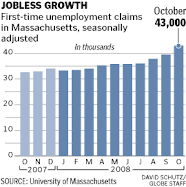







.png)


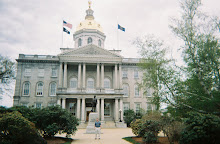














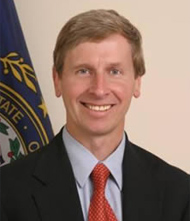

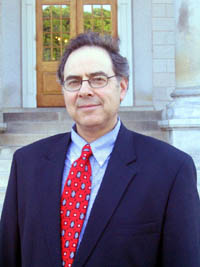





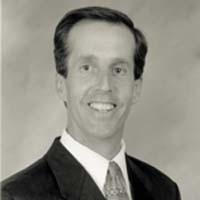










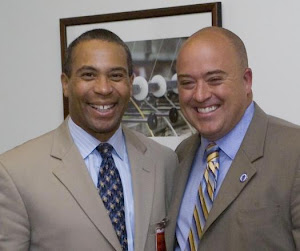
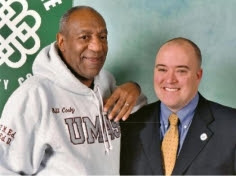










No comments:
Post a Comment